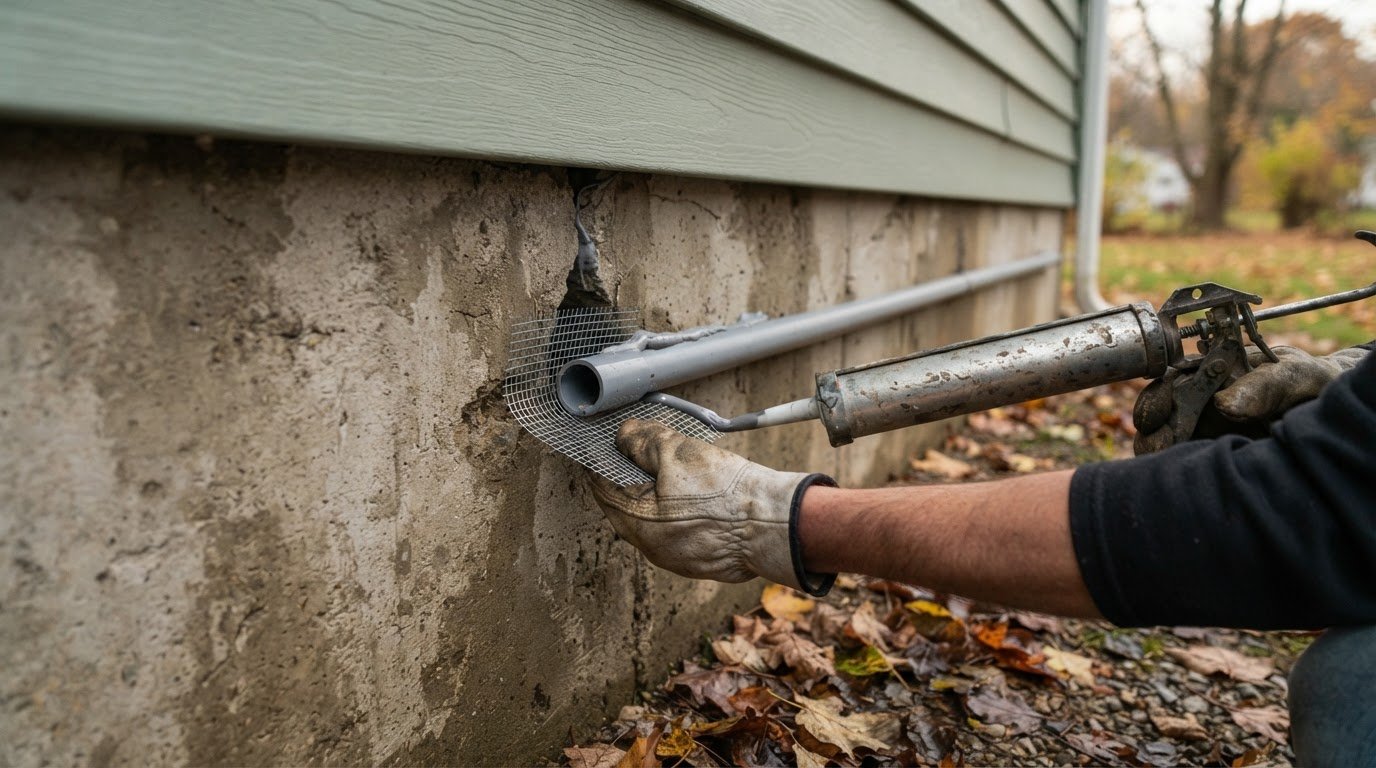
Preparing your home for winter pests starts with blocking the gaps they use to get inside. As temperatures fall, pests may seek food, water, warmth, and shelter indoors. Sealing entry points is a lasting way to pest-proof a home, but it works best alongside other prevention steps rather than relying on an exterior insecticide treatment alone.
It’s understandable to focus on visible pests, but small openings around doors, windows, pipes, vents, and foundations can be just as important. This guide explains why pests enter during winter and how to compare DIY proofing, professional pest control, entry-point repairs, and exterior insect barriers. You’ll also learn how to reduce access to food and shelter, and when recurring signs of activity may call for a closer assessment.
Key Takeaways
- Compare DIY proofing with professional pest control by considering whether the issue is a visible entry point or recurring pest activity.
- Look beyond doors and windows: utility openings, vents, and chimneys can also provide access indoors.
- Learn what signs may point to pest activity and why sealing an opening requires care if an animal could still be inside.
- See how exterior insect barriers fit alongside repairs, and why they shouldn’t replace closing gaps pests use to enter.
1. DIY pest proofing compared with professional services
DIY prevention can help homeowners address clear, accessible conditions around a property. A loose door threshold, a torn screen, or food left in an open package gives you a specific issue to correct. These measures are practical for routine upkeep, but they may not explain repeated activity in several rooms. Preparing your home for winter pests works best when prevention is matched to the signs present.
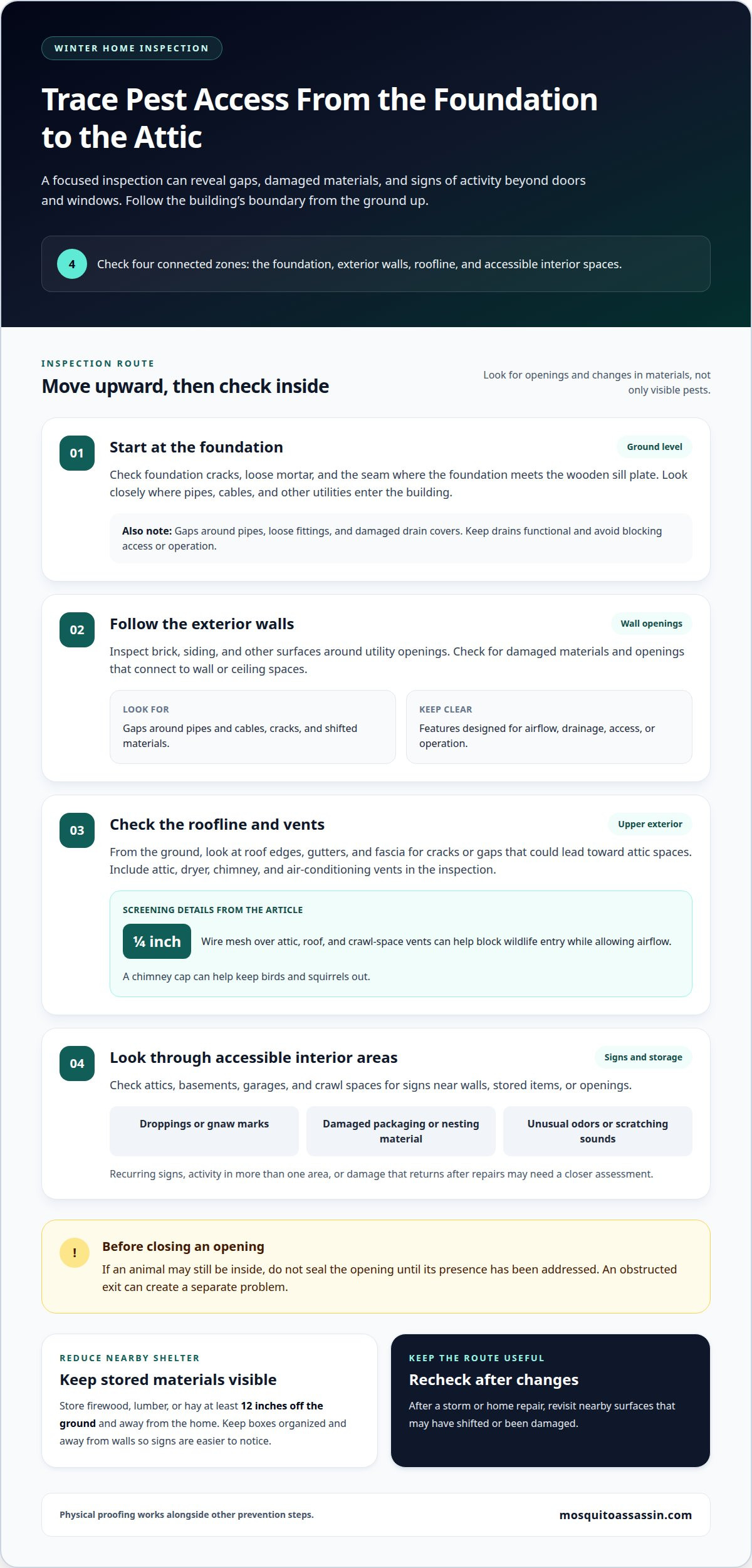
Manage stored materials as part of the inspection. According to the Washington State Department of Health, store firewood, lumber, or hay at least 12 inches off the ground and away from your home. Check whether boxes or supplies in a garage obscure signs along walls. Keep storage organized enough to notice changes, such as disturbed packaging or droppings, without moving materials unnecessarily.
A professional inspection is useful when the pest is unclear, activity persists, or evidence appears in more than one area. A pest professional can assess the signs, likely source, and conditions around affected spaces. Targeted treatment can then be considered alongside appropriate proofing, rather than treating an entire home without identifying the concern. For example, recurring rodent signs call for a different response than occasional insects near a window.
Contact a pest professional when you find repeated signs, hear scratching inside walls, or see damage that returns after repairs. These clues can indicate activity beyond a simple, visible opening. Avoid disturbing suspected nests or animals; instead, note where and when the signs appear. That information helps focus an inspection and determine whether DIY upkeep is sufficient or professional pest control is appropriate.
Pest-control and pesticide requirements can vary by location in the United States. This article focuses on practical physical prevention, professional inspection, and targeted service, rather than interpreting local or state rules.
2. Why Do Pests Go Into Homes During Winter?
Cold weather changes where pests find shelter, but it doesn’t make every pest inactive. Mice and rats may keep moving indoors in search of protected nesting places, while some insects enter diapause, a hibernation-like state. Warm indoor areas can also allow certain pests to stay active through winter. These differences matter: a mouse in a wall void and a cluster of insects near an upper window call for different responses.
Look beyond door and window seals for structural openings. From the ground, inspect roof edges, gutters, and fascia for cracks or gaps that could lead to attic spaces. In the basement, examine the seam where the foundation wall meets the wooden sill plate. Loose mortar or cracks in that area can provide access from the foundation into enclosed wall spaces.
In attics, basements, garages, and crawl spaces, focus on the boundary between the building and the outdoors. Look for damaged materials, openings near the roofline, and signs that stored items have been disturbed. Repair exterior damage with materials suited to the surface. If evidence suggests an animal may be inside an opening, address its presence before sealing the opening.
Use a consistent inspection route so overlooked areas don’t become recurring blind spots. Start outside at the foundation, continue along the walls, then check the roofline and accessible interior areas. After a storm or home repair, revisit nearby surfaces that may have shifted or been damaged. This focused approach can connect pest activity with a structural change, rather than limiting checks to door seals.
Why do pests seek indoor shelter as winter approaches? Falling temperatures can make sheltered spaces more favorable for warmth, nesting, and access to food. A sudden increase in activity after cold weather may point to an entry route or indoor conditions worth investigating.
3. Vents, chimneys, drains, and pipes as pest entry points
Utility openings can bypass otherwise tight doors and windows. Inspect brick, siding, and foundation areas where cables, pipes, or other utilities enter. Seal exposed gaps around these openings without covering features designed for airflow or drainage. Check again after repairs or storms, since disturbed materials can create new routes into wall and ceiling spaces.
Attic, dryer, chimney, and air-conditioning vents need suitable screening that still allows the equipment to function. One-fourth-inch wire mesh over attic, roof, and crawl-space vents can help block wildlife entry. A chimney cap can help keep birds and squirrels out. Don’t seal an opening if an animal may still be inside; an obstructed exit can create a separate problem.
Drains and pipe openings also deserve attention. Look for loose fittings, gaps around pipes, or damaged covers that could let pests pass. Keep drains clear and functional, and use appropriate covers where the design allows. Insulate exposed piping if needed, and seal gaps around pipes without interfering with access or operation.
Food, water, warmth, and shelter can make indoor spaces attractive once pests get inside. Leaks near utility rooms, accessible pet food, and cluttered storage areas can support pest activity. Check basements, attics, and garages for droppings, gnaw marks, damaged packaging, nesting material, unusual odors, or scratching sounds. These signs may point to an infestation that needs more than a screen repair.
Manage outdoor materials so they don’t create sheltered routes toward the house. Store firewood away from exterior walls and raised off the ground where practical. Keep lumber and hay similarly separated, and avoid piling mulch against siding or foundation openings. Move stored boxes away from walls, keep lids on bins, and leave vents and pipes accessible for inspection. These steps reduce hiding places and keep entry points visible.
4. Home insect barrier treatments
An exterior insect barrier is intended to manage insect activity around selected outdoor areas. It differs from physical exclusion: a barrier may affect activity near a building, while repairs address openings pests can use. Neither approach explains every sighting on its own. For example, insects gathering at a sunny window may have a different source than insects appearing near stored food.
The key question is whether a barrier fits the insect and its location. Cluster flies and lady beetles may gather around exterior surfaces before entering sheltered spaces. Ants or cockroaches can be associated with different conditions, including accessible food or moisture. Identifying the insect and where it appears helps determine whether an exterior barrier is relevant or another response is needed.
Barrier treatments have limits. They don’t repair torn screens, close gaps beneath doors, or remove food and clutter that attract pests indoors. A treatment may be less useful if the main route remains open or if the insect is already established inside. Consider it one part of a broader prevention plan, not a stand-alone solution for every winter pest.
Which pest-control products are safe around children and pets, and what are their risks? No product can be assumed appropriate for every household. Potential risk depends on the product and the chance of children or pets contacting it, so discuss household conditions with a licensed pest professional before choosing a treatment.
A professional assessment can connect insect identification with the building’s layout and activity patterns. It can also distinguish an occasional outdoor cluster from recurring indoor sightings that suggest an unresolved route. Match the response to the pest: consider a barrier only when it addresses the observed activity, and treat repairs and indoor conditions as separate parts of prevention.
Mosquito Assassin Pest Control
Mosquito Assassin Pest Control can help address recurring indoor pest concerns when proofing alone hasn’t resolved the activity. General Pest Control Plans and Rodent Control Service provide professional support when winter pests keep appearing or signs suggest rodents are entering the home. Share what you’ve noticed, such as droppings, damaged food packaging, scratching sounds, or repeated insect activity. These details help clarify the concern and the next appropriate step. Sealing gaps and reducing access to food and shelter remain useful prevention measures, but persistent signs may call for professional pest control. For help with winter pest concerns, contact Mosquito Assassin Pest Control.
Keep prevention working through the season
Think of preparing your home for winter pests as an ongoing property-maintenance habit, not a one-day project. Building work and weather can affect seals, while recurring signs may reveal routes that weren’t obvious before. Keep a brief record of pest activity and repairs still needed. That makes future decisions more focused than relying on memory.
If pest activity continues despite practical proofing, a professional assessment can help connect the signs with possible entry routes and treatment options. Mosquito Assassin Pest Control provides General Pest Control Plans, Mosquito Control Service, and Rodent Control Service. Discuss your pest concerns with Mosquito Assassin Pest Control to choose a suitable next step.
Disclaimer: This blog provides general information, not professional pest-control advice. Conditions vary by property, environment, and location. Reading this content does not create a service agreement. For an inspection or professional recommendations, contact Mosquito Assassin Pest Control LLC directly.
Frequently Asked Questions
Why Do Pests Go Into Homes During Winter?
Many pests move indoors as outdoor conditions cool because homes can provide warmth, shelter, food, and water. Rodents may remain active in protected spaces, while some insects enter a resting state during winter. A heated basement, pantry, or wall void can offer conditions that support activity. Indoor pest sightings may therefore continue even when outdoor temperatures are low.
Which pests commonly enter homes in winter in the United States?
Mice, rats, and cockroaches are common winter indoor pests across the United States. Depending on the region and property, residents may also encounter ants, spiders, crickets, fleas, ticks, or clothes and pantry moths. The pest type can offer clues: moths near stored food suggest a different concern than scratching sounds or gnaw marks that may point to rodents.
How do mice and rats get into homes, and how can you seal entry points?
Mice and rats can use openings around foundations, door frames, pipes, and garage doors. Look for fresh gnaw marks, disturbed insulation, or droppings near these routes. Repair damaged seals and close accessible cracks with materials suited to the opening. If signs point to activity inside a wall or ceiling, professional pest control can help identify the source before repairs conceal evidence.
How can you keep ants, cockroaches, spiders, and other insects out during winter?
Reduce the conditions that help insects persist indoors. Clear food residue from counters, avoid leaving dishes in the sink, and remove kitchen and bathroom trash regularly. Check incoming houseplants for fungus gnats, spider mites, or aphids before bringing them inside. For recurring sightings, note where and when insects appear; activity near a window may suggest a different route from insects found around pantry supplies.
How should you inspect and seal gaps around doors, windows, pipes, vents, and foundations?
Inspect the building exterior and corresponding indoor areas, such as a basement wall beneath a utility opening. Look for failed caulk, worn seals, loose mortar, torn screens, and gaps around service lines. Keep vents clear and functional while repairing surrounding openings. Repeat the inspection after storms, repairs, or major weather changes, which can expose damage or shift materials.
How can you pest-proof food, trash, pet food, and indoor plants?
Store pantry goods and pet food in sealed containers, and close packages after each use. Remove kitchen and bathroom trash routinely, then clean residue from the bottom of bins. Inspect new plants and their soil before moving them indoors. Fungus gnats can become troublesome when potting soil stays too wet or dense foliage limits air circulation, so monitor plant conditions as well as visible insects.
Leave a Reply