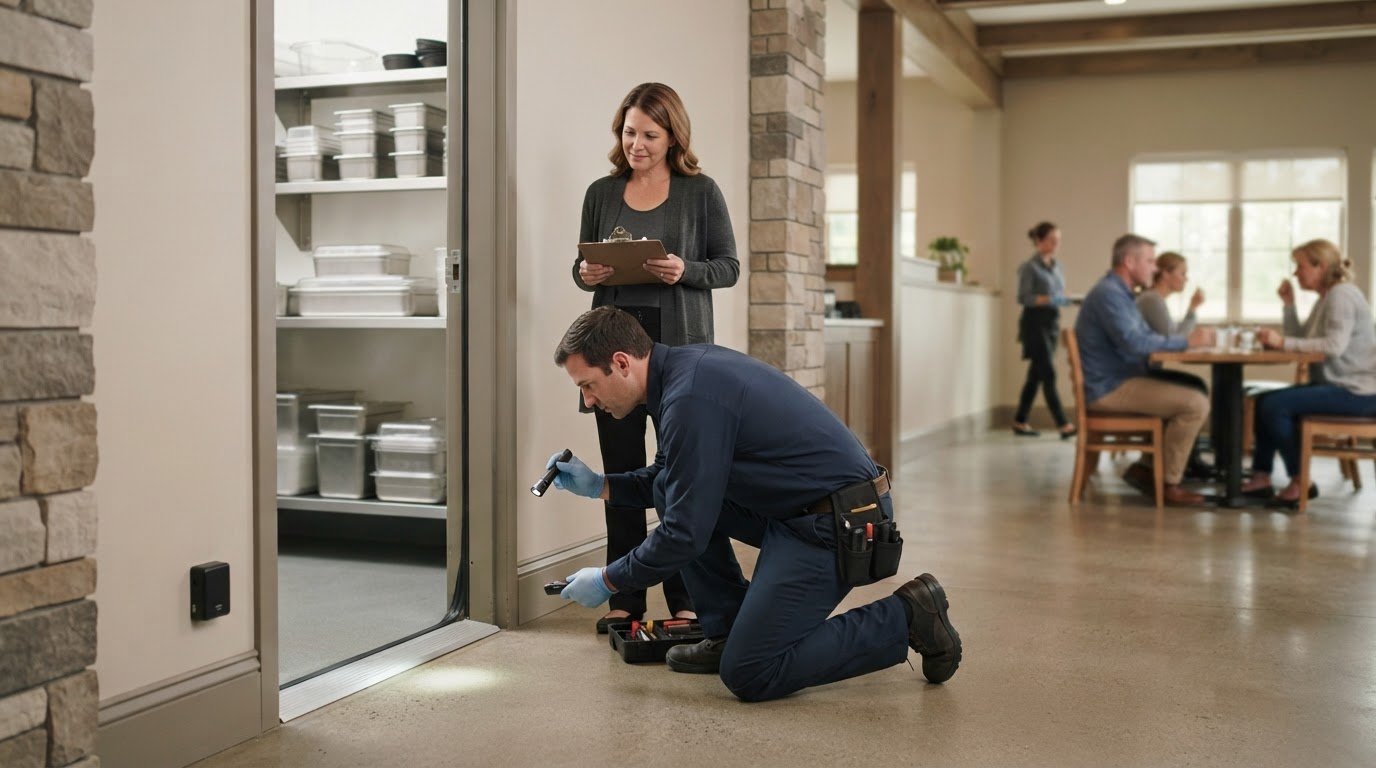
Online reputation defense begins with physical facility exclusion, not reactive public relations damage control. Every commercial operator dreads the sudden alert of a one-star rating accompanied by a customer’s high-resolution photo of an insect or rodent on Google Maps. Successfully protecting your business from bad reviews due to pests requires eliminating risks before patrons ever encounter them. With research from BrightLocal confirming that 77% of consumers avoid establishments with negative reviews, a single sighting can instantly unravel years of hard-earned community goodwill.
Keeping dining rooms, retail floors, and commercial facilities spotless doesn’t happen by accident. In this guide, discover how proactive commercial pest management safeguards brand reputation, prevents public customer complaints, and ensures regulatory health compliance. You will explore practical structural exclusion protocols, proven staff de-escalation strategies for unexpected pest encounters, and scheduled commercial defense routines that keep your property compliant and customer confidence high.
Key Takeaways
- Discover why high-resolution customer photos on digital map platforms inflict severe, lasting reputational damage compared to standard operational complaints.
- Identify high-risk property vulnerabilities and pest pressures that immediately trigger guest panic and municipal health scrutiny.
- Learn how proactive Integrated Pest Management (IPM) provides structural defense, making facility exclusion fundamental to protecting your business from bad reviews due to pests.
- Establish internal reporting workflows and staff interception protocols to de-escalate customer concerns before complaints reach public review networks.
- Understand the criteria for selecting licensed commercial pest control partners compliant with regulatory standards across Pennsylvania and Ohio.
The True Cost of a Pest-Related Bad Review on Your Business
A customer sighting a pest triggers an immediate visceral reaction that public relations messaging cannot solve. Unlike slow service or cold food, insects and rodents represent a direct violation of baseline sanitation trust. Treating pest-related complaints as simple communication errors ignores the reality of commercial facility hygiene. Relying on an Integrated Pest Management (IPM) framework addresses physical structural vulnerabilities before pests ever cross paths with customers. Physical exclusion, rather than online reputation management, remains the foundation for protecting your business from bad reviews due to pests.
Customer Psychology and the Reaction to Commercial Pests
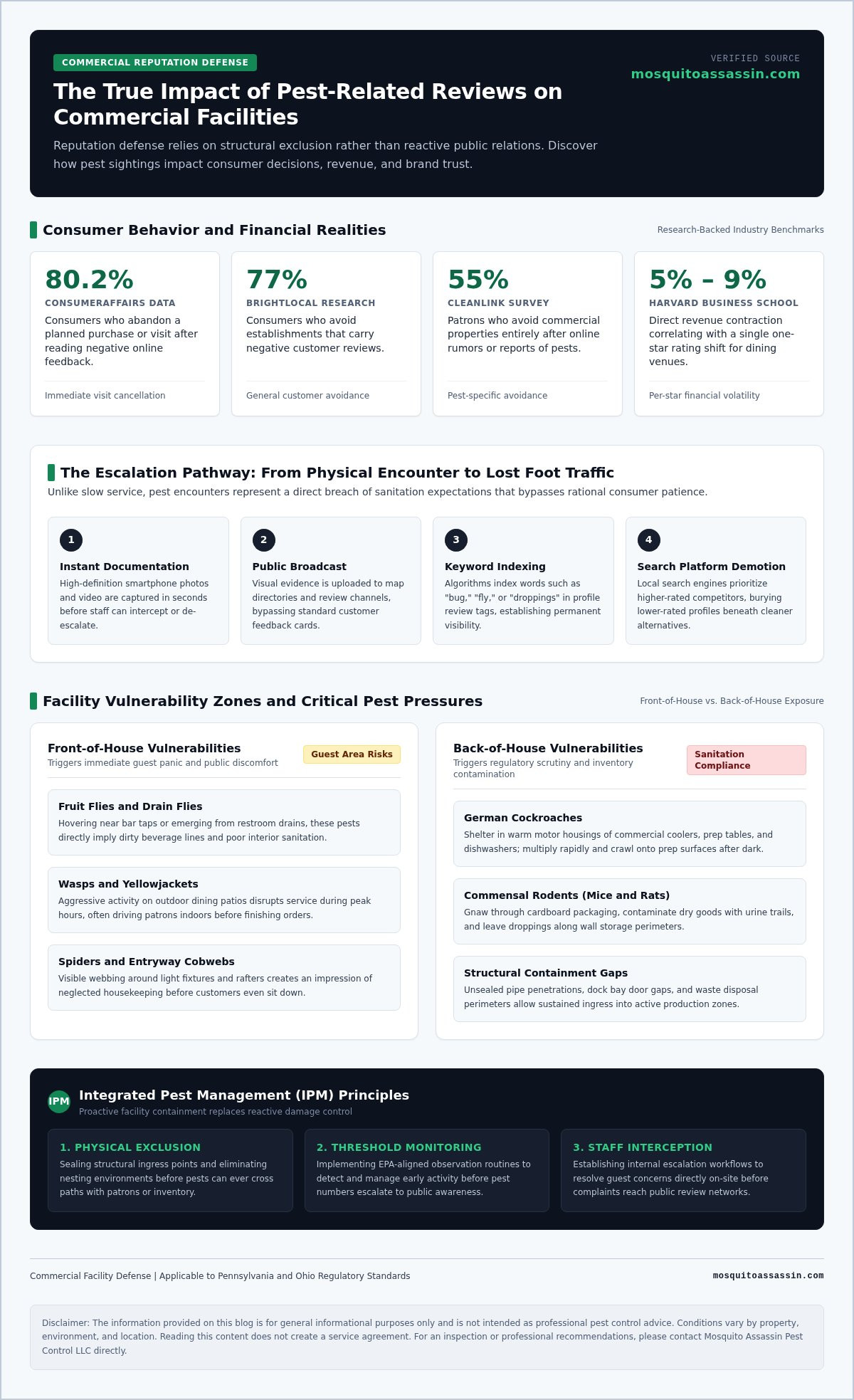
Pest sightings bypass rational consumer patience. Modern smartphones allow visitors to capture high-definition photos or video clips within seconds, publishing them to community platforms before management can step in. According to a hospitality survey by CleanLink, 55% of patrons avoid commercial facilities entirely if they encounter online rumors or reports of pests. Search engine algorithms index words like “bug,” “fly,” or “droppings” in prominent profile tags, turning an isolated incident into an enduring digital billboard that scares off prospective local patrons.
The Tangible Financial Impact of Dropping Star Ratings
Public pest reports inflict immediate financial damage. Customer acquisition costs spike while baseline revenue declines across multiple fronts:
- Direct Revenue Contraction: Research from Harvard Business School demonstrates that a one-star rating shift correlates with a 5% to 9% swing in revenue for commercial dining establishments.
- Customer Abandonment: Data from ConsumerAffairs indicates that 80.2% of consumers abandon a planned visit or purchase after reading negative online feedback.
- Search Platform Demotion: Local search algorithms prioritize top-rated facilities, burying businesses with falling scores beneath cleaner, highly rated competitors.
Regaining public trust requires months of defensive marketing, sanitization audits, and customer outreach. Enlisting scheduled commercial pest control prevents sanitation oversights from materializing on digital feeds. Proactive facility defense remains the most dependable method for protecting your business from bad reviews due to pests while maintaining steady foot traffic.
High-Risk Pest Vulnerabilities That Trigger Public Complaints
Different pests provoke distinct customer reactions, ranging from mild irritation to visceral disgust. While an occasional ant might escape notice, certain species instantly signal systemic neglect to discerning patrons. Aligning daily facility routines with the EPA’s Integrated Pest Management principles establishes concrete action thresholds, helping managers eliminate activity before it reaches guest view. Proactive monitoring remains an essential step toward protecting your business from bad reviews due to pests across retail, healthcare, and hospitality settings.
Front-of-House Nuisances: Flies, Wasps, and Spiders
Front-of-house pests disrupt guest comfort and ruin dining experiences within seconds. Small fruit flies hovering near bar taps or drain flies emerging from restroom sinks create an immediate impression of dirty lines and poor beverage hygiene. On outdoor dining patios, aggressive yellowjackets and paper wasps disrupt patrons during peak afternoon hours, frequently driving guests indoors before orders are finished. Even visible cobwebs gathered around entryway light fixtures or ceiling rafters suggest careless housekeeping to arriving visitors, prompting quick complaints on local community forums.
Back-of-House Disasters: Rodents and Cockroaches
Back-of-house intruders present direct health risks that compromise regulatory standing and inventory safety. Commercial operations face intense exposure from two primary invaders:
- German Cockroaches: These insects shelter in the warm motor housings of commercial coolers, prep tables, and dishwashers, multiplying quickly and crawling onto prep surfaces after dark.
- Commensal Rodents: Mice and rats gnaw cardboard packaging, contaminate dry goods with urine trails, and leave droppings along storage perimeter walls. Reviewing structural containment steps in this guide on professional rodent removal can assist facility teams with early detection.
Under Section 6-501.111 of the U.S. FDA Model Food Code, documented evidence of insect or rodent activity constitutes a major inspection violation that can trigger mandatory operational suspensions. When staff spot signs of nesting or droppings, arranging a commercial pest control assessment may help reduce risk, keeping preparation areas compliant and protecting your business from bad reviews due to pests.
Building an Integrated Pest Management Strategy for Reputation Defense
Relying on spot spraying after customers notice bugs guarantees continuous reputational crisis. True brand security demands a proactive framework that blocks pests at exterior boundaries. Implementing structured EPA’s Integrated Pest Management principles allows commercial facilities across Erie, Crawford, and Ashtabula counties to eliminate pest attractants before populations take hold. This methodical, multi-tiered strategy serves as the core operational barrier for protecting your business from bad reviews due to pests.
Step 1: Structural Exclusion and Entry Point Sealing
Physical exclusion denies pests access to interior dining, retail, or patient zones. Loading docks, delivery entries, and utility conduits represent primary entry corridors:
- Install heavy-duty nylon brush sweeps along exterior entrance doors and overhead dock levelers, eliminating visible light gaps.
- Seal exterior pipe penetrations, mortar gaps, and electrical feed lines using commercial silicone sealants paired with copper mesh or stainless steel wool.
- Fit exhaust louvers, commercial kitchen hood vents, and openable windows with fine-mesh wire screens to block flying insects during seasonal transitions.
Step 2: Commercial Sanitation and Moisture Control
Insects and rodents enter facilities hunting for dependable food and water reservoirs. Managing environmental attractants removes the biological fuel necessary for infestations to persist:
- Scrub floor drains, soda fountain sumps, and dishwashing runoff pans daily with bio-enzymatic cleaners to eliminate organic debris and drain fly breeding zones.
- Position outdoor dumpsters at least 50 feet away from customer entrances, maintaining tight-fitting lids and washing surrounding pads weekly.
- Elevate dry storage goods at least six inches off the floor on wire metal racks, storing bulk ingredients inside airtight polycarbonate containers.
Step 3: Scheduled Professional Auditing and Monitoring
Passive monitoring detects early perimeter breaches before visible outbreaks occur. Tamper-resistant bait stations and non-toxic glue boards positioned along non-public pathways, crawl spaces, and equipment lines capture early seasonal invaders. Maintaining detailed trend analysis logs allows maintenance teams to spot pest pressure spikes during humid Lake Erie summers or late-autumn cold snaps. Reviewing tailored programs through commercial pest control services helps operators establish rigid inspection intervals, protecting your business from bad reviews due to pests through continuous professional oversight.
Train Staff to Intercept Pest Issues Before Customers Post
Public reviews often appear when customers feel ignored on-site. When patrons spot an insect and receive indifferent service from employees, frustration quickly turns into an online complaint with photos attached. Front-line team members serve as an essential operational buffer, catching building issues early and managing guest concerns with care. Equipping employees with structured response protocols plays a pivotal role in protecting your business from bad reviews due to pests.
Establishing an Internal Pest Reporting Protocol
Pest activity rarely begins in plain sight of dining areas or customer checkout counters. It develops silently in utility rooms, dish pits, and delivery corridors. Creating a reliable reporting workflow ensures small warning signs don’t escalate into customer-facing incidents:
- Maintain a centralized physical logbook or digital channel where employees log the date, time, specific location, and pest type observed.
- Train opening and closing crews to inspect high-risk vulnerabilities, including underneath heavy refrigeration coils, along floor drains, and around exterior trash doors during scheduled cleaning shifts.
- Empower shift leads to temporarily close an impacted section or quarantine affected dry inventory without needing upper management approval first.
De-escalating Customer Encounters Professionally
A calm, empathetic staff response can resolve an unexpected pest encounter before the guest leaves the building. If a customer points out a pest, employees should never argue, minimize the concern, or blame the weather. Instead, staff should immediately acknowledge the patron’s discomfort, apologize sincerely, and relocate the party to a completely different section of the facility. Managers should swiftly comp the guest’s meal or purchase and explain that licensed pest management professionals are scheduled to inspect the facility.
Under the Federal Trade Commission Rule on Consumer Reviews (16 CFR Part 465), businesses cannot suppress honest negative feedback through legal threats or intimidation. Resolving issues on-site through genuine customer care remains the lawful, effective path to reputation defense. For facilities seeking structured defense against recurring pest activity, partnering with certified professionals for commercial pest control helps identify hidden nesting zones, supporting staff efforts and protecting your business from bad reviews due to pests over the long term.
Selecting the Right Commercial Pest Control Partner in PA and OH
Standard residential spraying routines fall short of commercial operational needs. Enterprise facilities require tailored inspection schedules, regulatory documentation, and strategic service visits scheduled outside of normal operating hours. Choosing an experienced regional contractor is fundamental to protecting your business from bad reviews due to pests across Northwest Pennsylvania and Northeast Ohio.
Essential Criteria: Licensing, Documentation, and Response Time
Commercial facilities operate under strict state oversight. In Pennsylvania, structural pest contractors must maintain a valid Pesticide Business License with certified applicators in Category 7B (General Pest Control) under the Pennsylvania Department of Agriculture. In Ohio, businesses must fulfill Ohio Department of Agriculture requirements under Category 10a.
Beyond licensing, facility managers must demand rigorous service documentation. Quality providers log every monitoring trap result, structural vulnerability, and sanitary risk observed during an inspection. These detailed audit trails prove compliance during surprise county health department inspections. Clear communication channels and rapid response times also guarantee that if an unexpected pest appears, a certified professional investigates before customers notice.
Regional Environmental Factors in Erie, Crawford, and Ashtabula
Properties situated near Lake Erie encounter shifting environmental challenges that inland protocols rarely accommodate. Lake-effect moisture accelerates seasonal fly and insect breeding cycles from spring through late summer. When temperatures plummet in late autumn, field mice and rats migrate away from rural edges directly toward warm commercial foundations and loading bays.
Managing these persistent regional shifts requires customized commercial plans rather than generic treatments. Business operators can evaluate targeted programs by reviewing dedicated commercial services built for local enterprise requirements. To evaluate your property’s exterior perimeter and interior vulnerabilities, contact licensed pest specialists to establish an ongoing inspection routine. Structured professional prevention remains the most dependable method for protecting your business from bad reviews due to pests year-round.
Strengthen Your Facility Defense and Safeguard Customer Trust
A pristine commercial reputation relies on proactive structural defense rather than reactive digital crisis control. Enforcing strict sanitation standards, sealing perimeter vulnerabilities, and empowering staff with de-escalation protocols stops pest encounters before they become public complaints. Shifting focus from damage control to prevention ensures business operators maintain consistent operational control.
Working with licensed commercial technicians across Erie and Crawford counties in Pennsylvania and Ashtabula County in Ohio ensures verifiable audit documentation for routine health inspections. Systematic monitoring and physical exclusion remain the most dependable strategy for protecting your business from bad reviews due to pests. Consulting with professional pest control services may help reduce risk and protect your facility reputation, giving patrons complete confidence every time they walk through your doors.
Disclaimer: The information provided on this blog is for general informational purposes only and is not intended as professional pest control advice. Conditions vary by property, environment, and location. Reading this content does not create a service agreement. For an inspection or professional recommendations, please contact Mosquito Assassin Pest Control LLC directly.
Frequently Asked Questions
How quickly can a pest-related bad review damage a commercial business?
The damage occurs almost instantaneously once a review goes live. Search engines index new user content within minutes, frequently tagging words like “mice” or “cockroaches” at the top of business profiles. Prospective customers filtering for nearby services see those highlighted terms immediately. In highly competitive sectors like food service and hospitality, an unaddressed negative post can visibly reduce weekend foot traffic and reservation volume within hours.
Can a business legally remove a negative review about pests on Google?
Google only removes reviews that violate explicit platform policies, such as spam, hate speech, or proven fake engagement from competitors. Genuine negative reviews describing authentic customer experiences cannot be forcibly removed. Under the FTC Rule on Consumer Reviews (16 CFR Part 465), attempting to suppress honest feedback through intimidation or baseless legal threats carries federal penalties. The only lawful resolution is addressing the underlying sanitation problem directly.
What should a manager do immediately if a customer reports a pest indoors?
The manager should immediately validate the customer’s concern with empathy and avoid making defensive excuses. Move the customer to a separate area, void their bill or offer compensation according to company policy, and assure them the matter is being investigated. Logging the sighting details immediately and calling licensed commercial technicians prevents further guest exposure, which is critical for protecting your business from bad reviews due to pests.
How often should commercial properties receive professional pest control inspections?
High-traffic commercial facilities, particularly restaurants, grocery stores, and food processing plants, typically require monthly or bi-monthly professional inspections. Lower-risk retail or office spaces may operate on quarterly schedules. Because seasonal weather shifts around Lake Erie drive structural pest migrations throughout spring and autumn, consistent service visits ensure exterior bait stations and monitoring traps remain fully functional year-round before populations migrate inside.
Does regular deep cleaning eliminate the need for commercial pest management?
Deep cleaning removes food attractants, but sanitation alone cannot stop commercial pest infestations. Insects and rodents enter through tiny foundation gaps, delivery cartons, and utility penetrations that scrubbing cannot resolve. Pests also harbor inside equipment motor housings, hollow walls, and subfloors where cleaning crews never reach. Comprehensive reputation security requires combining thorough daily sanitation with professional exclusion and scheduled pest monitoring.
What documentation do health inspectors require regarding commercial pest control?
County health inspectors expect a complete on-site pest management binder during unannounced operational audits. Required documentation typically includes the commercial service contract, applicator license verification, detailed service tickets, SDS sheets for all materials used, and a facility trap map. Inspectors review technician trend notes to confirm that past activity was identified and corrected systematically under state sanitation regulations.
Why is DIY pest control unsuitable for commercial reputation protection?
Over-the-counter retail sprays often repel pests deeper into walls rather than eliminating the breeding population, leading to sudden re-emergence in public dining or shopping areas. DIY attempts also lack the regulatory documentation demanded by health inspectors and expose businesses to contamination liability. Choosing certified commercial management remains the only defensible method for protecting your business from bad reviews due to pests and passing official health audits.