Tag: home inspection

  • What Happens During a Termite Inspection at Home

    What Happens During a Termite Inspection at Home

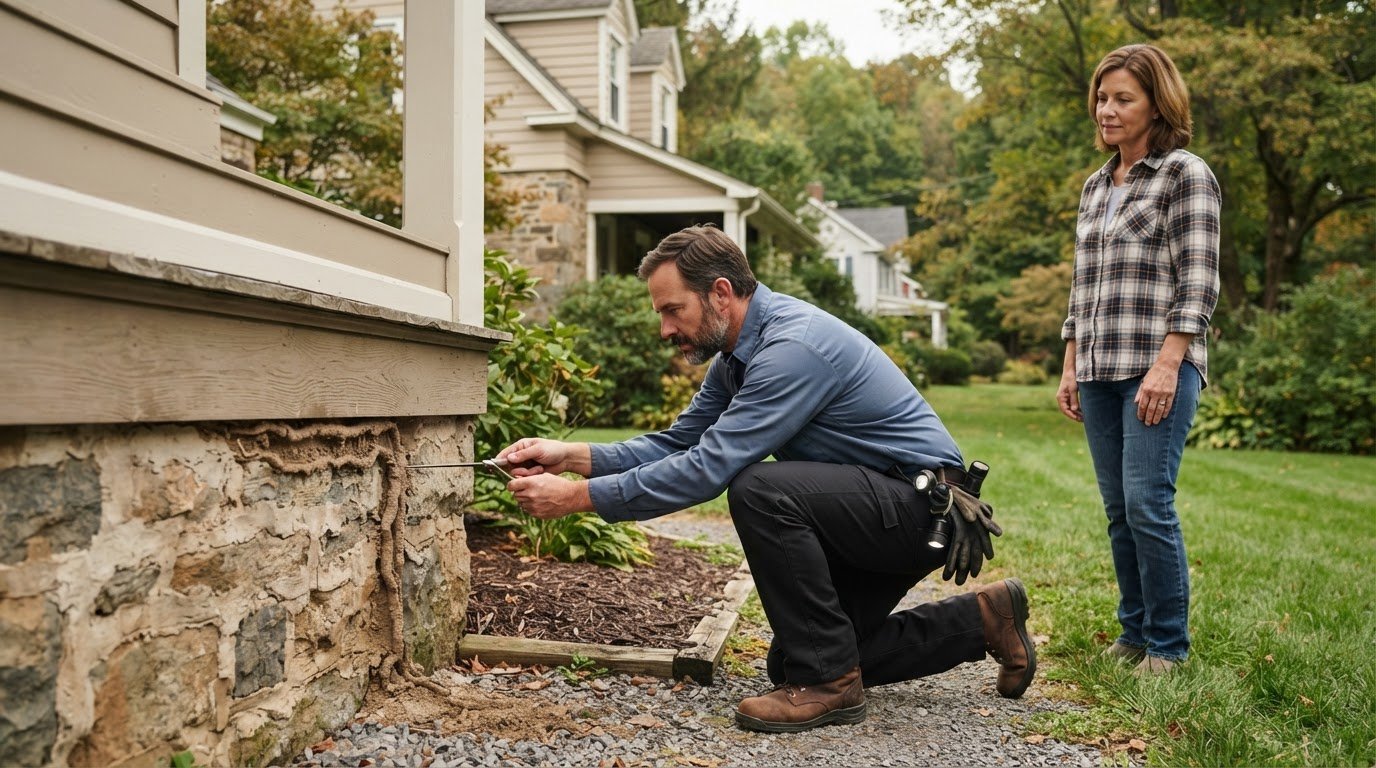
    A termite inspection is usually a careful, minimally invasive check of the home and the conditions around it. Knowing what happens during a termite inspection can make the process feel more straightforward: it typically takes 45 to 60 minutes, depending on the home’s size, condition, and accessibility. The inspector looks for termite signs, wood damage, moisture, and areas that may attract termites.

    It’s understandable to wonder whether a termite inspection means opening walls or disturbing your home. In most cases, the inspector examines accessible areas and may gently probe suspicious wood to assess what may be happening beneath the surface. You’ll learn how inspectors check the exterior and foundation, examine interior areas such as baseboards, windows, floors, and plumbing, and explain their findings afterward.

    Key Takeaways

    • Recognize clues such as mud tubes, shed wings, and damaged wood so you can describe concerns clearly during an inspection.
    • Understand why moisture, wood-to-ground contact, and water issues around the home can raise termite risk.
    • Learn how gentle probing and inspection tools help assess suspicious wood without assuming walls will be opened.
    • Know which indoor areas may receive closer attention, including baseboards, window trim, floors, and plumbing locations.

    What Happens During a Termite Inspection?

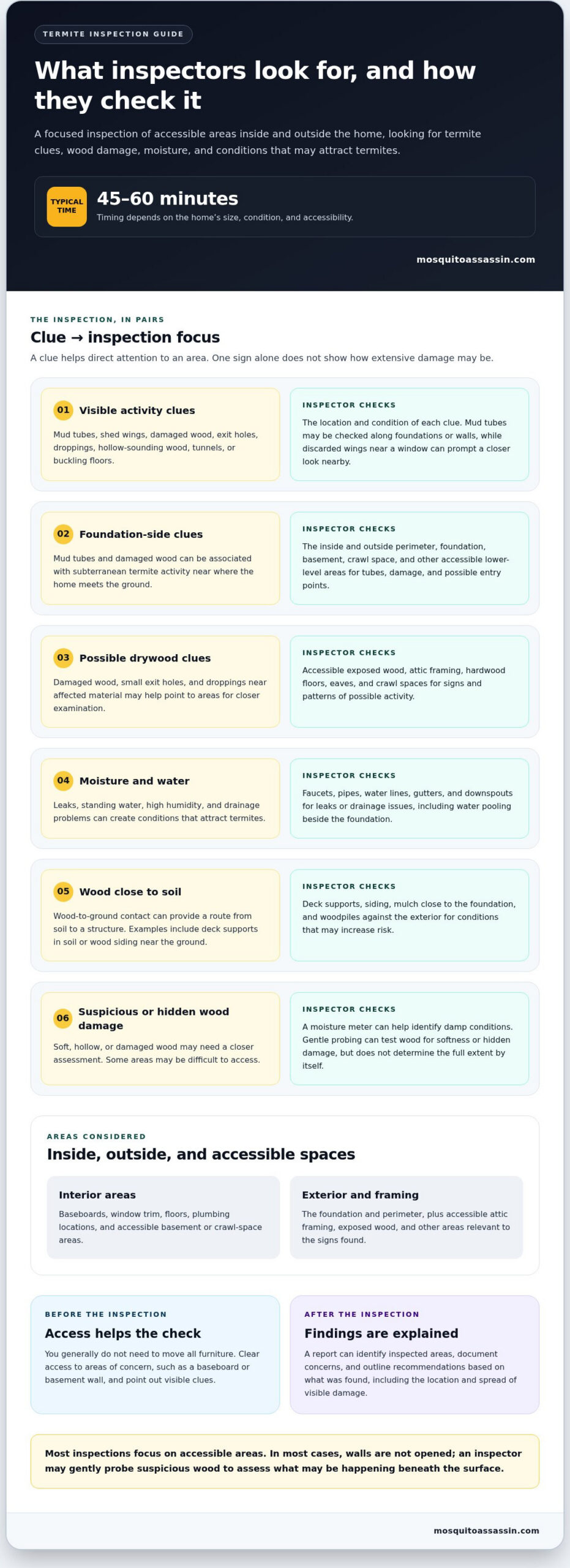
    A termite inspection focuses on accessible areas inside and outside the home, looking for signs of activity, wood damage, and conditions that may attract termites. A standard inspection takes 45 to 60 minutes, depending on the property’s size, condition, and accessibility.

    Visible Signs of Termite Activity

    Visible signs of termite activity can include mud tubes, damaged wood, discarded wings, exit holes, and droppings. Mud tubes are narrow tunnels made of soil and debris, often seen along a foundation or wall. They can indicate recent or ongoing activity.

    Inspectors look for these clues as well as hollow-sounding wood, tunnels in wood, and buckling floors. For example, discarded wings near a window or a mud tube on the foundation can point to areas that need closer examination. A single sign doesn’t show how extensive the damage is, so its location and condition matter.

    Signs of Subterranean and Drywood Termites

    Subterranean termites are associated with mud tubes and activity near foundations, basements, crawl spaces, and other places where a home meets the ground. Inspectors may check the inside and outside perimeter for tubes, damaged wood, and possible entry points.

    Clues associated with drywood termites can include damaged wood, small exit holes, and droppings near affected material. Where accessible, exposed wood, attic framing, hardwood floors, eaves, and crawl spaces may be examined. These signs help identify possible activity patterns and guide the inspection toward relevant areas.

    Inspection Timing and Homeowner Preparation

    Unlike a general home inspection, a termite inspection focuses on accessible areas for current or past termite activity, damage, and conditions that may support termites. A general home inspection covers broader aspects of a home’s condition and is not the same as a formal termite report.

    You generally don’t need to move all your furniture. Clear access to areas of concern, such as a baseboard or basement wall, and point out any visible clues. Inspection timing recommendations vary. Some recommend annual inspections, while others suggest checking every one to two years. Property conditions and signs of activity can help determine timing.

    Moisture and other conditions that increase termite risk

    Moisture can make parts of a home more conducive to termite activity. During an inspection, a technician looks for water sources and wood-to-ground contact that may increase risk.

    Moisture and Water Sources

    Leaks, standing water, and high humidity can create conditions that attract termites. Inspectors may check faucets, pipes, water lines, gutters, and downspouts for leaks or drainage problems.

    For example, water pooling beside a foundation or a leaking pipe near a basement wall may draw attention. If you suspect termite damage, point out persistent damp areas. Moisture clues can help a pest control professional assess where activity may be more likely.

    Wood-to-Ground Conditions

    Wood touching soil can give termites a route from the ground to a structure. During an inspection, the technician may note wooden deck supports in contact with soil, wood siding near the ground, or mulch placed close to the foundation.

    These conditions matter because subterranean termites can travel from soil into wood. A woodpile against the exterior or a deck post set directly in soil gives the inspector specific areas to assess. Because termite species differ, the inspection considers the conditions and evidence present rather than assuming every home faces the same risk.

    Moisture Control and Prevention

    Reducing avoidable moisture and wood-to-soil contact can make a property less conducive to termite activity. Address dripping faucets and leaking pipes, keep gutters and downspouts clear, and avoid letting water pool around the foundation.

    Keep mulch away from the home’s foundation and store woodpiles away from the exterior. These steps don’t replace an inspection, especially if damp areas or damaged wood remain. During a real estate transaction, an inspection can identify moisture conditions as well as signs of termite activity, helping clarify which areas need attention.

    Inspection tools and probing suspicious wood

    Inspectors combine visual checks with simple tools to assess suspicious wood and hard-to-see areas. A moisture meter can help identify damp conditions, while a probing device lets the inspector test wood for softness or hidden damage. Gentle probing may reveal a hollow or weakened section, but it doesn’t determine the full extent of damage by itself.

    The inspection also covers accessible crawl spaces, attics, and foundation areas. In a crawl space, an inspector may examine exposed framing and floor joists; in an attic, accessible roof framing may be checked. For concerns about subterranean termites, the foundation and lower levels can help show where activity may be entering. If an area is inaccessible, the inspector can note its condition and explain whether special equipment or a more comprehensive inspection may help.

    Termite inspections aren’t universally required for home sales or mortgages; requirements depend on the transaction and location. As of June 2022, the U.S. Department of Veterans Affairs required wood-destroying insect inspections for VA loans in areas with moderate to very heavy termite infestation probability. A formal Wood-Destroying Insect report requires a licensed pest control specialist; a general home inspector may identify and report evidence but doesn’t provide that formal report.

    If the inspection finds signs of termites or damage, the technician explains the findings and may recommend a plan to address the issue. A report can identify inspected areas, document concerns, and outline corrective or mitigation recommendations. The response depends on what the inspection reveals, including the location and spread of visible damage. Recommendations may range from addressing a limited area to considering broader termite control when evidence appears in different parts of the home. Ask about unfamiliar report terms so you understand which areas were inspected and what the findings mean.
    What Happens During a Termite Inspection at Home

    Interior inspection of baseboards, windows, floors, and plumbing areas

    Inspectors check accessible interior and exterior areas for termite signs and damage. Inside, this can include baseboards, window trim, floors, plumbing areas, and framing. Outside, the foundation, siding, and accessible perimeter receive attention. The areas inspected depend partly on access and possible termite activity.

    Along baseboards, an inspector may look for damaged wood, hollow sections, or evidence where a wall meets the floor. Window sills, trim, and seats may be checked for hollow or flaky wood and cracked paint. Floors matter too: buckling or damaged boards may warrant closer assessment, although one sign alone doesn’t establish the cause.

    Plumbing areas can reveal moisture-related conditions and possible termite signs. Inspectors may check laundry-room water lines and the drain behind the washer, then examine nearby flooring, trim, or walls. Outside, they may inspect the foundation and siding, including how close the siding is to the soil. Patios and mulch beds can also be checked for evidence of activity.

    The inspection focus can vary by species. For subterranean termites, inspectors may examine the home’s inside and outside perimeter, foundation, basement, lowest level, and accessible crawl spaces or attics. If drywood termites are a concern, accessible exposed wood, hardwood floors, attic framing, eaves, and wooden furniture may receive attention. These locations guide the search, but don’t establish the extent of structural damage.

    If a suspected area is inaccessible, the inspector can record its condition and explain options for a more comprehensive inspection using special equipment. A home inspection may note visible evidence, while a focused termite inspection evaluates accessible areas for termite activity. If interior damage or other clues raise concern, a professional termite inspection can help assess the findings and inform whether treatment should be considered.

    Mosquito Assassin Pest Control: General Pest Control Plans

    Mosquito Assassin Pest Control offers General Pest Control Plans for households managing pest concerns beyond the findings of a termite inspection. These plans are a separate option for broader pest management, not a substitute for addressing termite activity or damage identified in an inspection report.

    If an inspector documents possible termite activity, use the findings to understand which areas need attention and what follow-up is recommended. For other pest concerns around the home, a general plan may be relevant. The right next step depends on the issue identified and the scope of the inspection.

    Contact Mosquito Assassin Pest Control to discuss general pest control options for your home.

    Use the inspection findings to plan your next step

    An inspection is most useful when its findings provide a clear record for future decisions. Keep the report with your home-maintenance records and note which locations were assessed, what evidence was observed, and what follow-up was recommended. If conditions change, such as new wood damage or recurring dampness, those details can help a professional compare the current situation with earlier observations. Understanding what happens during a termite inspection also helps you distinguish a finding that needs attention from a reason to panic. Use the inspector’s observations to guide your next conversation rather than guessing based on one mark or sound.

    For termite concerns that need professional assessment, Mosquito Assassin Pest Control provides termite inspections and treatment. When reaching out, describe the concern and share relevant inspection findings, such as the location of observed damage or moisture. Contact Mosquito Assassin Pest Control to discuss next steps. A clear record and focused follow-up can make planning manageable and help you move forward with confidence.

    Frequently Asked Questions

    Can termites be present without visible signs?

    Yes. Termites may be active in concealed areas before visible clues appear inside a home. A quiet-looking room doesn’t rule out activity behind a wall or within structural wood. If you have a specific concern, describe what prompted it and where you noticed it. That context can help the inspector focus on relevant accessible areas and explain whether further assessment is appropriate.

    Where Can Damage Be Found?

    Damage can occur in structural wood that isn’t visible during everyday use, such as framing inside a wall or wood beneath flooring. It may also affect exposed features, including a porch or deck. Note any change in a particular room or building feature, then share its location during the inspection. The inspector can assess accessible areas and record suspected damage for follow-up.

    What steps happen during a termite inspection?

    The inspector first asks about your concerns and the reason for the inspection, such as a suspected problem or a home sale. They then examine accessible areas, document observations, and explain the findings. To make the conversation useful, describe when you first noticed a concern and whether it has changed. The inspector can include relevant observations in the assessment and discuss possible next steps.

    What tools and methods do termite inspectors use to detect termites?

    Inspection methods can include visual assessment, moisture readings, and gentle probing of suspicious wood. These approaches help evaluate conditions and identify areas that may need closer attention. If a concern involves a concealed location, the inspector can explain whether specialized equipment or a more comprehensive inspection may be suitable. The method used depends on the location and what the initial assessment reveals.

    What signs of termites or termite damage do inspectors look for?

    Inspectors assess clues that may indicate termite activity or affected wood, then consider where each clue appears and its condition. A single mark or insect shouldn’t be treated as a complete diagnosis. If you’ve noticed a possible sign, remember its exact location and describe what you observed. That detail gives the inspector a useful starting point for evaluating the concern.

    What happens if no active termites are found?

    If the inspection finds no active termites, the inspector may recommend preventive measures or continued monitoring based on the property’s conditions. This gives homeowners a way to respond to relevant risk factors without assuming there is an infestation. Ask which observations shaped the recommendation and which areas may warrant attention during future maintenance. Keep the findings for reference if conditions change.

    Disclaimer: The information provided on this blog is for general informational purposes only and is not intended as professional pest control advice. Conditions vary by property, environment, and location. Reading this content does not create a service agreement. For an inspection or professional recommendations, please contact Mosquito Assassin Pest Control LLC directly.
  • How to Handle Pests in a Foreclosure Property: A Practical Guide

    How to Handle Pests in a Foreclosure Property: A Practical Guide

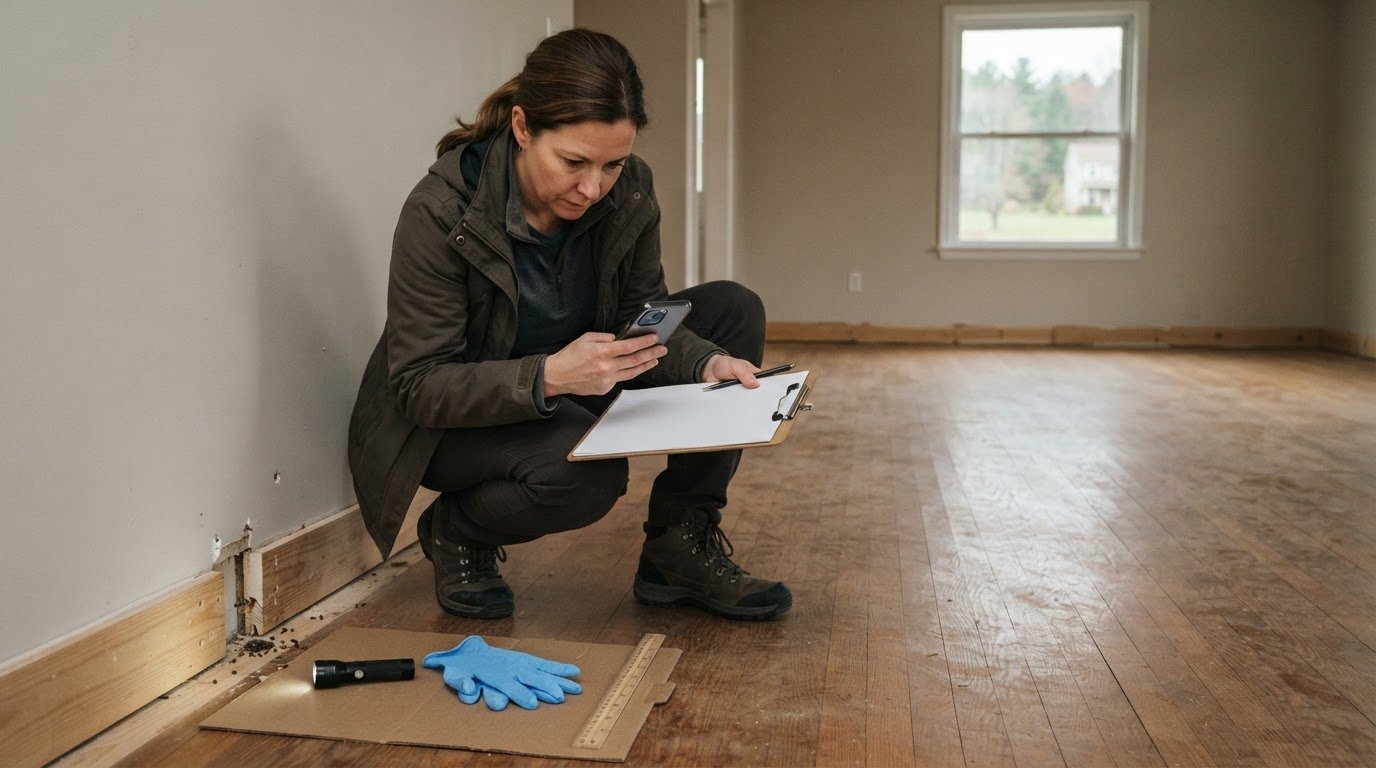
    The first sign of pests in a foreclosure property isn’t always proof of an active infestation. Droppings, damaged materials, or insect remains can be difficult to interpret, especially after a home has been vacant. Knowing how to handle pests in a foreclosure property starts with documenting what you see before cleaning or disturbing possible evidence.

    It’s understandable to want to clear out a suspected problem right away. A measured first look, however, can help you distinguish visible clues from assumptions and decide what needs attention. Avoid touching unfamiliar materials, and record their location with notes or photos so the conditions can be assessed more clearly.

    This guide explains how to inspect a newly acquired or vacant property, document possible pest activity, and prioritize basic prevention. It also explains when professional pest control may help identify concerns and recommend an appropriate response. Because conditions differ from one property to another, don’t assume every foreclosure needs treatment. Use the evidence and the property’s condition to guide your next steps.

    Key Takeaways

    • Learn how to handle pests in a foreclosure property by weighing visible clues alongside the home’s condition and history, rather than diagnosing an infestation from one sign.
    • Understand why possible signs of mice, rats, ants, bed bugs, or termites need context before you decide what they mean.
    • Compare observation, prevention, and professional assessment to choose a suitable next step without attempting pest treatment yourself.
    • Before cleanup or renovation, record affected rooms, visible conditions, and any known occupancy or maintenance history.
    • Consider professional guidance when signs recur, are unclear, or appear in multiple areas, with recommendations tailored to the property.

    How to Assess Pest Concerns in a Foreclosure Property

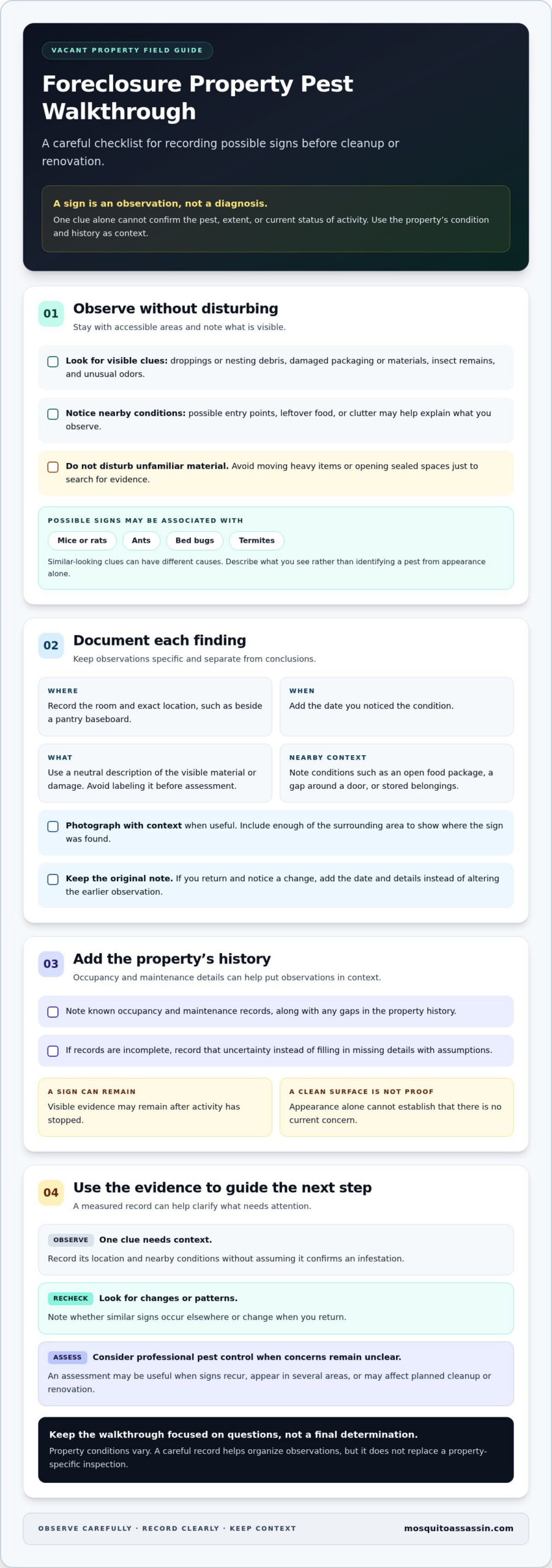
    A vacant home can be difficult to assess at first glance. Gaps in occupancy, deferred maintenance, and an incomplete property history may leave you unsure whether a sign is recent, old, or unrelated to pests. Start with what you can observe, then compare those details with the property’s condition. A single clue isn’t enough to confirm an infestation.

    Keep observations separate from conclusions. For example, record “small dark material beside the pantry baseboard” rather than labeling it pest droppings before it has been assessed. Note the room, exact location, date, and nearby conditions, such as an open food package or a gap around a door. These details help you spot patterns and decide whether an inspection would be useful. For general background on pest management principles, consult the Pest Control Wikipedia article. General information cannot identify conditions in a particular home.

    What to Look for During an Initial Walkthrough

    Stay in accessible areas and don’t disturb unfamiliar material. Make a brief record of visible conditions such as:

    • Droppings or nesting debris in corners, cupboards, or storage areas.
    • Damaged packaging, wood, fabric, or other materials.
    • Insect remains near windows, lights, or along walls.
    • Unusual odors, noted by room and location without assuming their cause.
    • Potential entry points, leftover food, or clutter that may affect what you observe.

    When appropriate, photograph findings with enough surrounding detail to show where they were found. Check rooms, storage areas, and accessible points around doors or windows, but don’t move heavy items or open sealed spaces just to search for evidence. A limited, careful walkthrough can still provide useful information.

    Why a Vacant Property’s History Matters

    Occupancy and maintenance records can put observations in context. If records are incomplete, note that uncertainty rather than filling gaps with assumptions. Signs may remain after activity has stopped, while a clean-looking surface doesn’t establish that there is no current pest concern. Appearance alone may not distinguish old evidence from recent activity.

    Pest evidence is an observation to document, not a confirmed diagnosis. Record when and where each sign appears, and whether similar signs occur elsewhere. If you return and notice a change, add the date and details instead of altering your original note.

    Use the walkthrough to identify questions, not to make a final determination. This guide can help you organize observations and make informed decisions, but it doesn’t replace a property-specific inspection. If evidence is unclear, appears in several areas, or may affect planned cleanup or renovation, professional pest control can help assess the conditions and inform next steps.

    Which Pests and Warning Signs May Matter in a Vacant Home?

    A vacant home may show signs associated with mice, rats, ants, bed bugs, or termites, but don’t assume pests are present just because the property has been unoccupied. The building’s condition, remaining food or belongings, and the location of any evidence all matter. Different causes can produce similar-looking marks or debris, so describe what you observe rather than identifying a pest from appearance alone.

    One sign alone can’t establish the type, extent, or current status of pest activity. A careful record keeps observations useful without turning a clue into a conclusion. Note the room, precise location, date, and nearby conditions, such as damaged packaging, a gap, or stored belongings. Avoid handling or clearing suspected evidence before it can be assessed.

    Rodent and Insect Evidence: What Observations Can Suggest

    Droppings, gnaw marks, tracks, or nesting material may be consistent with rodent activity, but context is needed to interpret them. Note whether the signs are near stored food, along a wall, or close to a possible entry point. For more context on how rodent concerns may be addressed, review the rodent control and exclusion approach.

    Ants may appear near food or moisture, while insect sightings, shed skins, or damage to stored materials can have more than one explanation. Record where the signs occur and whether they appear in one area or several. A single insect sighting doesn’t establish a recurring problem, and a photograph may not show details needed for identification. Don’t move suspected nests or debris to get a closer look.

    When Wood Damage or Bed Bug Signs Need Closer Attention

    Changes to wood, including damaged or weakened areas, can have causes other than termites. Suspected termite evidence deserves closer evaluation, especially when damage appears in more than one location, but a brief description or photo can’t confirm its source. Bed bug concerns also require careful identification. Marks on bedding or small insects may be misleading without a closer assessment.

    For either concern, preserve the context. Record the affected room and surface, take a photo from a safe distance if useful, and note nearby belongings or visible conditions. Avoid disturbing suspected insects, skins, or damaged material before an appropriate assessment. This can be particularly helpful when a property has been closed for an unknown period and its history doesn’t explain when signs appeared.

    In practical terms, how to handle pests in a foreclosure property begins with matching the response to the evidence, not reacting to a label or isolated clue. If signs recur, appear in multiple areas, or remain difficult to interpret, professional pest control can help assess the conditions and guide next steps.

    DIY Observation or Professional Pest Assessment: How to Choose

    Owners can take useful steps without trying to identify or treat pests themselves. The right next step depends on what you’ve observed, whether signs change or recur, and how much uncertainty remains. A clean-looking room isn’t proof that pest activity is absent. Signs may be out of view, and a brief visual check can’t assess every part of a property.

    Approach Purpose Limitation
    Observation Record visible signs, locations, property conditions, and changes over time. Observations alone may not identify the pest or establish whether activity is current.
    Basic prevention Reduce obvious attractants, such as accessible food waste and avoidable clutter. Prevention doesn’t confirm whether pests are present or resolve an existing concern.
    Professional assessment Help interpret recurring, widespread, or unclear evidence in the context of the property. Recommendations depend on the conditions that can be assessed at the site.

    What Owners Can Reasonably Document and Prevent

    Keep a simple record of what you notice, where it appears, and whether anything changes during later visits. Include relevant property conditions, such as leftover food waste or clutter near the observation. When appropriate, removing accessible food waste and reducing avoidable clutter can make an area easier to monitor. These steps support observation, but they aren’t pest treatment.

    Don’t rely on appearance alone. A room can look clean while signs remain in less visible areas, and a mark or insect in a clean room may have another explanation. Use your record to describe conditions clearly rather than concluding that a particular pest is present. For broader context on professional pest-management services, consider how assessment and recommendations can be tailored to the property.

    When Professional Recommendations May Help

    Professional input can be useful when signs recur, appear in several areas, or remain difficult to interpret. An assessment can help distinguish among possible pest types and consider property-specific conditions that a brief walkthrough may not resolve. This is especially relevant when managing several properties, where records from each site can help clarify whether concerns are isolated or recurring.

    For owners and managers overseeing multiple locations, commercial pest-control services can address property-specific concerns. The useful next step is a clear account of what you observed, not an attempted diagnosis or treatment. If uncertainty persists, professional guidance can inform decisions about the property. To discuss an inspection or professional recommendations, use the contact page.

    How to Handle Pests in a Foreclosure Property: A Practical Guide

    A Practical Foreclosure Property Pest Checklist Before Cleanup or Renovation

    A clear record can turn an uncertain first look into a more useful plan. Keep the process focused on observation and documentation, not treatment. The sequence is straightforward: observe accessible areas, document what you find, prioritize concerns that recur or affect several rooms, then arrange an appropriate assessment if needed.

    1. Observe: Note visible signs and relevant property conditions without disturbing suspected pest evidence.
    2. Document: Record affected rooms, locations, dates, and any changes you notice over time.
    3. Prioritize: Identify concerns that appear in more than one area, keep recurring, or remain unclear.
    4. Arrange assessment: Share your notes and any access limitations when professional guidance may help.

    Separate ordinary housekeeping and maintenance from suspected infestation evidence. Accessible food waste or general clutter may be ordinary maintenance concerns, while material that appears to be nesting debris or signs near damaged wood may need closer assessment. Don’t clean, move, or discard suspected evidence before documenting it. This preserves the context of what you observed without assuming what caused it.

    Prepare Useful Information for an Inspection

    Gather available property notes, photographs, and any known occupancy or maintenance history. Treat these as context, not proof of a pest diagnosis. List each observed location, when you noticed it, and whether it changed on a later visit. Note areas you couldn’t observe, such as blocked storage spaces or rooms that weren’t accessible, so the limits of the walkthrough are clear.

    Specific descriptions are more useful than conclusions. Write “scattered material beside the utility-room wall” rather than naming a pest if you’re uncertain. A photo can show the location and surrounding conditions, but it may not establish what caused the sign. Include details such as nearby stored items, visible damage, or an access limitation, without disturbing the area to get a closer view.

    Plan Prevention After the Property Is Accessible

    Once areas are accessible, prioritize ordinary housekeeping and maintenance according to the property’s actual condition. Keep notes if signs reappear, adding the date and location rather than treating each observation as unrelated. For properties in Erie and Crawford Counties in Pennsylvania or Ashtabula County in Ohio, site-specific conditions should guide professional recommendations, not assumptions based on foreclosure status.

    Use the checklist to decide what information is ready and where uncertainty remains. It can support informed planning, but it doesn’t replace a pest inspection or determine whether treatment is needed. If evidence is recurring, widespread, or difficult to interpret, professional pest control can help assess the property and recommend next steps. For an inspection or professional recommendations, use the contact page.

    When Professional Pest Control Can Support a Foreclosure Property Plan

    Professional assessment can be useful when signs keep appearing, are difficult to identify, or show up in several parts of a property. A closer evaluation can help distinguish among possible pest concerns and consider how the building’s condition may affect them. Not every foreclosed home needs pest control, so recommendations should reflect the evidence and conditions at that site.

    Mosquito Assassin Pest Control LLC provides general pest control, rodent control, bed bug treatment, and termite inspections and treatment. These services address different concerns, so an observation that suggests one type of pest shouldn’t be treated as confirmation of another. A property-specific assessment can help determine what next steps are appropriate based on the available information.

    How Follow-Up Can Address Recurring Pest Concerns

    Rodent management involves three distinct components: removal, maintenance, and exclusion. Together, these address the pest concern, ongoing property conditions, and potential ways pests may enter. The emphasis and follow-up depend on the site and observed activity, rather than a universal schedule. For an overview of the professional pest-control services available for different concerns, consider how an assessment can be matched to the property.

    Discuss follow-up if signs return after an initial assessment or appear in a different area. Share what changed and whether upcoming work, such as cleanup or renovation, may affect access to the area. That context can help keep recommendations relevant as the property plan develops.

    Choose a Clear Next Step for the Property

    Before requesting professional guidance, gather the property notes you already have. A concise summary can help focus the conversation and avoid relying on memory alone. Include:

    • The rooms and specific areas where signs appeared.
    • The dates you noticed them and whether they recurred or changed.
    • Any known occupancy or maintenance history, along with gaps in that history.
    • Areas that couldn’t be observed and questions that remain unresolved.

    If evidence remains unclear, recurs, or appears across multiple areas, an inspection or professional recommendations can help inform your plan. The next step depends on the property’s specific conditions, not simply its foreclosure status.

    For an inspection or professional recommendations, contact Mosquito Assassin Pest Control LLC through the contact page.

    Make the Property’s Next Step a Measured One

    A foreclosure property doesn’t need a rushed diagnosis. Let the evidence and the home’s condition guide what happens next. Knowing how to handle pests in a foreclosure property means choosing a response that fits what you’ve observed, whether that involves continued monitoring, routine maintenance, or professional assessment.

    If you’re unsure what the signs mean, professional guidance can help clarify an appropriate next step. Use the contact page to request an inspection or professional recommendations and discuss your concerns about the property.

    Frequently Asked Questions

    Can a foreclosure property have pests even if it looks clean?

    Yes. A clean appearance describes the surfaces you can see, not necessarily every part of the building or its history. The home may also have been cleaned before you acquired it, which doesn’t establish whether pest activity is present now. Treat appearance as one part of your overall understanding of the property, not as a reliable indicator on its own.

    How long can a vacant property sit before pests become a concern?

    There’s no dependable vacancy period that predicts pest activity in every building. A property’s condition can change during an empty period, and the length of time alone doesn’t reveal what is happening inside. Instead of using a calendar threshold, consider the property’s current condition and any known changes in maintenance or occupancy. Those details provide more useful context than vacancy duration by itself.

    What should I do if I find droppings in a foreclosure home?

    Don’t use appearance alone to decide what produced droppings. Other debris can be mistaken for pest evidence, and visual clues may not identify a pest reliably. Avoid touching the material while deciding how to proceed. Consider the broader property context, including whether the area has been disturbed or cleaned before your visit. If identification matters to your property plan, a professional assessment can help clarify it.

    Can cold weather eliminate pests in an empty house?

    Cold weather isn’t a dependable way to determine whether a pest concern has ended. Outdoor temperatures don’t provide a complete picture of conditions inside a building, and seasonal effects can vary. Don’t treat a cold-weather visit as evidence that a property is pest-free. Base decisions on the property’s observed condition and relevant history, rather than the season alone.

    Should I clean a foreclosure property before a pest inspection?

    Routine housekeeping can be part of preparing a property, but first consider whether cleaning would remove information relevant to an assessment. If you’ve already cleaned an area, mention that, since the visible condition may no longer reflect what was there before. Preparation depends on the property and the concern being assessed. Avoid making changes solely to create the appearance of a particular pest condition.

    When should I call a pest professional about a foreclosure property?

    You don’t need to be certain about a pest’s identity before seeking professional guidance. Consider an assessment when a concern affects decisions about the property, such as planning work in an area with suspected wood damage or possible bed bug evidence. A pest-control professional can help evaluate the concern and discuss options suited to the observed conditions, without relying on a guess based on one clue.

    Disclaimer: The information provided on this blog is for general informational purposes only and is not intended as professional pest control advice. Conditions vary by property, environment, and location. Reading this content does not create a service agreement. For an inspection or professional recommendations, please contact Mosquito Assassin Pest Control LLC directly.