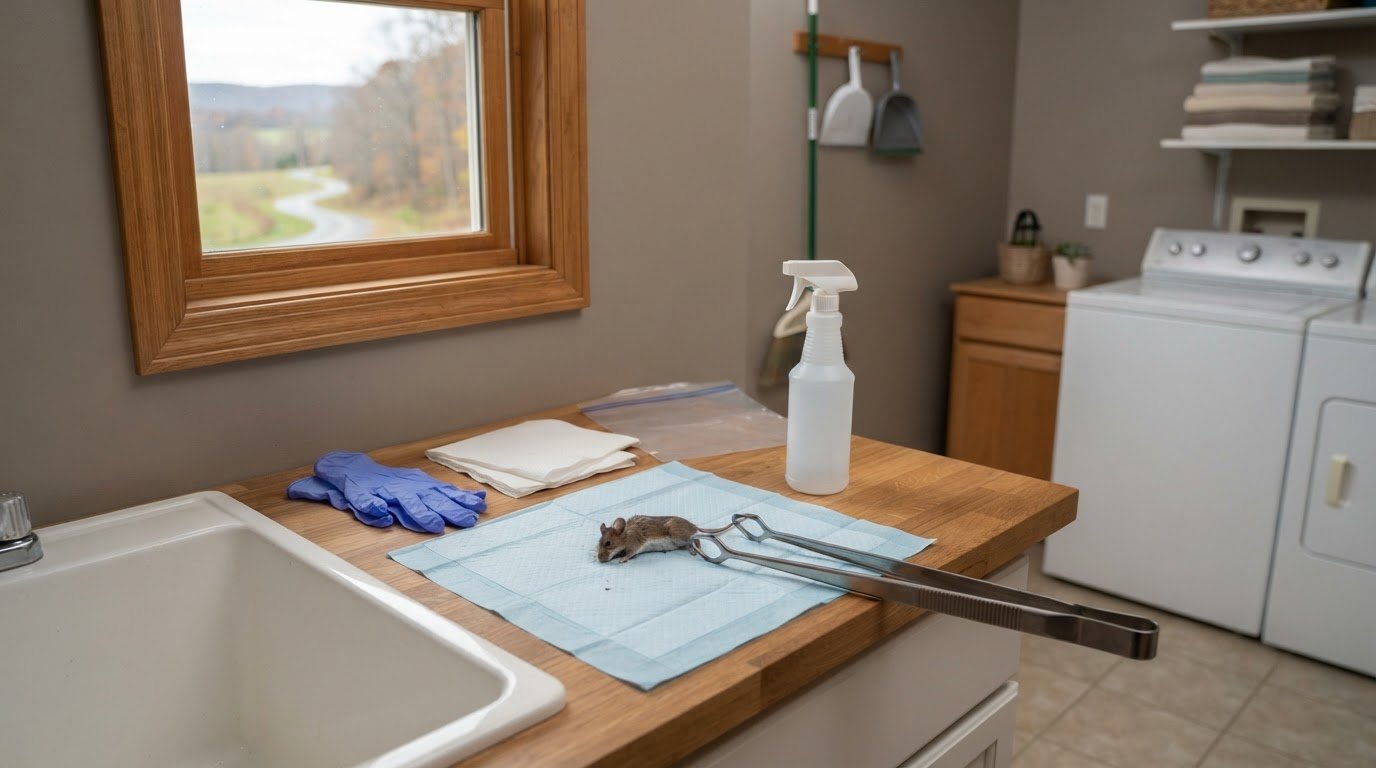
What if removing the mouse is only half the cleanup? If you’re unsure how to dispose of a dead mouse, plan for careful handling, residue nearby, and the possibility of other rodent activity. A thorough cleanup addresses the immediate mess and gives you a chance to notice signs that may need attention.
This guide explains how to remove and discard an accessible carcass, then clean the surrounding area using label-directed guidance. It also explains why dry sweeping or vacuuming droppings and nesting material can stir up dust, and what to look for after cleanup.
One dead mouse doesn’t confirm a larger rodent problem. Repeated sightings, droppings, or other signs can indicate ongoing activity. Read on for a practical disposal and cleanup process, plus guidance on when an inaccessible carcass or recurring signs call for professional rodent control.
Key Takeaways
- Before moving a dead mouse, check whether you can reach it safely without shifting heavy objects or disturbing a tight space.
- Learn how to dispose of a dead mouse with gloves, a disposable tool, and sealed bags to limit direct contact.
- Follow the cleaning product’s label, and avoid disturbing droppings or nesting material with dry sweeping or vacuuming.
- Droppings, gnaw marks, or repeated sightings can help you assess whether the issue may extend beyond one carcass.
- If the carcass is inaccessible or signs keep returning, professional rodent control can assess the source and appropriate next steps.
Found a Dead Mouse? What to Do Before You Dispose of It
A dead mouse can be unsettling, but take a moment to assess the area before acting. Avoid touching it directly. If it’s exposed and easy to reach, careful handling and cleanup can address the immediate situation.
Rodents can carry germs, and you can’t tell by looking at a mouse whether it carries an infection. Hantavirus is one example of a disease associated with rodents, which is why gloves and careful cleanup matter.
For additional background on the topic, watch this video:
What to assess before handling a dead mouse
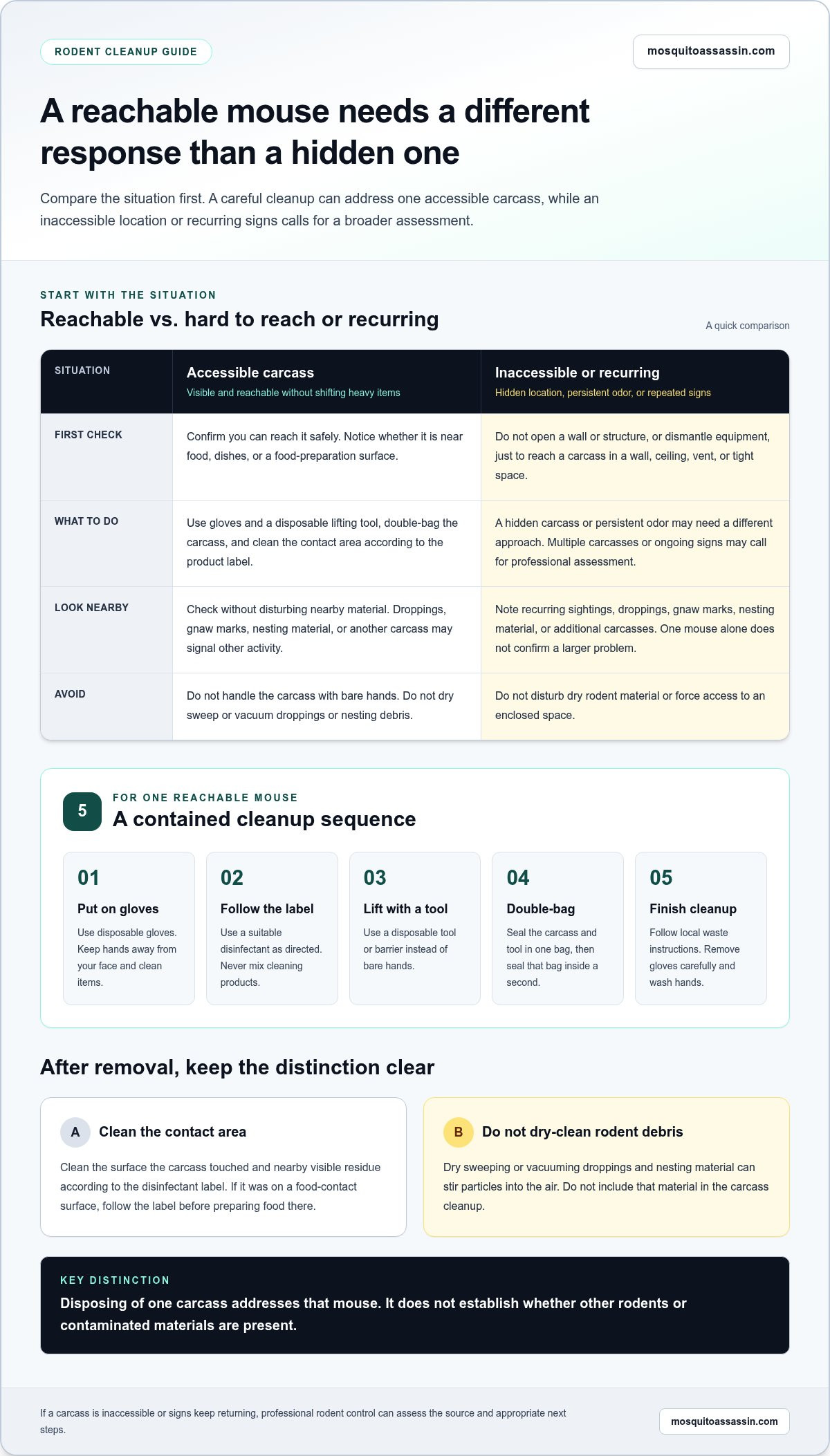
Check whether the mouse is visible and reachable without moving heavy furniture, appliances, or stored items. Note whether it’s near food preparation areas, dishes, or exposed food so you can clean affected surfaces after removal. If it’s inside a wall, ceiling, vent, or another inaccessible space, don’t open the structure to reach it. A hidden location or persistent odor calls for a different approach.
Look around without touching or disturbing nearby material. Droppings, gnaw marks, nesting material, or another carcass can suggest there may be more activity to address. Make a note of what you see. Don’t sweep or vacuum droppings or nesting debris, because disturbing dry material can put particles into the air.
What to prepare for careful removal
Gather disposable gloves, a disposable tool for lifting the carcass, sealable plastic bags, and cleaning supplies before you begin. Keep food and household items out of the immediate work area. Choose a disinfectant suitable for the surface and follow its label directions. Never mix cleaning products.
Quick sequence: Put on disposable gloves, lift the mouse with a disposable tool, place it in a bag and seal it, then put that bag inside a second bag for disposal. Clean the contact area according to the disinfectant label, remove the gloves, and wash your hands.
Gloves limit direct contact with the carcass, while double-bagging contains it during disposal. These steps address one reachable mouse, but they don’t establish whether other mice are present or replace a broader assessment if signs recur.
How to Dispose of a Dead Mouse: A Simple Cleanup Sequence
For a reachable carcass, keep the process contained: protect your hands, use a disposable tool rather than bare fingers, double-bag the mouse, and clean the surface where it was found. Follow the cleaning product’s label, and use your regular household-waste route only if local guidance permits it.
- Put on disposable gloves. Check that they’re intact before you begin. Keep your hands away from your face, and avoid touching nearby food, dishes, or clean items while wearing contaminated gloves.
- Wet the carcass and the immediate contact area with disinfectant. Follow the product label for use and contact time. Don’t dry sweep or vacuum rodent material, since that can stir dust into the air.
- Lift the mouse with a disposable tool. Use a tool you can discard afterward, or another disposable barrier that lets you avoid direct contact. Don’t handle the carcass with bare hands.
- Bag and seal it. Place the mouse and disposable tool in a plastic bag, then close the bag securely. Put it inside a second bag and seal that one, too.
- Dispose of the sealed package and clean up. Use household trash only where local waste instructions allow it. Remove your gloves without touching their outer surfaces, discard them, then wash your hands with soap and water.
Bagging and discarding the carcass
A disposable tool, such as stiff paper or cardboard, can help lift the mouse without using your hands. Put the tool and carcass in the first bag, seal it, then place it inside a second bag and seal that one as well. This contains both the carcass and the tool used to move it.
Waste rules and collection practices vary by location. Check local household-waste instructions if you’re unsure whether a double-bagged carcass can go in regular trash. Don’t leave the package where pets or wildlife could reach it.
Cleaning the spot after removal
Clean the surface the carcass touched and any visible residue immediately around it. Use a disinfectant suitable for that surface, following the label’s directions for application and contact time. Keep cleaning products separate. Never mix them, even if one product seems less effective than expected.
If the carcass was on a food-contact surface, clean that surface according to the disinfectant label before using it for food preparation. Don’t disturb nearby droppings or nesting material as part of this cleanup. Those materials require separate care, and dry sweeping or vacuuming can spread particles.
Disposing of one carcass addresses that mouse, but it doesn’t determine whether other rodents or contaminated materials are present. If signs recur or you can’t identify where activity is coming from, Mosquito Assassin Pest Control provides rodent control through removal, maintenance, and exclusion. A broader assessment can help address the issue beyond the single carcass.
When a Dead Mouse Is Hard to Reach or More Than One Appears
A mouse in an open area is different from one inside a wall, ceiling, vent, or narrow gap. Don’t force access by opening a wall or dismantling equipment just to reach a carcass. If the location is inaccessible or an unpleasant odor persists, household disposal may not be practical. The same applies when you find multiple carcasses or signs of ongoing activity.
What if the mouse is inside a wall or another enclosed space?
A carcass behind a wall or inside a ceiling may be impossible to remove without access to that enclosed space. Avoid cutting into building materials or taking apart appliances and ventilation equipment. That can damage the structure or equipment without resolving the odor if the carcass remains out of reach.
Odor from an inaccessible carcass may linger, and there isn’t a timeline that applies to every home. Air movement, temperature, and the specific location can affect how noticeable it is. If the odor continues, returns, or is difficult to trace, note where it seems strongest and whether you’ve seen other signs. Those observations can help a professional assess the situation without unnecessary dismantling.
Professional pest-control help is appropriate when access is limited, odor remains a concern, or other evidence appears nearby. An assessment can consider whether the concern is limited to the inaccessible carcass or whether other signs need attention. Don’t assume the odor alone identifies the exact location or cause.
What if you find more than one mouse?
Multiple carcasses, repeated mouse sightings, fresh droppings, or gnaw marks shift the question from how to dispose of a dead mouse to whether activity is continuing. These signs don’t prove how many rodents are present or where they entered. They do give you a reason to look beyond a one-time cleanup and consider professional guidance.
Keep observations factual. Note where and when you found each carcass, where droppings or gnaw marks appear, and whether the signs recur. Don’t disturb droppings or nesting material while checking nearby areas. A few clear observations are more useful than investigating inside walls, ceilings, vents, or other enclosed spaces yourself.
If the source is unclear or signs keep appearing, professional rodent control can help determine appropriate next steps. An assessment can take the location and pattern of the signs into account rather than relying on one discovery alone.
After Disposal: Check for Signs and Reduce Reasons Mice Return
Removing a carcass takes care of one mouse, but it doesn’t show whether others are present. After cleanup, pay attention to signs around the discovery area. Repeated evidence may warrant attention beyond a single disposal, while one finding alone doesn’t establish the extent or source of activity.
Signs that may point to ongoing mouse activity
Look for patterns rather than treating any one clue as proof. Signs to notice include:
- Mouse sightings that recur, especially in the same part of the home.
- Droppings appearing in places you’ve already cleaned or checked.
- Gnaw marks on packaging, stored materials, or other household items.
- Nesting material or additional carcasses near the original discovery.
Make a simple note of where and when you see each sign. For example, record whether droppings are near a pantry, along a wall, or beside stored belongings. This can help you tell whether evidence is recurring or limited to one location. Don’t disturb suspected nesting areas or dry-sweep or vacuum droppings while checking. Observations can identify a concern, but they don’t confirm how many mice may be present.
Simple household habits that support prevention
Small changes can make food and shelter less accessible. Store pantry goods and pet food in closed containers where practical, and keep food waste in a closed bin. Pick up spills and food scraps, particularly in storage or eating areas. These habits reduce easy access to potential food, but they can’t establish whether rodents are already inside.
Reducing clutter around areas where you’ve noticed activity can make those spaces easier to inspect. Keep stored items organized and avoid leaving piles undisturbed near walls or in corners. Take note of visible gaps around doors, pipes, or other openings. Keep the inspection general, and don’t dismantle structures or attempt repairs beyond your ability.
These steps support household upkeep, but they aren’t a diagnosis or a complete rodent-control plan. If sightings or fresh signs continue, or the source remains unclear, professional pest control can assess the wider issue. A rodent control service can address activity through removal, maintenance, and exclusion. Recognizing a recurring pattern helps you decide whether the concern needs attention beyond the initial cleanup.
When Professional Rodent Control May Help After Finding a Dead Mouse
Careful disposal handles the carcass you found, but it can’t show whether other mice are present or explain how one got inside. Professional rodent control is appropriate if sightings or fresh signs keep appearing, the carcass is in a wall or another inaccessible space, or the source of a persistent odor remains unclear. These situations call for looking at the wider pattern, not just the single discovery.
What professional rodent control can address
A professional assessment can consider where activity is occurring, whether signs are recurring, and whether access points or other conditions may be contributing. That broader view helps distinguish a one-time finding from a concern that needs continued attention. It also avoids relying on the carcass alone to determine what is happening in the home.
Mosquito Assassin Pest Control’s rodent-control process follows three stages: removal, maintenance, and exclusion. Together, these stages address rodent activity beyond disposing of one mouse. The appropriate focus depends on conditions at the property, and a single carcass can’t establish what work may be needed. Learn more about rodent control services and the role of a broader assessment.
A practical next step for local households
For households in Erie and Crawford Counties, Pennsylvania, and Ashtabula County, Ohio, recurring signs or an unclear source are reasons to consider professional rodent control. Note where you found the carcass, whether it was accessible, and what other signs you’ve observed. Share those details when seeking an assessment, and avoid opening walls or dismantling equipment to investigate.
In short, dispose of an accessible mouse carefully, keep track of observable signs, and seek guidance if the issue appears to extend beyond one carcass. Professional rodent control can address recurring activity and assess an unclear source.
Take the Next Step With Confidence
Knowing how to dispose of a dead mouse can help you handle one immediate problem, but recurring signs or an inaccessible source call for a closer assessment. Keep track of what you notice and where it appears. That record can help clarify whether the issue is changing over time.
For guidance on a continuing rodent concern, contact Mosquito Assassin Pest Control. Share where you found the carcass and any recurring signs so the situation can be assessed with useful context.
Frequently Asked Questions
How do I dispose of a dead mouse in my house?
For an accessible mouse, wear disposable gloves, use a disposable tool to lift it, and avoid touching it directly. Place the carcass and tool in a sealable bag, close it, then put that bag inside a second bag. Follow local household-waste instructions for disposal. If you’re deciding how to dispose of a dead mouse near food or dishes, move those items away and clean affected surfaces according to the cleaner’s label.
Can I put a dead mouse in the regular trash?
Household trash is an option only if local waste guidance permits it. Double-bag the carcass, seal both bags, and put them in a lidded trash container rather than leaving them exposed. Collection practices vary, so check your municipality’s waste instructions or the guidance from your waste hauler if the rules aren’t clear. Don’t place the bag in recycling or yard-waste collection.
Should I clean the area after removing a dead mouse?
Yes. Clean and disinfect the surface the carcass touched, using a product labeled for that surface and following its directions, including the stated contact time. If the mouse was found near a countertop, utensils, or food, set those items aside and clean the affected surface before using it again. Don’t mix cleaners, and wash your hands after taking off gloves, even if you didn’t touch the carcass.
What should I do if the dead mouse is inside a wall?
Don’t cut into the wall or remove building materials just to reach the carcass. Note where the odor seems strongest and whether you’ve seen other signs nearby, such as droppings or gnaw marks. If the odor persists or the location remains unclear, professional pest-control help is appropriate. An assessment can consider the surrounding evidence without assuming the smell alone identifies the carcass’s exact location.
Is it safe to pick up a dead mouse with my bare hands?
No. Avoid bare-hand contact with a dead mouse, since you can’t determine by looking whether it or nearby residue may carry germs. Put on disposable gloves and use a disposable tool or barrier to move it. If you accidentally touch the carcass, wash your hands thoroughly with soap and water. Clean any surface you touched during handling, following the cleaning product’s label.
What does it mean if I keep finding dead mice?
Repeated discoveries can indicate that the issue extends beyond a single carcass, but they don’t reveal the number of mice or the source on their own. Keep a simple record of where and when you find each one, along with any recurring droppings or gnaw marks. If signs continue or the source is uncertain, professional rodent control can assess the broader situation.
How do I get rid of the smell of a dead mouse in a wall?
If the carcass is inside a wall, masking the odor won’t remove its source. Avoid opening the wall yourself or applying cleaning products inside it. Ventilate the room if practical and note whether the odor is localized or noticeable in nearby areas. The smell may linger, and its duration varies. If it persists or you can’t locate the source, professional pest-control guidance can help assess the situation.
Disclaimer: The information provided on this blog is for general informational purposes only and is not intended as professional pest control advice. Conditions vary by property, environment, and location. Reading this content does not create a service agreement. For an inspection or professional recommendations, please contact Mosquito Assassin Pest Control LLC directly.