Tag: pest activity

  • My exterminator didn’t solve the problem: what to do next

    My exterminator didn’t solve the problem: what to do next

    A treatment can reduce visible pests without removing the conditions that sustain an infestation. If my exterminator didn’t solve the problem, the next step is to determine whether pests are still active, returning from a nearby source, or drawn by available food, moisture, or shelter. Sightings after treatment do not, by themselves, reveal which explanation applies.

    It’s frustrating to expect relief and keep noticing pests. This article explains why pests can return after treatment, which conditions may help an infestation persist, and how removing food and nesting sources can support long-term control. You’ll also learn why identifying the pest and its hiding places matters, and when professional follow-up may help clarify what’s happening. For bed bugs, bite marks can take as long as 14 days to develop in some people, according to the Centers for Disease Control and Prevention, so they may not appear immediately after treatment.

    Key Takeaways

    • Separate signs of ongoing pest activity from evidence that may appear after treatment, so you can judge what needs follow-up.
    • Look beyond visible pests to possible entry points or nearby sources that can allow an infestation to return.
    • Identify moisture, food, and shelter conditions that may be sustaining pest activity around your property.
    • Learn how reducing food and nesting opportunities can support a more thorough pest management approach.

    Setting realistic treatment expectations

    Treatment results depend on the pest, where it hides, and the conditions supporting it. Visible activity alone may not show whether pests remain or treatment is still taking effect.

    Timing matters. According to the Centers for Disease Control and Prevention, bed bug bite marks may take as long as 14 days to develop in some people. They may not appear immediately after treatment. A few new sightings also don’t automatically show that treatment failed; the pest type and treatment plan shape what follow-up is appropriate. DIY products can miss hidden harborages or the source of an infestation. Repeated, poorly targeted applications may leave the underlying problem unresolved. Eco-friendly approaches can include prevention and targeted methods, but the right choice depends on the pest, location, and treatment objective. Ask the professional to explain expected changes and follow-up criteria.

    Treating Hidden Pest Areas

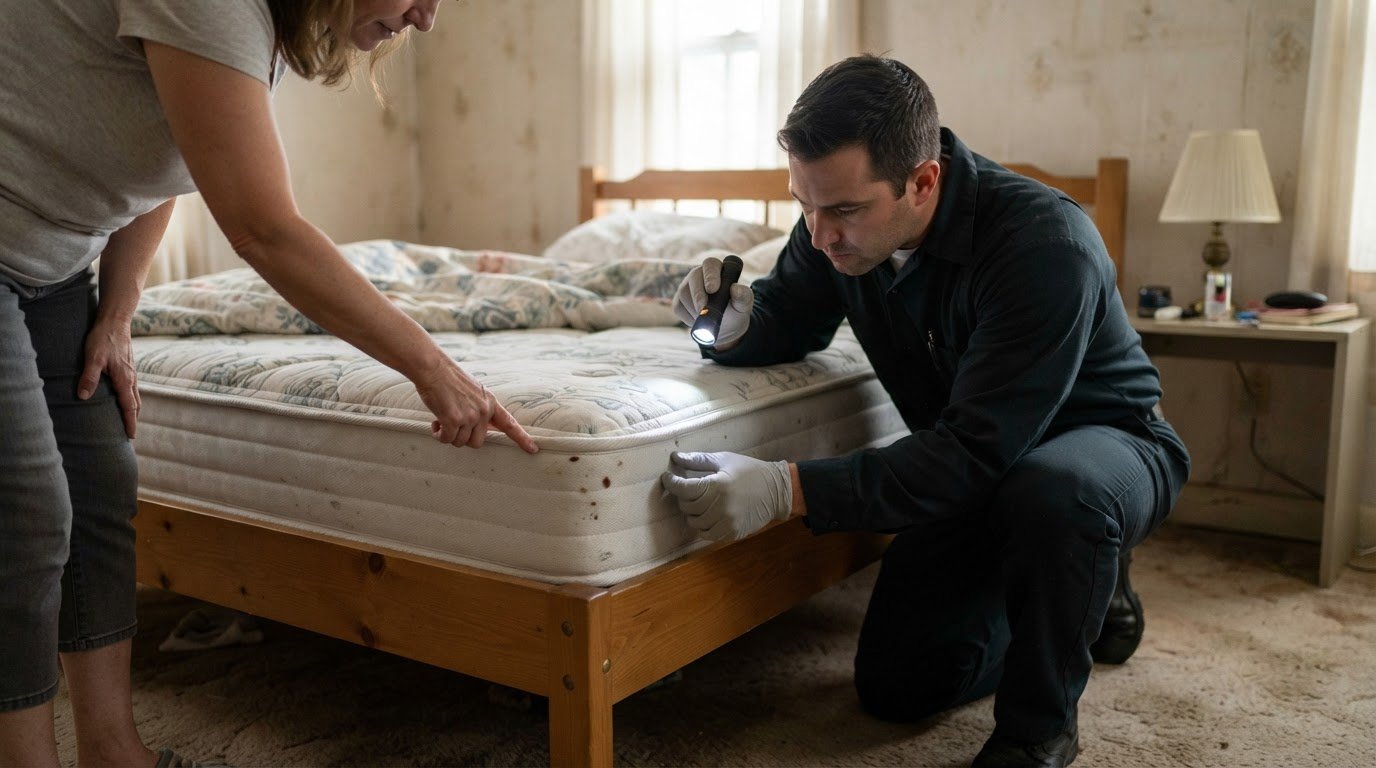
    An effective inspection looks at where pests shelter, travel, and reproduce, not just where they appear. Bed bugs, for example, may hide in seams and cracks near sleeping areas, while rodents can enter or move through concealed gaps. A professional assessment should connect observed activity with likely hiding places and explain which areas the treatment addresses. Those findings help shape follow-up.

    Re-Treatment and Service Guarantees

    Re-treatment terms vary by company and service plan. Review which pests and areas are covered, how long the terms apply, and what conditions affect follow-up. Ask how continuing activity is assessed and whether reassessment is included. Clear terms help distinguish a planned follow-up from a separate service.

    Documenting Unresolved Infestations

    To document an unresolved infestation, record the pest identified, where activity occurs, inspection findings, and areas treated. Note what has changed since service and any recommended follow-up. If concerns remain, raise them with the company and request a clear explanation of the findings and next steps. This keeps the discussion focused on the property and the evidence of pest activity.

    Why pest extermination may not prevent recurring infestations

    Recurring activity can reflect pest life cycles, missed sources, entry gaps, or incorrect identification. Integrated Pest Management (IPM) combines inspection, monitoring, prevention, and targeted control.

    Pesticide Use and Recurrence

    A pesticide treatment may affect exposed pests without reaching those in hiding or nearby nests. It may also leave entry gaps and accessible food sources unaddressed. IPM combines targeted treatment with monitoring and prevention instead of relying on repeated applications alone. Service intervals should suit the pest and treatment goals. Quarterly pest control means one visit every three months, but that schedule may not suit every infestation.

    Identifying the Pest Species

    Accurate identification matters because ants, termites, bed bugs, and rodents need different inspection and control approaches. Misidentification can lead to checking the wrong hiding places while leaving the actual source untouched. A professional assessment considers clues such as body shape, droppings, damage, and activity patterns. Ant trails and damaged wood, for example, raise different questions during an inspection.

    Returning Pests or Ongoing Treatment

    To tell whether pests are returning or activity is continuing, track sightings by date, location, and type. Compare your notes with the professional’s explanation of expected results and follow-up. Pest life stages affect how quickly activity changes, and some treatments may not reach eggs or concealed pests. Ask which signs suggest new activity and what pattern should prompt reassessment.

    Changing Exterminators or Contacting a Landlord

    Consider another professional assessment if repeated visits leave the pest unidentified, the source unexplained, or next steps unclear. Tenants should report recurring activity to the landlord or property manager, especially when pests appear in shared areas. Entry points matter: according to the Centers for Disease Control and Prevention, mice can enter through holes just 1/4 inch (6 millimeters) in diameter, so sealing gaps can help prevent their return. Dated records can clarify where activity continues.
    My exterminator didn't solve the problem: what to do next

    Conducive conditions that sustain infestations

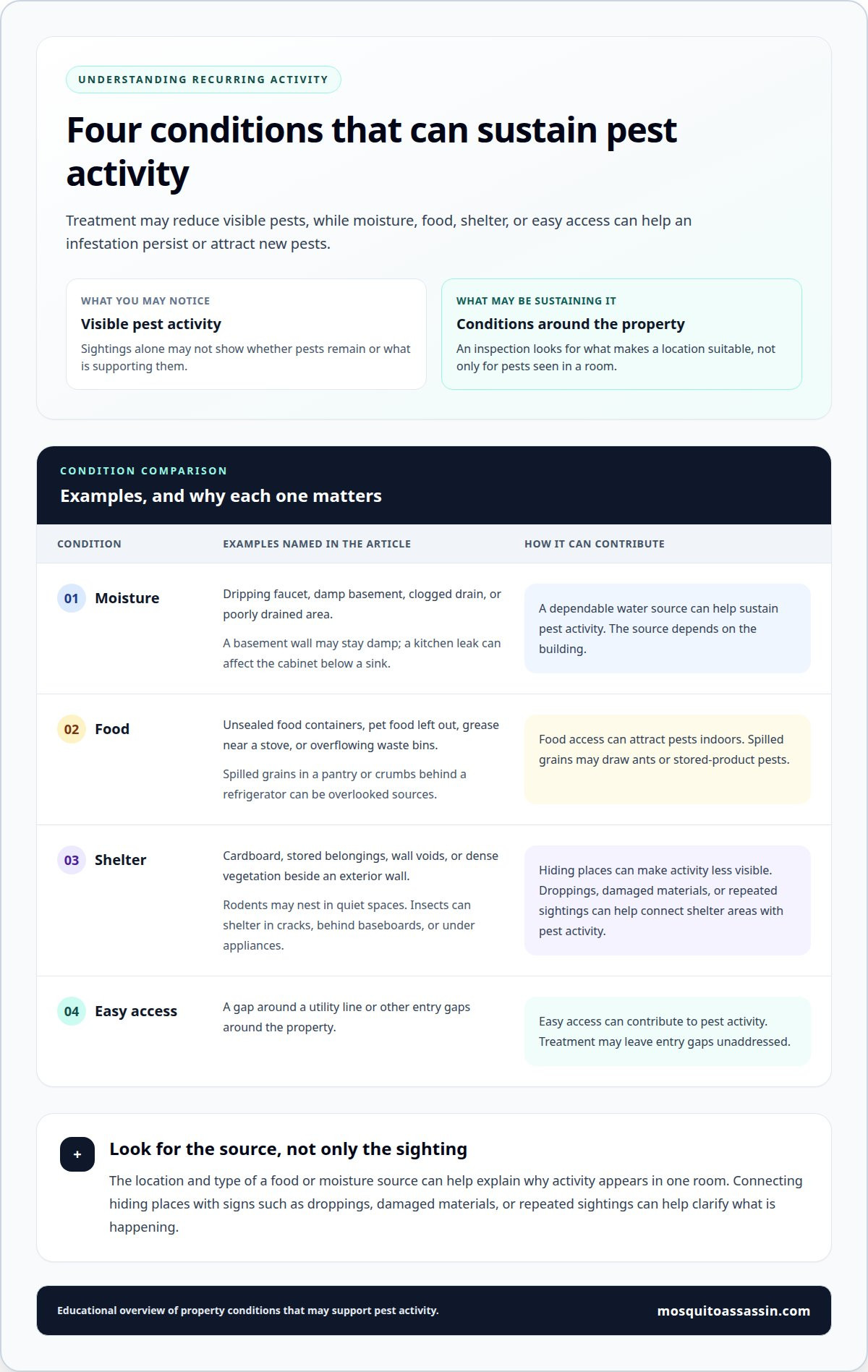
    Pest activity can continue when a property offers moisture, food, shelter, or easy access. A leaking pipe beneath a sink, crumbs behind an appliance, or a gap around a utility line can each contribute to the problem. Treatment may reduce visible pests, but these conditions can sustain an infestation or attract new pests. An inspection looks for what makes a location suitable, not only for the pests seen in a room.

    Moisture is one factor worth assessing. A dripping faucet, damp basement, clogged drain, or poorly drained area can provide a dependable water source. Repairing leaks, using a dehumidifier, and improving drainage may help reduce moisture around a home. The source depends on the building: a basement wall may remain damp, while a kitchen leak can affect the cabinet below a sink. A professional can assess whether moisture is linked to the pest activity.

    Food access matters, too. Unsealed food containers, pet food left out, grease near a stove, and overflowing waste bins can attract pests indoors. Spilled grains in a pantry may draw ants or stored-product pests; crumbs behind a refrigerator can provide food in an overlooked spot. The location and type of food source can help explain why activity appears in one room rather than another.

    Shelter can include cardboard, stored belongings, wall voids, or dense vegetation beside an exterior wall. Rodents may nest in quiet, undisturbed spaces, while insects can shelter in cracks, behind baseboards, or under appliances. A professional inspection connects these hiding places with signs such as droppings, damaged materials, or repeated sightings. This evidence helps distinguish an indoor source from pests entering from outdoors.

    Consider the whole setting, not just one sighting. A pest management professional assesses moisture, food, shelter, entry routes, and the identified species together. Recurring ants near a damp cabinet, for example, may involve both a water source and a concealed travel route. Addressing conditions that attract pests alongside targeted control can reduce the resources sustaining their activity.

    Removing food and nesting sources

    Control can fall short if pests still have access to food or shelter indoors. A professional can connect activity to specific sources, such as pet food beside a bowl, crumbs beneath an oven, or nesting material in storage. Recommendations are most useful when they address the identified pest and its access to those resources, rather than treating every room alike.

    Food sources can be small but persistent. An inspection may focus on pantry spills, open packages, cooking grease, uncovered waste, and food left in pet bowls. Recurring ants near a pantry shelf, for example, may point to spilled sugar or an unsealed container. A professional can explain which source is relevant and recommend suitable storage or cleaning changes for that location.

    Waste handling also affects pest access. A pest management professional may recommend containing refuse, cleaning residue around bins, and noting whether activity concentrates near a kitchen or garage waste area. Prevention depends on the pest and inspection findings. Rodent activity near stored pet food calls for different attention than flies around food scraps.

    Nesting sources can include cluttered storage, stacked cardboard, fabric, and undisturbed spaces behind furniture or appliances. These materials may provide shelter or make signs of pests harder to spot. A professional can identify suspected nesting areas and recommend changes that improve inspection access, such as organizing stored items or reducing unnecessary cardboard. Recommendations should suit the pest’s habits and the room’s use.

    What prevention measures can a pest control professional recommend after extermination? They may include secure food storage, prompt cleanup of spills, managed waste, reduced clutter, and attention to places where pests feed or shelter. The professional should explain how each measure relates to observed activity, such as pantry pests near dry goods or rodents around stored materials. Clear, source-specific guidance helps focus prevention where it matters.

    For recurring activity linked to food or nesting sources, request professional pest control guidance tailored to the property.

    Mosquito Assassin Pest Control

    Mosquito Assassin Pest Control LLC can help assess persistent pest concerns and identify professional control options suited to the problem. When activity continues, a focused evaluation can consider the pest, where it appears, possible entry points, and conditions that may sustain it. General Pest Control Plans address common household pest concerns, while Rodent Control Service and Bed Bug Treatment address those specific pest problems. The appropriate option depends on the pest and property conditions. Professional guidance can also help connect prevention measures, such as reducing food and nesting sources, with the observed activity. For help discussing recurring pest activity, contact Mosquito Assassin Pest Control LLC.

    Make the next step a focused one

    If my exterminator didn’t solve the problem, use the continuing activity to clarify what needs attention next. A clear account of where pests appear, what has changed, and which areas remain affected helps a professional assess the situation. The goal is a plan based on the pest and property, not repeated treatment without a clear reason.

    Mosquito Assassin Pest Control LLC offers General Pest Control Plans, Mosquito Control Service, and Rodent Control Service. The suitable service depends on the pest and property. Professional guidance can connect observed activity with an appropriate next step.

    Contact Mosquito Assassin Pest Control LLC to discuss recurring pest activity and possible professional support. A clearer plan can help you move forward with confidence.

    Frequently Asked Questions

    What can a pest control professional do if an exterminator didn’t eliminate the pest problem?

    If my exterminator didn’t solve the problem, another professional can assess the evidence and identify what needs closer attention. They can review previous service notes, confirm the pest identification, and evaluate whether treatment covered the relevant areas. Continuing sightings in a room that was not previously inspected, for example, can guide a more targeted assessment and a revised management plan.

    How long does pest control treatment take to work?

    How long treatment takes to work depends on the pest species, life stage, infestation pattern, and treatment method. Some treatments target pests on contact, while others rely on pests encountering treated areas. Ask the professional what changes to expect, which signs indicate ongoing activity, and when follow-up assessment is appropriate. These details give a clearer timeline than one estimate for every pest.

    What questions should I ask my exterminator about repeat treatments and follow-up?

    Ask which signs should prompt follow-up, what areas the next inspection will cover, and how activity will be assessed. Clarify whether monitoring is part of the plan and how to report new sightings between visits. If treatment requires access to particular rooms or storage areas, ask what access the technician needs. These questions make the process clear and keep communication focused on pest activity.

    Disclaimer: The information provided on this blog is for general informational purposes only and is not intended as professional pest control advice. Conditions vary by property, environment, and location. Reading this content does not create a service agreement. For an inspection or professional recommendations, please contact Mosquito Assassin Pest Control LLC directly.
  • Prepare Your Home for Winter Pests by Blocking Entry Points

    Prepare Your Home for Winter Pests by Blocking Entry Points

    Preparing your home for winter pests starts with blocking the gaps they use to get inside. As temperatures fall, pests may seek food, water, warmth, and shelter indoors. Sealing entry points is a lasting way to pest-proof a home, but it works best alongside other prevention steps rather than relying on an exterior insecticide treatment alone.

    It’s understandable to focus on visible pests, but small openings around doors, windows, pipes, vents, and foundations can be just as important. This guide explains why pests enter during winter and how to compare DIY proofing, professional pest control, entry-point repairs, and exterior insect barriers. You’ll also learn how to reduce access to food and shelter, and when recurring signs of activity may call for a closer assessment.

    Key Takeaways

    • Compare DIY proofing with professional pest control by considering whether the issue is a visible entry point or recurring pest activity.
    • Look beyond doors and windows: utility openings, vents, and chimneys can also provide access indoors.
    • Learn what signs may point to pest activity and why sealing an opening requires care if an animal could still be inside.
    • See how exterior insect barriers fit alongside repairs, and why they shouldn’t replace closing gaps pests use to enter.

    1. DIY pest proofing compared with professional services

    DIY prevention can help homeowners address clear, accessible conditions around a property. A loose door threshold, a torn screen, or food left in an open package gives you a specific issue to correct. These measures are practical for routine upkeep, but they may not explain repeated activity in several rooms. Preparing your home for winter pests works best when prevention is matched to the signs present.

    Manage stored materials as part of the inspection. According to the Washington State Department of Health, store firewood, lumber, or hay at least 12 inches off the ground and away from your home. Check whether boxes or supplies in a garage obscure signs along walls. Keep storage organized enough to notice changes, such as disturbed packaging or droppings, without moving materials unnecessarily.

    A professional inspection is useful when the pest is unclear, activity persists, or evidence appears in more than one area. A pest professional can assess the signs, likely source, and conditions around affected spaces. Targeted treatment can then be considered alongside appropriate proofing, rather than treating an entire home without identifying the concern. For example, recurring rodent signs call for a different response than occasional insects near a window.

    Contact a pest professional when you find repeated signs, hear scratching inside walls, or see damage that returns after repairs. These clues can indicate activity beyond a simple, visible opening. Avoid disturbing suspected nests or animals; instead, note where and when the signs appear. That information helps focus an inspection and determine whether DIY upkeep is sufficient or professional pest control is appropriate.

    Pest-control and pesticide requirements can vary by location in the United States. This article focuses on practical physical prevention, professional inspection, and targeted service, rather than interpreting local or state rules.

    2. Why Do Pests Go Into Homes During Winter?

    Cold weather changes where pests find shelter, but it doesn’t make every pest inactive. Mice and rats may keep moving indoors in search of protected nesting places, while some insects enter diapause, a hibernation-like state. Warm indoor areas can also allow certain pests to stay active through winter. These differences matter: a mouse in a wall void and a cluster of insects near an upper window call for different responses.

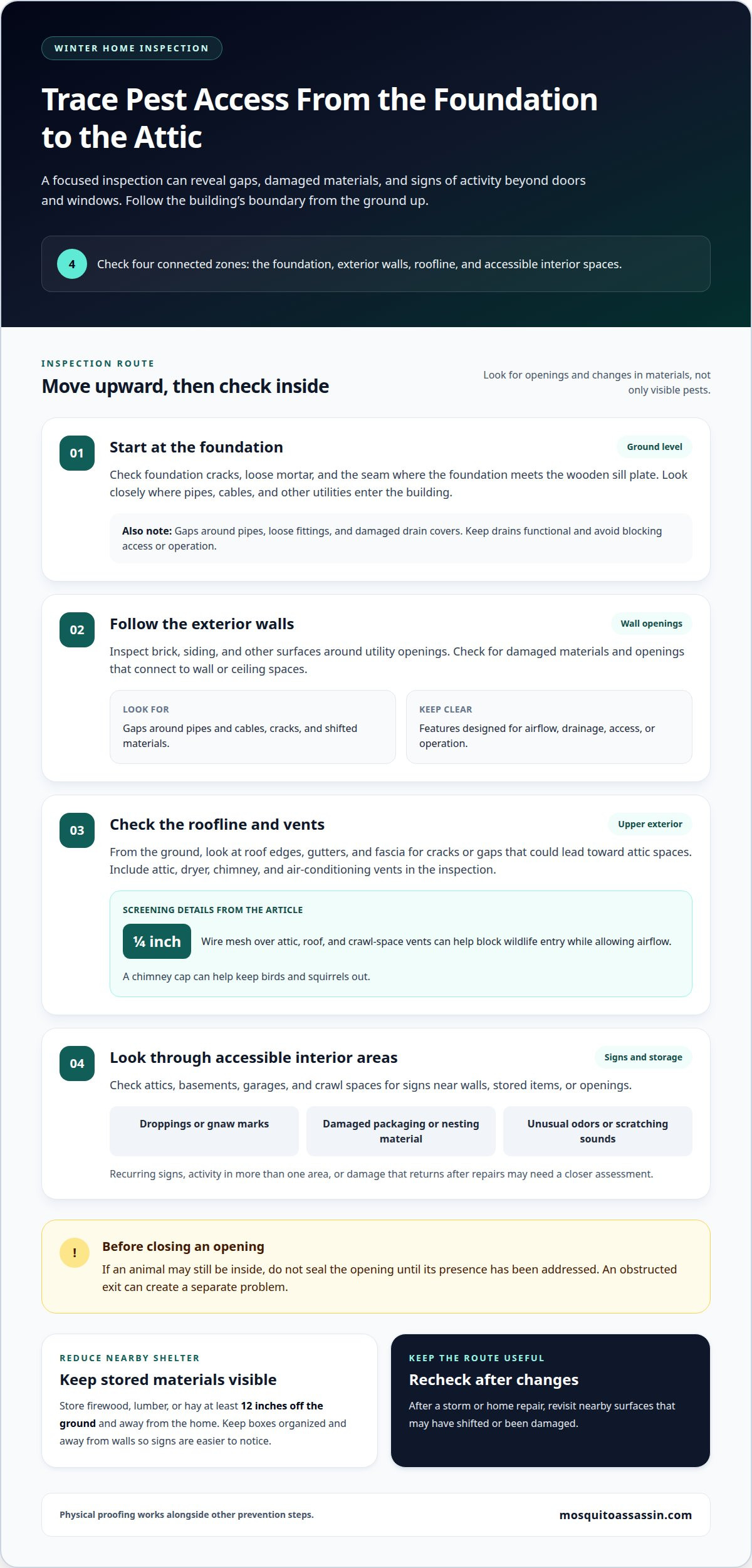
    Look beyond door and window seals for structural openings. From the ground, inspect roof edges, gutters, and fascia for cracks or gaps that could lead to attic spaces. In the basement, examine the seam where the foundation wall meets the wooden sill plate. Loose mortar or cracks in that area can provide access from the foundation into enclosed wall spaces.

    In attics, basements, garages, and crawl spaces, focus on the boundary between the building and the outdoors. Look for damaged materials, openings near the roofline, and signs that stored items have been disturbed. Repair exterior damage with materials suited to the surface. If evidence suggests an animal may be inside an opening, address its presence before sealing the opening.

    Use a consistent inspection route so overlooked areas don’t become recurring blind spots. Start outside at the foundation, continue along the walls, then check the roofline and accessible interior areas. After a storm or home repair, revisit nearby surfaces that may have shifted or been damaged. This focused approach can connect pest activity with a structural change, rather than limiting checks to door seals.

    Why do pests seek indoor shelter as winter approaches? Falling temperatures can make sheltered spaces more favorable for warmth, nesting, and access to food. A sudden increase in activity after cold weather may point to an entry route or indoor conditions worth investigating.

    3. Vents, chimneys, drains, and pipes as pest entry points

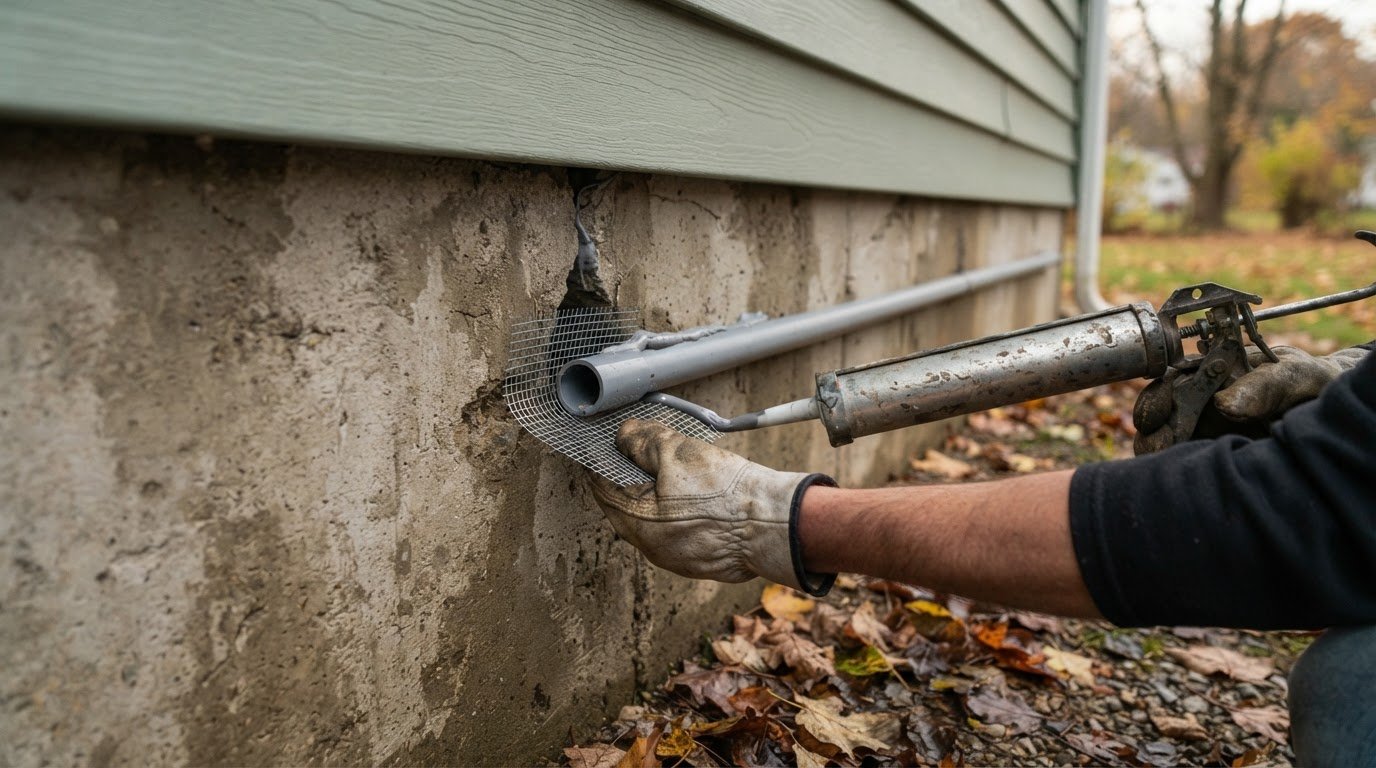
    Utility openings can bypass otherwise tight doors and windows. Inspect brick, siding, and foundation areas where cables, pipes, or other utilities enter. Seal exposed gaps around these openings without covering features designed for airflow or drainage. Check again after repairs or storms, since disturbed materials can create new routes into wall and ceiling spaces.

    Attic, dryer, chimney, and air-conditioning vents need suitable screening that still allows the equipment to function. One-fourth-inch wire mesh over attic, roof, and crawl-space vents can help block wildlife entry. A chimney cap can help keep birds and squirrels out. Don’t seal an opening if an animal may still be inside; an obstructed exit can create a separate problem.

    Drains and pipe openings also deserve attention. Look for loose fittings, gaps around pipes, or damaged covers that could let pests pass. Keep drains clear and functional, and use appropriate covers where the design allows. Insulate exposed piping if needed, and seal gaps around pipes without interfering with access or operation.

    Food, water, warmth, and shelter can make indoor spaces attractive once pests get inside. Leaks near utility rooms, accessible pet food, and cluttered storage areas can support pest activity. Check basements, attics, and garages for droppings, gnaw marks, damaged packaging, nesting material, unusual odors, or scratching sounds. These signs may point to an infestation that needs more than a screen repair.

    Manage outdoor materials so they don’t create sheltered routes toward the house. Store firewood away from exterior walls and raised off the ground where practical. Keep lumber and hay similarly separated, and avoid piling mulch against siding or foundation openings. Move stored boxes away from walls, keep lids on bins, and leave vents and pipes accessible for inspection. These steps reduce hiding places and keep entry points visible.

    Prepare Your Home for Winter Pests by Blocking Entry Points

    4. Home insect barrier treatments

    An exterior insect barrier is intended to manage insect activity around selected outdoor areas. It differs from physical exclusion: a barrier may affect activity near a building, while repairs address openings pests can use. Neither approach explains every sighting on its own. For example, insects gathering at a sunny window may have a different source than insects appearing near stored food.

    The key question is whether a barrier fits the insect and its location. Cluster flies and lady beetles may gather around exterior surfaces before entering sheltered spaces. Ants or cockroaches can be associated with different conditions, including accessible food or moisture. Identifying the insect and where it appears helps determine whether an exterior barrier is relevant or another response is needed.

    Barrier treatments have limits. They don’t repair torn screens, close gaps beneath doors, or remove food and clutter that attract pests indoors. A treatment may be less useful if the main route remains open or if the insect is already established inside. Consider it one part of a broader prevention plan, not a stand-alone solution for every winter pest.

    Which pest-control products are safe around children and pets, and what are their risks? No product can be assumed appropriate for every household. Potential risk depends on the product and the chance of children or pets contacting it, so discuss household conditions with a licensed pest professional before choosing a treatment.

    A professional assessment can connect insect identification with the building’s layout and activity patterns. It can also distinguish an occasional outdoor cluster from recurring indoor sightings that suggest an unresolved route. Match the response to the pest: consider a barrier only when it addresses the observed activity, and treat repairs and indoor conditions as separate parts of prevention.

    Mosquito Assassin Pest Control

    Mosquito Assassin Pest Control can help address recurring indoor pest concerns when proofing alone hasn’t resolved the activity. General Pest Control Plans and Rodent Control Service provide professional support when winter pests keep appearing or signs suggest rodents are entering the home. Share what you’ve noticed, such as droppings, damaged food packaging, scratching sounds, or repeated insect activity. These details help clarify the concern and the next appropriate step. Sealing gaps and reducing access to food and shelter remain useful prevention measures, but persistent signs may call for professional pest control. For help with winter pest concerns, contact Mosquito Assassin Pest Control.

    Keep prevention working through the season

    Think of preparing your home for winter pests as an ongoing property-maintenance habit, not a one-day project. Building work and weather can affect seals, while recurring signs may reveal routes that weren’t obvious before. Keep a brief record of pest activity and repairs still needed. That makes future decisions more focused than relying on memory.

    If pest activity continues despite practical proofing, a professional assessment can help connect the signs with possible entry routes and treatment options. Mosquito Assassin Pest Control provides General Pest Control Plans, Mosquito Control Service, and Rodent Control Service. Discuss your pest concerns with Mosquito Assassin Pest Control to choose a suitable next step.

    Disclaimer: This blog provides general information, not professional pest-control advice. Conditions vary by property, environment, and location. Reading this content does not create a service agreement. For an inspection or professional recommendations, contact Mosquito Assassin Pest Control LLC directly.

    Frequently Asked Questions

    Why Do Pests Go Into Homes During Winter?

    Many pests move indoors as outdoor conditions cool because homes can provide warmth, shelter, food, and water. Rodents may remain active in protected spaces, while some insects enter a resting state during winter. A heated basement, pantry, or wall void can offer conditions that support activity. Indoor pest sightings may therefore continue even when outdoor temperatures are low.

    Which pests commonly enter homes in winter in the United States?

    Mice, rats, and cockroaches are common winter indoor pests across the United States. Depending on the region and property, residents may also encounter ants, spiders, crickets, fleas, ticks, or clothes and pantry moths. The pest type can offer clues: moths near stored food suggest a different concern than scratching sounds or gnaw marks that may point to rodents.

    How do mice and rats get into homes, and how can you seal entry points?

    Mice and rats can use openings around foundations, door frames, pipes, and garage doors. Look for fresh gnaw marks, disturbed insulation, or droppings near these routes. Repair damaged seals and close accessible cracks with materials suited to the opening. If signs point to activity inside a wall or ceiling, professional pest control can help identify the source before repairs conceal evidence.

    How can you keep ants, cockroaches, spiders, and other insects out during winter?

    Reduce the conditions that help insects persist indoors. Clear food residue from counters, avoid leaving dishes in the sink, and remove kitchen and bathroom trash regularly. Check incoming houseplants for fungus gnats, spider mites, or aphids before bringing them inside. For recurring sightings, note where and when insects appear; activity near a window may suggest a different route from insects found around pantry supplies.

    How should you inspect and seal gaps around doors, windows, pipes, vents, and foundations?

    Inspect the building exterior and corresponding indoor areas, such as a basement wall beneath a utility opening. Look for failed caulk, worn seals, loose mortar, torn screens, and gaps around service lines. Keep vents clear and functional while repairing surrounding openings. Repeat the inspection after storms, repairs, or major weather changes, which can expose damage or shift materials.

    How can you pest-proof food, trash, pet food, and indoor plants?

    Store pantry goods and pet food in sealed containers, and close packages after each use. Remove kitchen and bathroom trash routinely, then clean residue from the bottom of bins. Inspect new plants and their soil before moving them indoors. Fungus gnats can become troublesome when potting soil stays too wet or dense foliage limits air circulation, so monitor plant conditions as well as visible insects.

  • 7 Early Signs of Pest Activity: A Guide for Managers

    7 Early Signs of Pest Activity: A Guide for Managers

    A single sighting of a pest in your facility is rarely the start of a problem; it’s often the signal that an infestation is already well-established. For managers in Erie, Crawford, and Ashtabula counties, the stakes are high. A failed health inspection or a string of negative customer reviews can cause lasting damage to a brand’s reputation that takes years to rebuild.

    It’s natural to feel anxious about the hidden corners of a commercial property, especially during the peak rodent months in Pennsylvania and Ohio. You want to ensure your facility remains a safe and professional environment for both employees and guests. By learning how to identify the subtle signs of pest activity in a business, you can take control before property damage or regulatory issues arise.

    This guide offers a practical checklist of early indicators to monitor. You’ll learn which high-risk areas require the most attention and how to move toward a professional resolution that secures your building for the long term.

    Key Takeaways

    • Recognize how early detection protects your business reputation and ensures compliance with local health inspections.
    • Learn to identify the signs of pest activity in a business through subtle visual, auditory, and olfactory cues before they become obvious.
    • Pinpoint high-risk entry points such as loading docks and utility gaps to stop infestations at the source.
    • Distinguish between the unique indicators left by rodents and cockroaches to better understand the specific threats to your facility.
    • Implement a long-term prevention strategy through professional monitoring and staff awareness programs to maintain a secure environment.

    Why Early Detection of Pest Activity is Critical for Your Business

    Identifying the initial signs of pest activity in a business acts as the first line of defense for any commercial facility. Small indicators, such as a single dropping or a smudge along a baseboard, are rarely isolated incidents. They are early warnings that, if ignored, can rapidly evolve into a full-scale infestation. For businesses in Northwest Pennsylvania and Northeast Ohio, where seasonal shifts drive pests indoors, proactive monitoring is the most effective way to maintain a safe and professional environment.

    Compliance with local health department standards is another non-negotiable factor. Regulatory bodies in Erie, Crawford, or Ashtabula counties prioritize public health, and evidence of pests can lead to immediate citations. Beyond the legal requirements, a clean facility ensures that inventory remains uncontaminated and the building remains structurally sound. Professional oversight helps identify vulnerabilities in the building envelope before pests can exploit them.

    The Financial Impact of Delayed Action

    Ignoring pest activity leads to compounding costs. Rodents, which are particularly active in Pennsylvania during winter months, are notorious for gnawing on electrical wiring and insulation. This behavior can lead to expensive structural repairs or even fire hazards. Additionally, contaminated stock must be discarded, representing a direct hit to the bottom line. Understanding pest control methods and identification helps managers recognize these threats before they require extensive intervention. Regulatory fines and temporary closures due to health violations can further drain resources and disrupt operations.

    Protecting Your Brand Reputation

    In a digital-first world, a single customer sighting of a pest can go viral in minutes. Negative online reviews or social media mentions regarding sanitation can permanently stain a brand’s image. This loss of trust is often harder to repair than the physical building itself. Furthermore, a pest-free workplace is essential for employee morale. Staff members deserve a clean, secure space to perform their duties without the stress of an unsanitary environment. Establishing a routine through commercial pest control strategies ensures that the business remains a reputable pillar of the local community. Professional monitoring provides the peace of mind that the brand’s integrity is protected year-round.

    The Three Senses of Pest Identification: Sight, Sound, and Smell

    Pest identification is a sensory discipline that requires more than just a passing glance at a facility. While a direct sighting is the most obvious indicator, it’s often the last one to manifest before a population grows out of control. To protect your facility, you must use a combination of sight, sound, and smell to detect the earliest signs of pest activity in a business.

    Visual Indicators and Physical Debris

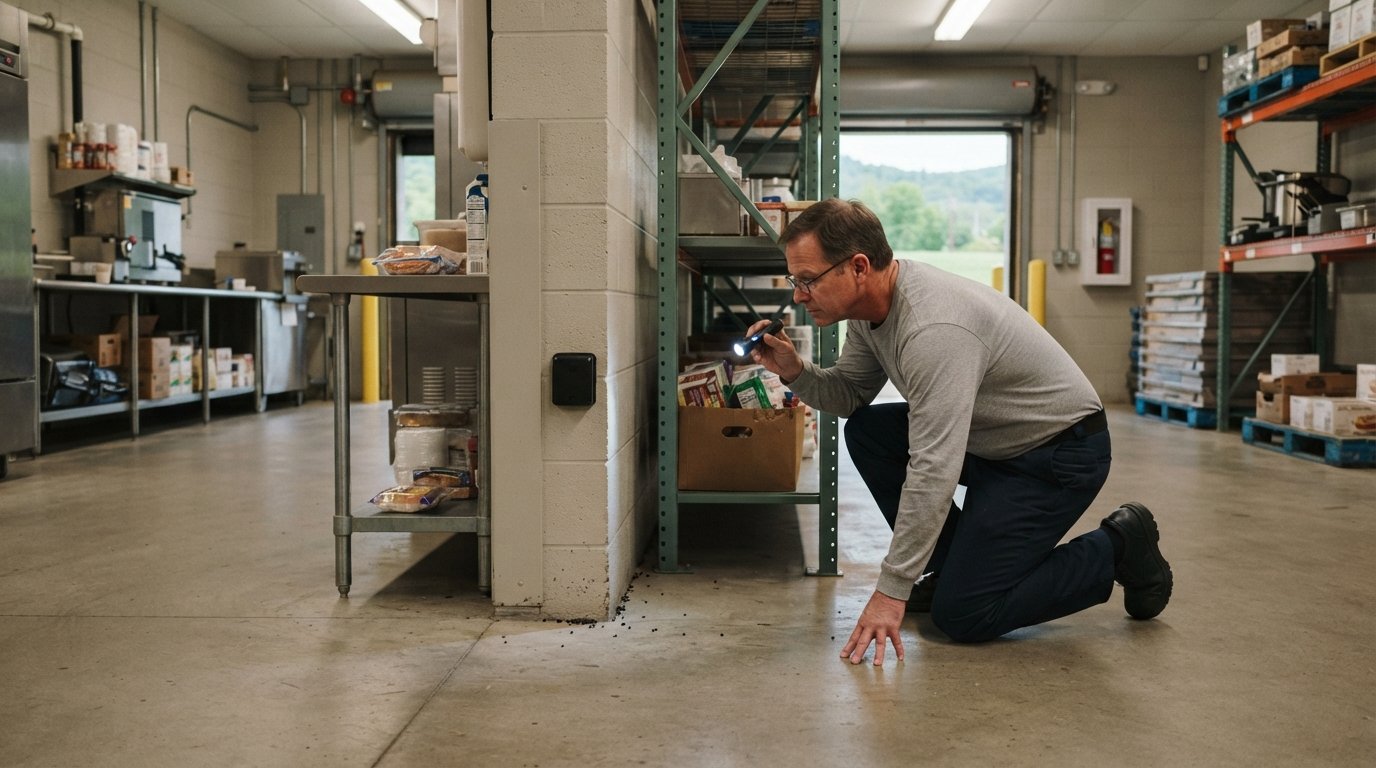
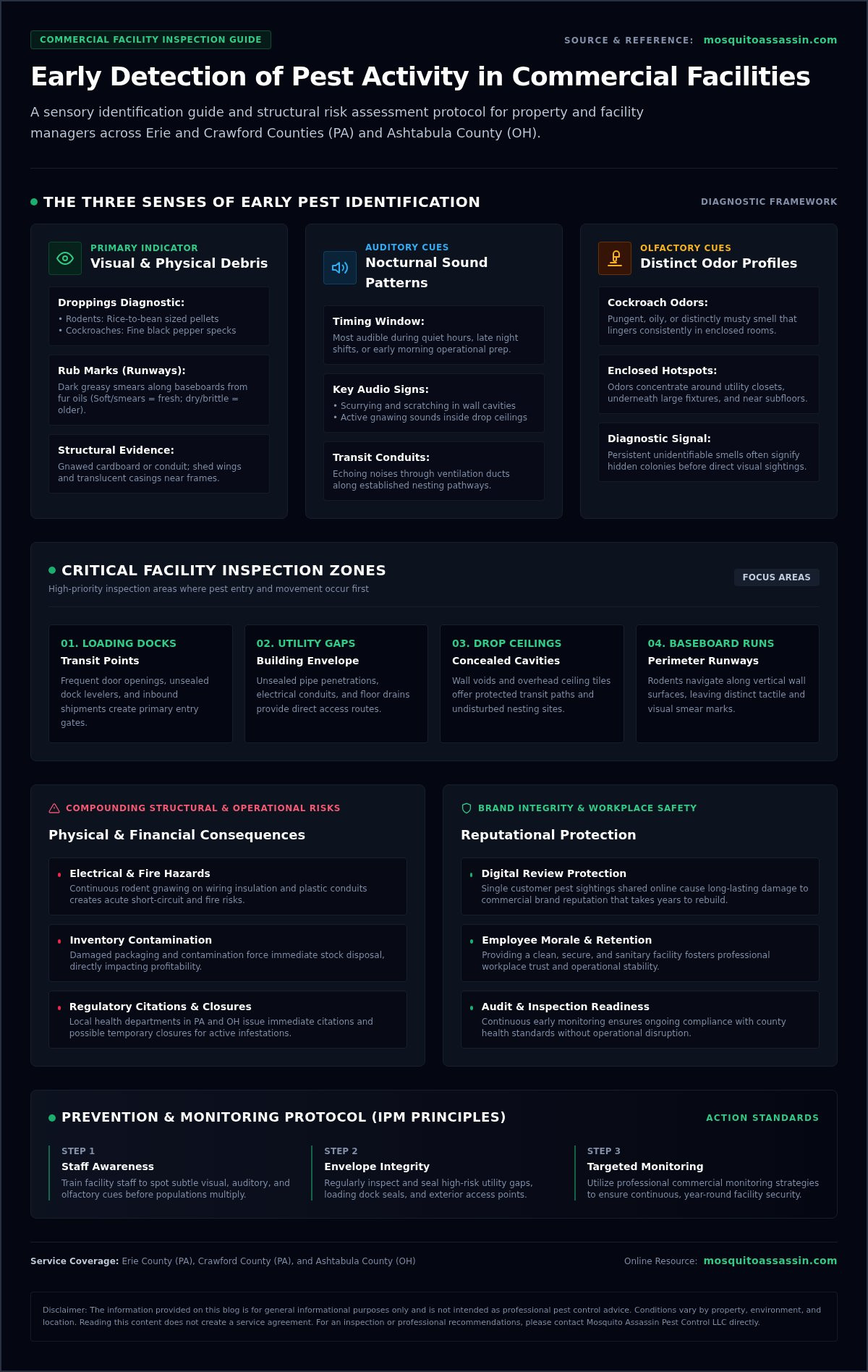
    Visual evidence is usually the most concrete way to confirm signs of pest activity in a business. Droppings are a primary indicator; rodent droppings are typically the size of a grain of rice or a bean, while cockroach droppings resemble small specks of black pepper. Gnaw marks on cardboard packaging or plastic conduits are another red flag, as rodents must chew constantly to manage their teeth. You might also find discarded wings or translucent casings near window sills or door frames, which suggest an established colony nearby.

    Tactile evidence is equally telling for managers who know where to look. Rodents often follow the same paths along baseboards, leaving behind dark, greasy smear marks known as rub marks. These are caused by the oils and dirt in their fur. Fresh rub marks feel soft and smear easily, while older ones are brittle and dry, helping you determine how recent the activity is. Following Integrated Pest Management principles, identifying these visual and physical cues allows for targeted intervention rather than broad chemical application.

    Auditory and Olfactory Cues

    The sounds of an infestation are often most audible during the quiet hours of the night or early morning. Scurrying, scratching, or gnawing sounds coming from wall voids, drop ceilings, or crawlspaces are classic indicators of rodent activity. In the quiet of a closed office or warehouse, these noises can be surprisingly loud, echoing through ventilation ducts. These sounds are rarely random; they usually follow a pattern as pests move between nesting sites and food sources.

    Odors provide another layer of diagnostic information that many managers overlook. Cockroaches produce a distinct, musty, or oily smell that lingers in damp or poorly ventilated areas like basements and breakrooms. In contrast, an established rodent infestation often creates a sharp, pungent, ammonia-like odor caused by accumulated urine. If you detect these smells in your facility, professional pest control may help reduce risk and restore a sanitary environment. If you suspect your property is at risk, reaching out for commercial pest management can provide a definitive solution for your business in Erie, Crawford, or Ashtabula counties.

    Differentiating Signs Between Common Commercial Pests

    Understanding the specific signs of pest activity in a business allows managers to communicate clearly with professionals and implement the right exclusion strategies. While many pests seek the same basic needs (food, water, and shelter), the evidence they leave behind is distinct. Misidentifying a pest can lead to ineffective self-treatment or delayed professional intervention, which only allows the population to grow and the damage to worsen.

    Rodent Activity in PA and OH Businesses

    In Northwest Pennsylvania and Northeast Ohio, rodent behavior is heavily influenced by the climate. During the colder months in Erie and Crawford Counties, mice and rats aggressively seek entry into heated commercial buildings to escape the freezing temperatures. You’ll often find nesting materials like shredded paper, cardboard, or insulation tucked away in quiet corners of warehouses or storage rooms. These nests are frequently located near heat sources like water heaters or motor housings.

    Beyond nests, look for evidence of tampering with food storage in employee breakrooms. A chewed corner on a snack bag or scattered crumbs is a clear signal of an intruder. Travel paths are also telling. Rodents are creatures of habit, often hugging walls and leaving dark grease stains known as rub marks. These marks help differentiate their activity from smaller crawling insects that don’t leave such heavy residue. Identifying these paths is crucial for effective rodent exclusion and maintenance.

    Indicators of Small Crawling Insects

    Small crawling insects like cockroaches and ants leave different but equally concerning marks. Cockroaches prefer damp, dark areas such as under commercial sinks or behind large appliances. They leave behind small, pepper-like specks of excrement and egg cases, known as oothecae. These cases are often found wedged into cracks or crevices and indicate an active breeding population. They’re often translucent or dark brown, depending on the species, and are a major red flag for health inspectors.

    Ants and flies also leave specific clues that point toward sanitation or structural issues:

    • Ant Trails: Pheromone trails serve as a roadmap, attracting more pests to food or moisture sources. Unlike the random movement of some insects, ants move in a disciplined line, often leading back to a gap in the masonry.
    • Drain Flies: In commercial kitchens, the presence of flies often points to a breakdown in sanitation, specifically in floor drains or organic waste bins. They’re attracted to fermenting organic matter and indicate moisture control issues.
    • Odor Markers: Many crawling insects leave behind chemical scents that signal to others that your facility is a viable home.

    Recognizing these specific indicators is the first step toward a professional resolution. For comprehensive support, commercial pest control plans help manage these diverse threats effectively throughout the year.

    7 Early Signs of Pest Activity: A Guide for Managers

    High-Risk Areas: Where to Look for Pest Activity in Commercial Spaces

    Pests don’t wander aimlessly through a commercial building. They concentrate in areas that provide easy access to food, water, warmth, and seclusion. For managers, knowing exactly where to look for signs of pest activity in a business is the difference between a minor cleanup and a costly remediation project. In the regional climate of Northwest Pennsylvania and Northeast Ohio, these high-risk zones change with the seasons, requiring a vigilant eye on the building’s interior and exterior perimeter.

    Employee breakrooms and kitchens are often the primary source of attraction. Even small amounts of standing water under a sink or food residue behind a vending machine can support a growing population. Similarly, loading docks and delivery bays act as open invitations. These areas are frequently high-traffic zones where doors remain open for extended periods, allowing rodents and insects to slip inside unnoticed. Once inside, they often migrate toward utility closets and boiler rooms, which offer the consistent warmth they need during the harsh winters in Erie and Crawford counties.

    Sanitation and Food Prep Zones

    Regular inspections of food preparation areas must go beyond the countertops. Moisture is a major driver of infestations, so checking under industrial sinks and behind refrigeration units is essential. Floor drains are another common hotspot; if they aren’t cleaned regularly, they become breeding grounds for flies. Managers should also verify that all trash receptacles have tight-fitting lids and are emptied at the end of every shift to remove overnight food sources. Maintaining these standards is a critical part of commercial pest control and ensures your facility remains compliant with local health regulations.

    Structural Vulnerabilities and Entry Points

    The physical structure of your building often provides the very gaps pests use to enter. Utility penetrations for pipes and electrical lines are notorious for having small openings that mice or cockroaches can exploit. A gap as small as a quarter-inch is enough for a young mouse to squeeze through. Weather stripping on warehouse doors or exterior entries often wears down over time, creating a ground-level entry point that is easily overlooked. Storage areas filled with cardboard boxes are particularly dangerous, as cardboard provides both insulation for nests and a food source for certain insects. Identifying these vulnerabilities early allows for effective rodent exclusion and maintenance before a population becomes established. If you suspect your facility has been breached, professional pest control may help reduce risk.

    Establishing a Professional Monitoring and Prevention Strategy

    Transitioning from reactive identification to a proactive prevention strategy is the most effective way to safeguard a commercial facility. While recognizing the signs of pest activity in a business is a vital skill for any manager, it’s only the first step. A comprehensive approach focuses on building resilience through professional oversight, structural maintenance, and staff engagement. In regions like Erie and Crawford counties, where seasonal shifts dictate pest behavior, a consistent monitoring plan ensures that a building remains secure against local threats year-round.

    Effective prevention also requires a commitment to exclusion techniques. This involves sealing the building envelope to deny pests entry in the first place. By addressing the gaps around utility lines or repairing worn weather stripping, you remove the physical invitation that many pests are looking for. When these structural improvements are combined with routine professional monitoring, the likelihood of a significant infestation drops dramatically.

    The Role of Professional Inspections

    Professional inspections go far beyond a visual sweep of common areas. Technicians use specialized tools to examine inaccessible wall voids, high shelving, and complex machinery where pests often hide. These assessments form the basis of a customized Integrated Pest Management (IPM) plan, which prioritizes long-term prevention over temporary fixes. By identifying structural vulnerabilities early, professional pest control may help reduce risk and prevent the financial fallout of a failed health inspection. This methodical approach is essential for maintaining the professional standards expected in Northwest Pennsylvania and Northeast Ohio.

    Employee Training and Reporting

    A successful prevention strategy relies on the eyes and ears of the people who work in the building every day. Employee education programs empower staff to recognize early signs of pest activity in a business, such as unusual odors or physical debris, before they become obvious to customers. Encouraging a culture of cleanliness in shared breakrooms and storage zones significantly reduces the resources that attract pests in the first place. Managers should implement a simple internal log for reporting sightings, ensuring that potential issues are communicated immediately to the maintenance team.

    Consistent reporting allows for rapid intervention, which is far more cost-effective than remediating a large-scale infestation. To ensure your facility remains protected, you can Contact a professional for a commercial assessment to identify specific risks unique to your property. Combining professional expertise with a vigilant staff creates a multi-layered defense that protects both the building and the brand’s reputation.

    Disclaimer: The information provided on this blog is for general informational purposes only and is not intended as professional pest control advice. Conditions vary by property, environment, and location. Reading this content does not create a service agreement. For an inspection or professional recommendations, please contact Mosquito Assassin Pest Control LLC directly.
    Securing Your Business Against Hidden Threats

    Identifying early signs of pest activity in a business is a fundamental part of effective facility management. By focusing on sensory cues like unusual odors or scratching sounds and regularly inspecting high-risk zones like loading docks and breakrooms, you can stop infestations before they impact your professional brand. Proactive monitoring ensures your property remains compliant with local health inspections and protects your bottom line from the costs of structural damage or contaminated inventory.

    Understanding regional pest behavior is essential, especially given the intense rodent activity in Erie, Crawford, and Ashtabula counties during the colder months. Maintaining a clean work environment and a culture of immediate reporting helps keep your facility resilient against seasonal shifts. A methodical approach to exclusion and consistent monitoring is the most reliable path toward a secure operation. Professional pest control may help reduce risk and provide the peace of mind that your building envelope is thoroughly protected. Take the first step toward safeguarding your reputation by choosing a strategy rooted in local expertise and comprehensive protection.

    Request a professional inspection for your business

    Disclaimer: The information provided on this blog is for general informational purposes only and is not intended as professional pest control advice. Conditions vary by property, environment, and location. Reading this content does not create a service agreement. For an inspection or professional recommendations, please contact Mosquito Assassin Pest Control LLC directly.
    Frequently Asked Questions

    What are the most common signs of rodents in an office building?

    The most frequent indicators include dark, rice-sized droppings found in desk drawers or utility closets and gnaw marks on electrical cords. Rodents are a major concern in Northwest Pennsylvania, especially during the winter months when they migrate indoors for warmth. You might also notice greasy rub marks along the baseboards where they travel. Recognizing these signs of pest activity in a business early prevents a small intrusion from becoming a full-blown infestation that threatens employee health.

    How can I tell if my business has a cockroach problem before I see one?

    You can identify a cockroach presence by looking for small, black, pepper-like specks of excrement and translucent brown egg cases hidden behind large appliances. These pests also produce a distinct, musty odor that lingers in damp areas like breakroom sinks or basements. Since cockroaches are nocturnal and highly secretive, these sensory cues are often the first warnings you’ll receive before actually spotting an insect. Professional monitoring is the most effective way to confirm their presence.

    Are there specific pests that target retail stores in Pennsylvania?

    Retail stores in Erie and Crawford counties frequently deal with mice, ants, and spiders, which are attracted to the shelter and food sources provided by stockrooms. Rodent activity peaks in Pennsylvania during the winter as they seek refuge from the cold, often nesting in cardboard shipping materials. Ants are also common in retail spaces that have employee breakrooms or sell snacks, creating visible trails toward moisture sources. Regular inspections help identify these local threats before they reach the sales floor.

    What should I do if a customer reports seeing a pest?

    If a customer reports a sighting, you should immediately document the location and time in an internal log and contact a professional for a commercial assessment. Prompt action is critical to protect your brand reputation and prevent negative online reviews. An inspection can determine if the sighting was an isolated incident or a symptom of a larger problem. Proactive reporting shows a commitment to sanitation and helps maintain a professional environment that satisfies local health department standards.

    Can pests in a business cause structural damage?

    Yes, pests can cause significant structural damage by gnawing on essential building components or compromising wooden supports. Rodents are notorious for chewing through electrical insulation and wiring, which can create fire hazards or lead to expensive equipment failures. Termites and carpenter bees also pose risks to the integrity of wooden structures if left untreated. Identifying the signs of pest activity in a business early is the best way to avoid these compounding repair costs and protect your property.

    How often should a commercial property be inspected for pests?

    Most commercial properties benefit from routine bi-monthly inspections to ensure that prevention strategies remain effective across changing seasons. In the local climate of Northeast Ohio and Northwest Pennsylvania, pest pressures shift significantly between the humid summer and the freezing winter. Ongoing monitoring through a year-round protection plan is the only way to catch vulnerabilities before they are exploited. This consistent schedule allows for the maintenance of exclusion seals and the adjustment of monitoring tools as needed.

    What is the most common entry point for pests in a warehouse?

    Loading docks and delivery bays are the most common entry points because they are frequently left open for extended periods during shipments. Pests also exploit small gaps around utility pipe penetrations and electrical lines that enter the building. Worn weather stripping on large warehouse doors provides another easy path for rodents and crawling insects. Sealing these structural vulnerabilities is a core component of a professional exclusion strategy designed to keep a facility secure and protect your inventory from contamination.

    Disclaimer: The information provided on this blog is for general informational purposes only and is not intended as professional pest control advice. For an inspection or professional recommendations, please contact Mosquito Assassin Pest Control LLC directly.