
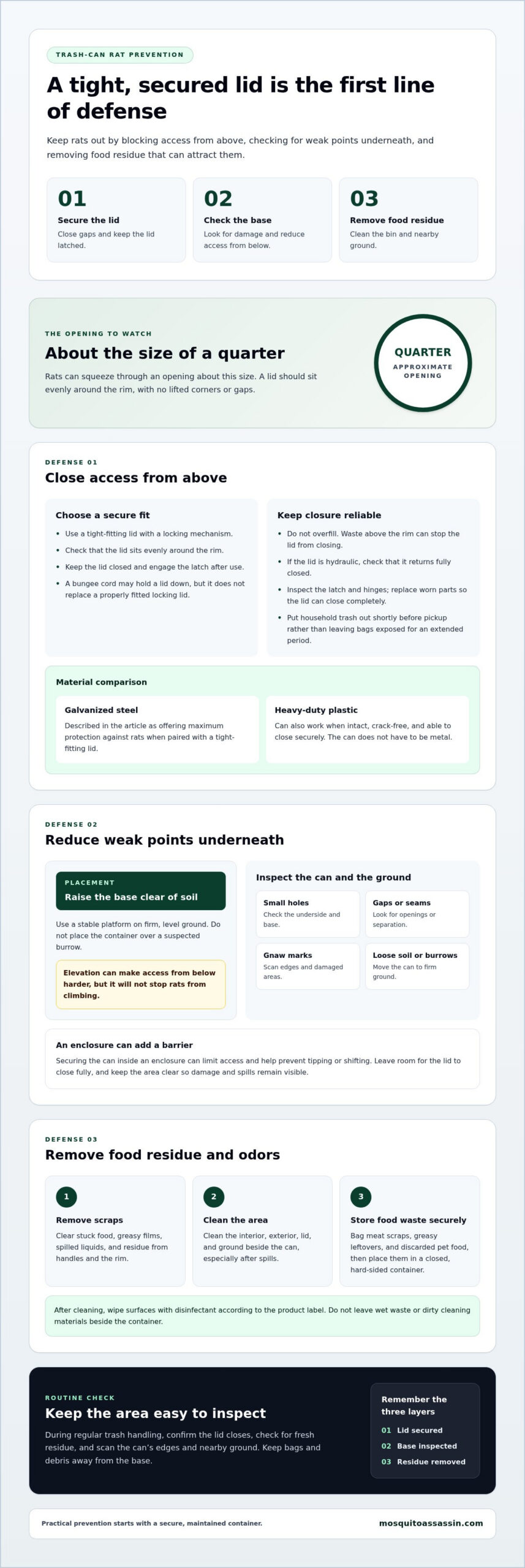
A tight-fitting, secured lid is the first line of defense against rats in trash cans. The practical answer to how to keep rats out of trash cans is to block access from above, reduce weak points underneath, and remove food residue that can attract them. A sturdy can helps, but regular upkeep matters too.
It’s frustrating to find a disturbed lid, a damaged can, or food scraps scattered around the bin. A well-fitted lid with a locking mechanism makes access harder. An elevated base and regular checks for holes or damage help address other ways rats may get in.
This guide covers how to choose and secure a lid, why the can’s base needs attention, and how cleaning and consistent storage habits can make the area less inviting. These steps can protect your trash and reduce conditions that attract rats to your home.
Key Takeaways
- Choose a can with a tight-fitting lid and a locking mechanism to make access more difficult for rats.
- Keep the container elevated and inspect its base for holes, gaps, or damage that could create an entry point.
- Clean food residue from the can and the surrounding area, and keep the lid closed between uses.
- When rats remain a concern beyond the trash area, professional rodent control may help address the wider problem.
1. Tight-fitting lids with locking mechanisms
NYC Health recommends storing all garbage in hard plastic, rat-resistant containers with tight-fitting lids. Choose a lid that sits evenly around the rim, without lifted corners or gaps. Rats can squeeze through an opening about the size of a quarter, so a close fit matters as much as lid weight.
Do rat-resistant trash cans need locking lids or metal construction? A secure, tight-fitting lid with a locking mechanism makes access harder, but the can doesn’t have to be metal. Heavy-duty plastic can also work if the lid closes securely and the container has no cracks.
To keep rats from climbing into outdoor cans, close the lid and engage its latch after each use. Don’t overfill the container, since waste above the rim can prevent the lid from closing. A hydraulic lid can make opening and closing easier, but check that it returns fully to the closed position.
Keep trash and dumpster lids closed between deposits, including after using them on collection day. Put household trash out on its regular collection schedule, shortly before pickup rather than leaving bags accessible for an extended period. These habits limit how long food waste is exposed.
Are bungee cords or rat-resistant lids effective and safe? A bungee cord may hold a lid down if it fits securely, but it doesn’t replace a properly fitted locking lid. Check that the cord stays attached without leaving a gap at the rim. A purpose-built rat-resistant lid offers a more dependable closure when correctly fitted. Inspect its latch and hinges for damage, and replace worn parts so the lid can close completely.
Choose a closure that takes human dexterity to open. Trash cans intended to keep rats out should have tight-fitting lids with locking mechanisms. A secure lid helps discourage rats from accessing the trash. In Washington, DC, residents should keep trash can and dumpster lids closed and avoid overfilling the cans.
High-density plastic can work if the lid stays closed and the can has no cracks, grease films, or exterior spills. Consider these conditions, along with the closure, when choosing and maintaining a can.
2. Elevated bottoms to deter burrowing
A raised base can make it harder for rats to reach a trash can from below. Keep the container on a stable platform that lifts its bottom clear of the soil, rather than placing it over a suspected burrow. Elevation won’t stop rats from climbing, so pair it with a secured lid and, when practical, an enclosure.
During routine upkeep, inspect the can’s underside and the ground below it. Look for small holes, separated seams, gnaw marks, or damage that could create an opening. Move the container to firm, level ground if its base sits over loose soil or a burrow entrance. Keep bags and debris away from the base so they don’t conceal damage or provide cover.
Securing the can inside a trash enclosure can limit access and prevent it from tipping or shifting. Choose an enclosure that allows the lid to close fully, and keep the surrounding area clear. Sound and light devices are less dependable: rats may become accustomed to them, and some devices can disturb pets. A cat may catch rodents, but a pet won’t secure the can or remove food sources.
Food waste such as meat scraps, greasy leftovers, and discarded pet food can attract rats. Bag scraps and put them in a closed, hard-sided container. Clean spills around the can promptly. A steady food supply can keep rats returning even when the container is elevated.
Outdoor poison can harm animals other than rats, so don’t leave it near trash cans. Traps also need careful placement and regular inspection to limit unintended access and address captured rodents. If activity continues around the bin, Mosquito Assassin Pest Control LLC’s Rodent Control Service can help assess the wider problem.
Trash cans with elevated bottoms can make it harder for rats to burrow into them from below. Rats may exploit weak points in the bottom of a garbage can, including small holes, gaps, or damaged areas. Periodic checks can reveal these vulnerabilities early.
3. Maintaining rodent-resistant trash cans
A rat-resistant container needs upkeep after purchase. Check the lid, hinges, seams, and base during routine trash handling. Cracks, loose fittings, and damaged seams can create openings, even in a sturdy bin. Smooth, seamless interiors have fewer joints where residue can collect or potential entry points can form. Replace a damaged container or stop using it for food waste until it’s repaired.
How do you clean trash cans to remove odors that attract rats? Empty the bin and remove stuck food scraps, then clean the interior, exterior, lid, and rim. Pay close attention to greasy films, spilled liquids, and residue around the handles. Clean the ground beside the can, too, to remove scraps that could keep rats returning.
Once the container is clean, wipe its surfaces with disinfectant according to the product label. Clean around the bin, especially after a bag leaks or food spills. Don’t leave wet waste or dirty cleaning materials beside the container. Regular cleaning helps prevent food odors and residue from building up on the inside and outside surfaces.
Storage matters, too. When practical, keep the container in a trash-can cabinet or enclosure, leaving enough room for the lid to close completely. An enclosure can secure the bin and limit access, but it shouldn’t hide damage or make routine cleaning difficult. Keep the floor and surrounding area clear so you can spot spilled food, gnaw marks, or a damaged base.
Make a quick inspection part of your household trash routine. Check whether the lid closes, look for fresh residue, and scan the can’s edges and nearby ground. If repeated cleaning and repairs don’t stop signs of rat activity, the problem may extend beyond the container. A professional assessment can help identify conditions around the property that need attention.
4. What type of trash can is most rat-proof?
A galvanized steel can with a tight-fitting lid is described as offering maximum protection against rats. Heavy-duty plastic is another option if the container is intact and closes securely. How to keep rats out of trash cans depends on the whole container, not just the material. Inspect the lid, seams, and base before choosing.
Compare metal and plastic by looking for weak points. A metal can may still allow access if its lid sits unevenly or its bottom is damaged. Plastic can work well if it has no cracks, grease film, or food spills on the exterior. Choose a can that’s easy to inspect and clean so wear and residue don’t go unnoticed.
Use these features to assess a potential container:
- Material: Look for galvanized steel or heavy-duty plastic.
- Lid: Check that it fits closely and closes completely.
- Body: Inspect seams and the base for holes or damage.
- Surface: Avoid exterior grease films and food residue.
A smooth, seamless interior has fewer joints that could become potential entry points or collect residue. Check corners and the rim, where scraps or greasy buildup may remain after emptying. A design that’s easy to clean makes routine upkeep easier. Damage to the base or an opening can undermine stronger walls, so inspect the bottom as carefully as the lid.
To keep rats out of trash cans, choose a container that suits how your household handles waste. An outdoor bin used frequently needs a lid that closes reliably after each deposit. Don’t overfill it, since that can prevent the lid from closing completely. Check for damage as the can wears, and replace it if holes or cracks create access. Durable material works best when the can is intact and the lid fits well.
Mosquito Assassin Pest Control: General Pest Control Plans
Mosquito Assassin Pest Control LLC’s Rodent Control Service can help when rats remain active despite changes to trash storage and upkeep. Repeated sightings, droppings, or gnaw marks in several areas may signal that the problem extends beyond one container.
Professional pest control can assess signs of activity and recommend a response suited to the property. General Pest Control Plans may help when several pest concerns need attention, while a rodent issue calls for the Rodent Control Service.
For guidance on recurring rat activity around your property, contact Mosquito Assassin Pest Control LLC.
Make prevention part of your property routine
Watch the area around the bin, not just the container itself. Repeated rat activity near a fence, shed, or food storage area may point to conditions that need attention beyond the trash area. Tracking where signs appear can help you tell whether a damaged bin is the main access point or part of a wider issue.
A lasting approach to keeping rats out of trash cans depends on noticing changes and responding consistently. If activity continues after you address obvious access points and food sources, professional pest control can assess the property and identify practical next steps. Mosquito Assassin Pest Control LLC helps property owners address ongoing rodent concerns.
Contact Mosquito Assassin Pest Control LLC to discuss your concerns and take an informed next step.
With consistent attention to the bin area, you can make prevention a manageable part of routine property care.
Disclaimer: This blog provides general information, not professional pest control advice. Conditions vary by property, environment, and location. Reading this content does not create a service agreement. For an inspection or professional recommendations, contact Mosquito Assassin Pest Control LLC.
Frequently Asked Questions
How to secure a trash can lid against rats
Use a lid designed for your specific trash can model, since an ill-fitting replacement may leave uneven gaps. Compare the lid’s shape and attachment points with the container before using it. If the original lid is missing or damaged, choose a matching replacement to avoid a loose fit. Keep the container on level ground, too, so it doesn’t tilt and disrupt the lid’s alignment.
What local rules apply to rat prevention and trash storage in the United States?
Trash-storage rules and collection instructions vary by municipality, so there’s no single set of local requirements for the entire United States. Follow the current waste-collection guidance for your community and any instructions for your address or shared disposal area, since collection procedures can differ by location.