Tag: ant identification

  • Carpenter Ant Treatment in Meadville, PA: A Comprehensive Guide

    Carpenter Ant Treatment in Meadville, PA: A Comprehensive Guide

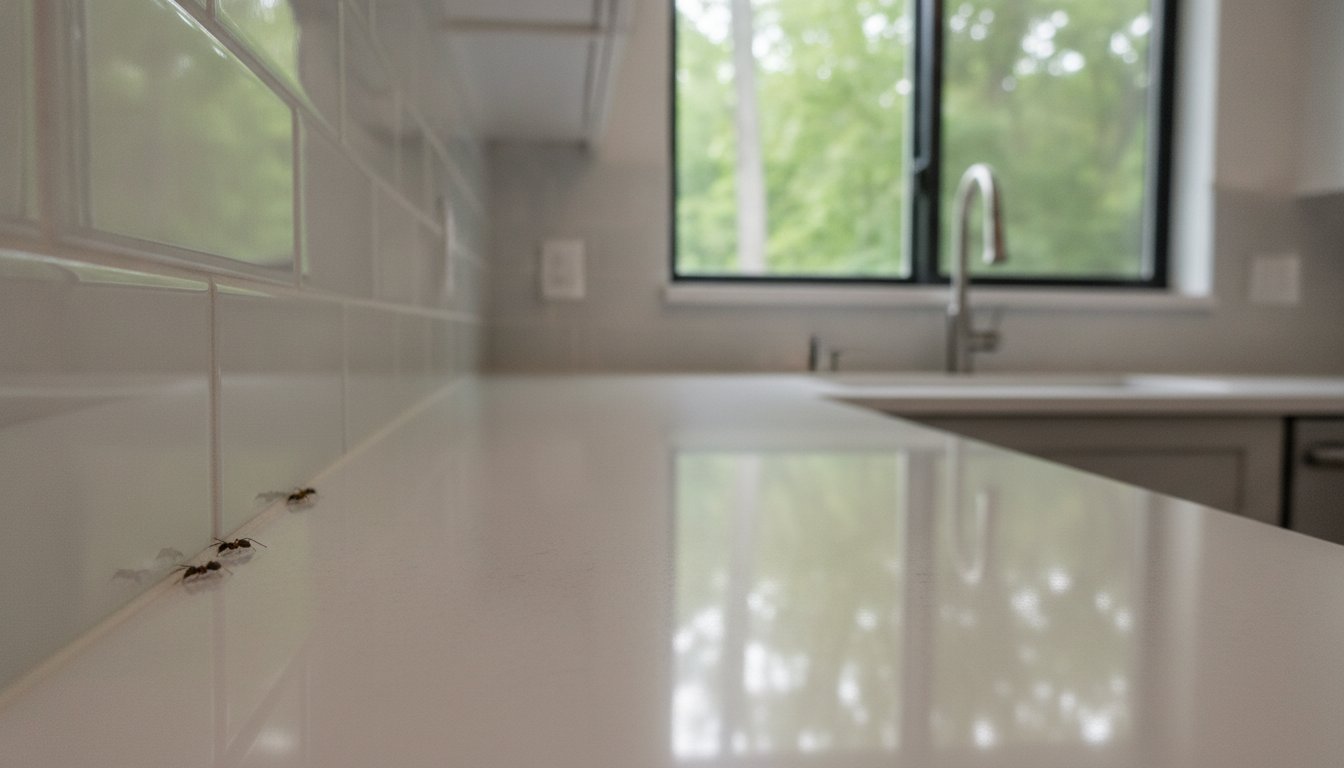
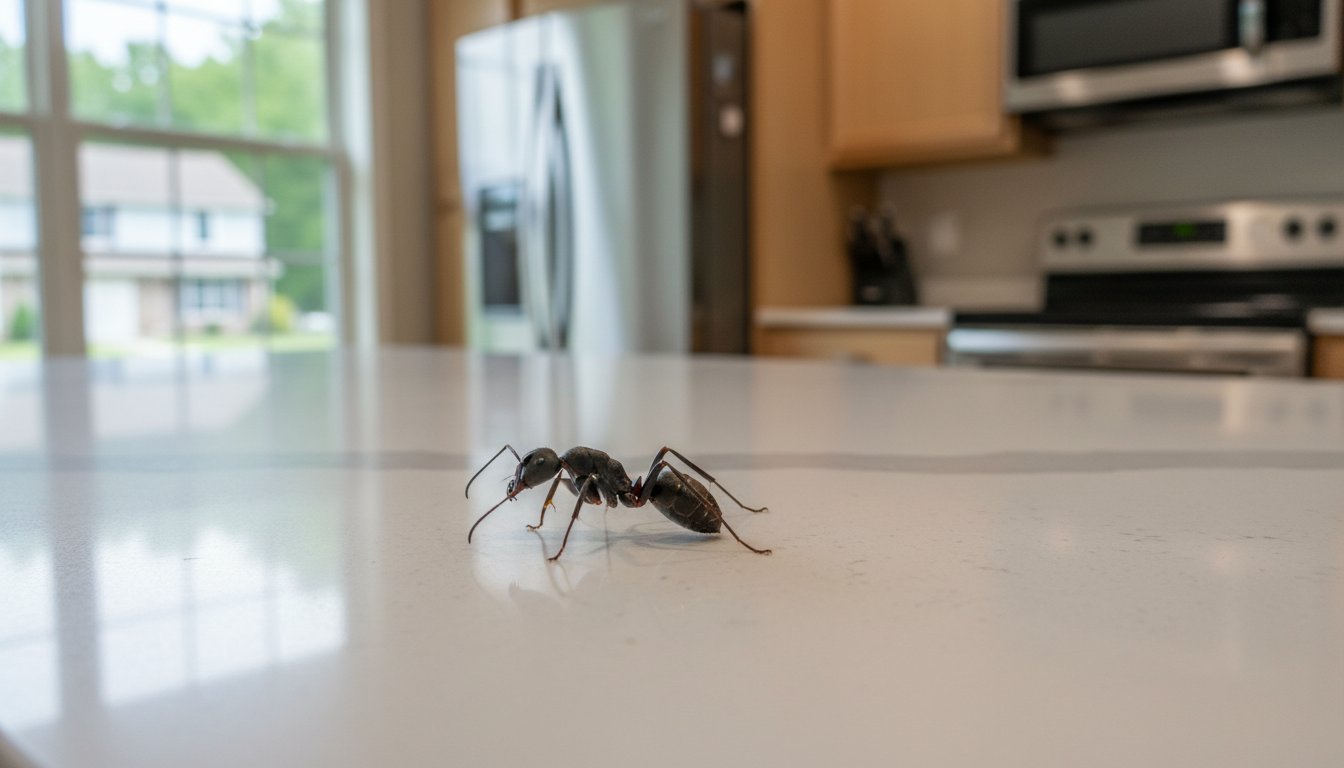
    If you spot a single large black ant on your kitchen counter in Meadville, it’s rarely a scout looking for crumbs; it’s often a sign that a colony of up to 10,000 workers is already excavating the structural beams of your home. Most homeowners in Crawford County find it incredibly frustrating when DIY sprays provide only temporary relief while the sound of rustling inside the walls continues. It’s common to worry about the high costs of structural repairs, especially when these pests are easily confused with termites. By understanding the unique biology of these wood-destroying insects, you can secure the right carpenter ant treatment Meadville PA to stop the destruction before it requires a contractor.

    This guide explores identification techniques, the limitations of over-the-counter solutions, and professional strategies to ensure the entire colony is neutralized. You’ll learn how to protect your property investment and gain peace of mind through proven prevention methods tailored for the Northwest Pennsylvania climate. Understanding these behaviors is the first step toward safeguarding your home from long-term damage.

    Disclaimer: The information provided on this blog is for general informational purposes only and is not intended as professional pest control advice. Conditions vary by property, environment, and location. Reading this content does not create a service agreement. For an inspection or professional recommendations, please contact Mosquito Assassin Pest Control LLC directly.
    Key Takeaways

    • Identify the physical characteristics of Pennsylvania carpenter ants, including their large size and dull black appearance.
    • Understand the relationship between outdoor parent colonies and indoor satellite nests to better locate the source of structural damage.
    • Differentiate between carpenter ants and termites by comparing their dietary habits and the cleanliness of their nesting galleries.
    • Implement effective prevention strategies, such as managing moisture levels and eliminating wood-to-ground contact around the foundation.
    • Discover why Integrated Pest Management (IPM) provides a systematic approach to carpenter ant treatment Meadville PA homeowners can use for long-term protection.

    Identifying Carpenter Ants in Meadville and Crawford County

    Carpenter ants, belonging to the genus Camponotus, represent one of the largest and most structurally significant ant species in Pennsylvania. These insects are distinguished by their dull black coloration and polymorphic size variations. Within a single colony, workers can range from small minors to large majors, creating a diverse workforce dedicated to nest expansion. Recognizing these physical traits is essential for homeowners considering the necessity of carpenter ant treatment Meadville PA requires to protect local properties from wood-boring pests.

    The activity cycle in Northwest Pennsylvania follows a predictable seasonal timeline. As the spring thaw begins and ground temperatures rise above 50 degrees Fahrenheit, dormant colonies become active. This period often brings the appearance of reproductive swarmers. These winged ants are frequently confused with termites; however, they’re identified by their elbowed antennae, pinched waists, and unequal wing lengths. Seeing these swarmers indoors often indicates a mature colony is already established within the structure.

    Common Species in Northwest Pennsylvania

    The Black Carpenter Ant is the most frequent invader in Crawford County residential areas. These ants typically measure between 0.25 inches and 0.55 inches in length. Unlike other common house ants, they possess a single, distinct node between the thorax and the abdomen. Their thorax also features a continuous, rounded curve when viewed from the side, a detail that helps professionals distinguish them from other wood-boring insects. They thrive in the moisture-rich environments found near local woodlands and aging timber.

    Signs of an Active Infestation

    Identifying an active infestation is the first step toward determining if a professional carpenter ant treatment Meadville PA protocol is necessary. Early detection helps mitigate potential structural damage. Homeowners should watch for specific behavioral and physical markers that indicate a nesting site is nearby. Professional pest control may help reduce risk when these signs are present:

    • Evening Activity: Observing large, dark ants in moisture-prone areas like kitchens, bathrooms, or laundry rooms during late-night hours when they’re most active.
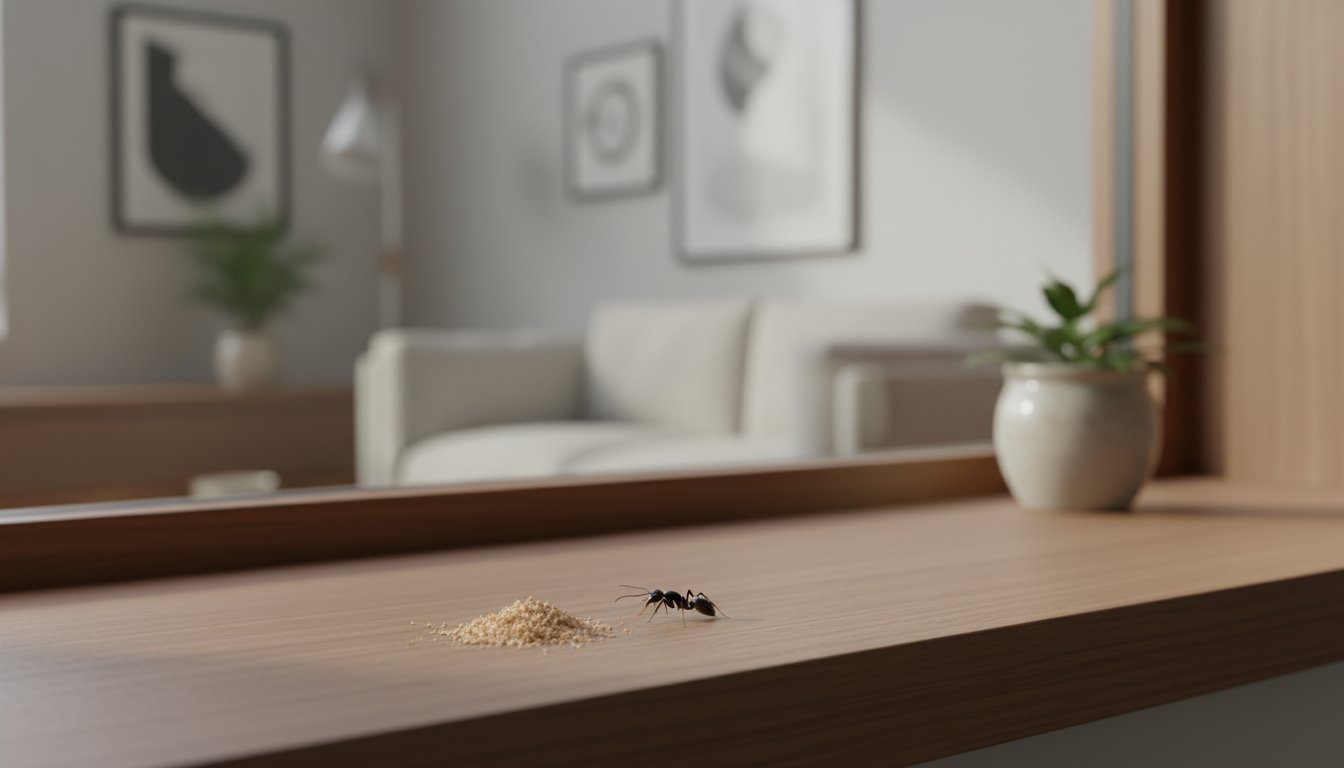
    • Presence of Frass: Finding piles of sawdust-like material near baseboards or windowsills. This “frass” often contains insect parts and insulation debris, as the ants don’t consume the wood but rather excavate it to create galleries.
    • Audible Sounds: Hearing faint rustling or clicking noises coming from behind drywall or within structural beams, particularly when the house is quiet at night.

    Disclaimer: The information provided on this blog is for general informational purposes only and is not intended as professional pest control advice. Conditions vary by property, environment, and location. Reading this content does not create a service agreement. For an inspection or professional recommendations, please contact Mosquito Assassin Pest Control LLC directly.
    Understanding Carpenter Ant Nesting and Structural Impact

    Carpenter ants are among the most misunderstood pests in Crawford County. Unlike termites, these insects don’t eat wood for food. They use their powerful mandibles to excavate galleries, carving out smooth tunnels to house their growing colonies. This biological distinction is critical because it changes how homeowners should approach a potential infestation. Identifying the specific nesting habits of these ants is the first step toward a successful carpenter ant treatment Meadville PA residents need to protect their property.

    Parent vs. Satellite Colony Dynamics

    A carpenter ant infestation usually involves a network of nests rather than a single location. The parent colony, which contains the queen and young larvae, typically stays outdoors in high-moisture environments like decaying tree stumps, fallen logs, or stacks of firewood. When the population grows, workers establish satellite nests inside nearby structures. These indoor nests house older larvae and pupae; they don’t require the high humidity levels the queen needs to survive. This is why satellite nests are often found in dry areas like wall voids, attic insulation, or behind appliances. For a permanent solution, the connection between these two locations must be broken.

    Moisture plays a dual role in how these ants select a home. Initially, they target wood that’s been softened by leaks or fungal decay. Common entry points in Meadville homes include window sills, door frames, and roof eaves where water may collect. Once the ants have established a satellite nest in damp wood, they can easily expand their galleries into sound, dry structural timber. This expansion is what leads to long term damage if the colony isn’t addressed quickly. If you suspect an active nest, professional pest control may help reduce risk to your home’s infrastructure.

    Potential Structural Consequences

    While carpenter ants work slower than subterranean termites, their impact is cumulative and dangerous. A mature colony can consist of thousands of workers constantly chewing through support beams. Over several years, this “honeycombing” effect hollows out the wood from the inside, often leaving the exterior surface looking perfectly normal. Specific risks include:

    • Weakened Load-Bearing Beams: Continuous excavation can reduce the weight-bearing capacity of floor joists.
    • Window and Door Misalignment: As frames are hollowed out, they may warp or sag, making it difficult to open or close windows.
    • Secondary Infestations: Abandoned galleries can become homes for other pests or trap moisture, leading to mold growth.

    The presence of multiple satellite nests within a single structure accelerates this damage. Because Meadville’s climate provides plenty of moisture during the spring and summer, carpenter ant treatment Meadville PA homeowners seek should focus on both the immediate indoor threat and the outdoor source to prevent the cycle from repeating.

    Disclaimer: The information provided on this blog is for general informational purposes only and is not intended as professional pest control advice. Conditions vary by property, environment, and location. Reading this content does not create a service agreement. For an inspection or professional recommendations, please contact Mosquito Assassin Pest Control LLC directly.
    Carpenter Ants vs. Termites: Key Differences for Homeowners

    Distinguishing between carpenter ants and termites is a critical first step for property owners in Crawford County. While both pests damage structures, they do so in fundamentally different ways. Termites are detritivores that consume cellulose found in wood, turning the structural beams of a home into a food source. Carpenter ants don’t eat wood; they simply excavate it to create nesting galleries. These ants forage outside the nest for proteins and sugars, often trailing toward kitchens or trash bins. Because their biology and habits differ, effective general pest control requires specialized strategies tailored to each species. Applying a termite-specific solution to an ant infestation rarely yields results.

    Physical characteristics provide the most reliable identification. Carpenter ants have a distinct, pinched waist with one or two nodes. Their antennae are elbowed, or bent, and their back is rounded. Termites have a broad, rectangular waist and straight antennae that look like tiny beads. Professional carpenter ant treatment Meadville PA focuses on these biological markers to ensure the correct protocols are used. Misidentifying these pests can lead to unnecessary damage if the wrong treatment is applied.

    Identifying Wood Damage

    Homeowners can often identify the culprit by inspecting the texture of the damaged wood. Carpenter ant galleries are remarkably clean and smooth, appearing as if they’ve been finished with fine-grit sandpaper. These ants are tidy and remove all debris from their tunnels. This debris, known as frass, consists of wood shavings, bits of soil, and dead insect parts. It’s often pushed out through small “kick out holes,” forming small piles that resemble sawdust. Termite damage is the opposite. Their galleries are typically filled with a gritty mixture of soil and mud, as subterranean termites use mud tubes to maintain moisture levels while they feed. These tubes are often found along foundation walls or floor joists.

    Swarmer Identification

    Identifying winged “swarmers” is common during the spring months in Meadville, typically between March and June. Ant swarmers have two pairs of wings that are unequal in length; the front wings are significantly larger than the hind wings. Termite swarmers also have four wings, but all four are the same length and often twice as long as their bodies. While termite wings break off easily and are often found in piles on windowsills, ant wings remain attached more firmly. Accurate identification during these swarming events is vital for securing the right carpenter ant treatment Meadville PA. Professional inspection is recommended when swarmers are found indoors, as this often indicates a mature colony is nesting within the structure.

    Disclaimer: The information provided on this blog is for general informational purposes only and is not intended as professional pest control advice. Conditions vary by property, environment, and location. Reading this content does not create a service agreement. For an inspection or professional recommendations, please contact Mosquito Assassin Pest Control LLC directly.
    Prevention Strategies for Meadville Properties

    Effective carpenter ant treatment Meadville PA starts with proactive prevention. Because these pests are attracted to moisture and decaying wood, maintaining a dry environment is the most critical step for local homeowners. Crawford County experiences an average of 43 inches of rainfall annually, which can lead to saturated foundations and hidden rot if not managed correctly. Reducing moisture levels around the foundation and within crawlspaces prevents the wood from softening, making it less attractive to nesting queens.

    Environmental Modifications

    Moisture control is the foundation of long term prevention. Leaking pipes under sinks or in crawlspaces should be repaired immediately; even a small drip creates the softened wood these ants prefer for nesting. It’s vital to ensure gutters are clear and downspouts direct water at least six feet away from the structure. When wood becomes water damaged or shows signs of decay, it should be replaced with pressure treated alternatives or synthetic materials to remove the primary attractant. Sealing cracks in the foundation and gaps around utility penetrations (such as where cable lines or pipes enter the home) prevents easy access for foraging scouts looking for new nesting sites.

    Landscaping Best Practices

    Landscaping choices often dictate how easily pests can reach a home. Many Meadville properties feature heavy mulch, which retains moisture and provides a perfect habitat for satellite colonies. Maintaining a 12 to 18 inch gravel or stone border between the lawn and the foundation significantly reduces the likelihood of ants crossing into the siding. Proper yard maintenance is a key component of comprehensive carpenter ant treatment Meadville PA strategies.

    Crawford County’s dense vegetation, including mature oaks and maples, often provides “bridges” for ants to bypass ground level defenses. Trimming tree branches and shrubs so they don’t touch the roofline or siding is essential. Additionally, homeowners should remove old stumps and decaying logs from the yard, as these serve as primary nesting sites for parent colonies. Firewood must be stored at least 20 feet away from the main structure and elevated off the ground to prevent it from becoming an easy entry point for wood destroying insects.

    If you suspect an active infestation, professional pest control may help reduce risk and protect your property.

    Disclaimer: The information provided on this blog is for general informational purposes only and is not intended as professional pest control advice. Conditions vary by property, environment, and location. Reading this content does not create a service agreement. For an inspection or professional recommendations, please contact Mosquito Assassin Pest Control LLC directly.
    Professional Management and Integrated Pest Management (IPM)

    Managing wood-destroying insects requires more than just reactive measures. Integrated Pest Management (IPM) offers a sustainable alternative to traditional broad-spectrum spraying. While older methods often rely on heavy chemical applications that only address visible ants, IPM focuses on understanding the biology and behavior of the pest. This method prioritizes long-term prevention by combining biological, physical, and targeted tactics. Effective carpenter ant treatment Meadville PA relies on this precision to ensure the entire colony, including the queen, is addressed rather than just the foragers seen on a kitchen counter.

    Regional expertise is vital because the climate in Crawford and Erie counties presents unique challenges. Localized pest control in Erie, PA and Meadville requires an understanding of how high humidity levels and seasonal temperature shifts affect wood-boring insects. Professionals in this region recognize that local architecture, often featuring older timber frames and specific crawl space designs, provides vulnerabilities that national chains might overlook. Knowledge of local tree species, such as the common black cherry or oak, also helps identify where outdoor parent colonies might be nesting.

    The Inspection Process

    A systematic evaluation is the foundation of any successful management plan. Professionals conduct a thorough walkthrough of the perimeter, attic, and basement to identify active trails. Since these ants are often nocturnal, technicians use non-invasive techniques to find hidden galleries without damaging the home’s structure. Documentation of moisture issues is a critical step; data from university extension offices suggests that nearly 90 percent of indoor carpenter ant nests are located near wood with a moisture content above 20 percent. Identifying these leaks or drainage problems is essential for a permanent resolution.

    Long-Term Protection Plans

    One-time applications rarely provide a permanent solution for established colonies. Incorporating monitoring into a broader year-round pest control strategy ensures that new queens don’t re-establish themselves in the same area. Follow-up visits are necessary to confirm the parent colony, which may be located outdoors in a nearby stump or landscape timber, is completely neutralized. Without this comprehensive approach, satellite colonies inside the home can survive and continue to cause structural damage. Professional carpenter ant treatment Meadville PA provides the oversight needed to maintain a pest-free environment throughout the changing seasons.

    Professional pest control may help reduce risk and protect the structural integrity of your property. For more information, please visit the online booking portal.

    Disclaimer: The information provided on this blog is for general informational purposes only and is not intended as professional pest control advice. Conditions vary by property, environment, and location. Reading this content does not create a service agreement. For an inspection or professional recommendations, please contact Mosquito Assassin Pest Control LLC directly.

    Protecting Meadville Homes from Structural Damage

    Maintaining a sound structure in Crawford County requires constant vigilance against wood-destroying insects. Unlike termites that consume cellulose, carpenter ants excavate smooth galleries to create satellite nests, often targeting structural timber with a moisture content exceeding 20 percent. Effective management relies on identifying these nesting sites and addressing the underlying environmental conditions, such as overgrown vegetation or leaking gutters, that attract them. Utilizing detailed Integrated Pest Management (IPM) protocols ensures that every carpenter ant treatment Meadville PA property owners receive is targeted and follows 2024 industry standards for effectiveness.

    For homeowners in Northwest Pennsylvania, working with a licensed and insured professional service provides a methodical approach to pest eradication. A locally owned and operated provider in the region understands the specific climate challenges, including the high humidity levels common in the Great Lakes basin, that lead to increased pest activity. Accessing a professional inspection helps identify early signs of structural compromise before they lead to significant repair costs. To address an active infestation or establish a preventative strategy, schedule a professional inspection through the online portal at mosquitoassassin.com. Taking proactive steps today helps safeguard the long-term integrity of a home against wood-destroying pests.

    Disclaimer: The information provided on this blog is for general informational purposes only and is not intended as professional pest control advice. Conditions vary by property, environment, and location. Reading this content does not create a service agreement. For an inspection or professional recommendations, please contact Mosquito Assassin Pest Control LLC directly.

    Frequently Asked Questions

    How can I tell if I have carpenter ants or regular house ants?

    Carpenter ants are significantly larger than common nuisance ants, typically measuring between 0.5 and 1 inch in length. While most house ants are about 0.125 inches long, carpenter ants have a distinct single node on their waist and a perfectly rounded thorax when viewed from the side. Finding coarse sawdust, known as frass, near wood structures is a 100 percent certain sign of carpenter ant activity rather than regular house ants.

    Do carpenter ants actually eat the wood in my Meadville home?

    Carpenter ants don’t eat wood for nutrition like termites do. Instead, they use their powerful mandibles to excavate galleries for nesting, which removes 100 percent of the wood in those specific channels. This process creates smooth tunnels that compromise the structural integrity of the timber over time. Because they don’t digest the material, they push the debris out of the nest, creating visible piles of wood shavings.

    Why do I see large black ants in my house even in the winter?

    Seeing active ants inside a Crawford County home during winter months usually means a colony is already nesting within the walls. When outdoor temperatures drop below 50 degrees Fahrenheit, local ants typically go into a dormant state. However, the internal heat of a home allows an established colony to remain active 365 days a year, foraging for food and water in kitchens or bathrooms.

    Can I get rid of a carpenter ant colony using store bought sprays?

    Store bought contact sprays generally only eliminate the 10 percent of the colony that is currently foraging outside the nest. These products often act as repellents, which can cause a colony to “bud” or split into 2 or 3 smaller colonies deeper in the structure. Effective carpenter ant treatment Meadville PA requires non-repellent materials that workers carry back to the queen for total colony elimination.

    What attracts carpenter ants to a specific house in Crawford County?

    Moisture is the primary attractant, as these ants prefer to nest in wood with a moisture content of 20 percent or higher. Leaking roof shingles, clogged gutters, or poor drainage around the foundation create the damp conditions they need. Properties with firewood stacked within 5 feet of the exterior walls or tree branches touching the roofline are at a significantly higher risk for infestation.

    Are carpenter ant treatments safe for my children and pets?

    Professional treatments utilize products registered by the EPA specifically for use in residential environments. Licensed technicians apply these materials in targeted areas like wall voids and crevices where pests hide but children and pets cannot easily reach. Residents are typically asked to stay off treated liquid surfaces for 2 to 4 hours until the application is completely dry to ensure safety.

    How long does it typically take to eliminate a carpenter ant infestation?

    Complete elimination of a colony usually takes between 14 and 21 days from the initial application. While homeowners often see a 90 percent reduction in ant activity within the first 48 hours, the remaining time is necessary for the bait to circulate through the entire population. This slow-acting process is vital because it ensures the queen is reached, preventing the colony from rebounding.

    Is a professional inspection necessary if I only see one or two ants?

    Seeing just 1 or 2 ants often indicates the presence of a much larger parent colony that can contain over 3,000 workers. These “scout” ants are sent out to find food sources for the rest of the group hidden inside the structure. Identifying the nesting site early can prevent structural damage that costs thousands of dollars to repair, making a professional assessment a practical step for long-term protection.

    Disclaimer: The information provided on this blog is for general informational purposes only and is not intended as professional pest control advice. Conditions vary by property, environment, and location. Reading this content does not create a service agreement. For an inspection or professional recommendations, please contact Mosquito Assassin Pest Control LLC directly.

  • How to Identify Ants in Erie, PA: A Homeowner’s Guide

    How to Identify Ants in Erie, PA: A Homeowner’s Guide

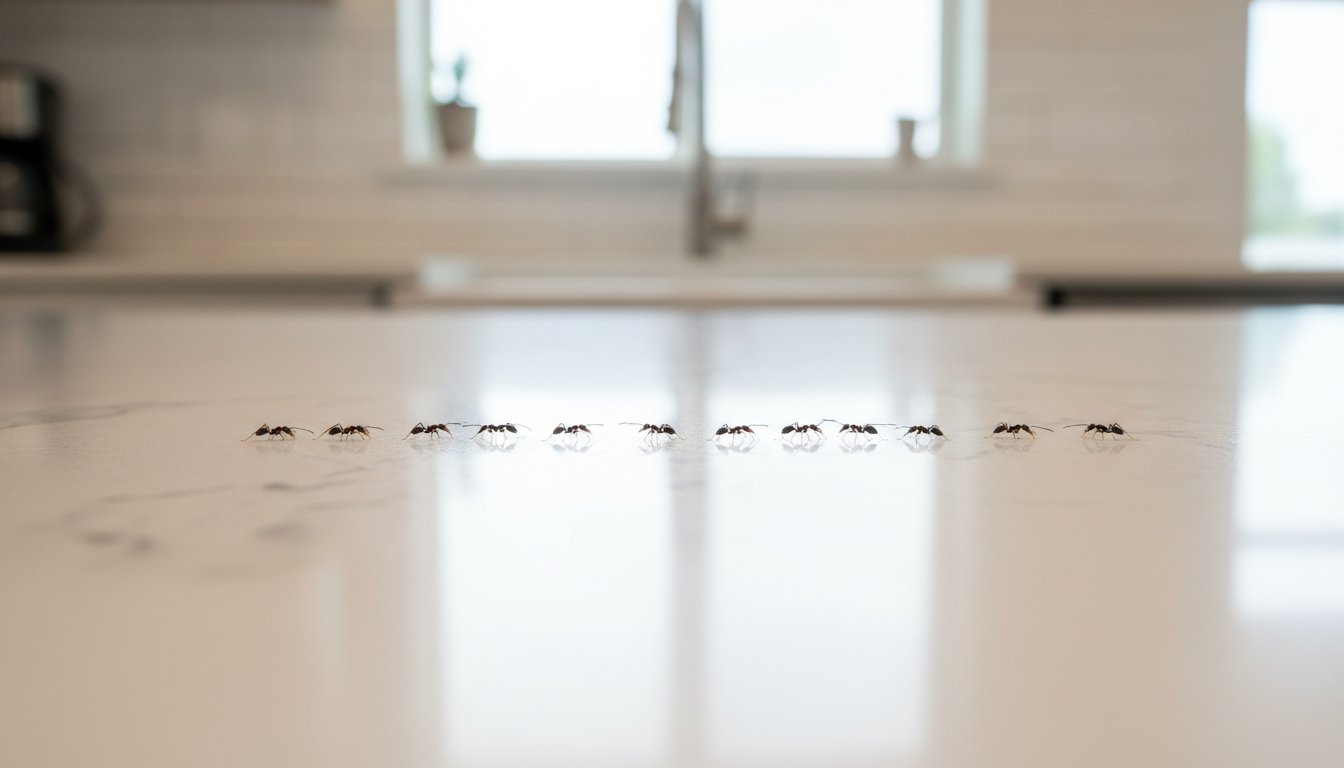
    You see that thin, dark line marching across your kitchen counter and your mind starts racing. Are these just harmless ants searching for a crumb, or are they a sign of a much bigger problem, like destructive carpenter ants chewing away inside your walls? For most homeowners, the uncertainty is the worst part. Trying to tell one tiny black ant from another feels impossible, and store-bought sprays often feel like a temporary fix. Learning how to identify ants in Erie is the first, most critical step to safeguarding your property and regaining your peace of mind.

    This professional guide was created to eliminate the guesswork for Erie homeowners just like you. We’ll give you the clear, reliable information you need to distinguish between common local invaders-from pavement ants to odorous house ants and the wood-destroying carpenter ant. By the end of this article, you will be able to confidently identify your specific ant problem, understand the real threat level to your home, and know the proven next steps to eliminate them for good. Let’s get you the answers you need to take back control.

    Key Takeaways

    • Use our simple 3-step checklist to confidently identify the ant species in your home before taking action.
    • This guide covers how to identify ants in Erie, detailing the 5 most common species and the specific threats they pose to your property.
    • Protect your home from costly damage by learning the critical visual differences between a harmless winged ant and a destructive termite swarmer.
    • Discover why most DIY ant treatments fail and learn the definitive signs that it’s time to call a professional for complete colony elimination.

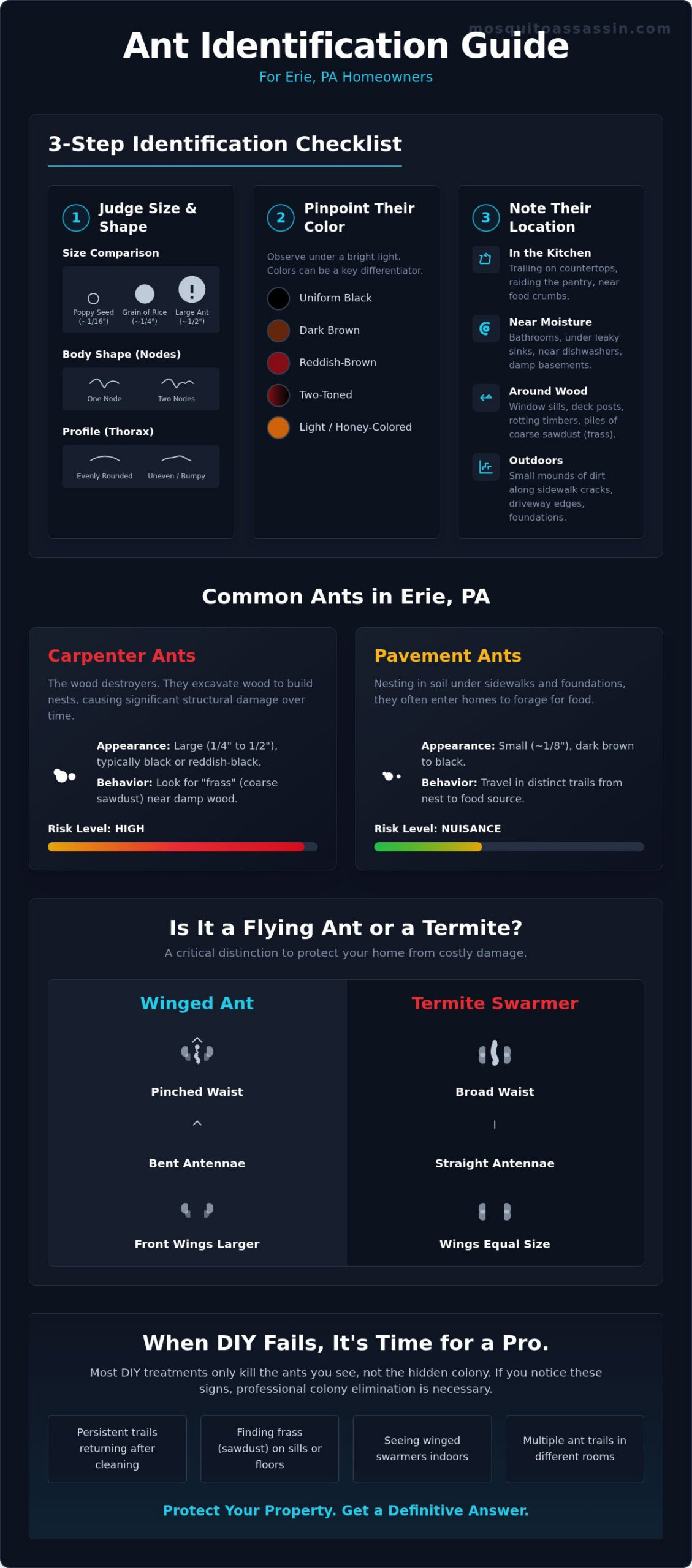
    Start Here: A 3-Step Ant Identification Checklist for Erie Residents

    Seeing a trail of ants marching across your kitchen floor is a frustrating sight for any homeowner. Before you can effectively eliminate them, you must first identify your opponent. Different ant species require different treatment strategies, and a misidentification can lead to ineffective results and prolonged infestations. Knowing how to identify ants in Erie is the first, most critical step toward reclaiming your home.

    A thorough visual inspection is crucial for accurate identification. Take your time to observe their behavior and physical characteristics. If you’re struggling to get a clear picture, don’t hesitate to reach out to the experts at Mosquito Assassin Pest Control LLC for assistance with how to identify ants in Erie.

    Use this simple, professional checklist to narrow down the ant species you’re dealing with. If you can, safely capture one in a clear container and grab a magnifying glass. Focus on these three key characteristics to gather the intel you need.

    Step 1: Judge Their Size and Shape

    An ant’s physical profile provides major clues. While it helps to understand the full anatomy of an ant, from its antennae to its abdomen-you can learn all about ants and their complex structures for a deeper dive-start with these basics:

    • Size: Are they very small (around 1/16 inch, like a poppy seed) or relatively large (up to 1/2 inch or more)? For a simple reference, compare one to a dry grain of rice.
    • Body Shape: Look at the section between the ant’s main body (thorax) and its rear end (abdomen). Do you see one small hump or “node,” or are there two?
    • Profile: Does the ant’s upper body (thorax) have a smooth, evenly rounded curve, or is it bumpy and uneven?

    Step 2: Pinpoint Their Color

    While many people assume all ants are black, color can be a key differentiator. Don’t just glance; try to get a good look under a bright light. Note if the ants are:

    • Uniformly colored: Are they solid black, dark brown, or reddish-brown from head to tail?
    • Two-toned: Do they have a combination of colors, such as a reddish-brown head and thorax with a black abdomen?
    • Light or Pale: Some smaller indoor ants can appear light brown, honey-colored, or almost translucent.

    Step 3: Note Where You Found Them

    The location of the ant trail is your final piece of the puzzle. An ant’s behavior and nesting preferences tell you a lot about its species. This is a crucial part of how to identify ants in Erie homes.

    • In the Kitchen: Are they trailing along countertops, raiding the pantry, or marching along baseboards?
    • Near Moisture: Did you spot them in a damp area like a bathroom, under a leaky sink, or near a dishwasher?
    • Around Wood: Are they emerging from window sills, deck posts, rotting landscape timbers, or other wooden structures?
    • Outdoors: Have you seen small mounds of displaced, sand-like dirt along sidewalk cracks or at the edge of your driveway?

    The 4 Most Common Ants in Erie, PA (And What They Mean for Your Home)

    When you see a line of ants in your home, it’s tempting to think they’re all the same. However, our region is home to several common ant invaders, and each species poses a different threat and requires a unique approach for eradication. Knowing how to identify ants in Erie is the first critical step toward safeguarding your home. While a comprehensive ant identification guide can help with fine details, this overview covers the pests our certified technicians see most often in Erie County.

    Carpenter Ants: The Wood Destroyers

    These are the heavyweights of the ant world and a major threat to your home’s integrity. They don’t eat wood but excavate it to build their nests, causing significant structural damage over time.

    • Appearance: Large (1/4 to 1/2 inch long), and typically black or a combination of reddish-black.
    • Behavior: Look for piles of coarse sawdust-like material called “frass” near damp window sills, decks, or porches.
    • Risk Level: High. A carpenter ant infestation requires immediate professional attention to protect your property.

    Pavement Ants: The Driveway Invaders

    As their name suggests, these ants nest in the soil under sidewalks, driveways, and foundations. While less destructive than carpenter ants, they can easily find their way inside your home to forage for food.

    • Appearance: Small (about 1/8 inch long) and dark brown to black.
    • Behavior: Often seen traveling in distinct trails from their nest to a food source. They are attracted to greasy and sweet substances.
    • Risk Level: Low to Medium. Primarily a nuisance, but they can contaminate food supplies.

    Odorous House Ants: The Smelly Nuisance

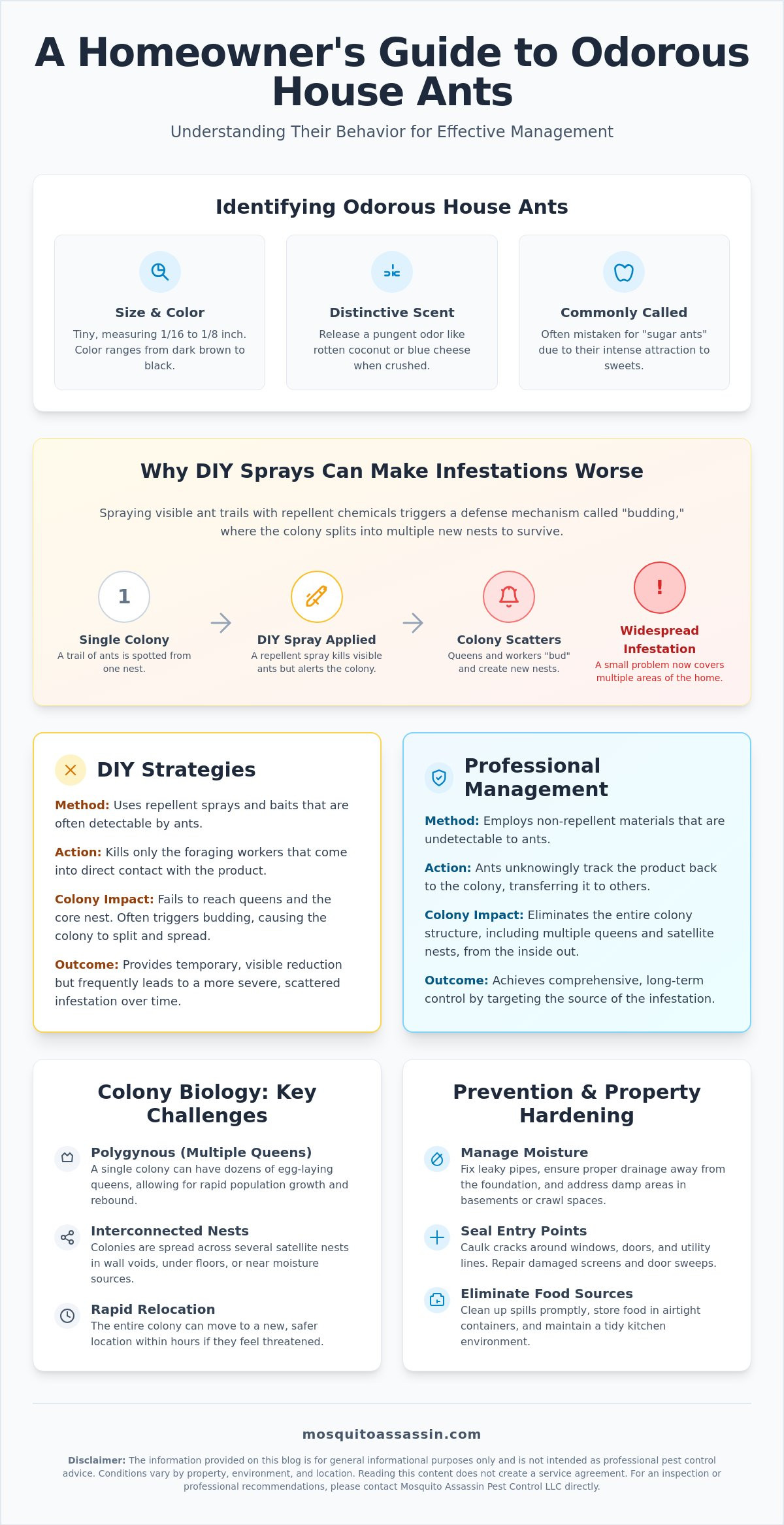
    Famous for the unpleasant, rotten coconut-like smell they release when crushed, these are one of Erie’s most common indoor pests. They are drawn to moisture and can build massive colonies with multiple queens.

    • Appearance: Very small (1/16 to 1/8 inch long), and dark brown or black.
    • Behavior: They often nest in wall voids near leaky pipes, under sinks, or behind appliances.
    • Risk Level: Low. While not dangerous, their sheer numbers make them a persistent and frustrating nuisance.

    Pharaoh Ants: The Indoor Health Risk

    Pharaoh ants are a serious concern because of their ability to spread pathogens. They are notoriously difficult to control, as standard baits can cause the colony to split into multiple new colonies-a process called “budding” that makes the problem worse.

    • Appearance: Tiny (about 1/16 inch long) with a light yellow to reddish-brown body.
    • Behavior: They nest in warm, hidden areas like wall voids, behind baseboards, or in electrical outlets.
    • Risk Level: Medium. Known to spread bacteria, making them a significant health risk in kitchens.

    Is It a Flying Ant or a Termite? A Critical Distinction

    When spring arrives in Erie, you might notice swarms of small, winged insects emerging around your property. It’s easy to dismiss them as a temporary nuisance, but mistaking a termite swarmer for a flying ant is one of the most expensive errors a homeowner can make. While most common household ants are primarily a nuisance, termites are silent destroyers, causing billions in property damage across the country each year. Knowing how to identify ants in Erie versus their destructive look-alikes is critical for safeguarding your home. Fortunately, you don’t need to be an expert. Just look for three simple visual cues to tell them apart instantly.

    Check the Body: Waist Shape is Key

    The most reliable and easiest difference to spot is the insect’s waist. An ant has a distinctly thin, “pinched” waist (thorax) that creates a segmented appearance. It’s a clear separation between the middle and back sections of its body. In stark contrast, a termite has a broad, straight body with no defined waist, making it look more like a single, solid piece from its chest to its abdomen.

    Look at the Antennae: Bent vs. Straight

    If you can get a closer look, the antennae provide another definitive clue. Ants possess elbowed or “bent” antennae that look like they have a joint in the middle. Termite swarmers, however, have straight antennae that often appear beaded, like a tiny string of pearls. This feature can be small, so you may need a clear view or a magnified image to confirm it with confidence.

    Examine the Wings: Equal vs. Unequal

    Both insects have two pairs of wings, but their size and shape differ significantly. A flying ant’s front pair of wings is noticeably longer than its back pair. A termite swarmer has two pairs of wings that are equal in length and size. Termites also shed their wings after swarming, so a tell-tale sign of their presence is finding piles of identical, discarded wings on windowsills or near baseboards.

    If you’re still unsure after checking these features, don’t risk your property on a guess. Learning how to identify ants in Erie is a valuable skill, but when wood-destroying insects are a possibility, professional confirmation from a certified technician is your safest and most reliable course of action.

    Finding the Source: How to Track an Ant Infestation

    Spotting a single ant foraging in your kitchen is a warning shot. Seeing a distinct line of them marching across your floor means you have an established colony, and it’s time for action. Simply spraying the ants you see is a temporary fix that does nothing to solve the core problem. To truly eliminate an infestation, you must locate the nest and neutralize the queen. This is the only proven method for lasting ant control.

    Successfully tracking an ant colony requires patience and a bit of detective work. A key part of how to identify ants in Erie and solve the problem is understanding their behavior. The worker ants you see are just a fraction of a much larger, hidden population.

    How to Follow an Ant Trail Like a Pro

    Resist the urge to grab the nearest can of ant spray. Your first step is observation. Ants create invisible “pheromone trails” for other colony members to follow from the nest to a food source. To leverage this, place a small drop of honey or jam on a piece of wax paper near their trail. Don’t interrupt them; watch where they take their prize. The trail will lead you directly back to their entry point-a tiny crack in the foundation, a gap under a door, or an opening around a utility pipe.

    Common Indoor and Outdoor Nesting Spots

    Once you’ve tracked the trail to an entry point, the nest is likely nearby. Ants are experts at finding protected, out-of-the-way locations to build their colonies. Knowing where to look is critical for homeowners trying to figure out how to identify ants in Erie and their hiding places.

    • Indoor Nests: Check inside wall voids, behind baseboards, underneath large appliances like refrigerators and dishwashers, in and around potted plants, and in quiet corners of basements or attics.
    • Outdoor Nests: Common locations include under stones and pavers, within rotting tree stumps, in piles of firewood, and beneath mulch. Pavement ants often create small, tell-tale mounds of sand along sidewalk cracks. Carpenter ants, a more destructive species, prefer to nest in water-damaged or decaying wood around your home’s foundation, deck, or roofline.

    Finding the heart of the infestation can be challenging. If the trail disappears into a wall or you suspect a carpenter ant problem, don’t hesitate. For a comprehensive inspection and guaranteed elimination, contact the professional technicians at Mosquito Assassin today.

    When to Call a Professional Ant Exterminator in Erie

    Many homeowners in Erie reach for store-bought sprays and baits, only to find the same ant trails reappearing days later. This frustrating cycle happens because most DIY products only kill the worker ants you see, leaving the queen and the core of the colony safe to rebuild. A persistent or large-scale ant problem requires a strategic, professional approach. Knowing when to call for help saves you time, money, and stress in the long run.

    The Limits of DIY Ant Control

    Over-the-counter ant treatments often fall short and can even make the situation worse. Without professional expertise, you risk:

    • Causing the colony to split. Certain sprays can trigger a defensive response called “budding,” where the colony divides into multiple new colonies, spreading the infestation throughout your home.
    • Using ineffective treatments. If you don’t know exactly how to identify ants in Erie, you can’t choose the right bait. Some species, like Pharaoh ants, require specific baits, and using the wrong one is a waste of money.
    • Allowing property damage. Misidentifying destructive carpenter ants as common house ants is a critical mistake that can lead to silent, unchecked structural damage to your home’s wood frame.

    The Mosquito Assassin Advantage: Our Proven Process

    At Mosquito Assassin, we replace guesswork with a proven, methodical process for total ant eradication. Our expertise in how to identify ants in Erie is the critical first step to effective, long-lasting control.

    • Our certified technicians correctly identify the specific ant species and locate their nests.
    • We use targeted, family-safe treatments designed to eliminate the entire colony, including the queen.
    • We find and seal potential entry points to safeguard your home against future invasions.
    • Our comprehensive pest control services are backed by our Pest-Free Guarantee: If the pests return, so do we.

    Your Local, Trusted Erie Pest Experts

    We aren’t a faceless national chain. Mosquito Assassin is locally owned, and our team lives right here in the communities we serve. We have firsthand knowledge of the specific pest pressures facing homeowners across Erie County. We understand the local environment and how it impacts pest behavior. Learn more about our company and our unwavering commitment to protecting your home.

    Don’t let a frustrating ant infestation take over your home. Put an end to the endless cycle of ineffective treatments. Schedule your professional ant inspection today!

    Take Back Your Erie Home from Ants for Good

    You now have the essential knowledge for how to identify ants in Erie. Understanding the difference between a nuisance pavement ant and a structure-damaging carpenter ant is the critical first step to protecting your property. You also know how to distinguish a harmless flying ant from a destructive termite and why tracking an infestation to its nest is the only path to a real solution. This knowledge puts you in control of your home’s defense.

    But when DIY methods fall short and that line of ants keeps marching, it’s time for a definitive solution. As a proud Locally Owned and Operated company, Mosquito Assassin is your trusted neighbor in the fight against pests. We bring professional expertise and powerful, Family-Safe Treatments to your doorstep, ensuring your family and pets are protected. Our commitment is absolute, backed by our Pest-Free Guarantee: If pests return, so do we!

    Don’t Guess, Get Answers. Schedule a Free Ant Inspection Today! Reclaim your peace of mind and enjoy an ant-free home.

    Frequently Asked Questions

    Why do I suddenly have so many ants in my house in Erie?

    A sudden ant invasion is often due to weather changes in Erie, like heavy rain or drought, driving them inside for shelter or food. A single scout ant can find a crumb and create a chemical trail for the entire colony to follow. Understanding how to identify ants in Erie is the first step, as different species are attracted to different things. This helps pinpoint the source and create an effective eradication plan for your specific problem.

    What is the fastest way to get rid of ants?

    The fastest and most effective way to eliminate an ant colony is to bypass ineffective store-bought sprays. These often just scatter the ants, making the problem worse. A professional-grade baiting system is the superior solution. Worker ants carry the bait back to the nest, which eliminates the entire colony, including the queen. For guaranteed, rapid results, a professional treatment is the most reliable method for safeguarding your home from these pests.

    Are carpenter ants a serious problem for homes in Pennsylvania?

    Yes, carpenter ants pose a significant threat to homes throughout Pennsylvania. Unlike termites, they don’t eat wood, but they excavate it to build their nests. This tunneling process can compromise the structural integrity of your home’s framework, support beams, and subflooring over time, leading to extensive and costly repairs. If you see large black ants and small piles of sawdust-like material (frass), you need a professional inspection immediately.

    How can I prevent ants from coming into my house in the first place?

    Proactive prevention is your best defense. Start by sealing cracks and gaps in your foundation, around windows, and where utility lines enter the house. Maintain a clean kitchen, storing food in airtight containers and wiping up spills promptly. Trim back any tree branches or shrubs touching your home, as ants use these as bridges. For the ultimate protection, a professional exterior barrier treatment from a licensed technician will stop them before they ever get inside.

    How much does it cost for a professional to get rid of ants?

    The cost for professional ant eradication depends on the specific situation, including the type of ant, the size of the infestation, and your property’s size. Knowing how to identify ants in Erie is a key part of our process, as a complex carpenter ant treatment will differ from a standard pavement ant service. We provide a comprehensive inspection and a transparent, no-obligation quote for a customized treatment plan that guarantees results.

    What scent do ants hate?

    Ants strongly dislike potent scents that disrupt their chemical trails. Natural deterrents like peppermint oil, citrus peels, cinnamon, and white vinegar can be effective for short-term prevention. Wiping down counters with a vinegar-water solution or placing peppermint-soaked cotton balls near entry points can help repel them. However, while these scents can deter scouts, they are not powerful enough to eliminate an established colony and its nest.

  • Carpenter Ant Removal: The Ultimate Guide to Protecting Your Home

    Carpenter Ant Removal: The Ultimate Guide to Protecting Your Home

    That nagging worry often starts with just a few large black ants in your kitchen. Are they simply foraging, or is something more sinister happening unseen within your walls? The fear of hidden, costly structural damage is real, and the uncertainty of whether you’re dealing with carpenter ants or termites can be paralyzing. For effective carpenter ant removal, you need more than a can of store-bought spray, which often just scatters the colony and makes the problem worse.

    This is your definitive guide to safeguarding your home. We will empower you with the expert knowledge to confidently identify these wood-destroying pests, pinpoint the exact location of their hidden nests, and implement a proven plan for their complete and permanent eradication. Forget wasting time and money on solutions that don’t work. Get ready to reclaim your peace of mind and learn how to protect your home’s structure for good.

    Key Takeaways

    • Learn to correctly identify carpenter ants versus other pests to ensure you are targeting the right threat before any damage occurs.
    • Understand how carpenter ants silently compromise your home’s structural integrity by excavating wood for their nests, not by eating it.
    • Discover the most effective strategies for complete carpenter ant removal and learn why professional methods are crucial for eliminating the entire colony.
    • Implement proven prevention techniques to safeguard your property and make your home a hostile environment for future infestations.

    First Steps: How to Identify a Carpenter Ant Infestation

    Before you can begin any treatment, positive identification is the essential first step. Misidentifying your pest can lead to ineffective solutions and wasted time, allowing the real problem to worsen. The key to successful carpenter ant removal is knowing exactly what you’re up against, from the appearance of the insect to the unique signs of damage they leave behind.

    To help you visually confirm what you’re seeing, this video provides an excellent overview:

    What Do Carpenter Ants Look Like?

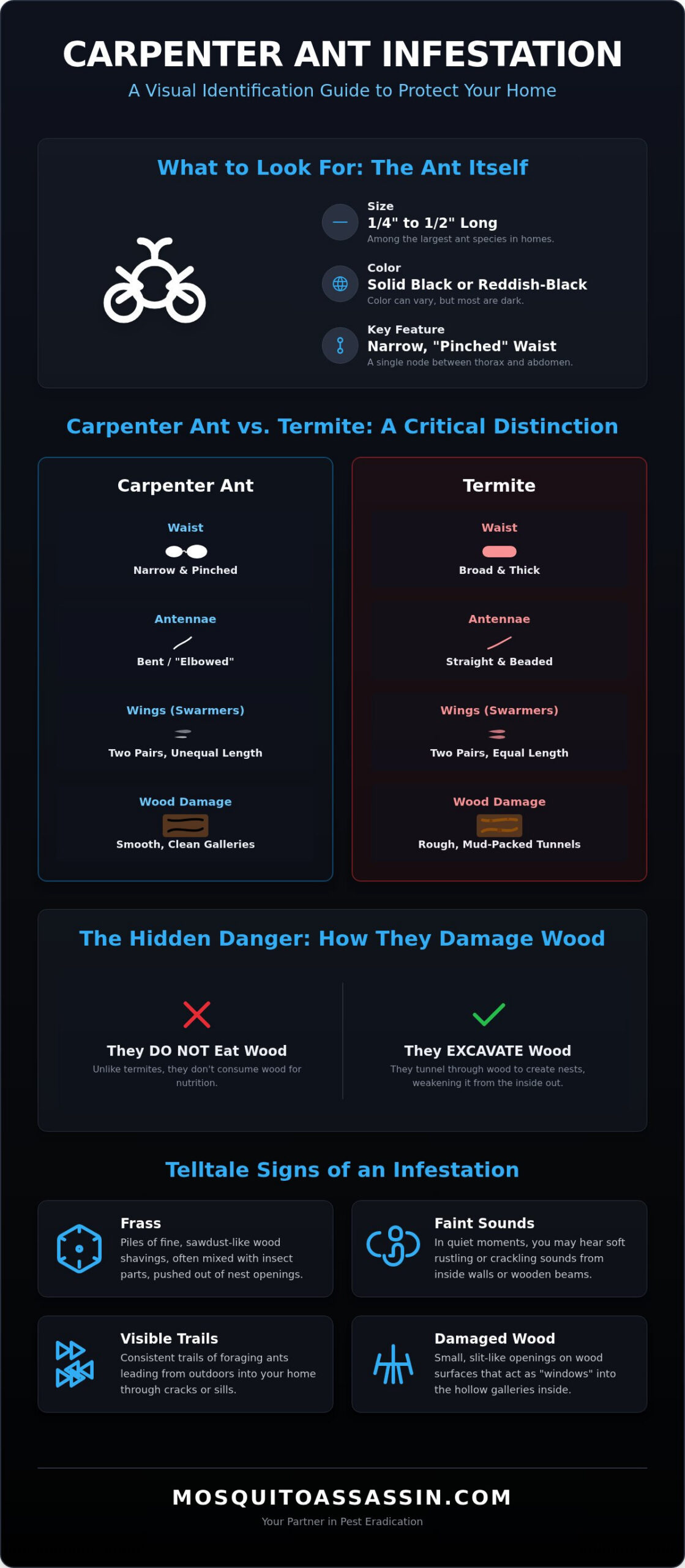
    Carpenter ants are among the largest ant species you’ll find in your home, typically measuring between 1/4 and 1/2 inch long. While most are solid black, some can be reddish-black or a combination of red and black. Their most distinct feature is a single, small node between their thorax and abdomen, giving them a segmented, “pinched” waist. In the spring, you might also spot winged swarmers, which are reproductive ants leaving the nest to mate. For a more detailed Carpenter ant overview, including their life cycle and behavior, this resource is highly informative.

    Carpenter Ants vs. Termites: A Critical Distinction

    It’s common to confuse carpenter ants with termites, but they are very different pests requiring different treatments. Here’s how to tell them apart:

    • Waist: Carpenter ants have a narrow, pinched waist. Termites have a broad, thick waist with no visible segmentation.
    • Antennae: Ants possess bent or “elbowed” antennae. Termites have straight, beaded antennae.
    • Wings: Winged ant swarmers have two pairs of wings of unequal length (front wings are longer than hind wings). Termite swarmers have two pairs of wings that are equal in length.
    • Damage: Carpenter ants excavate wood to create nests, leaving behind smooth, clean galleries. Termites eat wood and leave behind rough tunnels packed with mud and soil.

    Telltale Signs of Carpenter Ant Activity

    Even if you don’t see the ants themselves, they leave behind clear evidence of their presence. Recognizing these signs is crucial for assessing the scale of your infestation and planning for carpenter ant removal. Look for:

    • Frass: Piles of fine, sawdust-like wood shavings mixed with insect parts. Ants push this debris out of small holes in wood as they excavate their nests.
    • Faint Sounds: In quiet moments, you may hear soft rustling or crackling sounds coming from inside your walls or wooden beams.
    • Visible Trails: Watch for consistent trails of foraging ants, often leading from outdoor areas (like a tree stump or woodpile) into your home through cracks in the foundation or window sills.
    • Damaged Wood: Small, slit-like openings on the surface of wood can be “windows” into the smooth, hollowed-out galleries the ants have created inside.

    The Hidden Danger: How Carpenter Ants Damage Your Home

    Many homeowners mistakenly believe carpenter ants are like termites, but there’s a critical difference: carpenter ants don’t eat wood. Instead, they excavate it, tunneling through beams and joists to create vast, hidden nests. This relentless excavation process systematically weakens the structural integrity of your home. They are particularly drawn to wood with existing moisture damage, turning a small leak into a major vulnerability. If left unaddressed, a single colony can cause thousands of dollars in repairs, making prompt and professional carpenter ant removal essential for safeguarding your property.

    Understanding Their Nesting Habits

    A carpenter ant infestation typically involves a main “parent” colony, often located outdoors in a dead tree stump or damp woodpile, and one or more “satellite” colonies inside your home. These indoor nests are where the real damage occurs. The ants create smooth, clean, and sandpaper-like galleries within the wood, a key sign that distinguishes them from the messy, mud-packed tunnels of termites. Seeing a few large black ants in your kitchen is rarely an isolated incident; it’s a warning sign of a much larger, hidden colony that requires a comprehensive approach. Correctly identifying carpenter ants and their activity is the first step toward effective eradication.

    Common Nesting Spots in PA & OH Homes

    As local experts serving Pennsylvania and Ohio, we know exactly where these pests love to hide. Their prime targets are areas where moisture compromises wood, providing the perfect environment for a satellite nest. Be sure to check:

    • Window and door frames, especially those with poor seals.
    • Attics and crawl spaces suffering from poor ventilation or roof leaks.
    • Underneath siding or behind walls, particularly on the cooler, north side of a house.
    • Water-damaged wood in porch columns, decks, and outdoor sheds.

    The Long-Term Structural Risks

    The damage from carpenter ants is slow but devastating. Over several years, their tunneling can severely weaken floor joists, wall studs, and critical support beams. The integrity of your deck, porch, or even your roof structure can be compromised, turning what was once a minor nuisance into a major structural failure. Don’t wait for sagging floors or warped window frames to appear. Effective carpenter ant removal is not just about eliminating pests-it’s about protecting the very foundation of your home.

    Worried about hidden damage? Get a professional inspection from Mosquito Assassin.

    Carpenter Ant Removal Methods: DIY vs. Professional Extermination

    When you discover a carpenter ant infestation, you face a critical decision: attempt a do-it-yourself solution or call in the professionals. While handling it yourself might seem like a cost-saving measure, effective carpenter ant removal is more complex than simply spraying the ants you see. The right choice depends on the scale of the problem and your confidence in eliminating the entire colony, not just the visible foragers.

    Popular DIY Approaches and Their Limitations

    Home improvement stores offer various products, from bait stations and insecticidal sprays to boric acid dusts. These can provide temporary relief by killing worker ants, but their effectiveness is often superficial and short-lived.

    • Bait Stations: These are slow-acting and can be ineffective if ants have a more attractive food source nearby, rendering the bait useless.
    • Insecticidal Sprays: These products only kill ants on contact and rarely penetrate the wall voids or wood galleries where the nest and queen are hidden.
    • Dusts: Boric acid can work but is only effective if applied directly into nest galleries, which are notoriously difficult for homeowners to locate.

    The primary risk with DIY methods is that they create a false sense of security. You might eliminate the foraging workers, but the satellite and parent colonies remain active, continuing to damage your home’s structure. As experts in Carpenter ant prevention and control emphasize, a comprehensive approach is necessary for complete eradication.

    Why Professional Treatment is More Effective

    A licensed pest control professional brings expertise and tools that are unavailable to the public. We don’t just treat the symptoms; we eliminate the source. Our technicians are trained to accurately locate hidden nests by identifying subtle signs of activity. We then use specialized, non-repellent insecticides that foraging ants carry back to the colony, unknowingly poisoning the queen and other members. This targeted application into wall voids, crawlspaces, and other inaccessible areas ensures the entire infestation is destroyed from the inside out.

    The Mosquito Assassin 4-Step Eradication Process

    At Mosquito Assassin, we’ve developed a proven, methodical process to guarantee complete elimination and protect your home. Our approach ensures nothing is left to chance.

    • Step 1: Thorough Inspection: We conduct a comprehensive assessment of your property to identify all nest locations, entry points, and the extent of any damage.
    • Step 2: Customized Treatment Plan: Based on our findings, we create a tailored plan that addresses your home’s specific vulnerabilities and the unique characteristics of the infestation.
    • Step 3: Targeted, Family-Safe Application: We apply our family-safe treatments directly to the source, eliminating the entire colony while safeguarding your loved ones and pets.
    • Step 4: Follow-Up & Prevention: We provide follow-up service and expert advice to ensure the ants don’t return, giving you lasting peace of mind.

    Don’t let a failed DIY attempt lead to costly structural repairs. Trust the proven system for complete carpenter ant removal by contacting the experts at Mosquito Assassin today.

    How to Prevent Carpenter Ants From Coming Back

    Successfully eliminating a carpenter ant colony is a major victory, but the battle isn’t over. Effective carpenter ant removal is only half the solution; the other half is diligent prevention. To safeguard your home for the long term, you must make it an unattractive and inaccessible fortress for these wood-destroying pests. Most preventative strategies focus on two key areas: controlling moisture and sealing potential entry points.

    Eliminate Moisture Sources

    Carpenter ants don’t eat wood, they excavate it to build nests. They overwhelmingly prefer wood that has been softened by water. By eliminating moisture, you remove their ideal nesting material. Focus on these critical tasks:

    • Immediately repair any leaky pipes, dripping faucets, clogged gutters, or damaged roofing that could create damp conditions.
    • Use dehumidifiers and fans to ensure basements, attics, and crawl spaces stay dry and well-ventilated.
    • Check that the soil around your foundation is graded to slope away from the house, preventing water from pooling against your home’s structure.

    Seal Up Entry Points

    Think of your home’s exterior as its armor-even the smallest crack is a vulnerability that ants can exploit. A thorough inspection and sealing project can fortify your defenses and deny them access.

    • Use high-quality silicone caulk to seal cracks and crevices in your foundation, around windows and door frames, and along siding.
    • Pay close attention to where utility pipes, wires, and cables enter your house. Seal any gaps with caulk or expanding foam.
    • Install fine-mesh screens over attic, foundation, and crawl space vents to block pests without impeding essential airflow.

    Manage Wood and Landscaping

    Your yard can inadvertently create a direct highway for pests to march right up to your home. Simple landscaping maintenance creates a crucial buffer zone that keeps ants at a distance.

    • Keep firewood stacks at least 20 feet away from your house and elevated off the ground on a rack.
    • Trim tree branches, shrubs, and overgrown vegetation so they do not make contact with your siding or roof.
    • Promptly remove dead tree stumps, fallen logs, and other decaying wood from your property, as these are prime nesting sites.

    These proactive measures are the most effective way to protect your home after a professional carpenter ant removal service. While these DIY steps are powerful, nothing beats a comprehensive, year-round strategy. Need ongoing protection? Explore our Year-Round Pest Control Plans.

    Your Final Step to a Carpenter Ant-Free Home

    Protecting your home from wood-destroying insects is a serious responsibility. You’ve learned how to identify the subtle signs of a carpenter ant infestation, from faint rustling sounds in your walls to tell-tale piles of sawdust-like frass. You also understand the hidden, structural danger they pose, silently chewing through your home’s framework. While DIY solutions can seem appealing, the only certain path to total eradication and lasting protection is professional carpenter ant removal.

    Don’t leave the integrity of your biggest investment to chance. For homeowners in Erie and Crawford Counties, Mosquito Assassin is your trusted local partner in pest elimination. As a locally owned and operated team, we are committed to safeguarding our neighbors’ homes with proven, family-safe treatments. Our confidence is backed by our Pest-Free Guarantee: If the pests return, so do we!

    Take decisive action against these destructive pests. Protect Your Home from Carpenter Ant Damage. Schedule Your Free Inspection Now!

    Frequently Asked Questions About Carpenter Ant Removal

    How much does professional carpenter ant removal cost?

    The cost for professional carpenter ant removal depends on several factors, including the size of your property and the severity of the infestation. A small, localized colony will be less complex to treat than a large, established nest with multiple satellite colonies. For an accurate and transparent price, Mosquito Assassin provides a comprehensive inspection to create a customized treatment plan. This ensures you only pay for the precise services needed to safeguard your home effectively.

    Are the treatments used by Mosquito Assassin safe for my children and pets?

    Absolutely. The safety of your family is our top priority. We use proven, family-safe treatments and our licensed technicians apply them with precision according to strict industry standards. We will always provide clear instructions, such as keeping children and pets away from specific treated areas until they are completely dry. This methodical approach ensures we eliminate the pests while giving you total peace of mind, knowing your loved ones are protected.

    Can carpenter ants return after a professional treatment?

    While our treatments are designed for complete eradication, new colonies can attempt to move in if the original attracting conditions, like moisture-damaged wood, persist. However, we stand by our work with our Pest-Free Guarantee. Our comprehensive process is designed to eliminate the entire colony structure to prevent a rebound. As we always say at Mosquito Assassin, if the pests return, so do we. We’ll make it right at no extra charge.

    How long does it take to completely get rid of a carpenter ant infestation?

    The timeline for complete elimination varies with the infestation’s size and complexity. You will see a significant reduction in ant activity shortly after our initial treatment. However, it can take a few weeks for the treatment to be carried back to the nest and eliminate the entire colony, including the queen. Our process includes diligent follow-up and monitoring to ensure the job is done right, delivering the dependable, lasting results you expect.

    What’s the difference between a big black ant and a carpenter ant?

    While many large ants are black, carpenter ants have specific identifying features: a single, small node between their thorax and abdomen, an evenly rounded upper back, and a defined, pinched waist. The most definitive sign, however, is their behavior. Carpenter ants excavate wood to create nests, leaving behind piles of coarse, sawdust-like shavings called “frass.” Finding frass near wood structures is a clear sign you are dealing with destructive carpenter ants.

    Do carpenter ants bite people?

    Yes, carpenter ants can bite. They do not have a stinger, but if they feel their nest is threatened, they will use their strong mandibles to bite defensively. They can also spray formic acid into the wound, which creates a painful burning sensation. While the bites are not medically dangerous for most people, they are a clear sign that an infestation is uncomfortably close and requires immediate professional attention for safe and effective removal.