
Waiting for the first ant to crawl across the kitchen counter in May is often the exact moment a homeowner has already lost the battle against spring infestations. While many people believe pest control is a reactive response to a visible problem, the most effective strategy is actually a biological race against temperature and moisture. With the National Pest Management Association predicting an early start to the 2026 season due to a mild winter and erratic temperatures, sticking to a proactive seasonal pest control schedule is more critical than ever for residents in Erie, Crawford, and Ashtabula counties.
It is exhausting to face recurring ant problems every spring or to worry about ticks every time the dog comes inside. This article explains the specific biological cycles of pests in the tri-state area and how a structured timeline prevents these issues from taking root. Readers will gain a clear understanding of when to expect specific threats, from summer stinging insects to winter rodents, and receive a preventative maintenance checklist designed to provide year-round peace of mind.
Key Takeaways
- Understand how temperature and degree days trigger the emergence of pests in early spring to stay ahead of the curve.
- Identify the early signs of ant activity and the critical timing for tick prevention in wooded or grassy areas as temperatures rise.
- Discover how a proactive seasonal pest control schedule targets stinging insects and spiders before they reach peak populations in late summer.
- Learn why winter is the most effective time for interior inspections and exclusion tactics to manage indoor pests like silverfish.
- Explore how Integrated Pest Management (IPM) provides long-term protection by focusing on pest biology rather than just reactive treatments.
Understanding the Biological Drivers of a Seasonal Pest Schedule
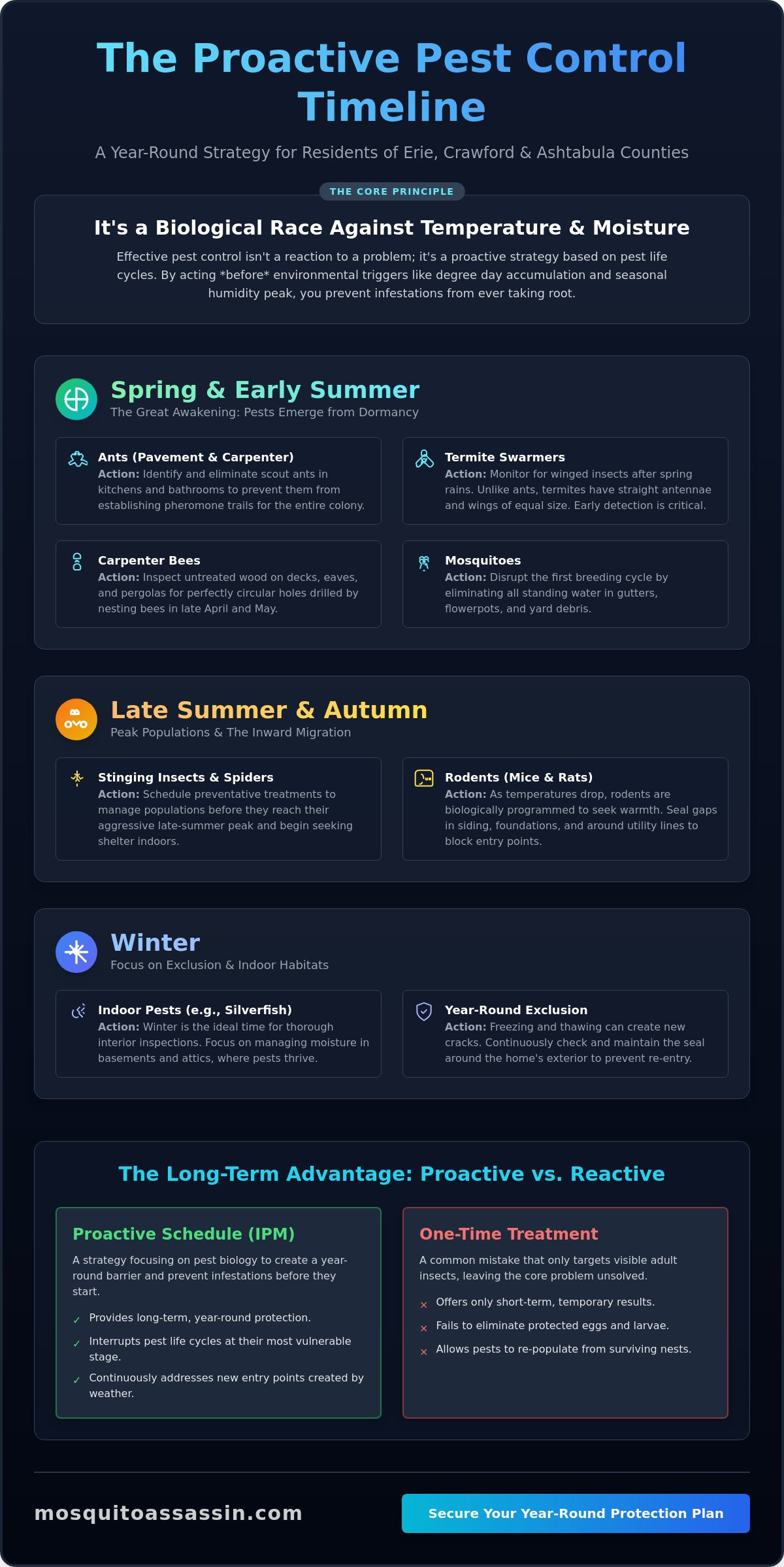
Pest control is often misunderstood as a “see a bug, spray a bug” service. Effective protection relies on a seasonal pest control schedule that targets pests before they reach maturity. This proactive approach focuses on the Biological Drivers of a Seasonal Pest Schedule, which are the environmental factors that dictate when insects hatch, feed, and reproduce. Instead of waiting for an infestation to become visible, a scheduled strategy interrupts these life cycles at their most vulnerable stages.
The primary trigger for pest activity isn’t the date on a calendar; it’s the accumulation of degree days, which is the measure of heat over time. For example, the National Pest Management Association (NPMA) predicts that the mild winter of 2025 and the warm start to 2026 will cause termites and ants to emerge weeks earlier than in previous years. While reactive extermination attempts to eliminate an existing population, preventative management ensures that a protective barrier is already in place before these biological triggers occur.
To better understand why timing is everything in pest management, watch this helpful video:
The Impact of the Great Lakes Climate on Local Pests
Residents in Erie and Crawford counties experience unique pest pressures due to the Lake Erie effect. The lake acts as a massive thermal regulator; it often delays the first spring thaw, but it also creates intense localized humidity. In Ashtabula County and Northeast Ohio, this high moisture level is a primary driver for mosquito and tick populations, which thrive in damp environments. As the first frosts typically arrive in late September or October, the sudden drop in temperature signals a biological migration for rodents. Mice and rats don’t just happen to find your basement; they’re biologically programmed to seek the thermal heat of your home the moment the ground begins to freeze.
Why One-Time Treatments Often Fail Long-Term
A common mistake is assuming a single treatment can solve a pest problem. Most one-time applications only target adult insects, leaving behind hundreds of eggs or larvae that are protected by protective casings or hidden in deep wall voids. Without a consistent seasonal pest control schedule, these survivors will simply repopulate within weeks. Additionally, the extreme temperature fluctuations in Pennsylvania and Ohio cause building materials like wood and vinyl siding to expand and contract. This physical movement creates new gaps and entry points throughout the year. Maintaining a year-round barrier is the only way to ensure these new openings aren’t immediately exploited by opportunistic pests.
Spring and Early Summer: Managing the Seasonal Awakening
Spring in the tri-state area triggers a surge in biological activity as pests emerge from winter dormancy. For homeowners in Erie and Crawford counties, this represents the most critical window in a seasonal pest control schedule. The first signs often appear indoors as tiny pavement ants or larger carpenter ants scout for moisture in kitchens and bathrooms. Identifying these scouts early prevents them from establishing the pheromone trails that lead the rest of the colony into living spaces.
Beyond ants, homeowners should monitor for termite swarmers. These winged insects often emerge on warm, humid days following spring rains. They are frequently mistaken for flying ants, but their straight antennae and uniform wing size are key identifiers. According to resources on Pennsylvania Pest Management, early detection of wood-destroying organisms is essential to preventing long-term structural issues. Carpenter bees also become active in late April and May, drilling perfectly circular holes into untreated wood on decks, pergolas, and eaves.
Standing water is another priority during the seasonal awakening. Even a small amount of water in a clogged gutter or a forgotten flowerpot can host thousands of mosquito larvae. Emptying these containers early disrupts the first breeding cycle of the year. This significantly reduces the local population before the intense heat of July arrives.
Foundational Protection for the Year Ahead
The winter freeze-thaw cycles in Northeast Ohio and Western Pennsylvania are brutal on home foundations. These shifts create hairline cracks that serve as highways for insects. Inspecting the perimeter and sealing these gaps is a vital first step in home maintenance. Clearing debris from gutters is equally important; trapped organic matter holds moisture against the roofline, attracting silverfish and other moisture-loving pests. Implementing a professional general pest control plan during this time creates a durable barrier that keeps the spring awakening outside where it belongs.
Tick and Mosquito Prevention Strategies
Ticks become active as soon as temperatures consistently stay above 45 degrees Fahrenheit. Early season applications are often more effective than waiting until mid-summer because they target pests before they reach peak reproductive capacity. Homeowners can assist by trimming tall grass and managing leaf litter, which removes the cool, damp habitats these pests prefer. Strategic mosquito control programs focus on these early biological windows to ensure outdoor spaces remain usable throughout the summer. If you noticed high pest activity on your property last year, professional pest control may help reduce risk by identifying breeding sites you might have missed.
Late Summer and Autumn: Peak Populations and Indoor Migration
As the calendar turns toward August and September, the biological activity that began in the spring reaches its maximum intensity. This period represents the peak of the seasonal pest control schedule because insect colonies have had months to grow to their full size. Homeowners in Erie, Crawford, and Ashtabula counties will notice a significant increase in spider activity as these predators follow the abundance of smaller insects like flies and gnats. Simultaneously, invasive species such as the brown marmorated stink bug and multicolored Asian lady beetles begin congregating on the sun-facing exterior walls of homes, searching for small openings to overwinter inside wall voids.
The drop in evening temperatures during late September acts as a biological alarm clock for rodents. Mice and rats begin scouting for reliable heat sources and nesting sites, often following the scent of food or the warm air escaping from gaps as small as a quarter inch. Addressing these issues before the first hard frost is essential for maintaining a pest-free environment throughout the colder months. Establishing a defensive perimeter during this transition prevents these opportunistic pests from claiming your attic or basement as their winter shelter.
Stinging Insect Safety and Prevention
By late summer, social insect colonies like yellowjackets and bald-faced hornets have thousands of members. Their behavior becomes increasingly aggressive as their natural food sources, such as nectar and other insects, begin to dwindle. It is vital to distinguish between ground-nesting yellowjackets, which often build nests in abandoned rodent burrows, and aerial hornets that construct large, paper-like nests in trees or under eaves. DIY nest removal is hazardous; stinging insects are highly protective of their colonies and can swarm if they perceive a threat. Professional intervention is the safest way to manage these risks, particularly for nests located near high-traffic areas like decks or entryways.
The Fall Exclusion Phase
The most effective way to prevent autumn infestations is through the application of Integrated Pest Management (IPM) principles, which emphasize physical barriers over reactive chemicals. This exclusion phase involves sealing gaps around utility lines, dryer vents, and door sweeps. Professional rodent removal should be prioritized if signs of activity, such as droppings or chewed insulation, are found in the attic or crawlspace. Checking these areas in early October allows for the identification of nesting sites before populations expand under the protection of your home’s heating system.
Winter Pest Management: Focus on Exclusion and Indoor Habitats
While the sub-zero temperatures of a Pennsylvania or Ohio winter might seem like a natural deterrent, they actually drive pests deeper into the structural voids of a home. Pests like silverfish and cockroaches don’t hibernate; they thrive in the 68 to 72-degree temperatures of a climate-controlled environment. This makes the winter months a vital phase of a seasonal pest control schedule. During this time, the focus shifts from the exterior perimeter to deep-interior inspections and exclusion tactics. Because outdoor activity is limited, it’s the ideal window to identify and seal the tiny entry points that pests exploit to reach warmth and food sources.
Basements and crawlspaces are particularly vulnerable during the winter. These areas often harbor excess moisture from melting snow or plumbing condensation, providing the perfect habitat for centipedes and spiders. Homeowners should also remain vigilant when bringing items into the home. Firewood stored outside can harbor wood-boring beetles or carpenter ants, while holiday decorations kept in garages or sheds often contain hitchhiking rodents or spiders. Inspecting these items before they cross the threshold prevents accidental introductions of new pest populations.
Indoor Vigilance Checklist
Maintaining a pest-free home in the winter requires a methodical approach to indoor monitoring. Focus on these three areas to catch problems early:
- Step 1: Inspect dark, undisturbed areas. Use a flashlight to check under kitchen sinks, behind heavy appliances, and around water heaters for signs of silverfish or cockroach activity.
- Step 2: Monitor for signs of mice. Look for gnaw marks on baseboards or small, dark droppings in the corners of pantries and utility rooms.
- Step 3: Check pantry items. Inspect flour, grains, and birdseed for stored product pests like Indian meal moths, which can be introduced via contaminated packaging.
Why Winter Service is Critical for Year-Round Success
The primary goal of winter service is to eliminate overwintering populations before they have the chance to breed in the spring. If a small rodent population or a cockroach colony is allowed to establish itself in December, it will reach peak numbers by the time the first spring thaw occurs. Maintaining the integrity of the home’s exterior barrier is also essential; even in the middle of a snowstorm, opportunistic pests will follow the thermal heat escaping from unsealed vents or gaps in the siding. This proactive approach is equally important for local businesses, as commercial pest control services often use the winter months to reinforce exclusion zones and monitor sensitive areas without the interference of high summer foot traffic. Homeowners looking to secure their property before the spring awakening can professional pest control may help reduce risk by identifying hidden nesting sites.
Implementing a Year-Round Pest Prevention Strategy
Adopting a comprehensive strategy is the most effective way to manage the biological pressures unique to Erie, Crawford, and Ashtabula counties. A consistent seasonal pest control schedule relies on the principles of Integrated Pest Management (IPM). This scientific approach prioritizes long-term prevention by combining thorough inspections, habitat modification, and targeted treatments. Instead of relying solely on reactive applications, IPM focuses on why a pest is present in the first place, addressing the root causes like moisture, food access, and entry points.
Professional inspections are the cornerstone of this strategy. A licensed technician can identify subtle signs of activity, such as early-stage termite mud tubes or pheromone trails from scouting ants, long before a homeowner notices a problem. This early intervention is particularly important for maintaining a healthy home environment. By using family-safe treatments and focusing on the exterior perimeter, professionals can keep the interior of the home free from unnecessary products while still providing a high level of protection against invasive species.
Proactive vs. Reactive Maintenance
There is a significant difference between reactive extermination and proactive maintenance. Reactive services often involve higher costs due to the need for emergency visits or the repair of structural damage caused by wood-destroying insects or rodents. When evaluating the prices of pest control, recurring services generally prove more cost-effective over time. Regular visits allow for the maintenance of a continuous protective barrier, which actually reduces the total amount of product required annually. Because the population is never allowed to reach peak levels, the treatments can be more localized and less intensive, providing consistent peace of mind that the property is safeguarded.
Next Steps for Homeowners in PA and OH
Homeowners can begin their prevention journey by conducting a self-audit of the property exterior. Look for areas where mulch touches the siding, check for gaps around utility penetrations, and ensure that gutters are directing water at least three feet away from the foundation. While these steps are helpful, consulting with a licensed professional for a customized property assessment ensures that no hidden vulnerabilities are overlooked. A professional can provide a tailored seasonal pest control schedule based on the specific environment of your lot, whether it is a wooded area in Crawford County or a lakeside property in Ashtabula. Taking these steps early in the year ensures that you stay ahead of the biological cycles of local pests. Ultimately, professional pest control may help reduce risk and safeguard your property against the evolving threats of the 2026 season.
Disclaimer: The information provided on this blog is for general informational purposes only and is not intended as professional pest control advice. Conditions vary by property, environment, and location. Reading this content does not create a service agreement. For an inspection or professional recommendations, please contact Mosquito Assassin Pest Control LLC directly.
Securing Your Home for the Year Ahead
Effective pest management is a year-round commitment that adapts to the biological rhythms of the tri-state area. By following a seasonal pest control schedule, homeowners move away from reactive treatments and toward a model of consistent protection. Success depends on understanding the early spring awakening triggered by heat accumulation and the critical late-autumn exclusion window before rodents seek warmth. Maintaining these physical and chemical barriers ensures that pests are addressed at their most vulnerable life stages before they can establish indoor colonies.
As a locally owned and operated business based in Cranesville, PA, Mosquito Assassin understands the specific climate pressures facing Erie, Crawford, and Ashtabula counties. Professional technicians provide family-safe treatment options and are fully licensed and insured in both Pennsylvania and Ohio. Taking a proactive step now prevents the stress of a full-scale infestation later in the year. To begin safeguarding your property, you may schedule a professional inspection for your property today. Consistent vigilance is the most reliable way to maintain a healthy, comfortable home environment for your family.
Disclaimer: The information provided on this blog is for general informational purposes only and is not intended as professional pest control advice. Conditions vary by property, environment, and location. Reading this content does not create a service agreement. For an inspection or professional recommendations, please contact Mosquito Assassin Pest Control LLC directly.
Frequently Asked Questions
Why is pest control necessary in the winter if I do not see bugs?
Winter pest control is necessary because most pests don’t die off; they seek the thermal heat of your home’s interior. Rodents, cockroaches, and silverfish thrive in climate-controlled environments even when outdoor temperatures drop below freezing. A winter service visit focuses on deep-interior inspections and sealing entry points. By destroying indoor nesting sites during the cold months, you significantly reduce the risk of a massive population surge when spring arrives.
When is the best time to start a seasonal pest control program?
Implementing a seasonal pest control schedule in early spring, typically by late March, is the most effective strategy. This proactive approach allows technicians to establish a protective barrier before the first cycle of insect emergence begins. By targeting pests during their initial reproductive phase, you prevent the exponential population growth that usually occurs in July and August. Early intervention is the key to maintaining a pest-free home throughout the entire year.
How often should a professional pest control service visit my home?
Quarterly visits are generally recommended for homes in the tri-state area to align with seasonal biological shifts. Each visit addresses specific threats, such as spring ants or autumn rodents. According to industry data, 70% of residential pest problems are prevented through these regular maintenance cycles. While some properties with heavy foliage may benefit from monthly service, a four-visit annual plan provides the foundational protection needed for most Pennsylvania and Ohio homes.
Can I manage seasonal pests myself using DIY products?
DIY products often provide only temporary relief because they fail to reach the heart of the colony. Most store-bought aerosols are contact killers that don’t have the residual strength to eliminate hidden larvae or eggs. Licensed professionals use specialized equipment and integrated strategies that target pest biology. This approach is more effective than the “see a bug, spray a bug” method common with over-the-counter products.
What pests are most active in Erie and Crawford Counties during the spring?
Ants and wood-destroying insects are the primary concerns in Erie and Crawford counties during the spring. Pavement ants often appear in kitchens after the first significant rain, while termite swarmers emerge once soil temperatures hit 50 degrees Fahrenheit. Carpenter bees also begin drilling into wooden structures during late April. Identifying these pests early is essential for preventing structural damage and maintaining the integrity of your home’s exterior during the spring awakening.
Is professional pest control safe for my children and pets?
Professional pest control is safe for families and pets when performed by trained technicians following EPA-approved labels. Modern methods prioritize low-impact, targeted applications in areas that are inaccessible to children. By focusing on cracks, crevices, and the exterior perimeter, professionals minimize product exposure while maximizing effectiveness. This methodical approach ensures your home remains a safe environment while still being completely protected from the health risks associated with pests.
What should I do if I see pests between scheduled service visits?
You should notify your pest control provider immediately if you notice activity between your scheduled visits. Seeing pests can mean a new entry point has opened or a specific environmental factor has triggered a local surge. Most professional service agreements include follow-up treatments at no additional cost to address these issues. Prompt reporting allows the technician to adjust your customized plan and reinforce the barrier before a minor sighting becomes an infestation.
How does the weather in Ohio and Pennsylvania affect pest activity?
The unique climate of the Great Lakes region dictates the timing of local infestations. High humidity in Ashtabula County and Erie County creates ideal conditions for moisture-loving pests like mosquitoes and silverfish. Additionally, the rapid shift from a frozen winter to a wet spring in Pennsylvania triggers immediate biological responses in wood-destroying insects. Weather patterns are the primary driver of the seasonal pest control schedule, making local expertise vital for effective treatment.
Disclaimer: The information provided on this blog is for general informational purposes only and is not intended as professional pest control advice. Conditions vary by property, environment, and location. Reading this content does not create a service agreement. For an inspection or professional recommendations, please contact Mosquito Assassin Pest Control LLC directly.