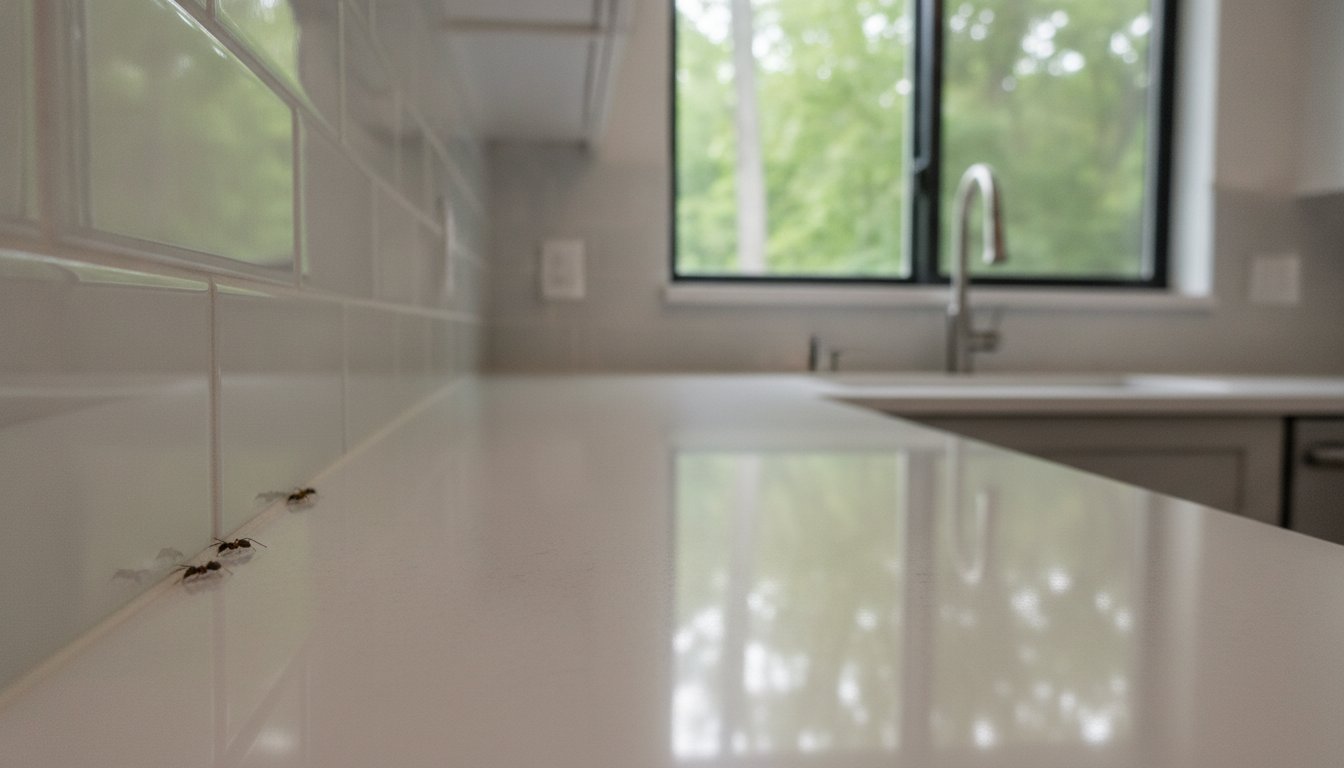
What if the store-bought spray you just used to stop those ants is actually the reason they are spreading into your bedroom and bathroom? It is incredibly frustrating to watch a line of ants vanish after a quick application, only to have them return in larger numbers just days later, bringing that distinct, unpleasant smell of rotten coconut into your kitchen. For homeowners in Erie, Crawford, and Ashtabula counties, a standard odorous house ants treatment often fails because it does not account for the complex biology of these resilient Great Lakes pests.
You are not alone in worrying about food contamination or the endless cycle of seasonal invasions that seem to ignore basic hardware store solutions. This guide provides a professional roadmap for effective management, focusing on strategies that target the entire colony rather than just the visible workers. You will learn how to identify these persistent pests, understand why they are attracted to your specific property, and how to establish a long-term protection plan that keeps your home secure year-round. Understanding the behavior of these ants is the first step toward reclaiming your living space from persistent seasonal trails.
Key Takeaways
- Identify odorous house ants by their small size and the characteristic rotten coconut scent they release when crushed.
- Learn why an effective odorous house ants treatment must target multiple queens and interconnected nests to stop colonies from rebounding.
- Discover the difference between temporary DIY sprays and professional non-repellent technology that eliminates the source of the infestation.
- Explore property hardening strategies, such as moisture management, to prevent future seasonal invasions.
- Understand how the unique climate of the Great Lakes region impacts ant behavior and the timing of professional protection plans.
Identifying Odorous House Ants and Their Unique Characteristics
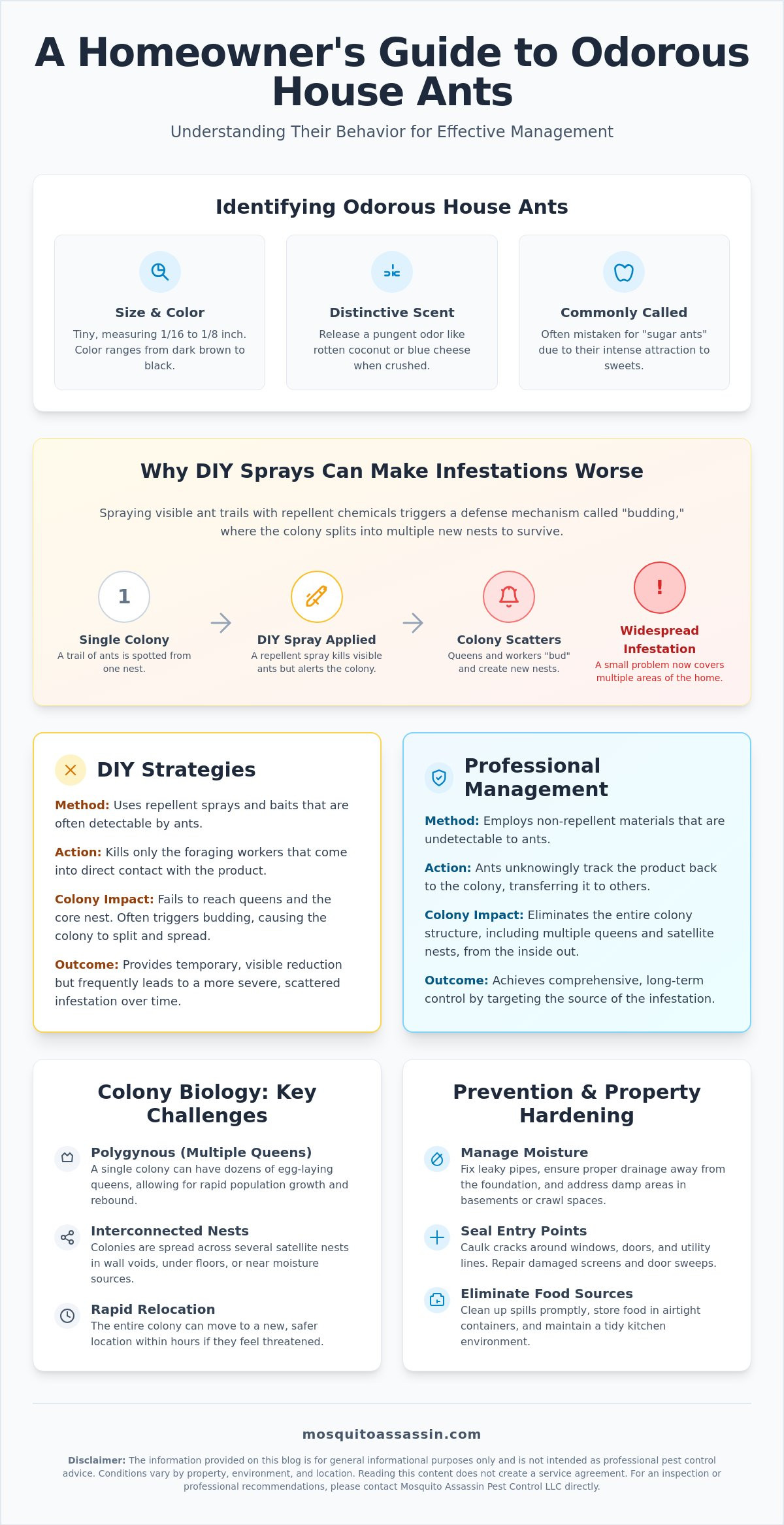
The Odorous house ant (Tapinoma sessile) is a small but incredibly persistent pest found throughout Pennsylvania and Ohio. These insects typically measure between 1/16 and 1/8 of an inch in length, with coloration ranging from dark brown to black. While they are tiny, their presence is often felt before they are seen, especially following the heavy spring rains common in the Erie and Ashtabula areas. These weather patterns often drive colonies indoors in search of higher ground and stable food sources. The high humidity levels near Lake Erie provide the perfect environment for these ants to thrive, making them a common sight in local kitchens and bathrooms as temperatures begin to rise.
Many homeowners refer to these pests as “sugar ants” because of their intense attraction to sweets and honeydew. They are highly mobile and possess a unique defense mechanism; they can relocate their entire colony within hours if they perceive a threat or if their environment becomes unfavorable. This mobility is a primary reason why a standard odorous house ants treatment requires a strategic approach rather than just spraying visible trails. When you spray a line of ants, the colony often senses the chemical intervention and splits, creating multiple new nesting sites within your walls. This process, known as budding, can turn a minor nuisance into a widespread infestation very quickly.
To better understand how these pests behave and how to manage them, watch this helpful video:
The Rotten Coconut Scent and Other Signs
The most defining characteristic of this species is the pungent odor it releases when crushed. This scent is caused by chemical alarm pheromones and is frequently compared to rotten coconut or blue cheese. Beyond the smell, you might notice foraging trails along baseboards, under the edges of carpets, or clustered near water sources like sinks and dishwashers. These ants follow invisible scent trails laid down by scouts, creating a highway for thousands of workers. If you see winged “swarmers” inside your home during the early summer months, it usually indicates that a mature, established colony is nesting nearby. Swarmers are the reproductive members of the colony, and their presence indoors suggests the nest is likely inside the structure of the house.
Odorous House Ants vs. Pavement Ants
Correct identification is essential because different species require different management techniques. While they may look similar to the naked eye, the odorous house ant has a smooth thorax, whereas the pavement ant has distinct grooves on its head and thorax. Their nesting habits also differ significantly. Pavement ants are famous for leaving small dirt mounds in sidewalk cracks or basement floors. In contrast, odorous house ants prefer moist, hidden voids inside walls, under appliances, or near leaky pipes. Distinguishing between these two is the critical first step in any general pest control strategy. If you don’t correctly identify the species, your odorous house ants treatment might be ineffective, as using the wrong product can trigger their instinct to scatter and relocate.
Disclaimer: The information provided on this blog is for general informational purposes only and is not intended as professional pest control advice. Conditions vary by property, environment, and location. Reading this content does not create a service agreement. For an inspection or professional recommendations, please contact Mosquito Assassin Pest Control LLC directly.
The Biology of an Infestation: Why They Are Hard to Eradicate
Most homeowners start their odorous house ants treatment by reaching for a can of spray. While this seems logical, it ignores the fundamental biology of the species. These ants are polygynous, which means a single colony contains dozens of productive queens and thousands of workers. They don’t live in one centralized nest; instead, they spread across several interconnected sites. Attacking only the ants you see on your kitchen counter barely scratches the surface of the population. To truly manage an infestation, you have to understand that the workers you see are just the tip of a very large, hidden iceberg.
Their diet is another reason they are so resilient. It’s opportunistic and shifts based on the needs of the colony. You might notice different preferences throughout the year:
- Spring: They focus on high-protein sources to support the growth of new larvae.
- Summer: Their focus shifts to high-sugar sources, such as honeydew from aphids or spills in your pantry.
Because their needs change, a bait that worked yesterday might be ignored today. Understanding this social and dietary structure is vital because traditional “kill on sight” methods never reach the queens responsible for reproduction.
The Danger of Budding and Colony Splitting
Budding is a biological survival mechanism that occurs when a colony feels threatened. If you use an over the counter repellent spray, the ants don’t simply die off; they scatter. This perceived threat triggers the queens to separate and establish new, independent colonies in different parts of your home. A single problem in the kitchen can quickly become three separate infestations in the pantry, bathroom, and laundry room. This behavior leads to “rebound” infestations that appear much larger a few weeks after a DIY attempt. Following UC IPM management guidelines for odorous house ants is critical to avoid triggering this defensive scattering.
Climate Drivers in Pennsylvania and Ohio
The unique weather patterns of the Great Lakes region play a massive role in ant activity. In Erie and Ashtabula, heavy lake-effect rains frequently flood outdoor nests, driving thousands of ants into the dry, warm voids of home foundations and wall structures. Local vegetation and mulch beds often act as direct bridges, allowing ants to bypass exterior defenses. Interestingly, the same wet seasons that drive ants indoors often lead to other pest issues. Homeowners frequently find that professional rodent removal and insect control needs must be addressed simultaneously to fully secure a property. For those struggling with persistent trails, professional pest control may help reduce risk by using non-repellent methods that don’t trigger budding.
Disclaimer: The information provided on this blog is for general informational purposes only and is not intended as professional pest control advice. Conditions vary by property, environment, and location. Reading this content does not create a service agreement. For an inspection or professional recommendations, please contact Mosquito Assassin Pest Control LLC directly.
DIY Strategies vs. Professional Ant Management
Choosing between a DIY approach and professional intervention is often the difference between a temporary fix and a permanent solution. While a quick trip to the hardware store for a box of baits might seem cost effective, these products often fail to reach the primary nesting site hidden deep within your home’s structure. Licensed technicians in Erie and Crawford Counties use specialized equipment designed to treat wall voids and other hard to reach areas that standard consumer products simply cannot penetrate. A professional odorous house ants treatment relies on science rather than guesswork, utilizing advanced non-repellent transfer technology. This method allows worker ants to pass through a treated area and carry the product back to the queens unknowingly, neutralizing the entire colony from the inside out.
Integrated pest management often requires looking beyond the kitchen counter. For many homeowners in the Great Lakes region, a mosquito control program actually works in tandem with ant management. By addressing exterior moisture levels and dense foliage near the foundation, you reduce the primary environmental drivers that attract ants to your property in the first place. Professional services provide this comprehensive view, ensuring that your home’s exterior doesn’t serve as a breeding ground for future invasions.
When Store-Bought Baits Fail
One common reason DIY efforts fall short is a phenomenon known as “bait shyness.” If a bait is too toxic too quickly, worker ants die before they can return to the nest. The rest of the colony then learns to avoid that specific substance, making future control efforts even more difficult. To make any bait effective, you must also remove competing food sources like crumbs, unsealed honey jars, or pet food bowls. Professional monitoring is necessary to track the progress of the treatment and ensure the entire social structure of the colony has been neutralized. Without this expert oversight, it’s easy to assume the problem is gone just because you don’t see trails for a few days.
The Risks of Improper Pesticide Use
Misusing sprays in food preparation areas poses significant risks to your household. Many homeowners over-apply chemicals in an attempt to stop a persistent trail, which can lead to unnecessary environmental exposure. Professional services focus on targeted application, placing products exactly where they are needed to minimize impact while maximizing results. Relying on a year-round protection plan provides a more consistent barrier than sporadic DIY efforts that only react to a crisis. If your current efforts aren’t producing results, professional pest control may help reduce risk and provide the definitive resolution your property needs.
Disclaimer: The information provided on this blog is for general informational purposes only and is not intended as professional pest control advice. Conditions vary by property, environment, and location. Reading this content does not create a service agreement. For an inspection or professional recommendations, please contact Mosquito Assassin Pest Control LLC directly.
Prevention and Property Hardening for Long-Term Control
Achieving a permanent end to ant trails requires a transition from reactive spraying to proactive property hardening. This process involves making the structure less attractive to scouting workers by removing the environmental cues they use to find food and shelter. In Erie and Ashtabula counties, the heavy spring rains often saturate the ground, making the dry, elevated voids of a home foundation highly desirable. Addressing these structural vulnerabilities is a necessary component of a professional odorous house ants treatment strategy. By focusing on moisture control, you eliminate the damp wood and standing water that serve as primary attractants for these pests.
Vegetation management is another critical pillar of long-term prevention. Many properties in the Great Lakes region feature dense landscaping that grows close to the siding. These plants act as natural bridges, allowing ants to bypass ground-level barriers and enter through upper-level windows or rooflines. Trimming these back ensures your home remains isolated from the surrounding insect activity. Inside the home, proper food storage in airtight containers is essential. Eliminating access to open sugar or grease sources removes the primary motivation for indoor foraging, forcing scouts to look elsewhere for sustenance.
Exterior Maintenance and Exclusion
Maintaining the exterior of your home is a vital part of any comprehensive management plan. Start by trimming tree branches and shrubs so they do not touch the siding or roofline. You should also seal gaps around utility pipes and door frames using high-quality caulk to block common entry points. Keeping gutters clean is equally important; clogged gutters lead to water accumulation near the foundation, which creates the moist environments these ants prefer for nesting. A well-maintained exterior acts as a physical shield that significantly reduces the likelihood of a seasonal invasion.
Indoor Sanitation Best Practices
Effective sanitation goes beyond surface cleaning. It requires a deep clean under appliances where grease and sugar deposits often accumulate unnoticed. These hidden food sources can sustain a colony for months even after the visible trails have been treated. It is also important to ensure pet food bowls are not left out overnight, as these provide an easy, high-protein meal for foraging workers. Professional commercial pest control services utilize these same rigorous protocols to protect businesses, and applying them to your home is equally effective. To find out more about protecting your specific area, you can view our service locations in NW Pennsylvania and NE Ohio for professional guidance.
Disclaimer: The information provided on this blog is for general informational purposes only and is not intended as professional pest control advice. Conditions vary by property, environment, and location. Reading this content does not create a service agreement. For an inspection or professional recommendations, please contact Mosquito Assassin Pest Control LLC directly.
Professional Solutions in Erie, Crawford, and Ashtabula
Regional expertise is critical for managing pests that react to the specific weather patterns of the Great Lakes. The heavy lake-effect moisture discussed in previous sections creates unique challenges for property owners in Northwest Pennsylvania and Northeast Ohio. Professional services provide customized plans that account for the unique construction styles found in Erie and Meadville; older foundations and specific siding materials require a nuanced approach that generic DIY methods cannot provide. An effective odorous house ants treatment must be as persistent as the pests themselves, adapting to the shifting environmental pressures of the region.
Professional pest control may help reduce risk by identifying entry points that homeowners might overlook, such as microscopic gaps in settling foundations or utility line penetrations. Ongoing protection plans help ensure that seasonal migrations do not turn into full-scale infestations when the weather shifts. By establishing a consistent barrier, technicians can prevent the cycle of “rebound” infestations that often plague homeowners who rely solely on reactive, over the counter sprays.
Customized Treatment for Local Homes
Maintaining a protective perimeter is best achieved through bi-monthly inspections. This frequency allows for the adjustment of strategies as the seasons change from wet springs to humid summers. Professional management typically follows a disciplined three-step process designed for long-term success:
- Removal: Utilizing non-repellent technology to eliminate the existing colony without triggering defensive budding.
- Maintenance: Regular monitoring of the property’s exterior to catch new scouting workers before they establish indoor trails.
- Exclusion: Physically hardening the structure by sealing entry points and advising on landscape modifications.
Homeowners interested in how these long-term strategies are structured can learn more about pest control prices to see how professional plans fit their household budget. Consistency is the most important factor in preventing these ants from becoming a permanent fixture in your kitchen or bathroom.
Next Steps for a Pest-Free Home
If you notice activity, documenting where you see trails can help technicians during an initial inspection. Note the time of day and the specific rooms where ants appear; this data is invaluable for locating hidden nests behind walls or under flooring. Early intervention is the best way to prevent colony budding, which is the survival mechanism that makes eradication significantly more difficult once it’s triggered. For those in need of local assistance in Pennsylvania or Ohio, the Mosquito Assassin contact page provides direct access to experts who understand the specific pest pressures of Erie, Crawford, and Ashtabula counties.
Disclaimer: The information provided on this blog is for general informational purposes only and is not intended as professional pest control advice. Conditions vary by property, environment, and location. Reading this content does not create a service agreement. For an inspection or professional recommendations, please contact Mosquito Assassin Pest Control LLC directly.
Securing Your Home Against Persistent Ant Invasions
Managing an infestation requires more than just reactive spraying. Successful control hinges on accurate identification and understanding how local weather patterns drive these pests into your home. As explored in this guide, a comprehensive odorous house ants treatment must account for the biological process of budding to prevent a single trail from splitting into multiple colonies. By combining indoor sanitation with structural hardening and exterior moisture control, you can break the cycle of seasonal invasions.
Property owners in Erie and Crawford Counties in Pennsylvania, and Ashtabula County in Ohio, benefit from year-round protection plans that address these specific regional challenges. Local, neighborly expertise ensures that every entry point is identified and every nest is neutralized using professional standards that prioritize the security of your household. If you’re ready to put an end to persistent ant trails, professional pest control may help reduce risk. You can request a professional inspection or book your service online to secure your home today. Reclaiming your living space from these pests is possible with a methodical and expert approach.
Disclaimer: The information provided on this blog is for general informational purposes only and is not intended as professional pest control advice. Conditions vary by property, environment, and location. Reading this content does not create a service agreement. For an inspection or professional recommendations, please contact Mosquito Assassin Pest Control LLC directly.
Frequently Asked Questions
Why do odorous house ants smell like rotten coconut?
These ants produce a pungent odor because they release chemical alarm pheromones when they are crushed or feel threatened. The scent contains specific organic compounds that many people compare to the smell of blue cheese or rotten coconut. This biological response serves as a warning signal to the rest of the colony. It alerts other workers to potential danger and can cause the nest to relocate quickly if the threat persists.
Can I get rid of odorous house ants permanently with DIY methods?
DIY methods rarely provide permanent results because they usually only kill the worker ants they touch rather than the entire colony. Odorous house ants have multiple queens and can easily relocate through a process called budding if they sense a threat. A professional odorous house ants treatment is typically required to reach the hidden nesting sites and eliminate the queens. This expert approach ensures the infestation doesn’t simply bounce back a few weeks later.
What is the fastest way to stop an ant trail in my kitchen?
The fastest way to temporarily stop a trail is to clean the area with a vinegar and water solution to destroy the scent pheromones. While this removes the invisible highway the ants follow, it won’t stop the infestation at its source. You must also seal all food in airtight containers and wipe down surfaces to remove grease. Avoid using repellent sprays on the trail, as this can cause the colony to scatter and multiply into new areas.
Are odorous house ants dangerous to my family or pets?
Odorous house ants are not physically dangerous to people or pets because they do not sting or bite. Their primary threat is the risk of food contamination as they crawl over waste and then onto your kitchen surfaces or open food containers. Seeing them in your pantry is a sign that your household hygiene is at risk. Maintaining a professional protection plan is the best way to ensure your kitchen remains a clean and safe environment for your family.
How long does a professional ant treatment take to work?
A professional can typically bring an infestation under control within 30 days using targeted gel and liquid applications. While you might see a significant reduction in ant activity within the first few days, the full process takes time. The product must be carried back to the nest to eliminate the queens and larvae. This methodical approach ensures that the entire social structure of the colony is neutralized rather than just the visible workers.
Why are ants appearing in my house after a heavy rainstorm?
Ants appear inside after a heavy rainstorm because their outdoor nesting sites in the soil become flooded or oversaturated. The heavy rains common in Erie and Ashtabula force these pests to seek higher, drier ground to survive. Your home foundation and wall voids provide the perfect dry refuge during these weather events. Once they are inside, they will begin scouting for food, which leads to the visible trails you see in your kitchen or bathroom.
What is the difference between a sugar ant and an odorous house ant?
The main difference is that “sugar ant” is a generic nickname for many small pests, while the odorous house ant is a specific species. Odorous house ants have a smooth thorax and release a distinct smell when crushed, which sets them apart from other common household ants. Identifying the specific species is vital for effective management. Different ants react differently to baits, so a one-size-fits-all approach rarely works for long-term control of a property.
Will a clean house prevent an odorous house ant infestation?
A clean house is a great first step, but it doesn’t always prevent an infestation because these ants also seek moisture and warmth. They are often attracted to leaky pipes, damp basements, or condensation inside wall voids. Even if your kitchen is spotless, they may enter your home simply to escape the Great Lakes weather. A comprehensive odorous house ants treatment also includes moisture management and structural exclusion to address these non-food related attractants effectively.
Disclaimer: The information provided on this blog is for general informational purposes only and is not intended as professional pest control advice. Conditions vary by property, environment, and location. Reading this content does not create a service agreement. For an inspection or professional recommendations, please contact Mosquito Assassin Pest Control LLC directly.