
Tag: Ashtabula OH

  • Mosquito and Tick Prevention in Ashtabula, OH: A Complete 2026 Guide

    Mosquito and Tick Prevention in Ashtabula, OH: A Complete 2026 Guide

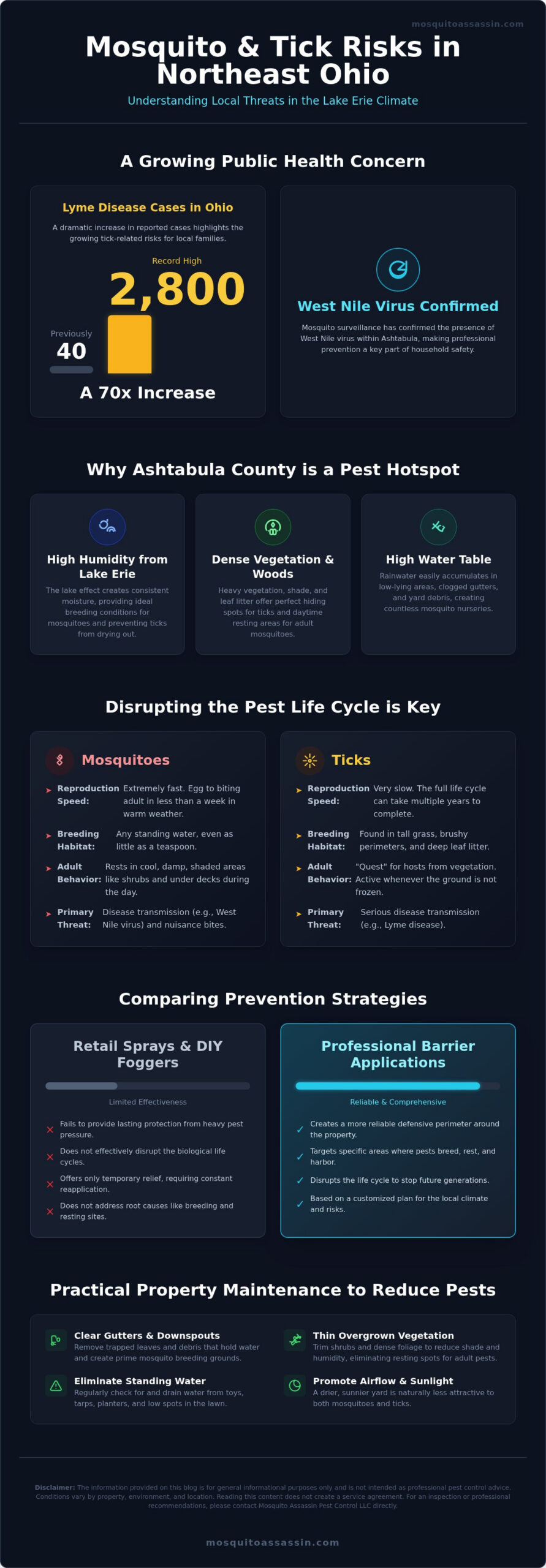
    Lyme disease cases in Ohio reached a record 2,800 in 2025, marking a significant increase from just 40 cases reported in 2010. This rising trend makes consistent mosquito and tick prevention Ashtabula OH a vital part of property maintenance for local families. Many residents find that standard retail sprays and DIY foggers fail to provide lasting protection against the heavy pest pressure found near the humid shores of Lake Erie.

    It’s easy to agree that the frustration of retreating indoors during a summer evening or the anxiety of finding a tick on a pet can ruin the outdoor experience. This guide promises to help you reclaim your yard by detailing local environmental risks, including the confirmed presence of West Nile virus in Ashtabula, and the professional prevention strategies used to disrupt pest life cycles. Readers will gain a clear understanding of regional health data, common habitat traps, and the methodical steps necessary to maintain a more comfortable environment throughout the 2026 season.

    Key Takeaways

    • Understand how the high humidity near Lake Erie creates unique breeding environments for mosquitoes and ticks in Ashtabula County.
    • Learn why disrupting the biological life cycles of local pests requires a consistent management approach throughout the year.
    • Discover why professional barrier applications provide a more reliable perimeter for mosquito and tick prevention Ashtabula OH compared to retail products.
    • Identify practical property maintenance tasks, such as vegetation thinning and moisture control, that naturally reduce pest attractions.
    • Explore the value of a customized protection plan designed specifically for the climate and environmental risks of Northeast Ohio.

    Understanding Mosquito and Tick Risks in Ashtabula County

    Ashtabula County’s unique position along the Lake Erie shoreline creates a microclimate that is exceptionally conducive to pest activity. The lake effect brings consistent humidity and moisture, which are the two primary drivers for a thriving mosquito life cycle. For property owners, this means that seasonal pest pressure often begins earlier and lasts longer than in inland regions. Effective mosquito and tick prevention Ashtabula OH requires a strategy that accounts for these environmental variables, combining consistent habitat management with professional-grade barrier applications.

    The seasonal timeline for these pests in the Ashtabula and Geneva regions typically mirrors the rise in temperatures. Mosquitoes often emerge when night temperatures consistently stay above 50 degrees Fahrenheit. Ticks, however, are a more persistent threat. They can remain active whenever the ground is not frozen, meaning property owners must remain vigilant even during the shoulder seasons of early spring and late autumn.

    The Role of Local Geography in Pest Activity

    Geography plays a significant role in how pests distribute themselves across a property. Ashtabula County is known for its heavy vegetation and wooded lots, which provide the deep shade and leaf litter that several tick species require to survive. Without the sun’s direct heat to dry them out, ticks can thrive in the tall grasses and brushy perimeters common in our local landscape.

    The high water table found in many areas near the lake also contributes to the problem. Standing water can accumulate in low-lying spots after a typical Northeast Ohio rainstorm, creating perfect nurseries for mosquito larvae. Common hot spots on residential properties include:

    • Clogged gutters and downspouts that trap organic debris.
    • Depressions in the lawn that hold water for more than 48 hours.
    • Overgrown shrubbery that limits airflow and traps humidity near the ground.

    Health Considerations for Northeast Ohio Residents

    The presence of these pests is more than a nuisance; it’s a legitimate health concern for families and pets. In 2025, Ohio recorded 2,800 cases of Lyme disease, a trend that continues to rise into 2026. Ticks brought into the home by pets can easily transfer to humans, increasing the risk of infection. Mosquito surveillance in 2025 also identified West Nile virus within the city of Ashtabula, highlighting the need for proactive management.

    Localized prevention is often more effective than broad-spectrum approaches because it targets the specific areas where pests breed and harbor. By focusing on the unique needs of a property’s location, residents can implement stronger mosquito and tick prevention Ashtabula OH to protect their households from the risks associated with regional pest populations. Professional pest control may help reduce risk by creating a defensive perimeter that interrupts the cycle of infestation.

    The Life Cycles of Pests in Northeast Ohio

    Effective mosquito and tick prevention Ashtabula OH requires more than just reacting to the pests you see during a backyard barbecue. It involves understanding the biological timelines that allow these populations to explode. While a mosquito can go from an egg to a biting adult in less than a week during a warm Ashtabula summer, ticks operate on a much slower, multi-year timeline. This difference means that a one-size-fits-all approach rarely works. Success comes from disrupting the cycle at every stage, from larvae in the water to adults resting in the shade.

    Disrupting these cycles is far more effective than simply targeting adult pests. If you only kill the adults you see, thousands of eggs and larvae are already waiting to take their place. By focusing on the environments where these pests grow and hide, you can stop the next generation before it even begins to bite.

    Mosquito Breeding and Resting Habits

    Mosquitoes are masters of efficiency. They don’t need a pond or a lake to reproduce; a single teaspoon of water trapped in a discarded bottle cap or a clogged gutter can support hundreds of larvae. In the humid environment of Northeast Ohio, temperature acts as an accelerator. When temperatures rise, the reproduction speed increases, leading to overlapping generations that can overwhelm a property in days.

    Understanding the difference between breeding grounds and resting areas is key. While they breed in water, adult mosquitoes spend the majority of their time resting in cool, damp, and shaded areas. Trees, shrubs, and dense foliage provide the perfect daytime sanctuary. By addressing these resting spots, property owners can significantly impact the local population. For those looking for more detailed guidance, the Ohio State University Extension provides excellent resources on mosquito control around Ohio homes.

    Tick Habitats and Questing Behavior

    Ticks don’t fly or jump. Instead, they utilize a behavior called questing. They climb to the tips of tall grass or low-hanging branches and wait with their front legs extended, ready to latch onto any host that brushes past. This makes the transition zones between woods and lawns particularly dangerous for children and pets.

    The multi-year life cycle of a tick means they are a persistent, year-round concern. Even in winter, a few days of thaw can bring them out of dormancy. Their survival is closely linked to local wildlife like deer and white-footed mice, which provide the blood meals necessary for them to advance to the next life stage. On your property, high-risk zones include leaf litter, woodpiles, and overgrown edges where these hosts frequently travel.

    Managing these habitats is a critical step in long-term protection. While DIY efforts help, a professional pest control plan can provide the comprehensive coverage needed to address both breeding and resting sites. Targeting the entire life cycle ensures that you aren’t just fighting today’s pests, but preventing tomorrow’s infestation as well.

    Comparing Prevention Strategies for Local Properties

    Many Ashtabula homeowners begin their defense with products found on retail shelves. Citronella candles, localized coils, and standard bug sprays offer a small measure of comfort, but they rarely provide the comprehensive coverage needed for a large backyard. These methods are often limited by wind and distance, leaving the majority of your property unprotected. For long-term mosquito and tick prevention Ashtabula OH, a more robust and scientific approach is necessary to create a truly usable outdoor space.

    Professional barrier applications differ significantly from these temporary fixes. Rather than just repelling pests for a few hours, professional treatments establish a persistent perimeter around the yard. This involves a strategic combination of liquid and granular applications. Liquid treatments are ideal for the underside of leaves and deep within foliage where mosquitoes rest during the day. Granular applications are frequently used in the thick brush and leaf litter where ticks are most likely to hide. By utilizing both, professionals can address the specific habitats of multiple pests simultaneously.

    DIY vs. Professional Prevention

    The primary reason hardware store foggers often fail to deliver lasting results is a lack of penetration. Most consumer-grade equipment cannot push the product deep enough into the dense vegetation typical of Northeast Ohio properties. Licensed professionals use high-powered equipment designed to reach the center of thick shrubs and the high canopy of trees. Additionally, professional pest control may help reduce risk because licensed technicians follow rigorous safety protocols and use products that are applied with precision, minimizing waste and maximizing effectiveness.

    Integrated Pest Management (IPM) for Ashtabula

    Effective prevention is rooted in Integrated Pest Management (IPM). This approach focuses on the science of the pest’s life cycle rather than just targeting the adults you see. A professional evaluation can identify specific risks that a homeowner might overlook, such as a hidden drainage issue or a particular species of tree that attracts pests. By understanding these variables, a customized plan can be developed to disrupt reproduction and harborages. Learn more about professional services that utilize these disciplined, multi-step procedures to maintain seasonal protection throughout the year. Ongoing management plans ensure that as weather patterns shift in Ashtabula, your property’s defenses remain strong.
    Mosquito and Tick Prevention in Ashtabula, OH: A Complete 2026 Guide

    Step-by-Step Property Maintenance for Pest Reduction

    Professional barrier applications are most effective when they’re supported by consistent yard hygiene. Establishing a routine for property maintenance is a practical way to strengthen mosquito and tick prevention Ashtabula OH. By removing the specific environmental factors that attract these pests, you create a less hospitable environment for them to thrive. Simple tasks performed weekly can significantly reduce the number of biting insects that call your backyard home.

    Homeowners who take an active role in managing their landscape often see better results from professional treatments. This dual-action approach ensures that you aren’t just killing adult pests, but also eliminating the habitats they need to reproduce. Maintaining a defensible space around high-traffic outdoor areas, such as decks and play zones, is the foundation of a pest-free summer.

    Eliminating Mosquito Breeding Sites

    Stagnant water is the primary requirement for mosquito reproduction. In Ashtabula County, frequent rainstorms can quickly fill any container left outdoors. Clearing gutters and downspouts is a critical first step. When debris traps water near the roofline, it creates a hidden nursery for larvae that many homeowners overlook. Stagnant water trapped in leaf-clogged downspouts serves as an ideal incubator, allowing populations to surge after a typical lake-effect rainstorm.

    After any significant rainfall, perform a quick sweep of the property to manage common water collectors. You should prioritize these areas:

    • Empty birdbaths and flowerpot saucers at least twice a week.
    • Store outdoor toys, wheelbarrows, and buckets in a covered area or turn them upside down.
    • Check tarps over firewood or boats for small pockets of standing water.
    • Ensure pool covers are pulled tight so water doesn’t pool in the folds.

    Addressing drainage issues in low-lying areas of the lawn is also essential. If water remains for more than 48 hours after a storm, consider regrading or installing a French drain to prevent long-term breeding grounds.

    Tick-Proofing the Landscape

    Ticks require high humidity to survive, which is why they congregate in tall grass and dense brush. Keeping the lawn mowed to a height of three inches or less helps sunlight reach the soil level, drying out the environment ticks need to stay hydrated. Short grass also makes it much harder for ticks to “quest” for passing hosts.

    Creating a physical barrier can prevent ticks from migrating from the woods into your active yard space. A three-foot-wide border of gravel or woodchips serves as a buffer zone that ticks are reluctant to cross. Additionally, removing brush piles and leaf litter is vital. These areas aren’t just tick habitats; they also attract rodents, which serve as the primary transport for ticks onto your property. Consistent vegetation management ensures your yard remains a less attractive target for pests.

    For property owners who want to supplement these efforts with expert intervention, professional mosquito and tick management can address the areas that maintenance alone cannot reach.

    Professional Pest Management and Long-Term Protection

    Professional pest control may help reduce risk of infestations by applying technical expertise that goes beyond basic yard maintenance. While clearing gutters and mowing grass are vital, the biological resilience of pests in Northeast Ohio requires a more disciplined intervention. A customized protection plan is especially valuable because Ashtabula’s climate, influenced by Lake Erie, creates high-pressure zones where pests can thrive if left unmanaged.

    For complex or large properties, professional recommendations are vital. An expert can identify micro-habitats, such as specific moisture-trapping foliage or hidden drainage issues, that property owners might overlook. This methodical approach ensures that every potential harbor is addressed, creating a comprehensive shield for your outdoor living spaces.

    The Benefits of Ongoing Protection

    Consistency is the most important factor in maintaining a pest-free yard. Populations can rebound quickly if a treatment schedule is interrupted, especially during the peak humidity of an Ashtabula summer. Ongoing mosquito and tick prevention Ashtabula OH ensures that the defensive barrier remains active, providing a steady shield against new arrivals. This managed schedule offers property owners significant peace of mind, knowing that their outdoor spaces are being monitored by experts who understand the local ecosystem. You can read about our mosquito control program to understand how these scheduled interventions work to maintain a defensive perimeter.

    Taking the Next Step for Your Property

    A professional inspection is the first step toward reclaiming your yard. During this process, a technician evaluates the specific layout of your property to determine the most effective placement for barriers and treatments. When searching for a reputable local service provider in Ashtabula County, it’s best to look for companies that demonstrate deep knowledge of the regional environment and offer transparent, methodical service procedures. Local expertise ensures that the strategies used are effective against the specific species found in Northeast Ohio.

    To ensure your home is protected from more than just outdoor pests, it’s helpful to consult the complete guide to general pest control. This broader approach helps manage a variety of seasonal challenges that property owners face in the region. If you’re ready to begin, you can find a service location near you to schedule an evaluation and establish a customized plan for your property.

    Disclaimer: The information provided on this blog is for general informational purposes only and is not intended as professional pest control advice. Conditions vary by property, environment, and location. Reading this content does not create a service agreement. For an inspection or professional recommendations, please contact Mosquito Assassin Pest Control LLC directly.
    Reclaim Your Outdoor Space for the 2026 Season

    Protecting your property requires a dual approach that addresses both the immediate threat of biting pests and the underlying environmental factors that allow them to thrive. By combining regular yard maintenance with a scientific understanding of pest life cycles, you can significantly disrupt populations in your backyard. This integrated strategy is the most reliable way to achieve long-term mosquito and tick prevention Ashtabula OH. Consistent moisture control and strategic vegetation management are essential first steps, but the lake-effect humidity of Northeast Ohio often demands more robust intervention to maintain a truly defensible perimeter.

    Licensed local professionals provide the technical expertise and high-powered equipment necessary to reach deep into the foliage where pests harbor. Serving Ashtabula, Erie, and Crawford counties, these experts use proven barrier application methods to establish a lasting shield around your home. Professional pest control may help reduce risk and ensure your family can enjoy the outdoors without anxiety. To get started on a customized protection plan, you can request a professional evaluation for your property today. Taking a proactive stance now means more comfortable evenings and worry-free weekends for the rest of the year.

    Disclaimer: The information provided on this blog is for general informational purposes only and is not intended as professional pest control advice. Conditions vary by property, environment, and location. Reading this content does not create a service agreement. For an inspection or professional recommendations, please contact Mosquito Assassin Pest Control LLC directly.

    Frequently Asked Questions

    Is mosquito and tick prevention necessary if I live in a town like Conneaut or Geneva?

    Yes, residents in Conneaut and Geneva require consistent protection because these lakefront communities provide ideal humidity for pest breeding. Proximity to Lake Erie and local wetlands means these areas often face higher pest pressure than inland regions. Effective mosquito and tick prevention Ashtabula OH is necessary for anyone living near these natural corridors to maintain a comfortable and usable backyard environment throughout the summer.

    Can I perform my own tick and mosquito spraying effectively?

    Performing your own spraying is often difficult because retail equipment lacks the power to reach deep into the dense foliage where pests harbor. While store-bought products provide temporary relief, they rarely offer the residual protection needed to disrupt biological cycles. Professional equipment is designed to provide thorough coverage that DIY foggers cannot match, ensuring the product reaches the center of thick shrubs and high canopies.

    When should I start mosquito and tick treatments in Ashtabula OH?

    Treatments should ideally begin in early spring when daytime temperatures consistently reach 50 degrees Fahrenheit. In Ashtabula County, this usually occurs in late April or early May. Starting at this time prevents the first generation of pests from establishing a foothold on your property. Early intervention is a cornerstone of successful mosquito and tick prevention Ashtabula OH and helps manage populations before they become overwhelming.

    Are professional pest control treatments safe for my pets and children?

    Licensed professionals follow strict EPA-approved labels that specify precise application methods for residential yards. Technicians typically recommend keeping children and pets indoors during the actual application and until the product has completely dried, which usually takes about an hour. Once the barrier is dry, it remains effective against pests while allowing families and animals to return to their normal outdoor activities without concern.

    How long does a professional mosquito barrier treatment last?

    A professional barrier treatment typically remains effective for approximately 21 to 30 days. Factors like heavy rainfall or extreme heat in Northeast Ohio can influence the longevity of the application. Because the product breaks down over time, regular, scheduled visits are the best way to ensure the perimeter remains strong. This consistent approach prevents pest populations from rebounding and keeps the defensive shield intact all season long.

    Do I need to be home during a professional pest control application?

    You don’t need to be present during the application as long as the technician has unobstructed access to the perimeter of your yard. Most professionals will leave a service notice or digital confirmation once the work is completed. This allows for a convenient schedule that doesn’t require you to take time off work or adjust your daily routine to accommodate the service visit.

    What should I do if I find a tick on myself or a pet after prevention steps?

    If you find a tick, remove it immediately using fine-tipped tweezers by grasping it as close to the skin as possible and pulling upward with steady pressure. While prevention steps significantly reduce the likelihood of ticks on your property, no method can eliminate the risk entirely. Monitoring remains an important habit for local residents, especially if pets frequent wooded areas or tall grasses near the property edge.

    How much does professional mosquito and tick prevention cost in Ohio?

    The cost of professional prevention varies based on the size of the property and the density of the vegetation that requires treatment. Most providers offer customized plans with per-visit rates or seasonal contracts tailored to the specific needs of your landscape. For an accurate assessment, property owners should request a professional evaluation to determine the necessary level of protection for their specific environment.

    Disclaimer: The information provided on this blog is for general informational purposes only and is not intended as professional pest control advice. Conditions vary by property, environment, and location. Reading this content does not create a service agreement. For an inspection or professional recommendations, please contact Mosquito Assassin Pest Control LLC directly.
  • Centipede and Millipede Exterminator: A Guide to Professional Control

    Centipede and Millipede Exterminator: A Guide to Professional Control

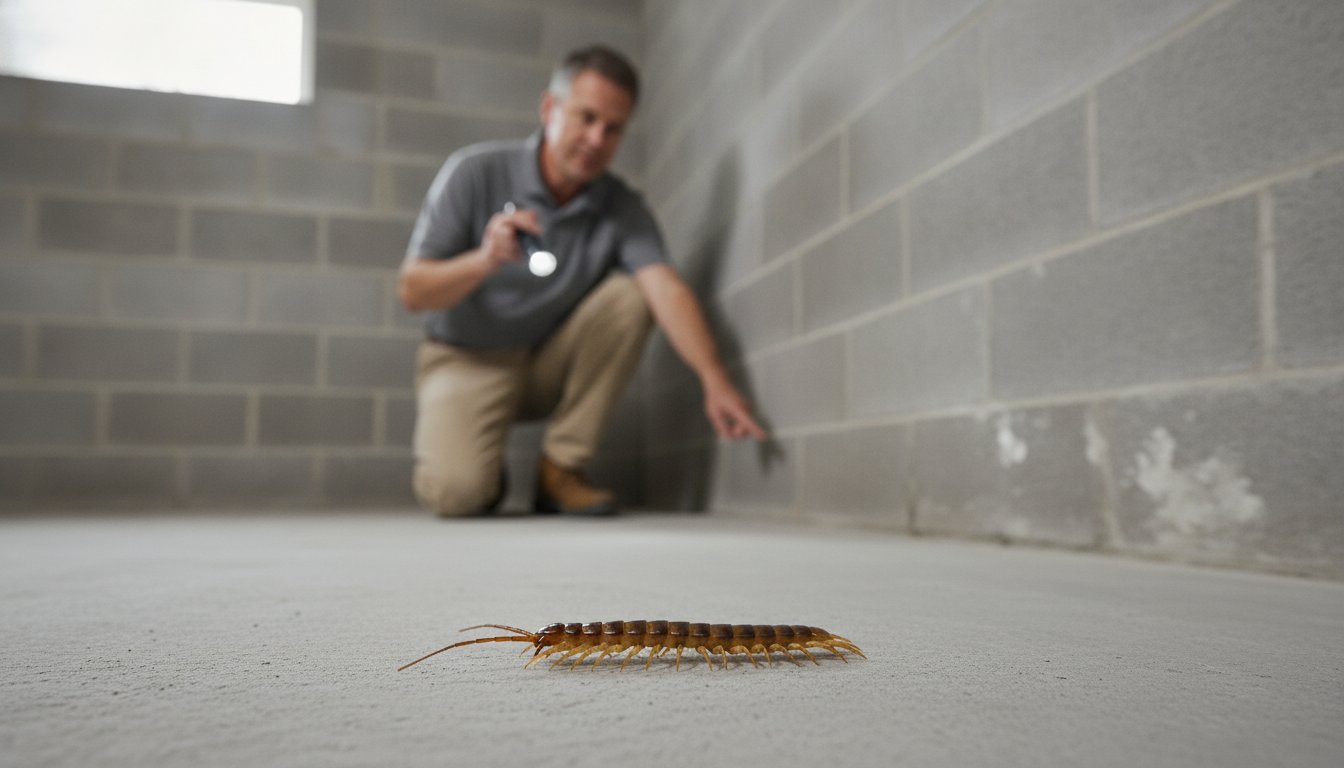
    Finding a multi-legged intruder darting across the basement floor isn’t just a startling surprise; it’s a clear signal that a home’s environment has shifted in favor of pests. Most homeowners in Northwest Pennsylvania and Northeast Ohio feel an immediate sense of unease when encountering the frantic movement of a house centipede or the coiled presence of a millipede. It’s natural to worry about potential bites or the skin irritation some species can cause, especially when sightings become frequent in damp crawlspaces. When these pests move indoors, consulting a professional centipede and millipede exterminator is often the most efficient way to address the root cause of the invasion.

    It’s understandable to want these startling guests gone quickly. This guide provides the knowledge needed to accurately identify these different species, understand the moisture issues that draw them inside, and implement effective exclusion strategies to keep them out. You’ll gain a clear overview of professional management techniques and prevention steps tailored for properties in Erie, Crawford, and Ashtabula counties.

    Disclaimer: The information provided on this blog is for general informational purposes only and is not intended as professional pest control advice. Conditions vary by property, environment, and location. Reading this content does not create a service agreement. For an inspection or professional recommendations, please contact Mosquito Assassin Pest Control LLC directly.

    Key Takeaways

    • Learn to distinguish between flat-bodied centipedes and cylindrical millipedes by identifying their leg counts and physical structures.
    • Understand how the high humidity levels of the Lake Erie region, particularly in Erie and Ashtabula counties, create ideal conditions for these pests to thrive.
    • Discover how a professional centipede and millipede exterminator uses targeted barrier treatments and property assessments to stop migration into the home.
    • Identify the importance of long-term moisture management and exclusion strategies to secure crawlspaces and basements against future infestations.
    • Gain insights into managing the pest food chain to reduce the presence of predatory centipedes through year-round monitoring and maintenance.

    Understanding Centipede and Millipede Activity in the Tri-County Area

    While many property owners refer to them as “bugs,” centipedes and millipedes are not actually insects. They are land-dwelling arthropods, a group that also includes spiders and crustaceans. In the Lake Erie region, specifically across Erie and Ashtabula counties, these pests are heavily attracted to high-moisture environments. Sightings typically increase during seasonal transitions in the spring and fall when outdoor temperatures fluctuate, driving them to find more stable climates. These pests are moisture-dependent arthropods that seek refuge in human structures when their natural habitats become too saturated or too dry.

    To better understand how these pests behave and the challenges they present, watch this helpful video:

    The Role of Centipedes as Predatory Indicators

    House centipedes function as predatory indicators within a residential or commercial building. Because they are strictly carnivorous, they spend their time hunting other common household pests such as ants, spiders, and silverfish. If you see them frequently, it usually means there is a robust food source already established behind your walls or under your floors. A professional centipede and millipede exterminator doesn’t just look for the centipedes; they assess the property for the underlying infestations that are drawing these predators inside. Understanding specific Centipede characteristics, such as their speed and nocturnal hunting habits, is essential for effective management. Professional pest control strategies focus on removing both the predators and the secondary pests to ensure a long-term solution.

    Millipedes and the Decomposition Cycle

    Millipedes play a very different role in the local ecosystem compared to centipedes. They are scavengers that primarily feed on decaying organic matter, making them a vital part of the natural decomposition cycle. You’ll often find large populations congregating near mulch beds, leaf piles, or damp wood located near a home’s foundation. In Crawford County, where basements and crawlspaces often retain excess moisture, millipedes may migrate indoors in massive numbers. This migration is typically triggered by weather extremes. When heavy rains soak the soil or drought conditions dry out their mulch habitats, they move toward the damp, dark recesses of a building’s lower levels. Managing the exterior environment is a critical step for any centipede and millipede exterminator to prevent these seasonal invasions.

    Disclaimer: The information provided on this blog is for general informational purposes only and is not intended as professional pest control advice. Conditions vary by property, environment, and location. Reading this content does not create a service agreement. For an inspection or professional recommendations, please contact Mosquito Assassin Pest Control LLC directly.

    Identifying the Difference Between Centipedes and Millipedes

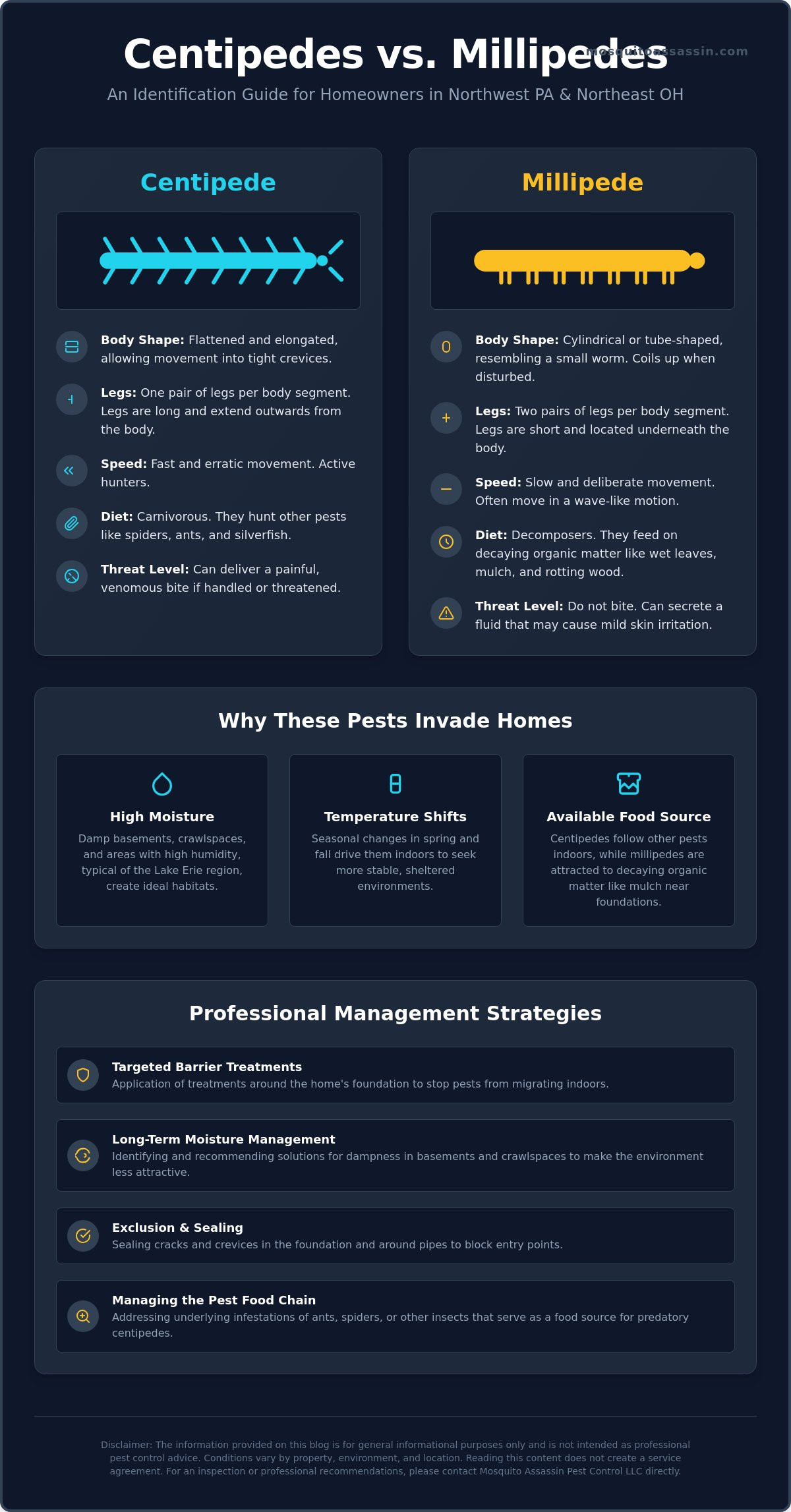
    Distinguishing between these two multi-legged intruders is the first priority for any property owner in Northwest Pennsylvania or Northeast Ohio. While they both favor the damp environments found in Erie and Crawford counties, their biological structures and behaviors are vastly different. A professional centipede and millipede exterminator relies on these specific traits to determine the most effective strategy for your home. Proper identification ensures that the root cause of the infestation, whether it is decaying organic matter or a secondary pest population, is addressed correctly.

    The most obvious physical difference lies in their body shapes. Centipedes possess flat, elongated bodies that allow them to squeeze into incredibly tight crevices. Millipedes are cylindrical and resemble small, armored worms. Their leg configuration is another definitive marker. If you look closely, centipedes have exactly one pair of long legs per body segment. Millipedes have two pairs of shorter legs per segment, except for the first three segments which feature only one pair each. This structural difference dictates how they move through a basement or crawlspace.

    Centipede Physical Traits and Behavior

    Centipedes are built for speed and aggression. Their long, delicate legs extend outward from the body, enabling rapid bursts of movement to chase down prey. They are equipped with venom glands located in their first pair of appendages, which they use to paralyze small insects. While this makes them formidable hunters in the insect world, they are rarely harmful to humans. You’ll typically find them in dark, secluded areas like wall voids, floor drains, or behind baseboards. Because they are active hunters, effective pest management strategies must account for their high mobility and the presence of their food sources.

    Millipede Physical Traits and Defense Mechanisms

    Millipedes move with a slow, rhythmic, wave-like motion. Their legs are short and positioned directly underneath their bodies. Unlike the predatory centipede, the millipede is a scavenger that consumes decaying plant matter. When they feel threatened, they don’t run; instead, they coil into a tight spiral to protect their soft undersides. Some species can also secrete a foul-smelling fluid to deter predators. In areas like Ashtabula County, heavy rainfall often triggers mass migrations. They may wander into basements in large groups seeking higher ground, though they usually die quickly if they cannot find a moisture source. Understanding these behaviors helps in selecting the right general pest control plans to secure your property.

    Disclaimer: The information provided on this blog is for general informational purposes only and is not intended as professional pest control advice. Conditions vary by property, environment, and location. Reading this content does not create a service agreement. For an inspection or professional recommendations, please contact Mosquito Assassin Pest Control LLC directly.

    Why These Pests Invade Pennsylvania and Ohio Homes

    The Lake Erie region experiences specific environmental pressures that make homes in Erie and Ashtabula counties particularly vulnerable to arthropod invasions. High humidity levels near the lakefront create ideal breeding grounds for moisture-seeking pests. Inland, the heavy soils of Crawford County often lead to basements and crawlspaces that retain excess moisture for long periods. Because these pests are so sensitive to dehydration, the local climate in Northwest Pennsylvania necessitates professional moisture management as a core component of any effective pest strategy.

    Structural vulnerabilities also play a significant role in these invasions. Many homes in this region feature older foundations with small cracks or gaps that developed as the structures settled over time. These openings provide easy entry points for leggy intruders. When property owners struggle with recurring sightings, a centipede and millipede exterminator can identify these subtle access points that a typical homeowner might overlook during a routine inspection.

    The Impact of Local Moisture and Humidity

    Damp foundations and sump pump areas act as primary attractants for millipedes, which require high humidity to survive. Inside the home, condensation on cold water pipes provides the necessary hydration for house centipedes. Utilizing professional general pest control helps property owners identify these specific moisture hotspots before they become major issues. According to the University of California guide to centipedes and millipedes, managing the environment is often more effective than chemical application alone. Addressing these damp areas reduces the overall hospitality of the home to multi-legged pests.

    Seasonal Migration Patterns in the Region

    The transition between seasons is the most common time for infestations to peak in the Tri-County area. In the fall, sharp temperature drops push arthropods toward the warmth of heated foundations. Conversely, heavy spring rains often flood outdoor habitats in mulch beds or leaf litter; this forces pests into the lower levels of homes to escape drowning. Identifying these regional patterns is key to establishing year-round protection. By understanding when these migrations occur, a centipede and millipede exterminator can apply preventative barriers at the most critical times to block entry before the pests settle indoors.

    Disclaimer: The information provided on this blog is for general informational purposes only and is not intended as professional pest control advice. Conditions vary by property, environment, and location. Reading this content does not create a service agreement. For an inspection or professional recommendations, please contact Mosquito Assassin Pest Control LLC directly.

    Centipede and Millipede Exterminator: A Guide to Professional Control

    Professional Strategies for Effective Extermination and Exclusion

    Professional intervention transforms a home from a vulnerable target into a fortified structure. While understanding biology and moisture is a vital first step, definitive control requires a methodical approach that addresses both the pests currently inside and those waiting to enter. A professional centipede and millipede exterminator begins by conducting a high-level assessment to map out specific species activity and identify the structural entry points unique to the property. This evaluation determines whether the infestation is a localized moisture issue or a broader structural vulnerability that requires professional expertise to resolve.

    The Three-Step Process: Removal, Maintenance, and Exclusion

    Effective pest management follows a disciplined three-step operational approach designed for the specific needs of properties in Erie, Crawford, and Ashtabula counties. Initial removal focuses on eliminating active populations found in lower levels, crawlspaces, or behind baseboards where dampness persists. Once the internal population is managed, maintenance plans establish a protective perimeter barrier around the foundation to intercept new arrivals from mulch beds or leaf litter. The final and most critical step is exclusion. This involves sealing the ‘highway’ that pests use to enter the living space. Technicians focus on sealing hairline cracks in masonry, gaps around basement windows, and voids where utility lines penetrate the foundation. By securing the sill plates and door thresholds, the structural integrity of the pest barrier is maintained year-round.

    Why DIY Methods Often Fail

    Many property owners attempt to resolve infestations using over-the-counter sprays, but these products rarely provide lasting results. These treatments often fail to reach pests hiding deep within wall voids, under heavy insulation, or inside floor drains. While using a dehumidifier is a helpful step for managing the internal environment, it does not address the external structural gaps that allow pests to return during the next heavy rain or temperature drop. Professional pest control may help reduce risk by utilizing advanced application methods and specialized materials that provide more durable protection than retail alternatives. Engaging a centipede and millipede exterminator ensures that the treatment is applied where it is most effective, reaching the hidden voids where these arthropods thrive. For a definitive resolution to multi-legged pest problems, property owners can request a professional assessment to secure their property and restore peace of mind.

    Disclaimer: The information provided on this blog is for general informational purposes only and is not intended as professional pest control advice. Conditions vary by property, environment, and location. Reading this content does not create a service agreement. For an inspection or professional recommendations, please contact Mosquito Assassin Pest Control LLC directly.

    Maintaining a Pest-Free Environment Year-Round

    Establishing a property as a fortress against multi-legged intruders requires more than a single visit. Continuous monitoring is the most effective way to prevent small, occasional sightings from escalating into large scale infestations. Because homes in Northwest Pennsylvania and Northeast Ohio are subject to heavy seasonal shifts, the structural and environmental conditions of a basement or crawlspace can change within a few months. Regular inspections allow property owners to stay ahead of these changes, identifying new moisture issues or foundation settling before pests find a way inside. A professional centipede and millipede exterminator provides the specialized oversight needed to maintain these defenses throughout the year.

    One of the most critical aspects of long-term control is managing the “pest food chain.” Predatory centipedes are attracted to properties where other insects like ants, spiders, or silverfish are already established. By implementing comprehensive insect control, you remove the primary reason these predators enter your living space. In many cases, professional rodent removal and general insect management work together to create a total protection strategy. When the food source is gone, the centipedes have no reason to stay.

    The Importance of Perimeter Protection

    Treating the exterior foundation serves as your property’s first line of defense. This barrier intercepts millipedes and centipedes before they reach the cracks and crevices of your home’s exterior. Homeowners can support these professional efforts by reducing mulch depth to less than two inches and clearing leaf debris or damp wood piles away from the foundation. These simple steps limit the high-moisture habitats where millipedes congregate in massive numbers. For business owners in the Tri-County area, these same principles apply; you can learn more about commercial pest control services to protect your professional reputation and property value.

    Securing Your Home for the Long Term

    Consistent service plans are the only true way to remain totally pest-free as the seasons change. In Erie and Crawford counties, the transition from a wet spring to a humid summer often brings different pest pressures. A professional mosquito control program can often be integrated with general pest services to provide a holistic shield for both the interior and exterior of the home. This multi-layered approach ensures that whether the threat is crawling in the basement or flying in the yard, the property remains secure. For an inspection or professional recommendations, it’s best to contact a local expert who understands the specific environmental challenges of the Lake Erie region. Engaging a centipede and millipede exterminator for regular maintenance ensures that your home remains a dry, hostile environment for pests and a comfortable sanctuary for your family.

    Disclaimer: The information provided on this blog is for general informational purposes only and is not intended as professional pest control advice. Conditions vary by property, environment, and location. Reading this content does not create a service agreement. For an inspection or professional recommendations, please contact Mosquito Assassin Pest Control LLC directly.

    Securing Your Property Against Future Infestations

    Managing centipede and millipede activity requires a strategic focus on the environmental factors that draw them indoors. By addressing the high humidity levels common in Northwest Pennsylvania and Northeast Ohio and sealing the structural gaps in older foundations, property owners can disrupt the pest life cycle. Professional exclusion services provide a definitive solution by blocking entry points that DIY methods often overlook. Comprehensive year-round protection plans ensure that as seasonal transitions occur, your home remains a fortified environment.

    Identifying the root cause of moisture and the secondary pests that attract predators is essential for success. If sightings persist in your basement or crawlspace, consulting a professional centipede and millipede exterminator can help restore the security of your living area. This locally owned and operated team understands the unique climate challenges of Erie, Crawford, and Ashtabula counties. To safeguard your home, schedule a professional pest inspection for your home to receive expert recommendations tailored to your property. Proactive measures today prevent small moisture issues from becoming significant pest problems tomorrow.

    Disclaimer: The information provided on this blog is for general informational purposes only and is not intended as professional pest control advice. Conditions vary by property, environment, and location. Reading this content does not create a service agreement. For an inspection or professional recommendations, please contact Mosquito Assassin Pest Control LLC directly.

    Frequently Asked Questions

    Are centipedes or millipedes dangerous to my family or pets?

    They are primarily considered nuisance pests and aren’t dangerous to your family or pets. Millipedes don’t bite or sting, though some species can secrete a fluid that irritates sensitive skin. Centipedes use venom to paralyze prey, but they rarely bite humans unless handled. When a bite does occur, the sensation is usually comparable to a mild bee sting. These arthropods don’t carry diseases or cause structural damage to your home.

    Why do I keep seeing centipedes in my bathroom or basement?

    These areas provide the high moisture and darkness these arthropods need to survive. Bathrooms and basements often have floor drains, pipe condensation, or sump pumps that create damp environments. Frequent sightings in these lower levels often indicate an underlying population of other small insects, such as spiders or silverfish, that serve as a consistent food source for predatory house centipedes.

    How do centipedes and millipedes get into my home?

    They enter through small cracks in the foundation, gaps around basement windows, and voids where utility lines pass through walls. Because centipedes have flat bodies, they can squeeze through very narrow openings. Millipedes often crawl under door thresholds or through weep holes in brickwork during seasonal migrations or after heavy rain saturates the soil outside, seeking higher and drier ground.

    Can a dehumidifier get rid of a centipede infestation?

    A dehumidifier helps reduce the moisture that attracts them, but it rarely eliminates an established infestation on its own. While it makes the environment less hospitable, it doesn’t address the structural entry points or the existing food chain. A professional centipede and millipede exterminator combines moisture control with exclusion and targeted treatments for a definitive result that addresses the root cause of the problem.

    What do centipedes and millipedes eat?

    Their diets are completely different, consisting of either living insects or decaying plant matter. Centipedes are carnivorous hunters that eat spiders, ants, silverfish, and other small household pests. Millipedes are scavengers that primarily feed on decaying organic matter like damp wood, leaf litter, and mulch. Understanding these dietary preferences helps professionals identify the specific environmental factors that are attracting each pest to your property.

    When should I call a professional exterminator for these pests?

    You should seek professional help if sightings become frequent or if you discover large numbers of millipedes congregating in your basement. Engaging a centipede and millipede exterminator is the best course of action when you can’t identify the entry points or the food source sustaining the population. Professional pest control may help reduce risk by identifying structural vulnerabilities and implementing a long-term exclusion strategy.

    Do centipedes bite humans?

    Yes, centipedes can bite if they are handled or feel threatened, but such incidents are rare. Their “bite” is actually delivered by a pair of modified front legs that function like fangs to inject venom into prey. For most people, a centipede bite causes localized pain and swelling similar to a wasp sting. They don’t seek out humans and typically prefer to run away when discovered in a home.

    How can I prevent millipedes from entering my house after it rains?

    Reducing the amount of organic debris near your foundation is the most effective preventative step. Clear away wet leaves and keep mulch depth below two inches. Ensure that downspouts direct water away from the house. In Northwest Pennsylvania and Northeast Ohio, sealing gaps in masonry and installing tight door sweeps can also block their path when they migrate toward your foundation after heavy summer rains.

    Disclaimer: The information provided on this blog is for general informational purposes only and is not intended as professional pest control advice. Conditions vary by property, environment, and location. Reading this content does not create a service agreement. For an inspection or professional recommendations, please contact Mosquito Assassin Pest Control LLC directly.

  • Child-Safe Pest Removal: A Comprehensive Guide for Families in PA and OH

    Child-Safe Pest Removal: A Comprehensive Guide for Families in PA and OH

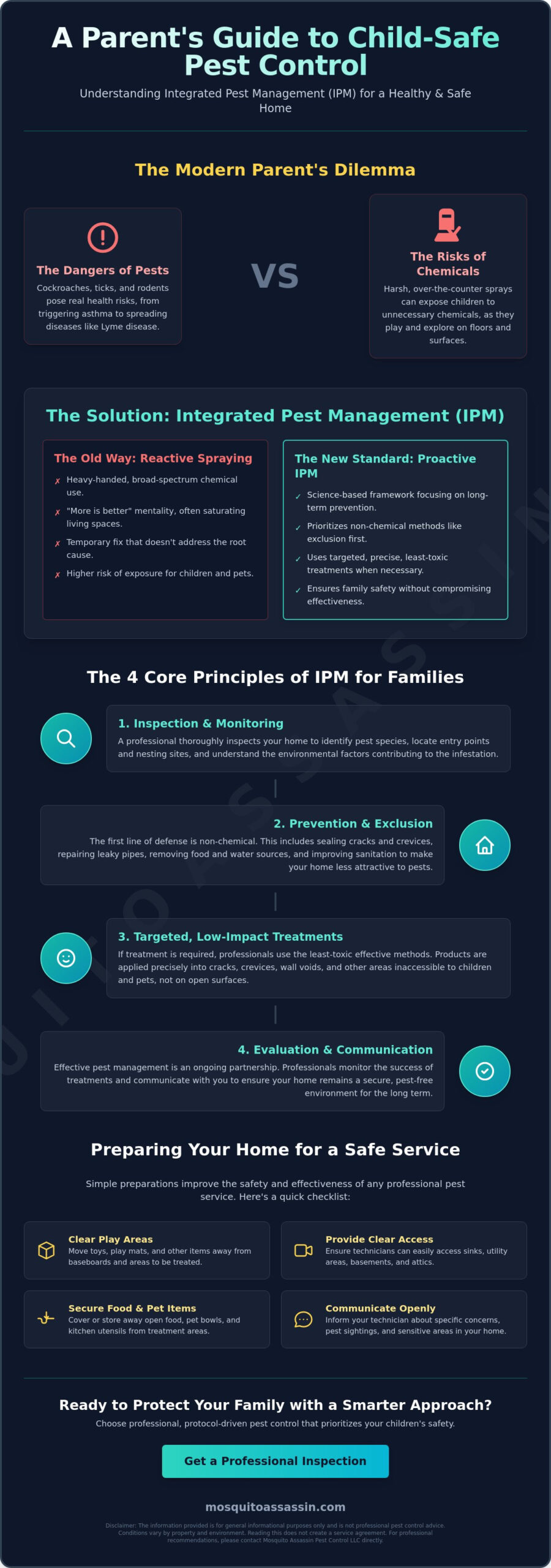
    What if the standard store-bought spray used to stop ants is actually more concerning for a toddler than the insects themselves? Most parents in Erie and Crawford Counties feel caught in a difficult position. They worry about the bacteria cockroaches carry or the risk of Lyme disease from ticks, yet the thought of harsh chemicals near play areas is equally unsettling. This is why child-safe pest removal has become a priority for local households. It’s a common struggle when DIY natural remedies fail to provide lasting results. Finding a balance is essential for a healthy home.

    Professional Integrated Pest Management (IPM) provides a solution that balances effective eradication with high safety standards for families. According to the Environmental Protection Agency (EPA), IPM focuses on long-term prevention by managing the home environment rather than relying on heavy surface sprays. This guide explains how professional protocols protect children from both pests and unnecessary exposure. Readers will learn about targeted treatment methods used in Ashtabula County and discover practical steps to maintain a secure, pest-free environment.

    Disclaimer: The information provided on this blog is for general informational purposes only and is not intended as professional pest control advice. Conditions vary by property, environment, and location. Reading this content does not create a service agreement. For an inspection or professional recommendations, please contact Mosquito Assassin Pest Control LLC directly.

    Key Takeaways

    • Discover why Integrated Pest Management (IPM) serves as the industry standard for protecting households with children from pests and unnecessary treatment exposure.
    • Learn how professional child-safe pest removal protocols prioritize non-chemical methods, such as exclusion and thorough inspection, before considering targeted applications.
    • Understand the specific pest challenges facing families in Erie, Crawford, and Ashtabula counties and how to evaluate the effectiveness of various treatment options.
    • Find out how simple household preparations, such as clearing play areas and maintaining open communication with a professional, can improve the safety and accuracy of a service.
    • Identify the critical factors to look for when selecting a licensed pest management partner who emphasizes family-safe practices and protocol-driven solutions.

    Understanding the Need for Child-Safe Pest Management

    Child-safe pest removal is a protocol-driven approach to pest management that prioritizes the health and safety of children while effectively addressing infestations. This method isn’t just about the products used; it’s about a comprehensive strategy that considers the unique behaviors and biology of children. Parents in Erie and Crawford Counties in Pennsylvania, along with those in Ashtabula County, Ohio, often find themselves managing a dual risk. They must balance the very real dangers posed by pests, such as disease and physical injury, with the necessity of ensuring that any treatment applied to the home is handled with extreme care.

    To better understand this concept, watch this helpful video:

    Children are significantly more vulnerable to both pests and environmental factors than adults. Their developing bodies, faster metabolisms, and tendency to play on the floor increase their potential exposure to anything introduced into their living environment. Because kids are naturally curious and explore their surroundings with their hands and mouths, a standard broad-spectrum application of chemicals is no longer the industry preference. Instead, professional standards have shifted toward targeted applications that focus on pest biology rather than saturating a living space with product.

    Health Risks Associated with Common Household Pests

    The presence of pests in a home is a legitimate health concern. Cockroaches and rodents are known to carry allergens that can trigger severe respiratory distress and asthma attacks in sensitive children. In the regional climate of Pennsylvania and Ohio, ticks and mosquitoes represent significant threats as vectors for diseases like Lyme disease. Additionally, curious children are at a higher risk of encounters with stinging insects or spiders, which can lead to painful reactions or allergic emergencies if nests are located near play areas.

    Why Traditional Pesticide Views Are Changing

    The history of pest control has seen a major evolution from the heavy-handed chemical use of previous decades to the refined methods used today. Modern professional standards are rooted in The Principles of Integrated Pest Management (IPM), a science-based framework that emphasizes prevention, monitoring, and the use of the least-toxic effective methods. There’s a clear distinction between professional-grade protocols and over-the-counter DIY options. While DIY products often encourage a “more is better” mentality, professional child-safe pest removal focuses on precise placement in cracks, crevices, and wall voids where children cannot reach them. This shift ensures that the home remains a fortress against pests without compromising the safety of the family.

    Disclaimer: The information provided on this blog is for general informational purposes only and is not intended as professional pest control advice. Conditions vary by property, environment, and location. Reading this content does not create a service agreement. For an inspection or professional recommendations, please contact Mosquito Assassin Pest Control LLC directly.

    The Principles of Integrated Pest Management (IPM) for Families

    Integrated Pest Management (IPM) represents the industry gold standard for maintaining a healthy home. It’s a strategy that prioritizes long term prevention over temporary fixes. For parents seeking child-safe pest removal, IPM provides a framework that minimizes exposure to chemicals by focusing on the underlying causes of an infestation. Instead of merely treating symptoms, such as seeing an occasional ant, this method addresses the source. This might involve removing a rotting log near the foundation or fixing a moisture problem in a crawlspace. This rigorous standard is why many state regulations in Pennsylvania and Ohio require IPM practices in schools and daycares. It ensures that the environment remains hostile to pests but safe for occupants.

    Inspection and Identification

    Professional monitoring is the first line of defense. Identifying the exact species is critical because different pests require different strategies. For instance, a technician might find that a specific beetle is attracted to a spilled bag of grain in the pantry rather than structural issues. Understanding these biological nuances helps limit the scope of any necessary intervention. Citing Practical Steps to Prepare a Household, experts emphasize that identifying entry points and attractants unique to family households, like pet food bowls or crumb-heavy high chairs, is essential for effective control.

    Exclusion and Habitat Modification

    Prevention is more effective than a cure. Sealing cracks with silicone caulk or installing door sweeps keeps pests out physically without the use of chemicals. In Erie and Crawford Counties, managing moisture is equally important. Fixing a leaky pipe under a kitchen sink removes the water source that attracts silverfish and cockroaches. Yard maintenance also plays a vital role. Keeping grass short and removing leaf litter reduces the habitat for ticks and mosquitoes, creating a safer outdoor play area for children and pets.

    Targeted Application Techniques

    When treatments are required, they’re applied with extreme precision. Instead of broad surface sprays, professionals use gel baits tucked deep into wall voids or behind heavy appliances. These areas are inaccessible to curious hands or pets. For rodent management, the use of tamper-resistant bait stations is a non negotiable safety standard. These stations are designed to keep the bait secure and isolated from the living environment. This targeted approach ensures that child-safe pest removal remains the priority while still achieving total eradication of the pest population. Professional pest control services can help families implement these IPM strategies effectively.

    Disclaimer: The information provided on this blog is for general informational purposes only and is not intended as professional pest control advice. Conditions vary by property, environment, and location. Reading this content does not create a service agreement. For an inspection or professional recommendations, please contact Mosquito Assassin Pest Control LLC directly.

    Child-Safe Pest Removal: A Comprehensive Guide for Families in PA and OH

    Evaluating Child-Safe Treatment Options for Regional Pests

    Families living in Erie, Crawford, and Ashtabula counties face unique pest pressures due to the region’s diverse landscape and climate. When selecting Evaluating Child-Safe Treatment Options, it’s vital to distinguish between marketing claims and scientific efficacy. Many “natural” or “green” products available at hardware stores rely on essential oils that provide short term repellency but fail to eliminate the source of an infestation. If these substances are applied incorrectly or in excessive amounts, they can still cause respiratory irritation or skin sensitivity in young children.

    Professional protocols prioritize Integrated Pest Management (IPM). This approach focuses on long term prevention by studying pest life cycles and their interaction with the environment. Experts select products based on low toxicity profiles and high efficacy, ensuring that the treatment targets the specific biology of the pest without unnecessary chemical broadcast. This method is the foundation of effective child-safe pest removal, as it minimizes the volume of products used while maximizing results.

    Rodent Management in Family Homes

    Rodents are more than just a nuisance; they carry pathogens and can trigger allergies in children. Traditional loose rodenticides, such as pellets or grain baits, are generally avoided in child-safe plans because they can be scattered or moved by the rodents into areas where children play. Professional rodent removal utilizes a safety-first process. This strategy emphasizes mechanical traps placed in locked stations or inaccessible voids and exclusion techniques. Sealing gaps with durable materials prevents mice from entering, reducing the need for reactive treatments inside the living space.

    Mosquito and Tick Protection for Outdoor Play

    Outdoor safety is a major concern in Pennsylvania and Ohio, where the risks of Lyme disease and West Nile virus are well documented by local health departments. Professional mosquito control programs don’t just spray; they target the problem at its source. This involves identifying breeding sites, such as stagnant water in clogged gutters or flowerpots, and using larvicides that specifically target mosquito larvae. Strategic barrier treatments are then applied to the underside of leaves where adult pests rest, protecting play areas while keeping products away from high-touch surfaces.

    Ant and Crawling Insect Control

    Kitchen invaders like pavement ants or carpenter ants are common in the tri-county area. To maintain a child-safe pest removal standard, professionals often use containerized baits instead of broad-spectrum aerosol sprays. These baits are housed in tamper-resistant stations that keep the active ingredient enclosed and away from curious hands. The ants carry the bait back to the colony, providing a targeted solution that doesn’t leave lingering residues on countertops. Consistent general pest control focuses on the home’s exterior perimeter to stop insects before they ever reach the kitchen or nursery.

    Disclaimer: The information provided on this blog is for general informational purposes only and is not intended as professional pest control advice. Conditions vary by property, environment, and location. Reading this content does not create a service agreement. For an inspection or professional recommendations, please contact Mosquito Assassin Pest Control LLC directly.

    Practical Steps to Prepare a Household for Professional Service

    Preparation is the most critical phase in ensuring child-safe pest removal is both effective and efficient. When a technician arrives at a home in Ashtabula or Erie County, their ability to target specific pest harborage areas depends on the accessibility of the property. Clear communication regarding the presence of infants, toddlers, or pets allows the professional to adjust their application methods to suit the specific needs of the family. Homeowners should identify high-traffic play areas or specific rooms where children spend the majority of their time, as this information helps the technician prioritize safety protocols.

    Understanding the “wait time” is a vital part of the process. Most professional treatments require a period of 2 to 4 hours where the treated areas must remain undisturbed. This window allows products to dry completely and bond to surfaces, which significantly reduces the risk of accidental contact. Technicians will provide specific instructions based on the products used, but staying out of the home until the designated time has passed is a standard industry best practice.

    Pre-Service Checklist for Parents

    • Clear the Perimeter: Remove toys, shoes, and clutter from baseboards and corners. Since 70 percent of indoor pest activity occurs along these edges, technicians need unobstructed access to apply targeted treatments.
    • Secure Personal Items: Place all child gear, including high chairs, strollers, and play mats, in the center of the room or inside sealed plastic bins. Storing pet bowls and water dishes in a separate, closed cabinet prevents any accidental exposure.
    • Ensure Access: Unlock basement doors and clear paths to the exterior foundation. Professionals in Crawford County often find that pests enter through small cracks in the basement or crawl space; providing easy access to these areas ensures a more comprehensive inspection.

    Post-Service Safety Measures

    Once the service is complete and the recommended wait time has passed, parents should focus on maintaining a secure environment. Opening windows for 20 to 30 minutes after returning home can help facilitate fresh air circulation, although modern professional treatments are designed to be low-odor. It’s common to see an increase in pest sightings for 24 to 48 hours after a service as insects emerge from hiding spots; parents should promptly dispose of any dead pests found on the floor to keep them out of reach of curious children.

    Ongoing maintenance is the final piece of the safety puzzle. Professionals often recommend exclusion techniques, such as sealing gaps around windows or doors, to prevent future infestations. Monitoring bait stations, if used, ensures they remain undisturbed and functional. For families seeking more information on scheduling a visit, professional pest control may help reduce risk.

    Disclaimer: The information provided on this blog is for general informational purposes only and is not intended as professional pest control advice. Conditions vary by property, environment, and location. Reading this content does not create a service agreement. For an inspection or professional recommendations, please contact Mosquito Assassin Pest Control LLC directly.

    Selecting a Professional Pest Management Partner

    Licensing and insurance protect the homeowner and ensure the service provider meets state-mandated standards for safety and efficacy. In Pennsylvania and Ohio, licensed professionals must complete rigorous training and stay updated on the latest application techniques to follow current safety standards. Choosing a partner that prioritizes Integrated Pest Management (IPM) is a critical step for families seeking child-safe pest removal. IPM focuses on biological and physical controls first, minimizing the reliance on chemical treatments through habitat modification and exclusion.

    Local expertise in Northwest Pennsylvania and Northeast Ohio provides a significant advantage. Technicians familiar with the climate in Erie and Crawford counties understand how seasonal shifts drive pests indoors. Professional management can reduce the risk of accidental exposure to harmful substances by ensuring treatments are applied precisely where needed, often in areas children cannot reach. Licensed and insured professionals provide the expertise needed to safeguard a home without compromising the health of its youngest residents.

    Questions to Ask a Potential Service Provider

    Homeowners should ask specific questions before hiring a provider to ensure their methods align with family safety goals. It’s important to understand the specific approach a company takes before they begin work on the property.

    • What are the specific child-safe protocols used? Inquire about the protocols used for child-safe pest removal and request a list of product types to ensure they meet your standards.
    • Can I see a detailed inspection report? A thorough provider will always offer a detailed inspection report that identifies entry points and nesting sites before any treatment begins.
    • What is the follow-up process? A reliable service should provide clear communication on how they handle situations where pests persist after the initial visit and what their guarantee covers.

    The Role of Year-Round Protection

    Consistent monitoring is often more effective and safer than reactive, high-intensity treatments used only after a major infestation occurs. A year-round pest control plan allows for ongoing safeguarding of the home environment. This proactive approach identifies potential issues early, which can limit the amount of product needed over time. Finding a partner familiar with the specific pest pressures in Ashtabula, Erie, and Crawford counties ensures the protection plan is tailored to the local environment. Professional pest control may help reduce risk for growing families. For an evaluation or to learn more about localized protection, visit the online booking portal.

    Disclaimer: The information provided on this blog is for general informational purposes only and is not intended as professional pest control advice. Conditions vary by property, environment, and location. Reading this content does not create a service agreement. For an inspection or professional recommendations, please contact Mosquito Assassin Pest Control LLC directly.

    Securing a Healthy Home Environment

    Maintaining a pest-free home doesn’t have to compromise the safety of children or pets. Implementing Integrated Pest Management (IPM) strategies allows families to address infestations through a combination of sanitation, exclusion, and targeted treatments. Research from the Environmental Protection Agency (EPA) indicates that IPM focuses on long term prevention by addressing environmental factors that attract pests. Choosing a professional partner committed to child-safe pest removal ensures that every action taken is methodical and evidence-based. It’s vital to rely on licensed and insured professionals who are locally owned and operated in Northwest PA and Northeast OH, specifically serving Erie, Crawford, and Ashtabula Counties. These specialists provide tailored inspections that reflect the specific environmental conditions of the region. For professional recommendations or a detailed home inspection, contact a specialist today. Taking these proactive steps helps create a safer, more comfortable living space for everyone in the family.

    Disclaimer: The information provided on this blog is for general informational purposes only and is not intended as professional pest control advice. Conditions vary by property, environment, and location. Reading this content does not create a service agreement. For an inspection or professional recommendations, please contact Mosquito Assassin Pest Control LLC directly.

    Frequently Asked Questions

    Is professional pest control safer than DIY methods for children?

    Professional pest control is safer for families because licensed technicians possess the training to apply products with precision. Many homeowners who attempt DIY treatments accidentally over-apply chemicals or use products in high-traffic areas where children play. According to data from the Environmental Protection Agency, professional application follows strict federal guidelines that prioritize targeted placement over broad spraying.

    How long should children stay away from a room after it has been treated?

    Children should typically remain out of a treated area for 2 to 4 hours after the application is complete. This timeframe ensures that liquid treatments have fully dried and any necessary ventilation has occurred. It’s important to wait until surfaces are dry to the touch to prevent any accidental skin contact or inhalation of damp product.

    Are the baits used for ants and roaches dangerous if a child finds them?

    Ant and cockroach baits are hazardous if ingested, but professionals mitigate this risk through strategic placement. Technicians place these baits deep within wall voids, behind heavy appliances, or inside tamper-resistant stations that require a key to open. The National Pesticide Information Center notes that while the active ingredient concentrations are low, keeping these materials out of reach is a standard safety protocol.

    Can professional pest control help with my child’s allergies or asthma?

    Professional pest management can significantly reduce asthma triggers by eliminating pests like cockroaches and rodents. The Asthma and Allergy Foundation of America reports that 63% of homes in the United States contain cockroach allergens, which are known to cause severe respiratory distress in children. Removing the source of these biological allergens helps create a cleaner breathing environment indoors.

    What should I do if my child touches a treated surface?

    If a child comes into contact with a recently treated area, wash the affected skin immediately with plenty of soap and water. Most modern pest products are applied to baseboards or crevices where contact is unlikely, but accidents can happen. Monitoring for skin redness or irritation is a practical step, and parents can consult the product’s safety data sheet for specific ingredient information.

    How often should a home with children be inspected for pests?

    Homes in Erie and Crawford Counties should undergo professional inspections on a quarterly basis to maintain a protective barrier. A 90 day inspection cycle allows technicians to identify seasonal pest entries before they become full infestations. Regular monitoring reduces the need for heavy, reactive treatments, keeping the home environment more consistent and controlled for young residents.

    Are there specific pests in Erie, PA that are more dangerous for kids?

    Ticks and mosquitoes are the primary health concerns for children in the Erie and Ashtabula regions due to their ability to transmit diseases. The Pennsylvania Department of Health has documented more than 10,000 cases of Lyme disease in a single year, highlighting the risk to children playing outdoors. Professional management focuses on reducing these populations in high-risk zones like tall grass and perimeter foliage.

    Do natural pest control sprays actually work for large infestations?

    Natural sprays often function better as short-term repellents rather than long-term solutions for established infestations. While essential oils might deter a few insects, they lack the residual power needed to eliminate a colony. Effective child-safe pest removal involves a comprehensive approach that combines mechanical barriers with targeted treatments to ensure the problem doesn’t return after a few days.

    Disclaimer: The information provided on this blog is for general informational purposes only and is not intended as professional pest control advice. Conditions vary by property, environment, and location. Reading this content does not create a service agreement. For an inspection or professional recommendations, please contact Mosquito Assassin Pest Control LLC directly.