What if the backyard you built for your dog’s safety is actually the place where they are most at risk? For many homeowners in Northwest Pennsylvania, the summer months bring a difficult choice between avoiding the outdoors or worrying about heartworm and West Nile virus. It’s natural to feel anxious about the trade-off between using pest treatments and protecting your animals from disease-carrying insects. This guide explains how professional pet safe mosquito control Erie PA residents utilize can effectively manage local infestations while prioritizing the security of your household.
You deserve to feel confident that your pets can play outside without exposure to unnecessary risks. This article explores the latest data on mosquito-borne diseases in Erie and Crawford counties, the science behind professional application standards, and how a methodical approach can help you reclaim your property. By understanding the local pest landscape and the behavior of Northwest Pennsylvania mosquito species, you can ensure a mosquito-free environment that remains a sanctuary for every member of your family.
Key Takeaways
- Understand the specific mosquito-borne disease risks, such as heartworm and West Nile virus, that impact pets in the humid climate of Northwest Pennsylvania.
- Learn how professional pet safe mosquito control Erie PA residents trust utilizes EPA-registered products and expert application methods to minimize exposure risks.
- Discover why professional management is safer than DIY alternatives, which often carry risks of improper concentration or accidental exposure.
- Follow a practical checklist to prepare your property and keep your animals secure before and during a scheduled treatment.
- Explore how habitat modification and integrated pest management can reduce breeding grounds and the need for frequent chemical intervention.
Understanding Mosquito and Disease Risks for Pets in Northwest Pennsylvania
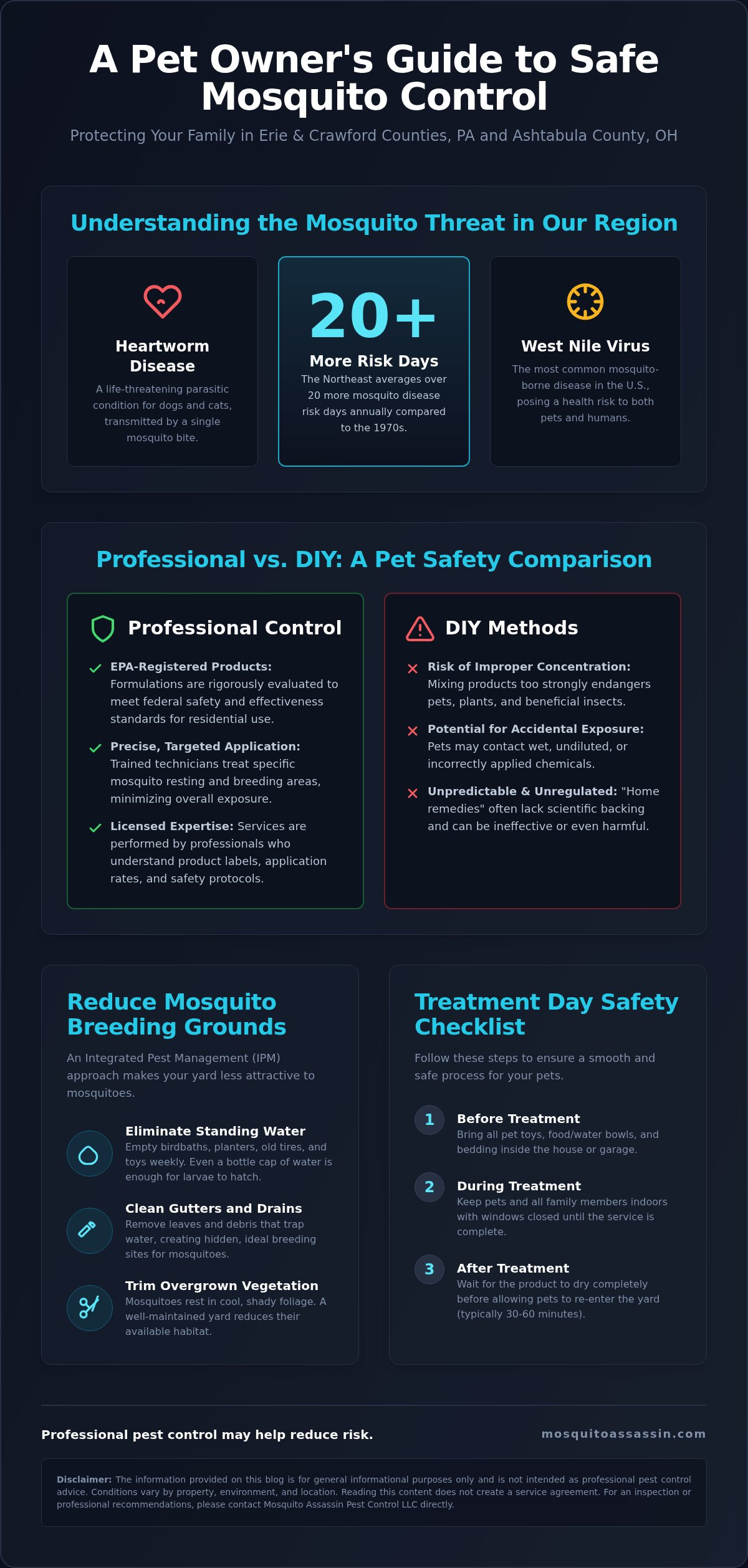
Living along the shores of Lake Erie offers beautiful summers, but the region’s unique environment also creates a perfect breeding ground for pests. For dog and cat owners, the sound of a buzzing mosquito isn’t just a minor annoyance. It represents a genuine health risk. In Northwest Pennsylvania, the threat of heartworm disease and West Nile virus is a reality that pet owners must face every season; West Nile remains the most common mosquito-borne disease in the United States. Utilizing professional pet safe mosquito control Erie PA homeowners rely on helps bridge the gap between indoor safety and outdoor enjoyment.
The humidity from the lake and the frequent rainfall in Crawford and Ashtabula counties fuel the mosquito life cycle, allowing populations to explode within days of a summer storm. These insects thrive in the moist, shaded areas common in our local neighborhoods. To better understand how these pests can be managed around your property, watch this helpful video:
Heartworm and Other Mosquito-Borne Risks
Heartworm disease is a life-threatening condition caused by parasitic worms that live in the heart, lungs, and blood vessels of affected pets. Transmission occurs when an infected mosquito bites a dog or cat, injecting microscopic larvae into the bloodstream. While modern veterinary medicine offers effective preventatives, these treatments work best when combined with environmental management. You should always speak with a veterinarian about year-round heartworm prevention, especially as local weather patterns shift. Our region has seen an increase in “mosquito disease days” since the 1970s, with the Northeast experiencing an average of 20 more risk days annually. Investing in pet safe mosquito control Erie PA services ensures that your backyard remains a recovery zone rather than a risk zone.
Local Environmental Factors in Erie and Ashtabula
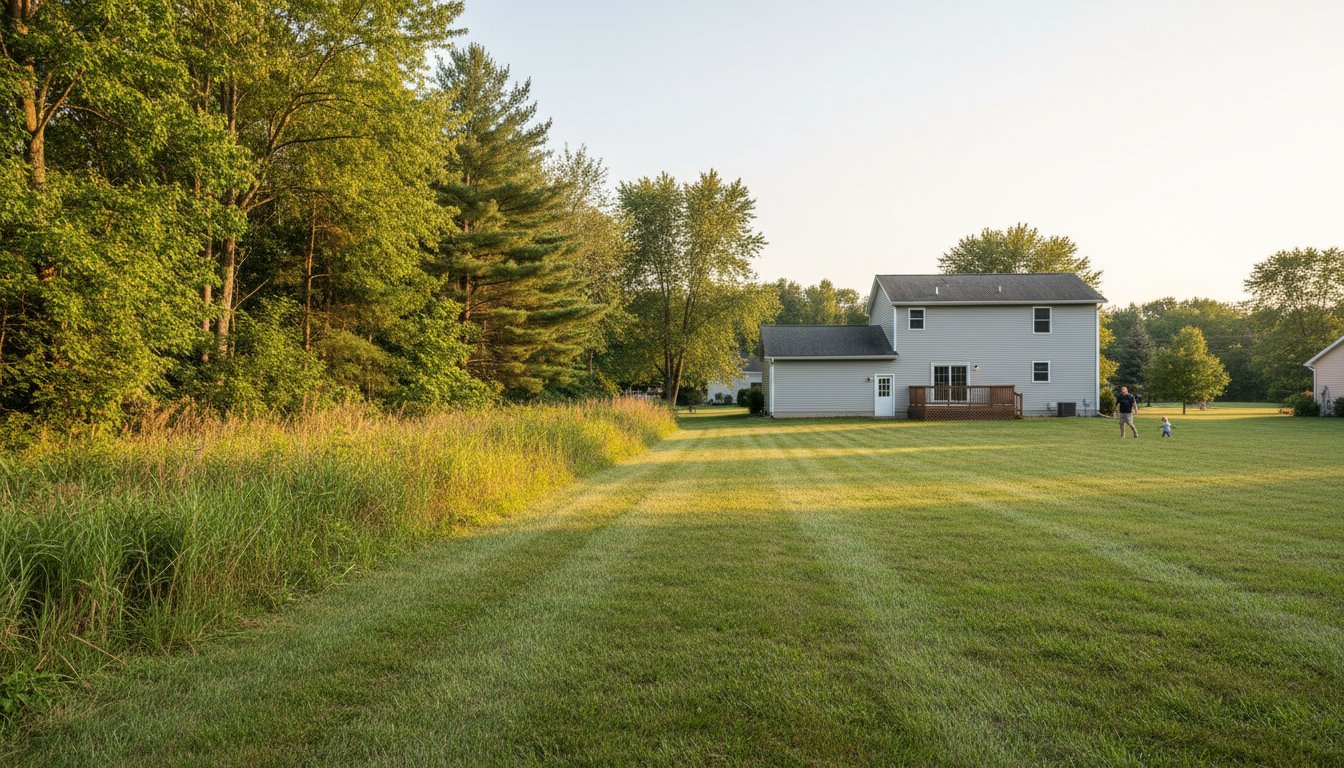
The tri-state geography of Pennsylvania and Ohio presents specific challenges for pest management. Wooded residential lots in Erie and the rural expanses of Crawford County often contain hidden pockets of standing water. Old tires, clogged gutters, or even a small depression in the lawn can host hundreds of larvae. Professional mosquito control services address these environmental factors by identifying breeding sites that are often overlooked by homeowners. By treating the areas where mosquitoes rest and breed, you create a safer perimeter for your animals. This proactive layer of defense is essential because even the most diligent pet owner can’t monitor their pet every second they’re in the yard. Protecting the property itself reduces the frequency of bites and the anxiety that comes with every trip outside.
What Defines Pet Safe Mosquito Control?
Safety in pest management is not a vague concept; it is a standard defined by federal regulations and professional accountability. When homeowners investigate pet safe mosquito control Erie PA residents often look for products that balance effectiveness with the well-being of their animals. True safety is achieved through a combination of science-backed formulations and disciplined application methods. It isn’t just about the liquid in the tank. It’s about how, when, and where that product is applied to your property.
The Role of EPA-Registered Formulations
The foundation of a secure treatment plan is the use of products registered by the Environmental Protection Agency (EPA). Registration means a product has undergone extensive evaluation to ensure it meets federal safety standards for residential use. These formulations are specifically designed to target pests like mosquitoes and ticks while breaking down quickly in the environment. Unlike unregulated or experimental “home remedies,” professional-grade products come with strict label instructions that dictate exactly how they must be handled around pets and families. This scientific oversight provides a level of predictability that DIY methods simply cannot match. For those interested in the broader principles of safety, the National Pesticide Information Center offers extensive data on integrated pest management for mosquitoes and how these strategies protect public health.
Professional Application Protocols
The person behind the equipment is just as important as the product itself. In Pennsylvania and Ohio, licensed technicians receive specialized training to identify mosquito harborage areas, such as the underside of leaves and dense brush, while avoiding sensitive zones. A professional approach ensures that treatments stay away from pet food bowls, water dishes, and flowering plants where pollinators congregate. One of the most critical safety standards is the dry time rule. According to guidelines from the Pennsylvania Department of Environmental Protection, pets should be kept indoors during the application and remain inside for at least 30 minutes until the product has completely dried. Once dry, the treatment binds to the foliage, significantly reducing the risk of accidental transfer to your pet’s fur or paws.
By following these methodical steps, experts can create a barrier that manages pest populations without compromising the backyard sanctuary your pets enjoy. Understanding these professional standards is the first step toward a worry-free summer. If you are ready to secure your property, exploring mosquito control services can provide the professional oversight necessary for a safe and effective result. This disciplined strategy ensures that pet safe mosquito control Erie PA homeowners expect remains the top priority throughout the season.
Professional Treatments vs. DIY Mosquito Control for Pet Owners
Choosing between a store-bought spray and a professional service involves more than just comparing price tags. It’s a decisive choice about the precision of the application and the safety of the environment your pets inhabit. Many off-the-shelf products are designed as broad-spectrum solutions, which can lead to unnecessary chemical exposure for non-target species like bees and butterflies. Professional pest control focuses on the specific biology of the mosquito, ensuring that the treatment hits the pest where it lives without saturating the entire yard in a high-concentration mist. This methodical approach targets the underside of leaves and dense brush where pests hide, rather than just treating the surface of the lawn.
The Dangers of Misapplication
One of the most frequent errors in DIY pest management is the “more is better” mentality. Homeowners often increase the concentration of store-bought concentrates, thinking it will provide better results. This practice significantly increases the risk of chemical runoff into pet water dishes, outdoor toys, or even the puddles where dogs might drink. A licensed technician understands the exact dosage required to be effective while maintaining high standards for mosquito spraying safety for pets. Professional application also avoids the common DIY mistake of spraying in windy conditions, which can carry the product into areas where pets sleep or play. By using specialized equipment, experts can achieve a precise droplet size that adheres to foliage, minimizing the chance of accidental transfer to a pet’s fur.
Long-Term Efficacy and Safety
Consistency is the key to a mosquito-free season in Northwest Pennsylvania. Reactive DIY spraying only addresses the adults present at that exact moment, often leading to a cycle of repeated treatments that keeps your pets indoors more than necessary. In contrast, implementing the pet safe mosquito control Erie PA homeowners prefer involves a proactive, bi-monthly protection plan. This schedule targets the population before it peaks, reducing the total amount of product needed over the course of the summer. Having a local expert monitor your property allows for adjustments based on recent rainfall or temperature spikes, providing a level of oversight that a one-size-fits-all bottle from a big-box store cannot provide. This systematic strategy ensures that pet safe mosquito control Erie PA residents expect is delivered with scientific accuracy. For those looking to protect their property from a wider range of invaders, you can Learn more about general pest control for homeowners to see how a holistic strategy keeps your yard secure year-round.
A Pet Owner Checklist for Mosquito Treatment Days
A successful treatment is a collaborative effort between the homeowner and the technician. While professional products are designed for safety, following a disciplined routine on service days maximizes the protection of your animals. Preparation begins before the technician even arrives at your property in Erie, Crawford, or Ashtabula county. By taking a few practical steps, you ensure that the application is precise and that your pets remain undisturbed throughout the process. This partnership is what makes pet safe mosquito control Erie PA services so effective for local families.
Pre-Treatment Preparation
Start by clearing the yard of any items your pet interacts with regularly. This includes food and water bowls, chew toys, and outdoor bedding. Moving these items inside or into a sealed garage prevents any accidental contact with the treatment mist. You should also ensure that all gates are unlocked and accessible so the technician can reach every harborage area without delay. Most importantly, all pets must be securely indoors before the service begins. Even the most friendly dog can become startled by equipment or try to slip through an open gate during the application. If you have concerns about other family members, you can read about whether professional pest control is safe for pets and kids to understand the broader safety protocols in place.
Post-Treatment Best Practices
The most critical rule for pet safety is allowing the product to dry completely. Under standard weather conditions in Northwest Pennsylvania, this typically takes between 30 and 60 minutes. A dry surface is the primary indicator that it’s safe for your pet to return to the yard. Once the liquid has dried on the foliage, it binds to the plant material and is significantly less likely to be transferred to a pet’s paws or fur. Before releasing your dog, do a quick walk-through of the property. Check shaded or heavily wooded areas, as these spots may take slightly longer to dry than sections of the lawn in direct sunlight.
Maintaining a pet-friendly property also involves reducing the factors that attract mosquitoes between professional visits. Regularly emptying birdbaths, cleaning gutters, and removing piles of damp leaves helps disrupt the breeding cycle. This holistic approach, combined with the pet safe mosquito control Erie PA families rely on, creates a lasting defense against pests. If you’re ready to establish a routine for your home, viewing available mosquito control services can help you plan your next service day with confidence. Professional oversight ensures that every application follows strict safety guidelines, giving you peace of mind while your pets enjoy the outdoors.
Integrated Pest Management for a Pet-Friendly Property
Integrated Pest Management (IPM) is the gold standard for maintaining a healthy, pet-friendly yard. It moves beyond simple reactive spraying to create a comprehensive strategy that targets pests at every stage of their life cycle. For homeowners seeking pet safe mosquito control Erie PA residents often find that reducing the environmental factors that attract insects is the most effective long-term solution. By combining habitat modification with precise, professional treatments, you can achieve a significant reduction in pest populations while minimizing the amount of product applied to your property. You can Explore our mosquito control program to understand how these strategies work together to protect your outdoor space.
Managing Standing Water and Harborage
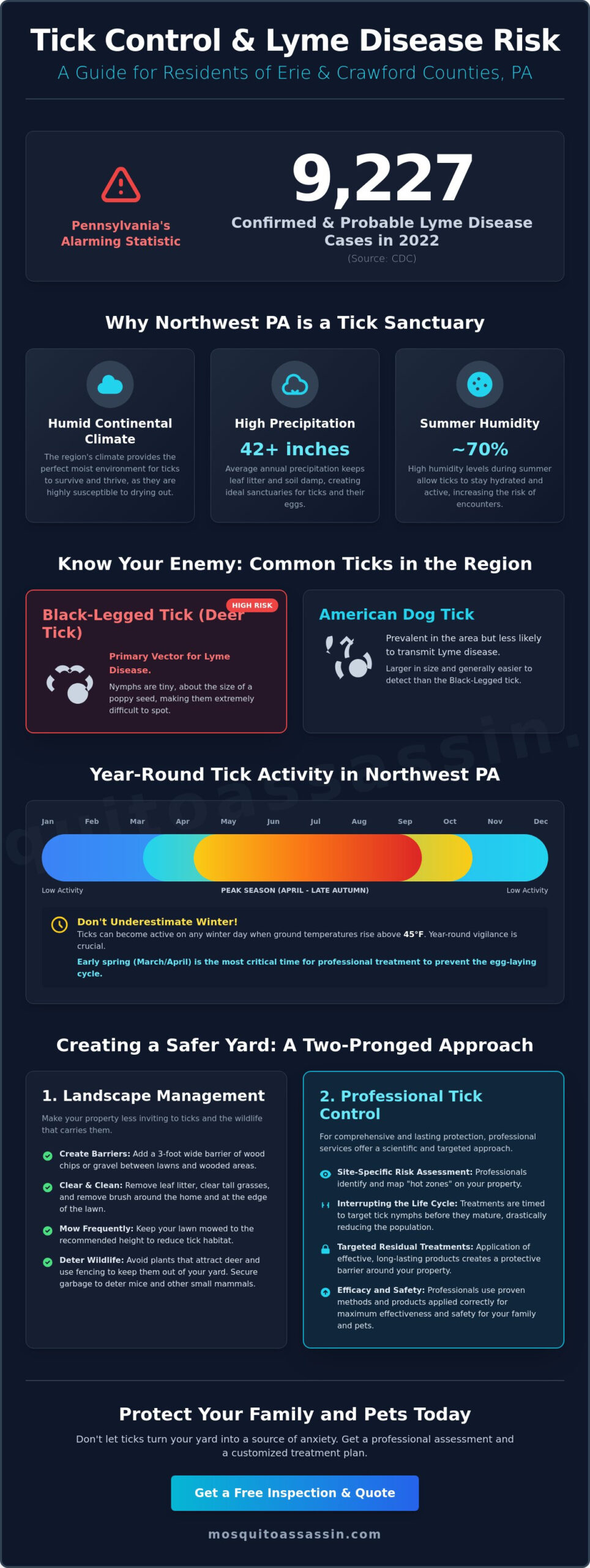
Mosquitoes only need a small amount of water to breed. In the humid climate of Northwest Pennsylvania, identifying these hidden nurseries is a critical part of a professional inspection. Common culprits include clogged gutters, low spots in the lawn that collect lake-effect rain, and even the saucers under outdoor flowerpots. Keeping the lawn manicured and removing dense leaf litter also serves a dual purpose; it eliminates the damp environments where both mosquitoes and ticks thrive. A professional eye can spot these risks during a routine visit, offering practical advice on how to make your yard less hospitable to invaders. This proactive approach ensures that pet safe mosquito control Erie PA homeowners expect remains a sustainable, year-round priority.
Choosing a Local Partner for Pest Management
The geography of the tri-state area creates specific pest pressures that vary from the lakefront to the inland wooded areas of Crawford County. Choosing a local partner who lives and works in these same communities ensures that your technician understands these regional nuances. Ongoing maintenance plans provide a steady cadence of protection, preventing population surges before they become unmanageable. This consistency is particularly valuable for pet owners who want the freedom to use their backyard at any time without worrying about heartworm or other disease vectors. A structured, bi-monthly schedule allows for constant monitoring of your property’s changing needs as the seasons transition from the wet spring into the peak summer heat. Professional pest control may help reduce risk on your property by providing the expert oversight necessary for a truly secure environment.
Disclaimer: The information provided on this blog is for general informational purposes only and is not intended as professional pest control advice. Conditions vary by property, environment, and location. Reading this content does not create a service agreement. For an inspection or professional recommendations, please contact Mosquito Assassin Pest Control LLC directly.
Securing Your Backyard Sanctuary
Protecting your pets from mosquito-borne risks like heartworm requires a methodical strategy that extends beyond veterinary preventatives. By combining habitat modification with professional application standards, you can effectively manage pest populations while maintaining the safety of your household. Utilizing the pet safe mosquito control Erie PA homeowners trust ensures that treatments are applied with scientific precision by licensed technicians in PA and OH. A family-owned and locally operated approach provides the neighborly oversight necessary to address the unique environmental challenges of Northwest Pennsylvania.
Comprehensive bi-monthly protection plans offer a consistent layer of defense; this allows you to focus on enjoying the summer months rather than worrying about disease vectors. Taking proactive steps today creates a safer environment for every member of your family to play and relax outside. For an inspection or professional recommendations, contact Mosquito Assassin Pest Control LLC. Reclaiming your yard is a practical way to ensure your pets remain healthy and active throughout the peak mosquito season.
Disclaimer: The information provided on this blog is for general informational purposes only and is not intended as professional pest control advice. Conditions vary by property, environment, and location. Reading this content does not create a service agreement. For an inspection or professional recommendations, please contact Mosquito Assassin Pest Control LLC directly.
Frequently Asked Questions
How long should I keep my dog inside after the yard is sprayed for mosquitoes?
You should keep your dog inside for 30 to 60 minutes until the product is completely dry. This timeframe is standard for the humid climate of Erie and Crawford counties. Once the treatment has dried on the vegetation, it’s no longer easily transferable to your pet’s paws or fur.
Is the mosquito spray used in Erie homes toxic to cats?
Professional treatments utilize EPA-registered products that are evaluated for residential safety when used according to label instructions. While cats can be sensitive to certain substances, the risk is significantly minimized when the application is performed by a licensed professional who avoids areas where pets frequent. Choosing pet safe mosquito control Erie PA residents trust ensures that labels are followed with scientific accuracy.
What happens if my pet eats grass that was recently treated for mosquitoes?
Professional mosquito treatments are formulated to bind to the surfaces of leaves and grass once they dry. If a pet consumes a small amount of treated grass after the drying period, it typically doesn’t lead to significant health issues. However, you should always monitor your pet for any unusual behavior and contact your veterinarian if you have specific concerns about ingestion.
Can professional mosquito control help prevent heartworm in my pets?
Reducing the population of mosquitoes on your property directly lowers the number of potential heartworm vectors. While environmental control is a powerful layer of defense, it should always be used in conjunction with year-round heartworm medication prescribed by a veterinarian. This multi-level approach provides the most comprehensive protection for animals in Northwest Pennsylvania.
Are there natural or organic mosquito control options available in Erie, PA?
Natural options utilizing botanical oils, such as cedar or peppermint, are available for homeowners in the tri-state area. These alternatives can be effective at repelling pests but often require a more frequent application schedule than traditional synthetic treatments. Professional pet safe mosquito control Erie PA services can help you determine which approach fits your property’s specific pest pressure and environmental needs.
Do I need to cover my fish pond or bird cages during a mosquito treatment?
You should cover fish ponds and move bird cages indoors during any outdoor pest treatment. Fish and aquatic life are particularly sensitive to many common pest control products. Licensed technicians are trained to identify these features on your property and will maintain a safe distance during the application to prevent any accidental drift into the water.
How often should a pet-friendly yard be treated for mosquitoes and ticks?
A bi-monthly schedule is typically recommended to maintain a consistent barrier throughout the active season. In Pennsylvania and Ohio, this usually means treatments every 21 to 30 days starting in late spring and continuing through the first hard frost. This frequency ensures that the product remains effective despite the frequent rainfall common in Erie and Ashtabula counties.
What should I do if my pet accidentally enters the yard before the spray is dry?
If your pet enters the yard before the treatment is dry, you should immediately wash their paws and any contacted fur with mild soap and water. This simple step removes any wet product before the pet has a chance to lick it off. Monitor your animal for any signs of skin irritation or digestive upset and consult a medical professional if symptoms appear.