Tag: bed bug signs

  • Cost of Whole House Bed Bug Treatment: What Shapes Your Estimate in 2026

    Cost of Whole House Bed Bug Treatment: What Shapes Your Estimate in 2026

    Why can whole-house bed bug recommendations differ from one property to another? It’s understandable to want clarity, especially if you’re unsure whether every room needs attention or concerned that the treatment scope could expand. A generic rule can’t show what a particular home actually needs.

    A professional assessment helps connect recommendations to the conditions found at the property. The number of rooms where signs have been reported, the home’s layout, and areas that may provide hiding places can all help clarify the scope. Whole-house treatment doesn’t automatically mean every room has the same level of activity or needs identical attention.

    This article explains what a whole-house assessment considers, why the appropriate scope can vary, and what information can help you discuss your home’s conditions with a professional. If you’re in Erie or Crawford County, Pennsylvania, or Ashtabula County, Ohio, a property-specific assessment can help clarify the next step.

    Key Takeaways

    • Whole-house treatment describes an assessed property scope, not a rule that every room has identical activity.
    • A professional assessment helps connect recommendations to the home’s layout, reported signs, and observed conditions.
    • Note where and when you observed signs, along with basic details about your home, to help clarify the assessment.
    • A clear explanation of the proposed scope can help you understand which areas are included and why.
    • Bed bug treatment is available in Erie and Crawford Counties, Pennsylvania, and Ashtabula County, Ohio.

    What Does Whole-House Bed Bug Treatment Mean for the Scope of a Home?

    “Whole-house” describes the property considered during an assessment, not a fixed number of rooms or a promise that every room has the same level of bed bug activity. The proposed scope depends on what a professional observes and learns about the home.

    Whole-house treatment scope is established through a property-specific assessment that considers reported signs, observed evidence, and how the home’s spaces connect. This distinction helps explain why the phrase alone can’t determine what areas need attention or provide a meaningful estimate of the cost of whole house bed bug treatment.

    Does whole-house treatment mean every room is treated?

    Not necessarily. A whole-house assessment considers the home as a connected property, but it doesn’t assume identical conditions in every room. A professional may consider reported observations alongside evidence found in relevant areas when developing recommendations.

    Connected spaces and the home’s layout can matter because activity reported in one area may lead the assessment to consider nearby spaces as well. That doesn’t mean every room automatically receives the same plan. For general background on the range of approaches professionals may consider, see this overview of bed bug control techniques.

    Why does bed bug treatment scope vary by property?

    Homes differ in size, layout, and how rooms are used. Those details can shape what an assessment needs to consider. For example, the arrangement of bedrooms and shared living areas may help a professional understand how reported activity relates across the property. Occupancy patterns can also provide context about where people spend time and where signs have been noticed.

    Reported signs are useful, too. Sharing where and when you noticed possible evidence can help focus the assessment, even if you don’t know how far activity extends. The information supports a professional evaluation, but it doesn’t act as a formula that automatically determines the treatment scope.

    A clear assessment separates what has been observed from what still needs evaluation. That gives the professional a basis for recommendations tailored to the property, rather than relying on a generic rule about which rooms to include. The final scope should reflect the findings and the home’s specific characteristics.

    Which Factors Can Affect the Cost of Whole-House Bed Bug Treatment?

    The treatment scope depends on the conditions and features of the individual property. Home size and layout provide useful context, but neither determines on its own which areas need attention. A professional assessment brings those details together with reported concerns and observed evidence.

    Recommendations should reflect the property assessed and the areas identified for attention. Understanding the details considered during an assessment can help you follow how the proposed scope relates to your home.

    How can home size and layout shape the assessment?

    The number and arrangement of rooms help describe the home being evaluated. A property with adjoining bedrooms and shared living areas has a different layout from one with more separate spaces. Explain which rooms connect, which areas are occupied, and where people spend time. These details help a professional understand the property without treating square footage as a formula for deciding the scope.

    Shared spaces can add context, too. Describing how a reported area relates to nearby rooms helps the professional consider the home’s layout alongside the observations you share.

    How do reported signs and infestation extent affect scope?

    Note where possible signs were observed and when you noticed them. If observations occurred in more than one area, identify each location without trying to determine how far activity extends. These reports provide useful context, but they don’t confirm the full extent or establish a diagnosis.

    A professional can compare your observations with evidence found during the assessment. A report from one room doesn’t automatically establish that activity is limited to that room, nor does it mean every other space is affected. The evaluation helps connect property findings with relevant concerns and recommendations.

    The U.S. Environmental Protection Agency’s bed bug control guidance offers general background on the subject. It doesn’t determine which areas of an individual property need attention. That requires a professional evaluation of the home, its layout, and the reported observations. Clear communication about those findings helps make the recommended scope understandable and specific to the property.

    Is Whole-House Bed Bug Treatment Always Necessary?

    No. A whole-house label doesn’t mean every room has identical conditions or automatically requires the same attention. It refers to considering the property as a whole when assessing reported concerns and observed evidence. The appropriate scope should come from that assessment, not a generic rule based on the words “whole-house.”

    This distinction can make recommendations easier to understand. A property-specific explanation connects the proposed scope to the home’s observations and layout. A blanket recommendation, without explaining how it relates to the property, gives little context for understanding why particular areas are included. Since the cost of whole house bed bug treatment depends on its assessed scope, clarity about that scope matters.

    When might a professional assess more than one room?

    Reports of possible bed bug signs in multiple areas can make a broader assessment relevant. So can details about how spaces connect or how rooms are used. For example, observations in more than one sleeping area may help a professional evaluate the concern across the home. These details guide an assessment, but they don’t establish a treatment threshold or prove the full extent of activity.

    For general educational background, Purdue University’s resource on bed bug control discusses control approaches. It can provide context, but it can’t determine the right scope for an individual property. That depends on the professional evaluation of the home and its reported concerns.

    What should a clear treatment scope explain?

    A clear recommendation should identify the areas proposed for attention and explain how they relate to the assessment findings and the concerns shared by the household. It should help you understand why the scope is broader or narrower than you expected, without suggesting that every room has identical conditions.

    During the discussion, you can ask for clarification about:

    • Which areas the assessment identifies for attention.
    • How reported observations and property conditions relate to the proposed scope.
    • Whether any parts of the recommendation reflect uncertainty that needs further evaluation.

    These questions focus the conversation on the property, rather than on assumptions about what “whole-house” must mean. For residents of Erie or Crawford County in Pennsylvania, and Ashtabula County in Ohio, requesting professional recommendations can help clarify the assessment and proposed scope.

    Cost of Whole House Bed Bug Treatment: What Shapes Your Estimate in 2026

    What Information Helps Clarify a Whole-House Bed Bug Estimate?

    A few clear observations can help a professional understand your concerns and assess the property. You don’t need to determine how far bed bug activity extends. Record what you noticed, where you noticed it, and any relevant details about the home. This information gives the assessment useful context and can help explain how the proposed scope relates to your property.

    What details about the home should you gather?

    Keep notes simple and observational. Useful details include:

    • Where signs were observed: Identify the room or general area, such as a bedroom or shared living space.
    • When you noticed them: Note the approximate date or whether observations have happened more than once.
    • Other reported areas: Mention if signs were noticed elsewhere, without assuming those areas are affected.
    • Home layout: Describe how relevant rooms connect and which areas are occupied or regularly used.
    • Relevant history: Share prior bed bug concerns or treatment, if applicable.

    These notes are context, not a diagnosis. Avoid trying to identify the full extent yourself or handling suspected pests to gather more information. A professional assessment can consider your observations alongside conditions found at the property.

    How can you understand the proposed scope?

    Review whether the assessment findings connect clearly to the areas included in the recommended service. If a room or shared space is included, the explanation should help you understand how it relates to the reported concerns or assessment. You can also ask what follow-up expectations apply, so the scope is clear before proceeding.

    A property-specific assessment is more useful than a generic estimate because it relates recommendations to the home’s layout, observations, and reported history. The bed bug treatment services page provides information about professional treatment. For residents of Erie and Crawford Counties in Pennsylvania, and Ashtabula County in Ohio, request professional recommendations to discuss an assessment and understand the proposed scope. This context can help make the cost of whole house bed bug treatment easier to evaluate without relying on assumptions about the property.

    How to Arrange Professional Bed Bug Treatment in Northwest Pennsylvania and Northeast Ohio

    Possible bed bug signs can leave you unsure about what the home needs. A professional inspection can help evaluate the reported concerns and clarify which areas should be included in a property-specific recommendation. That assessment gives you a more useful basis for understanding the proposed scope than a general assumption about every room.

    Is bed bug treatment available in Erie, Crawford, and Ashtabula Counties?

    Bed bug treatment is available in Erie and Crawford Counties in Pennsylvania, and Ashtabula County in Ohio. You can review the service area information for these communities. Keeping the coverage details clear helps you identify whether your property is within the stated service area.

    What is a practical next step after finding possible bed bug signs?

    Make a brief record of what you observed. Note the areas involved and when you noticed possible signs. You don’t need to determine whether they indicate bed bugs or assess how far activity may extend. Share your observations during a professional assessment, where they can be considered alongside the property’s layout and inspection findings.

    Ask how the assessment findings relate to the proposed service scope. A clear explanation can help you understand which areas are included and what follow-up expectations apply. This property-specific information is also more useful than relying on a generic estimate when considering the cost of whole house bed bug treatment.

    For an inspection or professional recommendations in Erie or Crawford County, Pennsylvania, or Ashtabula County, Ohio, request an inspection or professional recommendations.

    Disclaimer: The information provided on this blog is for general informational purposes only and is not intended as professional pest control advice. Conditions vary by property, environment, and location. Reading this content does not create a service agreement. For an inspection or professional recommendations, please contact Mosquito Assassin Pest Control LLC directly.

    Take the Next Step Toward a Clear Treatment Scope

    The cost of whole house bed bug treatment depends on the property-specific scope, not simply on the number of rooms or a one-size-fits-all assumption. A professional assessment considers reported signs, home layout, and observed evidence to help shape recommendations. Whole-house treatment also doesn’t mean every space has identical conditions or automatically needs the same attention.

    Make a note of where and when you observed possible signs, then share those details during an assessment. Clear explanations of the areas included can help you understand how the recommendation relates to your home.

    Bed bug treatment is available in Erie and Crawford Counties, Pennsylvania, and Ashtabula County, Ohio. For an inspection or professional recommendations, request an inspection or professional recommendations. A property-specific evaluation can help you take the next step with greater clarity.

    Disclaimer: The information provided on this blog is for general informational purposes only and is not intended as professional pest control advice. Conditions vary by property, environment, and location. Reading this content does not create a service agreement. For an inspection or professional recommendations, please contact Mosquito Assassin Pest Control LLC directly.

    Frequently Asked Questions

    How much does whole-house bed bug treatment cost?

    There isn’t one universal amount that applies to every home. The cost of whole house bed bug treatment depends on the property-specific scope, which can only be clarified through an assessment. Home size, layout, reported signs, and the areas identified for attention all provide relevant context. A professional evaluation can help connect recommendations to the conditions found, rather than relying on a general estimate that may not reflect your home.

    What affects the cost of whole-house bed bug treatment?

    The assessed scope is shaped by the home’s size and layout, where possible signs have been reported, and what the professional observes. The number and arrangement of rooms can provide useful context, as can connected living spaces and how different areas are occupied. These details don’t create a fixed formula. An inspection helps determine how the property’s features and reported concerns relate to the service recommendations.

    Does whole-house bed bug treatment mean every room is treated?

    No. “Whole-house” refers to considering the property during assessment, not assuming that every room has the same conditions or needs identical attention. A professional considers reported observations, connected spaces, and evidence found at the home when recommending a scope. Ask which areas are included and how the assessment findings relate to that recommendation. This helps clarify the plan without assuming every space is equally affected.

    What information should I have ready for a bed bug assessment?

    Note where you observed possible signs and when you noticed them. Include whether observations were reported in additional areas, a general description of the home’s layout, and which spaces are occupied or regularly used. If there have been previous bed bug concerns or treatment, share that history. You don’t need to determine whether the signs confirm bed bugs or how far activity extends. A professional can evaluate the information alongside the property.

    Can I get a whole-house bed bug treatment assessment in Erie or Crawford County?

    Bed bug treatment is available in Erie and Crawford Counties in Pennsylvania, as well as Ashtabula County in Ohio. An assessment can help clarify which areas need attention based on your observations and the conditions found. Share the property’s general layout and where possible signs were noticed. These details help give a professional a clearer picture of the concern and support recommendations tailored to the home.

    How do I get a professional recommendation for whole-house bed bug treatment?

    Arrange a professional assessment and describe what you’ve observed, including the locations and timing of possible signs. The assessment can help determine how the property’s layout and findings relate to the proposed service scope. Mosquito Assassin Pest Control LLC provides bed bug treatment in Erie and Crawford Counties, Pennsylvania, and Ashtabula County, Ohio. A professional recommendation can help you understand the next step for your particular home.

  • How to Inspect Furniture for Bed Bugs: A Systematic Guide

    How to Inspect Furniture for Bed Bugs: A Systematic Guide

    According to the Professional Pest Management Alliance, 73 percent of Americans do not know how to inspect furniture for bed bugs properly. This gap in knowledge is particularly concerning in regional travel corridors like Erie and Crawford Counties in Pennsylvania and Ashtabula County in Ohio, where the circulation of secondhand goods increases the risk of introduction. Overlooking early warning signs often allows a minor issue to become a widespread infestation before it is even noticed.

    It is natural to feel anxious when you cannot distinguish between common household lint and potential pest activity. This systematic guide provides professional methods for identifying bed bug behavior in household furniture to protect your property and restore your peace of mind. By following a disciplined, evidence-based approach, you can confirm the presence or absence of these pests with total confidence.

    You will discover the essential tools required for a thorough inspection, including high-lumen flashlights and magnification. This overview covers the specific physical indicators to watch for, such as fecal spotting and cast skins, while detailing the most common hiding spots in upholstered and hard furniture. Understanding these technical details ensures you know exactly when a situation requires professional intervention.

    Key Takeaways

    • Identify physical indicators like live insects and dark fecal spotting to distinguish bed bugs from common household debris.
    • Mastering how to inspect furniture for bed bugs requires specific tools like high-lumen flashlights and magnification to find eggs in deep crevices.
    • Follow a systematic approach for upholstered items by checking cushion seams, zipper folds, and the undersides of furniture frames.
    • Examine hard surfaces by inspecting screw holes, drawer tracks, and joint connections where pests often find refuge.
    • Understand why isolating suspected items and seeking professional guidance is more effective than attempting unguided treatments.

    Identifying the Key Signs of Bed Bugs on Furniture

    Successful identification is the foundation of effective pest management. Adult bed bugs are reddish brown insects, typically measuring 4 to 5 millimeters, which is roughly the size of an apple seed. Younger nymphs are much smaller and can appear translucent or pale yellow. Because they’re nocturnal and avoid light, you may not always see the insects themselves during the day. Instead, you must look for the physical evidence they leave behind, such as fecal spotting, shed skins, and egg clusters.

    To see these signs in a real-world setting, watch this helpful visual guide:

    Visual Indicators of an Infestation

    Fecal spotting is often the most visible sign when learning how to inspect furniture for bed bugs. These spots appear as small, dark, ink-like dots that resemble a felt-tip marker bleed on fabric. If you find a suspicious spot on a hard surface, wipe it with a damp cloth. Bed bug excrement consists of digested blood and will often leave a rusty smear. You might also find exuviae, which are translucent, yellowish exoskeletons cast off as the insects grow. For a deeper understanding of these life stages, researching bed bug biology and behavior can help you distinguish between active pests and harmless household debris like lint or dust. In cases of significant activity, a distinct musty odor, often described as sweet or similar to coriander, may be present.

    Where Bed Bugs Prefer to Hide

    Bed bugs are experts at concealment. They prefer tight, dark spaces that offer security. They don’t typically live on the open surfaces of a sofa or chair. Instead, they retreat into crevices where their flat bodies can remain protected. While they’re most common in mattresses and bed frames, they readily inhabit any piece of furniture where people remain stationary for long periods, such as recliners or office chairs. These pests are not limited to fabric. They frequently colonize solid materials, including:

    • Screw holes and furniture joints
    • The undersides of wooden drawer slides
    • Decorative carvings or trim on headboards
    • Gaps in the backing of dressers or nightstands

    Focusing your efforts on these high-probability areas near sleeping or sitting zones increases the likelihood of a successful detection. Professional pest control may help reduce risk if you identify these signs in multiple locations throughout your home.

    Essential Tools for a Thorough Furniture Inspection

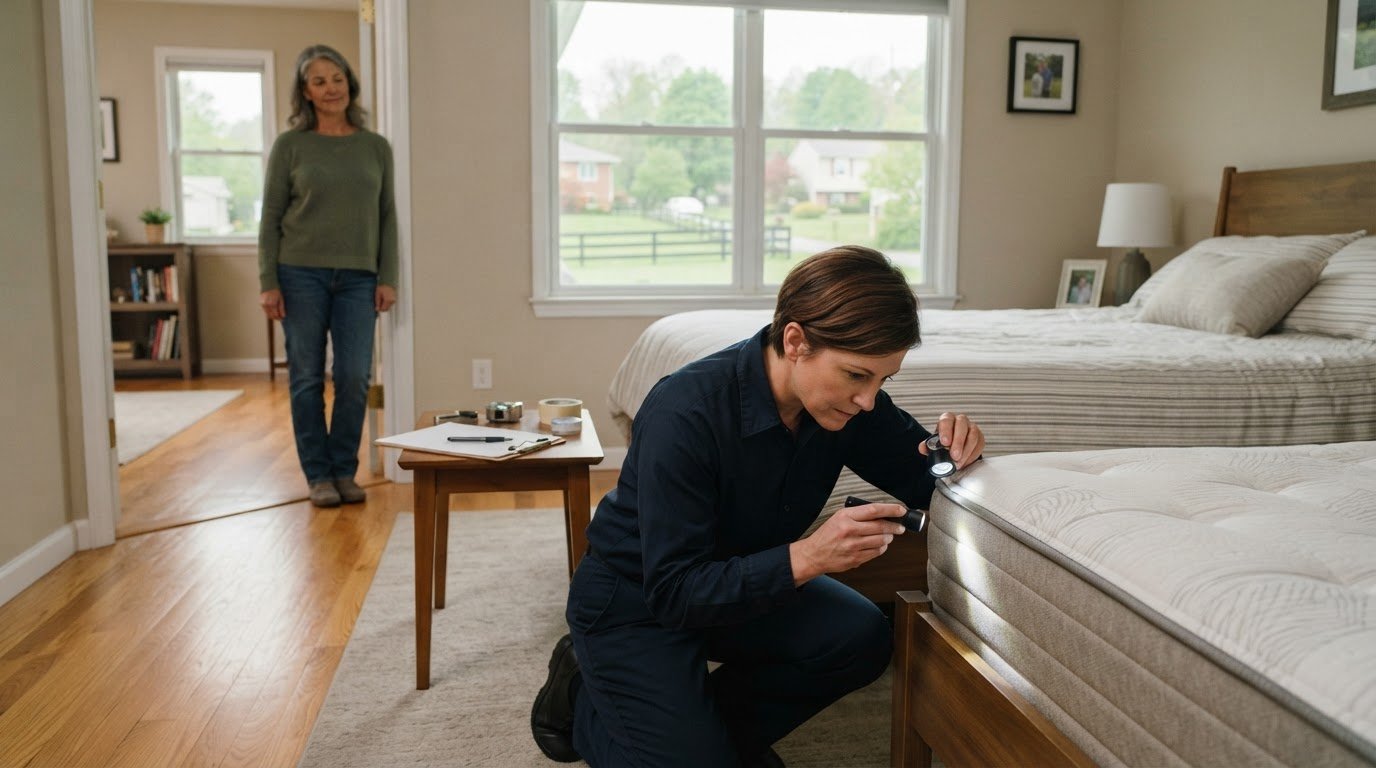
    Using the right equipment is the difference between a successful detection and a missed infestation. Professionals rely on specific, accessible items to uncover pests that hide deep within furniture. When learning how to inspect furniture for bed bugs, your primary tool is a high-powered LED flashlight. This allows you to see into dark joints and crevices where ambient room light cannot reach. High lumen output is necessary because bed bugs often retreat into the deepest recesses of a furniture frame.

    Supplement your flashlight with a magnifying glass to identify small eggs and translucent nymphs. According to this EPA guide on finding bed bugs, identifying physical evidence like shed skins and eggs is critical for a complete assessment. A 10x magnifying glass is usually sufficient to see the pearl white eggs, which are only about one millimeter long. These eggs are often glued to surfaces, making them difficult to see with the naked eye against light colored wood or fabric.

    Preparing the Inspection Area

    Clear a space around the furniture to allow for 360 degree access. In homes across Erie and Crawford Counties, this often means moving heavy sofas or recliners away from walls and other furniture pieces. This step prevents pests from escaping into nearby harborages during the disturbance. Ensure the room has strong overhead lighting to supplement your flashlight. It is also helpful to have a vacuum cleaner with a hose attachment nearby. If you encounter active insects, you can immediately contain them to prevent further spread throughout the property.

    Using Probing Tools Effectively

    A thin plastic card, such as an expired credit card, serves as an excellent probe. Slide the card into deep seams, welt cords, and fabric folds to dislodge hidden bugs or debris. Use your flashlight at a low angle across the surface of the material. This technique, known as side lighting, creates shadows that reveal the textures of eggs or fecal spotting that might be invisible under direct light. A magnifying glass is particularly critical when checking the grain of unpainted wood, where eggs can blend into the natural texture of the surface.

    Collecting debris on a piece of white paper or a light colored cloth makes it easier to inspect the samples under a magnifier. If your search reveals signs of activity, professional bed bug treatment can help manage the situation effectively and prevent the infestation from growing.

    Step-by-Step Inspection Process for Upholstered Pieces

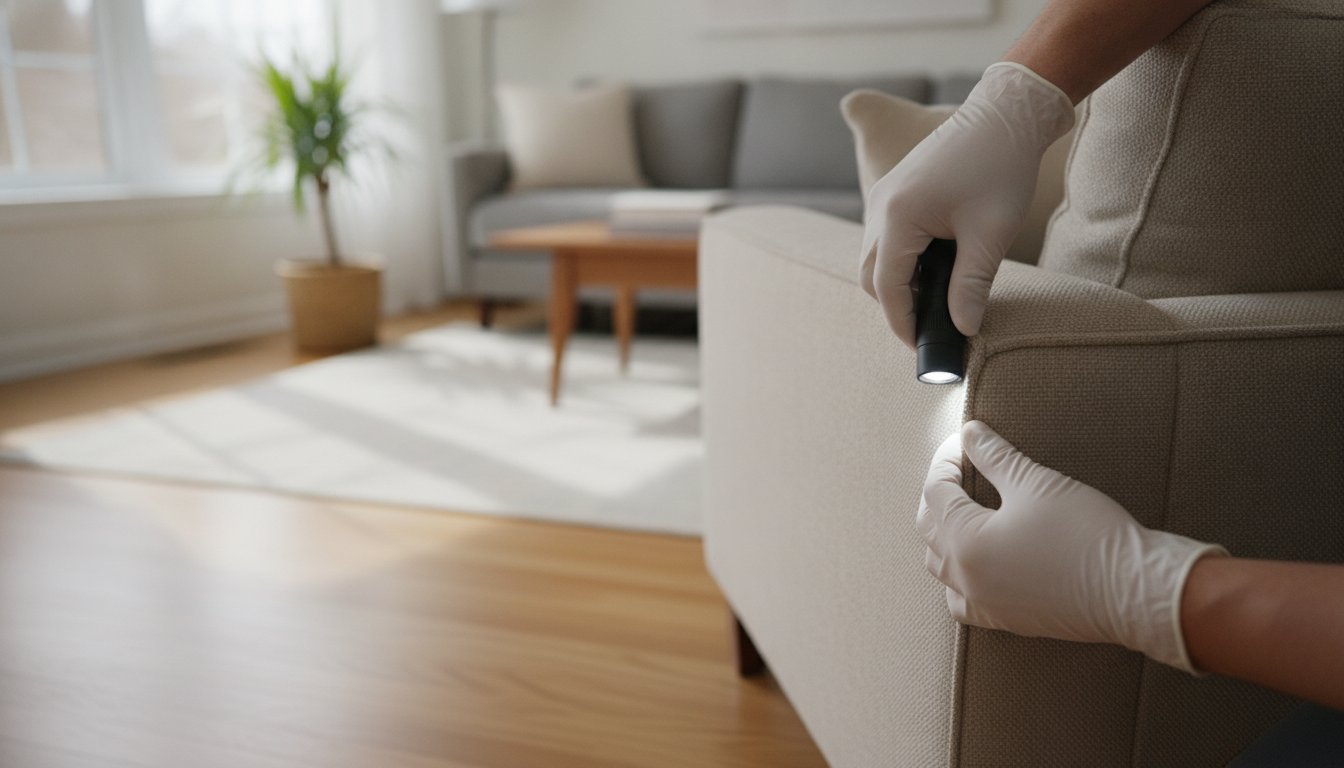
    Upholstered furniture provides an ideal environment for bed bugs because of the numerous hiding spots created by fabric folds and internal padding. A successful search requires moving beyond a simple visual scan. You must physically manipulate the furniture to reveal hidden harborages. Begin by removing all detachable cushions. Inspect every side of these cushions, paying close attention to the welt cords (the raised piping) and the fabric surrounding the zippers. Even if the cushions appear clean, the interior of the zipper tracks can hide eggs or small nymphs that are easily missed.

    The main frame of the furniture requires the most focus. Bed bugs often congregate in the deep crevices where the arms meet the back and seat. Use your flashlight to peer into these dark recesses, using your plastic card to probe the gaps. If the furniture has a dust cover (the thin, usually black fabric stapled to the bottom) look for small holes, tears, or dark spotting. These indicators often suggest that pests are living inside the internal frame or among the springs of the piece. If you find evidence in these deep areas, professional pest control may help reduce risk by containing the infestation before it spreads.

    Inspecting Seams and Piping

    Fabric folds and piping are primary hiding spots because they offer tight, protected spaces. Use your probing tool to pull back these folds and look for clusters of insects or translucent shed skins. Decorative elements like buttons, tufts, and trim also provide shelter. It is important to follow a documented MSU Extension furniture inspection protocol to ensure no area is overlooked. This includes checking the interior of zipper tracks and the undersides of any decorative skirts or fringes that hang near the floor.

    Checking the Underside and Legs

    Flipping the furniture over is a necessary step when learning how to inspect furniture for bed bugs effectively. The wooden or metal frame on the underside provides a stable, dark environment for colonies to grow. Examine the points where the legs attach to the main body, as the joints and screw holes are common harborages. If your furniture has felt pads or floor protectors on the bottom of the legs, check them carefully. Bed bugs can easily hide between the pad and the leg or within the fibers of the felt itself. This systematic approach ensures that every potential harborage is evaluated, protecting your property and providing peace of mind.

    How to Inspect Furniture for Bed Bugs: A Systematic Guide

    Examining Hard Furniture and Wood Items

    While many homeowners focus exclusively on mattresses and sofas, solid wood items often serve as critical secondary harborages. Understanding how to inspect furniture for bed bugs requires looking beyond soft fabrics and into the rigid structures of your home. Hard furniture provides stable, dark, and undisturbed environments where pests can thrive in close proximity to their hosts. To conduct a thorough check, start by completely emptying all drawers from dressers, nightstands, and desks. Inspect the back, bottom, and interior tracks of each drawer, as these areas offer the tight, protected spaces bed bugs prefer.

    Examine the main frame of the piece, particularly the back panel. These panels are often made of thin plywood or fiberboard and are stapled to the frame, creating tiny gaps that are perfect for concealment. Don’t overlook the underside of tables and desks. If you have an extendable dining table, check the wooden tracks and the metal hinges of the leaf mechanisms. These moving parts contain numerous small crevices where eggs can be deposited without being disturbed by daily use. If you discover activity during your inspection, professional bed bug treatment is the most effective way to address the problem before it spreads to other rooms.

    Nightstands and Dressers

    Nightstands and dressers are high risk items because they are typically located within a few feet of the bed. Bed bugs are attracted to the carbon dioxide humans exhale, so they often settle in the nearest available crevice. Focus your flashlight on the gaps between the drawer and the cabinet frame. Inspect the underside of the top surface and the floor facing base of the unit. In many homes across Erie and Crawford Counties, these pieces have decorative carvings or recessed panels. Use your plastic probing card to check every joint and screw hole within these details, as even a hole the size of a pinhead can house several insects.

    Bookshelves and Electronics

    Bookshelves and electronics near sleeping areas are often overlooked during a DIY check. Bed bugs can hide within the spines of hardcover books or between the pages of items stored on lower shelves. Inspect the ventilation holes, ports, and battery compartments of alarm clocks, lamps, and televisions located on nightstands. The warmth generated by these devices can actually attract pests in some environments. Additionally, check the joints of picture frames and mirrors hanging on the walls near furniture. Bed bugs frequently hide behind the paper backing of frames or in the narrow space between the glass and the wood. Professional pest control may help reduce risk if you find signs of activity in these unexpected locations.

    Managing Findings and Professional Consultation

    If your systematic check reveals active pests or physical evidence, immediate containment is necessary. Do not drag infested items through the home. This movement often scatters insects into hallways and other rooms, which effectively expands the footprint of the infestation. Instead, isolate the piece of furniture by keeping it in place and limiting traffic to that specific area. When evidence is found, take clear, high resolution photographs of the insects, fecal spotting, or eggs before disturbing the area further. This documentation is invaluable for a professional assessment. It serves as proof of activity and helps identify the primary harborages within the room. It is also vital to avoid using over-the-counter sprays. Many of these products act as repellents that drive bed bugs deeper into wall voids or adjacent furniture, making the eventual professional resolution much more difficult.

    When to Seek Professional Help

    While mastering how to inspect furniture for bed bugs is a valuable skill for any property owner, visual inspections have inherent limitations. Bed bugs are biologically adapted to hide in areas unreachable by standard flashlights or plastic cards. They may reside inside the hollow metal frames of recliners, behind baseboards, or within the internal components of electronics near sleeping areas. Professionals bring years of field experience and technical proficiency to detect deep-seated infestations that a standard DIY check might overlook. Early intervention remains the most effective way to manage a population before it spreads throughout multiple rooms or neighboring properties.

    Next Steps for Property Owners

    For residents in Erie, Crawford, and Ashtabula counties, professional pest control may help reduce risk by providing a methodical assessment of the entire structure. Documenting findings allows a licensed expert to confirm the species and assess the biological activity level within your home. You can find broad prevention tips and strategies in this comprehensive guide on general pest control. If you have confirmed activity or remain concerned about a potential infestation, contact Mosquito Assassin Pest Control LLC for a professional inspection and recommendations tailored to the specific needs of your property.

    Protecting Your Property Through Proactive Detection

    A systematic approach is the most effective way to identify a potential infestation before it expands throughout your home. By utilizing high-powered lighting and magnification to examine deep seams and wooden joints, you can uncover evidence that a simple visual scan would overlook. Mastering how to inspect furniture for bed bugs empowers you to maintain a secure environment and provides the clarity needed to make informed decisions about your property’s health. Identifying these signs early is the first step toward a definitive resolution.

    For residents in Erie, Crawford, and Ashtabula counties, professional-grade detection methods offer a level of precision that DIY checks cannot match. Utilizing a disciplined operational approach ensures that no harborage is ignored, from the internal frames of upholstered seating to the back panels of bedroom furniture. If you’ve identified activity or require a comprehensive assessment to restore your peace of mind, Contact Mosquito Assassin Pest Control LLC for a professional inspection. Taking decisive action now helps secure your household and ensures a swift return to comfort.

    Disclaimer: The information provided on this blog is for general informational purposes only and is not intended as professional pest control advice. Conditions vary by property, environment, and location. Reading this content does not create a service agreement. For an inspection or professional recommendations, please contact Mosquito Assassin Pest Control LLC directly.

    Frequently Asked Questions

    Can bed bugs live on wood furniture or only on mattresses?

    Bed bugs definitely inhabit wood furniture. They are attracted to dark, undisturbed crevices such as screw holes, joint connections, and the unpainted undersides of drawer slides. While mattresses provide easy access to a host, wood frames and nightstands offer stable harborages. When learning how to inspect furniture for bed bugs, you must check every rigid surface near sleeping areas. These pests are experts at squeezing into gaps as thin as a credit card.

    How do I know if the spots on my furniture are from bed bugs?

    Fecal spotting appears as small, dark, ink-like dots. They resemble a felt-tip marker bleed on fabric. You can confirm these are from bed bugs by wiping the spot with a damp cloth. If the spot smears into a rusty or reddish-brown color, it is digested blood. This indicates active or past infestation. This is a primary sign to look for when you determine how to inspect furniture for bed bugs.

    What should I do if I find bed bugs on a piece of used furniture I just bought?

    Isolate the item immediately to prevent pests from migrating. For homeowners in Erie, Crawford, or Ashtabula counties, leave the furniture in a garage or porch. Do not bring it inside. Document evidence with clear photographs for a professional. Avoid using unguided over-the-counter sprays. These often cause insects to scatter into deeper crevices. Professional pest control may help reduce risk by assessing the item and providing targeted recommendations.

    Is it possible to see bed bug eggs with the naked eye?

    Yes, you can see bed bug eggs with the naked eye. They are very small. They measure approximately one millimeter in length, which is about the size of a pinhead. The eggs are pearl white. They are often found in clusters, glued firmly to surfaces within seams or joints. While visible, using a 10x magnifying glass makes it much easier to distinguish them from household dust or salt-like debris.

    How long can bed bugs survive on furniture that is not being used?

    Bed bugs are remarkably resilient. They can survive for several months without a blood meal. In typical room temperatures of about 70 degrees Fahrenheit, adults can live for approximately two to three months without feeding. In cooler environments, their metabolism slows down. This potentially extends their survival time. It is dangerous to assume that leaving furniture in storage for a short period will resolve an infestation.

    Do I need to throw away furniture if it has bed bugs?

    Throwing away furniture is often unnecessary. It can actually spread the infestation if items are moved through the house without being wrapped. Most furniture can be successfully salvaged through professional-grade detection methods. If an item is heavily infested, it might be discarded. This should only be done after the item is sealed in plastic. This prevents insects from falling off during removal.

    Why is it so hard to find bed bugs in a sofa or recliner?

    Sofas and recliners have complex internal structures. These offer thousands of potential hiding spots. Between the wooden frame, metal springs, and various fabric folds, there are countless areas where a flashlight cannot reach. Recliners are particularly difficult. Their mechanical parts provide hollow metal tubes and joints where bugs find safety. Professional expertise is often required to navigate these intricate pieces and identify deep-seated harborages that a standard DIY check misses.

    Disclaimer: The information provided on this blog is for general informational purposes only and is not intended as professional pest control advice. Conditions vary by property, environment, and location. Reading this content does not create a service agreement. For an inspection or professional recommendations, please contact Mosquito Assassin Pest Control LLC directly.

  • Early Signs of Bed Bugs in Erie PA: A Homeowner’s Identification Checklist

    Early Signs of Bed Bugs in Erie PA: A Homeowner’s Identification Checklist

    One in five households across the United States may experience a bed bug infestation at some point, and with major regional hubs like Cleveland and Pittsburgh ranking in the top ten most infested cities for 2026, the risk to local properties is significant. Discovering itchy welts or spotting an unfamiliar insect in the bedroom often triggers immediate anxiety and a fear of social stigma. It’s completely normal to feel overwhelmed or to mistake common household pests, like carpet beetles, for something more invasive. Identifying the early signs of bed bugs Erie PA homeowners should watch for is the first step in reclaiming a sense of security and peace of mind.

    This guide provides the tools needed to confirm whether an infestation is present before the population has a chance to spread through the property. Readers will learn how to identify subtle indicators, such as tiny spotting on linens and discarded skins, while discovering the specific hiding spots these insects prefer. The following checklist clarifies the difference between bed bugs and lookalikes, offering a professional perspective on the necessary steps to resolve the issue effectively.

    Key Takeaways

    • Learn to identify the physical signs of bed bugs Erie PA residents often encounter, including ink-like spotting on linens and insects the size of an apple seed.
    • Understand how travel and shared housing in Northwest Pennsylvania contribute to the spread of these resilient pests.
    • Discover why searching beyond the mattress is essential, as these insects often hide in baseboards and carpet edges.
    • Avoid the stress of misidentification by learning the key differences between bed bugs and common lookalikes like carpet beetles.
    • Recognize the indicators that signify it’s time to seek a professional inspection to prevent a localized issue from spreading.

    Understanding the Bed Bug Presence in Northwest Pennsylvania

    Bed bugs are resilient pests frequently found in high-traffic areas throughout Erie and Crawford counties. These insects don’t reflect the hygiene or cleanliness of a household. Instead, they act as opportunistic hitchhikers that latch onto luggage, clothing, and furniture. Understanding Bed Bugs and their biology reveals that they are primarily attracted to the carbon dioxide and heat emitted by humans, making any inhabited space a potential target. Identifying the signs of bed bugs Erie PA homeowners often face early on is the most effective way to prevent a minor introduction from becoming a widespread problem.

    To better understand the nature of these pests and how they affect humans, watch this helpful video:

    Local infestations frequently originate from high-density environments across Northwest Pennsylvania and Ashtabula County. Motels, college dormitories, and shared housing are common starting points for an infestation. While professional pest control may help reduce risk once an introduction occurs, knowing where these pests come from helps in maintaining a vigilant defense. Residents in older Erie neighborhoods often find that the structural layout of historic homes provides ample hiding spots that require a methodical approach to inspect.

    Why Bed Bugs are Prevalent in the Erie Region

    Erie’s location as a major travel corridor in Northwest Pennsylvania plays a significant role in pest prevalence. The city’s status as a tourism hub, combined with its proximity to Interstate 90 and Interstate 79, ensures a constant flow of people and goods. Bed bugs are remarkably hardy and can survive the varying temperatures found in our local climate. Additionally, these pests thrive in multi-unit housing and senior living apartments where they can easily move between adjacent units through wall voids or shared laundry facilities. This high mobility within buildings makes them a persistent challenge for property managers.

    The Resilience of Modern Bed Bug Populations

    Modern populations have developed significant resistance to many over the counter insecticides found in local hardware stores. This biological adaptation makes DIY attempts often ineffective and can even cause the insects to scatter deeper into a structure. Their behavioral patterns involve hiding in tiny (hard to reach) crevices during daylight hours, making them nearly invisible to the untrained eye. Professional expertise is typically necessary to identify established populations and implement a systematic removal strategy. Expert technicians understand the specific biology of these pests and use specialized equipment to reach the hidden voids where bed bugs reside. Recognizing the signs of bed bugs Erie PA residents typically report is vital for early intervention. For those concerned about potential activity, a professional inspection can provide clarity and a path toward resolution through the online booking portal.

    Disclaimer: The information provided on this blog is for general informational purposes only and is not intended as professional pest control advice. Conditions vary by property, environment, and location. Reading this content does not create a service agreement. For an inspection or professional recommendations, please contact Mosquito Assassin Pest Control LLC directly.

    The Essential Bed Bug Identification Checklist

    Identifying the signs of bed bugs Erie PA residents encounter requires a keen eye for detail and a systematic approach to inspection. Because these pests are nocturnal and elusive, homeowners often find physical evidence before they ever see a live insect. According to the Official EPA Guide to Finding Bed Bugs, looking for specific biological markers is the most reliable way to confirm their presence. Relying on bite marks alone is often misleading, as many people don’t react to the bites at all, or the welts can resemble those of other common insects.

    A comprehensive identification checklist includes several key physical indicators:

    • Adult Bed Bugs: These insects are reddish-brown and approximately the size and shape of an apple seed.
    • Fecal Spotting: Look for small, dark dots that resemble ink from a ballpoint pen. These are digested blood spots often found on linens or mattress tags.
    • Cast Skins: As nymphs grow, they shed their translucent or pale yellow exoskeletons, leaving them behind in clusters near hiding spots.
    • Eggs and Shells: You may find tiny, white, oval eggs about the size of a pinhead tucked into deep crevices.
    • Distinctive Odor: In cases of significant infestations, a sweet yet musty odor may be present, often compared to the scent of overripe berries or coriander.

    Visual Indicators on Bedding and Furniture

    The most common area to find evidence is within the immediate sleeping environment. Start by checking mattress seams and piping, as these tight folds provide perfect cover for live insects or dark spotting. Don’t stop at the mattress; inspect the underside of box springs and wooden bed frames where the joints meet. You might also notice unexplained blood smears on pillowcases or sheets, which often occur when an insect is accidentally crushed after feeding. If you find these indicators, professional bed bug treatment may help reduce risk to the rest of your home.

    Physical Characteristics of the Insect

    Bed bugs have flat, oval bodies that allow them to squeeze into gaps as thin as a credit card. After they feed, their bodies expand and turn a bright, engorged red. Under magnification, you can clearly see six legs and two antennae. It’s also important to distinguish between life stages. Nymphs are much smaller and can be nearly colorless if they haven’t fed recently, while mature adults have the characteristic deep brown hue. Recognizing these specific signs of bed bugs Erie PA homes might harbor is essential for an accurate assessment and a swift resolution.

    Disclaimer: The information provided on this blog is for general informational purposes only and is not intended as professional pest control advice. Conditions vary by property, environment, and location. Reading this content does not create a service agreement. For an inspection or professional recommendations, please contact Mosquito Assassin Pest Control LLC directly.

    Common Hiding Spots in Local Homes and Businesses

    Bed bugs are master hiders that prioritize proximity to their blood meal. While they are famously associated with mattresses, these pests often retreat to secure, dark crevices during the day. Most infestations stay within an eight foot radius of where people sleep or sit for long periods. Identifying the physical signs of bed bugs Erie PA residents find often requires checking beyond the bedding. Baseboards and the edges of wall to wall carpeting are prime real estate for these insects, as the small gap between the floor and the wall provides an ideal sanctuary.

    Homeowners should also pay close attention to wall fixtures. Bed bugs frequently hide behind electrical outlet covers and light switch plates, using the wall voids to move safely between rooms. Upholstered furniture is another high risk area. Inspect the folds of curtains and the deep seams of armchairs, especially if those items are located near a bed. Small reddish brown spots in these areas are often the first visible signs of bed bugs Erie PA property owners notice.

    Secondary Hiding Places Beyond the Bedroom

    As an infestation grows, insects may seek out less obvious locations. Gaps in older wooden flooring or the space behind loose wallpaper can harbor dozens of insects. Because they are attracted to warmth, they sometimes crawl inside electronics like bedside clocks, radios, or televisions. The joints of nightstands and the undersides of dresser drawers are also common nesting sites. For a visual reference on what to look for in these tight spaces, the Cornell University Bed Bug Identification Guide offers detailed descriptions of their appearance at various life stages.

    Hiding Spots in Public or Shared Spaces

    The risk isn’t limited to residential settings. Bed bugs are frequently introduced to new environments via high traffic public areas. Seating in local theaters or on public transportation provides ample opportunities for hitchhiking. In professional environments, office chairs and breakroom furniture can become infested if a person unknowingly brings the pests from home. Businesses facing these challenges can benefit from specialized Commercial Pest Control to ensure a thorough resolution. Recognizing early indicators in these settings is the first step in preventing a building wide issue.

    Disclaimer: The information provided on this blog is for general informational purposes only and is not intended as professional pest control advice. Conditions vary by property, environment, and location. Reading this content does not create a service agreement. For an inspection or professional recommendations, please contact Mosquito Assassin Pest Control LLC directly.

    Early Signs of Bed Bugs in Erie PA: A Homeowner’s Identification Checklist

    Distinguishing Bed Bugs from Other Common Erie Pests

    Misidentifying pests in Northwest Pennsylvania is a frequent occurrence that leads to unnecessary anxiety and significant emotional stress for homeowners. Choosing the wrong treatment because of a mistake in identification can waste resources and allow an actual infestation to grow unchecked. While many insects share similar physical traits, the specific signs of bed bugs Erie PA residents should look for are unique to their biology and feeding habits. Confirmation of the species is vital before starting any professional intervention, as the strategy for one pest may be completely ineffective for another.

    Bed Bugs vs Carpet Beetles

    Carpet beetles are perhaps the most common source of confusion in local homes. While adult carpet beetles are similar in size to bed bugs, they are typically rounder and feature patterned, multi colored wings. Unlike bed bugs, carpet beetles do not feed on human blood. The “bites” people often report are actually a skin reaction to the tiny, stiff hairs on carpet beetle larvae. These larvae are distinctly hairy and prefer to feed on natural fibers like wool or silk. For more information on identifying various household intruders, a General Pest Control Guide can help clarify these differences and provide a broader perspective on common Pennsylvania pests.

    Bed Bugs vs Fleas and Ticks

    Fleas and ticks are also blood feeding pests, but their behavior and appearance differ significantly from bed bugs. Fleas are much smaller, laterally flattened, and possess powerful jumping legs that allow them to move quickly through pet fur or carpet fibers. Ticks are arachnids with eight legs (once mature) and typically attach to their host for several days to feed. In contrast, bed bugs are expert hiders that do not live on the host. They emerge only to feed and then return to a nearby harborage, such as a mattress seam or baseboard. Because the signs of bed bugs Erie PA homeowners observe can overlap with other biting insects, a professional inspection is the only definitive way to confirm the species and develop an effective plan. If you are unsure about the insects found in your home, professional bed bug identification is a reliable next step to ensure the problem is addressed correctly.

    Disclaimer: The information provided on this blog is for general informational purposes only and is not intended as professional pest control advice. Conditions vary by property, environment, and location. Reading this content does not create a service agreement. For an inspection or professional recommendations, please contact Mosquito Assassin Pest Control LLC directly.

    When to Seek Professional Bed Bug Assistance

    Early detection is the single most important factor in preventing a localized introduction from escalating into a building wide infestation. Because bed bugs reproduce rapidly, waiting even a few weeks can significantly increase the complexity of the removal process. Professional pest control may help reduce risk through the use of specialized equipment and systematic methods that are unavailable to the general public. Identifying the subtle signs of bed bugs Erie PA residents often overlook requires a level of precision that goes beyond standard household cleaning routines.

    It’s tempting to attempt a quick fix, but certain actions can actually worsen the situation. Avoid moving furniture from an infested room into other parts of the house, as this is the primary way the insects spread to new harborages. Similarly, the use of over the counter DIY foggers is generally discouraged by licensed professionals. These products often fail to reach deep into the crevices where bed bugs hide and can cause the population to scatter (a behavior known as flushing), making them much harder to locate and treat during a professional intervention.

    The Limitations of DIY Identification

    Bed bugs are experts at hiding in areas that are not visible to the naked eye, such as inside wall voids, behind baseboards, or within the internal components of electronics. Relying on a visual search alone often leads to a false sense of security. There is also a high risk of misidentifying the pest and applying a treatment that is completely ineffective for that specific species. A methodical professional search is more reliable because it utilizes specialized knowledge of insect biology and behavior to uncover established populations that a homeowner might miss.

    Next Steps for Erie and Crawford County Residents

    If you suspect an infestation, documentation is your best tool. Take clear photos of any insects, spotting, or cast skins you find so a professional can review the evidence. It is vital to keep all items in the affected room to avoid spreading the insects to other areas of your home or business. For professional recommendations or a thorough inspection of your property, visit the Mosquito Assassin Contact Us page or use the Online Booking Portal to schedule a visit. Taking decisive action today can prevent a minor nuisance from becoming a major disruption to your peace of mind.

    Disclaimer: The information provided on this blog is for general informational purposes only and is not intended as professional pest control advice. Conditions vary by property, environment, and location. Reading this content does not create a service agreement. For an inspection or professional recommendations, please contact Mosquito Assassin Pest Control LLC directly.

    Securing Your Erie Home Against Bed Bug Infestations

    Identifying the early signs of bed bugs Erie PA property owners face is the first step toward maintaining a safe and pest-free living environment. Success depends on recognizing subtle indicators like dark fecal spotting and translucent cast skins before the population has a chance to migrate. While checking mattresses is essential, remember that these insects are experts at utilizing secondary harborages like baseboards and electrical outlets. Avoiding the use of DIY foggers and documenting your findings ensures that any professional intervention is as effective as possible.

    Licensed and professional pest management provides the systematic approach needed for these resilient pests. By serving Erie and Crawford counties in PA with a proven three-step process, expert technicians can confirm the species and provide a clear path to resolution. If you suspect activity, taking prompt action is the best way to protect your household’s wellbeing and peace of mind. Reclaiming your home starts with a methodical search and local expertise you can trust.

    Request a Professional Pest Inspection to gain definitive clarity on your property’s status and ensure your family’s comfort.

    Disclaimer: The information provided on this blog is for general informational purposes only and is not intended as professional pest control advice. Conditions vary by property, environment, and location. Reading this content does not create a service agreement. For an inspection or professional recommendations, please contact Mosquito Assassin Pest Control LLC directly.

    Frequently Asked Questions

    How do I know if I have bed bugs or something else?

    Confirmation requires looking for specific biological markers like dark, ink-like fecal spots on linens and translucent cast skins. Bites alone are unreliable because skin reactions vary significantly between individuals and can resemble those of other common insects. Misidentification is a frequent issue; therefore, comparing physical evidence to known markers for lookalikes like carpet beetles or fleas is essential. A professional inspection remains the only definitive way to identify the species correctly.

    What are the first signs of bed bugs in a house?

    The first signs of bed bugs Erie PA homeowners typically notice are small, reddish-brown stains or dark fecal spotting on pillowcases and sheets. These indicators often appear before you see a live insect. You might also find pale yellow exoskeletons left behind as the nymphs grow and shed their skins. Finding an actual insect, which is about the size and shape of an apple seed, provides clear confirmation that an infestation is present.

    Can you see bed bugs with the naked eye?

    Yes, adult bed bugs are clearly visible and measure approximately 5 to 7 millimeters in length. They have a distinct, reddish-brown oval body that is flat unless they have recently fed. While younger nymphs are much smaller and can be nearly translucent, they are still visible upon close inspection of mattress seams or furniture joints. Eggs are the most difficult to see, as they are only about the size of a pinhead.

    Do bed bugs only live in beds?

    No, these pests are not limited to mattresses and bedding, though they prefer to stay within eight feet of their host. They frequently hide in baseboards, behind electrical outlet covers, and within the seams of upholstered furniture. They can even retreat into electronics or behind loose wallpaper during the day. Because they can travel through wall voids, they are often found in various rooms or throughout multi-unit housing complexes in Northwest Pennsylvania.

    What should I do if I find signs of bed bugs in my Erie home?

    If you discover signs of bed bugs Erie PA residents should immediately stop moving items out of the affected room. Shifting furniture or clothing to other areas of the house can spread the insects to new harborages. Avoid using over the counter foggers, as these products often cause the pests to scatter deeper into walls. Instead, document your findings with photos and contact a licensed professional to conduct a methodical inspection and provide appropriate recommendations.

    Are bed bugs common in Erie County, PA?

    Bed bugs are a persistent concern in Erie County due to the region’s high-traffic travel corridors and proximity to major hubs like Cleveland and Pittsburgh. Frequent movement through motels, college dormitories, and shared housing makes Northwest Pennsylvania an opportunistic environment for these hitchhiking pests. Because they are resilient and can survive in various temperatures, they are found in a wide range of property types, from historic homes to modern apartment complexes.

    How do bed bugs spread from one house to another?

    These insects are expert hitchhikers that spread primarily through the movement of luggage, clothing, and used furniture. They don’t fly or jump; instead, they crawl into bags or onto fabric while people are traveling or visiting infested locations. Once brought into a new home, they quickly find a secure hiding spot near a sleeping area. This opportunistic behavior is why infestations are often linked to recent travel or the acquisition of second-hand items.

    Is professional bed bug treatment necessary?

    Professional treatment is highly recommended because modern bed bug populations have developed significant resistance to many common over the counter pesticides. DIY attempts often fail to reach the deep crevices where these insects hide, leading to recurring issues. Professionals use specialized equipment and systematic methods to address all life stages, including eggs and nymphs. A methodical approach ensures that the entire population is managed correctly, preventing the infestation from spreading or returning later.

    Disclaimer: The information provided on this blog is for general informational purposes only and is not intended as professional pest control advice. Conditions vary by property, environment, and location. Reading this content does not create a service agreement. For an inspection or professional recommendations, please contact Mosquito Assassin Pest Control LLC directly.

  • How to Check for Bed Bugs in a Hotel: A Professional Inspection Guide

    How to Check for Bed Bugs in a Hotel: A Professional Inspection Guide

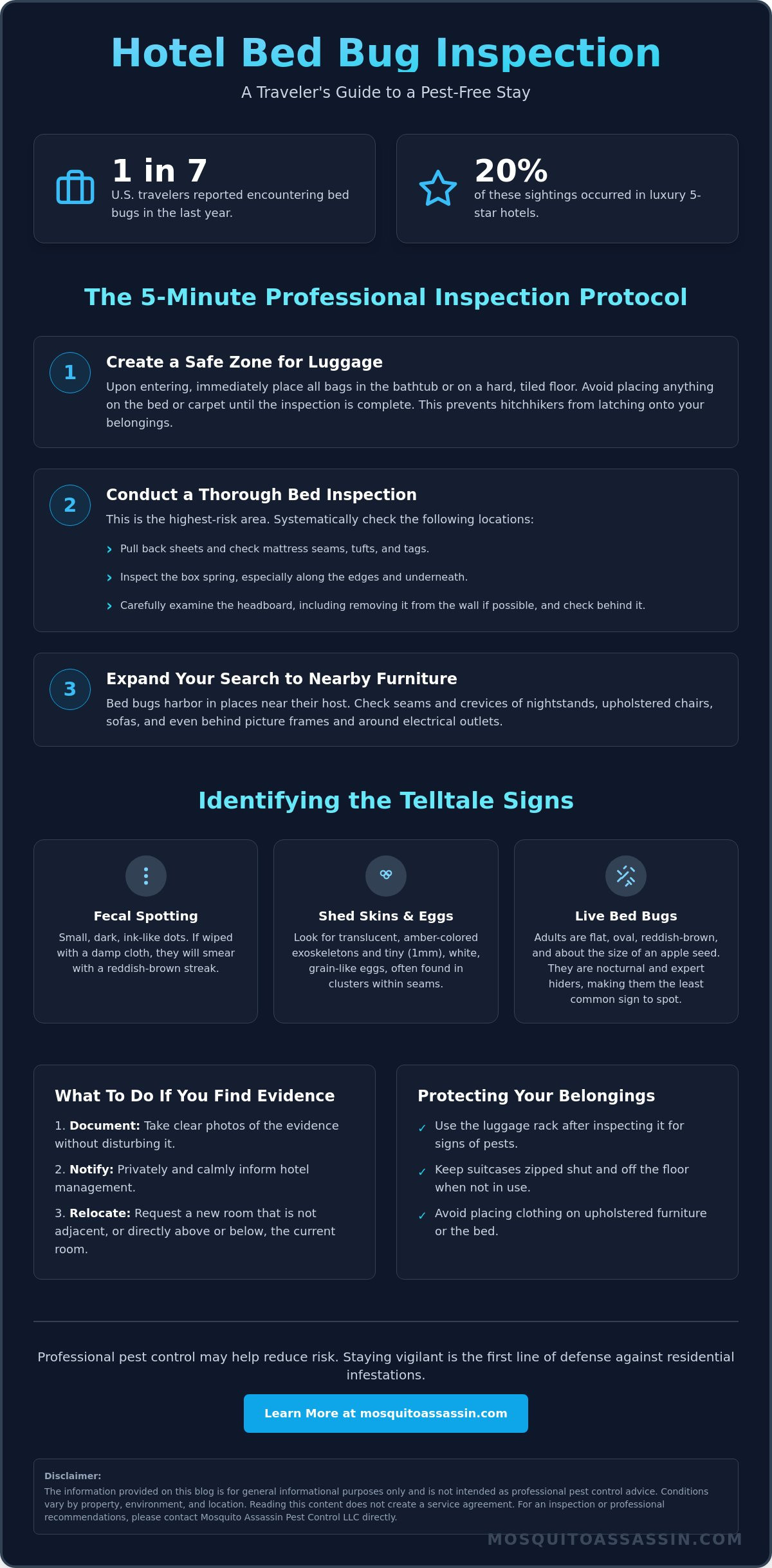
    Recent data from April 2026 reveals that 1 in 7 U.S. travelers reported encountering bed bugs in the past year. Even more surprising is that 20% of these sightings occurred in luxury 5-star hotels, proving that a high price point doesn’t guarantee a pest-free stay. It’s completely normal to feel anxious when setting your luggage down in a new room. You don’t want the stress of bringing hitchhikers back to your home, and you shouldn’t have to waste your vacation performing an inefficient search. Understanding how to check for bed bugs in a hotel is the most effective way to protect your family and your peace of mind.

    This guide provides the systematic inspection protocol used by professionals to identify bed bugs before they follow you home. You’ll learn a clear, fast routine that focuses on high-risk harborages instead of wasting time on unlikely spots. The following sections cover everything from spotting early warning signs to knowing the correct steps if you find evidence, ensuring you can unpack with confidence. For travelers returning to Erie and Crawford Counties in Pennsylvania or Ashtabula County in Ohio, staying vigilant is the first line of defense against residential infestations.

    Disclaimer: The information provided on this blog is for general informational purposes only and is not intended as professional pest control advice. Conditions vary by property, environment, and location. Reading this content does not create a service agreement. For an inspection or professional recommendations, please contact Mosquito Assassin Pest Control LLC directly.

    Key Takeaways

    • Master a professional inspection routine that targets high-risk harborages like mattress corners and headboards to save time and increase accuracy.
    • Learn how to check for bed bugs in a hotel by starting with a luggage-safe zone, such as the bathtub or a tiled floor, to prevent hitchhikers from entering your bags.
    • Identify critical visual evidence like dark fecal spotting and shed skins, which are often easier to find than the nocturnal insects themselves.
    • Protect your belongings throughout your stay by utilizing inspected luggage racks and keeping suitcases zipped shut when not in use.
    • Understand the proper protocol for documenting evidence and notifying hotel management to ensure a swift resolution if an infestation is discovered.

    Understanding Why Hotel Inspections Are Necessary

    Many travelers mistakenly believe that bed bugs only appear in budget motels or properties with poor housekeeping. This is a dangerous assumption. These pests don’t feed on dirt; they feed on blood. Because of this, even the most pristine 5-star luxury resorts are vulnerable. In fact, research from April 2026 indicates that 20% of bed bug sightings occurred in high-end accommodations. Learning how to check for bed bugs in a hotel isn’t a commentary on the hotel’s quality. It’s a necessary step for any traveler who wants to avoid the high cost and emotional toll of a residential infestation.

    A proactive search takes less than five minutes but can prevent a situation that costs thousands of dollars to remediate once it reaches your home. Bed bugs are nocturnal insects that possess a flat body shape, allowing them to squeeze into crevices as thin as a credit card. For a comprehensive overview of bed bugs and their biology, it’s helpful to understand that they are expert hiders that remain inactive during the day. This behavior makes a deliberate, systematic inspection the only way to ensure your room is truly safe before you settle in for the night.

    The Hitchhiker Mechanism

    Bed bugs are among the most efficient travelers in the world. They don’t fly or jump; instead, they crawl onto personal items and wait to be transported to a new location. In a hotel environment, they move through shared wall voids, electrical outlets, or even on housekeeping carts that travel from room to room. This high turnover of guests creates a constant cycle of potential introduction from all over the globe. Once they latch onto your luggage or clothing, they can easily follow you back to Erie, Crawford, or Ashtabula Counties. Stopping the hitchhiking process at the hotel is much easier than treating an established colony in your own bedroom.

    When to Perform Your Inspection

    The first ten minutes of your stay are the most critical for prevention. You must perform your inspection before you unpack a single item or sit on the bed. Professional protocols suggest a strict “nothing on the floor” policy during this window. Upon entering the room, place your suitcases and bags immediately into the bathtub or on a high, hard-surfaced tiled floor. These areas are unlikely to harbor pests and provide a clear visual field. Only after you have confirmed that the room is clear should you move your belongings to the living area. Knowing how to check for bed bugs in a hotel before you get comfortable is the difference between a relaxing trip and a long-term pest problem.

    Disclaimer: The information provided on this blog is for general informational purposes only and is not intended as professional pest control advice. Conditions vary by property, environment, and location. Reading this content does not create a service agreement. For an inspection or professional recommendations, please contact Mosquito Assassin Pest Control LLC directly.

    Identifying the Visual Signs of an Infestation

    Finding a live insect is the most definitive proof of an infestation, but it’s also the least common discovery during a daytime search. These pests are light-sensitive and remain tucked deep within structural voids when the sun is up. When learning how to check for bed bugs in a hotel, you must focus on the secondary evidence they leave behind. This biological trail is often easier to spot than the insects themselves and provides a clear picture of the room’s history. Focusing on these biological markers is your best defense against bringing pests home.

    Fecal spotting is the most reliable indicator for travelers. These appear as small, dark, ink-like dots. Unlike common lint or dirt, these spots are actually digested blood that has dried. If you find dark specks on the mattress or headboard, you can perform a simple test: dampen a tissue and wipe the spot. If it smears or leaves a reddish-brown streak, it is likely fecal matter. You should also watch for translucent, amber-colored exoskeletons. These shed skins indicate a growing, active population that is successfully feeding and molting. Eggs are another critical sign; they are tiny, white, and grain-like, usually tucked into deep seams or crevices.

    The Evidence Trail

    Beyond fecal dots, look for small blood smears on pillowcases or sheets. These often occur when a guest accidentally rolls over and crushes an engorged bug during the night. In rooms with a significant population, you might notice a characteristic odor. Professionals often describe this as a musty, sweet, or “sickly” smell, similar to rotting raspberries or coriander. While smaller infestations may not produce a detectable scent, it’s a critical warning sign in larger outbreaks. If you suspect you’ve returned home to Erie or Ashtabula with unwanted guests, seeking professional bed bug treatment can help protect your property and family.

    What Do Bed Bugs Actually Look Like?

    Knowing exactly what to look for prevents confusion with common household pests. An adult bed bug is flat, oval-shaped, and roughly the size of an apple seed (5 to 7 millimeters). They are reddish-brown but can appear bright red and swollen immediately after a meal. Nymphs, or juvenile bugs, are much harder to see. They are smaller and nearly translucent or pale yellow, only becoming visible once they have consumed blood. These nymphs are often found near the same harborages as adults.

    Be careful not to confuse them with look-alikes. Carpet beetles are a common misidentification; they are rounder and covered in tiny hairs. Small spiders or booklice might also cause alarm, but they lack the distinct segmented abdomen of a true bed bug. Understanding these physical differences is a vital part of knowing how to check for bed bugs in a hotel effectively and accurately.

    Disclaimer: The information provided on this blog is for general informational purposes only and is not intended as professional pest control advice. Conditions vary by property, environment, and location. Reading this content does not create a service agreement. For an inspection or professional recommendations, please contact Mosquito Assassin Pest Control LLC directly.

    A Step-by-Step Hotel Room Inspection Protocol

    Establishing a “Safe Zone” for your belongings is the most critical first step when entering a new room. Professional inspectors never place their gear on the bed or the carpeted floor until the area is cleared. Instead, move all luggage directly into the bathtub or onto a high, tiled bathroom floor immediately upon entry. These hard, cold surfaces are poor harborages for pests and provide a clear visual field where insects cannot easily hide. This protocol ensures that while you are busy learning how to check for bed bugs in a hotel, your suitcases remain protected from potential hitchhikers.

    Once your bags are secure, begin a systematic sweep of the room using a high-powered flashlight or the light on your smartphone. You must be methodical. Bed bugs are experts at utilizing structural gaps, so a surface-level glance is never sufficient. Focus your efforts on the area within five to ten feet of the bed, as this is where the majority of infestations are concentrated. If you find evidence during this process, do not attempt to move your luggage back into the hallway; keep it in the bathtub to avoid spreading the problem further.

    The Bed and Bedding Check

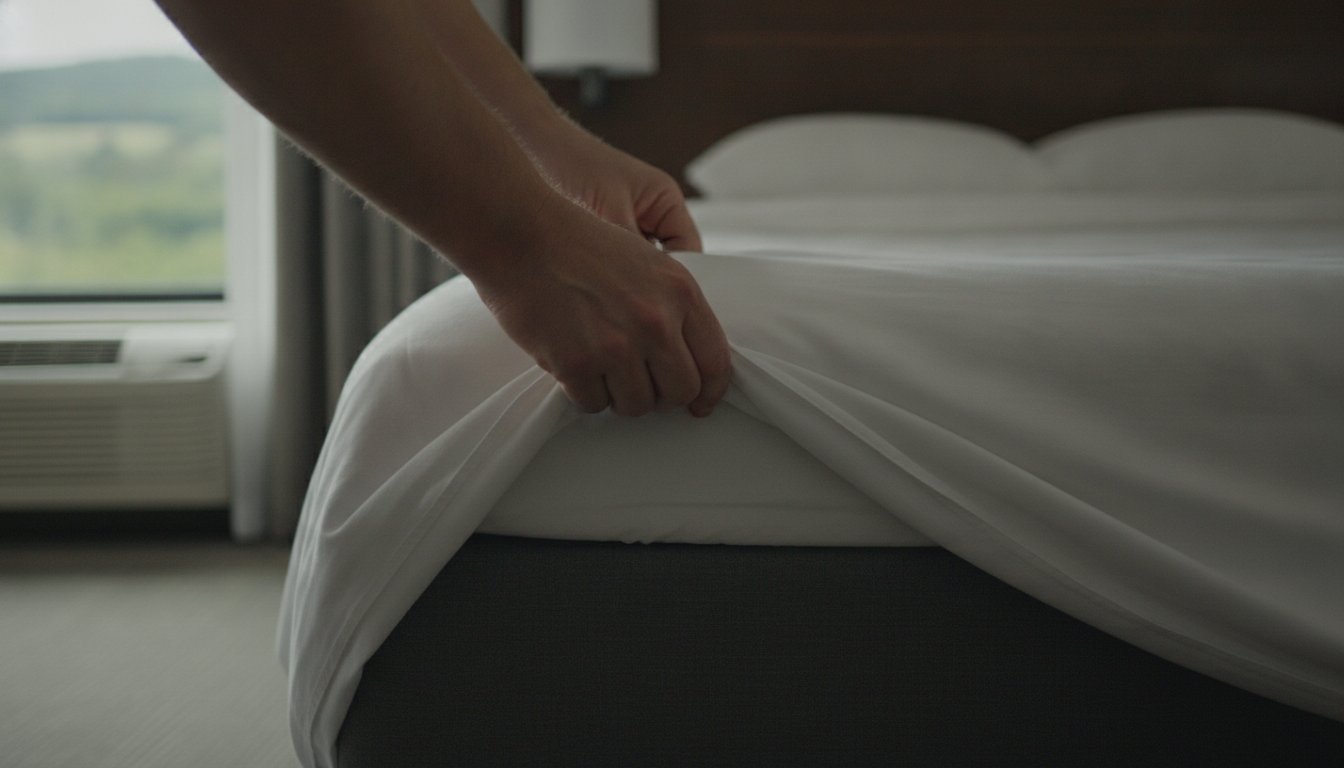
    Start by stripping the bed linens back to the mattress protector. Pay close attention to all four corners of the mattress, specifically focusing on the “piping” or the thick fabric seams that run along the edges. Use a credit card or a similar flat tool to firmly run along these seams, which can force hidden insects or eggs into view. After checking the mattress, examine the box spring. You must inspect the plastic corner guards, as these are one of the most common hiding spots in hotel environments. Finally, look at the underside of the bed frame and the slats, where dark, secluded gaps provide ideal shelter.

    The Furniture and Decor Sweep

    While the bed is the primary focus, headboards are often the number one hiding spot because they are frequently bolted to the wall and rarely moved for cleaning. Use your light to peer into the gap between the headboard and the wall. Next, move to the nightstands. Open the drawers and inspect the tracks and the back of the unit. Don’t overlook the decor; examine the folds of the curtains and check behind hanging picture frames. Knowing how to check for bed bugs in a hotel requires looking at every crevice where a thin insect could fit. For residents returning to Erie and Crawford Counties in Pennsylvania or Ashtabula County in Ohio, this thoroughness is the best way to ensure your home stays protected.

    Disclaimer: The information provided on this blog is for general informational purposes only and is not intended as professional pest control advice. Conditions vary by property, environment, and location. Reading this content does not create a service agreement. For an inspection or professional recommendations, please contact Mosquito Assassin Pest Control LLC directly.

    How to Check for Bed Bugs in a Hotel: A Professional Inspection Guide

    Protecting Your Belongings During Your Stay

    Once you have completed your initial search and confirmed the room is clear, you must maintain a defensive strategy throughout your stay. A successful inspection reduces your risk significantly, but it isn’t a guarantee of total safety. Maintaining high standards for your belongings is just as important as knowing how to check for bed bugs in a hotel. These pests are opportunistic; they wait for a guest to become complacent before finding a way into personal items. By following a few professional habits, you can ensure that your luggage remains a secure environment rather than a transport vehicle for pests.

    The luggage rack is a valuable tool, but only if used correctly. Before placing your bags on the stand, inspect the nylon webbing and the joints where the frame folds. Bed bugs often hide in the tight spaces where the fabric meets the metal or wood. If the rack is clear, it’s a much safer option than the floor or the bed. Additionally, you should keep your suitcases zipped shut whenever you aren’t actively reaching for an item. Bed bugs are incapable of operating zippers, so a closed bag is your best physical barrier against an accidental hitchhiker.

    Luggage Management Best Practices

    The type of luggage you choose can impact your level of protection. Hard-sided suitcases made of polycarbonate or aluminum are superior to fabric bags because they have fewer external seams and a smoother surface that is difficult for insects to climb. If you must use fabric luggage, consider using a protective liner or an encasement designed for travel. If you ever feel uncertain about the room’s status, the bathroom remains the safest storage area. Because it’s typically tiled and lacks the fabric harborages these pests prefer, it’s a low-risk zone for your bags. If you suspect you’ve encountered pests during your travels, professional bed bug treatment can help eliminate the problem before it spreads through your home.

    Safe Unpacking Strategies

    Avoid the temptation to use the hotel dresser. Wooden drawers are porous and full of joints and crevices that are difficult to inspect thoroughly. Instead, hang your clothes in the closet using metal hangers, which are less likely to harbor pests than wooden ones. Keep your shoes away from the baseboards and the bed, as these are common travel paths for nocturnal insects. Before you check out, conduct a quick mini-inspection of your bags and the surrounding area. This final check ensures you aren’t accidentally packing away any evidence of an infestation that may have developed during your visit. For travelers returning to Erie, Crawford, or Ashtabula Counties, these small steps provide a powerful defense for your household.

    Disclaimer: The information provided on this blog is for general informational purposes only and is not intended as professional pest control advice. Conditions vary by property, environment, and location. Reading this content does not create a service agreement. For an inspection or professional recommendations, please contact Mosquito Assassin Pest Control LLC directly.

    What to Do If You Find Evidence of Bed Bugs

    If your inspection reveals signs of an infestation, your immediate priority is containment. Finding evidence after knowing how to check for bed bugs in a hotel allows you to act before the problem becomes permanent. Start by documenting everything. Use your phone to take high-resolution photographs and videos of the insects, fecal spotting, or cast skins. This evidence is crucial for your interactions with management and for your own records if you need to justify a refund or room change. Keep your luggage in the “Safe Zone” you established earlier in the bathtub or on a tiled floor to prevent any further contact with infested surfaces.

    Do not attempt to treat the room yourself or move your luggage into the hallway. Instead, keep your belongings contained while you prepare to switch rooms. The goal is to minimize the movement of pests from the infested area to other parts of the hotel or into your own vehicle. A calm, methodical approach is the most effective way to handle this stressful situation.

    Communicating with Hotel Management

    Approach the front desk with a calm, professional demeanor. Present your visual evidence clearly and request an immediate room change. It’s essential to ensure your new room is not adjacent to the infested one. Bed bugs frequently travel through wall voids, electrical outlets, and plumbing lines; this means rooms directly next door, above, or below are at the highest risk for spreading. Ask the manager for a log of when the room was last professionally inspected. As a guest, you have the right to a habitable environment, and most reputable chains will prioritize your relocation to a safe area of the building.

    Post-Travel Decontamination

    The risk doesn’t end when you leave the hotel. For residents returning to Erie, Crawford, or Ashtabula Counties, a strict decontamination protocol is the only way to ensure pests don’t enter your home. Upon arrival, keep your suitcases in the garage or another outdoor area for a final inspection. Immediately wash all travel clothing, including items you didn’t wear, in hot water. Follow this with at least 30 minutes in a dryer on the highest heat setting. Sustained heat is the most effective way to kill all life stages of bed bugs, including eggs.

    If you’re concerned that your luggage was compromised despite your best efforts, professional pest control may help reduce the risk of a residential outbreak. A preventative home inspection provides peace of mind and can catch a potential problem before it requires extensive treatment. Taking these final steps ensures that your trip remains a memory of travel rather than the start of a pest infestation.

    Disclaimer: The information provided on this blog is for general informational purposes only and is not intended as professional pest control advice. Conditions vary by property, environment, and location. Reading this content does not create a service agreement. For an inspection or professional recommendations, please contact Mosquito Assassin Pest Control LLC directly.

    Ensuring a Pest-Free Return Home

    Adopting a professional inspection routine is the most reliable way to prevent unwanted insects from invading your living space. By mastering how to check for bed bugs in a hotel, you transform from a passive guest into an active defender of your home environment. The combination of early detection, smart luggage management, and post-travel heat treatment creates a multi-layered defense that is difficult for pests to penetrate. These small habits ensure your travels remain enjoyable and free from the long-term consequences of an infestation.

    Vigilance is the foundation of effective pest management. For residents returning to Erie or Crawford Counties in Pennsylvania and Ashtabula County in Ohio, maintaining these standards is essential for the security of your household. If you are concerned that pests may have successfully entered your property despite your best efforts, professional pest control may help reduce risk. You can contact Mosquito Assassin Pest Control LLC for a professional inspection to assess your situation and receive expert recommendations. Staying proactive is the best way to keep your home a safe sanctuary.

    Disclaimer: The information provided on this blog is for general informational purposes only and is not intended as professional pest control advice. Conditions vary by property, environment, and location. Reading this content does not create a service agreement. For an inspection or professional recommendations, please contact Mosquito Assassin Pest Control LLC directly.

    Frequently Asked Questions

    Can you see bed bugs with the naked eye?

    Yes, you can see bed bugs without the use of a magnifying glass. Adult bed bugs are reddish brown and roughly the size of an apple seed. While nymphs are smaller and nearly translucent, they become much easier to spot after they have consumed blood and turned bright red. Understanding how to check for bed bugs in a hotel involves looking for these physical insects along with their tiny, grain-like eggs.

    Do luxury hotels have bed bugs more or less often than budget motels?

    Luxury hotels are just as susceptible to infestations as budget motels. Statistics from April 2026 indicate that 20% of reported sightings occur in 5-star properties. These pests are attracted to human hosts rather than the cleanliness or price point of the building. High guest turnover in premium resorts provides constant opportunities for new pests to hitchhike into the property on luggage.

    What should I do with my luggage if I found a bed bug in my room?

    Keep your luggage in the bathtub or on a tiled floor if you discover evidence of a pest. Do not move your bags into the hallway or another room until you have spoken with management. This prevents the accidental spread of the infestation to other areas of the hotel. Bathtubs are a safe zone because the smooth, vertical surfaces are very difficult for bed bugs to climb.

    Will bed bugs bite me the first night I am in a hotel?

    Bed bugs will often bite during the first night of your stay if an active population is present. They are attracted to the carbon dioxide and body heat you produce while sleeping. Because they are nocturnal, they typically emerge from harborages once the room is dark and quiet. Some people don’t react to bites immediately, which can lead to a delay in realizing an infestation exists.

    Is it possible to get bed bugs from a hotel even if I don’t see any?

    It is entirely possible to bring pests home even if you never see a live insect during your stay. They are expert hiders that remain tucked away in structural gaps during the day. This is why knowing how to check for bed bugs in a hotel for secondary signs like fecal spotting or shed skins is so important. These biological markers are often more visible than the insects themselves.

    How do I make sure I don’t bring bed bugs home from my trip?

    Prevent an introduction by washing all travel clothing in hot water and drying it on high heat for at least 30 minutes. Inspect your suitcases in a garage or driveway before bringing them into your living space. These steps are the best way to protect your residence in Erie, Crawford, or Ashtabula Counties from unwanted hitchhikers. High heat is the most effective way to eliminate all life stages of the pest.

    What do bed bug eggs look like in a hotel room?

    Bed bug eggs are tiny, white, and resemble individual grains of salt or rice. They are often found in clusters tucked deep into the seams of mattresses, behind headboards, or in the corners of box springs. Because they are coated in a sticky substance, they remain firmly attached to surfaces until they hatch. They are roughly one millimeter in length, making them difficult but not impossible to see.

    Can bed bugs travel through hotel vents or electrical outlets?

    Bed bugs easily travel through hotel vents, electrical outlets, and shared wall voids. This mobility allows them to move between adjacent rooms or floors in search of new hosts. If a room next to yours is infested, there is a high probability the insects will attempt to migrate through these utility gaps. This is why professional protocols recommend moving at least two floors away if you find evidence in your current room.

    Disclaimer: The information provided on this blog is for general informational purposes only and is not intended as professional pest control advice. Conditions vary by property, environment, and location. Reading this content does not create a service agreement. For an inspection or professional recommendations, please contact Mosquito Assassin Pest Control LLC directly.