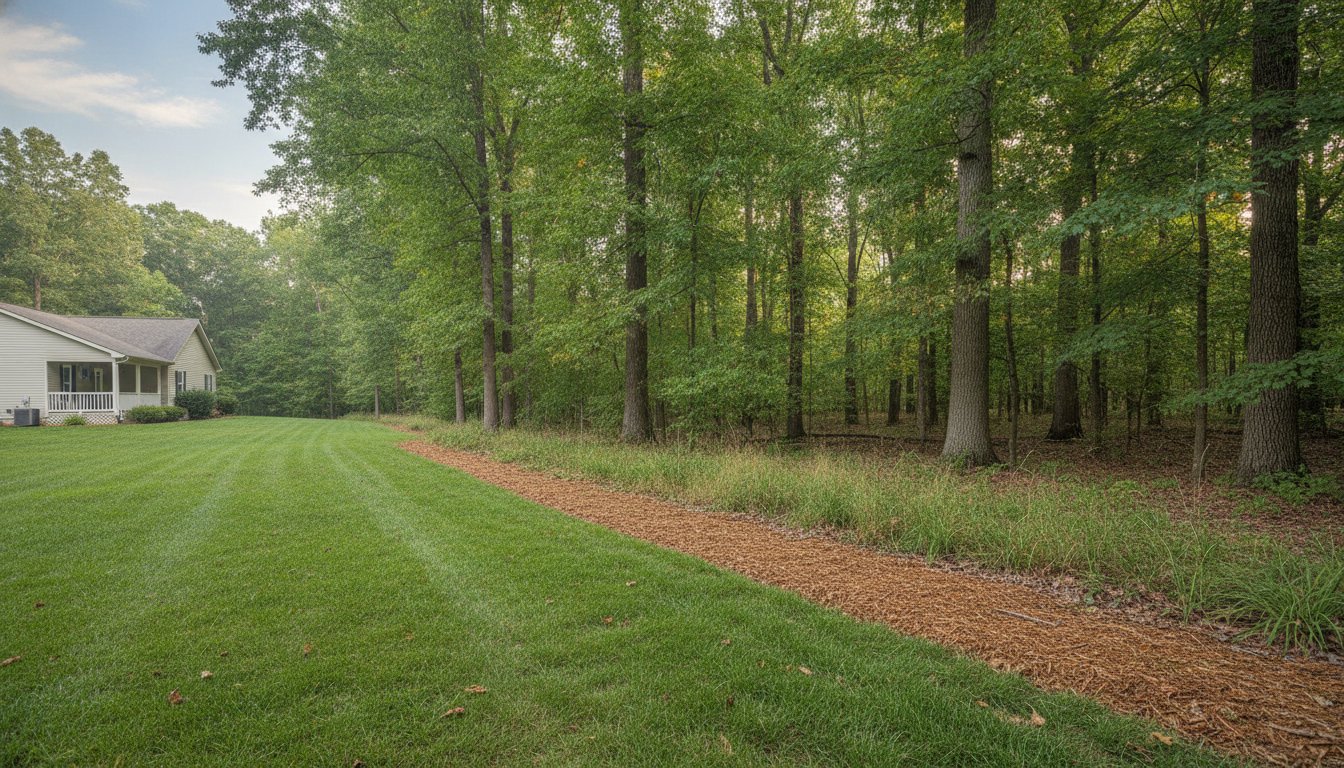
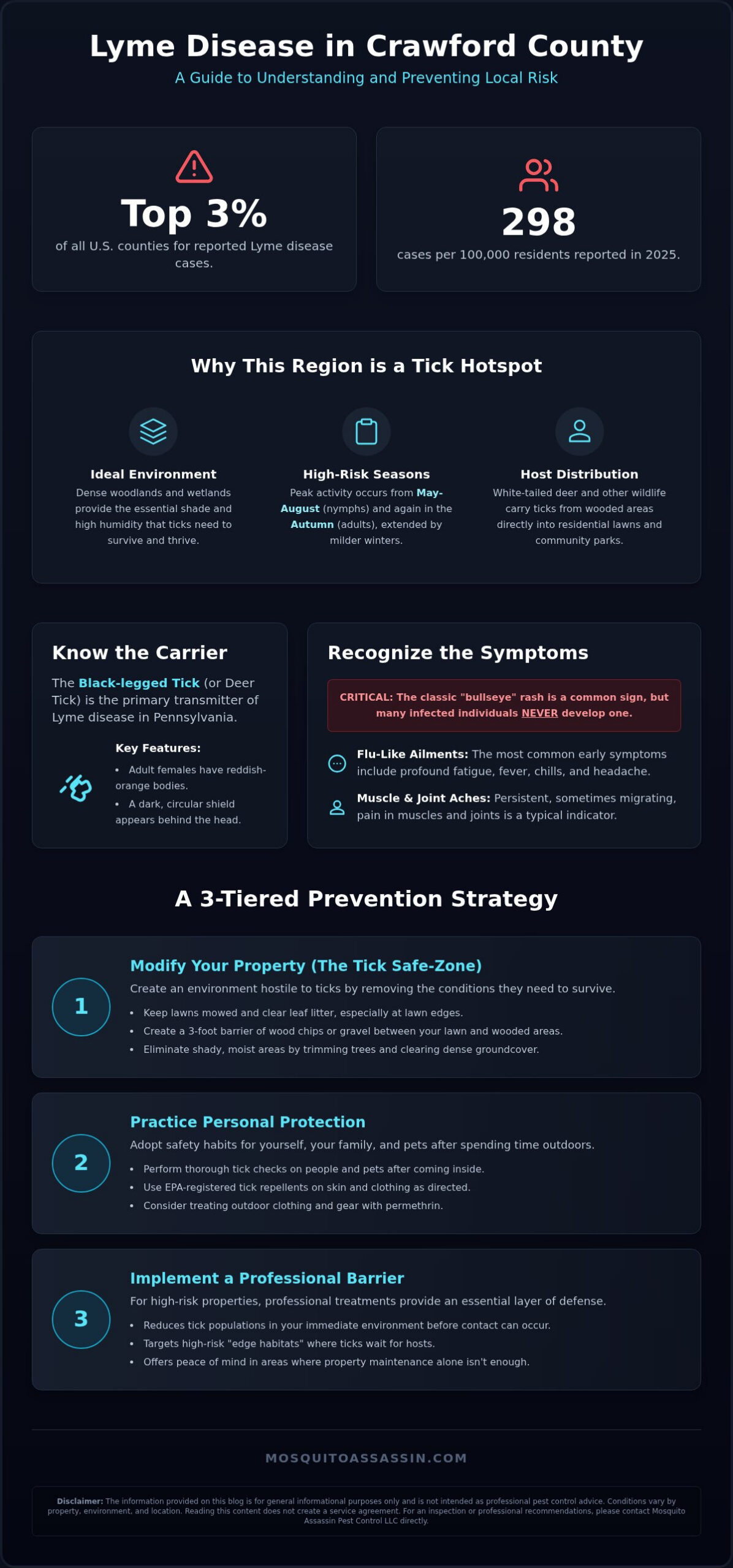
Crawford County ranks in the top 3% of all United States counties for reported Lyme disease cases, according to 2025 CDC data. With a rate of approximately 298 cases per 100,000 residents, the local environment requires a vigilant and informed approach to safety. It’s natural to feel a sense of unease when family members or pets head outdoors, particularly when DIY methods seem unreliable or local tick species remain a mystery. Experts recognize that the black-legged tick is firmly established in Northwest Pennsylvania, making consistent protection a necessity rather than an option.
This 2026 guide delivers a clear, professional path forward for lyme disease prevention crawford county, focusing on strategies that protect property and provide peace of mind. Residents will gain a thorough understanding of local risks and the specific behaviors of regional tick populations. The following sections outline actionable steps to transform a yard into a safer zone and provide the technical confidence needed to identify and remove ticks correctly. Readers can expect to learn about effective barrier methods and property maintenance habits that prioritize the wellbeing of every household member.
Disclaimer: The information provided on this blog is for general informational purposes only and is not intended as professional pest control advice. Conditions vary by property, environment, and location. Reading this content does not create a service agreement. For an inspection or professional recommendations, please contact Mosquito Assassin Pest Control LLC directly.
Key Takeaways
- Understand why the Crawford County landscape supports high tick densities and how local awareness serves as the first step in family safety.
- Identify the visual markers of the black-legged tick at various life stages and recognize early physical symptoms that may follow an encounter.
- Discover proven strategies for lyme disease prevention crawford county by modifying backyard habitats to eliminate the shade and humidity ticks need to survive.
- Learn practical personal protection habits and strategic landscaping choices that create a safer environment for children and pets.
- Recognize how professional barrier treatments provide an essential layer of protection for high-risk zones where traditional maintenance often falls short.
The Growing Risk of Lyme Disease in Crawford County
Lyme disease is a bacterial infection typically caused by the bacterium Borrelia burgdorferi. It’s transmitted to humans through the bite of infected black-legged ticks, also known as deer ticks. For a comprehensive Lyme disease overview, it’s helpful to understand that this condition can affect various systems in the body if left unaddressed. In Northwest Pennsylvania, the geography creates an ideal environment for these parasites. Crawford County features a mix of dense woodlands, wetlands, and sprawling residential properties that provide the shade and moisture ticks require to thrive. Unlike some pests that prefer open sunlight, ticks are highly sensitive to desiccation (drying out), making the humid climate of our region a perfect sanctuary.
The transition zones where manicured lawns meet wooded edges represent the highest risk areas for local families. These “edge habitats” allow ticks to wait in tall grass or leaf litter for a passing host. Recent climate trends in 2026 have exacerbated this issue. Mild winters in Northwest Pennsylvania have led to higher survival rates for tick populations during their dormant stages. When spring arrives earlier, as seen with the unseasonably warm weather in March and April 2026, tick activity begins weeks ahead of schedule. This extended season increases the window of time for potential encounters, making lyme disease prevention crawford county a year-round priority for property owners.
Understanding the Crawford County Environment
Local wildlife plays a massive role in the distribution of ticks throughout the county. White-tailed deer act as primary hosts for adult ticks, transporting them into residential backyards and community parks. Because Crawford County sits within the Great Lakes region, the consistent humidity levels support tick activity even during the peak of summer. While encounters can happen anytime temperatures are above freezing, the highest risk months in Pennsylvania typically span from May through August, when nymph-stage ticks are most active, and again in the autumn when adults emerge. Identifying these high-traffic zones on a property is the first step toward effective management.
Why Prevention is Critical in 2026
The stakes for lyme disease prevention crawford county are higher than ever. In 2025, Crawford County reported approximately 298 cases per 100,000 people, placing it among the top 3% of counties nationwide for reported infections. Untreated Lyme disease can lead to long-term health complications, including chronic joint pain, heart palpitations, and neurological issues. Taking a proactive approach is far more effective than reacting after a bite has occurred. Professional tick management serves as a critical layer of protection, reducing the population in your immediate environment before these pests can make contact with your family or pets.
Disclaimer: The information provided on this blog is for general informational purposes only and is not intended as professional pest control advice. Conditions vary by property, environment, and location. Reading this content does not create a service agreement. For an inspection or professional recommendations, please contact Mosquito Assassin Pest Control LLC directly.
Identifying the Black-legged Tick and Lyme Disease Symptoms
The black-legged tick (Ixodes scapularis) is the primary carrier of Lyme disease in Northwest Pennsylvania. Accurate identification is the first line of defense for local families. Adult females are recognizable by their reddish-orange bodies and a dark, circular shield located behind the head. Symptoms of an infection typically manifest as flu-like ailments, including profound fatigue, fever, and persistent muscle aches. While the bullseye rash (Erythema migrans) is a frequent indicator, many infected individuals never develop this visible sign. Relying solely on the presence of a rash can lead to dangerous delays in treatment. Differentiating between a standard tick bite, which often results in a small, static red bump, and an infection involves watching for an expanding redness or the onset of systemic symptoms. Effective lyme disease prevention crawford county requires a high level of awareness regarding tick appearance and behavior.
The Two-Year Life Cycle of a Tick
Ticks undergo a complex life cycle consisting of four stages: egg, larva, nymph, and adult. In Crawford County, the nymphal stage is particularly hazardous to humans. These ticks are active during the late spring and early summer, and their tiny size, comparable to a poppy seed, makes them nearly impossible to detect without a thorough inspection. Adults typically resurface in the fall and remain active whenever temperatures are above freezing. In the humid environment of Northwest Pennsylvania, these life stages often overlap, creating a continuous threat throughout the warmer months. Adhering to CDC Lyme disease prevention guidelines during these high-activity windows is a vital part of a safety plan.
What to Do After a Tick Bite
Proper removal is essential to reduce the risk of pathogen transmission. Use fine-tipped tweezers to grasp the tick as close to the skin as possible. Pull upward with steady pressure. Avoid using heat, oils, or “painting” the tick with nail polish, as these methods can cause the tick to regurgitate fluids into the bite site. After removal, clean the area thoroughly with soap and water or rubbing alcohol. Monitoring your health for several weeks is necessary to ensure no symptoms develop. While individual vigilance is necessary, implementing lyme disease prevention crawford county through professional property management helps stop the problem before it reaches your door.
Disclaimer: The information provided on this blog is for general informational purposes only and is not intended as professional pest control advice. For an inspection or professional recommendations, please contact Mosquito Assassin Pest Control LLC directly.
Analyzing Tick Habitats in Northwest Pennsylvania
Ticks are biological opportunists that rely on specific environmental conditions to survive. In Northwest Pennsylvania, the primary threat to their survival isn’t the cold, but rather desiccation (drying out). Because they breathe through pores in their exoskeleton, they require environments with high humidity, typically above 80 percent. This makes shady, moisture-rich areas of a Crawford County backyard far more dangerous than open, sun-drenched lawns. Understanding these micro-habitats is a cornerstone of effective lyme disease prevention crawford county. Leaf litter, for instance, serves as a thermal blanket that protects ticks during the winter, allowing them to emerge as soon as the ground thaws. Ground covers and ornamental plants, while aesthetically pleasing, often inadvertently create the cool, damp conditions these parasites crave.
Common Residential Tick Hotspots
Most tick encounters don’t happen deep in the forest. They occur in the transition zones of a residential property. Tall grass and brushy areas at the edge of a lawn act as staging grounds where ticks wait for a host to pass by. Wood piles and stone walls are also significant risks, as they provide ideal nesting sites for the rodents that carry ticks. Shady garden beds with thick layers of organic mulch are another concern. These areas trap moisture and provide a protected environment for ticks to hide during the heat of the day. Property owners can reduce risk by keeping these areas clear and creating physical barriers between wooded edges and active play zones.
The Role of Host Animals
Host animals are the invisible drivers of tick distribution across local properties. While white-tailed deer are often associated with the spread of ticks, small mammals like white-footed mice and chipmunks are the primary reservoirs for the Lyme bacteria. These rodents thrive in the same stone walls and wood piles that provide shelter for ticks. As deer move through Crawford County properties, they drop adult ticks that then lay thousands of eggs, restarting the cycle. Official guidance on Pennsylvania Lyme disease prevention emphasizes managing property boundaries to discourage wildlife entry. Removing bird feeders that attract rodents and installing deer-resistant fencing can help break the link between wildlife and tick populations in your yard.
Professional pest management can target these specific hotspots where traditional lawn care often fails. By focusing on the perimeter and known nesting sites, it’s possible to significantly lower the tick pressure on a property. For those looking to secure their outdoor spaces, professional tick control services provide a necessary layer of defense.
Disclaimer: The information provided on this blog is for general informational purposes only and is not intended as professional pest control advice. For an inspection or professional recommendations, please contact Mosquito Assassin Pest Control LLC directly.
Practical Steps for Personal and Home Tick Prevention
Creating a tick-safe zone is a foundational part of lyme disease prevention crawford county. While the natural landscape of Northwest Pennsylvania provides a haven for these pests, residential properties don’t have to follow suit. By establishing a clear transition zone between wooded areas and managed lawns, you significantly reduce the likelihood of ticks migrating into active play spaces. Consistency is the key to success. Property owners who maintain their yards with tick behavior in mind create an environment that is far less hospitable to these parasites and the rodents that carry them.
Yard Modification Strategies
Simple changes to your landscaping can have a profound impact on tick populations. Keeping the grass mowed short is one of the most effective ways to lower humidity at the ground level. Ticks are extremely sensitive to moisture loss, so a dry, sun-exposed lawn acts as a natural deterrent. Removing leaf litter promptly is equally important, as these piles provide the insulation ticks need to survive the winter months. Piles of leaves and brush also attract mice and other small mammals that serve as hosts for immature ticks.
Installing a three-foot wide barrier of wood chips or gravel along the perimeter of your yard creates a physical boundary that ticks are unlikely to cross. This barrier serves as a “no-man’s land” that separates the high-risk wooded edge from your manicured lawn. Additionally, pruning low-hanging branches allows more sunlight to penetrate the yard, further reducing the damp, shady conditions that ticks prefer. For those needing assistance with comprehensive property management, professional tick control services can help identify and treat these specific habitat zones effectively.
Personal Protection Best Practices
Personal habits are just as vital as property maintenance. When engaging in outdoor activities in Crawford County, use EPA-registered repellents containing DEET or picaridin. These substances are proven to discourage ticks from latching onto skin. For extended periods outdoors, treating clothing and gear with permethrin offers a durable layer of protection that lasts through multiple washes. This is especially helpful for gardening or hiking gear that frequently comes into contact with tall grass.
The simplest physical defense is often the most effective. Tucking pants into socks prevents ticks from crawling up the inside of a pant leg. Once back inside, immediately place outdoor clothing in a dryer on high heat for at least ten minutes to kill any hitchhiking ticks. Conduct a thorough tick check on every family member, including pets. Focus on warm, dark areas like the backs of knees, the waistline, and the hairline. Finding a tick before it has a chance to attach is the best way to prevent the transmission of bacteria. If you’re concerned about the level of risk on your property, professional pest control may help reduce risk in these high-traffic areas.
Disclaimer: The information provided on this blog is for general informational purposes only and is not intended as professional pest control advice. For an inspection or professional recommendations, please contact Mosquito Assassin Pest Control LLC directly.
Professional Tick Management and Long-Term Prevention
Professional barrier treatments represent a decisive intervention in a comprehensive safety strategy. While personal habits and yard maintenance provide a foundation, professional-grade methods target the biological vulnerabilities of ticks across their entire life cycle. These treatments focus on the high-risk perimeter zones where wooded areas meet managed lawns, creating a defensive shield that standard lawn care cannot replicate. For effective lyme disease prevention crawford county, integrating a professional management plan ensures that the most dangerous habitats on a property are systematically addressed.
The Value of Local Professional Expertise
Local expertise is vital. Tick activity in Northwest Pennsylvania is dictated by regional weather patterns and the specific ecology of the Great Lakes region. A professional inspection identifies specific property vulnerabilities, such as hidden rodent nesting sites or drainage issues that maintain the high humidity ticks require to survive. Professional-grade barrier methods differ significantly from over-the-counter products in their concentration, application precision, and residual effectiveness. For residents seeking lyme disease prevention crawford county, understanding the specific timing of the Pennsylvania climate is essential to stop populations before they peak.
Creating a Year-Round Protection Plan
Ongoing management is consistently more effective than isolated, one-time applications. Because ticks are constantly reintroduced to properties by local wildlife, a seasonal protection plan maintains a consistent level of defense throughout the high-risk months. This proactive approach is equally important for commercial spaces and public areas in Crawford County, where high foot traffic increases the potential for human-tick encounters. A professional approach typically includes several key benefits:
- Targeted Perimeter Protection: Focusing on the transition zones where ticks are most likely to wait for hosts.
- Hotspot Identification: Treating specific areas like thick mulch beds and stone walls where ticks seek shelter.
- Residual Efficacy: Utilizing professional methods that remain active against ticks for extended periods.
- Lifecycle Interruption: Targeting ticks at various stages of development to reduce the overall population density over time.
Strategic management of outdoor spaces helps maintain community safety and reduces the overall tick pressure in the region. Ultimately, professional pest control may help reduce risk by providing a scientific, methodical layer of security for local families and businesses. Combining these professional services with the personal habits discussed in previous sections creates the most robust defense possible against tick-borne illnesses.
Disclaimer: The information provided on this blog is for general informational purposes only and is not intended as professional pest control advice. For an inspection or professional recommendations, please contact Mosquito Assassin Pest Control LLC directly.
Securing Your Property and Peace of Mind
Protecting your household from tick-borne illnesses requires a multi-layered strategy that addresses both personal habits and environmental risks. By understanding the specific behaviors of the black-legged tick in Northwest Pennsylvania, you can take active steps to eliminate the shade and moisture they need to survive. Successful lyme disease prevention crawford county relies on the combination of routine tick checks, strategic landscaping, and professional intervention. Managing the transition zones where wooded areas meet your lawn is a critical step in reducing the presence of these parasites near your family and pets.
Professional pest control plans provide the technical expertise needed to identify vulnerabilities that traditional lawn care might miss. Specialized mosquito and tick control services are designed to target hotspots while ensuring the security of your outdoor spaces. If you’re ready to take a definitive step toward a safer backyard, you can Request a professional inspection for your property. Serving Erie and Crawford Counties, these methodical approaches prioritize the wellbeing of the community. With the right information and a proactive plan, you can enjoy the Crawford County outdoors with confidence and security.
Disclaimer: The information provided on this blog is for general informational purposes only and is not intended as professional pest control advice. For an inspection or professional recommendations, please contact Mosquito Assassin Pest Control LLC directly.
Frequently Asked Questions
Are ticks active in Crawford County during the winter?
Black-legged ticks remain active whenever the temperature is above freezing. They do not die off during the winter months but instead enter a state of dormancy when the ground is frozen. If a mid-winter thaw occurs and temperatures reach at least 35 degrees Fahrenheit, they can emerge to search for a host. This biological resilience makes year-round awareness and lyme disease prevention crawford county a necessity for those living near wooded areas.
Can my dog bring ticks into my house?
Pets frequently transport unattached ticks into living spaces after spending time in tall grass or leaf litter. While a tick may not bite the animal immediately, it can crawl off the fur and onto furniture, rugs, or household members. Using veterinarian-approved preventatives is a vital first step, but manual checks after every outdoor excursion are also necessary. Ticks often hide in the thick fur around a dog’s neck, ears, and paws.
How long does a tick need to be attached to transmit Lyme disease?
A tick typically must be attached for 36 to 48 hours before the Lyme disease bacterium is successfully transmitted to a human host. This delay occurs because the bacteria must migrate from the tick’s midgut to its salivary glands before entering the bite site. Performing thorough daily tick checks significantly reduces the risk of infection. If a tick is found and removed within the first 24 hours, the probability of transmission is very low.
What is the best way to remove a tick from my skin?
Use fine-tipped tweezers to grasp the tick as close to the skin’s surface as possible. Pull upward with steady, even pressure without twisting or jerking, which can cause the mouthparts to break off and remain in the skin. After removal, clean the bite area and your hands with rubbing alcohol or soap and water. Never use heat, petroleum jelly, or other home remedies to smother the tick, as these methods can increase infection risks.
Does every Black-legged tick carry Lyme disease?
Not every black-legged tick is infected with the Borrelia burgdorferi bacterium. Infection rates vary by year and specific location within Northwest Pennsylvania. Larval ticks are born without the bacteria and must acquire it by feeding on an infected host, usually a small rodent like a white-footed mouse. While not every bite leads to illness, the high prevalence of the bacteria in local wildlife makes lyme disease prevention crawford county a critical priority for all residents.
Are there other tick-borne illnesses in Pennsylvania besides Lyme?
Pennsylvania residents face risks from several other tick-borne pathogens, including Anaplasmosis, Babesiosis, and Powassan virus. Anaplasmosis is currently the second most reported tick-borne disease in the state. These illnesses are transmitted by the same black-legged ticks that carry Lyme disease. Because a single tick can carry multiple pathogens simultaneously, a proactive approach to property management is the most effective way to limit exposure to these various health concerns throughout the year.
How can I tell the difference between a dog tick and a deer tick?
Size and markings are the primary differentiators between these species. The black-legged tick (deer tick) is significantly smaller than the American dog tick and has a dark, solid-colored shield. In contrast, the American dog tick often features white or silver markings on its shield and is generally more visible to the naked eye. While both can bite humans, only the black-legged tick transmits the bacteria responsible for Lyme disease in the Crawford County region.
Is professional tick spraying safe for my garden plants?
Professional barrier treatments are designed to target specific areas where ticks reside without harming established garden plants. Licensed professionals apply these treatments to the perimeter of the property, focusing on leaf litter, tall grass, and wooded edges rather than directly on vegetable gardens or delicate flowers. These methods prioritize the safety of the household while effectively reducing the tick population. Following the specific re-entry instructions provided after an application ensures the wellbeing of family members and pets.
Disclaimer: The information provided on this blog is for general informational purposes only and is not intended as professional pest control advice. For an inspection or professional recommendations, please contact Mosquito Assassin Pest Control LLC directly.

