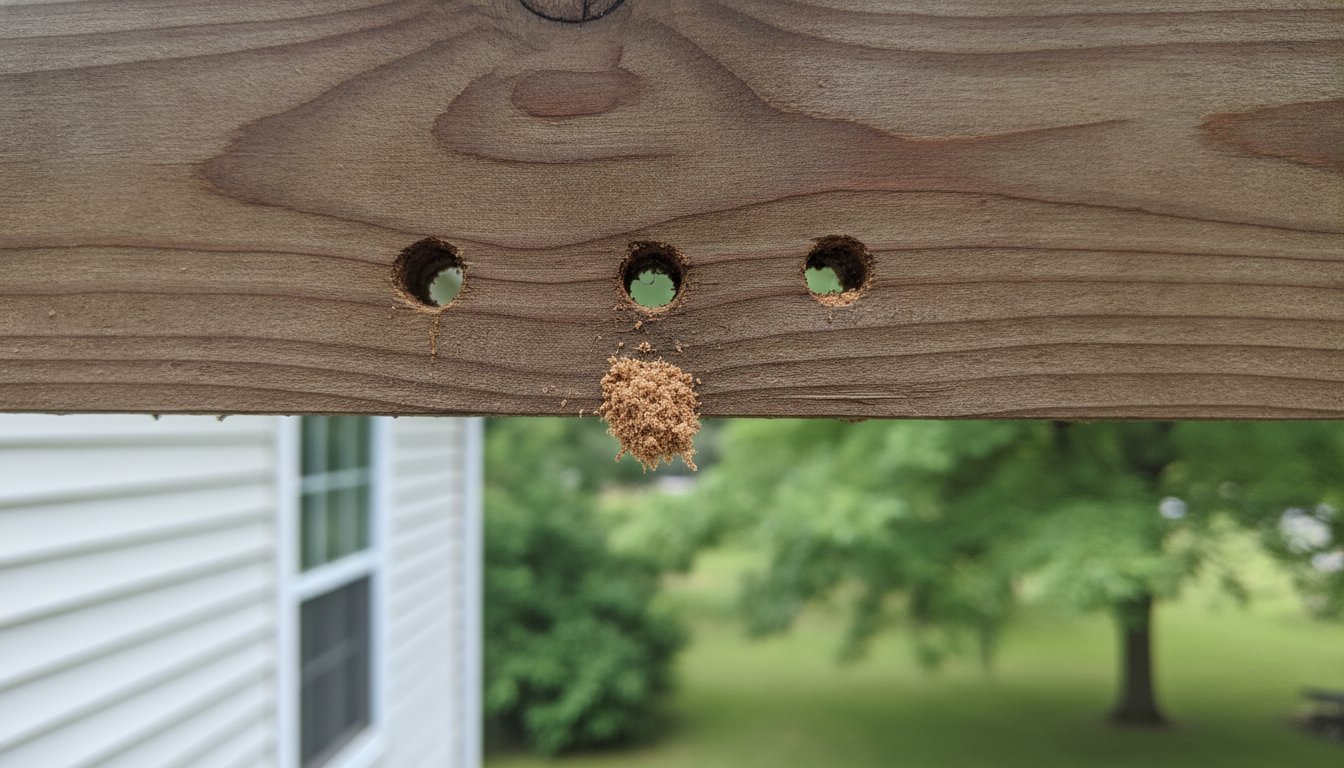
Long-term carpenter bee prevention starts with the wood, not a quick-fix scent. If you’re concerned about how to keep carpenter bees away from house siding and trim, it helps to know what may attract them: exposed, weathered wood can provide places to excavate nesting tunnels. Carpenter bees don’t eat wood, but repeated use of tunnels may increase damage over time, so note new openings and changes to the surrounding wood.
Protecting your home starts with observing where bees gather and keeping exterior wood in good condition. This guide explains why carpenter bees may target certain parts of a house, how to monitor signs of activity, and why scent-based ideas can be unreliable. It also covers when recurring activity or changes to the wood may call for a professional assessment. The goal is to reduce attractive nesting conditions where possible and recognize when prevention alone may not be enough.
Key Takeaways
- Carpenter bees excavate nesting tunnels in wood rather than eating it. Identifying the insect and observing activity can help guide your next steps.
- Exposed, weathered wood may offer nesting opportunities, but not every wooden feature is equally attractive.
- To keep carpenter bees away from house surfaces, focus on observing activity and maintaining exposed wood rather than relying on scent-based remedies as a proven solution.
- Record the location of openings and monitor changes over time. Recurring activity may call for a closer assessment.
- Professional pest control can help distinguish carpenter bee activity from other causes when signs persist.
How to Keep Carpenter Bees Away From Your House: Start by Identifying the Problem
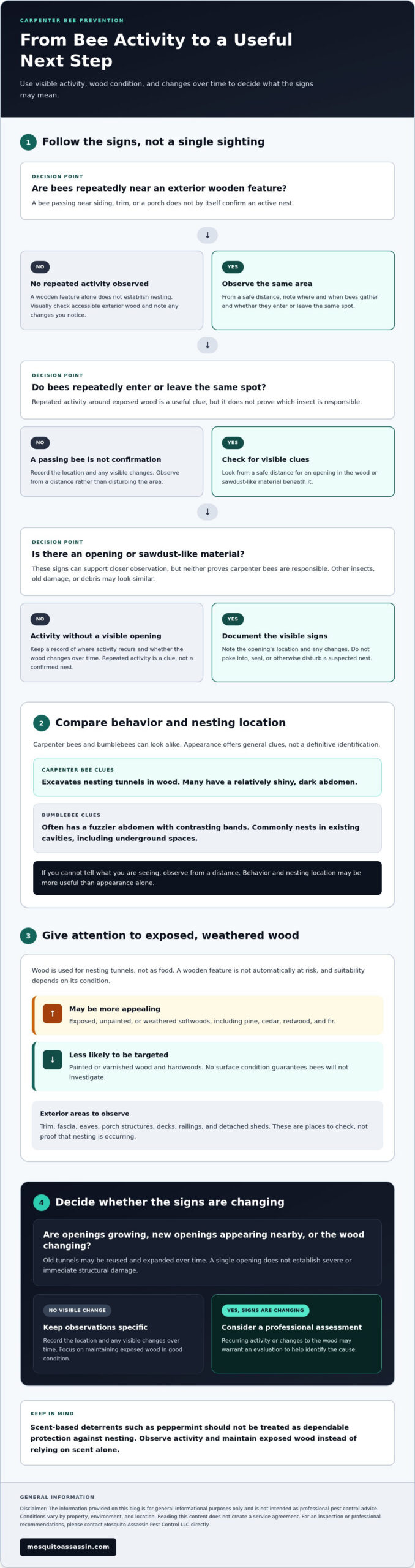
Bees flying near siding, trim, or a porch can be concerning, especially if you’ve noticed a new opening in the wood. Before deciding how to keep carpenter bees away from house surfaces, look for signs of nesting. Carpenter bees excavate nest tunnels in wood. Unlike ground-nesting bees, they use suitable wooden surfaces for shelter and reproduction. A bee passing near a wooden feature doesn’t, by itself, confirm an active nest.
Identifying the insect and observing where it goes can help you decide whether to investigate further. The Carpenter bee overview describes the group and its varied species, but appearance alone may not be enough to identify a bee confidently.
What signs may suggest carpenter bee activity?
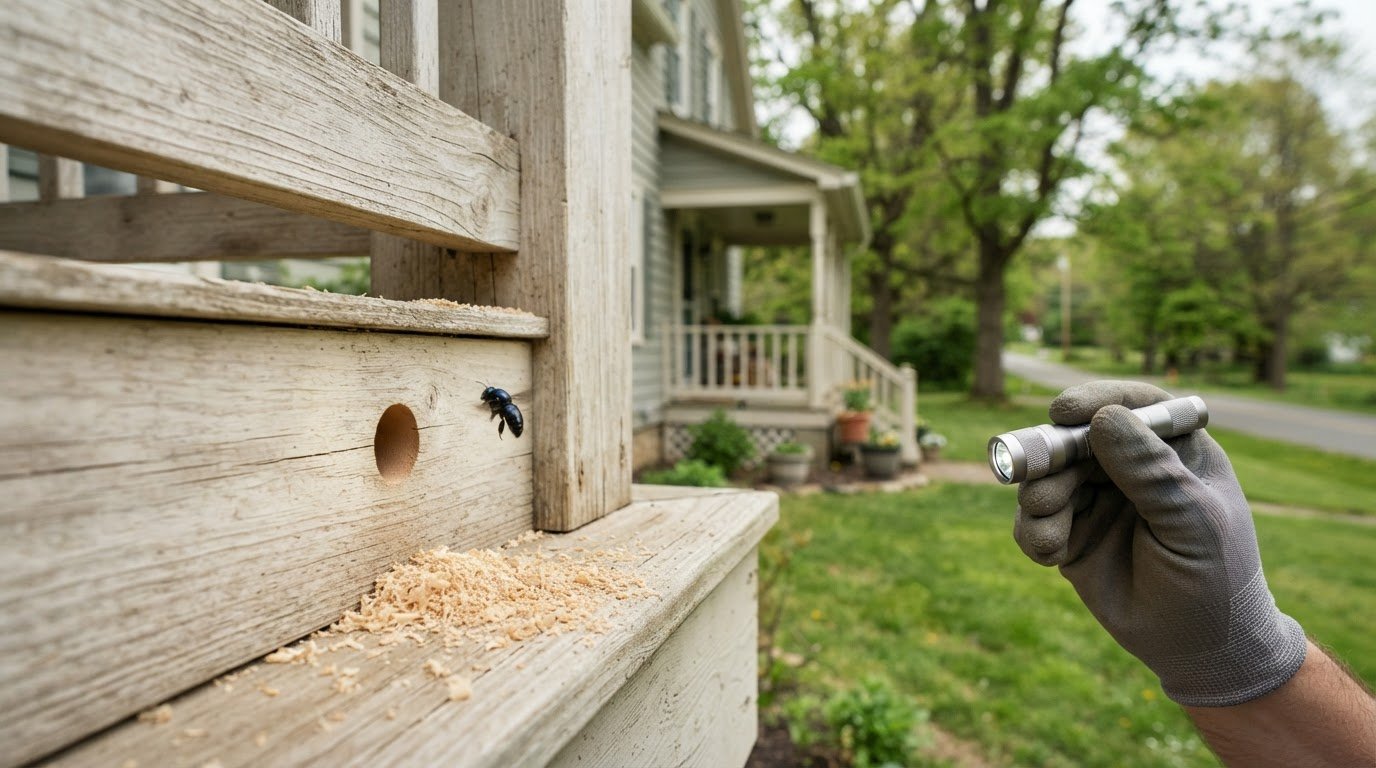
Repeated bee activity around exposed wood is a useful clue, particularly if bees appear to enter or leave the same spot. From a safe distance, look for an opening in the wood or sawdust-like material beneath it. These signs can justify closer observation, but none proves on its own that carpenter bees are responsible. Other insects, old damage, or debris may look similar.
Note where and when you see activity, and whether the same area is involved over time. Avoid poking into openings or disturbing bees to investigate. A record of the location and visible changes can help with a professional assessment if the signs persist.
How are carpenter bees different from bumblebees?
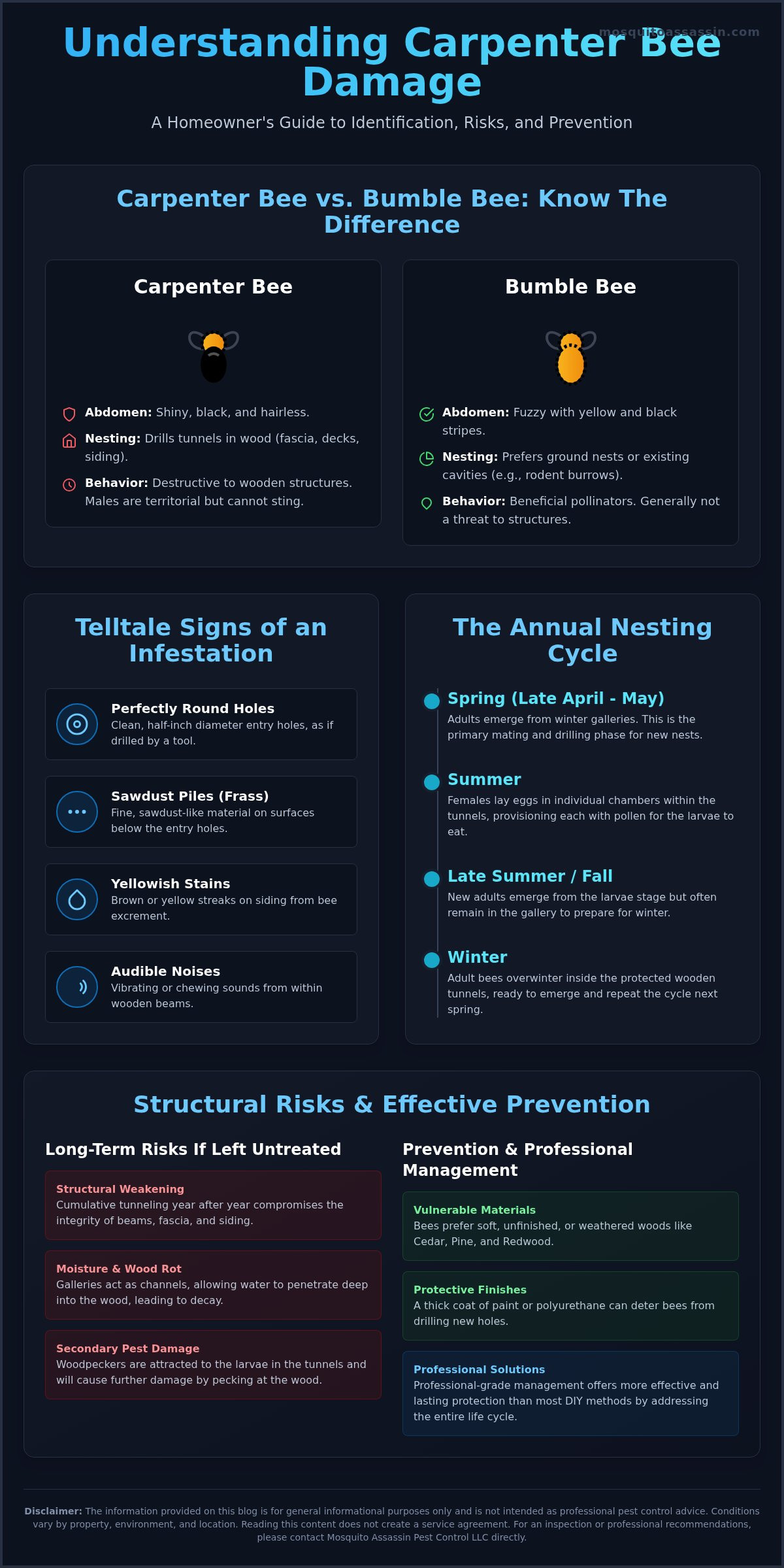
Carpenter bees and bumblebees can look alike, and appearance varies among species. Many carpenter bees have a relatively shiny, dark abdomen, while bumblebees often have a fuzzier abdomen with contrasting bands. These are general clues, not a definitive identification. Behavior and nesting location can be more useful: carpenter bees excavate wood, while bumblebees commonly nest in existing cavities, including underground spaces.
Don’t handle or try to disturb an unfamiliar bee. Observe from a distance instead. If you can’t tell what you’re seeing, or if activity is paired with openings or apparent changes in the wood, professional pest control can help determine whether carpenter bees are involved.
Why Carpenter Bees Choose House Wood and Where They May Nest
Carpenter bees use wood to create nesting tunnels, not as food. Their interest depends on the wood’s condition and suitability, so a wooden feature isn’t automatically at risk. Exposed, unpainted, or weathered softwoods, including pine, cedar, redwood, and fir, may be more appealing. Painted or varnished wood and hardwoods are less likely to be targeted, though no surface condition guarantees that bees won’t investigate it.
Exposed, weathered softwood can offer carpenter bees a suitable place to nest, but activity depends on the wood and the conditions around it. Understanding these preferences helps homeowners focus observation and maintenance where they’re most useful. The UC IPM Carpenter Bee Management guide discusses carpenter bee identification, wood damage, and management, including prevention.
Which parts of a house should homeowners observe?
From a safe distance, visually check accessible exterior wood, especially surfaces that are exposed and weathered. Include trim, fascia, eaves, porch structures, decks, railings, and detached sheds. These are places to observe, not proof that nesting is occurring.
Note where bee activity recurs and whether you see changes in the same spot over time. Don’t poke, seal, or otherwise disturb a suspected nest during an inspection. A record of locations and visible changes can make a later assessment more useful.
What does carpenter bee activity mean for the wood?
A visible opening alone doesn’t establish that wood has severe or immediate structural damage. Carpenter bees excavate tunnels, and old tunnels may be reused and expanded over time. Repeated nesting can therefore affect wood, but the significance depends on the location, condition, and extent of the damage. Avoid assuming the worst from a single hole.
If an opening appears to grow, new openings appear nearby, or the wood seems to be changing, document what you observe and consider a professional assessment. Persistent activity may warrant an evaluation to help identify the cause and determine whether carpenter bees are affecting the structure. Information about professional pest control services may also be useful if prevention alone isn’t enough.
Do Peppermint and Other Carpenter Bee Repellents Really Work?
Peppermint is often suggested as a way to discourage carpenter bees, but a popular tip isn’t the same as reliable evidence. Seeing fewer bees near a scented plant or product doesn’t prove it caused the change or that the effect will last. Peppermint shouldn’t be treated as a dependable way to prevent nesting.
A scent-based deterrent shouldn’t be treated as guaranteed protection against carpenter bees. If you’re considering how to keep carpenter bees away from house structures, focus first on the conditions that may provide nesting opportunities. Fragrant plants may be part of a garden, but they don’t change the condition of exposed wood or establish that a nesting site is no longer attractive.
What can homeowners reasonably expect from peppermint?
Consider peppermint an unproven supplementary idea, not a standalone prevention method. Anecdotal accounts describe what someone observed at one property, but they don’t establish whether the bees left for that reason, whether other conditions changed, or whether the result would persist elsewhere. Avoid relying on scent alone to protect wood or resolve recurring activity.
How should homeowners assess other DIY deterrent claims?
Look for credible evidence that a proposed method has been tested for carpenter bees and shown to work consistently, rather than relying on confident promises or repeated online tips. Landscaping may shape a yard, but it doesn’t address exposed wood itself. Be skeptical of claims that a scent or plant will prevent nesting, and don’t apply products to bees or suspected nest sites based on informal advice.
Practical prevention is more directly tied to observing exposed wood and maintaining its surfaces. If bee activity keeps returning or wood appears to be changing, a professional assessment can help clarify what’s happening. Information about professional pest control services can help you understand when professional support may be appropriate.
How to Make Your House Less Attractive to Carpenter Bees
Prevention is mainly about keeping exterior wood in good condition and noticing changes early. These steps may reduce nesting opportunities, but they can’t guarantee that carpenter bees won’t visit or nest. A practical routine is to observe activity, identify exposed wood, maintain surfaces, and monitor for changes.
What routine wood maintenance may reduce nesting opportunities?
Look over accessible exterior wood, such as trim, railings, porch structures, and detached sheds. Note areas that are unfinished, weathered, or deteriorating. Routine maintenance that keeps wood surfaces in good condition may make them less suitable for nesting than exposed, weathered wood.
Repair choices depend on the wood, its location, and its current condition. If you’re unsure which finish or repair is appropriate, seek material-specific advice from a qualified professional. Don’t treat a suspected active nest as a routine repair or try to seal it yourself. An assessment can help clarify what’s happening before repairs are considered.
How can homeowners monitor activity without disturbing bees?
Keep observations simple and from a safe distance. Record the location of any openings and recurring bee activity, and note visible changes over time. Photos taken from the same general viewpoint may help you compare what you see without approaching or disturbing the area.
Avoid probing openings, blocking them, or disturbing suspected nests. Repeated or increasing activity, or apparent changes to the wood, are reasons to consider a professional assessment. These observations can help distinguish ongoing activity from old damage or another cause.
For a practical maintenance check, focus on these points:
- Observe: Note recurring activity without approaching bees or openings.
- Identify: Look for exposed or deteriorating wood in accessible areas.
- Maintain: Keep wood surfaces in suitable condition, and seek material-specific advice for repairs or finishes.
- Monitor: Record changes and seek an assessment if activity or damage appears to increase.
These steps can make prevention more informed, but persistent carpenter bee activity may need professional attention. For an assessment, contact Mosquito Assassin Pest Control LLC.
When Carpenter Bee Prevention Is Not Enough: Consider Professional Assessment
Routine maintenance and observation can help reduce nesting opportunities, but they may not resolve persistent activity. If bees keep returning to the same area, new openings appear, or the wood seems to be changing, a professional assessment can help clarify the cause and appropriate options. This is a measured next step, not a reason to assume that one opening means serious structural damage.
When should a homeowner seek professional help?
Consider an assessment if activity continues despite routine wood maintenance, appears to be increasing, or occurs alongside visible changes to the wood. Professional identification may also be useful if you’re unsure whether the insect or suspected nest is from carpenter bees. An assessment can help distinguish current carpenter bee activity from old damage or other causes, so decisions aren’t based on a guess.
Keep a record of recurring locations and visible changes from a distance. Don’t probe or disturb a suspected nest to confirm activity. This information can help make an evaluation more useful and clarify whether further attention is warranted.
What regional support is relevant to homeowners?
Mosquito Assassin Pest Control LLC provides specialized carpenter bee treatments in Erie and Crawford Counties in Pennsylvania and Ashtabula County in Ohio. When prevention alone hasn’t addressed recurring activity, professional input can help clarify next steps. Learn more about pest control services.
If activity persists or the insect’s identity is uncertain, contact Mosquito Assassin Pest Control LLC for information about a professional assessment.
Protect Your Home With Practical, Informed Prevention
Understanding how to keep carpenter bees away from house wood starts with identifying likely activity and paying attention to the condition of exposed surfaces. A bee near a porch or trim doesn’t confirm a nest, and scent-based ideas such as peppermint shouldn’t be relied on as proven protection.
Focus on routine wood maintenance and observation. Note recurring activity or changes to an opening, and avoid disturbing a suspected nest. If activity continues, increases, or the insect’s identity is uncertain, professional assessment can help clarify what’s happening.
Mosquito Assassin Pest Control LLC provides specialized carpenter bee treatments in Erie and Crawford Counties, Pennsylvania, and Ashtabula County, Ohio. For information about professional support, contact the company. Careful observation and practical maintenance can help you make informed decisions about protecting your home.
Frequently Asked Questions
How can I tell if I have carpenter bees around my house?
Look for repeated bee activity around exposed wood, an opening in the surface, or sawdust-like material nearby. These clues may suggest nesting, but no single sign confirms carpenter bees are responsible. Carpenter bees often have a shiny, dark abdomen, while bumblebees tend to look fuzzier, though appearance varies. Observe from a distance and note whether activity returns to the same location. A professional assessment can help identify the cause if you’re unsure.
Does peppermint keep carpenter bees away?
Peppermint isn’t a reliable, proven standalone way to keep carpenter bees away. Homeowner reports or online suggestions don’t establish that a scent prevents nesting or provides lasting protection. Treat it as an unproven idea, not a substitute for maintaining exposed wood and monitoring activity. Avoid applying oils or other products to bees or suspected nests. If activity continues, consider an assessment rather than relying on a scent-based deterrent.
What attracts carpenter bees to a house?
Carpenter bees may use suitable exposed wood for nesting, especially unpainted, untreated, or weathered softwoods such as pine, cedar, redwood, and fir. They excavate wood for nest tunnels rather than eating it. Not every wooden feature is equally attractive, and the presence of wood alone doesn’t confirm a nest. Observing where bees repeatedly gather can help you identify areas that may need closer attention.
Can carpenter bees damage a house?
Carpenter bee tunnels can affect wood, particularly if nests are reused and expanded over time. A single opening doesn’t prove severe or immediate structural damage, so avoid jumping to conclusions based on one sign. Note the location and watch for visible changes. If openings recur or the wood appears to be deteriorating, a professional assessment can help determine whether carpenter bees or another cause is involved.
Should I block a carpenter bee hole?
Don’t block or probe a suspected nest to investigate it. An opening may be active, old, or caused by something else, and disturbing it can complicate assessment. Observe the area from a distance and record any recurring bee activity or visible changes. If you’re unsure whether the opening is an active carpenter bee nest, professional pest control can help identify the issue and explain appropriate next steps.
When are carpenter bees most active?
Carpenter bee activity is often noticeable in spring, when adults emerge from old tunnels and mate. Adults may also emerge later in the season, then overwinter in tunnels. Timing can vary with species and local conditions, so the calendar alone can’t confirm an active nest. If you see recurring activity near the same wood, record the location and changes over time rather than relying only on the season.
Disclaimer: The information provided on this blog is for general informational purposes only and is not intended as professional pest control advice. Conditions vary by property, environment, and location. Reading this content does not create a service agreement. For an inspection or professional recommendations, please contact Mosquito Assassin Pest Control LLC directly.