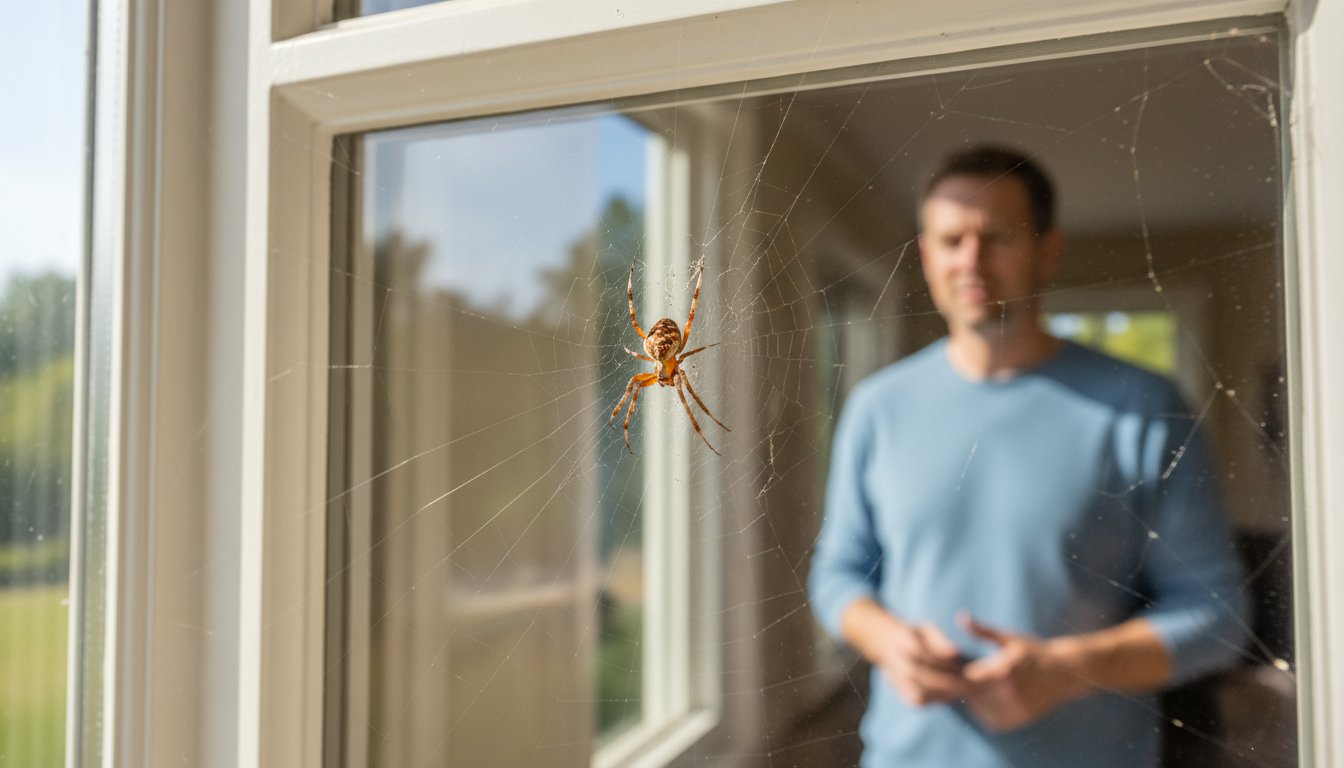
That moment of panic when you spot an eight-legged intruder in your home is all too familiar. You immediately wonder: Is it dangerous? Is it a threat to my family or pets? For homeowners across the Keystone State, having a reliable resource for spider identification in Pennsylvania is the first step toward peace of mind. Guesswork isn’t a strategy when it comes to safeguarding your home, and you shouldn’t have to be an expert to know if you’re dealing with a harmless nuisance or a potential threat.
This comprehensive guide is designed to eliminate that uncertainty. Using clear pictures and straightforward descriptions, we’ll help you quickly identify the most common spiders found in Pennsylvania homes and gardens. You will learn to confidently distinguish between a harmless cellar spider and a medically significant species like the black widow. More importantly, we’ll provide proven, professional tips to keep them out for good, putting you back in control and ensuring your home is a safe, spider-free zone.
Common Spiders Found Inside Pennsylvania Homes
When you live in Pennsylvania, sharing your home with a few eight-legged residents is almost inevitable. From dusty attics to quiet basement corners, certain spiders are experts at cohabitating with humans. While an unexpected encounter can be startling, understanding who you’re dealing with is the first step in safeguarding your home. Proper spider identification pennsylvania homeowners can perform helps distinguish a helpful, pest-eating houseguest from a potential threat.
To get a better sense of these common arachnids, this video provides a helpful visual guide:
Most indoor spiders fall into two main categories: passive web-builders and active hunters. Web-builders create webs to trap prey like flies and ants, while hunters actively stalk them. While the variety of Spiders of the United States is vast, only a handful are common indoors. Let’s meet the most frequent visitors you’re likely to find in your home.
Common House Spider (Parasteatoda tepidariorum)
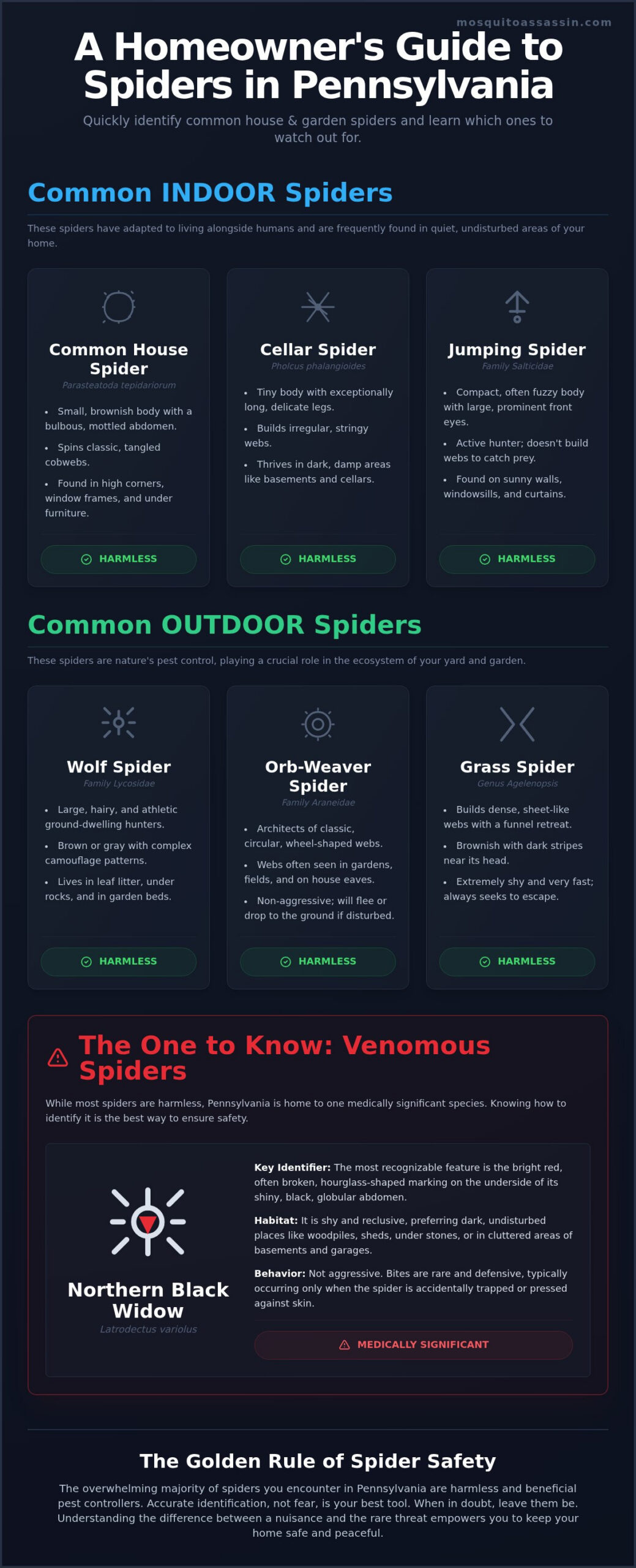
You’ll recognize this spider by its small, brownish body and a bulbous, mottled abdomen. They are masters of finding unused spaces-high corners, window frames, and beneath furniture-where they spin their classic tangled cobwebs. These messy webs are often the most obvious sign of their presence. Danger Level: Harmless. Bites are incredibly rare and pose no medical threat, making them more of a nuisance than a danger.
Long-bodied Cellar Spider (Pholcus phalangioides)
Often misidentified as ‘daddy long-legs,’ these spiders have a tiny body and exceptionally long, delicate legs. They thrive in dark, damp environments like cellars, basements, and crawl spaces. Their irregular, stringy webs are built in corners, and they famously vibrate them when disturbed to ward off threats. Danger Level: Harmless. A common myth claims they are highly venomous, but their fangs are too small and weak to pierce human skin.
Jumping Spiders (Family Salticidae)
These are the daytime hunters of the spider world. Jumping spiders are compact, often fuzzy or iridescently colored, with large front eyes that give them excellent vision. Instead of building webs to catch prey, they actively stalk insects on sunny walls, windowsills, and curtains. Their quick, jerky movements make them easy to spot. Danger Level: Harmless. They are curious but non-aggressive, and their bite is extremely mild and rare.
Common Spiders in Your Pennsylvania Yard & Garden
Before you worry about spiders inside your home, it’s important to recognize the allies working for you right outside your door. Your yard and garden are a complex ecosystem, and spiders are a crucial part of its natural pest control system. Proper spider identification in Pennsylvania helps distinguish these beneficial arachnids from the few that might wander indoors. Many of these outdoor species are expert predators, safeguarding your plants by preying on nuisance insects like aphids, caterpillars, and even mosquitoes. According to the Common Pennsylvania Spiders guide from Penn State Extension, the vast majority of spiders you encounter are harmless to humans and play a positive environmental role.
Wolf Spiders (Family Lycosidae)
Often startling due to their size, Wolf Spiders are athletic hunters, not web-builders. You can identify these ground-dwellers by their large, hairy bodies, typically brown or gray with complex patterns that provide camouflage. They prefer to live in leaf litter, under rocks, or in garden beds, where they actively hunt for prey at night. While they look intimidating, Wolf Spiders are harmless. They may bite if trapped or provoked, but their venom is not medically significant and is less painful than a bee sting.
Orb-Weaver Spiders (Family Araneidae)
Orb-Weavers are the architects of the classic, wheel-shaped webs you often see glistening with morning dew in gardens, fields, and on the eaves of houses. Their intricate webs are engineering marvels designed to trap flying insects. The spiders themselves come in various shapes and colors, but it’s their iconic web that makes them easy to identify. These spiders are completely non-aggressive and harmless to people. If you disturb their web, their first instinct is to flee or drop to the ground, not to attack.
Grass Spiders (Genus Agelenopsis)
If you’ve seen a dense, sheet-like web with a funnel at one end blanketing your lawn or shrubs, you’ve found the home of a Grass Spider. These arachnids are brownish with distinctive dark stripes near their head and noticeable tail-like spinnerets at their rear. They wait patiently in their funnel retreat for an insect to land on the web sheet. Grass Spiders are extremely shy and incredibly fast. Their goal is always to escape a potential threat, and their bite is weak and poses no danger to humans.
Venomous Spiders in Pennsylvania: Separating Fact from Fiction
The fear of a venomous spider bite is a common concern for homeowners across Pennsylvania. While it’s wise to be cautious, the good news is that the vast majority of spiders you’ll encounter are completely harmless. The key to safeguarding your family is knowing the difference between a nuisance and a genuine threat. Accurate spider identification pennsylvania is the first step in eliminating fear and taking the right action.
Let’s cut through the myths and focus on the facts. Out of hundreds of spider species in the state, only one is considered medically significant. Understanding its appearance and habits is your best defense.
The Northern Black Widow (Latrodectus variolus)
This is the primary spider of medical concern in Pennsylvania. While its bite is potent, the Northern Black Widow is shy and reclusive, preferring to avoid human contact. Bites are rare and typically only happen when the spider is accidentally trapped or pressed against the skin.
-
Identification: Look for a compact, glossy black body. The female’s most famous feature is a red or orange hourglass-shaped marking on the underside of her abdomen. Sometimes this marking can appear as two separate dots.
-
Habitat: They thrive in dark, undisturbed areas. Be cautious around woodpiles, stone walls, sheds, and cluttered basements or garages.
-
Web: Their webs are messy, irregular, and tangled, usually built close to the ground.
-
Danger Level: Medically Significant. A bite requires immediate medical attention.
The Brown Recluse Myth in Pennsylvania
It’s time to set the record straight: the Brown Recluse spider is not native to Pennsylvania and does not have an established population here. Confirmed sightings are exceptionally rare and almost always involve a single spider that has been accidentally transported from its native range (the South and Midwest) in a shipping box or luggage. Many harmless local species, like the wolf spider or funnel weaver, are brown and frequently misidentified. Rather than worrying about a spider that doesn’t live here, it’s more practical to identify what you do see. A comprehensive guide for Pennsylvania Insect and Spider Identification can be a valuable tool for distinguishing common local arachnids from rare outliers.
If you’re dealing with a spider problem that makes you feel uneasy, don’t leave it to chance. The certified technicians at Mosquito Assassin Pest Control LLC provide professional spider identification pennsylvania and proven treatment plans to eliminate infestations and give you lasting peace of mind. Contact us today to safeguard your home and family.
How to Keep Spiders Out: Prevention Tips for PA Homeowners
Now that you’re more confident with spider identification pennsylvania, the next step is safeguarding your home to prevent these eight-legged intruders from moving in. While most common house spiders are harmless, no one wants to share their living space with them. The most effective strategy is a proactive one: make your home an unattractive place for spiders by eliminating their entry points and food sources.
You can significantly reduce spider populations by following a few proven pest control principles. These simple, actionable steps focus on exclusion and sanitation to create a less hospitable environment for spiders and the insects they prey on.
Seal Up Your Home
The best defense is a good offense. Spiders can squeeze through the tiniest openings, so sealing your home’s exterior is the first critical step. A thorough inspection can reveal vulnerabilities you never knew you had. Focus on these key areas:
-
Foundation and Siding: Carefully inspect your home’s foundation for cracks and gaps. Use caulk or sealant to fill any openings where pipes, wires, or faucets enter the house.
-
Windows and Doors: Ensure all window and door screens are in good repair, free of rips or holes. Install weather stripping around doors and use door sweeps to eliminate gaps at the bottom.
Clean and Declutter
Spiders love dark, undisturbed places to hide and build their webs. By maintaining a clean and clutter-free environment, you eliminate their preferred habitats. This also helps control other common insects, cutting off the spiders’ primary food supply.
-
Inside: Vacuum and sweep regularly, paying close attention to corners, behind furniture, and inside closets and basements. Store items in sealed plastic containers instead of cardboard boxes.
-
Outside: Keep firewood, rock piles, and other debris stacked well away from your home’s foundation. Trim back shrubs and tree branches that touch your house, as these act as bridges for pests.
When to Call a Professional
DIY prevention is a powerful tool, but sometimes an infestation requires professional intervention. If you consistently see a large number of spiders, or if your efforts don’t seem to be making a difference, it’s time to call for backup. This is especially true if you suspect you’re dealing with a medically significant species like a black widow. A professional service goes beyond simple spider identification pennsylvania; they provide a comprehensive treatment plan to eliminate the current problem and establish a protective barrier around your home for year-round peace of mind.
For a definitive solution that protects your family and your home, don’t wait for the problem to get worse. Tired of spiders? Let the Assassins handle it!
From Identification to Elimination: Your Pennsylvania Spider Solution
Navigating the world of spiders in your home and yard can feel overwhelming, but it doesn’t have to be. Armed with the right knowledge, you can now confidently distinguish harmless arachnids from the rare few that warrant caution. This guide has equipped you with the core essentials for spider identification pennsylvania, from recognizing common house spiders to understanding the facts about black widows. Remember that simple prevention-sealing cracks, clearing clutter, and managing outdoor lighting-is your most powerful first line of defense.
When prevention isn’t enough and you’re facing a persistent spider problem, you don’t have to handle it alone. For complete peace of mind and a definitive, professional solution, Mosquito Assassin is here to safeguard your home. As a locally owned and operated company proudly serving Erie, Crawford, and Ashtabula Counties, we are your neighbors. We provide proven, family-safe treatments designed to eliminate spiders and keep them from returning, guaranteed.
Don’t let spiders take over your space. Take the next step toward a pest-free home today. ****
[Get a Free Quote for Professional Spider Control in PA and OH!
](https://www.mosquitoassassin.com/contact-us)
Frequently Asked Questions About House Spiders
Are brown recluse spiders common in Pennsylvania?
No, brown recluse spiders are not native to Pennsylvania or Ohio and are extremely rare in our region. While it’s possible for one to be transported here in boxes or furniture from southern states, they do not have established populations. Most suspected sightings are actually harmless brown spiders, like the wolf spider or funnel weaver. Our professional technicians can help you correctly identify any spider you’re concerned about, ensuring your family’s peace of mind.
What is the most common spider found in houses in PA?
The American House Spider (Parasteatoda tepidariorum) is one of the most common spiders you’ll find indoors. These are the spiders responsible for creating classic cobwebs in the corners of rooms, basements, and garages. They are generally small, brownish, and reclusive. While they are the most frequent visitor, proper spider identification in Pennsylvania is key, as you may also encounter cellar spiders, wolf spiders, and jumping spiders in your home, all of which are harmless.
How can you tell if a spider bite is dangerous?
Most spider bites are harmless, causing only minor irritation like a mosquito bite. However, seek immediate medical attention if you experience severe symptoms. Warning signs include intense pain spreading from the bite, a growing ulcer or lesion, muscle cramps, fever, or nausea. In Pennsylvania and Ohio, the only medically significant spider is the Northern Black Widow, and bites are very rare. When in doubt, always consult a healthcare professional for a reliable diagnosis.
Should I kill the spiders I find in my home?
While alarming to see, most house spiders are beneficial predators that help control other pests like flies, mosquitoes, and ants. For a single spider, safely relocating it outside is a good option. However, if you are seeing a large number of spiders, it may indicate a more significant infestation of either the spiders themselves or the insects they are feeding on. In these cases, professional treatment is the most effective way to eliminate the problem and safeguard your home.
What is the difference between a cellar spider and a wolf spider?
These two common spiders have very distinct appearances. Cellar spiders, often called "daddy long-legs," have extremely long, thin legs and small, delicate bodies. They build messy, irregular webs in undisturbed corners. In contrast, wolf spiders are robust, athletic hunters with stout bodies and thick, hairy legs. They do not build webs to catch prey but actively hunt on the ground. Their large, reflective eyes are a key identifying feature, often seen shining in flashlight beams.
When is it necessary to call a pest control professional for spiders?
It’s time to call a professional when you notice a recurring or large-scale spider problem. Seeing numerous spiders, webs, or egg sacs is a clear sign of an active infestation that DIY methods won’t solve. You should also call for expert help if you suspect a medically significant spider, like a black widow, is on your property. A certified technician can provide a comprehensive treatment plan to eliminate the current issue and prevent future infestations, ensuring your home is safe.