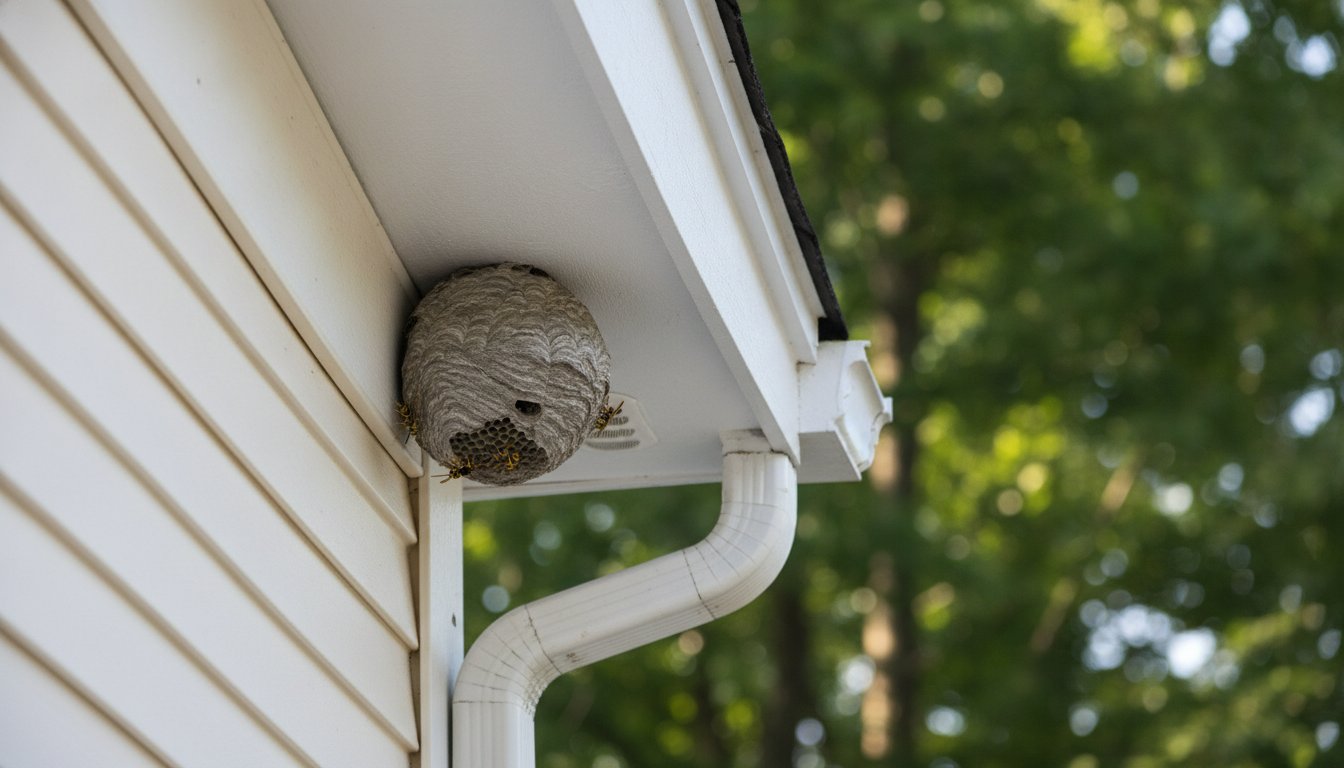
Attempting to knock down a paper nest with a garden hose or a broom is often the fastest way to turn a quiet afternoon into a medical emergency. You aren’t alone if the sight of a growing nest under your eaves or behind your shutters causes a surge of anxiety, especially if family members have known allergies. The fear of painful stings and the potential for anaphylaxis make these pests a serious concern for property owners throughout the region. Finding a safe solution for wasp nest removal Erie PA requires more than just a can of spray from the hardware store; it requires an understanding of how these colonies operate and why they choose specific areas of your home to inhabit.
This article provides the clarity you need to manage infestations safely while protecting your family and pets. You will learn how to identify different stinging insect species, the importance of timing when addressing a nest, and why DIY methods often fail to neutralize the queen. By understanding the local seasonal cycles in Erie and Crawford counties, you can secure total elimination of the colony and ensure your outdoor spaces remain a sanctuary rather than a hazard. Professional guidance ensures that nests in hard-to-reach places are handled with technical precision, providing the lasting peace of mind every homeowner deserves.
Key Takeaways
- Recognize how the unique climate of Northwest Pennsylvania supports large stinging insect populations and why early identification is the first step in threat management.
- Understand the dangers of defensive swarming and the physical risks associated with attempting to reach nests in high places like eaves or shutters without professional equipment.
- Learn what to look for during a comprehensive property assessment, including hidden nesting sites in attic vents and siding, to ensure effective wasp nest removal Erie PA.
- Discover why one-time treatments may not be enough and how year-round protection plans discourage new queens from establishing colonies on your property.
- Gain peace of mind by prioritizing safety and expert guidance to protect family members from the risks of painful stings and allergic reactions.
Understanding Wasp Activity in Northwest Pennsylvania and Northeast Ohio
The climate in Northwest Pennsylvania and Northeast Ohio plays a decisive role in the lifecycle of stinging insects. Homeowners seeking wasp nest removal Erie PA often notice that activity spikes suddenly as the weather warms. In cities like Erie, Meadville, and Ashtabula, the presence of Lake Erie creates a unique microclimate. This Lake Erie effect brings high humidity levels during the summer months, which supports a massive population of smaller insects. Since wasps are predatory, this abundance of prey allows colonies to thrive and expand rapidly. Understanding Wasp Activity involves recognizing that these environmental factors directly influence how quickly a small nest becomes a major safety hazard.
The Impact of the Lake Erie Climate on Nest Cycles
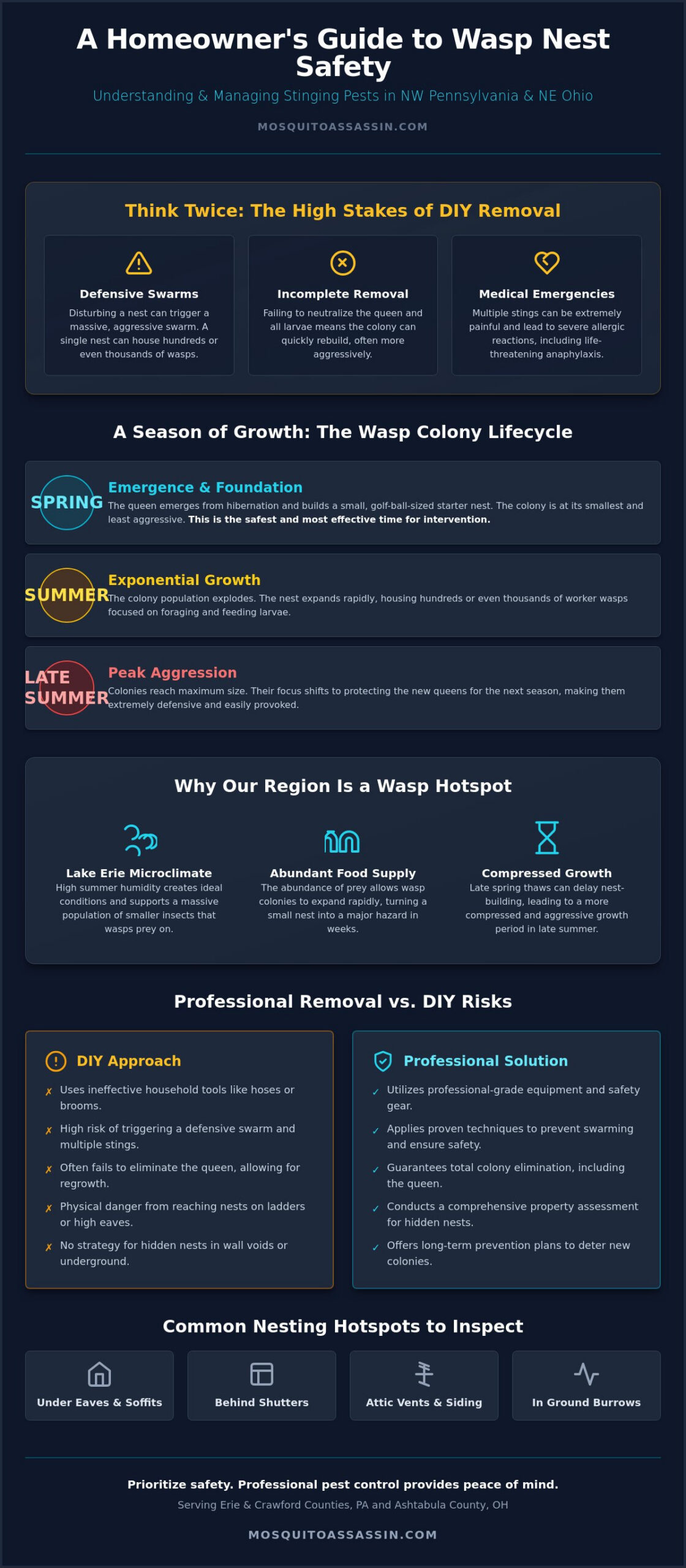
The timing of wasp activity is closely tied to the spring thaw. In Crawford County and surrounding areas, queens typically emerge from winter hibernation when temperatures consistently stay above 50 degrees. However, late spring thaws can delay the initial nest-building phase. This delay doesn’t mean fewer wasps; instead, it often leads to a compressed, aggressive growth period during the late summer. By the time August and September arrive, colonies have reached their peak size. During these months, wasps become more protective and aggressive as they shift their focus from expanding the nest to protecting developing queens for the next season. Professional pest control helps manage these biological cycles before the colony becomes unmanageable.
Why Early Detection Matters for Erie Homeowners
Finding a nest in May is significantly different from discovering one in July. Early in the season, a queen starts a starter nest that is often no larger than a golf ball. These small structures are typically found under eaves, behind shutters, or along porch ceilings. Intervening at this stage is much safer and more straightforward than waiting until the population explodes. Once the summer heat hits, the colony enters a stage of exponential growth. A single nest that was barely visible in late spring can house hundreds or even thousands of workers by mid-summer.
For many residents, the need for wasp nest removal Erie PA becomes urgent only when the insects begin swarming near entryways or play areas. Identifying these activity patterns early allows for a more methodical approach to removal, reducing the risk of defensive swarming. Addressing the problem before the peak aggression of late summer ensures that your property remains safe for outdoor activities throughout the entire season. Expert intervention during the early stages of nest construction is the most effective way to prevent a large-scale infestation later in the year.
Common Stinging Insects Found in Erie and Crawford Counties
Properly identifying the specimen on your property is the first step in determining the level of threat to your family. While Pennsylvania is home to at least 437 species of bees that contribute to pollination, aggressive social wasps pose a different set of risks. Understanding the difference between a solitary mud dauber and a swarming yellowjacket colony is vital for anyone considering wasp nest removal Erie PA. Expert resources like the Penn State Extension provide detailed guides on Common Stinging Insects in Pennsylvania, highlighting that behavior and lifecycle vary significantly between species. Because certain wasps are much more defensive than others, misidentification can lead to dangerous DIY mistakes.
Yellowjackets: The Ground-Dwelling Threat
Yellowjackets are arguably the most aggressive species found in Erie and Crawford Counties. They often build nests in abandoned rodent burrows or within wall voids of residential structures. These insects are notoriously defensive. Simple yard maintenance, such as using a lawnmower or weed eater, creates vibrations that the colony perceives as an immediate threat. This often triggers a mass exit and defensive swarming, where workers sting repeatedly to protect the queen. Treating these ground nests is exceptionally difficult without professional equipment, as the tunnels can extend several feet underground or wind through complex wall framing where store-bought sprays cannot reach.
Paper Wasps and Mud Daubers
Paper wasps are easily recognized by their distinct flight pattern, where their long legs dangle beneath them as they move. They typically construct umbrella-shaped nests on eaves, door frames, or window shutters. While they are less aggressive than yellowjackets, their proximity to entryways makes them a persistent concern for households with children or pets. In contrast, mud daubers are solitary hunters that build tube-like structures from mud. They are generally considered a nuisance rather than a high-level threat, as they rarely sting unless directly handled. However, their nests can be unsightly and may attract other pests if left unmanaged.
Constructing massive, grey structures that resemble a football, bald-faced hornets represent a significant aerial threat. These nests often hang from tree branches or high peaks of a home and can house thousands of workers by late summer. They are extremely territorial and will attack anything that comes within a few feet of their home. Identifying these nests early helps in planning a safe intervention before the colony reaches its full, aggressive potential. If you’ve spotted activity near your roofline or in your trees, reviewing professional pest control plans can help you understand the next steps for protecting your property. Expert removal is the only way to ensure the entire colony is neutralized safely.
Disclaimer: The information provided on this blog is for general informational purposes only and is not intended as professional pest control advice. Conditions vary by property, environment, and location. Reading this content does not create a service agreement. For an inspection or professional recommendations, please contact Mosquito Assassin Pest Control LLC directly.
Professional Removal vs. DIY Risks: Prioritizing Safety
The temptation to handle a stinging insect problem with a store-bought aerosol can is common among homeowners in Northwest Pennsylvania. However, DIY attempts often lead to defensive swarming, a biological response where the entire colony attacks in unison to protect the nest. This behavior significantly increases the number of stings a person receives in a matter of seconds. While understanding different wasp species is helpful for identifying which insects are beneficial pollinators, it also reveals why social wasps are so dangerous when disturbed. Professionals utilize specialized equipment and protective suits to manage these risks, ensuring that the intervention doesn’t result in a medical emergency.
One of the primary failures of retail pest products is their inability to reach the core of a large nest. Most consumer sprays only neutralize the insects on the exterior. If the queen remains unharmed deep within the structure, the colony will simply rebuild, often within the same week. For effective wasp nest removal Erie PA, the entire biological unit must be neutralized. Professional methods involve precise applications that penetrate the nest layers, reaching the queen and the larvae to ensure the problem is resolved permanently rather than temporarily suppressed.
The Danger of Ladder-Based Nest Removal
In Erie and Meadville, many historic Victorian homes and multi-story residences feature high eaves and steep rooflines that wasps find attractive. Attempting to treat these high nests while standing on a ladder is one of the most hazardous DIY mistakes a property owner can make. When a person is swarmed while at a height, the natural human reflex is to swat and retreat. This instinctive movement often leads to falls, which contribute to a significant portion of household accidents related to DIY home maintenance. Professionals use specialized reach tools and telescoping equipment to treat these areas from the safety of the ground, eliminating the risk of a fall.
Allergic Reactions and Anaphylaxis Risks
Venom from wasps and hornets can cause severe systemic reactions, even in individuals who have never shown symptoms before. Anaphylaxis is a life-threatening condition characterized by the swelling of the throat, difficulty breathing, and a rapid drop in blood pressure. The danger is compounded when a colony swarms, as multiple stings deliver a high volume of venom into the bloodstream. This increased toxic load can overwhelm the body’s immune system quickly. Professional pest control may help reduce risk by removing the source of the threat before an accidental encounter occurs. Prioritizing safety over a quick fix protects everyone on the property from the unpredictable nature of stinging insect attacks.
What to Expect During a Professional Wasp Inspection
A professional visit begins with a systematic walk-through of your property. Technicians don’t just look for the obvious paper nest on the front porch; they scan the entire perimeter of the home. This process includes evaluating potential entry points in shutters, siding, and attic vents where yellowjackets often hide. Identifying all active and dormant nests on the property is the only way to ensure the infestation doesn’t simply migrate to a new corner of the house. Homeowners often search for wasp nest removal Erie PA when they realize a colony has grown too large for a standard spray, and a thorough inspection is the foundation of a successful resolution.
Comprehensive Property Assessment
Technicians are trained to observe “flight paths.” These are the predictable aerial routes workers take when returning to a hidden colony. By tracking these movements, professionals find nests tucked behind loose siding or inside hollow porch pillars that a homeowner might miss. It’s equally important to check secondary structures like sheds, playground sets, and decks. For residents looking for broader protection, integrating these checks into general pest control plans ensures that other seasonal threats aren’t overlooked during the visit. A complete assessment validates the scope of the problem before any treatment begins.
Safe and Effective Treatment Methods
Once the assessment is complete, the treatment phase utilizes industrial-grade tools and materials. These specialized tools allow technicians to reach high peaks and rooflines safely from the ground, eliminating the need for dangerous ladder work. Unlike hardware store aerosols that might only agitate the colony, professional knockdown treatments neutralize the insects quickly and effectively. Technicians wear heavy-duty protective suits during this phase to prevent stings. This specialized gear allows for a thorough application directly into the nest entrance, which is necessary for wasp nest removal Erie PA to be permanent. Neutralizing the queen is the priority to stop the lifecycle of the colony immediately.
After the colony is neutralized, the focus shifts to exclusion. Technicians provide specific recommendations to seal the home against future invaders. This might include suggestions for caulking gaps in siding or installing mesh over attic vents. These steps help prevent future queens from selecting your property as a nesting site during the next spring cycle. To secure your property before activity peaks, you can book an inspection online to receive professional recommendations for your specific environment.
Long-Term Prevention and Year-Round Protection Plans
While a single intervention effectively eliminates an active colony, reactive wasp nest removal Erie PA is only the first step in property defense. New queens emerge every spring, searching for the same ideal nesting conditions that attracted previous colonies. Without a strategy to discourage these builders, homeowners often find themselves facing the same infestation risks year after year. Establishing a consistent management schedule is the most effective way to maintain a pest-free environment. Professional services in Erie, PA, should include seasonal adjustments that address the specific behaviors of stinging insects as they transition from initial nest building in May to peak aggression in August.
Bi-monthly protection plans are designed to create a residual barrier that discourages nest construction on the home’s exterior. Unlike one-time treatments that may wear off as the weather changes, recurring visits ensure that the protective perimeter remains intact despite the heavy rains and high humidity common in Northwest Pennsylvania. This ongoing management prevents the lifecycle from restarting, providing a definitive resolution to what is often a recurring seasonal problem. Consistent monitoring allows for the detection of small starter nests before they become a threat to family safety.
The Benefits of Year-Round Pest Management
Spring treatments are particularly vital because they intercept queens before they can establish large colonies. By applying a protective barrier to eaves, shutters, and siding early in the season, property owners can significantly reduce the likelihood of a nest ever reaching a dangerous size. This proactive approach to residential pest control provides lasting peace of mind throughout the warmer months. For those who want to maximize their outdoor spaces, combining these efforts with a mosquito control program allows for full yard enjoyment without the constant threat of biting or stinging pests. When the entire property is managed systematically, the chances of an accidental encounter with a hidden nest are greatly diminished.
Simple Prevention Tips for Homeowners
In addition to professional management, homeowners can take practical steps to make their property less attractive to scouts. Wasps are often drawn to high-protein and high-sugar food sources, making unsealed trash cans a primary attractant. Ensuring that all outdoor refuse containers have tight-fitting lids is a simple but effective deterrent. Additionally, repairing torn window screens and sealing gaps in vinyl siding or wood trim removes the entry points that yellowjackets use to access wall voids. It’s also helpful to keep gutters clean, as standing water and debris can attract a variety of insects that wasps hunt for food.
Erie residents should also consider scheduling a property assessment before the peak season begins. Identifying a starter nest in the early spring is always preferable to discovering a massive colony during an outdoor gathering. Ongoing management creates a cumulative barrier that becomes more effective over time. By combining professional expertise with consistent property maintenance, the risks associated with wasp nest removal Erie PA can be largely avoided through prevention. Professional pest control may help reduce risk by maintaining these barriers throughout the year.
Disclaimer: The information provided on this blog is for general informational purposes only and is not intended as professional pest control advice. Conditions vary by property, environment, and location. Reading this content does not create a service agreement. For an inspection or professional recommendations, please contact Mosquito Assassin Pest Control LLC directly.
Secure Your Property Against Stinging Insects
Managing a wasp infestation in Northwest Pennsylvania requires a combination of timely action and professional precision. Understanding the local seasonal cycles of the Erie region allows you to address small starter nests before they grow into aggressive, unmanageable colonies by late summer. Prioritizing safety by avoiding the physical risks of ladder-based DIY removals protects your family from the dangers of accidental falls and defensive swarming. Effective wasp nest removal Erie PA ensures that the entire biological unit, including the queen, is neutralized so the colony doesn’t rebuild within days.
Long-term peace of mind comes from consistent monitoring and exclusion strategies that keep your home secure throughout the year. Local technicians who live in the communities they serve bring specialized stinging insect expertise to every property they visit. Serving Erie and Crawford Counties since inception, these professionals understand the unique environmental factors of the region. Professional pest control may help reduce risk. Contact Mosquito Assassin Pest Control LLC for an inspection. Taking these proactive steps today ensures that your outdoor spaces remain a safe sanctuary for your family and pets all season long.
Disclaimer: The information provided on this blog is for general informational purposes only and is not intended as professional pest control advice. Conditions vary by property, environment, and location. Reading this content does not create a service agreement. For an inspection or professional recommendations, please contact Mosquito Assassin Pest Control LLC directly.
Frequently Asked Questions
Is it safe to remove a wasp nest at night by myself?
It isn’t recommended to attempt removal at night despite the lower activity levels of the colony. Wasps are still capable of stinging in the dark; furthermore, the light from a phone or flashlight often draws them directly toward the source. This increases the chance of multiple stings before you can retreat safely. Professional equipment and protective gear are necessary for any interaction with a nest regardless of the time of day.
How can I tell if a wasp nest is active or abandoned?
Observing the nest from a safe distance for several minutes is the most reliable way to check for activity. Look for individual insects entering or exiting the main opening or listen for a low humming sound coming from within the structure. If the nest appears grey and tattered with no visible movement during a warm day, it might be abandoned, but extreme caution is still required before approaching.
What is the difference between a wasp and a hornet?
Hornets are actually a specific category of social wasps known for their larger size and higher levels of aggression. While many wasps build smaller, umbrella-shaped nests, hornets typically construct large, enclosed aerial structures that resemble grey paper. Both species require professional handling due to their ability to sting repeatedly when they perceive a threat to their queen or the colony’s larvae.
Why do wasps keep building nests in the same spot on my house?
Residual pheromones and ideal structural conditions often attract new queens to the same locations year after year. If a spot provides perfect shelter from Lake Erie winds and easy access to food, it remains a prime location for stinging insects. This is why year-round protection is a vital part of wasp nest removal Erie PA; it breaks this cycle by creating a barrier that discourages new queens from settling.
Can wasps damage the structure of my home in Erie?
Most species don’t cause direct structural damage, but some, like German yellowjackets, can chew through drywall or insulation to expand their living space. In Erie, nests located inside wall voids can occasionally lead to secondary issues if the colony dies and the organic matter attracts other pests. Professional removal prevents these hidden nests from becoming a larger home maintenance problem or an indoor safety hazard.
What should I do if I find a wasp nest in my attic or wall void?
Avoid sealing the exterior entry point if you discover activity inside a wall or attic. Closing the hole often forces the insects deeper into the home, where they may emerge through electrical outlets or light fixtures into your living quarters. For safe wasp nest removal Erie PA, a professional must treat the void directly using specialized tools that reach the heart of the colony without driving the insects indoors.
Are professional wasp treatments safe for my pets and children?
Licensed professionals use materials that are registered with the EPA and applied according to strict safety standards. When these treatments are used correctly, they pose minimal risk to household members and animals. Technicians typically advise keeping pets and children away from the immediate area during the application and until the product has completely dried to ensure the security and wellbeing of everyone on the property.
Disclaimer: The information provided on this blog is for general informational purposes only and is not intended as professional pest control advice. Conditions vary by property, environment, and location. Reading this content does not create a service agreement. For an inspection or professional recommendations, please contact Mosquito Assassin Pest Control LLC directly.