What if the moths you see aren’t the ones damaging your clothes? Adult clothes moths don’t eat fabric; their larvae do, often while natural-fiber items sit undisturbed in storage. Knowing the difference can help you recognize clothes moth damage and prevention needs before more belongings are affected.
A small hole or thinning patch can be concerning, but it doesn’t automatically point to clothes moths. Look for other clues, such as silken webbing or tiny cases near damaged fabric. Wool, silk, fur, feathers, and other animal-based materials can be vulnerable, especially when stained with sweat, oils, or food.
This article explains how to recognize common signs of clothes moth activity, which items may attract larvae, and why adult moths aren’t the source of fabric damage. You’ll also find practical, non-chemical habits for cleaning and storing vulnerable belongings, plus guidance on when persistent or unclear signs may call for professional recommendations.
Key Takeaways
- Use the full pattern of evidence, not a hole alone, to assess possible fabric damage and distinguish moth activity from other causes.
- Quiet storage can let larvae damage vulnerable belongings before anyone notices.
- Build a clothes moth damage and prevention routine around inspecting, appropriately cleaning, and carefully storing fabrics.
- Revisit stored items periodically so new signs are easier to notice.
- If damage continues, larvae appear repeatedly, or signs occur in multiple locations, note where and when you found them before seeking professional recommendations.
How to Recognize Clothes Moth Damage in Clothing and Household Fabrics
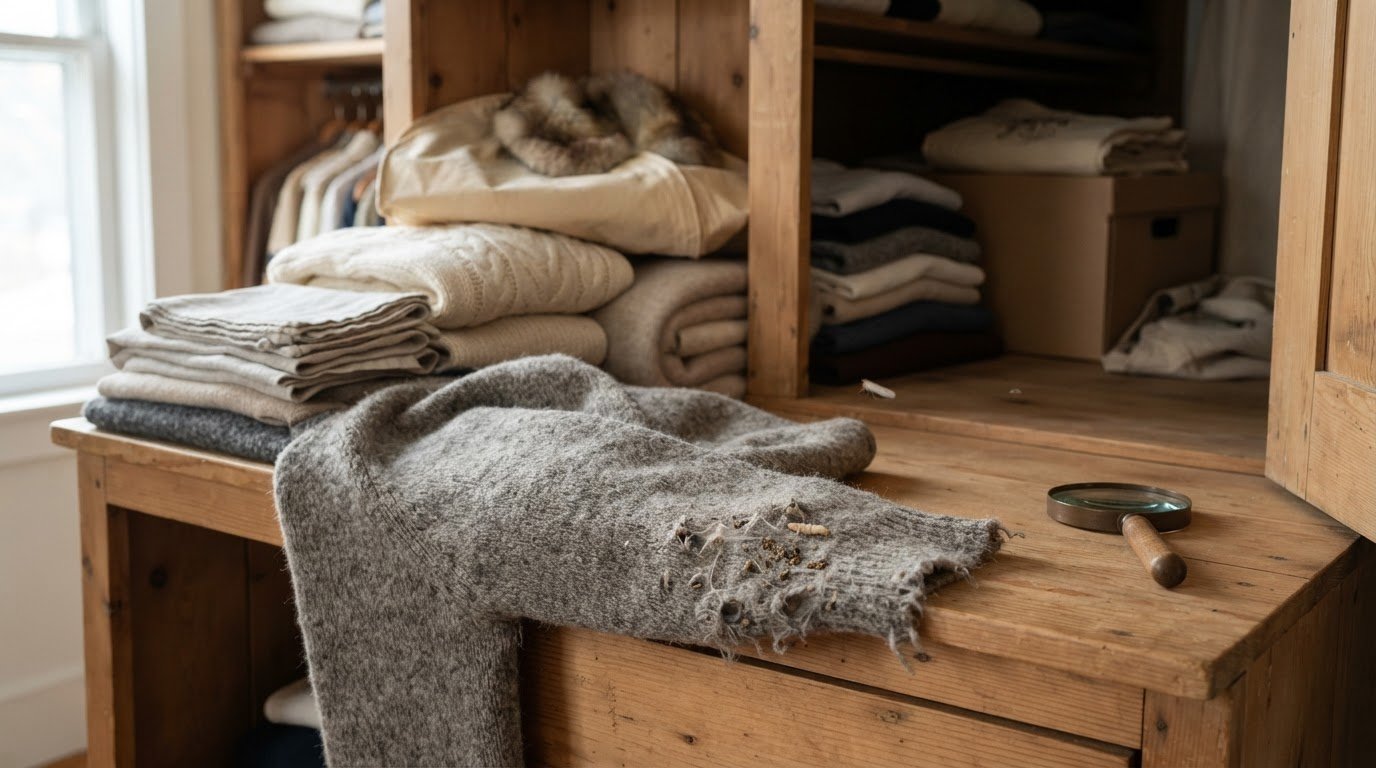
Fabric damage may be the first noticeable sign of clothes moth activity. A wool sweater can develop small holes while folded away, or a rug may show a thin, grazed patch before anyone spots a moth. Adult moths don’t feed on fabric, so damage can appear before adults are noticed. Larvae are the stage that feeds on vulnerable materials.
Look for a combination of clues rather than relying on one mark. Holes and thinning fabric can have several causes, so damage alone can’t confirm clothes moths. Check the affected item and nearby areas for larvae, silken webbing, or small cases that may point to insect activity.
What do clothes moths damage?
Clothes moth larvae feed on animal-based materials, including wool, fur, hides, hair, and feathers. Inspect wool clothing, fur-trimmed items, feather-filled pieces, rugs, upholstered furnishings, and other stored textiles made with these fibers. Fur damage may leave the underlying hide exposed.
Blended fabrics are also worth checking if they contain animal fibers. Items with sweat, oil, or food stains deserve attention because these residues can make fabric more attractive to feeding larvae. That doesn’t mean every stained or blended item is at risk, but it can help you prioritize what to inspect. Clothes moth information offers a general overview of the moths, their diet, and common places they may be found.
Which signs are worth looking for?
Inspect the damaged area, folds, seams, and nearby fabric. Look for irregular holes, grazed or scraped-looking spots, and patches that seem thinner than the surrounding weave. On fur, check for missing fibers that expose the hide. Small larvae may be difficult to see, and silken webbing or cases can blend into fabric, seams, or stored belongings.
Use this checklist as a first look:
- Fabric changes: Irregular holes, thinning patches, or areas that look grazed.
- Fur or feather damage: Missing fibers or feathers, sometimes with the hide exposed.
- Nearby evidence: Small larvae, silken webbing, or portable silken cases on or near vulnerable items.
- Location: Check folds, seams, closet corners, rug edges, and other quiet spots around the affected item.
Small holes or thinning fabric are clues, but nearby webbing, larvae, or cases make clothes moth activity more plausible. No single sign proves it. Adult clothes moths often avoid light, but flight behavior alone isn’t enough to identify the source of a moth sighting. If you find fabric damage without other clues, record the observation rather than assuming the cause. Careful identification is a useful first step in clothes moth damage and prevention.
How Clothes Moths Develop and Why Larvae Cause the Fabric Damage
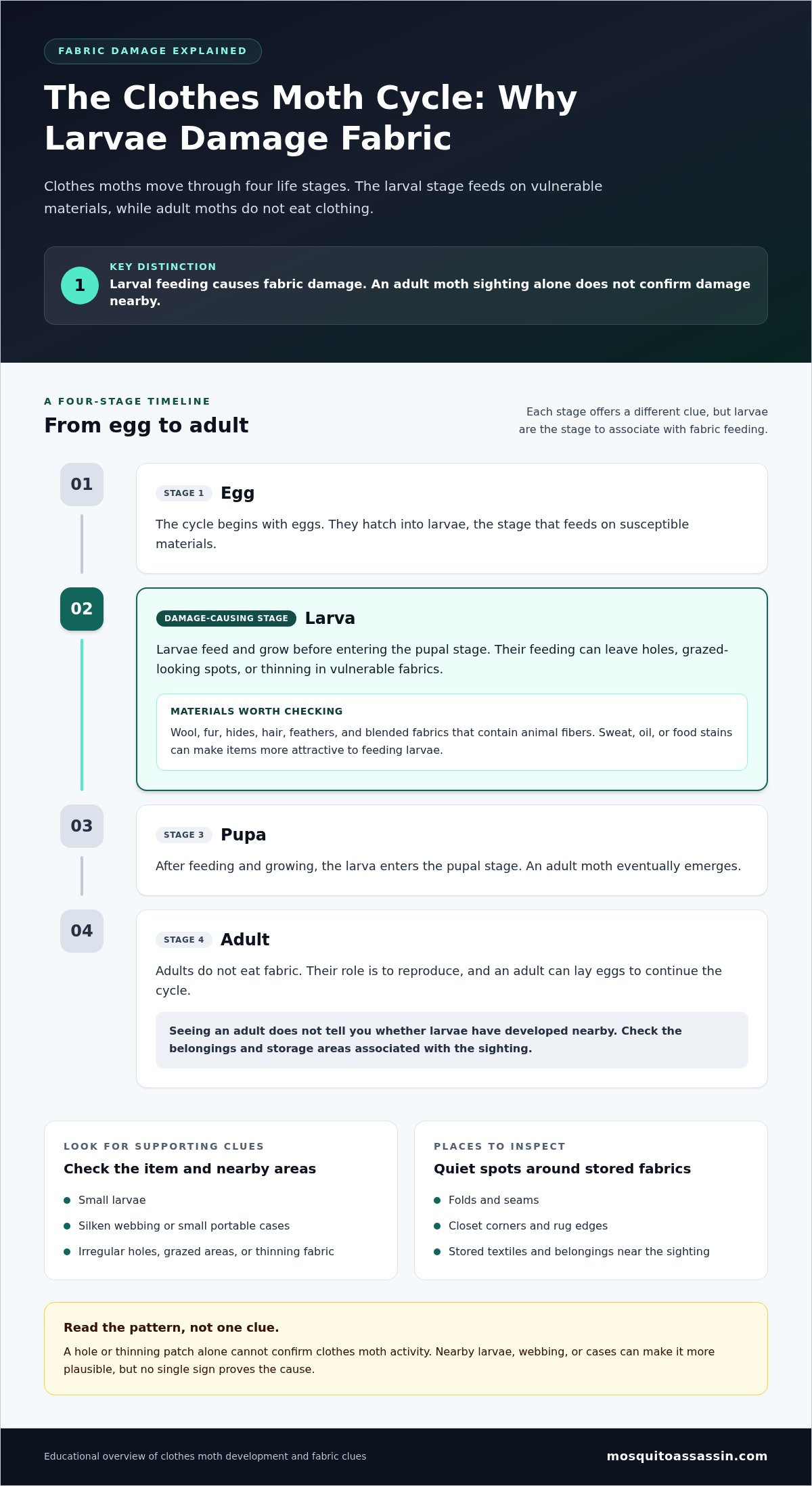
Clothes moth activity follows a sequence, and each stage offers a different clue. An adult moth may be the most visible sign, but feeding larvae cause fabric damage. That distinction helps direct attention toward susceptible belongings and their storage areas, rather than treating an adult sighting as proof of widespread damage.
Larval feeding, not adult moth feeding, causes clothes moth fabric damage. Adults don’t eat clothing. Their role is to reproduce, and the next generation can develop where suitable material is available. Understanding this cycle helps focus inspection and cleaning on the stage that affects fabrics.
What happens between eggs, larvae, and adult moths?
The broad progression is egg, larva, pupa, and adult. Eggs hatch into larvae, which feed and grow before entering the pupal stage. An adult eventually emerges and can lay eggs, continuing the cycle. The larval stage is the one that matters most for fabric damage, so finding an adult alone doesn’t tell you whether larvae have developed nearby.
The National Pesticide Information Center’s Clothes Moth Prevention and Control resource offers additional identification and prevention guidance. Check the belongings and storage areas associated with a sighting instead of focusing only on the flying adult.
Why can an infestation go unnoticed?
Activity may stay close to a suitable food source. Larvae can be difficult to see among folds, seams, or stored textiles, while adults may hide when disturbed. Clothes moths are often weak flyers, so a brief flutter near a closet or stored item may be easy to miss. Belongings in quiet storage areas can also go unchecked for a long time.
Sweat, body oils, or food marks on a garment are reasons to follow its care label and clean it appropriately before storage. These residues can make some fabrics more attractive to feeding larvae. This doesn’t mean every marked item will attract moths, but it gives you a practical reason to inspect clothing before putting it away.
Make stored items easier to monitor by periodically revisiting belongings that remain folded or packed away. Note changes instead of relying on memory. If signs recur or you can’t determine the source, a professional assessment may help clarify the activity.
Clothes Moth Damage or Another Fabric Problem? How to Assess the Signs
A hole in a sweater can be alarming, but it doesn’t identify what caused it. Ordinary wear, a snag, or another fabric-feeding pest can leave damage that looks similar at first. Seeing one adult moth doesn’t confirm that clothing or household fabrics are being damaged. Look for a pattern of evidence before drawing conclusions.
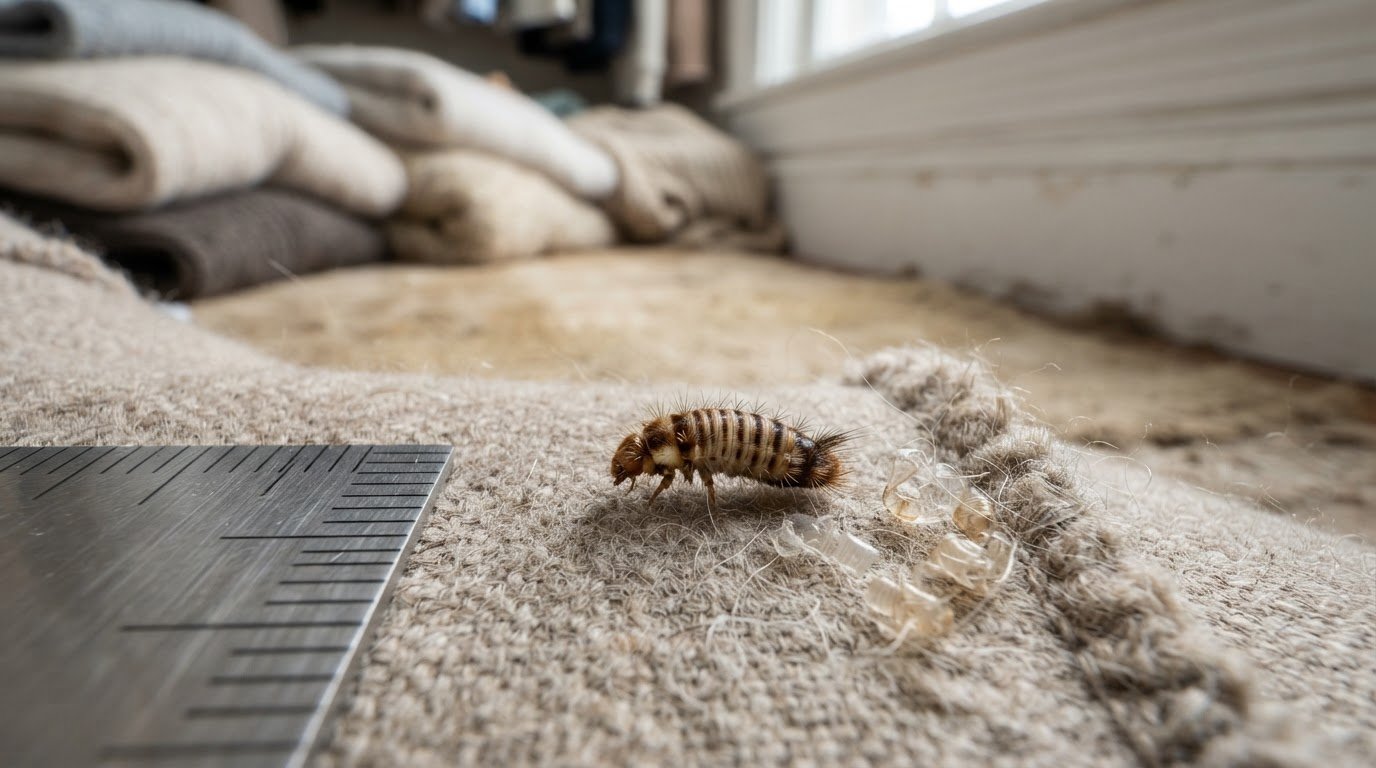
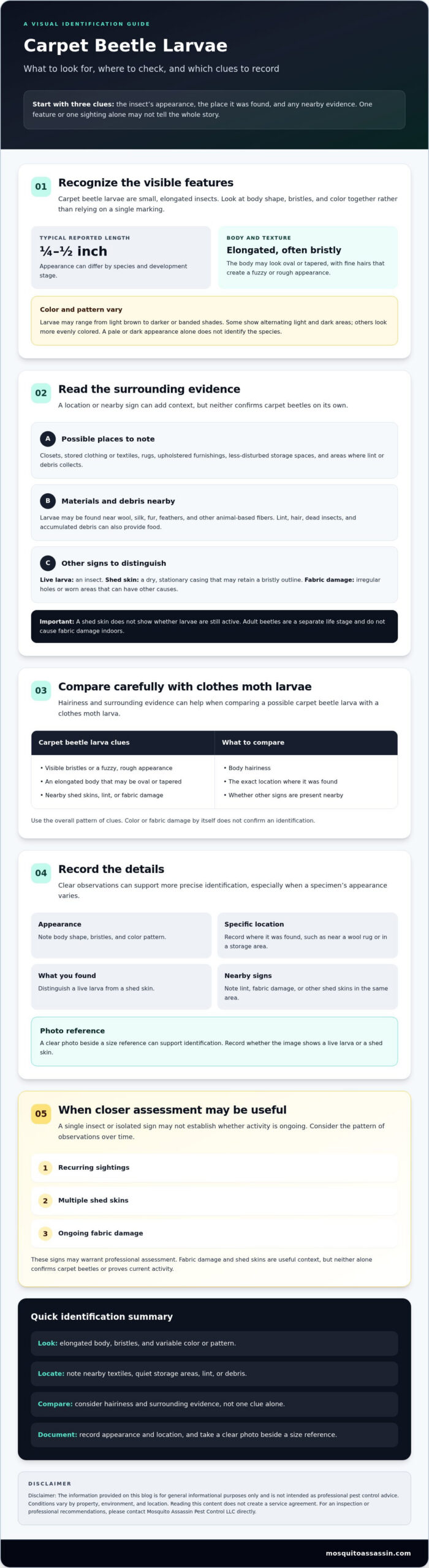
Consider where the damage appears and how it looks. Repeated wear may affect exposed or frequently rubbed areas, while a snag can leave a pulled thread or localized tear. Clothes moth larvae may graze or thin susceptible material, sometimes alongside webbing or a silken case. Carpet beetle larvae can also damage fabrics; bristly shed skins nearby, rather than silken webbing, may point to a different source. These clues can guide an inspection, but none is a diagnosis on its own.
How can clothes moths differ from pantry moths?
Clothes moths tend to fly weakly and stay near places where larvae can find suitable material. Pantry moths are more often noticed around stored food. These are broad behavioral clues, not a reliable identification test: moths may be hard to distinguish in flight, and behavior alone can’t confirm the source. Check the affected material and its surroundings, including nearby clothing or food storage, rather than relying only on appearance or flight.
One hole or one adult moth is not proof of an active clothes moth infestation. A more useful assessment connects the type of item, its location, and any additional evidence. For example, damaged wool in a closet deserves a closer look if nearby stored wool items also show changes or larvae, webbing, or cases are present. A single tear on a frequently worn item, without other clues, is less conclusive.
What should you note when damage is uncertain?
Keep a simple record before disturbing the area. Note which items are affected, their materials, where they were stored, and when you first noticed the damage. If practical, take a clear photo of the mark and its location. Avoid moving potentially affected belongings unnecessarily. Their original placement can help show whether signs cluster in one storage area or occur across several locations.
- Inspect nearby surfaces and belongings for larvae, webbing, or silken cases.
- Compare affected items for shared materials or storage locations.
- Record changes over time, including newly noticed damage or repeated sightings.
These observations can help distinguish an isolated snag or worn patch from a recurring pattern. If new damage continues, larvae appear repeatedly, or the source remains unclear, a professional assessment may help determine what is happening. A careful record gives the assessment useful context and supports informed clothes moth damage and prevention decisions.
A Practical Clothes Moth Prevention Routine for Stored Fabrics
A dependable routine doesn’t need to be complicated. Inspect susceptible items, clean them appropriately before storage, keep them in clean, closed storage, and revisit them periodically. These habits help you notice problems earlier and reduce the chance that residues or undisturbed fabrics go overlooked. Focus on items made with animal fibers and secondhand belongings that may have been stored before entering your home.
How should you inspect clothing and secondhand belongings?
Use good lighting to check seams, collars, cuffs, folds, and pockets on clothing. For rugs, examine the edges and underside where accessible. Check upholstery crevices and other animal-fiber materials closely. Before bringing a used garment, rug, or piece of furniture indoors, look for damage and possible signs such as larvae, webbing, or cases. If you find something concerning, note the item and location.
Inspection is especially useful for belongings that have been stored or are rarely handled. You don’t need to assume every secondhand item has a pest problem; a deliberate visual check gives you a clearer starting point.
What habits help protect fabrics during storage?
Before putting clothing or household textiles away, follow the care label. Launder items only when the label allows, and consider professional cleaning when that better suits the fabric. Cleaning can remove food marks and body oils that may make an item more attractive to larvae. Don’t guess at a fabric’s care needs, particularly for delicate, valuable, or structured belongings.
After cleaning, let items dry as directed by their care instructions, then place them in clean, closed storage that limits pest access. Keep stored belongings organized so they’re easier to check, rather than packed into forgotten corners. Pesticides aren’t needed as part of this household routine.
- Inspect: Check vulnerable fabrics and secondhand belongings before storage or bringing them indoors.
- Clean: Follow care labels to remove visible soil and residue appropriately.
- Store: Use clean, closed storage for susceptible fabrics.
- Revisit: Look over stored belongings periodically, especially items left undisturbed for long periods.
Good prevention means reducing residues, inspecting susceptible items, and limiting pest access to fabrics in storage. A repeatable routine makes it easier to spot changes without relying on a single inspection or waiting until damage is obvious. These habits support clothes moth damage and prevention while respecting the care needs of each material.
If you continue to find new signs despite regular inspection and careful storage, or you’re unsure what’s causing the damage, professional pest control may help clarify the source.
When Clothes Moth Signs Persist in Pennsylvania or Ohio Homes
One unexplained mark may not call for immediate concern, but a continuing pattern deserves attention. Consider seeking an assessment if you find new fabric damage after regular inspections, repeatedly notice larvae, or see affected belongings in more than one room or storage area. These signs don’t prove clothes moths are responsible, but they suggest the source may need a closer look.
Professional assessment can be useful when damage continues despite consistent cleaning and storage habits, or when the evidence is difficult to interpret. A professional can evaluate observed signs and possible sources, helping clarify whether the pattern is consistent with clothes moth activity or another issue. Keep observations factual, and don’t assume that a single sighting confirms the cause.
When is a professional assessment useful?
Recurring signs are more informative than an isolated hole or moth. New damage on stored fabrics, repeated larval sightings, or similar signs in separate locations may justify seeking professional recommendations. An assessment can consider affected belongings and surrounding areas together, rather than relying on one clue alone.
Residents in Erie and Crawford Counties in Pennsylvania and Ashtabula County in Ohio can seek professional pest control guidance when household pest activity persists.
What information helps explain the problem?
A clear record makes the situation easier to assess. Note the type of fabric or item, the room and storage location, and when you first noticed damage or other signs. Include whether the damage seems new or recurring and whether you’ve observed larvae, webbing, or cases nearby. These details provide context but don’t establish a diagnosis by themselves.
- Items: Identify affected clothing, rugs, upholstery, or other belongings, including their material when known.
- Locations: Record the rooms, closets, containers, or furniture areas where signs appeared.
- Timing: Note when you noticed the signs and whether new damage has appeared since.
- Other clues: Describe any larvae, webbing, cases, or adult moth sightings near the affected items.
Keep notes or photographs if they help you track changes. Avoid moving items around just to create a more complete display, since their original locations may be useful context. If activity persists or the source remains unclear, general pest control services may provide a path to professional recommendations.
Mosquito Assassin Pest Control LLC provides residential and commercial pest management in Erie and Crawford Counties in Pennsylvania and Ashtabula County in Ohio. For an inspection or professional recommendations, contact Mosquito Assassin Pest Control LLC.
Make Your Next Fabric Check Count
Make fabric care part of your regular home routine. A brief check before storing seasonal belongings, followed by occasional reviews, can help you notice changes while they’re easier to investigate. Keep a record if you’re unsure whether a mark is new, and avoid treating one clue as a definite diagnosis. Consistent habits give you a clearer picture over time.
Clothes moth damage and prevention can feel difficult to assess when signs are subtle or have more than one possible cause. If activity continues or the source remains unclear, request an inspection or professional recommendations to help determine an appropriate next step. Careful observation and practical follow-through can help you make informed decisions about protecting your belongings.
Frequently Asked Questions
Can clothes moths damage clothes that are kept in a closet?
Yes, clothes moth larvae can damage susceptible garments while they’re hanging or folded in a closet. A closed door doesn’t rule out activity, especially if clothes stay untouched for a long time. Check items stored at the back of the closet, inside garment bags, or on lower shelves. Before putting a garment away, follow its care label and make sure it’s clean and fully dry.
What does clothes moth damage look like?
Damage may look like small holes, rough or grazed patches, thinning fibers, or missing fur that exposes the hide underneath. Nearby evidence, such as a larva or silken case, can add useful context. Compare the affected area with similar parts of the garment, since friction and snags may also damage fabric. One hole alone can’t confirm moth activity or identify its cause.
Are clothes moth larvae or adult moths responsible for fabric damage?
Larvae cause fabric damage by feeding on susceptible fibers; adult moths don’t eat clothing. An adult near a wardrobe is a reason to inspect nearby items, but it doesn’t establish whether larvae are present. Check stored fabrics and their immediate surroundings. If you find an adult but no damage or other clues, keep the sighting in perspective and continue routine inspections.
How can I prevent clothes moths in stored clothing?
Before storing clothing, clean it according to its care label and put it away in clean, closed storage. Check stored items periodically, especially those left untouched between seasons. For example, review winter woolens before putting them away and again when taking them out. These habits support clothes moth damage and prevention by reducing residues and making changes easier to notice, though they can’t confirm or rule out activity on their own.
Can secondhand rugs or furniture bring clothes moths into a home?
Yes, used rugs, upholstered furniture, and garments containing animal fibers may have concealed larvae or existing damage. Before bringing an item inside, use good lighting to examine areas that are easy to overlook, such as under rug edges, along upholstery seams, and inside furniture crevices. If you notice suspicious evidence, record its location and consider the item’s condition before placing it near other stored textiles.
When should I seek professional help for clothes moth damage?
Consider professional help if new damage keeps appearing, larvae are seen repeatedly, or signs turn up in several storage areas despite consistent household inspections. Note which materials and rooms are affected, when you first observed the signs, and whether they have recurred. This information can help a professional assess possible pest activity. Holes alone don’t establish the cause, so describe observations rather than assuming a diagnosis.
Do clothes moths usually fly around lights like other moths?
Clothes moths are often weak flyers and may stay close to belongings or hide when disturbed. Their flight can differ from the behavior people associate with moths seen around stored food or lights, but it isn’t a dependable way to identify them. If you spot a moth, note where it appeared, then check nearby susceptible items for additional evidence. A flight pattern alone can’t show whether fabric damage is occurring.
Disclaimer: The information provided on this blog is for general informational purposes only and is not intended as professional pest control advice. Conditions vary by property, environment, and location. Reading this content does not create a service agreement. For an inspection or professional recommendations, please contact Mosquito Assassin Pest Control LLC directly.