
What if the easiest way to discourage fall pests is to focus less on the insects and more on the openings they can use? As temperatures drop, stink bugs, boxelder bugs, Asian lady beetles, spiders, and rodents may seek shelter indoors. It’s understandable to worry about gaps you can’t easily see or which seasonal chores will make a difference. This fall pest prevention checklist helps you focus on practical steps and record what needs attention.
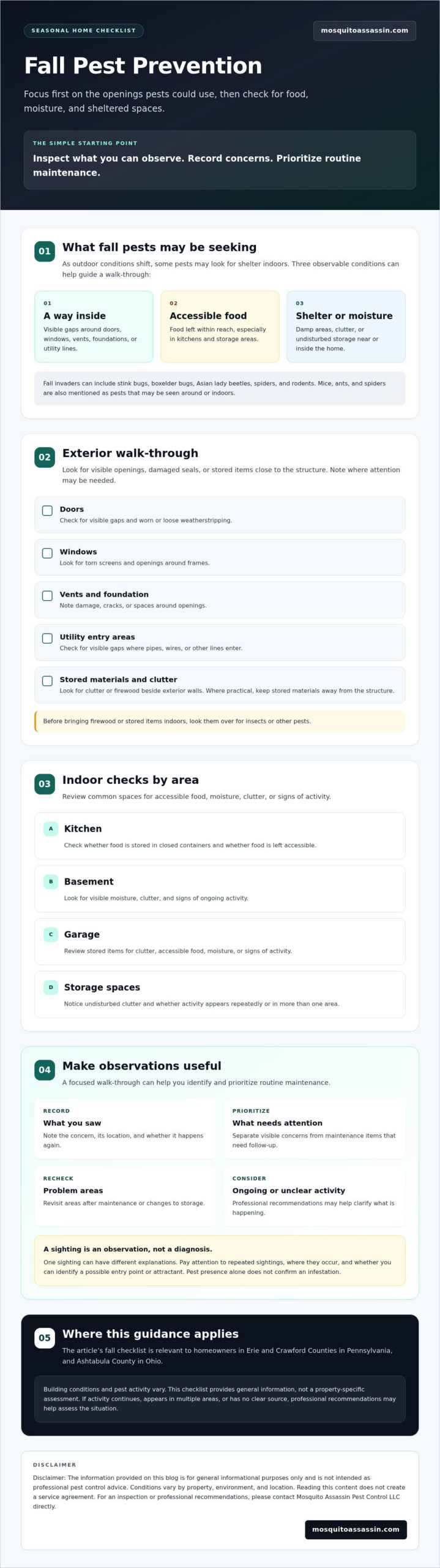
Start with the places pests can enter, then check what might attract them. Look for visible gaps around doors, windows, vents, and utility lines. Check screens and seals, keep food stored in closed containers, address visible moisture, and reduce clutter near the home. You don’t need to tackle everything at once. A focused walk-through can help you identify and prioritize useful next steps.
Use this guide to check common entry points, review indoor and outdoor attractants, and recognize signs of ongoing pest activity. The advice is relevant to homeowners in Erie and Crawford Counties in Pennsylvania and Ashtabula County in Ohio, where fall invaders can include insects and rodents. If activity continues despite prevention efforts, professional recommendations may help clarify what’s happening.
Key Takeaways
- Use the fall pest prevention checklist to inspect your home, note concerns, and prioritize routine maintenance.
- Check the exterior for openings around doors, windows, vents, and places where utilities enter the structure.
- Review kitchens, basements, garages, and storage spaces for accessible food, moisture, clutter, or signs of activity.
- Recheck problem areas after maintenance or changes to storage. Consider professional recommendations if activity continues or its source is unclear.
Why Fall Pest Prevention Starts With Entry Points, Food, and Shelter
What should you check around your home as fall conditions change? Start with three basics: access to food, shelter, and a way indoors. Prevention means reducing those opportunities, not assuming every insect or mouse spotted inside signals a larger problem. A single sighting can have different explanations, so note what you saw, where you saw it, and whether it happens again.
As outdoor conditions shift, some pests may look for protected places to shelter. Small openings, accessible food, moisture, and undisturbed storage areas can make a home more inviting. For homeowners in Erie and Crawford Counties, Pennsylvania, and Ashtabula County, Ohio, a useful fall pest prevention checklist starts with these observable conditions rather than an automatic treatment decision.
This short video offers another overview of fall pest-proofing considerations:
What changes around a home in fall?
Seasonal shifts are a practical reminder to review exterior gaps and indoor attractants. Mice may use openings to reach sheltered spaces, while ants and spiders can appear indoors as they move through or around a structure. Their presence alone doesn’t confirm an infestation. Pay attention to repeated sightings, where they occur, and whether you can identify a possible entry point or attractant.
Focus on conditions you can observe: a gap near a door, damaged window screening, food left accessible, or a damp area. This prevention-first approach reflects the general principles of Integrated Pest Management (IPM), which considers multiple ways to manage pest pressures.
How to use this fall pest prevention checklist
Work through the home by area, such as the exterior, kitchen, basement, garage, and storage spaces. Record visible concerns and note which routine maintenance items need attention. This keeps observations separate from treatment decisions. Don’t treat a sighting as an automatic reason to use pesticides, and don’t apply products without understanding their directions and suitability.
This checklist provides general information, not a property-specific assessment. Building conditions and pest activity vary. If signs continue, appear in multiple areas, or have no clear source, professional pest control may help assess the situation and offer recommendations.
Fall Pest Prevention Checklist for Your Home’s Exterior
A careful exterior inspection can help you spot places pests might use to enter or find shelter. Walk around the home and look for visible openings, damaged seals, and stored items close to the structure. Cornell University’s guide to common fall pests explains why these checks can be useful as the seasons change.
Check doors, windows, vents, and foundation openings
Look closely at door frames, window edges, foundation lines, vents, and points where utility lines enter the building. Note torn screens, loose weatherstripping, cracks, or gaps around openings. Record the location so you can follow up on repairs. Choose repair materials suited to the opening and its purpose. If you can’t tell what caused a gap or how it should be repaired, ask a qualified professional.
Use this quick exterior checklist to record what needs attention:
- Doors: Check for visible gaps and worn or loose weatherstripping.
- Windows: Look for torn screens and openings around frames.
- Vents and foundation: Note damage, cracks, or spaces around openings.
- Utility entry areas: Check for visible gaps where pipes, wires, or other lines enter.
- Stored materials: Look for clutter or firewood kept beside exterior walls.
Reduce outdoor clutter and pest shelter
Clear away unnecessary debris and organize items stored next to the home. Where practical, keep firewood and other stored materials away from exterior walls. Before bringing firewood or stored items indoors, look them over for insects or other pests. These steps can reduce available shelter near the structure, but they can’t guarantee pests won’t enter.
Make a note of repairs that need more than routine maintenance. Avoid disturbing building components if the cause of a gap is unclear. Exterior prevention is one part of property care. If pest activity continues and you’re unsure where it’s coming from, professional pest control may help assess the conditions. Learn about general pest control services for information about available help.
Indoor Fall Checklist: Food, Moisture, Storage, and Early Signs
Indoor checks can reveal conditions worth addressing and clues worth tracking. Use this part of the fall pest prevention checklist to review the kitchen, basement, garage, and storage areas. A clear inspection record can help you describe what you’ve noticed, but signs alone don’t confirm which pest is present or how it entered.
Keep food and waste from becoming attractants
In the kitchen and pantry, store food in closed containers and clean crumbs and spills as part of regular upkeep. Keep pet food managed, too, and contain household waste, removing it routinely. In garages and storage spaces, check that food and supplies aren’t left open or forgotten in accessible packaging. A University of Arizona Extension pest prevention checklist also highlights practical housekeeping and moisture checks.
- Kitchen: Check for accessible food, crumbs, spills, and waste that needs attention.
- Basement: Look for visible dampness, leaks, and stored items that may conceal signs of activity.
- Garage: Review food and supplies in their packaging, and note droppings or damage.
- Storage spaces: Check boxes and stored belongings for disturbed materials or repeated pest sightings.
Review damp areas and signs of activity
Look for leaks or persistent dampness in basements, under sinks, and around appliances. Note visible moisture and arrange suitable repairs when needed. Don’t assume that dampness or a damaged package identifies the pest or explains how it got inside.
If you notice droppings, damaged packaging, repeated sightings, or other unexplained activity, record the location and when you observed it. Patterns can make your description clearer. A single clue may have more than one explanation, so treat observations as information to investigate, not a diagnosis.
For mouse activity, note where signs appear and whether they recur. The professional rodent removal guide provides more information about rodent concerns. If activity persists or you can’t identify its source, professional pest control may help assess the property and offer recommendations.
A Practical Fall Prevention Routine for the Weeks Ahead
A checklist works best as a simple cycle: inspect, record, address routine maintenance, then recheck. Fit these checks around household routines rather than following a fixed calendar. For example, revisit an area after repairing a gap or reorganizing stored items. The goal is to notice changes and follow up, not to assume one inspection will answer every question.
Turn checklist findings into manageable maintenance
Use your fall pest prevention checklist to turn observations into practical next steps. Prioritize visible openings, food storage concerns, and moisture issues. If a repair appears to require a contractor or another qualified professional, note it rather than attempting work you’re unsure how to complete.
Keep a brief record that includes:
- Location: Identify the room, exterior area, or nearby feature.
- Frequency: Note whether the sign or sighting was isolated or repeated.
- Visible evidence: Describe what you observed, such as damaged packaging, droppings, or an opening.
- Follow-up: Record any maintenance or storage changes, then check whether conditions appear different afterward.
This record makes it easier to compare observations over time and explain a concern clearly. Keep your notes factual. A sighting or mark is useful information, but it doesn’t identify the cause on its own.
Know when observations call for professional recommendations
Recurring sightings, signs in multiple areas, or activity with no clear source are reasonable prompts to seek property-specific guidance. An inspection can help assess conditions that a general checklist cannot evaluate. For broader background, read this general pest control guide.
For commercial properties, prevention checks may need to fit the building’s operations and storage practices. Businesses seeking information about this service can review commercial pest control services.
If activity persists or the source remains unclear, request professional pest control recommendations for your property.
When a Fall Pest Checklist Is Not Enough
A checklist helps you spot conditions that may deserve attention, but it can’t identify every pest or explain every sign. Consider seeking property-specific guidance if activity continues after routine maintenance, appears in several areas, or has no clear source. A professional inspection can assess the conditions you’ve observed and help clarify possible next steps, without assuming that one sighting confirms an infestation.
What information helps explain a pest concern?
Keep a straightforward record of what you notice. Include the location, how often signs or sightings occur, and any changes over time. Note relevant conditions from your fall pest prevention checklist, such as visible openings, damp areas, accessible food, or disturbed storage. These details help describe the concern, though they don’t establish its cause.
Don’t handle pests or collect samples. A written description of the activity and its location can still be useful when discussing the issue with a professional. For broader background on what general pest control may involve, see the general pest control guide.
Find local service-area information
Mosquito Assassin Pest Control LLC’s stated service area includes Erie and Crawford Counties in Pennsylvania and Ashtabula County in Ohio. If you’re checking whether your property is within that area, review the service area information. Coverage details can help you decide whom to contact for guidance.
If pest activity persists or the source remains unclear, contact Mosquito Assassin for professional recommendations.
Make Fall Prevention Part of Your Home Routine
Small, consistent checks can help you spot conditions that may invite pests. Use the fall pest prevention checklist to review possible entry points, manage food and household waste, and note moisture or signs of activity. Revisit areas after maintenance or changes to storage, and remember that one sighting alone doesn’t confirm an infestation.
If activity continues, appears in multiple areas, or has no clear source, professional recommendations may help you understand what to check next. Mosquito Assassin Pest Control LLC serves residential and commercial properties in Erie and Crawford Counties in Pennsylvania and Ashtabula County in Ohio, with general pest and rodent control among its services. Contact the company for property-specific guidance.
Take the checklist one manageable task at a time. A clear record of what you notice can help you choose a practical next step.
Disclaimer: The information provided on this blog is for general informational purposes only and is not intended as professional pest control advice. Conditions vary by property, environment, and location. Reading this content does not create a service agreement. For an inspection or professional recommendations, please contact Mosquito Assassin Pest Control LLC directly.
Frequently Asked Questions
What pests should I look for in the fall?
Homeowners may notice mice or insects such as ants and spiders indoors, but one sighting doesn’t confirm an infestation. Note where you saw the pest, whether signs recur, and whether food, moisture, or visible openings are nearby. Pest species and activity can vary by property. If sightings continue or the source is unclear, seek professional recommendations rather than guessing at treatment.
How do I keep mice out of my house in the fall?
Focus on reducing opportunities for entry, food, and shelter. Look for visible openings around doors, windows, foundations, vents, and utility entry areas, then arrange suitable repairs. Store food in closed containers, manage household waste, and organize materials kept near the home. These steps can help reduce access, but they can’t guarantee mice won’t enter. Recurring signs may warrant a professional assessment.
Can pests enter through small gaps around doors and windows?
Visible gaps, damaged screens, and worn seals may provide access to indoor spaces, so include them in a fall inspection. Check doors, windows, vents, and other openings, then arrange repairs suited to each location. Don’t assume every gap is being used by pests. If activity recurs and you can’t identify its source, professional recommendations can help assess conditions specific to the property.
What should be on a fall pest prevention checklist?
A fall pest prevention checklist should include exterior openings, screens, and seals, along with stored materials and clutter near the home. Indoors, review food storage, waste, moisture, and signs of activity. Record recurring sightings and where they occur. Keep the list focused on observations and routine maintenance, not pesticide application. A checklist can help organize your next steps, but it isn’t a property-specific diagnosis.
When should I call a pest control professional in the fall?
Consider professional recommendations if sightings recur, signs appear in several areas, or you can’t determine how pests may be entering. Record the location and frequency of what you notice, along with relevant changes around the property. A professional can assess conditions specific to the home and discuss appropriate options. One isolated sighting alone doesn’t prove an infestation, and unfamiliar treatments may not address the underlying concern.
Does fall pest prevention differ in Pennsylvania and Ohio?
Basic prevention steps, such as checking openings, managing food and waste, and addressing visible moisture, can be useful in homes across the region. Conditions still vary by property, so households shouldn’t assume they’ll encounter the same pests or activity. This article focuses on Erie and Crawford Counties in Pennsylvania and Ashtabula County in Ohio. For recommendations based on your property, consult a pest control professional.
Should I store firewood against my house during fall?
Where practical, keep firewood and other stored materials organized and away from exterior walls. Check items before bringing them indoors, and avoid handling any pest you notice. The goal is to reduce clutter and potential shelter near the home, not to guarantee pest-free storage. If activity repeatedly appears around stored materials, note where and when it occurs, then seek appropriate professional guidance.
Disclaimer: The information provided on this blog is for general informational purposes only and is not intended as professional pest control advice. Conditions vary by property, environment, and location. Reading this content does not create a service agreement. For an inspection or professional recommendations, please contact Mosquito Assassin Pest Control LLC directly.