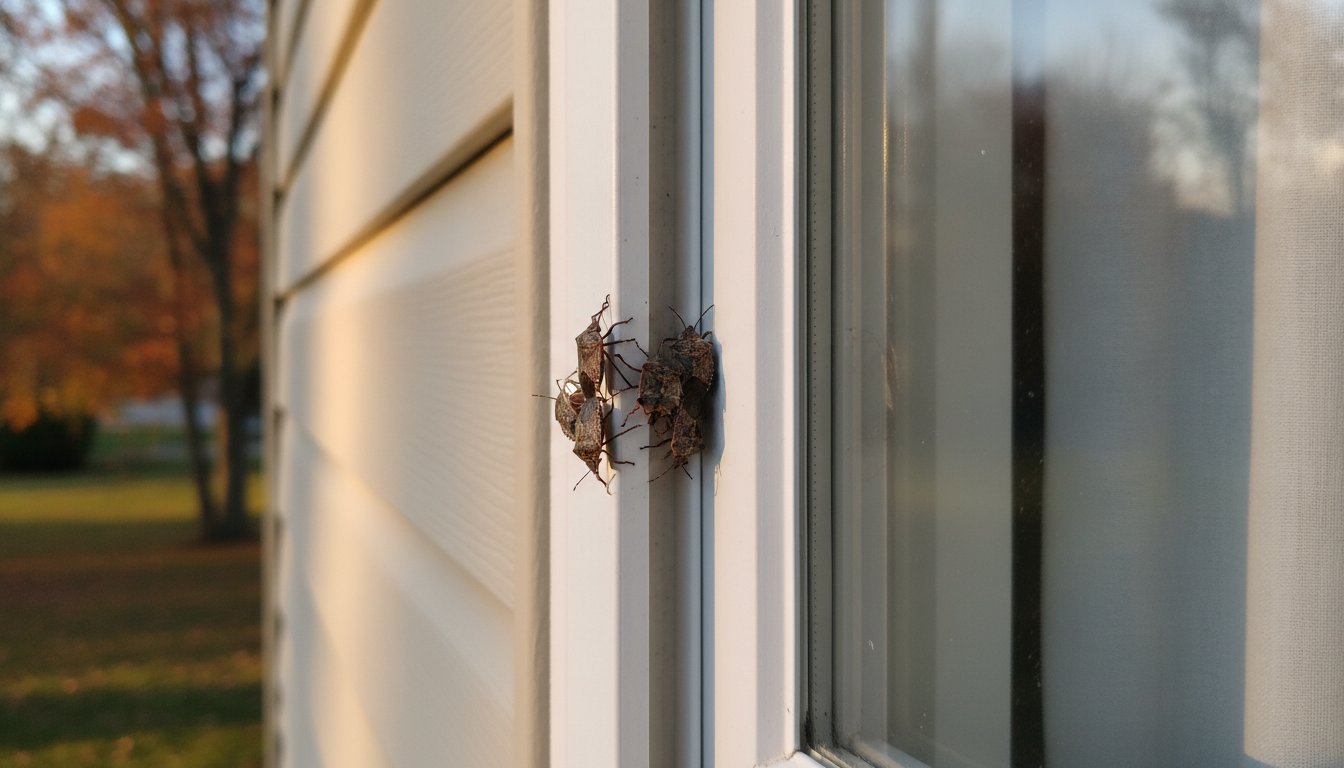
Why does it feel like your home has become a magnet for every shield-shaped insect in the Tri-State area the moment the temperature drops? For many homeowners in Erie, Crawford, and Ashtabula counties, the sudden appearance of these pests isn’t just a nuisance; it’s a source of genuine anxiety. Dealing with the foul-smelling secretions and unsightly stains on curtains or walls requires a strategic approach to brown marmorated stink bug control. It’s understandable to feel overwhelmed when hundreds of insects begin congregating on siding or tucked behind window frames as they seek a warm place to overwinter.
Effective management starts with understanding that these pests are masters of structural entry. This guide explains how to identify, prevent, and manage infestations using professional exclusion and removal strategies. You’ll discover why they chose your specific property and how to implement a defense plan that keeps your living space secure. By focusing on proactive barrier treatments and sealing entry points now, you can help ensure a stink-bug-free home for the seasons ahead.
Disclaimer: The information provided on this blog is for general informational purposes only and is not intended as professional pest control advice. Conditions vary by property, environment, and location. Reading this content does not create a service agreement. For an inspection or professional recommendations, please contact Mosquito Assassin Pest Control LLC directly.
Key Takeaways
- Identify these invasive pests by their distinct marbled brown color, shield shaped bodies, and white banded antennae to differentiate them from native species.
- Prioritize structural exclusion by sealing cracks and gaps in soffits and vents before the first frost to prevent overwintering infestations.
- Implement professional brown marmorated stink bug control through exterior barrier treatments that are more effective than standard indoor sprays.
- Use mechanical removal methods, such as vacuuming, to manage insects already inside your home without triggering their defensive, foul smelling secretions.
- Understand the seasonal patterns in Erie, Crawford, and Ashtabula counties to stay ahead of the annual migration into residential structures.
Identifying the Brown Marmorated Stink Bug in PA and OH
The Brown Marmorated Stink Bug (BMSB) is an invasive species that has become a significant concern for residents across the Tri-State area. First identified in Allentown, Pennsylvania, in 1998, this insect has since spread to nearly every corner of the region. Unlike native species that play a balanced role in the local ecosystem, the BMSB (Halyomorpha halys) lacks natural predators here, allowing populations to swell unchecked. For homeowners in Erie, Crawford, and Ashtabula counties, understanding the biology of this pest is the primary step toward effective brown marmorated stink bug control.
Distinguishing this intruder from native insects is vital. Homeowners often confuse them with the Western conifer seed bug or native brown stink bugs. While native varieties possess jagged, saw-toothed “shoulders,” the BMSB has smooth edges. The Western conifer seed bug is noticeably thinner with flared hind legs, whereas the BMSB maintains a distinct, wide shield shape. These differences might seem subtle, but they dictate the behavior and the level of infestation you can expect.
Visual Identification Markers
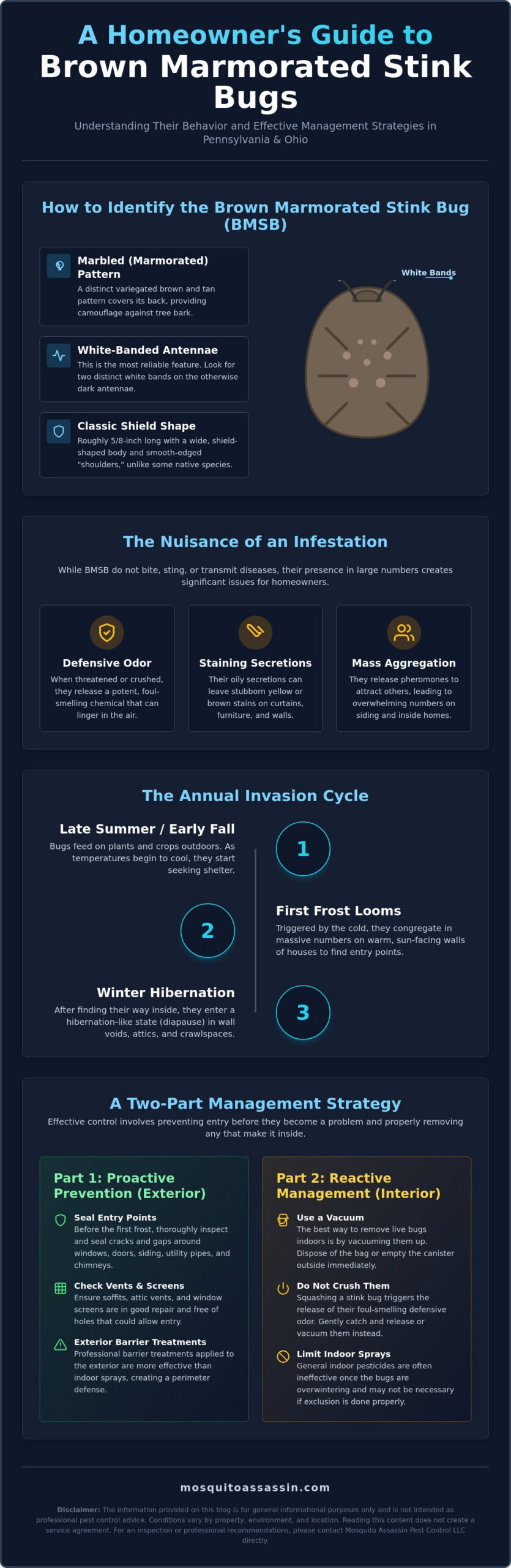
To confirm you are dealing with the brown marmorated variety, look closely at the antennae. This is the most reliable identification feature. You will notice two distinct white bands on the dark antennae. One band is located at the base of the last segment, and the other is in the middle of the segment. If these bands aren’t present, you’re likely looking at a native species that won’t invade your home in massive numbers.
The term “marmorated” actually means marbled. This refers to the variegated brown and tan pattern on the insect’s back. Along the edge of the abdomen, you’ll also see a pattern of alternating dark and light triangles. These markings, combined with their 5/8-inch long shield-shaped bodies, make them easy to spot once you know what to look for. Their appearance is designed for camouflage against tree bark, but they stand out clearly against residential siding.
The Overwintering Cycle in the Great Lakes Region
The cooling temperatures in late September and throughout October trigger a massive behavioral shift. As the sun begins to set earlier in Erie and Ashtabula, these insects enter a state known as diapause. This is essentially a form of insect hibernation where their metabolism slows down. They aren’t looking for food inside your home; they’re strictly looking for a warm, dry place to survive the winter. They are particularly attracted to sun-facing walls, especially those with light-colored or reflective siding that holds heat during the afternoon.
This transition from outdoor feeding to indoor seeking happens rapidly. You might see a few dozen bugs on your siding one afternoon, only to find hundreds the next. They use pheromones to signal to others that a specific property is a safe harbor. This “aggregation” behavior explains why one house on a block might be covered in insects while the neighbor’s house remains relatively untouched. Proactive brown marmorated stink bug control requires interrupting this cycle before they find their way into your wall voids and attic spaces.
Disclaimer: The information provided on this blog is for general informational purposes only and is not intended as professional pest control advice. Conditions vary by property, environment, and location. Reading this content does not create a service agreement. For an inspection or professional recommendations, please contact Mosquito Assassin Pest Control LLC directly.
The Impact and Nuisance of a Stink Bug Infestation
While many pests pose direct health threats, the brown marmorated stink bug is primarily a high-stakes nuisance. These insects don’t bite, sting, or transmit diseases to humans or pets. However, their presence in large numbers creates a stressful environment for property owners. Beyond the sheer volume of insects, the physical impact on a home can be significant. They produce oily, defensive secretions that leave behind stubborn yellow or brown stains on light-colored curtains, upholstered furniture, and wallpaper. For residents in Erie and Ashtabula, these stains often require professional cleaning or permanent replacement of household fabrics, making effective brown marmorated stink bug control a priority for interior maintenance.
The damage extends beyond the four walls of your home. These pests are notorious for ravaging local landscapes and gardens across Northwest Pennsylvania and Northeast Ohio. They use their piercing-sucking mouthparts to feed on a wide variety of host plants. In residential areas, this often results in “cat-facing” or dimpling on home-grown apples, peaches, and tomatoes. Ornamental trees and shrubs also suffer, showing signs of wilt and necrotic spots where the bugs have fed. Homeowners in Crawford County often find that brown marmorated stink bug control is just as important for their gardens as it is for their interiors. As noted in this Penn State Extension guide on stink bugs, their broad diet makes them a formidable opponent for any hobby gardener or fruit tree enthusiast.
The “Stink” in Stink Bug
The name is earned through a sophisticated chemical defense system. When threatened or crushed, the insect releases a pungent odor composed of trans-2-decenal and trans-2-octenal. These aldehydes create a scent often compared to cilantro or burnt tires. Crushing the bugs is the least effective way to handle them because it immediately saturates the air with this persistent smell. Even worse, these chemicals contain aggregation pheromones. Instead of scaring others away, the scent can actually signal to other stink bugs that your home is a viable location for shelter. Professional pest control plans focus on preventing this chemical release by managing the population before it enters the living space.
Secondary Impacts on the Home
A hidden danger of a large infestation is what happens when the bugs die inside your walls. Stink bugs that successfully enter wall voids or attics but fail to survive the winter leave behind a biological mess. These carcasses serve as a primary food source for scavenger pests like carpet beetles and larder beetles. This can lead to a secondary infestation that damages wool rugs and stored clothing. Additionally, the psychological impact of their clumsy, loud flight and constant buzzing against light fixtures can disrupt sleep and daily comfort. The sound of a heavy insect hitting a lampshade in a quiet room is enough to keep anyone on edge during the peak of the season.
Disclaimer: The information provided on this blog is for general informational purposes only and is not intended as professional pest control advice. Conditions vary by property, environment, and location. Reading this content does not create a service agreement. For an inspection or professional recommendations, please contact Mosquito Assassin Pest Control LLC directly.
Strategic Exclusion and Home Winterization
The most effective strategy for brown marmorated stink bug control is preventing them from entering your living space in the first place. In the Great Lakes region, including Northwest Pennsylvania and Northeast Ohio, the window for effective prevention is narrow. Once the evening temperatures begin to dip in late August, these insects start scouting for winter quarters. Homeowners should aim to have all exclusion work completed by mid-September. Waiting until you see the first bug on your siding often means the migration into your wall voids has already begun. Exclusion acts as a permanent shield, reducing the reliance on reactive measures once the insects are already established inside.
Residential architecture in Erie and Ashtabula often features common vulnerabilities that these pests exploit. They can squeeze through gaps as thin as a credit card. Focus your inspection on areas where different building materials meet, such as where siding joins the foundation or where utility lines enter the structure. According to EPA information on Brown Marmorated Stink Bugs, sealing these physical openings is a foundational step in any integrated pest management plan. Professional grade barrier treatments applied to the exterior of the home during this same window provide a secondary layer of protection, neutralizing pests before they can probe for entry points.
A Checklist for Sealing Entry Points
Systematic sealing requires the right materials and a keen eye for detail. Walk the perimeter of your property and address these high-risk areas:
- Window and Door Screens: Inspect for small tears or frames that have warped over time. A screen that doesn’t sit flush against the track is an open invitation.
- Caulking and Sealing: Use a high quality silicone or acrylic latex caulk to bridge gaps around window and door frames. These materials withstand the freeze-thaw cycles common in Crawford County winters.
- Attic and Crawlspace Vents: Ensure all vents are covered with intact, fine-mesh screening. Pay close attention to ridge vents and soffits, as these are primary highways for insects seeking attic warmth.
- Chimneys: Install a professional chimney cap with mesh siding to prevent pests from dropping down the flue.
Outdoor Maintenance and Lighting
Your landscape can either deter or attract stink bugs. Keep all foundation plantings, shrubs, and tree branches trimmed at least 18 inches away from the house. This eliminates the “bridge” that allows insects to crawl directly onto your siding. Lighting also plays a role in attraction. While they are most active during the day, evening porch lights can draw them toward your entryways. Switching to yellow “bug lights” or sodium vapor bulbs can reduce the number of insects attracted to your home at night. For more comprehensive tips on protecting your property from various seasonal invaders, consult this guide on General Pest Control.
Disclaimer: The information provided on this blog is for general informational purposes only and is not intended as professional pest control advice. Conditions vary by property, environment, and location. Reading this content does not create a service agreement. For an inspection or professional recommendations, please contact Mosquito Assassin Pest Control LLC directly.
Managing Stink Bugs Inside the Home
Once these insects successfully breach your home’s exterior defenses, the focus shifts from exclusion to active removal. Seeing a few bugs on your curtains or ceiling in the middle of a Crawford County winter is common. They aren’t breeding or eating inside your home; they’re simply reacting to the warmth. When the indoor temperature rises or the sun hits a particular window, these dormant pests wake up and begin crawling toward the light. Managing them requires a gentle touch to avoid the defensive odors discussed earlier. For those trying to determine the best path forward, understanding pest control prices can help you decide between DIY efforts and professional intervention.
The spring emergence is another critical phase for homeowners in Erie and Ashtabula. As the weather warms, the thousands of bugs potentially hidden in your wall voids attempt to return outdoors. Ironically, many of them get lost and end up inside your living spaces instead. This period often feels like a second infestation, but it’s actually the conclusion of their overwintering cycle. Using non-toxic traps, such as a desk lamp pointed over a shallow pan of soapy water, can effectively capture active bugs overnight without the need for chemicals.
Effective Removal Techniques
Mechanical removal is the most reliable way to handle individual insects. To avoid saturating your primary household vacuum with a lingering scent, use a dedicated shop vac for brown marmorated stink bug control. You can utilize the stocking trick by inserting a knee high nylon stocking into the vacuum hose and securing it with a rubber band. This captures the bugs in the mesh before they pass through the vacuum’s motor or filter, where they would otherwise be crushed and release their odor. Once you’ve finished, simply remove the stocking and submerge the bugs in a bucket of soapy water to neutralize them. This method keeps your equipment clean and your home smelling fresh.
Why Sprays Fail Indoors
Many property owners are tempted to use over the counter aerosol sprays once they see bugs inside, but these treatments are generally ineffective for overwintering pests. The reason lies in a biological state called diapause. During this time, the insect’s metabolism is significantly lowered. They don’t groom themselves or move across surfaces frequently enough to pick up a lethal dose of a residual pesticide. Spraying into wall voids also creates dead zones filled with insect carcasses. These piles of dead bugs become a primary food source for scavenger pests like carpet beetles, which can eventually migrate into your closets and rugs. Professional pest control services focus on exterior barriers because they address the problem before the bugs enter this unreachable, dormant state.
Disclaimer: The information provided on this blog is for general informational purposes only and is not intended as professional pest control advice. Conditions vary by property, environment, and location. Reading this content does not create a service agreement. For an inspection or professional recommendations, please contact Mosquito Assassin Pest Control LLC directly.
Professional Pest Management Solutions
When seasonal infestations exceed the capacity of a shop vac and a bucket of soapy water, professional intervention becomes the most logical step. Integrated Pest Management (IPM) provides a holistic framework for brown marmorated stink bug control. This methodology focuses on long-term prevention by combining structural exclusion with strategic, low-impact treatments. For residents in Erie and Crawford Counties, moving from DIY methods to a professional plan ensures that the property is defended before the first frost triggers the annual migration. This scientific approach prioritizes the security of the household while delivering definitive results.
The effectiveness of professional-grade exterior barrier treatments far exceeds that of off-the-shelf retail products. Licensed technicians apply residual barriers to the exterior surfaces where insects are most likely to congregate. This includes “hot spots” such as sun-drenched siding on the south and west sides of the structure, as well as eaves, window frames, and door headers. Professional timing is a decisive factor in success. Applying these barriers in late August or early September creates a protective shield that neutralizes pests upon contact. This prevents them from ever entering the wall voids where they become unreachable and potentially attract secondary scavengers like carpet beetles.
External Barrier Treatments
The application of a residual barrier is a specialized process that requires professional equipment to reach high peaks and difficult eaves. These treatments are designed to withstand the varying weather conditions of the Great Lakes region, providing a persistent defense that retail sprays cannot match. By treating the perimeter thoroughly, professionals interrupt the pheromone signaling that attracts large clusters of bugs to a single property. This proactive measure is the most effective way to ensure that the interior of the home remains a pest-free environment throughout the winter months.
Long-Term Prevention Strategies
In Ashtabula County and the surrounding areas, lake-effect weather patterns can influence pest behavior, making local expertise invaluable. Long-term security is best achieved through General Pest Control Plans. These year-round programs address the cyclical nature of pests in the Tri-State region, moving beyond simple one-time applications. A professional inspection often reveals structural vulnerabilities that the untrained eye might overlook. These might include gaps in high-level soffits, compromised attic vents, or loose utility plates where pipes enter the home. Addressing these issues as part of a comprehensive plan ensures that your property remains less attractive to pests throughout every season. For those facing high volumes of insects, professional pest control may help reduce risk.
Disclaimer: The information provided on this blog is for general informational purposes only and is not intended as professional pest control advice. Conditions vary by property, environment, and location. Reading this content does not create a service agreement. For an inspection or professional recommendations, please contact Mosquito Assassin Pest Control LLC directly.
Securing Your Home Against Seasonal Invaders
Maintaining a pest-free environment in the Tri-State area requires a proactive shift from reactive indoor treatments to strategic exterior defense. By identifying the unique markers of these invasive insects and sealing structural vulnerabilities before the autumn chill sets in, property owners can significantly reduce the risk of an indoor infestation. Effective brown marmorated stink bug control relies on professional-grade exclusion and timely barrier applications that target high-traffic entry points like soffits, vents, and utility lines.
Residents in Erie, Crawford, and Ashtabula counties benefit from year-round protection plans that address seasonal pest cycles with precision. Professional exclusion techniques provide a permanent layer of security that off-the-shelf sprays can’t match. Implementing these barriers early in the season prevents pests from establishing themselves in wall voids, where they remain unreachable until spring. Taking these methodical steps now ensures your living space remains a comfortable sanctuary throughout the winter months. For those seeking expert assistance in fortifying their property, contact Mosquito Assassin Pest Control LLC for a professional inspection.
Disclaimer: The information provided on this blog is for general informational purposes only and is not intended as professional pest control advice. Conditions vary by property, environment, and location. Reading this content does not create a service agreement. For an inspection or professional recommendations, please contact Mosquito Assassin Pest Control LLC directly.
Frequently Asked Questions
Are brown marmorated stink bugs dangerous to pets or children?
Stink bugs aren’t dangerous to humans or pets because they don’t bite, sting, or carry pathogens. However, their defensive secretions are chemically caustic and can cause mild skin irritation or eye redness if handled directly. If a curious dog or cat eats one, the bitter taste often causes drooling or temporary stomach upset. It’s best to remove them mechanically rather than letting pets or children interact with them.
Why do stink bugs appear in my house during the winter?
They enter your home seeking a warm, protected environment to survive the winter months. In the late fall, cooling temperatures trigger a behavior called diapause, which is a state of dormant hibernation. They crawl into wall voids and attics through tiny exterior gaps. When your furnace runs or the sun warms the roof, they wake up and accidentally crawl into your living spaces.
Can stink bugs damage the structure of my home?
These insects don’t cause structural damage to your home’s foundation, framing, or electrical systems. They don’t chew wood like termites or gnaw on wires like rodents. The primary damage is cosmetic, consisting of oily yellow or brown stains left on upholstery, curtains, and wallpaper. While they aren’t destroying the house, the volume of insects can become a significant sanitary and aesthetic nuisance for homeowners.
What is the best way to get rid of the smell after a stink bug is crushed?
Use a mixture of dish soap and warm water to clean the area immediately. The odor comes from a combination of aldehydes that are oily and persistent, making them difficult to neutralize once they’ve soaked into porous fabrics. Acting quickly and avoiding the urge to crush the insects is the most effective form of brown marmorated stink bug control to keep your indoor air fresh.
Will a standard bug spray kill stink bugs inside my house?
Standard indoor bug sprays are generally ineffective against stink bugs that are already inside for the winter. During diapause, their metabolism slows down significantly. They don’t move across treated surfaces frequently enough to absorb a lethal dose of a residual pesticide. Spraying them directly might kill individual bugs, but it won’t address the hundreds or thousands potentially hidden deep within your wall voids.
How do stink bugs get inside if my windows and doors are closed?
They exploit tiny structural gaps that are often invisible to the naked eye. A stink bug can fit through an opening only 1/16 of an inch wide. Common entry points include gaps around utility pipes, loose soffits, and attic ridge vents. They also crawl under siding and through gaps in window moldings. Proper exclusion requires a detailed inspection of the entire building envelope.
Do stink bugs lay eggs inside the house?
No, they don’t lay eggs or reproduce while they are inside your home. They only lay eggs on the underside of leaves on host plants during the spring and summer months. Your home doesn’t provide the food sources or the environmental conditions they need to raise a new generation. They are strictly using your property as a temporary shelter to survive the freezing outdoor temperatures.
Are there any natural repellents that actually work for stink bugs?
Essential oils like peppermint or clove may provide a very temporary deterrent when sprayed around entry points. However, these natural options evaporate quickly and aren’t a substitute for professional brown marmorated stink bug control strategies. Long term relief requires structural exclusion and exterior barrier treatments. Relying solely on oils won’t stop a large population from finding their way into your attic or walls during the fall.
Disclaimer: The information provided on this blog is for general informational purposes only and is not intended as professional pest control advice. Conditions vary by property, environment, and location. Reading this content does not create a service agreement. For an inspection or professional recommendations, please contact Mosquito Assassin Pest Control LLC directly.