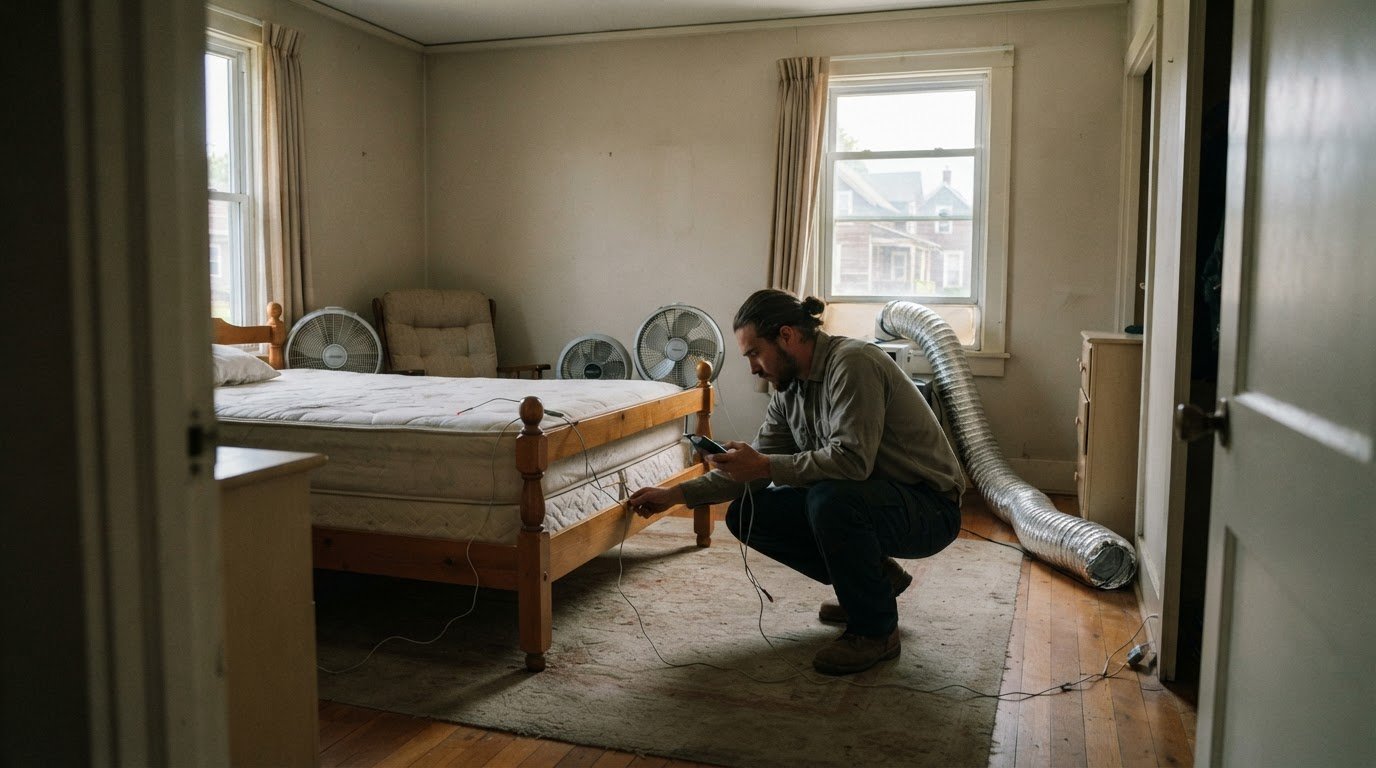
Professional bed bug heat treatment in Ashtabula, Ohio uses controlled heating to expose bed bugs and eggs in treated areas to sustained high temperatures. In whole-room treatment, heating continues for 60 minutes or more after all sensors reach approximately 113°F. Treatment takes 6-8 hours from setup through take-down.
Effective bed bug heat treatment in Ashtabula, Ohio, involves more than warming a room. Professionals monitor temperatures and assess where bed bugs may hide, including in furniture and belongings. This guide explains how heat treatment works, how to prepare, how furniture is assessed, and how to reduce the risk of reinfestation.
Key Takeaways
- Learn how professionals use monitored heat to reach bed bugs in treated areas and how treatment methods may differ by property.
- Understand what preparation professionals may request and how they assess furniture before recommending what happens next.
- Reduce reinfestation risk by recognizing how inspections, careful monitoring, and prevention habits can work together.
- See when professional bed bug treatment or another pest control service may fit your property’s needs.
What Are Heat Treatments?
Heat treatment uses monitored temperatures to target bed bugs in infested areas. Residential and commercial treatment plans account for the property and the scope of the infestation.
Residential and Commercial Treatment Settings
In a home, treatment may focus on bedrooms, furniture, and nearby areas where bed bugs hide. In a commercial setting, such as a lodging property or workplace, multiple rooms or furnishings may need attention. Technicians assess where activity has been found and which spaces need treatment. This defines the treatment area without assuming every room is equally affected.
Residential Bed Bug Heat Treatment
For whole-room heat treatment, professionals place sensors in treatment areas and monitor temperatures as the room warms. Heating continues for at least 60 minutes after all sensors reach approximately 113°F. Whole-room professional treatment takes 6-8 hours from setup to take-down. People should follow the professional’s preparation and re-entry instructions, which account for the property and treatment plan. Heat targets the treated space, so belongings and rooms must be assessed as part of the process.
Heat and Chemical Treatment Effectiveness
Heat and residual chemical treatments work differently, and their effectiveness depends on coverage and the infestation. Heat exposes bed bugs in treated areas to sustained temperatures. Residual chemical treatment leaves product on selected surfaces to affect pests that contact them. The U.S. Environmental Protection Agency says nonchemical methods alone may control bed bugs, but can be difficult, potentially less effective, and more resource-intensive. A professional assesses whether heat, chemical treatment, or a combined approach suits the property.
When evaluating an Ohio exterminator, request licensing details and verify them with the relevant state licensing office.
Heat treatment can miss areas that do not reach the required temperature. The U.S. Environmental Protection Agency says household thermostats and space heaters will not control bed bugs, and home freezers will not treat infested items.
For a property in Saybrook or Ashtabula County, check with the relevant local office about property-specific rules or assistance programs. Assistance depends on each program’s eligibility requirements.
Professional Treatment Preparation and Furniture Assessment
Preparation helps technicians reach likely hiding places and plan treatment for the property. Before service, residents may be asked to clear floors near beds, move belongings away from walls, and identify rooms with suspected activity. Follow the instructions for the selected treatment, since heat and residual chemical methods may require different preparation. In Ashtabula County homes, a clear account of where bed bugs have been seen helps technicians focus their inspection.
During the assessment, technicians examine furniture and look for signs of infestation before recommending whether an item should remain. They may inspect mattress seams, bed frames, drawer joints, upholstered furniture, and cracks around nearby furnishings. The aim is to determine whether an item can be treated effectively, not to recommend disposal automatically. A damaged chair with visible activity may need a different plan from an intact dresser with no observed signs.
Clients may be asked to prepare clothing, bedding, and other belongings according to treatment instructions. For example, a loosely filled household dryer set to high can kill all bed bug life stages and eggs in 30 minutes. That does not mean every item should go through a dryer; fabric care and professional guidance matter. Technicians can explain which belongings need separate handling before treatment begins.
Before treatment begins, expect a review of access, preparation, and the areas included. Keep household members and pets away from treatment areas as directed. The technician will explain when the property can be re-entered and any post-treatment instructions. Resume normal use only once those directions are clear. If furniture is discarded, follow local waste-handling guidance and avoid moving potentially infested items uncovered through shared spaces.
Bed Bug Prevention and Reinfestation
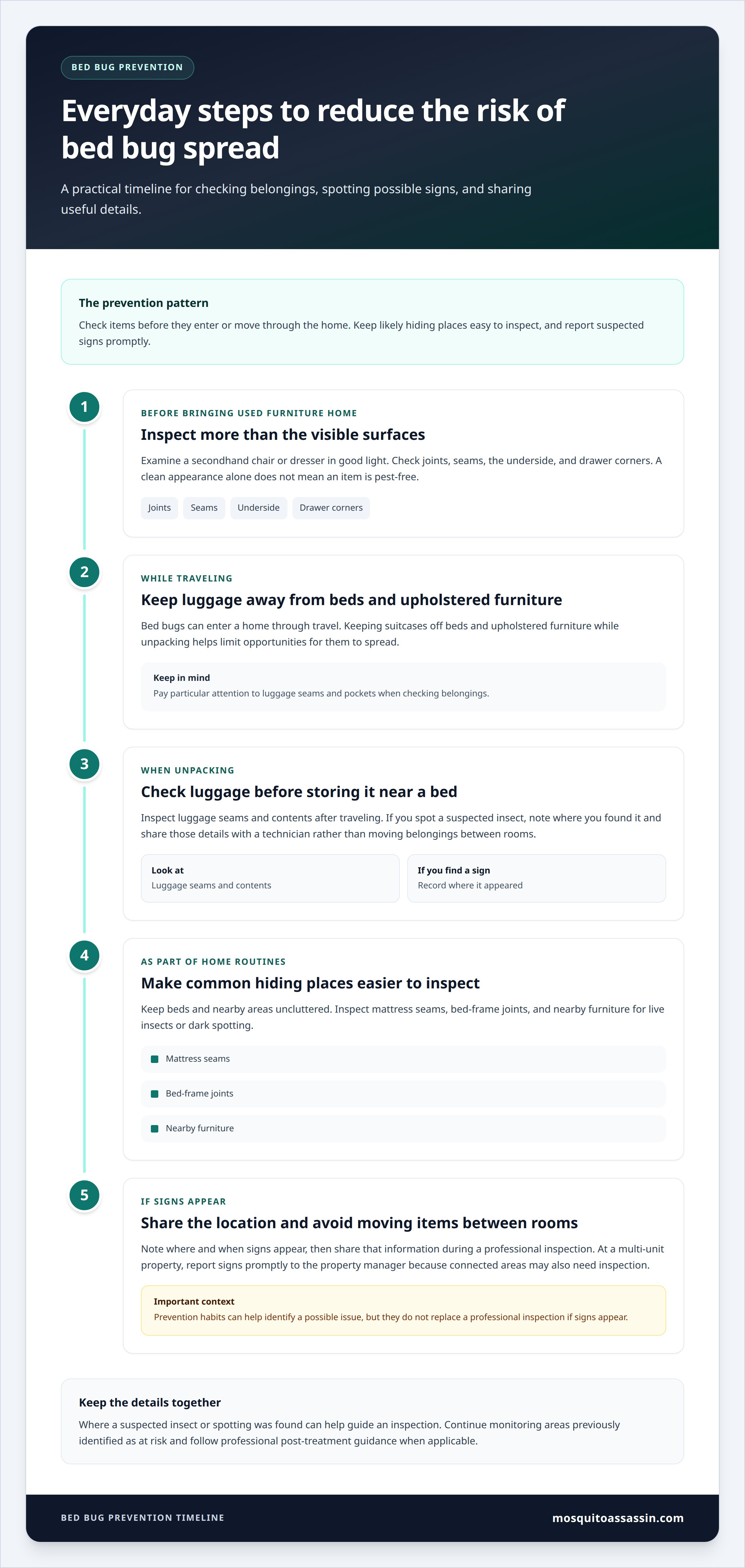
After bed bug heat treatment in Saybrook, Ohio, prevention focuses on spotting new signs early and limiting how bed bugs spread. Inspect mattress seams, bed-frame joints, and nearby furniture for live insects or dark spotting. After traveling, check luggage, especially seams and pockets, before storing it beside a bed. Keep beds and surrounding areas uncluttered so common hiding places are easier to inspect. These habits can help identify a possible issue, but do not replace a professional inspection if signs appear.
Used furniture can bring bed bugs into a home. Before bringing in a secondhand chair or dresser, examine its joints, seams, underside, and drawer corners in good light. A clean appearance alone does not mean an item is pest-free. Avoid moving furniture from a room with suspected activity to another room, as this can spread insects. Technicians can inspect reported items and nearby areas to assess whether activity may extend beyond one piece.
Travel is another way bed bugs can enter a home. Keep suitcases off beds and upholstered furniture while unpacking, then inspect the luggage seams and contents. If you spot a suspected insect, note where it was found and share the details with a technician rather than moving belongings between rooms. At a multi-unit property, report signs promptly to the property manager, since inspection may need to include connected areas.
Reinfestation can occur if bed bugs remain in untreated locations or arrive again with belongings. After professional heat treatment, a follow-up inspection lets technicians look for fresh evidence around beds, baseboards, and furniture previously identified as at risk. Record where and when signs appear, such as spotting near a headboard, and share that information during the inspection. Continue monitoring those areas and follow the professional’s post-treatment guidance.
Benefits of Professional Bed Bug Control
Professional pest control starts with an inspection that maps activity rather than relying on assumptions. Technicians examine mattress seams, bed frames, furniture joints, and nearby cracks, then match treatment coverage to the evidence. For example, spotting near a headboard calls for examining the bed and its surrounding area. This targeted assessment helps identify hiding places beyond the first visible sign.
A trained technician can also distinguish bed bug evidence from other marks or insects. Correct identification matters: treating the wrong pest leaves the actual problem unresolved. The word “certified” should refer to a specific credential, not be treated as proof that a particular method suits every property. A documented plan should explain which rooms are included, how treatment is monitored, and what signs to watch for afterward.
Professional control can also help coordinate treatment across a property. In an apartment building, reports from one unit can prompt attention to adjacent rooms or shared spaces where activity might otherwise go unnoticed. In a home, technicians can connect signs around a bed with nearby furniture and belongings. This broader view helps guide treatment coverage and post-treatment monitoring.
The U.S. Environmental Protection Agency says non-chemical methods alone may control bed bugs, but are often difficult, potentially less effective, and usually more resource intensive. Professionals can assess whether heat, chemical treatment, or a combined approach suits the infestation and the property. Household space heaters or thermostat changes aren’t substitutes for controlled treatment. A clear record of findings, treated areas, and follow-up signs gives residents a practical basis for monitoring after service.
Mosquito Assassin Pest Control
Mosquito Assassin Pest Control LLC helps residential and commercial property owners address pest concerns with treatment and prevention services. For signs of bed bugs, the company provides Bed Bug Treatment. An inspection helps identify where activity is present and which areas need attention. Sharing where signs appeared, such as near a mattress or on furniture, gives technicians useful context about the concern and the property.
Bed bug activity calls for a different response from broader pest concerns. General Pest Control Plans may suit a property that needs ongoing management for common pests beyond a specific bed bug issue. The appropriate service depends on the pest and the property. Clear observations, including affected rooms and recent sightings, help identify the concern without assuming one approach fits every situation.
Other pest concerns call for different services. Mosquito Control Service addresses mosquitoes as an outdoor pest issue, while Rodent Control Service is for signs of rodent activity inside a building. These services address distinct problems and do not replace a bed bug assessment. Businesses with pest concerns can use Commercial Pest Control Services tailored to their setting.
For Saybrook residents, professional treatment may be appropriate when bed bug evidence or repeated activity appears. Describe the property, the concern, and where signs were found to help clarify which service fits. This information can support a useful discussion about the next step. For questions about a property’s pest concern or to discuss an inspection, contact Mosquito Assassin Pest Control LLC.
Frequently Asked Questions
Are bed bug treatments safe for children and pets?
Children and pets should stay away from treatment areas until the technician’s re-entry instructions allow them back. Requirements depend on the method and the property. Before service, tell the technician about household members, pets, and areas they regularly use. For chemical treatment, follow the product-specific instructions provided by the professional. No treatment method should be described as risk-free for every household.
How Do You Spot Bed Bugs in Your Home?
Look for live insects, shed skins, eggs, or small dark spots near places where people rest. Check mattress piping, headboard joints, and the seams of upholstered chairs. Bites alone cannot confirm bed bugs because skin reactions vary and may have other causes. If you find an insect, avoid crushing or relocating it. A clear photo or captured specimen can help a technician identify it.
Should neighbouring apartments be inspected too?
Yes, adjacent apartments may need inspection when a building has a confirmed bed bug issue, especially units that share walls or nearby service areas. An inspection does not mean neighboring residents caused the problem. Building managers can coordinate access and share reports with pest control technicians. This broader view helps determine whether signs are limited to one unit or present in connected spaces, informing the treatment scope.
What Are the Benefits of Expert Bed Bug Control?
Expert pest control can help distinguish bed bug evidence from lookalike insects and connect findings across rooms. For example, a technician may investigate reports from a bedroom alongside signs on a nearby sofa. This helps avoid decisions based on a single suspicious mark. A professional can also explain treatment options and monitoring expectations for the property rather than relying on a one-size-fits-all approach.
What Are the Signs You Need Bed Bug Exterminators?
Consider a professional inspection if you find a live bed bug, shed skins, eggs, or recurring dark spots near sleeping areas. Repeated sightings around a bed frame or upholstered headboard also warrant assessment. Bites without insect evidence are not enough to identify an infestation. If signs keep appearing after belongings have been moved or rooms cleaned, share their locations and dates with a technician.
Where do bed bugs usually come from?
Bed bugs commonly enter by hitchhiking on belongings such as luggage, clothing, or secondhand furniture. They can also move between connected living spaces. Their presence does not mean a home is dirty. For example, an insect hidden in a suitcase may be carried home after travel. Inspecting luggage and used furniture before bringing them near sleeping areas can help catch signs early.
Disclaimer: The information provided on this blog is for general informational purposes only and is not intended as professional pest control advice. Conditions vary by property, environment, and location. Reading this content does not create a service agreement. For an inspection or professional recommendations, please contact Mosquito Assassin Pest Control LLC directly.