Tag: Great Lakes Pests

  • Odorous House Ants Treatment: A Comprehensive Management Guide for 2026

    Odorous House Ants Treatment: A Comprehensive Management Guide for 2026

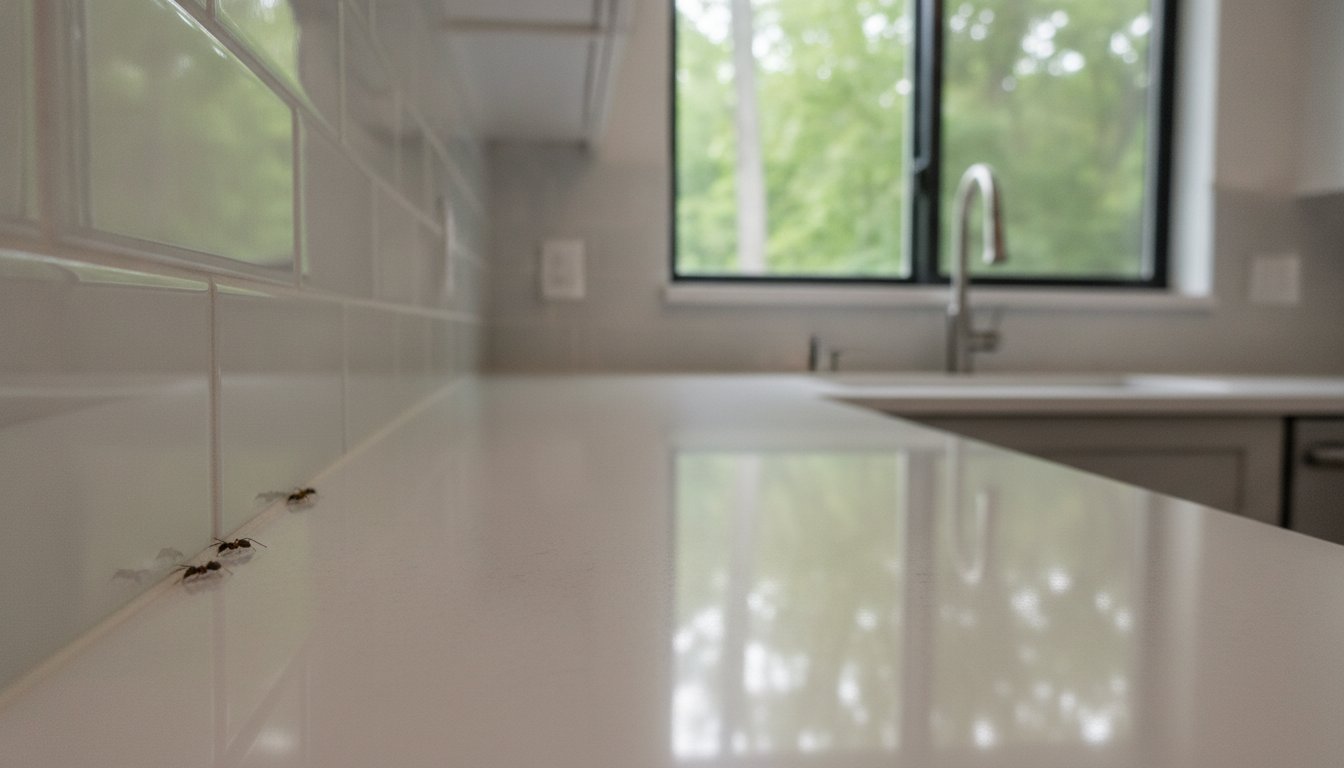
    What if the store-bought spray you just used to stop those ants is actually the reason they are spreading into your bedroom and bathroom? It is incredibly frustrating to watch a line of ants vanish after a quick application, only to have them return in larger numbers just days later, bringing that distinct, unpleasant smell of rotten coconut into your kitchen. For homeowners in Erie, Crawford, and Ashtabula counties, a standard odorous house ants treatment often fails because it does not account for the complex biology of these resilient Great Lakes pests.

    You are not alone in worrying about food contamination or the endless cycle of seasonal invasions that seem to ignore basic hardware store solutions. This guide provides a professional roadmap for effective management, focusing on strategies that target the entire colony rather than just the visible workers. You will learn how to identify these persistent pests, understand why they are attracted to your specific property, and how to establish a long-term protection plan that keeps your home secure year-round. Understanding the behavior of these ants is the first step toward reclaiming your living space from persistent seasonal trails.

    Key Takeaways

    • Identify odorous house ants by their small size and the characteristic rotten coconut scent they release when crushed.
    • Learn why an effective odorous house ants treatment must target multiple queens and interconnected nests to stop colonies from rebounding.
    • Discover the difference between temporary DIY sprays and professional non-repellent technology that eliminates the source of the infestation.
    • Explore property hardening strategies, such as moisture management, to prevent future seasonal invasions.
    • Understand how the unique climate of the Great Lakes region impacts ant behavior and the timing of professional protection plans.

    Identifying Odorous House Ants and Their Unique Characteristics

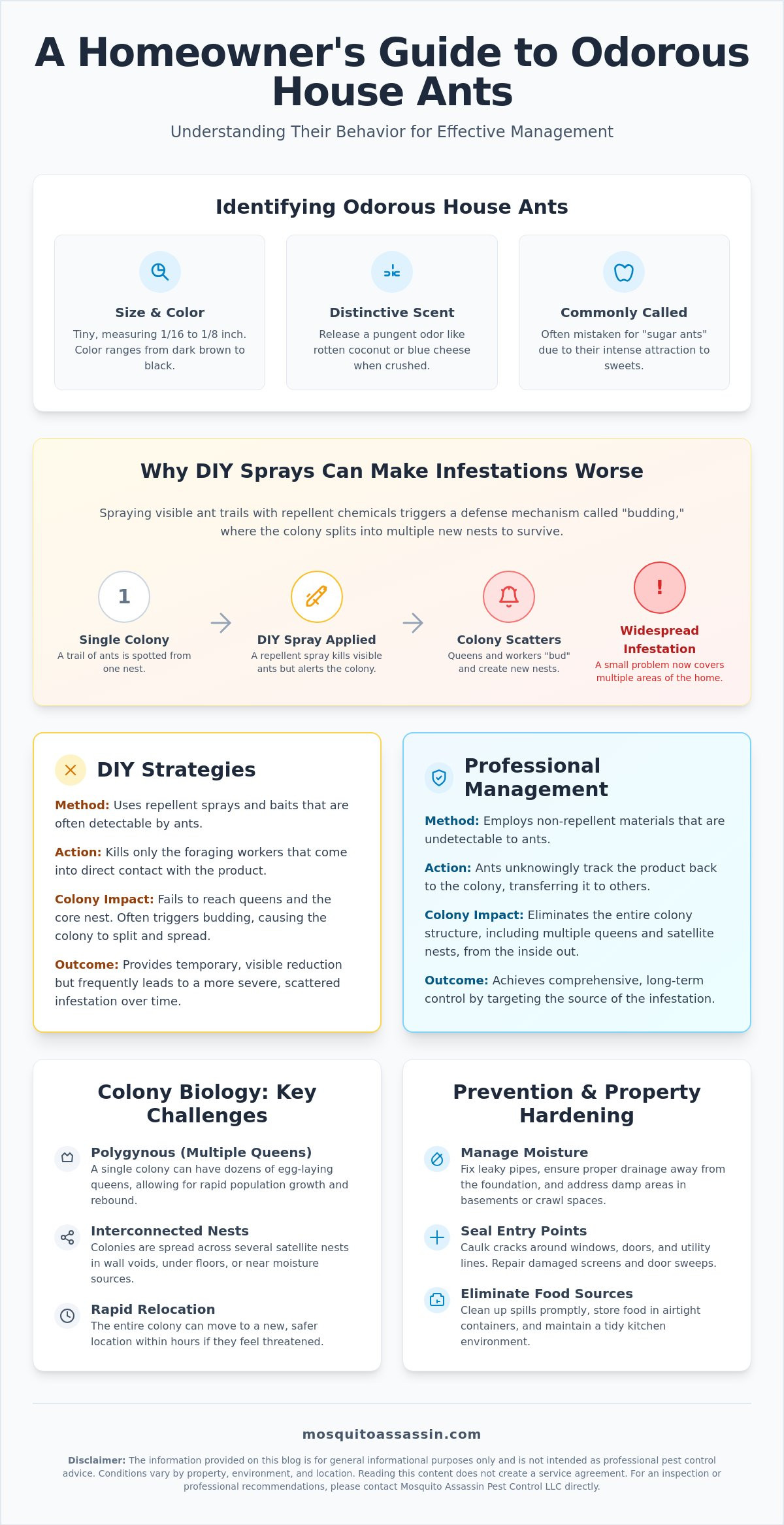
    The Odorous house ant (Tapinoma sessile) is a small but incredibly persistent pest found throughout Pennsylvania and Ohio. These insects typically measure between 1/16 and 1/8 of an inch in length, with coloration ranging from dark brown to black. While they are tiny, their presence is often felt before they are seen, especially following the heavy spring rains common in the Erie and Ashtabula areas. These weather patterns often drive colonies indoors in search of higher ground and stable food sources. The high humidity levels near Lake Erie provide the perfect environment for these ants to thrive, making them a common sight in local kitchens and bathrooms as temperatures begin to rise.

    Many homeowners refer to these pests as “sugar ants” because of their intense attraction to sweets and honeydew. They are highly mobile and possess a unique defense mechanism; they can relocate their entire colony within hours if they perceive a threat or if their environment becomes unfavorable. This mobility is a primary reason why a standard odorous house ants treatment requires a strategic approach rather than just spraying visible trails. When you spray a line of ants, the colony often senses the chemical intervention and splits, creating multiple new nesting sites within your walls. This process, known as budding, can turn a minor nuisance into a widespread infestation very quickly.

    To better understand how these pests behave and how to manage them, watch this helpful video:

    The Rotten Coconut Scent and Other Signs

    The most defining characteristic of this species is the pungent odor it releases when crushed. This scent is caused by chemical alarm pheromones and is frequently compared to rotten coconut or blue cheese. Beyond the smell, you might notice foraging trails along baseboards, under the edges of carpets, or clustered near water sources like sinks and dishwashers. These ants follow invisible scent trails laid down by scouts, creating a highway for thousands of workers. If you see winged “swarmers” inside your home during the early summer months, it usually indicates that a mature, established colony is nesting nearby. Swarmers are the reproductive members of the colony, and their presence indoors suggests the nest is likely inside the structure of the house.

    Odorous House Ants vs. Pavement Ants

    Correct identification is essential because different species require different management techniques. While they may look similar to the naked eye, the odorous house ant has a smooth thorax, whereas the pavement ant has distinct grooves on its head and thorax. Their nesting habits also differ significantly. Pavement ants are famous for leaving small dirt mounds in sidewalk cracks or basement floors. In contrast, odorous house ants prefer moist, hidden voids inside walls, under appliances, or near leaky pipes. Distinguishing between these two is the critical first step in any general pest control strategy. If you don’t correctly identify the species, your odorous house ants treatment might be ineffective, as using the wrong product can trigger their instinct to scatter and relocate.

    Disclaimer: The information provided on this blog is for general informational purposes only and is not intended as professional pest control advice. Conditions vary by property, environment, and location. Reading this content does not create a service agreement. For an inspection or professional recommendations, please contact Mosquito Assassin Pest Control LLC directly.
    The Biology of an Infestation: Why They Are Hard to Eradicate

    Most homeowners start their odorous house ants treatment by reaching for a can of spray. While this seems logical, it ignores the fundamental biology of the species. These ants are polygynous, which means a single colony contains dozens of productive queens and thousands of workers. They don’t live in one centralized nest; instead, they spread across several interconnected sites. Attacking only the ants you see on your kitchen counter barely scratches the surface of the population. To truly manage an infestation, you have to understand that the workers you see are just the tip of a very large, hidden iceberg.

    Their diet is another reason they are so resilient. It’s opportunistic and shifts based on the needs of the colony. You might notice different preferences throughout the year:

    • Spring: They focus on high-protein sources to support the growth of new larvae.
    • Summer: Their focus shifts to high-sugar sources, such as honeydew from aphids or spills in your pantry.

    Because their needs change, a bait that worked yesterday might be ignored today. Understanding this social and dietary structure is vital because traditional “kill on sight” methods never reach the queens responsible for reproduction.

    The Danger of Budding and Colony Splitting

    Budding is a biological survival mechanism that occurs when a colony feels threatened. If you use an over the counter repellent spray, the ants don’t simply die off; they scatter. This perceived threat triggers the queens to separate and establish new, independent colonies in different parts of your home. A single problem in the kitchen can quickly become three separate infestations in the pantry, bathroom, and laundry room. This behavior leads to “rebound” infestations that appear much larger a few weeks after a DIY attempt. Following UC IPM management guidelines for odorous house ants is critical to avoid triggering this defensive scattering.

    Climate Drivers in Pennsylvania and Ohio

    The unique weather patterns of the Great Lakes region play a massive role in ant activity. In Erie and Ashtabula, heavy lake-effect rains frequently flood outdoor nests, driving thousands of ants into the dry, warm voids of home foundations and wall structures. Local vegetation and mulch beds often act as direct bridges, allowing ants to bypass exterior defenses. Interestingly, the same wet seasons that drive ants indoors often lead to other pest issues. Homeowners frequently find that professional rodent removal and insect control needs must be addressed simultaneously to fully secure a property. For those struggling with persistent trails, professional pest control may help reduce risk by using non-repellent methods that don’t trigger budding.

    Disclaimer: The information provided on this blog is for general informational purposes only and is not intended as professional pest control advice. Conditions vary by property, environment, and location. Reading this content does not create a service agreement. For an inspection or professional recommendations, please contact Mosquito Assassin Pest Control LLC directly.

    DIY Strategies vs. Professional Ant Management

    Choosing between a DIY approach and professional intervention is often the difference between a temporary fix and a permanent solution. While a quick trip to the hardware store for a box of baits might seem cost effective, these products often fail to reach the primary nesting site hidden deep within your home’s structure. Licensed technicians in Erie and Crawford Counties use specialized equipment designed to treat wall voids and other hard to reach areas that standard consumer products simply cannot penetrate. A professional odorous house ants treatment relies on science rather than guesswork, utilizing advanced non-repellent transfer technology. This method allows worker ants to pass through a treated area and carry the product back to the queens unknowingly, neutralizing the entire colony from the inside out.

    Integrated pest management often requires looking beyond the kitchen counter. For many homeowners in the Great Lakes region, a mosquito control program actually works in tandem with ant management. By addressing exterior moisture levels and dense foliage near the foundation, you reduce the primary environmental drivers that attract ants to your property in the first place. Professional services provide this comprehensive view, ensuring that your home’s exterior doesn’t serve as a breeding ground for future invasions.

    When Store-Bought Baits Fail

    One common reason DIY efforts fall short is a phenomenon known as “bait shyness.” If a bait is too toxic too quickly, worker ants die before they can return to the nest. The rest of the colony then learns to avoid that specific substance, making future control efforts even more difficult. To make any bait effective, you must also remove competing food sources like crumbs, unsealed honey jars, or pet food bowls. Professional monitoring is necessary to track the progress of the treatment and ensure the entire social structure of the colony has been neutralized. Without this expert oversight, it’s easy to assume the problem is gone just because you don’t see trails for a few days.

    The Risks of Improper Pesticide Use

    Misusing sprays in food preparation areas poses significant risks to your household. Many homeowners over-apply chemicals in an attempt to stop a persistent trail, which can lead to unnecessary environmental exposure. Professional services focus on targeted application, placing products exactly where they are needed to minimize impact while maximizing results. Relying on a year-round protection plan provides a more consistent barrier than sporadic DIY efforts that only react to a crisis. If your current efforts aren’t producing results, professional pest control may help reduce risk and provide the definitive resolution your property needs.

    Disclaimer: The information provided on this blog is for general informational purposes only and is not intended as professional pest control advice. Conditions vary by property, environment, and location. Reading this content does not create a service agreement. For an inspection or professional recommendations, please contact Mosquito Assassin Pest Control LLC directly.

    Odorous House Ants Treatment: A Comprehensive Management Guide for 2026

    Prevention and Property Hardening for Long-Term Control

    Achieving a permanent end to ant trails requires a transition from reactive spraying to proactive property hardening. This process involves making the structure less attractive to scouting workers by removing the environmental cues they use to find food and shelter. In Erie and Ashtabula counties, the heavy spring rains often saturate the ground, making the dry, elevated voids of a home foundation highly desirable. Addressing these structural vulnerabilities is a necessary component of a professional odorous house ants treatment strategy. By focusing on moisture control, you eliminate the damp wood and standing water that serve as primary attractants for these pests.

    Vegetation management is another critical pillar of long-term prevention. Many properties in the Great Lakes region feature dense landscaping that grows close to the siding. These plants act as natural bridges, allowing ants to bypass ground-level barriers and enter through upper-level windows or rooflines. Trimming these back ensures your home remains isolated from the surrounding insect activity. Inside the home, proper food storage in airtight containers is essential. Eliminating access to open sugar or grease sources removes the primary motivation for indoor foraging, forcing scouts to look elsewhere for sustenance.

    Exterior Maintenance and Exclusion

    Maintaining the exterior of your home is a vital part of any comprehensive management plan. Start by trimming tree branches and shrubs so they do not touch the siding or roofline. You should also seal gaps around utility pipes and door frames using high-quality caulk to block common entry points. Keeping gutters clean is equally important; clogged gutters lead to water accumulation near the foundation, which creates the moist environments these ants prefer for nesting. A well-maintained exterior acts as a physical shield that significantly reduces the likelihood of a seasonal invasion.

    Indoor Sanitation Best Practices

    Effective sanitation goes beyond surface cleaning. It requires a deep clean under appliances where grease and sugar deposits often accumulate unnoticed. These hidden food sources can sustain a colony for months even after the visible trails have been treated. It is also important to ensure pet food bowls are not left out overnight, as these provide an easy, high-protein meal for foraging workers. Professional commercial pest control services utilize these same rigorous protocols to protect businesses, and applying them to your home is equally effective. To find out more about protecting your specific area, you can view our service locations in NW Pennsylvania and NE Ohio for professional guidance.

    Disclaimer: The information provided on this blog is for general informational purposes only and is not intended as professional pest control advice. Conditions vary by property, environment, and location. Reading this content does not create a service agreement. For an inspection or professional recommendations, please contact Mosquito Assassin Pest Control LLC directly.

    Professional Solutions in Erie, Crawford, and Ashtabula

    Regional expertise is critical for managing pests that react to the specific weather patterns of the Great Lakes. The heavy lake-effect moisture discussed in previous sections creates unique challenges for property owners in Northwest Pennsylvania and Northeast Ohio. Professional services provide customized plans that account for the unique construction styles found in Erie and Meadville; older foundations and specific siding materials require a nuanced approach that generic DIY methods cannot provide. An effective odorous house ants treatment must be as persistent as the pests themselves, adapting to the shifting environmental pressures of the region.

    Professional pest control may help reduce risk by identifying entry points that homeowners might overlook, such as microscopic gaps in settling foundations or utility line penetrations. Ongoing protection plans help ensure that seasonal migrations do not turn into full-scale infestations when the weather shifts. By establishing a consistent barrier, technicians can prevent the cycle of “rebound” infestations that often plague homeowners who rely solely on reactive, over the counter sprays.

    Customized Treatment for Local Homes

    Maintaining a protective perimeter is best achieved through bi-monthly inspections. This frequency allows for the adjustment of strategies as the seasons change from wet springs to humid summers. Professional management typically follows a disciplined three-step process designed for long-term success:

    • Removal: Utilizing non-repellent technology to eliminate the existing colony without triggering defensive budding.
    • Maintenance: Regular monitoring of the property’s exterior to catch new scouting workers before they establish indoor trails.
    • Exclusion: Physically hardening the structure by sealing entry points and advising on landscape modifications.

    Homeowners interested in how these long-term strategies are structured can learn more about pest control prices to see how professional plans fit their household budget. Consistency is the most important factor in preventing these ants from becoming a permanent fixture in your kitchen or bathroom.

    Next Steps for a Pest-Free Home

    If you notice activity, documenting where you see trails can help technicians during an initial inspection. Note the time of day and the specific rooms where ants appear; this data is invaluable for locating hidden nests behind walls or under flooring. Early intervention is the best way to prevent colony budding, which is the survival mechanism that makes eradication significantly more difficult once it’s triggered. For those in need of local assistance in Pennsylvania or Ohio, the Mosquito Assassin contact page provides direct access to experts who understand the specific pest pressures of Erie, Crawford, and Ashtabula counties.

    Disclaimer: The information provided on this blog is for general informational purposes only and is not intended as professional pest control advice. Conditions vary by property, environment, and location. Reading this content does not create a service agreement. For an inspection or professional recommendations, please contact Mosquito Assassin Pest Control LLC directly.

    Securing Your Home Against Persistent Ant Invasions

    Managing an infestation requires more than just reactive spraying. Successful control hinges on accurate identification and understanding how local weather patterns drive these pests into your home. As explored in this guide, a comprehensive odorous house ants treatment must account for the biological process of budding to prevent a single trail from splitting into multiple colonies. By combining indoor sanitation with structural hardening and exterior moisture control, you can break the cycle of seasonal invasions.

    Property owners in Erie and Crawford Counties in Pennsylvania, and Ashtabula County in Ohio, benefit from year-round protection plans that address these specific regional challenges. Local, neighborly expertise ensures that every entry point is identified and every nest is neutralized using professional standards that prioritize the security of your household. If you’re ready to put an end to persistent ant trails, professional pest control may help reduce risk. You can request a professional inspection or book your service online to secure your home today. Reclaiming your living space from these pests is possible with a methodical and expert approach.

    Disclaimer: The information provided on this blog is for general informational purposes only and is not intended as professional pest control advice. Conditions vary by property, environment, and location. Reading this content does not create a service agreement. For an inspection or professional recommendations, please contact Mosquito Assassin Pest Control LLC directly.

    Frequently Asked Questions

    Why do odorous house ants smell like rotten coconut?

    These ants produce a pungent odor because they release chemical alarm pheromones when they are crushed or feel threatened. The scent contains specific organic compounds that many people compare to the smell of blue cheese or rotten coconut. This biological response serves as a warning signal to the rest of the colony. It alerts other workers to potential danger and can cause the nest to relocate quickly if the threat persists.

    Can I get rid of odorous house ants permanently with DIY methods?

    DIY methods rarely provide permanent results because they usually only kill the worker ants they touch rather than the entire colony. Odorous house ants have multiple queens and can easily relocate through a process called budding if they sense a threat. A professional odorous house ants treatment is typically required to reach the hidden nesting sites and eliminate the queens. This expert approach ensures the infestation doesn’t simply bounce back a few weeks later.

    What is the fastest way to stop an ant trail in my kitchen?

    The fastest way to temporarily stop a trail is to clean the area with a vinegar and water solution to destroy the scent pheromones. While this removes the invisible highway the ants follow, it won’t stop the infestation at its source. You must also seal all food in airtight containers and wipe down surfaces to remove grease. Avoid using repellent sprays on the trail, as this can cause the colony to scatter and multiply into new areas.

    Are odorous house ants dangerous to my family or pets?

    Odorous house ants are not physically dangerous to people or pets because they do not sting or bite. Their primary threat is the risk of food contamination as they crawl over waste and then onto your kitchen surfaces or open food containers. Seeing them in your pantry is a sign that your household hygiene is at risk. Maintaining a professional protection plan is the best way to ensure your kitchen remains a clean and safe environment for your family.

    How long does a professional ant treatment take to work?

    A professional can typically bring an infestation under control within 30 days using targeted gel and liquid applications. While you might see a significant reduction in ant activity within the first few days, the full process takes time. The product must be carried back to the nest to eliminate the queens and larvae. This methodical approach ensures that the entire social structure of the colony is neutralized rather than just the visible workers.

    Why are ants appearing in my house after a heavy rainstorm?

    Ants appear inside after a heavy rainstorm because their outdoor nesting sites in the soil become flooded or oversaturated. The heavy rains common in Erie and Ashtabula force these pests to seek higher, drier ground to survive. Your home foundation and wall voids provide the perfect dry refuge during these weather events. Once they are inside, they will begin scouting for food, which leads to the visible trails you see in your kitchen or bathroom.

    What is the difference between a sugar ant and an odorous house ant?

    The main difference is that “sugar ant” is a generic nickname for many small pests, while the odorous house ant is a specific species. Odorous house ants have a smooth thorax and release a distinct smell when crushed, which sets them apart from other common household ants. Identifying the specific species is vital for effective management. Different ants react differently to baits, so a one-size-fits-all approach rarely works for long-term control of a property.

    Will a clean house prevent an odorous house ant infestation?

    A clean house is a great first step, but it doesn’t always prevent an infestation because these ants also seek moisture and warmth. They are often attracted to leaky pipes, damp basements, or condensation inside wall voids. Even if your kitchen is spotless, they may enter your home simply to escape the Great Lakes weather. A comprehensive odorous house ants treatment also includes moisture management and structural exclusion to address these non-food related attractants effectively.

    Disclaimer: The information provided on this blog is for general informational purposes only and is not intended as professional pest control advice. Conditions vary by property, environment, and location. Reading this content does not create a service agreement. For an inspection or professional recommendations, please contact Mosquito Assassin Pest Control LLC directly.

  • Is Professional Mosquito Spraying Effective? What Homeowners Should Expect

    Is Professional Mosquito Spraying Effective? What Homeowners Should Expect

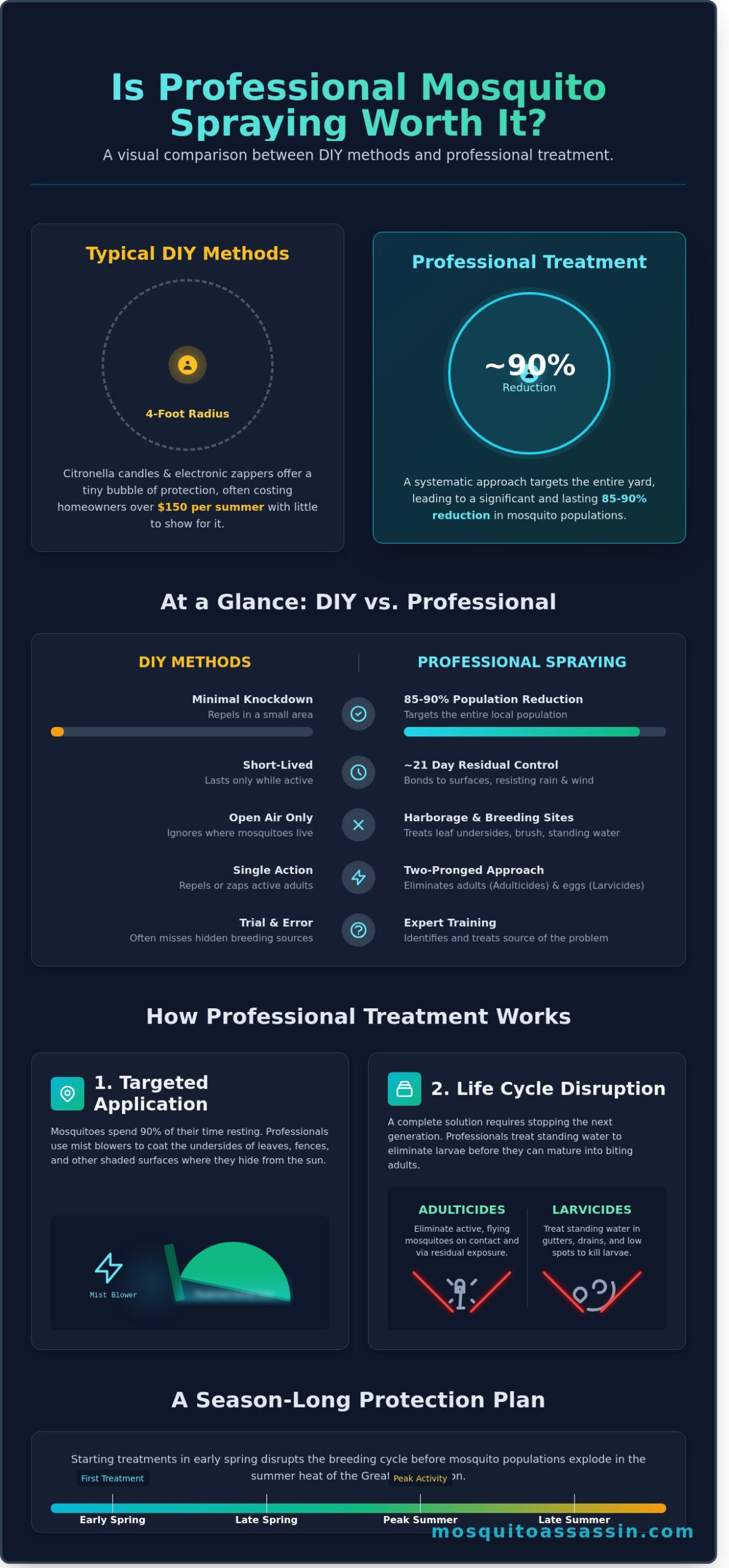
    Homeowners in the Great Lakes region often spend over $150 every summer on citronella candles and electronic zappers that only provide protection within a tiny 4-foot radius. While these gadgets are popular, many people find themselves asking, is professional mosquito spraying effective when DIY methods fail to stop the constant bites? It’s a common frustration to invest in these fixes only to find yourself running back inside once the sun starts to set in Northwest Pennsylvania and Northeast Ohio. You deserve to use your patio without the worry of mosquito-borne illnesses or the annoyance of an itchy aftermath.

    This guide explores the science behind professional treatments and explains how a systematic approach can lead to a 90% reduction in local mosquito populations. You’ll discover what to expect during a typical season in Erie, Crawford, or Ashtabula County and how a clear plan can help safeguard your outdoor space for the long term. By understanding the biology of these pests and the precision of professional application, you can move away from trial-and-error methods toward a more reliable solution for your property.

    Disclaimer: The information provided on this blog is for general informational purposes only and is not intended as professional pest control advice. Conditions vary by property, environment, and location. Reading this content does not create a service agreement. For an inspection or professional recommendations, please contact Mosquito Assassin Pest Control LLC directly.

    Key Takeaways

    • Learn how professional-grade adulticides and larvicides offer a more targeted and effective approach than standard retail products.
    • Understand the science behind realistic expectations, including why homeowners find that is professional mosquito spraying effective for achieving an 85 to 90 percent reduction in activity.
    • Discover how the unique humidity and weather patterns in Erie, Crawford, and Ashtabula Counties influence the timing and longevity of outdoor treatments.
    • Identify the importance of professional training in locating hidden breeding sources that standard DIY yard sprays often fail to address.
    • Explore the strategic benefits of starting a protection plan in early spring to manage mosquito populations before they reach peak levels in the summer.

    Understanding the Science of Professional Mosquito Spraying

    Professional mosquito spraying is a targeted application of adulticides and larvicides designed to reduce pest populations around a home. Many homeowners ask "is professional mosquito spraying effective" when they see standard hardware store foggers failing to provide lasting relief. The effectiveness of a professional service stems from the use of specialized products that contain surfactants and polymers. These additives allow the treatment to bond to the underside of leaves and bark, maintaining its potency through wind and rain for approximately 21 days.

    Unlike over-the-counter sprays that offer immediate knockdown but no lasting power, professional applications utilize products designed for long-term residual control. This comprehensive overview of mosquito control methods highlights how chemical and biological agents work in tandem to manage populations. Professional technicians focus on the biology of the insect rather than just spraying the open air.

    To better understand how these treatments are applied in a residential setting, watch this video:

    Adulticides vs Larvicides: A Two-Pronged Approach

    Adulticides target the flying, biting mosquitoes that cause immediate irritation to families and pets. These products work on contact to clear out active pests during the initial visit. However, focusing only on adults is a short-term fix. Professionals also use larvicides to treat standing water where mosquitoes breed, such as gutters, low spots in the yard, or drainage areas. This disrupts the life cycle at the source. By eliminating larvae before they become winged adults, the total population in a yard can drop significantly within the first two treatment cycles. This dual approach ensures that "is professional mosquito spraying effective" becomes a question of maintenance rather than just a one-time fix.

    Targeted Application and Resting Sites

    Mosquitoes are weak fliers and spend about 90% of their time resting. They don’t hang out in the middle of a sunny lawn because they’re prone to dehydration. Instead, they seek out the underside of leaves, dense brush, and shaded vertical surfaces. Professional equipment, such as motorized backpack mist blowers, uses air-assisted technology to flip leaves over during application. This ensures the product coats the undersides where mosquitoes actually live.

    In the damp, wooded environments of Crawford County or the lakeside properties of Erie County and Ashtabula County, this level of precision is necessary to reach the deep interior of hedges and ornamental grasses. Technicians prioritize shaded harborages and vertical structures like fences or the siding of a home, as these are the primary areas where mosquitoes congregate during the heat of the day.

    Disclaimer: The information provided on this blog is for general informational purposes only and is not intended as professional pest control advice. Conditions vary by property, environment, and location. Reading this content does not create a service agreement. For an inspection or professional recommendations, please contact Mosquito Assassin Pest Control LLC directly.

    The Realistic Efficacy of Professional Mosquito Treatments

    Homeowners often ask is professional mosquito spraying effective when they see swarms in their backyard during the peak of summer. Most professional programs aim for an 85 to 90 percent reduction in mosquito activity rather than total elimination. Achieving 100 percent eradication is biologically impossible because outdoor environments are open systems. New mosquitoes can drift in from adjacent properties or wooded areas at any time. Despite this, a professional application provides a dual-action approach. It starts with an immediate knockdown of adult mosquitoes present during the service and follows up with long-term residual control that remains active on foliage.

    Professional pest control helps reduce the risk of mosquito-borne concerns by lowering the local population of disease vectors. While residential treatments focus on ground-level barriers, understanding how aerial spraying works at a municipal level can provide context on how large-scale population management functions. On a residential scale, the goal is to create a hostile environment for pests while maintaining a safe space for families and pets in Erie and Crawford Counties.

    The Neighbor Effect: Does Untreated Property Matter?

    Untreated neighboring properties don’t render a professional treatment useless. Barrier treatments create a specific kill zone around the perimeter of a yard. Most common backyard mosquito species have a limited flight range, often staying within 100 to 300 feet of their hatching site. Because mosquitoes are weak fliers and must rest frequently to avoid dehydration, they eventually land on treated foliage. When they touch the underside of leaves or dense brush on a treated property, the residual product eliminates them before they can reach the porch or patio.

    Duration of Protection and Reapplication Cycles

    A standard professional treatment typically remains effective for 21 to 30 days. Natural environmental factors cause the active ingredients to degrade over time. UV light from the sun breaks down molecular bonds, and heavy rainfall can slowly wash away the product from leaf surfaces. Because of this natural degradation, consistent scheduling is the only true way to maintain a pest-free environment throughout the season. If a gap in service occurs, the population can rebound within days. For those ready to maintain their yard, visiting the online booking portal can help secure a consistent treatment schedule.

    Disclaimer: The information provided on this blog is for general informational purposes only and is not intended as professional pest control advice. Conditions vary by property, environment, and location. Reading this content does not create a service agreement. For an inspection or professional recommendations, please contact Mosquito Assassin Pest Control LLC directly.

    Is Professional Mosquito Spraying Effective? What Homeowners Should Expect

    Environmental Factors in Northwest PA and Northeast OH

    The regional climate of Northwest PA and Northeast OH creates a challenging environment for pest management. In Erie and Crawford Counties, average relative humidity levels frequently climb above 75% during the summer months. This high moisture content accelerates the mosquito life cycle, allowing larvae to develop into biting adults in as little as 7 to 10 days. Homeowners often ask, is professional mosquito spraying effective when faced with these rapid population surges. The answer depends heavily on understanding local weather patterns and biology.

    The mosquito season in the PA/OH corridor typically begins in late April and extends through the first hard frost, which usually occurs in mid-October. Lake Erie significantly influences this timeline. The lake’s thermal mass can delay the start of spring but also keeps coastal areas in Ashtabula and Erie warmer later into the autumn. This extended warmth prolongs the period of mosquito activity compared to inland regions.

    Rain and Moisture: Will the Spray Wash Away?

    Rainfall is a constant factor in the Great Lakes region, but professional treatments are designed to withstand local conditions. While a heavy downpour immediately after application might reduce efficacy, light rain is rarely an issue once the product has dried. Licensed technicians use professional-grade surfactants, which act as sticking agents to help the treatment adhere to the underside of leaves and dense foliage even in damp conditions.

    Professional services monitor local radar data to identify dry windows of at least 30 to 60 minutes for application. This ensures the treatment has sufficient time to bond to the plant surfaces. This strategic timing is a major reason why many residents find that mosquito control methods applied by experts outperform DIY attempts during wet seasons. Once dry, these treatments are resilient against typical regional rain showers.

    Regional Species and Habitats

    The tri-county area of Erie, Crawford, and Ashtabula features diverse habitats that support various species, including the aggressive Asian Tiger mosquito and the common house mosquito. Properties in this region often contain specific features that contribute to population spikes:

    • Wooded Lots: Heavy leaf litter in forest borders retains moisture and provides ideal resting spots for adults.
    • Agricultural Runoff: Rural areas in Crawford County often have nutrient-rich standing water that fuels rapid larval growth.
    • Marshy Terrain: Low-lying areas near the lakefront and local tributaries serve as permanent breeding grounds.

    Identifying these local harborages is critical for success. In Ashtabula, for instance, older drainage systems and dense ornamental landscaping can serve as primary resting sites. When evaluating if is professional mosquito spraying effective, success is measured by how well the treatment reaches these specific, often hidden, habitats. Focusing on these high-density areas ensures a more comprehensive reduction in the local population.

    Disclaimer: The information provided on this blog is for general informational purposes only and is not intended as professional pest control advice. Conditions vary by property, environment, and location. Reading this content does not create a service agreement. For an inspection or professional recommendations, please contact Mosquito Assassin Pest Control LLC directly.

    Professional Mosquito Control vs DIY Yard Sprays

    Homeowners in Erie, Crawford, and Ashtabula Counties often weigh the cost of store-bought foggers against hiring experts. While retail sprays offer a temporary fix, they lack the residual strength of professional-grade products. Professional solutions utilize higher concentrations of active ingredients designed to withstand rain and UV exposure for 21 days or more. A central reason why is professional mosquito spraying effective involves the delivery method. High-volume backpack blowers use air turbulence to flip leaves over, coating the underside where 90% of mosquitoes hide during the heat of the day. A simple garden hose sprayer only reaches the top surfaces, leaving the pests’ primary habitat completely untouched.

    The cost of DIY failures adds up quickly. A homeowner might spend $60 to $120 on retail canisters every few weeks without seeing a significant reduction in bites. Licensed technicians identify the root of the problem through property-specific training. They locate breeding sources that the average person misses, like a single bottle cap of water which can host 200 larvae. This targeted approach provides a higher return on investment compared to the “spray and pray” method of retail products.

    The Risks of Improper DIY Application

    Incorrect mixing or poor timing does more than just waste money; it can lead to chemical resistance within local mosquito populations. When a solution is too weak, it kills only the susceptible insects while allowing the stronger ones to survive and breed. This creates a harder-to-kill generation in your own backyard. Improper application also risks harming non-target beneficial insects. Without professional training, a homeowner might accidentally spray flowering plants where bees and butterflies forage. Professional protocols are designed with family-safe considerations in mind, focusing on specific resting sites to ensure your yard’s ecosystem remains protected.

    Integrated Pest Management (IPM) Practices

    A professional doesn’t just spray; they investigate. Integrated Pest Management (IPM) involves a systematic search for hidden mosquito nurseries. Technicians provide specific recommendations for source reduction, such as clearing clogged gutters or tipping standing water in obscure areas like tire swings or tarp folds. This comprehensive approach is why a general pest control plan often includes mosquito management. By addressing the environment and identifying hidden nurseries, experts reduce the need for excessive chemical use while providing long-term relief.

    If you’re tired of battling bites, professional pest control may help reduce risk on your property.

    Disclaimer: The information provided on this blog is for general informational purposes only and is not intended as professional pest control advice. Conditions vary by property, environment, and location. Reading this content does not create a service agreement. For an inspection or professional recommendations, please contact Mosquito Assassin Pest Control LLC directly.

    Establishing a Season-Long Protection Plan

    When determining is professional mosquito spraying effective, homeowners must look beyond a single application. A one-time treatment is a useful tool for temporary relief before a backyard graduation or outdoor wedding, but it doesn’t provide lasting control for the entire summer. Mosquitoes are resilient pests with a rapid life cycle; a single female can lay up to 300 eggs at a time, and those eggs can mature into biting adults in as little as seven to 10 days. Without a consistent schedule, new generations will quickly repopulate the area once the initial product begins to weather away.

    A successful protection plan starts early in the spring. In regions like Erie County and Ashtabula County, mosquito activity begins as soon as overnight temperatures consistently hit 50 degrees Fahrenheit. By applying treatments before the first major hatch, technicians can disrupt the initial reproductive cycle, which prevents the population from reaching unmanageable levels during the peak heat of July. Ongoing monitoring during follow-up visits ensures the protective barrier remains intact. Professional pest control may help reduce risk by identifying new standing water sources that appear after heavy spring rains, such as clogged gutters or depressions in the lawn.

    Preparing Your Yard for Treatment

    Preparation is a vital step in ensuring the maximum reach of any professional application. Before the technician arrives, homeowners should clear debris like leaf piles, grass clippings, and fallen branches, as these provide cool, damp resting spots for adult mosquitoes. It is also important to ensure access to all parts of the property, including areas behind locked fences and along woodlines where mosquitoes are most likely to congregate. Learning more about the mosquito control program structure helps residents understand how technicians identify and target these specific high-traffic zones.

    Next Steps for a Mosquito-Free Summer

    Consulting with local experts who live in Crawford County and the surrounding communities is the best way to develop a plan tailored to the local environment. Because every property has unique drainage patterns and vegetation density, a standard approach isn’t always sufficient. Requesting a professional property assessment allows for a customized frequency of service, typically every 21 to 30 days, to maintain a consistent chemical barrier. This proactive strategy is the most reliable method for reclaiming outdoor spaces. For an inspection or professional recommendations, please visit the GorillaDesk portal.

    Disclaimer: The information provided on this blog is for general informational purposes only and is not intended as professional pest control advice. Conditions vary by property, environment, and location. Reading this content does not create a service agreement. For an inspection or professional recommendations, please contact Mosquito Assassin Pest Control LLC directly.

    Achieving Lasting Results for Your Outdoor Space

    Determining is professional mosquito spraying effective involves looking at the science behind the treatments and the specific environmental conditions of the region. Homeowners in Erie, Crawford, and Ashtabula counties often deal with dense vegetation and fluctuating moisture levels that favor mosquito breeding. Professional applications target these specific habitats with precision. Licensed and insured technicians understand how to apply treatments to the undersides of leaves where mosquitoes rest during the day. This method provides a level of coverage that standard hardware store foggers cannot match. A structured protection plan addresses the pests at every stage of their life cycle, preventing the rapid population spikes common in Northwest PA and Northeast OH during the summer months.

    Consistency is the most important factor for success. While a single application reduces the immediate population, regular visits ensure the barrier remains intact against new arrivals from neighboring properties. For an inspection or professional recommendations, please contact Mosquito Assassin Pest Control LLC directly. This locally owned and operated company has established a track record of results throughout the tri-county area. It’s possible to reclaim the yard and enjoy the outdoors without the constant nuisance of biting insects.

    Disclaimer: The information provided on this blog is for general informational purposes only and is not intended as professional pest control advice. Conditions vary by property, environment, and location. Reading this content does not create a service agreement. For an inspection or professional recommendations, please contact Mosquito Assassin Pest Control LLC directly.

    Frequently Asked Questions

    Is professional mosquito spraying worth the cost?

    Professional mosquito spraying is effective for homeowners who want to reclaim their outdoor living space without the constant nuisance of biting insects. While costs vary based on property size, a professional application typically results in a 90 percent reduction in mosquito activity within the first 24 hours. This level of control is difficult to achieve with retail products that often lack the residual strength of professional-grade solutions.

    Homeowners in Erie and Crawford Counties who spend 10 or more hours per week outdoors often find the investment pays off in increased comfort and peace of mind. Professional technicians target specific resting areas like the undersides of leaves and dense brush. This strategic approach ensures the product reaches the 80 percent of the population that hides during the heat of the day.

    How long does a professional mosquito treatment last?

    A standard professional mosquito treatment generally remains effective for 21 to 30 days under normal weather conditions. The specialized products used by licensed professionals are designed to bond to foliage and withstand UV degradation for several weeks. Environmental factors like extreme heat or consecutive days of heavy rain can impact this timeline, sometimes reducing the effective window by 5 to 7 days.

    Because the mosquito life cycle is short, consistent applications are necessary to disrupt the breeding process. Maintaining a regular schedule ensures that new mosquitoes emerging from eggs don’t have the opportunity to repopulate the yard. Most properties in Ashtabula County require a fresh application every three weeks to maintain a strong protective barrier.

    Does professional spraying kill all the mosquitoes in my yard?

    No professional treatment can eliminate 100 percent of mosquitoes from an outdoor environment because these insects are highly mobile. Homeowners should expect a population reduction of approximately 85 to 95 percent following a thorough application. While the treatment creates a robust barrier, mosquitoes from neighboring untreated properties may still drift into the yard on a breeze.

    Mosquitoes that fly into a treated area will typically die shortly after landing on the treated vegetation. To maximize results, it’s helpful to eliminate standing water where larvae develop. Combining professional spraying with the removal of stagnant water sources can improve overall efficacy by an additional 10 to 15 percent.

    What happens if it rains right after my yard is sprayed for mosquitoes?

    If it rains within 30 to 60 minutes of an application, the treatment’s effectiveness may be significantly reduced. Professional products need this window of time to dry and bond to the plant surfaces. Once the product is dry, it becomes rain-fast and won’t easily wash away during a typical summer afternoon thunderstorm.

    In cases of extreme weather or prolonged torrential downpours lasting more than 24 hours, the protective barrier might degrade faster than usual. Licensed professionals monitor local weather patterns in Erie County to ensure applications occur during optimal windows. If a heavy rain occurs immediately after service, a follow-up visit may be necessary to reinforce the barrier.

    Is mosquito spraying safe for my children and pets?

    Professional mosquito treatments are applied according to strict EPA guidelines to ensure they’re used at concentrations that are safe for families and pets. It’s necessary for children and animals to remain indoors during the actual application process. Everyone should stay off the treated grass and away from shrubs for 30 to 45 minutes or until the product has completely dried.

    Once the treatment is dry, it’s bonded to the vegetation and doesn’t pose a significant risk of rub-off or inhalation. This targeted application method is much different than the “fogging” seen in decades past. Modern techniques focus on the foliage where mosquitoes rest rather than broadcast spraying into the air.

    Can I spray for mosquitoes myself as effectively as a professional?

    DIY mosquito control rarely matches the efficacy of professional services because retail equipment doesn’t produce the fine mist required for deep foliage penetration. Most homeowners use hand-pump sprayers that create large droplets which roll off leaves rather than sticking to them. Professional backpack blowers use air turbulence to flip leaves over, ensuring the product reaches the undersides where mosquitoes actually live.

    Furthermore, retail products often have a much shorter residual life, sometimes lasting only 2 or 3 days compared to the 21 days provided by professional solutions. Licensed technicians are also trained to identify subtle breeding sites, such as clogged gutters or hidden containers. Addressing these sites accounts for nearly 70 percent of long-term population control on a property.

    How often should professional mosquito spraying be performed?

    Professional mosquito spraying should be performed every 21 to 28 days throughout the active season to maintain a consistent barrier. In Pennsylvania and Ohio, the mosquito season typically begins in May and lasts through September or the first hard frost. A gap in service longer than 30 days allows the mosquito population to rebound to its original levels.

    Consistent timing is vital because it targets multiple generations of mosquitoes as they emerge. If a treatment is missed, a single female mosquito can lay up to 300 eggs at a time, leading to a rapid infestation. Following a strict 3-week cycle ensures that the yard remains a hostile environment for new arrivals throughout the summer.

    Do mosquito treatments also help with ticks in the yard?

    Yes, many professional mosquito treatments provide the added benefit of reducing tick populations in the yard. Ticks and mosquitoes both thrive in shaded, damp areas and are susceptible to similar professional-grade products. When a technician treats the “perimeter” or the transition zone between a manicured lawn and wooded areas, they’re targeting prime tick habitat.

    Homeowners in Crawford County often see a 90 percent reduction in tick sightings after a mosquito treatment is applied to tall grasses and brush. While the application methods differ slightly, the overlap in product efficacy makes this a practical two-for-one solution. For those concerned about tick-borne illnesses, professional pest control may help reduce risk on the property.

    Disclaimer: The information provided on this blog is for general informational purposes only and is not intended as professional pest control advice. Conditions vary by property, environment, and location. Reading this content does not create a service agreement. For an inspection or professional recommendations, please contact Mosquito Assassin Pest Control LLC directly.