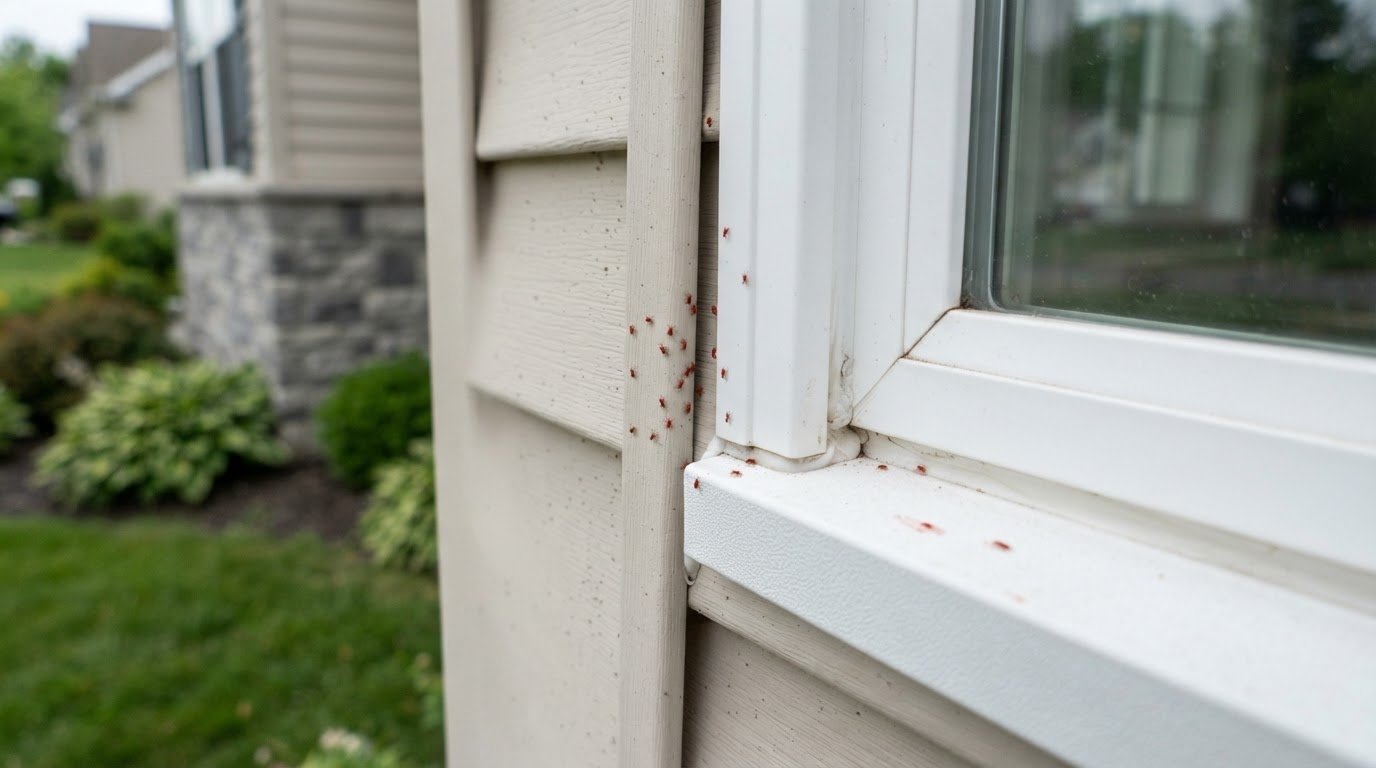
Could tiny red mites indoors signal a major infestation? A clover mite infestation on house siding or near windows can look alarming, especially when the mites leave red smears if crushed. But a few indoor sightings don’t necessarily mean they’re breeding inside or spreading through the home.
It’s reasonable to want a clear answer before choosing a response. This guide explains how to recognize likely clover mites, why they enter homes, and what their presence may mean. Clover mites are a nuisance, but they don’t bite people or transmit disease, and indoor mites generally don’t reproduce.
You’ll learn which visible clues help distinguish clover mites from other tiny pests, how nearby grass and gaps around the home can contribute to entry, and which practical prevention steps may help. The article also covers what to do about indoor sightings, how to limit staining, and when persistent activity or uncertain identification may warrant a professional assessment.
Key Takeaways
- Learn which visible features can help distinguish clover mites from other tiny red pests.
- A clover mite infestation on house surfaces often starts outdoors, so nearby vegetation and entry points are useful clues.
- Match your next step to the pattern: an isolated sighting, repeated activity, or uncertain identification may call for different responses.
- Understand how managing dense vegetation near exterior walls can help reduce opportunities for mites to enter.
- Record where and when you see the mites so a professional assessment can better address persistent sightings or identification concerns.
Clover Mite Infestation on a House: How to Recognize the Signs
Finding tiny red specks moving across a windowsill or wall can be surprising and frustrating. Their size makes them difficult to inspect, and crushing one may leave a noticeable red mark. That stain can look alarming, but it isn’t evidence of blood. Careful observation can help you decide whether the insects may be clover mites or whether the identification is uncertain.
A clover mite infestation on house surfaces often becomes noticeable when mites gather near windows, doors, or other points along the exterior. A cluster can look like dust or small moving dots at first. Look closely before assuming they’re clover mites: several small pests can appear reddish, and color alone isn’t enough to identify a species confidently.
What do clover mites look like indoors?
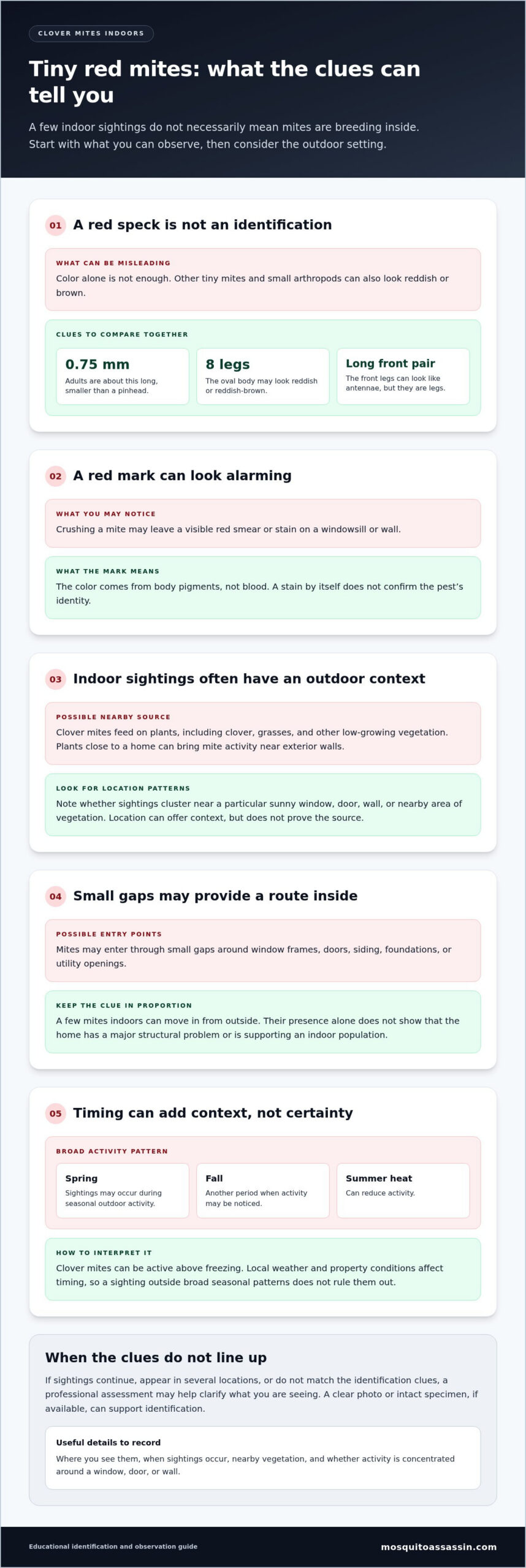
Clover mites are extremely small. Adults are about 0.75 millimeters long, smaller than a pinhead, and may appear reddish or reddish-brown. They have an oval body and eight legs, though their size can make these details hard to see without magnification. Their front pair of legs is notably long and often held forward, creating an antenna-like appearance. These are legs, not antennae.
Indoors, homeowners may notice them crawling on windowsills, walls, or in bright areas near sunny windows. Their movement and small size can make them easy to mistake for flecks of debris. If crushed, a mite may leave a red mark or stain from its body pigments. The mark isn’t blood, and the stain alone doesn’t confirm the pest’s identity.
A useful identification clue is the combination of a pinhead-sized reddish body and an unusually long front pair of legs that can look like antennae. For a closer look at the species’ description and related details, see Bryobia praetiosa (Clover Mite).
Could the tiny red mites be another pest?
Yes. Other tiny mites and small arthropods may look red or brown, especially when viewed without magnification. Some may be associated with birds, rodents, or stored materials, while clover mites are commonly associated with outdoor plants. Those broad clues can help guide observation, but they don’t provide a definitive identification on their own.
Compare more than color. Note the body’s shape, approximate size, movement, and whether the front legs appear much longer than the others. Also record where you’re seeing them, such as a sunny window area or a room with another possible source. Avoid relying on a red smear as a diagnostic sign. It only shows that a small, pigment-bearing creature was crushed.
If sightings continue, appear in several locations, or don’t match these clues, a professional assessment may help clarify what you’re seeing. Identifying the pest matters because different mites can have different sources and may call for different next steps. A clear photo or an intact specimen, if available, can support identification, but uncertainty is a good reason not to assume every tiny red mite is a clover mite.
Why Clover Mites Enter Houses and Where They Come From
Indoor sightings usually begin outside. Clover mites feed on plants, including clover, grasses, and other low-growing vegetation. When these plants grow close to a home, mites may be active near the foundation, windows, and doors. Their presence near a wall doesn’t mean the house itself is providing food or a place for them to establish a population.
In Pennsylvania and Ohio, sightings may follow seasonal activity in spring and fall, when conditions are favorable for clover mites to move around outdoors. They can be active when temperatures are above freezing, while summer heat can reduce activity. Timing varies with local weather and the conditions around each property, so a sighting outside those broad seasonal patterns doesn’t rule them out.
What attracts clover mites near a house?
Vegetation is the main clue. Clover mites feed on plant material and may be associated with turf and other plants growing near a building. A lawn or garden that reaches directly to the foundation can put suitable outdoor habitat close to openings in the exterior. Lush, heavily fertilized grass near the house may also support mite activity, but no single lawn feature guarantees an infestation.
Plant beds, groundcover, and grass beside exterior walls can make it harder to distinguish where the yard ends and the house begins. The University of Maryland Extension’s clover mite guidance describes their plant-feeding habits and association with lawns and other vegetation. Consider the surrounding landscape as context, not proof: mites may be present in nearby plants without entering the home.
Clover mites live and feed outdoors, and vegetation close to a house can bring their activity near the walls, making occasional indoor sightings more likely. This connection helps explain why sightings may appear concentrated around one side of a building or near particular windows.
How do clover mites get inside?
Like other tiny arthropods, clover mites may enter through small gaps around window frames, doors, siding, foundations, or utility openings. These are possible routes, not evidence that a home has a major structural problem. A few mites indoors can result from movement through an exterior opening while they’re active outside.
Residents may notice mites on bright, sun-exposed walls or near windows because these areas can be convenient places to spot them as they move along the exterior or gather around openings. Sunlight-facing walls may therefore shape where sightings are noticed, but they don’t establish the source by themselves. Check whether activity is concentrated near a particular window, door, or wall, and compare those locations with nearby vegetation.
Indoor sightings alone don’t show that clover mites are breeding inside. They’re plant feeders, and the indoor environment generally doesn’t provide the conditions they need to establish. If sightings recur or the pest’s identity is uncertain, professional pest control may help clarify the likely source and appropriate next steps. An assessment can be discussed through professional pest control guidance.
Clover Mite Response Options: Monitoring, Prevention, or Professional Help
Seeing a few mites doesn’t automatically call for an intensive response. The right next step depends on how often they appear, where they’re found, and how confident you are about their identity. A measured approach can help separate a brief episode from a recurring pattern without assuming that any one measure will prevent all future sightings.
Monitoring means recording what you observe. Prevention focuses on conditions that may make entry less likely, such as vegetation near the structure or gaps around the exterior. Professional assessment is useful when the pest is unclear or sightings continue. These options can complement each other, but they serve different purposes: observation gathers clues, prevention addresses possible contributing conditions, and assessment helps clarify the pest and response.
| Situation | Reasonable next step | What it can and can’t tell you |
|---|---|---|
| One isolated sighting | Note the location and date, then watch for a pattern. | May help establish whether activity recurs, but doesn’t confirm the species. |
| Repeated sightings | Record frequency and locations, and consider prevention or professional assessment. | Can reveal where activity is concentrated, but monitoring alone won’t resolve the source. |
| Uncertain pest identification | Seek an assessment, especially if sightings continue or appear in several areas. | Accurate identification helps guide a proportionate response. |
When is monitoring a reasonable first response?
If you’ve seen a mite once or in one limited area, begin by noting when and where it appeared. Record whether sightings recur near the same window, wall, or room, and whether the number seems to change. This simple record can make patterns easier to describe later. Monitoring isn’t a test: it can’t identify a mite by itself or guarantee that sightings will stop.
Repeated activity deserves a closer look than a single stray mite. Still, frequency alone doesn’t establish the cause. The pattern may help distinguish a short-lived episode from continued entry, while prevention can address conditions around the building that may contribute. Neither observation nor general prevention guarantees that mites won’t appear again.
When should a homeowner consider professional assessment?
Consider assessment when identification remains uncertain, sightings keep returning, or mites appear across multiple indoor areas. The response for clover mites may differ from the response for another small pest, so identifying what’s present is an important first step. A professional can evaluate the reported pattern and help determine whether the issue calls for further attention.
For a broader overview of how household pest concerns are assessed, explore this general pest control guidance. In the case of a possible clover mite infestation on house surfaces, share the locations and timing of sightings, along with any clear observations. That information can support a more focused assessment without jumping to conclusions or choosing a response before the pest is identified.
How to Reduce the Chance of Clover Mites Appearing Indoors
Prevention focuses on making it harder for mites near the home to reach indoor spaces. It doesn’t require assuming that every sighting signals a serious problem, and no single landscaping or building change can guarantee that mites won’t appear. Instead, look at the relationship between outdoor vegetation, the house exterior, and the places where mites have been noticed.
Which home conditions can make indoor sightings more likely?
Dense grass, groundcover, or other vegetation growing directly beside exterior walls can provide outdoor habitat close to windows and doors. If sightings tend to occur near one window, for example, consider whether nearby plants or lawn growth could be part of the picture. This connection is a useful clue, not proof that the landscaping caused the mites to enter.
University extension guidance commonly recommends keeping a plant-free strip beside the foundation. A buffer of about 18 to 24 inches can separate lawn or dense plant growth from the house, with gravel, mulch, or bare soil among the suggested ground treatments. The goal is separation, not elimination of every mite outdoors. Conditions vary with the property, surrounding vegetation, and local environment.
Also pay attention to visible gaps around exterior features. Openings near window frames, doors, siding, or the foundation may offer possible routes inside. Keeping these areas in good repair can reduce opportunities for small pests to enter, although it won’t change the outdoor population or necessarily prevent every occasional entry.
What prevention can and cannot accomplish
Landscape separation and attention to potential entry points address different parts of the problem. A vegetation buffer may reduce the amount of suitable habitat immediately beside a wall, while closing or repairing gaps can limit access indoors. Neither approach is the same as eliminating clover mites throughout the yard. They’re preventive considerations, not a guaranteed fix.
Prevention is most useful when it responds to observed conditions. If activity has appeared near a particular side of the house, review the vegetation and exterior openings in that area. If sightings return despite general prevention, or if the pest’s identity remains uncertain, a property-specific assessment may help clarify what’s happening and which next steps are proportionate.
For a recurring clover mite infestation on house surfaces, avoid treating a sighting as a reason to apply products indiscriminately. The source, entry conditions, and identification all matter. Professional pest control may help assess persistent or unclear pest activity. Mosquito Assassin Pest Control LLC serves Erie and Crawford Counties in Pennsylvania and Ashtabula County in Ohio, as described in its local service area.
If sightings keep recurring or you’re unsure what you’ve found, request a professional pest assessment to discuss the pattern and possible next steps.
When Clover Mite Sightings Call for a Professional Assessment
One sighting may be brief, but recurring activity or uncertainty about the pest can make it hard to know what to do next. A professional assessment can help bring your observations together with relevant conditions around the property. You don’t need to identify the mite yourself before asking for guidance. Clear, simple notes are enough to start a useful conversation.
What information helps explain a recurring sighting?
Keep a short record of what you notice. Focus on three points:
- Record the pattern. Note the dates or general timing, and whether sightings are isolated or keep returning.
- Note the locations. Record the rooms, windows, doors, or exterior areas where activity appears. Mention whether sightings cluster in one place or occur in several areas.
- Explain why identification matters. Describe what makes you unsure, such as an appearance that differs from what you expected. Different small pests can look similar, and the right response depends on identifying what’s present.
These observations don’t confirm a species, and technical descriptions aren’t required. They can help distinguish a one-time appearance from a recurring pattern and give an assessment a more useful starting point. If you have a clear photo or an intact specimen, it may provide additional context, but you don’t need one to discuss your concerns.
What to expect from a professional pest assessment
A professional assessment generally considers the suspected pest alongside property conditions that may be relevant. This can include reviewing where and when sightings occur, exterior features near those locations, and whether the available clues support the identification. The goal is to inform a proportionate next step, not to assume that every red speck is a clover mite or that indoor sightings alone indicate an established indoor population.
Recurring or widespread sightings, uncertainty about the pest, or activity that continues despite general prevention are reasonable reasons to seek an assessment. Residential pest control services address common household pest concerns and can provide context for considering persistent or unclear activity.
If you’re unsure what you’re seeing or the pattern keeps returning, request professional pest control guidance to discuss your observations and possible next steps.
Make Your Next Step a Clear One
A recurring clover mite infestation on house surfaces can be easier to address when decisions are based on a clear picture of what’s happening, not guesswork. If sightings return, use your notes to explain the pattern and what remains uncertain. You don’t need to have every answer before asking for guidance.
For an informational discussion about persistent or unclear pest activity, share your observations and request professional guidance. A thoughtful next step can help you move forward with greater clarity and confidence.
Disclaimer: The information provided on this blog is for general informational purposes only and is not intended as professional pest control advice. Conditions vary by property, environment, and location. Reading this content does not create a service agreement. For an inspection or professional recommendations, please contact Mosquito Assassin Pest Control LLC directly.
Frequently Asked Questions
Do clover mites bite people or pets?
Clover mites are not considered biting pests. Finding one on a windowsill or wall doesn’t mean it has bitten a person or pet. Identification from a brief encounter can be difficult, especially if the mite is seen only as a red speck. Look for its tiny oval body and unusually long front legs, and consider where it was found. If unfamiliar mites keep appearing, professional identification can help avoid guessing.
Can clover mites live and reproduce inside a house?
Clover mites are generally associated with outdoor vegetation, and an indoor sighting alone doesn’t establish that they’re breeding inside. A few may enter through openings, but indoor conditions usually don’t support reproduction, and mites indoors typically die from dehydration within a few days. That doesn’t rule out repeated entry from outdoors. If sightings continue, note whether they appear in the same area or different parts of the home.
Why do clover mites leave red stains when crushed?
A crushed clover mite can leave a red mark because of pigments in its body, not because it contains blood. The stain may draw attention, but it isn’t a reliable way to identify the pest. Other small insects or debris may also leave marks when crushed. If possible, observe an intact mite instead of relying on a smear, and consider its size, shape, movement, and location.
What time of year are clover mites most noticeable in Pennsylvania and Ohio?
Clover mites are commonly more active in spring and fall in Pennsylvania and Ohio, though local conditions affect when sightings occur. They can become active when temperatures rise above freezing, while summer heat often reduces activity. These are broad patterns, not fixed calendar dates. A warm spell, nearby vegetation, or conditions around a particular building can influence when mites become noticeable, so timing alone cannot confirm their identity.
Do clover mites damage houseplants or outdoor plants?
Clover mites feed on plants, including grasses and clover, so they’re associated with outdoor vegetation and lawns. Their presence is different from structural damage to a house: they don’t damage the home’s structure. The extent of any plant effect depends on the situation, so don’t assume a plant’s discoloration or decline is caused by clover mites. If symptoms persist, accurate identification can help clarify the likely cause.
What should I do if I keep finding clover mites in the same room?
Record when sightings occur and where you find them, such as beside one window or along a particular wall. Note whether the number changes or whether activity appears in other rooms, and look for nearby exterior openings that may be relevant. These observations can help distinguish recurring activity from an isolated appearance. If the pattern continues or the pest is uncertain, professional assessment may help clarify identification and property conditions.
Are clover mites the same as chiggers?
No. Clover mites and chiggers are different kinds of mites. Clover mites are plant-feeding mites, while the chigger stage commonly referred to by that name is the larval stage of certain mites. Both may look reddish at a glance, so color alone isn’t enough to tell them apart. Compare observable features, such as body shape and leg proportions, along with where the mite was found. If uncertain, seek professional identification.
Disclaimer: The information provided on this blog is for general informational purposes only and is not intended as professional pest control advice. Conditions vary by property, environment, and location. Reading this content does not create a service agreement. For an inspection or professional recommendations, please contact Mosquito Assassin Pest Control LLC directly.