Tag: home remedies

  • Bed Bug Bites Treatment at Home: A Guide to Relief and Identification

    Bed Bug Bites Treatment at Home: A Guide to Relief and Identification

    Imagine waking up at 3:00 AM in Erie County with a row of red, itchy welts that weren’t there when you went to sleep. It’s a distressing experience that triggers immediate anxiety about your home’s safety and a desperate search for a bed bug bites treatment at home. You aren’t alone; research published in the journal “Insects” indicates that nearly 98 percent of individuals facing an infestation report significant emotional distress and sleep loss. It’s natural to feel overwhelmed when your bedroom no longer feels like a sanctuary.

    This guide explains how to manage the symptoms safely while identifying whether the source is actually bed bugs or another common pest like fleas or mosquitoes. You’ll learn how to soothe the skin with standard household items, distinguish specific bite patterns (such as the “breakfast, lunch, and dinner” row), and establish a plan to regain control of your home. While home remedies can stop the itching, it’s vital to address the root cause. Understanding the difference between topical relief and total elimination is the first step toward a peaceful night’s rest for residents in Crawford or Ashtabula County.

    Disclaimer: The information provided on this blog is for general informational purposes only and is not intended as professional pest control advice. Conditions vary by property, environment, and location. Reading this content does not create a service agreement. For an inspection or professional recommendations, please contact Mosquito Assassin Pest Control LLC directly.
    Key Takeaways

    • Learn to identify the classic “breakfast, lunch, and dinner” feeding pattern to distinguish bed bug bites from other common pests.
    • Discover how to safely manage itching and inflammation using effective bed bug bites treatment at home methods like mild soap and hydrocortisone.
    • Understand the biological mechanisms bed bugs use to locate hosts and why their bites often go unnoticed during the night.
    • Recognize the specific symptoms of secondary bacterial infections and severe allergic reactions that necessitate professional intervention.
    • Master proactive prevention techniques for traveling and furniture shopping to protect your household from future infestations.

    Identifying Bed Bug Bites and Common Symptoms

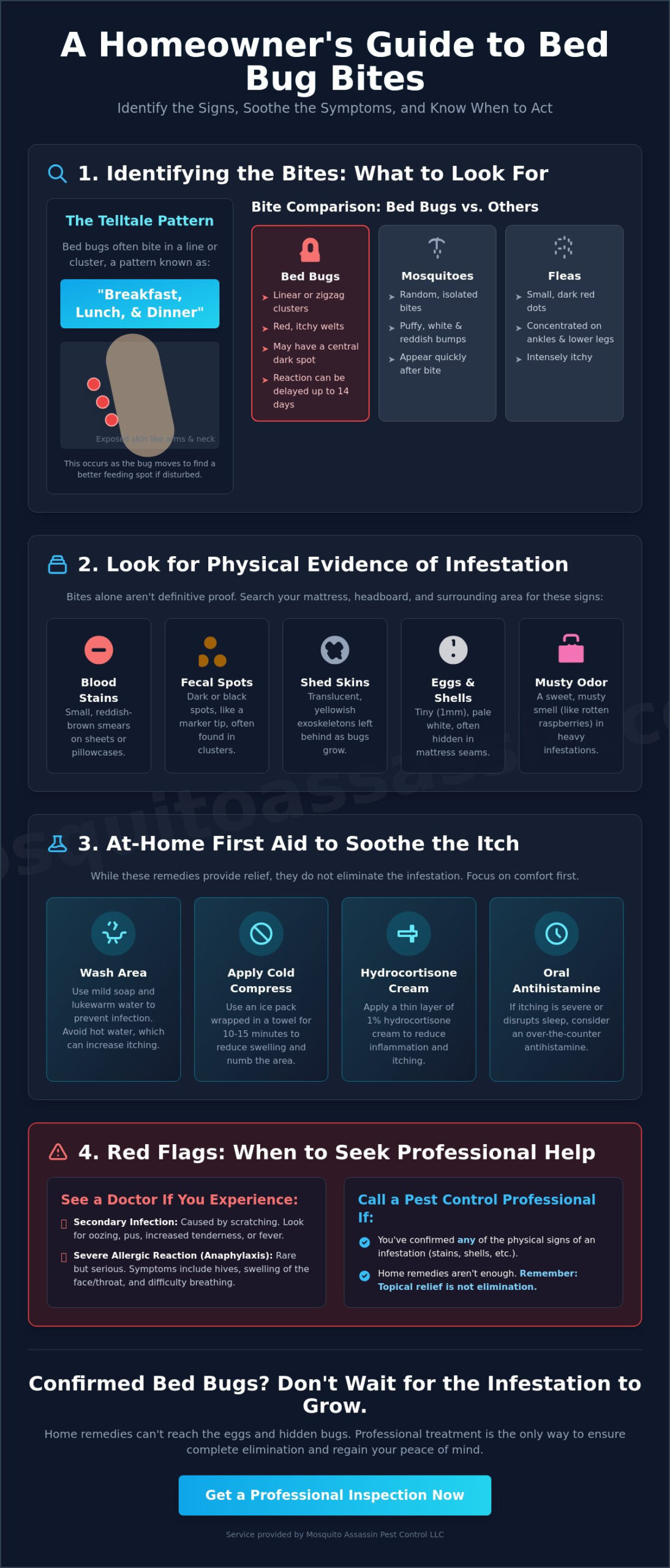
    Correctly identifying the source of skin irritation is the first step toward finding an effective bed bug bites treatment at home. Bed bug bites often look similar to other insect stings, but their unique arrangement usually provides the first clue. These pests are nocturnal and feed while you sleep, targeting areas of exposed skin such as the arms, neck, and shoulders. While individual reactions vary, most people experience some degree of redness and swelling shortly after exposure.

    A signature characteristic of these pests is the linear or zigzag pattern they leave behind, often called the “breakfast, lunch, and dinner” sequence. This occurs because the insect may move to a new spot if its feeding is interrupted. For a comprehensive overview of bed bugs and their biological traits, scientific records show that these welts often feature a central dark spot where the mouthparts entered the skin. It’s also vital to realize that reactions don’t always happen instantly. According to clinical observations from the American Academy of Dermatology, it can take up to 14 days for a bite to become visible on the skin, which often leads to confusion about when the exposure actually happened.

    To better understand this concept, watch this helpful video:

    Bed Bug Bites vs Other Common Insects

    Differentiating these welts from other pests is crucial for residents in Erie or Crawford County. Mosquito bites are typically random and isolated, appearing anywhere the skin is accessible. In contrast, flea bites are much smaller and usually concentrate around the ankles and lower legs. Hives can also mimic bed bug reactions, but hives typically change shape or disappear within 24 hours, whereas bed bug welts can persist for a week or longer.

    Signs of an Infestation Beyond the Bites

    Because bites are an unreliable indicator on their own, you should look for physical evidence in your sleeping area. Check your bed linens for small blood stains or rust-colored fecal spots, which are common indicators of activity. Heavy infestations often produce a distinct, sweet, and musty odor similar to rotting raspberries. You might also find discarded translucent skins or tiny white eggshells tucked into the seams of mattresses or headboards. Finding these signs alongside physical symptoms confirms that professional pest control may help reduce risk.

    Practical At-Home Treatments for Itching and Swelling

    Once you’ve identified the telltale signs of activity, your immediate priority is comfort. Finding an effective bed bug bites treatment at home starts with basic hygiene. Wash the affected area with mild soap and lukewarm water as soon as possible. This simple step removes surface bacteria and debris, which helps prevent secondary skin infections that often occur when the skin is broken. Avoid using hot water, as high temperatures can dilate blood vessels and actually worsen the itching sensation.

    For many, over-the-counter solutions provide the most reliable relief. Applying a 1 percent hydrocortisone cream can significantly reduce localized inflammation and redness. The American Academy of Dermatology provides expert advice on treating bed bug bites, suggesting that these topical steroids are most effective when applied thinly to the welts. If the itching is intense and disrupts your sleep, an oral antihistamine like diphenhydramine can help manage the body’s allergic response from the inside out. Always follow the dosage instructions on the packaging or consult a pharmacist to ensure these products are appropriate for your health history.

    Physical relief is also accessible through temperature control. Applying a cold compress or an ice pack wrapped in a thin towel for 10 to 15 minutes can numb the area and constrict blood vessels. This reduces the swelling and provides a temporary break from the burning sensation. If the discomfort continues to keep you awake, professional pest control may help reduce risk by addressing the source of the problem.

    Natural and Pantry-Based Remedies

    If you prefer using items already in your kitchen, a baking soda paste is a time-tested option. Mix three parts baking soda with one part water until it reaches a thick consistency and apply it directly to the bites. Let it dry for 10 minutes before rinsing. Pure aloe vera gel, known for its anti-inflammatory properties, can also soothe irritated skin. Additionally, witch hazel acts as a natural astringent; applying it with a cotton ball helps calm the skin and may reduce the urge to scratch.

    Safety Precautions for Home Treatment

    While treating the symptoms, you must protect the skin’s integrity. Don’t scratch the welts. Scratching can lead to open sores, which increases the likelihood of infections like impetigo or cellulitis. If you use essential oils or lemon juice, test a small, unaffected patch of skin first to ensure you don’t have a sensitivity. It’s also vital to consult a healthcare professional before applying any medicinal treatments to infants or children under age 2, as their skin is much more absorbent and sensitive than an adult’s.

    Disclaimer: The information provided on this blog is for general informational purposes only and is not intended as professional pest control advice. Conditions vary by property, environment, and location. Reading this content does not create a service agreement. For an inspection or professional recommendations, please contact Mosquito Assassin Pest Control LLC directly.
    Bed Bug Bites Treatment at Home: A Guide to Relief and Identification

    Understanding Bed Bug Behavior and Feeding Patterns

    Many people find it unsettling that they can be bitten multiple times without ever waking up. This isn’t a coincidence; it’s the result of a highly evolved biological process. Bed bugs track their hosts by detecting the carbon dioxide we exhale and the heat radiating from our bodies. Once they’ve located a patch of skin, they use a specialized proboscis to pierce the surface. This is where the actual biological “stealth” begins.

    The saliva of a bed bug is a complex mixture containing more than 46 different proteins. Two of these are critical: a local anesthetic and an anticoagulant. The anesthetic numbs the nerves at the site of the puncture, ensuring the host remains asleep. At the same time, the anticoagulant prevents the blood from clotting, allowing the insect to feed efficiently for 5 to 10 minutes. Because of this chemical interference, the initial sensation is non-existent, which is why a bed bug bites treatment at home usually starts days after the actual event occurred.

    While a single bed bug typically feeds only once every 5 to 10 days, the presence of a colony can make it feel like a nightly occurrence. Their metabolic rate is closely tied to the environment. In a room kept at 70 degrees Fahrenheit, they may wait longer between meals, but in warmer summer months, their feeding cycles accelerate. This predictable behavior is why identifying their habits is just as important as managing the physical symptoms.

    The Nocturnal Nature of Bed Bugs

    Bed bugs are primarily nocturnal and have a strong aversion to light. During the day, they retreat into tight, dark crevices near their “feeding station,” which is usually the bed. Common hiding spots include the interior of headboards, the undersides of nightstands, and behind baseboards. If you suddenly turn on a light or move significantly, it can disrupt their feeding cycle, causing them to retreat before they’ve finished their meal. This often results in the clustered bite patterns mentioned in earlier sections.

    Why Do New Bites Appear After Treatment?

    It’s common for residents in Erie or Crawford County to see “new” welts even after applying a bed bug bites treatment at home. This doesn’t always mean new insects are feeding. Individual immune systems react at different speeds. Research from the University of Kentucky indicates that while some people react within 24 hours, others don’t show a physical response for up to 14 days. If your body has a delayed response, you’re seeing the results of a feeding that happened a week ago. Treating the skin only addresses the itch; it doesn’t stop the biological cycle of the insects living in the room. Professional pest control may help reduce risk by stopping these feeding cycles at the source.

    Disclaimer: The information provided on this blog is for general informational purposes only and is not intended as professional pest control advice. Conditions vary by property, environment, and location. Reading this content does not create a service agreement. For an inspection or professional recommendations, please contact Mosquito Assassin Pest Control LLC directly.

    When to Seek Professional Guidance for Bites and Infestations

    While a bed bug bites treatment at home can manage the immediate discomfort of itching, it doesn’t address the biological threat living in your furniture. There are specific moments when home care is no longer sufficient and medical or professional intervention becomes necessary. If you notice that your bites are becoming increasingly painful, swollen, or warm to the touch, you may be developing a secondary bacterial infection. Cellulitis and impetigo are common complications that arise when scratching introduces staphylococcal or streptococcal bacteria into the broken skin. Signs to watch for include red streaks extending from the bite or the presence of yellow, crusty drainage.

    Severe allergic reactions, though less common, require immediate emergency medical care. Anaphylaxis can manifest as difficulty breathing, swelling of the tongue or throat, and a rapid pulse. Beyond these physical risks, the psychological impact of an infestation shouldn’t be ignored. A study published in “BMJ Open” found that individuals dealing with these pests often experience clinical levels of anxiety, hyper-vigilance, and persistent insomnia. When the stress of the situation begins to interfere with your daily life or your ability to sleep in your own bed, it’s time to shift from topical relief to a more definitive solution.

    The Limitations of DIY Eradication

    Retail products often promise quick results but rarely deliver total elimination. Many homeowners in Erie and Crawford counties reach for “bug bombs” or total release foggers, but these can actually make the problem worse. The chemicals in these canisters often fail to penetrate the deep crevices where bed bugs hide. Instead, the irritating mist can drive the insects deeper into wall voids or behind baseboards, spreading the infestation to other rooms. Standard over-the-counter sprays also struggle to kill eggs and nymphs, which are protected by a resilient outer casing that professional-grade equipment is specifically designed to bypass.

    The Importance of a Professional Inspection

    A licensed professional provides a level of precision that a bed bug bites treatment at home cannot replicate. Experts use a combination of high-powered vacuums, specialized heat treatments, and targeted residuals to disrupt the entire life cycle of the pest. For residents in Ashtabula County, a professional inspection identifies the full extent of a “hidden” infestation, ensuring that every harborages point is located. A customized treatment plan is then tailored to your home’s specific layout, providing a more sustainable and long-term solution than repetitive DIY attempts. If you are struggling to find the source of your bites, professional pest control may help reduce risk and restore your peace of mind.

    Disclaimer: The information provided on this blog is for general informational purposes only and is not intended as professional pest control advice. Conditions vary by property, environment, and location. Reading this content does not create a service agreement. For an inspection or professional recommendations, please contact Mosquito Assassin Pest Control LLC directly.

    Preventing Future Bites in Pennsylvania and Ohio Homes

    Northwest Pennsylvania and Northeast Ohio serve as major transit corridors, which makes regional homes susceptible to hitchhiking pests. While managing symptoms with a bed bug bites treatment at home provides temporary comfort, preventing a reintroduction is the only way to ensure long-term relief. Bed bugs are expert travelers, often moving from hotels, public transportation, or shared laundry facilities into private residences. Establishing a strict inspection protocol for all items entering your home is essential for maintaining a pest-free environment.

    Secondhand items present a significant risk factor for residents in Erie and Crawford counties. If you enjoy shopping at local thrift stores or acquiring furniture from online marketplaces, you must perform a thorough inspection outdoors before bringing anything inside. Even small items like picture frames or electronics can harbor eggs in tiny crevices. For clothing or linens, a high-heat laundry cycle is your best defense. Research from the University of Minnesota confirms that placing items in a dryer on the highest heat setting for at least 30 minutes effectively kills all life stages, including resilient eggs. This is a simple but powerful step to take after returning from any trip or purchasing used goods.

    Travel Tips for Residents of Erie and Ashtabula

    When staying in hotels or rentals, never place your suitcase directly on the bed or carpeted floor. Use the provided metal luggage racks instead; the smooth, cold legs are difficult for insects to climb. Before unpacking, conduct a five-minute visual sweep of the mattress seams, headboard, and upholstered furniture. Look for the small blood spots or discarded skins described in the identification section of this guide. If you suspect exposure during your travels, seal your belongings in plastic bags until they can be laundered at high temperatures upon your return home.

    Protective Measures for the Home

    In your own bedroom, high-quality mattress and box spring encasements are invaluable tools. These specialized covers lack the deep folds and seams where insects prefer to hide, which makes early detection much easier during your regular cleaning routine. You should also take time to seal cracks in baseboards or gaps around electrical outlets with caulk to limit the movement of pests between rooms. Reducing clutter is another vital strategy. Piles of clothing, papers, or boxes on the floor provide ideal hiding spots that are difficult to treat. By keeping the area around your bed clear and vacuuming along the edges of carpets weekly, you make your home much less hospitable to unwanted guests. If these preventative measures aren’t enough to stop the appearance of new welts, professional pest control may help reduce risk.

    Disclaimer: The information provided on this blog is for general informational purposes only and is not intended as professional pest control advice. Conditions vary by property, environment, and location. Reading this content does not create a service agreement. For an inspection or professional recommendations, please contact Mosquito Assassin Pest Control LLC directly.

    Restoring Peace of Mind to Your Home

    Successfully managing the physical discomfort of an infestation requires both immediate action and a long-term strategy. While a bed bug bites treatment at home can effectively soothe intense itching and reduce localized swelling, it doesn’t address the underlying biological threat. Identifying the classic feeding patterns and maintaining high-heat laundry cycles are critical first steps for residents in Erie, Crawford, and Ashtabula counties. However, these efforts are most effective when paired with a thorough understanding of how these pests hide in undisturbed environments.

    Professional pest control may help reduce risk and provide a permanent solution for your household. As a locally owned and operated business licensed and insured in PA and OH, Mosquito Assassin utilizes specialized bed bug treatment protocols to target pests at every life stage. Taking definitive action today is the best way to safeguard your bedroom and ensure a restful night’s sleep. For an inspection or professional recommendations, please contact Mosquito Assassin Pest Control LLC directly.

    Disclaimer: The information provided on this blog is for general informational purposes only and is not intended as professional pest control advice. Conditions vary by property, environment, and location. Reading this content does not create a service agreement. For an inspection or professional recommendations, please contact Mosquito Assassin Pest Control LLC directly.

    Frequently Asked Questions

    How long do bed bug bites last on the skin?

    Most bed bug bites resolve within 7 to 14 days without medical intervention. The duration depends heavily on your body’s specific immune response and whether the skin remains intact. While the initial swelling might subside in a few days, the red mark can linger for two weeks or longer in sensitive individuals. Consistent application of a bed bug bites treatment at home can help manage the appearance during this time.

    Can I get rid of bed bugs on my own using store-bought sprays?

    Total elimination with retail sprays is statistically unlikely because these products often lack the residual strength to kill eggs or reach deep harborages. While you might kill a few visible insects, the remaining colony often retreats further into wall voids. Professional pest control may help reduce risk by using commercial-grade equipment that reaches these hidden areas in Erie and Crawford County homes.

    Do bed bug bites always appear in a straight line?

    While linear patterns are a classic sign, bites can also appear in random clusters or isolated welts. If the insect’s feeding is frequently interrupted by your movement, it may bite several times in a small area rather than a straight row. This variation often leads to confusion when homeowners are trying to identify the source of their irritation during the initial stages of an infestation.

    What happens if a bed bug bite becomes infected?

    An infected bite will typically show increased swelling, persistent warmth, and may develop pus or a yellow crust. If you notice red streaks spreading from the site or if you develop a fever, seek medical attention immediately. These symptoms suggest a bacterial infection like cellulitis that requires professional medical treatment rather than topical home care or standard over-the-counter creams.

    Are bed bug bites dangerous or do they carry diseases?

    Bed bugs aren’t currently known to transmit blood-borne diseases to humans. The primary risks are physical and psychological, including severe allergic reactions, secondary skin infections, and significant sleep deprivation. While they don’t carry pathogens like mosquitoes or ticks, the stress of an infestation can impact your overall well-being and requires a methodical approach to eradication.

    Why do some people in the same bed not have any bites?

    It’s common for one person to show severe welts while their partner appears completely unaffected. Data from clinical studies suggests that approximately 30 percent of the population does not have a skin reaction to bed bug saliva. The insects are likely biting both individuals, but one person simply doesn’t produce the histamine response that causes the visible itching and redness associated with a bite.

    Can pets like dogs or cats get bed bug bites?

    Pets can be bitten, though bed bugs prefer human hosts because our skin is easier to access and provides a more consistent heat signature. Fur provides a natural barrier that makes it harder for the insects to reach the skin surface. If you notice your pet scratching excessively or see small red bumps on their belly, a thorough inspection of their bedding is recommended.

    What is the fastest way to stop the itching from bed bug bites?

    Applying a cold compress for 15 minutes is the quickest way to numb the nerves and reduce the immediate urge to scratch. Following this with an over-the-counter antihistamine helps block the body’s internal allergic response. Combining these methods with a topical bed bug bites treatment at home provides the most comprehensive relief for persistent nighttime irritation and helps prevent skin damage from scratching.

    Disclaimer: The information provided on this blog is for general informational purposes only and is not intended as professional pest control advice. Conditions vary by property, environment, and location. Reading this content does not create a service agreement. For an inspection or professional recommendations, please contact Mosquito Assassin Pest Control LLC directly.

  • Natural Cure for Bed Bugs: What Works and What Falls Short

    Natural Cure for Bed Bugs: What Works and What Falls Short

    While many believe starving bed bugs is a viable solution, research from the University of Kentucky indicates these pests can survive for up to 400 days without a blood meal. It’s completely understandable why families in Erie, Crawford, or Ashtabula counties search for a natural cure for bed bugs. The 2018 Bugs Without Borders survey reported that 76% of pest professionals consider these the toughest pests to treat; this leads to anxiety over chemical exposure and rising costs. You’ll discover the reality of natural bed bug treatments, including which home methods provide genuine relief and how to correctly use them to reduce pest populations.

    This article breaks down the effectiveness of heat, cold, and botanical oils so you can protect your home without unnecessary risks. Understanding these limitations is the first step toward reclaiming your bedroom and ending the frustration of itchy, recurring bites. Knowing when a DIY approach is sufficient and when professional intervention becomes necessary can save months of sleep deprivation and stress. Professional pest control may help reduce risk when these home methods fall short of total elimination.

    Disclaimer: The information provided on this blog is for general informational purposes only and is not intended as professional pest control advice. Conditions vary by property, environment, and location. Reading this content does not create a service agreement. For an inspection or professional recommendations, please contact Mosquito Assassin Pest Control LLC directly.

    Key Takeaways

    • Understand the biological factors that make bed bugs resilient and why many popular home remedies fail to address the root of the infestation.
    • Evaluate the effectiveness of physical desiccants and botanical sprays to determine which methods offer relief and which are limited to contact-only results.
    • Explore how thermal energy and mechanical extraction can be used as part of a strategy to target all life stages of the pest.
    • Learn the critical steps of an integrated management plan, including the importance of accurate identification and reducing clutter to eliminate hiding spots.
    • Identify the specific signs that indicate a natural cure for bed bugs is falling short and when professional intervention is necessary to safeguard the home.

    Understanding Bed Bug Biology and the Quest for a Natural Cure

    Bed bugs are among the most difficult household pests to manage. These nocturnal insects hide in gaps as thin as a credit card during the day, emerging at night to feed on human blood. For many homeowners in the tri-state area, the search for a natural cure for bed bugs stems from a desire to avoid harsh chemicals around children and pets. However, finding a single permanent solution is difficult because bed bugs are not just a nuisance; they are biological survivors designed to withstand environmental pressure.

    Understanding the fundamentals of Bed Bug Biology reveals why topical treatments often fail. Bed bug eggs are coated in a protective, sticky substance that resists many liquids. This means that even if a treatment kills the adults, a new generation can hatch within 6 to 10 days, restarting the infestation cycle. A successful strategy usually requires a multi-step management process rather than a one-time application.

    To better understand this concept, watch this helpful video:

    The Resilience of Bed Bugs: Why They Survive DIY Efforts

    Bed bugs have survived for thousands of years by adapting to their environment. Research indicates that certain populations have developed exoskeletons that are 15 percent thicker than they were in previous decades, providing a physical shield against contact-based remedies. They can also enter a state of dormancy, surviving without a blood meal for over 400 days in cool environments. Their behavior is equally defensive; they often hide deep within wall voids and furniture joints where domestic sprays cannot reach. Because a single female can lay between 200 and 500 eggs in her lifetime, missing just one or two insects can lead to a full rebound of the population within a month.

    Natural Solutions in Pennsylvania and Ohio Homes

    In regions like Erie, Pennsylvania, and Ashtabula, Ohio, the local environment plays a significant role in pest activity. Older housing stock, particularly homes built before 1950, features lath-and-plaster walls and original woodwork that provide endless hiding spots for parasites. The high humidity near Lake Erie can also influence how certain botanical powders or dusts perform, sometimes causing them to clump and lose effectiveness.

    A common regional misconception is that freezing temperatures in a Pennsylvania winter will provide a natural cure for bed bugs if a homeowner simply opens the windows. In reality, bed bugs are experts at finding insulation. They will move deeper into heated wall voids or floorboards until the danger passes. Residents in Erie and Crawford Counties should recognize that while natural repellents like essential oils may offer temporary relief, they rarely achieve total eradication in complex, older structures. Professional pest control may help reduce risk in these challenging environments.

    Disclaimer: The information provided on this blog is for general informational purposes only and is not intended as professional pest control advice. Conditions vary by property, environment, and location. Reading this content does not create a service agreement. For an inspection or professional recommendations, please contact Mosquito Assassin Pest Control LLC directly.

    Evaluating Common Natural Remedies and Home Treatments

    Many homeowners in Erie and Crawford Counties seek a natural cure for bed bugs to avoid using synthetic chemicals around their families. While the desire for an organic approach is understandable, it’s vital to distinguish between substances that kill a single bug on contact and those that can actually eliminate an entire population. Most DIY attempts fail because they lack a residual effect, meaning they stop working the moment they dry or the scent dissipates.

    Diatomaceous Earth: Benefits and Safety Limitations

    Diatomaceous earth (DE) is a popular physical desiccant made from the fossilized remains of tiny aquatic organisms called diatoms. This powder works by absorbing the waxy fats and lipids from the bed bug’s exoskeleton. Once this protective layer is compromised, the insect dehydrates and dies. For residents in Ashtabula County, using food-grade versions is a requirement for safety, as pool-grade DE contains crystalline silica that can cause permanent lung damage if inhaled.

    Effective application requires a light, almost invisible layer. If the powder is piled too high, bed bugs will simply walk around it. Even when applied correctly, DE is a slow-acting solution. It often takes 7 to 12 days of direct contact to kill a single insect. Because bed bugs can hide for weeks without feeding, relying solely on powder often allows the infestation to grow faster than the treatment can manage.

    Essential Oils and Botanical Sprays: Scent vs. Substance

    Botanical sprays featuring peppermint, tea tree, or neem oil are frequently marketed as a natural cure for bed bugs. Research from 2021 indicates that while high concentrations of certain essential oils can kill bed bugs on contact, they offer zero residual protection. Once the spray dries, it loses its efficacy.

    A significant risk with scent-based remedies is their repellent nature. Instead of eliminating the colony, these strong odors often “flush” the bugs out of their hiding spots. This can cause the insects to migrate through wall voids and electrical outlets into adjacent rooms, spreading the problem from a single mattress to the entire house. Following EPA bed bug control methods is a more reliable way to manage these pests without inadvertently making the infestation more difficult to treat.

    Common kitchen items like vinegar or baking soda are largely ineffective. Vinegar is acidic enough to kill a bug if you drench it directly, but it won’t affect eggs or bugs hidden inside furniture. Baking soda does not have the sharp edges or the absorptive capacity required to dehydrate an insect. When home remedies fail to produce results within 14 days, consulting with professional pest control may help reduce risk of a total home infestation.

    Disclaimer: The information provided on this blog is for general informational purposes only and is not intended as professional pest control advice. Conditions vary by property, environment, and location. Reading this content does not create a service agreement. For an inspection or professional recommendations, please contact Mosquito Assassin Pest Control LLC directly.

    Natural Cure for Bed Bugs: What Works and What Falls Short

    Mechanical and Physical Control Methods for Bed Bug Management

    Mechanical control methods represent the most reliable natural cure for bed bugs because they rely on physics rather than chemistry. These tactics target the biology of the pest directly by crushing, removing, or overheating the insects. Unlike some essential oils or home remedies that lack scientific backing, physical controls are proven to provide an immediate reduction in the population density of a home. They’re the most effective tools for homeowners who want to avoid synthetic chemicals while achieving measurable results.

    High-Heat Laundering and Steam Treatment

    Heat is a lethal tool in the fight against infestations. Bed bugs at all life stages, including the resilient eggs, die when exposed to sustained high temperatures. For a safe and effective kill, homeowners should set dryers to at least 120 degrees Fahrenheit. Running a high-heat cycle for a minimum of thirty minutes ensures the core of the fabric reaches the necessary lethal temperature. This is especially effective for bedding, clothing, and curtains that can withstand high-heat laundering.

    Steamers offer a different advantage by reaching bugs hidden deep in upholstery, box springs, and carpet seams. A commercial-grade steamer is required to produce “dry” steam, which minimizes moisture and prevents mold. When using a steamer, it’s vital to move the head at a rate of about one inch per second. This slow, deliberate movement ensures the heat transfers deeply into hiding spots. This approach is a core component of Integrated Pest Management (IPM) for bed bugs, focusing on non-chemical mortality through environmental manipulation.

    The Role of Vacuuming and Physical Removal

    Vacuuming is a front-line strategy for immediate relief. High-suction vacuums equipped with crevice tools can pull adults, nymphs, and some eggs from seams, tufts, and bed frames. It’s a manual extraction process that reduces the “pest load” in a room instantly. While it won’t eliminate every bug hidden behind a baseboard, it’s a critical step in a comprehensive plan. Regular maintenance through vacuuming also supports general pest control efforts by removing the dust and debris that can provide cover for various household pests.

    Specific disposal steps are required to ensure the vacuum doesn’t become a transport vehicle for the infestation. Users must seal vacuum bags in plastic and dispose of them in an outdoor bin immediately after use. For bagless models, the canister should be emptied into a sealed bag and the container washed with hot, soapy water to kill any remaining hitchhikers. Mattress encasements also play a vital role here. By sealing the mattress and box spring, you trap existing bugs inside and eventually starve them, while making it impossible for new bugs to find harborages in the bed’s complex structures.

    Disclaimer: The information provided on this blog is for general informational purposes only and is not intended as professional pest control advice. Conditions vary by property, environment, and location. Reading this content does not create a service agreement. For an inspection or professional recommendations, please contact Mosquito Assassin Pest Control LLC directly.

    Creating a Non-Chemical Integrated Pest Management Plan

    Finding a single natural cure for bed bugs is often the first instinct for homeowners, but these pests are resilient. A more effective approach involves a non-chemical Integrated Pest Management (IPM) plan. This method focuses on the biology and behavior of the insects to disrupt their life cycle. Success depends on a systematic five-step process that requires patience and consistency.

    Accurate identification is the first step. Bed bugs are frequently mistaken for carpet beetles or spider beetles, which leads to ineffective treatment choices. Homeowners should look for flat, oval, reddish-brown insects about the size of an apple seed. Confirming the species ensures the strategy actually targets the correct pest. Once identified, clutter reduction is essential. Bed bugs can hide in gaps as small as 1 millimeter. Removing excess paper, boxes, and fabric from the bedroom eliminates these harborages and increases the odds of success for any following steps.

    Laundering at high temperatures is a critical third step. To effectively kill all life stages, including eggs, items must be dried on high heat for at least 30 minutes. Research from the University of Kentucky indicates that the internal temperature of the fabric must reach 122 degrees Fahrenheit to ensure total mortality. This should be part of a weekly schedule for all bedding and clothing near the infested area.

    Utilizing physical barriers and monitors constitutes the fourth step. Mattress encasements trap existing bugs inside and prevent new ones from nesting in the seams. Finally, evaluating progress is necessary. If bite frequency doesn’t decrease within 14 days, the strategy needs adjustment. Professional pest control may help reduce risk, and residents can find assistance by scheduling an inspection through the online booking portal.

    Decluttering and Sealing Entry Points in Older Homes

    Historic properties in Erie and Meadville often feature intricate woodwork, such as thick baseboards and crown molding. These architectural details provide deep crevices where bed bugs hide during the day. Using high-quality caulk to seal these cracks prevents the insects from retreating into the wall voids. Organized, sealed spaces make any subsequent bed bug treatment significantly more effective because the pests have fewer places to escape.

    Monitoring Techniques to Track Infestation Progress

    Passive interceptor traps are vital tools for tracking a population. Placing these plastic dishes under bed legs catches bugs as they attempt to climb up to find a host. Checking these monitors weekly allows residents to gauge the size of the infestation. Using white bedding also helps, as it makes spotting dark fecal spots or crushed bugs much easier. If a natural cure for bed bugs is being tested, these monitors provide the data needed to see if it’s actually working.

    Disclaimer: The information provided on this blog is for general informational purposes only and is not intended as professional pest control advice. Conditions vary by property, environment, and location. Reading this content does not create a service agreement. For an inspection or professional recommendations, please contact Mosquito Assassin Pest Control LLC directly.

    When to Transition from Natural Methods to Professional Assistance

    Homeowners often start with a natural cure for bed bugs to avoid chemicals or save money. While these methods can manage small, isolated groups, they rarely eliminate a full scale infestation. Recognizing when the population is growing despite your efforts is critical. If you continue to find new bite marks, see live nymphs (young bugs), or notice blood spots on bedding after 14 days of consistent DIY treatment, the infestation has likely moved into areas that home remedies cannot reach.

    Prolonged infestations carry risks that go beyond physical discomfort. Chronic sleep deprivation is a common side effect, leading to decreased cognitive function and increased stress. Additionally, excessive scratching of bites can lead to secondary skin infections such as impetigo or cellulitis. In multi-family housing, a slow response time allows the bugs to travel through wall voids and electrical outlets, potentially infesting neighboring units and creating a much larger legal and financial liability.

    Identifying the Limits of Home-Based Remedies

    Natural methods typically rely on direct contact. This is a major limitation because bed bugs are experts at hiding in spots that essential oils or vacuums cannot penetrate. They often retreat deep into wall voids, behind baseboards, or inside sensitive electronics like laptops and televisions. At this stage, the “natural cure for bed bugs” approach often fails because it cannot reach the core of the colony.

    The cost of DIY efforts also adds up quickly. Between the price of high quality steamers, specialized laundry additives, and the dozens of hours spent cleaning, many families find that the financial and time investment exceeds the value of a professional intervention. The psychological toll is equally significant. Managing a persistent infestation without expert help can lead to social isolation and long term anxiety within the home environment.

    Professional Risk Reduction and Long-Term Prevention

    Licensed expertise is essential for complex layouts or multi-family buildings where pests move freely between walls. Engaging professional pest control may help reduce risk for families in Erie and Crawford Counties in Pennsylvania, as well as Ashtabula County in Ohio. Professionals use integrated strategies that combine sanitation with specialized equipment to target bugs in their most hidden refuges.

    A customized treatment plan accounts for the specific architecture of a property, ensuring no hiding spot is overlooked. For those managing businesses or rental properties, maintaining a pest-free environment often requires year-round commercial pest control services. This proactive approach helps protect reputations and ensures that small introductions don’t turn into uncontrollable outbreaks. Transitioning to professional care provides a methodical path back to a normal, bite-free life.

    Disclaimer: The information provided on this blog is for general informational purposes only and is not intended as professional pest control advice. Conditions vary by property, environment, and location. Reading this content does not create a service agreement. For an inspection or professional recommendations, please contact Mosquito Assassin Pest Control LLC directly.

    Moving Toward a Pest-Free Environment

    Managing an infestation requires a balance of persistence and science. Many homeowners discover that a natural cure for bed bugs often lacks the residual power needed to eliminate a colony. While mechanical methods like vacuuming and high-heat laundering (reaching temperatures over 120 degrees Fahrenheit) provide relief, they don’t always reach the deep crevices where insects hide. Research from the University of Kentucky indicates that bed bugs can survive for months without a blood meal, so simple isolation isn’t enough to solve the problem.

    Effective management involves monitoring and consistent intervention. For residents in the Erie, Crawford, and Ashtabula communities, working with a locally owned team ensures that treatments are tailored to the local environment. Choosing a licensed and insured professional in Pennsylvania or Ohio provides peace of mind through family-safe treatment approaches. Professional pest control may help reduce risk and restore comfort to the home. For a professional inspection or recommendations, contact Mosquito Assassin Pest Control LLC directly. It’s possible to regain control of your space and sleep soundly again.

    Disclaimer: The information provided on this blog is for general informational purposes only and is not intended as professional pest control advice. Conditions vary by property, environment, and location. Reading this content does not create a service agreement. For an inspection or professional recommendations, please contact Mosquito Assassin Pest Control LLC directly.

    Frequently Asked Questions

    Can essential oils really kill bed bugs on contact?

    Directly spraying certain essential oils can kill bed bugs, but they aren’t a reliable natural cure for bed bugs on their own. A 2014 study from Rutgers University showed that while some plant based sprays killed 90 percent of bed bugs in a laboratory setting, they failed to eliminate infestations in real homes. These oils lack the residual power needed to kill bugs that are hiding deep inside furniture or behind baseboards.

    Is diatomaceous earth safe to use around my pets and children?

    Food grade diatomaceous earth is generally safe, but it’s still a fine powder that can irritate lungs and eyes. The Occupational Safety and Health Administration (OSHA) notes that inhaling crystalline silica can cause respiratory issues over time. You should only apply it in thin layers within cracks and crevices where children and pets won’t kick it up into the air or touch it directly.

    How long does it take for heat to kill bed bugs in a dryer?

    Bed bugs at all life stages die when they’re exposed to temperatures of 118 degrees Fahrenheit for 90 minutes. To ensure the heat reaches the center of the load, you should run your dryer on the highest setting for at least 30 minutes. This method is one of the most effective ways to treat clothing, bedding, and plush toys without using any chemicals.

    Will a steamer from a local hardware store work for bed bug treatment?

    A consumer grade steamer can work if it produces steam at a temperature of at least 160 degrees Fahrenheit. However, many small units don’t have the pressure to push heat more than 0.75 inches into a mattress or upholstered chair. Professional equipment usually offers better temperature control and specialized nozzles that ensure the heat penetrates deep enough to reach hidden eggs.

    Can I get rid of bed bugs naturally if I live in an apartment?

    Eliminating an infestation naturally is much harder in an apartment because bed bugs move through shared walls and plumbing. Data from the National Pest Management Association suggests that 89 percent of professionals find bed bugs in multi family housing more challenging than in single family homes. If you don’t treat the entire structure, the bugs will often just move to a neighbor’s unit and return later.

    What is the most effective natural powder for bed bug control?

    Food grade diatomaceous earth is the most frequently recommended natural powder because it physically dehydrates the insect’s outer shell. It doesn’t work instantly; it can take 10 to 14 days for a bed bug to die after it walks through the dust. It’s best used as a long term barrier in dry areas where the powder won’t get clumpy or wet.

    How do I know if my natural bed bug treatment is actually working?

    You’ll know your efforts are succeeding if you see a steady decline in the number of live bugs caught in interceptor traps over a 21 day period. If you continue to find fresh fecal spots or new bites after three weeks, the natural cure for bed bugs you’re using isn’t reaching the entire population. Consistent monitoring is the only way to confirm the insects are truly gone.

    Is it possible to starve bed bugs by leaving the house for a few weeks?

    You can’t starve these pests by leaving for a short vacation because adult bed bugs can live for 400 days without feeding in cool conditions. If you leave your home empty, the bugs may enter a dormant state or migrate to neighboring properties in search of a host. Staying in your bedroom and using protective covers is actually better for keeping the infestation contained to one area.

    Professional pest control may help reduce risk for residents in Erie County, Crawford County, and Ashtabula County. For more information, you can visit https://portal.gorilladesk.com/mosquitoassassin.

    Disclaimer: The information provided on this blog is for general informational purposes only and is not intended as professional pest control advice. Conditions vary by property, environment, and location. Reading this content does not create a service agreement. For an inspection or professional recommendations, please contact Mosquito Assassin Pest Control LLC directly.