Tag: Home Safety

  • Wasp Nest Removal Near Me: Your Guide to Safe & Professional Service

    Wasp Nest Removal Near Me: Your Guide to Safe & Professional Service

    That knot of anxiety in your stomach is a familiar feeling for any homeowner in Pennsylvania or Ohio who discovers a wasp nest. The constant worry about a child, a pet, or even yourself accidentally disturbing it can ruin a peaceful summer day, and the fear of painful stings-or worse, a severe allergic reaction-is very real. This immediate concern is why so many people search for “wasp nest removal near me,” looking for a fast, definitive solution to protect their family.

    Yes, most professional pest control companies provide expert wasp nest removal services for all types of commercial properties, including restaurants, office buildings, storefronts, and industrial sites. The need to keep employees and customers safe is universal. For example, specialists like Vanish Canada Inc. handle both residential and commercial wildlife and pest control, demonstrating the industry-wide commitment to maintaining safe professional environments.

    Before you reach for a can of spray and a ladder, understand this: DIY removal is a dangerous gamble that often makes the problem worse. It can provoke the colony, turning a contained threat into an aggressive, swarming hazard. In this guide, we will eliminate the guesswork. You’ll discover the specific dangers posed by wasps in our local communities, understand why professional eradication is the only truly safe choice, and learn how to select a reliable, certified technician you can trust. Let’s get you the expert help you need to safeguard your home and restore your peace of mind.

    Key Takeaways

    • Understand the significant risks of DIY removal and why searching for a professional “wasp nest removal near me” is essential for your family’s safety.
    • Discover how to identify the specific type of wasp nest on your property, as this is the first step toward a successful wasp nest removal near me.
    • Learn what a safe, certified process for wasp nest removal near me looks like, so you can confidently choose the right service in PA and OH. This is key for anyone needing wasp nest removal near me.
    • Gain actionable, long-term strategies to wasp-proof your home and prevent new nests from forming after your initial wasp nest removal near me is complete.

    Identifying the Threat: Common Wasps & Nests in PA and OH

    Finding a wasp nest on your property is an unnerving experience. Your first instinct is often to search for “wasp nest removal near me” to get the threat handled-fast. But before any action is taken, professional identification is the critical first step. The strategy for eliminating a ground nest of yellow jackets is vastly different from handling a paper wasp nest under your deck. Understanding the different types of Common Wasps & Nests in Pennsylvania and Ohio is how our certified technicians ensure a safe and effective eradication plan for your family and property.

    Yellow Jackets: Aggressive Ground and Wall Nesters

    With their iconic yellow and black striped bodies, yellow jackets are a formidable threat. They are notoriously aggressive, defending their colony with painful, repeated stings. Unlike other wasps, they often build concealed nests in underground burrows, within wall voids, or behind your home’s siding. This hidden nature makes them especially dangerous, as a colony can be disturbed by something as simple as mowing the lawn, triggering a massive and immediate attack.

    Paper Wasps: The Umbrella-Shaped Nests on Your Eaves

    Identified by their slender bodies and long legs that dangle in flight, paper wasps are a frequent sight across PA and OH. They construct distinctive, open-comb nests from a paper-like material made of chewed wood and saliva, which resemble an upside-down umbrella. You’ll typically find these nests hanging from protected spots like porch ceilings, window frames, and deck railings. While generally less aggressive than yellow jackets, they will not hesitate to sting to defend their home.

    Bald-Faced Hornets: The Large, Intimidating Nests

    Don’t let the name fool you; bald-faced hornets are technically a large, predatory species of yellow jacket. They are best known for their massive, enclosed, gray paper nests that can grow larger than a basketball. These intimidating structures are often built high in trees, dense shrubs, or on the side of buildings. Bald-faced hornets are extremely protective of their nest and will attack intruders with painful stings, making them one of the most dangerous stinging insects in our area.

    The High Stakes of DIY: Why You Shouldn’t Remove a Wasp Nest Yourself

    When you discover a wasp nest on your property, the temptation to grab a can of store-bought spray and handle it yourself is understandable. However, when it comes to effective pest control, the risk vs. reward of DIY wasp nest removal is dangerously unbalanced. What seems like a quick fix can rapidly escalate into a hazardous situation for you and your family. The only truly safe and reliable solution is to trust a professional.

    The Danger of a Swarm Attack

    Disturbing a wasp nest, even slightly, can have severe consequences. When a single wasp feels threatened, it releases alarm pheromones that signal the entire colony to attack. Unlike bees, which can only sting once, wasps are aggressive defenders capable of stinging multiple times. A swarm attack can inflict hundreds of painful stings in seconds, leading to serious injury and overwhelming pain. This is not a risk worth taking.

    Ineffective Treatments and Hidden Nests

    Consumer-grade sprays often fail to solve the problem. They may kill the wasps near the entrance but rarely penetrate deep enough to eliminate the queen and the entire colony within. This is especially true for nests hidden in wall voids, attics, or underground, which can be much larger than they appear. A failed attempt not only leaves the core of the colony intact but also makes the surviving wasps more agitated and aggressive, creating a bigger threat than you started with.

    Risk of Allergic Reactions and Injury

    The health risks associated with a wasp attack are significant. Many people are unaware they have a wasp sting allergy until it’s too late, and a swarm attack can easily trigger anaphylactic shock-a life-threatening condition. Beyond the stings, there are physical dangers. The significant dangers of DIY wasp nest removal, including falling from a ladder while trying to reach a high nest, are very real. A single trip to the emergency room will cost far more than calling an expert for guaranteed wasp nest removal near me. Protecting your family’s safety is priceless.

    The Professional Process: What to Expect from a Wasp Assassin

    Wondering what happens when you call in the experts? It’s far more than just spraying a can and hoping for the best. When you search for wasp nest removal near me, you deserve a service that is methodical, safe, and guaranteed. At Mosquito Assassin Pest Control LLC, our certified technicians follow a proven, multi-step process designed to eliminate the threat completely while safeguarding your family and property.

    Step 1: Thorough Inspection and Risk Assessment

    Our process begins with a comprehensive site assessment. A certified technician will first correctly identify the stinging insect, as the strategy for aggressive hornets can differ from that for ground-nesting yellow jackets. Our team is trained to recognize the nests and behaviors of the most common social wasps in Pennsylvania. We then locate all active nests and assess potential hazards, such as proximity to doorways or children’s play areas, to create a customized and safe eradication plan for your property.

    Step 2: Safe and Targeted Treatment

    With a clear plan in place, our technician gets to work. Dressed in professional-grade protective gear to ensure their safety, they apply a targeted treatment using commercial-grade products that are significantly more effective than over-the-counter sprays. This treatment is applied directly into the nest, ensuring it reaches the queen and eliminates the entire colony from the inside out. This precise, powerful approach is what makes professional service the only reliable solution for complete eradication.

    To keep your home protected from every angle, Mosquito Assassin also offers a full range of other pest control services to handle any uninvited guests.

    Step 3: Nest Removal and Prevention Tips

    Once the colony is neutralized, our job isn’t finished. If the nest is safely accessible, we will remove the physical structure to prevent other pests from taking it over and to give you a clean slate. More importantly, your technician will provide expert advice to help you prevent future infestations. This includes practical, actionable tips such as:

    • Sealing cracks, crevices, and other potential entry points on your home’s exterior.
    • Ensuring trash and recycling bins have tight-fitting lids.
    • Reducing attractants like fallen fruit or open food sources in outdoor areas.

    This final step empowers you to keep your property less attractive to future wasp colonies, providing lasting peace of mind.

    Choosing a Wasp Removal Service in Erie, PA and Ashtabula, OH

    When you search for “wasp nest removal near me,” you’re not just looking for any service-you’re looking for a fast, reliable, and local expert you can trust. For homeowners in Erie, PA, and Ashtabula, OH, making the right choice means safeguarding your family and property from aggressive stinging insects. To ensure you hire a true professional, look for these critical qualifications.

    Key Credentials: Licensing and Insurance

    Hiring a licensed and insured company is non-negotiable. Proper licensing proves the technicians are trained and certified according to state regulations, while comprehensive insurance protects you from any liability in the rare event of an accident or property damage. Mosquito Assassin is fully licensed and insured to operate in both Pennsylvania and Ohio, giving you complete peace of mind that your home is in capable and responsible hands.

    The Importance of Local Expertise

    A national chain can’t match the specific knowledge of a dedicated local team. Our technicians understand the unique pest pressures and wasp species common to the Lake Erie region, from Bald-Faced Hornets in wooded areas to Yellow Jackets nesting in wall voids. Because we’re local, we guarantee faster response times for urgent situations. More importantly, the Mosquito Assassin team lives in the communities we serve. We’re your neighbors, dedicated to keeping our shared environment safe. You can learn more about our local commitment on our about us page.

    Check for Guarantees and Reviews

    A reputable company will always stand behind its work. Before you commit, check recent customer reviews on platforms like Google and look for a solid satisfaction guarantee. At Mosquito Assassin, we offer our unequivocal Pest-Free Guarantee. It’s our simple, powerful promise: if the pests return, so do we. This commitment to definitive results is why your search for dependable wasp nest removal near me ends here. We don’t just treat the problem; we eliminate it for good.

    By choosing a licensed, local, and guaranteed service, you ensure the job is done right the first time. For a swift and professional solution, contact Mosquito Assassin today and let our experts protect your home.

    After the Removal: How to Wasp-Proof Your Property

    Once our expert technicians have safely eliminated the immediate threat, the next step is safeguarding your property against future invasions. Proactive prevention is the most effective strategy to ensure wasps don’t return. By making your home less attractive to these aggressive pests, you can enjoy lasting peace of mind. Here are some proven, actionable steps our professionals recommend you take.

    Seal Potential Entry Points

    Wasps are opportunistic builders, constantly searching for sheltered, secure locations to establish a colony. Even a tiny crack can be an open invitation. A thorough inspection of your home’s exterior is your first line of defense against hidden nests inside your walls or attic.

    • Inspect and Seal: Carefully check for and seal any cracks or gaps in your home’s siding, foundation, and around utility lines where pipes and wires enter the house.
    • <li><strong>Secure Screens:</strong> Repair or replace any torn window and door screens. Ensure all vents (attic, crawlspace, and dryer) are covered with fine-gauge screening to block access.</li>
      

    Reduce Food and Water Attractants

    Like any pest, wasps are driven by the search for food and water. Limiting their access to these resources on your property makes it a much less appealing place to build a nest and helps prevent swarms from gathering during outdoor activities.

    • Manage Trash: Keep all outdoor trash and recycling bins tightly sealed.
    • <li><strong>Clean Up Outdoors:</strong> After picnics or barbecues, promptly clean up leftover food, sugary drink spills, and pet food.</li>
      
      <li><strong>Eliminate Standing Water:</strong> Fix leaky outdoor faucets, hoses, and sprinkler heads. Tip over any containers that collect rainwater.</li>
      

    Consider Year-Round Protection

    While these DIY steps are crucial, the most reliable way to protect your home and family is with a comprehensive pest management plan. Instead of reacting to an infestation and searching for “wasp nest removal near me,” you can prevent one from ever starting. Our recurring service plans are designed to create a protective barrier around your property, targeting pests before they become a problem.

    This proactive approach offers more than just convenience; it delivers year-round security and the confidence that your home is always safeguarded. If you’re ready to stop worrying about seasonal pest problems, learn more about our comprehensive pest protection plans and let us be your partner in prevention.

    Secure Your Home with Professional Wasp Removal

    When a wasp nest appears on your property, the stakes are high. As we’ve discussed, attempting a DIY removal can lead to painful stings and an incomplete job, leaving your family at risk. The only definitive solution is to call on certified experts who can safely and completely eliminate the colony. This ensures the immediate threat is neutralized and helps you take the first step in preventing future infestations.

    For trusted wasp nest removal near me in Erie, PA, and Ashtabula, OH, look no further than Mosquito Assassin. As your locally owned and operated neighbors, we are committed to protecting our communities with family-safe treatment options. We stand behind our work with our ‘If Pests Return, So Do We’ guarantee, ensuring your complete satisfaction and peace of mind.

    Don’t let wasps dictate how you use your outdoor space. Take decisive action and reclaim your yard today.

    Don’t Risk It! Schedule Your Safe Wasp Nest Removal Today.

    Frequently Asked Questions About Wasp Nest Removal

    How much does professional wasp nest removal cost?

    The cost for professional wasp nest removal depends on several key factors, including the nest’s size, its location, and the species of wasp. For example, a highly accessible paper wasp nest under an eave will typically cost less to remove than a large yellow jacket nest located inside a wall. We provide a firm, transparent quote after a thorough inspection, so you know the exact price before we start any work. Contact us for your no-obligation estimate.

    How quickly can you come out to remove a wasp nest?

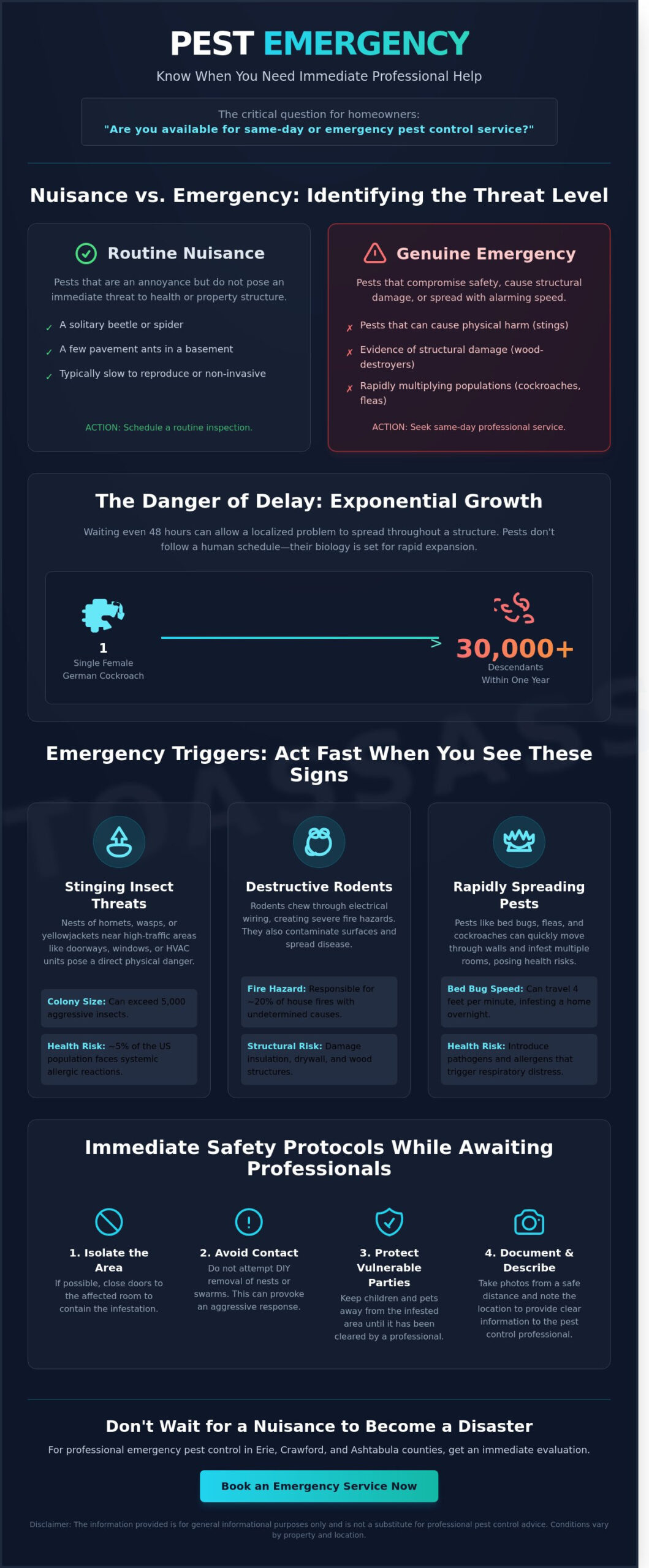
    We know a wasp nest is an urgent safety concern. As a dedicated local company, we prioritize rapid response times for our community. When you need wasp nest removal near me, you can count on us for swift action. In most situations, we can dispatch a certified technician for same-day or next-day service to assess and neutralize the threat, quickly restoring safety and peace of mind to your property.

    Are your wasp removal treatments safe for my children and pets?

    Absolutely. Your family’s safety is our highest priority. We use proven, family-safe treatments and apply them with precision to target the wasp nest directly. Our licensed technicians are trained in integrated pest management techniques that effectively eliminate the colony while minimizing any risk to your children, pets, or the surrounding environment. We will always discuss our safety protocols with you before beginning treatment so you can be completely confident in our process.

    What is the difference between a wasp, a hornet, and a yellow jacket?

    While related, these stinging insects have distinct characteristics. Hornets are a type of large wasp, often building gray, paper-like aerial nests. Yellow jackets are smaller wasps, famous for aggressively defending their nests, which are often hidden in the ground or in wall voids. Paper wasps are another common type, building smaller, open-comb umbrella-shaped nests under eaves and overhangs. Our experts will accurately identify the pest to ensure the correct eradication strategy is used.

    If you remove a nest, will the wasps just build another one in the same spot?

    Our goal is complete eradication, not just removal. Our professional treatment eliminates the entire colony, including the queen, which is essential for preventing a return. Once the queen is gone, the colony cannot be re-established in that location. We also treat the area to deter other wasps from seeing it as a viable spot. Our service comes with our Pest-Free Guarantee, ensuring a lasting solution to your wasp problem.

    What should I do if I get stung by a wasp?

    First, calmly move away from the area to avoid attracting more stings. Wash the site with soap and water and then apply a cold pack to help reduce pain and swelling. Over-the-counter antihistamines or hydrocortisone cream can also help alleviate itching and discomfort. If you experience severe symptoms like difficulty breathing, dizziness, or swelling of the face and throat, seek immediate emergency medical attention as this could indicate a serious allergic reaction.

    Do you also handle wasp nests for businesses and commercial properties?

    Yes, we provide expert wasp nest removal services for all types of commercial properties, including restaurants, office buildings, storefronts, and industrial sites. We understand the critical importance of keeping your employees and customers safe from stinging insects. Our technicians work efficiently and discreetly to eliminate the threat with minimal disruption to your daily operations, helping you maintain a safe and professional environment for everyone.

    The use of advanced tools like drones for inspecting such large properties is becoming more common, and for businesses that rely on this technology, support from specialists like Drone Doctor LLC is crucial for maintenance and repairs.

  • Child-Safe Exterminator Near Me: A Parent’s Guide to Safe Pest Control

    Child-Safe Exterminator Near Me: A Parent’s Guide to Safe Pest Control

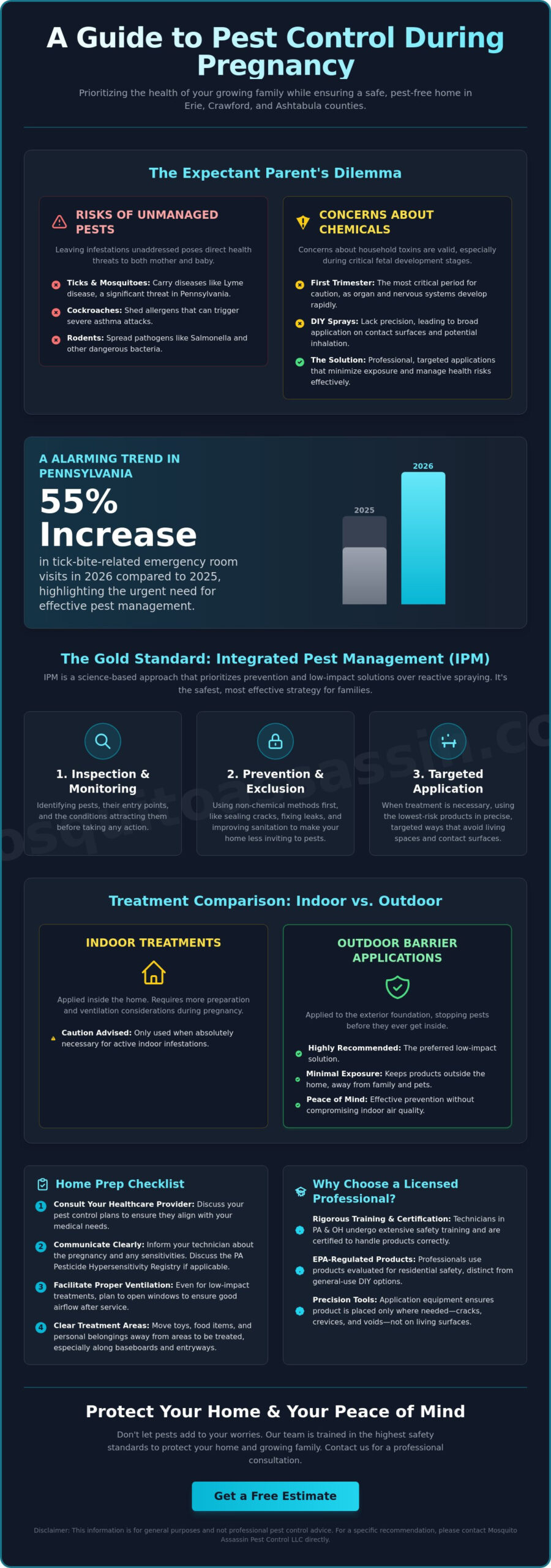
    That moment you see a pest in your home is alarming. But when you have children playing on the floor nearby, that alarm turns into a deep-seated worry. The urgent need to eliminate the problem clashes with the absolute priority of protecting your family from harsh chemicals. Your immediate search for a child safe exterminator near me is often followed by a wave of confusion. What does ‘eco-friendly’ really mean? How can you trust that a treatment is both effective and genuinely safe for your little ones?

    This guide was created to eliminate that stress. We’re giving you the professional insight needed to cut through the marketing jargon and make a confident, informed decision. You will learn the critical questions every parent must ask a pest control company, discover which treatment methods are proven to be safe and effective, and gain the peace of mind that comes from safeguarding your home the right way. It’s time to get rid of pests without compromising your family’s well-being.

    Key Takeaways

    • Learn to look past marketing slogans and understand what truly makes a pest control treatment safe for children and pets.
    • Discover the professional Integrated Pest Management (IPM) strategies that eliminate pests with minimal product use in your home’s living areas.
    • Get a checklist of critical questions to ask any potential child safe exterminator near me to verify their commitment to your family’s well-being.
    • Understand why a company’s licensing, insurance, and customized treatment plan are non-negotiable for guaranteeing peace of mind.

    What Does ‘Child-Safe’ Pest Control Actually Mean?

    When you’re searching for a “child safe exterminator near me,” you’re looking for more than just a marketing slogan. True child-safe pest control isn’t about a single “magic” product; it’s a comprehensive strategy designed to eliminate pests while minimizing exposure for your family. The focus is on a smart, targeted approach where safety is built into every step of the process, from inspection to final treatment. It’s about the professional’s strategy, not just the canister they carry.

    To better understand the difference between professional strategies and consumer products, this video offers a helpful perspective:

    The Core Principles of Integrated Pest Management (IPM)

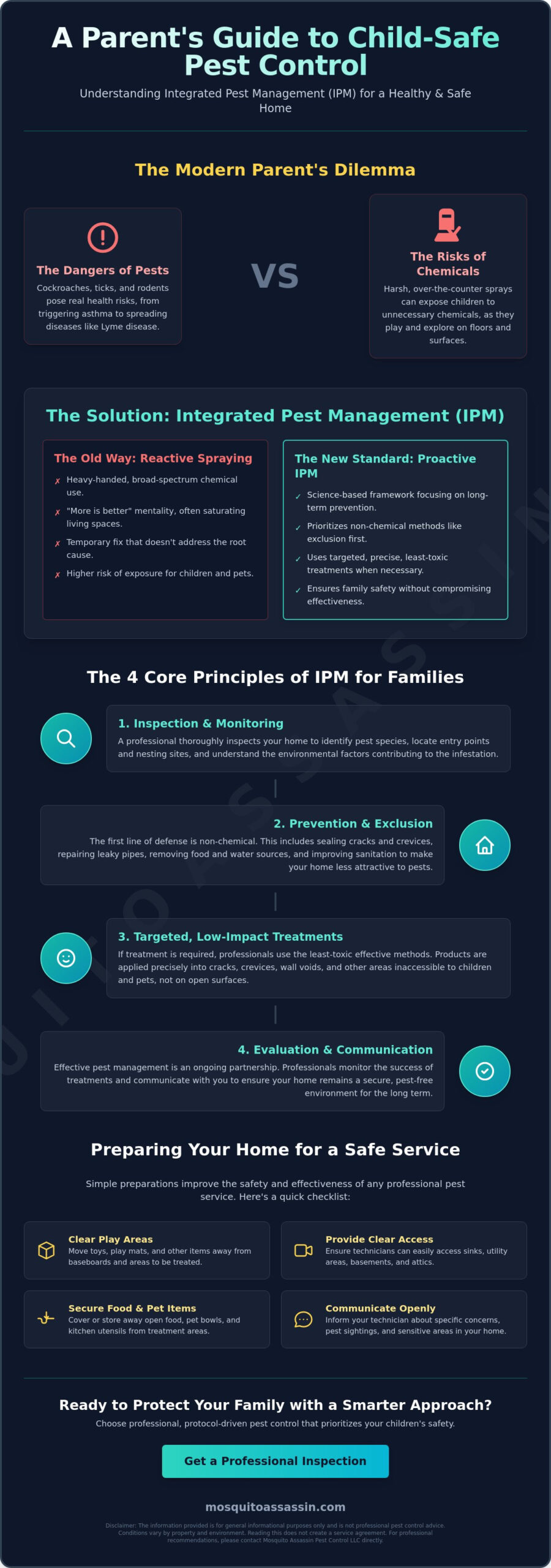
    The gold standard for safe and effective pest control is a professional methodology called Integrated Pest Management (IPM). Rather than immediately resorting to broad-spectrum spraying, IPM is a smarter, more holistic system. If you’re wondering What is Integrated Pest Management (IPM)?, it’s a science-based approach that prioritizes long-term prevention. Its core principles include:

    • Prevention First: Sealing entry points and removing food and water sources to make your home less inviting to pests.
    • Targeted Treatments: Using chemical solutions as a precise tool, not a first resort, only when and where they are absolutely necessary.
    • Lifecycle Disruption: Understanding how pests breed and live to break their cycle and stop future generations.

    Low-Impact Products vs. ‘All-Natural’ Claims

    A key part of a child-safe strategy is the selection and application of products. Professional low-impact products are rigorously tested for effectiveness and have clear safety protocols. A certified technician uses solutions like targeted baits and gels placed inside wall voids, behind appliances, and in other areas completely inaccessible to curious hands and paws. This contrasts sharply with DIY “natural” remedies, which may have unknown risks and often fail to solve the root problem.

    Why a Certified Technician is Your Best Safety Tool

    Ultimately, your greatest safety asset is the trained professional applying the treatment. A certified technician from a reputable company is trained to identify the exact pest, understand its habits, and choose the most effective, lowest-impact solution. They know how to read complex product labels, follow strict safety protocols, and apply treatments with precision. Amateur application of any product poses the highest risk, which is why trusting a professional is the most reliable way to find a truly child safe exterminator near me.

    Key Child-Safe Pest Control Methods for Your Home

    When you’re looking for a child safe exterminator near me, it’s important to understand that a truly safe and effective approach involves much more than just spraying chemicals. The goal is always to achieve total pest eradication with minimal product use inside your family’s living space. This comprehensive strategy is known as Integrated Pest Management (IPM), a proven, multi-tiered process that prioritizes prevention and targeted solutions. The EPA’s guide to IPM outlines how professionals combine different methods for the safest, most dependable results.

    A family-focused pest control service will build a customized plan for your home using these core techniques:

    Exclusion: The First and Safest Step

    The most effective way to control pests is to stop them from ever getting inside. Exclusion is a 100% chemical-free method that serves as the foundation of any child-safe pest control plan. Our certified technicians meticulously inspect your property to identify and seal potential entry points, such as cracks in the foundation, gaps around pipes, and worn-out weather stripping. Installing door sweeps and repairing damaged window screens further fortifies your home, preventing future infestations before they can begin.

    Strategic Baiting and Gel Applications

    For pests that have already invaded, we eliminate them at their source without resorting to airborne sprays in your home. We use highly effective baits and gels placed strategically in areas where pests hide and travel-deep within wall voids, behind appliances, and along hidden crevices. These baits are contained in child- and pet-resistant stations, ensuring they are accessible to pests like ants, cockroaches, and rodents but safely out of reach for your loved ones. This method eradicates entire colonies from the inside out.

    Targeted, Low-Risk Liquid Treatments

    When a liquid treatment is necessary, precision is paramount. Our primary strategy is to apply a protective barrier to your home’s exterior foundation, neutralizing pests before they can breach your home. For interior issues, we use low-volatility, low-odor products for precise spot treatments in harborage areas, not across open floors or surfaces. Our licensed professionals know exactly which products to use, where to apply them, and how much is needed to be effective while safeguarding your family’s environment.

    How to Choose the Right Child-Safe Exterminator Near You

    When your family’s well-being is the top priority, finding a pest control company you can trust is the most critical step. Not all exterminators approach pest management with the same commitment to safety, especially around children and pets. When you search for a child safe exterminator near me, you’re looking for more than just pest elimination-you need a professional partner dedicated to protecting your home and family. Use this guide to vet potential companies and ensure you’re hiring a true professional.

    Key Questions to Ask Before You Hire

    Arm yourself with the right questions to cut through the sales pitches and identify a truly qualified professional. A reliable company will answer these questions confidently and transparently.

    • Do you practice Integrated Pest Management (IPM)? This is the gold standard for safe and effective pest control. A commitment to IPM means prioritizing non-chemical solutions first and using targeted, low-impact products only when necessary. This proven philosophy is central to the EPA’s Approach to School IPM, a framework designed to protect children in sensitive environments.
    • Are your technicians licensed, insured, and background-checked? Don’t compromise. The people entering your home must be vetted, trained professionals who are fully insured for your protection.
    • What specific products do you propose for my home and why? A professional will explain their product choice, why it’s the best option for your specific pest issue, and how it will be applied safely.
    • Can you provide Safety Data Sheets (SDS) for all products? You have a right to know exactly what is being used in your home. Reputable companies will provide this documentation without hesitation.
    • What is the required re-entry time for my family after treatment? The technician should provide clear, specific instructions on when it is safe for children and pets to return to treated areas.

    Why a Local Company Matters

    Choosing a local exterminator means hiring an expert who understands the specific pests and environmental conditions in your region. Unlike national chains, local companies have a reputation to uphold in the communities they serve. Our team lives and works right here, giving us a deep understanding of local pest pressures. You can learn more about our local team and our commitment, and see the specific locations we serve across PA and OH.

    Red Flags to Watch For

    Protect yourself from unprofessional operators by watching for these warning signs. If you encounter any of the following, it’s best to look for another child safe exterminator near me.

    • Unmarked vehicles or technicians without professional uniforms.
    • High-pressure sales tactics pushing you into a long-term contract on the spot.
    • Vague or evasive answers about products, safety procedures, or licensing.
    • Offering a very low price over the phone without performing a thorough inspection first.

    Why Families in Pennsylvania & Ohio Trust Mosquito Assassin

    Our name might be aggressive, but our approach to your family’s well-being is anything but. At Mosquito Assassin, we understand that when you’re searching for a child safe exterminator near me, you need a team that delivers powerful results without compromising on safety. We’ve built our reputation across Erie and Crawford counties by combining proven pest eradication methods with an unwavering commitment to safeguarding your home, children, and pets.

    Our licensed technicians aren’t just experts; they’re your neighbors. They live in the same communities they serve and treat every home with the same meticulous care they would use for their own. This local focus means we’re not just eliminating pests-we’re protecting our community, one family at a time.

    Our Family-First Safety Protocol

    Your peace of mind is our highest priority. We achieve this through a transparent and methodical process designed around your family’s safety. Our protocol includes:

    • A Thorough Inspection: We never use a one-size-fits-all solution. We start by identifying the specific pest, locating entry points, and assessing the extent of the problem to create a targeted, effective plan.
    • Integrated Pest Management (IPM): We prioritize non-chemical and low-impact methods first. This includes sealing entry points, setting up strategic baiting systems, and making environmental recommendations to prevent future infestations.
    • Clear Communication: Our technicians will walk you through every step of the treatment plan, explaining what we’re doing, the products we’re using, and any safety measures you should be aware of.

    Customized Plans for Local Pests

    Pests in Pennsylvania and Ohio are our specialty. We have years of hands-on experience dealing with the specific challenges common to local homes, from stubborn ants and spiders to invasive rodents. Our treatments are precisely tailored to your property’s unique layout and the specific pest you’re facing. Whether you need a one-time solution for a sudden invasion or a comprehensive year-round protection plan, we have you covered. Explore our full range of residential and commercial services to see how we can help.

    The Mosquito Assassin Pest-Free Guarantee

    We stand behind our work with a simple, powerful promise. As the most trusted child safe exterminator near me, we guarantee our results. If pests return between your scheduled services, so do we-at no extra charge. We are committed to ensuring the job is done right, giving your family the lasting protection and comfort they deserve.

    Ready to reclaim your home? Schedule Your Safe & Effective Pest Evaluation Today!

    Your Partner in Safe and Effective Pest Control

    Choosing the right pest control service is one of the most important decisions you can make for your home. It’s not just about eliminating pests; it’s about safeguarding your family’s health and restoring your peace of mind. This guide has shown that true child-safe pest control relies on a comprehensive strategy-from Integrated Pest Management to targeted, low-impact treatments. When you’re looking for a child safe exterminator near me, you need a professional team that understands these critical nuances and puts your family’s well-being first.

    For families across Pennsylvania and Ohio, Mosquito Assassin is that trusted, dependable partner. As a locally owned and operated company, we live in the communities we serve and are committed to delivering Five-Star Rated service. We don’t just treat your home; we protect it with our proven, family-safe methods and our unwavering Pest-Free Guarantee. Remember our promise: If pests return, so do we!

    Ready to reclaim your home with confidence? Get a Free Quote for Child-Safe Pest Control Now! and let our team provide the effective, reassuring solution your family deserves.

    Frequently Asked Questions About Child-Safe Pest Control

    How long do we need to stay out of the house after a pest control treatment?

    The re-entry time depends on the specific product and treatment method. For many liquid applications, we advise waiting until the product is completely dry, typically 2-4 hours. When you trust a professional child safe exterminator near me, you get precise instructions. Our certified technician will give you a definitive timeline before they begin, ensuring your family’s well-being is the top priority and eliminating any guesswork.

    Are ‘eco-friendly’ or ‘organic’ pest control methods effective and truly safe?

    While “eco-friendly” suggests safety, effectiveness depends on the pest and infestation level. Many natural products work as repellents but may not eliminate a colony. True safety comes from the professional application of any product, natural or synthetic. Our licensed technicians are trained to use the most effective, lowest-risk products necessary to safeguard your home and provide a permanent solution to your pest problem, guaranteed.

    What should I do to prepare my home for a child-safe pest treatment?

    Preparation is key for a successful, safe treatment. We recommend clearing countertops, putting away all food, and moving toys, high chairs, and playpens away from the areas being treated, such as baseboards. This creates a clear workspace for our technicians and ensures targeted application. Our team will provide a specific, easy-to-follow checklist customized to your treatment plan, guaranteeing a smooth and effective process from start to finish.

    My child has asthma/allergies. Can you still perform a safe treatment?

    Absolutely. Safeguarding your family’s health is our primary mission. It is crucial to inform us about any sensitivities like asthma or allergies when you schedule your service. This allows our technicians to design a customized treatment plan using specific low-allergen products and targeted methods like bait stations or crack-and-crevice applications. This level of customized care is essential for your peace of mind.

    Are pest control baits in stations safe to have around toddlers and pets?

    Yes, when installed by a professional. We use Tier 1, tamper-resistant bait stations, which are specifically designed to be inaccessible to children and pets. The bait is securely contained within the locked station, which can only be opened with a special key. This allows the targeted pests to access the bait while preventing accidental contact, making it a highly effective and reliable method for family-safe pest eradication.

    How can I be sure my child won’t touch a surface treated with pesticides?

    Our technicians are experts in strategic, targeted application. We focus treatments on inaccessible areas where pests live and breed, such as deep inside wall voids, behind appliances, and along hidden cracks and crevices. We avoid broad application to open surfaces like floors or countertops. Following our re-entry instructions ensures any treated surfaces are fully dry and safe before your child is back in the area, providing complete peace of mind.

  • Spider Identification Pennsylvania: A Complete Guide with Pictures

    Spider Identification Pennsylvania: A Complete Guide with Pictures

    That moment of panic when you spot an eight-legged intruder in your home is all too familiar. You immediately wonder: Is it dangerous? Is it a threat to my family or pets? For homeowners across the Keystone State, having a reliable resource for spider identification in Pennsylvania is the first step toward peace of mind. Guesswork isn’t a strategy when it comes to safeguarding your home, and you shouldn’t have to be an expert to know if you’re dealing with a harmless nuisance or a potential threat.

    This comprehensive guide is designed to eliminate that uncertainty. Using clear pictures and straightforward descriptions, we’ll help you quickly identify the most common spiders found in Pennsylvania homes and gardens. You will learn to confidently distinguish between a harmless cellar spider and a medically significant species like the black widow. More importantly, we’ll provide proven, professional tips to keep them out for good, putting you back in control and ensuring your home is a safe, spider-free zone.

    Common Spiders Found Inside Pennsylvania Homes

    When you live in Pennsylvania, sharing your home with a few eight-legged residents is almost inevitable. From dusty attics to quiet basement corners, certain spiders are experts at cohabitating with humans. While an unexpected encounter can be startling, understanding who you’re dealing with is the first step in safeguarding your home. Proper spider identification pennsylvania homeowners can perform helps distinguish a helpful, pest-eating houseguest from a potential threat.

    To get a better sense of these common arachnids, this video provides a helpful visual guide:

    Most indoor spiders fall into two main categories: passive web-builders and active hunters. Web-builders create webs to trap prey like flies and ants, while hunters actively stalk them. While the variety of Spiders of the United States is vast, only a handful are common indoors. Let’s meet the most frequent visitors you’re likely to find in your home.

    Common House Spider (Parasteatoda tepidariorum)

    You’ll recognize this spider by its small, brownish body and a bulbous, mottled abdomen. They are masters of finding unused spaces-high corners, window frames, and beneath furniture-where they spin their classic tangled cobwebs. These messy webs are often the most obvious sign of their presence. Danger Level: Harmless. Bites are incredibly rare and pose no medical threat, making them more of a nuisance than a danger.

    Long-bodied Cellar Spider (Pholcus phalangioides)

    Often misidentified as ‘daddy long-legs,’ these spiders have a tiny body and exceptionally long, delicate legs. They thrive in dark, damp environments like cellars, basements, and crawl spaces. Their irregular, stringy webs are built in corners, and they famously vibrate them when disturbed to ward off threats. Danger Level: Harmless. A common myth claims they are highly venomous, but their fangs are too small and weak to pierce human skin.

    Jumping Spiders (Family Salticidae)

    These are the daytime hunters of the spider world. Jumping spiders are compact, often fuzzy or iridescently colored, with large front eyes that give them excellent vision. Instead of building webs to catch prey, they actively stalk insects on sunny walls, windowsills, and curtains. Their quick, jerky movements make them easy to spot. Danger Level: Harmless. They are curious but non-aggressive, and their bite is extremely mild and rare.

    Common Spiders in Your Pennsylvania Yard & Garden

    Before you worry about spiders inside your home, it’s important to recognize the allies working for you right outside your door. Your yard and garden are a complex ecosystem, and spiders are a crucial part of its natural pest control system. Proper spider identification in Pennsylvania helps distinguish these beneficial arachnids from the few that might wander indoors. Many of these outdoor species are expert predators, safeguarding your plants by preying on nuisance insects like aphids, caterpillars, and even mosquitoes. According to the Common Pennsylvania Spiders guide from Penn State Extension, the vast majority of spiders you encounter are harmless to humans and play a positive environmental role.

    Wolf Spiders (Family Lycosidae)

    Often startling due to their size, Wolf Spiders are athletic hunters, not web-builders. You can identify these ground-dwellers by their large, hairy bodies, typically brown or gray with complex patterns that provide camouflage. They prefer to live in leaf litter, under rocks, or in garden beds, where they actively hunt for prey at night. While they look intimidating, Wolf Spiders are harmless. They may bite if trapped or provoked, but their venom is not medically significant and is less painful than a bee sting.

    Orb-Weaver Spiders (Family Araneidae)

    Orb-Weavers are the architects of the classic, wheel-shaped webs you often see glistening with morning dew in gardens, fields, and on the eaves of houses. Their intricate webs are engineering marvels designed to trap flying insects. The spiders themselves come in various shapes and colors, but it’s their iconic web that makes them easy to identify. These spiders are completely non-aggressive and harmless to people. If you disturb their web, their first instinct is to flee or drop to the ground, not to attack.

    Grass Spiders (Genus Agelenopsis)

    If you’ve seen a dense, sheet-like web with a funnel at one end blanketing your lawn or shrubs, you’ve found the home of a Grass Spider. These arachnids are brownish with distinctive dark stripes near their head and noticeable tail-like spinnerets at their rear. They wait patiently in their funnel retreat for an insect to land on the web sheet. Grass Spiders are extremely shy and incredibly fast. Their goal is always to escape a potential threat, and their bite is weak and poses no danger to humans.

    Venomous Spiders in Pennsylvania: Separating Fact from Fiction

    The fear of a venomous spider bite is a common concern for homeowners across Pennsylvania. While it’s wise to be cautious, the good news is that the vast majority of spiders you’ll encounter are completely harmless. The key to safeguarding your family is knowing the difference between a nuisance and a genuine threat. Accurate spider identification pennsylvania is the first step in eliminating fear and taking the right action.

    Let’s cut through the myths and focus on the facts. Out of hundreds of spider species in the state, only one is considered medically significant. Understanding its appearance and habits is your best defense.

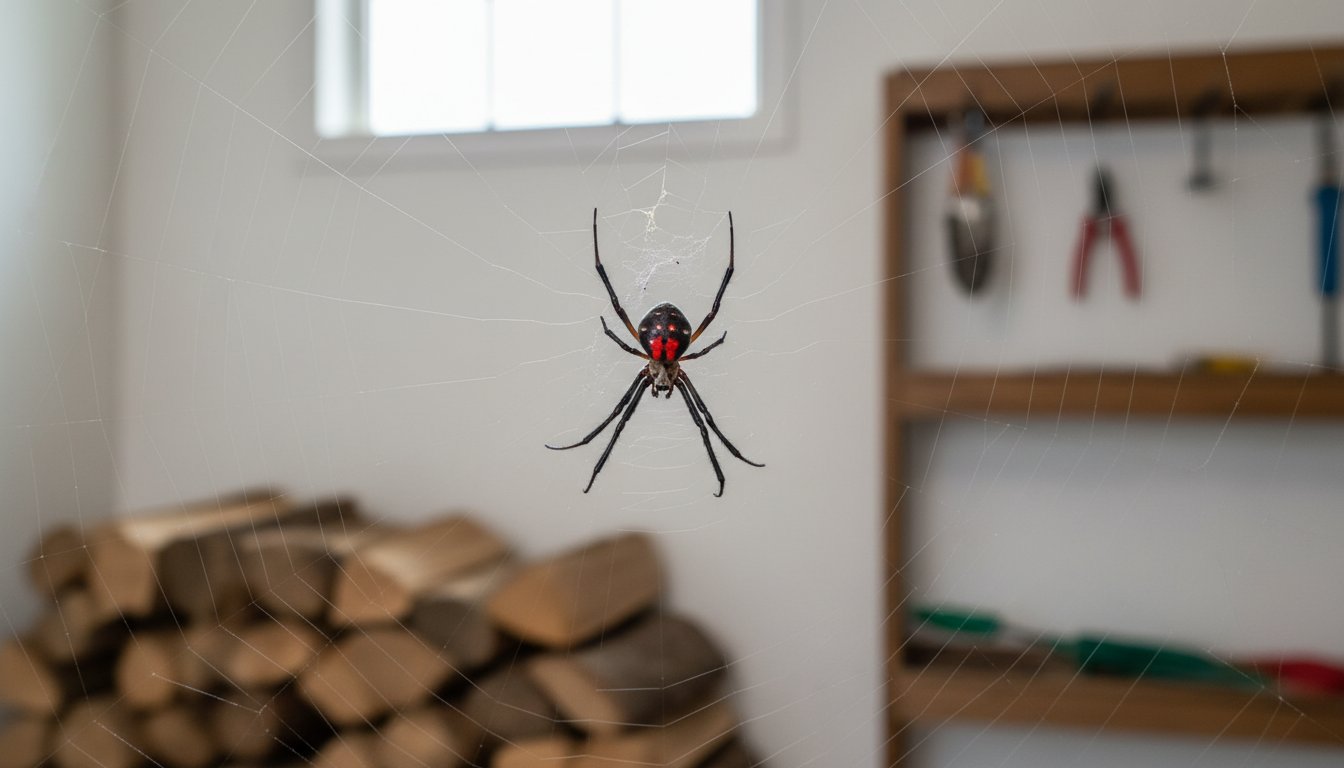
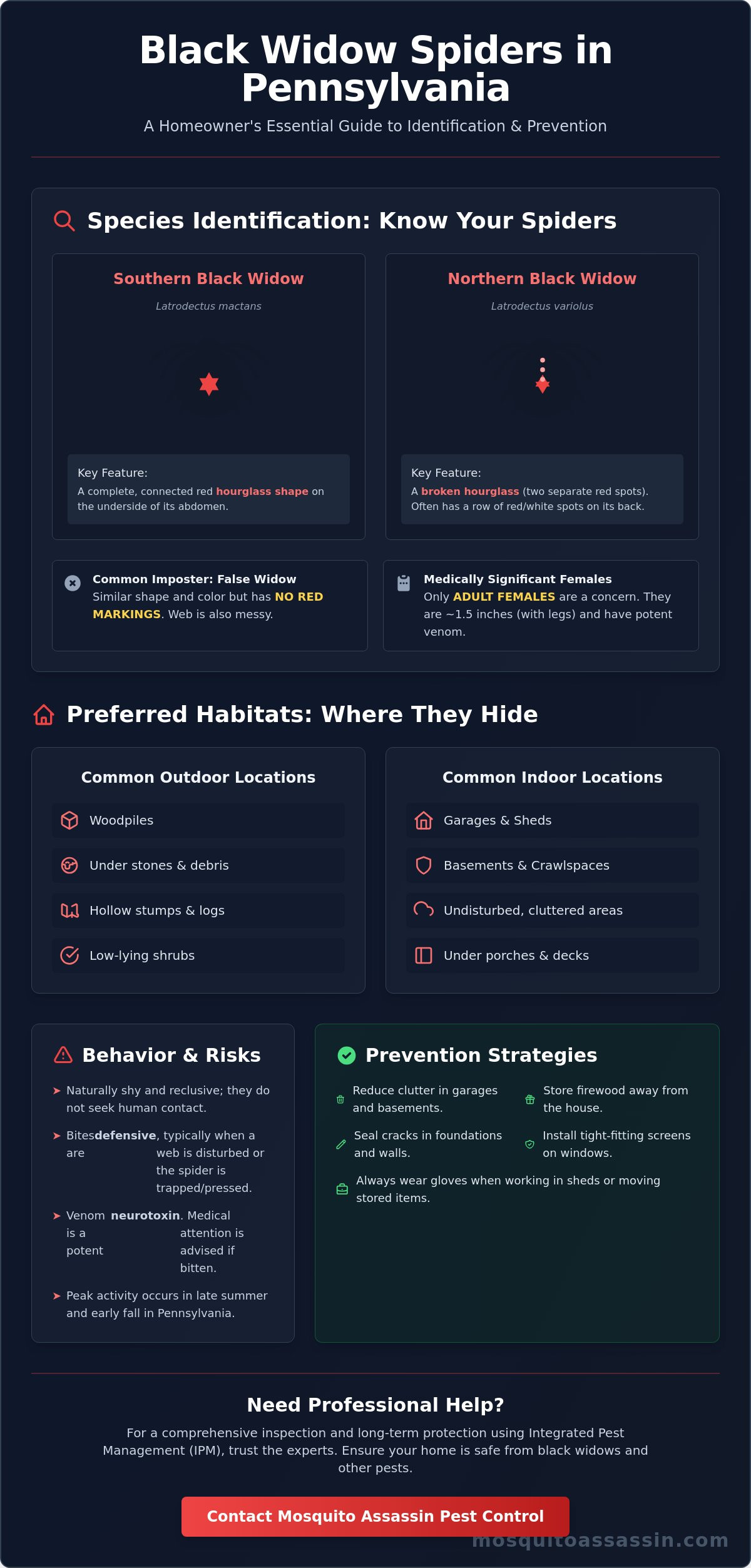
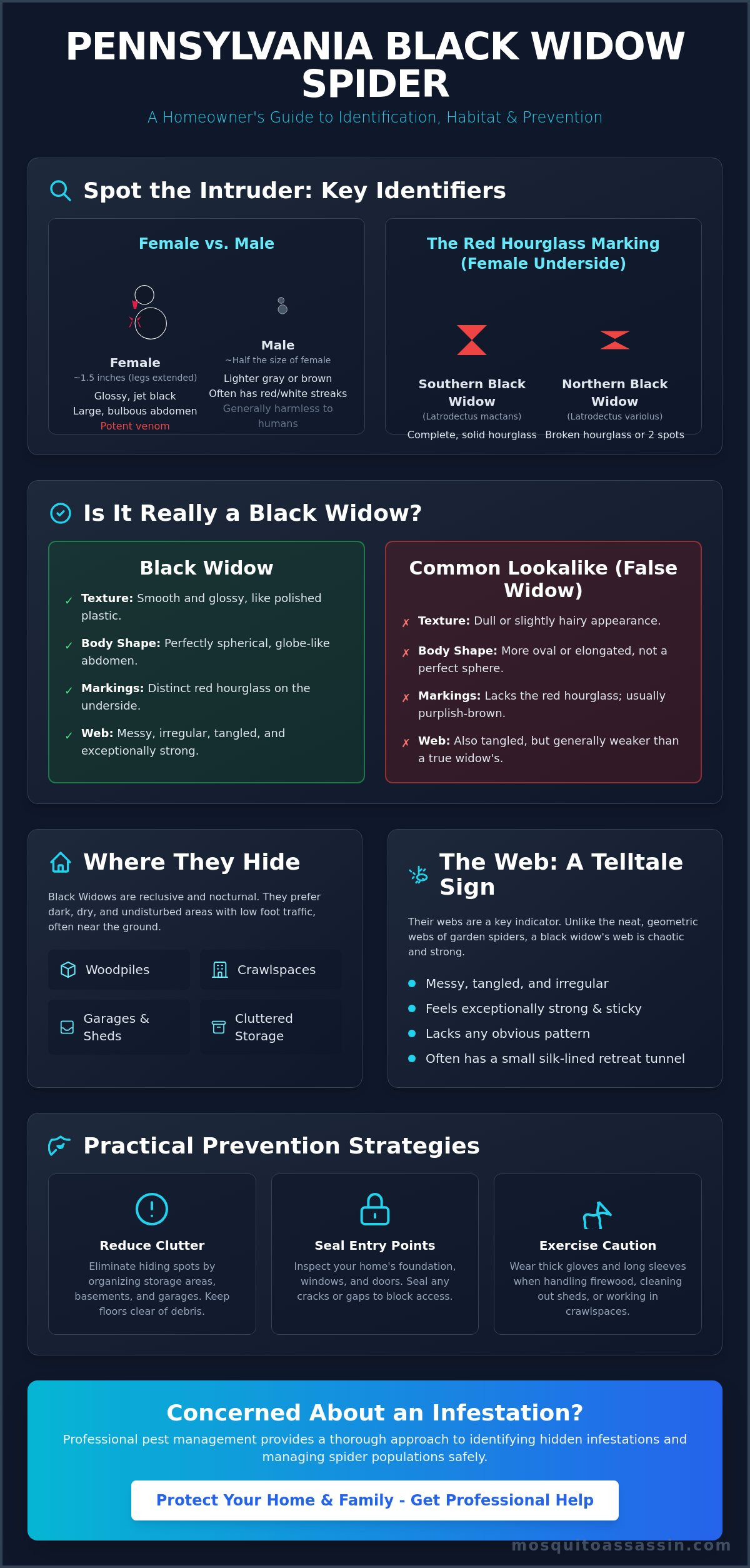
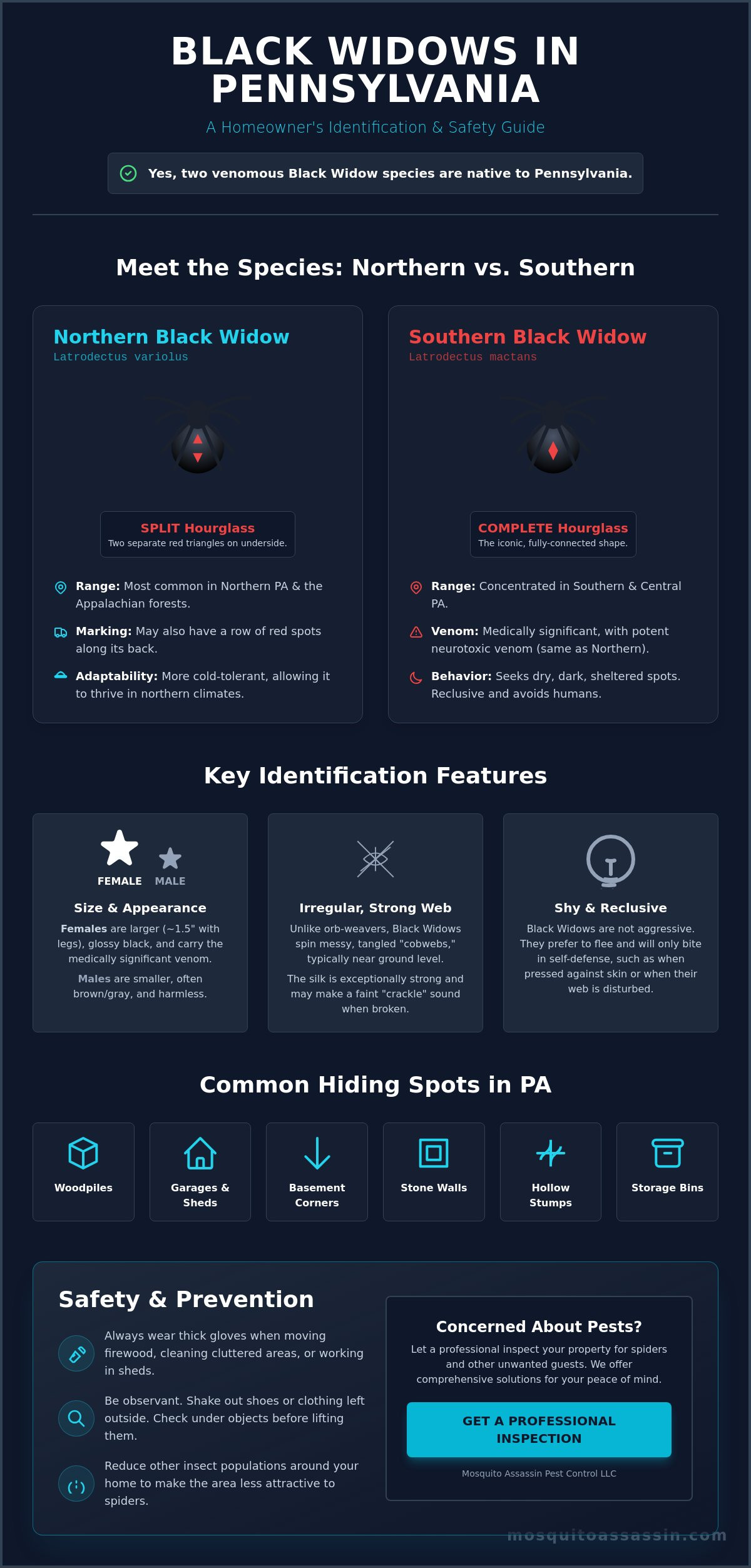
    The Northern Black Widow (Latrodectus variolus)

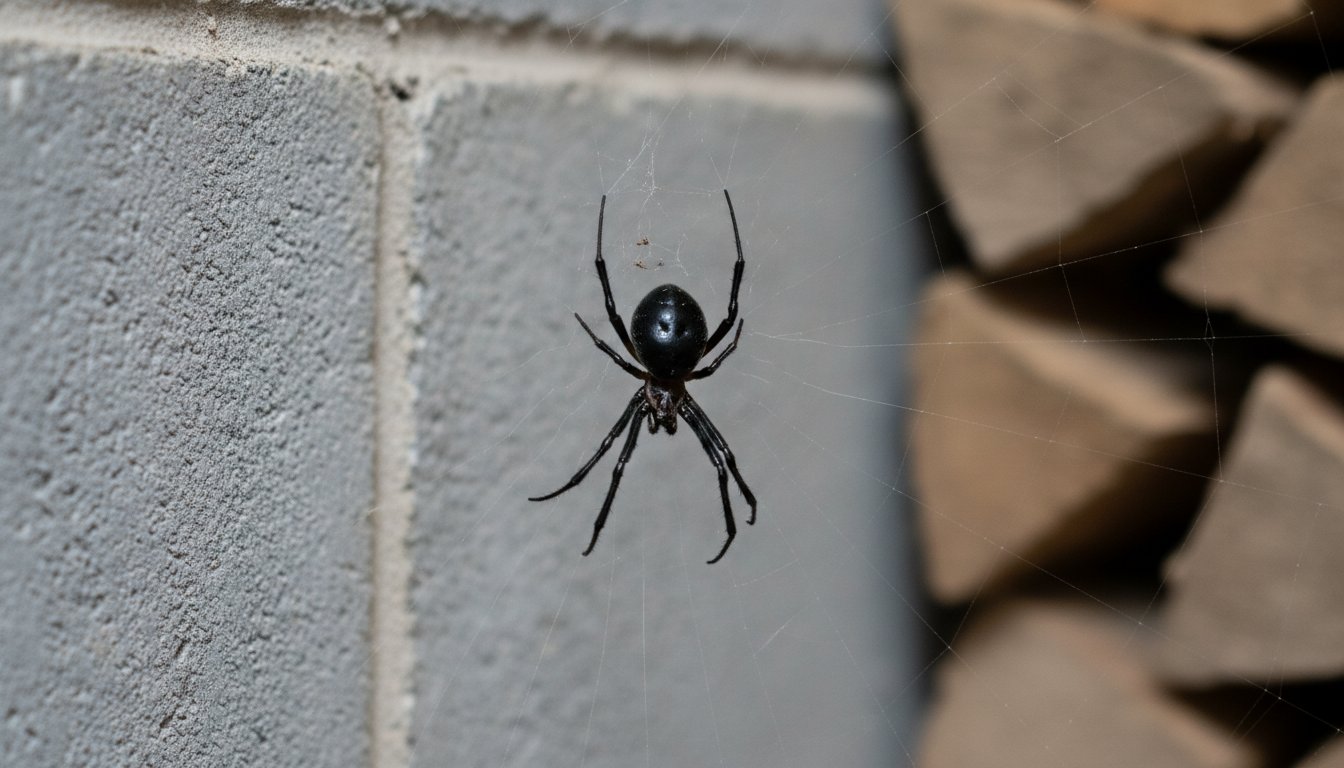
    This is the primary spider of medical concern in Pennsylvania. While its bite is potent, the Northern Black Widow is shy and reclusive, preferring to avoid human contact. Bites are rare and typically only happen when the spider is accidentally trapped or pressed against the skin.

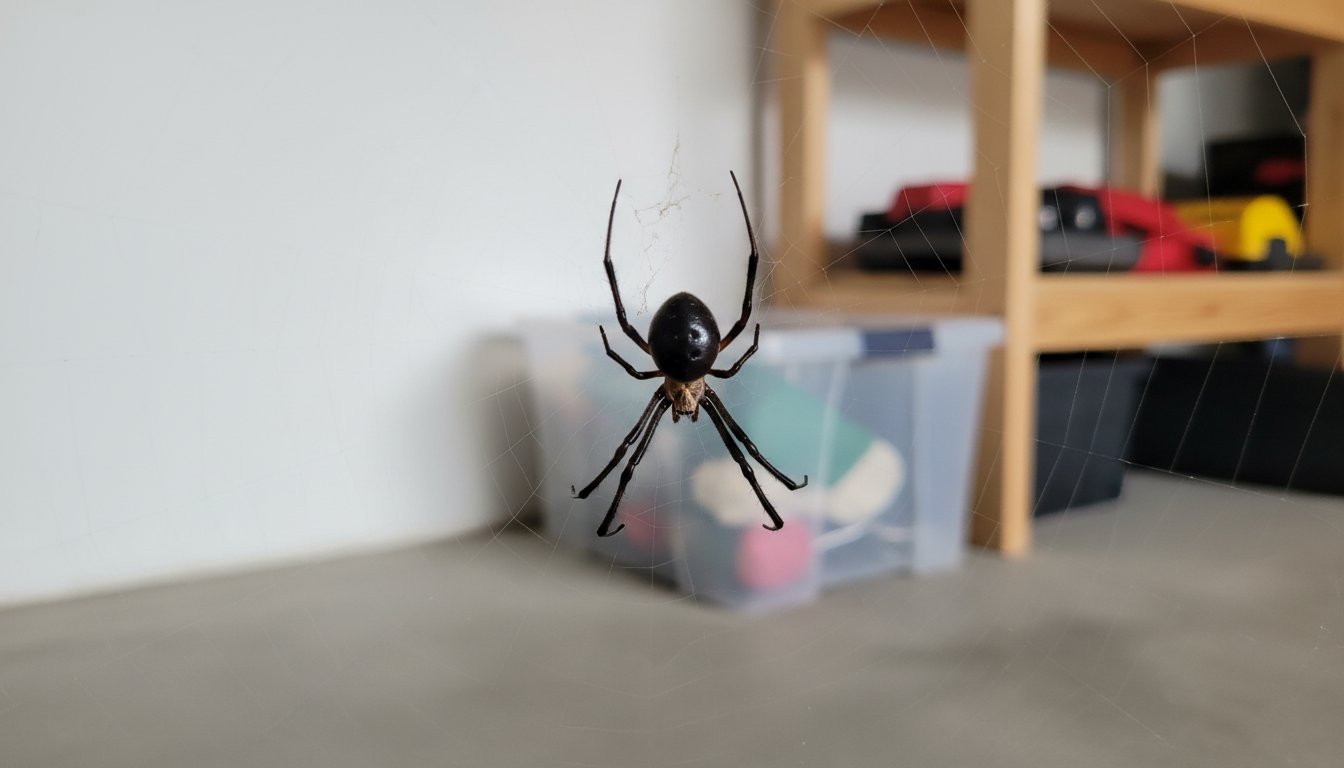
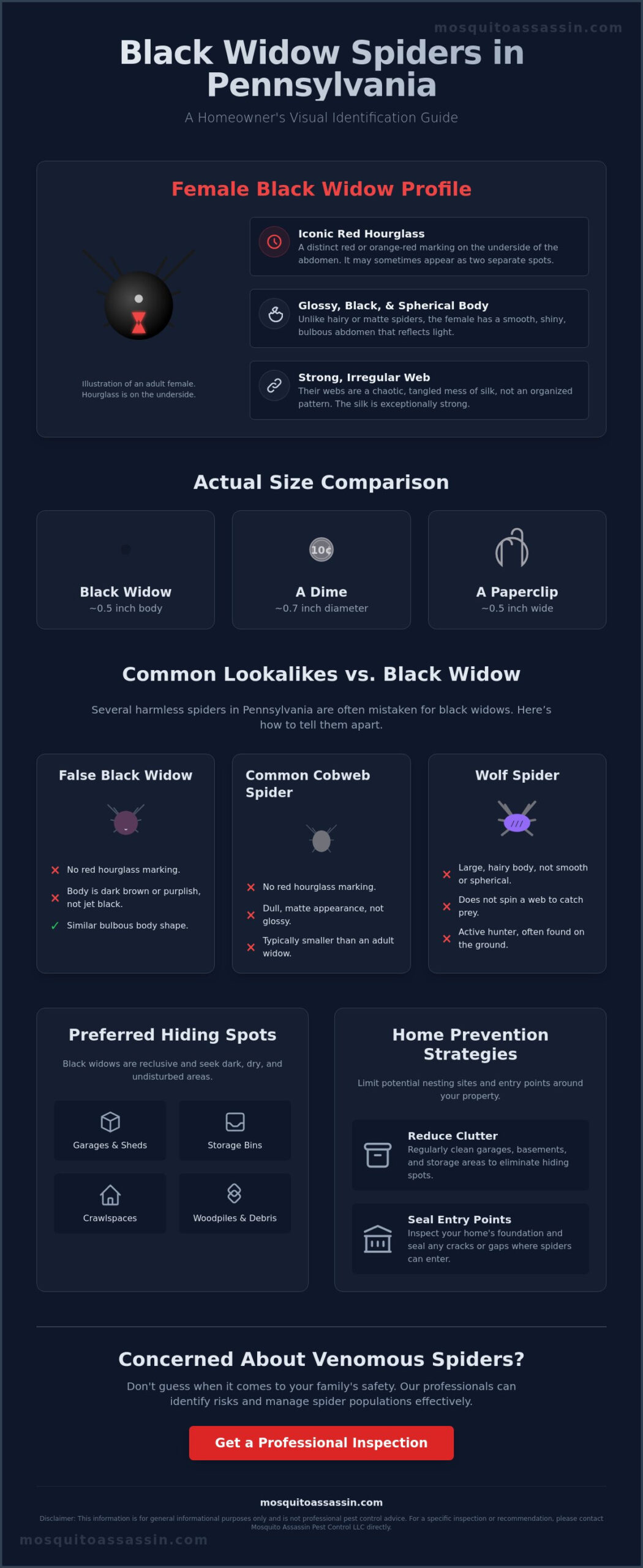
    • Identification: Look for a compact, glossy black body. The female’s most famous feature is a red or orange hourglass-shaped marking on the underside of her abdomen. Sometimes this marking can appear as two separate dots.

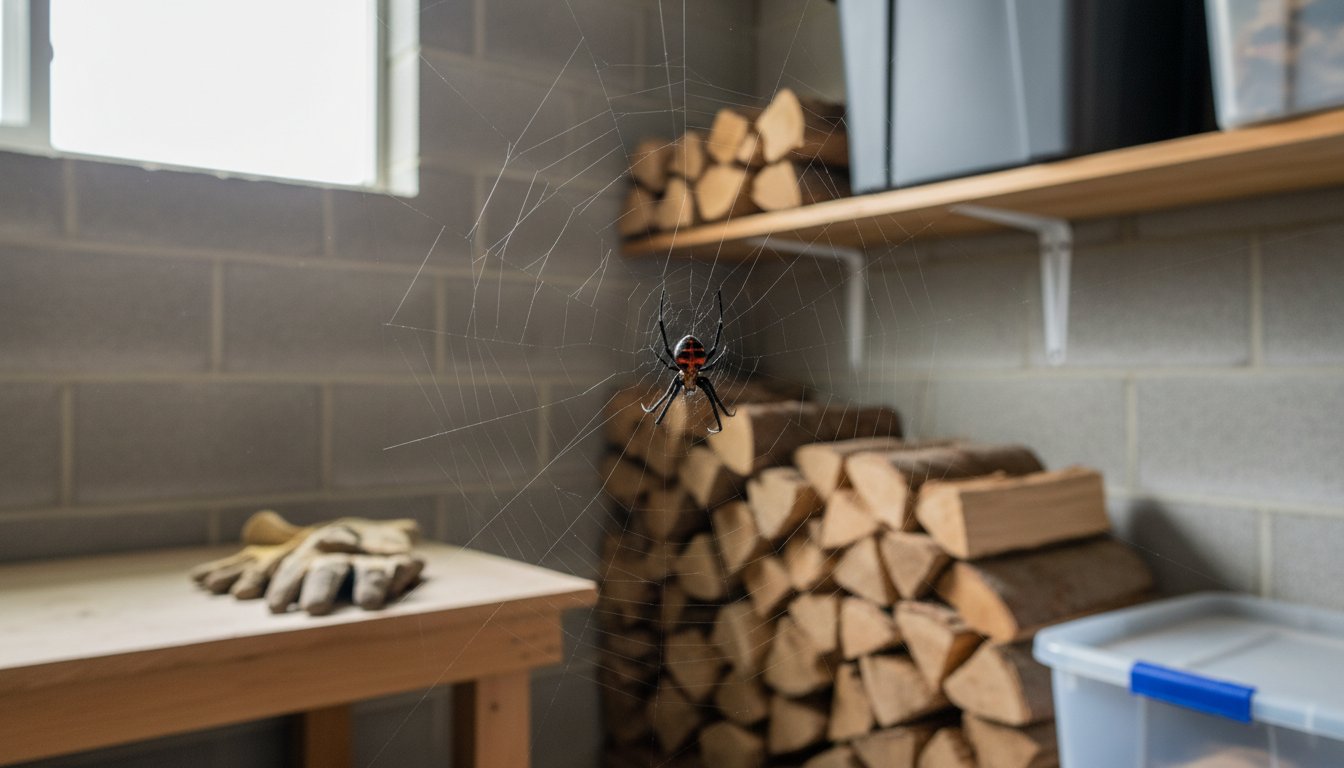
    • Habitat: They thrive in dark, undisturbed areas. Be cautious around woodpiles, stone walls, sheds, and cluttered basements or garages.

    • Web: Their webs are messy, irregular, and tangled, usually built close to the ground.

    • Danger Level: Medically Significant. A bite requires immediate medical attention.

    The Brown Recluse Myth in Pennsylvania

    It’s time to set the record straight: the Brown Recluse spider is not native to Pennsylvania and does not have an established population here. Confirmed sightings are exceptionally rare and almost always involve a single spider that has been accidentally transported from its native range (the South and Midwest) in a shipping box or luggage. Many harmless local species, like the wolf spider or funnel weaver, are brown and frequently misidentified. Rather than worrying about a spider that doesn’t live here, it’s more practical to identify what you do see. A comprehensive guide for Pennsylvania Insect and Spider Identification can be a valuable tool for distinguishing common local arachnids from rare outliers.

    If you’re dealing with a spider problem that makes you feel uneasy, don’t leave it to chance. The certified technicians at Mosquito Assassin Pest Control LLC provide professional spider identification pennsylvania and proven treatment plans to eliminate infestations and give you lasting peace of mind. Contact us today to safeguard your home and family.

    How to Keep Spiders Out: Prevention Tips for PA Homeowners

    Now that you’re more confident with spider identification pennsylvania, the next step is safeguarding your home to prevent these eight-legged intruders from moving in. While most common house spiders are harmless, no one wants to share their living space with them. The most effective strategy is a proactive one: make your home an unattractive place for spiders by eliminating their entry points and food sources.

    You can significantly reduce spider populations by following a few proven pest control principles. These simple, actionable steps focus on exclusion and sanitation to create a less hospitable environment for spiders and the insects they prey on.

    Seal Up Your Home

    The best defense is a good offense. Spiders can squeeze through the tiniest openings, so sealing your home’s exterior is the first critical step. A thorough inspection can reveal vulnerabilities you never knew you had. Focus on these key areas:

    • Foundation and Siding: Carefully inspect your home’s foundation for cracks and gaps. Use caulk or sealant to fill any openings where pipes, wires, or faucets enter the house.

    • Windows and Doors: Ensure all window and door screens are in good repair, free of rips or holes. Install weather stripping around doors and use door sweeps to eliminate gaps at the bottom.

    Clean and Declutter

    Spiders love dark, undisturbed places to hide and build their webs. By maintaining a clean and clutter-free environment, you eliminate their preferred habitats. This also helps control other common insects, cutting off the spiders’ primary food supply.

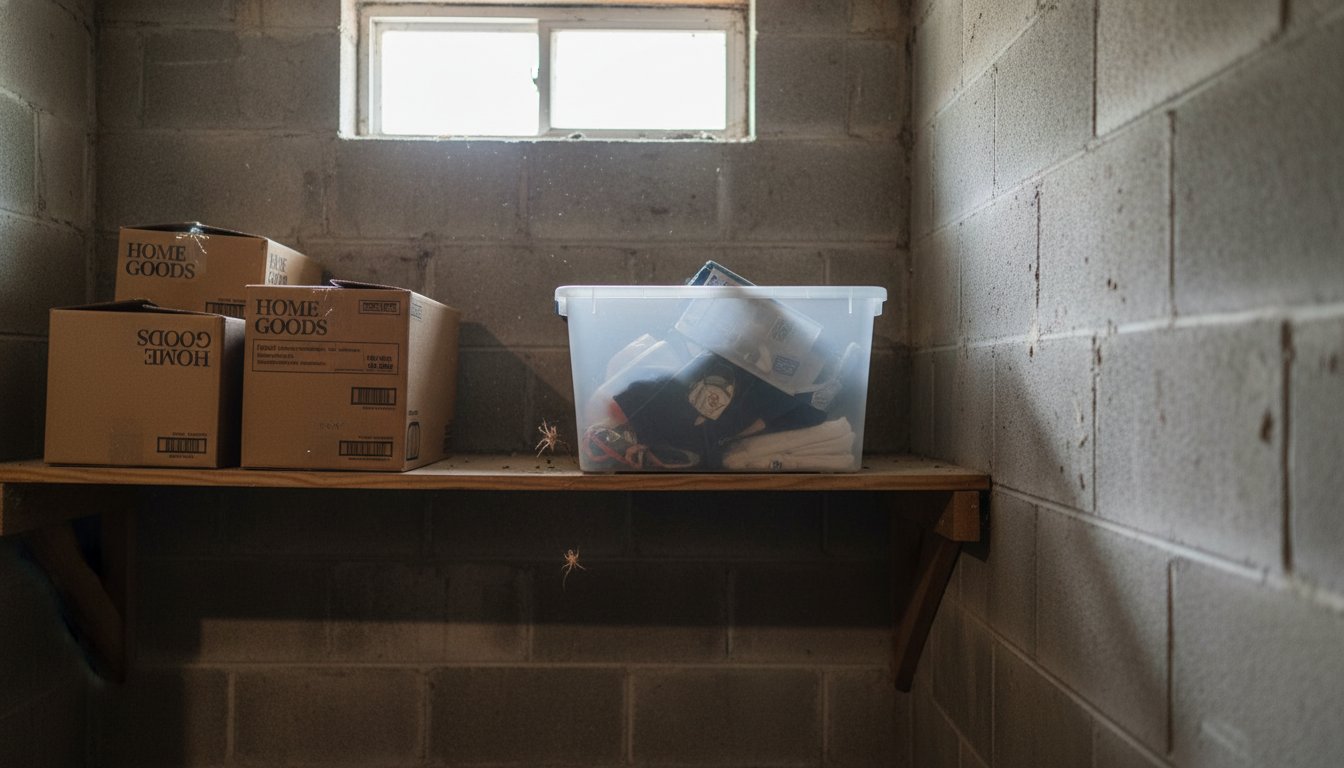
    • Inside: Vacuum and sweep regularly, paying close attention to corners, behind furniture, and inside closets and basements. Store items in sealed plastic containers instead of cardboard boxes.

    • Outside: Keep firewood, rock piles, and other debris stacked well away from your home’s foundation. Trim back shrubs and tree branches that touch your house, as these act as bridges for pests.

    When to Call a Professional

    DIY prevention is a powerful tool, but sometimes an infestation requires professional intervention. If you consistently see a large number of spiders, or if your efforts don’t seem to be making a difference, it’s time to call for backup. This is especially true if you suspect you’re dealing with a medically significant species like a black widow. A professional service goes beyond simple spider identification pennsylvania; they provide a comprehensive treatment plan to eliminate the current problem and establish a protective barrier around your home for year-round peace of mind.

    For a definitive solution that protects your family and your home, don’t wait for the problem to get worse. Tired of spiders? Let the Assassins handle it!

    From Identification to Elimination: Your Pennsylvania Spider Solution

    Navigating the world of spiders in your home and yard can feel overwhelming, but it doesn’t have to be. Armed with the right knowledge, you can now confidently distinguish harmless arachnids from the rare few that warrant caution. This guide has equipped you with the core essentials for spider identification pennsylvania, from recognizing common house spiders to understanding the facts about black widows. Remember that simple prevention-sealing cracks, clearing clutter, and managing outdoor lighting-is your most powerful first line of defense.

    When prevention isn’t enough and you’re facing a persistent spider problem, you don’t have to handle it alone. For complete peace of mind and a definitive, professional solution, Mosquito Assassin is here to safeguard your home. As a locally owned and operated company proudly serving Erie, Crawford, and Ashtabula Counties, we are your neighbors. We provide proven, family-safe treatments designed to eliminate spiders and keep them from returning, guaranteed.

    Don’t let spiders take over your space. Take the next step toward a pest-free home today. ****

    [Get a Free Quote for Professional Spider Control in PA and OH!

    ](https://www.mosquitoassassin.com/contact-us)

    Frequently Asked Questions About House Spiders

    Are brown recluse spiders common in Pennsylvania?

    No, brown recluse spiders are not native to Pennsylvania or Ohio and are extremely rare in our region. While it’s possible for one to be transported here in boxes or furniture from southern states, they do not have established populations. Most suspected sightings are actually harmless brown spiders, like the wolf spider or funnel weaver. Our professional technicians can help you correctly identify any spider you’re concerned about, ensuring your family’s peace of mind.

    What is the most common spider found in houses in PA?

    The American House Spider (Parasteatoda tepidariorum) is one of the most common spiders you’ll find indoors. These are the spiders responsible for creating classic cobwebs in the corners of rooms, basements, and garages. They are generally small, brownish, and reclusive. While they are the most frequent visitor, proper spider identification in Pennsylvania is key, as you may also encounter cellar spiders, wolf spiders, and jumping spiders in your home, all of which are harmless.

    How can you tell if a spider bite is dangerous?

    Most spider bites are harmless, causing only minor irritation like a mosquito bite. However, seek immediate medical attention if you experience severe symptoms. Warning signs include intense pain spreading from the bite, a growing ulcer or lesion, muscle cramps, fever, or nausea. In Pennsylvania and Ohio, the only medically significant spider is the Northern Black Widow, and bites are very rare. When in doubt, always consult a healthcare professional for a reliable diagnosis.

    Should I kill the spiders I find in my home?

    While alarming to see, most house spiders are beneficial predators that help control other pests like flies, mosquitoes, and ants. For a single spider, safely relocating it outside is a good option. However, if you are seeing a large number of spiders, it may indicate a more significant infestation of either the spiders themselves or the insects they are feeding on. In these cases, professional treatment is the most effective way to eliminate the problem and safeguard your home.

    What is the difference between a cellar spider and a wolf spider?

    These two common spiders have very distinct appearances. Cellar spiders, often called "daddy long-legs," have extremely long, thin legs and small, delicate bodies. They build messy, irregular webs in undisturbed corners. In contrast, wolf spiders are robust, athletic hunters with stout bodies and thick, hairy legs. They do not build webs to catch prey but actively hunt on the ground. Their large, reflective eyes are a key identifying feature, often seen shining in flashlight beams.

    When is it necessary to call a pest control professional for spiders?

    It’s time to call a professional when you notice a recurring or large-scale spider problem. Seeing numerous spiders, webs, or egg sacs is a clear sign of an active infestation that DIY methods won’t solve. You should also call for expert help if you suspect a medically significant spider, like a black widow, is on your property. A certified technician can provide a comprehensive treatment plan to eliminate the current issue and prevent future infestations, ensuring your home is safe.

  • Cleaning After a Rodent Infestation: A Complete Safety Guide

    Cleaning After a Rodent Infestation: A Complete Safety Guide

    The scratching in the walls has finally stopped and the pests are gone. But as you survey the scene they left behind, the droppings, the shredded materials, the lingering odor, a new sense of unease can set in. You’re not just disgusted by the mess; you’re worried about the hidden dangers. The task of cleaning after a rodent infestation can feel overwhelming, with the threat of Hantavirus and other diseases turning a simple cleanup into a high-stakes operation. Where do you even begin?

    We’re here to eliminate the uncertainty and restore your peace of mind. This comprehensive guide provides the professional, step-by-step method you need to safely and effectively disinfect your home. We’ll walk you through the proven techniques to safeguard your family’s health, eradicate lingering odors, and reclaim your space with confidence. Consider this your actionable checklist for a completely sanitized home, from choosing the right protective gear to knowing when it’s time to call in the professionals.

    Safety First: Essential Prep and Gear for Rodent Cleanup

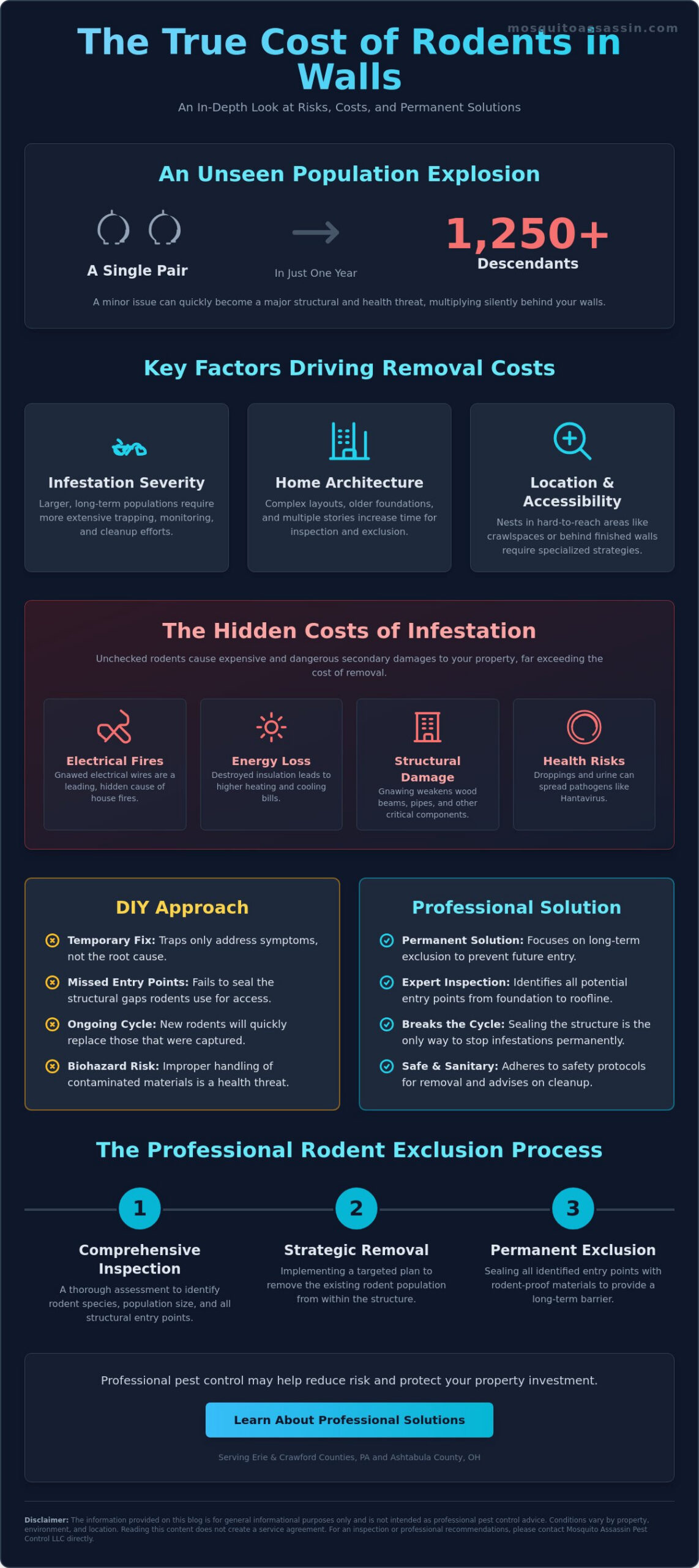
    Once rodents have been eliminated from your home, the job is only half done. The most critical phase, cleaning after rodent infestation, requires a professional approach to safeguard your family’s health. The visible mess of droppings and nesting materials is unpleasant, but the real threat lies in the invisible pathogens they leave behind. Rodent urine and feces can carry a host of bacteria and viruses that pose significant health risks.

    One of the most severe dangers is Hantavirus, a pathogen spread primarily by deer mice. Disturbing dried droppings, urine, or nesting materials can release microscopic virus particles into the air. If inhaled, these particles can cause Hantavirus Pulmonary Syndrome (HPS), a serious and potentially fatal respiratory disease. This is why proper procedure is not just recommended-it’s essential for your safety.

    To better understand the core safety protocols, this video provides a helpful overview:

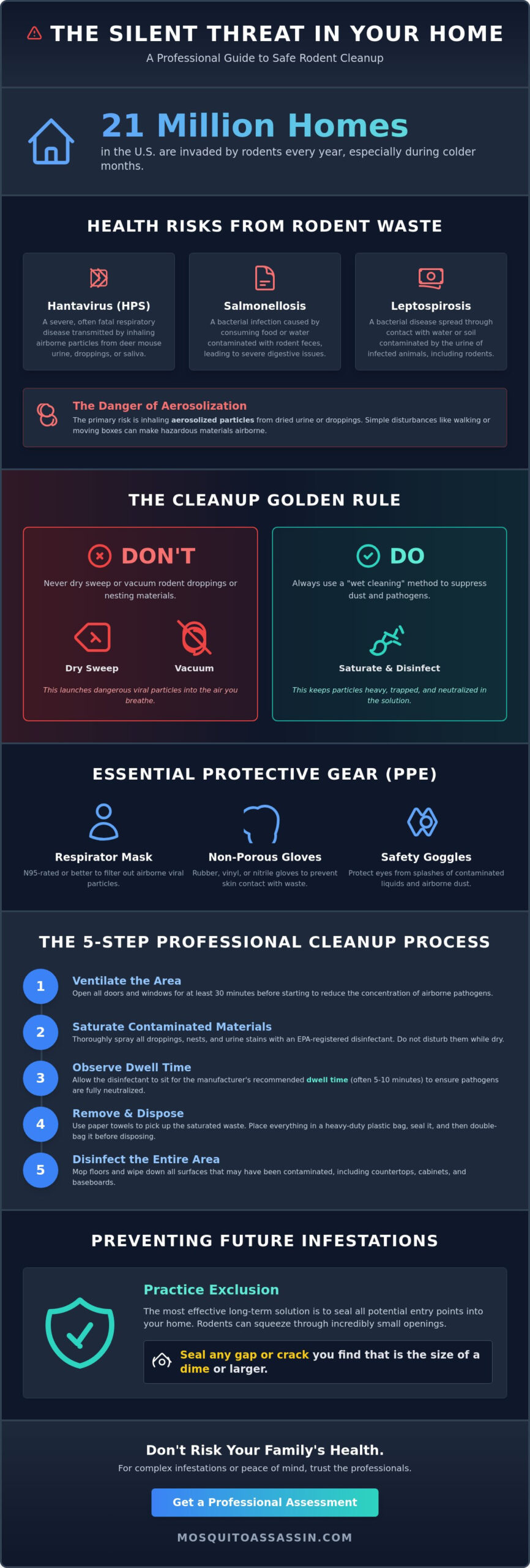
    Before you even touch a paper towel, follow these two foundational rules. First, NEVER sweep or vacuum dry droppings. This is the fastest way to aerosolize dangerous viruses, making them breathable. Second, thoroughly ventilate the contaminated area by opening windows and doors for at least 30 minutes before you begin working. This helps disperse any airborne particles.

    Assembling Your Personal Protective Equipment (PPE)

    Protecting yourself is the top priority. Do not attempt a cleanup without the proper gear. Your essential PPE checklist includes:

    • Non-absorbent gloves: Rubber, latex, or nitrile gloves are mandatory to prevent direct contact with contaminants.

    • N95-rated respirator: A standard dust mask is not enough. An N95 mask is designed to filter out the fine airborne particles that can carry viruses.

    • Goggles: Protect your eyes from splashes of cleaning solution or contaminated liquids.

    • Disposable coveralls: For heavy infestations, especially in confined spaces like attics or crawlspaces, coveralls protect your clothing and skin.

    Choosing the Right Disinfectant Solution

    You need a powerful solution to neutralize the pathogens left behind. Gather your supplies before you enter the area to ensure an efficient and safe process. You will need:

    • A virucidal disinfectant: You can use a commercial product rated to kill viruses or a simple DIY bleach solution. To make your own, mix 1 part household bleach to 9 parts water.

    • Critical Safety Note: Never mix bleach with ammonia or any other cleaning product, as this can create toxic chlorine gas.

    • Supplies: A spray bottle for the disinfectant, paper towels for wiping, and heavy-duty, sealable trash bags for disposal.

    The Professional 5-Step Process for Cleaning Rodent Droppings

    Once you’ve addressed the source of the infestation, the next critical phase is the cleanup. Simply sweeping or vacuuming is dangerous, as it can send hazardous dust airborne. A methodical, professional approach is essential for safeguarding your home and family from lingering pathogens. This proven 5-step process for cleaning after rodent infestation ensures you eliminate all waste without cross-contamination, neutralizing the serious rodent-borne disease risks that droppings and urine leave behind.

    For best results on hard surfaces like floors, counters, and shelves, always work from the top down and from the cleanest areas toward the most heavily contaminated spots. Patience is your most important tool; allow the disinfectant to do its job completely.

    Step 1: Soak and Saturate the Contaminated Area

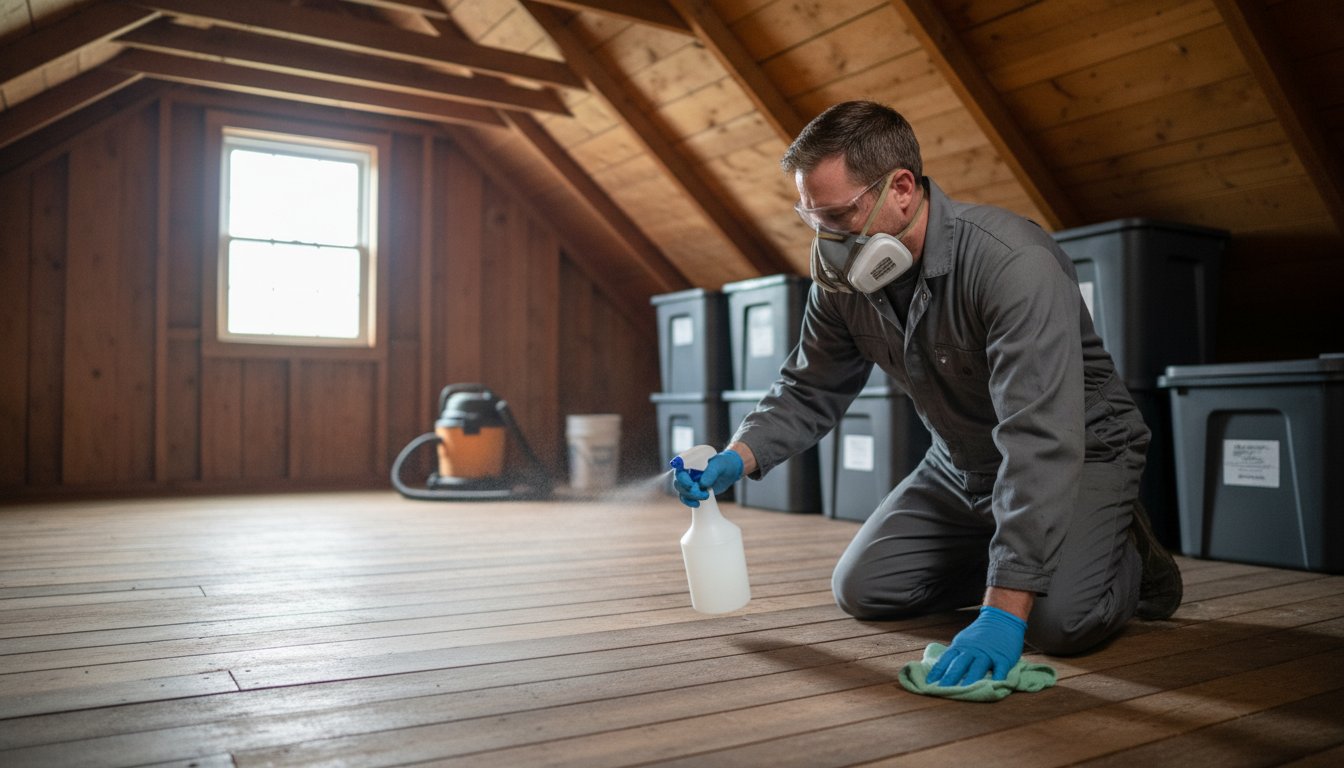
    With your personal protective equipment (PPE) securely on, thoroughly spray the visible droppings, urine stains, and nesting materials with your disinfectant or bleach solution. Do not be shy with the spray, the goal is to completely saturate the waste. Let the solution soak for a minimum of 5 to 10 minutes. This crucial waiting period kills viruses and bacteria before you ever touch the waste, drastically reducing the risk of exposure.

    Step 2: Wipe Up and Remove the Waste

    After the disinfectant has had time to work, use disposable paper towels to wipe up the soaked droppings and urine. Pick up the waste carefully and place the used paper towels directly into a heavy-duty trash bag. Never use a reusable cloth, sponge, or mop for this step, as it creates a high risk of spreading contamination throughout your home.

    Step 3: Securely Dispose of All Contaminated Materials

    Once you have removed all the physical waste from the area, seal the trash bag tightly. To prevent any potential leaks or tears, immediately place this sealed bag inside a second trash bag and seal that one as well. Dispose of the double-bagged waste in a secure, outdoor trash receptacle with a tight-fitting lid to prevent other pests from accessing it.

    Step 4: Disinfect the Entire Area Again

    With the physical contaminants gone, it’s time to disinfect the entire area to eliminate any remaining microscopic threats. Mop the floors and use a clean cloth or paper towels to wipe down all surfaces the rodents may have touched, including countertops, shelves, cabinet interiors, and even walls. Pay special attention to corners, baseboards, and known rodent pathways.

    Step 5: Final Cleanup and Ventilation

    Your job isn’t done until your tools and yourself are also clean. Thoroughly disinfect your mop and any other reusable cleaning tools. Remove the clothes you wore and wash them immediately in hot water. Finally, wash your hands thoroughly with soap and water. Open windows and doors to ventilate the area for at least 30 minutes to air out any lingering disinfectant fumes and ensure fresh, clean air circulates through the space.

    How to Clean Contaminated Items and Difficult Spaces

    Rodents don’t just travel across floors; they burrow into furniture, nest in fabrics, and contaminate hidden spaces like attics and crawlspaces. A crucial part of cleaning after rodent infestation involves tackling these difficult areas where pathogens can linger. Before you begin, always assess the level of contamination. While many items can be salvaged with the right techniques, heavily soiled materials, especially insulation, often pose a significant health risk and must be discarded.

    Clothing, Bedding, and Other Washable Fabrics

    Items like clothing, towels, and bedding that have been exposed to rodents require immediate and thorough washing to eliminate bacteria. Follow these proven steps for safe and effective cleaning:

    • Transport Carefully: Place items in a plastic bag to carry them to the washing machine, minimizing the spread of contaminants through your home.

    • Wash on High Heat: Use a standard laundry detergent and wash the items in the hottest water the fabric can safely tolerate.

    • Dry Thoroughly: Tumble dry on a high heat setting, as the sustained heat helps kill any remaining pathogens.

    • Use Sunlight for Non-Washables: For delicate items that cannot be washed, leaving them in direct sunlight for several hours can help disinfect them, as UV light has natural germicidal properties.

    Carpets and Upholstered Furniture

    Soft surfaces like carpets and furniture can harbor unseen bacteria and viruses from rodent urine and droppings. After vacuuming up all visible debris (using a vacuum with a HEPA filter), you must deep clean and disinfect. For carpets, use a steam cleaner with a commercial-grade disinfecting shampoo. For sofas and chairs, apply a disinfectant spray specifically designed for upholstery. Always test any cleaner on a small, hidden area first to ensure it doesn’t cause discoloration or damage.

    Attics, Crawlspaces, and Contaminated Insulation

    These areas represent the highest risk during cleanup. Insulation, once contaminated by rodent nests, urine, and feces, cannot be effectively sanitized. The material is porous, trapping dangerous pathogens that can easily become airborne if disturbed. Attempting to remove it without proper personal protective equipment (PPE) and specialized tools is extremely hazardous.

    Professionals use commercial-grade HEPA vacuums and follow strict protocols to safely remove and dispose of soiled insulation. Given the serious health risks, this part of cleaning after rodent infestation is best left to certified experts. For severe attic or crawlspace infestations, contact a professional for safe removal and sanitation to ensure your home is truly clean and your family is protected.

    Eliminating Lingering Odors and Stains After Cleanup

    You’ve disinfected surfaces and removed all visible signs of rodents, but a persistent, musty smell remains. This unpleasant odor is a common problem after an infestation, typically caused by urine that has soaked deep into porous materials like wood, drywall, insulation, or concrete. Simply masking the smell with air fresheners is a temporary fix that won’t solve the underlying issue. Proper odor elimination is the final, essential step to fully reclaim your home and restore its clean, safe environment.

    Pinpointing the Odor’s Source

    To eliminate the smell, you must first find its source. The odor will be strongest near former nesting areas, runways, or hidden urine spots. Thoroughly inspect dark, undisturbed areas like wall voids, crawl spaces, attics, and beneath floorboards. For a professional approach, use a UV blacklight in a darkened room; rodent urine will glow, revealing hidden stains on carpets, baseboards, and other surfaces that are invisible to the naked eye.

    Eradicate Odors with Enzymatic Cleaners

    Standard household cleaners won’t break down the uric acid crystals in rodent urine, which are the root cause of the lingering smell. For complete odor eradication, you need an enzyme-based (or enzymatic) cleaner. These powerful solutions use beneficial bacteria to produce enzymes that break down the organic proteins in urine, feces, and other biological matter, permanently destroying the source of the odor. This step is a non-negotiable part of a comprehensive cleaning after rodent infestation. Always follow the product’s instructions for safe and effective use on different materials.

    Natural Methods for a Final Refresh

    After treating the source, you can use natural solutions to absorb any remaining airborne odors and freshen the space. These methods are safe, effective, and work best in conjunction with deep cleaning.

    • Baking Soda: Place open boxes or shallow bowls of baking soda in affected rooms to absorb odors from the air.

    • White Vinegar: Set out bowls of white vinegar for a day or two. Vinegar is excellent at neutralizing stubborn smells.

    • Ventilation: Open windows and use fans to circulate fresh air throughout the space, helping to air out any final traces of the infestation.

    Successfully completing the cleaning after rodent infestation is a major accomplishment. However, if odors persist or the contamination was widespread, professional intervention may be necessary to guarantee your home is fully restored. For comprehensive pest eradication and sanitation support, trust the experts at Mosquito Assassin to safeguard your home and family.

    When DIY Isn’t Enough: Signs You Need a Professional

    While the steps outlined in this guide are effective for minor incidents, a large-scale or long-term rodent problem poses significant health risks that demand professional intervention. Attempting a major cleanup without the right training or equipment can expose your family to dangerous airborne pathogens. Knowing when to call for expert help is the most important step in safeguarding your home and health.

    Indicators of a Heavy Infestation

    If you notice any of the following signs, the problem has likely grown beyond a simple DIY project. These are clear signals that you need professional assistance for a safe and thorough cleanup:

    • Widespread Droppings: You find droppings and urine stains in multiple rooms, across different floors, or inside cabinets and pantries.

    • Visible Pathways: Dark, greasy rub marks are visible along walls, baseboards, and pipes where rodents have traveled repeatedly.

    • Overwhelming Odor: A strong, musty smell of ammonia from urine is noticeable throughout the home and doesn’t fade with ventilation.

    • HVAC Contamination: You suspect or have found evidence of rodents nesting or leaving waste inside your air ducts or HVAC system.

    The Mosquito Assassin Advantage: Cleanup and Exclusion

    When facing a severe rodent problem, you need a comprehensive solution, not just a surface-level clean. A professional service for cleaning after rodent infestation is designed to eliminate the threat completely and protect your family. Our certified technicians arrive with commercial-grade Personal Protective Equipment (PPE), HEPA-filtered vacuums, and EPA-approved virucidal disinfectants to neutralize pathogens safely.

    We don’t just clean; we restore your peace of mind. Our team is trained to safely remove and dispose of contaminated materials, such as soiled insulation in your attic or crawlspace. But our work isn’t finished until we complete the most critical step: exclusion. We conduct a thorough inspection to identify and professionally seal every potential entry point, from foundation cracks to roofline gaps. This proven process ensures that once we handle the cleanup, rodents can’t get back in to start the cycle all over again.

    Don’t risk your health on a hazardous cleanup. Contact the experts at Mosquito Assassin for a dependable and complete solution.

    Reclaim Your Home with Professional Rodent Cleanup

    Tackling the aftermath of a rodent infestation is a serious task that demands caution and the right approach. As we’ve covered, the key takeaways are clear: always prioritize your safety with proper protective gear, follow a meticulous disinfection process to eliminate dangerous pathogens, and understand when a situation is too hazardous for a DIY approach. A thorough cleaning after rodent infestation is not just about appearances, it’s about fundamentally safeguarding the health of everyone in your home. These steps are critical for restoring a safe living environment.

    When the risks are high and the job is extensive, the safest choice is to call in the professionals. At Mosquito Assassin, we provide the expertise and equipment to handle the job correctly and safely. As a Locally Owned and Operated team serving communities across PA & OH, we are dedicated to protecting our neighbors with Family-Safe Treatments and a rock-solid Pest-Free Guarantee. Don’t leave your family’s well-being to chance. Schedule a professional rodent cleanup and exclusion service today!

    Frequently Asked Questions About Cleaning After Rodents

    What are the health risks of cleaning up rodent droppings myself?

    Rodent droppings and urine can transmit dangerous diseases like Hantavirus, Salmonella, and Leptospirosis. The primary risk is inhaling airborne virus particles that get stirred up by improper cleaning methods like sweeping or vacuuming. Direct contact with contaminated surfaces can also lead to infection. Safeguarding your family’s health is the top priority, which is why professional cleaning after rodent infestation is the most reliable way to eliminate these serious threats and ensure the job is done safely.

    I already vacuumed up the droppings. What should I do now?

    Using a standard vacuum can aerosolize dangerous virus particles, spreading them throughout the air. If you’ve already done this, take the vacuum outside immediately. While wearing gloves and a respiratory mask, carefully remove the bag or empty the canister into a sealed plastic bag for disposal. Thoroughly disinfect the entire vacuum cleaner with a bleach solution or an EPA-registered disinfectant. Monitor the area for any missed contamination and be aware of any flu-like symptoms in the coming weeks.

    How can I tell if the rodents are completely gone before I start cleaning?

    Before beginning any cleanup, you must confirm the infestation has been eliminated. Look for the absence of fresh signs for several days, such as new droppings (which are dark and soft), recent gnaw marks, or tracks in dusty corners. A proven method is to clean a small, visible area and check it daily. If no new rodent activity appears after three to five days, it is a strong indicator that they are gone and you can proceed with a full cleaning.

    Is bleach the only thing that will kill the germs in mouse droppings?

    While a 1:10 bleach-to-water solution is highly effective and recommended by the CDC, it is not your only option. Any commercial, EPA-registered disinfectant that is rated to kill viruses will also work effectively. The critical step is to follow the product’s directions for contact time, the contaminated surface must remain wet with the disinfectant for the specified period to ensure all harmful pathogens are neutralized. This guarantees a truly sanitized and safe environment for your family.

    How long do viruses like Hantavirus survive in the environment?

    The survival time for Hantavirus depends on environmental conditions. In dried rodent urine, droppings, or saliva, the virus can remain infectious for two to three days at normal room temperature. Its lifespan can be longer in cool, dark, and undisturbed areas like basements or crawlspaces. Direct sunlight and UV exposure help deactivate the virus more quickly, but you should always assume that any droppings you find could still be infectious and take proper precautions.

    Can the smell of dead rodents in walls be removed professionally?

    Yes, absolutely. A lingering odor from a dead rodent is a difficult problem that requires a professional solution for complete eradication. Our certified technicians have the tools and expertise to locate and remove the carcass, even from inaccessible areas like wall voids or attics. We then use commercial-grade deodorizers and fogging treatments to neutralize the odor at its source, permanently eliminating the smell and restoring fresh air to your home.