
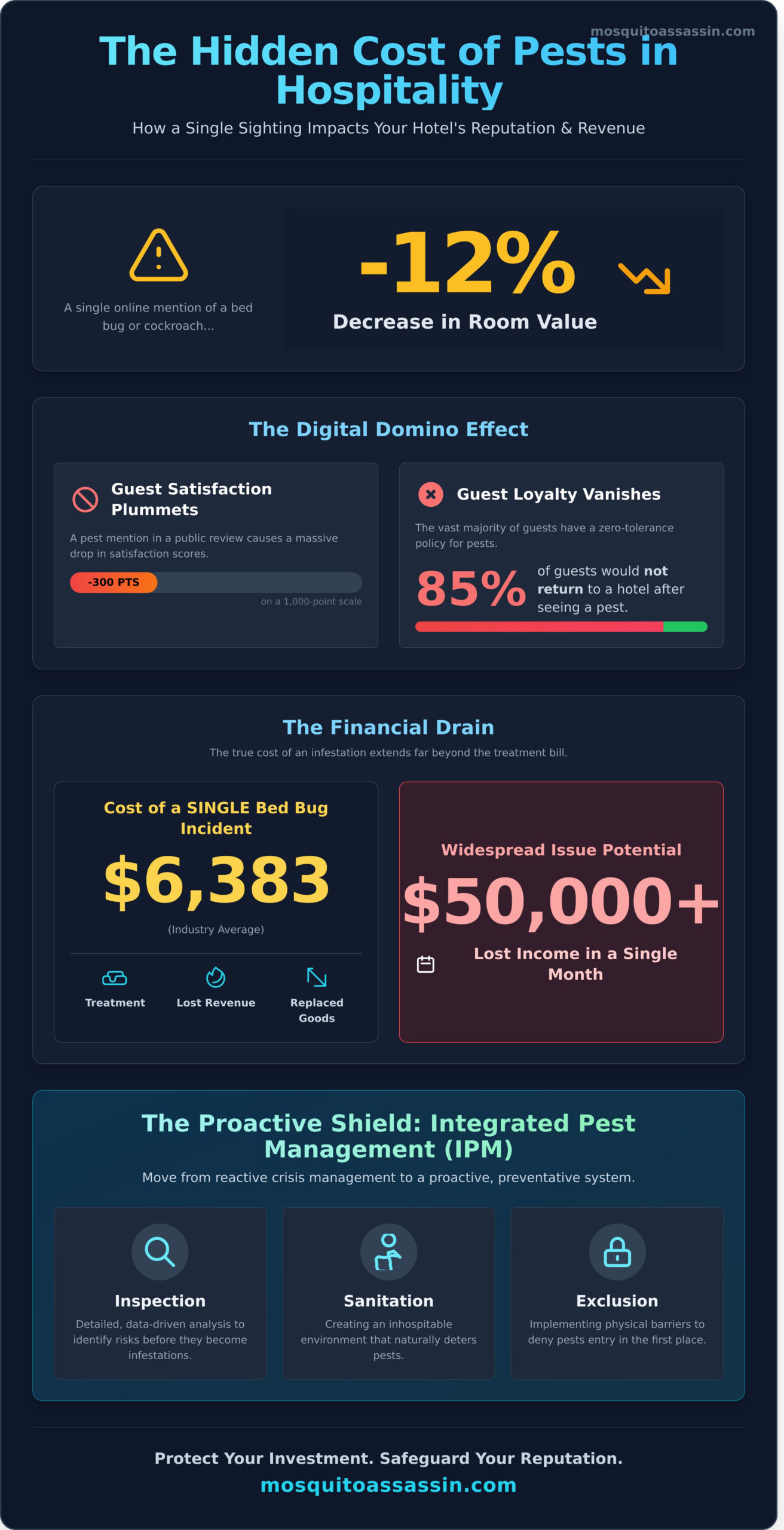
A single online mention of a bed bug or cockroach can decrease a hotel’s room value by 12% according to research conducted by the University of Kentucky. For a 100 room facility in Erie or Crawford County, this translates to thousands in potential revenue loss before a single treatment even begins. It’s an understandable fear for hospitality managers who must balance high guest turnover with the constant demand for a spotless, sanitary environment.
Maintaining a five star reputation requires more than just reactive spraying; it demands comprehensive hotel pest management solutions that remain invisible to the public eye. This article explains how professional integrated pest management safeguards guest experiences, ensures compliance with health standards in the PA and OH regions, and prevents the high costs associated with room closures. Readers will discover a proactive strategy for keeping pests out of the lobby and off of social media platforms.
Disclaimer: The information provided on this blog is for general informational purposes only and is not intended as professional pest control advice. Conditions vary by property, environment, and location. Reading this content does not create a service agreement. For an inspection or professional recommendations, please contact Mosquito Assassin Pest Control LLC directly.
Key Takeaways
-
Understand how proactive pest management prevents revenue loss and protects a hotel’s reputation from the financial impact of public pest sightings.
-
Learn how integrated hotel pest management solutions prioritize long-term prevention through sanitation and structural exclusion rather than relying solely on reactive treatments.
-
Identify the specific behaviors of bed bugs and rodents in commercial settings to better mitigate the unique risks they pose to guest safety.
-
Discover how to establish a culture of awareness among housekeeping staff and implement effective internal reporting systems for early detection.
-
Explore how the Great Lakes climate in Erie and Ashtabula influences seasonal pest pressures and why localized knowledge is vital for effective control.
Table of Contents
-
Understanding Hotel Pest Management Solutions and Brand Protection
-
Selecting Regional Solutions for Pennsylvania and Ohio Hotels
Understanding Hotel Pest Management Solutions and Brand Protection
Professional hospitality pest management is a proactive, data-driven system designed to stop infestations before they start. It moves beyond reactive methods that only address pests after they’ve been spotted by a guest or staff member. Instead, it relies on Integrated Pest Management (IPM), which combines detailed inspection, improved sanitation, and physical barriers to create an inhospitable environment for intruders. For hotels in Erie County, Crawford County, and Ashtabula County, this systematic approach is the baseline for maintaining brand integrity. A single pest sighting isn’t just a nuisance; it’s a direct threat to the property’s financial health.
To better understand how these systems work within a lodging environment, watch this helpful video:
The stakes for 2026 haven’t ever been higher for the hospitality industry. Digital reviews on platforms like TripAdvisor and Google act as permanent, searchable records of a property’s hygiene. A 2024 study by J.D. Power indicated that guest satisfaction scores drop by an average of 300 points on a 1,000-point scale when a pest is mentioned in a public review. In this digital era, a single photo of a cockroach or bed bug can reach thousands of potential travelers in minutes, causing immediate booking cancellations and long-term erosion of trust. Third-party audits and health department compliance are no longer just checkboxes; they’re essential components of a hotel’s survival strategy.
The Financial Impact of Infestations
The true cost of an infestation far exceeds the price of a service visit. When a room is taken out of service for remediation, the hotel loses Daily Average Rate (ADR) revenue immediately. Industry data from 2023 suggests that the average cost of a single bed bug incident, including professional treatment, replaced soft goods, and lost revenue, reaches approximately $6,383. For a mid-sized hotel in Pennsylvania, a widespread issue could lead to $50,000 in lost income over a single month. Beyond these immediate expenses, legal implications for hospitality businesses can be severe. Regulatory bodies in Ohio and Pennsylvania require strict adherence to health codes; failure to comply can lead to heavy fines or forced closures. Investing in long-term hotel pest management solutions is a capital-preserving strategy compared to the high cost of reactive crisis management.
Guest Expectations in the Modern Era
Today’s travelers have a zero-tolerance policy for pests. In 2025, surveys showed that 85 percent of guests wouldn’t return to a hotel if they saw a pest in their room. This expectation puts immense pressure on management to implement hotel pest management solutions that work silently in the background. The speed of social media means a guest can broadcast a complaint to a global audience before they’ve even checked out of the lobby. Successful management requires balancing effective treatment with guest privacy and comfort. Treatments must be discreet, low-impact, and odor-free so that guests remain unaware of the preventative measures in place. Maintaining this invisible shield is what separates top-tier hospitality brands in Ashtabula County from those struggling with reputation damage. Professional pest control may help reduce risk and ensure that guest comfort remains the top priority.
Disclaimer: The information provided on this blog is for general informational purposes only and is not intended as professional pest control advice. Conditions vary by property, environment, and location. Reading this content does not create a service agreement. For an inspection or professional recommendations, please contact Mosquito Assassin Pest Control LLC directly.
Core Components of Integrated Pest Management for Hotels
Integrated Pest Management (IPM) is the gold standard for modern hospitality. It shifts the focus from reactive methods to a science-based strategy. For a hotel manager, this means looking at the building as an ecosystem. Successful IPM practices for hotels involve a partnership between staff and pest professionals. Instead of relying on routine chemical applications, the priority is sanitation and structural integrity. Roughly 85% of pest issues can be mitigated through physical changes rather than liquid treatments. This philosophy ensures that chemical use is a last resort, which protects guest safety and environmental health.
Customization is vital. A hotel built in 1965 in Erie County will have different structural vulnerabilities than a new build in Crawford County. A one-size-fits-all approach fails because pests exploit specific architectural flaws. Professional managers require detailed documentation. Every sighting, trap check, and structural repair must be logged. This data creates a roadmap, showing where vulnerabilities exist before a guest ever sees a pest. A 2022 study showed that facilities with robust digital reporting saw a 40% faster resolution time for localized infestations. Detailed reporting isn’t just paperwork; it’s a defensive tool that helps managers track trends and allocate resources effectively.
Inspection and Monitoring Protocols
Regular inspections are the backbone of effective hotel pest management solutions. High-risk zones require frequent checks to ensure small sightings don’t become full-blown infestations. Key areas include:
-
Commercial Kitchens: These provide constant food and water sources for rodents and cockroaches.
-
Laundry Rooms: High humidity and warmth attract various insects, including silverfish.
-
Loading Docks: This is the primary entry point for 75% of structural pests arriving via shipments.
Monitoring stations, such as glue boards or pheromone traps, act as 24/7 sentries. These devices don’t just catch pests; they provide data on population trends. If a technician finds three cockroaches in a specific corner, it reveals a localized sanitation failure that needs immediate attention. Professional assessments should occur at least monthly to catch issues before they escalate into guest-facing problems.
Exclusion and Habitat Modification
Exclusion is about building pests out. A mouse can squeeze through a 1/4 inch gap. In aging hotel structures across Ashtabula County, sealing gaps around utility lines and door sweeps is a primary defense. Lighting also plays a massive role. Replacing standard mercury vapor bulbs with LED lights can reduce insect attraction by up to 60% in many environments. Moisture management is another pillar. Leaky HVAC units or poorly drained plumbing create water stations for pests. Addressing these mechanical issues removes the resources pests need to survive. A single dripping faucet can support a German cockroach colony for weeks. Professional oversight ensures these technical details aren’t overlooked. If you’re concerned about structural vulnerabilities, scheduling a professional assessment may help identify hidden risks.
Disclaimer: The information provided on this blog is for general informational purposes only and is not intended as professional pest control advice. Conditions vary by property, environment, and location. Reading this content does not create a service agreement. For an inspection or professional recommendations, please contact Mosquito Assassin Pest Control LLC directly.
Critical Threats: Bed Bugs and Rodent Management
Bed bugs are the single greatest threat to a hotel’s reputation and bottom line. A 2017 study by the University of Kentucky found that a single mention of bed bugs in a recent online review can lower a hotel’s room value by $38 per night for business travelers and $23 for leisure travelers. These pests don’t distinguish between a budget motel and a five-star resort. They hitchhike on luggage and clothing, making every check-in a potential introduction point. Because a single female can lay 200 to 500 eggs in her lifetime, a minor introduction can escalate into a building-wide crisis within weeks.
Rodents present a different set of challenges that impact both health and infrastructure. Mice and rats are opportunistic, entering commercial buildings through openings as small as 1/4 inch. According to industry data, 21 million homes and businesses are invaded by rodents each winter in the United States. In Erie and Crawford Counties, dropping temperatures often drive these pests indoors during the fall months seeking warmth and food. Once inside, they cause structural damage by gnawing on wires and insulation, which increases fire risks. They also carry pathogens like Salmonella, posing a direct threat to guest safety.
Effective hotel pest management solutions rely on the distinction between preventative monitoring and active eradication. Monitoring involves placing discreet sensors and traps to catch activity before a guest ever sees a pest. Eradication is the process of removing an established population once it’s been identified. Professional intervention ensures that treatments are contained. Without a systematic approach, a small issue in one guest room can quickly migrate through shared walls and utility lines, leading to a much larger financial loss.
Bed Bug Prevention and Rapid Response
Early detection is vital for maintaining high occupancy rates. Housekeeping staff should perform visual inspections during every turnover, looking for dark spotting on mattresses or discarded skins in headboard crevices. Utilizing Controlling Bed Bugs strategies through Integrated Pest Management (IPM) helps reduce the need for aggressive chemical applications. Professional intervention ensures that treatments are discrete, preventing panic among other guests. Educating staff on identifying early signs of activity in guest rooms and laundry facilities can stop an infestation before it spreads to adjacent rooms.
Commercial Rodent Control Strategies
Managing rodents in a hospitality setting requires a rigorous three step process: removal, maintenance, and exclusion. First, existing populations must be removed using professional methods. Second, maintenance ensures that food sources are eliminated. Third, exclusion seals entry points like gaps under doors or around plumbing. Food service areas require 100% compliance with sanitation standards to prevent contamination. Refuse areas should be situated at least 50 feet from guest entrances and kept in heavy duty, sealed containers. Implementing these hotel pest management solutions reduces the attractants that draw rodents from the surrounding environment into the building. For an inspection or professional recommendations, please contact Mosquito Assassin Pest Control LLC directly by visiting www.mosquitoassin.com/contact-us.
Disclaimer: The information provided on this blog is for general informational purposes only and is not intended as professional pest control advice. Conditions vary by property, environment, and location. Reading this content does not create a service agreement. For an inspection or professional recommendations, please contact Mosquito Assassin Pest Control LLC directly.
Operational Integration: Training and Housekeeping Roles
Successful hotel pest management solutions are built on a foundation of daily vigilance rather than just monthly inspections. Every employee plays a part in safeguarding the facility. When a culture of awareness exists, staff members act as the eyes and ears of the property. This proactive approach identifies issues before they escalate into guest complaints. Statistics from industry audits in 2023 show that hotels with active staff reporting systems reduce their total pest-related expenses by 28% annually. It’s vital to establish a clear internal reporting system. Sightings should be documented immediately in a centralized log, including the exact location, time, and type of pest seen. This data allows for targeted treatments in specific zones, such as the kitchens or laundry facilities.
Housekeeping staff are the primary defense against infestations. During a standard 25 minute room turn, team members can look for subtle indicators. They should check mattress seams, headboard mounts, and the undersides of luggage racks. These areas are prime hiding spots for bed bugs. If a housekeeper finds evidence, the room must be removed from the inventory immediately. Integrating hotel pest management solutions into the daily workflow transforms pest control from a reaction to a standard quality control measure. A 15 second check of the bathroom vanity for cockroach spotting can prevent a minor issue from becoming a building-wide problem.
Effective Staff Training Programs
Training programs must be tailored to specific roles within the hotel. Maintenance teams need to focus on exclusion techniques. This involves sealing cracks and crevices that are 1/4 inch or larger. They should also inspect door sweeps and window screens monthly to ensure they are intact. Housekeeping training centers on recognition. Staff must be able to identify the difference between common pests like ants and more destructive species like bed bugs. Empowering employees to report findings without fear of reprimand fosters a more transparent environment. In Erie and Crawford Counties in Pennsylvania, as well as Ashtabula County in Ohio, local hotels often find that quarterly refresher courses keep these skills sharp.
Sanitation and Maintenance Best Practices
Sanitation is the most effective way to eliminate pest food sources. Commercial kitchens should follow a 48 hour deep cleaning cycle for floor drains and grease traps. These areas are notorious for attracting fruit flies and cockroaches. Waste management protocols are also essential. Trash should be removed from the building twice daily, and dumpsters should be positioned at least 50 feet away from any guest entrance. Storage areas require organized management. Eliminating cardboard boxes, which provide both food and shelter for insects, can reduce harborage by 40%. Switching to plastic, lidded containers is a simple but effective change. Proper inventory rotation using the "first-in, first-out" method ensures that older products don’t sit long enough to attract pests.
Maintaining a pest-free environment requires a professional partner who understands the unique needs of the hospitality industry. If your facility needs a thorough review of its current protocols, professional pest control may help reduce risk.
Disclaimer: The information provided on this blog is for general informational purposes only and is not intended as professional pest control advice. Conditions vary by property, environment, and location. Reading this content does not create a service agreement. For an inspection or professional recommendations, please contact Mosquito Assassin Pest Control LLC directly.
Selecting Regional Solutions for Pennsylvania and Ohio Hotels
Great Lakes weather patterns dictate pest behavior in ways that national service models often overlook. Hotels located in Erie, Crawford, and Ashtabula counties face a unique intersection of high lakefront humidity and extreme seasonal temperature swings. Effective hotel pest management solutions must account for these regional shifts to remain successful throughout the calendar year. A strategy that works in a dry, southern climate will likely fail when confronted with the moisture-driven pest pressures of the Rust Belt.
Local Environmental Factors in PA and OH
Proximity to Lake Erie significantly impacts the biological timelines of common pests. During summer months, humidity levels in the region frequently exceed 75%, which accelerates the reproductive cycles of flies and cockroaches. Mosquitoes and ticks thrive in the damp environments common to Erie and Ashtabula counties, particularly for properties near the water or wooded recreation areas. As temperatures drop below 45 degrees Fahrenheit in October and November, rodent pressure intensifies. In Crawford County, hotels often experience a 30% increase in rodent sightings during late autumn as mice and rats migrate from agricultural fields into structural foundations to escape the frost.
The Value of Local Partnerships
Selecting a regional professional ensures a deeper understanding of local architecture and regulatory standards. Many hospitality buildings in northwestern Pennsylvania and northeastern Ohio were constructed over 50 years ago; these structures often feature stone foundations or complex crawl spaces that require specialized exclusion techniques. Local technicians typically provide response times within 24 hours, which is vital for guest satisfaction. In contrast, national conglomerates may take 48 to 72 hours to redirect a technician to rural areas. Furthermore, professional pest control may help reduce risk for hospitality brands by ensuring strict adherence to specific Pennsylvania and Ohio health codes. Knowledge of local building styles allows for more precise inspections, identifying entry points that outsiders might miss.
Implementing comprehensive hotel pest management solutions protects a property’s reputation in an era of instant online feedback. A 2023 industry report indicated that 80% of travelers check online reviews for mentions of pests before finalizing a booking. A single sighting in a lobby or guest room can lead to a 15% drop in seasonal occupancy rates if not addressed immediately. Year round protection is a practical necessity because pest activity in the Great Lakes basin never truly ceases; it simply moves indoors. While summer focuses on stinging insects and lake flies, winter requires a focus on interior structural pests and stored product invaders. Maintaining a consistent, proactive stance prevents minor issues from escalating into institutional infestations. Professional pest control may help reduce risk for hospitality brands by providing documented proof of remediation and prevention efforts.
For more information on establishing a localized protection plan, property managers can visit the online booking portal at https://portal.gorilladesk.com/mosquitoassassin or reach out through www.mosquitoassassin.com/contact-us.
Disclaimer: The information provided on this blog is for general informational purposes only and is not intended as professional pest control advice. Conditions vary by property, environment, and location. Reading this content does not create a service agreement. For an inspection or professional recommendations, please contact Mosquito Assassin Pest Control LLC directly.
Safeguarding Hospitality Standards Through Professional Oversight
Maintaining a pest-free environment is essential for preserving a hotel’s reputation and long-term financial stability. Implementing comprehensive hotel pest management solutions allows managers to address specific threats like bed bugs and rodents through systematic monitoring and staff education. Industry research suggests that 80% of hotels encounter bed bug issues within any five-year period; it’s a statistic that highlights the need for constant vigilance. Licensed and insured professionals provide the specialized commercial expertise required to navigate these complex hospitality environments effectively.
For properties located in Erie, Crawford, or Ashtabula counties, professional pest control may help reduce risk and ensure brand protection. Consistent training for housekeeping teams remains a primary defense against early-stage infestations. Taking these proactive steps helps create a safe, welcoming atmosphere for every guest who walks through the doors. For a professional inspection or recommendations, contact Mosquito Assassin Pest Control LLC.
Disclaimer: The information provided on this blog is for general informational purposes only and is not intended as professional pest control advice. Conditions vary by property, environment, and location. Reading this content does not create a service agreement. For an inspection or professional recommendations, please contact Mosquito Assassin Pest Control LLC directly.
Frequently Asked Questions
How often should a hotel receive professional pest inspections?
Hotels should receive professional inspections at least once per month in high-traffic areas like lobbies, laundry rooms, and kitchens. Standard guest rooms typically require a quarterly schedule to maintain effective hotel pest management solutions. Frequent assessments identify 90% of potential issues before they escalate into full-scale infestations that impact guest satisfaction scores.
What is the most effective way to prevent bed bugs in a hotel?
Comprehensive staff training is the most effective preventative measure against bed bugs. Housekeeping teams should inspect 100% of mattress seams and headboards during every room turnover. Utilizing high-quality mattress encasements and keeping luggage racks 6 inches away from walls reduces the risk of hitchhiking pests moving between rooms.
Can professional pest management help a hotel pass health inspections?
Professional pest management provides the documentation and exclusion strategies necessary to meet health department standards. Inspectors often evaluate up to 40% of their checklist based on evidence of pests or conducive conditions like gaps under doors. Maintaining a detailed logbook of sightings and treatments ensures the facility remains compliant with local regulations in Crawford County and surrounding areas.
Are pest control treatments safe for hotel guests and pets?
Licensed professionals use EPA-registered products that are applied according to strict safety guidelines. These treatments are designed to target specific pest biology while minimizing exposure to guests and their pets. Most modern applications allow for room re-entry within 2 to 4 hours; this ensures a safe environment without disrupting the guest experience.
What should hotel staff do if a guest reports a pest sighting?
Staff should immediately move the guest to a new room and isolate the affected area to prevent further spread. It’s critical to document the exact location and time of the sighting for the technician. Contacting a professional within a 24-hour window ensures a rapid inspection and prevents a single report from turning into a negative online review.
How does integrated pest management differ from traditional extermination?
Integrated Pest Management focuses on long-term prevention through habitat modification and exclusion rather than relying solely on chemical sprays. This methodology often results in a 70% reduction in pesticide volume by addressing the root causes of infestations. It combines biological knowledge with physical barriers to create a sustainable defense system for the entire property.
What are the most common pests found in PA and OH hotels?
Bed bugs, German cockroaches, and house mice are the three most frequent pests encountered in Erie and Ashtabula County hotels. During the winter months, 85% of rodent calls involve mice seeking warmth inside commercial buildings. Ants also pose a significant challenge during the spring thaw when they enter kitchens in search of moisture and food sources.
Is it possible to manage hotel pests without closing down rooms?
Effective hotel pest management solutions allow for 95% of treatments to be completed without closing rooms for extended periods. Most applications require only a brief vacancy of 3 to 4 hours while products dry. Proactive exclusion work, such as sealing cracks and installing door sweeps, can be performed during routine maintenance without affecting occupancy rates.
Disclaimer: The information provided on this blog is for general informational purposes only and is not intended as professional pest control advice. Conditions vary by property, environment, and location. Reading this content does not create a service agreement. For an inspection or professional recommendations, please contact Mosquito Assassin Pest Control LLC directly.