What if the mosquitoes buzzing around your yard could be recruited to help eliminate their own population? Most homeowners have experienced the frustration of persistent bites even after a yard treatment, especially when pests hide in spots that are difficult to reach. It’s a common concern in Erie and Crawford counties, where dense vegetation and frequent rainfall create ideal breeding conditions. You likely want a solution that works around the clock without worrying about the impact on local pollinators like honeybees or butterflies. This article explains how the in2care mosquito station utilizes science-based biological control to turn female mosquitoes into carriers of their own population’s decline. In a 2014 study published in the journal Parasites & Vectors, researchers found that the active ingredients used in these stations effectively contaminated breeding sites through horizontal transfer. By reading further, you’ll understand the mechanics of this multi-stage process and why it’s becoming a preferred method for integrated pest management in Ashtabula County. You’ll learn how this technology targets hidden breeding spots and provides a continuous layer of protection for your outdoor spaces.
Disclaimer: The information provided on this blog is for general informational purposes only and is not intended as professional pest control advice. Conditions vary by property, environment, and location. Reading this content does not create a service agreement. For an inspection or professional recommendations, please contact Mosquito Assassin Pest Control LLC directly.
Key Takeaways
- Understand how biological control methods differ from traditional light or CO2 traps to achieve more comprehensive results.
- Learn how the in2care mosquito station utilizes the natural behavior of mosquitoes to spread treatments across a property through autodissemination.
- Evaluate the benefits of targeted population reduction, including its minimal impact on beneficial insects like honeybees and butterflies.
- Discover why strategic placement in damp, shaded areas is critical for managing mosquito species common in Pennsylvania and Ohio.
- Explore why professional site mapping and maintenance are essential for ensuring a mosquito control program remains effective throughout the season.
Understanding the In2Care Mosquito Station Technology
The in2care mosquito station represents a sophisticated evolution in residential property protection. Unlike devices designed to simply lure and kill a few insects, this system functions as a biological control tool. It uses the mosquito’s own behavior against the population. This method is a significant departure from traditional mosquito control methods that often rely on broad-spectrum applications or mechanical traps that only impact a localized area. While light-based or CO2 traps attempt to capture insects, this technology focuses on contamination and population suppression.
The Environmental Protection Agency (EPA) manages the registration of these professional-grade solutions, ensuring they meet rigorous standards for efficacy. Because these stations require precise placement based on mosquito flight patterns, professional pest control may help reduce risk for property owners in Erie County, Crawford County, and Ashtabula County. Professionals understand the biological nuances of local species, ensuring the technology is deployed where it’s most effective.
To better understand this concept, watch this helpful video:
The Shift Toward Biological Pest Management
Modern property care is moving away from broad-spectrum insecticides toward targeted technology. Integrated Pest Management (IPM) focuses on long-term prevention through a combination of techniques rather than relying on a single chemical solution. Biological tools like the in2care mosquito station provide a sustainable layer of protection that doesn’t affect non-target insects like bees or butterflies. These tools work best when they complement general pest control strategies that address other common yard pests. This multi-layered approach ensures that the ecosystem remains balanced while reducing the nuisance of biting insects on your property.
Key Components of the Station
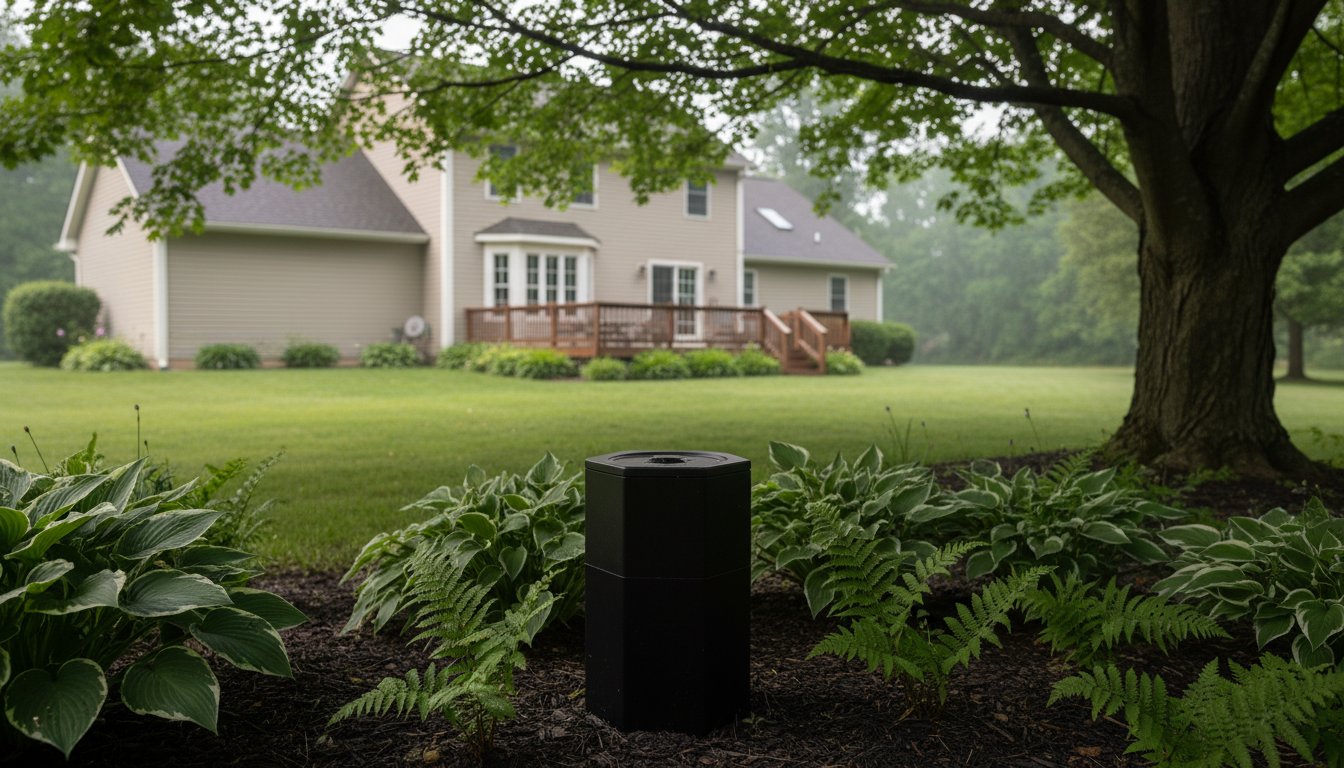
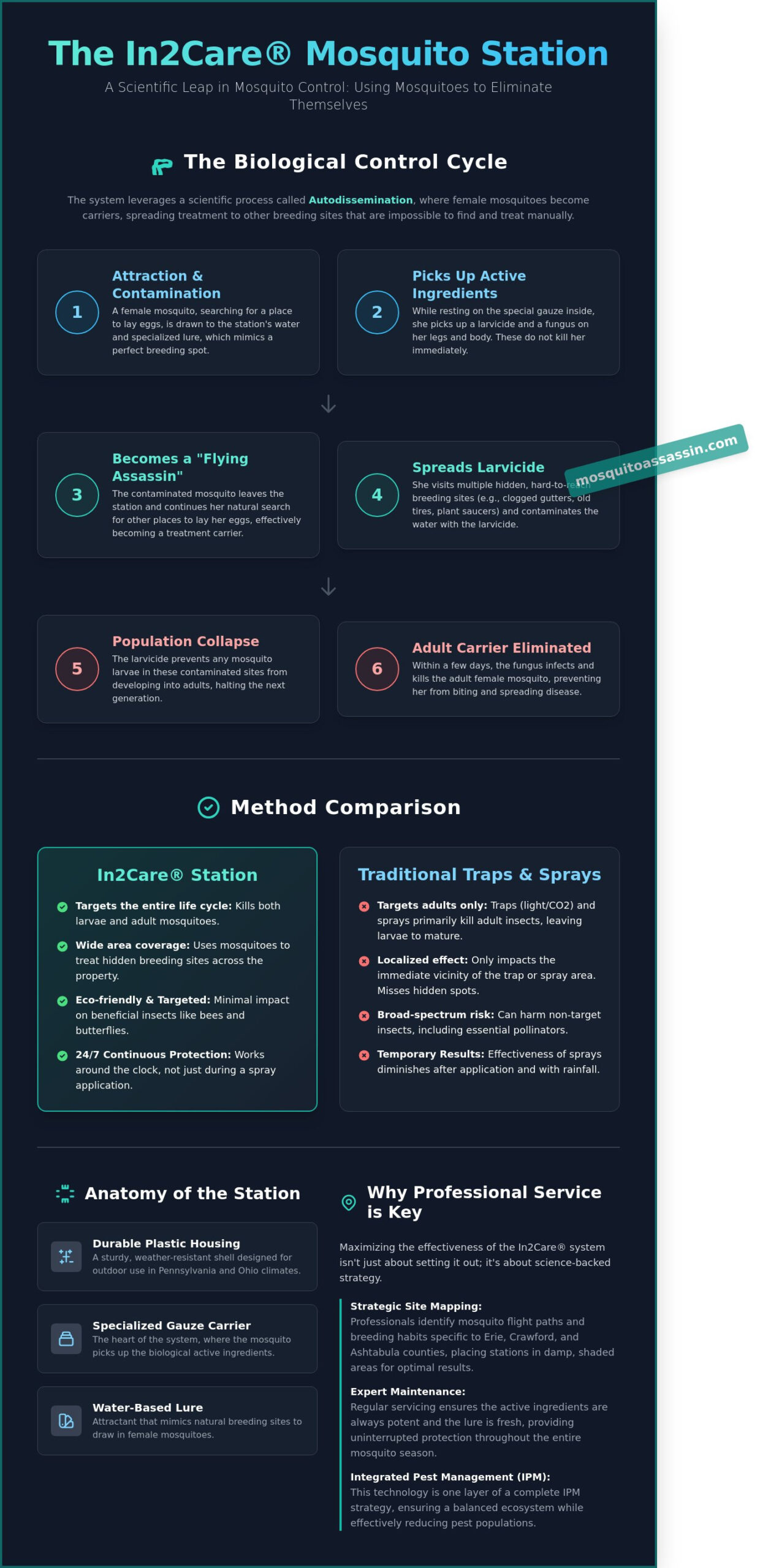
The station is built with durability and biology in mind. It consists of three primary parts that work together to disrupt the mosquito life cycle. First, a durable plastic housing provides a sturdy, weather-resistant shell designed for multi-year outdoor use in the variable climates of Pennsylvania and Ohio. Inside, a specialized gauze carrier holds the active biological ingredients. This gauze is the heart of the system; it’s where the mosquito picks up the treatment. Finally, a water-based lure mimics natural breeding sites, attracting female mosquitoes looking for a place to lay eggs. This combination turns the station into a highly effective tool that leverages the insect’s natural instincts to spread the solution to other breeding sites nearby.
Disclaimer: The information provided on this blog is for general informational purposes only and is not intended as professional pest control advice. Conditions vary by property, environment, and location. Reading this content does not create a service agreement. For an inspection or professional recommendations, please contact Mosquito Assassin Pest Control LLC directly.
The Biological Mechanism: How Mosquitoes Spread the Treatment
The in2care mosquito station operates on a principle known as autodissemination. This strategy leverages the natural behavior of the pest to deliver the treatment to areas humans cannot easily reach. Autodissemination is the process where contaminated insects transport growth regulators to hidden aquatic habitats. By using the mosquito as a carrier, the system reaches breeding sites that are often inaccessible to traditional barrier sprays or manual inspections. This is particularly effective for Aedes and Culex species found throughout Erie and Crawford Counties in Pennsylvania and Ashtabula County in Ohio. These mosquitoes are known for laying eggs in small, scattered containers, making them difficult to manage with standard methods. The station addresses the entire life cycle by targeting both the larvae in the water and the adult females responsible for the next generation.
Step One: Contamination of the Adult Female
The station is designed to mimic a preferred breeding site. It uses a specialized scent to attract egg-laying female mosquitoes. Once the mosquito enters the station, she lands on a gauze strip treated with two active biological ingredients. These powders adhere to her legs and body through electrostatic charges. One ingredient is a biological fungus that specifically targets the adult mosquito. This adulticide is slow-acting by design and typically takes 8 to 10 days to neutralize the insect. It doesn’t kill the mosquito immediately; instead, it allows her enough time to visit several other sites before she eventually expires. This delay is critical because it turns the mosquito into an active participant in the treatment process. It ensures she can spread the second ingredient, a growth regulator, to multiple locations.
Step Two: Larvicide Distribution to Hidden Sites
After leaving the station, the female mosquito continues her search for additional places to lay eggs. She often visits secondary breeding sites like clogged gutters, flowerpots, or discarded tires. These locations are notoriously difficult for homeowners to treat manually. As she lands in these waters, she transfers microscopic amounts of the larvicide (pyriproxyfen) from her body into the water. This In2Care station evaluation highlights how the technology remains effective even at low concentrations. The larvicide prevents mosquito pupae from successfully hatching into flying adults. Even concentrations as low as 0.01 parts per billion can disrupt the development process. Because these mosquitoes travel between properties, the impact often extends beyond the immediate treatment area, reducing the population in neighboring yards. This creates a wider buffer zone of protection for the property. For residents in the tri-county area, professional pest control may help reduce risk by managing these biological cycles effectively. You can learn more about these mosquito management services to see how they fit your property needs.
Comparing In2Care to Traditional Mosquito Control Methods
Traditional mosquito control typically involves barrier sprays that coat the underside of leaves and perimeter vegetation. While these sprays provide an immediate knockdown of adult pests, their effectiveness begins to decline the moment they dry. The in2care mosquito station operates on a different principle, providing a continuous, passive solution that doesn’t rely on a single application event. A single station provides coverage for approximately 4,300 square feet, making it an efficient choice for residential lots in Erie and Ashtabula counties. Instead of a broad-spectrum chemical application, these stations use the mosquitoes’ own biology against them to spread active ingredients to hard-to-reach breeding sites.
Environmental Impact and Pollinator Safety
One of the primary concerns for homeowners is the impact of pest control on beneficial insects. Traditional pyrethroid sprays can pose risks to honeybees, butterflies, and ladybugs if they come into contact with treated surfaces. Because the station is a self-contained unit, it virtually eliminates the risk of chemical drift. The system uses a specialized biological fungus that specifically targets mosquito species. This scientific study on In2Care efficacy demonstrates how the biological approach manages populations without the heavy environmental footprint of synthetic sprays. It allows residents to maintain a pest-free outdoor space while safeguarding the local pollinators that keep gardens healthy. Using a biological agent instead of a synthetic chemical means the impact is localized and highly targeted.
Consistency and Weather Resistance
Weather patterns in Crawford County often include frequent rain cycles and high-wind events that can prematurely degrade liquid barrier treatments. If a heavy storm occurs shortly after a traditional spray, the protective layer may be washed away, leaving the property vulnerable. The in2care mosquito station is built to withstand these elements. Its durable plastic housing and protective lid keep the active ingredients dry and functional even during heavy precipitation. This ensures 24/7 protection that doesn’t fluctuate with the weather forecast. Properties with dense foliage, creek beds, or sensitive water features benefit from this localized approach because it provides targeted control exactly where mosquitoes breed. Professional service intervals occur every 4 to 6 weeks to refresh the station, ensuring the system remains at peak performance throughout the peak season.
Professional pest control may help reduce risk on properties where standing water or heavy brush makes mosquito management difficult. For homeowners looking to understand their options, visiting the online booking portal can provide more information on property inspections.
Disclaimer: The information provided on this blog is for general informational purposes only and is not intended as professional pest control advice. Conditions vary by property, environment, and location. Reading this content does not create a service agreement. For an inspection or professional recommendations, please contact Mosquito Assassin Pest Control LLC directly.
Strategic Placement and Regional Seasonal Considerations
The success of an in2care mosquito station depends on more than just the biological agents inside; it requires precise placement based on mosquito behavior. These insects are weak fliers and highly sensitive to desiccation, meaning they actively seek out microclimates that are shady, damp, and protected from the wind. Technicians focus on these specific zones (often found under low-hanging shrubs, near dense groundcover, or behind sheds) to ensure the station is attractive to female mosquitoes looking for a place to lay eggs.
Professional site mapping is a critical step in achieving property-wide coverage. Instead of a random layout, experts identify “hotspots” where water naturally collects or where the air remains stagnant. Placing a station near a known breeding site increases the likelihood of biological uptake, as the mosquito will visit the station before or after interacting with other water sources. For homeowners in complex landscapes, consulting professional pest control services ensures the layout accounts for property boundaries and specific foliage density.
Timing the Season in PA and OH
In regions like Erie, Pennsylvania, and Ashtabula, Ohio, timing is everything. Mosquito activity typically begins when overnight temperatures consistently stay above 50 degrees Fahrenheit. This usually occurs in late April or early May. Deploying the in2care mosquito station during this window is vital because it targets the very first generation of the season. By disrupting the life cycle early, the system prevents the exponential population surge that often occurs in June. During the late-summer peak in August, when the risk of mosquito-borne illness is statistically at its highest in the Great Lakes region, a well-established station network provides a necessary layer of continuous biological pressure.
Maintaining the System Throughout the Year
Maintenance is not a “set it and forget it” process. The biological gauze inside the station must be replaced every 30 to 45 days to remain effective. During the humid months of July and August, water levels inside the stations must be monitored; high evaporation rates can reduce the station’s attractiveness to mosquitoes. A professional technician handles the cleaning and refilling of the bioactive powder to ensure the concentration remains lethal to larvae. As the season winds down in October, stations are typically cleaned and stored for the winter. This preparation ensures the equipment is ready for rapid deployment the following spring, maintaining a long-term defense strategy for the property.
Disclaimer: The information provided on this blog is for general informational purposes only and is not intended as professional pest control advice. Conditions vary by property, environment, and location. Reading this content does not create a service agreement. For an inspection or professional recommendations, please contact Mosquito Assassin Pest Control LLC directly.
Professional Management of Mosquito Populations
The in2care mosquito station isn’t a consumer product found on the shelves of local hardware stores. It’s a professional grade tool restricted to licensed pest control experts. This restriction is necessary because biological control requires precise placement and consistent technical oversight. Improperly maintained stations can become ineffective if the bioactive gauze isn’t replaced or the biological agents aren’t replenished on a strict 28 to 30 day schedule. Licensed professionals ensure these units remain active and functional throughout the high risk season.
A comprehensive mosquito control program offers advantages that individual DIY efforts can’t match. Professionals understand the specific biology of local mosquito species, including the Asian Tiger mosquito, which is a primary target for this technology. While a homeowner might apply a surface spray that washes away after a heavy rain, a professional monitors shifts in pest pressure. They track environmental data, such as cumulative rainfall and temperature spikes, to predict when populations will surge. This data driven approach allows for proactive adjustments rather than reactive treatments.
Integrated Pest Management for Local Properties
Effective property protection relies on Integrated Pest Management (IPM). This method combines the science of the in2care mosquito station with physical source reduction. Technicians identify hidden breeding sites, such as clogged gutters, corrugated drain pipes, or low spots in lawns, that residents often overlook. In Erie, Crawford, and Ashtabula counties, a holistic plan often addresses multiple threats at once. This includes managing local pest trends like tick migrations and ant infestations that fluctuate with the humid tri county climate. Learning more about local pest trends helps residents understand why a multi faceted approach is the standard for modern property maintenance.
Next Steps for Property Protection
Securing a yard begins with a professional property assessment. A licensed technician evaluates the unique topography, foliage density, and wind patterns of a lot to determine the optimal number of stations for maximum coverage. This biological population suppression provides long term benefits by crashing the local mosquito population over several weeks. For residents seeking regional support, identifying professional service locations is the first step toward reclaiming outdoor spaces. These experts provide the necessary oversight to ensure the biological agents remain active and effective against biting insects during the peak summer months. Professional management ensures that the science behind the technology translates into real world results for the property.
Securing Your Property With Science-Based Control
Implementing long-term solutions for property protection requires understanding the biological habits of local pests. The in2care mosquito station represents a shift toward targeted technology, utilizing EPA-approved biological agents to address both adult populations and larvae. This system specifically focuses on Aedes and Culex species, using the insects themselves to distribute treatment to hidden breeding grounds. It’s a method that works alongside the natural environment to provide a consistent layer of defense. For residents in Erie, Crawford, and Ashtabula counties, these stations offer a practical approach to population management during the active months from May through September. Professional pest control may help reduce risk by ensuring precise placement based on the specific climate of the Great Lakes region. To learn more about customized protection, visit the professional booking portal. Taking these proactive steps helps maintain a more comfortable outdoor environment throughout the season.
Disclaimer: The information provided on this blog is for general informational purposes only and is not intended as professional pest control advice. Conditions vary by property, environment, and location. Reading this content does not create a service agreement. For an inspection or professional recommendations, please contact Mosquito Assassin Pest Control LLC directly.
Frequently Asked Questions
How long does it take for the In2Care station to show results?
Results typically become noticeable within 2 to 4 weeks after the initial setup. This timeframe allows the biological agents to spread through the local mosquito population as they move between the station and other breeding sites. According to 2017 field studies, property owners can expect a significant reduction in the mosquito population within the first 30 days of consistent use.
Is the In2Care mosquito station safe for my pets and children?
The in2care mosquito station is designed with safety as a priority, utilizing ingredients that specifically target mosquito biology. The active ingredients are contained within the station and are classified as low-risk by the EPA, which minimizes exposure to non-target organisms. Families in Erie and Crawford Counties often choose this system because it provides a localized solution without the need for broad-spectrum chemical sprays across the entire lawn.
Does the In2Care station attract more mosquitoes to my yard?
These stations don’t attract mosquitoes from neighboring properties; instead, they lure mosquitoes that are already present in your immediate environment. The station uses a specialized odor lure to mimic a natural breeding site, drawing in container-breeding mosquitoes within a 15 to 20 meter radius. It’s an effective tool for managing the pests that are already living and breeding near your outdoor living spaces.
Will the station still work if it rains frequently in my area?
The station continues to function during heavy rain because the lid is engineered to prevent flooding and dilution of the biological actives. In regions like Ashtabula County where annual rainfall averages 39 inches, maintaining the station every 4 to 6 weeks is vital to ensure the water levels and active ingredients remain at optimal levels. The internal components are designed to stay effective even when local humidity levels are high.
Can I buy and install an In2Care station myself?
In2Care stations are professional-grade tools that aren’t available for retail purchase by the general public. They must be installed and serviced by licensed pest control professionals who are trained in the specific placement strategies required for biological control. Professionals ensure the stations are placed in shaded areas where mosquitoes are 50% more likely to rest, maximizing the impact of the system.
How many In2Care stations do I need for an average-sized yard?
An average yard of approximately 4,000 square feet typically requires 2 stations for comprehensive coverage. A general rule for larger properties is to place 1 station for every 2,000 square feet of managed area. Licensed technicians evaluate the specific vegetation and drainage patterns of a property to determine the exact number of units needed to create an effective barrier against mosquito activity.
Does the In2Care station kill bees or other beneficial insects?
The In2Care station doesn’t harm bees, butterflies, or other beneficial pollinators because of its targeted design. The station mimics a dark, water-filled cavity that only attracts container-breeding mosquitoes looking for a place to lay eggs. Since pollinators don’t seek out these types of breeding sites, they don’t come into contact with the biological agents inside the unit.
What happens to the mosquitoes after they visit the station?
After a mosquito visits the in2care mosquito station, it picks up specialized biological powders on its legs and body. The mosquito then acts as a carrier, spreading a larvicide to other small pools of water where it lays eggs, which prevents those larvae from reaching adulthood. Within 8 to 10 days, a second biological agent in the powder infects the adult mosquito, causing it to stop feeding and die.
Professional pest control may help reduce the risk of mosquito activity on your property. For more information, visit the online booking portal or reach out through the contact page.
Disclaimer: The information provided on this blog is for general informational purposes only and is not intended as professional pest control advice. Conditions vary by property, environment, and location. Reading this content does not create a service agreement. For an inspection or professional recommendations, please contact Mosquito Assassin Pest Control LLC directly.