How much of your home’s structural integrity is currently being compromised by pests you can’t even see? For property owners in Erie and Crawford Counties in Pennsylvania or Ashtabula County in Ohio, seeing a single stray insect often leads to a deeper fear of hidden damage lurking behind the drywall. It’s natural to feel uncertain when you’re trying to distinguish between a harmless visitor and a wood-destroying intruder. By implementing a systematic home pest inspection checklist, you can transform that uncertainty into a proactive defense strategy.
This guide provides a professional-grade framework to identify early signs of infestations and secure your property. You’ll learn how to spot rodent activity, recognize warning signs of wood-destroying insects, and understand when a situation requires professional intervention. This room-by-room process provides the confidence to protect your investment and maintain a secure environment.
Disclaimer: The information provided on this blog is for general informational purposes only and is not intended as professional pest control advice. Conditions vary by property, environment, and location. Reading this content does not create a service agreement. For an inspection or professional recommendations, please contact Mosquito Assassin Pest Control LLC directly.
Key Takeaways
- Establish a seasonal routine using a comprehensive home pest inspection checklist to identify vulnerabilities before they become costly infestations.
- Secure the exterior perimeter by inspecting foundation cracks and window screens for entry points larger than a quarter inch.
- Monitor high-risk interior areas like kitchens and basements for moisture accumulation and hidden signs of nesting.
- Learn to differentiate between common regional threats, such as identifying the distinct droppings left by rodents or the wings of termite swarmers.
- Recognize when DIY methods are insufficient and professional-grade exclusion or treatment is necessary to protect structural integrity.
Preparing for Your Home Pest Inspection
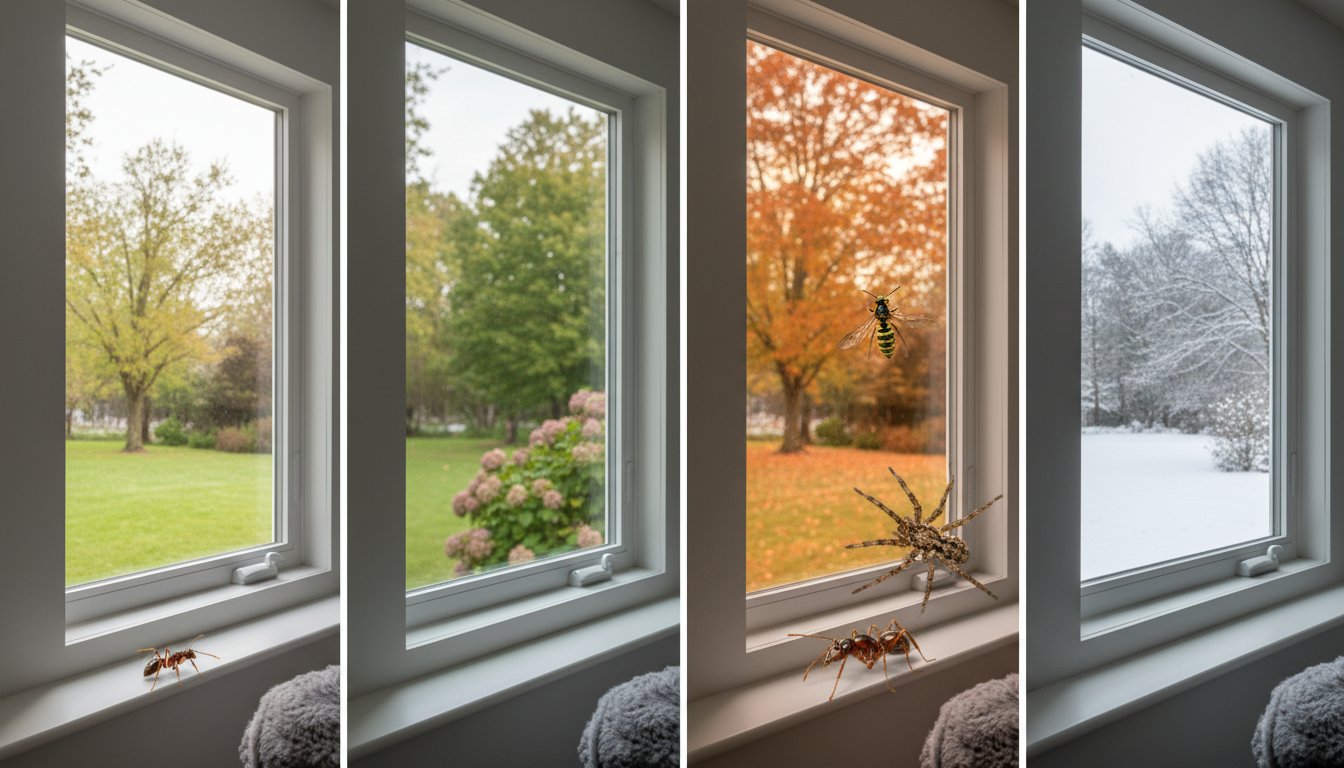
Regular property monitoring serves as the primary defense against structural damage and health risks. In the variable climates of Erie and Crawford Counties in Pennsylvania and Ashtabula County in Ohio, pests react sharply to seasonal changes. A proactive approach allows homeowners to detect vulnerabilities before they escalate into full-scale infestations. While reactive treatments address an existing problem, a consistent home pest inspection checklist provides the peace of mind that comes from knowing your property is secure.
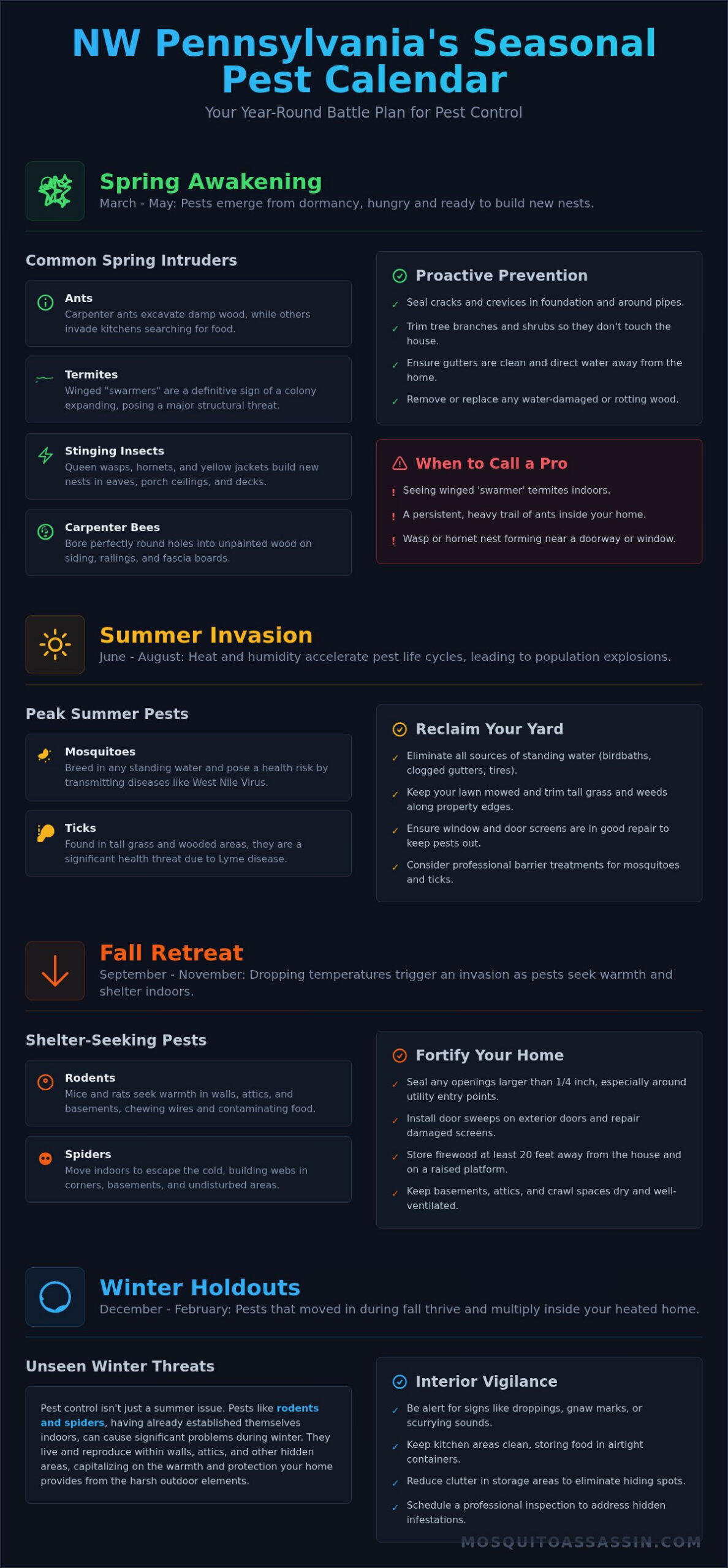
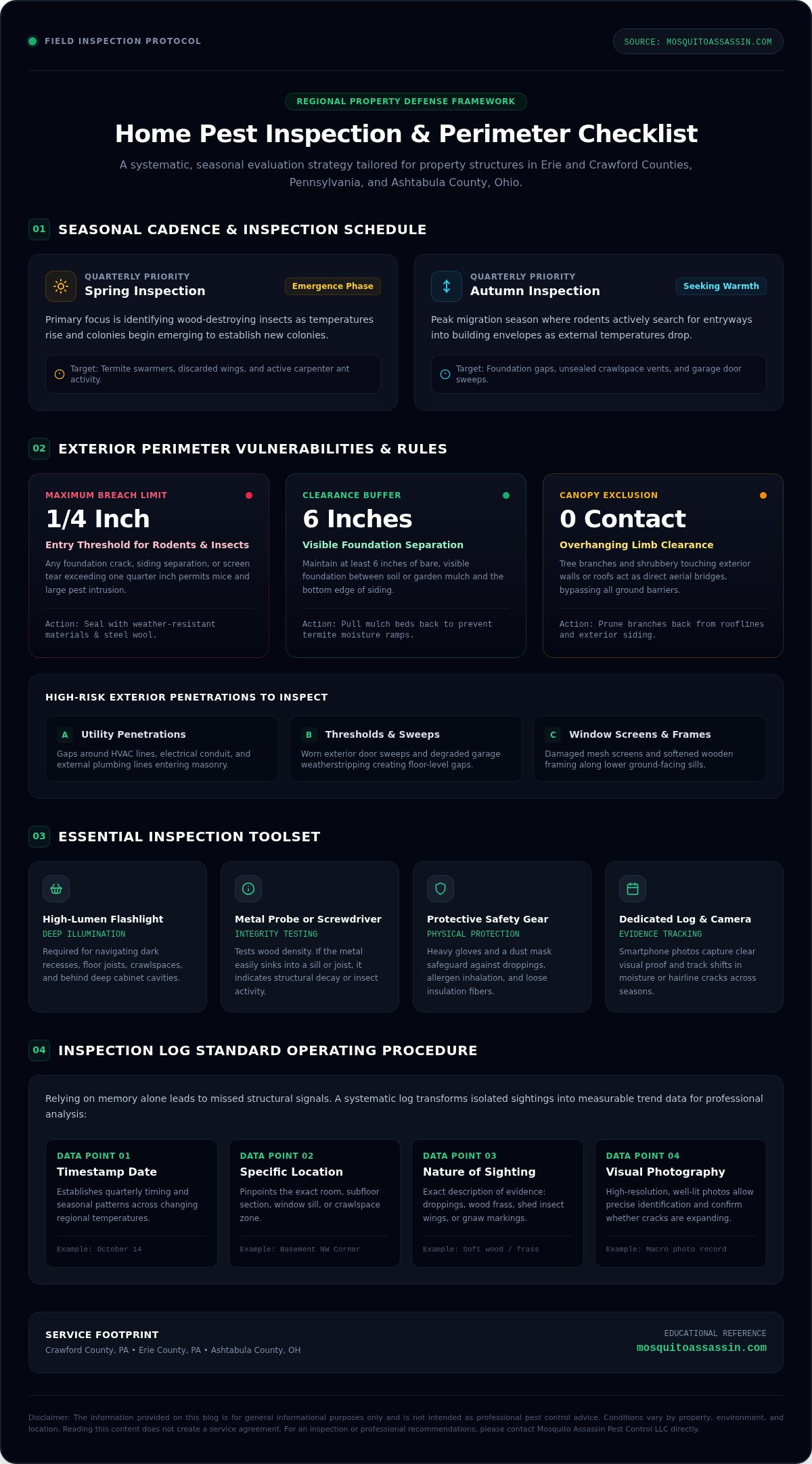
Experts generally recommend performing these checks at least once per season. Spring is critical for identifying wood-destroying insects as they emerge, while autumn is the peak time for rodents seeking warmth. Understanding different pest control methods and prevention strategies helps in recognizing that exclusion is often more effective than late-stage intervention. Before beginning, prioritize safety. When entering confined areas like attics or crawlspaces, check for stable footing and be mindful of low clearance or exposed nails. Professional pest control may help reduce risk if these areas are difficult to access safely.
Essential Tools for a Thorough Search
A professional-grade inspection requires more than just a quick glance. A high-lumen flashlight is the most important tool in your kit for illuminating dark corners, floor joists, and the recesses of cabinets where pests hide. You should also carry a small flathead screwdriver or a metal probe. This allows you to test the integrity of wood surfaces; if the metal sinks easily into a windowsill or joist, it may indicate rot or insect damage. Finally, wear protective gear like heavy gloves and a dust mask to guard against allergens, insulation fibers, or droppings found in secluded areas.
Creating an Inspection Log
Documentation is a vital component of a successful home pest inspection checklist. Don’t rely on memory alone to track where you saw a suspicious mark or a stray insect. Maintain a dedicated log that records the date, the specific room, and the exact nature of the sighting. Use a smartphone to take clear, well-lit photos of any pests or damage you find. These images are invaluable for professional identification and help track environmental changes over time, such as new moisture stains or shifting foundation cracks. Consistent records make it easier to determine if a problem is growing or if past prevention efforts are holding steady. Reviewing details on general pest control plans can provide further context on what to track for long-term protection.
Disclaimer: The information provided on this blog is for general informational purposes only and is not intended as professional pest control advice. Conditions vary by property, environment, and location. Reading this content does not create a service agreement. For an inspection or professional recommendations, please contact Mosquito Assassin Pest Control LLC directly.
Exterior Perimeter and Foundation Checklist
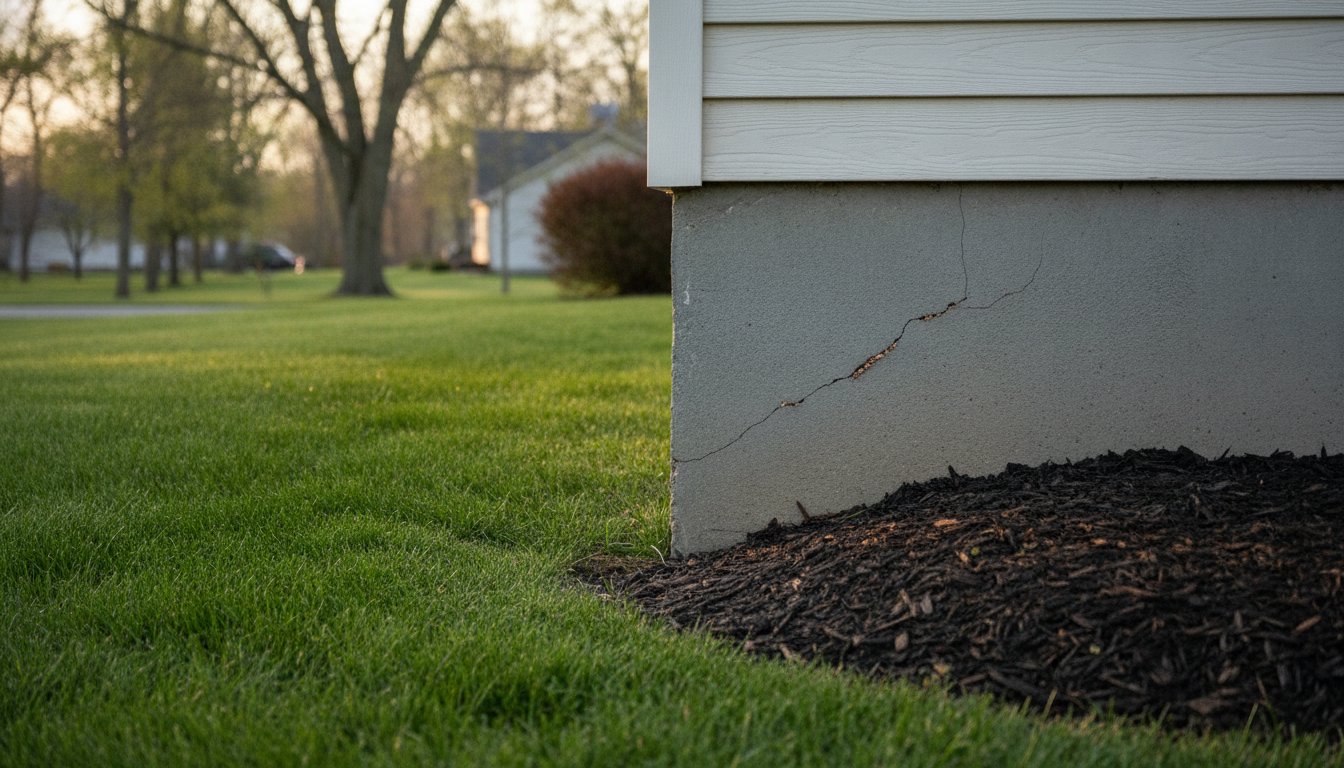
The exterior of a property serves as the first line of defense against invasive species. For residents in Crawford and Erie Counties, the changing seasons mean pests are constantly looking for a way inside. A thorough home pest inspection checklist starts with a close examination of the foundation. Any crack or gap larger than a quarter inch is a potential gateway for mice or large insects. These openings should be sealed with weather-resistant materials to maintain the structural barrier and prevent unwanted guests from gaining a foothold.
Property owners should also evaluate the transition between the ground and the siding. Soil or mulch that rests directly against the siding creates a moisture-rich environment that invites termites and carpenter ants. Maintaining a six-inch clearance of visible foundation helps prevent these wood-destroying insects from finding an easy path into the structure. Additionally, overhanging tree branches often act as bridges. When limbs touch the roof or walls, they allow ants and rodents to bypass ground-level defenses entirely. Regular pruning ensures that landscaping does not compromise your home’s security.
Exclusion Points and Entryways
Entry points are often found where utility lines penetrate the exterior walls. Gaps around plumbing, electrical conduits, or HVAC lines are frequently overlooked but are primary targets for pests. These areas require durable sealants or steel wool to prevent entry. It’s also vital to check the integrity of door sweeps and window screens. A worn sweep can leave a gap wide enough for a rodent to squeeze through. Examine wooden door frames for signs of gnawing, which indicates active attempts by pests to widen existing holes. Ensuring that dryer vents and chimney caps have proper screening is another core component of EPA Integrated Pest Management principles, as these vents provide direct access to the home’s interior.
Landscaping and Moisture Management
Proper drainage is essential for long-term prevention. Clogged gutters and poor downspout drainage lead to water pooling near the foundation, which attracts mosquitoes and ticks. Standing water serves as a breeding ground, especially during the humid summers in Ashtabula County. Assess the grade of the yard to ensure water flows away from the structure rather than toward it. Wood piles and organic debris should be stored at least 20 feet away from the home, as these provide ideal nesting sites for rodents and spiders. If these environmental factors are difficult to manage alone, professional pest control may help reduce risk by identifying hidden moisture traps that homeowners might miss during a standard walkthrough.
Disclaimer: The information provided on this blog is for general informational purposes only and is not intended as professional pest control advice. For an inspection or professional recommendations, please contact Mosquito Assassin Pest Control LLC directly.
Interior Room-by-Room Inspection Points
Once the exterior is secure, the focus shifts to the interior environment. A thorough home pest inspection checklist must prioritize areas where food, water, and shelter intersect. In the living areas of homes throughout Erie and Ashtabula Counties, look for subtle debris on window sills or along floorboards. Small piles of sawdust or discarded wings are often the first indicators of an internal issue that hasn’t yet become visible in high-traffic areas. If you find evidence in these areas, reviewing general pest control plans can help determine the next steps for mitigation.
The Kitchen and Pantry Focus
The kitchen is a primary site for pest activity due to the abundance of resources. Inspect the areas behind large appliances and under sinks where moisture can accumulate from small leaks. Check the back of cabinets for crumbs or spills that serve as food sources. It’s also important to examine food packaging in the pantry for small holes or gnawing marks that indicate rodent entry. Monitoring plumbing voids is a critical step in Integrated Pest Management principles, as these gaps provide hidden highways for cockroaches and other moisture-seeking insects.
Basement and Attic Vulnerabilities
Secluded areas like basements and attics offer the quiet, undisturbed environments that pests prefer. In the basement or crawlspace, look for dampness on the walls or floor joists. Musty odors are a strong indicator of moisture issues or the presence of nesting pests. Search for spider webs in corners and along joists; a high concentration of spiders often suggests a steady supply of other insect prey nearby. In the attic, look for disturbed insulation or gathered materials like shredded paper and fabric, which signal nesting activity. During daylight hours, check for light leaks coming through the roof or eaves. These small shafts of light reveal entry points where pests can bypass your home’s defenses. When these interior signs are detected, professional pest control may help reduce risk.
Disclaimer: The information provided on this blog is for general informational purposes only and is not intended as professional pest control advice. For an inspection or professional recommendations, please contact Mosquito Assassin Pest Control LLC directly.
Identifying Specific Pest Red Flags
Developing a sharp eye for biological markers is the most critical skill for any property owner. While seeing a live insect is a clear signal, most infestations remain hidden during daylight hours. A comprehensive home pest inspection checklist must focus on the subtle traces left behind by pests as they move through your home. Understanding the difference between a nuisance visitor and a genuine structural threat allows for a faster, more effective response. In the regional climates of Erie and Ashtabula Counties, certain signs like scratching sounds in the ceiling or “sawdust” on a porch railing require immediate attention to prevent long-term damage.
Signs of Rodent Activity
Rodents are creatures of habit that leave behind distinct physical evidence along their travel routes. Identifying the size and shape of droppings is the first step in determining the species. Mouse droppings are typically the size of a grain of rice with pointed ends, while rat droppings are larger and more capsule-shaped. You should also look for greasy rub marks along baseboards. These dark streaks are caused by the oils and dirt in a rodent’s fur as they consistently brush against walls. Gnaw marks on wooden trim, plastic storage bins, or even electrical wiring are another urgent red flag. Fresh gnawing often appears lighter in color and indicates an active, ongoing issue that needs to be addressed before safety risks increase.
Wood-Destroying Insect Markers
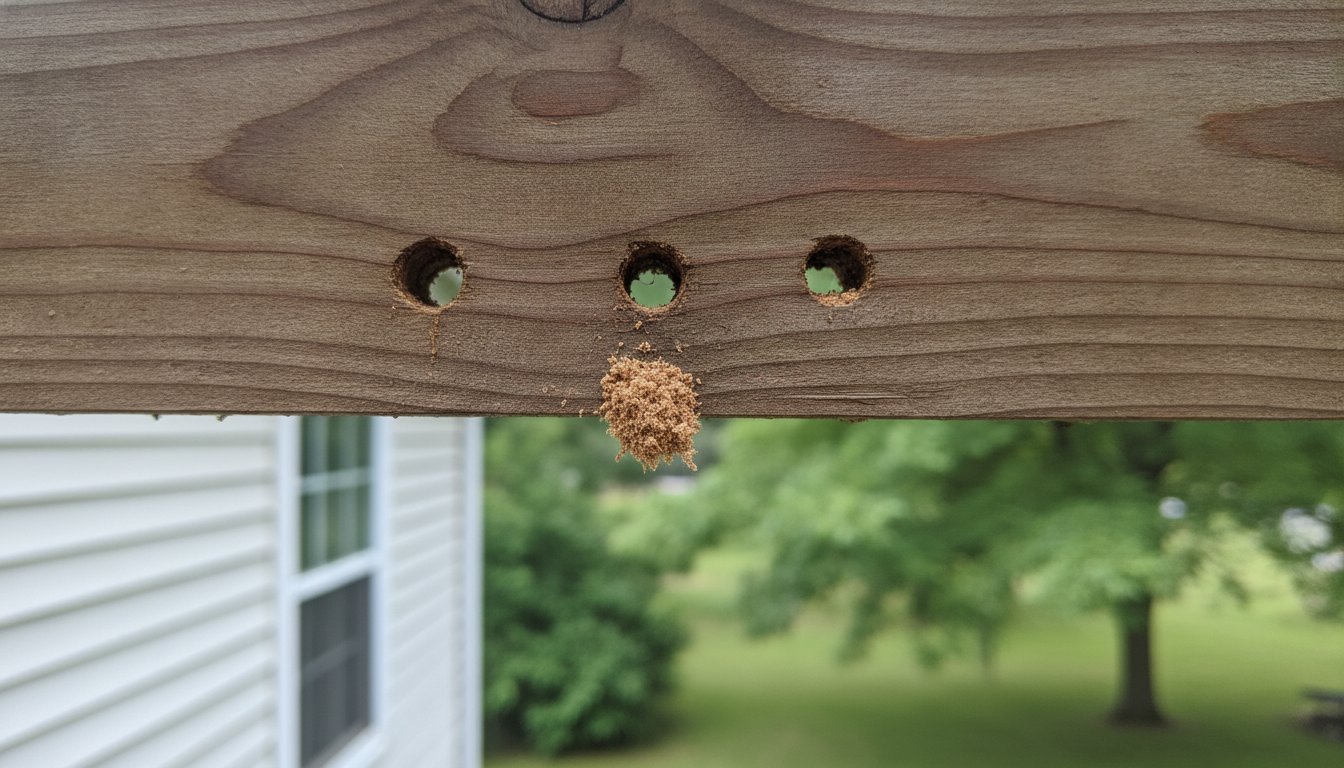
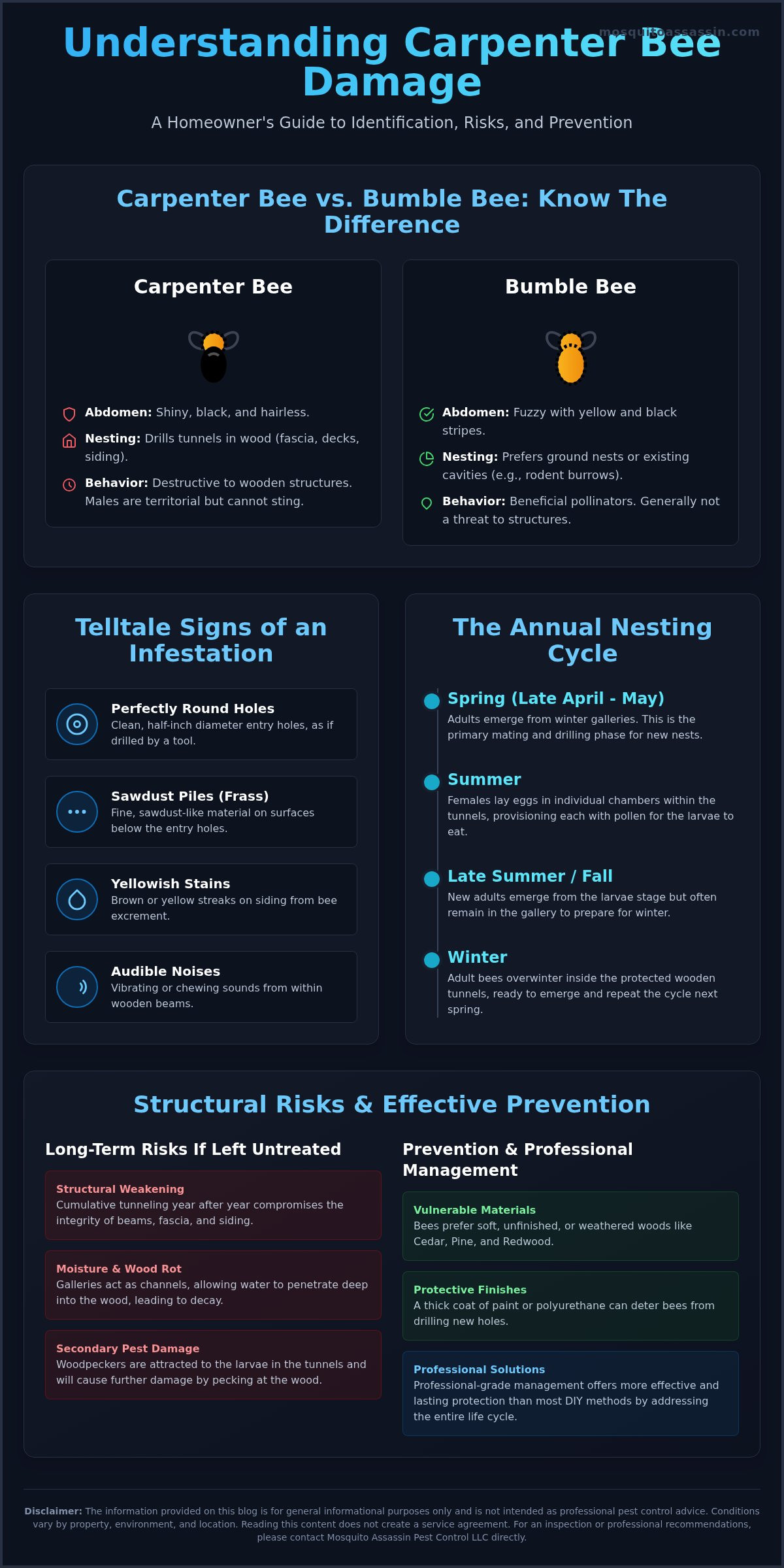
Structural threats often present as subtle changes in wood texture or the appearance of specialized structures. Termite swarmers are frequently confused with flying ants, but they have distinct differences. Termites possess straight antennae and a thick waist, while ants have elbowed antennae and a pinched midsection. On foundation walls or floor joists, look for mud tubes. These pencil-sized tunnels allow termites to travel between the soil and your home without drying out. Carpenter bees leave behind pin-sized entry holes in exterior wood, often accompanied by piles of frass, which looks like fresh sawdust. If you tap on a wooden beam and it produces a hollow, paper-like sound, it likely indicates internal galleries created by these insects. If you identify these markers, professional termite inspections and treatment can help secure your property’s structural integrity.
Other red flags include signs of bed bug activity, such as small rusty spots on mattresses or linens, which are often found in sleeping areas. Additionally, listen for the sounds of activity within walls or ceilings during the quiet evening hours. Faint scratching or scurrying often confirms the presence of rodents or larger insects that have bypassed exterior defenses. Monitoring these points consistently ensures that your prevention efforts remain effective throughout the year.
Disclaimer: The information provided on this blog is for general informational purposes only and is not intended as professional pest control advice. For an inspection or professional recommendations, please contact Mosquito Assassin Pest Control LLC directly.
Transitioning from DIY to Professional Protection
A comprehensive home pest inspection checklist provides a solid foundation for property maintenance, yet there are moments when a DIY approach reaches its limit. While identifying surface-level entry points is achievable for most property owners, structural threats often remain invisible to the untrained eye. Professional pest control may help reduce risk by utilizing advanced detection methods that go beyond visual checks. This transition from self-monitoring to expert intervention ensures that deep-seated issues, such as established colonies or structural vulnerabilities, are addressed before they cause irreparable damage.
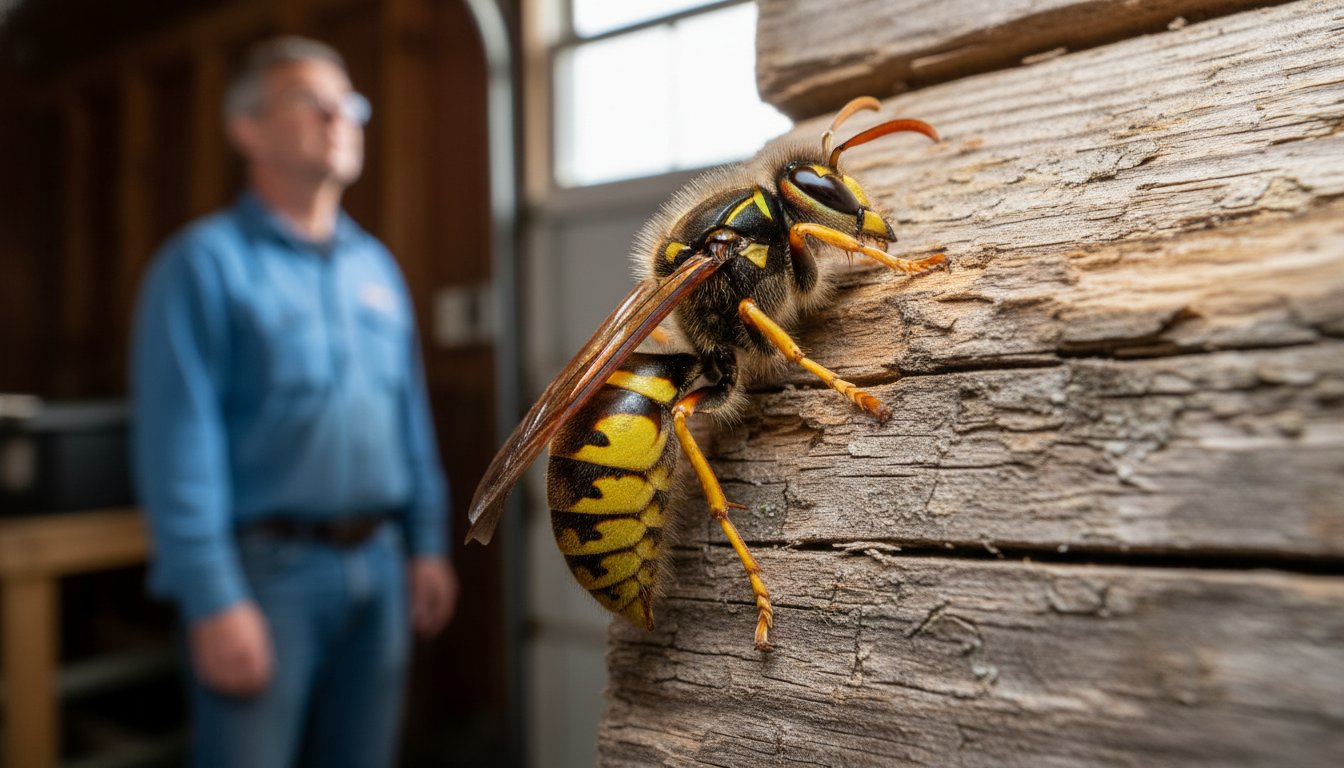
Year-round protection plans offer the most consistent defense against the seasonal shifts in Erie and Crawford Counties. These plans move the burden of monitoring from the homeowner to a local expert, providing a steady cadence of inspections that adapt to the specific pest pressures of the Pennsylvania and Ohio climate. Safety is another critical factor; dealing with aggressive stinging insects or large rodent populations carries inherent risks that require specialized protective equipment and handling techniques. Pests don’t wait for a convenient time to invade, and having a professional partner ensures you aren’t caught off guard.
The Complexity of Specialized Treatments
Certain infestations demand a level of technical proficiency that standard household products cannot provide. Bed bug and termite issues require specialized knowledge of biology and behavior to achieve total removal. For example, professional-grade exclusion materials, such as heavy-duty steel mesh and industrial sealants, offer a more permanent solution for rodent control than temporary DIY fixes. It’s important to evaluate the effectiveness of ongoing pest management strategies based on long-term results rather than just immediate relief. A methodical, scientific approach is the only way to ensure that a property remains truly secure from re-infestation.
Next Steps for Homeowners
If your personal inspection reveals red flags, the first step is to consolidate your findings. Gather your log of dates, locations, and photos taken during your walkthrough to provide a clear picture for a professional consultation. Researching local pest control services in Erie and Ashtabula will help you find a partner with deep roots in the community who understands the specific environmental challenges of the region. For an inspection or professional recommendations, please contact Mosquito Assassin Pest Control LLC directly through the online booking portal. Taking decisive action now protects the wellbeing of your household and the value of your property.
Disclaimer: The information provided on this blog is for general informational purposes only and is not intended as professional pest control advice. For an inspection or professional recommendations, please contact Mosquito Assassin Pest Control LLC directly.
Secure Your Property with Year-Round Vigilance
Maintaining a secure home requires a disciplined approach to monitoring and exclusion. By consistently applying a home pest inspection checklist, you can identify vulnerabilities in your foundation and interior spaces before they compromise your structural integrity. Recognizing specific biological markers, such as the distinct signs of wood-destroying insects or rodent rub marks, allows for much faster intervention. While DIY efforts are an excellent first step, professional pest control may help reduce risk when dealing with complex infestations or hard-to-reach crawlspaces. Consistent monitoring is the only way to ensure your property remains protected throughout the changing seasons.
For those who require a more detailed evaluation, you can request a professional inspection through the online portal to ensure your property remains secure. Mosquito Assassin Pest Control LLC provides deep expertise in year-round residential protection across Erie, Crawford, and Ashtabula Counties. Their comprehensive three-step rodent control process is designed to address existing issues while securing your home against future entry. Taking these proactive steps today ensures a safer, more comfortable environment for your household and long-term peace of mind.
Disclaimer: The information provided on this blog is for general informational purposes only and is not intended as professional pest control advice. For an inspection or professional recommendations, please contact Mosquito Assassin Pest Control LLC directly.
Frequently Asked Questions
How often should I perform a home pest inspection?
Perform a comprehensive home pest inspection checklist walkthrough at least four times a year. Seasonal shifts in Pennsylvania and Ohio drive different pest behaviors; spring is the time for emerging insects, while fall is for rodents seeking warmth. Quarterly checks allow you to catch entry points before they become major structural issues. Professional pest control may help reduce risk by providing consistent monitoring through a year-round protection plan.
What are the most common signs of a rodent infestation?
Rodents leave behind physical evidence like capsule-shaped droppings, greasy rub marks along baseboards, and gnaw marks on wood or plastic. You might also hear scratching sounds in the walls or ceilings during the night. Fresh droppings are typically dark and moist, indicating an active population. If you find these signs, a three-step process of removal, maintenance, and exclusion is the standard professional approach for total eradication.
Can I perform my own termite inspection effectively?
While homeowners can identify surface-level signs like mud tubes or hollow-sounding wood, a professional termite inspection is necessary for a definitive assessment. Termites often hide deep within structural timbers or behind finished walls where they aren’t visible. DIY checks are useful for early detection, but they don’t replace the specialized tools and knowledge required to identify hidden galleries. Professional pest control may help reduce risk by evaluating hard-to-reach areas.
What tools do I need for a basic home pest sweep?
A thorough search requires a high-lumen flashlight to illuminate dark corners, a small screwdriver to probe for soft wood, and protective gloves. Using these tools as part of a home pest inspection checklist helps you identify moisture pockets and structural gaps. You should also keep a dedicated log or use a smartphone to document any suspicious findings. Documentation is vital for tracking environmental changes in your home over several months.
How do I tell the difference between flying ants and termites?
Flying ants have elbowed antennae, pinched waists, and two pairs of wings with different lengths. In contrast, termite swarmers have straight antennae, thick waists, and four wings of equal length. Identifying these differences is critical because their treatment methods vary significantly. If you see swarming activity near your foundation or windowsills, it’s a strong indicator of a nearby colony that requires immediate professional evaluation to protect your property’s integrity.
What should I do if I find pest activity in my attic?
If you discover nesting materials or disturbed insulation in your attic, avoid direct contact with any droppings or debris. These areas often harbor allergens or pathogens that require protective gear like masks and gloves. Document the location of entry points where light leaks through the roof or eaves. Professional pest control may help reduce risk by identifying the specific species and implementing a safe, effective removal and exclusion strategy.
Are there specific pests common to Northwest Pennsylvania and Northeast Ohio?
This region frequently deals with carpenter bees, ticks, mosquitoes, and rodents due to the humid summers and harsh winters. Carpenter bees often peak during the spring in Erie, damaging exterior wood structures. Ticks and mosquitoes are significant seasonal problems in Crawford and Ashtabula Counties. Year-round protection plans are designed to address these specific regional threats, providing a defensive barrier that adapts to the local climate and pest life cycles.
Why is professional exclusion better than just using traps?
Traps only address the pests already inside your home, while professional exclusion seals the entry points to prevent future invasions. Exclusion involves using durable materials like industrial sealants and steel mesh to close gaps around utility lines and foundation cracks. This proactive approach is a core component of Integrated Pest Management. It provides a long-term solution that reduces the need for repeated treatments by physically barring pests from entering the structure.
Disclaimer: The information provided on this blog is for general informational purposes only and is not intended as professional pest control advice. For an inspection or professional recommendations, please contact Mosquito Assassin Pest Control LLC directly.