Imagine standing in your backyard in Erie County on a humid July evening, only to be forced back inside within ten minutes by a swarm of buzzing pests. It’s a common frustration for residents across Crawford and Ashtabula Counties who value their outdoor time but worry about the impact of traditional pesticides on their families. You likely agree that a mosquito-free yard shouldn’t come at the cost of peace of mind regarding chemical exposure. Fortunately, using a high-quality organic mosquito spray provides a professional-grade alternative that targets pests while remaining environmentally conscious.
This guide explores the mechanics of botanical treatments and their proven effectiveness against the persistent mosquito populations found near the Great Lakes. Readers will discover which natural ingredients actually stand up to scientific scrutiny and how these methods fit into a comprehensive protection plan. By understanding the lifecycle of these insects and the specific properties of essential oils, homeowners can maintain a safer, more enjoyable outdoor environment throughout the peak summer months.
Key Takeaways
- Understand the crucial distinctions between USDA-certified products and general natural labels to ensure your yard receives authentic botanical protection.
- Learn how concentrated essential oils used in an organic mosquito spray disrupt a mosquito’s ability to track carbon dioxide and heat.
- Explore the scientific differences between immediate synthetic knockdown and the long-term repelling properties of botanical treatments.
- Identify how to address unique humidity challenges and specific breeding hotspots found throughout the Lake Erie region, including Crawford and Ashtabula counties.
- Evaluate why professional application techniques provide more consistent results than standard over-the-counter natural solutions.
What Defines an Organic Mosquito Spray?
Understanding organic mosquito spray requires looking past marketing buzzwords to the actual chemistry of the product. These solutions are formulated using botanical elements, which are oils or extracts taken directly from plants. These compounds evolved over millions of years to protect vegetation from being eaten by insects. In regions like Ashtabula County, professional applications use these natural defenses to create a barrier around residential properties. Unlike synthetic alternatives, these products break down more quickly in the environment, reducing the long-term chemical footprint on a property.
The term “natural” is often used loosely in advertising, but true organic pest control involves specific botanical derivatives. Integrating a comprehensive overview of insect repellents helps clarify that while synthetic options exist, botanical derivatives offer a different mode of action. While the USDA organic seal is a standard in the food industry, pest control professionals focus on the source and safety profile of the active ingredients used in a yard.
To better understand this concept, watch this helpful video:
Key Botanical Ingredients and Their Roles
Cedarwood oil is a cornerstone of organic pest control. It doesn’t just smell pleasant; it physically affects mosquitoes by disrupting their respiratory systems and interfering with the pheromones they use to navigate. Peppermint and lemongrass oils provide high concentrations of menthol and citral, which act as powerful aromatic repellents. Garlic-based solutions take a different approach. They mask the carbon dioxide and lactic acid scents humans emit, essentially making a backyard invisible to biting insects. These ingredients work together to create a multi-sensory deterrent that discourages pests from entering the treated area.
Regulatory Standards for Natural Pesticides
Many organic formulas fall under the EPA-exempt (25b) category. These are classified as minimum risk pesticides because their active and inert ingredients are considered safe for the environment when used as directed. This classification is vital for protecting local pollinators, such as bees and butterflies, which are often more sensitive to traditional synthetic treatments. Even though these products are natural, using licensed professionals in Erie and Crawford Counties ensures the formula is applied at the correct intervals for maximum effectiveness. Professionals understand the biology of the target pests and how weather patterns in the tri-county area affect the longevity of botanical oils.
Organic sprays are most effective when used as part of an integrated pest management (IPM) strategy. This involves identifying breeding sites and managing stagnant water alongside the application of botanical barriers. Professional pest control may help reduce risk by combining these methods. For more information on professional standards, residents can visit the services overview or contact a specialist through the online booking portal.
Disclaimer: The information provided on this blog is for general informational purposes only and is not intended as professional pest control advice. Conditions vary by property, environment, and location. Reading this content does not create a service agreement. For an inspection or professional recommendations, please contact Mosquito Assassin Pest Control LLC directly.
Comparing Organic and Synthetic Mosquito Treatments
Understanding the distinction between synthetic pyrethroids and organic essential oils is vital for homeowners in Erie and Crawford Counties. Synthetic treatments typically utilize pyrethroids, which are man-made versions of pyrethrins found in chrysanthemum flowers. These chemicals provide an immediate “knockdown” effect, neutralizing mosquitoes on contact and providing a residual barrier that lasts up to 30 days. In contrast, an organic mosquito spray relies on concentrated botanical oils like cedarwood, peppermint, or lemongrass. These oils primarily function through repellent properties and by disrupting the scent trails mosquitoes use to locate hosts.
The environmental impact differs significantly between the two methods. Synthetic pyrethroids are broad-spectrum insecticides, meaning they can affect non-target insects, including bees and butterflies, if they come into direct contact with the wet product. Organic oils generally have a lower impact on these beneficial pollinators because they degrade much faster in the environment. Detailed data on how various active ingredients interact with the environment can be found in this insect repellents fact sheet from Oregon State University. This resource explains the science behind repellent efficacy and safety for those looking to minimize their ecological footprint.
Safety Profiles for Families and Pets
Residential properties in Ashtabula County often prioritize organic solutions to maintain a lower chemical footprint. While both synthetic and organic treatments are regulated for safety, organic options are frequently preferred for high-traffic yards where children and pets play daily. A key difference lies in the “dry time” requirements. Synthetic applications usually require residents to stay off the lawn for 30 to 60 minutes until the product has completely dried. Many organic formulas allow for faster re-entry, though professional best practices still suggest waiting until the spray has settled. Choosing a professional treatment plan ensures these products are applied at the correct concentrations for maximum safety.
Effectiveness and Re-application Cycles
Managing expectations is essential when using an organic mosquito spray. Because botanical oils are natural substances, they are highly susceptible to environmental degradation. UV sunlight and heavy rain, common in the Great Lakes region, break down these oils faster than synthetic compounds. While a synthetic barrier might last 21 to 30 days, organic treatments typically require a tighter schedule of 14 to 21 days to maintain a consistent repellent barrier. Consistent application is the most effective way to manage local mosquito populations throughout the humid summer months. Homeowners should monitor local weather patterns, as a period of heavy rainfall may necessitate an earlier follow-up to ensure the protective barrier remains intact.
Disclaimer: The information provided on this blog is for general informational purposes only and is not intended as professional pest control advice. Conditions vary by property, environment, and location. Reading this content does not create a service agreement. For an inspection or professional recommendations, please contact Mosquito Assassin Pest Control LLC directly.

The Science of How Natural Repellents Work
Mosquitoes are highly efficient biological hunters that rely on a sophisticated array of sensors to find their next meal. They track targets by detecting carbon dioxide (CO2) exhaled by humans and animals from distances of up to 100 feet. As they get closer, they use thermal receptors to sense body heat and chemical receptors to identify lactic acid and skin oils. An organic mosquito spray works by directly targeting these biological systems to prevent mosquitoes from successfully identifying a target.
The effectiveness of natural treatments depends on high concentrations of specific plant extracts. These extracts don’t just smell pleasant to humans; they contain complex chemical structures that are toxic or repellent to specific insect nervous systems. By applying these concentrated oils to a property in Erie County or Crawford County, professional technicians create an environment that is biologically hostile to pests while remaining safe for families and pets.
Sensory Masking Techniques
Mosquitoes rely on their antennae to navigate. When a yard is treated with botanical compounds, the air becomes saturated with molecules that overwhelm the mosquito’s olfactory sensors. This process prevents the insect from “locking on” to the CO2 plumes or skin odors that would normally lead them to a person. Many professional-grade natural solutions rely on EPA-recognized natural ingredients such as cedarwood oil, peppermint oil, and geraniol to create this effect.
Vapor pressure plays a critical role in how long these barriers last. High-quality organic oils have a specific evaporation rate that maintains a protective aromatic barrier over several weeks. Sensory masking is the process of using concentrated botanical compounds to interfere with a mosquito’s ability to detect and follow chemical signals from a human host. This creates a “cloaking” effect for the entire property, making it invisible to passing swarms.
Larvicidal Properties of Organic Oils
Effective pest management involves more than just repelling adult insects; it requires breaking the breeding cycle. Certain organic oils act as larvicides when they come into contact with standing water or damp soil. These oils create a thin film on the water’s surface that prevents mosquito larvae from breathing, effectively neutralizing the next generation of pests before they can fly. In areas like Ashtabula County, where summer humidity can lead to rapid breeding in shaded foliage, this dual-action approach is essential.
Professional pest control may help reduce risk of future infestations by identifying and treating these specific micro-habitats. Homeowners can find more information about localized protection strategies at mosquitoassassin.com/location. Targeting the underside of leaves and dense brush is vital because that’s where 90 percent of mosquitoes rest during the heat of the day.
Professional Equipment vs. Hand-Held Sprayers
The science of the spray is just as important as the ingredients. Professional technicians use high-powered mist blowers that atomize the organic mosquito spray into tiny droplets measured in microns. This specialized equipment provides several advantages over standard hand-pump sprayers:
- Deeper Penetration: The air-assisted blast forces the organic solution deep into thick shrubs and tall grass where mosquitoes hide.
- Uniform Coverage: Mist blowers ensure every leaf surface is coated, leaving no “gaps” in the sensory barrier.
- Surface Adhesion: Smaller droplets stick more effectively to vertical surfaces and the undersides of leaves, extending the life of the treatment.
By using professional-grade tools, the treatment reaches the areas where biological activity is highest, ensuring the natural compounds can do their job effectively. For an inspection or to learn more about professional yard protection, visiting the online booking portal can provide immediate assistance.
Disclaimer: The information provided on this blog is for general informational purposes only and is not intended as professional pest control advice. Conditions vary by property, environment, and location. Reading this content does not create a service agreement. For an inspection or professional recommendations, please contact Mosquito Assassin Pest Control LLC directly.
Maximizing the Impact of Natural Treatments in PA and OH
The unique climate of the Great Lakes region requires a strategic approach to yard protection. In Erie and Ashtabula counties, the proximity to Lake Erie creates a microclimate characterized by high humidity and sudden weather shifts. These factors directly influence how an organic mosquito spray interacts with the environment. Successful protection doesn’t just depend on the application itself; it requires a combination of professional timing and consistent property maintenance.
Regional Climate Considerations
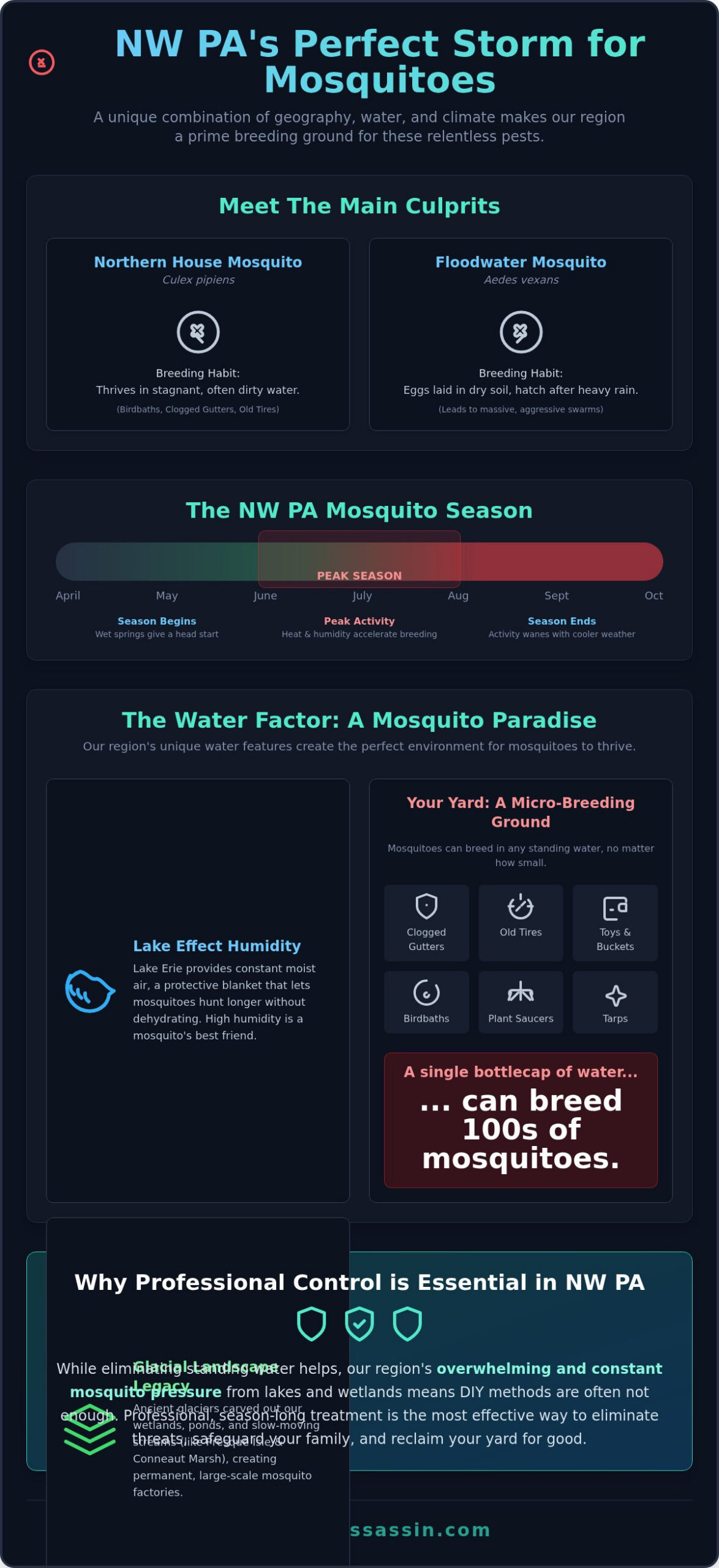
High humidity levels in Northwest PA often exceed 70 percent during summer mornings. This moisture slows the evaporation of essential oils, which can be beneficial for longevity but requires precise application to ensure the product adheres to foliage. The regional mosquito season typically spans from May through September. During these months, the timing of treatments is vital. Professional applications are most effective when scheduled during dry windows, as the Great Lakes region can see average monthly rainfall totals of 3 to 4 inches during the peak of summer.
Lake Erie weather patterns often bring heavy, sudden downpours. These events can wash away surface treatments if they haven’t had sufficient time to dry. Monitoring local forecasts helps ensure that applications occur at least 24 to 48 hours before significant rain is expected. This window allows the natural compounds to bond with the underside of leaves where mosquitoes hide during the day.
Environmental Modifications for Better Results
Property owners can significantly improve the performance of natural treatments by addressing local breeding hotspots. In Crawford County, rural landscapes often feature low-lying areas that collect water after spring thaws. Identifying these zones is the first step in a comprehensive plan. Standing water is the primary nursery for mosquito larvae; even a bottle cap full of water can host hundreds of eggs.
- Clear Leaf Litter: Decaying leaves in Erie properties create damp, shaded environments that protect mosquitoes from the sun.
- Clean Gutters: Clogged gutters are one of the most overlooked breeding sites in Ashtabula and Crawford counties.
- Manage Low Spots: Filling in depressions or improving drainage in yards reduces the surface area available for egg-laying.
Landscaping choices also play a role. Dense thickets of overgrown brush provide the perfect resting spot for adult mosquitoes. Thinning out heavy vegetation improves airflow and allows sunlight to reach the ground, which naturally dries out potential breeding sites. When these physical changes are combined with professional treatments, the overall mosquito population in a yard can be managed more effectively. For those seeking a tailored approach to their property, professional pest control may help reduce risk by identifying specific vulnerabilities in the landscape.
Selecting a Professional Organic Protection Plan
Choosing a professional application for an organic mosquito spray often yields better results than retail products found in big-box stores. Retail bottles usually rely on low-pressure garden hoses that can’t reach the underside of leaves where 90% of mosquitoes hide during the day. Licensed technicians in Erie and Crawford Counties use high-volume mist blowers. These machines create a fine mist that penetrates deep into dense vegetation, ensuring the botanical oils coat every surface where pests harbor. This level of coverage is difficult to achieve with standard DIY equipment.
Evaluating a service provider requires looking at their knowledge of Integrated Pest Management (IPM) protocols. A knowledgeable professional won’t just spray; they’ll look for the source of the problem. This includes identifying drainage issues or debris that traps moisture. In Ashtabula County, where wooded perimeters are common, understanding how to create a perimeter barrier is essential for effective suppression. Professional plans also allow for the seamless integration of tick control, as many botanical formulas are effective against multiple types of biting insects simultaneously.
The Value of Professional Expertise
Professional technicians are trained to identify cryptic harborages that the average homeowner might overlook. While a resident might focus on the lawn, a professional targets areas like the interior of hollow logs, the undersides of deck boards, and dense ornamental shrubs. These specific locations are where mosquitoes rest to avoid the sun. Utilizing comprehensive protection options ensures that the treatment covers more than just the visible areas. This methodical approach is vital for maintaining a comfortable outdoor space throughout the humid summer months.
Consistency and the Pest-Free Goal
Single applications rarely solve a season-long problem. Mosquitoes can go from egg to adult in as little as 7 to 10 days during peak heat. A consistent management plan creates a cumulative effect, where each visit reinforces the previous treatment. It’s a common mistake to wait until an infestation is severe before seeking help. Ongoing professional assessments, which can be requested through the online booking portal, help determine the correct frequency for a specific property. Regular inspections allow technicians to adjust the application based on recent rainfall or temperature shifts. Professional pest control may help reduce risk by maintaining a persistent barrier that discourages new populations from moving onto the property.
Securing Your Yard with Botanical Protection
Choosing an effective organic mosquito spray involves understanding how plant-based oils interact with pest biology. These natural treatments provide a specialized alternative to synthetic options, focusing on disrupting the life cycle of mosquitoes without leaving long-term residues. Properties in Erie, Crawford, and Ashtabula counties often face unique pest pressures due to Great Lakes weather patterns; this makes precise application timing essential for success. Licensed and insured technicians are trained to identify specific breeding sites and apply botanical solutions that are safe for both families and pets. Maintaining a yard that’s comfortable for outdoor activities requires a consistent strategy tailored to the local environment. Professional oversight ensures these natural formulas are applied at the correct intervals to provide dependable protection throughout the peak season. It’s possible to enjoy a backyard without the constant nuisance of biting insects by using science-based, natural methods. Taking proactive steps now helps ensure a more comfortable summer for everyone. For those looking to reclaim their outdoor space, request an inspection for professional organic mosquito management to determine the best approach for a specific property.
Disclaimer: The information provided on this blog is for general informational purposes only and is not intended as professional pest control advice. Conditions vary by property, environment, and location. Reading this content does not create a service agreement. For an inspection or professional recommendations, please contact Mosquito Assassin Pest Control LLC directly.
Frequently Asked Questions
Is organic mosquito spray as effective as traditional chemical sprays?
Organic sprays provide a significant reduction in mosquito populations, though they typically require more frequent application than synthetic alternatives. Studies indicate that essential oil-based products can repel insects effectively for shorter durations. While synthetic pyrethroids might last 21 days, organic options often provide peak protection for about 14 days before the natural oils begin to biodegrade.
How long does a professional organic mosquito treatment last?
A professional organic mosquito spray treatment generally maintains its maximum effectiveness for 14 days. Environmental factors like high humidity or temperatures exceeding 90 degrees Fahrenheit can cause the botanical oils to break down faster. Because these natural compounds biodegrade quickly, scheduling service every 2 weeks ensures consistent protection throughout the peak season in Erie and Crawford Counties.
Is it safe for my dog to be in the yard after an organic spray?
Pets can safely return to the yard once the organic treatment has completely dried, which usually takes 30 to 60 minutes. These formulas use plant-based ingredients like cedarwood or peppermint oil that are designed to be family-friendly. It’s always best practice to keep animals inside during the actual application to prevent direct contact with the wet mist.
Can organic sprays help protect against ticks as well as mosquitoes?
Yes, many organic treatments are formulated to target both mosquitoes and ticks simultaneously. Botanical oils like cedar oil interfere with the pheromone receptors of ticks and can dissolve the exoskeleton of certain crawling insects. This dual-action approach is particularly useful for properties near wooded areas in Ashtabula County where tick activity is high.
Do I need to be home when a professional applies the organic treatment?
Homeowners don’t need to be present for the application as long as the technician has clear access to the yard. Professionals simply require that gates are unlocked and pets are secured indoors before they arrive. Most companies provide a digital notification or a door hanger once the service is finished to confirm the treatment is complete.
What happens if it rains shortly after an organic mosquito application?
If heavy rain occurs within 2 hours of application, the treatment’s effectiveness may be reduced by 50 percent or more. While organic oils are designed to adhere to foliage, they need sufficient time to dry and set on the underside of leaves. Professionals monitor local weather patterns in Pennsylvania and Ohio to time applications during dry windows for the best results.
Are there any smells associated with organic mosquito treatments?
Organic treatments usually leave a mild, pleasant scent of essential oils, such as cedar, mint, or lemongrass, for approximately 24 hours. Unlike synthetic chemicals that may have a harsh odor, these natural aromas dissipate quickly as the product dries. Most residents find the botanical scent refreshing rather than intrusive during the first day of treatment.
How often should organic mosquito treatments be reapplied in Pennsylvania?
In Pennsylvania, a reapplication every 14 days is the standard recommendation for an organic mosquito spray program. The state’s typical mosquito season runs from May through October, requiring approximately 10 to 12 treatments for full-season coverage. Maintaining this strict schedule prevents gaps in protection when local mosquito populations are at their highest levels.
Disclaimer: The information provided on this blog is for general informational purposes only and is not intended as professional pest control advice. Conditions vary by property, environment, and location. Reading this content does not create a service agreement. For an inspection or professional recommendations, please contact Mosquito Assassin Pest Control LLC directly.