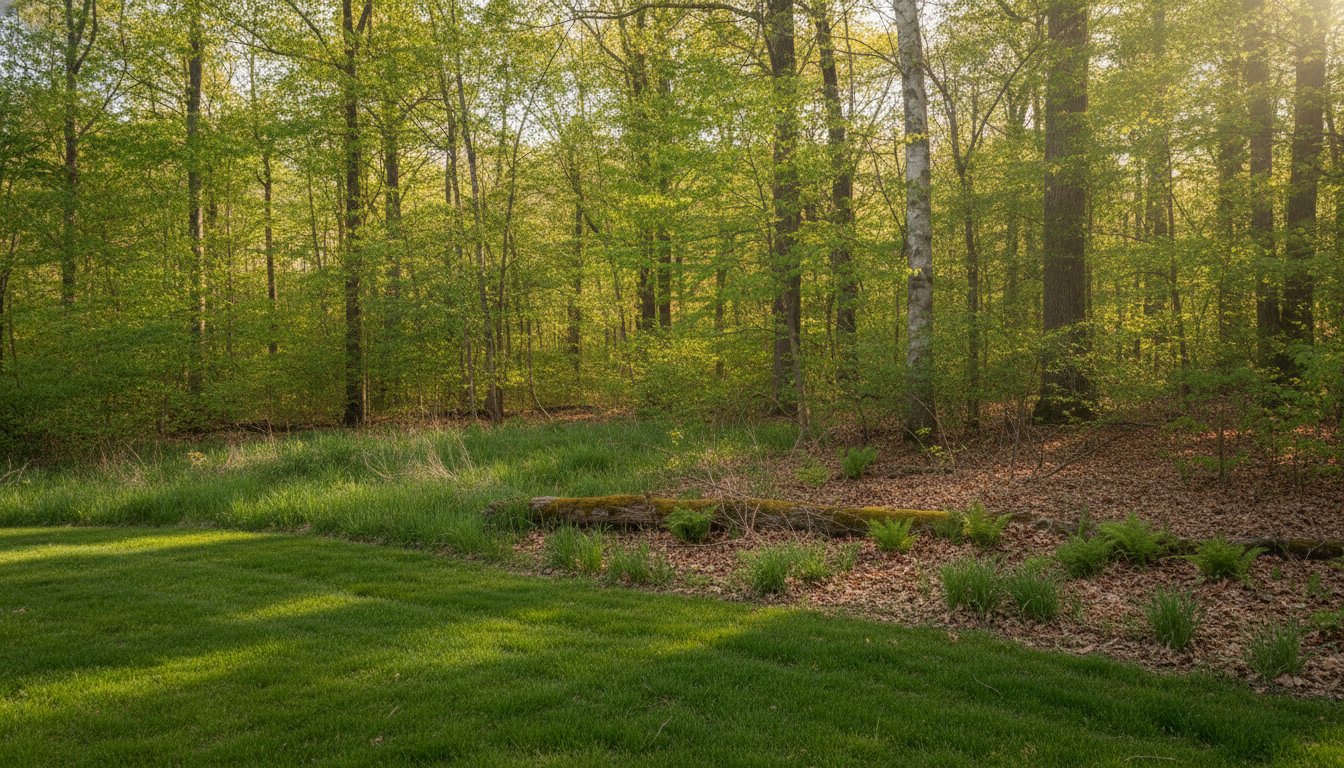
Pennsylvania reached a staggering 15-year high of 18,749 reported Lyme disease cases in 2025, a statistic that underscores the growing importance of effective tick control Erie PA. It’s perfectly natural for property owners in Northwest Pennsylvania to feel a sense of dread when watching family members or pets wander near the tall grass and shaded woodlines that define the local landscape. The fear of a hidden tick bite isn’t just a minor concern; it’s a valid response to the expanding presence of deer ticks and the emerging Lone Star tick in the region.
This guide provides the knowledge necessary to protect a property by moving beyond reactive measures toward a more scientific, proactive approach. Readers will learn how to identify high-risk habitats and implement landscape modifications that discourage tick populations from taking root. By understanding the specific seasonal peaks and professional management strategies available in Erie and Crawford Counties, it’s possible to transform a backyard back into a safe haven for relaxation and play. The following sections detail practical steps to reduce habitats and establish a secure outdoor environment for every household member.
Disclaimer: The information provided on this blog is for general informational purposes only and is not intended as professional pest control advice. Conditions vary by property, environment, and location. Reading this content does not create a service agreement. For an inspection or professional recommendations, please contact Mosquito Assassin Pest Control LLC directly.
Key Takeaways
- Understand why Northwest Pennsylvania is a high-risk area for tick-borne illnesses and how local environmental factors contribute to tick prevalence.
- Learn to identify “questing” zones on a property, specifically areas with high humidity and shade where ticks are most likely to wait for hosts.
- Discover how simple landscape modifications, such as clearing leaf litter and managing tall grass, form the foundation of effective tick control Erie PA.
- Explore the differences between temporary personal repellents and professional property-wide management strategies that create long-term residual barriers.
- Gain insights into Integrated Pest Management (IPM) techniques that focus on long-term prevention rather than just reactive treatments.
Tick Activity and Health Risks in Northwest Pennsylvania
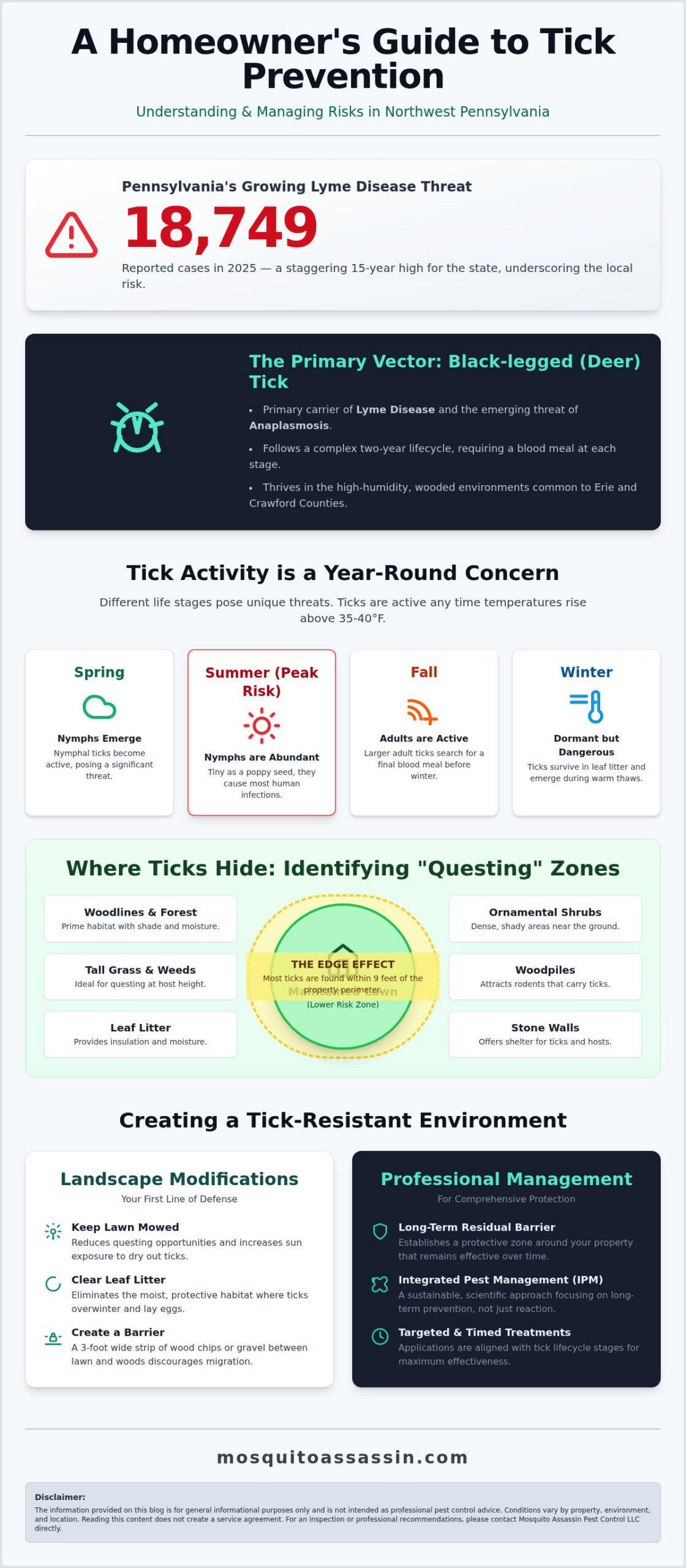
Pennsylvania is a national leader in tick-borne illness reports. In 2025, the state recorded a 15-year high of 18,749 Lyme disease cases. For residents in Erie and Crawford Counties, these numbers represent a tangible risk found right in their backyards. The local environment, characterized by lush woodlines and high humidity, provides the perfect sanctuary for the black-legged tick. Because these pests are active whenever temperatures rise above 35 to 40 degrees Fahrenheit, effective tick control Erie PA requires a year-round perspective rather than a seasonal one. Professional management aims to reduce the risk of these encounters by targeting the areas where ticks thrive and breed.
To better understand the importance of early intervention, watch this demonstration of professional property protection:
Understanding the Black-Legged Tick
The black-legged tick, commonly known as the deer tick, is the primary vector for Lyme disease health risks in Northwest Pennsylvania. These arachnids follow a complex two-year lifecycle, moving through egg, larva, nymph, and adult stages. Each stage requires a blood meal to progress. This often involves moving from small rodents to larger mammals, including humans and pets. Erie’s proximity to Lake Erie creates a humid climate that prevents ticks from drying out, significantly increasing their survival rates compared to more arid regions. Beyond Lyme disease, these ticks are increasingly linked to Anaplasmosis, a bacterial disease that’s now found in almost every county in the state.
Seasonal Patterns in Erie and Crawford Counties
Timing is critical. Nymphs, which are roughly the size of a poppy seed, typically peak in late spring and throughout the summer. Their small size makes them incredibly difficult to detect, which is why most human infections occur during these warmer months. As fall approaches, adult ticks become more active, seeking one final meal before winter. Many property owners mistakenly believe that the first frost eliminates the threat. In reality, ticks don’t disappear in the winter; they simply become dormant. If a mid-winter thaw pushes temperatures above 35 degrees, adult ticks will emerge from leaf litter to quest for hosts. Consistent professional management plans focus on these specific biological windows to disrupt the lifecycle and maintain a protective barrier throughout the year. Relying on a single treatment is rarely enough for comprehensive tick control Erie PA given these persistent activity cycles.
Disclaimer: The information provided on this blog is for general informational purposes only and is not intended as professional pest control advice. Conditions vary by property, environment, and location. Reading this content does not create a service agreement. For an inspection or professional recommendations, please contact Mosquito Assassin Pest Control LLC directly.
Common Tick Habitats on Residential Properties
Ticks don’t actively hunt their hosts. Instead, they utilize a passive strategy known as questing. They climb to the tips of grass blades or low hanging shrubs, holding on with their back legs while extending their front legs to snag a passing human or animal. Because ticks lack the ability to fly or jump, their presence is entirely dependent on the specific environmental conditions of a property. They require high humidity to survive, making shaded areas and thick vegetation their preferred sanctuaries. In Northwest Pennsylvania, the “edge effect” is the primary area of concern. This is the border where a maintained lawn meets a woodline, tall brush, or ornamental garden bed. Statistics show that the majority of ticks on a residential lot are found within nine feet of this perimeter. This area provides the shade they need to avoid the midday sun and the proximity to hosts that emerge from the woods to feed.
The Role of Host Animals
Ticks rely on host animals for both transportation and infection. White-tailed deer are often blamed for tick infestations because they carry large numbers of adult ticks onto residential properties. While deer are significant, the white-footed mouse plays a more critical role in the transmission of disease. These mice act as the primary reservoir for the pathogens described in guides on Common Ticks in Pennsylvania. When a larval tick feeds on an infected mouse, it carries that infection into its nymphal and adult stages. This is why a property can have a high tick population even if deer aren’t frequently seen; the rodent population is often the silent driver of infestation. Eliminating rodent habitats, such as woodpiles or rock walls near high-traffic areas, is a fundamental component of effective tick control Erie PA.
High-Risk Zones in the Backyard
Identifying specific danger zones is essential for property safety. Leaf litter and dense ground cover are particularly problematic because they provide a humid micro-climate and essential winter insulation. This insulation allows ticks to stay hydrated and protected from the wind even when surface temperatures drop. Property owners should pay close attention to:
- Unmaintained tall grass or meadow areas that offer perfect questing heights.
- Stacked firewood or stone boundaries that double as rodent hotels.
- Shaded recreational areas, such as swing sets or patios, that sit adjacent to woodlines.
Managing these areas through targeted pest control plans can significantly disrupt the tick lifecycle. By reducing the overlap between human activity and tick habitats, the overall risk of a bite is lowered. If these zones are present on a property, professional pest control may help reduce risk by addressing the problem at its source.
Disclaimer: The information provided on this blog is for general informational purposes only and is not intended as professional pest control advice. For an inspection or professional recommendations, please contact Mosquito Assassin Pest Control LLC directly.
Comparing Personal Protection and Property-Wide Management
Individual protection measures, such as wearing light-colored clothing and using EPA-registered repellents containing DEET or Picaridin, are essential for safety when leaving the home. These methods are designed to prevent ticks from attaching to a person while they are hiking or visiting public parks. However, these solutions are temporary and offer no protection for pets or family members once the product wears off or is washed away. Comprehensive tick control Erie PA requires a shift from simply protecting the individual to managing the entire property environment. While personal habits reduce risk during travel, professional property treatments establish a residual barrier that works continuously to reduce the local tick population at its source.
Limitations of DIY Tick Control
Many property owners attempt to manage their yards using over-the-counter sprays found at big-box retailers. These consumer-grade products often have significant drawbacks that limit their long-term effectiveness. The active ingredients in many DIY products typically have a very short lifespan, frequently breaking down in sunlight or washing away after a single rainstorm. Without professional pressurized equipment, it’s also difficult to achieve the coverage necessary to reach ticks in dense vegetation or at their preferred questing heights. Ticks often hide on the undersides of leaves or deep within leaf litter, areas that standard garden hose attachments rarely penetrate. Improper application without professional training also risks missing key habitats, leaving pockets of infestation that quickly repopulate the lawn.
The Benefits of a Barrier Strategy
A professional barrier strategy focuses on precision and longevity. Instead of a blanket application, licensed professionals target the high-traffic “hot zones” such as woodline edges, shaded ground covers, and the perimeters of structures. This method utilizes specialized equipment to create a residual barrier that remains active for several weeks. Data from Pennsylvania’s Tick Surveillance Program highlights the persistence of tick populations across the state, reinforcing the need for managed, multi-step interventions rather than one-time DIY attempts.
By integrating professional applications with consistent landscape modifications, homeowners can achieve a significant long-term reduction in tick activity. Professional pest control may help reduce the risk of encounters by ensuring that products are applied at the correct dosage and in the most effective locations. For those looking to establish a more permanent sense of security, exploring professional pest control plans can provide the consistency needed to manage these resilient pests throughout the various local seasons.
Disclaimer: The information provided on this blog is for general informational purposes only and is not intended as professional pest control advice. For an inspection or professional recommendations, please contact Mosquito Assassin Pest Control LLC directly.
Creating a Tick-Resistant Landscape in Erie
Integrated Pest Management (IPM) isn’t just a technical term; it’s a strategic framework that prioritizes long-term prevention. While professional treatments provide a necessary shield, modifying the physical environment makes those applications significantly more effective. By focusing on landscape ecology, property owners can reduce the carrying capacity of their land for pests. This proactive approach is a cornerstone of sustainable tick control Erie PA, ensuring that the backyard remains a space for enjoyment rather than anxiety.
Implementing Physical Barriers
A 3-foot wide transition zone of wood chips or crushed stone creates a physical and biological hurdle. Ticks are highly sensitive to desiccation (drying out) and will rarely cross a hot, dry surface. This barrier should be placed between the maintained lawn and any wooded perimeters or tall brush. Additionally, placing playground equipment, patios, and decks in sunny areas away from the property edge further minimizes the chance of accidental contact. In Northwest Pennsylvania, installing deer-resistant fencing can also be an effective way to limit the movement of adult ticks onto the lot.
Routine Property Maintenance Tips
Consistent upkeep is vital for maintaining a tick-safe zone. Mowing the lawn regularly to a height of three inches or less removes the vertical structure ticks require for questing. It’s also vital to prune low-hanging branches and thin out dense shrubbery. This increases airflow and sunlight penetration, which naturally reduces the humidity levels essential for tick survival. Firewood should be stacked neatly on a raised platform, ideally in a sunny spot far from the house, to prevent it from becoming a sanctuary for the white-footed mice that carry pathogens. Choosing deer-resistant plants, such as lavender or boxwood, can further discourage host animals from lingering near the home. Avoiding dense ground covers like pachysandra or English ivy is also helpful, as these plants create the cool, damp conditions ticks love.
Combining these physical changes with professional pest control plans ensures that a property remains a hostile environment for local tick populations.
Disclaimer: The information provided on this blog is for general informational purposes only and is not intended as professional pest control advice. For an inspection or professional recommendations, please contact Mosquito Assassin Pest Control LLC directly.
Professional Tick Control Strategies for Homeowners
Effective tick control Erie PA relies on a systematic approach known as Integrated Pest Management (IPM). This method prioritizes long-term suppression of pest populations through a combination of biological understanding and strategic intervention. While homeowners can manage basic yard maintenance, licensed professionals bring a level of technical proficiency and specialized equipment necessary to maintain a secure perimeter against resilient local species. These strategies focus on precision, ensuring that applications are directed exactly where they will have the most significant impact on the tick lifecycle.
What to Expect from a Professional Inspection
A comprehensive property assessment is the first step in any effective management plan. During an inspection, professionals identify specific hot spots where ticks are most likely to congregate, such as deep-shaded ground covers or damp areas near woodpiles. They also evaluate local wildlife patterns, looking for signs of rodent nesting sites or deer trails that act as primary entry points for hitchhiking ticks. This site-specific analysis allows for customized recommendations that go beyond simple applications, including advice on where to implement the landscape modifications discussed earlier. This thorough evaluation ensures that every unique vulnerability of an Erie property is addressed through professional standards.
The Value of Consistent Management
Consistency is the most critical factor in achieving a pest-free outdoor space. Because Pennsylvania’s tick activity can spike during any unseasonably warm period, a one-time treatment is rarely sufficient for year-round security. Ongoing protection plans ensure that a residual barrier is maintained through the peak nymphal season in summer and the adult activity peaks in the fall. There is also a significant synergy between mosquito control programs and tick management. Many of the shaded, humid areas that harbor mosquitoes are the same environments where ticks thrive. By coordinating these efforts, property owners in Erie (PA) and Crawford County can achieve a more comprehensive level of protection for their families and pets. Professional pest control services provide the peace of mind that comes from knowing a property is being managed according to the highest industry safety standards.
Disclaimer: The information provided on this blog is for general informational purposes only and is not intended as professional pest control advice. For an inspection or professional recommendations, please contact Mosquito Assassin Pest Control LLC directly.
Securing Your Property and Peace of Mind
Protecting a household from the risks of Lyme disease and other tick-borne illnesses requires a dual strategy of landscape modification and professional intervention. Remove leaf litter. Establish physical barriers. These steps significantly reduce the environmental factors that allow ticks to thrive. However, given the persistence of local populations in Northwest Pennsylvania, consistent management remains the most reliable way to maintain a safe outdoor living space. Comprehensive tick control Erie PA involves identifying site-specific risks and applying licensed professional application methods to create a lasting barrier.
For professional recommendations or to schedule an inspection, please contact Mosquito Assassin Pest Control LLC. Localized expertise in Erie and Crawford Counties ensures year-round protection plans that prioritize family security. Utilizing a licensed and insured professional service provides the technical proficiency needed to manage these resilient pests effectively. It’s possible to reclaim the backyard for relaxation and play with the right plan in place.
Disclaimer: The information provided on this blog is for general informational purposes only and is not intended as professional pest control advice. For an inspection or professional recommendations, please contact Mosquito Assassin Pest Control LLC directly.
Frequently Asked Questions
When is the best time to start tick control in Erie, PA?
The best time to begin tick control Erie PA is early spring, specifically when temperatures consistently reach 35 to 40 degrees Fahrenheit. This is when local tick species emerge from dormancy to seek their first blood meal. Starting treatments in March or April ensures a protective barrier is in place before the nymphal peak in late spring. Early intervention disrupts the two-year lifecycle before the population can establish itself in residential woodlines or garden beds.
Are professional tick treatments safe for my dogs and cats?
Licensed professional applications prioritize the safety of household members and animals. When applied according to strict EPA-registered label instructions, these treatments are suitable for properties with dogs and cats. The standard protocol involves keeping pets off the treated areas until the application has completely dried, which typically takes about an hour depending on weather conditions. This methodical approach ensures the product remains effective against pests while maintaining a secure environment for every family member.
How often should my yard be treated for ticks?
Ongoing management is vital because a single application cannot provide season-long protection. Most properties benefit from recurring treatments every 30 to 60 days throughout the active season, which spans from early spring until the ground freezes. Consistent cycles ensure that the residual barrier remains strong enough to repel new ticks brought onto the lot by roaming wildlife. Year-round protection plans are often the most effective way to manage these resilient pests in Erie and Crawford Counties.
Can ticks live in my lawn even if I don’t have woods nearby?
Ticks can thrive on any property that offers shade and humidity, regardless of proximity to a forest. Small host animals like white-footed mice, squirrels, and birds frequently transport larval and nymphal ticks into well-manicured suburban lawns. Once introduced, they find refuge in ornamental ground covers, shaded garden beds, or under backyard decks. Maintaining a tick-resistant landscape is important even in open neighborhoods, as these pests require very little space to establish a questing zone.
Do tick treatments also work on mosquitoes?
Many professional barrier treatments are highly effective against both mosquitoes and ticks. Because both pests share similar habitats, such as shaded vegetation and damp areas, a coordinated management strategy often addresses both simultaneously. Integrating these services provides a more comprehensive shield for the property, allowing families to enjoy their outdoor spaces without the persistent annoyance of biting insects. This synergy is a core component of professional tick control Erie PA and year-round protection plans.
What should I do if I find a tick on myself or a family member?
Immediate removal is the priority if a tick is discovered attached to the skin. Use fine-tipped tweezers to grasp the tick as close to the skin’s surface as possible and pull upward with steady, even pressure. It’s important to avoid twisting the tick, as this can cause the mouthparts to break off. After removal, clean the bite area and hands thoroughly with rubbing alcohol or soap and water to reduce the chance of secondary infection.
Does professional pest control eliminate the risk of Lyme disease?
Professional pest control significantly reduces the local tick population, which lowers the statistical probability of an encounter. However, these services are designed for population management and do not provide a medical guarantee against Lyme disease or other illnesses. Reducing the number of ticks in high-traffic areas like patios and play zones is a proactive step in a broader safety strategy. Homeowners should continue to perform regular tick checks after spending time in any outdoor environment.
Is tick control necessary in the fall and winter months?
Fall is actually a peak activity period for adult black-legged ticks in Northwest Pennsylvania. They remain active until the ground is frozen or covered by snow. Winter thaws that push temperatures above freezing can also trigger dormant ticks to emerge from leaf litter. Year-round management plans address these seasonal behaviors, ensuring that the property remains protected even during the colder months when many people mistakenly assume the threat has completely passed for the year.
Disclaimer: The information provided on this blog is for general informational purposes only and is not intended as professional pest control advice. For an inspection or professional recommendations, please contact Mosquito Assassin Pest Control LLC directly.