Tag: mouse traps

  • Cochranton PA Mice Extermination and Rodent Control Costs

    Cochranton PA Mice Extermination and Rodent Control Costs

    A mouse trap can catch a mouse, but it may not resolve an infestation if mice can still enter or find places to hide. If you need mice extermination in Cochranton, PA, start by identifying where mice are getting in and what signs they leave behind. Droppings and gnaw marks can point to activity a single trap won’t address.

    It’s reasonable to start with traps, especially after spotting a mouse indoors. But repeated sightings, persistent signs, or damage to stored items and building materials can indicate a broader problem. Take evidence of activity seriously without panicking, and consider the ways mice may affect a household.

    This article explains when traps may help and where they can fall short, what shapes local rodent-control needs, and how mice can damage property or raise health concerns. It also covers how entry points and nesting areas factor into a more complete response.

    Key Takeaways

    • Traps may catch mice, but lasting control depends on finding nesting areas, runways, and ways mice enter.
    • An interior inspection can help identify signs of activity and clarify the scope of a rodent problem.
    • Rodent control needs vary by property, with entry-point sealing and the work required influencing the overall scope.
    • Mice can damage property and pose health concerns, so ongoing signs of activity deserve attention.

    Are mouse traps effective for eliminating an infestation?

    Traps can catch mice, but they may not eliminate an infestation if entry points remain open. An inspection can connect indoor signs with nesting areas and routes into the home.

    Interior Nesting and Runway Inspection

    Look for droppings, urine marks, chewed materials, and activity along walls or behind stored items. These clues can reveal mouse runways and possible nesting areas in cabinets, basements, and attics. Traps placed near signs of activity may catch mice, but catches alone don’t show whether others remain. A thorough inspection links each sign to likely hiding places and travel routes.

    Traps and Rodenticide Use

    Traps and rodenticides are different control tools. Traps may catch mice, but a catch alone doesn’t establish whether other mice remain. Signs such as droppings, chewed materials, and nesting debris can help indicate ongoing activity. An inspection can connect these signs with likely hiding places and travel routes.

    During a professional inspection, technicians assess the home or business for signs such as droppings, chewed materials, and nesting debris. They check likely routes around the foundation, utility openings, roof edges, and rooflines. A gap near the roof can let mice enter an attic and move into wall voids. Openings around utility pipes can also provide routes into basements and walls.

    In Cochranton, indoor evidence can be considered alongside possible exterior entry points. Mice can enter through very small openings, including gaps around pipes or at the foundation. Signs such as fresh droppings or new chewed materials may indicate continuing activity. An inspection can help distinguish an isolated catch from ongoing activity.

    Local mice control services in Pennsylvania communities

    Mouse-control needs in Cochranton depend on the building and where activity appears. Local service-area coverage matters, while scheduling and access to affected spaces can shape when an inspection takes place.

    Cochranton-Area Mouse Extermination

    A local inspection should assess the specific home or business, rather than assume conditions match elsewhere in Pennsylvania. The property’s layout, signs of activity, and access to affected rooms help guide the assessment. For example, activity limited to a basement differs from signs in an attic and several living areas. The inspection can connect reported locations with the building’s overall condition and identify what needs attention.

    Service Scope and Follow-Up

    The work involved in mouse control depends on what an inspection finds. Affected areas, access to those spaces, and signs of continuing activity all inform the service plan. Follow-up may be relevant if activity persists or new signs appear. Understand what conditions prompt another visit and which parts of the property are covered. These details clarify how the service will address your situation.

    Rodent control and wildlife removal are distinct service categories. A mouse problem inside a home or business calls for an assessment focused on rodent activity, while other animal concerns may involve different needs. Keeping the reported issue specific helps direct the discussion toward relevant pest-control work, rather than applying unrelated service details to a mouse infestation.

    Response to Cochranton Mouse Problems

    Response timing depends on appointment availability, the service area, and access to affected spaces. When describing a Cochranton mouse problem, identify the rooms involved and whether the property is a home or business. Mention anything that could limit access, such as stored items blocking a basement wall or restricted attic entry. This information helps clarify scheduling and the focus of the inspection.

    Cochranton is in Crawford County, so service-area coverage can help establish whether the location is served. Sharing the community and property type provides useful context when discussing local mouse-control needs.

    Cochranton PA Mice Extermination and Rodent Control Costs

    How Rodent Control Combines Removal and Exclusion

    Effective rodent control considers removal and exclusion together. Trapping can reduce active mouse presence, while sealing access points helps limit new entry. The right approach depends on where mice are moving and how the building is constructed. A basement, attached garage, and attic each connect to the exterior differently, so the control plan needs to account for those areas.

    Exclusion focuses on places where the building envelope meets or is penetrated by other materials. Examples include gaps around utility lines, foundation joints, roof edges, and openings around vents. An inspection can identify which locations may connect exterior access with interior activity. Closing an opening without considering its function in the structure can leave another route available.

    Sealing methods depend on the size, location, and use of each opening. A gap around a pipe differs from a crack along a foundation or damage near a roofline. Some openings serve a ventilation purpose, so the approach should account for the building’s function. The aim is to address access without blocking necessary airflow or building features.

    Removal and exclusion work best as coordinated parts of a response. Traps address mice already inside, while attention to exterior access can reduce opportunities for further entry. Continued signs after initial removal may mean activity remains or an access route needs more attention. Follow-up observations help show whether the control approach is addressing affected parts of the property.

    Are treatments safe for children and pets? Safety depends on the specific method, product, and placement. No treatment is automatically safe in every setting. Product-label directions and any instructions provided for the service are important considerations for households with children or pets.

    For Cochranton properties, consider both interior removal and exterior exclusion. A coordinated approach can account for building access, active mouse locations, and the function of openings that need attention. This gives the control effort a clear focus beyond a single trap or isolated room.

    Property damage and health risks from mice

    Scratching inside a wall or ceiling can signal mouse activity, especially when it recurs in the same area. In a basement, droppings beside stored boxes may indicate a frequently used route. Gnaw marks on cardboard, food packaging, or building materials can show where mice have been active. These signs can help distinguish occasional movement from activity affecting several parts of a home or business.

    Damage may involve more than visible marks. Nesting mice can shred paper, fabric, and other materials, while gnawing can affect stored belongings and parts of a building. Chewed food packages or nearby droppings can indicate affected items. Insulation may also be disturbed where mice nest or travel. The location and pattern of damage offer clues about which spaces mice are using.

    Mice can spread over 35 diseases. This does not mean every mouse carries disease or every property faces the same exposure. Droppings and urine may contaminate surfaces or food-storage areas, making the location of signs relevant when assessing a mouse problem. For example, droppings near a pantry indicate a different affected area than signs confined to an attic. The distinction helps describe the issue clearly without assuming the same conditions throughout the building.

    Before an appointment, note where scratching occurs and where droppings or chewed materials appear. Record whether signs are in the basement, kitchen, or attic, and whether similar activity has appeared elsewhere. A simple location list gives an inspection useful context. Include examples such as damaged packaging, disturbed insulation, or repeated sounds near one wall. The pattern can help identify which parts of the property need closer attention.

    Mosquito Assassin Pest Control

    Mosquito Assassin Pest Control LLC provides Rodent Control Service for mouse activity in homes and businesses. Consider professional help when sightings continue, droppings reappear, or signs point to hard-to-inspect areas such as wall spaces or an attic. A professional assessment can clarify the extent of the issue and the next steps for the property.

    Share where you’ve noticed activity, such as a basement, kitchen, or attic, and describe any scratching or chewed materials. These details help focus the discussion on the problem you’re seeing. Professional pest control may help assess ongoing activity at your property, supporting your cochranton pa mice extermination needs.

    Choose a Clear Next Step for Your Home

    For mice extermination in Cochranton, PA, focus on the information that will help you make an informed decision. Keep a record of new signs and affected areas, then share those details when discussing professional support. A clear conversation can help you understand the proposed service and decide how to proceed.

    Professional pest control may help address mouse concerns. A thoughtful next step can help you move forward with greater clarity.

    Disclaimer: The information provided on this blog is for general informational purposes only and is not intended as professional pest control advice. Conditions vary by property, environment, and location. Reading this content does not create a service agreement. For an inspection or professional recommendations, please contact Mosquito Assassin Pest Control LLC directly.

    Frequently Asked Questions

    How do mice get into houses?

    Mice enter through gaps in exterior walls, rooflines, foundations, and openings around utility lines. A damaged door sweep or loose vent cover can also provide access. Once inside, mice may move through wall spaces toward food, warmth, or nesting materials. Check where building materials meet, such as around pipes or where siding meets the foundation, for possible openings.

    What should I consider when seeking help with mice in Cochranton, PA?

    The signs of rodent activity and the areas affected can help clarify what needs attention. Mice may enter through gaps in exterior walls, rooflines, foundations, and openings around utility lines. A damaged door sweep or loose vent cover can also provide access. The appropriate approach depends on the property and the signs of rodent activity.

    What information can help identify areas affected by mice?

    Consider how much of the building appears to be affected, how accessible those areas are, and whether there are possible openings around the exterior. Checking where building materials meet, such as around pipes or where siding meets the foundation, can help identify potential access points. Mice may also move through wall spaces toward food, warmth, or nesting materials.

    What areas should I check for possible mouse entry points?

    Look for gaps in exterior walls, rooflines, and foundations, along with openings around utility lines. The property’s layout and access to affected spaces can shape which areas are easiest to check. Pay attention to places where building materials meet, including around pipes or where siding meets the foundation.

    How can I compare reviews, warranties, and service plans for local mouse control?

    Look for reviews that describe communication, follow-up, and how the service addressed recurring concerns. Warranty terms should explain the coverage and any conditions tied to follow-up or exclusion. Service plans can differ in visit frequency and included maintenance. Comparing these details can help clarify what a service includes and whether it addresses the concerns reported at the property.

    Disclaimer: The information provided on this blog is for general informational purposes only and is not intended as professional pest control advice. Conditions vary by property, environment, and location. Reading this content does not create a service agreement. For an inspection or professional recommendations, please contact Mosquito Assassin Pest Control LLC directly.
  • How to Get Rid of Mice Without Poison and Handle Traps

    How to Get Rid of Mice Without Poison and Handle Traps

    Poison isn’t the only way to tackle mice indoors. To get rid of mice without poison, focus on reducing access to food and shelter, closing entry points, and using traps carefully. Cleaning areas where rodents have been is also part of addressing the problem, not just a final chore.

    Finding droppings or nesting signs can feel unsettling, especially when you’re unsure how to clean without spreading contamination. A careful approach can help you clean affected areas and reduce the conditions that attract mice.

    This article covers practical prevention steps, what to consider when using traps, and how to approach cleanup. It also explains when ongoing signs of rodent activity may call for professional pest control.

    Key Takeaways

    • Before cleaning a space where mice have been, ventilate it for 30 minutes and follow careful cleanup practices.
    • Reduce food and water access, then address entry points to make the space less inviting to rodents.
    • Learn why glue traps can harm rodents and other animals, and consider more targeted alternatives.
    • Compare the scope of a do-it-yourself response with professional rodent control when activity continues or cleanup feels difficult to manage.

    Handling and disposing of trapped rodents

    Respond promptly to a capture, identify signs accurately, and clean affected areas methodically. Traps, droppings, and nesting activity can each offer clues about whether mice remain.

    Contact a pest control professional if fresh signs continue after trapping and cleanup, or if activity appears in inaccessible areas. Repeated evidence may mean traps alone have not addressed entry points or food sources.

    1. Dispose of Trapped Rodents

      Follow the trap maker’s directions for releasing or disposing of a captured rodent, and check the trap before handling it. If disposing of a dead mouse, seal it in a bag and follow local household waste instructions. Avoid touching the rodent directly, and keep the trap away from children and pets while handling it.

    2. Clean Rodent Droppings Safely

      Ventilate an enclosed area for 30 minutes before cleaning where mice have lived. Wet droppings and the surrounding area before collection; a mixture of 1 part bleach and 10 parts water can be used for this purpose. Collect the damp material carefully, then clean the surface and discard used materials according to local instructions.

    3. Compare droppings to distinguish possible rodent activity. Mouse droppings are approximately 6 mm long and oval shaped. Roof rat droppings are about 13 mm long with pointed ends, while Norway rat droppings are about 19 mm long with blunt ends. These differences can help you describe what you found when seeking professional guidance.
    4. Use traps as directed by the manufacturer and place them where you have observed rodent activity. Check them regularly so you can respond to a capture and monitor for further signs. For a poison-free approach, trapping works best alongside efforts to address entry points and accessible food.
    5. Consider natural predators as part of the wider ecosystem, not as an indoor control method. A single family of barn owls can eat 1,000 to 3,000 rodents in a year, but attracting wildlife does not replace careful indoor trapping, cleanup, and prevention.

    Removing food and water sources

    According to Mass Audubon, integrated pest management combines removing food, closing access routes, and addressing rodents that remain. Start with the resources mice can reach indoors, then make those resources harder to find and use.

    1. Check kitchen counters, pantry shelves, and dining areas for accessible food. Move open dry goods, such as cereal or pet treats, into tightly closed containers. Wipe crumbs from shelves and beneath appliances, where small scraps can go unnoticed.
    2. Put pet food away after each feeding rather than leaving a bowl out overnight. Store birdseed and other food in closed containers, clean up spills, and check lids and nearby shelves when tidying.
    3. Remove standing water and repair leaks that leave moisture beneath sinks or near appliances. Dry wet surfaces after use, and check plumbing for drips or damp patches. Fixing leaks also helps prevent water from collecting along rodent travel routes.
    4. Use a covered waste bin and close the lid after adding food scraps. Take rubbish out regularly, and rinse food residue from containers before putting them in the bin. Check the area for fallen scraps, especially after preparing or serving meals.
    5. Pair food and water control with access prevention. Inspect exterior openings, gaps around pipes, and door edges, then seal suitable entry points as part of an integrated approach. Watch for fresh activity near pantry shelves or stored pet food to see where more attention is needed.

    Removing attractants limits easy access to household resources, but persistent rodent signs may call for a broader response. Professional rodent control can assess activity alongside food access and possible entry routes.

    Avoiding glue traps

    Choose a capture method that targets rodents without creating avoidable risks for other animals. Glue traps cause rodents immense suffering and can also catch birds and other animals.

    1. Avoid glue boards in rooms where mice, birds, or pets could encounter them. A board beside a wall may still catch a non-target animal using the same route. Consider which animals can enter a space before choosing a control method.
    2. Use a suitable snap trap according to the manufacturer’s instructions. Place it near observed mouse activity, such as a travel path or droppings, rather than in an exposed area. Keep traps inaccessible to children and pets, and check them regularly.
    3. Reduce repeat captures by removing food scraps and closing access points. Secure pantry goods and pet food, then inspect gaps around pipes and doors. Trapping without addressing these conditions can leave mice with reasons to return.
    4. Do not leave a glue trap unattended in a pantry, garage, or storage room. Dust and debris can collect on its surface, and an animal caught there may remain stuck. Reconsider the placement and method rather than relying on a board to monitor activity.
    5. If a bird or other non-target animal is caught, do not pull it free, as this could worsen an injury. Keep people and pets away from the trap, and seek appropriate animal-care guidance. Glue boards can catch more than the mouse you intended to catch.
    6. Keep a simple written record of trap locations and signs observed. Note whether activity appears near food storage, a doorway, or a utility opening. These details can reveal patterns and show whether exclusion or other control measures need attention.

    How to Get Rid of Mice Without Poison and Handle Traps

    Cost of mouse traps and professional removal in the US

    1. Choose a trap type based on the outcome you can manage. Snap traps kill captured mice, while live traps leave you with a living animal to handle. Before choosing, consider who will monitor the device and manage the capture.
    2. Read the manufacturer’s directions before using either type of trap. Make sure the design suits the location and that you can follow its instructions consistently. For example, a trap in a seldom-used storage area may be harder to monitor than one in a frequently visited room.
    3. Consider who can access an area when deciding where and how to trap. Children, pets, and other animals may encounter devices in shared spaces. Choose an approach that lets you control access and follow the manufacturer’s precautions in that room.
    4. Assess whether rodent activity is limited to an accessible area or extends into walls, ceilings, or other difficult-to-reach spaces. A trap may catch an individual mouse, but hidden or recurring activity can call for a broader inspection to understand the problem.
    5. Consider whether you can monitor traps and follow up consistently. If you cannot reliably inspect them or identify where activity is coming from, a professional assessment can help clarify the extent of the issue and the appropriate response.
    6. Before arranging professional removal, note the affected areas, the evidence you found, and any changes you have already made. These observations can help focus an inspection and show whether the concern involves one room, several parts of the building, or a hard-to-reach space.

    Mosquito Assassin Pest Control: General Pest Control Plans

    Mosquito Assassin Pest Control provides Rodent Control Service for persistent mouse activity that continues despite trapping and prevention. A professional assessment may help identify the extent of activity and inform an appropriate response for the property.

    General Pest Control Plans may suit homeowners seeking broader pest management, while Rodent Control Service addresses rodent concerns. Share where you have noticed activity, such as a pantry, garage, or utility area, and describe any recurring signs. This information can help clarify the issue and the service that fits.

    For mouse concerns in Erie or Crawford Counties in Pennsylvania, or Ashtabula County in Ohio, contact Mosquito Assassin Pest Control to discuss rodent activity at your property.

    Keep the next step focused

    A practical approach to how to get rid of mice without poison should continue after the first capture. Treat new signs as information: note where they appear, whether food or water is accessible, and whether activity returns to the same area. These patterns can help distinguish a one-time encounter from a problem that needs a broader response. Keep household changes consistent, and avoid methods that create new risks for pets or wildlife. If activity continues, professional assessment can help identify what current measures may have missed.

    Share your observations with Mosquito Assassin Pest Control and discuss whether rodent control fits the situation. Contact Mosquito Assassin Pest Control to talk through your concern. Steady, informed action can make the path forward clearer.

    Disclaimer: This blog provides general information, not professional pest control advice. Conditions vary by property, environment, and location. Reading this content does not create a service agreement. For an inspection or professional recommendations, contact Mosquito Assassin Pest Control LLC.

    Frequently Asked Questions

    How can I clean up areas where rodents have been?

    Separate cleanup tasks by material and condition. Check pantry goods, cardboard boxes, and stored fabrics for gnawing, nesting material, or visible soiling. Set aside items that need closer attention rather than carrying them through the home. For washable belongings, follow their care labels; clean hard surfaces with an appropriate household cleaner, following its directions.

    How can I prevent rodents from living on my property?

    Include seldom-used spaces in routine property checks. Inspect garages, sheds, and storage areas for undisturbed hiding places, and organize belongings so floor and wall edges remain visible. Before bringing stored boxes or equipment indoors, check for damage or nesting material. Regularly checking these overlooked spaces can reveal conditions that daily kitchen cleaning misses.

    What harm can rodents cause?

    Rodents can contaminate stored items and damage property while nesting or searching for materials. Signs may include shredded paper in a storage box, damaged packaging, or nesting material behind stored belongings. Droppings may also appear where household items are kept. Inspect affected storage and food areas closely, and avoid using visibly damaged packages.

    What are the most effective non-poison ways to get rid of mice indoors?

    An effective way to get rid of mice without poison is to use suitable traps while making indoor conditions less favorable. Choose a method you can monitor consistently, avoid glue boards, and limit access to food and shelter. Record which rooms show activity and whether it shifts after you make changes. This information can guide further action if signs persist.

    How do you seal mouse entry points and what materials work best?

    Close gaps with durable materials suited to the opening and surrounding surface. Metal mesh can block a gap, while sealant can close smaller spaces around it. Around pipes, fit materials snugly without interfering with the pipe. Reinspect repairs during routine maintenance, since loose or incomplete work can leave access routes open.

    Where should snap traps or humane mouse traps be placed?

    Choose locations where mice can travel without crossing busy household areas. Behind a large appliance or beside a storage unit may work if signs point to that route and the trap remains accessible for monitoring. Avoid places where cleaning, foot traffic, or stored items could disturb the device. Follow the trap maker’s directions for placement and handling.

    Disclaimer: This blog provides general information, not professional pest control advice. Conditions vary by property, environment, and location. Reading this content does not create a service agreement. For an inspection or professional recommendations, contact Mosquito Assassin Pest Control LLC.

  • Mouse Traps vs. Poison: Which Is Better for Mice?

    Mouse Traps vs. Poison: Which Is Better for Mice?

    The option that appears quickest may not be the one that solves a mouse problem for good. Are mouse traps better than poison? It depends on where mice are active, how they’re getting inside, and who or what could come into contact with a control device.

    Effectiveness is only one consideration. Traps can make a capture easier to observe, while poison may leave a mouse out of sight in a wall or another inaccessible space. Neither option prevents new mice from entering if access points, food, and shelter remain available.

    This comparison covers the practical trade-offs between traps and rodenticide bait, including visibility, access concerns, and how to assess continued activity. It also explains why removal, maintenance, and exclusion may be needed as part of a broader rodent-control plan, especially when mice persist or keep returning.

    Key Takeaways

    • Are mouse traps better than poison? The answer depends on the pattern of activity, how important visible results are, and whether children, pets, or other animals could reach a control device.
    • A trap can show when a mouse has been caught. Bait consumption and outcomes may be harder to observe.
    • Choose an approach based on signs of activity and the needs of the property, rather than assuming one method suits every situation.
    • Removing mice alone may not prevent new ones from entering. Consider possible access points and conditions that support activity.
    • Persistent or difficult-to-track activity may call for a broader plan that includes removal, maintenance, and exclusion.

    Mouse Traps vs. Poison: What Each Method Does

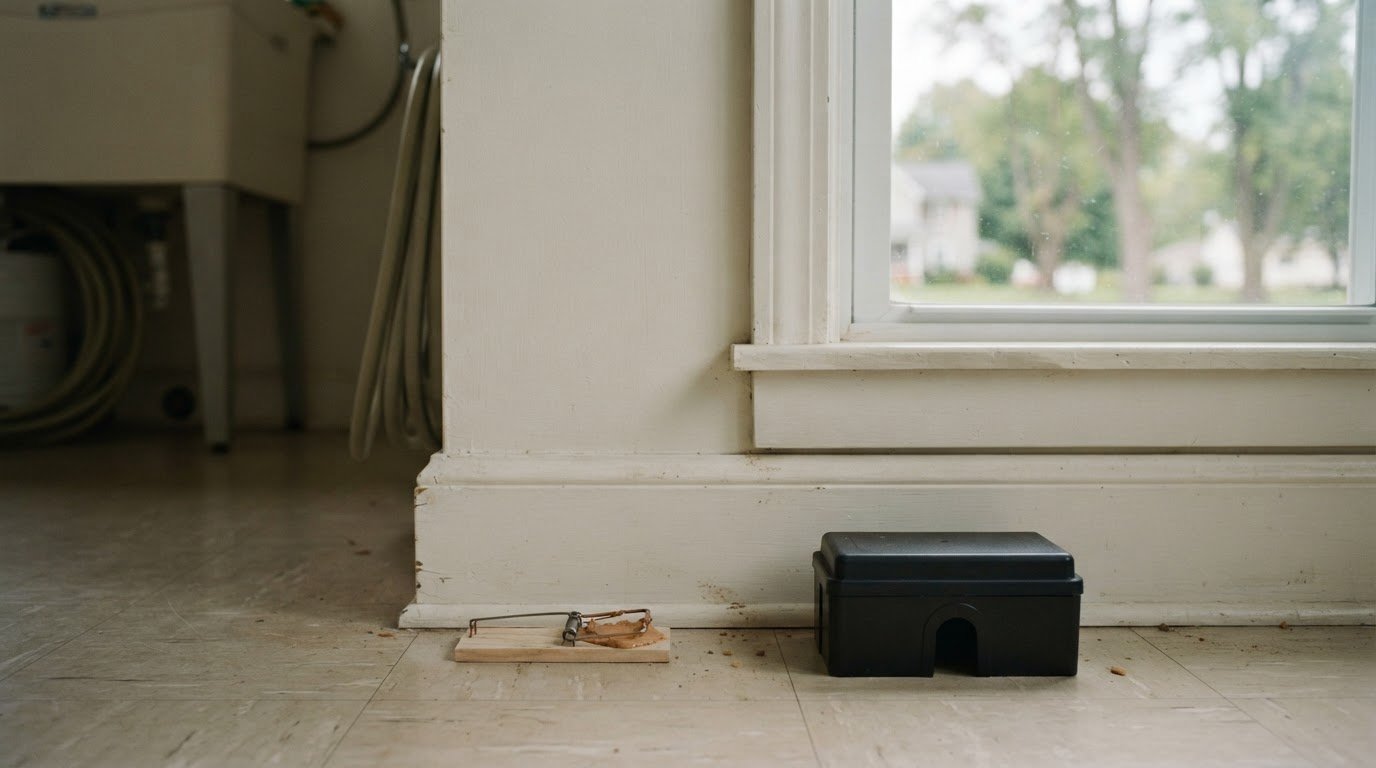
    A mouse trap is a device designed to capture or kill a rodent. Rodenticide bait, often called mouse poison, is a substance consumed by rodents that can cause death. Both methods target mice, but they work differently and produce different kinds of evidence. A trap may show directly whether a mouse was caught, while bait activity can be harder to observe.

    So, are mouse traps better than poison? There’s no universal answer. The right fit depends on the property, the signs of mouse activity, and household circumstances, including whether children, pets, or other animals could reach a control device. Understanding how each method works makes it easier to compare the trade-offs.

    For a visual overview of trap designs, see types of mouse traps and their mechanisms. The video below also shows a trap in operation.

    How mouse traps work at a high level

    Trap designs vary. Some restrain a mouse for later removal, while others kill it when triggered. Their main practical difference from bait is visibility: a captured mouse provides direct evidence of a result, and checking a trap over time can show whether it has been triggered. This may help distinguish a spot with observed activity from one where no capture has occurred.

    A capture still requires follow-up. The animal may need to be removed and disposed of appropriately, and continued signs of activity can mean the issue isn’t resolved. Traps also don’t reveal every mouse or entry route on their own. An empty trap is not proof that mice are absent, since activity may be elsewhere or a mouse may not encounter the device.

    How poison bait differs from traps

    Rodenticide bait works after a mouse consumes it. Unlike a trap that visibly captures an animal, bait doesn’t necessarily provide an immediate, observable result. A mouse may continue moving out of sight, so occupants might not know whether bait has been consumed or where the animal has gone. That makes monitoring less direct.

    Bait can also raise access concerns. Children, pets, and non-target animals may be at risk if they can reach a bait product or a poisoned rodent. Product labels contain important directions and precautions. A general comparison can’t determine whether a particular product or approach is appropriate for a specific home.

    In short, traps offer a more visible indication of capture, while bait’s effects may be less apparent. Neither method alone explains why mice are present or whether more can enter. Property conditions and household needs matter as much as the device, and continued activity calls for looking beyond a single control method.

    How Mouse Traps and Poison Compare in Real Homes

    In a home or business, the practical difference often comes down to how clearly occupants can tell what is happening. A trap can provide visible evidence of a capture. With bait, consumption and its effects may be less apparent, especially if a mouse moves into an inaccessible area. Neither method’s results alone confirm that all mouse activity has stopped.

    Use the comparison below to consider monitoring, access around the property, and the activity you have observed. These are decision factors, not a universal ranking. A method’s suitability depends on the specific conditions in the building.

    Consideration Mouse traps Rodenticide bait
    Visibility A captured mouse provides direct evidence of a result. Consumption and outcomes may be difficult to observe.
    Monitoring Capture or continued signs can be observed over time, but one capture doesn’t establish that activity has ended. It can be harder to tell whether bait has been consumed or where a rodent has gone.
    Household concerns Consider whether children, pets, or other animals could reach a device. Consider possible access to bait and the potential for non-target animals to encounter it or a poisoned rodent.
    Follow-up A captured animal requires appropriate follow-up and disposal. Results may require assessment even when no animal is visible.

    When visibility and monitoring matter

    If you want an observable indication of activity, trap outcomes may be easier to track. A capture confirms that a mouse encountered the device, while an empty trap doesn’t prove mice are absent. Compare what you observe over time with other signs, such as recurring sounds or evidence in different parts of the property. Bait can be harder to interpret because a mouse may consume it without being seen afterward.

    One capture is a data point, not a complete assessment. New signs after a capture, or activity in separate areas, may indicate that more mice remain or that access continues. Note whether evidence appears in the same place or in new areas, since the pattern can help distinguish an isolated sign from ongoing activity.

    How household and property conditions affect the choice

    Consider who uses the space and which animals may enter it. A home with children or pets presents different access concerns from a restricted storage area, but no device should be treated as risk-free. The number and location of observed signs matter too. One mouse sighting differs from repeated signs, evidence in several rooms, or noises that suggest mice are concealed.

    Commercial buildings can have additional factors, such as multiple rooms, storage areas, or shared access points. Those conditions can complicate monitoring and make a broader assessment useful. If activity is persistent or difficult to interpret, professional rodent control can help evaluate what the signs may indicate and what follow-up is appropriate.

    Are Traps Better Than Poison? Match the Method to the Situation

    There isn’t one best choice for every property. Consider what the signs show, how important visible monitoring is, and whether children, pets, or other animals could reach a control device. The question “are mouse traps better than poison” is best answered by weighing these conditions together, rather than judging either method in isolation.

    Use this decision matrix to organize the trade-offs:

    • Activity is limited to one observed mouse: Consider whether you need visible evidence of a capture and whether you can monitor activity consistently. A single sighting doesn’t establish how many mice may be present.
    • Signs recur or appear in several areas: Repeated evidence, sounds from concealed spaces, or activity in more than one room can be difficult to interpret with a single device. Assess the pattern, not just one result.
    • Direct monitoring is a priority: Traps can make a capture observable. That visibility may help you track whether signs continue, but it doesn’t identify entry points or prevent new mice from coming in.
    • Access by children, pets, or wildlife is possible: Treat access as a key concern for any control method. If you can’t confidently account for who or what may reach bait, that uncertainty deserves careful consideration.
    • Results are unclear or activity persists: Professional rodent control can help assess whether signs point to ongoing activity and identify property conditions a control device alone won’t address.

    When a trap-based approach may fit your priorities

    A trap-based approach may suit occupants who value being able to observe a capture and follow changes in activity. That can make results easier to interpret than an unseen outcome. Still, monitoring takes attention, and a capture doesn’t prove all mice are gone. Traps also don’t resolve openings or other property conditions that may allow continued access.

    When poison-related concerns call for added caution

    Bait may be harder to monitor because a mouse can consume it and remain out of sight. Consider whether children, pets, or non-target animals could access the bait or encounter a poisoned rodent. If access is uncertain, or signs continue without a clear explanation, don’t assume bait has resolved the issue. Professional rodent control can help assess the activity and determine appropriate next steps.

    Property context matters, too. A quiet home with one isolated sighting differs from a building with repeated signs across rooms or storage areas. In a commercial setting, multiple spaces and patterns of access can complicate observation. These distinctions help shape an assessment, but they don’t establish a universal winner between traps and poison.

    For persistent or hard-to-interpret mouse activity, professional rodent control can account for both the activity and the property conditions behind it. The goal is to understand the situation, not simply select a device.

    Mouse Traps vs. Poison: Which Is Better for Mice?

    What Traps and Poison Cannot Fix: Prevention and Mouse Entry

    Traps and rodenticide bait address mice that are already present. Neither closes a gap in a wall, removes a food source, or prevents another mouse from entering. If access and shelter remain available, activity may continue or return, even after a control device produces a result. That’s why deciding whether are mouse traps better than poison is only one part of managing mice.

    Prevention focuses on the conditions that let rodent activity persist: access into the building, available food, and places that provide shelter. A useful starting point is to organize what you observe and consider what might be supporting the activity. This isn’t a treatment recipe, and no single preventive measure can guarantee rodents won’t return.

    Why entry points and conditions matter

    Mice may enter through openings around a building and move toward areas with food or shelter. A trap or bait may address an animal without revealing how it got inside. For example, activity near stored food could point to an attractant, while signs near a wall or utility opening may raise questions about access. These clues help frame an assessment, but they don’t establish the full extent of activity.

    Removal, maintenance, and exclusion work together in professional rodent control. Removal addresses mice present; maintenance supports continued attention to activity; exclusion focuses on limiting access. A control device alone may not cover all three needs. Mosquito Assassin Pest Control LLC provides Rodent Control using these complementary elements to manage mouse activity.

    What to observe before deciding on next steps

    Keep track of where and when signs appear, and whether they recur in the same area or show up in different parts of the property. Repeated signs, sounds from inaccessible spaces, or activity that is difficult to interpret can make self-assessment more challenging. This information can help clarify whether the issue appears isolated or ongoing.

    A simple framework can help organize observations:

    1. Observe signs. Note where activity is noticed and whether it happens repeatedly.
    2. Consider entry. Pay attention to the general area around the signs and whether an opening or route may be involved.
    3. Reduce attractants. Consider whether accessible food or sheltered areas could support rodent activity.
    4. Assess follow-up. If signs persist or occur in concealed areas, consider whether professional assessment could help interpret the pattern.

    Broader prevention may also involve conditions that attract other pests, though the relevant factors vary by property. If mouse activity is persistent or difficult to trace, professional rodent control can help assess removal, maintenance, and exclusion needs. For information about an inspection or recommendations, contact Mosquito Assassin Pest Control LLC.

    When Professional Rodent Control Makes More Sense

    A device may be only one part of the response. Consider professional assessment if mouse signs keep appearing, occur in several areas, or seem to come from spaces that are difficult to inspect. These patterns can be hard to interpret from a trap or bait result alone. A property-specific assessment can help connect the evidence to possible access and activity throughout the building.

    What a professional rodent assessment can clarify

    An assessment can help identify the rodent, understand where and when activity is occurring, and consider likely access points. The property’s layout and conditions matter: signs in a kitchen may raise different questions from sounds in a wall or activity in a storage area. This context helps shape a control approach around the situation rather than relying on a single device.

    In Erie and Crawford Counties, Pennsylvania, and Ashtabula County, Ohio, Mosquito Assassin Pest Control LLC provides Rodent Control. Its rodent control services follow a removal, maintenance, and exclusion approach, addressing different parts of managing mouse activity.

    A wider approach beyond a single device

    Removal addresses rodents present in the property. Maintenance supports ongoing attention to activity and changing conditions. Exclusion focuses on limiting access into the structure. These elements complement one another: removing mice does not, by itself, resolve an opening that allows entry, while exclusion alone may not address mice already inside.

    This broader perspective can also help answer the question, are mouse traps better than poison? The device is only one consideration. Persistent signs, activity across multiple areas, or uncertainty about entry can make a more complete assessment useful. A professional can consider the evidence and property conditions when recommending an approach, without assuming the same method suits every building.

    When to consider professional support

    Professional assessment may be worth considering when activity continues despite previous efforts, signs are widespread, or you can’t tell whether evidence points to one mouse or an ongoing issue. It may also help if access concerns make it difficult to choose a control method with confidence. Noting where signs appear and whether they recur can give useful context for an assessment.

    For a property-specific review, request a professional assessment. It can help clarify the activity and whether removal, maintenance, exclusion, or a combination may be appropriate.

    Choose a Next Step That Fits Your Property

    The useful question isn’t only are mouse traps better than poison, but what the activity and building conditions call for next. If mouse signs persist, spread to new areas, or remain difficult to interpret, a property-specific assessment can help clarify the situation and inform a practical response.

    Mosquito Assassin Pest Control LLC provides Rodent Control through removal, maintenance, and exclusion. For households unsure how to proceed, professional guidance can put the evidence in context rather than relying on a device alone.

    To discuss a professional rodent assessment, contact Mosquito Assassin Pest Control LLC. A property-specific review can help clarify the activity and possible next steps.

    Frequently Asked Questions

    Are mouse traps more effective than poison?

    Neither method is automatically more effective in every situation. The question “are mouse traps better than poison” depends on the location and extent of mouse activity, household access concerns, and how results can be monitored. A trap may provide clear evidence of a capture, while bait outcomes can be harder to observe. If signs continue after using either approach, the underlying activity may need further assessment.

    Can mice die inside walls after eating poison?

    Yes, a poisoned mouse may die in a wall void or another inaccessible space. For anticoagulant rodenticides, death may occur several days after feeding begins, so the animal can move out of sight before it dies. This can make the result difficult to confirm and may lead to odor or other signs that require attention. The timing and effects vary by rodenticide type, so don’t assume every bait works the same way.

    Is mouse poison a concern if I have pets or children?

    It can be a concern if children or pets might reach bait, or if a pet could encounter a poisoned rodent. Non-target animals may also be exposed. Consider access throughout the home, including areas used for storage or feeding pets, rather than only the spot where mouse signs appeared. Read and follow the specific product label, and seek professional guidance if exposure is possible or you’re uncertain about the risks.

    Can one mouse trap solve a mouse problem?

    One trap may capture a mouse, but that result doesn’t establish that no other mice remain. A second sighting, fresh signs in another room, or activity that continues after a capture can indicate the issue needs closer attention. A trap also can’t reveal whether mice are entering through an opening or finding resources elsewhere in the building. Look at the pattern of signs over time, not only the outcome of one device.

    Do mice come back after traps or poison remove them?

    They can. Removing a mouse doesn’t necessarily prevent another from entering, especially if access to the building and suitable food or shelter remain. For instance, a new sighting near a pantry after a previous capture may reflect continued access, not necessarily the same mouse returning. Recurring activity is a reason to consider both how mice may be getting inside and what conditions could support them.

    What attracts mice into a house?

    Mice may be drawn to accessible food and water, sheltered spaces, and ways to enter a building. Food scraps, pet food, pantry goods, or cluttered storage may contribute to conditions that support activity, depending on the property. These factors don’t prove what caused a particular mouse sighting. Noting where signs appear can help identify areas that may need closer attention and whether access or attractants could be involved.

    When should I consider professional mouse control?

    Consider a professional assessment if signs keep appearing, show up across several areas, or seem to come from spaces you can’t inspect. It may also help if you’re unsure whether activity is ongoing or how mice are entering. A property-specific review can put observations in context and help determine whether a broader response is appropriate. This is especially useful when repeated attempts to address signs haven’t clarified the source of activity.

    Disclaimer: The information provided on this blog is for general informational purposes only and is not intended as professional pest control advice. Conditions vary by property, environment, and location. Reading this content does not create a service agreement. For an inspection or professional recommendations, please contact Mosquito Assassin Pest Control LLC directly.