
The “Empty House Window” is a non-repeatable opportunity for total pest exclusion that disappears the moment furniture covers the baseboards and corners. Moving into a new home in Erie, Crawford, or Ashtabula County should be a celebration, yet many homeowners find themselves paralyzed by the fear of inheriting a previous owner’s infestation. It’s natural to feel anxious about rodents nesting in the walls of an older property or the risk of hitchhiking pests like bed bugs entering on moving day. You want your family and pets to step into a clean, secure environment from the very first night.
This guide explains why an empty house provides the ultimate strategic advantage for getting rid of pests before moving in and how to identify structural vulnerabilities before they become liabilities. You’ll learn the best practices for professional exclusion and how to secure every entry point from the foundation to the roofline. By understanding pest behavior and structural sealing, you can ensure your transition is focused on settling in rather than fighting an unseen enemy.
Disclaimer: The information provided on this blog is for general informational purposes only and is not intended as professional pest control advice. Conditions vary by property, environment, and location. Reading this content does not create a service agreement. For an inspection or professional recommendations, please contact Mosquito Assassin Pest Control LLC directly.
Key Takeaways
- An empty house offers 100 percent visibility of floorboards and corners, making it the most effective time for inspection and treatment before furniture creates new hiding spots.
- Homeowners in Northwest Pennsylvania and Northeast Ohio should prioritize getting rid of pests before moving in to address regional threats like wood-boring insects and carpenter bees.
- Protect your new environment by using new packing materials and inspecting items moved via transit trucks, which can often act as vectors for bed bugs or roaches.
- Structural exclusion, such as sealing gaps around utility lines and dryer vents, is significantly easier to perform before furniture blocks access to critical entry points.
- While an initial treatment secures the property for move-in day, long-term protection through recurring service plans helps maintain a pest-free environment against seasonal pressure.
The Strategic Advantage of Pest Prevention in an Empty Home
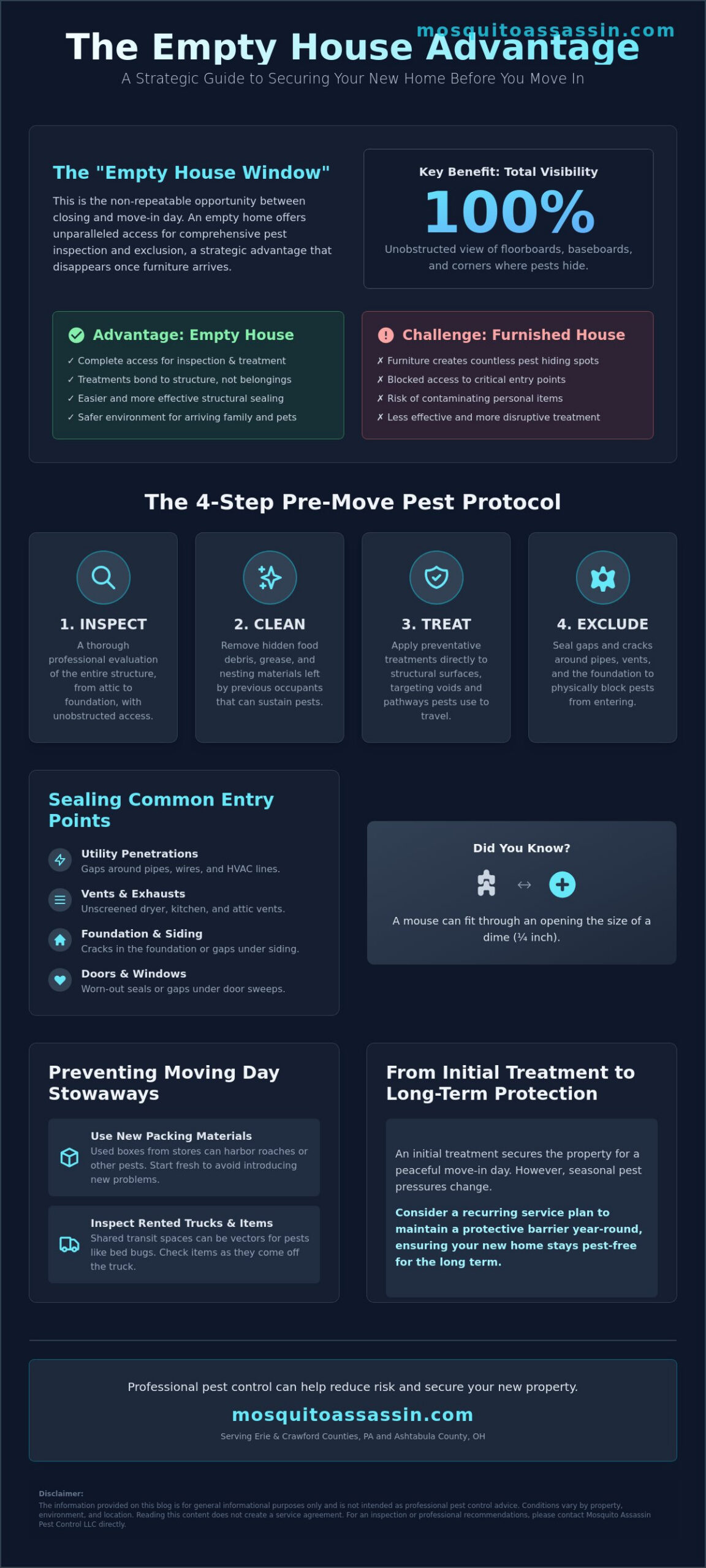
The period between signing the closing papers and moving your first box is the most critical window for long-term property protection. Empty rooms offer a tactical advantage. An empty house provides 100 percent visibility of floorboards, corners, and baseboards that are usually hidden behind heavy furniture or appliances. This unobstructed access allows for a thorough inspection and the application of professional Integrated Pest Management (IPM) strategies. Without the presence of couches, beds, or kitchen islands, pests have nowhere to hide during a professional evaluation.
To better understand how preparation impacts the effectiveness of pest control, watch this helpful video:
Professional treatments can reach deep into wall voids and behind cabinetry where pests like cockroaches or silverfish typically congregate. By establishing preventative barriers now, you ensure that materials are applied directly to the structure’s surfaces rather than onto the backs of your belongings. This approach is safer for households with pets or children. The treatments have time to dry and bond with the building materials before any personal items are introduced to the space. This strategy is the most reliable way of getting rid of pests before moving in and protecting your new investment.
Maximizing the Pre-Move Cleaning Window
Cleaning and pest prevention are two sides of the same coin. When a house is vacant, it’s the perfect time to scrub away food debris, grease, or nesting materials left by previous occupants. Hidden crumbs under cabinets or behind the stove can sustain a rodent population for weeks. Getting rid of pests before moving in requires a clean slate. Look for signs of past infestations like droppings in the back of closets or grease marks along baseboards. Addressing these issues while the rooms are empty ensures you aren’t sealing pests inside with your furniture. A clean environment makes it much easier to spot new activity immediately.
The Financial Logic of Early Prevention
Investing in exclusion and preventative care early saves significant money over time. It’s much easier to seal a gap in the foundation or around a utility line when the area is accessible. Remember that a mouse can fit through an opening the size of a dime (about 1/4 inch). Once you’ve moved in, an infestation might require treating furniture or even replacing contaminated items. In areas like Erie County and Ashtabula County, protecting your home from wood-destroying organisms like termites is a vital part of maintaining property value. Utilizing general pest control plans before move-in day prevents pests from establishing a foothold in the structure. Early intervention is always more cost-effective than reactive extermination.
Disclaimer: The information provided on this blog is for general informational purposes only and is not intended as professional pest control advice. Conditions vary by property, environment, and location. Reading this content does not create a service agreement. For an inspection or professional recommendations, please contact Mosquito Assassin Pest Control LLC directly.
Identifying Regional Pests in Northwest Pennsylvania and Northeast Ohio
Every geographic region faces specific pest pressures, and the tri-county area of Erie, Crawford, and Ashtabula is no exception. The proximity to Lake Erie creates a high-moisture environment where dampness-loving pests thrive. When properties sit vacant during a real estate transition, they become prime targets for local invaders that prioritize quiet, undisturbed spaces. Understanding the specific threats in our corner of the country is a vital part of getting rid of pests before moving in effectively.
Local architecture often features expansive wooden decks, porches, and siding that attract carpenter bees and other wood-boring insects. Unlike honeybees, carpenter bees drill deep, perfectly circular holes into structural timber to create nesting galleries. Over time, this activity weakens the wood and attracts secondary pests. Identifying Regional Pests like these requires a keen eye for “frass” (sawdust-like waste) or staining on the exterior of the home. Because these insects are active from early spring through summer, an empty house is the perfect place to spot their entry points before you settle in.
Rodent Behavior in Vacant Properties
In Northwest Pennsylvania and Northeast Ohio, rodents are a year-round concern, but their activity peaks as temperatures drop. Mice and rats seek the warmth of attics, crawlspaces, and basements when a home is unoccupied. Without the daily noise of a family, these pests feel bold enough to explore every room. It’s essential to check the basement foundation for cracks, as a mouse only needs an opening the size of a dime to enter. If you discover droppings or chewed insulation, a professional rodent removal strategy for an empty home focuses on total exclusion and sealing entry points that furniture would otherwise hide.
Crawling Insects and Structural Pests
Quiet rooms are also magnets for spiders and ants. In older housing stock common in Crawford and Ashtabula Counties, termites can remain undetected for years within the floor joists or sill plates. Look for mud tubes along the foundation or discarded wings near windowsills. While spiders help control other bugs, large populations usually indicate a secondary infestation of smaller insects they’re preying upon. Establishing a foundation of general pest control helps eliminate these food sources. Scheduling a professional inspection in Erie or Ashtabula ensures these structural threats are identified before they cause expensive damage. Getting rid of pests before moving in isn’t just about comfort; it’s about protecting your financial investment.
Disclaimer: The information provided on this blog is for general informational purposes only and is not intended as professional pest control advice. Conditions vary by property, environment, and location. Reading this content does not create a service agreement. For an inspection or professional recommendations, please contact Mosquito Assassin Pest Control LLC directly.
Preventing Pest Stowaways During the Packing and Transit Process
The success of your transition depends on more than just cleaning the new property. Even if you have spent weeks getting rid of pests before moving in to the new structure, you can easily undo that progress by transporting stowaways from your current residence or the transit vehicle itself. Pests are expert hitchhikers. They utilize the small crevices in furniture, the folds of moving blankets, and the corrugated layers of cardboard boxes to migrate into new territories. Controlling what enters your clean environment is just as important as treating the empty house.
Cardboard boxes are a primary risk factor during a move. While they are inexpensive and accessible, recycled or second-hand boxes from grocery stores or warehouses often harbor cockroach egg casings or silverfish. These insects are attracted to the organic glues used in cardboard construction. Additionally, outdoor items like patio furniture, grills, and lawn equipment require a deep inspection. Spiders, ants, and even small rodents often nest inside the hollow legs of chairs or the dark recesses of a barbecue grill. Wiping these items down and checking for egg sacs before they touch the moving truck floor is a non-negotiable step for a pest-free arrival.
Safe Packing Strategies
Transitioning to plastic storage bins instead of cardboard is one of the most effective ways to prevent infestations. Plastic provides a durable, airtight seal that prevents pests from entering your belongings during storage or transit. For upholstered items, it is critical to inspect the seams of mattresses and the undersides of couches. Taking these precautions is a vital part of pest-proofing your new home and ensuring your hard work in the empty structure isn’t undone. While you focus on the logistics of the move, having a professional general pest control plan in place for both your old and new locations creates a seamless safety net for your family.
The Moving Truck Inspection
The moving truck itself is a commonly overlooked vector for infestations. High-turnover rental equipment travels between thousands of homes, many of which may have active bed bug or cockroach problems. Before loading a single box, perform a thorough sweep of the truck’s interior. Use a flashlight to check the corners and the wooden slats along the walls for signs of spotting or discarded skins. If you spot any activity, request a different vehicle immediately. Vigilance during the loading process ensures that getting rid of pests before moving in remains a one-time task rather than an ongoing battle in your new home in Erie or Crawford County.
Disclaimer: The information provided on this blog is for general informational purposes only and is not intended as professional pest control advice. Conditions vary by property, environment, and location. Reading this content does not create a service agreement. For an inspection or professional recommendations, please contact Mosquito Assassin Pest Control LLC directly.
Structural Exclusion: Sealing Entry Points Before Furniture Arrival
While establishing chemical barriers is a vital step, physical exclusion is the most effective long-term defense for any property. An empty home offers a rare opportunity to inspect the “bones” of the structure without the obstruction of heavy boxes or decor. Identifying and sealing entry points is a primary component of getting rid of pests before moving in. Most pests, especially rodents, are opportunistic and will exploit the smallest structural vulnerabilities to find warmth and food. By addressing these gaps now, you create a permanent barrier that chemical treatments alone cannot provide.
The garage is often the most vulnerable area of a new home. Large overhead doors frequently have worn weatherstripping at the corners, providing an easy highway for mice and spiders. Inspect the seal between the garage and the main living quarters. Additionally, check the areas where utility lines, plumbing pipes, and dryer vents penetrate the exterior walls. A mouse can squeeze through a gap the size of a dime, while a rat only needs a hole the size of a quarter. Sealing these penetrations with durable materials like steel wool or silicone caulk ensures that the interior remains secure. Foundation cracks should also be repaired while they are fully visible and accessible.
Interior Exclusion Checklist
Before your kitchen appliances are delivered and installed, inspect the wall voids behind where the stove and refrigerator will sit. These dark, warm areas are favorite nesting spots for roaches and silverfish. Check the back of every cabinet and the floor under every sink for plumbing gaps. It is also critical to examine attic insulation and crawlspace vents. Ensuring that vents have intact, fine-mesh screening prevents larger pests from taking up residence in your home’s infrastructure. These small steps are essential for getting rid of pests before moving in and maintaining a clean environment.
Exterior Perimeter Defense
The area immediately surrounding your foundation should be a “dead zone” for pest activity. Clear away any leaf litter, mulch, or wood piles that touch the siding, as these provide cover for dampness-loving insects. Ensure your gutters are clean and draining away from the house to prevent moisture buildup, which attracts termites and carpenter ants. Establishing a clear perimeter makes it easier to spot new activity. For homeowners in Erie and Ashtabula Counties, professional pest control may help reduce risk by applying specialized perimeter barriers that supplement your physical exclusion efforts. To secure your property before move-in day, consider scheduling a comprehensive structural inspection with a local expert.
Disclaimer: The information provided on this blog is for general informational purposes only and is not intended as professional pest control advice. Conditions vary by property, environment, and location. Reading this content does not create a service agreement. For an inspection or professional recommendations, please contact Mosquito Assassin Pest Control LLC directly.
Transitioning from Initial Treatment to Long-Term Pest Management Plans
Achieving a pest-free start is a major milestone, but maintaining that security requires a shift in strategy once you’ve settled. While the initial focus was on getting rid of pests before moving in, the long-term goal is preventing their return. Pests are a persistent environmental pressure. A single treatment provides immediate relief, but it cannot account for the changing biological cycles of insects or the seasonal migration patterns of rodents in Northwest Pennsylvania and Northeast Ohio. Protective barriers naturally degrade over time, and new entry points can develop as a house settles or as weather patterns change.
In counties like Erie, Crawford, and Ashtabula, the weather dictates pest behavior. Heavy spring rains often drive ant colonies indoors, while the arrival of winter pushes mice to seek the warmth of your attic or crawlspace. A recurring management plan ensures that protective barriers are refreshed before these seasonal surges occur. Building a relationship with a local professional allows for consistent monitoring of your property’s specific vulnerabilities, such as new cracks in the foundation or shifting door sweeps. This ongoing vigilance is the most effective way of getting rid of pests before moving in and keeping them out for good.
The Importance of Ongoing Protection
Pests don’t stop looking for entry points just because a house is occupied. In fact, the presence of food, water, and climate control makes your home even more attractive to invaders. Regular inspections catch structural issues, like moisture damage or new gaps in siding, before they escalate into full-blown infestations. This proactive approach is why many commercial pest control services rely on a recurring model to protect high-stakes environments. For homeowners, bi-monthly or quarterly plans provide the same level of professional oversight and peace of mind for the family.
Preparing for the First 90 Days
The first few months in a new home are a period of adjustment for both the structure and the family. As you begin cooking, managing household waste, and using the plumbing regularly, you may notice pests that were dormant when the house was empty. It’s wise to schedule a follow-up inspection approximately 90 days after the move is complete to ensure that no new entry points were created during the transition. If you notice any activity, professional pest control may help reduce risk. Maintaining a consistent general pest control plan is the most effective way to protect your property investment and ensure a healthy living environment.
Disclaimer: The information provided on this blog is for general informational purposes only and is not intended as professional pest control advice. Conditions vary by property, environment, and location. Reading this content does not create a service agreement. For an inspection or professional recommendations, please contact Mosquito Assassin Pest Control LLC directly.
Establishing a Foundation for a Pest-Free Future
Transitioning into a new property is the perfect time to establish a clean slate for your family. By utilizing the empty house window, you’ve seen how structural exclusion and thorough transit inspections prevent common regional threats from taking hold. Consistency remains the most important factor for long-term success. Initial efforts for getting rid of pests before moving in are most effective when paired with a monitoring strategy that accounts for the unique seasonal pressures of Northwest Pennsylvania and Northeast Ohio.
Professional pest control may help reduce the risk of infestations in your new home. For an inspection or professional recommendations, please contact the team at Mosquito Assassin Pest Control LLC. Licensed professionals serving Erie and Crawford Counties in PA and Ashtabula County in OH bring specialized expertise in both residential and commercial pest management. With comprehensive year-round protection plans available, you can focus on making your new house a home while experts handle the technical defense. Secure your peace of mind today and enjoy your first night in a protected environment.
Disclaimer: The information provided on this blog is for general informational purposes only and is not intended as professional pest control advice. Conditions vary by property, environment, and location. Reading this content does not create a service agreement. For an inspection or professional recommendations, please contact Mosquito Assassin Pest Control LLC directly.
Frequently Asked Questions
Is it better to do pest control before or after moving in?
It is significantly better to perform pest control before moving your belongings into the home. An empty house provides 100 percent visibility of the floors, corners, and baseboards that furniture would normally hide. This accessibility allows technicians to apply preventative barriers directly to the structure without the risk of contaminating personal items. This strategic window is the most effective time for getting rid of pests before moving in and securing the property.
How long should I wait to move in after a pest control treatment?
Most professionals recommend waiting two to four hours after a treatment before re-entering the home. This time allows liquid applications to dry completely and bond with the surfaces of the structure. Always follow the specific instructions provided by your licensed technician, as drying times can vary based on local humidity levels. Waiting for the products to dry ensures that the treatment is both effective and safe for your family and pets.
Can pests live in an empty house with no food source?
Pests can live in an empty house for a long time. Many species, such as termites, feed directly on the wood used in the home’s construction. Others, like silverfish, find sustenance in the adhesives found in wallpaper or the starch in leftover cardboard boxes. Spiders and rodents only need a consistent water source and a quiet nesting site to survive. Even without human food, a vacant structure provides plenty of resources for pests to thrive.
Should I get a termite inspection even if the home appraiser did not require one?
You should always schedule a professional termite inspection even if it is not required by an appraiser. Appraisers focus on the general market value and visible structural integrity of the home, but they are not trained to detect the subtle signs of wood-destroying organisms. Termites can cause significant damage inside wall voids and floor joists that remains hidden during a standard walkthrough. An inspection protects your financial investment from expensive, unseen structural damage.
Do I need pest control for a brand new construction home?
Yes, new construction homes often require pest control because the building site was likely exposed to the elements for months. Scraps of lumber and food waste from construction crews can attract rodents and insects before the walls are finished. Additionally, the high moisture levels in new concrete and drywall can attract dampness-loving pests like silverfish. Establishing a preventative barrier helps ensure your brand new home stays secure from the very first day.
What are the most common pests to look for in an empty house in Erie, PA?
In Erie, PA, you should look for mice, spiders, and carpenter bees in vacant properties. The high-moisture environment near Lake Erie also attracts carpenter ants and moisture-loving silverfish. During the winter months, rodents frequently migrate into attics and crawlspaces to escape the cold. Identifying these regional threats early is a vital part of getting rid of pests before moving in and prevents them from nesting in your walls before you arrive.
Can bed bugs travel in a moving truck?
Bed bugs are expert hitchhikers and can easily travel in a moving truck by hiding in moving blankets or the crevices of the vehicle walls. Because rental equipment has high turnover, it can become a vector for pests from previous users. It is critical to inspect the interior of any rental vehicle before loading your belongings. Using plastic bins instead of cardboard boxes also helps reduce the risk of introducing these pests into your home.
How much does a pre-move pest inspection typically cost?
The cost of a pre-move inspection depends on the size of the home and the specific pests being targeted. Factors such as the square footage of the property and the accessibility of attics or crawlspaces can influence the final price. While prices vary by property and location, most homeowners find that an initial inspection is a cost-effective way to prevent the much higher expenses of treating a full-blown infestation after they have moved in.
Disclaimer: The information provided on this blog is for general informational purposes only and is not intended as professional pest control advice. Conditions vary by property, environment, and location. Reading this content does not create a service agreement. For an inspection or professional recommendations, please contact Mosquito Assassin Pest Control LLC directly.