
Tag: natural pest control

  • Natural Tick Repellent for Yard vs Professional: A 2026 Comparison Guide

    Natural Tick Repellent for Yard vs Professional: A 2026 Comparison Guide

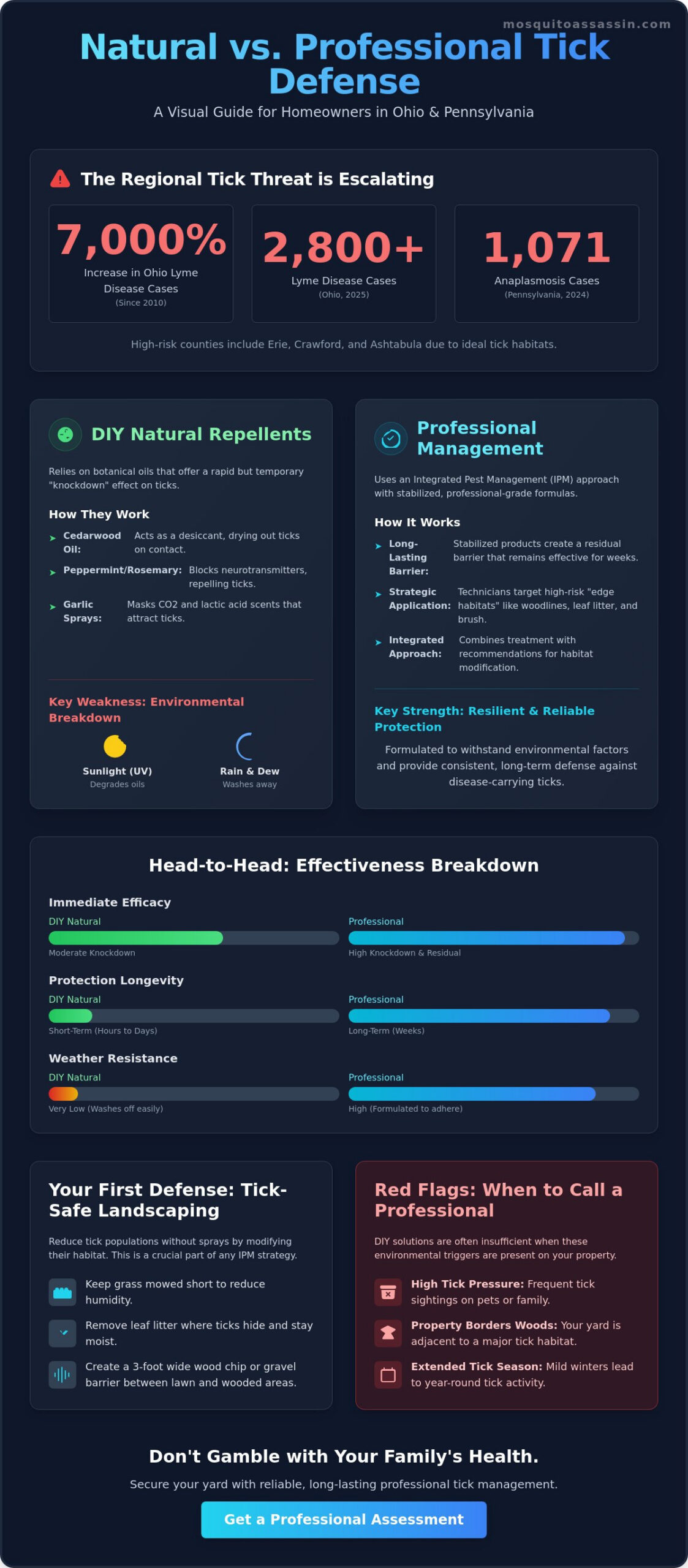
    In 2025, Ohio health officials recorded over 2,800 cases of Lyme disease, marking a staggering 7,000% increase since 2010. With tick populations reaching record highs across Erie, Crawford, and Ashtabula Counties, families are increasingly weighing the benefits of natural tick repellent for yard vs professional management strategies. Most homeowners prioritize the safety of their children and pets, yet they often face the frustration of DIY sprays that lose effectiveness after a single heavy rain or morning dew.

    It’s natural to feel uncertain about which methods truly safeguard an outdoor space from rising threats like Anaplasmosis, which saw 1,071 cases in Pennsylvania in 2024. This guide provides a direct comparison of the effectiveness, longevity, and practical application of essential oil based DIY repellents against professional integrated pest management. You’ll discover which natural ingredients carry scientific backing, how environmental factors impact the duration of protection, and exactly when a property requires the intervention of a licensed professional to maintain a tick-free environment.

    Key Takeaways

    • Understand the rising risk of Black-legged ticks in Northwest Pennsylvania and Northeast Ohio and how specific yard features create ideal habitats.
    • Learn how essential oils like cedarwood oil function as desiccants to disrupt tick biology and why their efficacy is often temporary.
    • Evaluate the differences in concentration and application methods when comparing natural tick repellent for yard vs professional integrated pest management.
    • Discover how cultural controls, such as creating Tick-Safe Zones through landscaping, can reduce tick populations without the use of sprays.
    • Identify the specific environmental triggers that indicate when high tick pressure on a property requires more than just DIY natural solutions.

    Tick Risks and Habitat in Pennsylvania and Ohio (2026)

    Creating a tick-safe yard in the Great Lakes region requires a strategic effort to minimize the survival conditions for the Ixodes scapularis, commonly known as the Black-legged tick. In Northwest Pennsylvania and Northeast Ohio, these pests thrive in high-humidity environments provided by dense leaf litter and tall grasses. While many homeowners research a natural tick repellent for yard vs professional treatment plans, the first step is always understanding the habitat. Ticks don’t usually live in the middle of a sunny, well-manicured lawn. Instead, they congregate in the edge habitat where the yard meets wooded areas or ornamental brush.

    Climate factors in Erie and Ashtabula counties have contributed to particularly high tick activity in 2026. The combination of moist lake-effect air and abundant host animals, such as white-tailed deer, creates a perfect storm for infestation. Because ticks are prone to desiccation (drying out), they stay low to the ground in shaded, damp zones. This makes the perimeter of a property the primary danger zone for children and pets who may wander near the woodline during play.

    To better understand the biological vulnerability of these pests, watch this helpful video:

    Common Tick-Borne Illnesses in the Great Lakes Region

    Residents in Crawford and Erie counties face significant health risks from local populations. Pennsylvania reported 16,624 confirmed Lyme disease cases in 2024, and preliminary data suggests that numbers are trending higher in 2026. Beyond Lyme, Tick-borne diseases like Anaplasmosis and Babesiosis are increasing across the Northeast. Cases of Anaplasmosis in Pennsylvania have nearly doubled each year for the past five years, reaching 1,071 cases in 2024. Professional pest control may help reduce risk by establishing a barrier that prevents these disease-carrying arachnids from establishing a foothold near a home.

    When is Tick Season in PA and OH?

    Local tick activity follows a predictable but expanding cycle. Two primary peaks occur: the spring, when tiny nymphs are most active, and the fall, when adult ticks seek a final host before winter. However, the mild winters of 2025 and 2026 have shifted these windows. Ticks can remain active any time temperatures stay above freezing. This extended season is a major factor when choosing between a natural tick repellent for yard vs professional services, as DIY solutions often require much more frequent reapplication to keep up with year-round activity. For those living in the service areas, consistent monitoring is now a necessity rather than a suggestion.

    Natural products often rely on botanical chemistry to deter arachnids. Essential oils like peppermint and rosemary contain compounds that disrupt octopamine receptors in a tick’s nervous system. This disruption acts as a neurotransmitter blocker, causing the pest to avoid the treated area. Cedarwood oil is particularly notable because it acts as a desiccant, which means it physically dries out the tick on contact. In contrast, garlic-based sprays don’t usually kill the pests; they simply mask the carbon dioxide and lactic acid scents that ticks use to find a host. These scents are the primary “beacons” that draw ticks toward humans and pets.

    While these options appeal to those seeking a chemical-free approach, they face significant environmental hurdles. Botanical oils are highly volatile. They evaporate quickly when exposed to sunlight and air. UV degradation can render a DIY application ineffective within just a few days. This creates a clear distinction when evaluating natural tick repellent for yard vs professional alternatives that utilize stabilized formulas designed for longevity. Without chemical stabilizers, the “barrier” created by essential oils is often too thin to withstand the elements.

    Essential Oils and Botanical Barriers

    Botanical sprays offer a rapid “knockdown” effect, meaning they can kill or repel ticks present at the time of application. However, they rarely provide a long-lasting residual effect. In the humid climates of Erie and Crawford counties, frequent rain can wash away these oils before they’ve provided meaningful protection. Consumer-grade products like Sunday “Nix Ticks” or Lawnbright “Yard Patrol” often cover between 3,000 and 5,000 square feet but require reapplication every two weeks or after heavy precipitation. For many residents, professional pest control may help reduce risk by using specialized equipment that ensures deeper coverage in the dense brush where ticks hide.

    Mineral-Based Solutions: Diatomaceous Earth

    Diatomaceous Earth (DE) is a powder made from fossilized algae. It works by cutting into the tick’s exoskeleton and absorbing its internal fluids. While it’s a mechanical killer rather than a chemical one, it has major drawbacks in the Great Lakes region. DE is only effective when it’s bone-dry. The high humidity and frequent morning dew in Ashtabula County often turn the powder into a useless paste. Homeowners should also use caution; DE is non-selective and can harm beneficial pollinators if applied to flowering plants. When considering personal protection alongside yard treatments, the CDC and health departments recommend using EPA-registered insect repellents on skin and clothing to ensure comprehensive safety.
    Natural Tick Repellent for Yard vs Professional: A 2026 Comparison Guide

    Comparing Effectiveness: Natural DIY vs. Professional Treatment

    The effectiveness of a natural tick repellent for yard vs professional service depends largely on the delivery method. Most homeowners rely on hand-pump sprayers or hose-end attachments that produce large, heavy droplets. These droplets often roll off foliage or fail to penetrate the dense undergrowth where ticks actually harbor. In contrast, professional technicians use high-pressure mist blowers that atomize the product into a fine fog. This specialized equipment ensures the treatment coats the underside of leaves and reaches deep into the brush, providing a more comprehensive barrier.

    Integrated Pest Management (IPM) provides a structural advantage over simple DIY spraying. This approach combines biological knowledge with targeted applications to disrupt pest habitats. Concentrations of active ingredients in professional-grade botanical products are typically higher than those found in retail bottles. These higher concentrations, combined with professional application techniques, result in a more durable shield against the various tick-borne diseases in Pennsylvania and Ohio. Homeowners in Erie and Crawford counties can benefit from this systematic approach.

    Residual Life and Re-application Frequency

    Longevity is a primary concern for residents in Erie and Ashtabula counties. DIY natural sprays often have a short residual life, typically lasting only 7 to 14 days before UV rays and humidity break down the botanical oils. This requires a homeowner to dedicate significant time every two weeks to re-treat the property. Professional treatments are engineered for better stability, frequently providing 21 to 30 days of protection. When you factor in the cost of high-quality DIY products, the time spent on labor, and the wear on personal equipment, the efficiency of a professional plan becomes clear.

    Targeting the Life Cycle

    Ticks go through several life stages, and missing just one can lead to a population surge. DIY applications often focus on adult ticks visible in late summer or fall but miss the nymph stage in the spring. Nymphs are roughly the size of a poppy seed and are responsible for a large portion of disease transmission. Professional monitoring helps identify property-specific ‘hot spots’ like wood piles or stone walls. By timing treatments to coincide with local emergence patterns, professional intervention can disrupt the life cycle more effectively than a generic DIY schedule. This strategic timing is a major factor when weighing the value of a natural tick repellent for yard vs professional management.

    Best Practices for a Tick-Resistant Landscape

    Landscape management is the most effective cultural control for reducing tick populations. While homeowners often debate the merits of a natural tick repellent for yard vs professional treatment, physical modifications to the property provide a permanent foundation for safety. Ticks require high humidity to survive. By altering the environment to be drier and sunnier, you can naturally eliminate the conditions they need to thrive. Establishing a ‘Tick-Safe Zone’ involves moving high-traffic areas, such as patios and playground sets, at least 10 feet away from wooded perimeters or brushy edges.

    A simple but powerful landscaping change is the installation of a 3-foot wide mulch or gravel barrier. This creates a physical deterrent between your lawn and the woods. Ticks are unlikely to cross this dry, hot zone because it risks their survival through desiccation. This structural change complements any spray program by clearly defining where the managed yard ends and the wild habitat begins. For residents in Erie and Ashtabula counties, these barriers are essential due to the dense forestation surrounding many suburban lots.

    Lawn Maintenance and Vegetation Control

    Routine yard work is a primary defense. Keeping grass mowed to a height of 3 inches or less reduces the moisture-rich microclimate that ticks crave. It’s equally important to clear leaf litter and brush piles promptly. These areas serve as primary nesting sites for white-footed mice, which are the main hosts for larval and nymphal ticks. Pruning low-hanging branches allows more sunlight to reach the ground, further drying out potential habitats. A well-maintained yard can see a significant reduction in tick presence compared to properties with overgrown vegetation.

    Host Management: Deer and Rodents

    Managing the animals that carry ticks is a critical step in a comprehensive strategy. White-tailed deer and rodents are the primary vectors that transport ticks into your living space. Using deer-resistant plants can discourage these larger hosts from lingering in your yard. Additionally, securing wood piles and keeping bird feeders away from the house prevents white-footed mice from establishing colonies near your family. In cases of heavy infestation, professional pest control may help reduce risk by integrating rodent management with traditional treatments. Because ticks don’t travel far on their own, controlling their transport is vital for long-term success.

    Evaluating When to Move Beyond Natural Repellents

    Deciding between a natural tick repellent for yard vs professional services often comes down to the concept of ‘Tick Pressure.’ This term refers to the volume of ticks present in the surrounding environment and the likelihood of them migrating onto your property. For homeowners in Erie or Ashtabula counties whose yards border state parks, forests, or unmanaged fields, the pressure is inherently higher. While botanical sprays can offer a temporary deterrent, they often fail to provide the structural population reduction needed for high-risk properties in 2026.

    Peace of mind is a major factor in this transition. Professional intervention typically includes a satisfaction guarantee, ensuring that technicians return if the pests do. This level of accountability is something DIY products simply cannot match. Scheduling a professional inspection is the most effective next step to identify local risks. A trained technician can spot vulnerabilities in your landscape that might be attracting hosts or providing shelter for nymphs that you’ve missed during routine yard work.

    Professional Pest Control in Northwest PA and Northeast OH

    Working with a local provider ensures the treatment plan accounts for the unique regional environment of the Great Lakes. Technicians who live in the communities they serve understand how lake-effect moisture and local wildlife cycles impact pest behavior. These experts can create tailored plans that address the specific needs of your acreage. You can learn about general pest control to see how a broad protective foundation helps maintain yard safety throughout the year. This local expertise is vital when natural solutions aren’t keeping pace with the 2026 tick surge.

    Taking Action for Your Outdoor Space

    If you’ve noticed gaps in current DIY efforts, such as ticks appearing on pets shortly after a spray, it’s time to evaluate the barrier’s integrity. Professional pest control may help reduce risk by applying stabilized formulas that withstand the frequent rains common in Crawford County. You can also explore the mosquito control program, which often provides overlapping protection against ticks. This multi-layered approach ensures your outdoor space remains a safe environment for your family to enjoy without the constant anxiety of tick-borne illnesses. Choosing the right path between a natural tick repellent for yard vs professional management ensures your property is protected by the most effective tools available.

    Disclaimer: The information provided on this blog is for general informational purposes only and is not intended as professional pest control advice. Conditions vary by property, environment, and location. Reading this content does not create a service agreement. For an inspection or professional recommendations, please contact Mosquito Assassin Pest Control LLC directly.


    Securing Your Yard for the Season Ahead

    Effective tick management requires a multi-layered approach that combines proactive landscaping with reliable population control. While botanical oils provide a temporary barrier, they often struggle against the high humidity and UV levels common in the Great Lakes region. Cultural controls, such as creating a 3-foot mulch barrier and managing wildlife hosts, remain the most effective natural way to reduce habitat suitability on a property. When evaluating natural tick repellent for yard vs professional intervention, remember that specialized equipment and stabilized formulas offer the durability needed to combat expanding pest habitats.

    Local providers in Northwest PA and Northeast OH utilize licensed and insured technicians who understand the specific regional environment. These professionals provide accountability through consistent monitoring and targeted applications that address the entire life cycle of the tick. Professional pest control may help reduce risk. Schedule an inspection with Mosquito Assassin today to identify the specific vulnerabilities on your property. Taking these steps now ensures an outdoor space remains a safer environment for family activities throughout the year.

    Disclaimer: The information provided on this blog is for general informational purposes only and is not intended as professional pest control advice. Conditions vary by property, environment, and location. Reading this content does not create a service agreement. For an inspection or professional recommendations, please contact Mosquito Assassin Pest Control LLC directly.

    Frequently Asked Questions

    Are natural tick repellents for the yard safe for dogs and cats?

    Most botanical repellents are formulated to be safe for pets once the application has dried, but concentration is a critical factor. Essential oils like peppermint or eucalyptus can be toxic to cats if they are ingested or absorbed in high amounts. Always check product labels for EPA exempt status under FIFRA 25(b) guidelines. Professionals ensure applications are precisely targeted to minimize pet exposure while the product is wet, providing a safer environment for your animals.

    How often should I apply natural tick repellent to my yard?

    Botanical sprays generally require reapplication every 7 to 14 days to maintain their efficacy. Because essential oils are volatile, they evaporate quickly in the summer sun or wash away during heavy Great Lakes rainstorms. Homeowners often find that maintaining a DIY schedule is labor intensive compared to professional plans that provide 21 to 30 days of residual protection. Consistent timing is necessary to prevent tick population rebounds in your outdoor space.

    Can I use cedarwood oil to kill ticks in my lawn?

    Cedarwood oil is an effective natural desiccant that kills ticks by leaching moisture from their bodies and disrupting their pheromone receptors. This makes it harder for the pests to find hosts; however, it only kills on contact and has very little residual effect once it’s dry. For a large property in Crawford County, relying solely on cedarwood oil may require high volumes of product to reach ticks hidden deep within the leaf litter.

    Do professional tick treatments for the yard kill bees?

    Professional integrated pest management focuses on minimizing the impact on pollinators like honeybees. Licensed technicians are trained to avoid spraying flowering plants where bees forage and to apply treatments during times of low pollinator activity. By targeting the damp, shaded ‘edge habitats’ where ticks harbor, professionals reduce the likelihood of contact with beneficial insects that prefer sunny, open flowers. This strategic approach helps protect the local ecosystem while managing pests.

    What is the most effective natural way to get rid of ticks in the yard?

    Landscape modification is the most effective cultural control method available for homeowners. Keeping grass cut to 3 inches or less and creating a 3-foot wide mulch barrier between the lawn and woods reduces the humidity ticks need to survive. These physical changes are more permanent than any spray. When homeowners compare a natural tick repellent for yard vs professional treatment, they often find that combining landscaping with expert application yields the best results.

    Is it worth paying for professional tick control in Pennsylvania?

    Given that Pennsylvania reported 16,624 confirmed Lyme disease cases in 2024, professional control is a high-value investment for many local families. Professional services provide specialized equipment and stabilized formulas that offer better coverage and longer protection than retail products. For properties in Erie County adjacent to wooded areas, the expertise of a licensed technician helps identify and treat high-risk ‘hot spots’ that DIY efforts might easily overlook.

    Does dish soap and water kill ticks in the grass?

    Dish soap and water can kill ticks on contact by breaking down their waxy protective coating, but it isn’t a viable yard treatment. It has no residual effect and won’t prevent new ticks from entering the property. Additionally, spraying large amounts of soapy water can harm your lawn and soil health over time. It’s much more effective to focus on proven botanical repellents or professional barrier treatments when evaluating natural tick repellent for yard vs professional options.

    How long do I need to wait after a professional spray before my kids can play outside?

    Most professional yard treatments require a waiting period of approximately 30 to 60 minutes, or until the product has completely dried. Once dry, the treatment binds to the foliage and is safe for children and pets to resume their outdoor activities. Technicians typically provide specific instructions based on the weather conditions and the type of product used to ensure total peace of mind for everyone in the household.

    Disclaimer: The information provided on this blog is for general informational purposes only and is not intended as professional pest control advice. Conditions vary by property, environment, and location. Reading this content does not create a service agreement. For an inspection or professional recommendations, please contact Mosquito Assassin Pest Control LLC directly.
  • Organic Mosquito Spray: A Professional Guide to Natural Yard Protection

    Organic Mosquito Spray: A Professional Guide to Natural Yard Protection

    Imagine standing in your backyard in Erie County on a humid July evening, only to be forced back inside within ten minutes by a swarm of buzzing pests. It’s a common frustration for residents across Crawford and Ashtabula Counties who value their outdoor time but worry about the impact of traditional pesticides on their families. You likely agree that a mosquito-free yard shouldn’t come at the cost of peace of mind regarding chemical exposure. Fortunately, using a high-quality organic mosquito spray provides a professional-grade alternative that targets pests while remaining environmentally conscious.

    This guide explores the mechanics of botanical treatments and their proven effectiveness against the persistent mosquito populations found near the Great Lakes. Readers will discover which natural ingredients actually stand up to scientific scrutiny and how these methods fit into a comprehensive protection plan. By understanding the lifecycle of these insects and the specific properties of essential oils, homeowners can maintain a safer, more enjoyable outdoor environment throughout the peak summer months.

    Key Takeaways

    • Understand the crucial distinctions between USDA-certified products and general natural labels to ensure your yard receives authentic botanical protection.
    • Learn how concentrated essential oils used in an organic mosquito spray disrupt a mosquito’s ability to track carbon dioxide and heat.
    • Explore the scientific differences between immediate synthetic knockdown and the long-term repelling properties of botanical treatments.
    • Identify how to address unique humidity challenges and specific breeding hotspots found throughout the Lake Erie region, including Crawford and Ashtabula counties.
    • Evaluate why professional application techniques provide more consistent results than standard over-the-counter natural solutions.

    What Defines an Organic Mosquito Spray?

    Understanding organic mosquito spray requires looking past marketing buzzwords to the actual chemistry of the product. These solutions are formulated using botanical elements, which are oils or extracts taken directly from plants. These compounds evolved over millions of years to protect vegetation from being eaten by insects. In regions like Ashtabula County, professional applications use these natural defenses to create a barrier around residential properties. Unlike synthetic alternatives, these products break down more quickly in the environment, reducing the long-term chemical footprint on a property.

    The term “natural” is often used loosely in advertising, but true organic pest control involves specific botanical derivatives. Integrating a comprehensive overview of insect repellents helps clarify that while synthetic options exist, botanical derivatives offer a different mode of action. While the USDA organic seal is a standard in the food industry, pest control professionals focus on the source and safety profile of the active ingredients used in a yard.

    To better understand this concept, watch this helpful video:

    Key Botanical Ingredients and Their Roles

    Cedarwood oil is a cornerstone of organic pest control. It doesn’t just smell pleasant; it physically affects mosquitoes by disrupting their respiratory systems and interfering with the pheromones they use to navigate. Peppermint and lemongrass oils provide high concentrations of menthol and citral, which act as powerful aromatic repellents. Garlic-based solutions take a different approach. They mask the carbon dioxide and lactic acid scents humans emit, essentially making a backyard invisible to biting insects. These ingredients work together to create a multi-sensory deterrent that discourages pests from entering the treated area.

    Regulatory Standards for Natural Pesticides

    Many organic formulas fall under the EPA-exempt (25b) category. These are classified as minimum risk pesticides because their active and inert ingredients are considered safe for the environment when used as directed. This classification is vital for protecting local pollinators, such as bees and butterflies, which are often more sensitive to traditional synthetic treatments. Even though these products are natural, using licensed professionals in Erie and Crawford Counties ensures the formula is applied at the correct intervals for maximum effectiveness. Professionals understand the biology of the target pests and how weather patterns in the tri-county area affect the longevity of botanical oils.

    Organic sprays are most effective when used as part of an integrated pest management (IPM) strategy. This involves identifying breeding sites and managing stagnant water alongside the application of botanical barriers. Professional pest control may help reduce risk by combining these methods. For more information on professional standards, residents can visit the services overview or contact a specialist through the online booking portal.

    Disclaimer: The information provided on this blog is for general informational purposes only and is not intended as professional pest control advice. Conditions vary by property, environment, and location. Reading this content does not create a service agreement. For an inspection or professional recommendations, please contact Mosquito Assassin Pest Control LLC directly.

    Comparing Organic and Synthetic Mosquito Treatments

    Understanding the distinction between synthetic pyrethroids and organic essential oils is vital for homeowners in Erie and Crawford Counties. Synthetic treatments typically utilize pyrethroids, which are man-made versions of pyrethrins found in chrysanthemum flowers. These chemicals provide an immediate “knockdown” effect, neutralizing mosquitoes on contact and providing a residual barrier that lasts up to 30 days. In contrast, an organic mosquito spray relies on concentrated botanical oils like cedarwood, peppermint, or lemongrass. These oils primarily function through repellent properties and by disrupting the scent trails mosquitoes use to locate hosts.

    The environmental impact differs significantly between the two methods. Synthetic pyrethroids are broad-spectrum insecticides, meaning they can affect non-target insects, including bees and butterflies, if they come into direct contact with the wet product. Organic oils generally have a lower impact on these beneficial pollinators because they degrade much faster in the environment. Detailed data on how various active ingredients interact with the environment can be found in this insect repellents fact sheet from Oregon State University. This resource explains the science behind repellent efficacy and safety for those looking to minimize their ecological footprint.

    Safety Profiles for Families and Pets

    Residential properties in Ashtabula County often prioritize organic solutions to maintain a lower chemical footprint. While both synthetic and organic treatments are regulated for safety, organic options are frequently preferred for high-traffic yards where children and pets play daily. A key difference lies in the “dry time” requirements. Synthetic applications usually require residents to stay off the lawn for 30 to 60 minutes until the product has completely dried. Many organic formulas allow for faster re-entry, though professional best practices still suggest waiting until the spray has settled. Choosing a professional treatment plan ensures these products are applied at the correct concentrations for maximum safety.

    Effectiveness and Re-application Cycles

    Managing expectations is essential when using an organic mosquito spray. Because botanical oils are natural substances, they are highly susceptible to environmental degradation. UV sunlight and heavy rain, common in the Great Lakes region, break down these oils faster than synthetic compounds. While a synthetic barrier might last 21 to 30 days, organic treatments typically require a tighter schedule of 14 to 21 days to maintain a consistent repellent barrier. Consistent application is the most effective way to manage local mosquito populations throughout the humid summer months. Homeowners should monitor local weather patterns, as a period of heavy rainfall may necessitate an earlier follow-up to ensure the protective barrier remains intact.

    Disclaimer: The information provided on this blog is for general informational purposes only and is not intended as professional pest control advice. Conditions vary by property, environment, and location. Reading this content does not create a service agreement. For an inspection or professional recommendations, please contact Mosquito Assassin Pest Control LLC directly.
    Organic Mosquito Spray: A Professional Guide to Natural Yard Protection

    The Science of How Natural Repellents Work

    Mosquitoes are highly efficient biological hunters that rely on a sophisticated array of sensors to find their next meal. They track targets by detecting carbon dioxide (CO2) exhaled by humans and animals from distances of up to 100 feet. As they get closer, they use thermal receptors to sense body heat and chemical receptors to identify lactic acid and skin oils. An organic mosquito spray works by directly targeting these biological systems to prevent mosquitoes from successfully identifying a target.

    The effectiveness of natural treatments depends on high concentrations of specific plant extracts. These extracts don’t just smell pleasant to humans; they contain complex chemical structures that are toxic or repellent to specific insect nervous systems. By applying these concentrated oils to a property in Erie County or Crawford County, professional technicians create an environment that is biologically hostile to pests while remaining safe for families and pets.

    Sensory Masking Techniques

    Mosquitoes rely on their antennae to navigate. When a yard is treated with botanical compounds, the air becomes saturated with molecules that overwhelm the mosquito’s olfactory sensors. This process prevents the insect from “locking on” to the CO2 plumes or skin odors that would normally lead them to a person. Many professional-grade natural solutions rely on EPA-recognized natural ingredients such as cedarwood oil, peppermint oil, and geraniol to create this effect.

    Vapor pressure plays a critical role in how long these barriers last. High-quality organic oils have a specific evaporation rate that maintains a protective aromatic barrier over several weeks. Sensory masking is the process of using concentrated botanical compounds to interfere with a mosquito’s ability to detect and follow chemical signals from a human host. This creates a “cloaking” effect for the entire property, making it invisible to passing swarms.

    Larvicidal Properties of Organic Oils

    Effective pest management involves more than just repelling adult insects; it requires breaking the breeding cycle. Certain organic oils act as larvicides when they come into contact with standing water or damp soil. These oils create a thin film on the water’s surface that prevents mosquito larvae from breathing, effectively neutralizing the next generation of pests before they can fly. In areas like Ashtabula County, where summer humidity can lead to rapid breeding in shaded foliage, this dual-action approach is essential.

    Professional pest control may help reduce risk of future infestations by identifying and treating these specific micro-habitats. Homeowners can find more information about localized protection strategies at mosquitoassassin.com/location. Targeting the underside of leaves and dense brush is vital because that’s where 90 percent of mosquitoes rest during the heat of the day.

    Professional Equipment vs. Hand-Held Sprayers

    The science of the spray is just as important as the ingredients. Professional technicians use high-powered mist blowers that atomize the organic mosquito spray into tiny droplets measured in microns. This specialized equipment provides several advantages over standard hand-pump sprayers:

    • Deeper Penetration: The air-assisted blast forces the organic solution deep into thick shrubs and tall grass where mosquitoes hide.
    • Uniform Coverage: Mist blowers ensure every leaf surface is coated, leaving no “gaps” in the sensory barrier.
    • Surface Adhesion: Smaller droplets stick more effectively to vertical surfaces and the undersides of leaves, extending the life of the treatment.

    By using professional-grade tools, the treatment reaches the areas where biological activity is highest, ensuring the natural compounds can do their job effectively. For an inspection or to learn more about professional yard protection, visiting the online booking portal can provide immediate assistance.

    Disclaimer: The information provided on this blog is for general informational purposes only and is not intended as professional pest control advice. Conditions vary by property, environment, and location. Reading this content does not create a service agreement. For an inspection or professional recommendations, please contact Mosquito Assassin Pest Control LLC directly.

    Maximizing the Impact of Natural Treatments in PA and OH

    The unique climate of the Great Lakes region requires a strategic approach to yard protection. In Erie and Ashtabula counties, the proximity to Lake Erie creates a microclimate characterized by high humidity and sudden weather shifts. These factors directly influence how an organic mosquito spray interacts with the environment. Successful protection doesn’t just depend on the application itself; it requires a combination of professional timing and consistent property maintenance.

    Regional Climate Considerations

    High humidity levels in Northwest PA often exceed 70 percent during summer mornings. This moisture slows the evaporation of essential oils, which can be beneficial for longevity but requires precise application to ensure the product adheres to foliage. The regional mosquito season typically spans from May through September. During these months, the timing of treatments is vital. Professional applications are most effective when scheduled during dry windows, as the Great Lakes region can see average monthly rainfall totals of 3 to 4 inches during the peak of summer.

    Lake Erie weather patterns often bring heavy, sudden downpours. These events can wash away surface treatments if they haven’t had sufficient time to dry. Monitoring local forecasts helps ensure that applications occur at least 24 to 48 hours before significant rain is expected. This window allows the natural compounds to bond with the underside of leaves where mosquitoes hide during the day.

    Environmental Modifications for Better Results

    Property owners can significantly improve the performance of natural treatments by addressing local breeding hotspots. In Crawford County, rural landscapes often feature low-lying areas that collect water after spring thaws. Identifying these zones is the first step in a comprehensive plan. Standing water is the primary nursery for mosquito larvae; even a bottle cap full of water can host hundreds of eggs.

    • Clear Leaf Litter: Decaying leaves in Erie properties create damp, shaded environments that protect mosquitoes from the sun.
    • Clean Gutters: Clogged gutters are one of the most overlooked breeding sites in Ashtabula and Crawford counties.
    • Manage Low Spots: Filling in depressions or improving drainage in yards reduces the surface area available for egg-laying.

    Landscaping choices also play a role. Dense thickets of overgrown brush provide the perfect resting spot for adult mosquitoes. Thinning out heavy vegetation improves airflow and allows sunlight to reach the ground, which naturally dries out potential breeding sites. When these physical changes are combined with professional treatments, the overall mosquito population in a yard can be managed more effectively. For those seeking a tailored approach to their property, professional pest control may help reduce risk by identifying specific vulnerabilities in the landscape.

    Disclaimer: The information provided on this blog is for general informational purposes only and is not intended as professional pest control advice. Conditions vary by property, environment, and location. Reading this content does not create a service agreement. For an inspection or professional recommendations, please contact Mosquito Assassin Pest Control LLC directly.

    Selecting a Professional Organic Protection Plan

    Choosing a professional application for an organic mosquito spray often yields better results than retail products found in big-box stores. Retail bottles usually rely on low-pressure garden hoses that can’t reach the underside of leaves where 90% of mosquitoes hide during the day. Licensed technicians in Erie and Crawford Counties use high-volume mist blowers. These machines create a fine mist that penetrates deep into dense vegetation, ensuring the botanical oils coat every surface where pests harbor. This level of coverage is difficult to achieve with standard DIY equipment.

    Evaluating a service provider requires looking at their knowledge of Integrated Pest Management (IPM) protocols. A knowledgeable professional won’t just spray; they’ll look for the source of the problem. This includes identifying drainage issues or debris that traps moisture. In Ashtabula County, where wooded perimeters are common, understanding how to create a perimeter barrier is essential for effective suppression. Professional plans also allow for the seamless integration of tick control, as many botanical formulas are effective against multiple types of biting insects simultaneously.

    The Value of Professional Expertise

    Professional technicians are trained to identify cryptic harborages that the average homeowner might overlook. While a resident might focus on the lawn, a professional targets areas like the interior of hollow logs, the undersides of deck boards, and dense ornamental shrubs. These specific locations are where mosquitoes rest to avoid the sun. Utilizing comprehensive protection options ensures that the treatment covers more than just the visible areas. This methodical approach is vital for maintaining a comfortable outdoor space throughout the humid summer months.

    Consistency and the Pest-Free Goal

    Single applications rarely solve a season-long problem. Mosquitoes can go from egg to adult in as little as 7 to 10 days during peak heat. A consistent management plan creates a cumulative effect, where each visit reinforces the previous treatment. It’s a common mistake to wait until an infestation is severe before seeking help. Ongoing professional assessments, which can be requested through the online booking portal, help determine the correct frequency for a specific property. Regular inspections allow technicians to adjust the application based on recent rainfall or temperature shifts. Professional pest control may help reduce risk by maintaining a persistent barrier that discourages new populations from moving onto the property.

    Disclaimer: The information provided on this blog is for general informational purposes only and is not intended as professional pest control advice. Conditions vary by property, environment, and location. Reading this content does not create a service agreement. For an inspection or professional recommendations, please contact Mosquito Assassin Pest Control LLC directly.

    Securing Your Yard with Botanical Protection

    Choosing an effective organic mosquito spray involves understanding how plant-based oils interact with pest biology. These natural treatments provide a specialized alternative to synthetic options, focusing on disrupting the life cycle of mosquitoes without leaving long-term residues. Properties in Erie, Crawford, and Ashtabula counties often face unique pest pressures due to Great Lakes weather patterns; this makes precise application timing essential for success. Licensed and insured technicians are trained to identify specific breeding sites and apply botanical solutions that are safe for both families and pets. Maintaining a yard that’s comfortable for outdoor activities requires a consistent strategy tailored to the local environment. Professional oversight ensures these natural formulas are applied at the correct intervals to provide dependable protection throughout the peak season. It’s possible to enjoy a backyard without the constant nuisance of biting insects by using science-based, natural methods. Taking proactive steps now helps ensure a more comfortable summer for everyone. For those looking to reclaim their outdoor space, request an inspection for professional organic mosquito management to determine the best approach for a specific property.

    Disclaimer: The information provided on this blog is for general informational purposes only and is not intended as professional pest control advice. Conditions vary by property, environment, and location. Reading this content does not create a service agreement. For an inspection or professional recommendations, please contact Mosquito Assassin Pest Control LLC directly.

    Frequently Asked Questions

    Is organic mosquito spray as effective as traditional chemical sprays?

    Organic sprays provide a significant reduction in mosquito populations, though they typically require more frequent application than synthetic alternatives. Studies indicate that essential oil-based products can repel insects effectively for shorter durations. While synthetic pyrethroids might last 21 days, organic options often provide peak protection for about 14 days before the natural oils begin to biodegrade.

    How long does a professional organic mosquito treatment last?

    A professional organic mosquito spray treatment generally maintains its maximum effectiveness for 14 days. Environmental factors like high humidity or temperatures exceeding 90 degrees Fahrenheit can cause the botanical oils to break down faster. Because these natural compounds biodegrade quickly, scheduling service every 2 weeks ensures consistent protection throughout the peak season in Erie and Crawford Counties.

    Is it safe for my dog to be in the yard after an organic spray?

    Pets can safely return to the yard once the organic treatment has completely dried, which usually takes 30 to 60 minutes. These formulas use plant-based ingredients like cedarwood or peppermint oil that are designed to be family-friendly. It’s always best practice to keep animals inside during the actual application to prevent direct contact with the wet mist.

    Can organic sprays help protect against ticks as well as mosquitoes?

    Yes, many organic treatments are formulated to target both mosquitoes and ticks simultaneously. Botanical oils like cedar oil interfere with the pheromone receptors of ticks and can dissolve the exoskeleton of certain crawling insects. This dual-action approach is particularly useful for properties near wooded areas in Ashtabula County where tick activity is high.

    Do I need to be home when a professional applies the organic treatment?

    Homeowners don’t need to be present for the application as long as the technician has clear access to the yard. Professionals simply require that gates are unlocked and pets are secured indoors before they arrive. Most companies provide a digital notification or a door hanger once the service is finished to confirm the treatment is complete.

    What happens if it rains shortly after an organic mosquito application?

    If heavy rain occurs within 2 hours of application, the treatment’s effectiveness may be reduced by 50 percent or more. While organic oils are designed to adhere to foliage, they need sufficient time to dry and set on the underside of leaves. Professionals monitor local weather patterns in Pennsylvania and Ohio to time applications during dry windows for the best results.

    Are there any smells associated with organic mosquito treatments?

    Organic treatments usually leave a mild, pleasant scent of essential oils, such as cedar, mint, or lemongrass, for approximately 24 hours. Unlike synthetic chemicals that may have a harsh odor, these natural aromas dissipate quickly as the product dries. Most residents find the botanical scent refreshing rather than intrusive during the first day of treatment.

    How often should organic mosquito treatments be reapplied in Pennsylvania?

    In Pennsylvania, a reapplication every 14 days is the standard recommendation for an organic mosquito spray program. The state’s typical mosquito season runs from May through October, requiring approximately 10 to 12 treatments for full-season coverage. Maintaining this strict schedule prevents gaps in protection when local mosquito populations are at their highest levels.

    Disclaimer: The information provided on this blog is for general informational purposes only and is not intended as professional pest control advice. Conditions vary by property, environment, and location. Reading this content does not create a service agreement. For an inspection or professional recommendations, please contact Mosquito Assassin Pest Control LLC directly.

  • Natural Cure for Bed Bugs: What Works and What Falls Short

    Natural Cure for Bed Bugs: What Works and What Falls Short

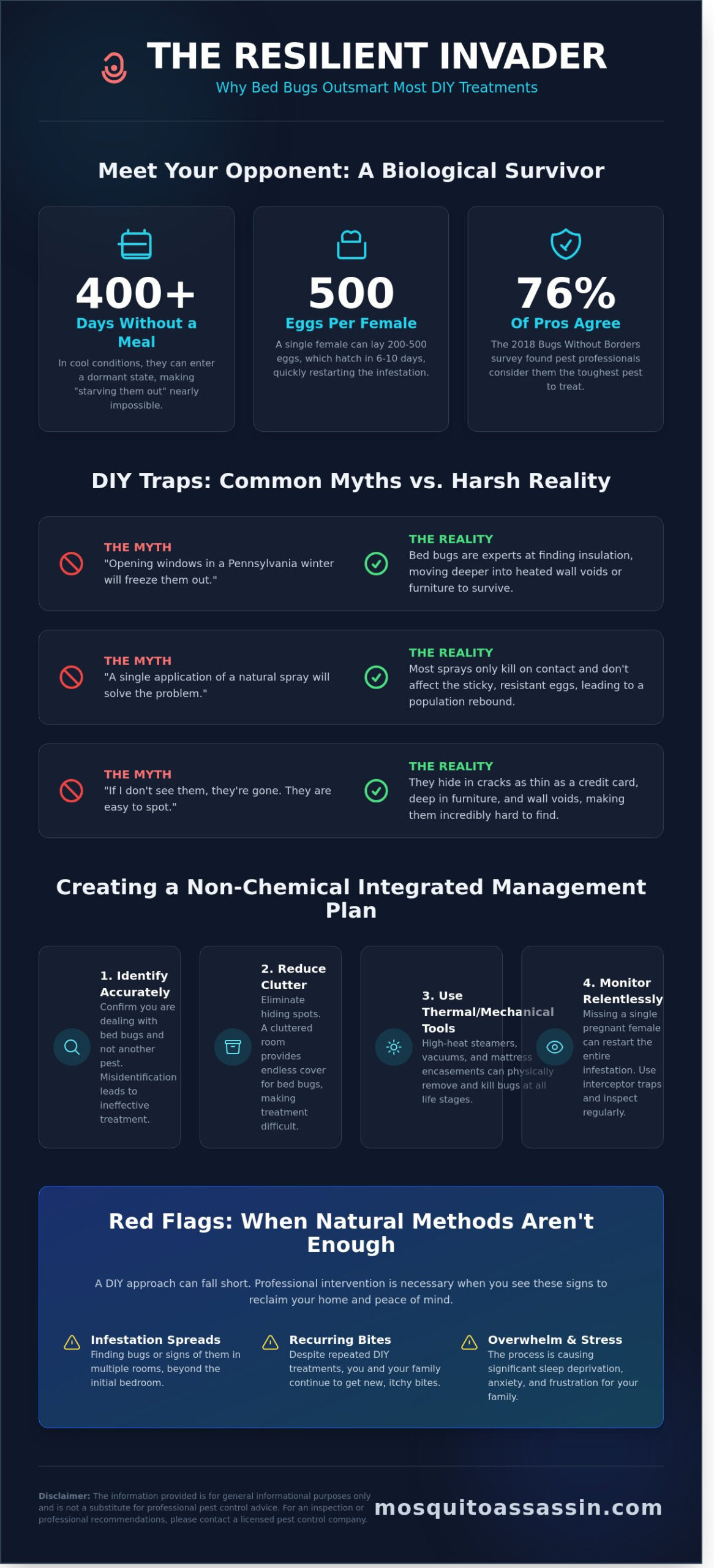
    While many believe starving bed bugs is a viable solution, research from the University of Kentucky indicates these pests can survive for up to 400 days without a blood meal. It’s completely understandable why families in Erie, Crawford, or Ashtabula counties search for a natural cure for bed bugs. The 2018 Bugs Without Borders survey reported that 76% of pest professionals consider these the toughest pests to treat; this leads to anxiety over chemical exposure and rising costs. You’ll discover the reality of natural bed bug treatments, including which home methods provide genuine relief and how to correctly use them to reduce pest populations.

    This article breaks down the effectiveness of heat, cold, and botanical oils so you can protect your home without unnecessary risks. Understanding these limitations is the first step toward reclaiming your bedroom and ending the frustration of itchy, recurring bites. Knowing when a DIY approach is sufficient and when professional intervention becomes necessary can save months of sleep deprivation and stress. Professional pest control may help reduce risk when these home methods fall short of total elimination.

    Disclaimer: The information provided on this blog is for general informational purposes only and is not intended as professional pest control advice. Conditions vary by property, environment, and location. Reading this content does not create a service agreement. For an inspection or professional recommendations, please contact Mosquito Assassin Pest Control LLC directly.

    Key Takeaways

    • Understand the biological factors that make bed bugs resilient and why many popular home remedies fail to address the root of the infestation.
    • Evaluate the effectiveness of physical desiccants and botanical sprays to determine which methods offer relief and which are limited to contact-only results.
    • Explore how thermal energy and mechanical extraction can be used as part of a strategy to target all life stages of the pest.
    • Learn the critical steps of an integrated management plan, including the importance of accurate identification and reducing clutter to eliminate hiding spots.
    • Identify the specific signs that indicate a natural cure for bed bugs is falling short and when professional intervention is necessary to safeguard the home.

    Understanding Bed Bug Biology and the Quest for a Natural Cure

    Bed bugs are among the most difficult household pests to manage. These nocturnal insects hide in gaps as thin as a credit card during the day, emerging at night to feed on human blood. For many homeowners in the tri-state area, the search for a natural cure for bed bugs stems from a desire to avoid harsh chemicals around children and pets. However, finding a single permanent solution is difficult because bed bugs are not just a nuisance; they are biological survivors designed to withstand environmental pressure.

    Understanding the fundamentals of Bed Bug Biology reveals why topical treatments often fail. Bed bug eggs are coated in a protective, sticky substance that resists many liquids. This means that even if a treatment kills the adults, a new generation can hatch within 6 to 10 days, restarting the infestation cycle. A successful strategy usually requires a multi-step management process rather than a one-time application.

    To better understand this concept, watch this helpful video:

    The Resilience of Bed Bugs: Why They Survive DIY Efforts

    Bed bugs have survived for thousands of years by adapting to their environment. Research indicates that certain populations have developed exoskeletons that are 15 percent thicker than they were in previous decades, providing a physical shield against contact-based remedies. They can also enter a state of dormancy, surviving without a blood meal for over 400 days in cool environments. Their behavior is equally defensive; they often hide deep within wall voids and furniture joints where domestic sprays cannot reach. Because a single female can lay between 200 and 500 eggs in her lifetime, missing just one or two insects can lead to a full rebound of the population within a month.

    Natural Solutions in Pennsylvania and Ohio Homes

    In regions like Erie, Pennsylvania, and Ashtabula, Ohio, the local environment plays a significant role in pest activity. Older housing stock, particularly homes built before 1950, features lath-and-plaster walls and original woodwork that provide endless hiding spots for parasites. The high humidity near Lake Erie can also influence how certain botanical powders or dusts perform, sometimes causing them to clump and lose effectiveness.

    A common regional misconception is that freezing temperatures in a Pennsylvania winter will provide a natural cure for bed bugs if a homeowner simply opens the windows. In reality, bed bugs are experts at finding insulation. They will move deeper into heated wall voids or floorboards until the danger passes. Residents in Erie and Crawford Counties should recognize that while natural repellents like essential oils may offer temporary relief, they rarely achieve total eradication in complex, older structures. Professional pest control may help reduce risk in these challenging environments.

    Disclaimer: The information provided on this blog is for general informational purposes only and is not intended as professional pest control advice. Conditions vary by property, environment, and location. Reading this content does not create a service agreement. For an inspection or professional recommendations, please contact Mosquito Assassin Pest Control LLC directly.

    Evaluating Common Natural Remedies and Home Treatments

    Many homeowners in Erie and Crawford Counties seek a natural cure for bed bugs to avoid using synthetic chemicals around their families. While the desire for an organic approach is understandable, it’s vital to distinguish between substances that kill a single bug on contact and those that can actually eliminate an entire population. Most DIY attempts fail because they lack a residual effect, meaning they stop working the moment they dry or the scent dissipates.

    Diatomaceous Earth: Benefits and Safety Limitations

    Diatomaceous earth (DE) is a popular physical desiccant made from the fossilized remains of tiny aquatic organisms called diatoms. This powder works by absorbing the waxy fats and lipids from the bed bug’s exoskeleton. Once this protective layer is compromised, the insect dehydrates and dies. For residents in Ashtabula County, using food-grade versions is a requirement for safety, as pool-grade DE contains crystalline silica that can cause permanent lung damage if inhaled.

    Effective application requires a light, almost invisible layer. If the powder is piled too high, bed bugs will simply walk around it. Even when applied correctly, DE is a slow-acting solution. It often takes 7 to 12 days of direct contact to kill a single insect. Because bed bugs can hide for weeks without feeding, relying solely on powder often allows the infestation to grow faster than the treatment can manage.

    Essential Oils and Botanical Sprays: Scent vs. Substance

    Botanical sprays featuring peppermint, tea tree, or neem oil are frequently marketed as a natural cure for bed bugs. Research from 2021 indicates that while high concentrations of certain essential oils can kill bed bugs on contact, they offer zero residual protection. Once the spray dries, it loses its efficacy.

    A significant risk with scent-based remedies is their repellent nature. Instead of eliminating the colony, these strong odors often “flush” the bugs out of their hiding spots. This can cause the insects to migrate through wall voids and electrical outlets into adjacent rooms, spreading the problem from a single mattress to the entire house. Following EPA bed bug control methods is a more reliable way to manage these pests without inadvertently making the infestation more difficult to treat.

    Common kitchen items like vinegar or baking soda are largely ineffective. Vinegar is acidic enough to kill a bug if you drench it directly, but it won’t affect eggs or bugs hidden inside furniture. Baking soda does not have the sharp edges or the absorptive capacity required to dehydrate an insect. When home remedies fail to produce results within 14 days, consulting with professional pest control may help reduce risk of a total home infestation.

    Disclaimer: The information provided on this blog is for general informational purposes only and is not intended as professional pest control advice. Conditions vary by property, environment, and location. Reading this content does not create a service agreement. For an inspection or professional recommendations, please contact Mosquito Assassin Pest Control LLC directly.

    Natural Cure for Bed Bugs: What Works and What Falls Short

    Mechanical and Physical Control Methods for Bed Bug Management

    Mechanical control methods represent the most reliable natural cure for bed bugs because they rely on physics rather than chemistry. These tactics target the biology of the pest directly by crushing, removing, or overheating the insects. Unlike some essential oils or home remedies that lack scientific backing, physical controls are proven to provide an immediate reduction in the population density of a home. They’re the most effective tools for homeowners who want to avoid synthetic chemicals while achieving measurable results.

    High-Heat Laundering and Steam Treatment

    Heat is a lethal tool in the fight against infestations. Bed bugs at all life stages, including the resilient eggs, die when exposed to sustained high temperatures. For a safe and effective kill, homeowners should set dryers to at least 120 degrees Fahrenheit. Running a high-heat cycle for a minimum of thirty minutes ensures the core of the fabric reaches the necessary lethal temperature. This is especially effective for bedding, clothing, and curtains that can withstand high-heat laundering.

    Steamers offer a different advantage by reaching bugs hidden deep in upholstery, box springs, and carpet seams. A commercial-grade steamer is required to produce “dry” steam, which minimizes moisture and prevents mold. When using a steamer, it’s vital to move the head at a rate of about one inch per second. This slow, deliberate movement ensures the heat transfers deeply into hiding spots. This approach is a core component of Integrated Pest Management (IPM) for bed bugs, focusing on non-chemical mortality through environmental manipulation.

    The Role of Vacuuming and Physical Removal

    Vacuuming is a front-line strategy for immediate relief. High-suction vacuums equipped with crevice tools can pull adults, nymphs, and some eggs from seams, tufts, and bed frames. It’s a manual extraction process that reduces the “pest load” in a room instantly. While it won’t eliminate every bug hidden behind a baseboard, it’s a critical step in a comprehensive plan. Regular maintenance through vacuuming also supports general pest control efforts by removing the dust and debris that can provide cover for various household pests.

    Specific disposal steps are required to ensure the vacuum doesn’t become a transport vehicle for the infestation. Users must seal vacuum bags in plastic and dispose of them in an outdoor bin immediately after use. For bagless models, the canister should be emptied into a sealed bag and the container washed with hot, soapy water to kill any remaining hitchhikers. Mattress encasements also play a vital role here. By sealing the mattress and box spring, you trap existing bugs inside and eventually starve them, while making it impossible for new bugs to find harborages in the bed’s complex structures.

    Disclaimer: The information provided on this blog is for general informational purposes only and is not intended as professional pest control advice. Conditions vary by property, environment, and location. Reading this content does not create a service agreement. For an inspection or professional recommendations, please contact Mosquito Assassin Pest Control LLC directly.

    Creating a Non-Chemical Integrated Pest Management Plan

    Finding a single natural cure for bed bugs is often the first instinct for homeowners, but these pests are resilient. A more effective approach involves a non-chemical Integrated Pest Management (IPM) plan. This method focuses on the biology and behavior of the insects to disrupt their life cycle. Success depends on a systematic five-step process that requires patience and consistency.

    Accurate identification is the first step. Bed bugs are frequently mistaken for carpet beetles or spider beetles, which leads to ineffective treatment choices. Homeowners should look for flat, oval, reddish-brown insects about the size of an apple seed. Confirming the species ensures the strategy actually targets the correct pest. Once identified, clutter reduction is essential. Bed bugs can hide in gaps as small as 1 millimeter. Removing excess paper, boxes, and fabric from the bedroom eliminates these harborages and increases the odds of success for any following steps.

    Laundering at high temperatures is a critical third step. To effectively kill all life stages, including eggs, items must be dried on high heat for at least 30 minutes. Research from the University of Kentucky indicates that the internal temperature of the fabric must reach 122 degrees Fahrenheit to ensure total mortality. This should be part of a weekly schedule for all bedding and clothing near the infested area.

    Utilizing physical barriers and monitors constitutes the fourth step. Mattress encasements trap existing bugs inside and prevent new ones from nesting in the seams. Finally, evaluating progress is necessary. If bite frequency doesn’t decrease within 14 days, the strategy needs adjustment. Professional pest control may help reduce risk, and residents can find assistance by scheduling an inspection through the online booking portal.

    Decluttering and Sealing Entry Points in Older Homes

    Historic properties in Erie and Meadville often feature intricate woodwork, such as thick baseboards and crown molding. These architectural details provide deep crevices where bed bugs hide during the day. Using high-quality caulk to seal these cracks prevents the insects from retreating into the wall voids. Organized, sealed spaces make any subsequent bed bug treatment significantly more effective because the pests have fewer places to escape.

    Monitoring Techniques to Track Infestation Progress

    Passive interceptor traps are vital tools for tracking a population. Placing these plastic dishes under bed legs catches bugs as they attempt to climb up to find a host. Checking these monitors weekly allows residents to gauge the size of the infestation. Using white bedding also helps, as it makes spotting dark fecal spots or crushed bugs much easier. If a natural cure for bed bugs is being tested, these monitors provide the data needed to see if it’s actually working.

    Disclaimer: The information provided on this blog is for general informational purposes only and is not intended as professional pest control advice. Conditions vary by property, environment, and location. Reading this content does not create a service agreement. For an inspection or professional recommendations, please contact Mosquito Assassin Pest Control LLC directly.

    When to Transition from Natural Methods to Professional Assistance

    Homeowners often start with a natural cure for bed bugs to avoid chemicals or save money. While these methods can manage small, isolated groups, they rarely eliminate a full scale infestation. Recognizing when the population is growing despite your efforts is critical. If you continue to find new bite marks, see live nymphs (young bugs), or notice blood spots on bedding after 14 days of consistent DIY treatment, the infestation has likely moved into areas that home remedies cannot reach.

    Prolonged infestations carry risks that go beyond physical discomfort. Chronic sleep deprivation is a common side effect, leading to decreased cognitive function and increased stress. Additionally, excessive scratching of bites can lead to secondary skin infections such as impetigo or cellulitis. In multi-family housing, a slow response time allows the bugs to travel through wall voids and electrical outlets, potentially infesting neighboring units and creating a much larger legal and financial liability.

    Identifying the Limits of Home-Based Remedies

    Natural methods typically rely on direct contact. This is a major limitation because bed bugs are experts at hiding in spots that essential oils or vacuums cannot penetrate. They often retreat deep into wall voids, behind baseboards, or inside sensitive electronics like laptops and televisions. At this stage, the “natural cure for bed bugs” approach often fails because it cannot reach the core of the colony.

    The cost of DIY efforts also adds up quickly. Between the price of high quality steamers, specialized laundry additives, and the dozens of hours spent cleaning, many families find that the financial and time investment exceeds the value of a professional intervention. The psychological toll is equally significant. Managing a persistent infestation without expert help can lead to social isolation and long term anxiety within the home environment.

    Professional Risk Reduction and Long-Term Prevention

    Licensed expertise is essential for complex layouts or multi-family buildings where pests move freely between walls. Engaging professional pest control may help reduce risk for families in Erie and Crawford Counties in Pennsylvania, as well as Ashtabula County in Ohio. Professionals use integrated strategies that combine sanitation with specialized equipment to target bugs in their most hidden refuges.

    A customized treatment plan accounts for the specific architecture of a property, ensuring no hiding spot is overlooked. For those managing businesses or rental properties, maintaining a pest-free environment often requires year-round commercial pest control services. This proactive approach helps protect reputations and ensures that small introductions don’t turn into uncontrollable outbreaks. Transitioning to professional care provides a methodical path back to a normal, bite-free life.

    Disclaimer: The information provided on this blog is for general informational purposes only and is not intended as professional pest control advice. Conditions vary by property, environment, and location. Reading this content does not create a service agreement. For an inspection or professional recommendations, please contact Mosquito Assassin Pest Control LLC directly.

    Moving Toward a Pest-Free Environment

    Managing an infestation requires a balance of persistence and science. Many homeowners discover that a natural cure for bed bugs often lacks the residual power needed to eliminate a colony. While mechanical methods like vacuuming and high-heat laundering (reaching temperatures over 120 degrees Fahrenheit) provide relief, they don’t always reach the deep crevices where insects hide. Research from the University of Kentucky indicates that bed bugs can survive for months without a blood meal, so simple isolation isn’t enough to solve the problem.

    Effective management involves monitoring and consistent intervention. For residents in the Erie, Crawford, and Ashtabula communities, working with a locally owned team ensures that treatments are tailored to the local environment. Choosing a licensed and insured professional in Pennsylvania or Ohio provides peace of mind through family-safe treatment approaches. Professional pest control may help reduce risk and restore comfort to the home. For a professional inspection or recommendations, contact Mosquito Assassin Pest Control LLC directly. It’s possible to regain control of your space and sleep soundly again.

    Disclaimer: The information provided on this blog is for general informational purposes only and is not intended as professional pest control advice. Conditions vary by property, environment, and location. Reading this content does not create a service agreement. For an inspection or professional recommendations, please contact Mosquito Assassin Pest Control LLC directly.

    Frequently Asked Questions

    Can essential oils really kill bed bugs on contact?

    Directly spraying certain essential oils can kill bed bugs, but they aren’t a reliable natural cure for bed bugs on their own. A 2014 study from Rutgers University showed that while some plant based sprays killed 90 percent of bed bugs in a laboratory setting, they failed to eliminate infestations in real homes. These oils lack the residual power needed to kill bugs that are hiding deep inside furniture or behind baseboards.

    Is diatomaceous earth safe to use around my pets and children?

    Food grade diatomaceous earth is generally safe, but it’s still a fine powder that can irritate lungs and eyes. The Occupational Safety and Health Administration (OSHA) notes that inhaling crystalline silica can cause respiratory issues over time. You should only apply it in thin layers within cracks and crevices where children and pets won’t kick it up into the air or touch it directly.

    How long does it take for heat to kill bed bugs in a dryer?

    Bed bugs at all life stages die when they’re exposed to temperatures of 118 degrees Fahrenheit for 90 minutes. To ensure the heat reaches the center of the load, you should run your dryer on the highest setting for at least 30 minutes. This method is one of the most effective ways to treat clothing, bedding, and plush toys without using any chemicals.

    Will a steamer from a local hardware store work for bed bug treatment?

    A consumer grade steamer can work if it produces steam at a temperature of at least 160 degrees Fahrenheit. However, many small units don’t have the pressure to push heat more than 0.75 inches into a mattress or upholstered chair. Professional equipment usually offers better temperature control and specialized nozzles that ensure the heat penetrates deep enough to reach hidden eggs.

    Can I get rid of bed bugs naturally if I live in an apartment?

    Eliminating an infestation naturally is much harder in an apartment because bed bugs move through shared walls and plumbing. Data from the National Pest Management Association suggests that 89 percent of professionals find bed bugs in multi family housing more challenging than in single family homes. If you don’t treat the entire structure, the bugs will often just move to a neighbor’s unit and return later.

    What is the most effective natural powder for bed bug control?

    Food grade diatomaceous earth is the most frequently recommended natural powder because it physically dehydrates the insect’s outer shell. It doesn’t work instantly; it can take 10 to 14 days for a bed bug to die after it walks through the dust. It’s best used as a long term barrier in dry areas where the powder won’t get clumpy or wet.

    How do I know if my natural bed bug treatment is actually working?

    You’ll know your efforts are succeeding if you see a steady decline in the number of live bugs caught in interceptor traps over a 21 day period. If you continue to find fresh fecal spots or new bites after three weeks, the natural cure for bed bugs you’re using isn’t reaching the entire population. Consistent monitoring is the only way to confirm the insects are truly gone.

    Is it possible to starve bed bugs by leaving the house for a few weeks?

    You can’t starve these pests by leaving for a short vacation because adult bed bugs can live for 400 days without feeding in cool conditions. If you leave your home empty, the bugs may enter a dormant state or migrate to neighboring properties in search of a host. Staying in your bedroom and using protective covers is actually better for keeping the infestation contained to one area.

    Professional pest control may help reduce risk for residents in Erie County, Crawford County, and Ashtabula County. For more information, you can visit https://portal.gorilladesk.com/mosquitoassassin.

    Disclaimer: The information provided on this blog is for general informational purposes only and is not intended as professional pest control advice. Conditions vary by property, environment, and location. Reading this content does not create a service agreement. For an inspection or professional recommendations, please contact Mosquito Assassin Pest Control LLC directly.

  • Natural Mosquito Repellents: What Really Works (And What Doesn’t)

    Natural Mosquito Repellents: What Really Works (And What Doesn’t)

    The citronella candles are lit, the tiki torches are smoking, and yet… you’re still the main course at a mosquito buffet. It’s a frustrating scene for any homeowner who wants to protect their family without resorting to harsh chemical sprays. This endless battle sends many searching for effective natural mosquito repellents, but the internet is a minefield of DIY myths and products that simply waste your time and money, leaving you with nothing but itchy bites.

    We’re here to cut through the noise. This guide separates scientific fact from fiction, giving you a clear, honest look at the plant-based repellents that are proven to work. We’ll explore which solutions offer real protection and which ones fall short. More importantly, we’ll explain why even the best of these natural options have their limits, and how a professional, family-safe treatment plan is the only guaranteed way to eliminate these pests and truly reclaim your yard for good. It’s time to stop swatting and start enjoying your summer.

    Understanding Natural Mosquito Repellents vs. Chemical Options

    When safeguarding your family from mosquito bites, the first choice you face is between natural and chemical repellents. The distinction is straightforward: natural mosquito repellents are derived from plant-based sources like essential oils, whereas chemical options are synthesized in a laboratory. The long-standing benchmark for chemical repellents is DEET, a highly effective compound trusted for decades. However, growing concerns about synthetic chemicals on the skin have led many people to seek out plant-derived alternatives for their peace of mind.

    To see which products to avoid, this report offers a helpful breakdown:

    It’s crucial to understand that while natural options can be effective, they often have a shorter protection window and require more frequent reapplication than their chemical counterparts. Setting realistic expectations is key to using them successfully for dependable protection.

    How Repellents Actually Work

    Contrary to popular belief, repellents don’t kill mosquitoes. Instead, they work by interfering with a mosquito’s ability to smell you. These pests are highly attracted to the signals our bodies emit, including:

    • Carbon dioxide (CO2) from our breath

    • Lactic acid and other compounds in our sweat

    • Body heat

    An effective repellent creates an invisible barrier of scent on your skin that blocks the mosquito’s receptors, essentially making you "invisible" to them. They can’t find their target, so they move on.

    The EPA’s Role in Repellent Regulation

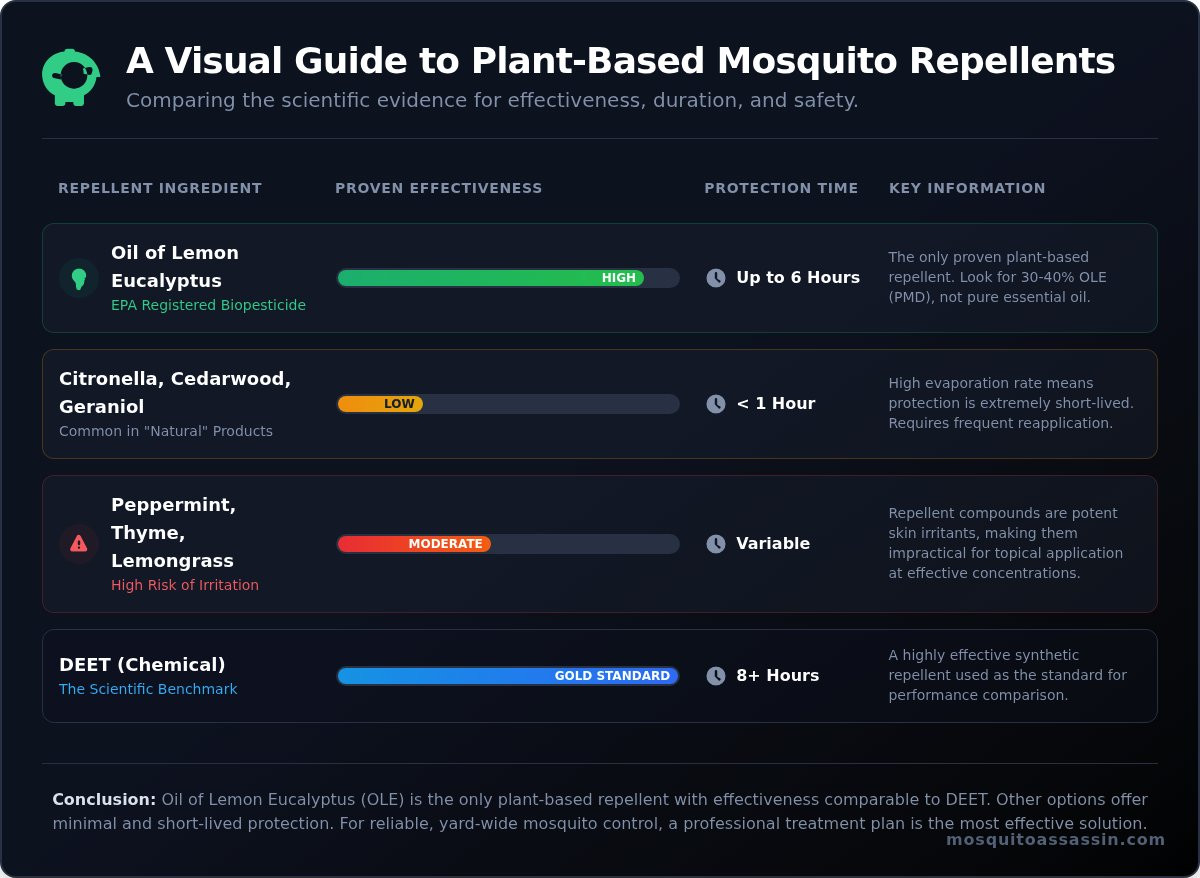
    The Environmental Protection Agency (EPA) plays a vital role in ensuring repellents are both safe and effective. Products containing ingredients like DEET or Picaridin are considered "registered repellents." This means they have undergone rigorous scientific testing to prove their claims. In contrast, many ingredients in natural mosquito repellents, such as citronella, lemongrass, or peppermint oil, fall under a category called "minimum risk pesticides." For a complete Insect Repellent Overview, you can find more details on both types. These minimum-risk products are exempt from EPA registration, meaning their effectiveness has not been officially verified by the agency. This doesn’t mean they don’t work, but it places the burden of proof on the consumer to find a reliable product.

    Top Plant-Based Repellents: The Scientific Evidence

    When you’re looking for effective protection, it’s crucial to separate marketing hype from scientific proof. Many plant-derived oils show repellent properties, but their effectiveness and duration vary dramatically. While some natural mosquito repellents offer a viable alternative to synthetic options, they are not all created equal. A critical factor to remember is that essential oils are highly concentrated and can cause skin irritation, so they should always be properly diluted in a carrier oil before application.

    Oil of Lemon Eucalyptus (OLE): The Natural Heavyweight

    This is the undisputed champion in the plant-based category. Derived from the leaves of the Corymbia citriodora tree, its active ingredient is p-menthane-3,8-diol (PMD). OLE is the only plant-based active ingredient registered by the U.S. Environmental Protection Agency as a biopesticide repellent. You can find detailed information on registered products in the official EPA Guide to Insect Repellents. Multiple studies have shown that products with 30-40% OLE can provide protection comparable to low concentrations of DEET, often lasting up to six hours. It’s vital not to confuse OLE with pure lemon eucalyptus essential oil, which has not undergone the same efficacy testing and is not registered as a repellent.

    Citronella, Cedarwood, and Geraniol Oils

    These oils are commonly found in commercial natural repellents, but their performance is often short-lived. Their rapid evaporation rate is their biggest weakness, demanding frequent reapplication to maintain any level of protection against determined mosquitoes.

    • Citronella Oil: Perhaps the most famous natural repellent, but its reputation outweighs its performance. Studies consistently show citronella-based products provide very short-term protection, often lasting less than one hour.

    • Cedarwood Oil: While it demonstrates repellent properties against various insects, its efficacy against mosquitoes is inconsistent across studies and depends heavily on the specific species of cedar and mosquito.

    • Geraniol: An alcohol derived from plants like geraniums, geraniol can be an effective repellent. However, like citronella, it evaporates quickly, and its protection time is limited.

    Peppermint, Lemongrass, and Thyme Oils

    This group contains potent compounds, but they come with significant caveats, including the need for high concentrations and a higher risk of skin irritation. These are powerful oils that must be used with extreme caution.

    • Peppermint Oil: The strong scent of menthol in peppermint can repel mosquitoes, but only at very high, often irritating, concentrations.

    • Lemongrass Oil: A close botanical relative of citronella, it contains citral and geraniol. Its repellent action is similar to citronella-initially effective but very brief.

    • Thyme Oil: Studies have identified its active compounds, carvacrol and alpha-terpinene, as highly effective repellents. Unfortunately, these same compounds are also potent skin irritants, making thyme oil impractical for widespread topical use.

    Mosquito Repellent Plants: A Garden Myth Debunked

    Many homeowners hope to create a mosquito-free backyard by strategically planting certain flowers and herbs. The idea of using plants as living, breathing natural mosquito repellents is appealing, but it’s a common misconception that often leads to disappointing results. The truth is, the plants themselves do not emit a protective, pest-free barrier around your property.

    The repellent properties come from the essential oils locked inside the plants’ leaves. To get any real benefit, you must crush the leaves and rub the oils directly onto your skin. Simply having a few of these plants in your garden will not stop mosquitoes from finding and biting you.

    Popular ‘Repellent’ Plants and The Reality

    While these plants contain repellent compounds, their ambient effect is virtually zero. Here’s a professional look at the most common examples:

    • Citronella Grass: This is the source of commercial citronella oil, but the living plant releases only minuscule amounts of this oil into the air. It offers no significant protection for your patio or yard.

    • Marigolds: They contain pyrethrin, a compound used in some insecticides. However, the concentration in a living marigold is far too low to act as an effective area repellent.

    • Lavender & Basil: While their strong scents are pleasant to us, they only deter mosquitoes at extremely close range. A mosquito would practically have to land on the plant to be affected.

    The Real Landscaping Solution: Eliminating Breeding Grounds

    The most powerful and effective natural mosquito control has nothing to do with planting and everything to do with eliminating water. Mosquitoes require standing water to reproduce, and removing their breeding grounds is the single most important step you can take. This is a cornerstone of any professional pest management plan.

    Conduct a thorough inspection of your property and eliminate all sources of stagnant water, paying close attention to:

    • Clogged gutters and downspouts

    • Birdbaths (change water every 2-3 days)

    • Flowerpot saucers and empty planters

    • Children’s toys, buckets, and wheelbarrows

    • Tarps or pool covers that collect rainwater

    Remember, it takes very little water for a major problem to develop. A female mosquito can lay hundreds of eggs in a space as small as a bottle cap.

    The Limitations: When Natural Repellents Aren’t Enough

    While DIY and store-bought natural repellents can offer a degree of personal protection, it’s crucial to understand their boundaries. Think of them as a personal shield, not a solution for your entire property. They work by making you less attractive to mosquitoes that are already present, but they do absolutely nothing to reduce the number of pests in your yard.

    This approach is simply not enough when you’re facing a significant mosquito problem. The effectiveness of even the best natural mosquito repellents plummets in areas with heavy infestations, and their defensive power is temporary at best. Constant reapplication is required, especially if you’re sweating, swimming, or spending more than an hour or two outside.

    Personal Protection vs. Area Control

    Topical repellents are designed for specific situations, like a hike in the woods or a fishing trip. They protect one person for a short time. Area control, on the other hand, is about reclaiming your entire property for everyone to enjoy safely. You can’t host a backyard barbecue and expect every guest to be diligent about applying and reapplying a personal spray. True comfort and safety require eliminating the threat at its source.

    Ready to move from a personal shield to comprehensive property protection? Contact Mosquito Assassin for a free quote.

    The Problem of a Thriving Mosquito Population

    If your yard provides an ideal habitat for mosquitoes, topical repellents are a losing battle. A single female mosquito can lay hundreds of eggs in a space as small as a bottle cap filled with water. When your property, or a neighbor’s has breeding grounds, you will be constantly swarmed. A thriving population means:

    • Your repellent will be quickly overwhelmed.

    • You’re fighting a constant, regenerating swarm.

    • The risk of mosquito-borne diseases like West Nile virus increases significantly.

    Safeguarding your family requires more than just a temporary fix; it demands a professional strategy to disrupt the mosquito life cycle and eliminate them from your property for good.

    The Professional Solution: Integrated Mosquito Management for Your Yard

    While citronella candles and various natural mosquito repellents can offer temporary relief for a small area, they don’t address the root of the problem. To truly reclaim your outdoor space and ensure your family’s comfort and safety, a professional, multi-faceted approach is the only definitive solution. At Mosquito Assassin, we deliver a comprehensive strategy designed to eliminate pests at their source and create a lasting barrier of protection around your home.

    Our proven process is built on expertise and a commitment to safety, using treatments that are effective against pests but safe for your children and pets.

    Step 1: Professional Inspection and Source Reduction

    Our licensed technicians begin with a meticulous inspection of your property to identify all potential mosquito breeding grounds. We look beyond the obvious birdbaths and find hidden water sources you might have missed like clogged gutters, water trapped in tarps, or drainage issues. By eliminating these sources, we immediately disrupt the mosquito life cycle and drastically reduce the potential for new populations to emerge.

    Step 2: Targeted Barrier Treatments

    Once we’ve addressed the breeding grounds, we apply a targeted barrier treatment. This isn’t a generic fog that quickly dissipates. Our technicians apply a family-safe solution to the foliage, shrubs, and other areas where adult mosquitoes rest during the day. This creates a protective shield around your yard that is designed to be long-lasting, providing reliable protection that DIY sprays simply cannot match.

    Step 3: Ongoing Protection and Guarantee

    Mosquitoes are persistent, which is why a one-time treatment isn’t enough. We provide consistent service throughout the mosquito season to maintain the protective barrier and prevent pest populations from rebounding. We stand by our work with a simple promise: if the pests return, so do we. Enjoy the peace of mind that comes with a yard you and your family can actually use, all summer long.

    Stop the frustrating cycle of testing ineffective natural mosquito repellents. It’s time to take back your yard for good. Contact Mosquito Assassin today to schedule your professional assessment and learn more about our guaranteed service.

    Protect Your Family When Nature Isn’t Enough

    While certain plant-based oils can provide short-term personal protection, the truth is that most DIY strategies and garden plants simply don’t have the power to protect your entire yard. When it comes to safeguarding your family from relentless mosquito populations, relying solely on natural mosquito repellents can be a frustrating and often ineffective battle.

    You deserve to enjoy your outdoor space without worry. At Mosquito Assassin, we provide proven, family-safe treatments to eliminate mosquitoes at their source. As a locally owned and operated team serving our neighbors in PA & OH, we stand by our work with our Pest-Free Guarantee: If pests return, so do we. Stop letting mosquitoes dictate your outdoor plans and take the definitive step towards a peaceful, bite-free summer.

    ******Reclaim Your Yard. Get Your Free Mosquito Control Quote Today! **

    Frequently Asked Questions About Natural Mosquito Control

    Is oil of lemon eucalyptus as effective as DEET?

    Yes, products containing oil of lemon eucalyptus (OLE) or its active ingredient, PMD, are highly effective and recommended by the CDC as an alternative to DEET. Studies show it can provide protection comparable to lower concentrations of DEET, often lasting for several hours. It is one of the most powerful plant-based repellents available, offering proven protection against mosquito bites when used as directed. Always look for EPA-registered products to ensure efficacy and safety.

    Do mosquito repellent plants like citronella and marigolds actually work in a garden?

    While these plants contain oils that repel mosquitoes, their effectiveness in a garden setting is minimal. The plants themselves do not create a protective barrier. To release their repellent properties, the leaves must be crushed and the oils applied to the skin. Simply planting them around your patio or deck will not be enough to deter mosquitoes from invading your space. True protection requires a more direct and comprehensive approach to yard treatment.

    How often do I need to reapply natural mosquito repellents?

    You must reapply natural mosquito repellents more frequently than their synthetic counterparts. A good rule of thumb is to reapply every 1 to 3 hours, but always follow the specific instructions on the product label. Factors like swimming, sweating, and high humidity can break down the repellent faster, requiring more frequent application. Consistent reapplication is the key to ensuring these products provide continuous protection while you are outdoors and exposed.

    What is the most effective natural way to get rid of mosquitoes in my yard?

    The single most effective natural strategy is eliminating their breeding grounds. This means diligently removing all sources of standing water. Tip over buckets, empty birdbaths weekly, clean clogged gutters, and check for water collecting in tarps or old tires. A mosquito can lay hundreds of eggs in a bottle cap of water, so being thorough is critical. This approach disrupts their life cycle and is the foundation of any successful mosquito control plan.

    Are professional mosquito yard treatments safe for my children and pets?

    Absolutely. At Mosquito Assassin, we prioritize the well-being of your family. Our professional treatments are designed to be family-safe. We use proven, EPA-approved products applied by licensed technicians who target mosquito resting and breeding areas precisely. Once the treatment has dried, typically within 30-60 minutes, it is safe for children and pets to return to the yard and enjoy their pest-free space with complete peace of mind.

    Can I get rid of a serious mosquito problem on my own?

    For minor issues, DIY methods like eliminating standing water can help. However, tackling a serious or persistent mosquito infestation on your own is extremely difficult. Professionals have the expertise to identify all potential breeding sites not just the obvious ones, and use specialized equipment for comprehensive treatment. While some store-bought solutions offer temporary relief, a customized professional plan is necessary for effective, long-term eradication and safeguarding your yard.