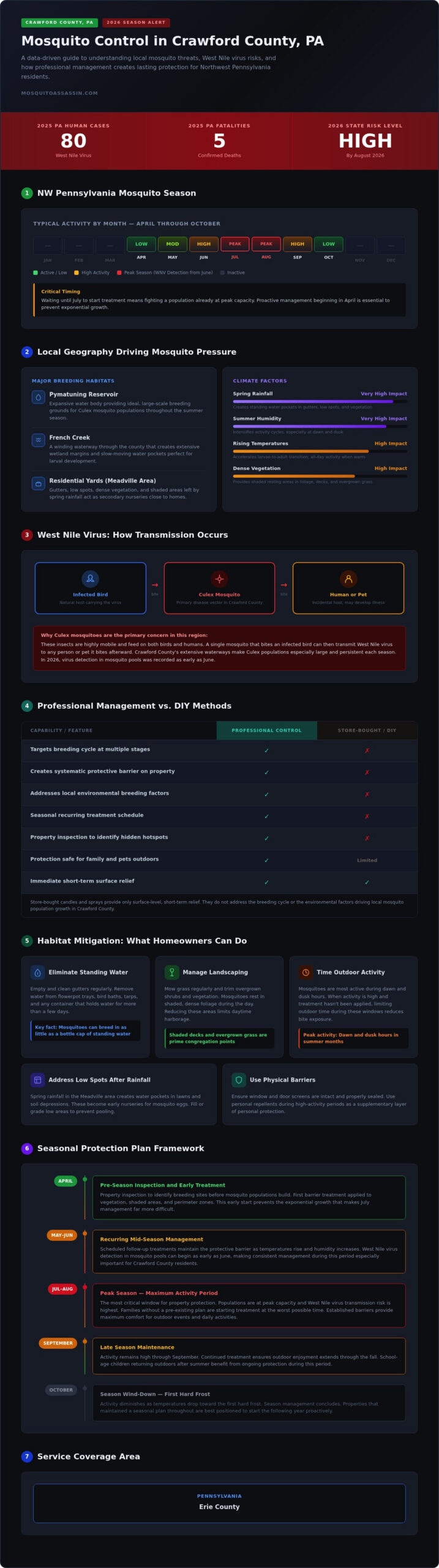
Did you know that Pennsylvania recorded 80 human cases of West Nile virus in 2025? For residents living near French Creek or the Pymatuning Reservoir, this statistic isn’t just a number; it’s a reminder of the persistent health risks that come with every summer season. Effective mosquito control Crawford County PA is often a losing battle when relying on store-bought candles or sprays that barely scratch the surface of a local infestation. These temporary fixes fail to address the underlying environmental factors that allow mosquito populations to thrive in Northwest Pennsylvania’s unique landscape.
It’s frustrating to watch a planned backyard barbecue get cut short because of aggressive swarms, and the anxiety over insect-borne illnesses can make any outdoor activity feel like a gamble. This guide provides a clear path to reclaiming your property by explaining the specific local factors that drive mosquito activity. You’ll learn how professional management strategies target breeding sites and create a protective barrier, ensuring your yard remains a safe, comfortable space for family and pets throughout the 2026 season. Understanding these professional methods helps property owners move from temporary relief to long-term protection.
Disclaimer: The information provided on this blog is for general informational purposes only and is not intended as professional pest control advice. Conditions vary by property, environment, and location. Reading this content does not create a service agreement. For an inspection or professional recommendations, please contact Mosquito Assassin Pest Control LLC directly.
Key Takeaways
- Learn why the local mosquito season in Northwest Pennsylvania typically spans from April through October and how environmental factors impact population growth.
- Discover how professional mosquito control Crawford County PA creates a systematic barrier that outperforms short-term consumer sprays or candles.
- Understand the importance of West Nile virus monitoring and how identifying specific local species helps in developing effective management strategies.
- Identify practical habitat mitigation steps, such as eliminating standing water and managing landscaping, to reduce mosquito resting areas.
- Explore the benefits of seasonal protection plans that offer recurring management to keep outdoor spaces comfortable for families and pets.
Understanding Mosquito Challenges in Crawford County, PA
Professional mosquito control Crawford County PA involves a systematic approach to reducing local insect populations rather than just providing a temporary fix. It focuses on disrupting the life cycle of the pest at various stages to ensure long-term relief. By implementing Mosquito control strategies early in the year, property owners can prevent the exponential growth that occurs during the humid summer months. This isn’t just about comfort; it’s about creating a managed environment where pests can’t easily reproduce and thrive.
Crawford County geography is defined by its abundant water resources. From the expansive Pymatuning Reservoir to the winding French Creek, these wetlands provide ideal breeding grounds that can produce massive numbers of insects in a single cycle. The official mosquito season in Northwest Pennsylvania typically begins in April and persists until the first hard frost in October. Proactive management is essential before peak temperatures arrive, as heat accelerates the transition from larvae to biting adults. Waiting until July to address the problem often means battling a population that’s already reached its peak capacity.
Local news reports often highlight the scale of these efforts in our region:
The Impact of NW Pennsylvania Climate
Spring rainfall in the Meadville area often leaves behind pockets of standing water in gutters, low spots, and dense vegetation. These areas serve as early nurseries for mosquito eggs. As humidity levels rise in the summer, mosquito activity cycles become more intense, especially during the dawn and dusk hours. These insects generally emerge when consistent temperatures rise, allowing them to remain active throughout the day. Understanding these local climate patterns is vital for effective timing of property inspections and treatments.
Reclaiming Your Outdoor Living Space
Residential yards often contain hidden congregation points such as dense foliage, shaded decks, or overgrown grass. When these areas are unmanaged, families often find themselves trapped indoors or heavily reliant on sticky personal repellents that offer limited protection. Effective mosquito control service plans help restore the social and recreational value of backyards. Instead of worrying about swarms during a graduation party or a quiet evening on the porch, residents can enjoy their outdoor environment with significantly less annoyance. Reclaiming this space means kids can play in the grass and pets can roam without the constant threat of bites.
Regional Health Risks and Local Mosquito Species
Crawford County’s extensive waterways do more than just provide scenery; they serve as the primary habitat for species that carry significant health risks. Understanding the biology of these pests is the first step in effective management. The Culex genus of mosquitoes is the primary vector responsible for spreading pathogens between birds, which are the natural hosts, and humans. This transmission occurs when a mosquito bites an infected bird and later bites a person or a pet. Because these insects are highly mobile, local health departments prioritize population control to minimize the chances of a widespread outbreak.
West Nile Virus in Crawford County
Historically, West Nile virus is the most significant and commonly reported mosquito-borne disease in the region. In 2025, Pennsylvania reported 80 human cases and five fatalities, highlighting the serious nature of this seasonal concern. By August 2026, the state risk level was set to high, with virus detection in mosquito pools occurring as early as June. Data from Pennsylvania’s mosquito control program indicates that surveillance is a coordinated effort. In Crawford County, the Mercer County Vector Management Coalition handles the trapping and testing necessary to monitor these risks. Professional management aligns with these community health goals by suppressing populations in residential areas before they reach dangerous thresholds.
Protecting Vulnerable Family Members and Pets
While many healthy adults may experience mild symptoms from a bite, children and the elderly are at a higher risk for developing severe neurological illnesses. Protection isn’t just for the people in the house; pets are also vulnerable to mosquito-borne threats. Mosquitoes are the sole vector for heartworm in dogs, a potentially fatal condition that is far easier to prevent than to treat. Consistent mosquito control Crawford County PA helps create a safer perimeter around the home, reducing the likelihood of encounters during peak activity hours.
Common risks associated with high mosquito activity include:
- Transmission of West Nile virus to humans through infected bites.
- Potential for heartworm in domestic dogs and other pets.
- Increased risk of secondary infections from scratching bites.
- Significant disruption of outdoor exercise and social gatherings.
Property owners should consider that while store-bought repellents provide individual protection, they don’t address the volume of insects residing on the land. A more comprehensive approach using professional pest control may help reduce risk by managing the environment where these pests live and breed. For those interested in securing their property, professional pest control may help reduce risk by providing targeted, seasonal management.
Disclaimer: The information provided on this blog is for general informational purposes only and is not intended as professional pest control advice. Conditions vary by property, environment, and location. Reading this content does not create a service agreement. For an inspection or professional recommendations, please contact Mosquito Assassin Pest Control LLC directly.
Evaluating Professional Yard Treatments vs. DIY Methods
Many Crawford County residents start the summer season with store-bought foggers, citronella candles, or localized repellent sprays. These products often provide a brief window of relief but fail to impact the overall population residing on the property. The primary limitation is the lack of residual efficacy; once the mist dissipates or the candle is extinguished, the protection vanishes. Consistent mosquito control Crawford County PA requires a more methodical approach that targets the biological habits of the insect. Professional treatments utilize high-powered equipment to ensure the product reaches the deep interior of dense foliage, which is where the majority of mosquitoes hide during the heat of the day.
The Science of Barrier Protection
Professional barrier treatments differ from standard consumer products primarily in their application technique and formulation. Technicians focus on the underside of foliage and shaded areas, creating a perimeter that mosquitoes must encounter when they move. While following EPA tips to prevent mosquito bites is a great first step for personal safety, professional solutions are engineered to remain effective through weather changes. These solutions contain specialized surfactants that help the product bond to leaves, resisting wash-off from the frequent summer thunderstorms common in Northwest Pennsylvania. This residual property ensures that the treatment continues to work for weeks, providing a reliable shield for the property.
Long-Term Cost and Efficacy Considerations
A common mistake is viewing DIY methods as a cost-saving measure. However, the cumulative cost of repeated purchases of ineffective sprays, fuel for foggers, and the time spent applying them often rivals the investment in a professional plan. Comprehensive mosquito control programs offer a higher value by combining expert inspections with high-grade products. Professionals are trained to identify hidden breeding grounds that are easily missed by an untrained eye, such as water-retaining debris or specific types of ornamental plants. By choosing a structured Mosquito Control Service, property owners benefit from a disciplined schedule that prevents population spikes before they occur, rather than reacting to swarms after they’ve already become a nuisance.
Disclaimer: The information provided on this blog is for general informational purposes only and is not intended as professional pest control advice. Conditions vary by property, environment, and location. Reading this content does not create a service agreement. For an inspection or professional recommendations, please contact Mosquito Assassin Pest Control LLC directly.
Habitat Mitigation Strategies for Homeowners
While professional treatments provide a robust barrier, individual property maintenance is a critical component of long-term success. Effective mosquito control Crawford County PA is a collaborative effort between professional management and homeowner diligence. By modifying the environment to be less hospitable, you reduce the overall pressure on the treatment barrier. These proactive steps are particularly important in Northwest Pennsylvania, where frequent spring rains and high summer humidity create a constant cycle of potential breeding sites. Integrating these habits with a broader plan for general pest control ensures a more comprehensive shield against various seasonal invaders.
Managing Water Retention Areas
Mosquitoes require very little water to lay their eggs; even a bottle cap filled with rainwater can support dozens of larvae. Common culprits on local properties include birdbaths, clogged gutters, and flower pots. It’s essential to empty or scrub these containers at least once a week to disrupt the life cycle. Clogged gutters are especially problematic because they provide a high-altitude breeding ground that is often overlooked. Additionally, addressing low spots in the lawn that hold water after a typical Meadville thunderstorm can significantly decrease the number of emerging adults near your home. Don’t forget to regularly change the water in pet bowls and other outdoor containers to keep them from becoming nurseries.
Landscape and Yard Maintenance
Adult mosquitoes spend most of their day resting in cool, damp, shaded areas to avoid the drying effects of the sun. Keeping grass trimmed and edges neatly maintained reduces the height of these hiding spots. Thinning out dense vegetation or overgrown shrubbery improves airflow and allows sunlight to reach the soil, which helps moisture evaporate more quickly. While no plant is a complete solution, selecting varieties that don’t trap water or create excessive shade can help. These simple landscaping adjustments make professional applications more effective by reducing the number of resting sites available. For a property evaluation or to start a protection plan, visiting professional pest control may help reduce risk by providing a targeted assessment of your yard.
Disclaimer: The information provided on this blog is for general informational purposes only and is not intended as professional pest control advice. Conditions vary by property, environment, and location. Reading this content does not create a service agreement. For an inspection or professional recommendations, please contact Mosquito Assassin Pest Control LLC directly.
Professional Management and Seasonal Protection Plans
Professional management offers a consistent layer of protection that bridges the gap between homeowner maintenance and total yard reclamation. While cleaning gutters and emptying birdbaths helps, a structured approach to mosquito control Crawford County PA ensures that the property remains a sanctuary throughout the humid summer months. Recurring professional pest control services are designed to refresh the barrier treatment on a specific schedule, disrupting the life cycle of the insect before new generations can emerge. This proactive cycle is more effective than reacting to an established infestation after it has already become a nuisance.
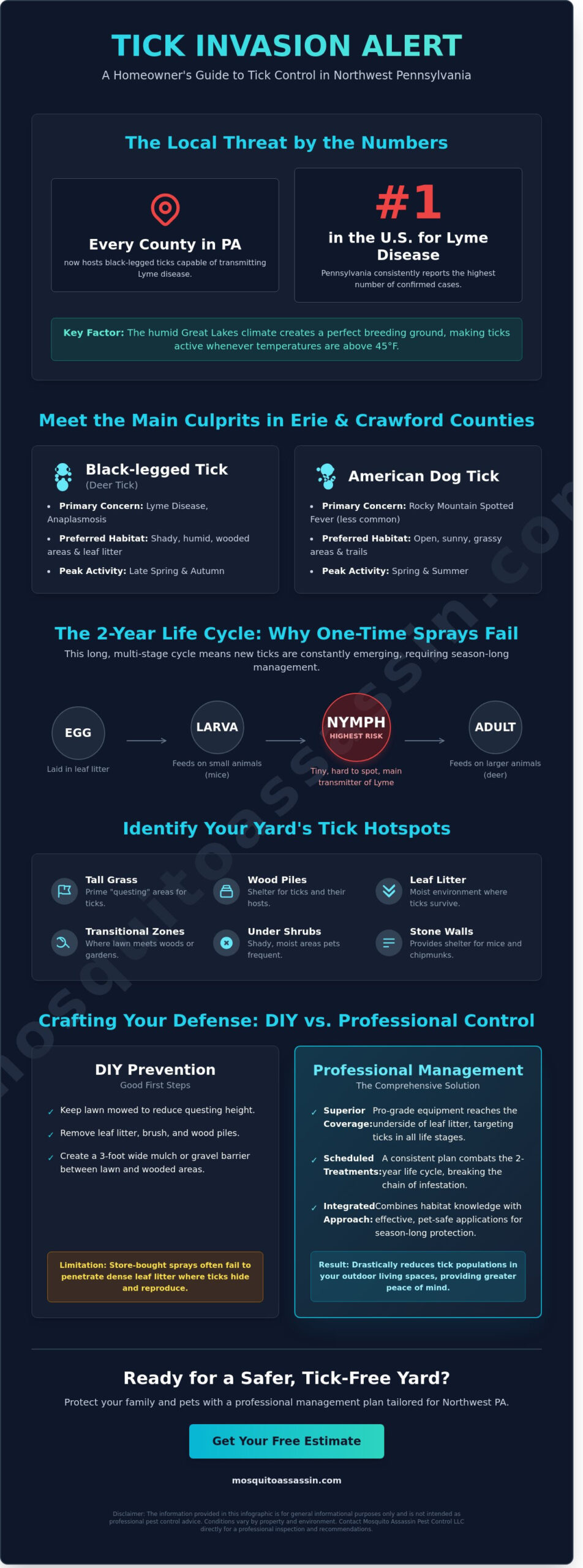
Integrated plans often provide the most value for residents in Northwest Pennsylvania. Mosquito management is frequently combined with tick and general pest services, creating a comprehensive shield for the property. Because ticks thrive in the same shaded, damp environments as mosquitoes, a professional approach can address both threats simultaneously. This efficiency ensures that families and pets are protected from a wider range of seasonal pests with a single, coordinated strategy.
Customized Treatment Schedules
Every property in Crawford County has unique requirements based on its specific geography. A residential lot in Meadville might require a different frequency of visits than a large estate bordering the Pymatuning Reservoir or the heavily wooded areas near Conneaut Lake. Professional management involves assessing these environmental pressures to determine the ideal timing for each application. Properties with high moisture levels or dense shade often face higher population pressure, necessitating a more aggressive schedule. Modern service platforms now provide automated reminders and easy scheduling, ensuring that no visit is missed during the critical peak months of July and August.
Choosing a Local Crawford County Provider
Selecting a provider with deep roots in the Crawford County location ensures that the technicians understand the local climate and specific pest behaviors unique to our region. Licensed and insured professionals are trained to apply treatments in a way that maximizes efficacy while respecting the property’s environment. When seeking assistance, property owners should prioritize providers that offer transparent communication and a methodical approach to inspections. Informational next steps for those looking to reclaim their outdoor space include scheduling a professional site assessment. This allows a technician to identify specific pressure points on the property and recommend a plan tailored to the family’s needs for the 2026 season.
Disclaimer: The information provided on this blog is for general informational purposes only and is not intended as professional pest control advice. Conditions vary by property, environment, and location. Reading this content does not create a service agreement. For an inspection or professional recommendations, please contact Mosquito Assassin Pest Control LLC directly.
Reclaiming Your Property for the 2026 Season
Securing a yard against swarms requires a disciplined approach that combines professional intervention with consistent property maintenance. By identifying local breeding grounds and implementing barrier treatments, homeowners can significantly reduce the pests that disrupt outdoor life. Effective mosquito control Crawford County PA relies on proven methods for mosquito and tick reduction to address the unique environmental challenges found in Northwest Pennsylvania.
Customizable year-round protection plans provide a steady defense against seasonal population spikes. Choosing a provider that is locally owned and operated in Northwest Pennsylvania ensures that the treatment strategy is tailored to the specific humidity and geography of the Meadville area. Maintaining a clear yard allows families to focus on recreation rather than the persistent worry of insect-borne illnesses. For professional recommendations or to schedule an inspection, professional pest control may help reduce risk. Taking proactive steps now helps ensure a more comfortable and secure outdoor environment for everyone on the property.
Disclaimer: The information provided on this blog is for general informational purposes only and is not intended as professional pest control advice. Conditions vary by property, environment, and location. Reading this content does not create a service agreement. For an inspection or professional recommendations, please contact Mosquito Assassin Pest Control LLC directly.
Frequently Asked Questions
When does mosquito season typically start in Crawford County, PA?
Mosquito season in Northwest Pennsylvania usually begins in April or May as temperatures consistently stay above 50 degrees Fahrenheit. Activity typically persists until the first hard frost in October. During this period, the region’s humidity and rainfall patterns create ideal conditions for breeding. Professional monitoring often starts early to suppress initial populations before they reach peak levels in the summer, ensuring the yard remains usable for families and pets.
Is professional mosquito control safe for my pets and children?
Professional treatments are applied with the safety of household members and animals as a top priority. Residents are typically advised to keep children and pets indoors during the application and for a short period afterward, usually until the product has completely dried. Once dry, the treated foliage is safe for normal activity. Licensed professionals follow strict guidelines to ensure the barrier treatment remains effective while minimizing unnecessary exposure to sensitive areas.
How often should a yard be treated for mosquitoes?
Most properties require treatment every three to four weeks to maintain a consistent protective barrier. This frequency accounts for the natural breakdown of the product due to sunlight and rain. For homes in Crawford County with high pressure from nearby wetlands or dense forests, a more frequent schedule might be recommended. Maintaining this rhythm is essential for disrupting the life cycle of new generations emerging on the property throughout the season.
Does professional mosquito spraying also help with ticks?
Yes, professional mosquito control Crawford County PA often provides significant reduction in tick populations as well. Ticks reside in similar cool, damp, and shaded environments such as tall grass and the underside of shrubs. The same barrier treatments applied to foliage for mosquitoes effectively target ticks that may be hiding in the transition zones between the lawn and wooded areas. This dual protection helps safeguard pets from various seasonal health risks.
What happens if it rains shortly after a mosquito treatment?
Professional formulations include specialized surfactants that allow the product to bond with foliage and resist light to moderate rainfall. If a heavy thunderstorm occurs immediately after application before the product has dried, the effectiveness may be reduced. In such cases, professional providers will re-evaluate the property and apply a touch-up treatment if necessary to ensure the barrier remains intact and functional throughout the rest of the scheduled service cycle.
Can I completely eliminate mosquitoes from my property?
It’s impossible to eliminate every single mosquito from an outdoor space because they are highly mobile insects that can fly in from neighboring unmanaged properties. However, professional management can reduce local populations by a significant margin, often as high as 85 to 90 percent. By combining barrier treatments with habitat mitigation, property owners can transform a swarming yard into a comfortable environment suitable for outdoor gatherings and daily recreation for the whole family.
How much does professional mosquito control cost in Pennsylvania?
The cost of professional management varies based on several factors, including the total acreage of the property, the density of the vegetation, and the specific frequency of the visits. Larger properties with complex landscaping or proximity to water sources may require more intensive labor and product. Homeowners should request a professional site assessment to receive a specific recommendation tailored to their property’s unique environmental pressures and seasonal service goals for the 2026 season.
Do I need to be home when the pest control professional arrives?
Homeowners typically don’t need to be present for the service as long as the technician has access to the exterior of the property. Professionals will perform a thorough inspection and apply the treatment to the perimeter and resting sites while the residents are away. Most providers offer digital service reports and automated notifications to confirm when the work is completed, providing convenience for busy families in Meadville and the surrounding communities.
Disclaimer: The information provided on this blog is for general informational purposes only and is not intended as professional pest control advice. Conditions vary by property, environment, and location. Reading this content does not create a service agreement. For an inspection or professional recommendations, please contact Mosquito Assassin Pest Control LLC directly.