
Tag: ohio pests

  • Dealing with Pests in Rural PA and OH Homes

    Dealing with Pests in Rural PA and OH Homes

    Living in the countryside of Erie, Crawford, or Ashtabula County offers a level of peace that suburban neighborhoods simply can’t match, but that tranquility often comes with a hidden price. While a city home might deal with an occasional ant trail, dealing with pests in a rural home is a constant, high-pressure battle against the surrounding environment. Many residents find it exhausting to manage the persistent scratching of mice in the walls or the fear of structural damage from wood-boring insects. It is discouraging when outdoor spaces become unusable due to the heavy presence of ticks and mosquitoes, effectively trapping families inside their own homes.

    This guide explains how to reclaim a property by understanding the unique environmental pressures of Pennsylvania and Ohio country living. Readers will learn how to identify common invaders (including the invasive species currently tracked by state extensions), recognize the seasonal cycles that drive them indoors, and take actionable steps to harden a structure against unwanted guests. Understanding these biological patterns provides the necessary tools to manage infestations effectively. This article provides a clear strategy to protect the home and restore the peace of mind that rural living is supposed to provide.

    Disclaimer: The information provided on this blog is for general informational purposes only and is not intended as professional pest control advice. Conditions vary by property, environment, and location. Reading this content does not create a service agreement. For an inspection or professional recommendations, please contact Mosquito Assassin Pest Control LLC directly.

    Key Takeaways

    • Understand how the dense flora of Northwest Pennsylvania and Northeast Ohio creates unique environmental pressures for rural property owners.
    • Learn the critical differences between nuisance invaders and high-risk threats when dealing with pests in a rural home.
    • Identify common structural weak points, such as stone foundations and dirt crawl spaces, that allow rodents and insects easy access.
    • Discover how creating a Buffer Zone through strategic landscaping can significantly reduce pest activity near the home foundation.
    • Recognize why professional exclusion and year-round management are more effective than reactive treatments in high-pressure environments.

    Understanding the Rural Ecosystem and Pest Pressure

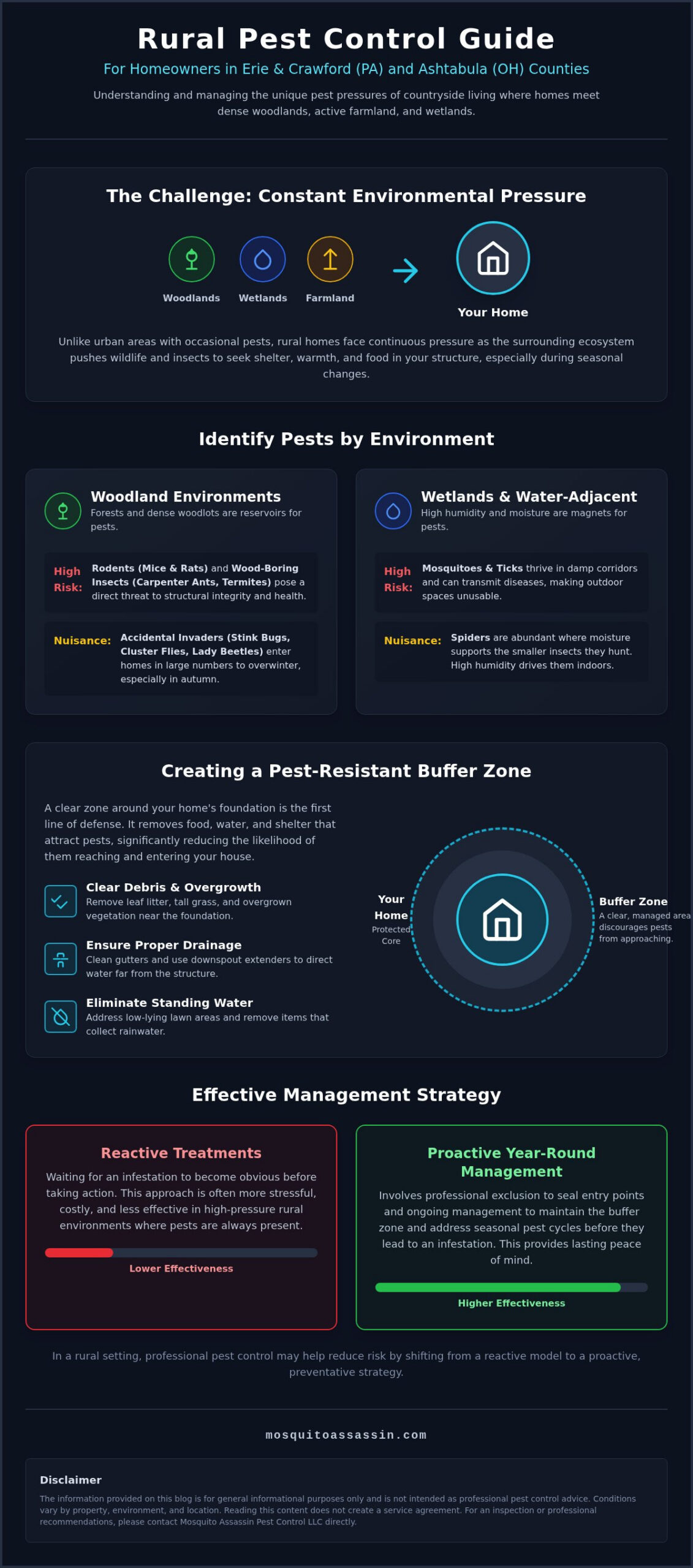
    Rural pest pressure is defined by the proximity of a residence to vast, undisturbed natural habitats. In Northwest Pennsylvania and Northeast Ohio, homes are often situated adjacent to active farmland or dense woodlots. This creates an environment where the local ecosystem constantly pushes against the boundaries of the structure. Dealing with pests in a rural home requires a shift in perspective; it’s less about a single infestation and more about managing a continuous biological cycle.

    The diverse flora in Erie and Crawford Counties, along with Ashtabula County, supports an incredible variety of life. High biodiversity means that rural homeowners face a wider range of species than those in urban centers. While city dwellers might primarily battle cockroaches, country residents contend with everything from field mice and cluster flies to wood-boring beetles. This pressure intensifies during the autumn months. As the first frosts arrive, pests instinctively migrate toward the warmth radiating from residential structures. Using principles of Integrated Pest Management helps homeowners understand these behaviors to create more effective defenses.

    Woodland Environments and Forest Pests

    Thick forests provide the perfect cover for rodents and wood-feeding insects. Properties bordered by heavy timber, particularly those with a high density of acer (maple) and ash species, face specific risks. These trees often harbor carpenter ants or termites that can easily transition from a fallen log to a porch or foundation. The forest edge acts as a highway for accidental invaders like stink bugs and lady beetles. Without a clear barrier, the home becomes the most attractive shelter in the immediate landscape. Managing the unique challenges of dealing with pests in a rural home involves recognizing that the woods are a permanent reservoir for these populations.

    Wetlands and Water-Adjacent Properties

    Properties near the Lake Erie shoreline or the many inland wetlands of the region face extreme seasonal pressure. High outdoor humidity levels are a primary driver for spider populations, as moisture supports the smaller insects that spiders hunt. Mosquitoes and ticks also thrive in these damp corridors, making outdoor spaces nearly unusable during peak months. Effective management involves:

    • Clearing leaf litter and tall grass near the foundation.
    • Ensuring gutters and downspouts direct water far from the structure.
    • Reducing standing water in low-lying areas of the lawn.

    Managing these moisture attractants is a critical step in general pest control plans designed for high-pressure environments. This systematic approach reduces the overall appeal of the property to water-loving pests and helps maintain a more comfortable living environment.

    Identifying Common Rural Pests in Pennsylvania and Ohio

    Accurate identification is the foundation of any successful management strategy. In the Erie and Ashtabula regions, residents encounter a diverse array of species that shift with the seasons. While some visitors are merely nuisance pests, others pose legitimate risks to the structural integrity of the house or the health of its occupants. Correctly distinguishing between these categories prevents unnecessary stress and ensures that prevention efforts are properly focused. Penn State Extension offers a comprehensive look at common pests in Pennsylvania, which helps local property owners recognize frequent invaders.

    Seasonal cycles heavily influence pest behavior. Spring typically marks the emergence of stinging insects as queens begin building new colonies near eaves and porches. As temperatures drop in the autumn, the pressure shifts toward overwintering insects and rodents. Dealing with pests in a rural home requires vigilance during these transition periods to catch signs of entry before populations grow out of control.

    Rodents: The Persistent Rural Challenge

    Mice and rats are among the most difficult invaders to manage in country settings. Common signs of their presence include dark, rice-shaped droppings, shredded insulation, and distinct scratching sounds within walls or crawl spaces. These rodents are not just a nuisance; they carry bacteria and parasites that can contaminate food and living areas. Managing high volumes of these invaders is a core part of dealing with pests in a rural home, as standard retail traps often fail to keep pace with the massive populations found in surrounding fields and forests.

    Wood-Destroying Insects and Structural Pests

    Older rural structures are particularly vulnerable to wood-destroying organisms. Termites and carpenter bees can cause significant damage before they are even noticed. Carpenter bees are easily spotted by the perfectly circular holes they drill into unpainted wood, while termites often hide behind mud tubes along the foundation. It’s critical to distinguish between termite swarmers and flying ants. Termites have straight antennae and wings of equal length, whereas ants have elbowed antennae and wings of different sizes. In barns and outbuildings, wood-boring beetles may leave behind fine, sawdust-like frass near tiny exit holes in structural beams. For homeowners concerned about these hidden threats, professional pest control may help reduce risk and provide a more thorough assessment of the property.

    Structural Vulnerabilities in Country Homes

    Rural architecture in Erie and Ashtabula Counties often prioritizes durability and utility over airtight seals. Older farmhouses and modified structures frequently possess hidden entry points that develop as the building settles into the soil. Dealing with pests in a rural home is complicated by these structural shifts, as even a small crack in a foundation or a gap in a door frame can invite unwanted visitors. Natural wear from harsh Lake Erie winters further compromises a home’s defenses, making regular structural audits necessary to maintain a secure perimeter.

    Foundations and Lower-Level Entry Points

    Stone foundations and dirt crawl spaces represent a significant challenge for lower-level exclusion. Unlike modern poured concrete, older stone foundations have mortar joints that can crumble over time, providing easy access for rodents. Dirt crawl spaces act as moisture reservoirs, creating the damp conditions that attract termites and encourage wood rot. Detached structures like garages or equipment sheds often serve as staging areas where populations grow undisturbed before moving into the main residence. To identify vulnerabilities, homeowners should focus on several key areas:

    • Sill Plates and Rim Joists: Inspect these areas for gaps larger than a quarter inch, which is enough space for a young mouse to enter.
    • Utility Penetrations: Check where pipes, wires, and HVAC lines enter the home; these are often poorly sealed or have oversized openings.
    • Crawl Space Vents: Ensure screens are intact and made of heavy-duty mesh that rodents cannot chew through.

    Addressing these gaps is a fundamental part of general pest control plans that focus on long-term prevention rather than just temporary fixes.

    Rooflines and Upper-Level Vulnerabilities

    The upper levels of a country home are just as vulnerable as the basement. Overhanging trees act as natural highways, allowing ants and rodents to bypass ground-level defenses and reach the roof. Once they arrive, these pests exploit gaps in soffits or fascia boards that have warped or pulled away from the structure. Attic vents are another common weak point, providing easy access for larger invaders like bats and squirrels if the covers are damaged. Identifying these upper-level gaps is a vital part of dealing with pests in a rural home, as these entry points are often overlooked during a standard ground-level walk-through. Regular maintenance of the roofline and trimming back branches at least six to ten feet from the house can significantly reduce the risk of an upper-level breach.
    Dealing with Pests in Rural PA and OH Homes

    Creating a Pest-Resistant Buffer Zone

    Dealing with pests in a rural home often feels like an uphill battle because nature is right at the doorstep. The most effective way to tilt the odds is by establishing a “Buffer Zone.” This is a managed area of transition that creates distance between wild habitats and the residential structure. By intentionally designing the immediate surroundings, property owners in Erie, Crawford, and Ashtabula Counties can significantly reduce the number of pests that ever reach the foundation. A well-maintained perimeter serves as the first line of defense, making the home less attractive to invaders seeking food or shelter.

    Landscaping and Vegetation Management

    Vegetation provides the bridge pests need to cross the buffer zone. Trimming branches at least six feet away from the roofline and siding prevents ants and rodents from using trees as aerial highways to access the attic. Ground-level choices are equally important. Mulch is popular for aesthetics, but it retains moisture and provides a perfect breeding ground for millipedes, earwigs, and even termites. Replacing mulch with a strip of gravel or crushed stone directly against the foundation creates a dry, inhospitable barrier that discourages burrowing and nesting. Additionally, selecting plants that aren’t prone to aphid infestations helps reduce the production of honeydew, a sticky substance that attracts large ant colonies toward the house.

    Sanitation and Storage Best Practices

    In rural areas, storage habits often dictate the severity of seasonal infestations. Firewood is a primary culprit for bringing wood-destroying insects close to the structure. It should be stored at least twenty feet from the house and kept off the ground on a rack to prevent it from becoming a massive rodent and termite harborage. Managing food sources is another critical step in dealing with pests in a rural home. Bird feeders and outdoor pet food bowls are powerful attractants for raccoons, skunks, and mice. Keeping these items far from the structure and using properly sealed, heavy-duty trash containers reduces the odors that draw scavengers into the living space. Regular removal of leaf litter and fallen fruit also eliminates the damp, dark environments where ticks and spiders thrive.

    Maintaining a dry perimeter is essential for long-term success. Moisture trapped against the foundation is a primary attractant for termites and can provide breeding sites for mosquitoes. Ensuring that the ground slopes away from the house and that all gutters are free of debris will help keep the buffer zone effective. Professional general pest control plans can provide additional layers of protection by treating these transition areas systematically to prevent pests from ever crossing the threshold.

    The Role of Professional Year-Round Management

    Dealing with pests in a rural home requires a shift from reactive treatments to proactive management. In high-pressure environments like Crawford and Ashtabula Counties, a one-time service rarely provides lasting relief. The surrounding fields and forests act as a constant reservoir for new infestations. When one population is removed, the ecological vacuum is quickly filled by others waiting at the property line. Ongoing monitoring allows for the identification of pest activity before it escalates into a full-blown infestation. Professional management focuses on the specific environmental pressures of a property, creating a customized plan that adapts to seasonal changes and regional pest cycles.

    Professional exclusion offers a permanent solution that temporary trapping cannot match. While retail traps might catch a few individual invaders, they don’t address the structural gaps that allowed entry in the first place. Sealing a home effectively creates a fortified barrier, ensuring that the interior remains a pest-free zone. This methodical approach is far more effective than DIY methods that often rely on broad-spectrum chemicals without addressing the root cause of the problem. For those living in areas with high biodiversity, professional pest control may help reduce risk by providing a scientific, multi-layered defense system.

    The Three-Step Rodent Process

    Managing rodents in a rural setting involves a disciplined three-step process: removal, maintenance, and permanent exclusion. Initial removal clears the current population, while maintenance ensures that any new arrivals are dealt with before they can nest. The most critical phase is exclusion, which involves using professional-grade materials to seal every possible entry point. Rodents can chew through many common household materials, so professionals use heavy-duty steel mesh, specialized sealants, and metal flashing that withstands persistent gnawing. Regular inspections are necessary to ensure these defenses remain intact as the home settles or ages.

    Seasonal Protection for Outdoor Spaces

    Rural properties often feature unique breeding sites for mosquitoes and ticks, such as drainage ditches, stagnant ponds, or dense tall-grass perimeters. Professional management involves identifying and treating these specific areas to break the reproductive cycle. This is especially important for maintaining safe outdoor living spaces during the peak summer months. Professional pest control may help reduce risk of tick-borne illnesses by significantly lowering the population density of these parasites in the immediate yard. By focusing on the biological needs of these pests, year-round management ensures that outdoor spaces remain comfortable and functional for the whole family.

    Disclaimer: The information provided on this blog is for general informational purposes only and is not intended as professional pest control advice. Conditions vary by property, environment, and location. Reading this content does not create a service agreement. For an inspection or professional recommendations, please contact Mosquito Assassin Pest Control LLC directly.

    Securing Your Rural Property for the Future

    Successfully dealing with pests in a rural home requires a shift from temporary fixes to a disciplined, defensive strategy. By identifying structural vulnerabilities in older foundations and maintaining a clear buffer zone, homeowners can significantly reduce the environmental pressure on their living spaces. Licensed professional pest control services provide the specialized expertise needed to handle the high-volume infestations common in Erie, Crawford, and Ashtabula Counties. Specialized rodent exclusion and year-round protection plans ensure that a home remains a sanctuary rather than a battlefield. It’s possible to enjoy the tranquility of the countryside without the constant stress of uninvited guests. Learn more about professional pest management to secure your home today.

    Disclaimer: The information provided on this blog is for general informational purposes only and is not intended as professional pest control advice. Conditions vary by property, environment, and location. Reading this content does not create a service agreement. For an inspection or professional recommendations, please contact Mosquito Assassin Pest Control LLC directly.

    Frequently Asked Questions

    How do I keep mice out of my rural home permanently?

    Permanent mouse prevention requires a rigorous process of professional exclusion. Homeowners must seal every opening larger than a quarter inch using materials rodents cannot chew through, such as heavy-duty steel mesh or metal flashing. Focusing on sill plates, rim joists, and utility penetrations is essential because these are common entry points. Regular maintenance and structural audits ensure that new gaps caused by house settling or winter weather are closed before infestations begin.

    Are pests more common in rural areas than in the city?

    Rural areas experience higher pest pressure due to their proximity to undisturbed natural habitats like forests and active farmland. While urban environments often struggle with a few specific species, dealing with pests in a rural home involves a much wider range of biodiversity. Country residences face constant pressure from wood-boring insects, field rodents, and seasonal invaders that use the surrounding ecosystem as a permanent reservoir for their populations.

    What is the best way to prevent ticks in a wooded backyard?

    Creating a managed buffer zone is the most effective way to reduce tick populations on your property. You should keep grass mowed short and remove all leaf litter or brush piles where ticks thrive in damp shade. Installing a three-foot wide barrier of wood chips or gravel between the lawn and wooded areas can physically discourage ticks from crossing into high-traffic zones. Professional seasonal treatments further help reduce the risk of encounters.

    Can I handle a rural pest infestation on my own?

    Minor nuisance issues can sometimes be managed with basic sanitation, but large-scale rural infestations typically overwhelm DIY methods. Retail traps and sprays often fail to address the root cause or keep up with the massive population pressure from the surrounding environment. Dealing with pests in a rural home successfully usually requires professional-grade materials and specialized exclusion techniques that provide a permanent structural defense rather than just a temporary, reactive fix.

    Why do I have so many spiders in my country house?

    Spiders are drawn to country houses because these environments provide an abundant food source. High humidity and dense vegetation near the foundation support large populations of smaller insects that spiders hunt. When these prey insects move toward the warmth or light of a home, spiders naturally follow. Reducing outdoor lighting, managing moisture levels in crawl spaces, and sealing entry points will help decrease the number of spiders that find their way inside.

    How often should a rural home be inspected for pests?

    A rural property should be inspected at least twice a year, ideally during the spring and autumn transition periods. These seasons mark the highest activity levels for stinging insects and migrating rodents seeking winter shelter. Because older rural structures frequently shift or settle, new entry points can develop quickly. Frequent professional inspections catch wood-destroying insect activity or rodent breaches early, preventing minor issues from turning into expensive structural repairs or health hazards.

    What are the most dangerous pests in Pennsylvania and Ohio?

    The most dangerous pests in the Erie and Ashtabula regions are those that pose health risks or cause structural failure. Ticks and mosquitoes are significant concerns because they can transmit various illnesses to humans and pets. Rodents are also dangerous due to the bacteria and parasites found in their droppings. From a structural perspective, termites and carpenter ants are the most destructive, as they can silently compromise the integrity of wooden beams and supports over time.

    Do rural pests cause more structural damage than urban ones?

    Rural pests often cause more significant structural damage because they include a wider variety of wood-destroying organisms. Termites, carpenter bees, and wood-boring beetles are more prevalent in wooded country settings and can go unnoticed in barns or crawl spaces for years. Additionally, rural rodent populations are often larger and more persistent, leading to extensive damage to insulation, vapor barriers, and electrical wiring as they attempt to colonize different parts of the structure.

    Disclaimer: The information provided on this blog is for general informational purposes only and is not intended as professional pest control advice. Conditions vary by property, environment, and location. Reading this content does not create a service agreement. For an inspection or professional recommendations, please contact Mosquito Assassin Pest Control LLC directly.

  • Best Mosquito Control for Yards in Ohio: 2026 Homeowner Guide

    Best Mosquito Control for Yards in Ohio: 2026 Homeowner Guide

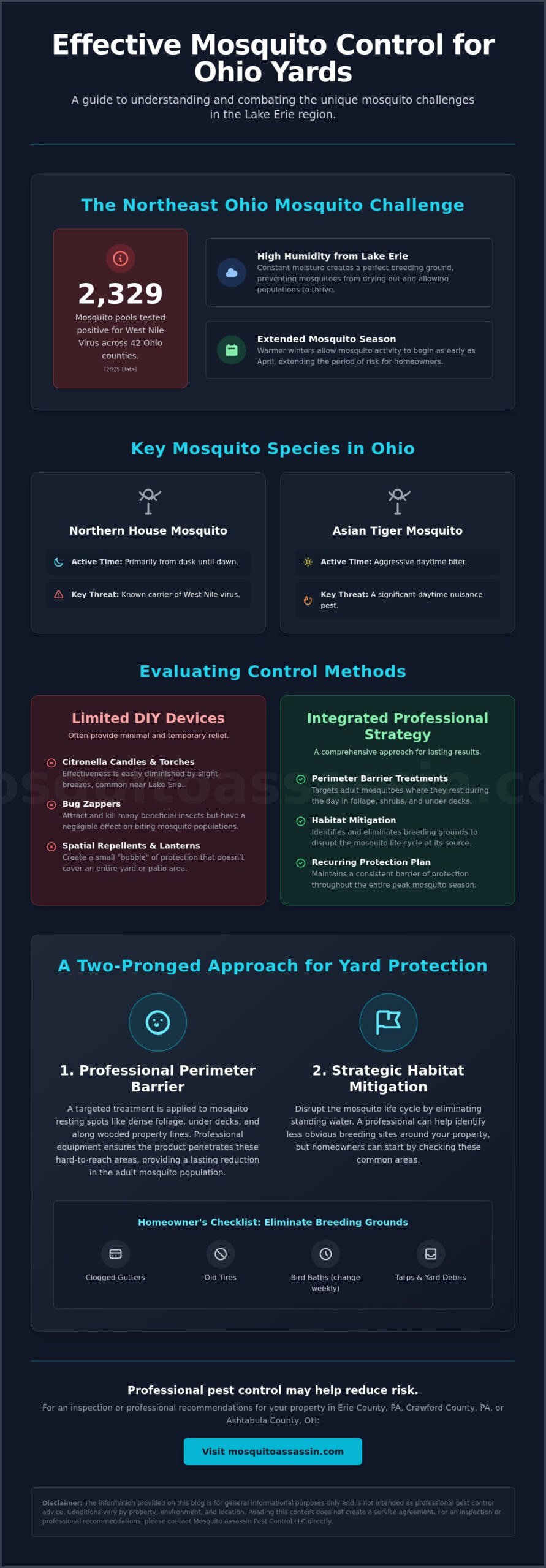
    With 2,329 mosquito pools testing positive for West Nile virus across 42 Ohio counties in 2025, finding the best mosquito control for yards in Ohio is a priority for families in Ashtabula County and the surrounding region. You’ve likely spent many humid summer evenings swatting away pests while your citronella candles and bug zappers fail to make a real dent. It’s frustrating to invest in products that don’t deliver, especially when the high humidity from Lake Erie creates a perfect environment for mosquito populations to thrive. You deserve to enjoy your outdoor space without constant worry about itchy bites or regional health concerns.

    This article explores effective mosquito control methods tailored for the unique climate and environment of Northeast Ohio. You’ll gain a deeper understanding of how professional perimeter barriers and strategic habitat mitigation work together to address pest activity. By focusing on fact-based prevention strategies and the science of mosquito behavior, you can better protect your property. This guide breaks down the most reliable approaches for the 2026 season, helping you move from a state of concern to a state of resolution.

    Disclaimer: The information provided on this blog is for general informational purposes only and is not intended as professional pest control advice. Conditions vary by property, environment, and location. Reading this content does not create a service agreement. For an inspection or professional recommendations, please contact Mosquito Assassin Pest Control LLC directly.

    Key Takeaways

    • Understand how the high humidity of the Lake Erie region and the local climate accelerate mosquito activity in Northeast Ohio.
    • Discover why the best mosquito control for yards in ohio requires a combination of perimeter barrier treatments and active habitat mitigation rather than simple localized gadgets.
    • Learn about the technical advantages of professional-grade equipment for penetrating dense foliage where mosquitoes rest during peak daylight hours.
    • Identify common but overlooked breeding sites around the property, such as clogged gutters and hidden water reservoirs, to naturally reduce pest populations.
    • Explore the benefits of establishing a recurring protection plan to maintain consistent results throughout the peak Ohio mosquito season.

    Why Ohio Yards Face Unique Mosquito Challenges

    Northeast Ohio presents a specific set of challenges for property owners trying to maintain a comfortable outdoor space. The proximity to Lake Erie keeps humidity levels consistently high. This moisture is the primary fuel for mosquito reproduction. In Ashtabula County, the damp air creates a dense atmosphere where pests thrive without the risk of drying out. Finding the best mosquito control for yards in ohio requires understanding that our local environment acts as a massive incubator during the summer months.

    Seasonal rainfall in the spring often leads to standing water in low-lying areas and wooded sections of the yard. This water serves as the starting point for breeding cycles that can explode in population within days. In 2026, mosquito activity was noted as early as April due to a warmer winter. This shift moved the traditional timeline for property protection much earlier than in previous years. To better understand how these pests interact with your environment, watch this helpful video:

    Environmental Factors in Northeast Ohio

    Wooded boundaries and tall ornamental grasses provide the perfect harborages for adult mosquitoes to rest during the heat of the day. Even if your lawn is mowed short, these shaded areas offer the protection they need to survive. Effective mosquito control methods must account for these micro-climates within your landscape. Transitions between seasons are particularly volatile. Rapid temperature spikes combined with Lake Erie’s influence can trigger massive hatches that overwhelm standard yard maintenance.

    Common Local Mosquito Species

    There are approximately 59 different species of mosquitoes in Ohio, but only a few cause the majority of the trouble for homeowners. The Northern House Mosquito is a frequent nuisance. It’s most active from dusk until dawn and is a known carrier of the West Nile virus. The Asian Tiger mosquito has also become more prevalent in residential areas across the region. This species is an aggressive daytime biter. It doesn’t wait for the sun to go down to begin its search for a meal. Identifying these behaviors is a critical step in determining the best mosquito control for yards in ohio and ensuring your protection plan covers both daytime and evening activity.

    Disclaimer: The information provided on this blog is for general informational purposes only and is not intended as professional pest control advice. Conditions vary by property, environment, and location. Reading this content does not create a service agreement. For an inspection or professional recommendations, please contact Mosquito Assassin Pest Control LLC directly.

    Evaluating Mosquito Control Methods: Devices vs. Treatments

    Homeowners often begin their search for the best mosquito control for yards in ohio by browsing the shelves of local hardware stores for quick fixes. They find an array of portable lanterns, citronella candles, and ultrasonic devices. While these items promise immediate relief for a backyard barbecue, their effectiveness is often restricted by the specific environmental conditions of a Northeast Ohio landscape. Choosing between a localized gadget and a comprehensive treatment requires an understanding of how these different methods interact with the local climate.

    Localized Gear and Spatial Repellents

    Portable gear typically relies on creating a localized bubble of protection using heat-activated repellents. These devices can offer temporary relief for a small patio or a compact deck, but they struggle in open environments. Even a slight breeze from Lake Erie can easily disperse the repellent cloud, leaving the area unprotected within seconds. Citronella candles face similar challenges; they often fail in large yards because the active ingredients don’t reach far enough to deter pests from entering the space. The cost of disposable refills and batteries also accumulates quickly, often making them less cost-effective than a professional plan over a full season.

    Professional Perimeter Barrier Treatments

    Professional treatments utilize a more methodical approach to yard protection. Unlike localized gadgets that only address a few square feet, barrier sprays are engineered to bond directly to the underside of leaves and within dense foliage. This creates a lasting residual effect that targets mosquitoes where they rest during the day. Systematic surveillance and data collection, such as the efforts seen in the Cuyahoga County mosquito control program, demonstrate that treating these specific harborages is essential for significant population reduction.

    In Ohio, professional barrier spray treatments can reduce mosquito populations in the treated area by 85% to 90%. This level of coverage is far superior to the limited radius provided by a lantern or candle. To maintain this protection throughout the humid summer months, applications are typically required every 21 to 30 days. This frequency ensures that the barrier remains strong even after periods of seasonal rainfall. Reviewing the structure of a mosquito control program helps property owners understand why a property-wide strategy is more reliable for long-term enjoyment. For those looking to secure their yard against infestations, professional mosquito control service may help reduce risk.

    Disclaimer: The information provided on this blog is for general informational purposes only and is not intended as professional pest control advice. Conditions vary by property, environment, and location. Reading this content does not create a service agreement. For an inspection or professional recommendations, please contact Mosquito Assassin Pest Control LLC directly.

    Best Mosquito Control for Yards in Ohio: 2026 Homeowner Guide

    The Role of Professional Mosquito Control in Ohio

    Achieving a significant reduction in pest activity requires more than just a surface level application. Professional mosquito control services utilize high pressure misting equipment that creates a fine fog, allowing treatments to penetrate deep into the dense foliage of Ashtabula County properties. This technology is a critical component of the best mosquito control for yards in ohio because it ensures the product reaches the underside of leaves where mosquitoes rest during the day. Standard pump sprayers often lack the force to push through the outer canopy, leaving the interior of shrubs and wooded borders as safe havens for pests.

    Beyond equipment, the success of professional intervention lies in the residual effect of the products used. Professional grade treatments are designed to withstand local weather conditions, providing a protective barrier that remains active for weeks. This approach is part of a broader Integrated Pest Management (IPM) strategy. IPM focuses on long term prevention by combining professional applications with property owner efforts to manage standing water. According to the Ohio State University Extension, these combined efforts are the most effective way to manage mosquito populations in residential areas.

    Advanced Application Technology

    Uniform coverage is essential for large properties in Northeast Ohio. High pressure mist blowers ensure that every leaf in a target area is coated, which is something manual DIY methods rarely achieve. This level of precision is vital for creating a true perimeter. Licensed professionals are trained to identify specific harborages, such as the shaded areas under decks or the thick brush along property lines, ensuring no resting site is overlooked. This systematic approach results in a more thorough treatment that addresses the problem at its source.

    Safety and Environmental Standards

    In Ohio, any person applying pesticides for hire must have a Commercial Pesticide Applicator License issued by the Ohio Department of Agriculture. This involves rigorous training and a commitment to continuing education; five hours of recertification training is required every three years to maintain high professional standards. These regulations ensure that treatments are applied responsibly and in accordance with EPA guidelines. Professionals use targeted techniques to protect beneficial insects like bees by avoiding the flowering plants where pollinators forage. For those seeking comprehensive protection, professional pest control services may help reduce risk while maintaining the health of the local ecosystem.

    Disclaimer: The information provided on this blog is for general informational purposes only and is not intended as professional pest control advice. Conditions vary by property, environment, and location. Reading this content does not create a service agreement. For an inspection or professional recommendations, please contact Mosquito Assassin Pest Control LLC directly.

    Practical Yard Maintenance to Reduce Mosquito Breeding

    While professional treatments provide a robust perimeter, a property owner’s maintenance routine is the second pillar of an effective Integrated Pest Management strategy. The best mosquito control for yards in ohio combines expert barrier applications with the systematic removal of breeding grounds. In Northeast Ohio, the heavy clay soil often complicates drainage, leading to persistent puddles that remain long after a rainstorm has passed. Addressing these drainage issues is vital because mosquitoes can complete their life cycle in as little as a bottle cap’s worth of water.

    Gutters are one of the most frequently overlooked reservoirs for mosquito larvae. When leaves and debris clog the channels, they trap stagnant water high above the ground, creating an ideal nursery that is difficult to see from the lawn. Regular cleaning ensures that water moves away from the foundation and doesn’t provide a sanctuary for pests. For property owners looking to optimize their outdoor space, professional mosquito control service can complement these efforts by identifying specific problem areas during an inspection.

    Eliminating Standing Water Sources

    After a typical Ohio rainstorm, it’s essential to patrol the property for hidden water collectors. Common items that require attention include:

    • Tarps and Covers: Folds in grill covers or woodpile tarps can hold gallons of water.
    • Children’s Toys: Plastic wagons, buckets, and playsets often have small crevices where water pools.
    • Flower Pots: Saucers under planters should be emptied regularly to prevent stagnant buildup.
    • AC Condensation Lines: Ensure the area where your air conditioner drains is properly graded so water doesn’t collect near the unit.

    Birdbaths and small water features should be refreshed at least once a week. Natural solutions, such as keeping water moving with a small pump or fountain, can also prevent mosquitoes from laying eggs in these features.

    Landscaping for Pest Reduction

    The way a yard is landscaped directly affects how many mosquitoes it can support. Keeping grass mowed to a recommended height of three to four inches helps reduce the excess moisture that accumulates in taller blades. Airflow is another critical factor. Pruning dense shrubs and thinning out overgrown wooded borders allows sunlight to reach the ground and wind to move through the foliage. This dries out the environment and removes the stagnant, humid air that mosquitoes prefer. Additionally, removing leaf litter and organic debris from the property perimeter eliminates the damp harborages where pests hide during the hottest parts of the day.

    Disclaimer: The information provided on this blog is for general informational purposes only and is not intended as professional pest control advice. Conditions vary by property, environment, and location. Reading this content does not create a service agreement. For an inspection or professional recommendations, please contact Mosquito Assassin Pest Control LLC directly.

    Establishing a Long-Term Protection Plan

    Homeowners often wonder if a single treatment is enough for a graduation party or a summer wedding. While one-time applications provide a temporary reprieve, they don’t address the continuous hatching cycles of local species. Establishing a long-term plan is the most effective way to maintain the best mosquito control for yards in ohio throughout the entire season. This approach transitions the property from a state of constant infestation to a managed environment where outdoor activities are no longer dictated by pest activity. Proactive management is always more effective than reactive spraying after populations have already peaked.

    Consistency and Timing

    Because mosquito activity in 2026 began as early as April, timing has become more critical than ever. Starting treatments early in the spring prevents the first generation of mosquitoes from establishing a foothold on the property. Each subsequent application reinforces the previous one, creating a cumulative barrier that grows stronger as the humid months of July and August arrive. Scheduling recurring visits every 21 to 30 days ensures that the protection remains intact even during periods of heavy seasonal rainfall. This consistent schedule prevents gaps in coverage that would otherwise allow new larvae to mature and re-infest the yard.

    Selecting Local Support

    When evaluating providers in Northeast Ohio, property owners should prioritize those with deep roots in the community. Local experts understand the specific environmental pressures of Erie and Crawford Counties in Pennsylvania and Ashtabula County in Ohio. It’s essential to verify that any professional is licensed by the Ohio Department of Agriculture, ensuring they meet the state’s rigorous safety and technical standards. You can find local support in our Ashtabula and Erie service areas to ensure your property receives specialized attention. For those ready to begin their seasonal plan, professional recommendations can be found at mosquitoassassin.com.

    A comprehensive plan often addresses more than just mosquitoes. Many professional treatments also target ticks, which share similar harborages in wooded borders and tall grasses. Integrating mosquito management with general pest control plans creates a safer environment for pets and family members. By taking a proactive stance before the peak of the season, homeowners can reclaim their yards and reduce the anxieties associated with regional health concerns. Professional pest control may help reduce risk, allowing families to enjoy their outdoor spaces with confidence.

    Disclaimer: The information provided on this blog is for general informational purposes only and is not intended as professional pest control advice. Conditions vary by property, environment, and location. Reading this content does not create a service agreement. For an inspection or professional recommendations, please contact Mosquito Assassin Pest Control LLC directly.

    Securing Your Outdoor Space for the 2026 Season

    Managing mosquito populations in Northeast Ohio requires a disciplined strategy that balances professional perimeter treatments with consistent property maintenance. By identifying hidden water reservoirs and utilizing high-pressure application technology, you can significantly reduce pest density even in the high humidity of the Lake Erie region. The best mosquito control for yards in ohio isn’t a single event; it’s a seasonal commitment to a comprehensive Integrated Pest Management approach that prioritizes long-term results over temporary fixes. This systematic method addresses pests at their source while creating a durable barrier around your living space.

    Licensed professionals in both Ohio and Pennsylvania bring specialized knowledge of regional climate challenges to every inspection. This methodical approach ensures that your property is treated with technical precision while protecting the local ecosystem and beneficial insects. For an inspection or professional recommendations, please contact Mosquito Assassin Pest Control LLC directly. Taking these proactive steps today ensures a more comfortable and secure environment for your family throughout the warmest months of the year. You don’t have to let pests dictate how you enjoy your property.

    Disclaimer: The information provided on this blog is for general informational purposes only and is not intended as professional pest control advice. Conditions vary by property, environment, and location. Reading this content does not create a service agreement. For an inspection or professional recommendations, please contact Mosquito Assassin Pest Control LLC directly.

    Frequently Asked Questions

    What is the most effective mosquito control for a large yard in Ohio?

    Professional barrier treatments are the most effective solution for large properties in the region. High pressure misting technology allows the product to penetrate deep into wooded boundaries and thick vegetation where mosquitoes hide. This comprehensive approach is widely considered the best mosquito control for yards in ohio because it addresses the vast resting sites found on larger acreage. It provides a level of coverage that localized devices simply cannot match.

    When does mosquito season typically end in Northeast Ohio?

    Mosquito activity in Northeast Ohio typically subsides in late October. The season ends definitively when the region experiences its first sustained hard frost. However, pests can remain active as long as daytime temperatures consistently stay above 50 degrees Fahrenheit. Property owners should monitor local weather patterns rather than relying on a fixed date, as late season warmth can extend the breeding cycle into early November if temperatures remain mild.

    Are professional mosquito treatments safe for my pets and children?

    Professional treatments are designed for use in residential environments when applied according to strict label requirements. Licensed technicians target specific foliage and resting areas while avoiding high traffic zones like play sets or patio furniture. Once the application has completely dried, which usually takes about 30 to 60 minutes, the yard is ready for use. Professional pest control may help reduce risk while ensuring the wellbeing of all household members and animals.

    How often should a yard be treated for mosquitoes in Ashtabula County?

    A yard in Ashtabula County should be treated every 21 to 30 days to maintain an effective barrier. The high humidity levels near the lakefront can cause products to break down more quickly than in drier climates. Consistent reapplications ensure that the protective layer remains strong throughout the peak months of July and August. This frequency is essential for achieving the best mosquito control for yards in ohio during periods of heavy seasonal rainfall.

    Do mosquito misting systems or barrier sprays work better?

    Barrier sprays are typically more effective for residential yards because they target specific resting sites throughout the landscape. While misting systems are permanent fixtures, they are often restricted to a small radius and can be rendered ineffective by the wind. Barrier treatments are applied manually by technicians who can adjust their technique based on the unique layout of your landscaping. This allows for better coverage in dense foliage and along property perimeters.

    Can landscaping changes really help reduce mosquito populations?

    Strategic landscaping changes are a highly effective way to naturally lower pest density on your property. Improving the drainage of Ohio’s heavy clay soil prevents the formation of stagnant puddles that serve as breeding grounds. Thinning out overgrown shrubs and keeping the lawn mowed also increases airflow and sunlight. These changes dry out the environment, making your yard much less attractive to mosquitoes looking for a damp place to rest during the day.

    What should I look for in a local Ohio mosquito control company?

    Homeowners should prioritize companies with a Pesticide Business License and a Commercial Pesticide Applicator License from the Ohio Department of Agriculture. It is also beneficial to choose a provider that is deeply familiar with the unique climate of Northeast Ohio. A local company with technicians who live in the same community will have a better understanding of how Lake Erie humidity affects pest behavior on your specific property.

    Disclaimer: The information provided on this blog is for general informational purposes only and is not intended as professional pest control advice. Conditions vary by property, environment, and location. Reading this content does not create a service agreement. For an inspection or professional recommendations, please contact Mosquito Assassin Pest Control LLC directly.