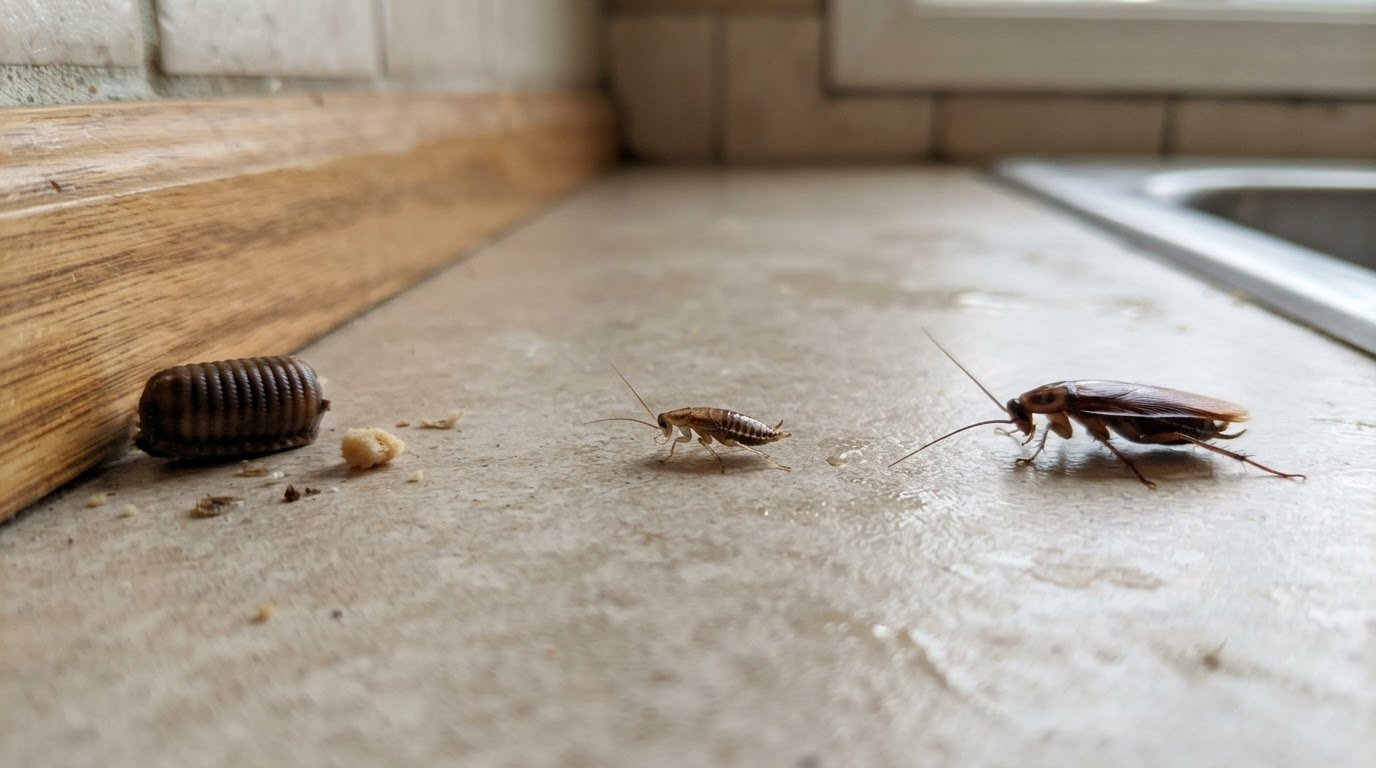
Could a small cockroach be a young roach, or a different insect altogether? It’s a common question when you spot one indoors, especially when egg cases or shed skins aren’t easy to find. Understanding the life cycle of a cockroach can help make sense of what you’re seeing, but size alone may not identify the insect or reveal how long it’s been present.
Cockroaches pass through egg, nymph, and adult stages. The basic pattern is consistent, but development isn’t on a single timetable. Depending on the species and environmental conditions, it can take anywhere from about a month to more than a year for a cockroach to develop from egg to adult. That’s why different sources may give different estimates.
This article explains how to recognize each stage, why development time varies, and what signs such as egg cases, young cockroaches, or shed skins may indicate. You’ll also learn why recurring activity can be a reason to seek a professional assessment, particularly when the species or source of the activity isn’t clear.
Key Takeaways
- The life cycle of a cockroach has three stages, and recognizing the differences can help you interpret signs around a property.
- Egg cases may be easier to notice than individual eggs, while nymphs resemble smaller, wingless adults.
- German and American cockroaches differ in egg-case handling and development patterns, so timing estimates depend on the species.
- Temperature, food, moisture, and other conditions can affect development; adult lifespan is a separate measure.
- Repeated sightings of different life stages are useful observations, but they don’t confirm an infestation on their own. Recurring activity may warrant professional assessment.
What Is the Cockroach Life Cycle? The Three Stages at a Glance
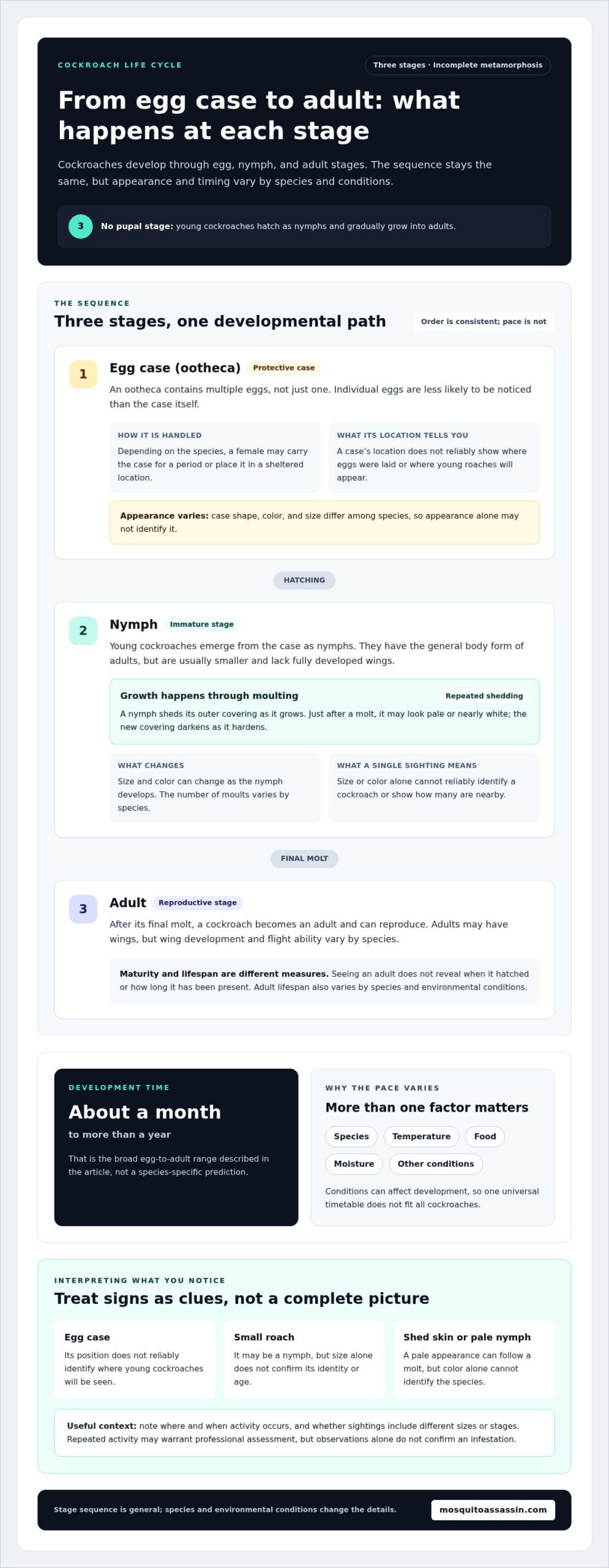
Cockroaches develop through three stages: egg, nymph, and adult. This pattern is known as incomplete metamorphosis. Unlike insects that pass through a pupal stage, cockroaches hatch into young forms that gradually grow into adults. The sequence is shared across cockroach species, but the details and pace differ.
A cockroach develops from an egg to a nymph and then an adult, but the timing and appearance of each stage vary by species and conditions. That distinction matters when interpreting signs around a property. A small roach may be a nymph, but size by itself doesn’t confirm its identity or tell you how long it has been present.
People are also more likely to notice an egg case than individual eggs. The life cycle of a cockroach can take substantially different amounts of time depending on the species and environment, and an adult’s lifespan is a separate measure from the time it takes to mature. This cockroach life cycle overview describes the general stages while recognizing that species vary.
What Is an Ootheca, or Cockroach Egg Case?
An ootheca is a protective case that contains multiple cockroach eggs. It isn’t a single egg. Its shape, color, and size can differ among species, so an unfamiliar case is not always easy to identify by appearance alone.
Females also handle egg cases differently. Depending on the species, a female may carry the case for a period or place it in a sheltered location. As a result, the location of a case doesn’t reliably show where eggs were laid or where young roaches will be seen.
How the Nymph Stage Leads to Adulthood
A nymph is an immature cockroach with the basic body form of an adult, but it is generally smaller and lacks fully developed wings. Nymphs grow by moulting, the repeated shedding of their outer covering. After each molt, the new outer layer hardens as the insect continues developing.
The number and duration of immature stages vary among species and can also be affected by environmental conditions. A nymph’s appearance may change as it grows, so a single sighting can be difficult to interpret without considering other clues, such as repeated activity or shed skins.
Once a cockroach completes its final molt, it becomes an adult. Adults can reproduce, but reaching adulthood doesn’t mean every cockroach will live for the same length of time. Species and environmental conditions influence both development and adult lifespan, so one universal timetable doesn’t fit all cockroaches.
From Egg to Adult: What Happens at Each Cockroach Life-Cycle Stage?
The stages follow a set order, but what you see in a home is only a partial view of development. Egg cases may be tucked out of sight, while nymphs and adults differ in appearance. Use the sequence below as a guide, not as a way to identify a cockroach by one trait alone.
- Egg case: Eggs develop inside a protective case. A female may carry it for a time or deposit it, depending on the species. People are more likely to find the case than to see individual eggs. Its location doesn’t necessarily reveal where the young will appear.
- Nymph: Immature cockroaches emerge from the case and grow through successive moults. Nymphs usually have the general body shape of adults but are smaller and lack fully developed wings. Their color and size change as they develop, so those features alone aren’t reliable identification clues.
- Adult: After its final molt, a cockroach reaches adulthood. Adults may have wings, though wing development and flight ability vary by species. They can reproduce, but the timing of maturity and adult lifespan aren’t the same for every cockroach.
Egg Case and Hatching
The case’s placement depends on the species and the female’s behavior. It may remain attached to the female or be deposited in a protected spot. At hatching, young cockroaches emerge as nymphs, not miniature adults with reproductive ability. The case’s location and the time before hatching vary, so neither provides a universal timetable for what might be seen indoors.
Nymph Moults and the Adult Stage
As a nymph grows, it sheds its outer covering in a process called moulting. Just after a molt, it may look pale or nearly white; its outer covering darkens as it hardens. This temporary color change is not unique to one species. Nymphs go through a species-dependent number of moults before adulthood, and the time between them can vary with conditions.
In cockroaches, the adult is the reproductive stage, but the age at which it is reached depends on the species and environment. An adult sighting therefore doesn’t reveal when the insect hatched or how long it has been present. Likewise, a pale nymph may have moulted recently, but color alone can’t confirm its species or indicate how many cockroaches are nearby.
For useful observations, note where and when activity occurs, and whether sightings include different sizes or stages. Repeated activity may merit professional assessment. For information about professional cockroach control, consult the relevant service details.
How Cockroach Life Cycles Differ by Species
The three-stage pattern is shared, but egg-case behavior and development differ across species. These distinctions can help put observations in context, though a life stage alone can’t confirm which cockroach is present. A useful identification considers several features, including body shape, markings, location, and activity pattern.
| Species | Egg-case handling | Typical indoor relevance | Development pattern |
|---|---|---|---|
| German cockroach (Blattella germanica) | The female generally carries the egg case until close to hatching. | A common indoor pest, often associated with kitchens and other areas where food and moisture are available. | Development can be relatively rapid in favorable conditions, but the timing varies. See the University of Florida German cockroach overview. |
| American cockroach (Periplaneta americana) | The female deposits the egg case in a protected location rather than carrying it until hatching. | Often associated with warm, damp areas such as basements, drains, and service spaces, but may also be found indoors. | Immature development generally takes longer than it does for German cockroaches. Conditions affect the pace. See the University of Florida American cockroach overview. |
These comparisons describe tendencies, not rules for identifying an insect in a particular home. Egg cases may be hidden, and cockroaches can be difficult to distinguish from a brief glimpse. Even small individuals may look different as they grow and moult.
German Cockroach Development
The German cockroach’s habit of carrying its egg case close to hatching is one feature that distinguishes it from species that deposit cases earlier. A succession of small and adult roaches indoors can be a useful observation, especially if sightings recur. It may indicate ongoing activity, but it doesn’t establish the species or confirm where cockroaches are breeding. Record where sightings happen and note visible features for a professional assessment.
American Cockroach Development
American cockroaches also hatch as nymphs and develop through repeated moults before adulthood, but their longer immature development shouldn’t be confused with the faster pattern often associated with German cockroaches. An egg case found in a sheltered area, or a large roach seen near a basement or drain, may be relevant context, not a home diagnosis. Temperature, moisture, and other environmental conditions can affect development in either species.
The life cycle of a cockroach provides a framework for understanding what you see, not a reliable species test. If activity keeps returning or sightings include different sizes, a professional assessment may help clarify the situation. Information about requesting an inspection is available for readers seeking a next step.
What Changes Cockroach Development Time, and What Can You Observe?
Cockroach development doesn’t follow one dependable calendar. Species, temperature, food, and moisture all affect how quickly eggs hatch and nymphs mature. A warm, resource-rich environment may support faster development than cooler or less favorable conditions, but conditions vary within a property, too. A general estimate can explain the biology, not predict exactly what is happening in a particular home.
Why There Is No Single Cockroach Timeline
Species-specific examples show why one timeline can mislead. The University of Florida’s profiles describe German cockroaches as developing relatively quickly under favorable conditions, while American cockroaches generally take longer to mature. These patterns don’t make either species’ schedule universal. Even within a species, environmental conditions affect development, so a published range should be read with its species and conditions attached.
Development time means the period from egg to adult. Adult lifespan starts after maturity and is a separate measure. A long-lived adult doesn’t necessarily mean its development took just as long. For species-specific background, see the University of Florida’s German cockroach profile and American cockroach profile.
What Egg Cases, Nymphs, and Adults May Signal
An egg case may indicate that eggs are developing or were present, but its location alone can’t establish where a cockroach came from. A small individual may be a nymph, while a larger one may be an adult, yet size and color aren’t enough to confirm species, age, or population size. Even repeated sightings of different life stages are observations to assess, not a diagnosis by themselves.
Keep a simple record of where and when you notice activity, along with visible features and whether the sightings recur. If you find a suspected egg case, note its location rather than disturbing it. These details can help provide useful context during an assessment. For identification context, the article Cockroach in House? What You Need to Know can complement these observations. Broader prevention topics are covered in General Pest Control: The Complete Guide for Homeowners.
Reducing accessible food and moisture can make a property less supportive of pests, but those changes don’t identify the species or explain every sighting. If recurring cockroach activity raises questions, professional assessment may help clarify what the signs mean. Readers in Erie or Crawford Counties, Pennsylvania, or Ashtabula County, Ohio, can request a professional inspection.
When Cockroach Life-Cycle Signs Call for Professional Assessment
Seeing a cockroach once can be unsettling, but one sighting doesn’t establish how many may be present or where they came from. Repeated activity, egg cases, or roaches of noticeably different sizes are useful observations to take seriously, not proof of a specific infestation. The life cycle of a cockroach provides context, but signs need to be considered alongside the species and conditions in the property.
When Repeated Signs Deserve a Closer Look
Recurring sightings in the same area, or observations of both small and adult cockroaches, may warrant a professional assessment. An egg case can also be worth noting, even when its identity is uncertain. Species identification matters because cockroach behavior and development differ, and property conditions affect what recommendations are appropriate.
Keep observations practical and undisturbed. Note the date, time, and location of sightings, along with visible details such as approximate size or markings. If you find a suspected egg case, record where it is rather than handling or disturbing it. Also note any areas where food or moisture is accessible and any gaps or openings that could be relevant. These details can help a professional understand the pattern without relying on a single clue.
A Practical Next Step for Local Readers
Basic prevention can include keeping food less accessible, addressing sources of moisture, and noting potential entry points for further attention. These observations can help inform an assessment, but they don’t identify the species or replace a property-specific evaluation. Avoid drawing conclusions from color or size alone, since those traits can change as cockroaches develop.
For residents of Erie and Crawford Counties in Pennsylvania and Ashtabula County in Ohio, professional assessment may help clarify recurring cockroach activity. Information about German Cockroach Control is available for readers seeking details relevant to this species. An inspection can consider the signs together with species identification and property conditions, without treating a single sighting as a definitive diagnosis.
If activity keeps recurring or you’re unsure what the signs mean, you can request an inspection or professional recommendations. A clear record of what you’ve observed can help make that conversation more useful.
Understanding the stages can make sightings easier to describe, but it can’t confirm the source or extent of cockroach activity. Use observations as context, and seek professional input when signs persist or raise questions.
Disclaimer: The information provided on this blog is for general informational purposes only and is not intended as professional pest control advice. Conditions vary by property, environment, and location. Reading this content does not create a service agreement. For an inspection or professional recommendations, please contact Mosquito Assassin Pest Control LLC directly.
Use Your Observations to Choose a Next Step
A useful next step doesn’t require you to identify every insect or estimate how long it has been present. Focus on what you can observe: where activity occurs, whether it returns, and whether the signs change over time. These details can help make a professional assessment more informed.
The life cycle of a cockroach is a guide to development, not a way to diagnose activity in a property. If recurring signs leave you uncertain, professional input may help clarify what they mean and what recommendations fit the conditions you’re seeing.
Ask about an inspection or professional recommendations if you’d like help interpreting recurring cockroach activity. A calm, informed next step can make the situation easier to address.
Disclaimer: The information provided on this blog is for general informational purposes only and is not intended as professional pest control advice. Conditions vary by property, environment, and location. Reading this content does not create a service agreement. For an inspection or professional recommendations, please contact Mosquito Assassin Pest Control LLC directly.
Frequently Asked Questions
What are the three stages of a cockroach’s life cycle?
The three stages in the life cycle of a cockroach are egg, nymph, and adult. Eggs develop inside an ootheca, or egg case. After hatching, nymphs grow through moults before reaching adulthood. For a practical observation, note whether a sighting has fully developed wings and where it occurred, but don’t rely on one feature to identify the species.
How long does it take a cockroach egg to hatch?
Hatching time depends on the cockroach species and environmental conditions, so a single estimate won’t apply to every egg case. The case’s location indoors doesn’t tell you when it was deposited or predict a hatch date. If you find one, record the room and the date, and avoid disturbing it. A professional can consider that observation alongside other signs.
What does a cockroach nymph look like?
A nymph usually has the general body shape of an adult cockroach but is smaller and lacks fully developed wings. Its appearance changes as it grows, and a recently moulted individual may look pale before its outer covering darkens. For identification, consider the insect’s markings and shape as well as where it was found. Size and color alone aren’t conclusive.
How many times does a cockroach shed its skin before adulthood?
The number of moults varies by species, so there isn’t one count that applies to every cockroach. A shed skin may look like a dry, hollow insect, but it doesn’t show exactly when the cockroach moulted or how many are present. If you find one, note its location and whether other signs appear nearby. That context is more useful than trying to estimate a population from the skin alone.
How long do cockroaches live after becoming adults?
Adult lifespan varies by species and environmental conditions, and it’s different from the time required to develop from an egg. A lifespan estimate for one species shouldn’t be used to predict another species’ lifespan or the age of a cockroach found indoors. For a meaningful comparison, look for a source that names the species and explains the conditions behind its estimate.
Can cockroaches reproduce before they are fully grown?
No, cockroaches need to reach adulthood before they can reproduce. A nymph is immature, even if it resembles a small adult. If you repeatedly see both small and adult cockroaches, record the locations and dates rather than estimating how many may be present. Repeated signs can be useful information for a professional assessment, but they don’t establish a population size on their own.
What should I do if I find a cockroach egg case in my home?
Note where and when you found the suspected egg case, and avoid disturbing it. Its appearance alone may not confirm the species or whether it contains viable eggs. Keep track of any later sightings, including the room and approximate size of the cockroach. If activity recurs, sharing those observations during a professional assessment can help put the signs in context.
Disclaimer: The information provided on this blog is for general informational purposes only and is not intended as professional pest control advice. For an inspection or professional recommendations, please contact Mosquito Assassin Pest Control LLC directly.