
What if the insects in your flour didn’t crawl in from the backyard, but actually arrived inside your grocery bags? Finding tiny beetles or moths in your dry goods is incredibly frustrating, often making a spotless kitchen feel “dirty” and causing immediate anxiety about the rest of your home. It’s a common problem for homeowners in Erie and Crawford Counties in Pennsylvania and Ashtabula County in Ohio, but it doesn’t mean your cleaning habits are to blame. Effective pantry pest identification is the first step toward reclaiming your kitchen and stopping the waste of expensive groceries.
You’re not alone in feeling overwhelmed by these persistent intruders. This guide will help you accurately identify the specific pests in your cupboards while providing a practical plan to clean and secure your food supply. You’ll learn the difference between common species like Indianmeal moths and sawtoothed grain beetles, discover how to prevent future infestations, and understand when the situation requires professional intervention to protect your property. By the end of this article, you’ll have the technical knowledge and a clear path forward to ensure your pantry remains a safe, insect-free zone.
Disclaimer: The information provided on this blog is for general informational purposes only and is not intended as professional pest control advice. Conditions vary by property, environment, and location. Reading this content does not create a service agreement. For an inspection or professional recommendations, please contact Mosquito Assassin Pest Control LLC directly.
Key Takeaways
- Learn why pantry infestations are common in residential kitchens and why they are rarely a reflection of your personal cleaning standards.
- Master pantry pest identification by distinguishing between common invaders like the Indianmeal moth and various stored product beetles.
- Discover how to spot the subtle signs of an active infestation, such as silk webbing in dry goods or tiny holes in cardboard packaging.
- Implement practical prevention strategies including the use of airtight glass or metal containers and the “First In, First Out” food rotation method.
- Understand when a deep clean isn’t enough and how professional pest control can address eggs hidden in structural cracks to prevent a recurrence.
Understanding Pantry Pests and Their Impact on the Home
Stored product insects, commonly known as pantry pests, are opportunistic creatures that thrive in environments where food is plentiful and undisturbed. Discovering these insects in your kitchen is often a source of significant stress, leading many to worry that their home is “dirty” or poorly maintained. However, an infestation rarely reflects your cleaning habits. Most of these pests enter the home as hitchhikers inside sealed food packages from grocery stores, warehouses, or processing plants. Once inside, they can quickly spread from one container to another, making early pantry pest identification vital for protecting your household resources.
The impact of these insects goes beyond the simple “gross factor” of seeing a bug in your cereal. They contaminate food supplies with droppings, cast skins, and pheromone secretions that can alter the taste and smell of dry goods. Some species, like the Indianmeal moth, produce extensive silken webbing that clumps food particles together. A more serious concern involves the warehouse beetle; its larvae possess tiny, stiff hairs called setae. If these hairs are ingested via contaminated flour or grain, they can cause irritation in the human digestive tract or even trigger allergic reactions in sensitive individuals.
To better understand this concept, watch this helpful video:
Why pantry pests are a common concern in PA and OH
Regional environmental factors play a large role in how these pests behave in our local area. In Erie and Crawford Counties in Pennsylvania, along with Ashtabula County in Ohio, high humidity levels during the summer months can significantly accelerate the life cycles of stored product insects. Warm, moist air allows eggs to hatch faster and larvae to develop more rapidly. While outdoor pests might disappear when the temperature drops, our heated homes provide a perfect sanctuary during the winter. This internal climate control keeps pantry pests active year-round, allowing a small population brought in during a holiday grocery run to grow into a full-scale infestation by mid-winter.
Common foods at risk in the kitchen
Virtually any dry organic matter can serve as a food source for these insects. Standard kitchen staples like flour, cereal, pasta, and crackers are the most frequent targets. However, pantry pest identification efforts should also extend to less obvious items. Dry pet food and birdseed are high-protein sources that frequently harbor beetle larvae. Many species are capable of chewing through thin plastic film and cardboard packaging to reach a food source. Homeowners should also inspect “forgotten” items, such as ornamental Indian corn, dried flower arrangements, or even bean bags and heat packs filled with grain, as these can serve as hidden breeding grounds for months before the insects move into the main pantry.
Disclaimer: The information provided on this blog is for general informational purposes only and is not intended as professional pest control advice. Conditions vary by property, environment, and location. Reading this content does not create a service agreement. For an inspection or professional recommendations, please contact Mosquito Assassin Pest Control LLC directly.
Identifying Common Stored Product Pests in the Northeast
Proper pantry pest identification requires looking past the “little brown bug” label to understand the specific biology of the intruder. In the Northeast, specifically across the Lake Erie region, homeowners typically encounter two distinct groups: moths and beetles. These are further categorized by how they interact with food. Internal feeders, such as weevils, spend their larval stage inside a single grain or seed. External feeders, which are more common in Pennsylvania and Ohio kitchens, feed on the outside of processed goods like flour, cornmeal, or processed cereals.
It’s the larvae, not the adults, that do the most damage. These small, worm-like creatures can appear white, pinkish, or even greenish depending on what they’ve been eating. While the adults are often the first sign of trouble, they usually don’t feed at all; their only job is to reproduce and find new food sources for their offspring. If you’re struggling to tell these species apart, local experts in the Tri-State area can provide clarity on what is nesting in your kitchen.
Indian meal moths: the most common kitchen flyer
The Indianmeal moth is the primary flying threat in our region. Adults are easily recognized by their wings, which are grayish-white near the body but transition into a striking reddish-brown or copper color at the tips. At night, they exhibit erratic flight patterns around kitchen lights or television screens. According to the University of California IPM, the most telling sign of their presence isn’t the moth itself, but the silken webbing the larvae spin throughout a bag of flour or cereal. This webbing causes the food to clump together and is a definitive marker of an active infestation.
Pantry beetles: sawtoothed, flour, and drugstore varieties
Beetles are more diverse and often harder to see. The sawtoothed grain beetle is named for the six saw-like teeth on its thorax; it has a very flat body that allows it to crawl into seemingly sealed boxes. Flour beetles are slightly larger and reddish-brown, often found in the bottom of bags where fine dust collects. Drugstore beetles are unique because they can chew through tough materials, including aluminum foil and thick plastic, to reach spices or even prescription medications. Most of these beetles are only 2 to 3 millimeters long (roughly the thickness of a nickel), making them easy to miss during a quick glance. Because these pests are so small and hide in structural cracks, professional pest control may help reduce risk of a recurring problem.
Disclaimer: The information provided on this blog is for general informational purposes only and is not intended as professional pest control advice. Conditions vary by property, environment, and location. Reading this content does not create a service agreement. For an inspection or professional recommendations, please contact Mosquito Assassin Pest Control LLC directly.
How to Spot an Active Infestation Before It Spreads
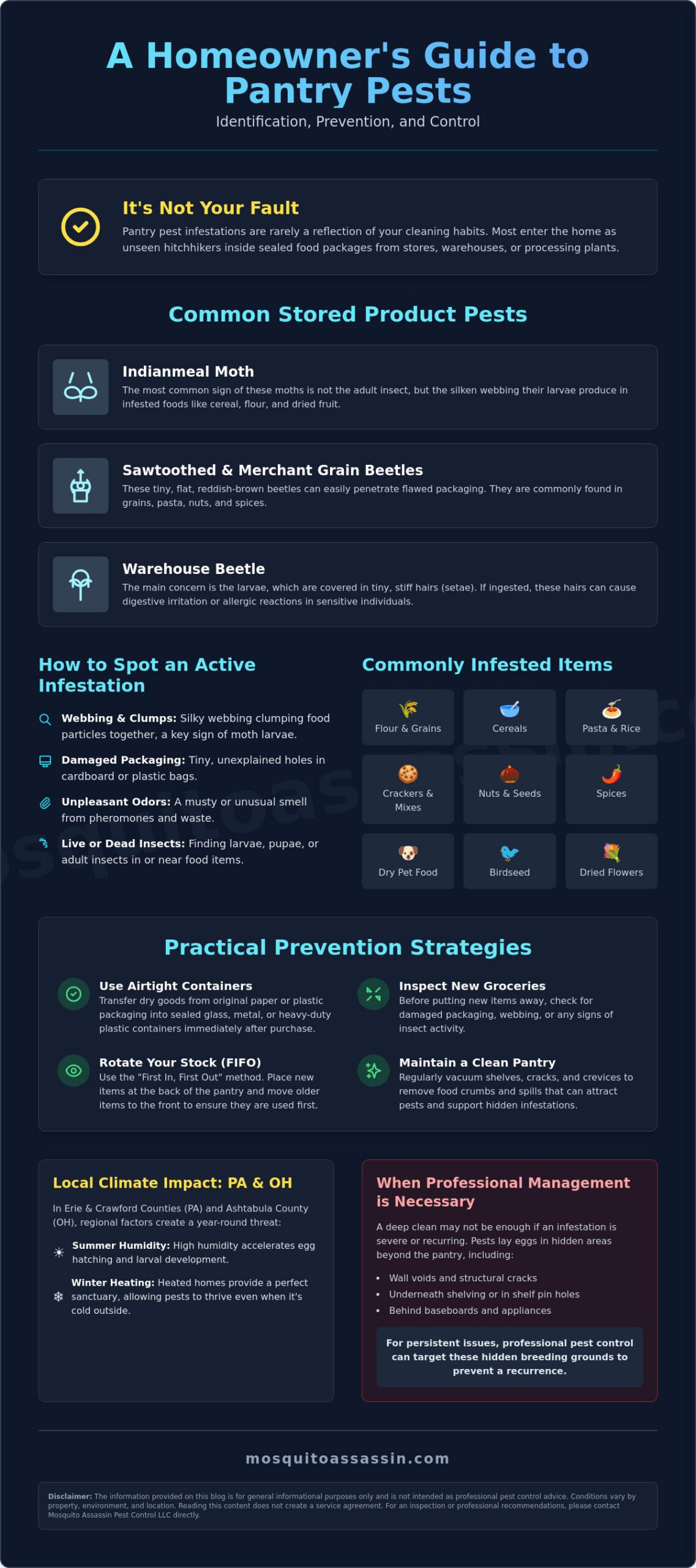
Early detection is the most effective way to prevent a minor nuisance from becoming a full-scale kitchen crisis. While seeing an adult insect is a clear sign, the most damaging evidence is often hidden inside your food containers. One of the most reliable methods for pantry pest identification is looking for “clumping” in fine-grained products like flour, cornmeal, or cake mixes. This occurs because larvae spin silken threads as they feed, which binds the food particles together into small, sticky masses. If your flour looks lumpy or has “strings” attached to the side of the bag, it’s likely contaminated.
You should also inspect the exterior of your packaging for structural damage. Many beetles are capable of chewing through paper, cardboard, and even thin plastic films. Look for tiny, pinhead-sized holes that look like they were made with a needle. These exit or entry points are a definitive sign that Pantry Pests have breached the container. You might also notice a fine, dust-like substance at the bottom of your pantry shelves. This is known as “frass,” a combination of insect excrement and chewed food debris that indicates an active feeding site.
Visual signs in food packaging
To confirm your suspicions, don’t just peek into the top of the bag. Pour the dry goods into a clear glass bowl and sift through them with a spoon. This makes it easier to spot small, cream-colored larvae or pupae cases that often hide in the dark folds of the packaging. In some cases, a large population of beetles can produce a distinct “off” or slightly minty odor that wasn’t there before. If a recently opened bag of grain smells sour or musty, it’s best to discard it immediately rather than risking a wider spread.
Behavioral clues: where pests hide
Success in pantry pest identification also depends on knowing where these insects retreat when they aren’t feeding. Check the cracks and crevices of your shelving, especially in the corners where spilled flour or sugar tends to accumulate. Larvae often crawl away from their food source to pupate; if you see small worms on your kitchen walls or near the ceiling, the source is nearby. In our region, it’s particularly important to check pet food storage in mudrooms or garages. Large bags of kibble or birdseed are prime breeding grounds that can sustain a population for months before the insects migrate into your main kitchen cabinets. If you find pests in these secondary areas, professional pest control may help reduce risk of the infestation reaching your primary food supply.
Disclaimer: The information provided on this blog is for general informational purposes only and is not intended as professional pest control advice. Conditions vary by property, environment, and location. Reading this content does not create a service agreement. For an inspection or professional recommendations, please contact Mosquito Assassin Pest Control LLC directly.
Practical Prevention Strategies for a Pest-Free Kitchen
Moving from pantry pest identification to active prevention is the most effective way to secure your kitchen and stop the cycle of food waste. Most infestations start at the grocery store, but they persist because of how dry goods are stored at home. Thin plastic bags and original cardboard boxes are essentially open doors for beetles and moths. Instead, transfer all dry goods, including flour, grains, and pet food, into airtight containers made of glass, metal, or heavy plastic. These materials are impenetrable to chewing mouthparts and prevent odors from escaping and attracting new intruders.
Implementing a “First In, First Out” (FIFO) rotation ensures that older products aren’t pushed to the back of the shelf where they can become a breeding ground. Every six months, perform a deep clean of your storage areas. Use a vacuum with a hose attachment to remove fine dust and spilled flour from the corners of shelves, as even a small amount of debris can sustain a larvae population. While these steps protect your food, general pest control provides a broader shield for your property, preventing other seasonal invaders from entering your living spaces.
Proper food storage techniques
Many homeowners don’t realize that eggs may already be present in grain products when they leave the store. To break the life cycle before it begins, place new bags of flour, rice, or cornmeal in the freezer for 72 hours. This cold treatment kills potential eggs and larvae without affecting the quality of the food. Additionally, manage spills immediately. A small dusting of cornmeal on a shelf might seem harmless, but it acts as a beacon for opportunistic insects. Wipe down surfaces with soap and water regularly, ensuring that the cracks between shelves are completely clear of organic matter.
Inspection routines for new groceries
Prevention starts in the grocery aisle. Before placing an item in your cart, check the packaging for any signs of damage, such as small punctures, frayed corners, or taped-up leaks. Be especially cautious with bulk bin items; while cost-effective, these open containers are more susceptible to contamination than factory-sealed goods. In areas like Ashtabula, Ohio, where seasonal temperature shifts drive pests indoors looking for warmth and food, sanitation is your best defense. Consistent pantry pest identification during your weekly grocery restock can stop an infestation before it ever enters your home. If you’ve followed these steps and still notice recurring issues, professional pest management can help identify structural vulnerabilities in your kitchen.
Disclaimer: The information provided on this blog is for general informational purposes only and is not intended as professional pest control advice. Conditions vary by property, environment, and location. Reading this content does not create a service agreement. For an inspection or professional recommendations, please contact Mosquito Assassin Pest Control LLC directly.
When Professional Management is Necessary for Stored Product Pests
Standard cleaning often falls short of a total resolution. Many property owners assume that discarding a single infested box of crackers ends the problem, but insects are rarely confined to one package. Effective pantry pest identification reveals that these species are highly mobile during their larval and adult stages. While you might clear the shelves, microscopic eggs often remain tucked away in structural crevices, shelf peg holes, or behind baseboards. Professional pest control may help reduce risk of these hidden populations rebounding and causing a secondary wave of contamination weeks after the initial cleanup.
Ongoing management is typically more effective than reactive, one-time DIY attempts because it addresses the changing seasonal pressures that drive insect behavior. While a homeowner can manage surface sanitation, a professional approach targets the biology of the pest to break the reproductive cycle. This is especially important for insects like the warehouse beetle or various flour beetles that can survive on microscopic amounts of organic debris for months. If you find yourself repeatedly throwing away groceries despite your best efforts, it’s a clear signal that the infestation has moved beyond the food and into the structure of your kitchen.
The limitations of DIY cleaning
Household vacuums and surface wipes are helpful for daily maintenance, but they lack the technical reach required to eliminate an established population. Microscopic eggs can survive in the deepest cracks of a kitchen cabinet where standard suction cannot reach. Additionally, DIY attempts frequently overlook secondary infestation sources. In regional homes across Pennsylvania and Ohio, it’s common to find pests breeding in a forgotten bag of birdseed in the garage or bulk pet food stored in a mudroom. These areas act as reservoirs, allowing insects to migrate back into the kitchen even after a thorough cleaning. Utilizing professional pest control services ensures a more comprehensive inspection that accounts for these hidden bypasses.
Year-round protection in Pennsylvania and Ohio
The climate in Erie and Crawford Counties, along with Ashtabula County, creates unique challenges for food storage. High humidity in the summer accelerates pest development, while the transition to heated interiors in the winter keeps them active when they would otherwise go dormant. A licensed professional can identify structural gaps, such as unsealed utility lines or gaps in cabinetry, that allow pests to move between rooms. For homeowners dealing with persistent issues, visiting the Mosquito Assassin location page can help find regional support tailored to these specific environmental conditions. Seeking a professional inspection is the most reliable way to secure your home against the long-term threat of stored product insects and ensure your food supply remains protected.
Disclaimer: The information provided on this blog is for general informational purposes only and is not intended as professional pest control advice. Conditions vary by property, environment, and location. Reading this content does not create a service agreement. For an inspection or professional recommendations, please contact Mosquito Assassin Pest Control LLC directly.
Securing Your Kitchen Against Stored Product Insects
Managing a kitchen infestation requires a combination of vigilance and systematic action. By mastering pantry pest identification, you can distinguish between a simple grocery hitchhiker and a deep-seated structural issue. Remember that transferring dry goods to airtight containers and maintaining a strict cleaning schedule are your strongest tools for long-term prevention. While these proactive steps stop many problems before they start, some infestations require the specialized tools and expertise of a licensed professional to fully resolve.
Licensed pest control professionals provide the technical expertise needed to identify hidden breeding sites and establish year-round protection for homes throughout Erie, Crawford, and Ashtabula Counties. If you’re struggling with persistent insects that keep returning despite your best efforts, professional pest control may help reduce risk to your food supply. For a professional inspection or recommendations, please contact Mosquito Assassin Pest Control LLC directly. Taking decisive action today ensures your home remains a safe and secure environment for your family.
Disclaimer: The information provided on this blog is for general informational purposes only and is not intended as professional pest control advice. Conditions vary by property, environment, and location. Reading this content does not create a service agreement. For an inspection or professional recommendations, please contact Mosquito Assassin Pest Control LLC directly.
Frequently Asked Questions
What are the most common pantry pests in Pennsylvania?
The Indianmeal moth and several species of beetles, such as the sawtoothed grain beetle and flour beetle, are the most frequent invaders in Pennsylvania and Ohio. These insects thrive in the humid summers of Erie and Crawford Counties. They are often found in flour, cereal, and dry pet food. If you see small moths flying in a zigzag pattern or tiny brown beetles in your grains, you likely have an infestation.
How do I get rid of bugs in my pantry without using chemicals?
Eliminating these pests without chemicals involves rigorous sanitation and the total removal of all contaminated food sources. Start by inspecting every package in your pantry and discarding anything with signs of activity. Vacuum the shelves, focusing on the corners and peg holes where eggs often hide. Wipe down all surfaces with warm, soapy water. This physical removal is the most effective way to disrupt their life cycle and protect your home.
Are pantry pests harmful to my health if I accidentally eat them?
Accidentally ingesting pantry pests is generally not considered a medical emergency, though it is certainly unpleasant. Most species don’t carry diseases that affect humans. However, the larvae of the warehouse beetle have tiny hairs called setae that can cause digestive irritation or allergic reactions in some people. While the health risk is low, the presence of webbing and droppings makes the food unsanitary and it should always be discarded immediately.
Can pantry pests eat through plastic bags and sealed containers?
Many stored product insects can easily chew through thin plastic bags, wax paper, and cardboard boxes. Drugstore beetles and warehouse beetles have strong mouthparts specifically designed to breach packaging. To ensure your food is safe, transfer all dry goods into airtight containers made of glass, metal, or heavy-duty plastic with secure seals. These materials provide a physical barrier that most common kitchen pests simply cannot penetrate, ensuring your food stays protected.
Where do pantry pests come from if my house is clean?
A clean home doesn’t prevent an infestation because these insects typically enter your kitchen inside infested grocery packages. Pantry pest identification often reveals that the problem began at a processing plant or warehouse before the food even reached the store. Even the most spotless kitchens in Ashtabula County can face this issue. Once a single infested bag of flour is brought inside, the insects can quickly spread to other nearby items.
How do you know if you have a pantry pest infestation versus just a stray bug?
A stray bug is usually a solitary find, whereas an infestation is marked by multiple insects, webbing, or larvae in a concentrated area. Look for silken threads that cause flour to clump together or tiny, pinhead-sized holes in packaging. If you consistently see moths flying near your ceiling or find small, worm-like larvae crawling on your walls, you are likely dealing with an active population rather than an isolated incident.
Do pantry pests spread to other parts of the house like bedrooms?
Pantry pests generally remain near their primary food sources, but they can occasionally be found in other rooms. Larvae often crawl away from food to find a dark, quiet place to pupate, which might include the tracks of sliding doors or the corners of a nearby dining room. While they won’t infest your bedding like bed bugs, they can survive in decorative items like dried flower arrangements or bean-filled heating pads.
How long does it take to get rid of a pantry pest infestation completely?
Completing the eradication process can take anywhere from a few weeks to several months depending on the species and the extent of the spread. You must break the entire life cycle, which includes eggs that may hatch after your initial cleaning. Consistent monitoring and proper food storage are essential during this time. If the problem persists after several weeks of thorough sanitation, professional pest control may help reduce risk of recurrence.
Disclaimer: The information provided on this blog is for general informational purposes only and is not intended as professional pest control advice. Conditions vary by property, environment, and location. Reading this content does not create a service agreement. For an inspection or professional recommendations, please contact Mosquito Assassin Pest Control LLC directly.