Tag: Pest Exclusion

  • Getting Rid of Pests Before Moving In: A Comprehensive Homeowner’s Guide

    Getting Rid of Pests Before Moving In: A Comprehensive Homeowner’s Guide

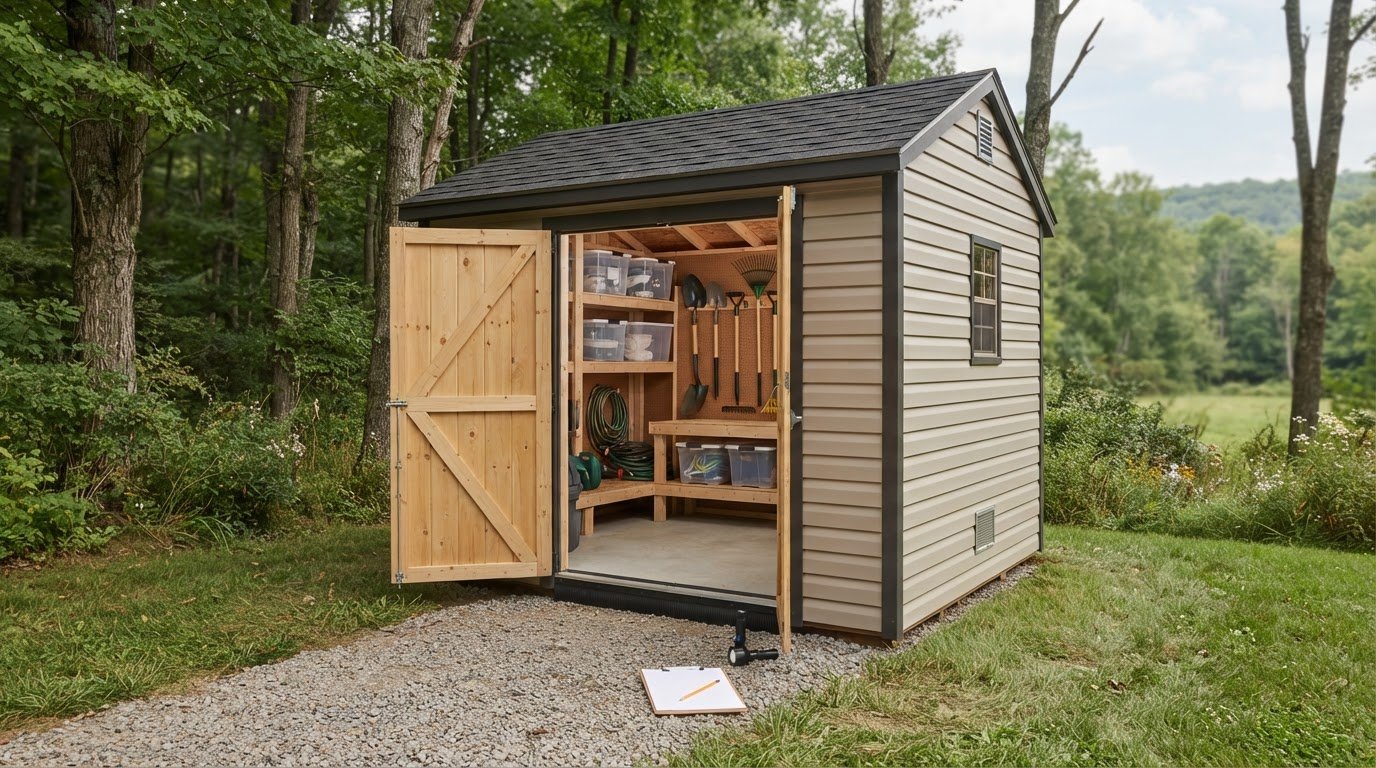
    The “Empty House Window” is a non-repeatable opportunity for total pest exclusion that disappears the moment furniture covers the baseboards and corners. Moving into a new home in Erie, Crawford, or Ashtabula County should be a celebration, yet many homeowners find themselves paralyzed by the fear of inheriting a previous owner’s infestation. It’s natural to feel anxious about rodents nesting in the walls of an older property or the risk of hitchhiking pests like bed bugs entering on moving day. You want your family and pets to step into a clean, secure environment from the very first night.

    This guide explains why an empty house provides the ultimate strategic advantage for getting rid of pests before moving in and how to identify structural vulnerabilities before they become liabilities. You’ll learn the best practices for professional exclusion and how to secure every entry point from the foundation to the roofline. By understanding pest behavior and structural sealing, you can ensure your transition is focused on settling in rather than fighting an unseen enemy.

    Disclaimer: The information provided on this blog is for general informational purposes only and is not intended as professional pest control advice. Conditions vary by property, environment, and location. Reading this content does not create a service agreement. For an inspection or professional recommendations, please contact Mosquito Assassin Pest Control LLC directly.

    Key Takeaways

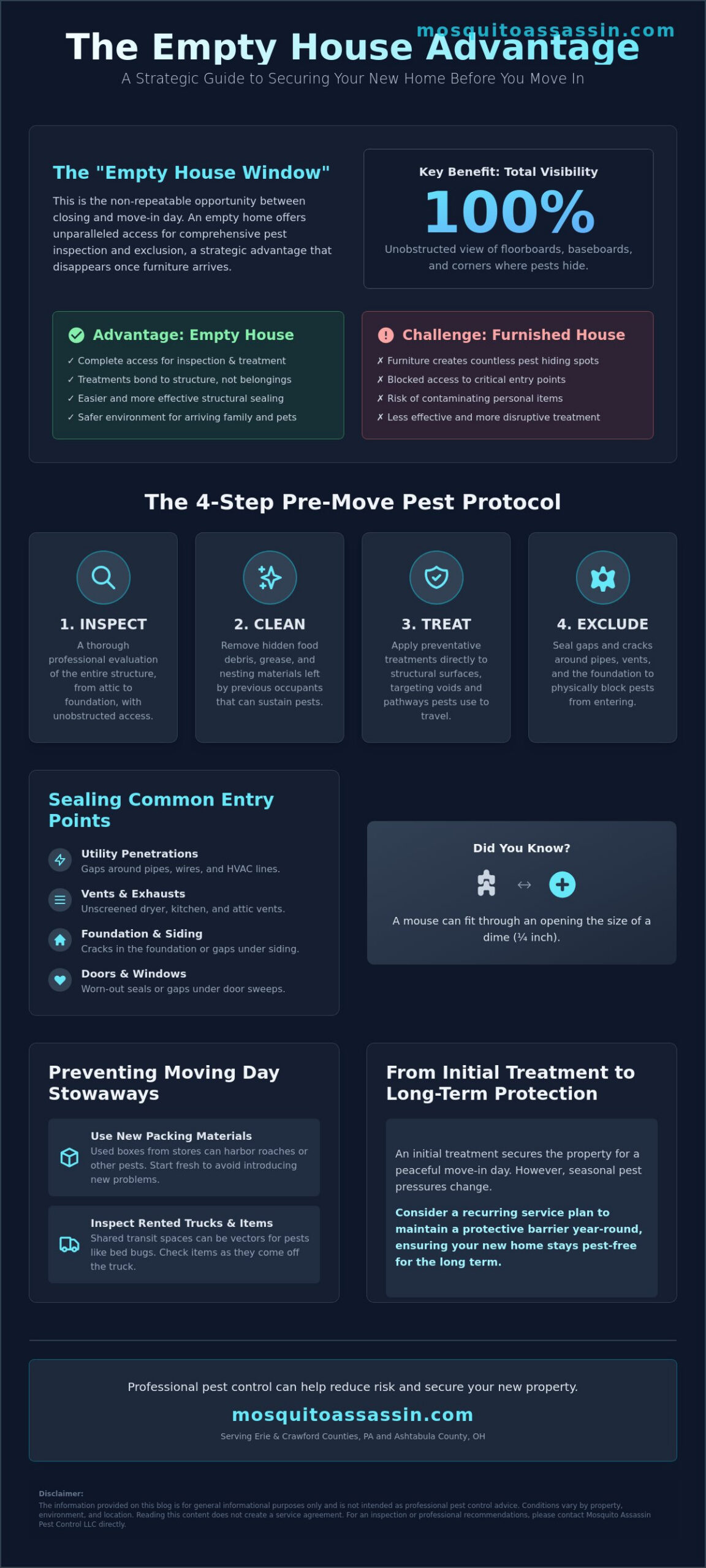
    • An empty house offers 100 percent visibility of floorboards and corners, making it the most effective time for inspection and treatment before furniture creates new hiding spots.
    • Homeowners in Northwest Pennsylvania and Northeast Ohio should prioritize getting rid of pests before moving in to address regional threats like wood-boring insects and carpenter bees.
    • Protect your new environment by using new packing materials and inspecting items moved via transit trucks, which can often act as vectors for bed bugs or roaches.
    • Structural exclusion, such as sealing gaps around utility lines and dryer vents, is significantly easier to perform before furniture blocks access to critical entry points.
    • While an initial treatment secures the property for move-in day, long-term protection through recurring service plans helps maintain a pest-free environment against seasonal pressure.

    The Strategic Advantage of Pest Prevention in an Empty Home

    The period between signing the closing papers and moving your first box is the most critical window for long-term property protection. Empty rooms offer a tactical advantage. An empty house provides 100 percent visibility of floorboards, corners, and baseboards that are usually hidden behind heavy furniture or appliances. This unobstructed access allows for a thorough inspection and the application of professional Integrated Pest Management (IPM) strategies. Without the presence of couches, beds, or kitchen islands, pests have nowhere to hide during a professional evaluation.

    To better understand how preparation impacts the effectiveness of pest control, watch this helpful video:

    Professional treatments can reach deep into wall voids and behind cabinetry where pests like cockroaches or silverfish typically congregate. By establishing preventative barriers now, you ensure that materials are applied directly to the structure’s surfaces rather than onto the backs of your belongings. This approach is safer for households with pets or children. The treatments have time to dry and bond with the building materials before any personal items are introduced to the space. This strategy is the most reliable way of getting rid of pests before moving in and protecting your new investment.

    Maximizing the Pre-Move Cleaning Window

    Cleaning and pest prevention are two sides of the same coin. When a house is vacant, it’s the perfect time to scrub away food debris, grease, or nesting materials left by previous occupants. Hidden crumbs under cabinets or behind the stove can sustain a rodent population for weeks. Getting rid of pests before moving in requires a clean slate. Look for signs of past infestations like droppings in the back of closets or grease marks along baseboards. Addressing these issues while the rooms are empty ensures you aren’t sealing pests inside with your furniture. A clean environment makes it much easier to spot new activity immediately.

    The Financial Logic of Early Prevention

    Investing in exclusion and preventative care early saves significant money over time. It’s much easier to seal a gap in the foundation or around a utility line when the area is accessible. Remember that a mouse can fit through an opening the size of a dime (about 1/4 inch). Once you’ve moved in, an infestation might require treating furniture or even replacing contaminated items. In areas like Erie County and Ashtabula County, protecting your home from wood-destroying organisms like termites is a vital part of maintaining property value. Utilizing general pest control plans before move-in day prevents pests from establishing a foothold in the structure. Early intervention is always more cost-effective than reactive extermination.

    Disclaimer: The information provided on this blog is for general informational purposes only and is not intended as professional pest control advice. Conditions vary by property, environment, and location. Reading this content does not create a service agreement. For an inspection or professional recommendations, please contact Mosquito Assassin Pest Control LLC directly.

    Identifying Regional Pests in Northwest Pennsylvania and Northeast Ohio

    Every geographic region faces specific pest pressures, and the tri-county area of Erie, Crawford, and Ashtabula is no exception. The proximity to Lake Erie creates a high-moisture environment where dampness-loving pests thrive. When properties sit vacant during a real estate transition, they become prime targets for local invaders that prioritize quiet, undisturbed spaces. Understanding the specific threats in our corner of the country is a vital part of getting rid of pests before moving in effectively.

    Local architecture often features expansive wooden decks, porches, and siding that attract carpenter bees and other wood-boring insects. Unlike honeybees, carpenter bees drill deep, perfectly circular holes into structural timber to create nesting galleries. Over time, this activity weakens the wood and attracts secondary pests. Identifying Regional Pests like these requires a keen eye for “frass” (sawdust-like waste) or staining on the exterior of the home. Because these insects are active from early spring through summer, an empty house is the perfect place to spot their entry points before you settle in.

    Rodent Behavior in Vacant Properties

    In Northwest Pennsylvania and Northeast Ohio, rodents are a year-round concern, but their activity peaks as temperatures drop. Mice and rats seek the warmth of attics, crawlspaces, and basements when a home is unoccupied. Without the daily noise of a family, these pests feel bold enough to explore every room. It’s essential to check the basement foundation for cracks, as a mouse only needs an opening the size of a dime to enter. If you discover droppings or chewed insulation, a professional rodent removal strategy for an empty home focuses on total exclusion and sealing entry points that furniture would otherwise hide.

    Crawling Insects and Structural Pests

    Quiet rooms are also magnets for spiders and ants. In older housing stock common in Crawford and Ashtabula Counties, termites can remain undetected for years within the floor joists or sill plates. Look for mud tubes along the foundation or discarded wings near windowsills. While spiders help control other bugs, large populations usually indicate a secondary infestation of smaller insects they’re preying upon. Establishing a foundation of general pest control helps eliminate these food sources. Scheduling a professional inspection in Erie or Ashtabula ensures these structural threats are identified before they cause expensive damage. Getting rid of pests before moving in isn’t just about comfort; it’s about protecting your financial investment.

    Disclaimer: The information provided on this blog is for general informational purposes only and is not intended as professional pest control advice. Conditions vary by property, environment, and location. Reading this content does not create a service agreement. For an inspection or professional recommendations, please contact Mosquito Assassin Pest Control LLC directly.

    Getting Rid of Pests Before Moving In: A Comprehensive Homeowner’s Guide

    Preventing Pest Stowaways During the Packing and Transit Process

    The success of your transition depends on more than just cleaning the new property. Even if you have spent weeks getting rid of pests before moving in to the new structure, you can easily undo that progress by transporting stowaways from your current residence or the transit vehicle itself. Pests are expert hitchhikers. They utilize the small crevices in furniture, the folds of moving blankets, and the corrugated layers of cardboard boxes to migrate into new territories. Controlling what enters your clean environment is just as important as treating the empty house.

    Cardboard boxes are a primary risk factor during a move. While they are inexpensive and accessible, recycled or second-hand boxes from grocery stores or warehouses often harbor cockroach egg casings or silverfish. These insects are attracted to the organic glues used in cardboard construction. Additionally, outdoor items like patio furniture, grills, and lawn equipment require a deep inspection. Spiders, ants, and even small rodents often nest inside the hollow legs of chairs or the dark recesses of a barbecue grill. Wiping these items down and checking for egg sacs before they touch the moving truck floor is a non-negotiable step for a pest-free arrival.

    Safe Packing Strategies

    Transitioning to plastic storage bins instead of cardboard is one of the most effective ways to prevent infestations. Plastic provides a durable, airtight seal that prevents pests from entering your belongings during storage or transit. For upholstered items, it is critical to inspect the seams of mattresses and the undersides of couches. Taking these precautions is a vital part of pest-proofing your new home and ensuring your hard work in the empty structure isn’t undone. While you focus on the logistics of the move, having a professional general pest control plan in place for both your old and new locations creates a seamless safety net for your family.

    The Moving Truck Inspection

    The moving truck itself is a commonly overlooked vector for infestations. High-turnover rental equipment travels between thousands of homes, many of which may have active bed bug or cockroach problems. Before loading a single box, perform a thorough sweep of the truck’s interior. Use a flashlight to check the corners and the wooden slats along the walls for signs of spotting or discarded skins. If you spot any activity, request a different vehicle immediately. Vigilance during the loading process ensures that getting rid of pests before moving in remains a one-time task rather than an ongoing battle in your new home in Erie or Crawford County.

    Disclaimer: The information provided on this blog is for general informational purposes only and is not intended as professional pest control advice. Conditions vary by property, environment, and location. Reading this content does not create a service agreement. For an inspection or professional recommendations, please contact Mosquito Assassin Pest Control LLC directly.
    Structural Exclusion: Sealing Entry Points Before Furniture Arrival

    While establishing chemical barriers is a vital step, physical exclusion is the most effective long-term defense for any property. An empty home offers a rare opportunity to inspect the “bones” of the structure without the obstruction of heavy boxes or decor. Identifying and sealing entry points is a primary component of getting rid of pests before moving in. Most pests, especially rodents, are opportunistic and will exploit the smallest structural vulnerabilities to find warmth and food. By addressing these gaps now, you create a permanent barrier that chemical treatments alone cannot provide.

    The garage is often the most vulnerable area of a new home. Large overhead doors frequently have worn weatherstripping at the corners, providing an easy highway for mice and spiders. Inspect the seal between the garage and the main living quarters. Additionally, check the areas where utility lines, plumbing pipes, and dryer vents penetrate the exterior walls. A mouse can squeeze through a gap the size of a dime, while a rat only needs a hole the size of a quarter. Sealing these penetrations with durable materials like steel wool or silicone caulk ensures that the interior remains secure. Foundation cracks should also be repaired while they are fully visible and accessible.

    Interior Exclusion Checklist

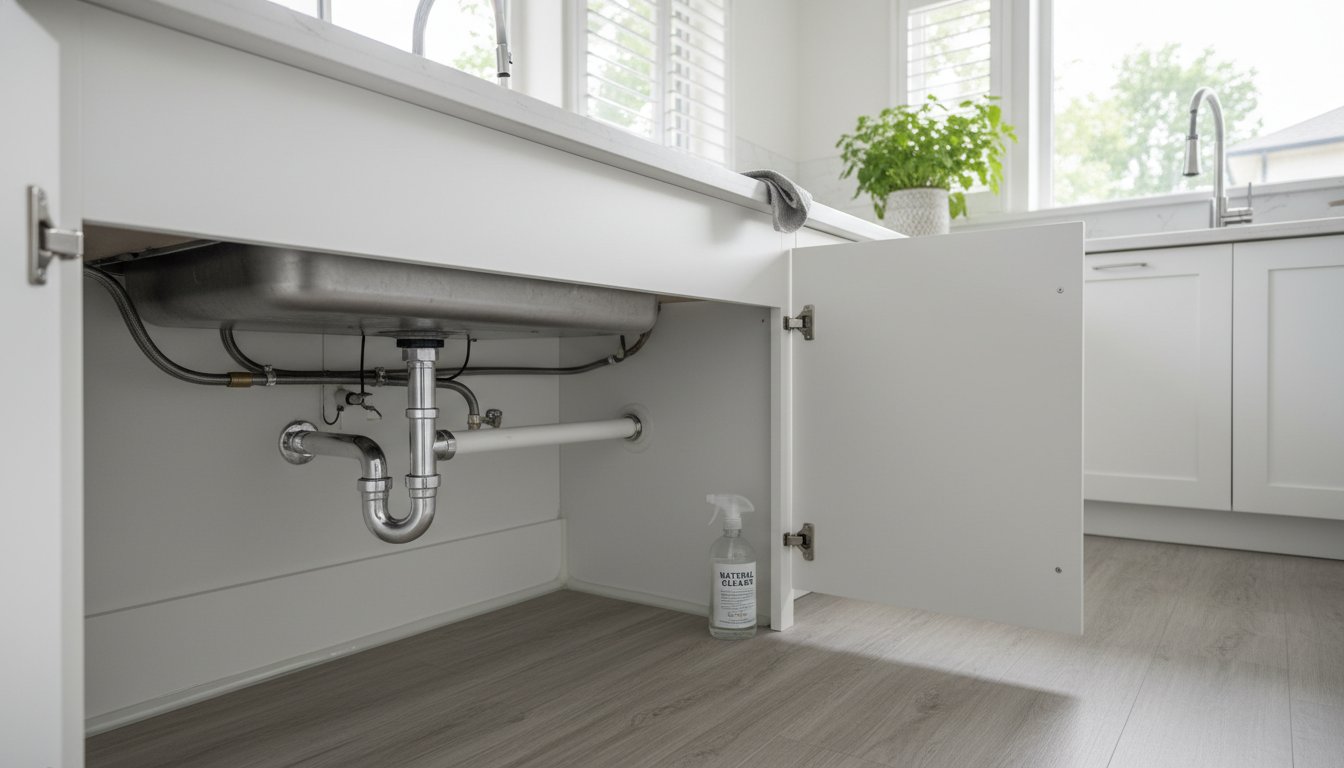
    Before your kitchen appliances are delivered and installed, inspect the wall voids behind where the stove and refrigerator will sit. These dark, warm areas are favorite nesting spots for roaches and silverfish. Check the back of every cabinet and the floor under every sink for plumbing gaps. It is also critical to examine attic insulation and crawlspace vents. Ensuring that vents have intact, fine-mesh screening prevents larger pests from taking up residence in your home’s infrastructure. These small steps are essential for getting rid of pests before moving in and maintaining a clean environment.

    Exterior Perimeter Defense

    The area immediately surrounding your foundation should be a “dead zone” for pest activity. Clear away any leaf litter, mulch, or wood piles that touch the siding, as these provide cover for dampness-loving insects. Ensure your gutters are clean and draining away from the house to prevent moisture buildup, which attracts termites and carpenter ants. Establishing a clear perimeter makes it easier to spot new activity. For homeowners in Erie and Ashtabula Counties, professional pest control may help reduce risk by applying specialized perimeter barriers that supplement your physical exclusion efforts. To secure your property before move-in day, consider scheduling a comprehensive structural inspection with a local expert.

    Disclaimer: The information provided on this blog is for general informational purposes only and is not intended as professional pest control advice. Conditions vary by property, environment, and location. Reading this content does not create a service agreement. For an inspection or professional recommendations, please contact Mosquito Assassin Pest Control LLC directly.
    Transitioning from Initial Treatment to Long-Term Pest Management Plans

    Achieving a pest-free start is a major milestone, but maintaining that security requires a shift in strategy once you’ve settled. While the initial focus was on getting rid of pests before moving in, the long-term goal is preventing their return. Pests are a persistent environmental pressure. A single treatment provides immediate relief, but it cannot account for the changing biological cycles of insects or the seasonal migration patterns of rodents in Northwest Pennsylvania and Northeast Ohio. Protective barriers naturally degrade over time, and new entry points can develop as a house settles or as weather patterns change.

    In counties like Erie, Crawford, and Ashtabula, the weather dictates pest behavior. Heavy spring rains often drive ant colonies indoors, while the arrival of winter pushes mice to seek the warmth of your attic or crawlspace. A recurring management plan ensures that protective barriers are refreshed before these seasonal surges occur. Building a relationship with a local professional allows for consistent monitoring of your property’s specific vulnerabilities, such as new cracks in the foundation or shifting door sweeps. This ongoing vigilance is the most effective way of getting rid of pests before moving in and keeping them out for good.

    The Importance of Ongoing Protection

    Pests don’t stop looking for entry points just because a house is occupied. In fact, the presence of food, water, and climate control makes your home even more attractive to invaders. Regular inspections catch structural issues, like moisture damage or new gaps in siding, before they escalate into full-blown infestations. This proactive approach is why many commercial pest control services rely on a recurring model to protect high-stakes environments. For homeowners, bi-monthly or quarterly plans provide the same level of professional oversight and peace of mind for the family.

    Preparing for the First 90 Days

    The first few months in a new home are a period of adjustment for both the structure and the family. As you begin cooking, managing household waste, and using the plumbing regularly, you may notice pests that were dormant when the house was empty. It’s wise to schedule a follow-up inspection approximately 90 days after the move is complete to ensure that no new entry points were created during the transition. If you notice any activity, professional pest control may help reduce risk. Maintaining a consistent general pest control plan is the most effective way to protect your property investment and ensure a healthy living environment.

    Disclaimer: The information provided on this blog is for general informational purposes only and is not intended as professional pest control advice. Conditions vary by property, environment, and location. Reading this content does not create a service agreement. For an inspection or professional recommendations, please contact Mosquito Assassin Pest Control LLC directly.

    Establishing a Foundation for a Pest-Free Future

    Transitioning into a new property is the perfect time to establish a clean slate for your family. By utilizing the empty house window, you’ve seen how structural exclusion and thorough transit inspections prevent common regional threats from taking hold. Consistency remains the most important factor for long-term success. Initial efforts for getting rid of pests before moving in are most effective when paired with a monitoring strategy that accounts for the unique seasonal pressures of Northwest Pennsylvania and Northeast Ohio.

    Professional pest control may help reduce the risk of infestations in your new home. For an inspection or professional recommendations, please contact the team at Mosquito Assassin Pest Control LLC. Licensed professionals serving Erie and Crawford Counties in PA and Ashtabula County in OH bring specialized expertise in both residential and commercial pest management. With comprehensive year-round protection plans available, you can focus on making your new house a home while experts handle the technical defense. Secure your peace of mind today and enjoy your first night in a protected environment.

    Disclaimer: The information provided on this blog is for general informational purposes only and is not intended as professional pest control advice. Conditions vary by property, environment, and location. Reading this content does not create a service agreement. For an inspection or professional recommendations, please contact Mosquito Assassin Pest Control LLC directly.
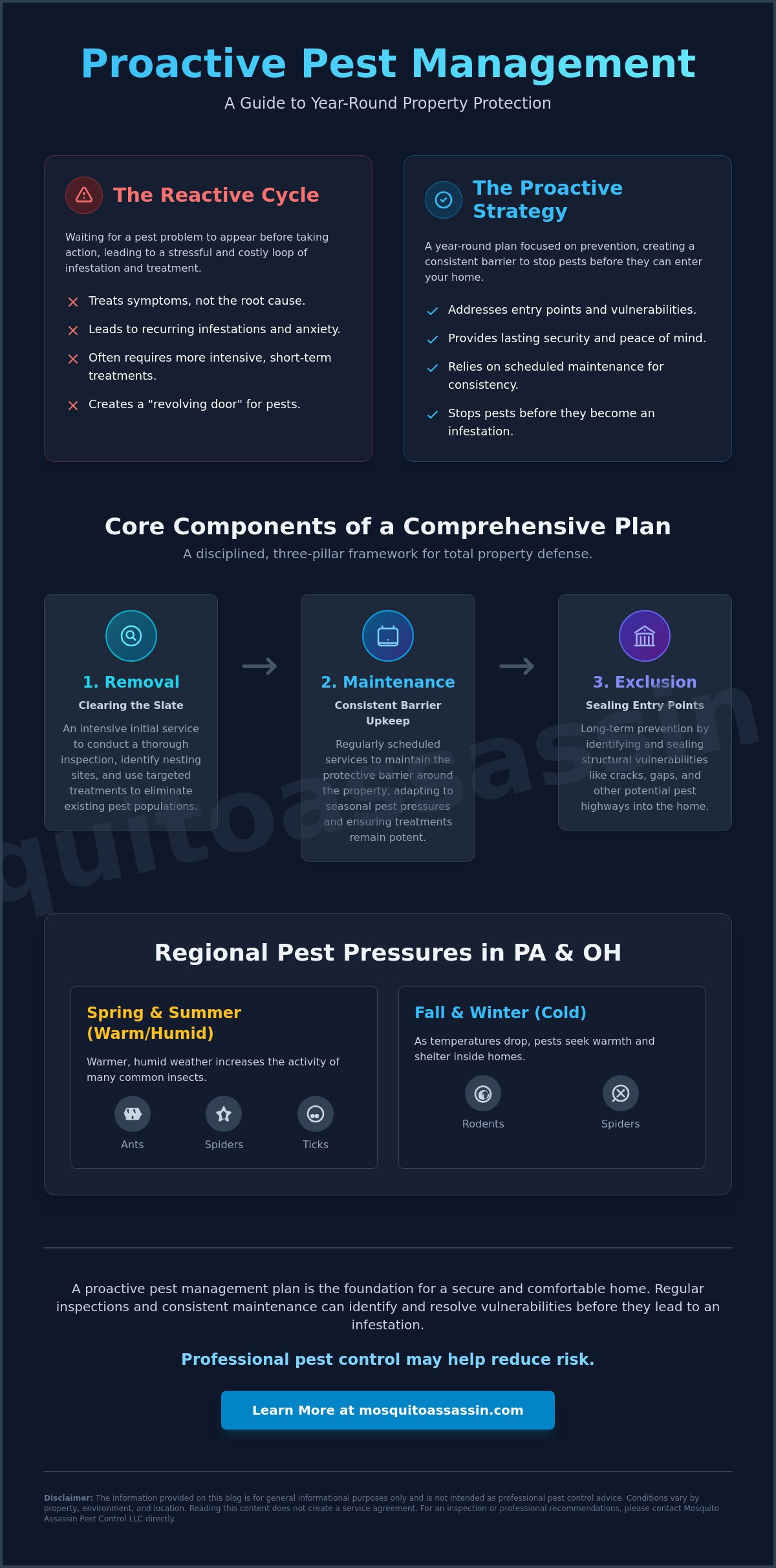
    Frequently Asked Questions

    Is it better to do pest control before or after moving in?

    It is significantly better to perform pest control before moving your belongings into the home. An empty house provides 100 percent visibility of the floors, corners, and baseboards that furniture would normally hide. This accessibility allows technicians to apply preventative barriers directly to the structure without the risk of contaminating personal items. This strategic window is the most effective time for getting rid of pests before moving in and securing the property.

    How long should I wait to move in after a pest control treatment?

    Most professionals recommend waiting two to four hours after a treatment before re-entering the home. This time allows liquid applications to dry completely and bond with the surfaces of the structure. Always follow the specific instructions provided by your licensed technician, as drying times can vary based on local humidity levels. Waiting for the products to dry ensures that the treatment is both effective and safe for your family and pets.

    Can pests live in an empty house with no food source?

    Pests can live in an empty house for a long time. Many species, such as termites, feed directly on the wood used in the home’s construction. Others, like silverfish, find sustenance in the adhesives found in wallpaper or the starch in leftover cardboard boxes. Spiders and rodents only need a consistent water source and a quiet nesting site to survive. Even without human food, a vacant structure provides plenty of resources for pests to thrive.

    Should I get a termite inspection even if the home appraiser did not require one?

    You should always schedule a professional termite inspection even if it is not required by an appraiser. Appraisers focus on the general market value and visible structural integrity of the home, but they are not trained to detect the subtle signs of wood-destroying organisms. Termites can cause significant damage inside wall voids and floor joists that remains hidden during a standard walkthrough. An inspection protects your financial investment from expensive, unseen structural damage.

    Do I need pest control for a brand new construction home?

    Yes, new construction homes often require pest control because the building site was likely exposed to the elements for months. Scraps of lumber and food waste from construction crews can attract rodents and insects before the walls are finished. Additionally, the high moisture levels in new concrete and drywall can attract dampness-loving pests like silverfish. Establishing a preventative barrier helps ensure your brand new home stays secure from the very first day.

    What are the most common pests to look for in an empty house in Erie, PA?

    In Erie, PA, you should look for mice, spiders, and carpenter bees in vacant properties. The high-moisture environment near Lake Erie also attracts carpenter ants and moisture-loving silverfish. During the winter months, rodents frequently migrate into attics and crawlspaces to escape the cold. Identifying these regional threats early is a vital part of getting rid of pests before moving in and prevents them from nesting in your walls before you arrive.

    Can bed bugs travel in a moving truck?

    Bed bugs are expert hitchhikers and can easily travel in a moving truck by hiding in moving blankets or the crevices of the vehicle walls. Because rental equipment has high turnover, it can become a vector for pests from previous users. It is critical to inspect the interior of any rental vehicle before loading your belongings. Using plastic bins instead of cardboard boxes also helps reduce the risk of introducing these pests into your home.

    How much does a pre-move pest inspection typically cost?

    The cost of a pre-move inspection depends on the size of the home and the specific pests being targeted. Factors such as the square footage of the property and the accessibility of attics or crawlspaces can influence the final price. While prices vary by property and location, most homeowners find that an initial inspection is a cost-effective way to prevent the much higher expenses of treating a full-blown infestation after they have moved in.

    Disclaimer: The information provided on this blog is for general informational purposes only and is not intended as professional pest control advice. Conditions vary by property, environment, and location. Reading this content does not create a service agreement. For an inspection or professional recommendations, please contact Mosquito Assassin Pest Control LLC directly.
  • Winter Pest Control Services: A Guide for Pennsylvania and Ohio Homeowners

    Winter Pest Control Services: A Guide for Pennsylvania and Ohio Homeowners

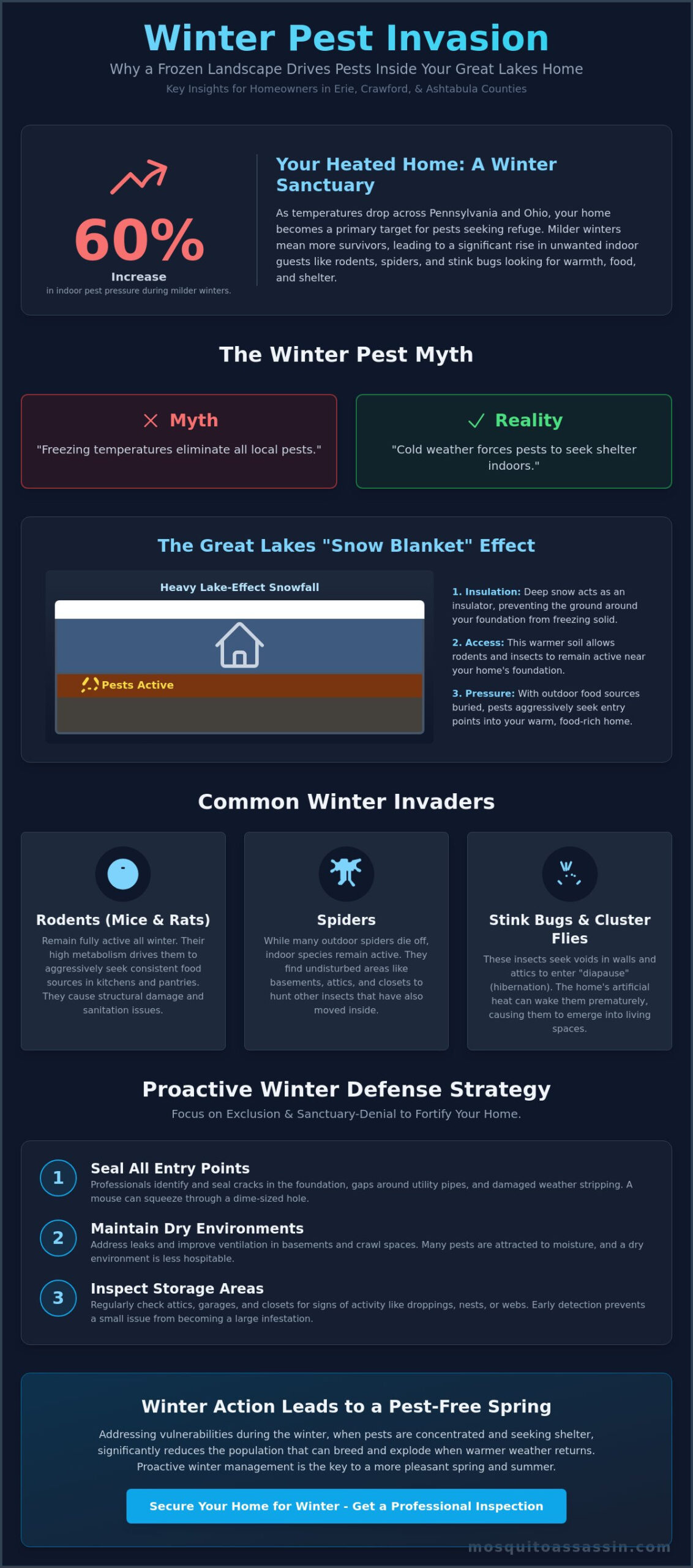
    Why would a homeowner invest in winter pest control services when the ground is frozen and the insects appear to be gone? It is a common assumption that the Great Lakes winter acts as a natural reset for local ecosystems, yet the reality inside a heated home is often quite different. While the exterior environment remains harsh, the interior of a house becomes a primary sanctuary for survival. Data for the 2025-2026 season indicates that milder winters are leading to a 60 percent increase in indoor pressure from pests like rodents, spiders, and stink bugs in the region.

    You likely agree that finding mouse droppings in the pantry or spotting a spider in the living room during the holidays is an unwelcome stress. This guide explains why professional winter management is essential for protecting properties in Erie County, Crawford County, and Ashtabula County from structural damage and sanitation issues. By focusing on exclusion and sanctuary-denial, homeowners can maintain a pest-free environment throughout the coldest months. This article examines common entry points, the behavior of overwintering insects, and the long-term benefits of prevention for the upcoming spring season.

    Disclaimer: The information provided on this blog is for general informational purposes only and is not intended as professional pest control advice. Conditions vary by property, environment, and location. Reading this content does not create a service agreement. For an inspection or professional recommendations, please contact Mosquito Assassin Pest Control LLC directly.
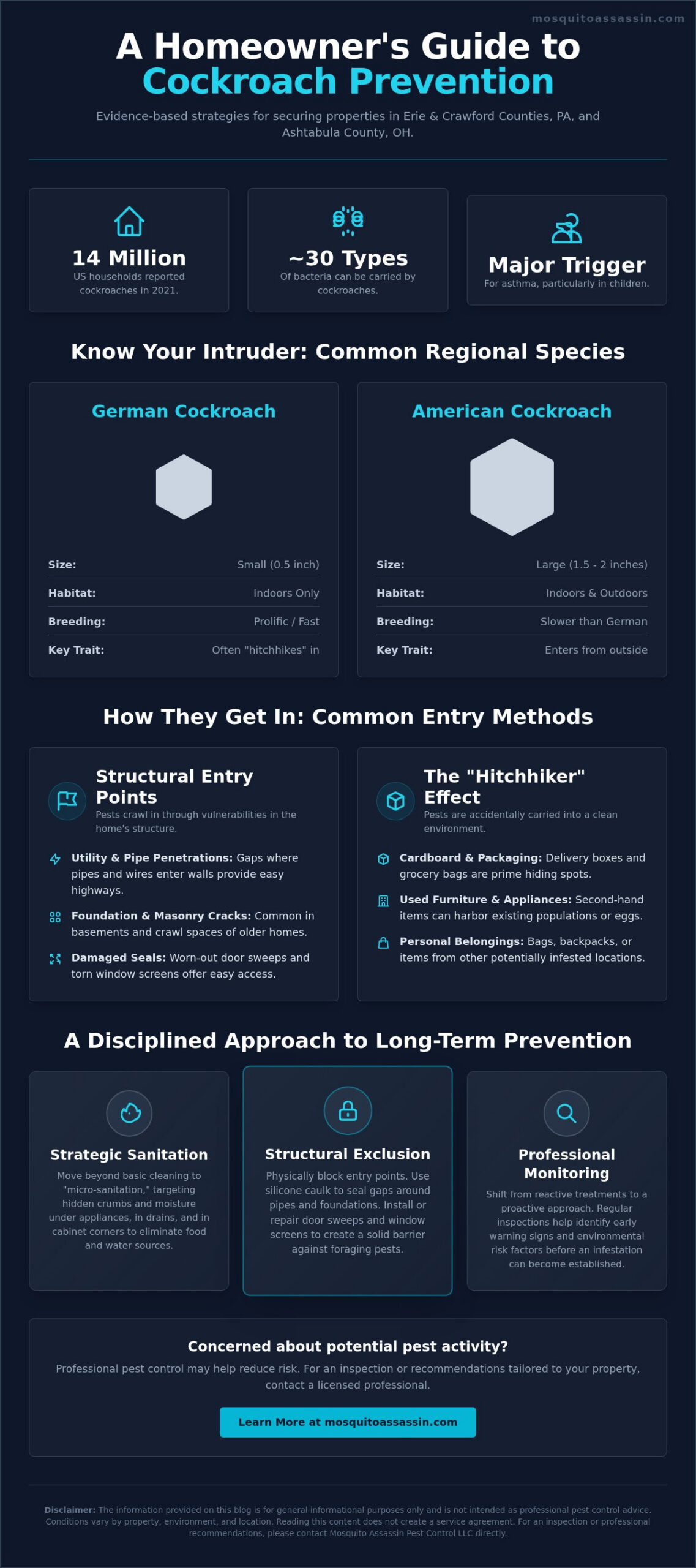
    Key Takeaways

    • Understand why freezing temperatures in Pennsylvania and Ohio do not eliminate pests but instead drive them indoors toward heat and food sources.
    • Learn how professional winter pest control services utilize structural fortification and exclusion to physically block rodents and insects from entering the home.
    • Identify the specific behaviors of common winter invaders like rodents and spiders, which remain active indoors throughout the coldest months.
    • Discover practical prevention strategies, such as maintaining dry environments and inspecting storage areas, to catch infestations early.
    • Explore how addressing entry points during the winter can significantly reduce pest activity and pressure for the following spring.

    Why Winter Pest Control Services Are Essential in Cold Climates

    Winter pest control services involve the systematic identification and sealing of entry points that pests use to seek refuge from the elements. Many homeowners believe that the freezing temperatures characteristic of the Great Lakes region naturally eliminate insect and rodent populations. However, cold weather in areas like Erie County doesn’t eradicate these pests; it simply forces them to relocate. When the external environment becomes inhospitable, the climate-controlled interior of a home becomes the primary target for survival.

    Professional management during the colder months shifts focus from broad outdoor barriers to the interior and the immediate perimeter of the structure. Maintaining this defensive line is a critical step in preventing a population explosion when spring temperatures arrive. By addressing vulnerabilities while pests are concentrated in specific nesting areas, homeowners can avoid the widespread infestations that often follow a winter of neglect. Professional pest control may help reduce risk by identifying these hidden sanctuary spots before they become unmanageable.

    To better understand this concept, watch this helpful video:

    The Biological Reality of Overwintering Pests

    Many insects in Pennsylvania and Ohio enter a state known as diapause. This is a biological mechanism similar to hibernation where metabolic activity slows significantly to conserve energy. However, the artificial warmth generated by modern heating systems can disrupt this cycle. When a home stays at a consistent temperature, pests like stink bugs or cluster flies may become active prematurely. They often emerge into living areas in search of moisture or food. Survival mechanisms for local insects often involve producing specific proteins that prevent cell damage during deep freezes, meaning they’re ready to resume activity the moment they find a heat source.

    Lake Effect Winters and Pest Migration

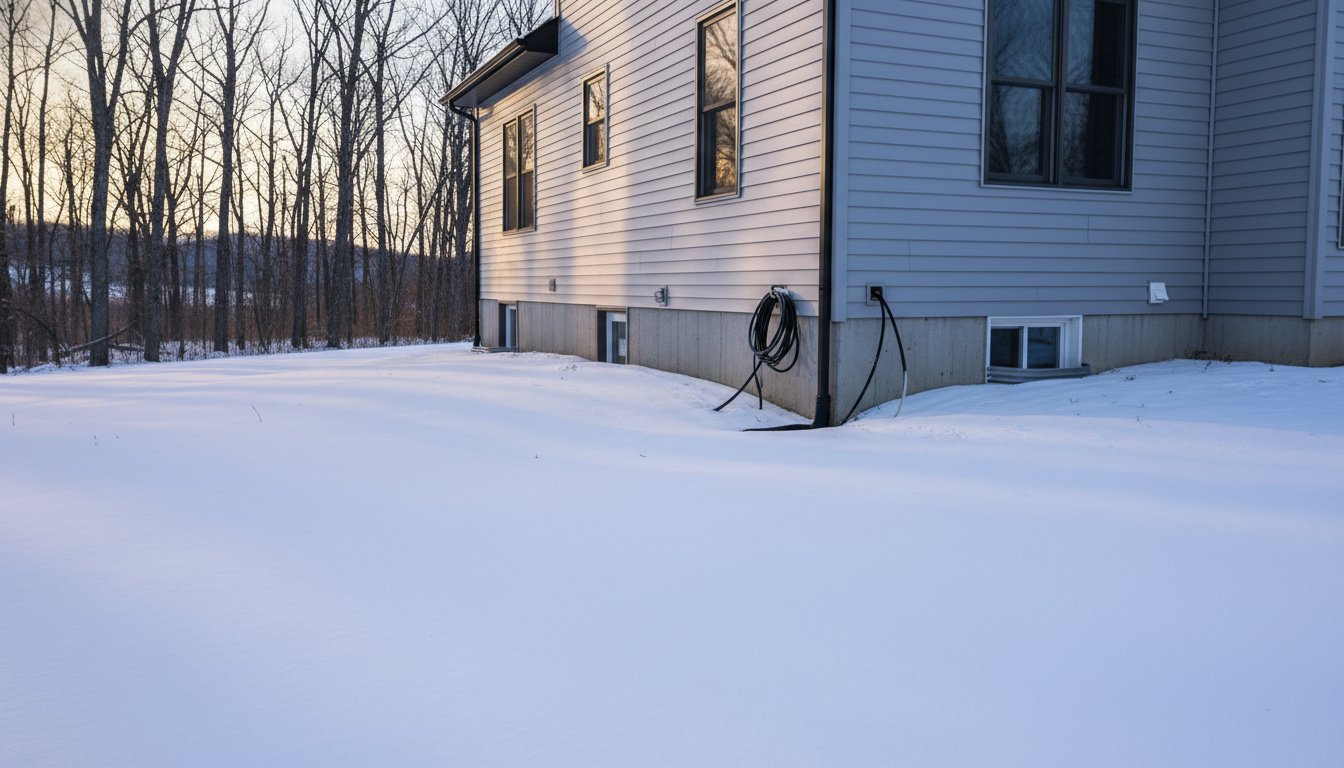
    In Ashtabula and Crawford counties, heavy lake-effect snowfall creates a unique environment for pest migration. While deep snow might seem like a deterrent, it actually acts as a powerful insulator for foundations. This snow blanket prevents the ground near the home from freezing as deeply, allowing insects and rodents to remain active near entry points. Extreme cold puts immense pressure on rodent populations, such as mice and rats, to find consistent caloric intake. Because their natural outdoor food sources are buried, they aggressively seek out kitchens and pantries. During intense lake-effect storms, attic spaces and basements become primary targets for nesting because they offer undisturbed sanctuary away from the wind and snow.

    Disclaimer: The information provided on this blog is for general informational purposes only and is not intended as professional pest control advice. Conditions vary by property, environment, and location. Reading this content does not create a service agreement. For an inspection or professional recommendations, please contact Mosquito Assassin Pest Control LLC directly.
    Common Pests Found in Pennsylvania and Ohio Homes During Winter

    While the previous section explained the environmental drivers behind pest migration, identifying the specific species that invade local properties is the next step in effective management. Rodents are the most frequent winter invaders because their high metabolism requires a consistent caloric intake that the frozen outdoors cannot provide. Unlike many insects, rodents don’t enter diapause; they remain fully active and destructive throughout the season. Homeowners often seek professional winter pest control services to address these mammals before they establish permanent nesting sites.

    Spiders also remain active indoors where humidity levels and food sources are stable. While summer spiders often die off or lay eggs and disappear, indoor species can thrive year-round in the controlled climate of a basement or crawlspace. Additionally, cockroaches thrive in moisture-rich environments like kitchens and bathrooms. Because winter air is naturally dry, these pests congregate around leaky pipes or under sinks. Finally, overwintering insects such as brown marmorated stink bugs and multi-colored Asian lady beetles may emerge on sunny winter days, mistakenly believing spring has arrived due to the warmth hitting the home’s siding.

    Rodent Behavior and Nesting Habits

    Mice and rats are masters of finding small vulnerabilities in a home’s exterior. Common signs of an active infestation include small, dark droppings, gnaw marks on food packaging or baseboards, and greasy rub marks along walls. These animals target fiberglass or cellulose insulation because it provides the perfect material for nesting. By shredding insulation in attics and crawlspaces, they compromise the home’s energy efficiency. Beyond structural damage, rodents pose significant health risks. Their droppings and urine can contaminate surfaces with pathogens such as Salmonella or trigger respiratory issues in sensitive individuals. Professional pest control may help reduce risk by removing attractants and sealing entry points.

    Spider Activity and Indoor Food Chains

    It’s a common misconception that all spiders come inside from the garden when it gets cold. In reality, many indoor spiders belong to species that have evolved to live specifically in human structures. A sudden increase in spider sightings often indicates a secondary infestation of smaller prey insects like fruit flies, fungus gnats, or silverfish. Spiders typically congregate in undisturbed areas where they can spin webs without interference. Basements, dark storage corners, and the spaces behind large appliances are primary hotspots. While most local spiders are harmless, their presence serves as a biological indicator that the home’s “indoor ecosystem” is supporting a variety of smaller pests that require professional attention.

    Disclaimer: The information provided on this blog is for general informational purposes only and is not intended as professional pest control advice. Conditions vary by property, environment, and location. Reading this content does not create a service agreement. For an inspection or professional recommendations, please contact Mosquito Assassin Pest Control LLC directly.
    Winter Pest Control Services: A Guide for Pennsylvania and Ohio Homeowners

    The Importance of Exclusion and Structural Fortification

    Exclusion is the practice of physically blocking pests from entering a structure. It represents a shift from reactive treatments to proactive structural fortification. While the previous sections discussed the biological pressure of lake-effect winters, exclusion provides the physical barrier necessary to withstand that pressure. Many homeowners find that winter pest control services are most effective during the coldest months because pest activity is concentrated at specific entry points. Identifying these vulnerabilities now prevents an established infestation from taking root deep within the walls or attic.

    Professional technicians focus on utility penetrations and foundation gaps during a winter inspection. These are the highways that rodents and insects use to navigate from the frozen soil to the warmth of a basement. Sealing these areas offers a permanent solution that significantly reduces the reliance on seasonal chemical applications in the future. By denying sanctuary to pests, property owners in Erie and Crawford counties can maintain a more sanitary living environment without constant intervention.

    Identifying Common Entry Points

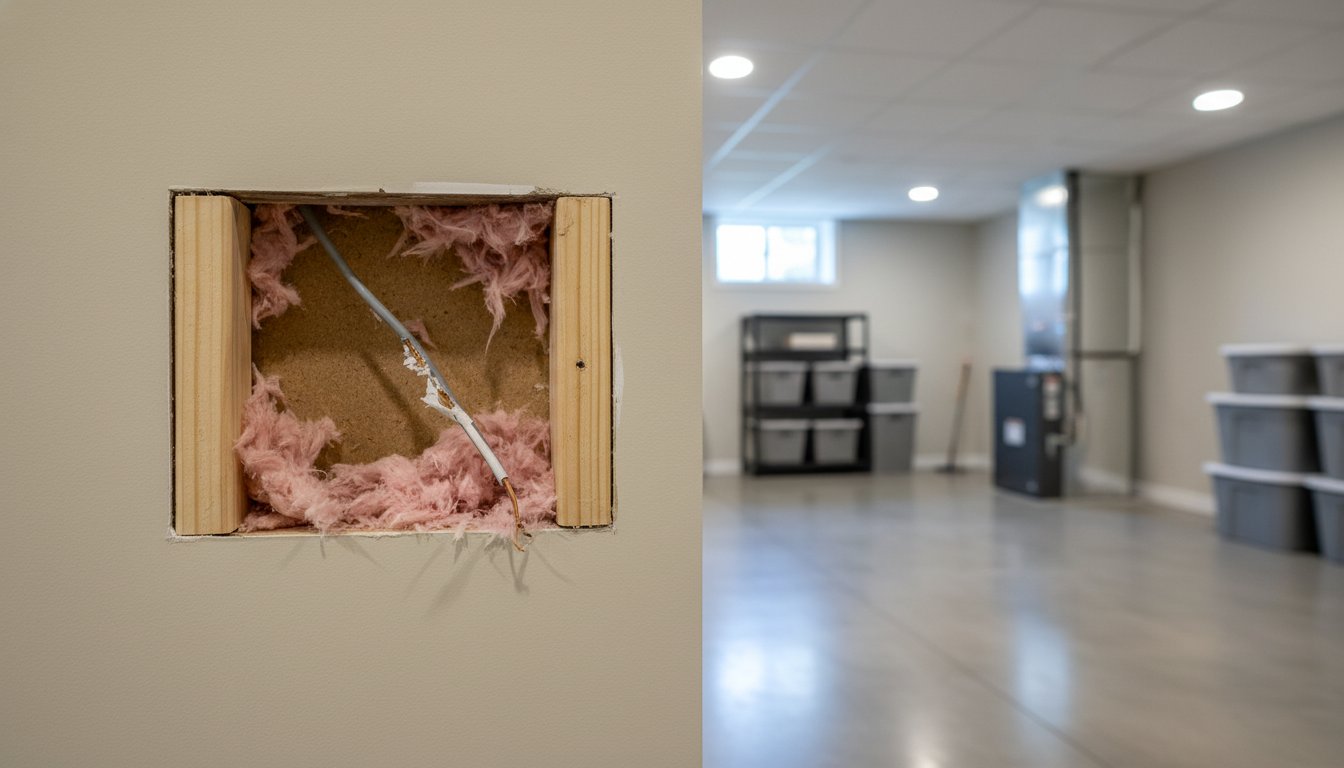
    The most vulnerable areas of a home are often where plumbing, gas, and electrical lines enter the building. Over time, the materials around these penetrations can settle or degrade, leaving gaps. Damaged door sweeps and torn window screens also facilitate easy migration for spiders and stink bugs. A critical rule of thumb used by professionals is the pencil test. If a gap is at least a quarter inch wide, or roughly the diameter of a standard pencil, it’s large enough for a young mouse to squeeze through. These tiny openings are frequently found at the corners of garage doors or where the siding meets the foundation. Professional pest control may help reduce risk by locating these hidden breaches that are often missed during a casual walkthrough.

    Materials Used in Professional Exclusion

    Effective exclusion requires materials that can withstand the persistent gnawing of rodents. Professionals often use copper mesh or stainless steel wool to pack gaps before applying specialized sealants. Unlike standard expanding foam, which mice can easily chew through to create a tunnel, these metallic barriers provide a painful and impenetrable deterrent. High-grade elastomeric sealants are then used to create a weather-tight finish. Weather stripping is another essential component. While it’s often viewed as a way to improve energy efficiency, it also serves as a critical barrier against crawling insects. Using the right materials ensures that the fortification remains intact despite the extreme temperature fluctuations common in Ashtabula County.

    Disclaimer: The information provided on this blog is for general informational purposes only and is not intended as professional pest control advice. Conditions vary by property, environment, and location. Reading this content does not create a service agreement. For an inspection or professional recommendations, please contact Mosquito Assassin Pest Control LLC directly.

    Homeowner Checklist for Winter Pest Prevention

    While structural fortification provides the necessary physical barrier against invaders, daily maintenance serves as the first line of defense. Professional winter pest control services are most effective when paired with consistent homeowner habits that remove the incentives for pests to remain. A clean and dry environment eliminates the food and water sources that attract rodents and insects during the harsh winters of Northwest Pennsylvania and Northeast Ohio. By following a systematic checklist, you can significantly reduce the likelihood of a mid-winter infestation taking root in your living space.

    Regular inspections of storage areas like basements, attics, and garages are essential. Pests thrive in undisturbed environments, so moving boxes and checking for signs of shredded paper or droppings can help catch a problem before it spreads. Managing indoor humidity is also a critical factor. Because winter air is naturally dry, pests are aggressively drawn to any source of moisture within a home. Addressing these attractants now prevents the structural damage and sanitation issues that often occur when pests are left to nest until spring.

    Kitchen and Pantry Management

    Pantry pests and rodents are drawn to the scent of unsealed food. Cardboard packaging offers no protection against gnawing teeth, so dry goods should be transferred into airtight plastic or glass containers. It’s also vital to clean behind stoves and refrigerators where grease and crumbs accumulate over time. Finally, fixing leaks under sinks immediately removes the moisture sources that sustain cockroaches and silverfish throughout the coldest months of the year.

    Exterior Perimeter Maintenance

    Pest pressure often starts at the woodpile. Keep firewood at least twenty feet from the foundation to prevent it from serving as a bridge for rodents. Clearing dead leaves and vegetation away from the home’s perimeter removes the damp environments that attract overwintering insects. Additionally, ensure gutters remain clear of debris. Clogged gutters trap moisture against the roofline, eventually rotting wood and creating soft entry points for pests seeking the warmth of your attic.

    Implementing these simple changes can make your property far less inviting to unwanted guests. For homeowners who want to ensure their defenses are complete, scheduling winter pest control services provides a professional evaluation of hidden risks. A thorough inspection can identify vulnerabilities that are often missed by the untrained eye, ensuring your home remains a sanctuary throughout the holiday season.

    Disclaimer: The information provided on this blog is for general informational purposes only and is not intended as professional pest control advice. Conditions vary by property, environment, and location. Reading this content does not create a service agreement. For an inspection or professional recommendations, please contact Mosquito Assassin Pest Control LLC directly.
    Professional Winter Pest Management Strategies

    Professional winter pest control services provide the final layer of defense by identifying hidden nesting sites that are inaccessible to the average homeowner. While previous sections highlighted the importance of exclusion and sanitation, a professional inspection uncovers activity within the structural voids of the building. Licensed technicians utilize localized treatments that are both targeted and family-safe, ensuring the interior environment remains protected without unnecessary chemical exposure. Year-round protection plans are particularly valuable in the Great Lakes region because they ensure the exterior barrier is reinforced as soon as the ground thaws in the spring.

    Ongoing monitoring is necessary because a home is a dynamic structure. House settling or damage from heavy winter storms in Ashtabula County can create new vulnerabilities in the foundation or roofline. Professional pest control may help reduce risk by catching these changes before they are exploited by a new wave of invaders. This proactive approach ensures that the structural fortification discussed earlier remains intact throughout the year.

    The Comprehensive Inspection Process

    A thorough professional evaluation covers the most secluded areas of a property, including crawlspaces, attics, and basements. These are the locations where pests such as rodents and spiders are most likely to establish long-term colonies. Technicians use specialized tools to detect activity behind walls, such as moisture meters that identify the damp conditions favored by cockroaches and silverfish. A customized plan is then developed based on the specific architecture of the home, whether it’s a historic farmhouse in Crawford County or a modern suburban residence in Erie. This tailored strategy ensures that every unique vulnerability is addressed.

    Targeted Interior Treatments

    When an infestation is detected inside the home, professionals use precise application methods like gel baits and dusts within wall voids. These materials are placed specifically where pests congregate, which is often far away from the reach of children and pets. This targeted approach is a core part of modern pest management, focusing on effectiveness while maintaining high safety protocols for residents. Addressing infestations at the source prevents pests from spreading to other areas of the house. Professional pest control may help reduce risk by utilizing these specialized protocols that provide long-term results while prioritizing the health of the household.

    Disclaimer: The information provided on this blog is for general informational purposes only and is not intended as professional pest control advice. Conditions vary by property, environment, and location. Reading this content does not create a service agreement. For an inspection or professional recommendations, please contact Mosquito Assassin Pest Control LLC directly.
    Securing Your Home for the Season Ahead

    Maintaining a pest-free home in the Great Lakes region requires a shift from reactive treatments to proactive structural defense. As discussed throughout this guide, the biological drive for warmth and food during lake-effect winters pushes rodents and insects into human living spaces. Effective winter pest control services focus on identifying vulnerabilities, such as gaps as small as a quarter inch, and sealing them with durable materials like copper mesh. This proactive approach prevents the structural damage caused by nesting and the sanitation risks associated with overwintering insects.

    Professional pest control may help reduce risk by providing a comprehensive evaluation of your property’s perimeter and interior voids. To safeguard your home, contact a licensed professional for a winter inspection. Utilizing a locally owned and operated provider from Cranesville ensures your technician understands the specific environmental pressures of Erie, Crawford, and Ashtabula counties. With the right combination of homeowner maintenance and professional oversight, you can enjoy a quiet, comfortable, and sanitary winter season. Mosquito Assassin is licensed and insured in both Pennsylvania and Ohio, utilizing family-safe treatment protocols to protect your household.

    Disclaimer: The information provided on this blog is for general informational purposes only and is not intended as professional pest control advice. Conditions vary by property, environment, and location. Reading this content does not create a service agreement. For an inspection or professional recommendations, please contact Mosquito Assassin Pest Control LLC directly.
    Frequently Asked Questions

    Does the cold weather kill off all the bugs in the winter?

    Cold weather does not eliminate pest populations in Pennsylvania or Ohio; it merely changes their behavior. Many insects enter diapause, a state of dormant metabolic activity, while others seek the artificial warmth of residential structures. Data from 2026 suggests that milder winters are increasing the survival rates of overwintering pests, leading to higher indoor pressure during the coldest months when pests seek sanctuary.

    Why am I seeing spiders in my house during a snowstorm?

    Spiders seen during a snowstorm are typically indoor species that live within the structural voids of your home year-round. These pests don’t come in from the cold; rather, the consistent indoor temperature and humidity allow them to remain active. Their presence often indicates a secondary food source of smaller insects, such as silverfish or fungus gnats, that are also thriving in the climate-controlled environment.

    How do mice get into my house if I keep the doors and windows shut?

    Mice enter homes through structural vulnerabilities rather than open doors or windows. A young mouse can squeeze through a gap as small as a quarter inch, which is roughly the diameter of a pencil. Common entry points include gaps around utility penetrations, cracks in the foundation, or compromised siding. Professional winter pest control services focus on identifying and sealing these hidden breaches to deny entry effectively.

    Is it safe to have pest control treatments done inside during the winter?

    Professional interior treatments are safe when performed by licensed technicians using targeted protocols. Modern pest management utilizes localized applications, such as gel baits or dusts placed deep within wall voids, to keep materials away from children and pets. These family-safe methods address infestations at the source while maintaining a healthy indoor environment during the months when families spend most of their time inside.

    What are the most common signs of a winter rodent infestation?

    The most frequent indicators of rodents are small, dark droppings and greasy rub marks along baseboards. Homeowners may also find shredded insulation in attics or gnaw marks on food packaging and electrical wires. Because rodents are nocturnal, hearing scratching sounds within the walls or ceilings at night is a strong sign that a population has established a nest within the structure during the winter.

    Do I need to continue my pest service if I do not see any bugs?

    Maintaining service during the winter is critical for preventing a population explosion when spring arrives. Professional winter pest control services focus on exclusion and sanctuary-denial, which are proactive measures that stop pests from nesting. By reinforcing the home’s exterior barrier and monitoring for structural changes, professionals ensure that the property remains protected even when active sightings appear low.

    How can I tell the difference between a mouse and a rat infestation?

    The primary difference lies in the size and shape of the droppings and the scale of the damage. Mouse droppings are small and pointed, similar to a grain of rice, while rat droppings are larger and blunt, resembling a bean. Additionally, rats leave larger gnaw marks and often cause more significant structural damage to heavy materials like wood or PVC piping compared to the smaller nibbles left by mice.

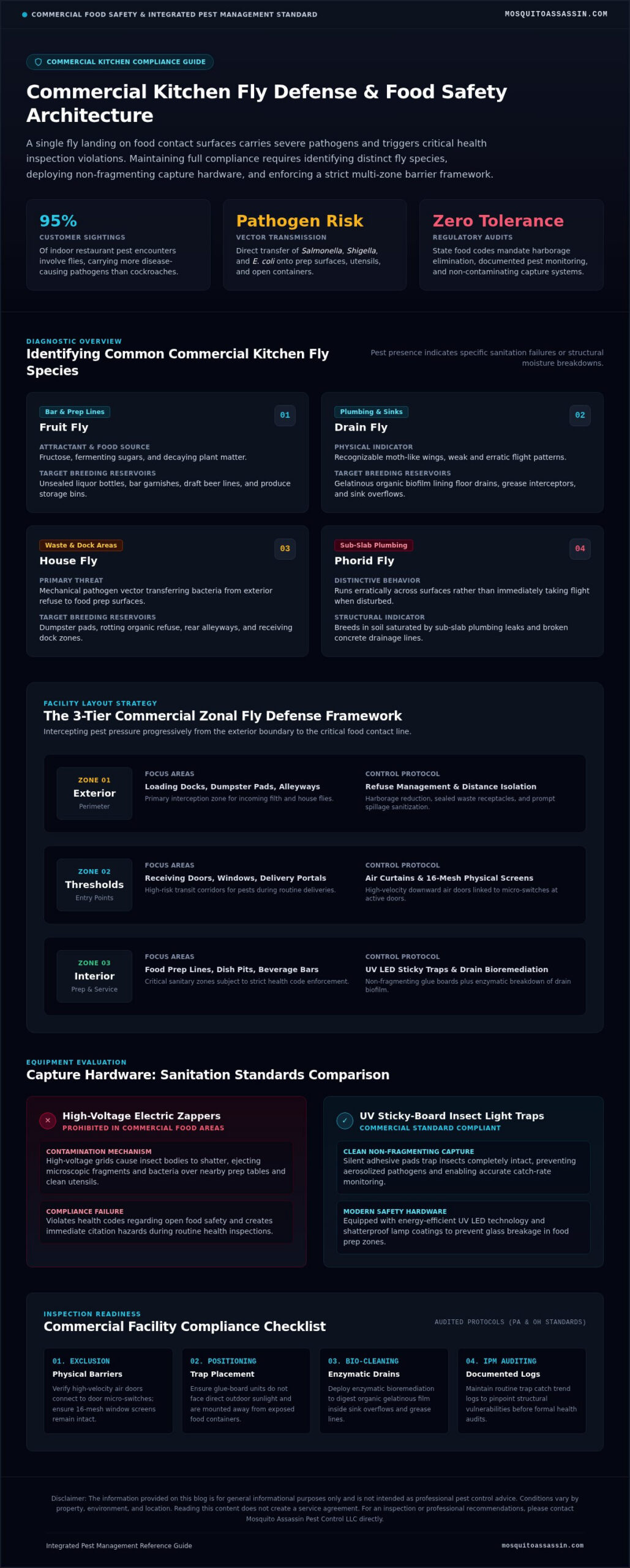
    What should I do if I find a stink bug in my house in February?

    Avoid crushing the insect, as this releases a pungent odor that can attract more pests. The best immediate action is to vacuum the bug and dispose of the bag or canister contents outdoors. Finding a stink bug in February indicates that the insect was already overwintering in your walls and was drawn out by indoor heat. This serves as a reminder to check for exterior gaps in your home’s siding.

    Disclaimer: The information provided on this blog is for general informational purposes only and is not intended as professional pest control advice. Conditions vary by property, environment, and location. Reading this content does not create a service agreement. For an inspection or professional recommendations, please contact Mosquito Assassin Pest Control LLC directly.
  • How to Get Rid of Stink Bugs: A Professional Guide to Prevention and Removal

    How to Get Rid of Stink Bugs: A Professional Guide to Prevention and Removal

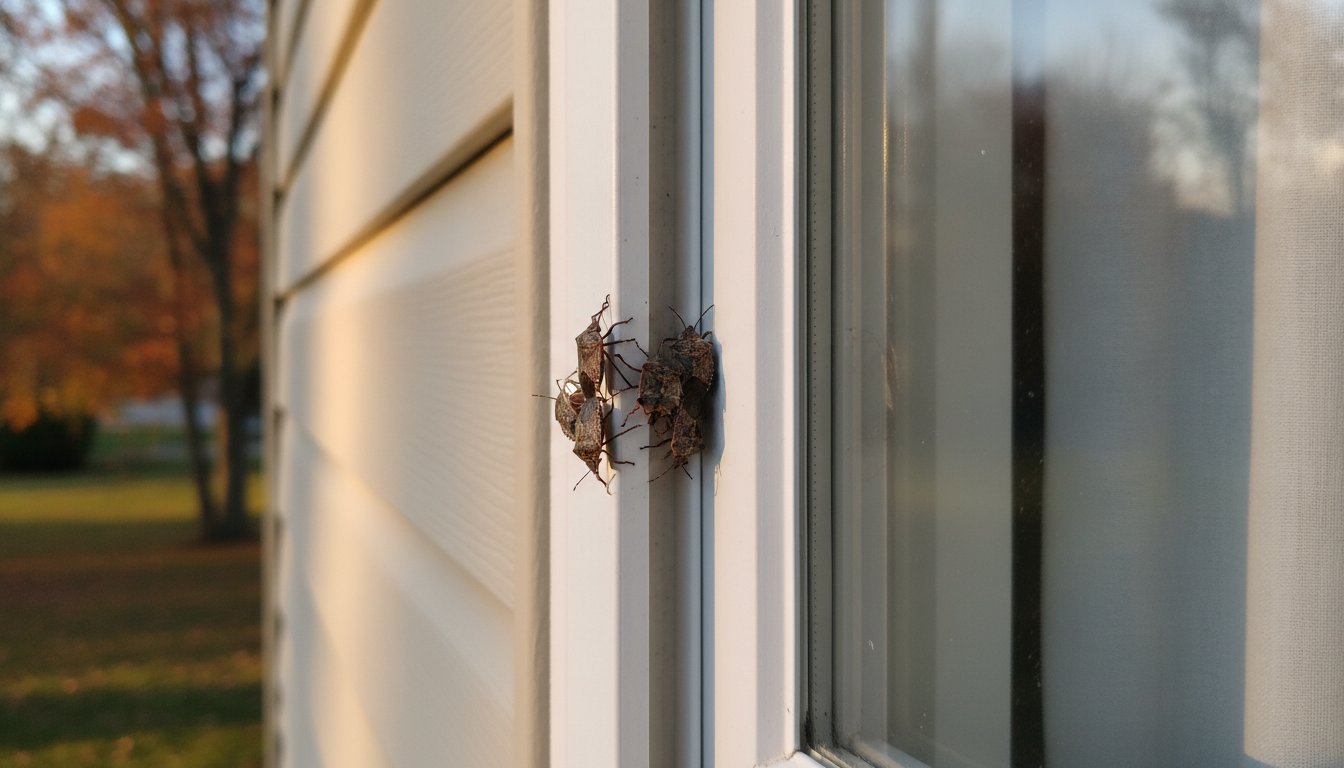
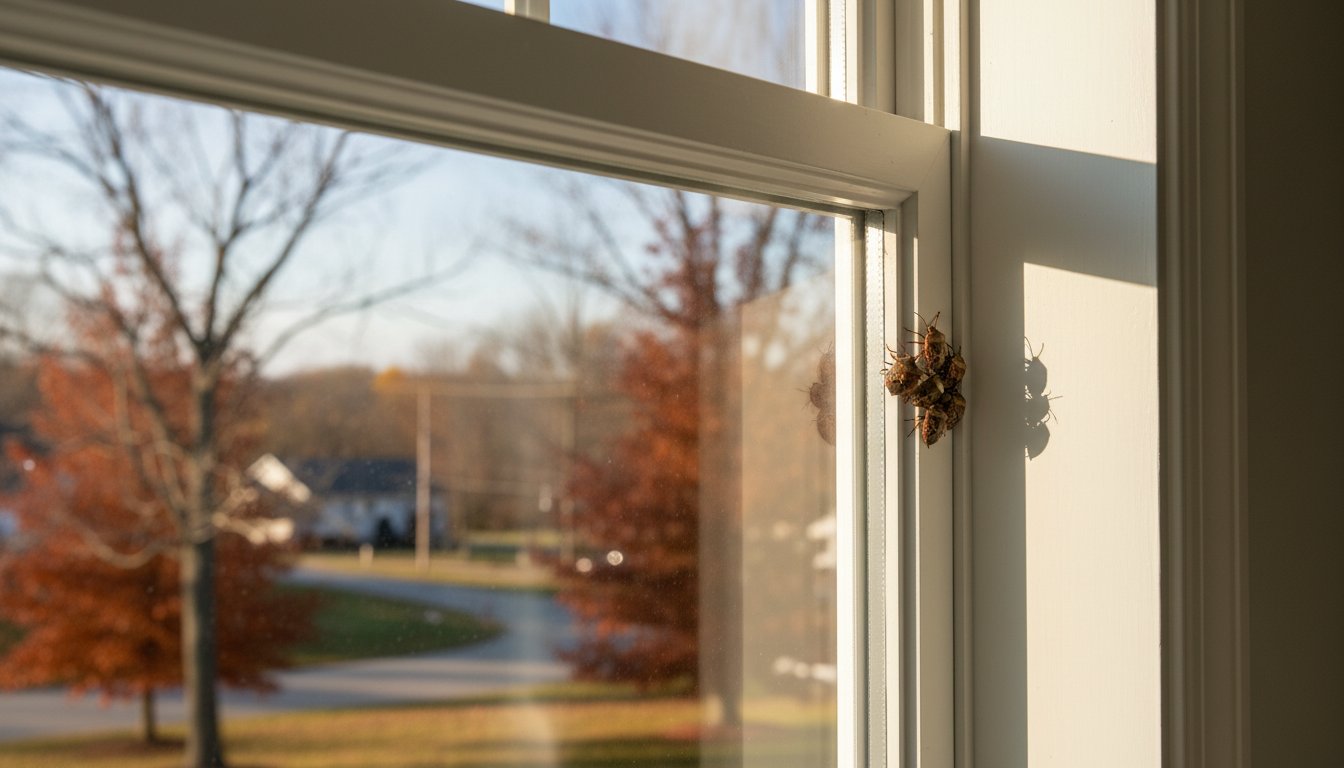
    On a crisp afternoon in October, a resident in Ashtabula County pulled back their bedroom curtains only to find 45 shield-shaped insects clustered near the window frame. It’s a common sight across Erie and Crawford Counties as temperatures drop and pests seek warmth. It’s understandable to feel frustrated by the lingering, pungent odor and confused about why these invaders keep appearing despite a spotless home.

    Finding a permanent solution for how to get rid of stink bugs requires more than a simple vacuum; it demands a professional approach to exclusion and removal. This guide provides science-based strategies to help identify entry points and secure the home’s exterior against seasonal threats. You’ll learn effective removal techniques and understand when a licensed technician is necessary to safeguard the property from a massive indoor invasion. Professional pest control may help reduce risk and ensure long-term protection for the household.

    Disclaimer: The information provided on this blog is for general informational purposes only and is not intended as professional pest control advice. Conditions vary by property, environment, and location. Reading this content does not create a service agreement. For an inspection or professional recommendations, please contact Mosquito Assassin Pest Control LLC directly.
    Key Takeaways

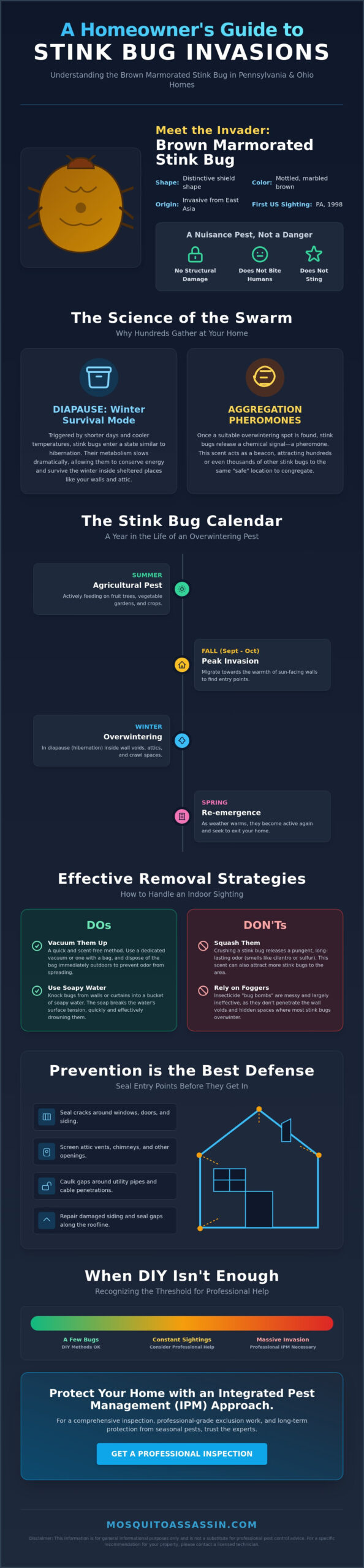
    • Identify the Brown Marmorated Stink Bug and its distinct shield-shaped appearance common in Pennsylvania and Ohio homes.
    • Understand the science behind diapause and aggregation pheromones that cause hundreds of insects to gather in a single location.
    • Explore effective, non-lethal strategies for how to get rid of stink bugs without using messy foggers or triggering their defensive odors.
    • Learn how to implement structural exclusion by sealing utility pipe penetrations and loose siding to prevent future seasonal invasions.
    • Determine the specific threshold where DIY methods are insufficient and a professional Integrated Pest Management approach is necessary for long-term control.

    Understanding Stink Bug Behavior in Pennsylvania and Ohio

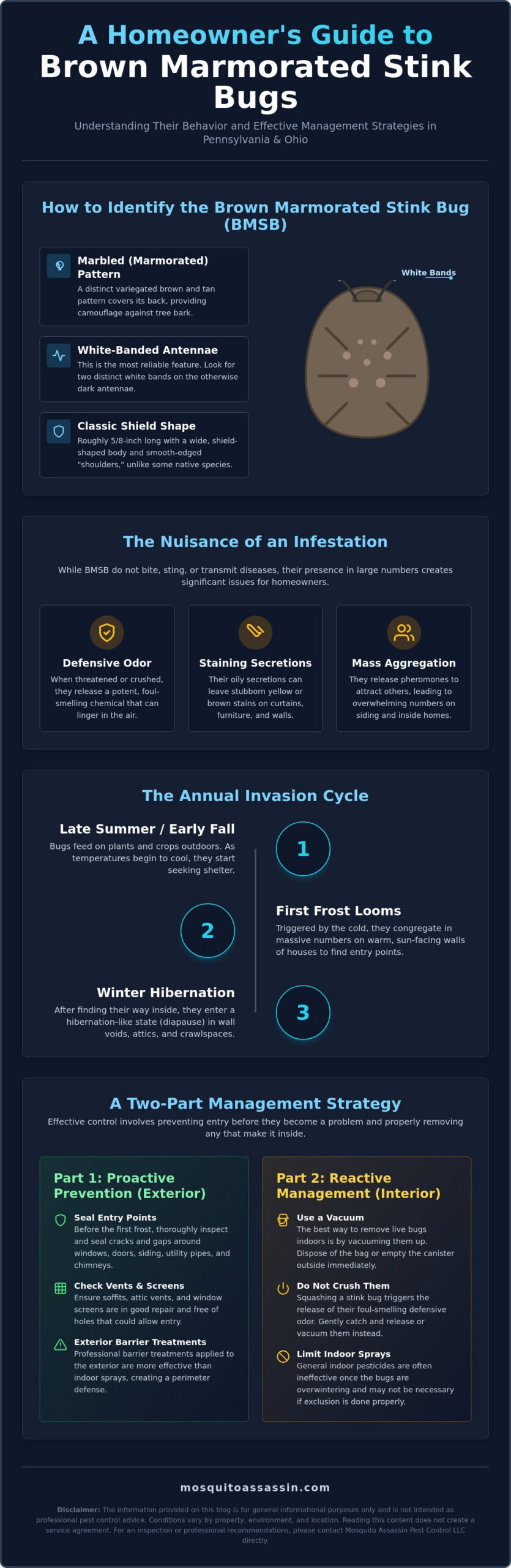
    The primary invasive species causing concern for homeowners in the tristate area is the Brown Marmorated Stink Bug (Halyomorpha halys). These insects are easily identified by their distinct shield shape and mottled brown, marbled appearance. While their prehistoric look can be intimidating, it is important to understand that these pests are strictly a nuisance. They do not bite humans, they do not sting, and they do not cause structural damage to your home like termites or carpenter ants. Instead, they seek shelter in residential structures to survive the winter months.

    Residents in Erie and Crawford counties in Pennsylvania, as well as Ashtabula County in Ohio, see high concentrations of these insects due to the region’s unique blend of agricultural land and wooded residential areas. As temperatures drop in late September and October, these bugs migrate from crops and trees toward the warmth of sun-facing walls. Understanding this seasonal migration is the first step for those researching how to get rid of stink bugs effectively before they find their way into attic spaces and wall voids.

    The Invasive History of the Brown Marmorated Stink Bug

    The Brown Marmorated Stink Bug is not native to North America; it was introduced from East Asia. The first documented sighting in the United States occurred in Allentown, Pennsylvania, in September 1998. Without natural predators to check their population growth, they spread rapidly across the Northeast and Midwest. By 2007, they were officially detected in Ohio, where they quickly became a major agricultural threat to fruit and vegetable crops. In residential areas, their presence has become a predictable seasonal event, as thousands of bugs can swarm a single property during a peak flight period.

    Why Stink Bugs Emit a Foul Odor

    The most defining characteristic of this insect is its chemical defense mechanism. When the bug feels threatened or is physically crushed, it releases a pungent liquid from specialized scent glands located on its abdomen. This odor serves to deter predators like birds or lizards. Many people describe the smell as similar to strong cilantro, sulfur, or even rotting fruit.

    Homeowners looking for how to get rid of stink bugs should avoid squashing them inside the home. Crushing the insect triggers a concentrated release of these pheromones, which can linger in a room for hours. Additionally, these scent markers may signal to other stink bugs that the area is a safe location for congregating. Using a vacuum or gentle relocation methods is often more effective than physical force. If an infestation becomes overwhelming, professional pest control may help reduce risk and manage the population before the insects enter their dormant phase.

    Disclaimer: The information provided on this blog is for general informational purposes only and is not intended as professional pest control advice. Conditions vary by property, environment, and location. Reading this content does not create a service agreement. For an inspection or professional recommendations, please contact Mosquito Assassin Pest Control LLC directly.

    The Lifecycle and Seasonal Patterns of Overwintering Pests

    The Brown Marmorated Stink Bug (BMSB) follows a specific biological clock that dictates its movement into residential structures. During the summer months, these insects act as agricultural pests, feeding on fruit trees and vegetable gardens. As daylight hours shorten and temperatures drop, they enter a state called diapause. This is a period of suspended development, similar to hibernation, where their metabolism slows down significantly to survive the winter. To ensure survival, they utilize an “aggregation pheromone.” This chemical signal acts like a beacon, attracting hundreds or even thousands of bugs to a single location. Understanding this stink bug life cycle is essential when determining how to get rid of stink bugs before they become a permanent fixture in your home.

    Fall Infiltration: Seeking Warmth for Winter

    In the Great Lakes region, including Erie County and Ashtabula County, the peak months for activity are September and October. Stink bugs are attracted to the thermal mass of buildings. They often cluster on south-facing, sun-warmed walls where stone or siding retains heat long after sunset. From these surfaces, they seek out tiny gaps, often less than 1/8th of an inch, to enter wall voids, attics, and crawlspaces. Reflective surfaces and bright exterior lights also draw them toward residential structures. Once they find a suitable crevice, the aggregation pheromone ensures their peers follow, leading to large clusters hidden within the home’s infrastructure. Effective strategies on how to get rid of stink bugs often focus on identifying these structural vulnerabilities before the first frost.

    Spring Emergence: Why They Appear in Your Living Room

    Homeowners in Crawford County often notice a secondary surge of activity during February or March. As the sun begins to warm the exterior of the house, it also warms the wall voids where the insects are resting. This temperature shift wakes up the pests prematurely. Instead of heading outside, they often follow heat trails deeper into the interior of the home, emerging through light fixtures, crown molding, or baseboards. It’s a common misconception that these insects are breeding or laying eggs inside during the winter. They’re simply trying to find a way back to the outdoors to begin their summer feeding cycle. If you find yourself overwhelmed by these seasonal invaders, professional pest control may help reduce risk in your home.

    Disclaimer: The information provided on this blog is for general informational purposes only and is not intended as professional pest control advice. Conditions vary by property, environment, and location. Reading this content does not create a service agreement. For an inspection or professional recommendations, please contact Mosquito Assassin Pest Control LLC directly.

    How to Get Rid of Stink Bugs: A Professional Guide to Prevention and Removal

    Effective Methods for Removing Stink Bugs From Living Spaces

    Finding a shield-shaped intruder on your curtains is a common frustration for residents in Erie County and Crawford County during the cooler months. When deciding how to get rid of stink bugs inside the home, the primary goal is removal without triggering their defensive odor. Homeowners should avoid using bug bombs or total release foggers. These chemical treatments rarely penetrate the deep wall voids or attic crevices where the insects congregate. Instead, they leave unnecessary residue on furniture and floors while the pests remain protected behind drywall. Professional standards prioritize physical removal and exclusion over broadcast indoor chemical applications for these specific pests.

    The Soapy Water Method

    The soapy water trap is a highly effective, low-cost strategy for localized infestations. By mixing approximately two tablespoons of liquid dish soap into a gallon of water, you create a solution that breaks the surface tension of the liquid. When a stink bug falls into the mixture, it can no longer stay afloat and quickly drowns. This is a mechanical solution that avoids the use of harsh chemical aerosols, which often cause the insect to release its pungent scent before expiring.

    • Light Attraction: Place a wide, shallow pan of soapy water under a small desk lamp in a dark room overnight.
    • Placement: Position the light roughly 6 to 10 inches above the water surface to draw insects from nearby walls.
    • Safety: This method is significantly safer for households with pets or children compared to leaving chemical residues on surfaces.

    Using Vacuums and Shop-Vacs Safely

    Using a standard upright vacuum can lead to a lingering problem. The internal fan often crushes the bugs, venting their foul odor through the exhaust and throughout the entire house. For a safer approach, use a dedicated shop-vac or a vacuum equipped with a HEPA filter and a sealed bag system. These filters are designed to trap particles as small as 0.3 microns, which helps contain both the insects and the microscopic droplets of their defensive spray.

    A practical trick involves inserting a knee-high nylon stocking into the vacuum hose and securing the end around the outside of the nozzle with a rubber band. This catches the bugs in the mesh “pouch” before they ever enter the vacuum canister or bag. Once you have finished collecting the insects, carefully remove the stocking, tie it shut, and dispose of it in an outdoor trash receptacle immediately. Prompt disposal ensures that any surviving insects do not crawl back out or continue to smell up the storage area. While these manual tactics work for occasional sightings, persistent indoor activity often indicates a larger entry point issue. In these cases, professional pest control may help reduce risk by identifying where the population is overwintering. For more information on protecting your home in Ashtabula County or Western Pennsylvania, you can visit our location page for regional details.

    Disclaimer: The information provided on this blog is for general informational purposes only and is not intended as professional pest control advice. Conditions vary by property, environment, and location. Reading this content does not create a service agreement. For an inspection or professional recommendations, please contact Mosquito Assassin Pest Control LLC directly.

    Structural Exclusion: Preventing Stink Bug Entry Points

    Exclusion is the most effective long-term strategy for pest management. Instead of reacting to an infestation after it occurs, homeowners can proactively block entry by creating a physical barrier. Stink bugs are remarkably thin, which allows them to squeeze through gaps as small as 1/8 inch. Identifying and sealing entry points like utility pipe penetrations and loose siding is the first step in learning how to get rid of stink bugs effectively.

    Timing is critical for residents in Crawford County and Ashtabula County. Exclusion work must be completed before the first significant temperature drop in autumn. Once the cooling begins, these insects move toward the warmth of structural walls to find a place for overwintering. Minor repairs made in July or August can reduce the risk of future infestations by 90 percent. A thorough inspection of the home’s exterior often reveals dozens of potential access points that require attention.

    Sealing the Exterior Envelope

    Using high-quality silicone or acrylic latex caulk is recommended for sealing cracks and crevices. These materials remain flexible during the harsh freeze-thaw cycles common in the Great Lakes region, ensuring the seal doesn’t crack over time. Homeowners should focus on often-overlooked areas such as chimney flashings, fascia boards, and the points where different siding materials meet. It’s also vital to inspect and repair window screens that have even minor tears. Door sweeps should be checked to ensure they sit flush against the threshold (if light is visible under the door, a stink bug can easily crawl through).

    Ventilation and Attic Protection

    Attic vents and soffits provide easy access for pests looking for a high vantage point. Installing fine-mesh screening, specifically 20×20 mesh or smaller, prevents entry while maintaining necessary airflow for the home. Crawlspace entries must also be secured with tight-fitting covers to prevent pests from harboring underneath the structure. Because these insects are experts at finding microscopic gaps, professional pest control may help reduce risk by identifying hidden entry points that are frequently missed during DIY inspections. Taking these steps is a core part of a comprehensive plan on how to get rid of stink bugs before they become a nuisance inside the living space.

    For a detailed assessment of structural vulnerabilities, homeowners can schedule an inspection through the online booking portal.

    Disclaimer: The information provided on this blog is for general informational purposes only and is not intended as professional pest control advice. Conditions vary by property, environment, and location. Reading this content does not create a service agreement. For an inspection or professional recommendations, please contact Mosquito Assassin Pest Control LLC directly.

    When Professional Pest Management Becomes Necessary

    Understanding how to get rid of stink bugs often involves recognizing the limit of DIY solutions. While a vacuum can handle a few stray insects, it doesn’t address the root of a seasonal infestation. When homeowners observe more than 10 insects per day inside living spaces during the late fall or early spring, it usually indicates a significant aggregation within the home’s structure. Large-scale clusters often hide in wall voids, attics, or crawl spaces where standard household cleaners and sprays cannot reach.

    Professional technicians utilize Integrated Pest Management (IPM) to solve these issues. This methodology focuses on long-term prevention and suppression rather than just reactive spraying. For large-scale aggregations in wall voids, professionals apply specialized materials that penetrate deep into the structural gaps where insects congregate. These methods are more effective than over-the-counter foggers, which often fail to reach the center of a cluster and can leave behind messy residues. Common signs that professional intervention is required include:

    • Persistent sightings in multiple rooms despite sealing visible cracks.
    • Large numbers of dead insects accumulating in light fixtures or window sills.
    • A noticeable pungent odor that lingers in specific areas of the home.
    • Visible staining on walls or curtains from insect excrement.

    The Role of Perimeter Treatments

    Professional applications create a protective barrier on the exterior of a home. This barrier stops insects before they find entry points like soffit vents, window casings, or gaps in the siding. Timing is critical for these treatments. Applying a perimeter shield during the specific fall window, typically between late August and October, is the most effective way to manage how to get rid of stink bugs before they enter dormancy. Many general pest control plans include seasonal adjustments to account for these regional pest migrations. It’s a proactive approach that targets the exterior surfaces where the bugs land to sun themselves before seeking shelter inside.

    Finding Local Support in PA and OH

    Homeowners in Erie, Crawford, and Ashtabula Counties face unique challenges due to the proximity to Lake Erie and local agricultural patterns. Seeking local experts who understand the climate in these regions ensures that treatments are timed correctly for the local lifecycle of the Brown Marmorated Stink Bug. Learning more about our local team can provide insight into how community-wide pest trends affect individual properties. For an assessment of a property, contact a professional technician to discuss preventative strategies and property inspections.

    Disclaimer: The information provided on this blog is for general informational purposes only and is not intended as professional pest control advice. Conditions vary by property, environment, and location. Reading this content does not create a service agreement. For an inspection or professional recommendations, please contact Mosquito Assassin Pest Control LLC directly.

    Protecting Your Property From Seasonal Pest Intrusions

    Managing these pests requires a proactive strategy that begins well before the first frost hits the region. Homeowners in Erie and Crawford Counties in Pennsylvania and Ashtabula County in Ohio often see activity increase as temperatures drop below 50 degrees Fahrenheit. Identifying entry points like loose siding or gaps around utility lines is essential for long-term control. While vacuuming provides a temporary fix for individual insects, understanding how to get rid of stink bugs effectively involves a combination of structural exclusion and professional monitoring.

    Professional intervention provides a comprehensive approach to pest management. Licensed and insured technicians in PA and OH utilize family and pet-safe treatments to address overwintering patterns. Because Mosquito Assassin is locally owned and operated, the team understands the specific seasonal behaviors of pests in the tri-county area. Taking these steps ensures a more comfortable living environment throughout the winter months. Schedule a professional inspection for your home to safeguard your property this season. Protecting your home is a manageable process with the right expert guidance.

    Disclaimer: The information provided on this blog is for general informational purposes only and is not intended as professional pest control advice. Conditions vary by property, environment, and location. Reading this content does not create a service agreement. For an inspection or professional recommendations, please contact Mosquito Assassin Pest Control LLC directly.

    Frequently Asked Questions

    Do stink bugs bite humans or pets?

    Stink bugs don’t bite humans or pets because their mouthparts are designed for piercing plant tissue rather than skin. They use a straw-like proboscis to suck juices from more than 170 host plants, including fruit trees and garden vegetables. While they aren’t dangerous, they can be a major nuisance in Erie and Crawford Counties during the fall. If they land on your skin, they might produce a foul odor, but they won’t cause physical injury.

    Why do I have so many stink bugs in my house all of a sudden?

    Stink bugs enter homes in large numbers during the fall to seek shelter from freezing temperatures. They transition into a state called diapause, which is similar to hibernation. Learning how to get rid of stink bugs often starts with sealing exterior gaps larger than 0.125 inches. Research from the USDA indicates that these pests are attracted to the warmth and light reflected from southern and western facing walls during the afternoon.

    Can stink bugs cause damage to my home or furniture?

    Stink bugs don’t cause structural damage to wood, drywall, or electrical wiring like termites or rodents do. The primary risk to your home is cosmetic staining from their defensive secretions. These yellowish fluids contain chemicals like trans-2-octenal, which can leave permanent marks on white curtains or light-colored upholstery. Professional pest control may help reduce risk to your interior belongings by managing populations before they enter the structure.

    What is the best way to get rid of the smell if I accidentally squash one?

    The most effective way to remove the smell of a squashed stink bug is by using warm, soapy water or a mild enzymatic cleaner. The odor is caused by chemical compounds like trans-2-decenal released from glands on the insect’s thorax. Scrubbing the area immediately helps break down these pungent oils. To prevent future odors, use a vacuum with a HEPA filter to collect live bugs instead of crushing them, then dispose of the bag outside.

    Will stink bugs lay eggs or multiply inside my walls during the winter?

    Stink bugs won’t lay eggs or reproduce inside your walls during the winter months. They are sexually immature during their overwintering phase and require specific environmental triggers to mate. According to entomological studies, they need at least 14 hours of daylight and consistent temperatures above 70 degrees Fahrenheit to begin their reproductive cycle. They simply wait in wall voids until the spring thaw arrives in Ashtabula County.

    Are there any natural scents that repel stink bugs effectively?

    Some studies suggest that high concentrations of essential oils like mint, clove, or garlic can act as temporary deterrents. A 2014 study published in the Journal of Applied Entomology noted that certain botanical oils showed repellency in controlled environments. However, these natural scents dissipate quickly and rarely provide long-term protection for an entire house. Sealing cracks remains the most reliable prevention method for homeowners in the tri-county area.

    Is it safe to use chemical sprays inside my bedroom for stink bugs?

    Applying chemical sprays inside a bedroom isn’t recommended for homeowners due to safety concerns and limited effectiveness against dormant pests. Most over-the-counter sprays only kill the bugs you see, leaving hundreds hidden inside wall voids. When considering how to get rid of stink bugs, focus on mechanical exclusion like caulking window frames. For persistent issues, professional pest control may help reduce risk through targeted exterior perimeter treatments. You can visit www.mosquitoassassin.com/contact-us for more information on professional exclusion techniques.

    How long do stink bugs typically live once they are inside a home?

    Stink bugs can live for several months inside a home if they remain in a dormant state, but they often die within days if they enter active living spaces. The dry, heated air found in modern homes during Pennsylvania winters dehydrates them quickly. While an adult’s total lifespan is typically 6 to 8 months, those that wander into your kitchen or living room usually succumb to low humidity levels within a week.

    Disclaimer: The information provided on this blog is for general informational purposes only and is not intended as professional pest control advice. Conditions vary by property, environment, and location. Reading this content does not create a service agreement. For an inspection or professional recommendations, please contact Mosquito Assassin Pest Control LLC directly.