Mice are unlikely to leave on their own when a home still provides food and shelter. Effective mice and rat control starts with identifying what is attracting rodents and how they are getting inside, rather than waiting for activity to stop.
Finding signs of rodents in a home or workplace can be unsettling, and the right response depends on the property and the level of activity. This guide explains what rodent control can involve in residential, commercial, and industrial settings, why mice may stay, and what factors shape an effective approach with Mosquito Assassin Pest Control LLC.
You’ll also learn about common entry points, practical prevention steps, and indoor precautions to discuss when children or pets are in the home. The goal is to help you understand the problem and ways to address it effectively.
Key Takeaways
- Mice are unlikely to leave while food and shelter remain available, so identifying entry points and conditions that attract rodents matters.
- Rodent inspections can help locate activity and damage to wiring, insulation, and building materials in homes and workplaces.
- Indoor pest treatment precautions should account for children and pets, with guidance tailored to the treatment and property.
- Professional rodent control can address residential and commercial concerns through an approach suited to the property and signs of activity.
Residential, Commercial, and Industrial Rodent Control
Rodent control starts by matching signs of activity to a building’s use and layout. In Corry, a home, food business, and warehouse may have different entry points and damage concerns.
Rodent Damage to Buildings
Mice can chew wires, insulation, and drywall, while rats may damage wood and other structural materials. Gnawed wiring can disrupt equipment or require repairs. Torn insulation and damaged framing may indicate activity beyond one room. Check walls, stored materials, utility openings, and equipment for damage, not just droppings. Rodents can also introduce bacteria and disease into buildings.
Inspection and Species Identification
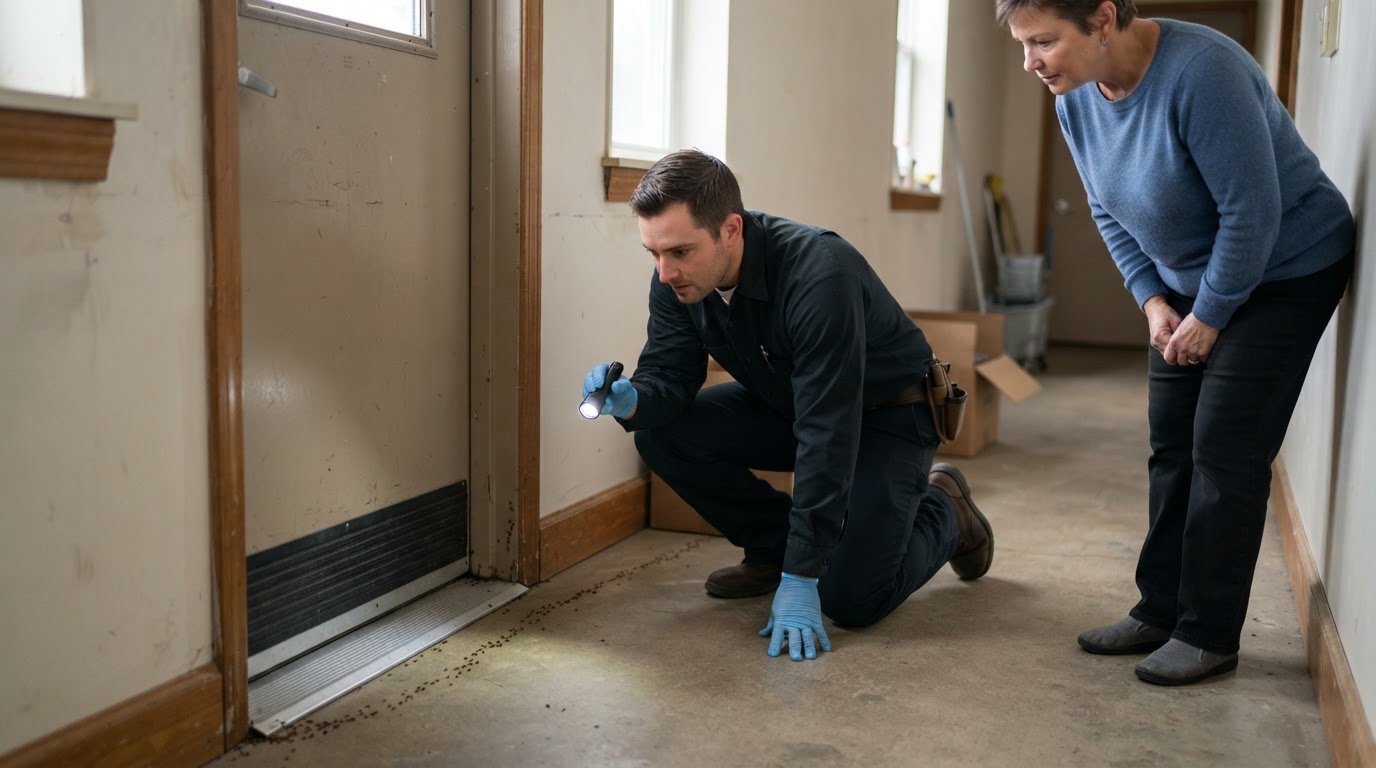
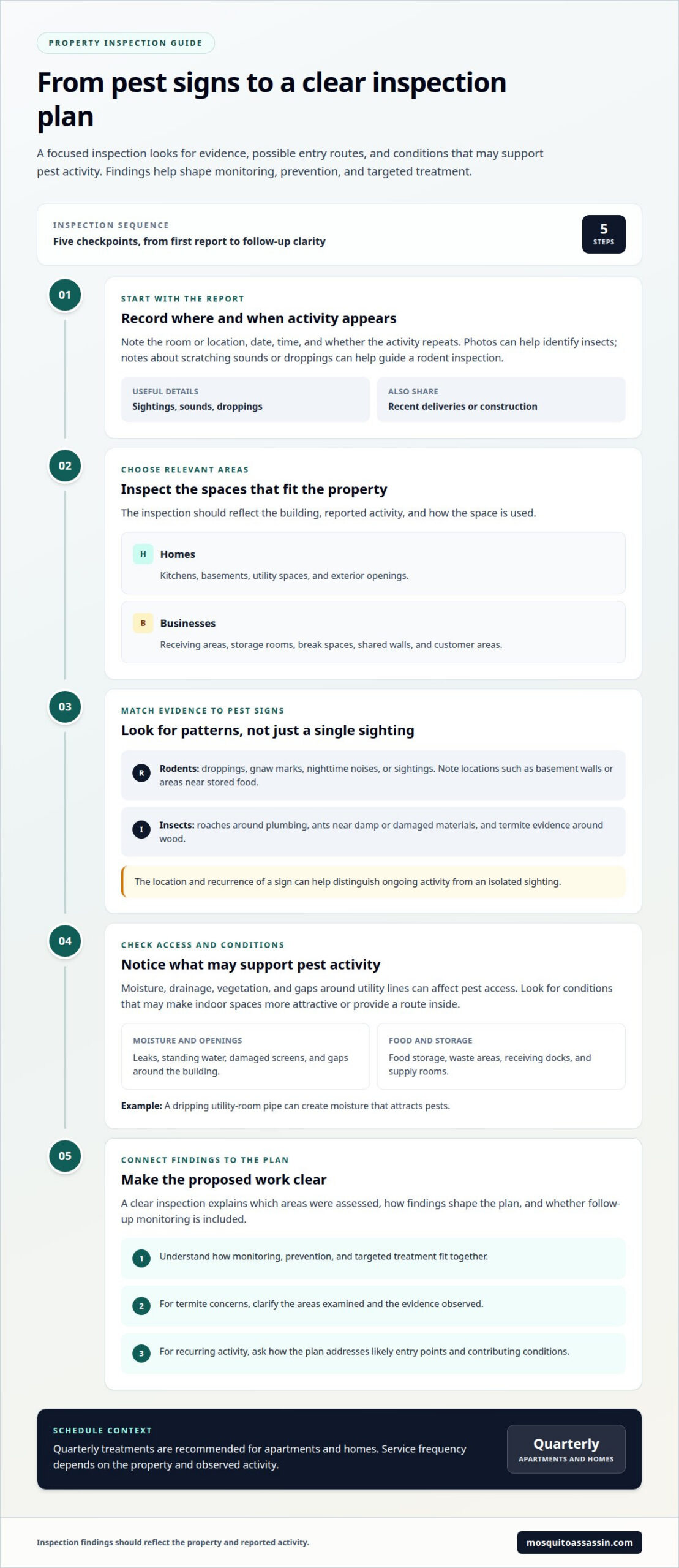
An inspection looks for droppings, gnaw marks, nesting material, rub marks, and travel routes along walls. House mice can enter around foundations, utility lines, and rooflines. A mouse can squeeze through an opening about the size of a dime; a rat needs a gap about the size of a quarter. Identifying the species helps interpret the signs and locate likely hiding places.
House mice and Norway rats are common in Pennsylvania; Norway and roof rats are also common rat species. A home inspection may cover basements, attics, kitchens, and garages. Commercial buildings add loading areas, storage rooms, and utility corridors. Industrial facilities may have equipment, inventory, and structural voids that make detection more challenging.
A complete inspection relates activity to building use, entry routes, and damaged materials. In homes and businesses, pest control considers work areas and stored goods alongside access points. For example, commercial pest concerns can involve both work areas and storage spaces. A rodent nesting near wiring calls for a different assessment than signs near stored food.
Indoor Treatment Precautions for Children and Pets
Before indoor pest treatments, tell technicians about children’s routines and pets’ usual spaces. Mention play areas, feeding spots, sleeping places, and rooms where animals roam freely. A toddler playing on the floor or a cat exploring cabinets can affect which areas need access limits. Clear communication helps technicians explain precautions suited to the household and planned work.
Keep children and pets away from treatment areas and secured bait stations as instructed. Arrange a separate space for animals during service, and move toys, bowls, bedding, and carriers away from work areas beforehand. After service, follow the technician’s directions about restricted spaces and when household members can return. These precautions help prevent accidental contact with treatments and equipment.
Ask technicians to explain household-specific precautions before work begins. Point out fish tanks, pet doors, and play mats that may need special consideration. Don’t move stations or disturb treated areas. Keep children from handling equipment, and prevent pets from chewing or pawing at stations. Share any changes in household routines before future visits.
Liquid barrier treatments may be applied near doors, pipes, or other entry points. Keep family members and pets away from those locations as directed, and avoid touching treated surfaces until the technician says they can be accessed. Precautions depend on the treatment and where it is used, so no treatment should be described as entirely safe in every setting.
In a household with young children and pets, plan access around the people and animals most likely to enter treated spaces. Discuss household routines with technicians to clarify which rooms or surfaces need temporary limits. This can also help prevent rodents from spreading into rooms outside the treatment area.
Mouse and Rat Control Services in Pennsylvania
In Corry, rodent services should address the building, evidence, and routes rodents use. A useful plan connects inspection findings with prevention and follow-up.
Local Providers and Service Areas
Service boundaries matter: coverage around Williamsport does not establish service in Corry. For Corry properties, nearby coverage includes Erie and Crawford Counties, while the broader regional service area also includes Ashtabula County, Ohio. A local provider’s geographic focus can affect travel scheduling and follow-up visits. Confirm that the property’s community is within the service area, not just near a covered city.
Inspection, Trapping, and Exclusion
Local rodent control can include inspection, trapping, exclusion, and follow-up. Inspection identifies activity, likely nesting areas, and access routes; trapping addresses rodents inside, while exclusion focuses on openings that allow them to enter. Methods depend on the species, building use, and conditions. In a Corry home, for example, a basement route may need a different assessment than activity near a business loading area.
Professional and DIY Control Methods
DIY methods may address visible activity but miss hidden nesting areas or unsealed entry points. Professional extermination combines identification and inspection with a property-wide view, helping match control measures to the source of activity. Avoid improvised pesticide use, since products and surfaces require careful consideration. Professional help is especially useful when rodents keep appearing despite basic prevention measures.
Response to Rodent Infestations
Response timing in Corry depends on scheduling, service coverage, property access, and reported signs of activity. Fresh droppings in a kitchen or repeated sightings near stored goods help describe the issue, but do not establish a specific arrival time. Follow-up planning matters too: monitoring activity and addressing re-entry routes can support longer-term prevention.

Mice and Rat Control in Corry, Pennsylvania
In Corry, mice are unlikely to leave on their own while food and shelter remain available. Fall and winter can bring increased indoor activity as rodents seek protected spaces. A useful inspection connects signs inside a building with possible food sources, hiding places, and entry routes. That evidence helps shape practical prevention for homes and businesses.
House mice may nest in wall voids, basements, attics, and storage areas. Look for droppings, gnaw marks, shredded nesting material, or repeated activity along walls. Store food in closed containers, reduce clutter near storage areas, and address openings around utility lines and foundations. These steps make a property less inviting and help an inspection focus on likely access points.
A female house mouse can produce dozens of pups in a year, so recurring signs deserve attention. Note which rooms show activity and whether signs appear near food, stored goods, or utility spaces. A trained inspection can use these patterns to assess whether activity is limited or spread throughout the building. Rodent evidence differs from termite damage, which requires a separate assessment.
For Corry, PA mice and rat control, focus on evidence, not sightings alone. A mouse seen in one room may use hidden routes elsewhere. Professional control can assess activity, entry points, and prevention needs together, tailoring the response to the building instead of relying on a single sign. Residents seeking mice and rat control in Corry, PA, can discuss their property’s specific conditions with a professional.
For property-specific guidance about rodent activity in Corry, contact Mosquito Assassin Pest Control LLC.
Mosquito Assassin Pest Control
Mosquito Assassin Pest Control LLC provides Rodent Control Service for property owners dealing with mice or rats. Professional help can be useful when activity keeps returning, signs appear in several rooms, or the entry route is difficult to identify. An assessment helps clarify what is happening and which prevention concerns matter for the building.
In a Corry home, signs near food storage, a basement, or an attic may point to different areas needing attention. In a business, activity near storage or shared work areas can affect more than one space. Rodent control takes reported activity and property conditions into account rather than treating a single sighting as the whole problem.
Service is available across Erie and Crawford Counties in Pennsylvania and Ashtabula County in Ohio. General Pest Control Plans may also suit households seeking broader pest management beyond a specific rodent concern. The right option depends on the pests involved and the property’s needs. A clear description of where and when signs appear helps frame the issue.
Professional guidance can be especially helpful when rodents are repeatedly seen, damage is present, or the household includes children or pets. The aim is to understand the problem and discuss relevant control and prevention considerations, not to promise a particular outcome. For Corry residents, contacting Mosquito Assassin Pest Control LLC can start a conversation about the property and its rodent activity.
For information about rodent concerns at your property, contact Mosquito Assassin Pest Control LLC.
Make a Clear Next Move
For Corry, PA mice and rat control, connect recurring signs with the conditions around the property. A brief record of where activity appears, when it occurs, and whether damage is visible can help focus the conversation without attempting treatment yourself.
Mosquito Assassin Pest Control LLC provides Rodent Control Service for residential concerns. Professional guidance can help when signs persist, rodents appear in multiple areas, or entry routes remain unclear. Start with the property’s specific conditions and the concerns that matter to your household.
Contact Mosquito Assassin Pest Control LLC to discuss rodent activity at your property and the next steps for control.
Disclaimer: The information provided on this blog is for general informational purposes only and is not intended as professional pest control advice. Conditions vary by property, environment, and location. Reading this content does not create a service agreement. For an inspection or professional recommendations, please contact Mosquito Assassin Pest Control LLC directly.
Frequently Asked Questions
Do mice go away on their own?
Mice usually stay when a building continues to provide shelter and resources. A decrease in visible activity does not necessarily mean the issue is resolved. Rodents may shift into less-used rooms or areas behind stored belongings. Track recurring signs and changes in activity, especially after rearranging storage or moving food supplies.
What pest control companies serve Corry, PA for mice and rat removal?
Mosquito Assassin Pest Control LLC serves Erie County, Pennsylvania, and provides rodent control for residential and commercial properties. Corry residents can contact the company about mouse or rat concerns. When describing the issue, note the property type and any changes in activity, such as signs appearing in a new room or around a particular storage area.
How can you tell whether you have mice or rats, and how serious is an infestation?
House mice are about 2-4 inches long, while rats are about 7-9 inches long, excluding their tails. Size can help distinguish them, but sightings may be brief or incomplete. Repeated activity in separate areas or evidence that continues over time suggests the concern needs closer assessment. A professional inspection can help determine the extent of activity.
What are the best ways to prevent mice and rats from entering a home in northwestern Pennsylvania?
Make food and household storage less accessible, and keep exterior doors and screens in good condition. After bringing groceries or seasonal supplies indoors, check packaging for damage before putting items away. Store pet food between meals, and avoid piling bags or boxes near seldom-used rooms. These habits reduce hiding places and make new signs easier to notice.
What health and property risks are associated with mice and rats?
Rodents may contaminate areas where food is prepared or stored, and their gnawing can damage building materials and wiring. Droppings near pantry items and damaged cables in a utility space, for example, point to different property concerns. Avoid disturbing unknown nesting material or contaminated areas, and seek professional pest-control guidance when rodent signs appear inside living or work spaces.