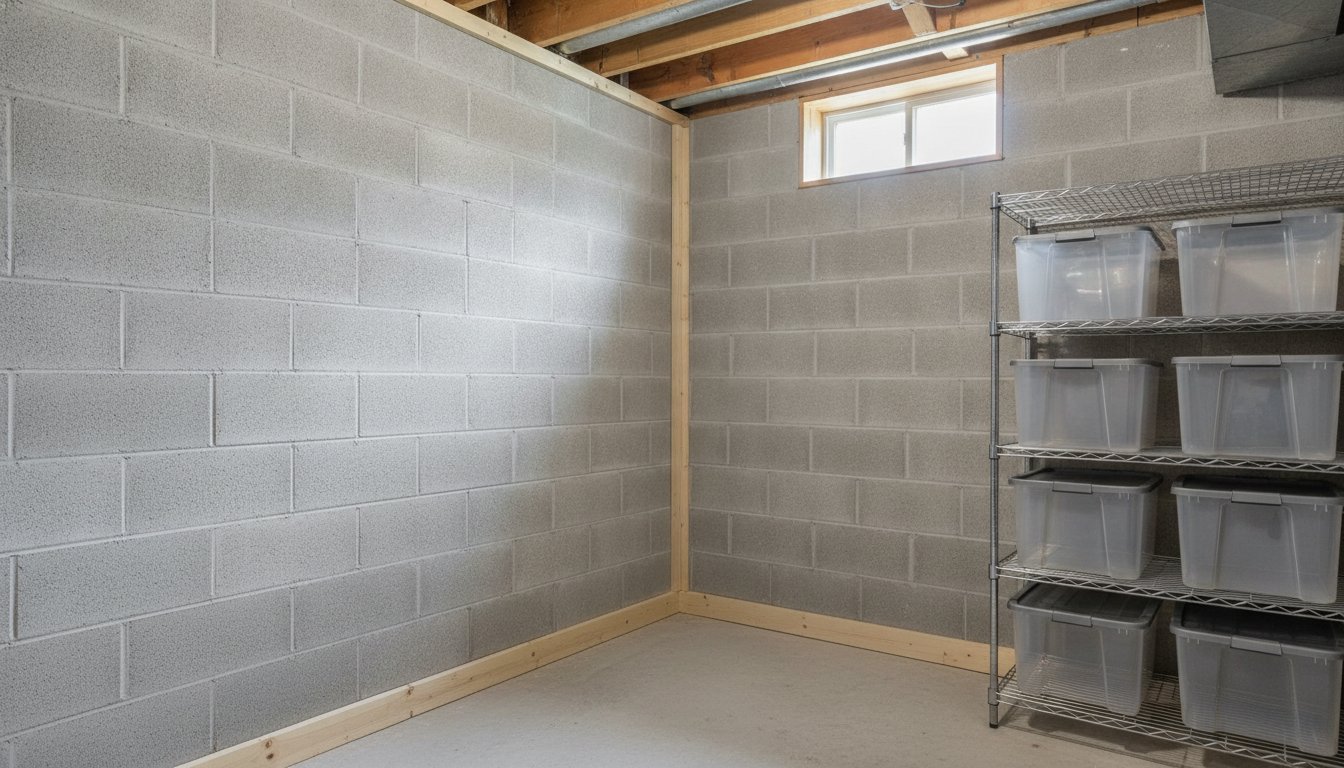
Effective spider control is not about chasing individual pests with a broom; it is about transforming your basement from a hospitable habitat into an impenetrable zone. For many residents in Erie and Crawford Counties in Pennsylvania, and Ashtabula County in Ohio, the basement is a vital storage or living space that quickly becomes uncomfortable when sticky webs and scurrying shadows take over. You deserve a home where you can reach for a holiday decoration or a laundry basket without the fear of a surprise encounter. Understanding how to keep spiders out of the basement starts with recognizing why they are there in the first place and how to block their entry points permanently.
You likely already know that spiders are drawn to dark, quiet corners, but you might not realize that their presence is often a symptom of a larger environmental issue. This guide explores professional strategies to identify the species common to our region, such as the long-bodied cellar spider or the wolf spider, while providing practical steps to exclude them throughout the year. You will discover how to address moisture levels, eliminate food sources, and apply professional-grade prevention techniques. By the end of this article, you will have the knowledge needed to maintain a spider-free environment and protect the wellbeing of your household.
Disclaimer: The information provided on this blog is for general informational purposes only and is not intended as professional pest control advice. Conditions vary by property, environment, and location. Reading this content does not create a service agreement. For an inspection or professional recommendations, please contact Mosquito Assassin Pest Control LLC directly.
Key Takeaways
- Understand the predator-prey relationship that drives arachnids into dark, humid basement microclimates in search of food.
- Discover how to keep spiders out of the basement by physically blocking entry points, with a specific focus on the sill plate and foundation gaps.
- Identify common regional species like the long-bodied cellar spider and learn why wolf spiders become more active during autumn temperature drops.
- Reduce the attractiveness of your storage areas by managing moisture levels and adopting organization habits that eliminate potential nesting sites.
- Recognize the signs that indicate a need for professional pest management to address seasonal shifts and persistent infestations effectively.
Understanding Why Spiders Are Attracted to Basements
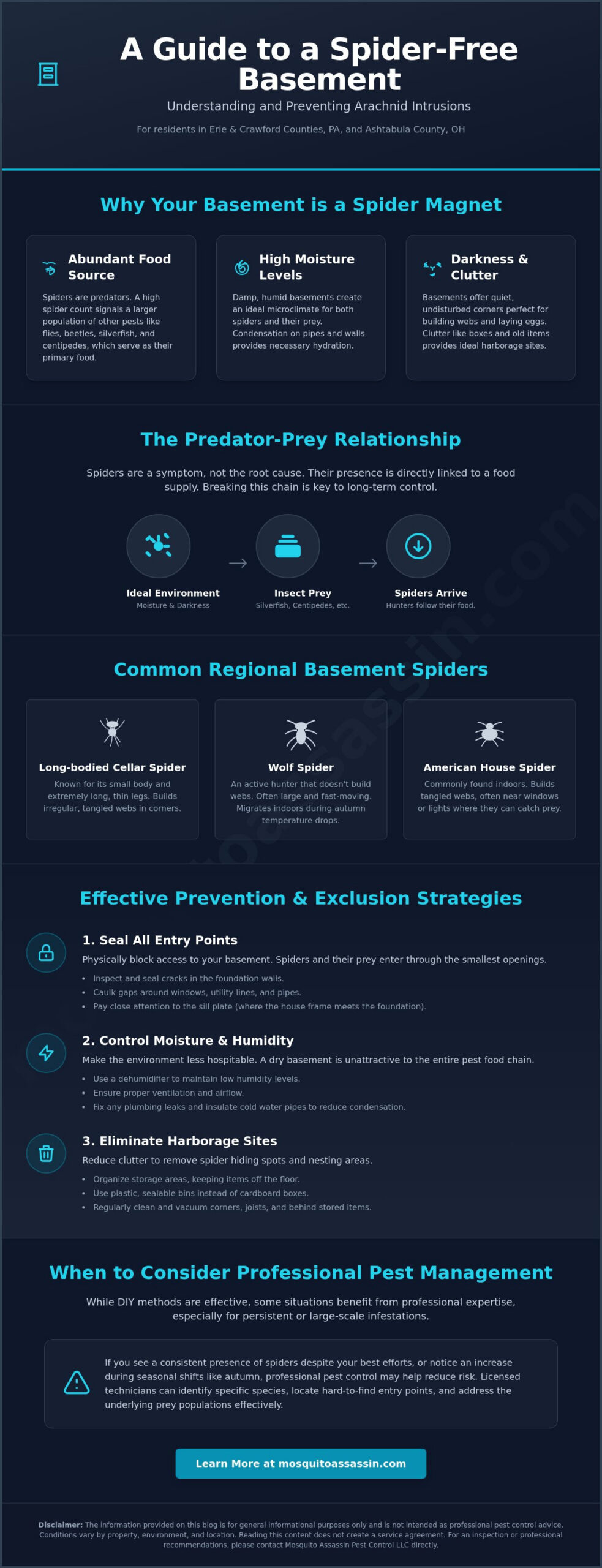
Spiders are calculated predators. They don’t enter your home to cause distress; they enter because your basement offers a reliable buffet of smaller insects. If you want to master how to keep spiders out of the basement, you must first understand the biological drive behind their presence. They are active hunters that follow their food source through foundation cracks, gaps around utility lines, and window wells. In our local region, seasonal shifts often drive these insects indoors as they seek a stable environment to survive and hunt.
A heavy spider presence is usually an indicator of a larger pest problem. Common species like the American house spider (Parasteatoda tepidariorum) thrive in environments where they can build webs undisturbed. If you see numerous webs, it means the spiders are successfully catching prey like flies, beetles, or silverfish. Identifying this “prey connection” is the foundational step in any successful management plan. By addressing the insects that spiders eat, you naturally reduce the spider population as well.
To better understand how these pests find their way inside, watch this helpful video:
The Role of Moisture and Humidity
High humidity levels are a primary attractant for the insects that spiders hunt. In the regional climates of Erie and Ashtabula, basements often trap moisture, creating a perfect microclimate for moisture-loving pests like sowbugs, centipedes, and silverfish. Condensation on cold water pipes or damp concrete walls provides necessary hydration for many arachnid species. These stable, humid conditions also ensure that delicate egg sacs remain viable, allowing the population to expand rapidly in sub-grade spaces. Improving airflow and reducing dampness is a scientific way to make your home less inviting to the entire food chain.
Darkness and Lack of Disturbance
Basements are typically the least visited areas of a home, providing the seclusion spiders crave. They require quiet spots for web construction and hunting where they won’t be threatened by larger predators or human activity. Cluttered corners, stacks of old newspapers, and cardboard storage boxes offer excellent harborage, giving spiders plenty of places to hide and lay eggs. Because these areas see low foot traffic, a small infestation can quickly escalate into a significant problem before it’s even noticed. Professional exclusion methods focus on removing these hiding spots and sealing entry points to disrupt the spider’s life cycle and prevent future arrivals.
Disclaimer: The information provided on this blog is for general informational purposes only and is not intended as professional pest control advice. Conditions vary by property, environment, and location. Reading this content does not create a service agreement. For an inspection or professional recommendations, please contact Mosquito Assassin Pest Control LLC directly.
Identifying Common Basement Spiders in Pennsylvania and Ohio
Residents in the Great Lakes region face specific seasonal challenges that dictate pest behavior. In Erie and Ashtabula, the transition from humid summers to the crisp, cooling temperatures of autumn triggers a noticeable migration of arachnids into residential structures. To master how to keep spiders out of the basement, you must first identify which species are common to our local environment. Understanding whether you are dealing with a stationary web-builder or an active roaming hunter determines the most effective exclusion strategy.
The Long-bodied Cellar Spider (Pholcus phalangioides) is the most frequent inhabitant of sub-grade spaces in our area. These spiders are easily identified by their extremely long, delicate legs and their tendency to vibrate violently in their webs when they feel threatened. While they are often called “daddy longlegs,” they are true spiders that prefer the dark, damp corners of a typical Pennsylvania foundation. They are prolific web-builders, but their webs are messy and unstructured compared to the symmetrical designs seen in gardens.
Cellar Spiders vs. Cobweb Spiders
It is helpful to distinguish between cellar spiders and common cobweb spiders. While both create tangled webs, cobweb spiders are generally smaller with more bulbous abdomens. They are responsible for the classic “dusty” webs found in ceiling joists and around basement windows. According to research on Commonly Encountered Pennsylvania Spiders, these species are highly adapted to indoor life and can persist year-round if food sources like gnats or fruit flies are available. Identifying these species by their web structure helps you pinpoint where moisture or light might be attracting their prey.
Ground Spiders and Wolf Spiders
Wolf Spiders (Lycosidae) represent a different challenge because they do not build webs to catch food. Instead, they are robust, agile hunters that stalk their prey across the floor. They are often mistaken for more dangerous species due to their large size and hairy appearance, but they are generally harmless to humans. These spiders typically enter Crawford County homes through gaps at the ground level, such as under basement doors or through damaged window screens. Because they are more active during seasonal transitions, you might notice a surge in sightings during the first frost of the year.
Another regional resident is the Yellow Sac Spider, which is unique for its hunting habits. Rather than a traditional web, these spiders spin small, silken tubes or “sacs” in the corners of walls or ceilings to hide during the day. They are active night hunters that roam widely. If you frequently encounter these silken retreats, professional pest control may help reduce risk by identifying the specific environmental factors favoring their survival. Consistent monitoring and proper identification are the first steps toward a more secure, spider-free home.
Disclaimer: The information provided on this blog is for general informational purposes only and is not intended as professional pest control advice. Conditions vary by property, environment, and location. Reading this content does not create a service agreement. For an inspection or professional recommendations, please contact Mosquito Assassin Pest Control LLC directly.
Effective Exclusion Techniques to Seal Entry Points
Exclusion is the process of physically blocking pests from entering your living space. It is the most reliable method for long-term control. While many homeowners focus on treating spiders they already see, the professional approach prioritizes stopping them at the perimeter. Understanding how to keep spiders out of the basement requires a methodical inspection of your home’s exterior to identify every possible entry point, no matter how small.
The most critical area to inspect is the sill plate. This is the point where the wooden frame of your house meets the concrete or masonry foundation. Over time, the settling of the structure or the natural expansion and contraction of materials can create narrow gaps. Spiders and their prey utilize these spaces as primary highways into your home. A practical way to find these vulnerabilities is to conduct a “light leak” test. During a bright day, turn off all basement lights and look for any slivers of daylight entering through the foundation walls or joists. These light leaks are direct invitations for pests.
Choosing the right materials is essential for success in the Great Lakes region. Our local climate in Erie and Ashtabula experiences intense freeze-thaw cycles that can cause cheap fillers to crack or peel within a single season. Use high-quality silicone-based sealants that remain flexible and adhere well to both wood and concrete. As noted in this guide on Spiders in the Home, non-chemical methods like sealing entry points are often the most effective way to manage populations without relying solely on reactive measures.
Sealing the Foundation and Utility Lines
Small cracks in masonry or concrete should be filled immediately to prevent them from widening. Pay close attention to where utility lines enter the structure. Gas lines, water pipes, and electrical conduits often have gaps around them that were never properly sealed during construction. For these areas, follow these steps:
- Apply silicone caulk: Use this for small cracks or narrow gaps around wires.
- Utilize copper mesh: Stuff copper mesh into larger openings around pipes before sealing them. Spiders and rodents find it difficult to push through this material.
- Expandable foam: Use this with caution for large, irregular cavities. Ensure you use a “pest-resistant” variety that won’t be easily degraded by environmental factors.
Maintaining Doors and Windows
Ground-level entry points are the easiest paths for roaming hunters like wolf spiders. Basement doors often lack proper seals, allowing pests to crawl directly inside. Install heavy-duty door sweeps on all exterior basement doors to close the gap between the door and the threshold. Additionally, inspect your basement window screens. Screens must be tightly fitted and free of even the smallest tears. Replace worn weatherstripping around window frames to eliminate gaps as thin as a credit card, as many small spider species can compress their bodies to fit through surprisingly tight spaces.
Disclaimer: The information provided on this blog is for general informational purposes only and is not intended as professional pest control advice. Conditions vary by property, environment, and location. Reading this content does not create a service agreement. For an inspection or professional recommendations, please contact Mosquito Assassin Pest Control LLC directly.
Addressing Environmental Factors That Invite Arachnids
While physical exclusion blocks the primary entry points, environmental management ensures that any spiders slipping through the perimeter don’t find a reason to stay. A hospitable basement provides three necessities: food, water, and shelter. Removing these elements is a core principle of Integrated Pest Management. For homeowners in Crawford County, this often begins with managing the immediate exterior landscape to break the “bridge” between nature and the home. Overhanging branches or dense shrubs touching the foundation act as natural ramps for arachnids and their prey. Maintain a clear zone of at least 12 to 18 inches between your home’s foundation and any vegetation to reduce this biological pressure.
Implementing a strict cleaning schedule is another vital step in learning how to keep spiders out of the basement. Spiders prefer environments where they can remain undisturbed for long periods. By regularly vacuuming corners, floor joists, and the spaces behind appliances, you physically disrupt web formation and remove egg sacs before they hatch. This consistent disturbance makes the basement an unattractive habitat for colonization. If environmental modifications and cleaning aren’t providing the level of relief you need, general pest control plans can offer a more comprehensive approach to protecting your property.
Moisture Control and Dehumidification
Spiders are highly sensitive to humidity, as are the smaller insects they hunt. High moisture levels in sub-grade spaces support the life cycles of silverfish, sowbugs, and centipedes. To effectively manage this factor, maintain basement humidity levels below 50 percent using a high-capacity dehumidifier. This dry air desiccates the soft-bodied insects that spiders rely on for food, naturally driving the predators away. Address any plumbing leaks or damp foundation walls immediately. In the regional climate of Ashtabula and Erie, heavy rains can saturate the soil. Ensure your downspouts direct water at least six feet away from the foundation to prevent moisture from seeping through the masonry and creating damp microclimates.
Clutter Management and Storage Solutions
Clutter provides “harborage,” which are the safe, dark hiding spots spiders crave for nesting and hunting. Cardboard boxes are particularly problematic in basements because they can absorb moisture and provide narrow gaps that are perfect for egg-laying. Replace these with airtight plastic bins. These containers are impossible for spiders to penetrate and eliminate the nesting sites often found in traditional storage. Keep all storage items off the floor and away from walls by using metal shelving units. This creates open space that spiders find difficult to navigate without being exposed to predators or cleaning efforts. By elevating your belongings, you eliminate the quiet, dark “dead zones” where spider populations typically grow without interruption.
Disclaimer: The information provided on this blog is for general informational purposes only and is not intended as professional pest control advice. Conditions vary by property, environment, and location. Reading this content does not create a service agreement. For an inspection or professional recommendations, please contact Mosquito Assassin Pest Control LLC directly.
When to Consult Professional Pest Management in Erie and Ashtabula
While basic maintenance and exclusion techniques are effective for minor issues, professional intervention is necessary when sightings persist despite your best efforts. Learning how to keep spiders out of the basement is often a collaborative effort between diligent homeowners and expert technicians. If you continue to find new webs within days of cleaning or notice a variety of different species, it usually indicates a well established food chain within the structure. Licensed professionals utilize specialized tools to identify specific entry points that are often invisible to the untrained eye, such as hairline fractures in the mortar or gaps behind siding.
The most effective approach to long term management is Integrated Pest Management (IPM). This scientific methodology focuses on long term prevention by addressing the root causes of an infestation rather than just reacting to individual pests. By combining physical exclusion with targeted treatments, a professional plan creates a multi layered defense around your home. This process ensures that the basement remains a clean, secure part of your living space throughout the changing seasons in Pennsylvania and Ohio.
The Benefits of Year-Round Protection
Ongoing management is the most reliable way to maintain a pest free environment. Spiders are active year round, though their visibility changes with the weather. A consistent protection plan addresses these seasonal shifts, ensuring that the perimeter of your home is reinforced before the first frost or the spring thaw. Regular inspections do more than just manage arachnids; they help catch potential issues with rodents or ants before they escalate into costly problems. Professional pest control may help reduce risk by maintaining a proactive barrier that stops pests before they ever cross your threshold. You can learn more about general pest control to understand how comprehensive safety plans protect your entire property.
Localized Expertise for PA and OH Homeowners
Homeowners in Erie, Crawford, and Ashtabula counties face unique architectural and environmental challenges. Many regional homes feature older foundations, stone walls, or crawl spaces that require specific expertise to secure. Professionals in our area understand the specific challenges of the local climate and how high lake effect humidity impacts pest behavior. Customized treatment plans are tailored to these regional factors, ensuring that the methods used are appropriate for your specific foundation type and surrounding landscape. For professional recommendations or a thorough inspection of your property, visit the Mosquito Assassin location page to connect with a dependable local expert who understands your community’s needs.
Disclaimer: The information provided on this blog is for general informational purposes only and is not intended as professional pest control advice. Conditions vary by property, environment, and location. Reading this content does not create a service agreement. For an inspection or professional recommendations, please contact Mosquito Assassin Pest Control LLC directly.
Achieving a Secure and Spider-Free Basement
Maintaining a pest-free home in Erie, Crawford, and Ashtabula Counties requires a proactive stance against the biological factors that attract arachnids. By addressing the “prey connection” and reducing basement moisture levels, you disrupt the entire food chain that supports these predators. Physically sealing entry points at the foundation and sill plate remains the most effective long-term strategy for anyone learning how to keep spiders out of the basement. Consistently managing clutter and storage further ensures that any spiders entering the structure find no place to hide or reproduce.
When DIY efforts reach their limit, turning to licensed and insured professionals ensures that every vulnerability is identified and reinforced. Year-round protection plans provide a consistent barrier that adapts to the specific seasonal shifts of the Great Lakes region. For an inspection or professional recommendations, please contact Mosquito Assassin Pest Control LLC directly. Reclaiming your storage space and living areas from uninvited guests is entirely possible with a methodical approach and the right local expertise. Your home should be a place of comfort and security for your entire family.
Disclaimer: The information provided on this blog is for general informational purposes only and is not intended as professional pest control advice. Conditions vary by property, environment, and location. Reading this content does not create a service agreement. For an inspection or professional recommendations, please contact Mosquito Assassin Pest Control LLC directly.
Frequently Asked Questions
How do I get rid of spiders in my basement permanently?
Permanent spider control requires a combination of physical exclusion and consistent habitat modification. You must seal every foundation crack and utility gap to stop new arrivals while simultaneously removing the food sources that sustain existing populations. Because spiders are highly mobile, a one-time treatment is rarely enough; ongoing maintenance of the home’s exterior perimeter is the most reliable way to ensure they don’t return.
What is the best spider repellent for basements?
The most effective “repellent” is a physical barrier created by high-quality sealants and weatherstripping. While over-the-counter sprays exist, they often provide only temporary relief. Professional-grade perimeter treatments applied by licensed technicians create a long-lasting chemical barrier that deters spiders and their prey from crossing the threshold. This approach is far more effective than interior foggers or retail products.
Why do I have so many spiders in my basement suddenly?
A sudden surge in spider activity is typically triggered by seasonal temperature drops or an increase in prey insects. In Erie and Ashtabula, the first frost often drives spiders indoors as they seek a stable environment. Alternatively, a sudden hatch of flies, moths, or beetles in your basement provides an immediate food source that encourages spiders to congregate and reproduce more rapidly.
Are the spiders in my basement dangerous?
Most spiders found in Pennsylvania and Ohio basements, such as cellar spiders and wolf spiders, are medically insignificant and pose no real danger to humans. While there are over 40 species of spiders in Ohio, only the black widow and the brown recluse are considered significant risks. If you suspect either of these species is present, professional pest control may help reduce risk and provide proper identification.
Can a dehumidifier help get rid of spiders?
Yes, running a dehumidifier is a highly effective secondary control method. By maintaining humidity levels below 50 percent, you create an environment that is too dry for many common prey insects like silverfish and sowbugs. When the food supply disappears, the spiders will either perish or leave the area in search of better hunting grounds. This is a critical step in how to keep spiders out of the basement long-term.
How often should I have my basement inspected for pests?
Annual or semi-annual inspections are recommended for most residential properties in our region. However, quarterly visits are the industry standard for those enrolled in year-round protection plans. Frequent checks allow professionals to identify seasonal vulnerabilities, such as new foundation cracks or shifting door seals, before they lead to a full-scale infestation. Regular monitoring ensures your basement remains a secure, pest-free environment.
Does peppermint oil actually keep spiders away?
Peppermint oil is a popular DIY deterrent, but its efficacy is limited and short-lived. While the strong scent may briefly discourage spiders from a specific corner, it doesn’t provide a structural solution or address the underlying reasons for their presence. It lacks the residual power and scientific formulation of professional treatments. Relying solely on essential oils often allows an infestation to grow unchecked in areas you can’t reach.
What do spiders in the basement eat?
Spiders are generalist predators that eat almost any smaller insect or arthropod they can catch. Their basement diet primarily consists of flies, gnats, moths, beetles, and moisture-loving pests like silverfish or centipedes. If you have a large spider population, it’s a definitive sign that there’s a significant population of these other insects living in your home’s foundation or storage areas.
Disclaimer: The information provided on this blog is for general informational purposes only and is not intended as professional pest control advice. Conditions vary by property, environment, and location. Reading this content does not create a service agreement. For an inspection or professional recommendations, please contact Mosquito Assassin Pest Control LLC directly.