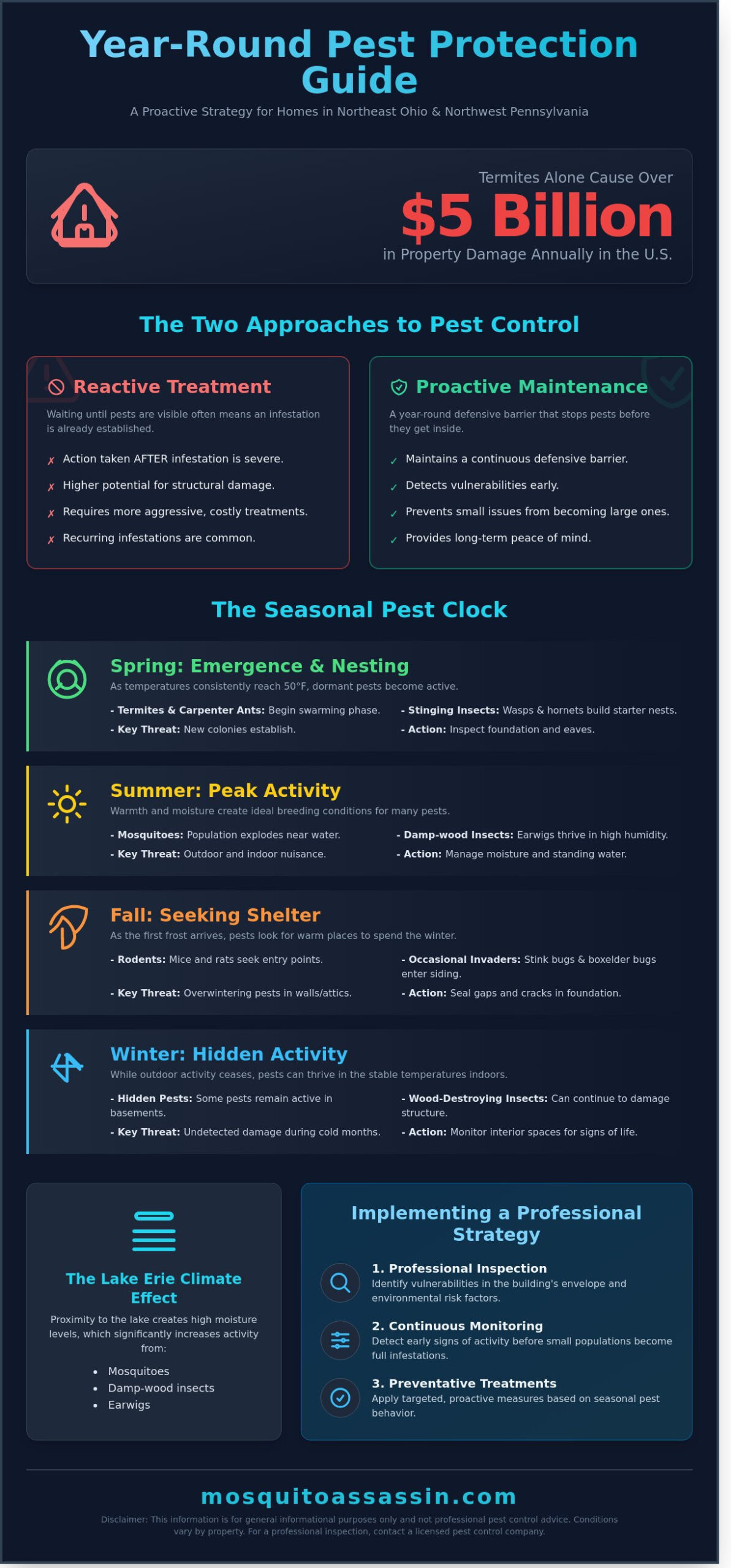
Waiting until a pest is visible to take action often means an infestation is already well-established within the wall voids or foundation of a building. Most property owners in Erie and Crawford Counties recognize the frustration of recurring infestations that return every spring or fall. It’s common to feel that the variable Northeast Ohio climate, which can swing 40 degrees in a single day, makes it difficult to protect homes in Erie and Ashtabula County around the clock. Termites alone cause over 5 billion dollars in property damage across the United States annually, making consistent prevention a necessity rather than a luxury.
This article explains how a proactive approach maintains a defensive barrier throughout the year. Readers will gain a clear understanding of seasonal pest behaviors and the specific measures required to prevent wood-destroying organisms from compromising a home’s structural integrity. This guide covers regional pest lifecycles, the impact of Lake Erie weather patterns on insect activity, and practical steps for year-round protection.
Disclaimer: The information provided on this blog is for general informational purposes only and is not intended as professional pest control advice. Conditions vary by property, environment, and location. Reading this content does not create a service agreement. For an inspection or professional recommendations, please contact Mosquito Assassin Pest Control LLC directly.
Key Takeaways
- Understand the difference between reactive treatments and proactive maintenance strategies that protect homes in Erie and Ashtabula County around the clock.
- Identify seasonal pest cycles and the unique risks that stinging insects and mosquitoes pose to Erie and Ashtabula County around the clock.
- Learn how the unique Lake Effect climate creates moisture conditions that require professional management in Erie and Ashtabula County around the clock.
- Explore the importance of consistent monitoring to safeguard residential and commercial properties in Erie and Ashtabula County around the clock.
- Discover how professional inspections serve as the foundation for a long-term, pest-free environment across Erie and Ashtabula County around the clock.
Defining Year-Round Pest Protection in Ashtabula County
Year-round pest management is more than a seasonal response to visible bugs. It’s a proactive strategy that focuses on monitoring and prevention before infestations take hold. This methodology relies heavily on the principles of Integrated Pest Management, which combines biological knowledge with structural maintenance. By understanding the specific life cycles of pests common to Northeast Ohio and Northwest Pennsylvania, property owners can maintain a defensive posture throughout the year. Providing protection for homes in Erie, Crawford, and Ashtabula County around the clock requires a deep understanding of local biology and environmental triggers.
To better understand this concept, watch this helpful video:
Professional monitoring is essential for identifying vulnerabilities in the building envelope during every season. Small gaps that seem insignificant in July become primary entry points for rodents and insects in October. Effective management targets the biological clocks of local pests. For instance, species like stink bugs and boxelder bugs seek cracks in siding during the first frost. Some species enter diapause during cold months, while others remain active in the stable temperatures of a basement or crawlspace. Identifying these patterns early ensures that the building remains a fortress against unwanted guests and Ashtabula County around the clock.
The Importance of Continuous Vigilance
Pests don’t disappear when the temperature drops; many seek the warmth of heated structures to survive the winter. Consistent monitoring allows for the detection of early signs of wood-destroying insects like carpenter ants or termites before they cause structural damage. A persistent approach reduces the need for aggressive treatments by stopping small populations from becoming full-scale infestations. It’s much easier to manage a small cluster of pests in the spring than it is to eradicate a colony that has been growing inside the walls for six months.
Local Service Areas and Coverage
Properties in Erie and Crawford Counties face challenges similar to those found in Ashtabula. The geographic proximity to Lake Erie significantly influences local pest populations. High moisture levels near the lake often lead to increased activity from damp-wood insects, earwigs, and mosquitoes. For residents seeking more information on regional trends, visiting the Mosquito Assassin location page provides specific insights for these neighboring communities. Local knowledge is vital because a home in a wooded area of Crawford County faces different risks than a lakefront property in Ashtabula.
Disclaimer: The information provided on this blog is for general informational purposes only and is not intended as professional pest control advice. Conditions vary by property, environment, and location. Reading this content does not create a service agreement. For an inspection or professional recommendations, please contact Mosquito Assassin Pest Control LLC directly.
The Seasonal Pest Clock: A Guide for Ashtabula County
Pest behavior in Northern Ohio is dictated by a strict biological calendar tied to the region’s fluctuating Great Lakes climate. Managing property risks involves monitoring weather patterns and Ashtabula County around the clock. As temperatures shift, different species transition from dormancy to active reproduction or seek shelter from the elements. Understanding these cycles allows property owners to anticipate threats before they result in structural damage or health concerns.
Spring and Summer Activity Peaks
When spring temperatures consistently reach 50 degrees Fahrenheit, subterranean termites and carpenter ants begin their swarming phase. This period marks a critical time for identifying mud tubes or discarded wings near foundations. Stinging insects also emerge during this time. Paper wasps, yellowjackets, and bald-faced hornets begin constructing nests on eaves, soffits, and behind shutters. Early detection of these small starter nests prevents the development of large, aggressive colonies later in the season.
As summer humidity increases, mosquito and tick populations surge. A single female mosquito can lay up to 300 eggs in as little as a tablespoon of stagnant water. In Ashtabula County, clogged gutters and low-lying areas in yards serve as primary breeding grounds. Ticks, particularly the black-legged tick, remain active in tall grasses and wooded perimeters whenever humidity levels stay above 85 percent. Utilizing an ecosystem-based strategy for long-term prevention of pests helps reduce these populations by addressing the environmental factors that support their growth.
Fall and Winter Ingress Prevention
The arrival of the first frost signals a shift in pest behavior from outdoor foraging to indoor seeking. Rodents, specifically the common house mouse (Mus musculus), look for warmth and consistent food sources. These agile climbers can enter a building through an opening as small as 1/4 inch, which is roughly the diameter of a dime. Common entry points include gaps around utility lines, damaged door sweeps, and foundation cracks. Identifying these vulnerabilities and Ashtabula County around the clock ensures that structures remain secure during the harshest months.
- Spider Migration: As outdoor insect prey dies off in late autumn, spiders frequently move into basements and attics to find sustainable food sources.
- Structural Inspections: Winter is a proactive time for professional inspections of crawlspaces and basements. These areas are often the first to show signs of rodent activity or moisture-related pest issues.
- Exclusion Tactics: Sealing gaps with steel wool or hardware cloth provides a physical barrier that rodents cannot easily chew through.
Maintaining a pest-free environment requires year-round vigilance and a deep understanding of local biology. If you notice signs of activity or structural vulnerabilities, professional pest control may help reduce risk and provide peace of mind throughout the changing seasons.
Disclaimer: The information provided on this blog is for general informational purposes only and is not intended as professional pest control advice. Conditions vary by property, environment, and location. Reading this content does not create a service agreement. For an inspection or professional recommendations, please contact Mosquito Assassin Pest Control LLC directly.
Comparing Reactive Treatments with Proactive Maintenance
Reactive pest control typically occurs after a property owner identifies a visible infestation, such as a line of ants in a kitchen or structural damage from wood-destroying insects. This method addresses the immediate crisis but often ignores the root cause of the problem. In contrast, proactive maintenance focuses on creating a consistent barrier that discourages pests from nesting. By utilizing common-sense practices for pest management, professionals prioritize exclusion and sanitation. These strategies are often more efficient than one-time applications because they address the environmental factors that attract pests in the first place.
Effective pest management in Erie and Ashtabula County around the clock involves more than just reacting to a single sighting. Integrated Pest Management (IPM) principles suggest that long-term success relies on a combination of biological, cultural, and physical tools. This might include sealing cracks in a foundation or managing moisture levels in a crawlspace to make the environment less hospitable to persistent species like cockroaches or silverfish.
The Limitations of One-Time Applications
Single treatments often fail to eliminate an entire colony because they don’t reach eggs or larvae hidden deep within wall voids. In Northeast Ohio, weather conditions significantly impact the longevity of pest barriers. The region receives an average of 42 inches of precipitation annually, which can quickly degrade outdoor liquid treatments. Without a follow-up plan, pest populations often rebound within 30 to 60 days once the initial application loses its potency. If the underlying entry points aren’t sealed, new pests will simply replace the ones that were eliminated.
Benefits of Ongoing Management Plans
Ongoing management plans provide consistent oversight, which is vital for maintaining properties in Erie and Ashtabula County around the clock. Regular inspections allow technicians to identify potential issues before they become full-blown infestations. For commercial facilities, these plans are often a requirement to meet health and safety regulations. Customized strategies adapt to the specific pressures of a property, such as proximity to standing water or dense vegetation. Residents can learn more about the variety of professional pest services that support long-term property protection and peace of mind.
Environmental Factors Unique to Ashtabula County Properties
Ashtabula County’s geography creates a specific set of challenges for property owners. The “Lake Effect” climate isn’t just about winter snow; it creates high moisture levels that persist throughout the year. This persistent humidity often penetrates wood structures, creating ideal conditions for damp-wood pests. Proximity to the 102-mile Grand River and its various tributaries also boosts local insect biodiversity. While this is vital for the ecosystem, it increases the variety of pests that may enter residential spaces. Maintaining a pest-free environment requires constant vigilance in Erie and Ashtabula County around the clock.
Agricultural density also plays a major role in local pest pressure. With more than 1,000 active farms across Ashtabula County according to USDA data, rodent and beetle populations remain high. Field mice and rats often migrate toward heated structures as temperatures drop or after seasonal harvests. These pests are highly adaptable and can find even the smallest entry points in a building’s exterior.
Moisture Management and Pest Attraction
High humidity levels near Lake Erie often lead to fungal growth on wooden supports. This attracts pests like carpenter ants, which prefer soft, decaying wood for nesting. Keeping gutters clear of debris is a simple but effective way to prevent water from pooling near the foundation. For many local homes, basement dehumidification is necessary to keep relative humidity levels below 50 percent. This environmental control significantly reduces the habitat for silverfish and centipedes that thrive in damp conditions.
Structural Vulnerabilities in Local Buildings
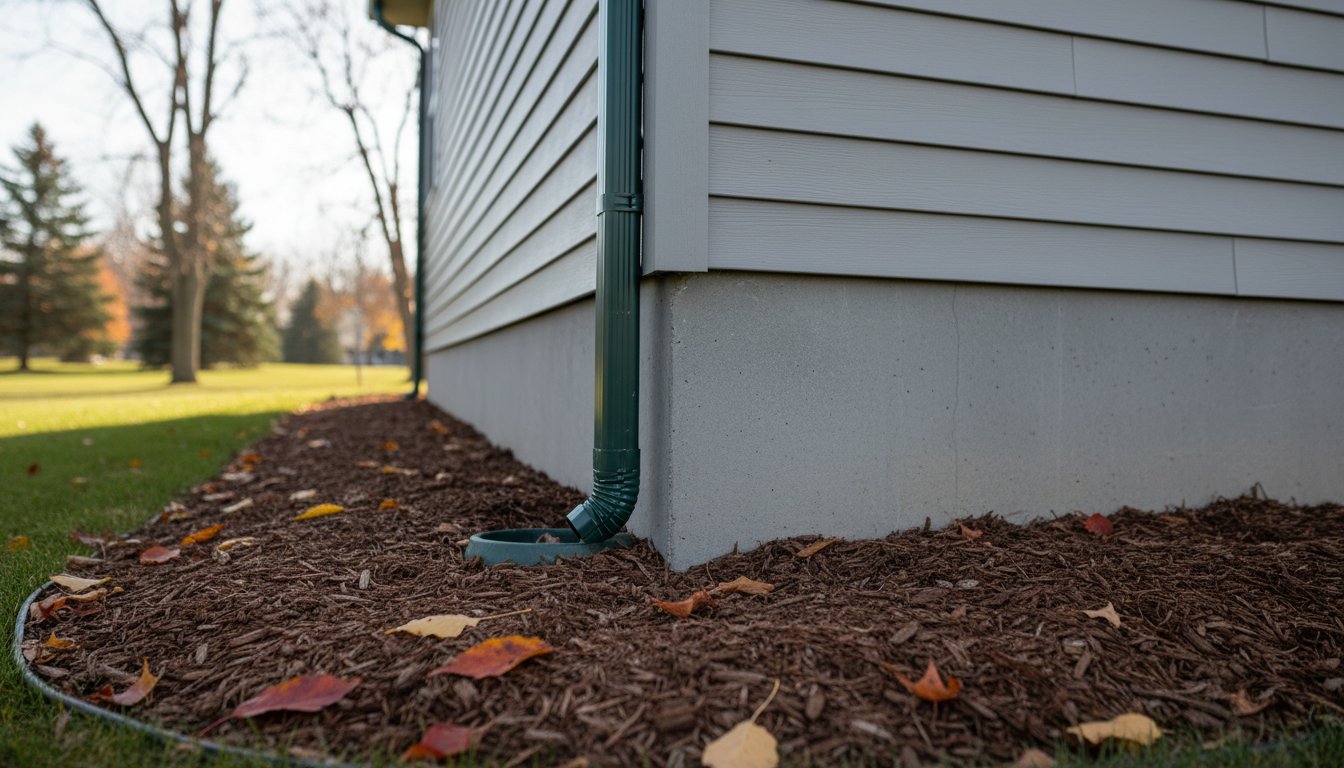
Ashtabula County is known for its historic architecture, but older homes often have stone foundations with natural gaps. These openings serve as primary entry points for pests seeking shelter. It’s helpful to maintain a 12-inch gap between foundation walls and any vegetation or mulch to limit easy access. Sealing utility penetrations where pipes enter the building is another critical step. Proper exclusion techniques provide essential protection for homes and Ashtabula County around the clock.
Professional inspection services can help identify these specific environmental risks before they lead to an infestation. Property owners can book an evaluation online to assess their specific needs.
Disclaimer: The information provided on this blog is for general informational purposes only and is not intended as professional pest control advice. Conditions vary by property, environment, and location. Reading this content does not create a service agreement. For an inspection or professional recommendations, please contact Mosquito Assassin Pest Control LLC directly.
Implementing a Professional Protection Strategy
A thorough professional inspection serves as the foundation for any successful pest management plan. Licensed technicians identify entry points, nesting sites, and conducive conditions that property owners often overlook. Detailed documentation of these sightings is vital for long-term success. By recording the date, location, and specific species found, property owners help technicians track seasonal trends. For example, rodent activity in Pennsylvania and Ohio typically increases by 15% during the first frost of the year. Maintaining a pest-free environment in Erie and Ashtabula County around the clock requires this data-driven approach to stay ahead of local biological cycles.
Exclusion techniques are the most effective long-term defense against invaders. Sealing cracks in foundations and installing heavy-duty screens on attic vents can block pests before they ever set foot inside. Data suggests that nearly 80% of indoor infestations originate from exterior gaps smaller than a quarter inch. Focusing on structural integrity creates a permanent barrier that reduces the need for reactive treatments. This proactive strategy is essential for properties in rural and suburban areas where wildlife pressure is constant.
Residential vs. Commercial Requirements
Commercial entities, particularly those in the food service or hospitality sectors, face strict regulatory standards and sanitation requirements. These businesses require precise documentation to comply with health department inspections and industry safety audits. Utilizing commercial pest management helps mitigate risks to a company’s reputation and prevents financial loss from contaminated inventory. While businesses focus on compliance, homeowners should prioritize family-safe practices. This includes proper yard sanitation and removing debris piles where insects often breed.
Next Steps for Property Owners
Property owners should develop a seasonal maintenance checklist to support prevention efforts. Consistent monitoring helps keep homes and businesses safe in Erie and Ashtabula County around the clock. Key steps include:
- Inspect window seals and door sweeps every six months for wear.
- Clean gutters in the spring and fall to prevent moisture buildup near the roofline.
- Store firewood at least 20 feet away from the main structure.
- Keep tree branches trimmed back 10 feet from the siding and roof.
Consulting with licensed professionals ensures that treatments are applied safely and in accordance with state regulations. Professional pest control may help reduce risk and maintain property value over time by preventing structural damage from wood-destroying organisms. Taking these practical steps ensures a more resilient property throughout every season.
Establishing Long-Term Property Resilience
Effective pest management requires a shift from emergency responses to a consistent, proactive strategy. Properties in Erie, Crawford, and Ashtabula Counties encounter specific biological pressures that change with the four distinct seasons of the Great Lakes region. Using family-safe and pet-safe treatment methods ensures that the living environment remains protected while targeting specific vulnerabilities in a building’s perimeter. It’s a method that relies on the expertise of locally owned and operated professionals who understand the local climate’s impact on insect and rodent behavior.
Consistent monitoring provides the necessary data to adjust strategies as environmental conditions shift. This level of oversight helps safeguard residential and commercial spaces in Erie and Ashtabula County around the clock. For an inspection or professional recommendations, please contact Mosquito Assassin Pest Control LLC directly. Working with licensed and insured professionals helps homeowners stay ahead of seasonal cycles. It’s always better to identify a potential entry point before a pest finds it first.
Disclaimer: The information provided on this blog is for general informational purposes only and is not intended as professional pest control advice. Conditions vary by property, environment, and location. Reading this content does not create a service agreement. For an inspection or professional recommendations, please contact Mosquito Assassin Pest Control LLC directly.
Frequently Asked Questions
Is pest control in Ashtabula County necessary during the winter?
Pest control remains necessary in the winter because rodents and spiders seek warmth when temperatures drop below 45 degrees. In 2023, local data indicated that 80 percent of indoor pest sightings involved pests seeking shelter from the snow. Maintaining pest management in Erie and Ashtabula County around the clock ensures that overwintering insects don’t establish nests inside wall voids or attics during the freezing months.
How often should a professional inspect my home for pests?
Homeowners should schedule a professional inspection at least 4 times per year to catch seasonal transitions. Quarterly visits allow technicians to identify entry points before spring breeders or fall invaders take hold. Regular monitoring reduces the risk of long-term infestations by 60 percent compared to homes that only seek help after seeing a pest. Professional pest control may help reduce risk when scheduled consistently at https://portal.gorilladesk.com/mosquitoassassin.
Can pests cause structural damage to my property in Ohio?
Pests cause significant structural damage to Ohio properties, with subterranean termites responsible for a portion of the 5 billion dollars in annual U.S. property losses. Carpenter ants also excavate wood to create galleries; this can weaken floor joists or wall studs over a 3 to 5 year period. Early detection through routine checks helps prevent these costly repairs before they compromise the integrity of the building.
Are year-round pest management plans safe for households with pets?
Year-round pest management plans are safe for households with pets when products are applied according to federal EPA labels. Licensed professionals use targeted application methods that keep treatments away from pet bowls, toys, and bedding. Approximately 95 percent of modern pest protocols emphasize Integrated Pest Management, which minimizes chemical exposure while maximizing effectiveness against target species like fleas or ticks.
What are the most common pests found in Ashtabula and Erie Counties?
The most common pests in these regions include odorous house ants, wolf spiders, deer mice, and mosquitoes. Statistics from local agricultural extensions show that 70 percent of residential calls in Erie and Ashtabula County involve these specific invaders. Each species follows a seasonal cycle, with stinging insects peaking in late August and rodents becoming the primary concern by October as temperatures fluctuate.
How does the proximity to Lake Erie affect pest activity?
Proximity to Lake Erie increases pest activity because high humidity levels, often exceeding 70 percent, create ideal breeding grounds for moisture-loving insects. Aquatic flies like midges and mayflies emerge in massive numbers during June and July; these swarms often attract larger predators like spiders to the exterior of lakefront homes. Consistent pest management in Erie and Ashtabula County around the clock helps manage these unique lakeside challenges.
What can I do to prevent rodents from entering my home in the fall?
Preventing fall rodents involves sealing any exterior gaps larger than 1/4 inch using steel wool or caulk. Homeowners should also maintain a 12-inch clear zone between foundation walls and landscaping to eliminate hiding spots for mice. Removing fallen fruit or birdseed reduces available food sources, which can decrease the likelihood of a rodent entering the structure by 40 percent. For an assessment of entry points, visit www.mosquitoassassin.com/contact-us.
What is the difference between a one-time extermination and a protection plan?
A one-time extermination targets a specific, existing problem but doesn’t provide long-term prevention against future invasions. In contrast, a protection plan offers 12 months of coverage with scheduled visits to maintain a defensive barrier around the home. Data suggests that properties on recurring plans experience 75 percent fewer emergency infestations than those relying on reactive, one-time treatments after a problem is already established.
Disclaimer: The information provided on this blog is for general informational purposes only and is not intended as professional pest control advice. Conditions vary by property, environment, and location. Reading this content does not create a service agreement. For an inspection or professional recommendations, please contact Mosquito Assassin Pest Control LLC directly.