Tag: restaurant management

  • How to Pass a Restaurant Health Inspection: A Comprehensive 2026 Guide

    How to Pass a Restaurant Health Inspection: A Comprehensive 2026 Guide

    With approximately 48 million people in the United States affected by foodborne illnesses every year, the stakes for commercial kitchens have never been higher. It’s natural to feel a sense of dread when an inspector walks through the door, especially when you are trying to figure out how to pass a restaurant health inspection amidst the 2026 FDA Food Code updates and new requirements for allergens like sesame. Managing staff consistency and complex local regulations in Erie, Crawford, or Ashtabula County can feel like a constant battle against potential violations. You deserve the peace of mind that comes with a high public-facing health score and a kitchen that operates at peak safety standards every day.

    Mastering food safety is not about a frantic one-day cleaning spree; it’s about building sustainable systems that make compliance automatic. This guide breaks down the core pillars of sanitation and standardized training procedures to help you achieve zero critical violations. Protect your reputation and ensure your establishment remains a safe, dependable fixture in the community by implementing these professional standards. Explore the essential protocols and documentation required to master the latest regulatory shifts and maintain a disciplined, pest-free environment.

    Disclaimer: The information provided on this blog is for general informational purposes only and is not intended as professional pest control advice. Conditions vary by property, environment, and location. Reading this content does not create a service agreement. For an inspection or professional recommendations, please contact Mosquito Assassin Pest Control LLC directly.
    Key Takeaways

    • Understand that health inspections are scientific assessments focused on protecting public safety and preventing foodborne illness.
    • Learn how to pass a restaurant health inspection by mastering the core pillars of compliance, such as temperature control and employee hygiene.
    • Identify why pest activity is classified as a critical priority violation and how rigorous cleaning protocols eliminate common environmental attractants.
    • Move toward a sustainable inspection readiness culture by implementing daily checklist systems and regular internal audits.
    • Discover the benefits of professional commercial pest control services and how Integrated Pest Management (IPM) supports long-term regulatory success.

    Understanding the Restaurant Health Inspection Process

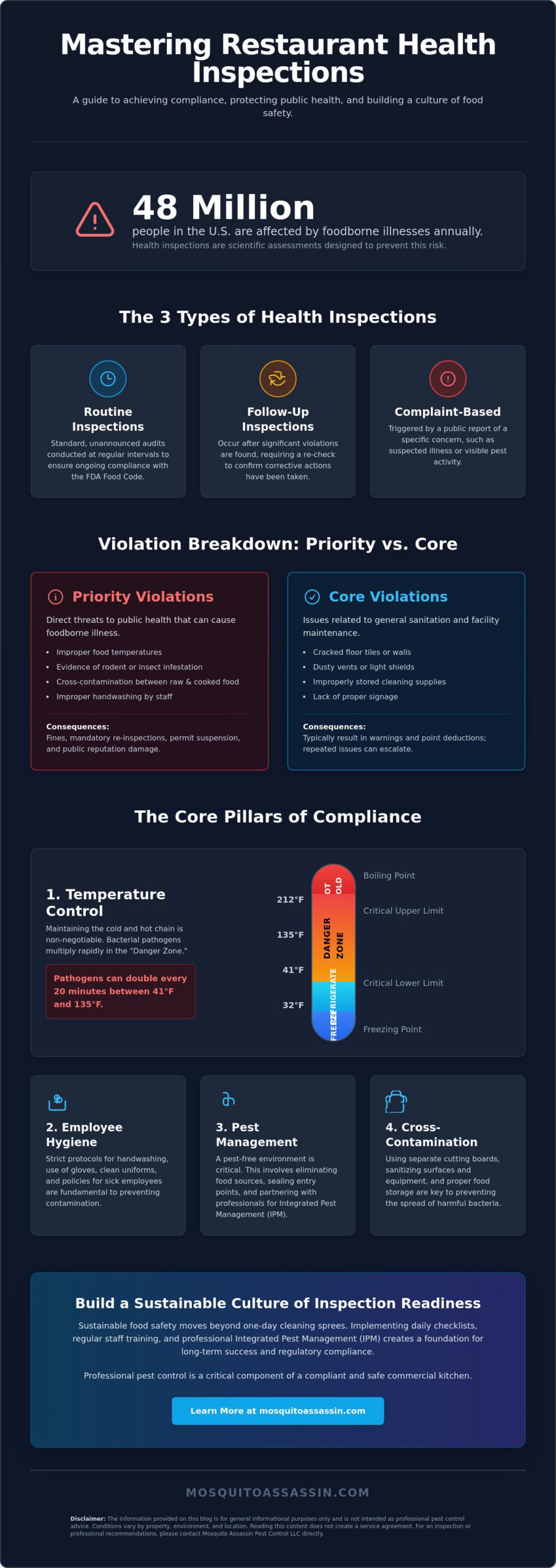
    A restaurant health inspection is a rigorous, unannounced regulatory assessment designed to evaluate how well an establishment adheres to established food safety principles. The primary objective is to protect public health by identifying and correcting behaviors that lead to foodborne illness. Understanding this process is the first step in learning how to pass a restaurant health inspection with a perfect score. Inspectors focus on high-risk factors like food temperature, cross-contamination, and personal hygiene to mitigate the risk of the 48 million foodborne illness cases reported annually in the United States.

    Establishments typically face three types of visits. Routine inspections are the standard, unannounced audits conducted at regular intervals. Follow-up inspections occur if an inspector identifies significant issues that require a re-check to confirm compliance. Complaint-based inspections are triggered when a member of the public reports a specific concern, such as a suspected illness or visible pest activity. In Erie and Crawford Counties in Pennsylvania, as well as Ashtabula County in Ohio, the frequency of these visits depends on the facility’s risk category, which is based on the complexity of the menu and the volume of customers served.

    Who Conducts the Inspections?

    In our region, the authority behind these audits varies by state. In Erie County, the Erie County Health Department manages inspections. In Crawford County, the Pennsylvania Department of Agriculture often takes the lead unless a local health department is established. Across the border in Ashtabula County, the local Health District enforces Ohio’s uniform food safety code. While the specific agency might change, all these bodies use the FDA Food Code as their scientific baseline. The 2026 FDA Food Code updates have introduced stricter requirements for allergen management and traceability, making it essential for operators to stay current on new regulations. When an inspector arrives, they will present credentials and ask to speak with the person in charge.

    Types of Violations and Their Impact

    Inspectors categorize findings into two main groups: priority violations and core violations. Priority violations (formerly called critical violations) are direct threats to health, such as improper cooling temperatures or evidence of a rodent infestation. Core violations relate to general maintenance and sanitation, like a cracked floor tile or a dusty vent. Accumulating priority violations can lead to immediate consequences, including heavy fines, mandatory re-inspections, or the temporary suspension of your operating permit. Beyond legal penalties, health scores are public records. A poor grade can cause lasting damage to your business reputation, as modern consumers frequently check online databases before deciding where to eat. Learning how to pass a restaurant health inspection is a vital business strategy to ensure long-term stability and community trust.

    Disclaimer: The information provided on this blog is for general informational purposes only and is not intended as professional pest control advice. Conditions vary by property, environment, and location. Reading this content does not create a service agreement. For an inspection or professional recommendations, please contact Mosquito Assassin Pest Control LLC directly.
    Core Compliance Pillars: Food Temperature and Employee Hygiene

    Maintaining the cold chain is a non-negotiable requirement for any commercial kitchen in Erie, Crawford, or Ashtabula County. Inspectors prioritize refrigeration because temperature abuse is a leading cause of bacterial growth. Your refrigerators must consistently hold food at 41°F or below, while freezers should keep products frozen solid. Understanding how to pass a restaurant health inspection starts with recognizing that these numbers aren’t suggestions; they are scientific safeguards. When food enters the “Danger Zone” between 41°F and 135°F, pathogens can double in number in as little as 20 minutes. Monitoring these levels requires a disciplined approach and reliable equipment.

    Proper cooking temperatures are equally vital. Different proteins require specific internal heat levels to ensure safety, such as 165°F for poultry and 155°F for ground meats. Beyond the stove, hygiene remains the most visible indicator of a kitchen’s safety culture. Standardized handwashing protocols require staff to scrub for at least 20 seconds using warm water and soap. This must only occur at dedicated hand sinks, which must be stocked with paper towels and soap at all times. If an inspector sees a staff member using a prep sink to wash their hands, it’s an immediate red flag. Maintaining a clean environment is a team effort, and professional commercial pest control can help support these sanitation goals by identifying structural gaps that lead to contamination.

    Time and Temperature Control

    Consistency relies on the use of calibrated thermometers. Staff should check and log temperatures multiple times per shift to provide a paper trail of compliance. The FDA Food Code outlines specific cooling procedures for hot foods, known as the two-stage method. Food must drop from 135°F to 70°F within two hours, and then down to 41°F within the next four hours. Thawing also requires care. Never thaw food at room temperature; use the refrigerator, cold running water, or the microwave as part of the cooking process to keep the product safe.

    Personal Hygiene and Staff Habits

    Employee habits can make or break an audit. Bare-hand contact with ready-to-eat foods is prohibited; gloves or utensils must be used instead. Staff should wear effective hair restraints and clean uniforms while avoiding most jewelry, except for a plain wedding band. It’s also critical to have a clear employee health policy. Management must exclude staff from the kitchen if they exhibit symptoms like vomiting, diarrhea, or jaundice. This protects your customers and ensures you are following the best practices of a professional food service operation.

    Disclaimer: The information provided on this blog is for general informational purposes only and is not intended as professional pest control advice. Conditions vary by property, environment, and location. Reading this content does not create a service agreement. For an inspection or professional recommendations, please contact Mosquito Assassin Pest Control LLC directly.

    How to Pass a Restaurant Health Inspection: A Comprehensive 2026 Guide

    Managing Pest Control Requirements for Health Inspections

    Pest activity is frequently classified as a critical priority violation because pests are biological vectors for dangerous pathogens. If an inspector finds live cockroaches, rodent droppings, or flies in food preparation areas, the facility faces immediate penalties. Understanding how to pass a restaurant health inspection requires a proactive approach to pest management that goes beyond simple reactive measures. A single sighting can lead to a failed audit, making it essential to treat pest prevention as a daily operational requirement.

    Sanitation is your most powerful defense. Pests are attracted to food sources like accumulated grease behind fryers or standing water in poorly maintained floor drains. By eliminating these attractants, you remove the primary reason pests enter your kitchen in the first place. Exclusion strategies are equally important for long term success. This includes installing heavy duty door sweeps, sealing gaps around utility lines, and ensuring windows have tight fitting screens. A professional pest management plan is a necessity for any commercial facility to maintain these high standards and protect public health.

    The Pest Control Logbook

    In Erie and Crawford Counties, as well as Ashtabula County, inspectors expect to see a comprehensive pest control logbook on the premises. This is not just a folder; it’s a living record of your safety commitment. It should contain detailed reports of all sightings, actions taken, and current service reports. You must also keep pesticide application records on-site for immediate review. Ensure your service provider is properly licensed in Pennsylvania or Ohio to perform commercial work. While Florida’s restaurant inspection process provides a clear example of how these records are audited at the state level, local health departments in our region follow similar rigorous documentation standards.

    Common Pest Hotspots in Commercial Kitchens

    Early detection is vital for long term compliance. Focus your internal audits on hotspots like floor drains, the areas behind heavy refrigeration units, and inside motor housings where warmth attracts insects. Dumpster areas and external waste disposal sites must be managed carefully to minimize attraction from the perimeter. Regular professional inspections help identify early signs of activity before they become a violation on a public report. Utilizing commercial pest control ensures that these vulnerable areas are monitored by experts who understand the specific pressures of the food service industry. By identifying risks before the inspector arrives, you maintain control over your establishment’s reputation.

    Disclaimer: The information provided on this blog is for general informational purposes only and is not intended as professional pest control advice. Conditions vary by property, environment, and location. Reading this content does not create a service agreement. For an inspection or professional recommendations, please contact Mosquito Assassin Pest Control LLC directly.
    Creating a Sustainable Inspection Readiness Culture

    Many kitchen managers fall into the trap of “crisis cleaning” the moment they hear an inspector is in the neighborhood. This reactive approach is exhausting and frequently leads to overlooked details that result in priority violations. Learning how to pass a restaurant health inspection is actually about shifting your mindset from a single event to a daily operational standard. When food safety becomes a core part of your team’s identity, compliance becomes an automatic byproduct of your workflow rather than a source of panic. This cultural shift requires clear expectations and a commitment to standardized training across all shifts in your Erie, Crawford, or Ashtabula County establishment.

    Empowerment is the foundation of this culture. Instead of micromanaging every task, give your staff ownership over their specific stations. When a line cook understands that they are the primary guardian of their station’s temperature logs and sanitation buckets, they take more pride in the results. Ongoing education is also vital. Encouraging or requiring food safety certifications like ServSafe ensures that every team member understands the scientific reasons behind the rules. This technical knowledge helps staff recognize risks, such as cross-contamination or improper storage, before they escalate into significant safety issues.

    The Daily and Weekly Checklist

    Consistency relies on written systems. opening and closing checklists should be non-negotiable for every shift. These lists must include verifying that all food is properly labeled and dated using the First In, First Out (FIFO) method to prevent spoilage. While daily cleaning covers the surfaces, your weekly schedule must address less accessible areas. Vents, grease filters, and floor drains require deep cleaning to prevent the buildup of organic matter that attracts pests and creates fire hazards. If you need support in maintaining a sanitary, compliant environment, commercial pest control can help you identify and manage the environmental factors that inspectors watch for most closely.

    Training for the Unexpected

    Staff should be trained on how to interact professionally with health inspectors from the moment they walk through the door. A professional, calm demeanor demonstrates confidence in your food safety systems. Every team member should know exactly where to find essential documentation, including Safety Data Sheets (SDS), employee health policies, and temperature logs. Conduct a mock inspection once a month to simulate the pressure of a real audit. These simulations allow you to identify weaknesses in your training and correct them in a low stakes environment, ensuring your team is ready for the real thing at any time.

    Disclaimer: The information provided on this blog is for general informational purposes only and is not intended as professional pest control advice. Conditions vary by property, environment, and location. Reading this content does not create a service agreement. For an inspection or professional recommendations, please contact Mosquito Assassin Pest Control LLC directly.

    Partnering with Professionals for Long-Term Compliance

    Achieving a high health score requires more than just internal diligence; it often involves strategic partnerships with experts who understand the scientific and regulatory landscape. Utilizing commercial pest control services provides a layer of protection that internal cleaning alone cannot match. Professionals bring technical proficiency to identify structural deficiencies, such as microscopic entry points or sanitation gaps in hard to reach motor housings. In regions like Erie, Meadville, and Ashtabula, local health inspectors look for evidence of a comprehensive plan rather than reactive measures. A proactive partnership ensures your facility is prepared for scrutiny from the Pennsylvania Department of Agriculture or Ohio health districts at any moment.

    Integrated Pest Management (IPM) is the gold standard for food service environments because it aligns perfectly with health department goals. Unlike basic “spraying” methods often discussed in casual forums, IPM focuses on long term prevention through sanitation, exclusion, and monitoring. This methodology reduces the reliance on chemical applications while maximizing the effectiveness of every intervention. By addressing the root causes of pest attraction, such as moisture in floor drains or grease buildup, professional services help you understand how to pass a restaurant health inspection by maintaining a fundamentally sound environment. This systematic approach transforms pest control from a recurring anxiety into a controlled, documented business process.

    The Role of Documentation in Passing

    Documentation is the bridge between doing the work and proving it to an inspector. Professional service records serve as tangible evidence of your proactive approach to food safety. These logs must show regular monitoring, identified risks, and the corrective actions taken to mitigate them. High standards in professional pest control may help reduce risk by providing the exact paper trail that local health departments require. When an inspector sees a well maintained logbook with current service reports, it signals that the establishment is managed with discipline and professional oversight.

    Selecting a Local Provider

    Choosing a provider with deep roots in Northwest Pennsylvania and Northeast Ohio is a strategic advantage. Different regions face unique pest pressures, and a local expert will be familiar with the specific behaviors of pests common to the Great Lakes area. It’s essential to verify that any partner holds the correct commercial licenses and can provide the detailed reporting necessary for modern health audits. Learning more about local pest management standards can help you select a partner that prioritizes the same community values and safety goals as your own business. A dependable expert will not only treat the property but also educate your staff on maintaining the highest levels of sanitation between visits.

    Disclaimer: The information provided on this blog is for general informational purposes only and is not intended as professional pest control advice. Conditions vary by property, environment, and location. Reading this content does not create a service agreement. For an inspection or professional recommendations, please contact Mosquito Assassin Pest Control LLC directly.

    Securing Your Reputation and Compliance

    Mastering the 2026 FDA Food Code is only half the battle. Long-term success relies on moving away from reactive cleaning and toward a disciplined culture of daily readiness. By focusing on core pillars like precise temperature monitoring and rigorous employee hygiene, you ensure your kitchen meets the highest scientific standards. Understanding how to pass a restaurant health inspection is a continuous process that protects your customers and your business reputation throughout Northwest Pennsylvania and Northeast Ohio.

    Professional support simplifies this journey by addressing structural vulnerabilities and providing the necessary paper trail for health department logs. Licensed and insured in PA and OH, Mosquito Assassin Pest Control LLC offers deep experience with regional commercial compliance standards and provides detailed documentation for every visit. To strengthen your facility’s defenses, consult with a professional regarding your commercial pest management needs. Maintaining a safe, compliant environment is entirely achievable with the right systems and expert guidance in place.

    Disclaimer: The information provided on this blog is for general informational purposes only and is not intended as professional pest control advice. Conditions vary by property, environment, and location. Reading this content does not create a service agreement. For an inspection or professional recommendations, please contact Mosquito Assassin Pest Control LLC directly.

    Frequently Asked Questions

    What is the most common reason for failing a health inspection?

    Priority violations related to time and temperature control are the leading causes of failed audits. When food stays in the Danger Zone for too long, it creates a high risk of foodborne illness. Poor employee handwashing and bare-hand contact with ready-to-eat foods also rank high. Consistent training and daily monitoring of these core pillars are the most effective ways to ensure your establishment remains compliant during an unannounced visit.

    Can a restaurant stay open if it has a pest sighting during an inspection?

    A single sighting of a non-critical pest, like a housefly, usually results in a core violation. However, evidence of a priority pest infestation, such as live cockroaches or rodent droppings, can lead to an immediate suspension of your operating permit. In Erie or Ashtabula County, inspectors prioritize public safety above all else. If an infestation is discovered, the facility must typically close until the problem is resolved and a follow-up inspection is passed.

    How often should a restaurant conduct its own self-inspections?

    Establishments should conduct comprehensive internal self-inspections at least once a month. This practice helps managers identify and correct issues before an official audit occurs. Daily checklists for opening and closing shifts provide the baseline for sanitation, but a deeper monthly review allows for a thorough assessment of equipment maintenance and structural integrity. Learning how to pass a restaurant health inspection requires this level of proactive, disciplined oversight to prevent small issues from becoming critical violations.

    What documents must be readily available for a health inspector?

    Inspectors expect to see several key documents immediately upon arrival. These include current food manager certifications, employee health policies, and daily temperature logs for refrigeration and cooking. You must also provide a detailed pest control logbook containing recent service reports and pesticide application records. Keeping these files organized in a central location demonstrates a professional commitment to safety and allows the inspection to proceed smoothly without unnecessary delays or confusion.

    Is a professional pest control contract required by law for restaurants?

    While specific local laws in Pennsylvania and Ohio may not always mandate a signed contract, they do require every food service facility to remain entirely pest-free. Having a professional commercial pest control plan is the industry standard for proving you have taken the necessary preventive measures. Professional documentation shows the inspector that you are proactive rather than reactive. This level of oversight is often the difference between a minor observation and a critical priority violation.

    What should a manager do if they disagree with an inspector’s findings?

    If you disagree with a finding, the best approach is to discuss the concern professionally during the exit interview. Ask the inspector to clarify the specific section of the food code that applies to the observation. If the issue remains unresolved, you have the right to contact a supervisor at the local health department to request a formal review. Maintaining a respectful and cooperative relationship with your inspector is vital for long-term regulatory success.

    How does the FIFO method help with health inspection compliance?

    The First In, First Out (FIFO) method ensures that older inventory is used before newer shipments, which prevents food from expiring or spoiling on the shelf. This system directly supports compliance with labeling and dating requirements. Inspectors look for clear date markings on all prepared and opened foods to confirm they are discarded within the seven-day safety window. Implementing FIFO as a standardized staff habit significantly reduces the risk of core violations related to food storage.

    Are unannounced inspections legal in Pennsylvania and Ohio?

    Yes, unannounced inspections are the legal standard in Pennsylvania and Ohio. Health departments in Erie, Crawford, and Ashtabula Counties have the authority to enter any licensed food establishment during normal business hours. This allows regulators to observe the kitchen’s true daily operations rather than a staged environment. Being prepared at all times is the only reliable strategy for how to pass a restaurant health inspection and protect the reputation of your establishment.

    Disclaimer: The information provided on this blog is for general informational purposes only and is not intended as professional pest control advice. Conditions vary by property, environment, and location. Reading this content does not create a service agreement. For an inspection or professional recommendations, please contact Mosquito Assassin Pest Control LLC directly.

  • Restaurant Pest Control Services in Erie, PA: A Guide to Food Safety and Compliance

    Restaurant Pest Control Services in Erie, PA: A Guide to Food Safety and Compliance

    Last Tuesday, a local bistro owner in downtown Erie watched a health inspector walk through the front door right at the start of the lunch rush. Even with a spotless kitchen, the stress of managing a century-old building means the fear of a surprise visitor is always present. Maintaining high food safety standards in such environments often requires professional restaurant pest control services erie pa to address the unique structural vulnerabilities found near the lakefront.

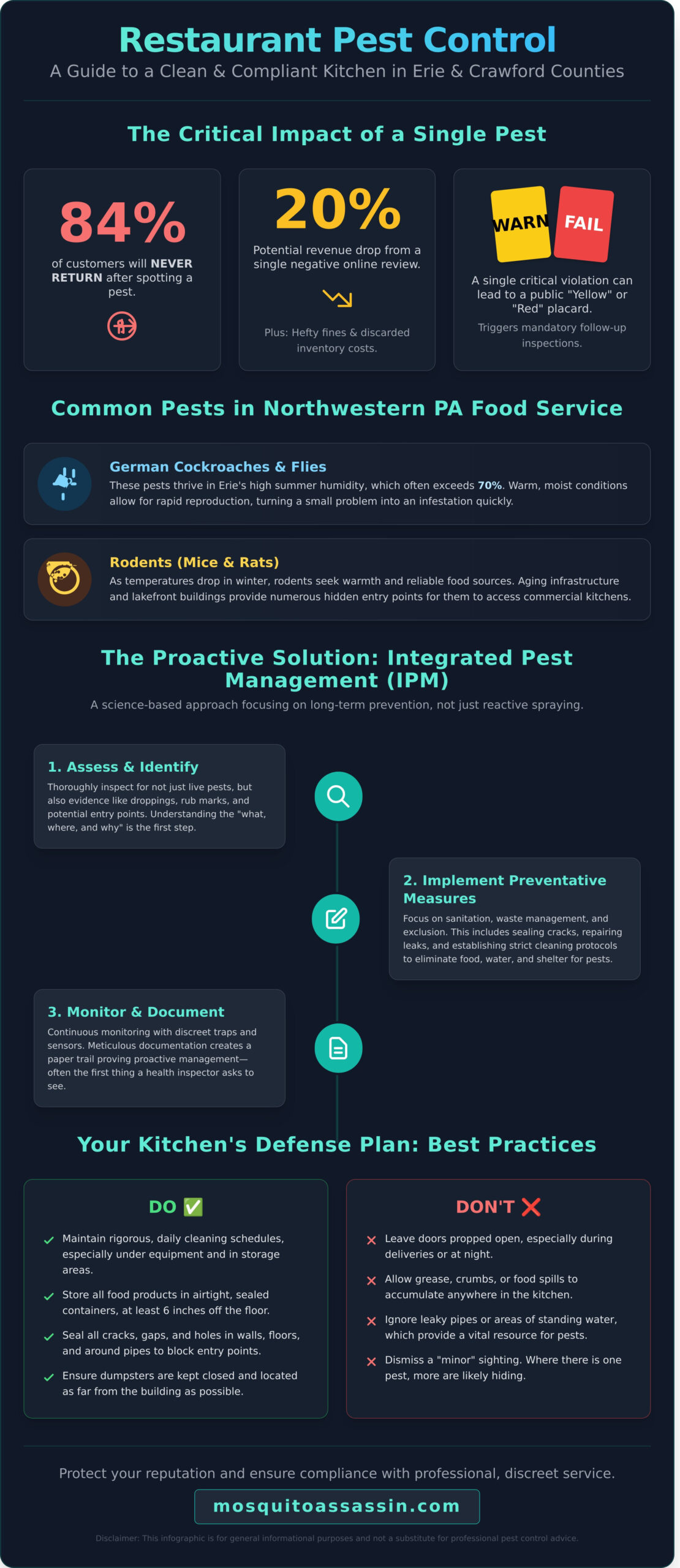
    It’s a fact that 84% of customers will never return to a restaurant after spotting a pest; you likely agree that protecting your reputation is just as important as the food you serve. This guide explains how professional management helps you achieve a clean kitchen and total compliance with local health regulations in Erie and Crawford Counties. You’ll find information on common regional pests, the importance of discreet monitoring, and how to maintain peace of mind during your next surprise inspection.

    Disclaimer: The information provided on this blog is for general informational purposes only and is not intended as professional pest control advice. Conditions vary by property, environment, and location. Reading this content does not create a service agreement. For an inspection or professional recommendations, please contact Mosquito Assassin Pest Control LLC directly.

    Key Takeaways

    • Understand the critical connection between pest activity and health department compliance to safeguard a restaurant’s reputation and customer reviews.
    • Identify how local rodents and insects exploit aging urban infrastructure in downtown Erie and Crawford County to gain entry into food service facilities.
    • Explore the benefits of Integrated Pest Management (IPM), a science-based approach that prioritizes long-term prevention over reactive chemical applications.
    • Learn practical sanitation and waste management strategies designed to eliminate attractants and reduce pest pressure around commercial kitchen perimeters.
    • Discover why specialized restaurant pest control services erie pa provide the local expertise necessary to address the unique environmental challenges of the Great Lakes region.

    The Importance of Professional Pest Management for Erie Restaurants

    Erie restaurants face a unique set of environmental challenges. The proximity to Lake Erie brings high humidity levels that frequently exceed 70% during the summer months. These conditions are ideal for German cockroaches and various fly species to thrive and reproduce rapidly. It isn’t just a seasonal issue. When temperatures drop below freezing in December, rodents seek the warmth and consistent food supplies found in commercial kitchens. Utilizing professional restaurant pest control services erie pa ensures that these biological cycles don’t disrupt daily operations or compromise food safety.

    Local data from the Erie County Health Department indicates that sanitation and pest evidence are among the most cited violations during unannounced inspections. A single critical violation can lead to a “yellow” or “red” placard. This immediately signals a problem to every potential customer walking through the door. Beyond the public embarrassment, the financial consequences of a health code violation are steep. Fines can range from hundreds to thousands of dollars, and the cost of discarded inventory due to contamination can sink a small business’s profit margins for an entire quarter.

    To better understand how these strategies work in a commercial kitchen, watch this helpful video:

    Health Department Standards and Compliance

    The Erie County Health Department inspection criteria are rigorous and focused on identifying active harborages and entry points. Inspectors don’t just look for live insects; they look for evidence like rub marks, gnawings, or droppings. Most professionals utilize Integrated Pest Management (IPM) to address these issues. This method focuses on long term prevention rather than just reactive treatments. It involves detailed documentation that proves a restaurant is following a proactive sanitation plan. This paper trail is often the first thing an inspector asks to see during a visit. Having a “zero tolerance” policy is the only way to ensure compliance, as even a minor sighting can trigger a mandatory follow up inspection within 48 hours.

    Protecting the Brand and Customer Trust

    A restaurant’s reputation is its most valuable asset. In the digital age, a single photo of a pest posted to a review site can cause a 20% drop in revenue within weeks. Modern diners in Erie and Crawford Counties rely on platforms like Yelp and Google Reviews to vet their dining choices. Consistent restaurant pest control services erie pa help maintain the “invisible layer” of protection that keeps the guest experience positive. Discreet service is vital to this process. Technicians usually work during off hours to ensure that pest management activities remain out of the public eye. This maintains the atmosphere while safeguarding the business from the financial ruin of a public relations crisis. When a guest sees a clean, pest free environment, it reinforces their trust in the kitchen’s overall hygiene and food quality.

    Disclaimer: The information provided on this blog is for general informational purposes only and is not intended as professional pest control advice. Conditions vary by property, environment, and location. Reading this content does not create a service agreement. For an inspection or professional recommendations, please contact Mosquito Assassin Pest Control LLC directly.

    Common Pests in Northwestern Pennsylvania Food Service

    Northwestern Pennsylvania’s unique climate and aging urban landscape create specific challenges for food service providers. In Erie and Crawford Counties, the transition from humid summers to harsh winters drives pests indoors, looking for the warmth and steady food supply found in commercial kitchens. Maintaining high standards for hygiene and safety requires a deep understanding of the local pest biology. Adhering to the guidelines set by the FDA Food Code is a baseline requirement for any establishment, as these regulations are designed to prevent the contamination of food and equipment. Effective restaurant pest control services erie pa rely on identifying these threats before they escalate into health department violations.

    Rodent Challenges in Historic Erie Buildings

    Downtown Erie and Meadville are home to many structures built in the late 1800s and early 1900s. While these buildings offer character, they also present significant structural vulnerabilities. Mice only need a gap of 6 millimeters (about 1/4 inch) to enter a facility, while rats can squeeze through an opening the size of a half-dollar. Over time, settling foundations and aging brickwork in Lake Erie coastal properties create these entry points. Rodents often exploit loading docks, utility lines, and basement floor drains to gain access.

    The presence of rodents in a food environment is a critical safety issue. They are known carriers of various pathogens and their droppings, urine, and nesting materials can quickly contaminate dry storage areas. In addition to health risks, rodents pose a fire hazard. They have a constant need to gnaw to keep their incisors sharp, often targeting electrical wiring behind kitchen walls. Implementing consistent restaurant pest control services erie pa ensures that these historic vulnerabilities don’t become permanent liabilities for a business. Identifying these entry points through professional inspections can help reduce the risk of a full-scale infestation.

    Cockroach and Fly Management in Kitchens

    The German cockroach is the most common species found in commercial kitchens in the tri-county area. These pests thrive in the micro-climates created by heavy-duty appliances. They prefer temperatures around 85 degrees Fahrenheit and high humidity, making the space behind reach-in coolers and under dishwashing stations ideal. Their reproduction cycle is incredibly fast; a single female can produce an egg capsule containing 30 to 40 eggs, which can reach maturity in as little as 28 days. This rapid growth means a few hitchhikers on a delivery pallet can become a significant problem within a single month.

    • German Cockroaches: These pests are often introduced via cardboard boxes or food shipments rather than entering from the outdoors.
    • Fruit Flies: Often found near bar areas or produce storage, these flies indicate overripe organic matter or fermenting liquids.
    • Drain Flies: These pests breed in the gelatinous film that builds up inside floor drains, signaling a need for deep cleaning or plumbing maintenance.

    Small flies are frequently more than just a nuisance; they are indicators of underlying sanitation or plumbing issues. While occasional invaders like house flies might enter through an open door, a persistent population of fruit or drain flies suggests that organic debris is accumulating somewhere in the facility. Distinguishing between a one-time visitor and an established infestation is vital for proper management. Professionals look for “hot spots” where moisture and food particles collect, such as the gaskets of refrigeration units or the undersides of prep tables, to address the root cause of the activity.

    Disclaimer: The information provided on this blog is for general informational purposes only and is not intended as professional pest control advice. Conditions vary by property, environment, and location. Reading this content does not create a service agreement. For an inspection or professional recommendations, please contact Mosquito Assassin Pest Control LLC directly.

    Integrated Pest Management (IPM) for Food Safety

    Integrated Pest Management (IPM) is a science-based decision-making process that identifies and reduces risks from pests and pest management strategies. Instead of relying solely on the scheduled application of pesticides, IPM focuses on long-term prevention through a combination of techniques such as biological control, habitat manipulation, and modification of cultural practices. Implementing high-quality restaurant pest control services erie pa involves moving away from reactive treatments and toward a proactive system that prioritizes the structural integrity and cleanliness of the facility.

    Adopting this science-based framework aligns with the 2022 FDA Food Code, which emphasizes the necessity of protecting food from contamination. Statistics from the food service industry indicate that environmental management can resolve up to 90% of recurring pest issues without the immediate need for chemical intervention. This approach is particularly effective in Erie and Crawford Counties, where seasonal temperature shifts drive rodents and insects toward the warmth of commercial kitchens. By managing the environment, restaurant operators create a sustainable defense that protects both their reputation and their customers.

    Success depends on a collaborative relationship between kitchen staff and licensed pest professionals. Technicians provide the expertise to identify vulnerabilities, but the daily habits of employees determine the long-term effectiveness of the program. When staff members understand how their actions impact pest behavior, they become the first line of defense in maintaining a pest-free environment.

    The Four Pillars of a Successful IPM Program

    Effective restaurant pest control services erie pa rely on four foundational pillars to maintain a sterile environment. The first pillar is a comprehensive inspection. Professionals conduct site surveys to find the root cause of activity, looking for entry points as small as 1/16th of an inch for cockroaches or 1/4th of an inch for mice. This data drives the rest of the strategy.

    Sanitation stands as the second pillar. Removing food and water sources is vital for long-term success. Practical prevention strategies often focus on deep cleaning schedules and proper waste management to discourage nesting. Third is exclusion, which involves using physical barriers like door sweeps and silicone sealants to keep pests outside where they belong. Finally, monitoring involves the use of non-toxic tracking tools to detect new activity 24 hours a day, allowing for rapid response before a single sighting becomes a full-blown crisis.

    Documentation and Reporting for Inspectors

    Detailed logbooks are a mandatory component of professional pest management in Pennsylvania. Health inspectors from the Erie County Department of Health specifically look for a chronological record of all pest control activities, including sightings, treatments, and corrective actions taken by the restaurant. A complete logbook proves that the management is exercising due diligence in protecting public health.

    Digital reporting has transformed how managers track trends across their facilities. Modern systems provide data visualization that highlights problem areas, such as a specific floor drain or a loading dock door that stays open too long. When an inspector arrives, having instant access to these records via a digital portal demonstrates a high level of professional oversight. This transparency helps ensure that the restaurant remains compliant with all local and federal food safety regulations while providing peace of mind to the ownership team.

    Disclaimer: The information provided on this blog is for general informational purposes only and is not intended as professional pest control advice. Conditions vary by property, environment, and location. Reading this content does not create a service agreement. For an inspection or professional recommendations, please contact Mosquito Assassin Pest Control LLC directly.

    Restaurant Pest Control Services in Erie, PA: A Guide to Food Safety and Compliance

    Practical Prevention Strategies for Commercial Kitchens

    Maintaining a pest-free environment in Erie County requires more than reactive treatments; it demands a daily commitment to rigorous sanitation. Research from the Journal of Food Protection indicates that nearly 85 percent of pest sightings in commercial kitchens correlate directly with sanitation lapses or structural defects. Establishing a strict daily schedule ensures that food debris and grease don’t accumulate in hard-to-reach areas. This proactive approach is a cornerstone of effective restaurant pest control services erie pa, as it removes the primary attractants that draw insects and rodents indoors.

    Waste management plays a vital role in reducing exterior pest pressure. Dumpsters should be located at least 25 feet away from the building’s entrance to prevent pests from migrating inside. Keeping lids tightly closed and scheduling power washing for the dumpster pad every 14 days can reduce fly populations by up to 50 percent. Additionally, managing incoming shipments is critical. German cockroaches and stored product pests often hitchhike into facilities inside corrugated cardboard boxes. Inspecting every delivery on the loading dock before it enters the storage area prevents a localized infestation from becoming a facility-wide crisis.

    Staff members are the first line of defense against infestations. Training employees to spend 10 minutes at the end of each shift looking for early signs of activity (such as small droppings, smear marks along baseboards, or damaged packaging) allows for faster intervention. When employees understand the biology of common pests, they can identify risks before they escalate into health code violations.

    Sanitation Protocols and Moisture Control

    Deep cleaning must extend beyond visible surfaces. Organic buildup in floor drains is a primary breeding ground for small flies; using microbial cleaners can eliminate this “biofilm” where larvae thrive. Addressing plumbing leaks is equally urgent. A single dripping faucet can provide enough water to sustain a rodent colony indefinitely. Eliminating standing water in mop buckets and floor pans reduces the survival rate of pests by removing their most essential resource.

    Structural Exclusion and Maintenance

    Physical barriers are the most permanent form of pest control. Mice can squeeze through gaps as small as 1/4 inch, which is roughly the width of a pencil. Sealing utility penetrations with stainless steel wool and caulk prevents entry. Loading docks should be equipped with heavy-duty door sweeps and air curtains to deter flying insects. Maintaining window screens (using 16-mesh or finer) ensures that ventilation doesn’t become an invitation for flies during the humid summer months in Erie and Crawford Counties.

    Implementing these practical steps creates a hostile environment for pests and protects the reputation of the establishment. For a detailed assessment of a facility’s specific vulnerabilities, professional pest control may help reduce risk by identifying hidden entry points and nesting sites.

    Disclaimer: The information provided on this blog is for general informational purposes only and is not intended as professional pest control advice. Conditions vary by property, environment, and location. Reading this content does not create a service agreement. For an inspection or professional recommendations, please contact Mosquito Assassin Pest Control LLC directly.

    Selecting a Professional Partner in Erie and Crawford Counties

    Selecting a professional partner in Erie and Crawford counties requires more than just picking a name from a list. The unique climate of the Great Lakes region means pests behave differently here than in southern Pennsylvania or central Ohio. Business owners in Erie, Meadville, and Ashtabula must prioritize providers who understand these local variables. Choosing restaurant pest control services erie pa ensures that the unique architectural styles and older infrastructure found in downtown Erie are accounted for during inspections. Older buildings often have hidden entry points that generic, cookie-cutter treatment plans might miss. A customized approach focuses on these structural vulnerabilities and identifies specific risks, such as the 15% increase in rodent activity typically observed during the first frost in late October.

    Evaluating the credentials and licensing of a commercial provider is a non-negotiable step in the selection process. In Pennsylvania, commercial pesticide applicators must hold valid certification in specific categories, such as Category 11 for household and health-related pests. Verifying these licenses ensures that the methods used align with modern Integrated Pest Management (IPM) practices. Professional pest control may help reduce risk for local business owners by providing a layer of documented compliance that health inspectors look for during unannounced visits. This proactive stance protects the reputation of the establishment and ensures the environment remains conducive to food safety.

    What to Look for in a Commercial Service Plan

    A robust plan prioritizes consistency and transparency. High-traffic food service environments usually require monthly or bi-monthly inspections to remain compliant with 2024 regional health standards. It’s vital that a provider delivers written reports after every visit. These documents should detail sightings, sanitation issues, and structural repairs needed to prevent future infestations. Availability of emergency support within 24 hours is another critical factor for businesses that can’t afford downtime. When evaluating restaurant pest control services erie pa, look for a partner that offers detailed service recommendations rather than just a quick application of product.

    The Value of Local Knowledge and Support

    Regional pest cycles dictate the timing of specific treatments. In Northwestern PA, the transition from humid summers to lake-effect snow creates distinct windows for pest migration. Local providers anticipate the surge of cluster flies in the spring or the movement of rats toward heat sources in December. They understand how local health regulations in Crawford and Ashtabula counties might differ slightly in their documentation requirements. For more information on tailored solutions, professional pest control services can provide a comprehensive assessment of these seasonal risks and structural needs.

    Working with a provider who lives and works in the Erie and Crawford county areas ensures a faster response and a deeper understanding of the local environment. This local expertise is the most effective way to safeguard a commercial kitchen against the persistent threat of regional pests. By focusing on data-driven results and local pest behavior, business owners can maintain a clean, safe, and professional environment for their staff and customers throughout the year.

    Disclaimer: The information provided on this blog is for general informational purposes only and is not intended as professional pest control advice. Conditions vary by property, environment, and location. Reading this content does not create a service agreement. For an inspection or professional recommendations, please contact Mosquito Assassin Pest Control LLC directly.

    Maintaining Compliance and Food Safety Standards

    Food safety standards in Northwestern Pennsylvania require constant vigilance to prevent infestations. Small oversights can lead to health code violations. Implementing a comprehensive Integrated Pest Management (IPM) approach helps maintain a sterile environment by focusing on exclusion and sanitation. Licensed and insured technicians who live in the Erie community understand the specific seasonal challenges of the local climate. Choosing professional restaurant pest control services erie pa ensures that a commercial kitchen remains compliant with the latest Pennsylvania Department of Agriculture food safety regulations. It’s a proactive step that protects the investment made into the business and the health of every customer. High standards build long-term trust with the community in Erie and Crawford counties. For those seeking to safeguard their establishment, scheduling a professional inspection for your restaurant through a locally owned provider can identify hidden risks before they become costly problems. Taking action today keeps the focus on serving the local community.

    Disclaimer: The information provided on this blog is for general informational purposes only and is not intended as professional pest control advice. Conditions vary by property, environment, and location. Reading this content does not create a service agreement. For an inspection or professional recommendations, please contact Mosquito Assassin Pest Control LLC directly.

    Frequently Asked Questions

    How often should a restaurant have professional pest control services?

    Most commercial kitchens in Erie, PA, schedule professional inspections at least 12 times per year to maintain compliance with local health codes. High-volume establishments often require bi-weekly visits to monitor traps and maintain sanitation standards. Monthly inspections help identify 100% of potential entry points before they lead to larger infestations.

    Can a pest infestation cause a restaurant to be shut down in Erie, PA?

    Yes, a severe infestation can lead to an immediate closure by the Erie County Department of Health. Inspectors categorize active pest activity as a high-risk violation; this often results in a 48-hour mandatory shutdown until the facility is cleared. Statistics show that roughly 15% of health code failures in commercial kitchens stem from inadequate pest management.

    Are pest control treatments safe to use in food preparation areas?

    Professional treatments are designed for use in food-handling environments when applied by licensed technicians. These experts follow EPA-approved labels that specify application methods, such as crack and void treatments, which keep products away from 100% of food contact surfaces. Integrated Pest Management (IPM) focuses on non-chemical solutions first to ensure the highest level of safety.

    What are the most common signs of rodents in a commercial kitchen?

    The most frequent indicators include droppings, which are typically 3 to 6 millimeters long, and gnaw marks on food packaging. You might also find nesting materials like shredded paper or cardboard tucked into dark corners or behind large appliances. Since a single pair of mice can produce up to 50 offspring in one year, identifying these signs early is critical for restaurant pest control services erie pa.

    How do I get rid of fruit flies in my restaurant bar or kitchen?

    Eliminating fruit flies requires removing their breeding grounds, which are usually fermenting organic matter in drains or under equipment. A single female fruit fly can lay up to 500 eggs in its brief 10-day lifespan. Deep cleaning floor drains with enzymatic cleaners every 7 days helps break the life cycle and reduces the population significantly.

    What documentation do I need for a health department inspection?

    Restaurants must maintain a detailed pest management logbook for health inspectors to review. This folder should contain 3 years of service reports, pesticide application records, and site maps showing the location of all bait stations. Providing these documents proves that the facility follows a consistent schedule for restaurant pest control services erie pa.

    Will professional pest control help with cockroach problems in an old building?

    Professional treatments are effective even in historic buildings where cracks and crevices are common. Since German cockroaches can fit through gaps as narrow as 1.5 millimeters, technicians use specialized baits and dusts that reach deep into wall voids. Regular monitoring helps detect 90% of new activity before it spreads through the plumbing or electrical chases of older structures.

    Does professional pest control offer a guarantee for restaurants?

    Most professional services include a service guarantee that ensures a technician will return if pests appear between scheduled visits. This typically includes a 24-hour response time for emergency sightings of high-risk pests like rodents or cockroaches. While no one can promise 0% pest presence forever, these agreements provide a 100% commitment to resolving issues as they arise.

    For those managing a commercial kitchen, professional pest control may help reduce risk. To request an inspection or learn more about management plans, visit the online booking portal or contact a specialist at www.mosquitoassassin.com/contact-us.

    Disclaimer: The information provided on this blog is for general informational purposes only and is not intended as professional pest control advice. Conditions vary by property, environment, and location. Reading this content does not create a service agreement. For an inspection or professional recommendations, please contact Mosquito Assassin Pest Control LLC directly.

  • Restaurant Pest Control: A Complete Guide to Protecting Your Business

    Restaurant Pest Control: A Complete Guide to Protecting Your Business

    A single cockroach scurrying across the floor. A fly buzzing around a customer’s plate. In the restaurant business, your reputation is everything, and nothing destroys it faster than a pest sighting. The anxiety over a surprise health inspection or a viral one-star review is a heavy weight for any owner to carry. This is why a professional restaurant pest control strategy isn’t just a line item in your budget, it’s the armor that safeguards your hard-earned success, your customers’ trust, and your peace of mind.

    You don’t have to operate in a state of constant worry. This complete guide is your new game plan for total pest eradication and prevention. We’ll show you how to implement a comprehensive strategy that protects your business, keeps diners happy, and ensures you pass every health inspection with confidence. It’s time to eliminate the threat and focus on what you do best: creating incredible dining experiences in a safe, clean, and pest-free environment.

    Why One Pest Sighting Can Cost Your Restaurant Everything

    You’ve invested years building your restaurant’s reputation, perfecting recipes, and creating an inviting atmosphere. All that hard work can be destroyed in a single moment by one pest. In the highly competitive food service industry, a clean, pest-free environment isn’t just a goal, it’s a non-negotiable requirement for survival. Viewing professional restaurant pest control as a core operational investment, not a discretionary expense, is the first step to safeguarding your future.

    The Power of a Bad Review

    In the age of the smartphone, every customer is a potential food critic with a global audience. A single photo of a fly in a drink or a cockroach near a baseboard, posted to Google, Yelp, or social media, can go viral in hours. This digital word-of-mouth directly impacts your bottom line, as one negative review can deter hundreds of potential diners, leading to empty tables and devastating revenue loss.

    Navigating Health Department Inspections

    Health inspectors have zero tolerance for pests, and for good reason. The presence of rodents, cockroaches, or flies is considered a critical violation of health codes, indicating an immediate risk to public safety. The consequences are severe and swift: steep fines, forced temporary or permanent closures, and public notices that permanently damage your credibility. A consistently clean inspection record is your best defense and a testament to your professionalism.

    The Hidden Financial Impact

    The damage caused by pests extends far beyond public perception. The unseen costs can cripple a restaurant’s finances and operations from the inside out. Consider the direct financial drain from:

    • Contaminated Inventory: Pests spoil food and ruin dry goods, forcing you to discard thousands of dollars in product.

    • Structural Damage: Rodents gnaw through electrical wiring, plumbing, and insulation, creating fire hazards and leading to expensive repair bills.

    • Staff Morale: An infested workplace is stressful and unsanitary, causing a sharp decline in employee morale, productivity, and retention.

    A proactive defense is the only reliable strategy. A comprehensive approach to restaurant pest control is about more than just reacting to a problem; it’s about creating an environment where pests cannot thrive. This involves a professional partnership built on the principles of Integrated Pest Management, a proven methodology for long-term protection and peace of mind.

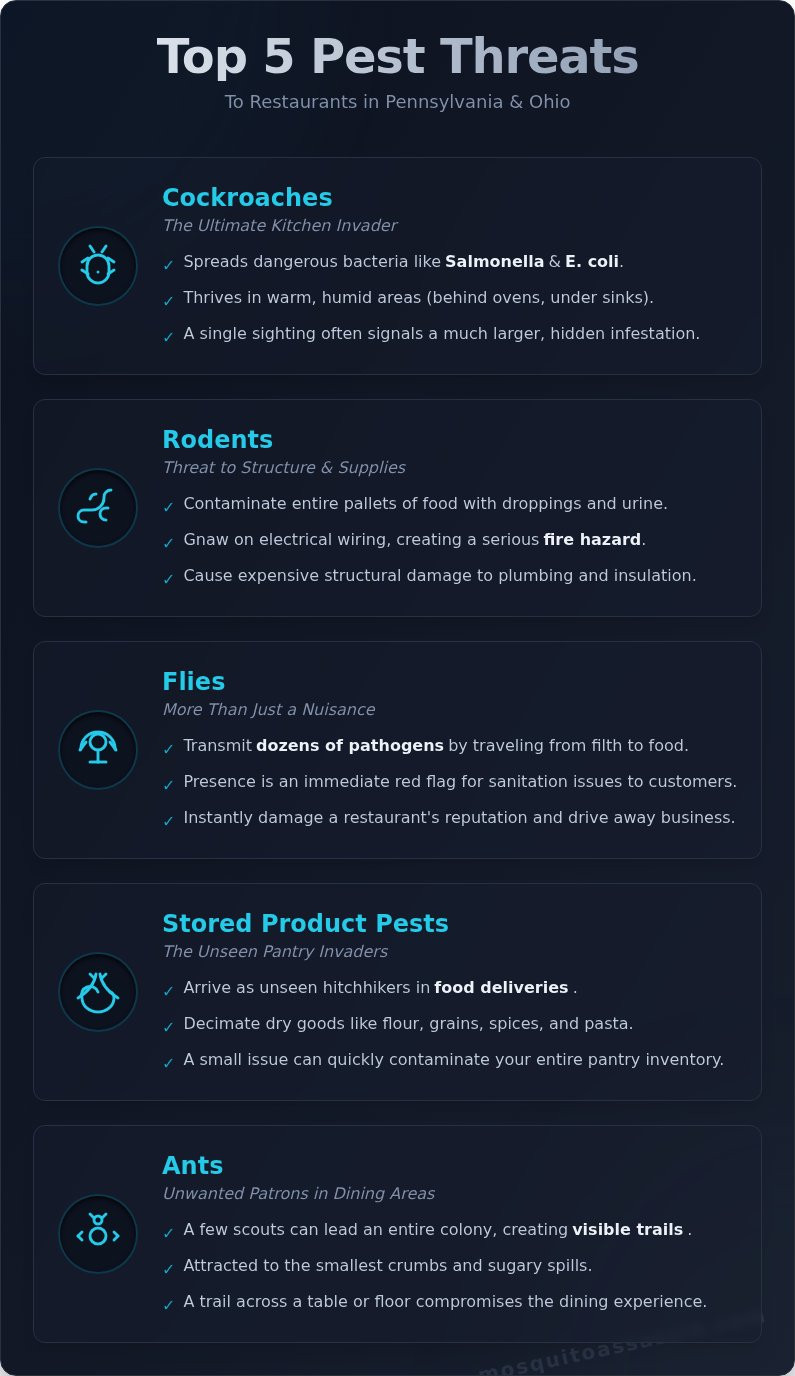
    Top 5 Pests That Threaten Restaurants in PA and OH

    Knowing your enemy is the first step to victory. For restaurant owners in Pennsylvania and Ohio, the battle against pests is constant due to our region’s specific climate and urban density. These aren’t just minor annoyances; they are significant threats to your reputation, inventory, and compliance. A professional restaurant pest control plan is your best defense against these top five invaders.

    Cockroaches: The Ultimate Kitchen Invader

    The German cockroach is the number one nemesis of commercial kitchens. These pests thrive in the warm, humid environments behind ovens, under sinks, and inside floor drains. They are notorious for spreading dangerous bacteria, including Salmonella and E. coli, directly onto food prep surfaces, utensils, and dishes. A single sighting often signals a much larger, hidden infestation that puts public health at risk.

    Rodents: A Threat to Structure and Supplies

    Mice and rats pose a dual threat of contamination and destruction. Their droppings and urine can contaminate entire pallets of food, leading to significant financial loss. Worse, their constant gnawing can damage structural elements, packaging, and even electrical wiring, creating a serious fire hazard. They often find entry points near dumpster areas or through gaps from adjoining properties, making exterior vigilance critical.

    Flies: More Than Just a Nuisance

    The presence of flies, whether drain flies in the mop sink, fruit flies at the bar, or house flies in the dining room, is an immediate red flag for sanitation issues. These pests travel from filth to food, transmitting dozens of pathogens with every landing. To a customer, a fly buzzing around their table is a clear sign of an unclean environment, instantly damaging your restaurant’s reputation and driving business away.

    Stored Product Pests (Pantry Pests)

    Often arriving as unseen hitchhikers in deliveries, stored product pests like Indian meal moths and weevils can decimate dry goods. An infestation can quickly spread through flour, grains, spices, and pasta, ruining hundreds of dollars in inventory. Discovering webbing in a bag of flour or beetles in a spice container requires immediate action to prevent a small problem from contaminating your entire pantry.

    Ants: Unwanted Patrons in Dining Areas

    While small, ants can create big problems. A few scout ants can quickly lead an entire colony to your establishment, forming visible trails from the kitchen to the dining room. They are drawn to the smallest crumbs and sugary spills, making them a particular nuisance around soda stations and dessert prep areas. An ant trail across a table or floor is a sight no customer wants to see, compromising the dining experience you work so hard to create.

    The Mosquito Assassin Strategy: Integrated Pest Management (IPM)

    Forget the outdated "spray and pray" tactics of the past. Modern, professional restaurant pest control is a science built on a smarter, more sustainable strategy: Integrated Pest Management (IPM). This isn’t a one-time chemical blitz; it’s a comprehensive, long-term partnership designed to safeguard your reputation, protect your inventory, and ensure compliance with health codes. IPM is the gold standard for the foodservice industry because it focuses on proactive prevention and uses targeted, low-impact treatments only when necessary, giving you dependable results and complete peace of mind.

    Step 1: Comprehensive Inspection and Assessment

    Our proven process begins with a meticulous, top-to-bottom inspection of your establishment. A certified Mosquito Assassin technician will identify existing pest pressures, potential entry points, and environmental factors that attract pests. We assess critical vulnerabilities in your sanitation, food storage, and building structure, from tiny cracks in the foundation to drainage issues. This detailed assessment forms the unshakable foundation of your customized protection plan.

    Step 2: A Customized, Targeted Treatment Plan

    Based on our findings, we design a multi-faceted treatment plan tailored specifically to your restaurant’s needs. We believe in using the right tool for the job, combining a range of effective methods like strategic baiting, discreet trapping, and physical exclusion to seal pests out for good. In sensitive areas like kitchens and dining rooms, we prioritize the use of low-impact, food-safe treatments. The plan is engineered for maximum effectiveness while remaining completely discreet to avoid disrupting your operations.

    Step 3: Ongoing Monitoring and Prevention

    Effective pest management is a continuous process, not a single event. Our service includes regular monitoring visits to inspect devices, check for new activity, and ensure your protective barrier remains secure. After each visit, we provide detailed service reports and actionable sanitation recommendations to help your staff be the first line of defense. We stand by our work with a simple, powerful guarantee: If pests return, so do we. Ready to protect your business? Schedule your comprehensive restaurant inspection today.

    Restaurant Pest Control: A Complete Guide to Protecting Your Business

    Creating a Pest-Proof Fortress: A Zone-by-Zone Guide

    A proactive defense is the foundation of effective restaurant pest control. Pests don’t see your business as a single entity; they see a collection of opportunities. By breaking down your restaurant into distinct operational zones, you can identify vulnerabilities and implement targeted strategies to safeguard your reputation, your inventory, and your bottom line.

    The Kitchen and Food Prep Areas

    This is ground zero for pest activity. The constant presence of food, moisture, and warmth makes your kitchen a paradise for cockroaches, flies, and rodents. Eliminating these attractants is non-negotiable. Your team’s daily protocol must include:

    • Deep Cleaning: Scour floor drains, clean grease traps, and pull out heavy equipment to clean underneath. Eradicating the hidden grease and moisture buildup that pests thrive on is critical.

    • Proper Food Storage: Immediately transfer all ingredients from cardboard boxes into sealed, rodent-proof containers made of hard plastic or metal.

    • Structural Sealing: Diligently inspect for and seal any cracks, crevices, or gaps around pipes and utility lines. Every sealed entry point is another victory in denying pests shelter.
      While your team handles daily wipe-downs, achieving the deep sanitation needed to truly deter pests often requires professional help. A commercial cleaning service like AlphaLux Cleaning can tackle the heavy-duty tasks, ensuring that the foundational cleanliness of your kitchen supports your pest prevention goals.

    Dining Rooms, Bars, and Patios

    Your guest experience can be instantly ruined by a single pest sighting. At the bar, fruit flies are a persistent threat; a nightly regimen of cleaning soda gun holsters, drip trays, and floor mats is essential. In dining areas, maintain immaculate floors and regularly clean under booths and tables where crumbs accumulate. For patios, protect your patrons from mosquitoes and flies with professional treatments, strategic lighting, and the elimination of any standing water sources.

    Storage Rooms and Dumpster Areas

    Often overlooked, these exterior and back-of-house areas are critical weak points in any restaurant pest control plan. Keep storerooms impeccably organized, with all goods stored on shelves at least six inches off the floor and away from walls. This simple practice eliminates hiding spots for rodents and makes inspections far more effective. Your dumpster area is a primary beacon for pests; ensure dumpsters have tight-fitting lids, are placed on a cleanable concrete pad, and are positioned as far from building entrances as possible.

    Keeping the dumpster pad and surrounding exterior surfaces free of the grease and food spills that attract pests is a crucial part of this defense. Professional exterior cleaning, like the commercial services offered by Poseidon Power Washing LLC, ensures these high-traffic areas remain sanitary and unattractive to rodents and insects.
    A zone-by-zone defense creates a formidable barrier, but a professional assessment ensures no vulnerability is missed. Contact Mosquito Assassin today to design a customized protection plan for your establishment.

    Choosing the Right Pest Control Partner in Erie and Ashtabula

    Your reputation is your most valuable asset, and your approach to restaurant pest control is only as strong as the partner you choose. While large national chains offer a one-size-fits-all solution, a local expert understands the specific pest pressures and regulatory landscape of Erie and Ashtabula counties. Choosing a dedicated, local partner means investing in a team that is as committed to your success as you are.

    Look for Foodservice Experience and Licensing

    When vetting a commercial pest control provider, expertise is non-negotiable. A general exterminator may not understand the unique challenges and stringent requirements of the foodservice industry. Before signing a contract, ensure your potential partner can provide proof of the following:

    • Proper Credentials: They must be fully licensed, insured, and certified to operate in Pennsylvania or Ohio.

    • Local Restaurant Experience: Ask for examples of their work with other foodservice businesses in the area. A proven track record is your best guarantee of quality.

    • Health Code Knowledge: A knowledgeable technician understands local health codes and provides services designed to help you pass inspections with confidence.

    Demand Discretion and Scheduling Flexibility

    The sight of a pest control truck parked outside your entrance during business hours can damage your reputation before a customer even walks through the door. A true professional understands this. Your partner should offer discreet service, including the use of unmarked vehicles upon request. They must also work around your schedule, performing treatments during off-hours, whether it’s early in the morning, late at night, or on days you are closed-to ensure zero disruption to your operations and dining experience.

    Prioritize Safety and Clear Communication

    Protecting your staff and patrons is paramount. Your pest control partner must use products and methods that are specifically approved and rated for use in sensitive foodservice environments. They should also provide comprehensive documentation after every visit, creating a clear logbook that satisfies health inspectors and demonstrates your commitment to a clean, safe establishment. This commitment to transparency is the foundation of a strong partnership. A true partner provides ongoing advice and support to safeguard your business for the long term. See why local restaurants trust Mosquito Assassin.

    Safeguard Your Reputation with the Right Pest Control Partner

    Your restaurant’s reputation is your most valuable asset, and as we’ve detailed, a single pest sighting can put it all at risk. Lasting protection comes from a proactive, comprehensive strategy, not just reactive treatments. For establishments in the Erie, PA and Ashtabula, OH areas, choosing a partner who understands your unique challenges is non-negotiable.

    At Mosquito Assassin, we are that partner. As a locally owned and operated team, we are experts in the foodservice health and safety regulations critical to your success. Our professional approach to restaurant pest control is designed to eliminate threats and ensure compliance, safeguarding your business from the inside out. We stand by our work with our Pest-Free Guarantee: If pests return, so do we.

    Don’t wait for a pest problem to become a public relations crisis. Take the definitive step toward total protection and peace of mind. ******Protect Your Reputation. Get a Free Restaurant Pest Control Quote Now! **

    Frequently Asked Questions About Restaurant Pest Control

    How often do restaurants need professional pest control services?

    For optimal protection, most restaurants benefit from a monthly or bi-monthly service schedule. Factors like your building’s age, location, and specific pest pressures can influence this frequency. A proactive, consistent plan is the best defense against pests. We conduct a thorough inspection to create a customized service schedule that safeguards your reputation, ensures health code compliance, and keeps your establishment pest-free and protected year-round.

    Are the pest control treatments you use safe for a commercial kitchen?

    Absolutely. The safety of your staff, customers, and kitchen is our highest priority. We utilize EPA-approved, food-safe products and Integrated Pest Management (IPM) techniques specifically designed for sensitive commercial environments. Our certified technicians are experts in precise application, targeting pest harborage areas while meticulously avoiding food contact surfaces. We ensure our methods are fully compliant with health regulations, providing you with effective and safe pest eradication.

    How much does restaurant pest control cost?

    The cost of professional restaurant pest control depends on the size of your facility, the type of pests being targeted, the severity of any current infestation, and the required service frequency. Following a comprehensive inspection, we provide a detailed, transparent quote with no hidden fees. Investing in a professional plan is a crucial measure to protect your business from the costly damage, health code violations, and reputation loss that a pest problem can cause.

    Will my customers know I have a pest control service?

    We operate with the utmost discretion. Our technicians understand the importance of your restaurant’s reputation and arrive in discreetly marked vehicles. We are highly flexible and will schedule our services during your off-peak hours or after closing to ensure there is no disruption to your daily operations or your customers’ dining experience. Our goal is to be your silent partner in maintaining a clean, pest-free environment.

    What can my staff do to help prevent pests between services?

    Your team is your first line of defense. Staff can help by adhering to strict sanitation protocols, including cleaning spills immediately, wiping down all prep surfaces, and ensuring floors are free of food debris. All food ingredients should be stored in sealed, airtight containers. Regularly emptying indoor and outdoor trash receptacles is also critical. Consistent cleanliness is a powerful deterrent that makes your establishment far less attractive to pests.

    Do you offer emergency services if we have a sudden pest sighting?

    Yes. A sudden pest sighting is a critical event for any restaurant, and we treat it with the urgency it deserves. We offer fast-response emergency services to tackle unexpected pest problems swiftly and decisively. Our team is prepared to deploy quickly to assess the situation, eliminate the immediate threat, and help you maintain business continuity. If you have a pest emergency, call us immediately for a rapid solution.