Finding a pest scurrying across your kitchen floor at midnight feels like a personal failure, but it’s actually one of the most common issues in multi-unit housing. You might feel deeply embarrassed by cockroaches in my apartment, worrying that guests or neighbors will judge your hygiene or lifestyle. The truth is that these resilient insects are masters of navigation; they often travel through shared walls, plumbing, and electrical lines that connect every unit in the building.
It’s completely natural to feel anxious about food contamination or health risks when pests appear. However, a clean home isn’t a barrier to an insect that can squeeze through a gap the size of a credit card. This guide will help you understand why these infestations happen and how to effectively regain control of your living space. You’ll learn the difference between structural vulnerabilities and cleaning habits, practical steps for mitigation, and how residents in Erie and Crawford Counties in Pennsylvania and Ashtabula County in Ohio can achieve lasting peace of mind. By focusing on professional, science-based strategies, you can eliminate the stigma and the pests simultaneously.
Disclaimer: The information provided on this blog is for general informational purposes only and is not intended as professional pest control advice. Conditions vary by property, environment, and location. Reading this content does not create a service agreement. For an inspection or professional recommendations, please contact Mosquito Assassin Pest Control LLC directly.
Key Takeaways
- Understand that you should not feel embarrassed by cockroaches in my apartment because these pests are attracted to structural moisture and warmth rather than a lack of cleanliness.
- Learn how cockroaches travel through shared building infrastructure, such as plumbing and electrical lines, to move between units in multi-family housing.
- Discover how to differentiate between a single stray insect and an established infestation by looking for specific biological signs and activity patterns.
- Gain practical knowledge on using exclusion methods, such as caulking and weather stripping, to create a physical barrier against recurring pests.
- Explore why professional-grade baits and growth regulators are more effective for managing high-density housing infestations than standard retail sprays.
Understanding the Stigma and Reality of Apartment Cockroaches
Many tenants feel deeply embarrassed by cockroaches in my apartment, often believing a sighting reflects their personal hygiene or lifestyle choices. This “pest shame” is a significant hurdle because it prevents people from reporting the issue to property management or seeking help. When you hide a problem, you allow the population to grow and spread. In reality, cockroaches are biological opportunists looking for moisture and shelter. They don’t check your cleaning schedule before moving into your kitchen or bathroom.
Apartment living in regions like Erie and Crawford Counties in Pennsylvania, or Ashtabula County in Ohio, creates a unique challenge. Because you share walls, floors, and ceilings with neighbors, an infestation in one unit can easily migrate through the entire building. A single roach in your kitchen is rarely an isolated incident. It’s often a scout or a surplus member of a larger colony living in the building’s infrastructure. Understanding basic cockroach facts helps demystify their behavior and reduces the undeserved stigma attached to them. These pests are highly adapted to survive in human-made structures, regardless of the building’s age or the tenant’s income level.
To better understand this concept, watch this helpful video:
The Psychology of Pest-Related Shame
Humans have evolved a natural disgust for insects that carry pathogens. This survival mechanism is helpful in the wild, but it becomes a source of intense anxiety in a modern home. Social media often portrays “perfect” living spaces, making a pest encounter feel like a personal failure. This leads to isolation. You might stop inviting guests over or avoid talking to neighbors because you’re embarrassed by cockroaches in my apartment. This isolation is counterproductive. Open communication is actually the best tool for identifying building-wide issues and coordinating a effective response.
Why the Dirty House Myth Persists
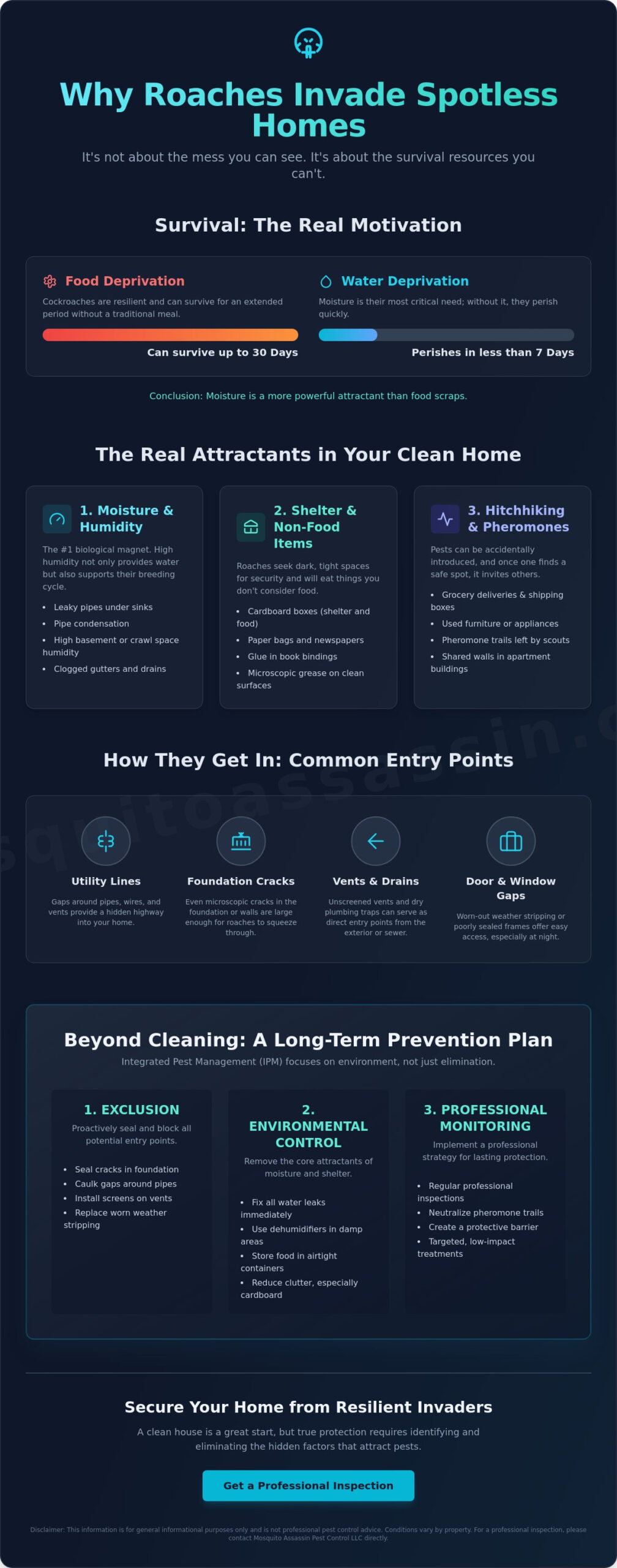
The association between pests and neglect is a historical relic that doesn’t align with modern pest management science. While clutter can provide more hiding spots, German cockroaches can thrive in a laboratory-clean environment as long as they have access to water and a tiny bit of food. They are excellent hitchhikers. They can enter your home inside a cardboard box from an online delivery or a bag of groceries from the store. Once they’re inside, they use shared plumbing and electrical conduits to navigate the building complex. You can’t clean your way out of a structural problem that allows pests to travel freely between units. Professional pest control is about managing the environment, not just scrubbing surfaces.
Disclaimer: The information provided on this blog is for general informational purposes only and is not intended as professional pest control advice. Conditions vary by property, environment, and location. Reading this content does not create a service agreement. For an inspection or professional recommendations, please contact Mosquito Assassin Pest Control LLC directly.
Why Cockroaches Infest Even Clean Apartments
The most frustrating part of finding a pest in your home is the feeling that your hard work has been undermined. You might feel embarrassed by cockroaches in my apartment despite your daily cleaning routine, but these insects don’t rely on mess to survive. They are world-class hitchhikers. A cockroach can enter your home inside a corrugated cardboard box from an online delivery, a bag of groceries, or even the folds of a used piece of furniture. Once they arrive, they find everything they need behind your walls, regardless of how often you scrub your counters.
In regions like Erie and Crawford counties, seasonal shifts and humidity levels often drive pests indoors. Local weather patterns can push outdoor species toward the warmth of residential buildings, while indoor species like the German cockroach remain active year-round. These pests are highly specialized at living alongside humans. Because they can survive on microscopic amounts of organic matter, such as the glue on a postage stamp or the residue in a floor drain, a “clean” apartment is still a viable habitat for them.
The Shared Infrastructure Problem
Multi-unit buildings are essentially giant, interconnected ecosystems. Cockroaches utilize the shared infrastructure of the building to move between units with ease. They travel through wall voids, common ventilation shafts, and the gaps around plumbing and electrical conduits. If a neighbor has an active infestation and doesn’t address it, the population will eventually overflow into surrounding units. This is why “spot treating” with a retail spray in just one room rarely solves the root problem; it often just pushes the insects deeper into the walls. Utilizing Integrated Pest Management for cockroaches is a more effective strategy because it addresses these structural pathways and environmental factors rather than just the visible insects.
Biological Resilience of the German Cockroach
The German cockroach is the most common species found in apartments, and its biology is designed for rapid expansion. A single female can produce an egg capsule containing up to 40 offspring every few weeks. This exponential growth means a few “hitchhikers” can become a significant population in less than a month. These insects have also developed a high level of resistance to many over-the-counter sprays and powders found in big-box stores. These retail products often act as repellents that scatter the colony rather than eliminating it. If you find that DIY methods aren’t working, seeking general pest control plans may help reduce the risk of a long-term infestation.
Disclaimer: The information provided on this blog is for general informational purposes only and is not intended as professional pest control advice. Conditions vary by property, environment, and location. Reading this content does not create a service agreement. For an inspection or professional recommendations, please contact Mosquito Assassin Pest Control LLC directly.
Assessing the Situation: Isolated Incident or Building-Wide Issue?
Identifying the specific type of insect is the first step toward a definitive resolution. You might feel embarrassed by cockroaches in my apartment, but knowing if you’re dealing with a lone traveler or a colony member is vital for your peace of mind. Wood roaches, for instance, are accidental invaders that often enter homes from firewood or through window screens in Erie and Crawford Counties. They don’t typically survive or breed indoors. In contrast, finding a German cockroach usually indicates a localized or building-wide population that requires a methodical response. For a broader look at residential pest management, you can review General Pest Control: The Complete Guide for Homeowners.
A thorough inspection is the only way to determine the scale of the problem. Look for evidence that doesn’t involve seeing a live insect. Small, dark specks that resemble coffee grounds or black pepper are a classic indicator of cockroach fecal matter. You might also find oothecae, which are small, brownish, purse-shaped egg cases. These signs often cluster in warm, humid areas where the insects feel protected from light and movement.
Identifying Common Entry Points in Multi-Unit Housing
Focus your search on high-moisture zones and structural gaps. Check the dark corners under kitchen and bathroom sinks, particularly where plumbing lines enter the wall. Appliance motor housings, such as the back of a refrigerator or dishwasher, provide the consistent warmth these pests crave for breeding. Residents in older apartment complexes throughout Ashtabula County should also inspect gaps in baseboards and unsealed utility conduits. If you find evidence in these structural voids, it’s a strong indicator that pests are moving through the building’s shared skeleton. This University of Kentucky guide to cockroach elimination provides additional technical details on how these insects navigate the complex pathways of apartment buildings.
Signs of a Deep-Seated Infestation
Population density often dictates insect behavior. Cockroaches are naturally nocturnal; seeing them during the day usually means their primary hiding spots are overcrowded. This is a clear sign of a significant, established population. The presence of nymphs, which are smaller, wingless versions of the adults, confirms that active breeding is occurring within the structure. In more severe cases, you may notice a distinct, musty odor. This smell is produced by pheromones and secretions from a large colony and indicates a situation that requires professional intervention to resolve effectively.
Disclaimer: The information provided on this blog is for general informational purposes only and is not intended as professional pest control advice. Conditions vary by property, environment, and location. Reading this content does not create a service agreement. For an inspection or professional recommendations, please contact Mosquito Assassin Pest Control LLC directly.

Practical Steps to Regain Control and Confidence
Moving from a state of distress to a state of action is the most effective way to handle a pest problem. While you might still feel embarrassed by cockroaches in my apartment, focusing on environmental modifications will produce better results than worry. These pests require three things to survive: food, warmth, and moisture. By systematically removing these resources, you make your living space much less hospitable to unwanted guests. Professional technicians rely on your observations to build a treatment plan, so keeping a simple log of where and when you see activity can significantly speed up the resolution process.
Sanitation and Exclusion Techniques for Tenants
Eliminating water is your highest priority. Cockroaches are highly dependent on moisture; they often congregate near leaky pipes or standing water in sink drains. You should also check refrigerator drip pans and pet water bowls, as these provide easy hydration. Beyond moisture, physical exclusion is a powerful non-chemical tool. Using silicone caulk to seal small cracks in baseboards or gaps where pipes enter the wall can block the pathways these insects use to travel between units. Storing all food in airtight glass or plastic containers further reduces the easy food sources that keep a colony thriving. These simple habits create a defensive barrier that supports long term success.
Navigating Landlord and Neighbor Relations
In Pennsylvania and Ohio, landlords are generally required to maintain a habitable environment under the implied warranty of habitability. This legal standard usually includes keeping the property free from vermin infestations. Reporting an issue early is not a sign of a dirty home; it’s a sign of a responsible tenant protecting the property. When you speak with management, frame the conversation around building maintenance and structural integrity. This approach removes the personal stigma and focuses on the building’s health.
Successful eradication in multi-unit housing often requires building-wide cooperation. If only one unit is treated while the source remains in a common area or an adjacent apartment, the problem will likely return. Transparent communication with neighbors can help identify if the issue is widespread, which often prompts landlords to take more decisive building-wide action. For residents in Erie, Crawford, or Ashtabula counties seeking regional expertise, professional services at mosquitoassassin.com/location can help you navigate these complex apartment dynamics.
Disclaimer: The information provided on this blog is for general informational purposes only and is not intended as professional pest control advice. Conditions vary by property, environment, and location. Reading this content does not create a service agreement. For an inspection or professional recommendations, please contact Mosquito Assassin Pest Control LLC directly.
Professional Management and Long-Term Protection
Transitioning from temporary fixes to a definitive resolution requires a shift in strategy. Many people feel deeply embarrassed by cockroaches in my apartment, which often leads them to rely on retail bug sprays. However, professional grade baits and insect growth regulators (IGRs) are fundamentally superior to standard aerosol sprays. While a spray might kill an individual insect on contact, it often acts as a repellent that scatters the rest of the colony deeper into the wall voids. In contrast, professional baits are designed to be shared within the colony, targeting the population at its source. IGRs add another layer of protection by disrupting the reproductive cycle, ensuring that juvenile roaches cannot reach maturity or reproduce.
Modern professional pest management is designed to be discreet and minimally invasive. Technicians understand the social stigma associated with pests in high density housing and prioritize a professional, low profile approach. By focusing on targeted applications in specific harborages, such as behind appliances and inside cabinet crevices, professionals can achieve results without requiring you to empty your entire kitchen. If you’re looking for specialized residential options in Erie, Crawford, or Ashtabula counties, reviewing Mosquito Assassin Services can provide a clearer picture of how these advanced methods work.
When to Seek Professional Pest Management
It’s time to seek professional help when DIY attempts fail to show progress within a week or two. Because cockroaches are biologically resilient, a small population can quickly grow into a building-wide issue if the initial treatment is ineffective. Professionals don’t just treat the symptoms; they identify the primary nesting sites and structural entry points that allow insects to move between units. A customized treatment plan is essential because every apartment layout and building history is different. Licensed professionals have the expertise to recognize the specific behavioral patterns of German cockroaches and can apply products in areas that are inaccessible to the average tenant.
The Importance of Ongoing Protection Plans
In the world of multi-unit housing, a one-time treatment is rarely enough for permanent relief. Because tenants frequently move in and out of buildings in regions like Pennsylvania and Ohio, new “hitchhikers” can be introduced to the complex at any time. Recurring protection plans, such as bi-monthly or quarterly visits, create a persistent safety net for your home. These regular inspections allow for the early detection of new activity before it becomes a full-blown infestation. A proactive approach significantly reduces the likelihood of future “embarrassing” sightings and provides the peace of mind that comes with a professionally managed environment. Professional pest control may help reduce risk and ensure your home remains a sanctuary rather than a source of stress.
Disclaimer: The information provided on this blog is for general informational purposes only and is not intended as professional pest control advice. Conditions vary by property, environment, and location. Reading this content does not create a service agreement. For an inspection or professional recommendations, please contact Mosquito Assassin Pest Control LLC directly.
Regaining Control of Your Living Space
Managing a pest issue in a multi-family building requires shifting from a mindset of shame to one of strategic action. You shouldn’t feel embarrassed by cockroaches in my apartment; instead, recognize that these insects exploit structural gaps and shared utilities that are often beyond your individual control. By focusing on moisture reduction, sealing entry points, and maintaining clear communication with property management, you can effectively disrupt their survival cycle and protect your living area.
Licensed professionals in PA and OH utilize discreet, systematic treatment methods that prioritize long-term exclusion and maintenance. These professional-grade strategies address the heart of the colony rather than just scattering visible pests. If you are concerned about pests in your home, professional pest control may help reduce risk. You have the tools and information necessary to reclaim your home. With a methodical approach and the right professional support, a pest-free environment is well within reach.
Disclaimer: The information provided on this blog is for general informational purposes only and is not intended as professional pest control advice. Conditions vary by property, environment, and location. Reading this content does not create a service agreement. For an inspection or professional recommendations, please contact Mosquito Assassin Pest Control LLC directly.
Frequently Asked Questions
Is it normal to be embarrassed by cockroaches in an apartment?
Feeling embarrassed by cockroaches in my apartment is a very common reaction, but it is important to remember that these pests are drawn to structural factors like warmth and moisture rather than a lack of cleanliness. Social stigma often prevents people from seeking the help they need, which only allows the population to grow. Understanding that infestations are a common challenge in high density housing can help you focus on effective solutions rather than self-criticism.
Can I get rid of cockroaches on my own in a multi-unit building?
Eliminating an infestation on your own in a multi-family building is rarely successful because you cannot control the environment outside your own walls. If the source of the insects is in a neighboring unit or a shared wall void, retail products will only provide temporary relief. Professional intervention is usually necessary to coordinate a comprehensive strategy that addresses the building’s interconnected infrastructure and prevents the population from simply moving back and forth between units.
Do cockroaches mean my apartment building is unsanitary?
A cockroach sighting does not automatically mean a building is unsanitary. While poor sanitation can provide more food sources, these resilient insects can survive on microscopic amounts of organic matter found in even the cleanest homes. Factors like aging plumbing, unsealed utility lines, and the high turnover of tenants in apartment complexes are often more significant drivers of pest activity than the cleaning habits of a single resident.
How do cockroaches travel between apartments in Erie or Ashtabula?
In regional complexes throughout Erie or Ashtabula, cockroaches primarily travel through shared structural pathways. They utilize the gaps around plumbing pipes, electrical wiring conduits, and common ventilation shafts to move between floors and units. Because these insects are thin enough to fit through a gap the size of a credit card, the internal skeleton of a building acts as a highway that connects every apartment to its neighbors.
Will my neighbors know if I have a professional pest control service?
Modern professional pest management is designed to be highly discreet to protect your privacy. Technicians often use specialized equipment and low profile application methods that don’t draw unnecessary attention from neighbors or guests. The goal is to resolve the issue efficiently while maintaining a professional and quiet presence on the property. You can focus on achieving a pest free home without worrying about the social stigma of a service visit.
What is the most effective way to prevent cockroaches in a clean apartment?
The most effective prevention strategy involves a combination of moisture control and physical exclusion. Ensure that all sinks, tubs, and refrigerator drip pans remain dry, as cockroaches cannot survive long without a water source. Additionally, use silicone caulk to seal cracks in baseboards and gaps where utilities enter your walls. Storing all food in airtight containers further reduces the likelihood that a wandering scout will choose your unit as a new home.
Should I tell my landlord if I see a cockroach?
You should report a cockroach sighting to your landlord or property manager as soon as possible. Most lease agreements in Pennsylvania and Ohio require tenants to notify management of pest issues to protect the structural integrity of the building. Early reporting allows the landlord to address the problem before it spreads to other units, which is a responsible action that benefits the entire community and ensures a faster resolution.
What do professional pest control companies do that I can’t do with store-bought sprays?
Professional companies use advanced tools like insect growth regulators and specialized baits that are not available in retail stores. Unlike store bought sprays that often act as repellents and scatter the colony, professional products are designed to be shared among the insects to eliminate the population at its source. Professionals also have the training to identify specific species and apply systematic treatments in hard to reach areas like wall voids and appliance motors.
Disclaimer: The information provided on this blog is for general informational purposes only and is not intended as professional pest control advice. Conditions vary by property, environment, and location. Reading this content does not create a service agreement. For an inspection or professional recommendations, please contact Mosquito Assassin Pest Control LLC directly.