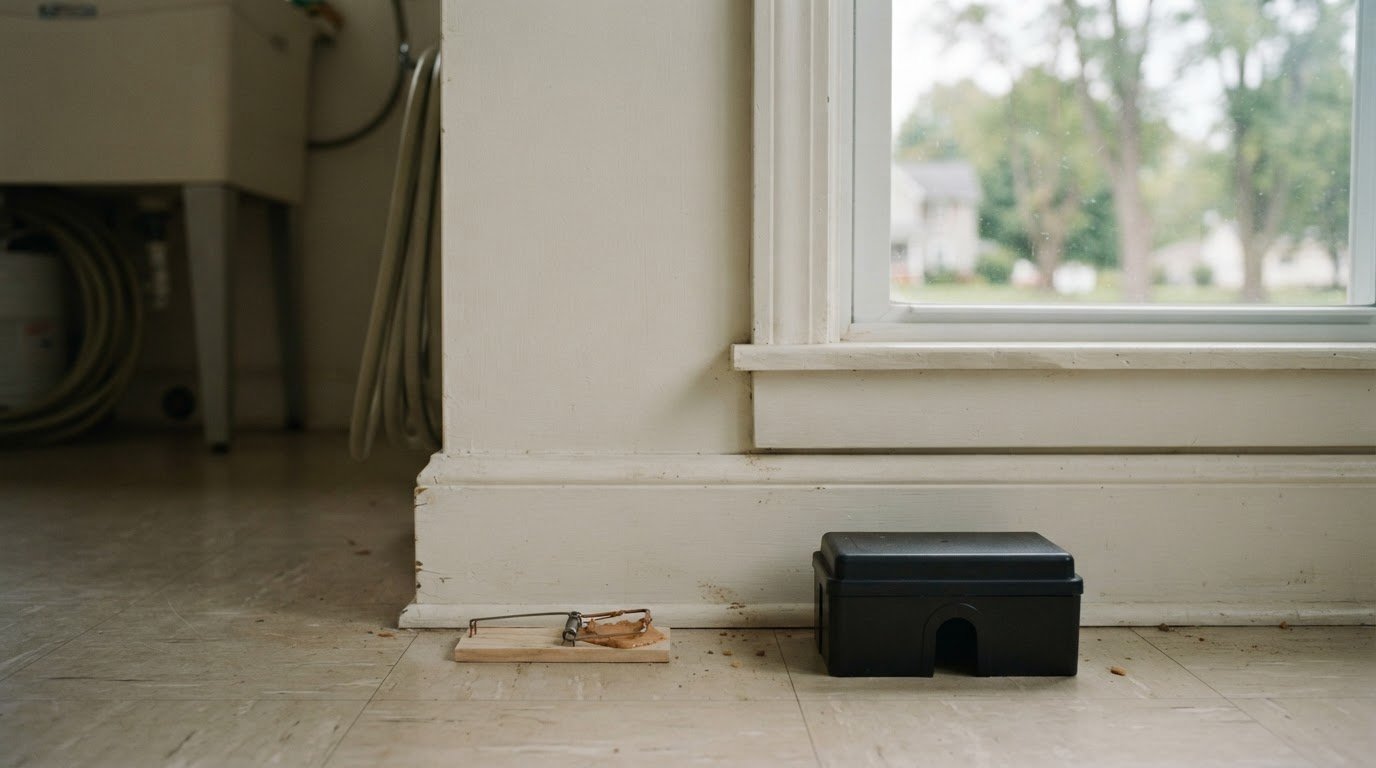
The option that appears quickest may not be the one that solves a mouse problem for good. Are mouse traps better than poison? It depends on where mice are active, how they’re getting inside, and who or what could come into contact with a control device.
Effectiveness is only one consideration. Traps can make a capture easier to observe, while poison may leave a mouse out of sight in a wall or another inaccessible space. Neither option prevents new mice from entering if access points, food, and shelter remain available.
This comparison covers the practical trade-offs between traps and rodenticide bait, including visibility, access concerns, and how to assess continued activity. It also explains why removal, maintenance, and exclusion may be needed as part of a broader rodent-control plan, especially when mice persist or keep returning.
Key Takeaways
- Are mouse traps better than poison? The answer depends on the pattern of activity, how important visible results are, and whether children, pets, or other animals could reach a control device.
- A trap can show when a mouse has been caught. Bait consumption and outcomes may be harder to observe.
- Choose an approach based on signs of activity and the needs of the property, rather than assuming one method suits every situation.
- Removing mice alone may not prevent new ones from entering. Consider possible access points and conditions that support activity.
- Persistent or difficult-to-track activity may call for a broader plan that includes removal, maintenance, and exclusion.
Mouse Traps vs. Poison: What Each Method Does
A mouse trap is a device designed to capture or kill a rodent. Rodenticide bait, often called mouse poison, is a substance consumed by rodents that can cause death. Both methods target mice, but they work differently and produce different kinds of evidence. A trap may show directly whether a mouse was caught, while bait activity can be harder to observe.
So, are mouse traps better than poison? There’s no universal answer. The right fit depends on the property, the signs of mouse activity, and household circumstances, including whether children, pets, or other animals could reach a control device. Understanding how each method works makes it easier to compare the trade-offs.
For a visual overview of trap designs, see types of mouse traps and their mechanisms. The video below also shows a trap in operation.
How mouse traps work at a high level
Trap designs vary. Some restrain a mouse for later removal, while others kill it when triggered. Their main practical difference from bait is visibility: a captured mouse provides direct evidence of a result, and checking a trap over time can show whether it has been triggered. This may help distinguish a spot with observed activity from one where no capture has occurred.
A capture still requires follow-up. The animal may need to be removed and disposed of appropriately, and continued signs of activity can mean the issue isn’t resolved. Traps also don’t reveal every mouse or entry route on their own. An empty trap is not proof that mice are absent, since activity may be elsewhere or a mouse may not encounter the device.
How poison bait differs from traps
Rodenticide bait works after a mouse consumes it. Unlike a trap that visibly captures an animal, bait doesn’t necessarily provide an immediate, observable result. A mouse may continue moving out of sight, so occupants might not know whether bait has been consumed or where the animal has gone. That makes monitoring less direct.
Bait can also raise access concerns. Children, pets, and non-target animals may be at risk if they can reach a bait product or a poisoned rodent. Product labels contain important directions and precautions. A general comparison can’t determine whether a particular product or approach is appropriate for a specific home.
In short, traps offer a more visible indication of capture, while bait’s effects may be less apparent. Neither method alone explains why mice are present or whether more can enter. Property conditions and household needs matter as much as the device, and continued activity calls for looking beyond a single control method.
How Mouse Traps and Poison Compare in Real Homes
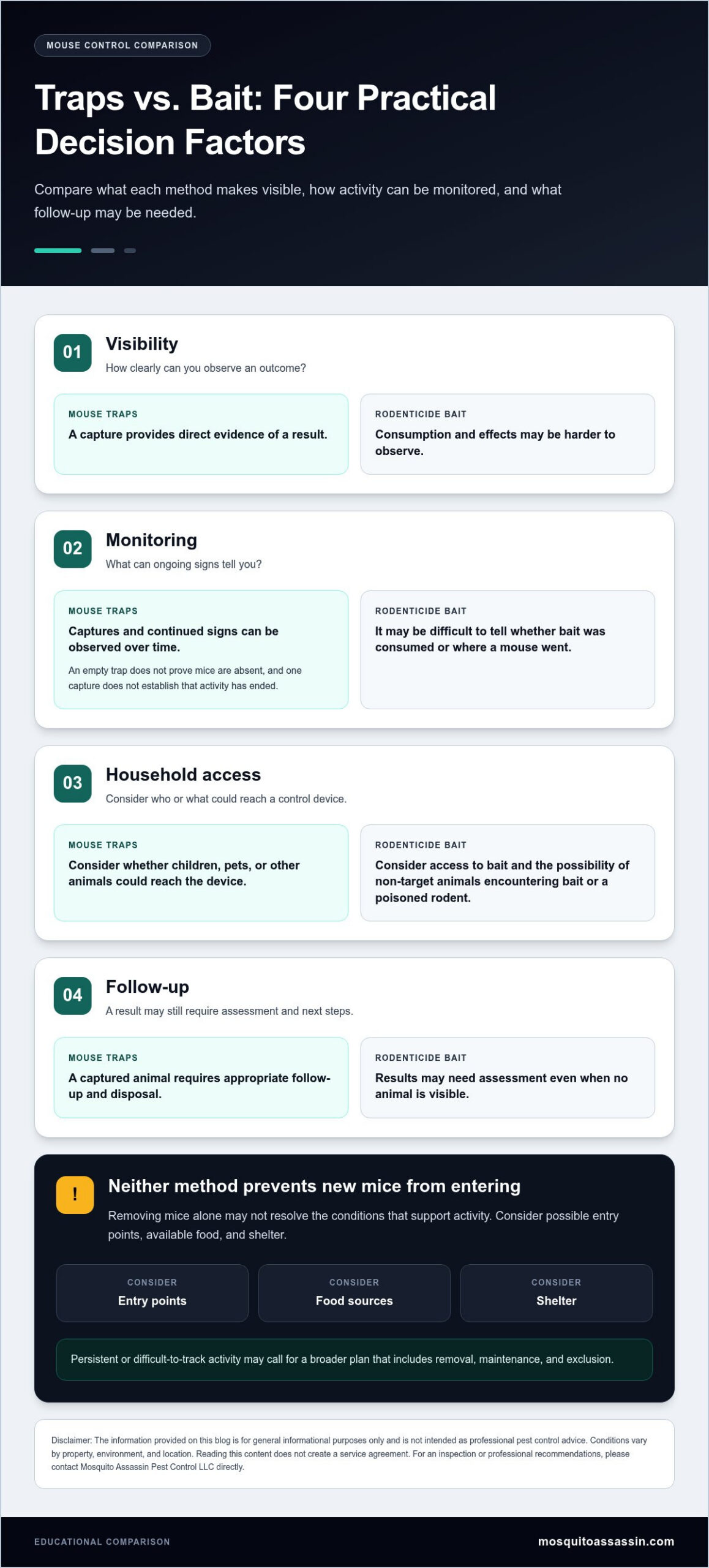
In a home or business, the practical difference often comes down to how clearly occupants can tell what is happening. A trap can provide visible evidence of a capture. With bait, consumption and its effects may be less apparent, especially if a mouse moves into an inaccessible area. Neither method’s results alone confirm that all mouse activity has stopped.
Use the comparison below to consider monitoring, access around the property, and the activity you have observed. These are decision factors, not a universal ranking. A method’s suitability depends on the specific conditions in the building.
| Consideration | Mouse traps | Rodenticide bait |
|---|---|---|
| Visibility | A captured mouse provides direct evidence of a result. | Consumption and outcomes may be difficult to observe. |
| Monitoring | Capture or continued signs can be observed over time, but one capture doesn’t establish that activity has ended. | It can be harder to tell whether bait has been consumed or where a rodent has gone. |
| Household concerns | Consider whether children, pets, or other animals could reach a device. | Consider possible access to bait and the potential for non-target animals to encounter it or a poisoned rodent. |
| Follow-up | A captured animal requires appropriate follow-up and disposal. | Results may require assessment even when no animal is visible. |
When visibility and monitoring matter
If you want an observable indication of activity, trap outcomes may be easier to track. A capture confirms that a mouse encountered the device, while an empty trap doesn’t prove mice are absent. Compare what you observe over time with other signs, such as recurring sounds or evidence in different parts of the property. Bait can be harder to interpret because a mouse may consume it without being seen afterward.
One capture is a data point, not a complete assessment. New signs after a capture, or activity in separate areas, may indicate that more mice remain or that access continues. Note whether evidence appears in the same place or in new areas, since the pattern can help distinguish an isolated sign from ongoing activity.
How household and property conditions affect the choice
Consider who uses the space and which animals may enter it. A home with children or pets presents different access concerns from a restricted storage area, but no device should be treated as risk-free. The number and location of observed signs matter too. One mouse sighting differs from repeated signs, evidence in several rooms, or noises that suggest mice are concealed.
Commercial buildings can have additional factors, such as multiple rooms, storage areas, or shared access points. Those conditions can complicate monitoring and make a broader assessment useful. If activity is persistent or difficult to interpret, professional rodent control can help evaluate what the signs may indicate and what follow-up is appropriate.
Are Traps Better Than Poison? Match the Method to the Situation
There isn’t one best choice for every property. Consider what the signs show, how important visible monitoring is, and whether children, pets, or other animals could reach a control device. The question “are mouse traps better than poison” is best answered by weighing these conditions together, rather than judging either method in isolation.
Use this decision matrix to organize the trade-offs:
- Activity is limited to one observed mouse: Consider whether you need visible evidence of a capture and whether you can monitor activity consistently. A single sighting doesn’t establish how many mice may be present.
- Signs recur or appear in several areas: Repeated evidence, sounds from concealed spaces, or activity in more than one room can be difficult to interpret with a single device. Assess the pattern, not just one result.
- Direct monitoring is a priority: Traps can make a capture observable. That visibility may help you track whether signs continue, but it doesn’t identify entry points or prevent new mice from coming in.
- Access by children, pets, or wildlife is possible: Treat access as a key concern for any control method. If you can’t confidently account for who or what may reach bait, that uncertainty deserves careful consideration.
- Results are unclear or activity persists: Professional rodent control can help assess whether signs point to ongoing activity and identify property conditions a control device alone won’t address.
When a trap-based approach may fit your priorities
A trap-based approach may suit occupants who value being able to observe a capture and follow changes in activity. That can make results easier to interpret than an unseen outcome. Still, monitoring takes attention, and a capture doesn’t prove all mice are gone. Traps also don’t resolve openings or other property conditions that may allow continued access.
When poison-related concerns call for added caution
Bait may be harder to monitor because a mouse can consume it and remain out of sight. Consider whether children, pets, or non-target animals could access the bait or encounter a poisoned rodent. If access is uncertain, or signs continue without a clear explanation, don’t assume bait has resolved the issue. Professional rodent control can help assess the activity and determine appropriate next steps.
Property context matters, too. A quiet home with one isolated sighting differs from a building with repeated signs across rooms or storage areas. In a commercial setting, multiple spaces and patterns of access can complicate observation. These distinctions help shape an assessment, but they don’t establish a universal winner between traps and poison.
For persistent or hard-to-interpret mouse activity, professional rodent control can account for both the activity and the property conditions behind it. The goal is to understand the situation, not simply select a device.
What Traps and Poison Cannot Fix: Prevention and Mouse Entry
Traps and rodenticide bait address mice that are already present. Neither closes a gap in a wall, removes a food source, or prevents another mouse from entering. If access and shelter remain available, activity may continue or return, even after a control device produces a result. That’s why deciding whether are mouse traps better than poison is only one part of managing mice.
Prevention focuses on the conditions that let rodent activity persist: access into the building, available food, and places that provide shelter. A useful starting point is to organize what you observe and consider what might be supporting the activity. This isn’t a treatment recipe, and no single preventive measure can guarantee rodents won’t return.
Why entry points and conditions matter
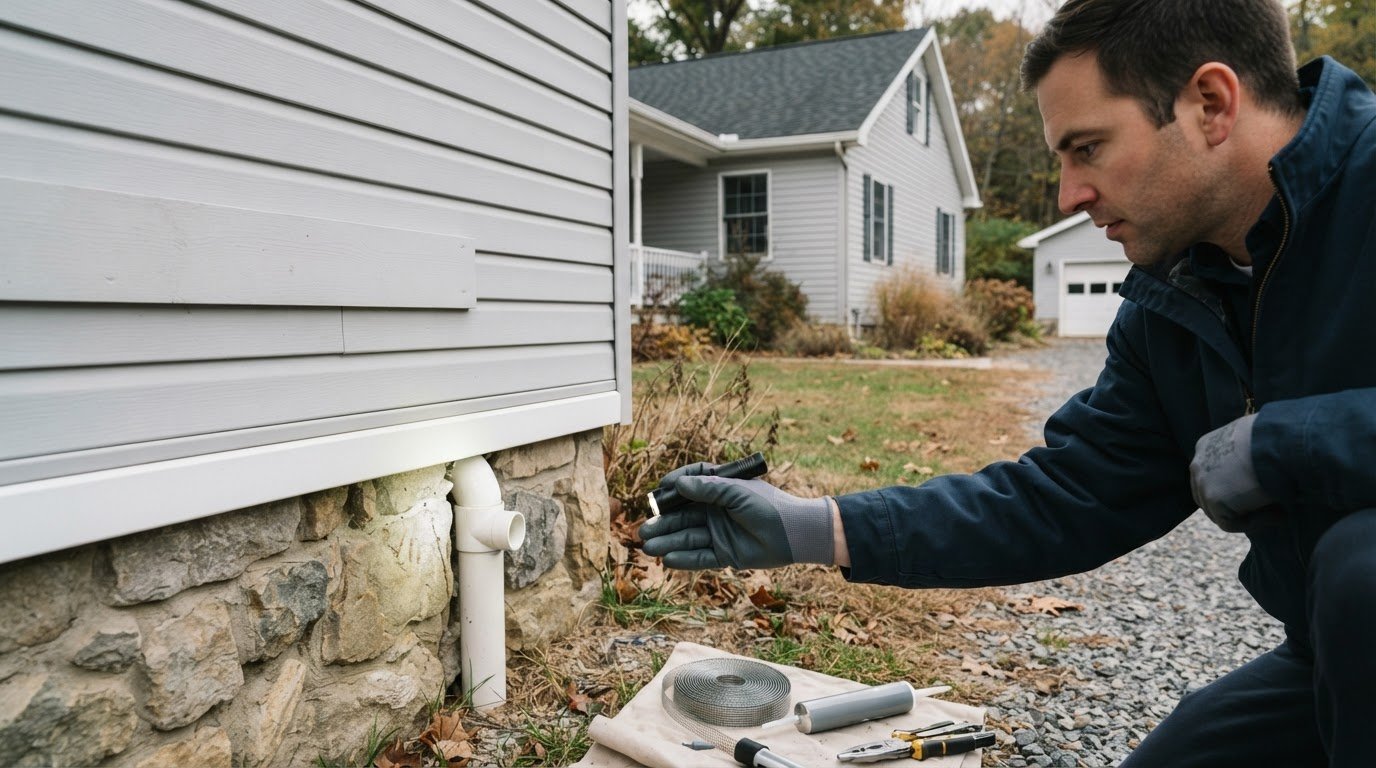
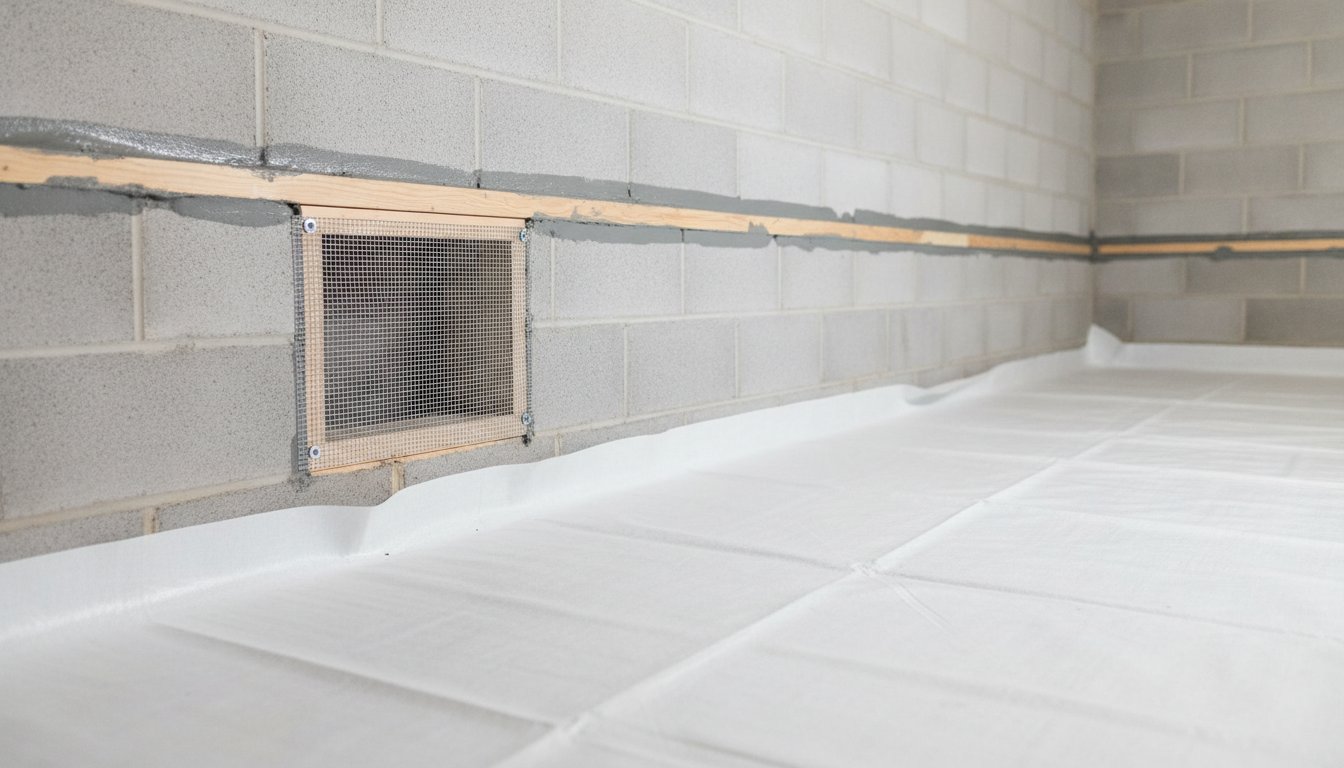
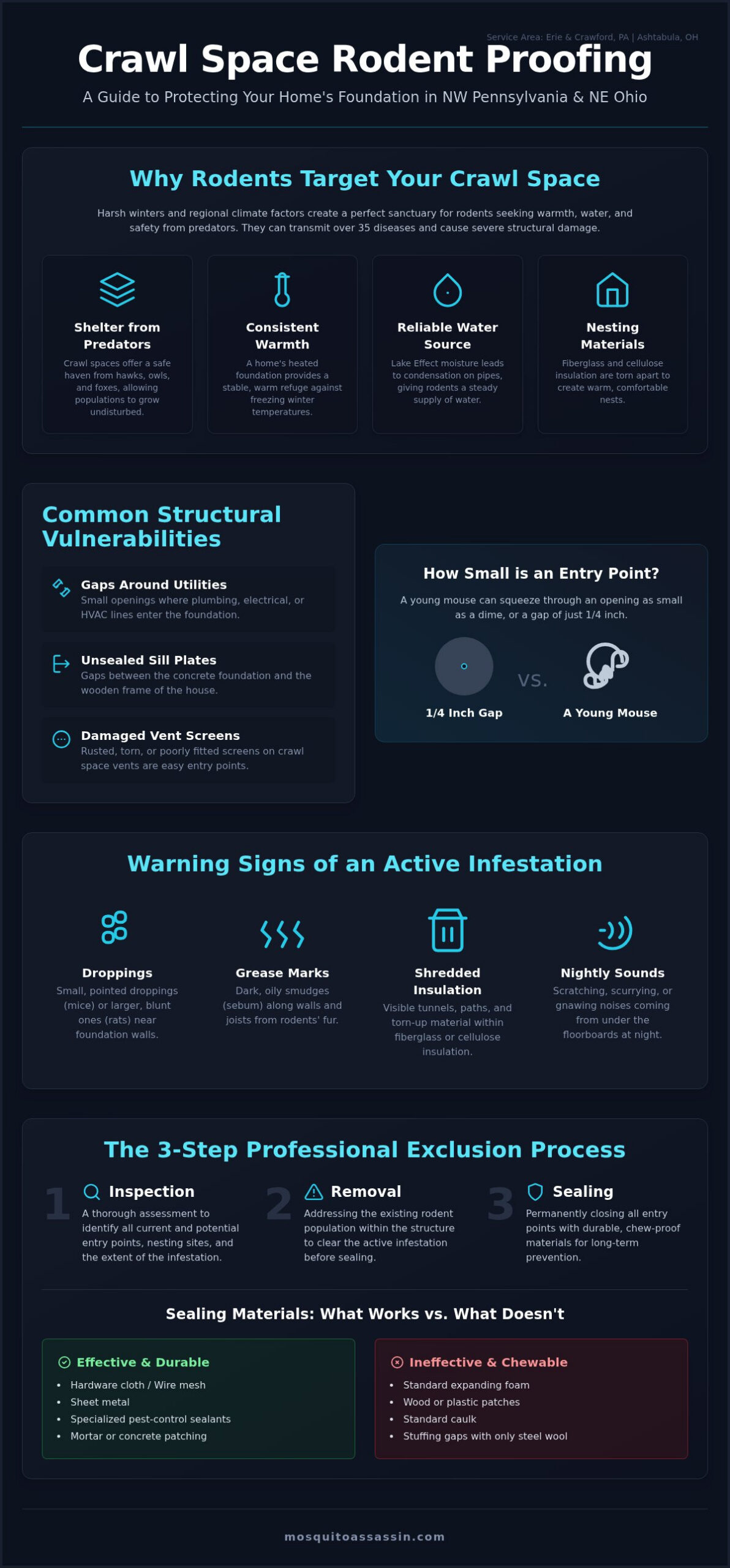
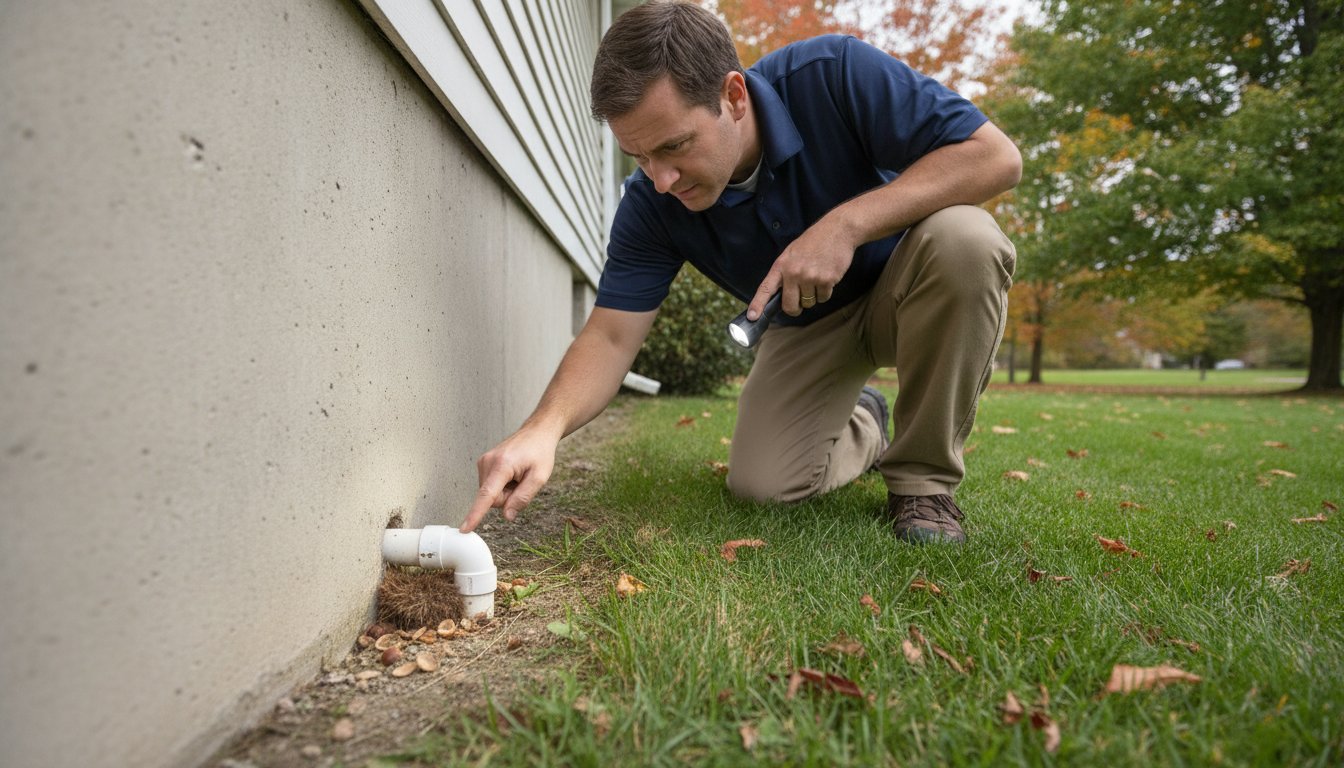
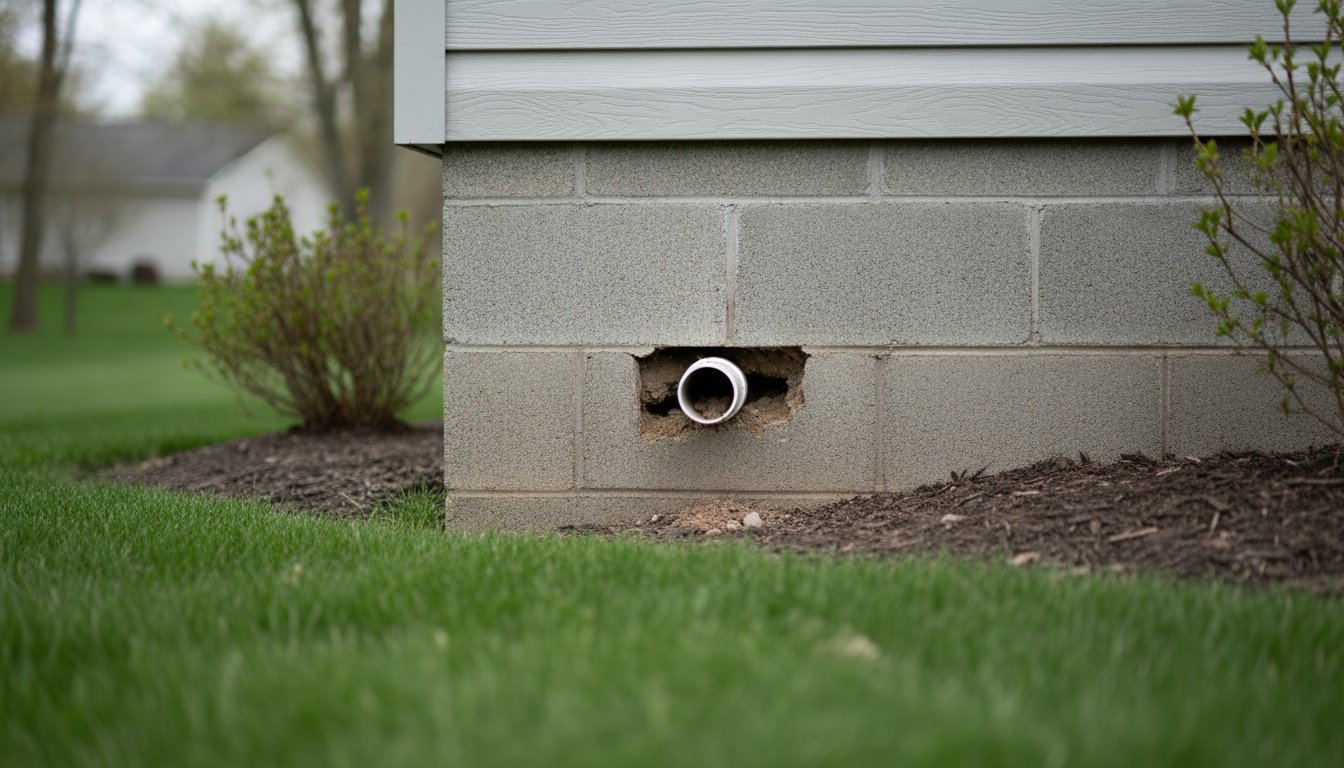
Mice may enter through openings around a building and move toward areas with food or shelter. A trap or bait may address an animal without revealing how it got inside. For example, activity near stored food could point to an attractant, while signs near a wall or utility opening may raise questions about access. These clues help frame an assessment, but they don’t establish the full extent of activity.
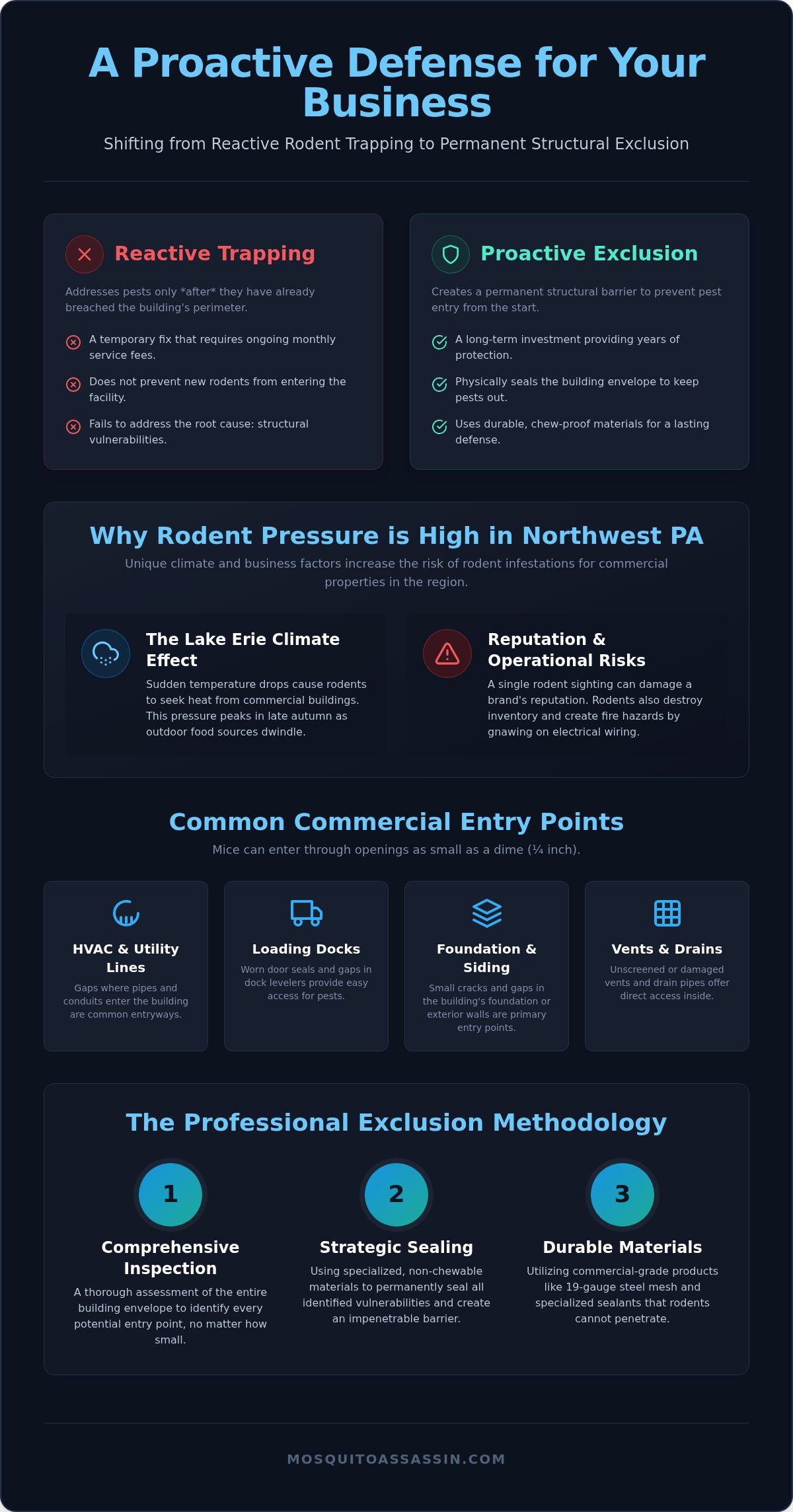
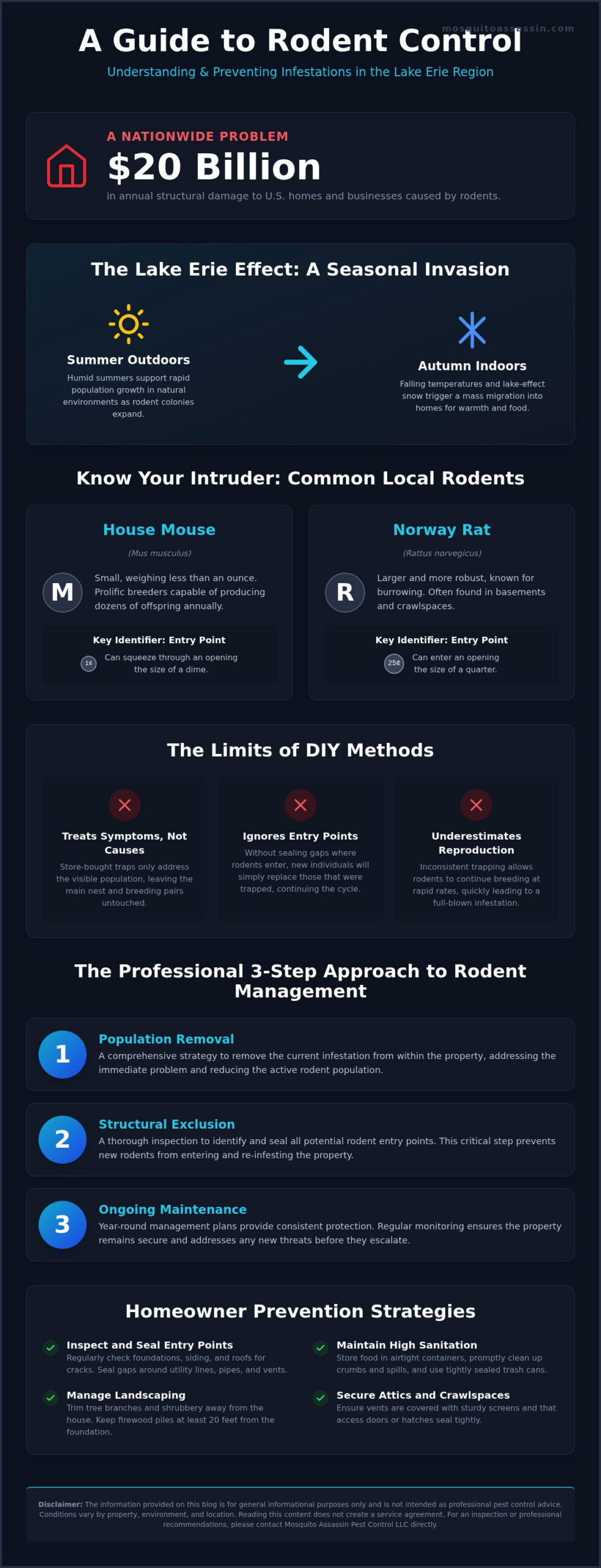
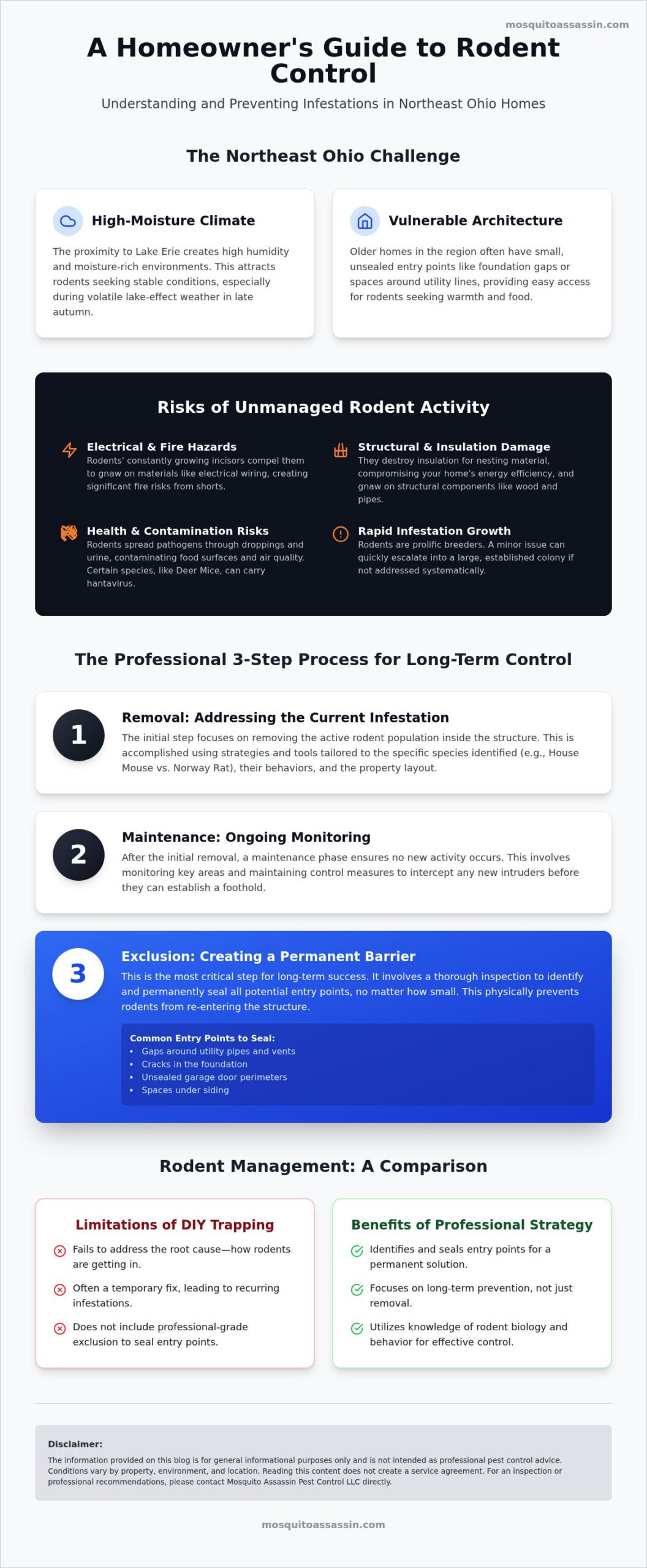
Removal, maintenance, and exclusion work together in professional rodent control. Removal addresses mice present; maintenance supports continued attention to activity; exclusion focuses on limiting access. A control device alone may not cover all three needs. Mosquito Assassin Pest Control LLC provides Rodent Control using these complementary elements to manage mouse activity.
What to observe before deciding on next steps
Keep track of where and when signs appear, and whether they recur in the same area or show up in different parts of the property. Repeated signs, sounds from inaccessible spaces, or activity that is difficult to interpret can make self-assessment more challenging. This information can help clarify whether the issue appears isolated or ongoing.
A simple framework can help organize observations:
- Observe signs. Note where activity is noticed and whether it happens repeatedly.
- Consider entry. Pay attention to the general area around the signs and whether an opening or route may be involved.
- Reduce attractants. Consider whether accessible food or sheltered areas could support rodent activity.
- Assess follow-up. If signs persist or occur in concealed areas, consider whether professional assessment could help interpret the pattern.
Broader prevention may also involve conditions that attract other pests, though the relevant factors vary by property. If mouse activity is persistent or difficult to trace, professional rodent control can help assess removal, maintenance, and exclusion needs. For information about an inspection or recommendations, contact Mosquito Assassin Pest Control LLC.
When Professional Rodent Control Makes More Sense
A device may be only one part of the response. Consider professional assessment if mouse signs keep appearing, occur in several areas, or seem to come from spaces that are difficult to inspect. These patterns can be hard to interpret from a trap or bait result alone. A property-specific assessment can help connect the evidence to possible access and activity throughout the building.
What a professional rodent assessment can clarify
An assessment can help identify the rodent, understand where and when activity is occurring, and consider likely access points. The property’s layout and conditions matter: signs in a kitchen may raise different questions from sounds in a wall or activity in a storage area. This context helps shape a control approach around the situation rather than relying on a single device.
In Erie and Crawford Counties, Pennsylvania, and Ashtabula County, Ohio, Mosquito Assassin Pest Control LLC provides Rodent Control. Its rodent control services follow a removal, maintenance, and exclusion approach, addressing different parts of managing mouse activity.
A wider approach beyond a single device
Removal addresses rodents present in the property. Maintenance supports ongoing attention to activity and changing conditions. Exclusion focuses on limiting access into the structure. These elements complement one another: removing mice does not, by itself, resolve an opening that allows entry, while exclusion alone may not address mice already inside.
This broader perspective can also help answer the question, are mouse traps better than poison? The device is only one consideration. Persistent signs, activity across multiple areas, or uncertainty about entry can make a more complete assessment useful. A professional can consider the evidence and property conditions when recommending an approach, without assuming the same method suits every building.
When to consider professional support
Professional assessment may be worth considering when activity continues despite previous efforts, signs are widespread, or you can’t tell whether evidence points to one mouse or an ongoing issue. It may also help if access concerns make it difficult to choose a control method with confidence. Noting where signs appear and whether they recur can give useful context for an assessment.
For a property-specific review, request a professional assessment. It can help clarify the activity and whether removal, maintenance, exclusion, or a combination may be appropriate.
Choose a Next Step That Fits Your Property
The useful question isn’t only are mouse traps better than poison, but what the activity and building conditions call for next. If mouse signs persist, spread to new areas, or remain difficult to interpret, a property-specific assessment can help clarify the situation and inform a practical response.
Mosquito Assassin Pest Control LLC provides Rodent Control through removal, maintenance, and exclusion. For households unsure how to proceed, professional guidance can put the evidence in context rather than relying on a device alone.
To discuss a professional rodent assessment, contact Mosquito Assassin Pest Control LLC. A property-specific review can help clarify the activity and possible next steps.
Frequently Asked Questions
Are mouse traps more effective than poison?
Neither method is automatically more effective in every situation. The question “are mouse traps better than poison” depends on the location and extent of mouse activity, household access concerns, and how results can be monitored. A trap may provide clear evidence of a capture, while bait outcomes can be harder to observe. If signs continue after using either approach, the underlying activity may need further assessment.
Can mice die inside walls after eating poison?
Yes, a poisoned mouse may die in a wall void or another inaccessible space. For anticoagulant rodenticides, death may occur several days after feeding begins, so the animal can move out of sight before it dies. This can make the result difficult to confirm and may lead to odor or other signs that require attention. The timing and effects vary by rodenticide type, so don’t assume every bait works the same way.
Is mouse poison a concern if I have pets or children?
It can be a concern if children or pets might reach bait, or if a pet could encounter a poisoned rodent. Non-target animals may also be exposed. Consider access throughout the home, including areas used for storage or feeding pets, rather than only the spot where mouse signs appeared. Read and follow the specific product label, and seek professional guidance if exposure is possible or you’re uncertain about the risks.
Can one mouse trap solve a mouse problem?
One trap may capture a mouse, but that result doesn’t establish that no other mice remain. A second sighting, fresh signs in another room, or activity that continues after a capture can indicate the issue needs closer attention. A trap also can’t reveal whether mice are entering through an opening or finding resources elsewhere in the building. Look at the pattern of signs over time, not only the outcome of one device.
Do mice come back after traps or poison remove them?
They can. Removing a mouse doesn’t necessarily prevent another from entering, especially if access to the building and suitable food or shelter remain. For instance, a new sighting near a pantry after a previous capture may reflect continued access, not necessarily the same mouse returning. Recurring activity is a reason to consider both how mice may be getting inside and what conditions could support them.
What attracts mice into a house?
Mice may be drawn to accessible food and water, sheltered spaces, and ways to enter a building. Food scraps, pet food, pantry goods, or cluttered storage may contribute to conditions that support activity, depending on the property. These factors don’t prove what caused a particular mouse sighting. Noting where signs appear can help identify areas that may need closer attention and whether access or attractants could be involved.
When should I consider professional mouse control?
Consider a professional assessment if signs keep appearing, show up across several areas, or seem to come from spaces you can’t inspect. It may also help if you’re unsure whether activity is ongoing or how mice are entering. A property-specific review can put observations in context and help determine whether a broader response is appropriate. This is especially useful when repeated attempts to address signs haven’t clarified the source of activity.
Disclaimer: The information provided on this blog is for general informational purposes only and is not intended as professional pest control advice. Conditions vary by property, environment, and location. Reading this content does not create a service agreement. For an inspection or professional recommendations, please contact Mosquito Assassin Pest Control LLC directly.