Tag: rodent prevention

  • Professional Rodent Exclusion Services in Erie PA: A Permanent Solution

    Professional Rodent Exclusion Services in Erie PA: A Permanent Solution

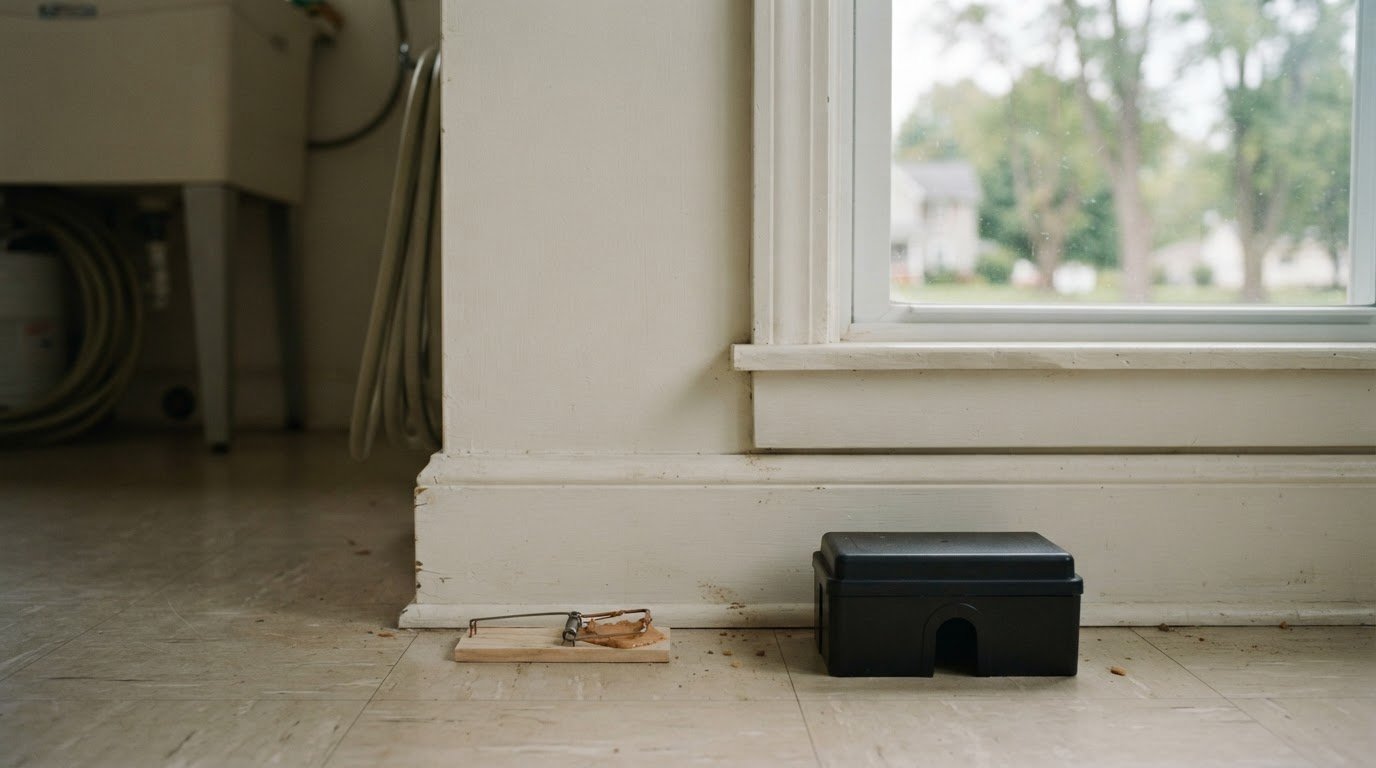
    Setting another trap is a reactive gamble that does nothing to stop the next mouse from finding the same structural gap in your foundation. For homeowners across Northwest Pennsylvania, the cycle of recurring winter infestations often feels endless, exhausting, and invasive. Prioritizing professional rodent exclusion services Erie PA provides a decisive shift from temporary fixes to a permanent, physical defense for the property.

    It’s completely understandable to feel anxious when hearing scratching sounds in the walls or worrying about the health risks associated with the over 35 diseases the CDC links to rodents. This article explains how a methodical exclusion strategy identifies every hidden entry point to secure a home’s perimeter effectively. You’ll learn the practical steps required to transition from constant trapping to a reliable, long-term prevention plan that keeps mice and rats outside where they belong.

    Key Takeaways

    • Understand how the Lake Erie climate and fluctuating temperatures in Northwest Pennsylvania drive rodents indoors during the winter months.
    • Discover why professional rodent exclusion services Erie PA are more effective than temporary patches by using durable materials to seal structural gaps.
    • Learn the difference between reactive trapping and proactive exclusion to ensure a long-term solution for your property.
    • Identify common entry points, such as gaps the size of a dime, through a comprehensive ground-to-roof exterior inspection.
    • Find out what to look for when choosing a licensed professional who understands the unique architectural challenges of homes in Erie and Crawford Counties.

    The Rodent Challenge in the Erie and Ashtabula Region

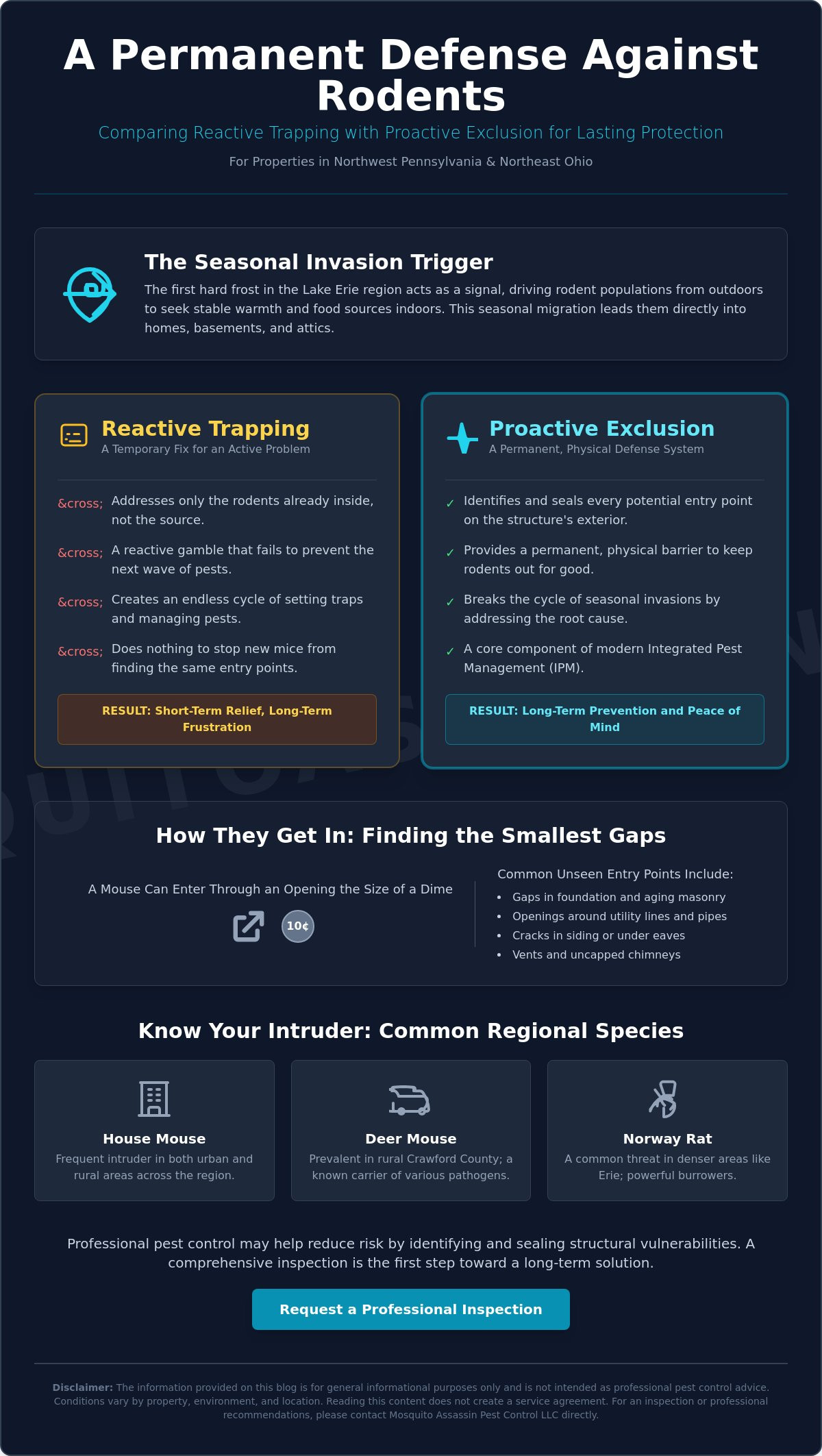
    Living along the Lake Erie shoreline brings unique environmental challenges that extend beyond heavy lake effect snow. Property owners in Erie, PA and Ashtabula, OH deal with extreme seasonal shifts that directly influence pest behavior. During the humid summer months, local rodent populations thrive in the dense vegetation of rural Crawford County and the urban green spaces of Erie. As the first hard frost hits, these populations begin a desperate search for stable warmth and consistent food sources. This seasonal migration often leads them straight into residential crawl spaces, basements, and attics. Professional rodent exclusion services Erie PA address these local environmental pressures by reinforcing the structural vulnerabilities common in our region’s architecture.

    The older housing stock in cities like Erie and Meadville presents a specific risk. Settling foundations and aging masonry create small gaps that serve as open invitations for pests. A mouse only needs a space the size of a dime to enter. Once inside, the protection of your walls provides the perfect environment for them to multiply quickly. Effective Exclusion techniques are essential because rodents in Northwest Pennsylvania are remarkably resilient. They’ve adapted to survive harsh winters by identifying even the smallest heat leaks from a home’s exterior.

    Seasonal Migration Patterns of Local Rodents

    The transition from autumn to winter triggers a biological drive in rodents to find shelter. In Northwest Pennsylvania, the first frost acts as a starting gun for indoor infestations. While summers support large outdoor colonies, the arrival of deep snowfall limits their ability to forage outside. This forces mice and rats to move closer to human structures. Snow accumulation can actually help rodents by providing insulation and cover as they work to gnaw through weakened siding or soffits at the roofline.

    Common Species Found in Northwest PA and Northeast OH

    Understanding which species are trying to enter your home is the first step toward prevention. The common house mouse is a frequent intruder in both urban and rural areas; however, the deer mouse is also prevalent in Crawford County. Deer mice are particularly concerning because they’re known carriers of various pathogens. In more densely populated areas of Erie, the Norway rat is a common threat. These rats are powerful burrowers and can exploit gaps in concrete foundations. Regional rodent species are highly adept at finding structural weaknesses, making specialized rodent exclusion services Erie PA a vital part of long term home maintenance in our service area.

    Disclaimer: The information provided on this blog is for general informational purposes only and is not intended as professional pest control advice. Conditions vary by property, environment, and location. Reading this content does not create a service agreement. For an inspection or professional recommendations, please contact Mosquito Assassin Pest Control LLC directly.


    What is Rodent Exclusion and How Does it Work?

    Rodent exclusion is a specialized structural fortification process designed to physically prevent pests from entering a building. Unlike traditional methods that rely solely on baiting or trapping, exclusion addresses the root cause of an infestation: the entry points themselves. By identifying and sealing every gap, crack, and crevice in a home exterior, property owners can break the cycle of seasonal invasions. Professional rodent exclusion services Erie PA provide a permanent solution that protects the building’s integrity while reducing reliance on chemical treatments. It’s a proactive investment that stops the revolving door of pests common in Northwest Pennsylvania’s older homes.

    This approach is a core component of Integrated Pest Management (IPM), which prioritizes long term prevention over short term fixes. While trapping catches the rodents already inside, exclusion ensures that the next generation remains outdoors. It works by turning a vulnerable structure into a fortress. Securing these entry points is the most effective way to protect your family and property from damage and contamination. For those facing a persistent problem, a comprehensive rodent control plan can provide the necessary structural defense.

    The Science of Professional Exclusion Materials

    Standard building materials often fail to stop determined rodents. Mice and rats have incisors that grow continuously, allowing them to gnaw through wood, plastic, and even standard spray foam. Professional grade exclusion utilizes materials specifically designed to withstand these biological capabilities. Galvanized hardware cloth, a heavy duty steel mesh, is used to cover vents and larger openings. Specialized architectural sealants that don’t crack under Erie’s extreme temperature fluctuations are applied to smaller gaps. Metal flashing is often installed around corners and rooflines to provide a durable barrier that rodents simply cannot bypass. These rodent exclusion services Erie PA prioritize durability over temporary patches.

    The Three Step Process for Rodent Elimination

    Achieving a mouse free home requires a methodical, multi stage approach. A professional strategy typically follows these three phases:

    • Initial Removal: Existing populations within the structure must be completely eliminated before final sealing occurs. This prevents rodents from being trapped inside the walls where they can cause further damage.
    • Ongoing Maintenance: Monitoring for new activity is essential. This phase ensures that all residents have been accounted for and no new behavior is detected near the sealed areas.
    • Final Exclusion: Once the interior is clear, the property is fully secured. This involves the permanent installation of the professional materials mentioned above to ensure no new rodents can enter.

    Disclaimer: The information provided on this blog is for general informational purposes only and is not intended as professional pest control advice. Conditions vary by property, environment, and location. Reading this content does not create a service agreement. For an inspection or professional recommendations, please contact Mosquito Assassin Pest Control LLC directly.
    Professional Rodent Exclusion Services in Erie PA: A Permanent Solution

    Trapping vs. Exclusion: Choosing the Best Long Term Strategy

    Traps are often the first tool homeowners reach for when they hear a scratching sound in the attic. While a snap trap might resolve the immediate presence of a single mouse, it does nothing to prevent the next one from entering. Relying only on trapping is a reactive cycle that ignores the structural flaws of a building. Professional rodent exclusion services Erie PA provide a decisive shift in strategy by focusing on the perimeter rather than just the interior. Investing in exclusion is an investment in the structural integrity of your home, effectively stopping the seasonal influx of pests before they can establish a foothold.

    The difference in long term cost is substantial. A property owner might spend years buying retail traps and bait stations, only to face a new infestation every November. In contrast, a one time professional exclusion plan addresses the physical entry points permanently. This proactive approach is more cost effective because it eliminates the need for repetitive, short term interventions. It moves the focus from managing a pest population to maintaining a pest free environment.

    The Cycle of Re-infestation

    Removing a rodent from your home without sealing the entry point creates a biological vacuum. Rodents leave behind pheromone trails, which are invisible chemical markers that signal to other pests that your home is a safe and accessible shelter. When one mouse is trapped, another will soon follow that scent trail through the same gap in the foundation or siding. Retail rodent control products often fail because they don’t address these scent markers or the physical pathways. Professional rodent exclusion services Erie PA break this cycle by removing the access entirely, ensuring that pheromone trails lead to a structural dead end.

    Protecting Your Home Equity and Safety

    A rodent infestation is more than a nuisance; it’s a direct threat to your property’s value. Rodents are notorious for gnawing on electrical wiring, which can create significant fire hazards. They also destroy expensive attic insulation and drywall with nesting material and waste. By securing your home, you protect your equity from these hidden damages. Beyond the structural benefits, a sealed home reduces the risk of food contamination and the spread of allergens. The peace of mind that comes from knowing your perimeter is secure allows you to enjoy your home without the constant anxiety of a recurring winter infestation.

    Disclaimer: The information provided on this blog is for general informational purposes only and is not intended as professional pest control advice. Conditions vary by property, environment, and location. Reading this content does not create a service agreement. For an inspection or professional recommendations, please contact Mosquito Assassin Pest Control LLC directly.
    Identifying Common Entry Points in Local Properties

    Securing a home against pests requires a meticulous eye for detail because rodents are biological opportunists. Many property owners in Northwest Pennsylvania are surprised to learn that a young mouse can squeeze through a gap just six millimeters wide, which is roughly the size of a dime. Because of this, a superficial glance at the exterior is never enough. A comprehensive ground to roof inspection is the only way to ensure that all vulnerabilities are accounted for. Professional rodent exclusion services Erie PA prioritize this thorough assessment to find the hidden pathways that standard DIY efforts often miss.

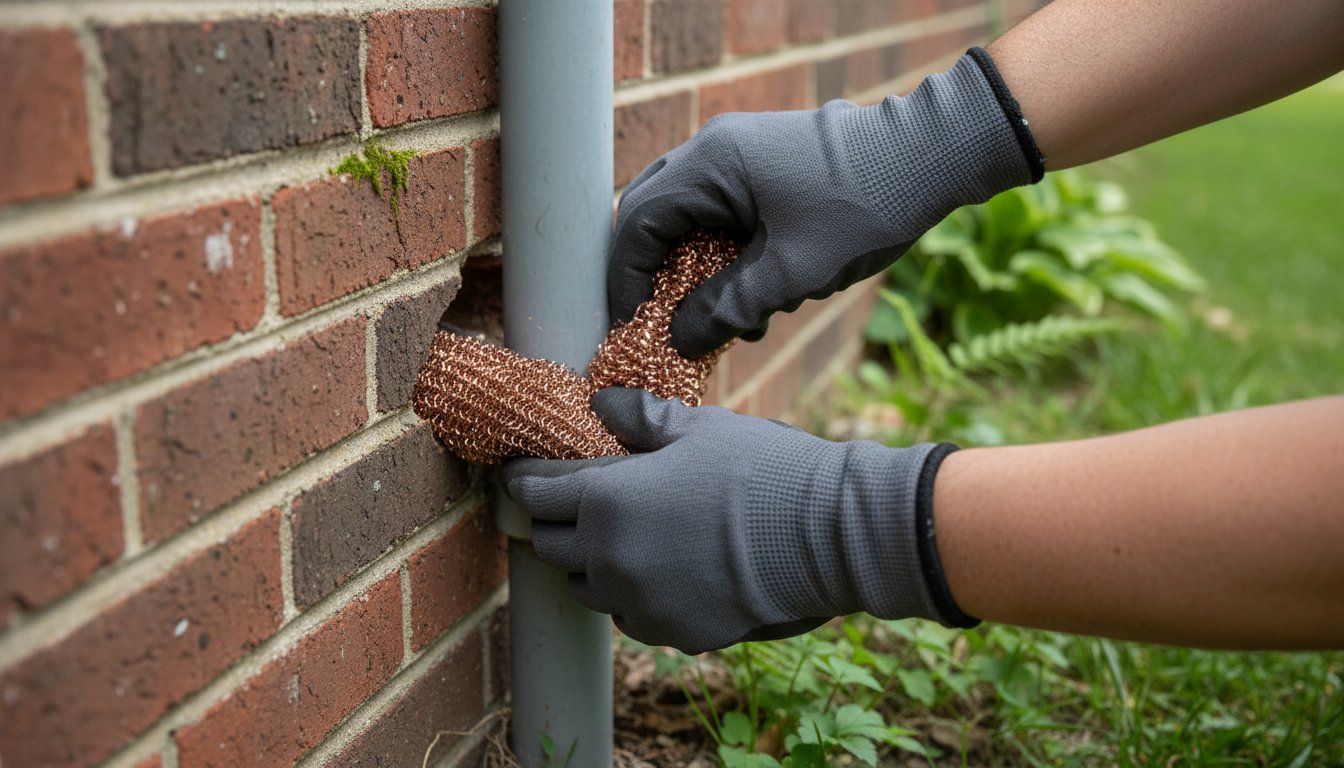
    Utility penetrations are among the most common “highways” for mice and rats. When builders install air conditioning lines, gas pipes, or electrical conduits, they often leave small gaps in the siding or foundation. These openings provide direct access to the interior wall voids. Similarly, attached garages often serve as a staging area for infestations. If a garage door sweep is worn or the weather stripping is brittle, rodents can enter the garage and then find secondary entry points into the main living quarters through utility rooms or shared walls. To address these vulnerabilities, you can schedule a professional inspection to identify your home’s specific weak points.

    Foundation and Ground Level Vulnerabilities

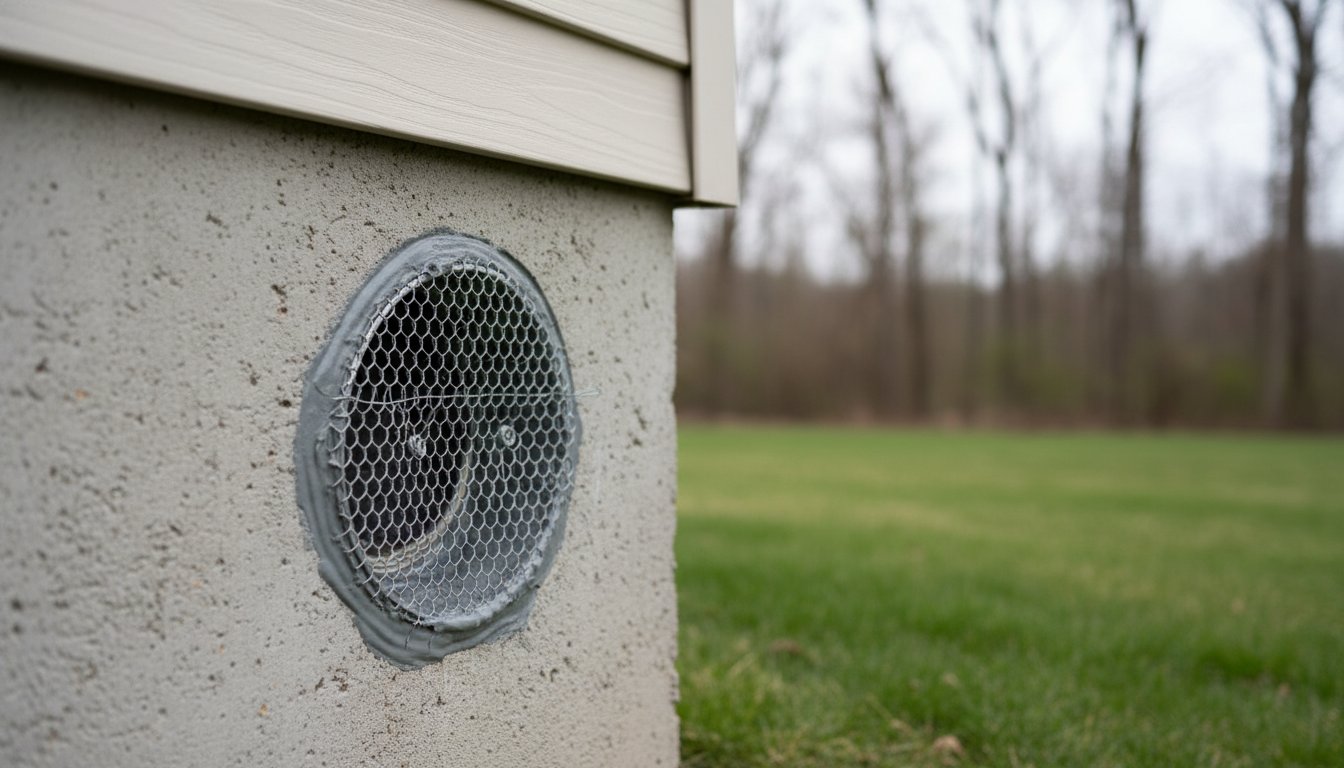
    In the older architecture found throughout Erie and Meadville, foundation gaps are a primary concern. Sill plates, where the wooden frame of the house meets the concrete foundation, often develop small crevices as a house settles over time. Basement window wells also provide a protected environment where rodents can work undisturbed to gnaw through wooden frames or rotted masonry. Crawl space vents are another frequent target; if the mesh is damaged or made of flimsy plastic, it offers no resistance to a determined rat or mouse. Ensuring these ground level areas are sealed with professional grade materials is a critical step in rodent exclusion services Erie PA.

    Roofline and Upper Level Entry Points

    Rodents are exceptional climbers and often target the upper reaches of a home. Mice can easily scale brick, stone, or textured siding to reach the roofline. Soffit vents are a major vulnerability, especially if they are loose or have been damaged by weather. The intersection where the roof meets a chimney is another common weak point where flashing may have pulled away, creating a perfect entry hole. Additionally, gutters and downspouts act as protected ladders, allowing rodents to reach the attic without being seen by predators. An effective exclusion plan must include a detailed check of these high altitude areas to ensure the perimeter is truly sealed from top to bottom.

    Disclaimer: The information provided on this blog is for general informational purposes only and is not intended as professional pest control advice. Conditions vary by property, environment, and location. Reading this content does not create a service agreement. For an inspection or professional recommendations, please contact Mosquito Assassin Pest Control LLC directly.
    Selecting Professional Exclusion Services in Pennsylvania and Ohio

    Selecting the right provider for rodent exclusion services Erie PA requires more than just finding someone who can set a trap. Property owners in Northwest Pennsylvania and Northeast Ohio face specific environmental pressures that require a deep understanding of local building standards. A technician familiar with the settling foundations of historic homes in Meadville or the lake-front vulnerabilities in Ashtabula will be far more effective than a generalist. Choosing a licensed and insured professional is essential because exclusion involves making actual structural modifications to the home perimeter. These changes must be durable enough to withstand the freezing cycles of our regional winters while remaining aesthetically compatible with the structure.

    Local expertise matters because pest pressures vary by neighborhood. In more rural parts of Crawford County, field mice and deer mice are the primary concern, while urban Erie properties may deal with Norway rats. A professional who lives and works in these communities understands these nuances. They know exactly where a rodent is likely to seek shelter when the temperature drops. This specialized knowledge allows for a more targeted and effective defense strategy. This regional insight ensures that every structural reinforcement is placed where it will provide the most protection against local species.

    What to Expect During a Professional Inspection

    A quality service begins with a high stakes investigation. You should expect a detailed walkthrough of both the interior and exterior perimeter of your home. This is not a cursory glance; it’s a methodical search for active nesting sites, rub marks, and potential entry points. A professional inspector will provide clear recommendations for structural repairs and sanitation. This might include identifying contaminated insulation that needs replacement or suggesting ways to improve drainage around the foundation to prevent future masonry gaps. These insights help homeowners understand exactly where their defenses have failed in the past.

    Integrating Exclusion into a Comprehensive Plan

    Exclusion is most effective when it’s part of a broader strategy for year round security. While sealing the home is the permanent solution, it works best alongside general pest control plans that manage other seasonal intruders. It’s also vital to follow established rodent removal protocols to ensure any existing inhabitants are gone before the final seal is applied. Seeking professional pest control may help reduce risk for homeowners by providing a scientific, multi layered defense. If you have questions about securing your property, you can reach out through our contact page for more information.

    Disclaimer: The information provided on this blog is for general informational purposes only and is not intended as professional pest control advice. Conditions vary by property, environment, and location. Reading this content does not create a service agreement. For an inspection or professional recommendations, please contact Mosquito Assassin Pest Control LLC directly.

    Secure Your Home Perimeter for Long Term Protection

    Transitioning from reactive trapping to a proactive structural defense is the only way to break the cycle of seasonal mouse and rat invasions. By focusing on the scientific sealing of entry points, property owners in Erie, Crawford, and Ashtabula Counties can protect their home equity and health. Professional rodent exclusion services Erie PA provide a methodical approach that identifies vulnerable utility penetrations, roofline gaps, and foundation cracks. Utilizing durable materials like galvanized hardware cloth and metal flashing ensures that a home remains secure despite fluctuating Lake Erie temperatures.

    Licensed and insured local experts provide a comprehensive removal and exclusion process to address the specific architectural needs of Northwest Pennsylvania. For those ready to move beyond temporary fixes, contact Mosquito Assassin for professional rodent recommendations to establish a permanent barrier. Reclaiming a quiet, clean, and secure home starts with a thorough exterior assessment. Establishing a long term prevention plan provides the peace of mind every property owner deserves.

    Disclaimer: The information provided on this blog is for general informational purposes only and is not intended as professional pest control advice. Conditions vary by property, environment, and location. Reading this content does not create a service agreement. For an inspection or professional recommendations, please contact Mosquito Assassin Pest Control LLC directly.

    Frequently Asked Questions

    What exactly is rodent exclusion?

    Rodent exclusion is the process of physically sealing a building to prevent pests from entering. It involves a detailed inspection to identify every structural gap, crack, or hole as small as a dime. These vulnerabilities are then reinforced using professional grade materials like galvanized steel mesh and architectural sealants. Unlike temporary patches, exclusion creates a permanent, durable barrier that stops the cycle of seasonal infestations in Northwest Pennsylvania homes.

    Is professional rodent exclusion better than using traps?

    Traps are a reactive measure that only addresses the rodents already inside your living space. While they’re useful for initial removal, they don’t stop new pests from following pheromone trails into your home. Professional exclusion is a proactive strategy that addresses the root cause of the problem. By securing the perimeter, you eliminate the need for constant trapping and protect your property from future structural damage and contamination.

    How long does a rodent exclusion service typically last?

    When performed with high quality, weather resistant materials, a rodent exclusion service is designed to be a long term solution. The galvanized hardware cloth and specialized sealants used by professionals are built to withstand the extreme temperature shifts common in the Erie region. While the physical barriers are permanent, it’s still wise to have regular property inspections to ensure that new settling or home repairs haven’t created fresh vulnerabilities.

    Can mice chew through exclusion materials like steel wool or foam?

    Determined rodents can easily gnaw through standard spray foam, wood, and plastic. This is why rodent exclusion services Erie PA prioritize heavy duty materials like galvanized steel mesh and metal flashing. While some DIYers use steel wool, it can rust and degrade over time in our humid climate. Professionals use corrosion resistant metals and industrial sealants that rodents simply cannot penetrate with their teeth, ensuring the barrier remains intact for years.

    Will rodent exclusion seal my home so tightly it cannot breathe?

    Professional exclusion is designed to block pests without interfering with your home’s necessary ventilation. Technicians focus on sealing unintended gaps in the foundation, siding, and roofline. For essential openings like crawl space vents, attic soffits, and roof fans, they install specialized mesh screens. these allow for proper airflow and moisture control while creating a physical blockade that keeps even the smallest mice from squeezing through the vents.

    Do I need to leave my home during a rodent exclusion service?

    Evacuation is typically not required for an exclusion project. Most of the structural reinforcement and sealing work takes place on the exterior of the property. Because this process focuses on physical barriers rather than the heavy application of liquid pesticides, there are no air quality concerns that would necessitate leaving. You can go about your normal daily routine while the perimeter of your home is being secured by the service team.

    How much does rodent exclusion cost for a standard home?

    The cost of securing a property depends on several factors, including the total square footage and the number of entry points identified during the inspection. Older homes with stone foundations or settling issues may require more extensive reinforcement than newer constructions. Property owners should consult with a local specialist for a comprehensive assessment. This allows for a detailed breakdown of the structural repairs needed to provide a permanent defense for your specific building.

    What areas do you serve for rodent exclusion in Pennsylvania?

    Expert rodent exclusion services Erie PA are available throughout Erie and Crawford Counties in Pennsylvania. This includes residential and commercial properties in the City of Erie, Meadville, and surrounding communities. Service also extends into Ashtabula County, Ohio. Being a local provider ensures a deep understanding of the regional architecture and the specific pest pressures driven by the Lake Erie climate, allowing for a more effective and reliable protection plan.

    Disclaimer: The information provided on this blog is for general informational purposes only and is not intended as professional pest control advice. Conditions vary by property, environment, and location. Reading this content does not create a service agreement. For an inspection or professional recommendations, please contact Mosquito Assassin Pest Control LLC directly.

  • How to Keep Mice Out of Your House: A Professional Guide to Exclusion

    How to Keep Mice Out of Your House: A Professional Guide to Exclusion

    Last Tuesday, a homeowner in Erie County discovered that a single pair of mice can produce up to 60 offspring in a single year, explaining why their store-bought traps weren’t solving the problem. It’s a common frustration for many residents in Crawford and Ashtabula Counties who find that catching a few rodents doesn’t stop the cycle of infestation. If you’ve spent weeks setting bait only to hear scratching in the walls at 2 AM, you’re likely searching for how to keep mice out of your house once and for all.

    It’s exhausting to deal with the constant worry of chewed wires or contaminated pantries, especially when DIY methods seem to fail. This guide provides the professional methods used to secure a home, from sealing structural vulnerabilities to removing the subtle attractants that draw rodents inside. You will learn which professional-grade materials actually stop teeth and how to maintain a rodent-free environment year-round. This overview covers structural exclusion, sanitation protocols, and long-term maintenance strategies.

    Disclaimer: The information provided on this blog is for general informational purposes only and is not intended as professional pest control advice. Conditions vary by property, environment, and location. Reading this content does not create a service agreement. For an inspection or professional recommendations, please contact Mosquito Assassin Pest Control LLC directly.

    Key Takeaways

    • Understand the biological drivers that attract rodents to a property and how their unique physiology allows them to enter through openings as small as a quarter-inch.
    • Learn how to conduct a professional-grade exterior audit to identify common structural vulnerabilities frequently found in Pennsylvania and Ohio homes.
    • Discover why professional exclusion materials like copper mesh and steel wool are more effective than expandable foam for blocking rodent entry points.
    • Identify sanitation and landscaping strategies that explain how to keep mice out of your house by reducing the availability of food and nesting sites.
    • Explore the benefits of Integrated Pest Management (IPM), a systematic approach that combines detailed inspections with long-term maintenance to prevent recurring infestations.

    Understanding Why Mice Target Your Property

    Mice do not enter homes by accident or out of simple curiosity. They are driven by powerful biological imperatives that prioritize survival above all else. In the Great Lakes region, specifically across Erie and Crawford Counties in Pennsylvania and Ashtabula County in Ohio, this behavior follows a predictable seasonal rhythm. As temperatures begin to fluctuate in late October and early November, the local rodent population experiences a massive shift in habitat. When the ground freezes and natural food sources like seeds and insects disappear, your home becomes the most viable survival pod in the area. Understanding these motivations is the first step in learning how to keep mice out of your house effectively.

    A common mistake homeowners make is assuming a single sighting is an isolated event. Biology suggests otherwise. A female House mouse can give birth to a new litter every 21 days, with each litter containing up to six pups. Because these rodents are nocturnal and naturally avoid open spaces, seeing one during daylight hours often signals that the internal nesting sites within your walls or attic have reached maximum capacity. This forced migration into living areas means a colony is likely already well established within the structure.

    The Driving Forces: Warmth and Sustenance

    Rodents are highly sensitive to thermal gradients. During the late autumn temperature drops, heat signatures leaking from a home act as a beacon. Dryer vents, gaps around outdoor faucets, and poorly sealed basement windows release plumes of warm air that rodents follow directly to the source. Once a single mouse finds a way inside, it leaves behind a pheromone trail. This chemical “roadmap” is composed of urine and body oils that guide other mice to the exact same entry point, even months later. Inside, they seek out calorie-dense resources. A single pound of spilled birdseed or an unsealed bag of dog food can sustain a colony of 15 mice for several weeks, providing the energy they need to reproduce through the winter months.

    The Physical Capabilities of the Common House Mouse

    The physical anatomy of a mouse is designed for infiltration. Their skeletons are remarkably flexible; specifically, their rib cages are collapsible. If a mouse can fit its skull through an opening, the rest of the body will follow. This means any gap larger than one-quarter inch, roughly the width of a standard pencil, is a potential doorway. They don’t require a clear path on the ground to enter, either. Mice are exceptional climbers that can scale vertical surfaces with significant texture, such as brick, wood siding, or stucco.

    Their teeth are another formidable tool. A mouse’s incisors grow at a rate of roughly 0.3 millimeters per day, requiring them to constantly gnaw on hard materials to keep the teeth at a functional length. They will instinctively target soft spots in a home’s exterior, such as weather stripping, plastic vent covers, or aging wood trim, to enlarge small crevices into functional tunnels. This combination of persistence and physical agility is why how to keep mice out of your house requires a comprehensive, structural approach rather than just setting a few traps. Professional pest control may help reduce risk by identifying these subtle vulnerabilities before the winter migration begins.

    Disclaimer: The information provided on this blog is for general informational purposes only and is not intended as professional pest control advice. Conditions vary by property, environment, and location. Reading this content does not create a service agreement. For an inspection or professional recommendations, please contact Mosquito Assassin Pest Control LLC directly.

    Conducting a Comprehensive Professional Rodent Audit

    A successful strategy for how to keep mice out of your house begins with a 360-degree inspection of the property. This process starts at the lowest point of the foundation and moves upward. In regions like Erie and Crawford Counties, older homes often feature fieldstone or stacked stone foundations. These materials naturally shift over time, creating small voids that serve as open invitations for rodents. A professional audit uses a high-lumen flashlight to hunt for “light gaps” or shadows that indicate a breach in the home’s envelope. The “pencil test” remains a gold standard for verification; if a standard #2 pencil can slide into a gap, a juvenile mouse can pass through that same space with ease. Technicians look for these openings not just at eye level, but also behind overgrown vegetation and beneath low-hanging decks where mice feel most secure.

    Exterior Vulnerabilities: The First Line of Defense

    The sill plate, which is the point where the wooden house frame meets the masonry foundation, is a primary entry zone. In Pennsylvania and Ohio, fluctuating seasonal temperatures cause building materials to expand and contract, often pulling vinyl or wood siding away from the foundation. Utility penetrations for gas lines, AC conduits, and electrical wires are frequently overlooked by homeowners. A gap of just 0.25 inches around a pipe is enough for a rodent to enter. Garage doors are another significant weak point. If the bottom weather stripping is brittle or the corner posts have even minor wood rot, mice will exploit the opening within 24 hours of discovery. Corner posts on houses with “J-channel” siding often act as hollow ladders, allowing mice to climb directly from the ground into the soffits.

    Interior Hotspots: Where Mice Hide and Travel

    Once inside, mice prioritize areas with proximity to food and nesting material. Auditing the kitchen requires looking behind heavy appliances like stoves and dishwashers where heat and crumbs accumulate. Sink cabinets often have unfinished gaps around plumbing that lead directly into wall voids. In the attic and crawl space, look for compressed or tunneled insulation. Basement rim joists provide a hidden corridor for mice to travel the perimeter of the home unseen. Floor drains without secure covers also provide access from subterranean levels. Understanding Integrated Pest Management for house mice helps clarify that these interior spaces must be addressed alongside exterior exclusion to be effective. Identifying these travel paths is a vital step in how to keep mice out of your house permanently.

    Identifying Signs of Active Infestation

    Distinguishing between an old problem and a current threat is vital for an accurate audit. Fresh droppings are dark, moist, and have the consistency of putty, while old evidence is gray, dry, and crumbles when touched. “Rub marks” are another key indicator; these are dark, oily stains left by the sebum in mouse fur as they squeeze through tight spots or run along baseboards. Professionals also look for “picket fencing,” which is a pattern of droppings along a specific trail. Nesting materials like shredded paper, bits of fiberglass insulation, or gathered string indicate a female may be preparing for a litter. If these signs are present, scheduling a professional evaluation can provide clarity on the extent of the activity. Active entry points will often have a “clean” look from frequent use, whereas old, unused gaps may be filled with cobwebs or dust.

    Disclaimer: The information provided on this blog is for general informational purposes only and is not intended as professional pest control advice. Conditions vary by property, environment, and location. Reading this content does not create a service agreement. For an inspection or professional recommendations, please contact Mosquito Assassin Pest Control LLC directly.

    Professional Exclusion Techniques and Materials

    Success in understanding how to keep mice out of your house depends entirely on the durability of the materials used. Many homeowners reach for cans of expandable spray foam, but this is rarely a permanent solution. While foam fills a void, it lacks structural integrity. Mice can chew through standard polyurethane foam in less than 60 seconds once they detect a heat signature from inside. Professional exclusion requires materials that provide a physical deterrent to gnawing rather than just a visual plug.

    Copper mesh and stainless steel wool are the industry standards for blocking small entry points. Unlike standard steel wool, which rusts and degrades when exposed to the moisture of Erie County winters, copper mesh maintains its integrity for years. When packed tightly into a crevice, the sharp fibers irritate a rodent’s mouth, causing them to abandon the entry attempt. For the best results, these materials should be paired with high-quality, weather-resistant sealants. In the Great Lakes region, temperatures can fluctuate from -10°F in January to 90°F in July. This requires elastomeric sealants that can expand and contract up to 25% without cracking or pulling away from the substrate.

    Sealing Small Gaps and Crevices

    Mice can compress their bodies to fit through openings as small as 1/4 inch, which is roughly the diameter of a standard ink pen. Focus efforts on the utility penetrations where plumbing pipes, gas lines, or electrical conduits enter the home. Behind toilets and under kitchen sinks are common hotspots. Pack these gaps with copper mesh until they’re dense, then finish with a layer of silicone caulk. In older homes across Crawford County, pay close attention to gaps where floorboards meet the baseboards.

    Securing Larger Openings and Vents

    Larger architectural gaps require 1/4 inch galvanized hardware cloth. This heavy-duty wire mesh is essential for covering crawl space vents and attic soffits. Standard plastic vent covers are easily bypassed by determined rodents. Installing 23-gauge steel mesh ensures that even the most persistent mice can’t chew their way inside. Implementing these physical barriers is a critical step in how to keep mice out of your house during the colder months. Don’t forget to inspect the roofline for damaged fascia boards.

    The Necessity of Durable Door and Window Seals

    The garage door is often the weakest link in a home’s defense. Standard rubber bottom seals become brittle and crack over time, leaving gaps at the corners. Replace these with nylon brush seals or rodent-resistant gaskets reinforced with steel fabric. Basement windows and bulkhead doors also require tight-fitting weatherstripping to eliminate light and scent cues that attract pests. While DIY efforts are a great start, professional pest control may help reduce risk by identifying obscure entry points that are easily missed by the untrained eye.

    Disclaimer: The information provided on this blog is for general informational purposes only and is not intended as professional pest control advice. Conditions vary by property, environment, and location. Reading this content does not create a service agreement. For an inspection or professional recommendations, please contact Mosquito Assassin Pest Control LLC directly.

    How to Keep Mice Out of Your House: A Professional Guide to Exclusion

    Sanitation and Habitat Modification Strategies

    Reducing the carrying capacity of a structure is a fundamental principle in professional pest management. A home’s carrying capacity is the maximum population of rodents the environment can sustain based on available food, water, and shelter. By strictly managing these resources, homeowners can significantly lower the chances of an infestation. Understanding how to keep mice out of your house starts with viewing the property through the lens of a scavenger. Mice only need about three grams of food per day to survive, which means even small lapses in sanitation can support a growing colony.

    Eliminating Indoor Food Sources

    Dry goods stored in original cardboard packaging are highly vulnerable; mice can gnaw through paper and thin plastic in seconds. Transferring flour, cereal, and grains into airtight glass or metal containers removes the scent and prevents access. Pet food is another primary attractant that is often overlooked. Storing large bags of kibble in sealed galvanized steel bins is a proven method to reduce rodent pressure. Homeowners should also pull out the stove and refrigerator at least twice a year. Crumbs and grease spills often accumulate in these hidden areas, providing enough calories to support several mice for weeks. In garages or mudrooms, spilled birdseed or grass seed should be swept up immediately, as these high-protein sources are favorites for local mice.

    Exterior Habitat Management

    The transition from the yard to the foundation is a critical zone for pest prevention. Maintaining a 12-inch pest-free perimeter by replacing organic mulch with crushed stone or gravel discourages mice from nesting directly against the house. Vegetation should be trimmed so no branches or shrubs touch the siding or roofline, as these act as natural bridges. Woodpiles and debris piles are common nesting sites and should be relocated at least 20 feet away from the foundation. Additionally, clogged gutters create moisture pockets that attract rodents looking for a water source. Ensuring downspouts direct water away from the crawlspace or basement helps keep the perimeter dry and less inviting. These simple changes are essential steps in how to keep mice out of your house over the long term.

    Waste Management Best Practices

    Standard plastic trash cans often fail to stop determined rodents. Using heavy-duty bins with locking, tight-fitting lids is essential for managing waste near the home. Outdoor bins require regular cleaning with a mild soap or degreaser to remove lingering food odors that act as beacons for local wildlife. Recycling bins should also be rinsed, as soda and juice residue are significant attractants. Composting is another factor; open compost piles can increase local rodent activity by over 35 percent in residential areas. Using elevated, fully enclosed tumblers is a safer alternative for those who wish to compost without providing a buffet for the local mouse population.

    In regions like Erie and Crawford Counties in Pennsylvania or Ashtabula County in Ohio, seasonal shifts drive mice toward human structures in search of warmth. Professional residential services focus on these environmental factors during a comprehensive inspection. Technicians identify specific habitat risks that a homeowner might overlook, such as birdseed spills in a garage or gaps near utility lines. Addressing these root causes is more effective than reactive measures alone. For those seeking a detailed evaluation of their property’s vulnerabilities, scheduling a professional pest inspection may help reduce the risk of future infestations.

    Disclaimer: The information provided on this blog is for general informational purposes only and is not intended as professional pest control advice. Conditions vary by property, environment, and location. Reading this content does not create a service agreement. For an inspection or professional recommendations, please contact Mosquito Assassin Pest Control LLC directly.

    The Role of Professional Integrated Pest Management

    DIY methods often hit a wall when dealing with established colonies. A single female mouse can produce up to 10 litters in a year, with each litter containing five to six pups. This rapid reproduction means trapping alone rarely solves the root problem. Professional Integrated Pest Management (IPM) focuses on a multi-step strategy. This includes a deep inspection, structural exclusion, and long term maintenance. In regions like Erie and Crawford Counties, the changing seasons drive rodents indoors for warmth. Local experts at Mosquito Assassin Pest Control LLC understand these regional patterns and provide solutions tailored to the specific construction of Pennsylvania and Ohio homes. Professional intervention shifts the focus from temporary fixes to a permanent barrier.

    The Limitations of Trapping Without Exclusion

    Mice are persistent and can squeeze through gaps as small as a pencil. If a homeowner sets traps but ignores a 1/4 inch gap under a garage door, the cycle continues indefinitely. Trapping only removes the mice currently inside; it doesn’t address how to keep mice out of your house in the future. Professional exclusion involves sealing these entry points with gnaw-proof materials like steel wool or specialized metal mesh. This ensures the structure stays vacated after the initial removal. Without these physical barriers, new rodents will simply follow the pheromone trails left by previous inhabitants. A professional ensures the house is sealed before the population outpaces the capacity of a few plastic traps.

    Benefits of Ongoing Pest Management Plans

    Homes are dynamic structures that change with the weather. Foundations settle and wood expands or contracts, creating new vulnerabilities over time. A 2023 study by the National Pest Management Association found that rodents are a top concern for 21 percent of homeowners. Regular monitoring identifies these new gaps before a full infestation starts. These plans often provide early detection for other common invaders like carpenter ants or spiders. Proactive safeguarding offers a level of security that reactionary DIY efforts cannot match. Consistent checkups by a technician familiar with the local climate in Ashtabula County can stop a problem before it requires expensive remediation.

    Taking the Next Step for a Mouse-Free Home

    It’s time to seek professional assistance when sightings persist despite active trapping or when you find signs of nesting in multiple rooms. A customized plan addresses the specific environmental pressures of the tri-state area. Professional pest control may help reduce risk and protect property value by preventing structural damage to insulation and electrical wiring. Rodents are known to chew through plastic coated wires, which creates a fire hazard. For those ready to secure their property, visiting the online booking portal is a practical first step. Expert intervention provides a comprehensive answer to the question of how to keep mice out of your house permanently. Protecting a home requires a combination of vigilance and professional grade materials that stand up to the elements.

    Disclaimer: The information provided on this blog is for general informational purposes only and is not intended as professional pest control advice. Conditions vary by property, environment, and location. Reading this content does not create a service agreement. For an inspection or professional recommendations, please contact Mosquito Assassin Pest Control LLC directly.

    Protecting Your Property From Rodent Intrusion

    Effective rodent exclusion requires a systematic approach that addresses both the physical structure and the surrounding environment. Professionals often cite the 0.25-inch rule; the National Pest Management Association (NPMA) notes that if a gap is large enough for a pencil to fit, a house mouse can likely enter. Understanding how to keep mice out of your house involves sealing these entry points with durable materials like 19-gauge hardware cloth or specialized metal sealants that resist persistent gnawing. It’s also vital to maintain a clean perimeter by removing debris and managing food waste, which reduces the biological cues that attract rodents. Licensed and insured technicians in Pennsylvania and Ohio follow a specialized rodent exclusion process to identify vulnerabilities that are often missed during casual inspections. For an evaluation of property vulnerabilities, contact Mosquito Assassin Pest Control LLC directly. Taking proactive steps today helps ensure a more secure and comfortable living environment for everyone in the home.

    Disclaimer: The information provided on this blog is for general informational purposes only and is not intended as professional pest control advice. Conditions vary by property, environment, and location. Reading this content does not create a service agreement. For an inspection or professional recommendations, please contact Mosquito Assassin Pest Control LLC directly.

    Frequently Asked Questions

    How much space does a mouse need to get into a house?

    A mouse can squeeze through a gap as small as 0.25 inches (6 millimeters), which is roughly the diameter of a standard number two pencil. Their skulls are the only rigid part of their bodies; if the head fits, the rest of the body follows easily. Homeowners in Erie County should inspect foundation vents and utility penetrations for any opening exceeding 0.25 inches to understand how to keep mice out of your house effectively.

    Will peppermint oil or mothballs keep mice away?

    Research from the University of Arizona indicates that peppermint oil and mothballs don’t provide long-term protection against rodent infestations. While the scent of peppermint is strong initially, it dissipates within 24 to 48 hours and loses its deterrent effect. Mothballs contain naphthalene, which is a registered pesticide that shouldn’t be used as a repellent, as it requires high concentrations to affect mice and can pose risks to indoor air quality.

    Why do I keep getting mice even though I set traps?

    Traps only address the mice already inside and don’t stop new individuals from entering through existing gaps. A single female mouse can produce up to 10 litters per year, with 5 to 6 pups per litter, leading to rapid population growth. If the exterior entry points remain unsealed, the scent of previous inhabitants often attracts new mice, making it difficult to learn how to keep mice out of your house without structural exclusion.

    Can mice climb up the sides of a house?

    Mice are excellent climbers and can scale vertical surfaces like brick, stucco, and wood siding that have even slight textures. They can jump up to 12 inches vertically and use downspouts or overhanging tree branches within 3 feet of the roofline to access upper levels. This agility allows them to enter through attic vents or gaps in the soffit that are 20 feet above the ground, making roofline inspections necessary.

    What is the best material to plug mouse holes?

    The most effective materials for sealing entry points are 19-gauge hardware cloth, stainless steel wool, or copper mesh. Mice can’t chew through these metal barriers, unlike wood, plastic, or expanding foam. For a permanent seal, professionals often pack the metal mesh into gaps and secure it with a high-quality silicone caulk or weather-resistant sealant to prevent the material from being pulled out by persistent rodents or weather conditions.

    How do I know if the mice are finally gone?

    A home is typically considered mouse-free when no new droppings, gnaw marks, or scratching sounds are detected for 14 consecutive days. You can monitor activity by placing non-toxic tracking powder or small amounts of flour in suspected travel paths to check for footprints. If no tracks or fresh 3-to-6-millimeter droppings appear after 2 weeks, the localized population has likely been eliminated. Professional pest control may help reduce risk if activity persists.

    Is it possible to mouse-proof an older home?

    It’s entirely possible to mouse-proof an older home, though structures built before 1950 often require more extensive sealing of stone foundations and sill plates. Focusing on the bottom 3 feet of the structure is critical, as this is where 80 percent of entries occur. For residents in Crawford and Ashtabula Counties, identifying structural vulnerabilities is the first step. For an inspection or professional recommendations, please contact Mosquito Assassin Pest Control LLC at www.mosquitoassassin.com/contact-us.

    Disclaimer: The information provided on this blog is for general informational purposes only and is not intended as professional pest control advice. Conditions vary by property, environment, and location. Reading this content does not create a service agreement. For an inspection or professional recommendations, please contact Mosquito Assassin Pest Control LLC directly.