Tag: Rodents

  • Why Do I Keep Getting Mice in My House? Understanding Recurring Infestations

    Why Do I Keep Getting Mice in My House? Understanding Recurring Infestations

    An estimated 11.6% of households across the United States report rodent problems annually, affecting more than 16 million homes. If you are currently dealing with persistent scratching sounds in your walls or the anxiety of food contamination, you’re likely wondering, “why do I keep getting mice in my house” even after repeated cleaning and trapping. It’s a common frustration for property owners in Erie and Crawford Counties in Pennsylvania and Ashtabula County in Ohio, where older homes and local environmental factors often create the perfect conditions for recurring infestations.

    This article explains the biological, structural, and environmental reasons why mice continue to return to a property. You’ll discover how pheromone trails lead new rodents to your door and why standard DIY efforts often fail to address the root cause of the problem. By understanding these factors and the importance of professional exclusion strategies, you can move toward a permanent solution that finally breaks the cycle of infestation for good.

    Key Takeaways

    • Learn how seasonal temperature shifts in Northwest Pennsylvania and Northeast Ohio trigger biological drives that send mice searching for indoor nesting sites.
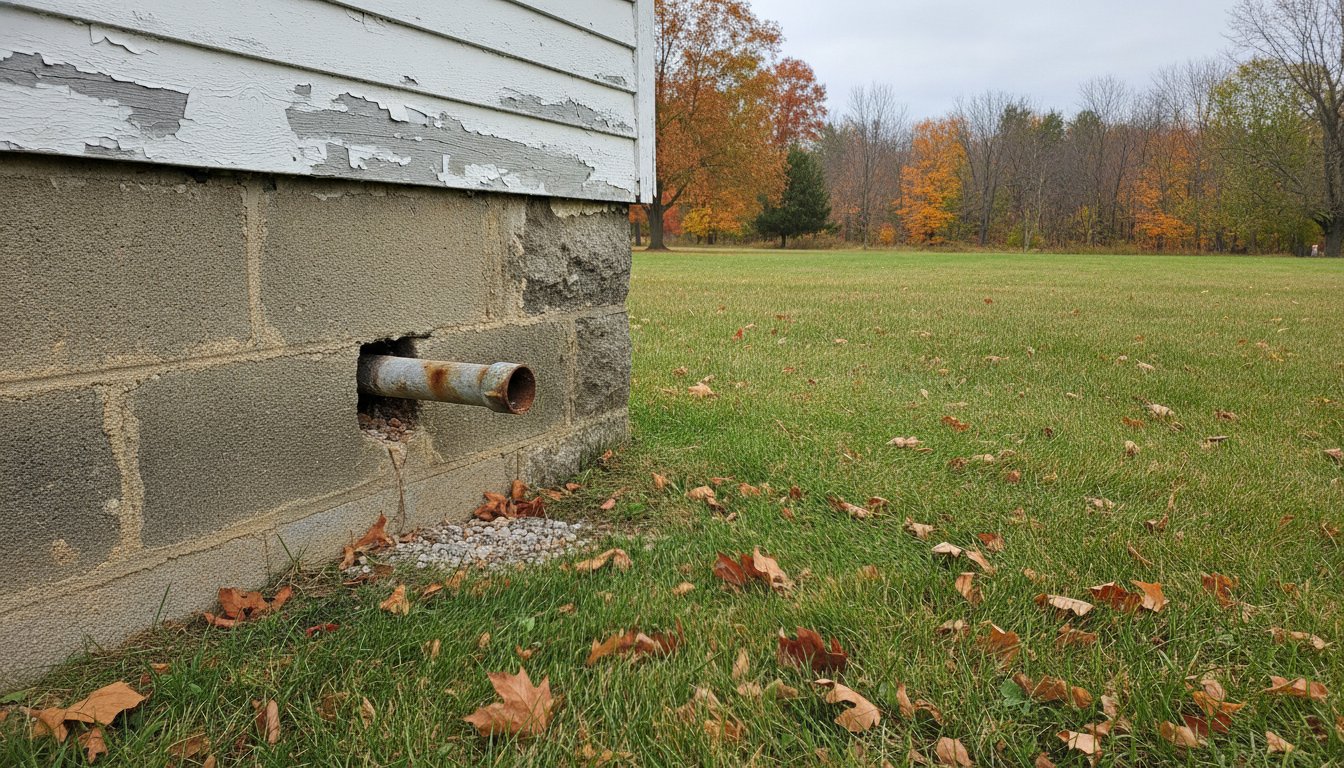
    • Identify common structural vulnerabilities, such as unsealed utility penetrations and foundation cracks, to understand why do I keep getting mice in my house.
    • Discover the role of pheromone scent trails, which act as a biological map that guides new rodents into your home along established paths.
    • Evaluate environmental attractants on your property perimeter that may be drawing opportunistic rodents toward your home’s entry points.
    • Understand why professional exclusion strategies are necessary to physically block access and provide a long-term solution to recurring infestations.

    Biological Drives: Why Mice Seek Shelter in Pennsylvania and Ohio Homes

    Mice aren’t invading your living space out of spite; they’re following a biological blueprint for survival. In Northwest Pennsylvania and Northeast Ohio, the drop in temperature signals an urgent need for warmth, food, and secure nesting sites. You might wonder, “why do I keep getting mice in my house” despite your best efforts at cleanliness. The reality is that a common house mouse only needs a gap the size of a dime to squeeze through a foundation crack or a worn door sweep. Understanding House mouse biology and behavior is the first step in realizing that their presence is a result of evolutionary success rather than a failure of your housekeeping.

    Once inside, the biological clock starts ticking. Mice have incredibly high reproductive rates; a single female is capable of producing several litters every year. A small entry problem that seems manageable in October can quickly spiral into a significant infestation by mid-winter. Their survival instincts are finely tuned to find the path of least resistance into your home’s structural voids.

    To better understand how these pests operate and why they are so persistent, watch this helpful video:

    The Impact of Local Climate on Rodent Behavior

    The transition from autumn to winter in Erie and Crawford Counties triggers a mass migration of rodents toward man-made structures. As Lake Erie brings heavy snow and freezing winds, rodents seek higher, drier ground. Snow cover often acts as an insulator for the ground; it also hides mouse movements from predators, allowing them to scout your perimeter more easily. During the summer, extreme heat or prolonged drought in Ashtabula County can also drive mice indoors as they search for moisture and cooler environments. These seasonal shifts make local homes a constant target for rodents looking to escape the harsh Great Lakes elements.

    Nesting Instincts and Resource Gathering

    Mice are highly opportunistic when building a home. They seek out soft materials like fiberglass insulation, cardboard, or fabric to create nests in quiet, undisturbed areas like attics and crawlspaces. Properties located near wooded areas or open fields face a higher likelihood of entry because these environments provide a natural reservoir of rodent populations. Since mice are nocturnal, you’ll often hear the results of their resource gathering at night. Scratching sounds in the walls or ceilings are frequently the first sign that mice are navigating your home’s internal structure to find nesting materials or food sources.

    Common Structural Vulnerabilities That Invite Mice

    While biological drives explain their motivation, structural flaws provide the opportunity. If you find yourself asking “why do I keep getting mice in my house,” the answer often lies in the architecture of your home. Foundation cracks and gaps in siding serve as primary highways for rodents. These openings are often hidden behind landscaping or beneath the soil line. In the variable climate of Erie and Crawford Counties, the expansion and contraction of building materials can create new cracks every season.

    Unsealed utility penetrations are another major culprit. Pipes for water, gas, and HVAC lines, along with electrical wiring, frequently enter the home through holes larger than the lines themselves. These voids provide easy access to wall interiors. Once inside the walls, mice can travel throughout the entire structure without being seen. Damaged door sweeps and worn garage door seals are also common entry points. A garage door that doesn’t sit flush with the pavement is essentially an open invitation.

    Even high-up areas aren’t safe. Mice are excellent climbers. They utilize overhanging tree branches, ivy, or downspouts to reach the roofline. Gaps in soffits or where the roof meets the fascia allow them to enter attics directly. To prevent rodent infestations, every level of the home must be scrutinized for vulnerabilities.

    Identifying Hidden Entry Points

    Property owners should conduct a thorough inspection of the perimeter where the foundation meets the siding. This transition point often has small gaps that are invisible from a standing position. Inspecting areas where HVAC lines enter the structure is also critical. In brick veneer homes throughout Ashtabula County, weep holes are designed for moisture drainage but often lack the necessary covers to keep rodents out. Securing these with breathable metal inserts is a standard professional practice.

    The Limitation of DIY Sealing Methods

    Many homeowners attempt to solve the problem with standard caulk or expanding foam. Unfortunately, these materials offer little resistance. Mice can easily chew through foam or wood to widen a hole. Using professional-grade materials like stainless steel wool or specialized metal mesh is essential for effective exclusion. Understanding these structural weaknesses helps answer why do I keep getting mice in my house despite regular trapping. A comprehensive rodent control strategy identifies high-traffic entry points that are easily missed by the untrained eye, ensuring the physical barriers remain intact over time.

    Why Do I Keep Getting Mice in My House? Understanding Recurring Infestations

    Environmental Attractants: What Keeps Mice Coming Back?

    While structural gaps provide the access, environmental factors are often the primary reason why do I keep getting mice in my house month after month. Mice are master opportunists. They require only three to five grams of food per day to survive, which is roughly the weight of a single nickel. When a property provides consistent access to food, water, and shelter, it becomes a beacon for local rodent populations. Effective mouse control involves more than just setting traps; it requires a systematic reduction of the resources that allow a colony to thrive.

    Hydration is another critical factor. While mice can get some moisture from their food, standing water or leaky pipes in a crawlspace or basement provide the reliable hydration necessary for a colony to expand. Furthermore, clutter in these low-traffic areas offers the security and nesting material mice need to establish a permanent presence. A stack of old newspapers or a box of seasonal clothing can house dozens of rodents if left undisturbed.

    Indoor Food Sources Beyond the Pantry

    Pet owners often unknowingly provide the perfect diet for rodents. Spilled kibble or bowls left out overnight are high-protein targets. Even the area behind large appliances like stoves and refrigerators often holds a hidden buffet of crumbs and grease that can sustain a family of mice for weeks. In the garage, many residents in Erie and Crawford Counties store grass seed or birdseed in original paper bags. These are easily breached by sharp incisors. Eliminating these hidden buffets is a critical step in answering why do I keep getting mice in my house and preventing the next generation from moving in.

    Landscaping and Exterior Maintenance

    The perimeter of your home is the first line of defense. In Northwest Pennsylvania and Northeast Ohio, many homeowners keep firewood piles stacked against the foundation for easy access during the winter. These piles are ideal rodent hotels, providing warmth and protection from predators right next to your home’s entry points. Overgrown vegetation and low-hanging branches act as bridges, giving mice easy access to the roofline and gutters. Additionally, bird feeders and fallen fruit from trees are massive draws. While bird watching is a popular local pastime, the seeds that drop to the ground often act as a primary attractant that pulls rodents from the surrounding fields directly to your doorstep.

    The Pheromone Factor: Why New Mice Follow Old Paths

    Many homeowners who have successfully trapped a few rodents are dismayed to find new activity just weeks later. If you are struggling to understand why do I keep getting mice in my house, the answer may be invisible to the human eye. Mice utilize pheromones, which are chemical signals left behind in their urine and droppings, to communicate with others. These scent trails act as a biological GPS, marking safe travel routes, food locations, and nesting sites. Even after the original inhabitants are removed, these chemical markers remain active. They serve as a standing invitation for the next wave of rodents from the surrounding Pennsylvania or Ohio landscape to enter your home.

    Removing the physical presence of a mouse is only half the battle. Without neutralizing the pheromone trails, the structure remains vocal to every passing rodent. Scent markers are particularly persistent in porous materials like attic insulation and wooden wall studs. This is why professional intervention often involves more than just removal. It requires a methodical approach to breaking the biological communication cycle that leads to recurring infestations. A home that has been infested previously is much more likely to be targeted again because of these lingering markers.

    Understanding Rodent Communication

    Pheromones provide complex information to other mice, signaling that a specific location is resource-rich and secure from predators. These trails are laid down constantly as mice move throughout a home, creating a map that survives long after the mouse does. While a homeowner might clean up visible droppings on a kitchen counter, the scent trails often remain deep within wall voids and under floorboards. These hidden paths allow new mice to navigate a home with confidence, heading straight for the same pantries and nesting spots used by their predecessors without having to scout the area first.

    Breaking the Cycle of Re-infestation

    Trapping alone is often a reactive measure that fails to address the long-term invitation left by previous rodents. A comprehensive solution requires professional-grade sanitization to strip away these biological markers. Decontamination protocols focus on neutralizing the enzymes in rodent waste that hold these scents. When paired with high-quality exclusion work, this process ensures that the home is both physically inaccessible and biologically silent to the local rodent population. This dual approach is essential for anyone wondering why do I keep getting mice in my house despite repeated trapping efforts. To ensure your property is no longer broadcasting an invitation to local pests, professional rodent control plans can help address both the entry points and the underlying scent trails.

    Disclaimer: The information provided on this blog is for general informational purposes only and is not intended as professional pest control advice. Conditions vary by property, environment, and location. Reading this content does not create a service agreement. For an inspection or professional recommendations, please contact Mosquito Assassin Pest Control LLC directly.

    Professional Strategies for Long-Term Rodent Prevention

    Solving a recurring rodent problem requires moving beyond the reactive approach of setting a few traps. If you’ve been asking “why do I keep getting mice in my house,” it’s likely because your previous efforts focused only on the symptoms rather than the source. While common suggestions like getting a household cat are popular on internet forums, these aren’t reliable control methods. A cat cannot reach mice living inside wall voids or attics; it only interacts with the few rodents that venture into open living spaces. Professional pest management utilizes a scientific, multi-layered approach to ensure the structure is no longer vulnerable to local rodent populations.

    Licensed professionals use specialized tools to identify activity in areas that are inaccessible to homeowners. By using high-intensity lighting and specialized inspection cameras, technicians can find nests deep within crawlspaces or identify “rub marks” along hidden floor joists. This level of detail is necessary because mice are experts at staying out of sight. Identifying these hidden high-traffic zones is the only way to ensure that the treatment plan is targeting the entire colony rather than just a few outliers.

    The Three-Step Rodent Control Process

    A comprehensive strategy for long-term success is built on three distinct pillars. Each step addresses a different aspect of rodent biology and structural physics:

    • Removal: This initial phase focuses on rapidly eliminating the existing population currently nesting inside the home. Professional trapping protocols are designed to be efficient and thorough, clearing the structure of active threats.
    • Maintenance: Ongoing monitoring is essential for managing “exterior pressure.” By utilizing secure bait stations and monitoring devices around the perimeter, professionals can manage rodent populations before they ever find a way to enter the building.
    • Exclusion: This is the most critical step for permanent results. Exclusion involves sealing the home with durable, rodent-proof materials like heavy-gauge hardware cloth and steel wool. It’s the only way to physically prevent mice from entering the structure in the future.

    When to Contact Professional Pest Control

    Property owners should stay alert for the early warning signs of a growing infestation. Fresh droppings in the back of cabinets, gnaw marks on food packaging, or the sound of light scurrying in the ceiling at night are all indicators that a colony has established itself. In high-risk areas like Meadville or Ashtabula, where seasonal migrations from nearby fields and woods are common, year-round protection is often the most practical choice. Professional pest control may help reduce risk by addressing the root cause of the infestation and neutralizing pheromone trails before they draw in new rodents. To find a permanent solution for your property, you can learn about our rodent control services and how they address these persistent challenges.

    Disclaimer: The information provided on this blog is for general informational purposes only and is not intended as professional pest control advice. Conditions vary by property, environment, and location. Reading this content does not create a service agreement. For an inspection or professional recommendations, please contact Mosquito Assassin Pest Control LLC directly.

    Breaking the Cycle of Recurring Rodent Infestations

    Understanding why do I keep getting mice in my house requires looking at the property through the lens of both biology and structural integrity. Simply removing the active population is rarely enough when pheromone trails continue to broadcast a clear invitation to every rodent in the surrounding landscape. Real, lasting success depends on identifying every dime-sized entry point and neutralizing the biological markers that lead new pests back to your pantry and nesting sites.

    Expertise in the local pests of Erie, Crawford, and Ashtabula counties is essential for creating a defensive perimeter that lasts. A comprehensive three-step rodent control process focusing on removal, maintenance, and professional exclusion provides the most reliable path forward. Contact Mosquito Assassin Pest Control LLC for a professional inspection to secure your home with licensed professional service in PA and OH. You can reclaim your home from the anxiety of persistent infestations and enjoy the security of a professionally protected property.

    Disclaimer: The information provided on this blog is for general informational purposes only and is not intended as professional pest control advice. Conditions vary by property, environment, and location. Reading this content does not create a service agreement. For an inspection or professional recommendations, please contact Mosquito Assassin Pest Control LLC directly.

    Frequently Asked Questions

    Why do I have mice in my house if it is clean?

    Mice are primarily driven by the need for shelter and warmth rather than just food. Even the most spotless home provides protection from the harsh winters in Erie and Crawford Counties. If you are wondering why do I keep getting mice in my house despite regular cleaning, it’s because biological drives for safety and nesting sites often outweigh the search for food. Professional exclusion is the only way to address these structural motivations.

    Can mice climb walls or reach the upper floors of a house?

    Mice are exceptional climbers that can easily scale rough vertical surfaces like brick, stone, and wood siding. They often utilize downspouts, utility lines, or overhanging tree branches to reach upper floors and rooflines. This ability allows them to enter through gaps in the soffits or fascia that many homeowners overlook. Once they reach the upper levels, they can establish nests in attic insulation far away from daily human activity.

    How do I know if I have more than one mouse?

    It’s highly unlikely to have only one mouse in a structure. Mice are social creatures with extremely high reproductive rates; a single pair can lead to a significant population in just a few months. If you see one mouse or find a single set of droppings, it’s usually an indicator of a larger established colony. Professional monitoring is the most effective way to determine the true scale of the infestation and identify all nesting sites.

    What are the most common entry points for mice in a standard home?

    Common entry points include foundation cracks, gaps around utility penetrations, and worn door sweeps. Any opening larger than a quarter inch, roughly the size of a dime, is a potential doorway. In many homes across Ashtabula County, the transition area where the siding meets the foundation is a high-traffic zone for entry. Identifying these specific structural vulnerabilities is a key part of answering why do I keep getting mice in my house.

    Is it true that mice don’t have bones and can squeeze through anything?

    Mice definitely have bones, but their skeletal structure is uniquely adapted for squeezing through tight spaces. They lack a collarbone and have highly flexible ribs, which means if their head can fit through a gap, their entire body can follow. This allows them to navigate through incredibly small openings in foundation walls or around pipes that appear solid to the naked eye; if a dime can fit, a mouse can too.

    How long does it take to get rid of a mouse infestation completely?

    The timeline for total elimination depends on the size of the population and the condition of the structure. While initial removal of the active population can happen within a few days, a permanent solution requires a full three-step process of removal, maintenance, and exclusion. This comprehensive approach ensures that new rodents don’t simply replace the ones that were removed, providing a long-term resolution rather than a temporary fix for the property.

    Why do I hear scratching in my walls at night?

    Scratching sounds at night are a classic sign of nocturnal rodent activity. Mice use the voids between your walls as protected highways to travel between nesting sites and food sources. Because they are most active during the quietest hours of the night, their movements are amplified by the hollow spaces in your home’s construction. These sounds often indicate they are gathering nesting materials, gnawing on structural elements, or communicating with other colony members.

    Will a cat or dog solve my mouse problem?

    Pets are rarely a reliable solution for a rodent infestation. While a cat or dog may occasionally catch a mouse in an open area, they cannot reach the rodents nesting deep within walls, attics, or crawlspaces. The presence of pet food and water bowls often acts as a significant attractant that sustains the rodent population. Professional pest control is necessary to address the areas your pets cannot access and to physically seal the entry points.

    Disclaimer: The information provided on this blog is for general informational purposes only and is not intended as professional pest control advice. Conditions vary by property, environment, and location. Reading this content does not create a service agreement. For an inspection or professional recommendations, please contact Mosquito Assassin Pest Control LLC directly.

  • Pest Control in Titusville, PA: A Comprehensive Local Guide

    Pest Control in Titusville, PA: A Comprehensive Local Guide

    Your historic Titusville home is more than just a piece of Pennsylvania heritage; to local rodents and termites, it’s a primary target for structural destruction. Securing professional pest control in Titusville PA is a common necessity for residents in Crawford County, where the combination of older architecture and lush, wooded surroundings creates an ideal environment for infestations to thrive. Whether you’re worried about the health risks of deer ticks or the persistent nuisance of carpenter ants, the threat to your property and peace of mind is significant.

    Maintaining a secure residence requires a strategy tailored to our specific climate and geography. This guide provides the essential knowledge needed for year round protection, helping you understand how local pest cycles influence behavior throughout the seasons. You’ll learn how to identify early signs of activity from common invaders like German cockroaches and subterranean termites, as well as the most practical strategies for long-term prevention. The following sections examine the professional standards used to achieve a truly pest-free home, giving you the confidence to protect your household from the stressors of recurring infestations.

    Disclaimer: The information provided on this blog is for general informational purposes only and is not intended as professional pest control advice. Conditions vary by property, environment, and location. Reading this content does not create a service agreement. For an inspection or professional recommendations, please contact Mosquito Assassin Pest Control LLC directly.

    Key Takeaways

    • Understand how Titusville’s proximity to Oil Creek State Park and its historic wood-frame architecture create high pressure for wood-destroying insects and seasonal pests.
    • Identify the critical shift in seasonal activity, from the emergence of stinging insects in spring to peak mosquito and tick pressure during the humid summer months.
    • Compare the limitations of one-time treatments against the effectiveness of ongoing pest control in Titusville PA, which targets the biological cycles of pests to prevent re-entry.
    • Learn proactive sanitation and landscape management techniques that reduce harborage zones and make your property less attractive to local invaders.
    • Discover how Integrated Pest Management (IPM) focuses on long-term results through professional monitoring and strategic intervention rather than just temporary fixes.

    Understanding Titusville’s Unique Pest Landscape

    Effective pest management starts with a clear understanding of pest pressure. This term refers to the various environmental factors, such as habitat availability and climate conditions, that drive insects and animals into human dwellings. In our region, these pressures are uniquely intense. Securing effective pest control in Titusville PA requires more than a one size fits all approach; it demands a strategy that accounts for the specific biological drivers found in Crawford County. From the dense woods of Oil Creek State Park to the transition of rural farmland into residential plots, the local environment is constantly pushing pests toward your doorstep.

    Rodent migration patterns in this area are particularly influenced by land use. When rural fields are disturbed or as temperatures drop in late autumn, mice and rats seek the stability of residential structures. This shift is not a random occurrence. It is a calculated survival move by pests that have lost their natural foraging grounds. Understanding these local movements is the first step toward creating a defensive perimeter around your property.

    The Role of Crawford County Geography

    The geography of Northwest Pennsylvania plays a decisive role in local infestations. Local waterways, including Oil Creek and its various tributaries, provide the standing water and high humidity necessary for mosquito breeding. These areas serve as massive reservoirs for seasonal insects. Furthermore, the elevation changes across Crawford County create microclimates. Higher ridges often experience different pest cycles than the valley floors. Wooded areas near residential zones are known hot zones for deer ticks, which thrive in the leaf litter and tall grasses common to our landscape. Moisture levels in basements and crawlspaces often spike during the humid summer months, creating a secondary environment for silverfish and centipedes to flourish.

    Historical Architecture and Pest Vulnerability

    Titusville is home to significant historical architecture, much of it featuring traditional wood frame construction. While these homes are a point of local pride, they present specific challenges for exclusion. Older structures in the Oil Creek valley often have stone foundations or aging siding that has settled over decades. These small gaps and cracks are open invitations for carpenter ants, which are attracted to the softened wood found in older homes. Managing these vulnerabilities requires a methodical approach. Utilizing Integrated Pest Management (IPM) is the most effective way to address these issues. This scientific approach focuses on long term prevention by identifying and sealing entry points, reducing the reliance on reactive measures. It bridges the gap between preserving the historical integrity of a home and maintaining a modern, pest free environment.

    Disclaimer: The information provided on this blog is for general informational purposes only and is not intended as professional pest control advice. Conditions vary by property, environment, and location. Reading this content does not create a service agreement. For an inspection or professional recommendations, please contact Mosquito Assassin Pest Control LLC directly.

    Common Seasonal Pest Pressures in Northwest Pennsylvania

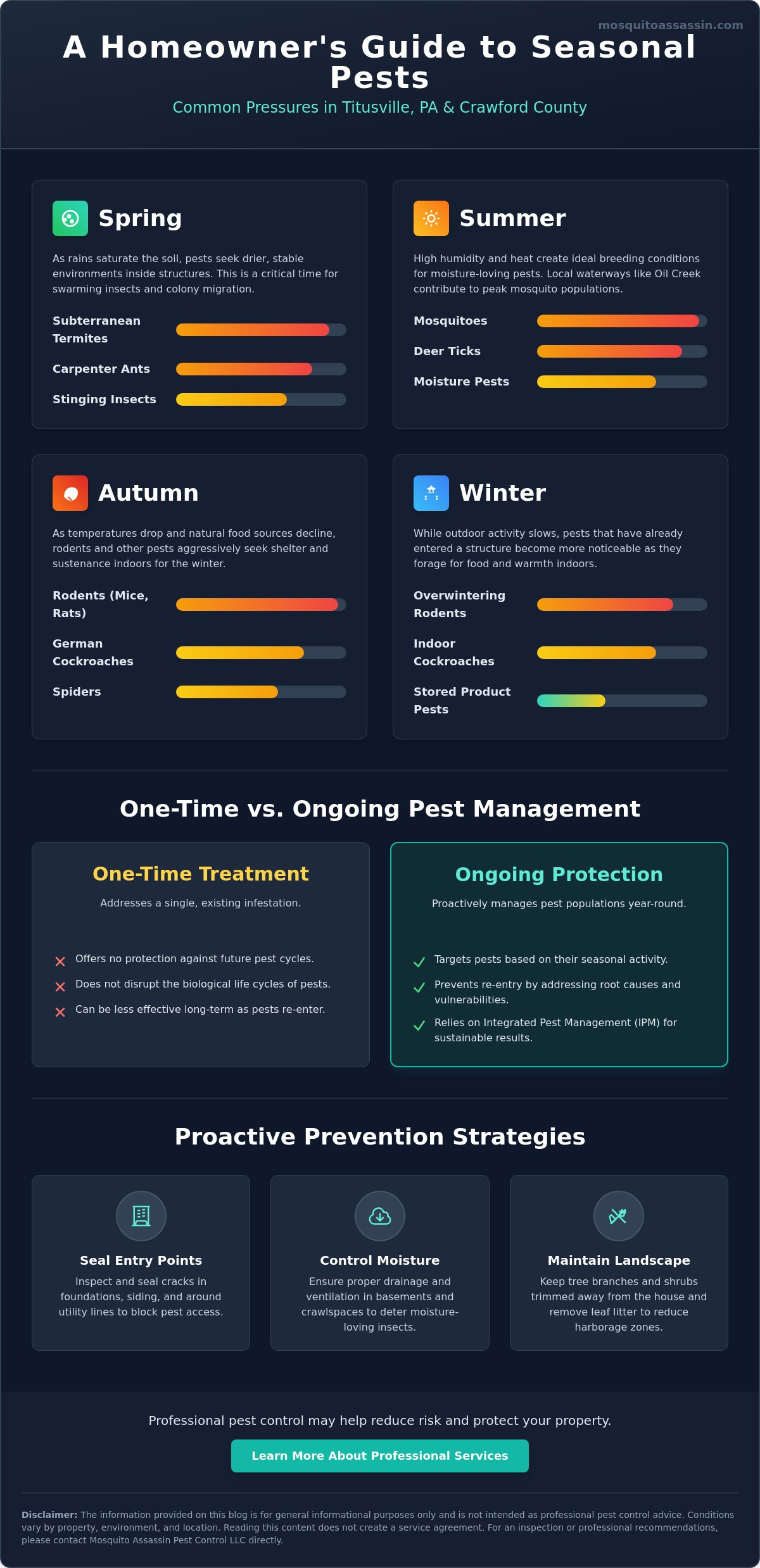
    Seasonal shifts in Crawford County dictate more than just the wardrobe of local residents; they signal a predictable change in biological threats to residential properties. Maintaining effective pest control in Titusville PA requires a proactive understanding of these cycles. Each season presents a unique set of pressures that can compromise the structural integrity and health of a household. By identifying these patterns early, property owners can implement defensive measures before an infestation becomes established.

    Spring and Summer Insect Activity

    Spring rains in Northwest Pennsylvania often saturate the soil, which triggers ant colonies to move toward the drier, stable environments found within home foundations. This is also the primary season for subterranean termite swarming. In May, homeowners frequently mistake termite swarmers for flying ants. Differentiating between the two is vital; termites have straight antennae and uniform wing lengths, while ants have elbowed antennae and varied wing sizes. As the weather warms, the focus shifts to mosquitoes and ticks. High humidity levels along the Oil Creek valley accelerate the lifecycle of local mosquito species, making them particularly aggressive during the summer months. Following guidelines from the Pennsylvania IPM Program can help residents manage these risks through environmental modifications and professional monitoring.

    The Autumn Rodent Migration

    When temperatures begin to drop in Crawford County, the “overwintering” rush begins. Spiders, stink bugs, and rodents seek the warmth of attics and basements. Mice can squeeze through openings as small as a dime, making fall the critical window for professional exclusion work. Rodents are not merely a nuisance; their nesting materials and droppings carry significant health risks and can damage electrical wiring. This transition from outdoor foraging to indoor nesting is a calculated survival move. Implementing comprehensive pest management plans during this period provides a barrier against these opportunistic invaders before they settle in for the winter.

    Winter does not mean pests disappear. While outdoor activity halts, internal infestations of bed bugs, cockroaches, or rodents can continue to thrive in sheltered, heated areas. Regular monitoring of crawlspaces and utility rooms remains a best practice for year round protection. Addressing these issues during the colder months prevents a massive population explosion when spring returns.

    Disclaimer: The information provided on this blog is for general informational purposes only and is not intended as professional pest control advice. Conditions vary by property, environment, and location. Reading this content does not create a service agreement. For an inspection or professional recommendations, please contact Mosquito Assassin Pest Control LLC directly.

    Pest Control in Titusville, PA: A Comprehensive Local Guide

    Comparing One-Time Treatments vs. Ongoing Protection

    Choosing between a single intervention and a recurring plan is a common dilemma for residents seeking pest control in Titusville PA. While both approaches have their place, the decision usually depends on whether the goal is a temporary fix or a permanent barrier. One-time treatments focus on the immediate knockdown of visible pests, providing a quick resolution to a surface-level problem. However, in a high-pressure environment like Crawford County, reactive measures often fail to address the underlying biological cycles that lead to re-infestation.

    When a One-Time Service is Appropriate

    A single visit is often sufficient for isolated, external issues. For example, removing a lone hornets nest or treating a specific area for a real estate clearance report are practical applications of one-time services. These situations involve pests that haven’t established a deep-rooted presence within the home’s structure. The reality, however, is that one-time sprays rarely reach the heart of a colony. For complex pests like carpenter ants or bed bugs, a single application may kill visible workers but leave the queen and larvae untouched, leading to a resurgence within weeks.

    The Advantages of Year-Round Management

    Ongoing protection plans are designed to stay ahead of the local pest cycles discussed in previous sections. By establishing a consistent perimeter, these plans break the breeding cycles of persistent invaders. According to research-based management techniques from the Penn State Extension, understanding the specific biology of local species is essential for effective control. Ongoing management provides peace of mind through regular professional monitoring, allowing for the early detection of issues before they become expensive disasters.

    Consistent pest management also safeguards long-term property value. In Titusville, where historic wood-frame homes are common, the cost of preventing a termite infestation is significantly lower than repairing structural damage to a foundation or joist. Utilizing professional pest control in Titusville PA as a year-round shield ensures that seasonal shifts don’t catch you off guard. A proactive approach transforms pest control from an emergency expense into a predictable part of home maintenance, ensuring the security and wellbeing of all household members. Residents often find that General Pest Control Plans offer the most reliable path to a secure, infestation-free environment.

    Disclaimer: The information provided on this blog is for general informational purposes only and is not intended as professional pest control advice. Conditions vary by property, environment, and location. Reading this content does not create a service agreement. For an inspection or professional recommendations, please contact Mosquito Assassin Pest Control LLC directly.

    Proactive Prevention Strategies for Titusville Homeowners

    While the environmental pressures in Northwest Pennsylvania are intense, property owners can take decisive action to harden their homes against invaders. Establishing a first line of defense doesn’t always require chemical intervention; it often starts with eliminating the resources that pests need to survive. By modifying the landscape and improving sanitation, you can significantly reduce the attractiveness of your property to opportunistic insects and rodents. These practical steps complement professional pest control in Titusville PA by making it harder for infestations to take root in the first place.

    Exterior Maintenance and Exclusion

    The area immediately surrounding your foundation is the most critical zone for prevention. Firewood piles, leaf litter, and construction debris serve as primary harborage sites for rodents and carpenter ants. To minimize risk, keep firewood and organic debris at least 20 feet away from the home and elevated off the ground. Managing the “bridges” that pests use is equally important. Trim tree branches and shrubs so they don’t touch the siding or roofline, as these provide a direct path for ants and squirrels to bypass ground-level defenses. Additionally, ensure that gutters are clear and downspouts direct water away from the foundation. Standing water in clogged gutters is a primary breeding ground for mosquito larvae, especially in the humid climate of the Oil Creek valley.

    Interior Sanitation and Storage

    Inside the home, the goal is to eliminate food sources and nesting sites. Foraging ants and rodents have a keen sense of smell and can detect unsealed food from a distance. Utilizing airtight glass or plastic containers for pantry items is a simple but effective deterrent. Beyond food, managing the environment in less-frequented areas like basements and attics is vital. Many pests found in Crawford County, such as silverfish and certain spider species, thrive in high-humidity environments. Using a dehumidifier to keep basement humidity levels below 50 percent can make these spaces inhospitable to moisture-loving insects. Finally, inspect utility penetrations where pipes or wires enter the home. Sealing these small gaps with silicone caulk or steel wool prevents rodents from gaining easy access to your interior walls.

    Moisture control is perhaps the most overlooked aspect of long-term prevention. Damp wood is a magnet for wood-destroying organisms, including subterranean termites and carpenter ants. Addressing leaky pipes and ensuring proper ventilation in crawlspaces reduces the likelihood of structural wood becoming a target. For residents dealing with persistent issues, professional pest control plans can provide the comprehensive monitoring needed to catch moisture-related threats early. Integrating these personal habits with expert oversight creates a robust shield for your property.

    Disclaimer: The information provided on this blog is for general informational purposes only and is not intended as professional pest control advice. Conditions vary by property, environment, and location. Reading this content does not create a service agreement. For an inspection or professional recommendations, please contact Mosquito Assassin Pest Control LLC directly.

    Professional Pest Management Solutions in Crawford County

    Homeowner prevention strategies provide a critical first line of defense, but the biological complexity of Northwest Pennsylvania often requires a higher level of specialized intervention. Licensed professionals possess the technical training to address the specific chemical and biological needs of our region. For those seeking reliable pest control in Titusville PA, the integration of professional expertise with personal maintenance creates a comprehensive barrier that seasonal invaders cannot easily penetrate. This scientific approach ensures that treatments are targeted, effective, and sustainable for the long term.

    Utilizing Integrated Pest Management (IPM) is the gold standard for modern property protection. This methodology focuses on long term results by combining thorough monitoring with strategic, low impact treatments. Instead of relying solely on broad spectrum applications, professionals analyze the environment to identify why a pest is present. By addressing the root cause, such as a specific entry point in a historic stone foundation or a moisture issue in a crawlspace, the reliance on reactive measures is minimized. This systematic discipline is what separates a temporary fix from a permanent resolution.

    What to Expect During a Professional Inspection

    It’s a detailed assessment of the property’s exterior, interior, and vulnerable areas like crawlspaces or attics. During an inspection, professionals look for specific indicators of activity that are often invisible to the untrained eye. This includes identifying particular species and their current population levels. Every home in Titusville has a unique footprint, and if a strategy doesn’t account for that, the results will suffer. A customized plan is developed based on the unique needs of the home, ensuring that the response is as unique as the infestation itself.

    Choosing a Local Service Provider

    Selecting a provider with deep roots in Northwest Pennsylvania is essential for managing our specific local challenges. Local experts understand how the proximity to Oil Creek or the transition of Crawford County farmland influences pest behavior. Property owners should always verify that a provider is fully licensed and insured for both residential and commercial services. Choosing a neighborly, locally based entity ensures that the staff understands the community values and the specific environmental regulations of the area. Consistent pest control in Titusville PA may help reduce risk and protect property investments over time. For those ready to secure their home, professional recommendations can be found at the online booking portal.

    Disclaimer: The information provided on this blog is for general informational purposes only and is not intended as professional pest control advice. Conditions vary by property, environment, and location. Reading this content does not create a service agreement. For an inspection or professional recommendations, please contact Mosquito Assassin Pest Control LLC directly.

    Securing Your Home Against Local Pest Pressures

    Protecting a property in the Oil Creek valley requires more than just reactive measures; it demands an understanding of how local geography and historic architecture influence pest behavior. By prioritizing ongoing protection over one-time fixes, residents can effectively break the breeding cycles of persistent invaders. Proactive maintenance, such as moisture control and proper food storage, serves as a vital foundation for a secure and healthy home.

    For residents seeking reliable pest control in Titusville PA, local expertise is the most effective tool for navigating these unique regional challenges. Professional services provide comprehensive protection across Erie, Crawford, and Ashtabula counties, utilizing specialized knowledge in mosquito and tick elimination to maintain a safe outdoor environment. As a locally owned and operated entity in Northwest PA, the focus remains on the long term security of the community. Professional pest control may help reduce risk and protect your property investment. To begin a thorough evaluation of your home, you may schedule a professional pest inspection through the online booking portal.

    Disclaimer: The information provided on this blog is for general informational purposes only and is not intended as professional pest control advice. Conditions vary by property, environment, and location. Reading this content does not create a service agreement. For an inspection or professional recommendations, please contact Mosquito Assassin Pest Control LLC directly.

    Frequently Asked Questions

    Is professional pest control in Titusville safe for my pets and children?

    Licensed professionals follow strict federal guidelines and product labels designed to minimize risks to non-target residents. Strategic application techniques ensure that products are placed in areas inaccessible to children and pets, such as wall voids or behind heavy appliances. Property owners should discuss specific concerns with their technician during the initial assessment to understand the specific safety protocols used during the service.

    How often should I have my home inspected for pests in Crawford County?

    Seasonal inspections are generally recommended every three months to account for the dramatic weather shifts in Northwest Pennsylvania. Consistent monitoring allows a professional to identify early signs of activity before a small issue becomes a structural problem. For properties with a history of pressure, more frequent checks during the spring and fall may be necessary to maintain a secure barrier.

    What is the most common pest problem in Titusville during the summer?

    Stinging insects, including yellow jackets and bald faced hornets, are among the most frequent calls for pest control in Titusville PA during the summer months. These pests often build nests in eaves, attics, or underground, posing a risk to anyone nearby. While mosquitoes are also prevalent, the aggressive nature of stinging insects often requires immediate professional intervention to ensure the safety of the household.

    Can I handle a rodent infestation on my own or do I need a professional?

    Handling a rodent infestation often requires professional exclusion work to identify and seal every potential entry point. While traps may remove individual mice, they don’t address the biological drive that brings them indoors. Professionals use a combination of strategic baiting and structural repairs to ensure that the source of the infestation is permanently neutralized, reducing the risk of disease transmission from droppings.

    How do I know if I have termites or just flying ants?

    Termites and flying ants are often confused, but they have distinct physical characteristics. Termites have straight antennae, a thick waist, and four wings of equal length. In contrast, ants have elbowed antennae, a pinched waist, and two pairs of wings with different lengths. If you see swarmers, a professional inspection is the most reliable way to confirm the species and assess potential structural damage.

    What should I do to prepare my home for a professional pest service?

    Proper preparation ensures the most effective application of pest control in Titusville PA. Homeowners should clear clutter from the floor, move furniture six to twelve inches away from the walls, and ensure that all pets are secured in a separate area. For interior services, it is also helpful to clean kitchen surfaces and store any open food items in airtight containers to allow technicians clear access to target zones.

    Does professional mosquito control really work in wooded areas like Titusville?

    Professional mosquito control is effective in wooded environments when it targets the specific areas where the insects rest. Technicians focus on the underside of broadleaf foliage and dense brush where mosquitoes hide during the heat of the day. While no service can eliminate every insect in a forest, these strategic treatments significantly reduce the local population and the associated risk of bites on your property.

    How long does a typical pest control treatment last before it needs a refresh?

    Most professional barrier treatments remain effective for approximately 30 to 90 days depending on the specific product and local weather conditions. Heavy rainfall or extreme humidity in Crawford County can sometimes accelerate the breakdown of external barriers. Ongoing maintenance plans are designed to refresh these protective zones before they fail, ensuring that your home remains secure throughout the entire year.

    Disclaimer: The information provided on this blog is for general informational purposes only and is not intended as professional pest control advice. Conditions vary by property, environment, and location. Reading this content does not create a service agreement. For an inspection or professional recommendations, please contact Mosquito Assassin Pest Control LLC directly.