
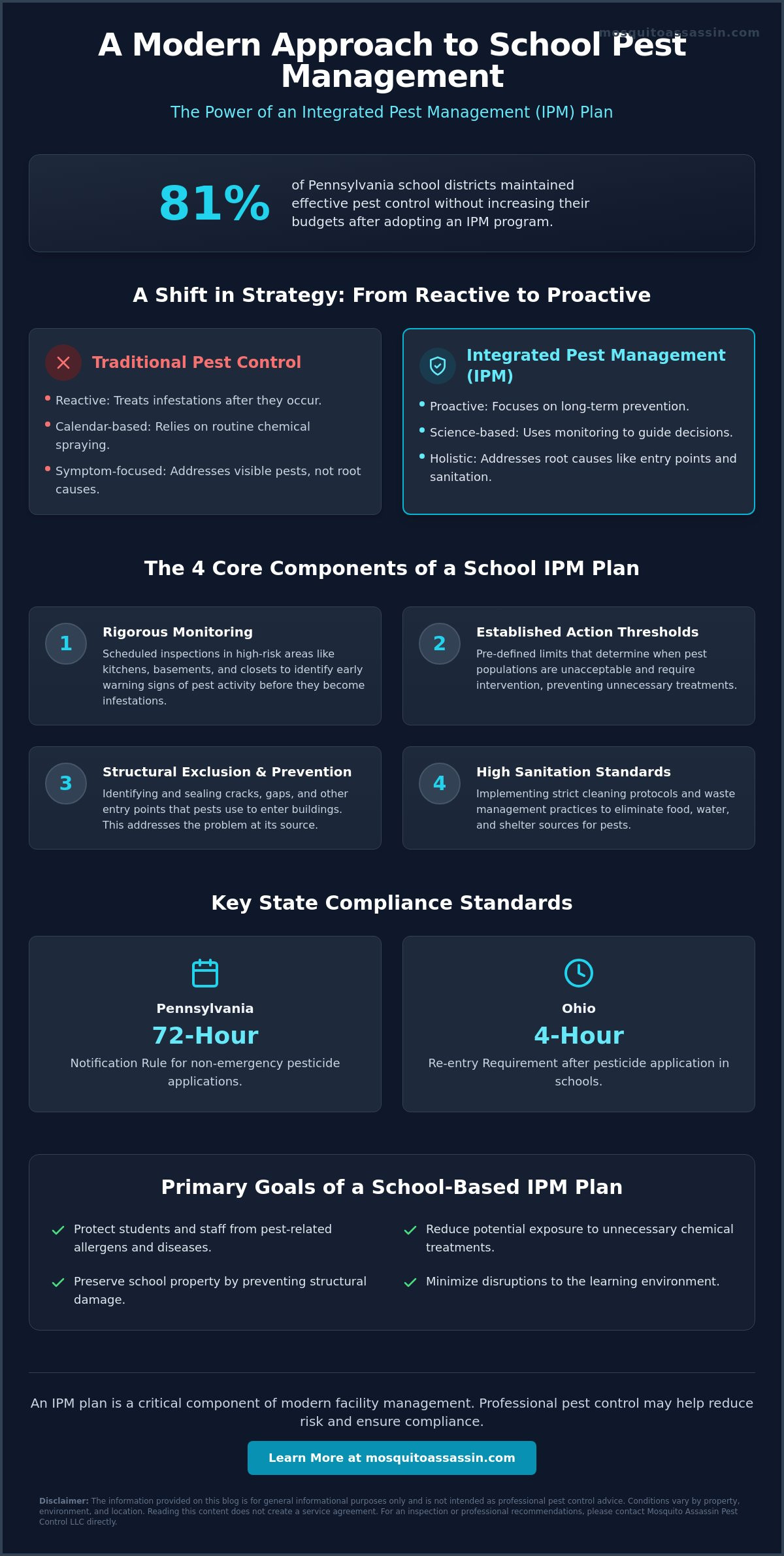
Did you know that 81% of Pennsylvania school districts surveyed were able to maintain effective pest control without increasing their budgets after switching to an integrated program? Maintaining a safe learning environment requires a delicate balance between strict state regulations and the high expectations of parents regarding chemical use. Navigating the requirements for a school pest management plan can feel like a daunting task for administrators in Erie and Crawford counties in Pennsylvania, as well as Ashtabula County in Ohio, who are already managing tight facilities budgets.
This guide provides a clear roadmap for establishing a proactive strategy that prioritizes student health and long term safety. You will learn the essential components of an effective Integrated Pest Management (IPM) system, including specific compliance standards such as the 72 hour notification rules in Pennsylvania and the four hour re-entry requirements in Ohio. By shifting from a reactive approach to a structured prevention model, school districts can significantly reduce health risks and ensure a pest free environment for every student and staff member.
Key Takeaways
- Understand why Integrated Pest Management (IPM) is the gold standard for school safety by prioritizing non-chemical prevention over routine spraying.
- Identify the necessary steps to build a compliant school pest management plan, including setting action thresholds and establishing a rigorous monitoring schedule.
- Learn how to address specific regional threats like rodent infestations in older facilities and seasonal stinging insects on athletic fields.
- Discover the critical role of an IPM coordinator and why a baseline facility inspection is the first step toward long term success.
- See how professional monitoring and third party inspections can help identify hidden vulnerabilities to ensure a safe, compliant learning environment.
Understanding Integrated Pest Management (IPM) in Schools
Integrated Pest Management (IPM) is a science based decision making process that identifies and reduces risks from pests and pest management strategies. It represents a significant shift from traditional, calendar based spraying to a holistic approach that prioritizes long term prevention. Instead of waiting for an infestation to occur, school districts focus on understanding pest biology and environmental factors to stop problems before they start. This method is the gold standard for educational facilities because it balances effective control with the necessity of student safety.
A formal school pest management plan serves as the backbone of this strategy. It moves away from reactive treatments and focuses on structural repairs, improved sanitation, and constant monitoring. By addressing the root causes of infestations, such as food sources or entry points, schools can often eliminate pests without relying on chemical interventions as a first resort. This proactive stance is much more effective than traditional methods that only address pests after they become a visible nuisance.
To better understand this concept, watch this helpful video:
Accountability is a major benefit of a written school pest management plan. It provides a clear record of what was done, when it was done, and why. In states like Pennsylvania and Ohio, where regulations regarding student safety are strict, having a documented process ensures that the district remains compliant with state laws while keeping parents informed. It creates a transparent system where maintenance staff and administrators work together toward a common goal of a healthy campus.
The Goals of a School-Based Pest Plan
The primary objective is protecting students and staff from pest related allergens and diseases. Rodents and cockroaches are known triggers for asthma, which is a leading cause of student absenteeism. By reducing the presence of these pests, schools directly improve indoor air quality. Additionally, a well structured plan minimizes the potential for student exposure to unnecessary chemical treatments. It also preserves the school property itself, preventing structural damage caused by wood destroying organisms or rodents chewing through wiring and insulation.
Why Proactive Management Matters for Education
Pest sightings in a classroom can cause immediate disruptions to the learning process and create unnecessary anxiety for students. Proactive management ensures that these incidents are rare. Beyond the immediate physical environment, implementing an IPM strategy meets the high expectations of parents and community health advocates in Erie, Crawford, and Ashtabula counties. It demonstrates a commitment to modern, safe facility management practices. When schools prioritize prevention, they create a more stable and focused environment for education to thrive.
Disclaimer: The information provided on this blog is for general informational purposes only and is not intended as professional pest control advice. Conditions vary by property, environment, and location. Reading this content does not create a service agreement. For an inspection or professional recommendations, please contact Mosquito Assassin Pest Control LLC directly.
The Core Components of an Effective Management Plan
A robust school pest management plan transitions a facility from reactive crisis mode to a disciplined, preventative state. It relies on four critical pillars: rigorous monitoring, established action thresholds, structural exclusion, and high sanitation standards. By integrating these components into daily operations, administrators ensure that pest control becomes a predictable part of facility maintenance rather than an unexpected expense. This systematic approach is especially vital for schools in Erie and Crawford counties, where seasonal shifts can drive pests indoors searching for warmth.
Monitoring is the foundation of any successful program. It involves more than just placing traps; it requires a scheduled walkthrough of high risk areas like basement mechanical rooms and janitorial closets. These inspections identify early warning signs, such as grease marks along baseboards or chewed insulation, before a full blown infestation takes root. For districts looking to formalize these processes, commercial pest control strategies can provide the necessary framework for professional grade monitoring and documentation.
Setting Action Thresholds for Common Pests
Action thresholds prevent unnecessary chemical use by defining exactly when a pest sighting requires a response. An action threshold is the point where pest populations require remedial action. For example, the threshold for a stinging insect nest on a playground is zero, meaning immediate intervention is required to protect students. Conversely, a few ants near an exterior doorway might only trigger increased cleaning or sealing of a crack. The EPA’s Approach for Integrated Pest Management in Schools highlights that these standards allow staff to respond logically rather than emotionally to pest presence.
Structural Exclusion and Maintenance
Exclusion is the most effective long term solution in any school pest management plan, yet it’s often the most neglected. Pests don’t materialize inside; they enter through physical gaps in the building envelope. Common vulnerabilities include worn door sweeps, gaps around utility penetrations, and unsealed foundation cracks. If light can pass through a gap under a door, a juvenile rodent can likely squeeze through as well. This is a common issue in older school buildings across Ashtabula County and Western Pennsylvania.
Facilities departments play a vital role in this process. Maintenance teams should prioritize sealing these “pest highways” with durable materials like steel wool or silicone caulk. Managing the exterior grounds is equally important. Keeping shrubs trimmed back at least 12 inches from the building and ensuring mulch doesn’t touch the siding reduces the chances of pests finding a way inside. This structural focus ensures the building itself acts as the first line of defense, significantly reducing the need for future treatments.
Disclaimer: The information provided on this blog is for general informational purposes only and is not intended as professional pest control advice. Conditions vary by property, environment, and location. Reading this content does not create a service agreement. For an inspection or professional recommendations, please contact Mosquito Assassin Pest Control LLC directly.
Common Pest Challenges for Pennsylvania and Ohio Schools
Schools in Erie, Crawford, and Ashtabula counties encounter specific pest pressures shaped by the local environment and the age of their facilities. While urban schools might struggle more with certain indoor pests, rural districts often face challenges from the surrounding landscape. A comprehensive school pest management plan must be tailored to these regional realities to ensure it addresses the most likely threats effectively without relying on generic solutions.
Rodents remain a top concern for facility managers. A 2024 poll by Pest Control Technology found that 38% of respondents identified rodents as the most challenging pests in school environments. In older buildings across Erie County, mice and rats often find easy access through foundation gaps or aging utility lines. These pests aren’t just a nuisance; they carry diseases and can trigger asthma in sensitive students. Professional rodent control service can help identify these hidden entry points and nesting sites during the initial planning phase.
Rodent Prevention and Food Service Safety
Food service areas are the primary draw for rodents. Best practices for school kitchens include storing all dry goods in airtight, heavy duty plastic containers rather than cardboard boxes. Staff should regularly monitor for signs of activity behind large appliances or within drop ceilings, where rodents often travel undisturbed. Immediate waste removal after lunch periods is critical. Trash should be taken to exterior dumpsters located away from the building to prevent drawing pests toward the entrances.
Seasonal Risks: Stinging Insects and Ticks
Outdoor safety is just as important as indoor air quality. Stinging insects were cited as the second most challenging pest in the 2024 Pest Control Technology survey, affecting 29% of schools. Yellowjackets frequently build nests near bleachers, athletic fields, and outdoor seating areas where food debris is present. Regular inspections of these high traffic zones can prevent painful encounters during sporting events or recess. This is especially vital during the late summer and early fall months when these insects are most aggressive.
In Crawford County, where many schools are adjacent to wooded areas, tick prevention is a priority. Keeping grass trimmed short and creating a wood chip or gravel barrier between the woods and student play areas can significantly reduce tick populations. During active school hours, any discovered stinging insect nest should be cordoned off immediately until it can be addressed safely. Proactive grounds maintenance is the most effective way to manage these seasonal risks while keeping the environment safe for students.
Disclaimer: The information provided on this blog is for general informational purposes only and is not intended as professional pest control advice. Conditions vary by property, environment, and location. Reading this content does not create a service agreement. For an inspection or professional recommendations, please contact Mosquito Assassin Pest Control LLC directly.
Developing and Implementing Your Written Plan
Building a successful school pest management plan is a collaborative effort that requires input from every level of the district. It’s not a static document kept on a shelf; it’s a living strategy that guides daily operations. The process begins with designating an IPM coordinator. This individual serves as the central point of contact for staff, parents, and professional partners. They ensure the district remains compliant with state laws, such as Pennsylvania Acts 35 and 36, which mandate that all public school districts adopt an Integrated Pest Management program. For districts ready to begin this process, a professional baseline inspection can identify current vulnerabilities and provide a clear starting point for plan development.
Once a coordinator is in place, the school should conduct a thorough baseline inspection of all facilities. This assessment identifies existing pest issues and structural deficiencies that need immediate attention. Establishing a standardized system for reporting pest sightings is the next step. When teachers or custodial staff have a simple, uniform way to log sightings, the district can collect accurate data to identify trends. This allows for a proactive response rather than a series of disconnected, emergency treatments.
Stakeholder Roles and Responsibilities
Every person in the school building has a part to play in pest prevention. Teachers are responsible for classroom sanitation, which includes managing student snack areas and reducing clutter that provides hiding spots for pests. Custodial staff serve as the primary frontline monitors; they’re the most likely to see early signs of activity during their daily cleaning rounds. The school board holds the final responsibility for reviewing and approving the plan, ensuring that the facilities department has the necessary resources to maintain a safe, pest free environment.
Documentation and Record Keeping
Accurate record keeping is essential for both safety and legal compliance. In Pennsylvania, schools are required to maintain records of all pest treatments for at least three years. Ohio regulations require that these records be kept for one year. Documentation should include more than just treatments; it should track non-chemical interventions like structural repairs, sanitation improvements, and trap monitoring results. Keeping these logs organized and accessible ensures the district is always prepared for state or local health inspections. It also provides a clear history of what strategies have been most effective over time.
A transparent communication strategy is the final piece of the puzzle. Administrators must have a clear process for notifying parents and faculty about pest management activities. Pennsylvania law requires a 72 hour advance notification to parents and staff before certain pesticide applications. Ohio schools must have a policy for prior notification for those who request it. By proactively sharing information and explaining the safety measures in place, schools build trust and alleviate community concerns regarding chemical use.
Disclaimer: The information provided on this blog is for general informational purposes only and is not intended as professional pest control advice. Conditions vary by property, environment, and location. Reading this content does not create a service agreement. For an inspection or professional recommendations, please contact Mosquito Assassin Pest Control LLC directly.
Partnering with Professionals for Plan Success
While internal staff play a vital role in daily monitoring and sanitation, the technical depth of a comprehensive school pest management plan often requires the expertise of licensed professionals. Professional pest control may help reduce risk by providing specialized knowledge that goes beyond basic maintenance. These experts can identify subtle signs of activity that might be overlooked during a standard custodial walkthrough, such as specific pheromone trails or early stage structural vulnerabilities in mechanical rooms and food service areas. This higher level of scrutiny is essential for maintaining the safety standards expected in educational facilities.
A major benefit of external partnership is the third party inspection. This objective evaluation provides a fresh perspective on the facility, identifying gaps in the building envelope or sanitation protocols that staff may have become accustomed to seeing. Integrating these professional recommendations into long term maintenance goals ensures that the school district’s budget is spent effectively on permanent solutions rather than temporary fixes. For districts looking to formalize these partnerships, commercial pest control providers can offer the structured monitoring and documentation required for state compliance in both Pennsylvania and Ohio.
Evaluating Commercial Pest Management Partners
Selecting a provider requires verifying they have specific experience in educational environments. Schools have unique regulatory requirements, such as the strict re-entry intervals and notification laws mandated by the Ohio Administrative Code or Pennsylvania’s Act 35 and 36. Partners must demonstrate a commitment to IPM principles, prioritizing non chemical strategies and structural exclusion over routine pesticide applications. Choosing a local entity with deep roots in the Erie, Crawford, and Ashtabula regions is also beneficial. These professionals possess specialized knowledge of the local pest pressures and seasonal cycles unique to the Great Lakes and Mid-Atlantic areas, allowing for more precise and effective intervention.
The Path Forward for a Safer School
Maintaining a safe campus is an ongoing commitment rather than a one time project. School boards and administrators should review the school pest management plan annually to account for new challenges, such as invasive species or changes in facility use. Continued education for teachers and custodial staff is also necessary to maintain a culture of prevention across the district. By combining internal vigilance with external expertise, professional pest control may help reduce risk and improve safety outcomes for the entire school community. This proactive partnership ensures that the learning environment remains healthy, compliant, and focused on student success.
Disclaimer: The information provided on this blog is for general informational purposes only and is not intended as professional pest control advice. Conditions vary by property, environment, and location. Reading this content does not create a service agreement. For an inspection or professional recommendations, please contact Mosquito Assassin Pest Control LLC directly.
Securing a Safer Future for Every Student
Protecting the health of students and staff requires more than just occasional maintenance; it demands a disciplined, strategic approach. By prioritizing structural exclusion and rigorous sanitation, school districts can significantly reduce the need for chemical interventions. A comprehensive school pest management plan ensures that every facility remains compliant with regional laws while addressing specific threats like seasonal rodents or stinging insects. It’s about more than just compliance; it’s a commitment to student well-being. Partnering with experts who understand the local landscape of Erie, Crawford, and Ashtabula counties provides an added layer of security and expertise.
Professional pest control may help reduce risk for your facility. Licensed pest control professionals in PA and OH bring specialized expertise in commercial rodent and general pest management, focusing on year round protection plans that keep learning environments safe. Taking these proactive steps today creates a more stable, healthy, and focused environment where education can truly thrive.
Disclaimer: The information provided on this blog is for general informational purposes only and is not intended as professional pest control advice. Conditions vary by property, environment, and location. Reading this content does not create a service agreement. For an inspection or professional recommendations, please contact Mosquito Assassin Pest Control LLC directly.
Frequently Asked Questions
What is the primary goal of a school integrated pest management plan?
The primary goal is to provide a safe learning environment by managing pests with the least possible risk to people and the environment. This is achieved by focusing on long term prevention through structural repairs and sanitation rather than routine chemical applications. By addressing the root causes of infestations, schools can effectively reduce pest populations while minimizing student and staff exposure to unnecessary pesticides.
Is a written pest management plan required by law in Pennsylvania or Ohio?
A written school pest management plan is mandatory for all public school districts and charter schools in Pennsylvania under Acts 35 and 36. In Ohio, implementing a comprehensive plan is currently optional; however, any school that chooses to adopt one must adhere to specific state standards. Regardless of the legal requirement, having a documented strategy is considered a best practice for facility safety in Erie and Ashtabula counties.
How often should a school building be inspected for pests?
High risk areas like cafeterias, kitchens, and basement mechanical rooms should be inspected at least monthly. During peak seasonal shifts in Western Pennsylvania and Northeast Ohio, more frequent monitoring may be necessary to catch early signs of rodent or stinging insect activity. Regular inspections allow maintenance teams to identify structural gaps or sanitation issues before they escalate into a full blown infestation that disrupts the school day.
Can teachers use their own pest control products in the classroom?
No, teachers and staff should never bring their own pest control products or sprays into the classroom. Most state regulations and district policies strictly prohibit the use of unauthorized pesticides by unlicensed individuals. Using unapproved products can create health risks for students with sensitivities and may violate the district’s safety protocols. All pest concerns should be reported through the official sighting log for professional evaluation.
What should a school do if a pest threshold is exceeded?
When a pest population reaches an established action threshold, the school must implement the remedial actions outlined in its school pest management plan. This usually begins with non chemical interventions like deep cleaning or sealing entry points. If chemical treatment is necessary, the district must follow state specific notification and re-entry laws, such as the 72 hour advance notice required for Pennsylvania schools or the four hour re-entry period in Ohio.
How does an IPM plan protect students with allergies or asthma?
An IPM plan protects sensitive students by significantly reducing common environmental triggers like cockroach droppings and rodent dander. These allergens are known to cause asthma attacks and severe allergic reactions in children. By prioritizing non chemical prevention, the plan also reduces the presence of volatile organic compounds and chemical odors that can irritate the respiratory systems of students with existing health conditions.
Who is responsible for managing the school pest plan on a daily basis?
The daily management of the plan is the responsibility of the designated IPM Coordinator, who is often a facilities manager or high level administrator. While this individual oversees documentation and compliance, the custodial staff serves as the primary monitors during their daily cleaning routines. Successful management requires clear communication between the coordinator, the maintenance team, and any external professional partners to ensure all protocols are followed consistently.
What role do parents play in a school’s pest management strategy?
Parents play a vital role by staying informed about the district’s pest management policies and reporting concerns they may hear from their children. They have the right to request prior notification of pesticide applications, especially in Pennsylvania where 72 hour notice is the standard. By understanding the school’s commitment to low risk prevention, parents can support the district’s efforts to maintain a healthy and transparent learning environment.
Disclaimer: The information provided on this blog is for general informational purposes only and is not intended as professional pest control advice. Conditions vary by property, environment, and location. Reading this content does not create a service agreement. For an inspection or professional recommendations, please contact Mosquito Assassin Pest Control LLC directly.