Tag: Seasonal Pest Control

  • Brown Marmorated Stink Bug Control: A Seasonal Guide for PA and OH Homeowners

    Brown Marmorated Stink Bug Control: A Seasonal Guide for PA and OH Homeowners

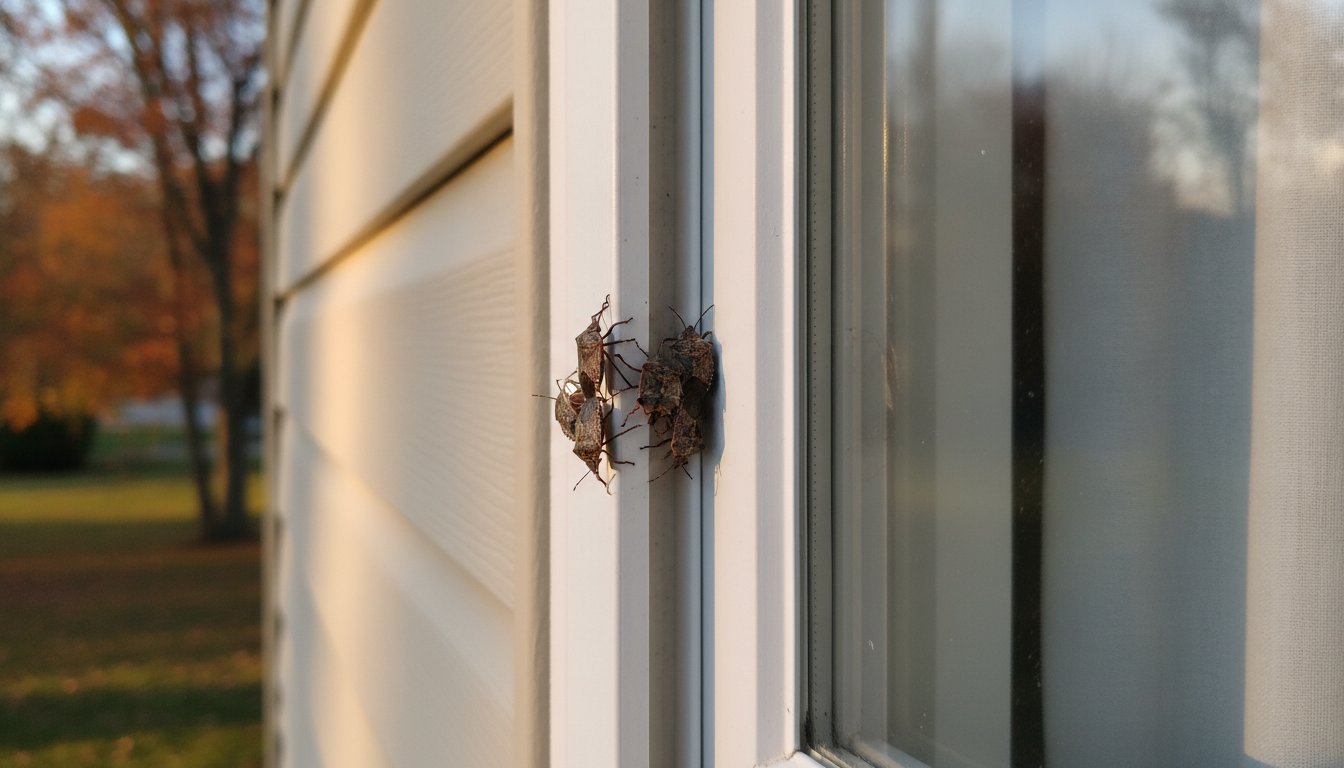
    Why does it feel like your home has become a magnet for every shield-shaped insect in the Tri-State area the moment the temperature drops? For many homeowners in Erie, Crawford, and Ashtabula counties, the sudden appearance of these pests isn’t just a nuisance; it’s a source of genuine anxiety. Dealing with the foul-smelling secretions and unsightly stains on curtains or walls requires a strategic approach to brown marmorated stink bug control. It’s understandable to feel overwhelmed when hundreds of insects begin congregating on siding or tucked behind window frames as they seek a warm place to overwinter.

    Effective management starts with understanding that these pests are masters of structural entry. This guide explains how to identify, prevent, and manage infestations using professional exclusion and removal strategies. You’ll discover why they chose your specific property and how to implement a defense plan that keeps your living space secure. By focusing on proactive barrier treatments and sealing entry points now, you can help ensure a stink-bug-free home for the seasons ahead.

    Disclaimer: The information provided on this blog is for general informational purposes only and is not intended as professional pest control advice. Conditions vary by property, environment, and location. Reading this content does not create a service agreement. For an inspection or professional recommendations, please contact Mosquito Assassin Pest Control LLC directly.

    Key Takeaways

    • Identify these invasive pests by their distinct marbled brown color, shield shaped bodies, and white banded antennae to differentiate them from native species.
    • Prioritize structural exclusion by sealing cracks and gaps in soffits and vents before the first frost to prevent overwintering infestations.
    • Implement professional brown marmorated stink bug control through exterior barrier treatments that are more effective than standard indoor sprays.
    • Use mechanical removal methods, such as vacuuming, to manage insects already inside your home without triggering their defensive, foul smelling secretions.
    • Understand the seasonal patterns in Erie, Crawford, and Ashtabula counties to stay ahead of the annual migration into residential structures.

    Identifying the Brown Marmorated Stink Bug in PA and OH

    The Brown Marmorated Stink Bug (BMSB) is an invasive species that has become a significant concern for residents across the Tri-State area. First identified in Allentown, Pennsylvania, in 1998, this insect has since spread to nearly every corner of the region. Unlike native species that play a balanced role in the local ecosystem, the BMSB (Halyomorpha halys) lacks natural predators here, allowing populations to swell unchecked. For homeowners in Erie, Crawford, and Ashtabula counties, understanding the biology of this pest is the primary step toward effective brown marmorated stink bug control.

    Distinguishing this intruder from native insects is vital. Homeowners often confuse them with the Western conifer seed bug or native brown stink bugs. While native varieties possess jagged, saw-toothed “shoulders,” the BMSB has smooth edges. The Western conifer seed bug is noticeably thinner with flared hind legs, whereas the BMSB maintains a distinct, wide shield shape. These differences might seem subtle, but they dictate the behavior and the level of infestation you can expect.

    Visual Identification Markers

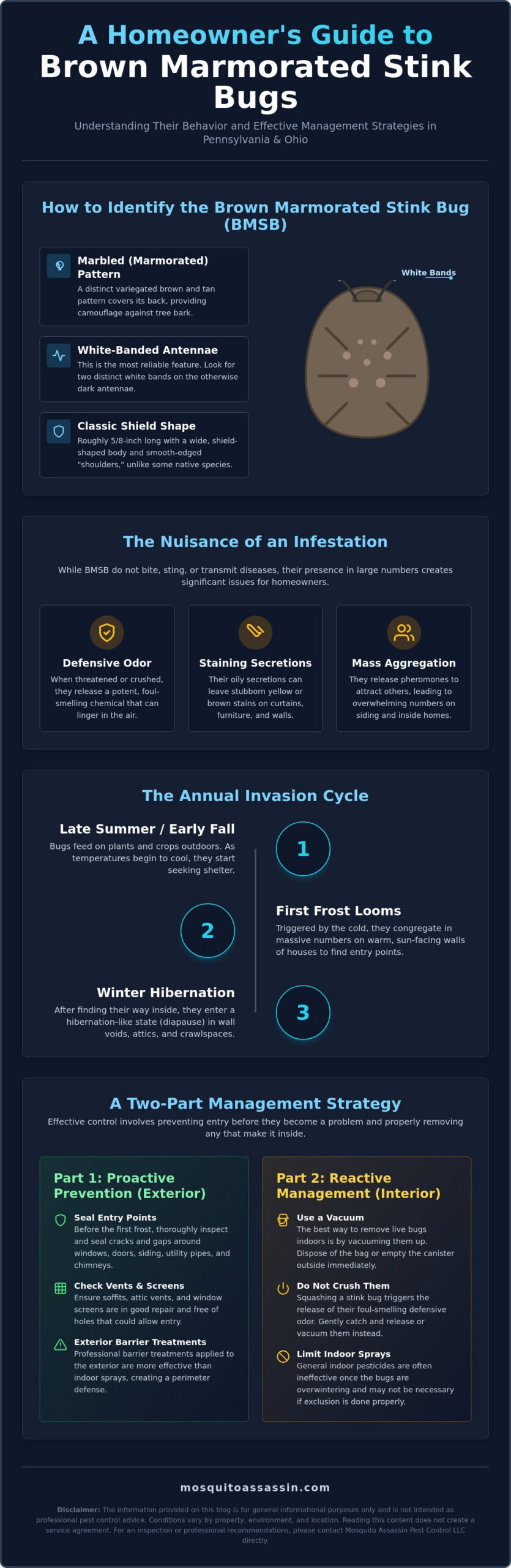
    To confirm you are dealing with the brown marmorated variety, look closely at the antennae. This is the most reliable identification feature. You will notice two distinct white bands on the dark antennae. One band is located at the base of the last segment, and the other is in the middle of the segment. If these bands aren’t present, you’re likely looking at a native species that won’t invade your home in massive numbers.

    The term “marmorated” actually means marbled. This refers to the variegated brown and tan pattern on the insect’s back. Along the edge of the abdomen, you’ll also see a pattern of alternating dark and light triangles. These markings, combined with their 5/8-inch long shield-shaped bodies, make them easy to spot once you know what to look for. Their appearance is designed for camouflage against tree bark, but they stand out clearly against residential siding.

    The Overwintering Cycle in the Great Lakes Region

    The cooling temperatures in late September and throughout October trigger a massive behavioral shift. As the sun begins to set earlier in Erie and Ashtabula, these insects enter a state known as diapause. This is essentially a form of insect hibernation where their metabolism slows down. They aren’t looking for food inside your home; they’re strictly looking for a warm, dry place to survive the winter. They are particularly attracted to sun-facing walls, especially those with light-colored or reflective siding that holds heat during the afternoon.

    This transition from outdoor feeding to indoor seeking happens rapidly. You might see a few dozen bugs on your siding one afternoon, only to find hundreds the next. They use pheromones to signal to others that a specific property is a safe harbor. This “aggregation” behavior explains why one house on a block might be covered in insects while the neighbor’s house remains relatively untouched. Proactive brown marmorated stink bug control requires interrupting this cycle before they find their way into your wall voids and attic spaces.

    Disclaimer: The information provided on this blog is for general informational purposes only and is not intended as professional pest control advice. Conditions vary by property, environment, and location. Reading this content does not create a service agreement. For an inspection or professional recommendations, please contact Mosquito Assassin Pest Control LLC directly.
    The Impact and Nuisance of a Stink Bug Infestation

    While many pests pose direct health threats, the brown marmorated stink bug is primarily a high-stakes nuisance. These insects don’t bite, sting, or transmit diseases to humans or pets. However, their presence in large numbers creates a stressful environment for property owners. Beyond the sheer volume of insects, the physical impact on a home can be significant. They produce oily, defensive secretions that leave behind stubborn yellow or brown stains on light-colored curtains, upholstered furniture, and wallpaper. For residents in Erie and Ashtabula, these stains often require professional cleaning or permanent replacement of household fabrics, making effective brown marmorated stink bug control a priority for interior maintenance.

    The damage extends beyond the four walls of your home. These pests are notorious for ravaging local landscapes and gardens across Northwest Pennsylvania and Northeast Ohio. They use their piercing-sucking mouthparts to feed on a wide variety of host plants. In residential areas, this often results in “cat-facing” or dimpling on home-grown apples, peaches, and tomatoes. Ornamental trees and shrubs also suffer, showing signs of wilt and necrotic spots where the bugs have fed. Homeowners in Crawford County often find that brown marmorated stink bug control is just as important for their gardens as it is for their interiors. As noted in this Penn State Extension guide on stink bugs, their broad diet makes them a formidable opponent for any hobby gardener or fruit tree enthusiast.

    The “Stink” in Stink Bug

    The name is earned through a sophisticated chemical defense system. When threatened or crushed, the insect releases a pungent odor composed of trans-2-decenal and trans-2-octenal. These aldehydes create a scent often compared to cilantro or burnt tires. Crushing the bugs is the least effective way to handle them because it immediately saturates the air with this persistent smell. Even worse, these chemicals contain aggregation pheromones. Instead of scaring others away, the scent can actually signal to other stink bugs that your home is a viable location for shelter. Professional pest control plans focus on preventing this chemical release by managing the population before it enters the living space.

    Secondary Impacts on the Home

    A hidden danger of a large infestation is what happens when the bugs die inside your walls. Stink bugs that successfully enter wall voids or attics but fail to survive the winter leave behind a biological mess. These carcasses serve as a primary food source for scavenger pests like carpet beetles and larder beetles. This can lead to a secondary infestation that damages wool rugs and stored clothing. Additionally, the psychological impact of their clumsy, loud flight and constant buzzing against light fixtures can disrupt sleep and daily comfort. The sound of a heavy insect hitting a lampshade in a quiet room is enough to keep anyone on edge during the peak of the season.

    Disclaimer: The information provided on this blog is for general informational purposes only and is not intended as professional pest control advice. Conditions vary by property, environment, and location. Reading this content does not create a service agreement. For an inspection or professional recommendations, please contact Mosquito Assassin Pest Control LLC directly.
    Strategic Exclusion and Home Winterization

    The most effective strategy for brown marmorated stink bug control is preventing them from entering your living space in the first place. In the Great Lakes region, including Northwest Pennsylvania and Northeast Ohio, the window for effective prevention is narrow. Once the evening temperatures begin to dip in late August, these insects start scouting for winter quarters. Homeowners should aim to have all exclusion work completed by mid-September. Waiting until you see the first bug on your siding often means the migration into your wall voids has already begun. Exclusion acts as a permanent shield, reducing the reliance on reactive measures once the insects are already established inside.

    Residential architecture in Erie and Ashtabula often features common vulnerabilities that these pests exploit. They can squeeze through gaps as thin as a credit card. Focus your inspection on areas where different building materials meet, such as where siding joins the foundation or where utility lines enter the structure. According to EPA information on Brown Marmorated Stink Bugs, sealing these physical openings is a foundational step in any integrated pest management plan. Professional grade barrier treatments applied to the exterior of the home during this same window provide a secondary layer of protection, neutralizing pests before they can probe for entry points.

    A Checklist for Sealing Entry Points

    Systematic sealing requires the right materials and a keen eye for detail. Walk the perimeter of your property and address these high-risk areas:

    • Window and Door Screens: Inspect for small tears or frames that have warped over time. A screen that doesn’t sit flush against the track is an open invitation.
    • Caulking and Sealing: Use a high quality silicone or acrylic latex caulk to bridge gaps around window and door frames. These materials withstand the freeze-thaw cycles common in Crawford County winters.
    • Attic and Crawlspace Vents: Ensure all vents are covered with intact, fine-mesh screening. Pay close attention to ridge vents and soffits, as these are primary highways for insects seeking attic warmth.
    • Chimneys: Install a professional chimney cap with mesh siding to prevent pests from dropping down the flue.

    Outdoor Maintenance and Lighting

    Your landscape can either deter or attract stink bugs. Keep all foundation plantings, shrubs, and tree branches trimmed at least 18 inches away from the house. This eliminates the “bridge” that allows insects to crawl directly onto your siding. Lighting also plays a role in attraction. While they are most active during the day, evening porch lights can draw them toward your entryways. Switching to yellow “bug lights” or sodium vapor bulbs can reduce the number of insects attracted to your home at night. For more comprehensive tips on protecting your property from various seasonal invaders, consult this guide on General Pest Control.

    Disclaimer: The information provided on this blog is for general informational purposes only and is not intended as professional pest control advice. Conditions vary by property, environment, and location. Reading this content does not create a service agreement. For an inspection or professional recommendations, please contact Mosquito Assassin Pest Control LLC directly.

    Brown Marmorated Stink Bug Control: A Seasonal Guide for PA and OH Homeowners

    Managing Stink Bugs Inside the Home

    Once these insects successfully breach your home’s exterior defenses, the focus shifts from exclusion to active removal. Seeing a few bugs on your curtains or ceiling in the middle of a Crawford County winter is common. They aren’t breeding or eating inside your home; they’re simply reacting to the warmth. When the indoor temperature rises or the sun hits a particular window, these dormant pests wake up and begin crawling toward the light. Managing them requires a gentle touch to avoid the defensive odors discussed earlier. For those trying to determine the best path forward, understanding pest control prices can help you decide between DIY efforts and professional intervention.

    The spring emergence is another critical phase for homeowners in Erie and Ashtabula. As the weather warms, the thousands of bugs potentially hidden in your wall voids attempt to return outdoors. Ironically, many of them get lost and end up inside your living spaces instead. This period often feels like a second infestation, but it’s actually the conclusion of their overwintering cycle. Using non-toxic traps, such as a desk lamp pointed over a shallow pan of soapy water, can effectively capture active bugs overnight without the need for chemicals.

    Effective Removal Techniques

    Mechanical removal is the most reliable way to handle individual insects. To avoid saturating your primary household vacuum with a lingering scent, use a dedicated shop vac for brown marmorated stink bug control. You can utilize the stocking trick by inserting a knee high nylon stocking into the vacuum hose and securing it with a rubber band. This captures the bugs in the mesh before they pass through the vacuum’s motor or filter, where they would otherwise be crushed and release their odor. Once you’ve finished, simply remove the stocking and submerge the bugs in a bucket of soapy water to neutralize them. This method keeps your equipment clean and your home smelling fresh.

    Why Sprays Fail Indoors

    Many property owners are tempted to use over the counter aerosol sprays once they see bugs inside, but these treatments are generally ineffective for overwintering pests. The reason lies in a biological state called diapause. During this time, the insect’s metabolism is significantly lowered. They don’t groom themselves or move across surfaces frequently enough to pick up a lethal dose of a residual pesticide. Spraying into wall voids also creates dead zones filled with insect carcasses. These piles of dead bugs become a primary food source for scavenger pests like carpet beetles, which can eventually migrate into your closets and rugs. Professional pest control services focus on exterior barriers because they address the problem before the bugs enter this unreachable, dormant state.

    Disclaimer: The information provided on this blog is for general informational purposes only and is not intended as professional pest control advice. Conditions vary by property, environment, and location. Reading this content does not create a service agreement. For an inspection or professional recommendations, please contact Mosquito Assassin Pest Control LLC directly.
    Professional Pest Management Solutions

    When seasonal infestations exceed the capacity of a shop vac and a bucket of soapy water, professional intervention becomes the most logical step. Integrated Pest Management (IPM) provides a holistic framework for brown marmorated stink bug control. This methodology focuses on long-term prevention by combining structural exclusion with strategic, low-impact treatments. For residents in Erie and Crawford Counties, moving from DIY methods to a professional plan ensures that the property is defended before the first frost triggers the annual migration. This scientific approach prioritizes the security of the household while delivering definitive results.

    The effectiveness of professional-grade exterior barrier treatments far exceeds that of off-the-shelf retail products. Licensed technicians apply residual barriers to the exterior surfaces where insects are most likely to congregate. This includes “hot spots” such as sun-drenched siding on the south and west sides of the structure, as well as eaves, window frames, and door headers. Professional timing is a decisive factor in success. Applying these barriers in late August or early September creates a protective shield that neutralizes pests upon contact. This prevents them from ever entering the wall voids where they become unreachable and potentially attract secondary scavengers like carpet beetles.

    External Barrier Treatments

    The application of a residual barrier is a specialized process that requires professional equipment to reach high peaks and difficult eaves. These treatments are designed to withstand the varying weather conditions of the Great Lakes region, providing a persistent defense that retail sprays cannot match. By treating the perimeter thoroughly, professionals interrupt the pheromone signaling that attracts large clusters of bugs to a single property. This proactive measure is the most effective way to ensure that the interior of the home remains a pest-free environment throughout the winter months.

    Long-Term Prevention Strategies

    In Ashtabula County and the surrounding areas, lake-effect weather patterns can influence pest behavior, making local expertise invaluable. Long-term security is best achieved through General Pest Control Plans. These year-round programs address the cyclical nature of pests in the Tri-State region, moving beyond simple one-time applications. A professional inspection often reveals structural vulnerabilities that the untrained eye might overlook. These might include gaps in high-level soffits, compromised attic vents, or loose utility plates where pipes enter the home. Addressing these issues as part of a comprehensive plan ensures that your property remains less attractive to pests throughout every season. For those facing high volumes of insects, professional pest control may help reduce risk.

    Disclaimer: The information provided on this blog is for general informational purposes only and is not intended as professional pest control advice. Conditions vary by property, environment, and location. Reading this content does not create a service agreement. For an inspection or professional recommendations, please contact Mosquito Assassin Pest Control LLC directly.

    Securing Your Home Against Seasonal Invaders

    Maintaining a pest-free environment in the Tri-State area requires a proactive shift from reactive indoor treatments to strategic exterior defense. By identifying the unique markers of these invasive insects and sealing structural vulnerabilities before the autumn chill sets in, property owners can significantly reduce the risk of an indoor infestation. Effective brown marmorated stink bug control relies on professional-grade exclusion and timely barrier applications that target high-traffic entry points like soffits, vents, and utility lines.

    Residents in Erie, Crawford, and Ashtabula counties benefit from year-round protection plans that address seasonal pest cycles with precision. Professional exclusion techniques provide a permanent layer of security that off-the-shelf sprays can’t match. Implementing these barriers early in the season prevents pests from establishing themselves in wall voids, where they remain unreachable until spring. Taking these methodical steps now ensures your living space remains a comfortable sanctuary throughout the winter months. For those seeking expert assistance in fortifying their property, contact Mosquito Assassin Pest Control LLC for a professional inspection.

    Disclaimer: The information provided on this blog is for general informational purposes only and is not intended as professional pest control advice. Conditions vary by property, environment, and location. Reading this content does not create a service agreement. For an inspection or professional recommendations, please contact Mosquito Assassin Pest Control LLC directly.
    Frequently Asked Questions

    Are brown marmorated stink bugs dangerous to pets or children?

    Stink bugs aren’t dangerous to humans or pets because they don’t bite, sting, or carry pathogens. However, their defensive secretions are chemically caustic and can cause mild skin irritation or eye redness if handled directly. If a curious dog or cat eats one, the bitter taste often causes drooling or temporary stomach upset. It’s best to remove them mechanically rather than letting pets or children interact with them.

    Why do stink bugs appear in my house during the winter?

    They enter your home seeking a warm, protected environment to survive the winter months. In the late fall, cooling temperatures trigger a behavior called diapause, which is a state of dormant hibernation. They crawl into wall voids and attics through tiny exterior gaps. When your furnace runs or the sun warms the roof, they wake up and accidentally crawl into your living spaces.

    Can stink bugs damage the structure of my home?

    These insects don’t cause structural damage to your home’s foundation, framing, or electrical systems. They don’t chew wood like termites or gnaw on wires like rodents. The primary damage is cosmetic, consisting of oily yellow or brown stains left on upholstery, curtains, and wallpaper. While they aren’t destroying the house, the volume of insects can become a significant sanitary and aesthetic nuisance for homeowners.

    What is the best way to get rid of the smell after a stink bug is crushed?

    Use a mixture of dish soap and warm water to clean the area immediately. The odor comes from a combination of aldehydes that are oily and persistent, making them difficult to neutralize once they’ve soaked into porous fabrics. Acting quickly and avoiding the urge to crush the insects is the most effective form of brown marmorated stink bug control to keep your indoor air fresh.

    Will a standard bug spray kill stink bugs inside my house?

    Standard indoor bug sprays are generally ineffective against stink bugs that are already inside for the winter. During diapause, their metabolism slows down significantly. They don’t move across treated surfaces frequently enough to absorb a lethal dose of a residual pesticide. Spraying them directly might kill individual bugs, but it won’t address the hundreds or thousands potentially hidden deep within your wall voids.

    How do stink bugs get inside if my windows and doors are closed?

    They exploit tiny structural gaps that are often invisible to the naked eye. A stink bug can fit through an opening only 1/16 of an inch wide. Common entry points include gaps around utility pipes, loose soffits, and attic ridge vents. They also crawl under siding and through gaps in window moldings. Proper exclusion requires a detailed inspection of the entire building envelope.

    Do stink bugs lay eggs inside the house?

    No, they don’t lay eggs or reproduce while they are inside your home. They only lay eggs on the underside of leaves on host plants during the spring and summer months. Your home doesn’t provide the food sources or the environmental conditions they need to raise a new generation. They are strictly using your property as a temporary shelter to survive the freezing outdoor temperatures.

    Are there any natural repellents that actually work for stink bugs?

    Essential oils like peppermint or clove may provide a very temporary deterrent when sprayed around entry points. However, these natural options evaporate quickly and aren’t a substitute for professional brown marmorated stink bug control strategies. Long term relief requires structural exclusion and exterior barrier treatments. Relying solely on oils won’t stop a large population from finding their way into your attic or walls during the fall.

    Disclaimer: The information provided on this blog is for general informational purposes only and is not intended as professional pest control advice. Conditions vary by property, environment, and location. Reading this content does not create a service agreement. For an inspection or professional recommendations, please contact Mosquito Assassin Pest Control LLC directly.

  • Residential Pest Control Services in Ashtabula: A Homeowner’s Guide

    Residential Pest Control Services in Ashtabula: A Homeowner’s Guide

    Imagine walking into your kitchen for a late-night glass of water only to find a line of ants claiming your countertops as their own. For many residents in Northeast Ohio, this frustrating discovery is a common reality that brings immediate concerns about property damage and hygiene. Securing reliable residential pest control services ashtabula homeowners can trust is the first step toward reclaiming a sense of security within your own walls.

    It’s understandable to feel stressed when recurring spider issues or the fear of rodents create a sense of unease in your living space. You deserve a home that feels like a sanctuary, not a place where you have to worry about ticks or mosquitoes every time you step into the yard. This guide provides the essential knowledge needed to identify common local pests, implement effective prevention steps, and manage infestations through professional residential strategies. You will learn the difference between one-time treatments and year-round protection, ensuring you have a clear roadmap for maintaining a pest-free environment through every season.

    Key Takeaways

    • Discover how Lake Erie humidity and seasonal transitions influence pest activity and migration into Northeast Ohio homes.
    • Learn why Integrated Pest Management (IPM) is a science-based approach that prioritizes long-term prevention over reactive measures.
    • Compare the effectiveness of one-time interventions against the consistent protection provided by residential pest control services ashtabula families rely on for year-round security.
    • Identify practical home maintenance and sanitation strategies that significantly reduce the likelihood of an infestation.
    • Understand the professional inspection process and how customized management plans are tailored to the unique layout of your property.

    Understanding the Ashtabula Residential Pest Landscape

    Ashtabula County’s unique geography is more than just a backdrop for lakefront living; it’s a primary driver of local pest activity. The proximity to Lake Erie creates a specific microclimate characterized by higher humidity and distinct weather patterns that influence how insects and rodents behave. Homeowners in this region face challenges that differ from inland areas, primarily because moisture is a fundamental requirement for many of the most common household invaders. Understanding these environmental factors is the first step in protecting a property from unwanted guests.

    To better understand the professional approach to managing these local challenges, watch this helpful video:

    The Impact of Lake Erie on Local Pest Pressure

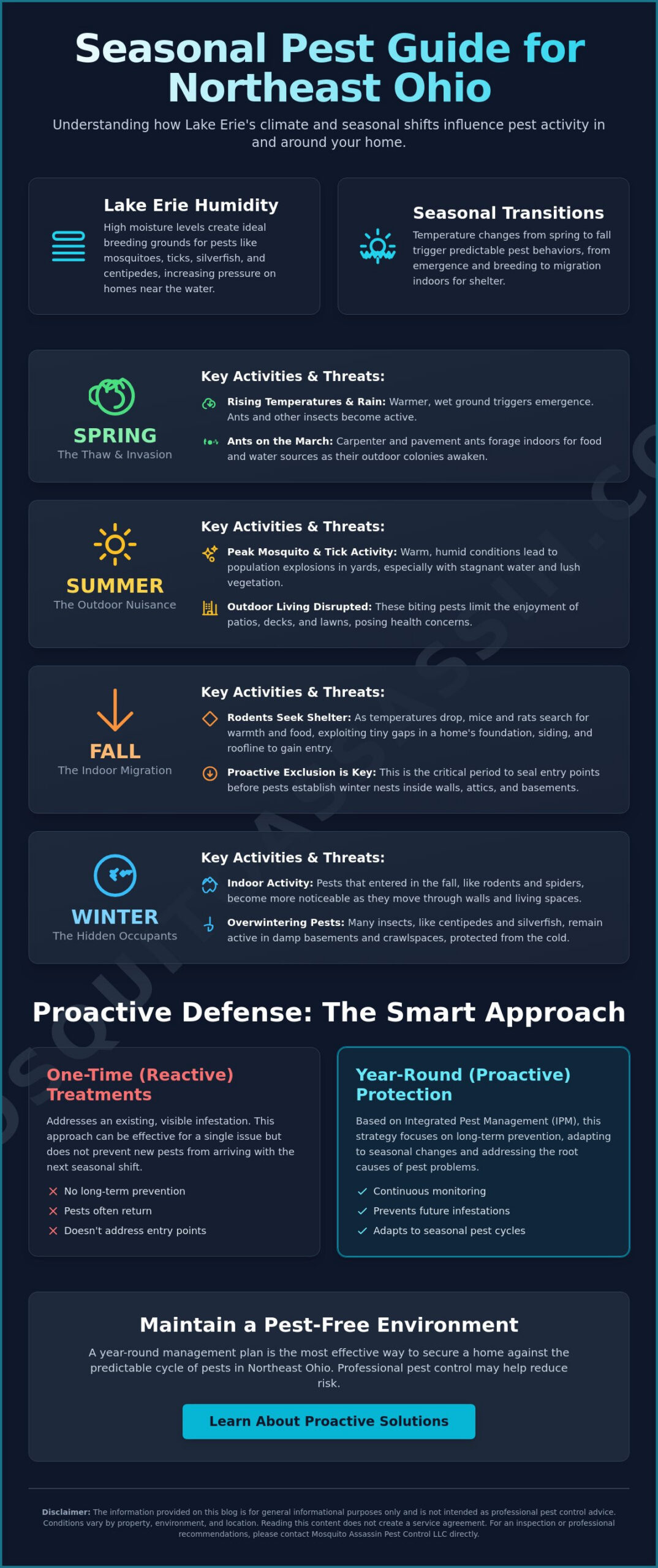
    High humidity levels near the shoreline support larger populations of moisture-seeking insects. Pests like silverfish, centipedes, and certain species of spiders gravitate toward damp environments, often finding their way into basements and crawlspaces. The lakefront climate also plays a significant role in the breeding cycles of mosquitoes and ticks. Stagnant water and lush vegetation, common in the humid Northeast Ohio environment, provide ideal conditions for these pests to multiply. Homes located directly near the water or in heavily wooded areas of the county often experience higher pest pressure, which makes consistent monitoring vital. Utilizing Integrated Pest Management strategies helps address these environmental variables by focusing on exclusion and habitat modification rather than just temporary fixes.

    Seasonal Pest Cycles in Northeast Ohio

    Pest activity in Ashtabula follows a predictable, albeit intense, seasonal rhythm. In the spring, rising temperatures and frequent rainfall trigger the emergence of ants and stinging insects. Homeowners often notice carpenter ants or pavement ants searching for food sources inside as the ground thaws. During the summer, mosquito and tick activity peaks in residential yards, posing a nuisance for outdoor activities. As the weather cools in the fall, the migration pattern shifts. Rodents like mice and rats begin seeking warmth and shelter, often identifying small gaps in a home’s exterior to gain entry. This transition makes professional residential pest control services ashtabula residents trust essential for sealing these entry points before winter sets in. Without a proactive approach, these seasonal shifts can lead to recurring infestations that are difficult to manage with DIY methods alone. The local environment requires a strategy that adapts to these changes, ensuring that residential pest control services ashtabula homeowners utilize are effective throughout the entire year.

    Disclaimer: The information provided on this blog is for general informational purposes only and is not intended as professional pest control advice. Conditions vary by property, environment, and location. Reading this content does not create a service agreement. For an inspection or professional recommendations, please contact Mosquito Assassin Pest Control LLC directly.

    The Science of Integrated Pest Management for Homeowners

    Modern pest management has evolved far beyond simple chemical application. Effective residential pest control services ashtabula residents rely on are built on the foundation of Integrated Pest Management (IPM). This is a science-based decision-making process that identifies and reduces risks from pests and pest management tools. Unlike traditional extermination that focuses only on killing visible insects, IPM emphasizes long-term prevention through a combination of biological and environmental techniques. According to EPA’s IPM Principles, this approach considers the life cycle of the pest and its interaction with the environment to manage damage by the most economical means. This methodology ensures that every action taken is deliberate and based on the specific biological needs of the situation.

    Identification and Assessment

    A successful strategy begins with precise identification. It isn’t enough to simply see an ant; a professional must determine if it’s a carpenter ant nesting in damp wood or a pavement ant entering through foundation cracks. Each species requires a different management tactic. Similarly, recognizing signs of rodent activity, such as specific gnaw marks or nesting materials in attic insulation, allows for a targeted response. Assessing property vulnerabilities is equally critical. Identifying gaps around utility lines, moisture buildup in crawlspaces, or accessible food sources in the pantry helps address the root cause of the infestation. This thorough assessment prevents the cycle of “spray and repeat” that many homeowners experience when trying to manage pests on their own.

    Disrupting the Pest Lifecycle

    Focusing only on visible pests is a common mistake that leads to recurring issues. If the queen of an ant colony or the breeding pair of rodents remains undisturbed, the population will quickly recover. Professional general pest control strategies use biological knowledge to disrupt these lifecycles at various stages. This might involve residual treatments that remain effective as new eggs hatch or larvae emerge. By understanding the specific habits, feeding patterns, and growth rates of local pests, experts can create a barrier of protection that lasts. For those facing persistent issues, professional pest control may help reduce risk by providing a more thorough analysis than standard retail products. Consistent monitoring ensures that any new activity is caught before it becomes a full-blown infestation.

    Disclaimer: The information provided on this blog is for general informational purposes only and is not intended as professional pest control advice. Conditions vary by property, environment, and location. Reading this content does not create a service agreement. For an inspection or professional recommendations, please contact Mosquito Assassin Pest Control LLC directly.

    One-Time Treatments vs. Year-Round Protection Plans

    Selecting the right approach for your home depends on your specific goals. One-time treatments are designed to handle immediate crises, like a sudden influx of ants in the kitchen. They provide a high-intensity response to an active problem. However, the residential pest control services ashtabula homeowners find most effective are typically those that address the root causes over time. Reactive control often misses the seasonal migration patterns that drive pests indoors as the weather changes. Understanding the biological cycles of pests, as detailed in the University of California’s Guide to IPM, shows that a single application rarely accounts for every life stage. It might eliminate the adults you see today while leaving eggs or larvae to emerge weeks later.

    Implementing year-round pest control actually reduces the total volume of chemical applications over time. By maintaining a consistent protective barrier, you prevent massive infestations that would eventually require heavy-handed interventions. This proactive strategy focuses on keeping the pest population near zero rather than waiting for a visible problem to manifest. It’s a more efficient way to manage the property and ensures that the residential environment remains stable through every season.

    The Case for Ongoing Maintenance

    Consistent maintenance is the most reliable way to keep a property secure. Pests like rodents and spiders are constantly looking for opportunities to establish colonies within the home structure. During the colder months in Northeast Ohio, “overwintering” pests become a significant threat as they seek warmth and shelter. Scheduled maintenance provides continuous property monitoring, ensuring that any new entry points are identified and addressed immediately. This provides peace of mind that the home’s perimeter is always being watched. Stay ahead of the problem by identifying vulnerabilities before they become expensive repairs. Residential pest control services ashtabula families utilize for ongoing protection focus on keeping the exterior barrier strong enough to withstand the local environment’s pressure.

    When a One-Time Service May Be Appropriate

    There are specific scenarios where a single visit is a practical choice. A bald-faced hornets nest hanging from a low branch or a yellow jacket nest near a doorway requires immediate, targeted intervention. These situations are isolated and don’t necessarily indicate a larger structural failure. However, don’t confuse a quick fix with a long-term solution. Most one-time services don’t address the underlying environmental factors, such as moisture or sanitation issues, that invited the pests in the first place. Transitioning from a reactive state to a preventative maintenance plan is the best way to ensure lasting results. Professional pest control may help reduce risk by providing an initial clean-out followed by a strategy to prevent the problem from returning.

    Disclaimer: The information provided on this blog is for general informational purposes only and is not intended as professional pest control advice. Conditions vary by property, environment, and location. Reading this content does not create a service agreement. For an inspection or professional recommendations, please contact Mosquito Assassin Pest Control LLC directly.

    Residential Pest Control Services in Ashtabula: A Homeowner’s Guide

    Residential Prevention Strategies for Ashtabula Homeowners

    Prevention is a collaborative effort between the property owner and professional management. While expert intervention addresses active populations and creates protective barriers, consistent maintenance by the homeowner ensures the property remains unattractive to new invaders. By focusing on structural integrity and sanitation, you can significantly reduce the environmental pressure on your home. These proactive steps complement the residential pest control services ashtabula families use to maintain a secure living space throughout the year.

    Exclusion and Sanitation Basics

    Physical barriers are your first line of defense against insects and rodents. Many pests enter through microscopic gaps that are easy to overlook during a casual walk-through. Homeowners should regularly inspect the foundation for small cracks and use high-quality sealant to close them. Utility entry points, where pipes or wires pass through the exterior walls, are common highways for mice and ants. Using steel wool or specialized mesh before sealing these areas can deter gnawing pests.

    Sanitation is equally vital. Eliminating food sources removes the primary reason pests enter a structure. Store dry goods in airtight containers rather than original cardboard packaging. Keep trash bins tightly sealed and move them away from the home’s exterior walls. Outside, manage your landscaping by keeping woodpiles at least 20 feet away from the foundation. Trim tree branches and shrubs so they don’t touch the roof or siding, as these often act as bridges for ants and spiders.

    Moisture Management in the Home

    Controlling moisture is essential in the humid climate of Northeast Ohio. Many pests, including silverfish and certain species of cockroaches, cannot survive without a consistent water source. Repair leaky pipes under sinks and in basements immediately to prevent damp wood and high humidity levels. In crawlspaces or unfinished basements, using a dehumidifier can make the environment much less hospitable to moisture-seeking insects.

    Exterior drainage also plays a role in pest prevention. Ensure that gutters are clear of debris and that downspouts direct water at least five to ten feet away from the house foundation. Standing water in the yard is a primary breeding ground for mosquitoes, so empty birdbaths, flowerpot saucers, and clogged drains after every rainfall. When homeowner actions are paired with professional residential pest control services ashtabula residents see better long-term results. If you are concerned about specific vulnerabilities on your property, scheduling a professional location assessment can help identify hidden entry points.

    Disclaimer: The information provided on this blog is for general informational purposes only and is not intended as professional pest control advice. Conditions vary by property, environment, and location. Reading this content does not create a service agreement. For an inspection or professional recommendations, please contact Mosquito Assassin Pest Control LLC directly.

    What to Expect from Professional Pest Management

    Professional intervention is a methodical process that goes beyond the simple application of products. It’s a disciplined approach designed to identify, target, and eliminate the biological factors that allow pests to thrive. When you engage residential pest control services ashtabula homeowners trust, you’re transitioning from a state of reactive concern to a state of managed resolution. This systematic procedure ensures that every action taken is based on the specific architectural and environmental needs of your property.

    The Professional Inspection Process

    A comprehensive inspection is the foundation of any successful management plan. A licensed technician evaluates both the interior and exterior of the residential structure with a focus on identifying specific pest species and their primary entry points. This isn’t a surface-level walk-through. It involves examining high-risk areas like basements, attics, and utility penetrations where pests often hide or enter. Following the inspection, you should receive a detailed report of the findings. This document outlines the current pest pressure, identifies structural vulnerabilities, and provides recommended actions to secure the home. This transparency ensures you understand the “why” behind every treatment step.

    Customized Treatment and Follow-Up

    Every home in Ashtabula County is unique, and a one-size-fits-all approach is rarely effective. Based on the inspection findings, a customized plan is developed to address the specific challenges of your property. This might involve specialized methods for rodent removal or targeted insect control using professional-grade tools. A critical component of this strategy is establishing a perimeter of protection around the home’s exterior. This barrier is designed to stop pests before they gain entry, reducing the need for intensive interior treatments.

    Consistency is the key to long-term efficacy. Regular follow-up visits allow for the monitoring of the protective barrier and the identification of new environmental pressures. Professional pest control may help reduce risk by ensuring that the management strategy adapts as seasons change and new pests emerge. Throughout this process, the safety and well-being of residents, children, and pets remain the highest priority. Licensed professionals use precise application methods and follow strict safety protocols to protect the household environment. To begin securing your property, you can start a dialogue with a professional through an online booking portal or a direct contact form. Taking this step ensures that your home remains a sanctuary, free from the stress of recurring infestations.

    Disclaimer: The information provided on this blog is for general informational purposes only and is not intended as professional pest control advice. Conditions vary by property, environment, and location. Reading this content does not create a service agreement. For an inspection or professional recommendations, please contact Mosquito Assassin Pest Control LLC directly.

    Secure Your Home for Every Season

    Managing a property in Northeast Ohio requires a deep understanding of how Lake Erie microclimates drive local pest activity. You’ve seen that science-based Integrated Pest Management and proactive maintenance provide a much stronger defense than reactive treatments alone. By combining homeowner actions like moisture control with professional residential pest control services ashtabula families can maintain a stable and secure living environment through every seasonal transition.

    Experts licensed in Ohio and Pennsylvania bring specialized knowledge of Lake Erie regional pest cycles to every inspection. These professionals prioritize family and pet-conscious treatment methods, ensuring that your property is protected without compromising the well-being of your household members. This methodical approach identifies vulnerabilities before they become costly infestations, providing a level of security that retail products simply cannot match.

    Professional pest control may help reduce risk. For an inspection or professional recommendations, please contact Mosquito Assassin Pest Control LLC today. Reclaiming your peace of mind starts with a single proactive step toward long-term protection.

    Disclaimer: The information provided on this blog is for general informational purposes only and is not intended as professional pest control advice. Conditions vary by property, environment, and location. Reading this content does not create a service agreement. For an inspection or professional recommendations, please contact Mosquito Assassin Pest Control LLC directly.

    Frequently Asked Questions

    Is professional pest control in Ashtabula safe for my children and pets?

    Licensed professionals prioritize the safety of your household by strictly adhering to product labels and EPA regulations during every visit. Targeted application methods focus on specific areas where pests congregate, such as wall voids and crevices, which minimizes contact with common living spaces. Professional pest control may help reduce risk while ensuring the environment remains secure for children and animals.

    How often should a residential property be treated for pests in Ohio?

    A quarterly service schedule is the standard recommendation for residential pest control services ashtabula homeowners use to maintain a consistent protective barrier. This frequency is designed to address the four distinct seasonal migrations that occur in the Northeast Ohio climate. Regular visits ensure that the exterior perimeter is reinforced before new pests have a chance to gain entry as the weather changes.

    Can I handle a rodent infestation on my own or do I need a professional?

    While retail traps may catch an occasional mouse, they rarely address the root cause of a larger infestation or the rapid reproduction rates of rodents. Professionals utilize advanced exclusion techniques to identify and seal microscopic entry points in the home structure that DIY methods often miss. This comprehensive approach is necessary to stop the cycle of return and prevent long term property damage.

    What is the most common pest problem for homeowners in Ashtabula County?

    Ants and spiders are the most frequent issues reported by residents, followed closely by rodent activity during the fall and winter months. The high humidity levels generated by Lake Erie create an ideal environment for these pests to thrive and expand their populations. These environmental factors make the region particularly susceptible to moisture-seeking insects that often seek refuge inside residential structures.

    How long does a typical residential pest control service visit take?

    A standard residential service visit typically lasts between 45 and 75 minutes depending on the size of the property and the specific pests being managed. This timeframe allows for a thorough inspection of both the interior and exterior, followed by the application of a customized management plan. More complex issues or larger estates may require additional time to ensure every vulnerability is addressed correctly.

    Does year-round pest control really save money in the long run?

    Consistent preventive maintenance reduces the likelihood of expensive structural repairs and the need for high-intensity emergency treatments. By keeping pest populations near zero throughout the year, homeowners avoid the steep costs associated with major infestations like wood-destroying insects or large scale rodent clean-outs. It is a more efficient use of resources that protects the overall value of the home.

    What should I do to prepare my home for a pest control professional?

    Preparation involves clearing access to baseboards and ensuring that the perimeter of the home’s exterior is free from clutter. Removing food debris from countertops and securing pets in a separate area allows the technician to perform a more thorough and efficient inspection. These simple steps ensure that the treatment is applied to the most critical areas without unnecessary obstacles.

    Are mosquito treatments effective for large yards near Lake Erie?

    Specialized treatments are highly effective for large properties when they focus on the specific vegetation and resting areas where mosquitoes congregate. Even with the high humidity of the lakefront, professional residential pest control services ashtabula residents rely on can significantly reduce the local population by disrupting the breeding cycle. Managing standing water on the property alongside these services provides the best results for outdoor comfort.

    Disclaimer: The information provided on this blog is for general informational purposes only and is not intended as professional pest control advice. Conditions vary by property, environment, and location. Reading this content does not create a service agreement. For an inspection or professional recommendations, please contact Mosquito Assassin Pest Control LLC directly.

  • When to Start Mosquito Control in PA: A Seasonal Timing Guide

    When to Start Mosquito Control in PA: A Seasonal Timing Guide

    While many homeowners wait until they are already swatting away swarms to take action, the biological clock for mosquitoes begins ticking long before the first bite occurs. It’s frustrating to watch a beautiful evening in Erie, Crawford, or Ashtabula County ruined because the yard feels like a no-fly zone. You’ve likely experienced the disappointment of DIY solutions that fail to provide lasting relief, particularly when concerns about mosquito-borne illnesses are a priority. Understanding when to start mosquito control in PA is the most effective way to stop a population explosion before it starts.

    This guide explores the precise 50-degree Fahrenheit temperature threshold and the seasonal triggers that signal the start of activity in Pennsylvania. You’ll discover the science behind mosquito timing to help protect your property more effectively. By the end of this article, you’ll know how to maintain a bite-free yard and when professional pest control may help reduce risk.

    Disclaimer: The information provided on this blog is for general informational purposes only and is not intended as professional pest control advice. Conditions vary by property, environment, and location. Reading this content does not create a service agreement. For an inspection or professional recommendations, please contact Mosquito Assassin Pest Control LLC directly.

    Key Takeaways

    • Learn why the 50-degree Fahrenheit threshold is the critical marker for mosquito emergence and why consistent nighttime temperatures matter more than a single warm day.
    • Discover how the Lake Erie effect creates unique climate variations for residents in Erie and Crawford counties, delaying activity compared to southern Pennsylvania.
    • Identify how mosquitoes survive local winters through diapause and where they hide eggs in stagnant water or damp soil on your property.
    • Establish a proactive seasonal strategy by learning when to start mosquito control in PA to address larvae before they reach the biting adult stage.
    • Explore essential early-season prevention steps, including the “Tip and Toss” method and gutter maintenance, to eliminate potential breeding habitats.

    Understanding the Pennsylvania Mosquito Lifecycle and Overwintering

    Mosquitoes do not simply vanish when the temperatures drop in Erie and Crawford Counties. Instead, these resilient insects utilize a biological process called diapause, which is essentially a state of suspended animation. During a typical Pennsylvania winter, local mosquito populations enter this dormant phase to survive freezing temperatures. While many residents assume a harsh winter will naturally thin the population, the reality is that mosquitoes have evolved sophisticated survival mechanisms that make spring resurgence inevitable.

    The survival of these pests often depends on their specific species. Some mosquitoes survive as adults by seeking shelter in hollow logs, animal burrows, or even the crawlspaces of homes. Others leave behind hardy eggs that are specifically designed to withstand sub-zero conditions. Citing Understanding the Pennsylvania Mosquito Lifecycle is helpful for recognizing that these eggs can remain viable for several years, waiting for the perfect environmental triggers to hatch.

    To better understand how these pests interact with the local environment, watch this helpful video:

    The Biology of the Pennsylvania Mosquito

    The primary catalyst for mosquito activity in the spring is the combination of rising temperatures and increased moisture. As the ground thaws in late March or early April, dormant eggs submerged in damp soil or stagnant water begin their developmental cycle. Larval development typically accelerates once consistent temperatures reach 50 degrees Fahrenheit. This biological clock is a critical factor in determining when to start mosquito control in PA. Early spring rains provide the necessary standing water for these larvae to thrive, turning a quiet backyard into a breeding ground within days of the first thaw.

    Common Species in the Keystone State

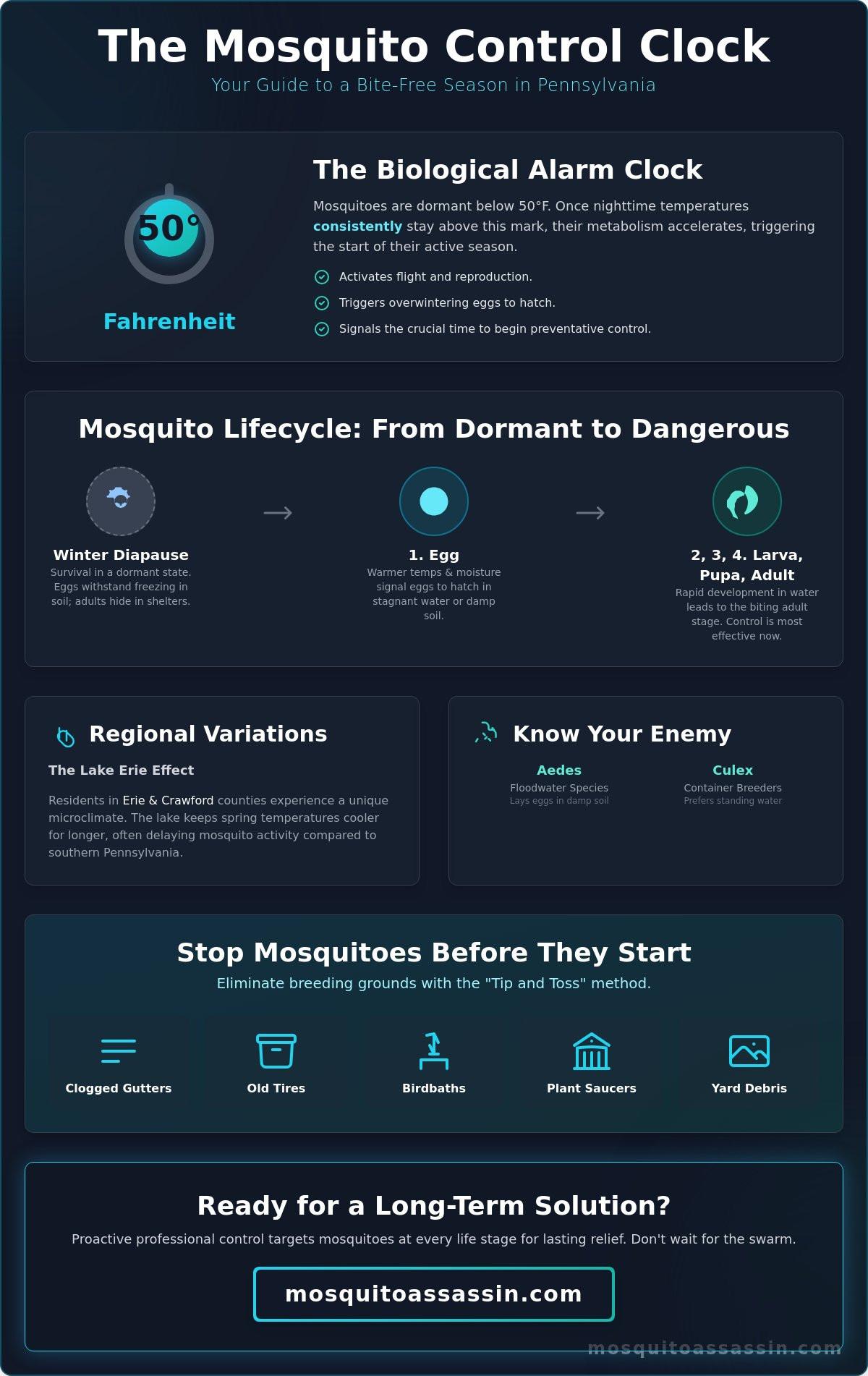
    Pennsylvania is home to approximately 60 different mosquito species, but the Aedes and Culex genera cause the most concern for homeowners. Aedes mosquitoes are often categorized as floodwater species, laying eggs in damp soil that eventually floods. Culex mosquitoes prefer container environments, such as clogged gutters, birdbaths, or discarded tires. In regions like Ashtabula County and the Pennsylvania lake shore, the local geography (including marshy lowlands and high water tables) influences which species dominate. Understanding these habits is essential for identifying when to start mosquito control in PA, as different species may emerge at slightly different intervals depending on the local microclimate. You can learn more about how geography impacts pest pressure on our location page

    The 50-Degree Rule: Temperature and Mosquito Activity

    Mosquitoes are ectothermic, meaning their internal body temperature is regulated by the air around them. In Pennsylvania, the biological alarm clock for these pests is 50 degrees Fahrenheit. Below this threshold, most mosquito species remain in a state of diapause, a form of dormancy similar to hibernation. Once the thermometer consistently hits 50 degrees, their metabolism accelerates and the quest for a blood meal begins. This temperature mark is the primary indicator for homeowners in Erie and Crawford Counties to determine when to start mosquito control in PA.

    Why 50 Degrees is the Magic Number

    At 50 degrees, the physiological processes required for flight and reproduction activate. Mosquitoes progress through four distinct stages: egg, larva, pupa, and adult. Warmth acts as the catalyst for this progression. If temperatures stay low, the eggs or larvae remain stagnant. However, sustained warmth triggers a rapid transition to the biting adult stage. The 50-degree rule is the industry standard for starting control because it targets the first generation of the season before they can reproduce. As temperatures climb toward 80 degrees, the entire lifecycle can shrink from several weeks to just 7 to 10 days.

    The Impact of Fluctuating Spring Weather

    Spring weather in the Great Lakes region is notoriously unpredictable. A single 60-degree afternoon in late March doesn’t mean the season has officially started. Professional pest control relies on consistent nighttime temperatures rather than daytime peaks. A “false spring” often sees a spike in warmth followed by a hard frost. While a frost may kill some active adults, it rarely affects larvae protected in water or eggs buried in the soil. In fact, late-season snowfalls in Ashtabula or Erie Counties often provide insulating moisture that keeps eggs viable for the coming thaw. Understanding these local fluctuations is essential when deciding when to start mosquito control in PA to ensure treatments aren’t applied too early or too late.

    Waiting for a massive swarm to appear before taking action is a common mistake. By the time the population reaches a visible peak, thousands of eggs have already been deposited in standing water. Monitoring local weather patterns for a stretch of 3 to 5 days where temperatures remain above 50 degrees is the most effective way to predict the first surge. For those looking to get ahead of the curve, scheduling a professional inspection can help identify early breeding sites before the first major hatch. Starting measures early prevents the population from compounding exponentially as the summer heat intensifies.

    Disclaimer: The information provided on this blog is for general informational purposes only and is not intended as professional pest control advice. Conditions vary by property, environment, and location. Reading this content does not create a service agreement. For an inspection or professional recommendations, please contact Mosquito Assassin Pest Control LLC directly.

    When to Start Mosquito Control in PA: A Seasonal Timing Guide

    Regional Variations: Northwest PA and the Lake Erie Effect

    Geography plays a critical role in determining the ideal start date for pest management. While residents in Southern Pennsylvania might see activity in early April, the climate in Erie and Crawford Counties is heavily influenced by Lake Erie. This massive body of water acts as a thermal regulator, keeping the immediate shoreline and surrounding areas significantly cooler during the initial spring months. This cooling influence, often called the “lake effect,” typically delays the consistent 50 degree temperatures required for mosquito eggs to hatch and larvae to develop.

    Deciding when to start mosquito control in PA depends on these local temperature shifts. In Northwest PA, the season often trails the southern part of the state by 10 to 14 days. Understanding this delay prevents premature applications that might be less effective before the insects are truly active. Professional strategies must account for these regional nuances to ensure that treatments align with the actual biological emergence of the pests rather than a generic calendar date.

    Timing for Erie and Crawford Counties

    Historically, Pennsylvania’s mosquito season runs from April through October. However, in the Northwest region, emergence windows are more likely to align with late April or early May. While Harrisburg or Philadelphia may experience high activity levels by mid-April, local residents in a specific location near the lake should monitor local soil temperatures. Moisture from late-season lake-effect snow and heavy spring rain creates abundant breeding grounds in low-lying areas, making it essential to time the first intervention just as the ground begins to thaw and sustain warmth.

    Topography and Mosquito Hotspots

    The rolling hills and varied topography of Crawford County create unique drainage challenges. Water often pools in basins, wetlands, and woodlots, providing perfect nurseries for larvae. Property owners should identify specific micro-climates where temperatures and moisture levels might vary from the regional average:

    • South-facing slopes: These areas catch more sunlight and warm up faster in the morning, leading to earlier mosquito activity.
    • Dense woodlots: These features retain moisture and shield mosquitoes from the wind, allowing them to thrive even on breezy days.
    • Shaded lakefronts: In these spots, cooler air lingers longer, which can actually harbor mosquitoes later into the fall months compared to inland areas.

    Professional pest control may help reduce risk by identifying these specific hotspots and adjusting the timing of treatments to match local biological cycles. For a detailed property assessment or to discuss regional timing, contacting a professional at www.mosquitoassassin.com/contact-us is a practical way to prepare for the season.

    Disclaimer: The information provided on this blog is for general informational purposes only and is not intended as professional pest control advice. Conditions vary by property, environment, and location. Reading this content does not create a service agreement. For an inspection or professional recommendations, please contact Mosquito Assassin Pest Control LLC directly.

    Early Season Prevention and Habitat Mitigation

    Understanding when to start mosquito control in PA involves more than just scheduling a spray. True suppression begins with habitat mitigation during the transitional weeks of late March and early April. During this window, property owners should implement the “Tip and Toss” method. This strategy focuses on identifying and emptying any objects that have collected winter snowmelt or early spring rain. Because many species overwinter as eggs, removing this water before temperatures consistently hit 50 degrees prevents the first major hatch of the season.

    Cleaning gutters and downspouts is equally critical. In Erie and Crawford Counties, heavy spring debris often clogs drainage systems, creating stagnant, nutrient-rich pools high above the ground. These elevated breeding sites are often overlooked but can produce thousands of mosquitoes before summer even begins. Addressing these areas, along with clearing leaf piles and brush where adults hide, is the most effective way to reduce the local population early. Managing yard drainage issues before the heavy rains arrive in May ensures that low-lying spots don’t become permanent nurseries for larvae.

    Managing Standing Water Sources

    Mosquitoes are opportunistic breeders. A single bottle cap of stagnant water can support the development of 30 or more larvae. Property owners should use a systematic checklist to inspect their grounds every few days. Common culprits include:

    • Birdbaths and pet water bowls (should be changed every 48 hours).
    • Planter bases and empty flower pots.
    • Clogged area drains and plastic tarps.
    • Old tires or children’s toys left in the yard.

    For permanent water features like ornamental ponds or persistent low spots in the lawn, professionals often recommend aeration. Moving water prevents female mosquitoes from successfully depositing eggs. If a property in Ashtabula County or Western PA has chronic drainage issues, professional general pest control strategies can help identify long-term environmental modifications to keep the area dry.

    Landscape Maintenance for Pest Reduction

    The physical state of the landscape directly impacts how many adult mosquitoes choose to stay on a property. Keeping grass cut to a height of three inches or less is a simple but effective deterrent. Tall grass provides the shade and humidity adult mosquitoes need to survive the heat of the day. By keeping the lawn short, you remove these vital resting sites.

    Thinning out dense vegetation and heavy undergrowth also helps. This practice improves airflow and allows more sunlight to reach the ground. Increased light and air movement help dry out the soil faster after a rainstorm, which naturally limits the window for larval development. For those wondering when to start mosquito control in PA, these physical changes should ideally be completed before the lush growth of late spring takes over. If you need a detailed assessment of your property’s specific risks, visiting the contact page to request a professional inspection may help reduce seasonal risk.

    Disclaimer: The information provided on this blog is for general informational purposes only and is not intended as professional pest control advice. Conditions vary by property, environment, and location. Reading this content does not create a service agreement. For an inspection or professional recommendations, please contact Mosquito Assassin Pest Control LLC directly.

    Professional Strategies for Long-Term Control

    Maintaining a mosquito-free yard requires more than a single visit. A comprehensive mosquito control program provides a layer of defense that evolves with the Pennsylvania seasons. Because local mosquito species like Aedes vexans can lay 200 eggs at a time, missing even one treatment window can lead to a population surge. Knowing when to start mosquito control in PA is the first step, but consistency ensures those efforts aren’t wasted. Professional services typically run from late spring through the first frost to manage these overlapping generations.

    Professional inspections identify hidden risks that homeowners often overlook. Technicians examine clogged gutters, tarp folds, and even specific types of dense foliage where adults rest during the day. Barrier treatments then create a protective zone along property boundaries. These treatments focus on the perimeter to intercept mosquitoes migrating from neighboring areas. This systematic approach is necessary because a single female mosquito can produce up to 3,000 eggs in her lifetime. Breaking the breeding cycle early prevents the exponential growth often seen in July and August.

    Integrated Pest Management (IPM) Approach

    IPM focuses on long-term prevention by combining habitat reduction with targeted professional applications. It’s not just about treatment; it’s about altering the environment to make it less hospitable for pests. Monitoring is a core component. Licensed professionals track local weather patterns and pest activity in Erie and Crawford Counties to adjust treatment schedules. This ensures that applications happen exactly when they’re most effective. Professional expertise helps determine the right timing for each unique property. For example, a shaded lot in Ashtabula County may require a different strategy than a sunny, open field due to moisture retention differences.

    Enjoying the Outdoors Safely

    Homeowners often find that a structured protection plan changes how they use their property. Instead of reaching for personal repellents every time they step outside, residents can enjoy their decks and lawns with significantly less biting pressure. This environmental control provides peace of mind for families and pet owners who want to spend time outdoors without the constant nuisance of swarms. While no method can eliminate every single insect, professional pest control may help reduce risk and enhance the overall outdoor experience. Establishing this routine is the most reliable way to maintain a comfortable backyard throughout the summer.

    Disclaimer: The information provided on this blog is for general informational purposes only and is not intended as professional pest control advice. Conditions vary by property, environment, and location. Reading this content does not create a service agreement. For an inspection or professional recommendations, please contact Mosquito Assassin Pest Control LLC directly.

    Securing Your Outdoor Space for the Coming Season

    Managing mosquito populations effectively requires a strategy based on local climate data and biological cycles. Success often begins when daytime temperatures reach the 50-degree Fahrenheit threshold for at least three consecutive days, as this marks the end of dormancy for species like Aedes and Culex. In regions like Erie and Crawford counties, the Lake Erie effect can shift these timelines by up to 14 days, making local observation critical. Addressing standing water and heavy vegetation before the first spring hatch reduces the overall population density throughout the summer months. Understanding when to start mosquito control in PA allows property owners to implement preventative measures before infestations become difficult to manage.

    Professional expertise in Erie, Crawford, and Ashtabula counties ensures that mitigation efforts account for these specific regional weather patterns. Service providers who are licensed and insured in PA and OH bring a methodical approach to property assessments. It’s often beneficial to utilize a five-star rated professional service to identify breeding sites that homeowners don’t always spot during a casual walk-through. For more information on protecting your property, professional pest control may help reduce risk. Taking proactive steps today helps ensure the yard is ready for the peak of summer activity.

    Disclaimer: The information provided on this blog is for general informational purposes only and is not intended as professional pest control advice. Conditions vary by property, environment, and location. Reading this content does not create a service agreement. For an inspection or professional recommendations, please contact Mosquito Assassin Pest Control LLC directly.

    Frequently Asked Questions

    When is mosquito season officially over in Pennsylvania?

    Mosquito season in Pennsylvania typically ends after the first hard frost, which usually occurs between October 15 and November 1 in the Erie region. A hard frost is defined as temperatures dropping below 28 degrees Fahrenheit for at least four consecutive hours. While some species die off, others enter a state of diapause, a form of hibernation, once temperatures consistently stay below 50 degrees Fahrenheit for several days.

    Can mosquitoes survive a frost after they have emerged in the spring?

    Most adult mosquitoes cannot survive a sudden frost once they’ve emerged, as their bodies are sensitive to freezing temperatures. However, a single night of frost rarely eliminates a local population because eggs and larvae are often protected in water or soil. If temperatures rise back above 50 degrees Fahrenheit within 24 hours, remaining adults can become active again and continue their life cycle without interruption.

    How often should a yard be treated for mosquitoes in PA?

    For consistent protection, a yard should be treated every 21 to 30 days during the peak season. This timeframe matches the typical breakdown of professional barrier sprays and the reproductive cycle of common Pennsylvania species. Establishing a routine schedule ensures there aren’t gaps in coverage, as a single female mosquito can lay up to 300 eggs at a time. Knowing when to start mosquito control in PA helps maintain this cycle.

    Does heavy rain wash away professional mosquito treatments?

    Professional treatments don’t wash away once they’ve had 30 to 60 minutes to dry completely on foliage. Most modern products include binding agents that help the solution adhere to the underside of leaves where mosquitoes rest. While a light misting won’t impact efficacy, local rainfall exceeding 2 inches within a 24 hour period might necessitate a follow up application to maintain the barrier’s strength and ensure long-term effectiveness.

    Are there specific plants that help keep mosquitoes away in Pennsylvania?

    Plants like lavender, marigolds, and lemon balm are often used in Pennsylvania gardens, but their effectiveness is limited to the immediate area where oils are released. Research from the University of Arizona suggests that simply planting these won’t provide a “no-fly zone” for a whole yard. They work best when leaves are crushed to release aromatic compounds; however, they shouldn’t be relied upon as a primary method for population control.

    What is the best month to start a mosquito control program in Erie, PA?

    The best month to start a mosquito control program in Erie, PA, is typically late April or early May. Ground temperatures usually reach 50 degrees Fahrenheit during this window, triggering the first hatch of the season. Knowing when to start mosquito control in PA allows for targeting the initial generation, which prevents the population from exploding during the humid summer months of July and August when activity peaks.

    Do mosquitoes bite more during certain times of the day in the summer?

    Mosquitoes are most active and likely to bite during the dawn and dusk hours when the sun is low and humidity is higher. Direct sunlight and high heat can dehydrate these insects, so they spend the middle of the day resting in tall grass or under leaves. However, certain invasive species like the Asian Tiger mosquito are known to bite throughout the daylight hours, making all day protection necessary in many Pennsylvania backyards.

    Professional pest control may help reduce risk for homeowners in Crawford and Erie Counties. For an inspection or professional recommendations, please contact the team through the online booking portal at https://portal.gorilladesk.com/mosquitoassassin.

    Disclaimer: The information provided on this blog is for general informational purposes only and is not intended as professional pest control advice. Conditions vary by property, environment, and location. Reading this content does not create a service agreement. For an inspection or professional recommendations, please contact Mosquito Assassin Pest Control LLC directly.