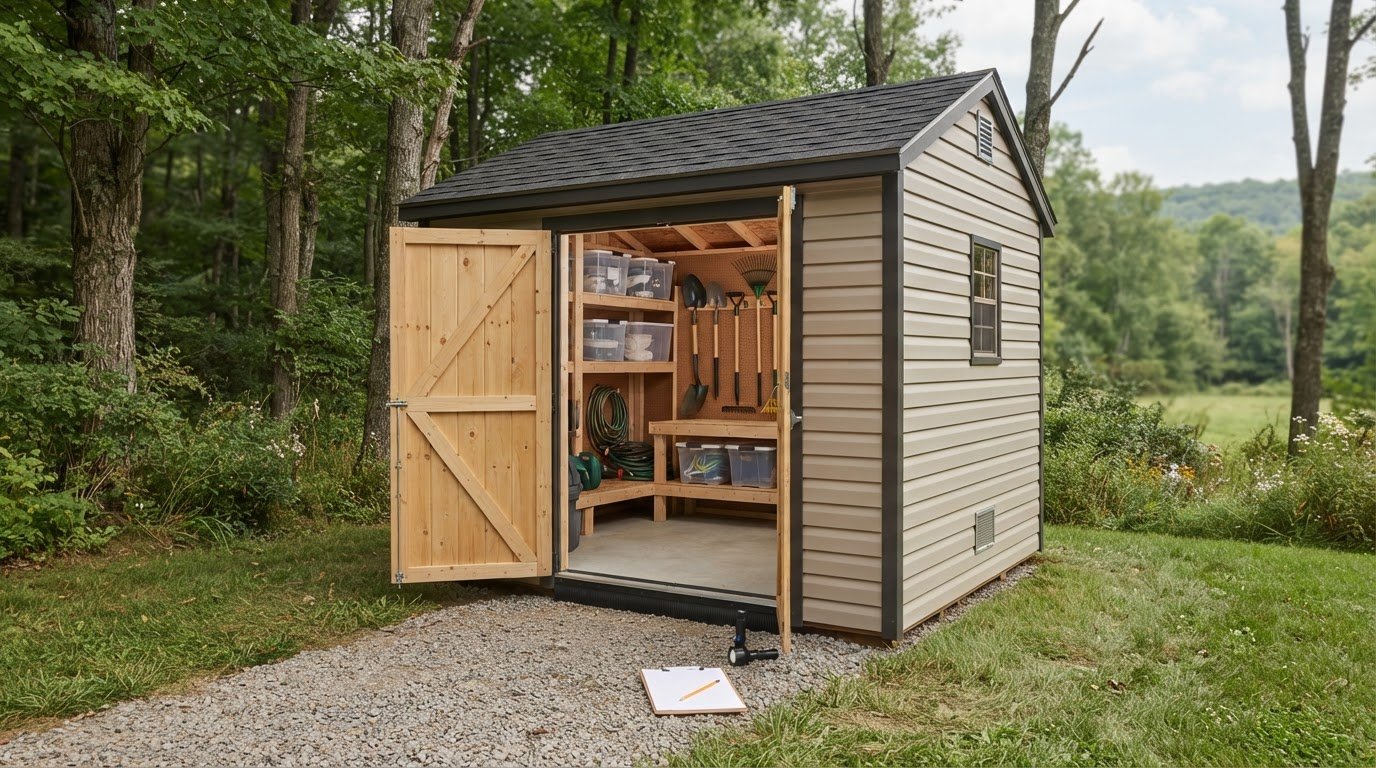
What if the easiest way to keep bugs out of your shed is to make it harder for them to get in and settle down? Finding insects among tools, stored belongings, or gardening supplies can be frustrating, especially when it’s unclear whether they’re coming through a gap, drawn by moisture, or hiding in clutter. Learning how to keep bugs out of your shed starts with addressing those conditions, not automatically reaching for pesticides.
A bug-resistant shed depends on practical prevention: closing common entry points, keeping stored items dry and organized, and checking for signs of recurring activity. Start by looking for openings and damp areas, then match what you find to a useful maintenance step. If bugs continue to appear despite those efforts, a professional assessment may help identify what’s contributing to the problem and what options may be appropriate for your property.
Key Takeaways
- Spot common ways bugs enter, including gaps, damaged screens, doors, vents, and items brought into the shed.
- Use a visual check to note insect sightings, webs, nests, damage, and recurring activity without applying pesticides.
- Compare exclusion, moisture reduction, and tidy storage to identify which prevention measures fit your shed.
- Build regular checks of doors, screens, gaps, clutter, and damp areas into your maintenance routine.
- Learn how to keep bugs out of your shed and recognize when persistent activity or uncertain pest identification may call for professional guidance.
How Bugs Get Into a Shed, and Why They Stay
Bugs don’t need a wide-open door to get into a shed. They may slip through a gap around a door or vent, pass through a damaged screen, or arrive unnoticed on stored items. Once inside, some find shelter in clutter, damp materials, or quiet corners. A useful starting point for how to keep bugs out of your shed is to look for both ways in and conditions that may encourage them to stay.
Shed pest exclusion means reducing pest access by addressing openings and conditions around the structure. It’s one part of prevention, alongside observing activity and reducing what may attract pests. The principles of Integrated Pest Management also emphasize considering multiple factors rather than relying on a single measure.
This video offers another look at protecting a shed from insect and animal access:
Common shed entry points to inspect
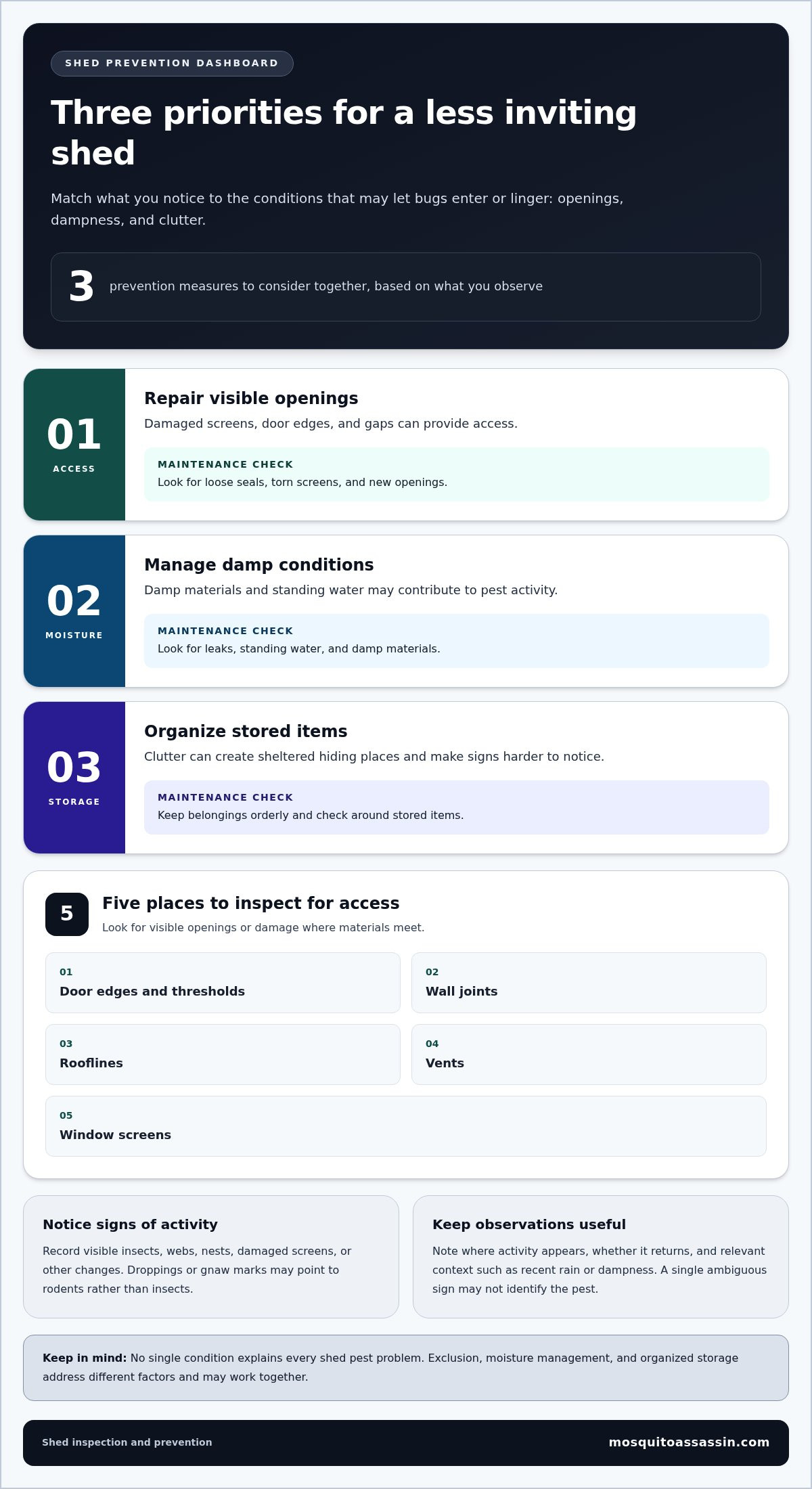
Check where materials meet: door edges and thresholds, wall joints, rooflines, vents, and window screens. Look for damaged seals, torn mesh, or visible openings. A small gap can provide access for some insects, but not every crack is an active entry point. Use sightings as clues: repeated activity near one wall or opening is a reason to inspect that area more closely.
Stored items can also bring pests into the shed. Gardening supplies, containers, or belongings moved from another area may carry insects or provide hiding places. Inspect items as you put them away, especially if they’ve been sitting outside or in a damp location.
Conditions that can make bugs linger
Damp cardboard and other materials can provide sheltered places to hide, while leaf litter and undisturbed clutter create protected spaces. Standing water may attract some pests, but pest needs vary. Food residue, such as crumbs or traces left on containers, can also draw insects that feed on accessible food.
No single condition explains every shed pest problem. Some pests may be seeking shelter or moisture, while others are more likely to find a food source or nesting spot. Look at the whole area, inside and around the shed, and note which conditions occur alongside activity. This can help you choose which maintenance changes to make first.
How to Check a Shed for Bug Activity Without Applying Pesticides
A visual inspection can help you understand what’s happening before deciding what to address. A basic shed pest inspection checks the structure, visible signs of activity, and nearby conditions without disturbing pests or applying pesticides. The goal is to observe and record, not to identify every insect from a single clue.
Start outside, then check inside
Begin around the shed’s exterior. Look at door edges, screens, vents, wall joints, and rooflines for visible openings or damage. Notice standing water, leaf litter, or damp areas nearby. Then move inside and scan walls, corners, stored materials, and the floor. Check items that have been stored outdoors before moving them or opening containers.
A measured inspection can make it easier to decide how to keep bugs out of your shed without jumping to conclusions. Guidance on pest-resistant construction also describes how building details can affect pest access.
What signs of bugs should you look for?
Note visible insects, webs, nests, damaged screens, and other changes to the shed. A web shows that a spider has been present, but it doesn’t necessarily reveal where it entered or whether other pests are active. Droppings or gnaw marks may point to rodents rather than insects. A single ambiguous sign may not identify the pest, so record what you see rather than diagnosing the species from one clue.
- Record the location of each sign, such as near a door, vent, or stored item.
- Note whether you see live insects, webs, nests, or damage.
- Look for activity in more than one area, without moving or disturbing nests.
How to keep inspection observations useful
Write down when and where activity appears, and whether you’ve noticed it more than once. Add relevant context, such as recent rain, stored materials brought into the shed, or visible dampness. These details can help describe the situation, but they don’t prove what caused it.
Leave nests and unknown pests undisturbed. Avoid handling insects or trying to remove a nest during an inspection. If activity keeps returning or you’re unsure what you’re seeing, professional guidance may help clarify the issue.
Which Shed Prevention Measures Matter Most?
The best place to start depends on what you observed. A visible opening points to an exclusion issue, while damp materials or crowded storage suggest maintenance needs. These measures work together: sealing gaps won’t address moisture or food residue, and tidying the shed won’t close an entry point. Pesticides aren’t the only way to reduce conditions that may attract pests.
Use this comparison to match an action with the issue it addresses and a practical check to keep it on track.
| Action | Purpose | Suitable maintenance check |
|---|---|---|
| Repair visible openings | Reduce access through damaged screens, door edges, or gaps | Look for loose seals, torn screens, and new openings |
| Manage moisture | Reduce damp conditions that may support pest activity | Check for leaks, standing water, and damp materials |
| Organize stored items | Limit cluttered hiding places and make signs easier to notice | Keep belongings orderly and inspect areas around stored items |
When sealing gaps is the priority
If you’ve spotted a torn screen, loose door edge, or visible opening, consider whether a repair is needed. Weatherstripping and door sweeps are general options for improving the fit around doors, but they aren’t guaranteed to prevent pest entry. The right repair depends on the opening’s location and condition. Damage beyond routine upkeep may need appropriate repair work.
As you consider how to keep bugs out of your shed, focus on openings that are visibly damaged or appear connected with observed activity. Avoid assuming that every small gap is a pest route or that sealing one spot will resolve all activity. Continue checking moisture and storage conditions too.
When moisture and storage deserve attention
Damp cardboard, wet belongings, and clutter can create sheltered spaces or indicate moisture that needs attention. Check for leaks and other sources of dampness, then address the underlying issue where possible. Elevating stored items and keeping them organized can reduce hidden shelter and make the shed easier to inspect.
Keep food residue and leaf litter from accumulating, and pay attention to standing water near the structure. Pest needs vary, so one change may not address every source of activity. A consistent combination of exclusion, moisture management, and tidy storage is a practical starting point, without making pesticide use the default solution.
How to Keep Bugs Out of Your Shed Throughout the Year
Prevention works best as a repeatable maintenance habit, not a one-time fix. A quick check can help you notice a torn screen, new opening, damp material, or change in pest activity before it goes unnoticed. Tie the routine to regular upkeep and visible changes rather than assuming pests follow the same schedule at every property.
A simple shed maintenance routine
Check the shed after storms or whenever damage becomes visible. Look over doors, screens, and visible gaps, then scan stored belongings and the floor for clutter or dampness. Keep materials orderly and remove decaying plant matter near the shed. A brief note of repeated sightings, including where they occur, can help you track whether activity is changing.
- Check doors and screens for damage or poor fit.
- Look for new visible gaps and signs of moisture.
- Keep stored items organized and clear away plant matter near the structure.
- Record recurring sightings and where they appear.
These simple checks support a consistent approach to how to keep bugs out of your shed. They also help you spot when a previous repair or cleanup needs follow-up.
What if bugs keep returning?
Repeated activity can continue if an entry point remains open or conditions inside the shed still provide shelter, moisture, or access to food. Review your notes and look for patterns, but don’t assume one observation identifies the pest or its source. Routine maintenance remains useful even when additional guidance is needed.
Leave nests and unidentified pests undisturbed. Avoid handling them or trying to remove them as part of a maintenance check. For broader prevention information, see this general pest control information. If activity persists or the pest is unclear, professional pest control may help assess the recurring issue.
When Professional Pest Control May Help With Shed Bugs
Routine prevention can reduce conditions that attract pests, but it may not explain every sighting. An occasional insect may enter without indicating a larger issue. Repeated activity, nests that keep appearing, or signs that rodents may be accessing the shed can justify a closer assessment, especially if the source isn’t clear.
When prevention alone may not resolve recurring activity
Look for a pattern rather than drawing conclusions from one observation. If insects continue to appear in the same area after visible openings and dampness have been addressed, or nests recur around the structure, professional guidance may help identify what is contributing to the activity. Droppings or gnawing may point to rodent access, which calls for a different assessment than insect sightings.
Mosquito Assassin Pest Control LLC provides general pest control for common pests such as ants, spiders, wasps, and hornets, along with rodent control. Learn more about general pest control services. Prevention and maintenance still matter, but recurring activity can be a reason to seek an assessment rather than continuing to guess at the source.
What professional guidance can add
A pest control professional can assess observed pest activity and conditions around the property that may be contributing to it. That context can help distinguish between an isolated sighting and a recurring concern, and inform appropriate next steps. If you’re working out how to keep bugs out of your shed but activity continues, share what you’ve observed, including where and when it appeared. Don’t handle unidentified pests or disturb nests to gather more information.
Mosquito Assassin Pest Control LLC serves Erie and Crawford Counties in Pennsylvania and Ashtabula County in Ohio. If recurring activity or uncertain pest identification is a concern, professional pest control may help assess the situation.
Make Shed Prevention Part of Your Routine
A practical approach to how to keep bugs out of your shed combines three habits: reduce entry points, limit dampness and clutter, and check for changes in pest activity. Occasional sightings don’t always signal a persistent problem, but repeated activity, recurring nests, or signs of rodent access may warrant professional guidance.
Mosquito Assassin Pest Control LLC provides general pest control for common pests such as ants, spiders, wasps, and hornets, as well as rodent control. Service is available in Erie and Crawford Counties in Pennsylvania and Ashtabula County in Ohio. With regular checks and practical upkeep, you can make your shed easier to monitor and less inviting to pests.
Frequently Asked Questions
Can bugs get into a shed through small gaps?
Yes, some insects can enter through small openings, especially around doors, thresholds, vents, wall joints, or damaged screens. A gap isn’t automatically an active entry point, so consider whether you’ve seen activity nearby. Check for torn mesh, loose seals, or visible openings, and note where you find them. Repairing damaged areas can help reduce access, but it works best alongside moisture control and tidy storage.
What attracts bugs to a shed?
Bugs may be drawn to shelter, moisture, food, or undisturbed places to hide, depending on the pest. Damp cardboard, leaf litter, standing water, clutter, and food residue can contribute to favorable conditions. Gardening supplies or stored belongings may also provide hiding places or carry insects inside. Look at the whole shed and its surroundings, since one condition alone may not explain why a particular pest is present.
How do I seal a shed to keep bugs out?
Start by checking door edges, thresholds, window screens, vents, wall joints, and rooflines for visible damage or openings. Repair damaged screens and seals, and consider weatherstripping or a door sweep where a door doesn’t fit closely. These measures can reduce access, but they aren’t a guarantee against pests. For how to keep bugs out of your shed, combine exclusion with organized storage and attention to dampness.
Do I need to use pesticides to keep bugs out of a shed?
No, pesticide use isn’t the only way to reduce shed pest activity. You can focus on prevention by checking for openings, keeping stored items orderly, limiting food residue, and addressing damp materials or standing water. These steps target access and conditions that may attract pests. If activity continues or you’re unsure what pest is present, professional guidance can help assess the situation and discuss appropriate options.
How often should I check my shed for bugs?
Check the shed as part of regular upkeep and whenever you notice damage, moisture, or new pest activity. It’s also useful to look over doors, screens, visible gaps, and stored belongings after a storm or when items are moved in or out. There’s no single schedule that fits every shed. Keep brief notes about sightings and locations so repeated activity is easier to recognize.
What should I do if bugs keep returning to my shed?
If bugs keep returning, review whether visible openings, dampness, clutter, or food residue may still be present, and note where activity recurs. Don’t disturb nests or handle pests you can’t identify. Repeated activity or signs of rodent access may justify professional assessment. Mosquito Assassin Pest Control LLC provides general pest control and rodent control in Erie and Crawford Counties, Pennsylvania, and Ashtabula County, Ohio.
Can moisture in a shed attract insects?
Moisture can make a shed more inviting to some pests by providing damp conditions or supporting sheltered hiding places. Check for leaks, standing water, and wet materials such as cardboard, and consider what may be keeping them damp. Pest needs vary, so moisture may be one contributing factor rather than the whole explanation. Addressing the source of dampness and keeping stored items dry can support other prevention measures.
Disclaimer: The information provided on this blog is for general informational purposes only and is not intended as professional pest control advice. Conditions vary by property, environment, and location. Reading this content does not create a service agreement. For an inspection or professional recommendations, please contact Mosquito Assassin Pest Control LLC directly.