Tag: termite prevention

  • Professional Termite Inspection in Crawford County: A Homeowner’s Guide

    Professional Termite Inspection in Crawford County: A Homeowner’s Guide

    Could a single colony of Eastern subterranean termites really be hiding a million workers behind your drywall without making a sound? For many property owners, the fear of hidden structural damage is a constant source of anxiety, especially during the spring swarm season. It’s common to feel overwhelmed when trying to distinguish between harmless flying ants and destructive pests, or when facing the strict wood-destroying insect reporting requirements of a real estate closing.

    Scheduling a professional termite inspection Crawford County ensures that these concerns are addressed with technical precision and local expertise. This guide explains the systematic process used by licensed professionals to identify wood-destroying insects, entry points, and moisture-prone areas that attract colonies. By understanding the specific risks in Pennsylvania and the scientific methods used to detect activity, homeowners can gain a clear path toward long-term property protection and total peace of mind regarding their investment. You will learn exactly what happens during an assessment and how to maintain a resilient, pest-free structure throughout the year.

    Key Takeaways

    • Identify the Eastern subterranean termite as the primary threat in Northwest Pennsylvania and understand how local climate conditions impact activity.
    • Understand the systematic components of a professional termite inspection Crawford County and why professional tools are more effective than visual DIY checks.
    • Master the simple physical checks used to differentiate termites from flying ants during the confusing spring swarm season.
    • Recognize the critical timing for scheduling an assessment and the immediate red flags that indicate potential structural risk.
    • Discover practical maintenance steps and exclusion strategies to make your property less attractive to wood-destroying organisms.

    Understanding Termite Risks in Crawford County

    The primary termite threat across Northwest Pennsylvania is the Eastern subterranean termite. These insects live in large underground colonies and are specifically adapted to the humid, temperate climate of Crawford County. Because they remain hidden within the soil or inside the wood they consume, property owners often don’t realize an infestation exists until significant damage has occurred. This behavior has earned them the reputation of being “silent destroyers” because they bypass the surface and eat through the interior of structural members. A professional termite inspection Crawford County is more than a simple search for bugs; it’s a comprehensive structural evaluation designed to identify current activity and environmental conditions that might invite future colonies. For those seeking a comprehensive overview of termites, understanding their biology reveals why they are such persistent pests in our region.

    The Role of Moisture and Soil in Termite Activity

    Northwest Pennsylvania is known for its high annual rainfall and humidity levels, which creates a high-risk environment for homeowners. Subterranean termites require constant moisture to survive and prevent their bodies from drying out. When soil near a foundation remains damp due to the region’s frequent precipitation, it provides a perfect highway for termites to tunnel toward a home. Common moisture traps include clogged gutters that spill water next to the foundation or poor landscape grading that allows water to pool. These conditions don’t just attract termites; they facilitate their movement from the ground into the wooden components of the structure. Maintaining dry soil around the perimeter is a fundamental step in property protection that is often checked during a professional termite inspection Crawford County.

    Why Termites Target Residential Structures

    Residential properties in areas like Meadville or Titusville offer an abundant supply of cellulose, which is the primary organic compound found in wood, cardboard, and paper products. Termites are relentless in their search for this food source. They can enter a building through foundation cracks as small as 1/32 of an inch, which is roughly the thickness of a credit card. Once inside, they feed on structural beams, subflooring, and even drywall paper. Undetected feeding can continue for years, eventually compromising the integrity of the home. This hidden damage can lead to thousands of dollars in repair costs and significantly decrease the resale value of a property. Regular assessments help ensure that these entry points are identified before a colony establishes a foothold.

    The Components of a Professional Termite Inspection

    A professional termite inspection Crawford County follows a disciplined, multi-step protocol designed to uncover activity that remains invisible to the untrained eye. This process is far more intensive than a basic walk-through; it is a forensic evaluation of a property’s structural health. Licensed professionals utilize a systematic approach to identify wood-destroying organisms and the environmental factors that support them. By identifying these issues early, professional pest control may help reduce risk of long-term structural failure and the high costs associated with major timber repairs. For more information on the standards used during these assessments, homeowners can consult the EPA guide to termite control.

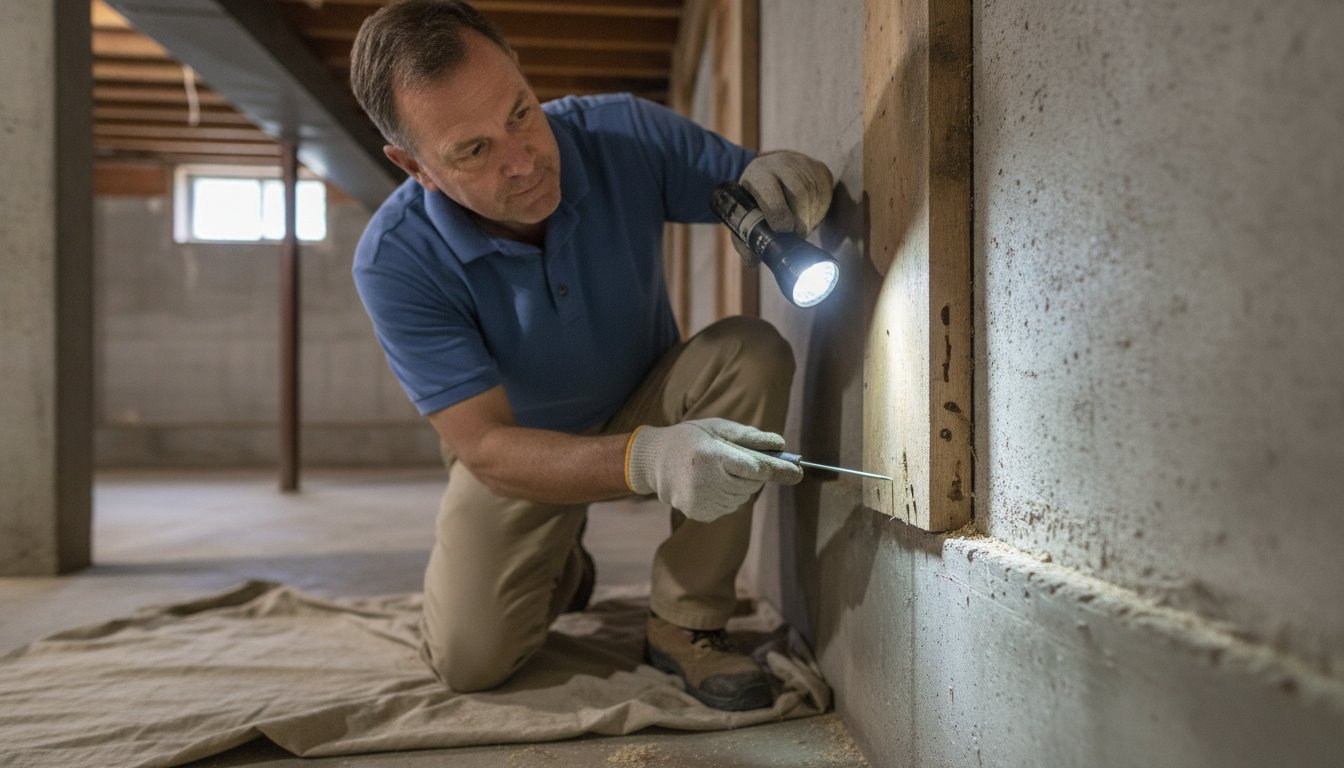
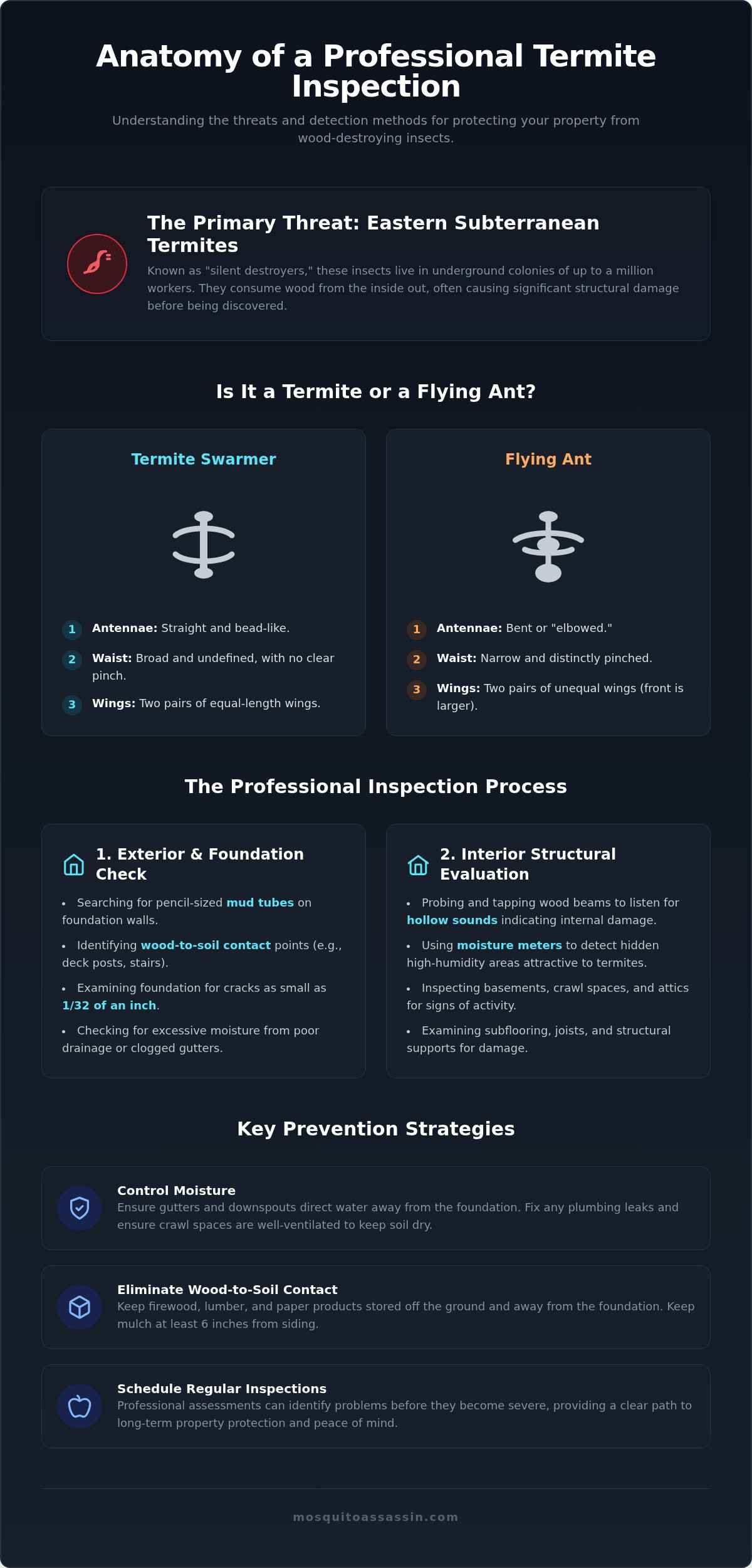
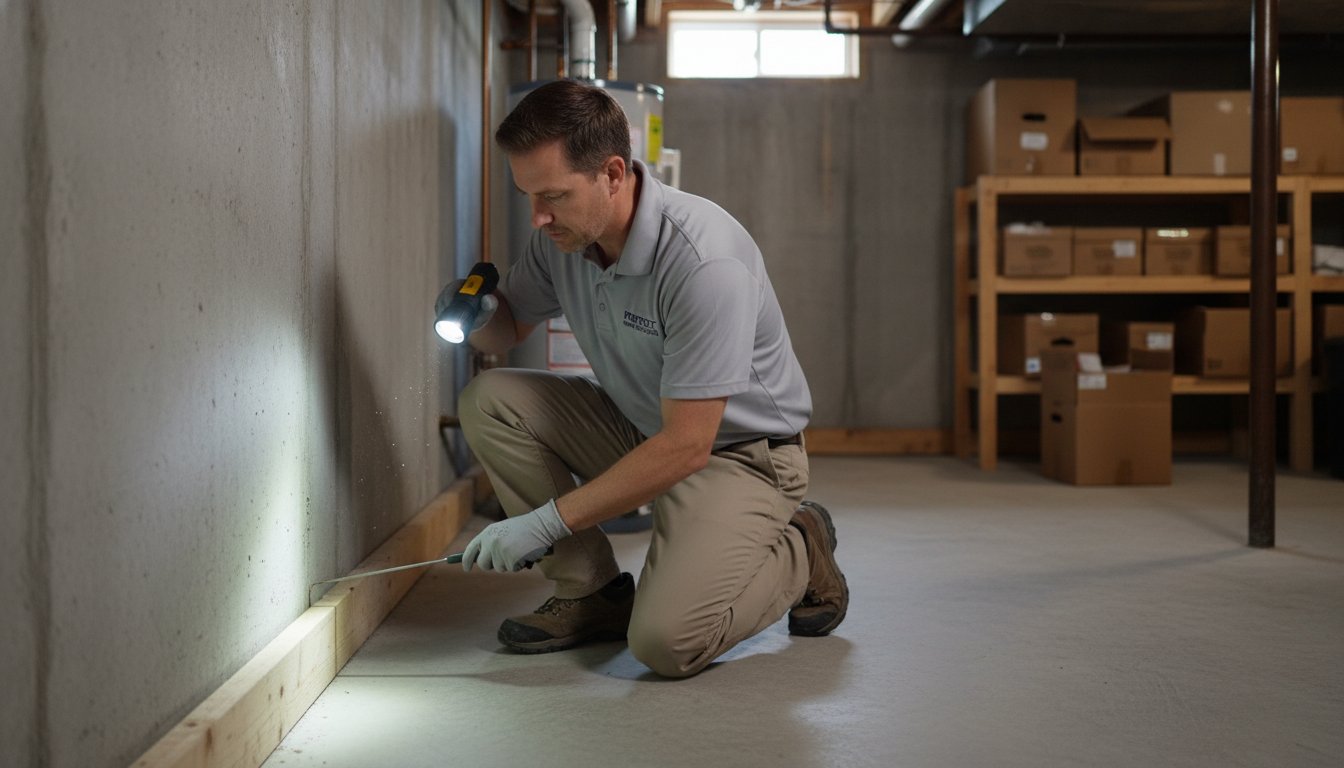
    Technical proficiency is supported by specialized equipment that allows inspectors to see “through” surfaces. Moisture meters are frequently used to detect high-humidity pockets behind drywall or under floorboards, which often indicate termite nesting sites. Sounding tools, such as specialized mallets, help inspectors evaluate the density of wooden beams. A hollow sound during a tap test often reveals where termites have consumed the interior of a stud while leaving the outer shell intact. These tools, combined with high-powered lighting and mirrors, ensure that no corner of the foundation is left unexamined.

    Exterior Inspection Points and Foundation Checks

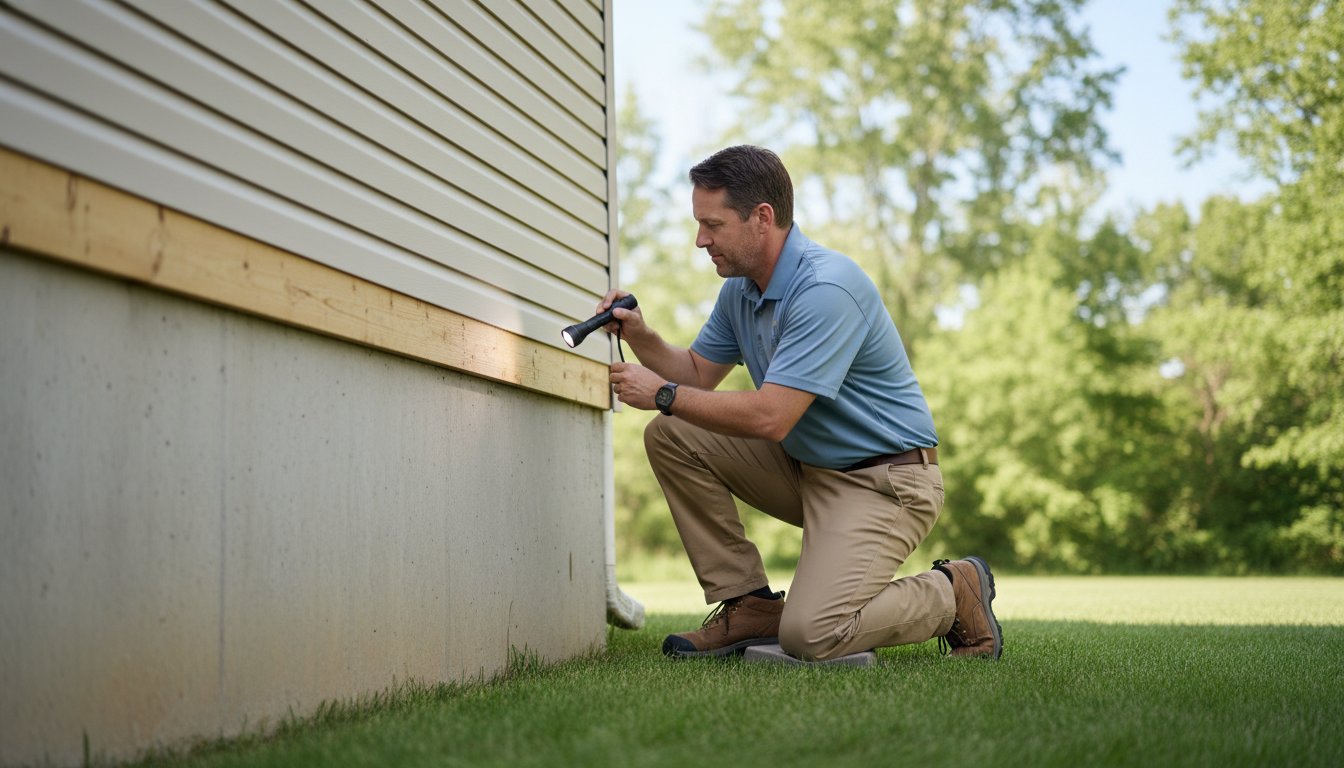
    The exterior evaluation begins at the ground level, focusing on the foundation walls and piers. Inspectors search for mud tubes, which are pencil-sized tunnels made of soil and saliva that subterranean termites use to travel from the earth to the house without drying out. Critical attention is paid to wood-to-soil contact points, such as wooden porch steps, deck supports, or fence posts attached to the home. These provide a direct bridge for colonies to enter the structure. Additionally, the inspector evaluates mulch beds and firewood piles. While mulch is common in Crawford County landscaping, it can retain excessive moisture and provide cover for foraging termites if it is placed too close to the foundation siding.

    Interior Evaluation and Critical Structural Areas

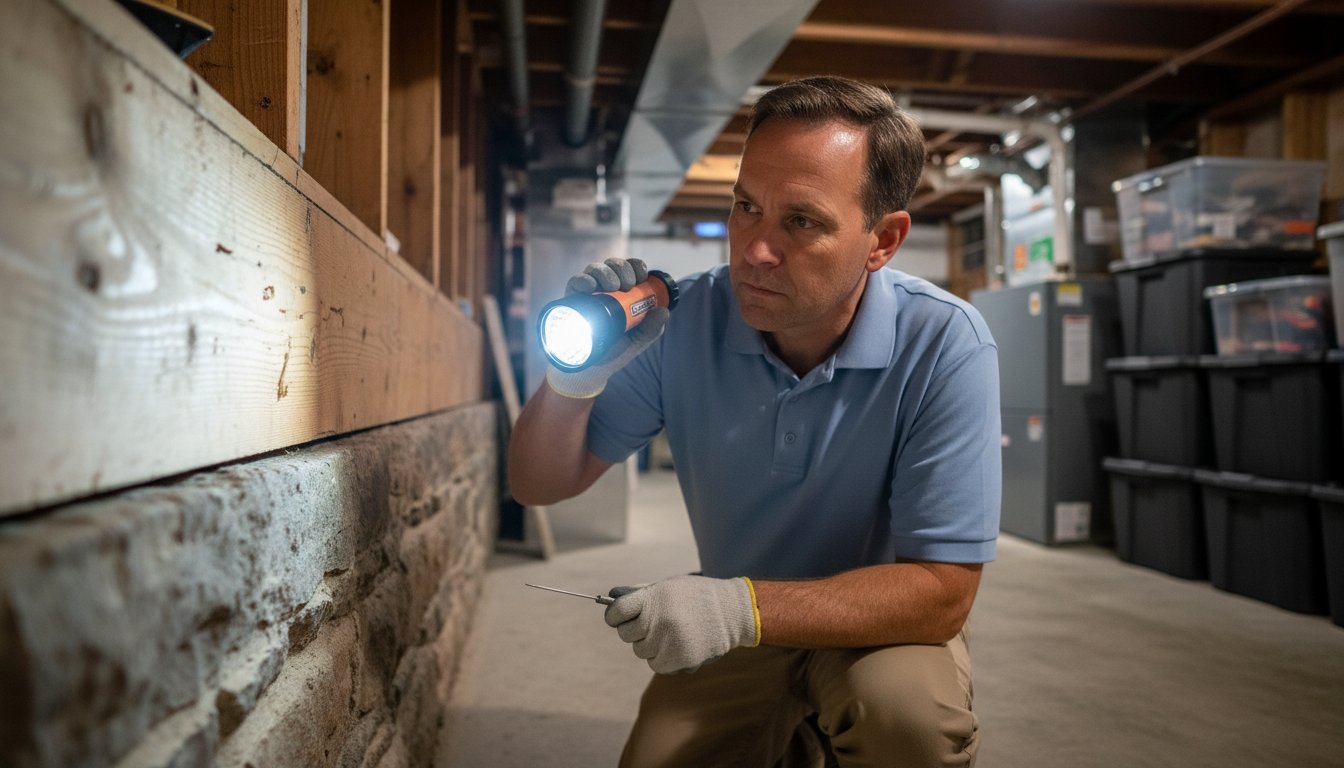
    Inside the home, the focus shifts to the lowest points of the structure, including basements and crawlspaces. The sill plate, which is the wooden member resting directly on the foundation, is a primary area of concern. Inspectors look for bubbling paint or wallpaper that may resemble water damage but actually indicates termite galleries just beneath the surface. They also search for discarded wings near windowsills and light fixtures, which are evidence of a recent swarm. While subterranean termites don’t leave the large piles of “frass” (droppings) associated with drywood species, they often leave behind small amounts of soil or debris in the cracks of damaged wood. For homeowners concerned about the integrity of their foundation, a professional assessment provides the data needed to make informed protection decisions.

    Termites vs. Flying Ants: Identifying the Threat

    Spring in Northwest Pennsylvania often brings an unsettling discovery for homeowners: a sudden eruption of winged insects inside the house. Because both species are highly active during the same season, many people struggle to differentiate between a harmless ant swarm and a serious structural threat. Misidentification can lead to a false sense of security or, conversely, unnecessary panic. A professional termite inspection Crawford County provides the technical clarity needed to distinguish these pests and implement the correct management strategy. While they may look similar from a distance, several specific physical markers set them apart:

    • Antennae: Termites have straight, bead-like antennae. Ants have distinctly elbowed or “bent” antennae.
    • Waist Shape: Termites possess a broad, thick waist that blends into the abdomen. Ants have a narrow, constricted waist, often described as wasp-like.
    • Wing Length: Termite wings are all the same length and are usually twice as long as their bodies. Ant wings come in two different sizes, with the front pair being significantly larger than the back pair.

    According to the Penn State Extension guide to termites, these physical markers are the most reliable way for a property owner to begin an initial assessment. However, because these insects are small and move quickly, a professional eye is often required for a definitive diagnosis.

    Recognizing Termite Swarmers

    Winged termites, also known as alates, are the reproductive members of a colony. Their primary purpose is to leave an established nest, mate, and start a new colony. In Crawford County, these swarms typically occur between February and June, often triggered by a warm spring rain. If you find a pile of discarded, translucent wings on a windowsill or near a light fixture, it’s a major red flag. Termites shed their wings shortly after landing to begin the nesting process. Seeing these wings inside a home suggests that a colony is either already established within the structure or is attempting to move in.

    Behavioral Differences and Nesting Habits

    The way these insects interact with wood is fundamentally different. Carpenter ants are “excavators.” They don’t eat the wood; they simply chew through it to create galleries for their nests, often leaving behind “frass” that looks like coarse sawdust. Their galleries are smooth and remarkably clean. Subterranean termites, however, are “consumers.” They eat the cellulose within the wood, leaving behind gritty, mud-packed galleries that look like they’ve been lined with dried soil. Because termites require a high-moisture environment, they use this mud to seal their tunnels. Whether you see the clean paths of an ant or the muddy debris of a termite, both indicate that the wooden members of your home are being compromised. Professional identification is the only way to ensure the treatment matches the specific biology of the pest involved.
    Professional Termite Inspection in Crawford County: A Homeowner’s Guide

    When to Schedule a Professional Inspection

    Deciding when to book a professional termite inspection Crawford County often depends on whether you’re reacting to a specific warning sign or protecting a long-term investment. While many homeowners wait until they see a swarm, proactive annual checks are the most effective way to prevent hidden structural damage. Regular assessments identify vulnerabilities before a colony can establish itself. Integrating these checks into a broader general pest control plan provides a strong foundation for overall home safety and ensures that your property remains resilient against a variety of regional threats.

    Immediate red flags require an urgent visit. If you notice “soft” wood that yields to a screwdriver, see mud tubes on the foundation, or find piles of discarded wings, don’t wait for the next season. These are indicators that a colony is already active. Early intervention is the key to minimizing the scope of necessary repairs.

    Inspections for Real Estate Transactions

    For those buying or selling property in Northwest Pennsylvania, a Wood Destroying Insect (WDI) report is often a non-negotiable requirement. Most lenders, particularly for VA or FHA loans, require the standardized NPMA-33 form before a closing can proceed. A “clear” report indicates that no visible evidence of active infestation was found at the time of the walkthrough. It’s best to schedule this assessment early in the escrow process, usually within the first 10 to 14 days, to allow time for professional recommendations if activity is discovered. This documentation protects the buyer’s investment and satisfies the regulatory requirements of the financial institution.

    Seasonal and Maintenance Milestones

    Spring is the most common time for scheduling because of the visible swarms discussed in previous sections. However, autumn is an equally critical window. As temperatures drop, termites remain active deep in the soil and look for stable environments to overwinter. Checking for foundation entry points before the ground freezes can prevent a hidden infestation from growing during the winter months. While some owners worry about the cost, understanding pest control prices helps frame these services as an investment in structural longevity rather than an unplanned expense. Consistent maintenance is far more affordable than replacing support beams or subflooring later. If you have noticed any red flags or are preparing for a property transfer, professional pest control may help reduce risk and provide the necessary documentation for your records.

    Long-Term Protection and Prevention Strategies

    Long-term safety isn’t the result of a single event; it’s a continuous commitment to property maintenance. While a professional termite inspection Crawford County provides a snapshot of current conditions, preventing future infestations requires a systematic approach to exclusion. By removing the environmental factors that invite colonies, property owners can significantly decrease the likelihood of a structural breach. Professional pest control may help reduce risk when homeowners actively participate in habitat modification. A professional termite inspection Crawford County acts as the baseline for these ongoing strategies, ensuring that no hidden issues are left to fester.

    Environmental Modifications for Homeowners

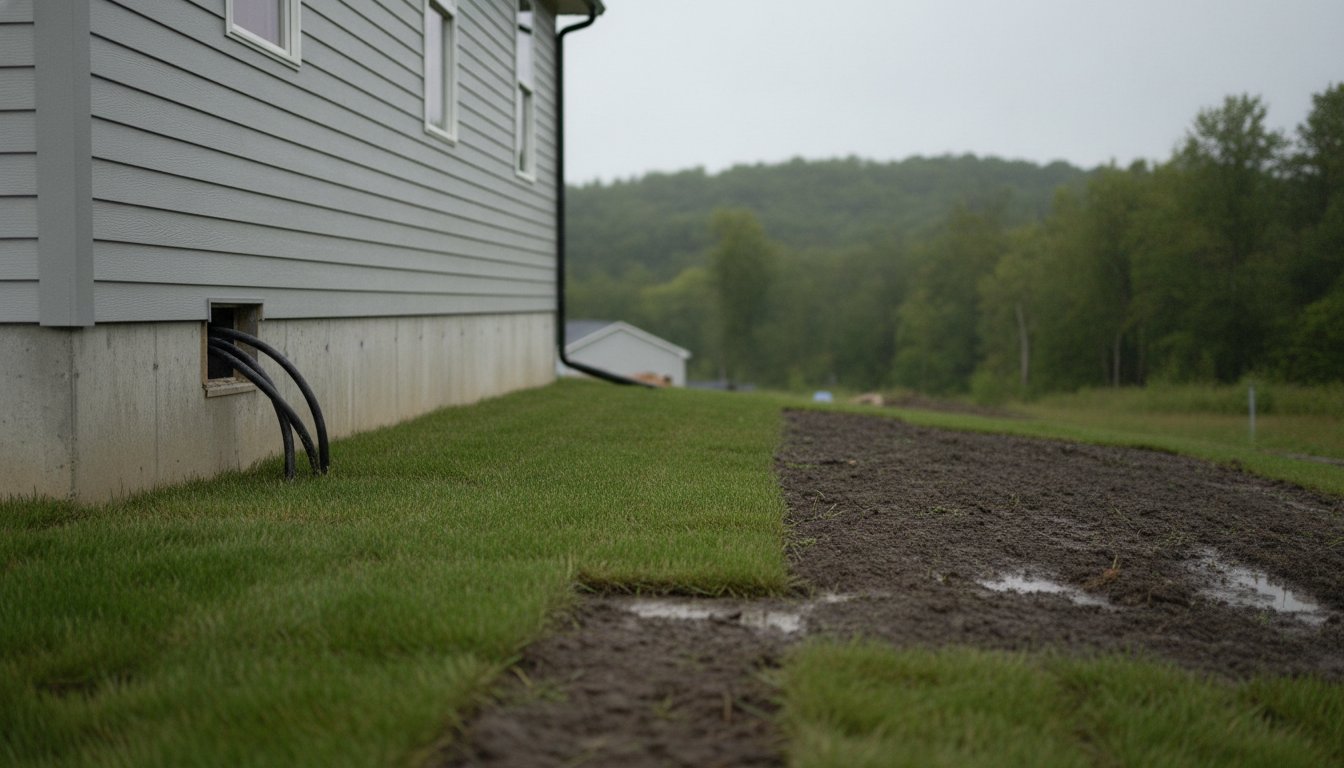
    Moisture control is the most critical element of any prevention plan. Since subterranean termites require damp soil to survive, diverting water away from the foundation is essential. Ensure that downspouts extend at least several feet from the house and that the ground slopes away from the foundation walls. Landscape choices also play a role in structural health. Wood mulch is a common source of cellulose; it should be kept at least six inches away from the siding to prevent a direct path for foragers. Similarly, firewood, scrap lumber, and cardboard boxes shouldn’t be stored against the exterior of the house or in crawlspaces. Elevating wood piles on metal stands away from the structure creates a necessary gap that termites find difficult to cross.

    The Value of Professional Monitoring

    Reactive treatments occur after damage has started, but professional monitoring systems offer a proactive alternative. These systems utilize specialized stations placed around the perimeter of the property to detect activity before the colony reaches the actual structure. Consistent oversight identifies changes in the soil or foundation that might otherwise go unnoticed for years. This method allows for targeted intervention based on actual pest pressure in the Crawford County area. Choosing year-round pest management ensures that these stations are checked regularly and that the property’s defenses remain intact through every season. Comprehensive home safety often involves looking beyond just one type of pest. Integrating professional rodent removal into a total protection plan helps address multiple vulnerabilities at once, as rodents can create entry points that other pests eventually exploit.

    Disclaimer: The information provided on this blog is for general informational purposes only and is not intended as professional pest control advice. Conditions vary by property, environment, and location. Reading this content does not create a service agreement. For an inspection or professional recommendations, please contact Mosquito Assassin Pest Control LLC directly.
    Securing Your Crawford County Property for the Future

    Protecting a property in Northwest Pennsylvania requires a vigilant approach to structural health. By identifying the specific traits of the Eastern subterranean termite and maintaining dry conditions around the foundation, homeowners can significantly lower the risk of an infestation. Whether you’re preparing for a real estate closing or simply performing annual maintenance, the clarity provided by a professional assessment is invaluable. This proactive mindset helps address potential issues before they escalate into major financial burdens.

    A professional termite inspection Crawford County ensures that hidden activity is identified before it leads to costly timber replacements. Licensed and insured professionals serving Erie, Crawford, and Ashtabula counties provide the detailed structural reports necessary to make informed decisions about your property’s future. Combining professional monitoring with environmental modifications, like proper drainage and wood storage, creates a robust defense for your home. These methodical steps provide a clear path toward maintaining a safe and stable environment for your household.

    For an inspection or professional recommendations, please contact Mosquito Assassin Pest Control LLC directly. Taking these proactive steps today provides the long-term security your property deserves.
    Disclaimer: The information provided on this blog is for general informational purposes only and is not intended as professional pest control advice. Conditions vary by property, environment, and location. Reading this content does not create a service agreement. For an inspection or professional recommendations, please contact Mosquito Assassin Pest Control LLC directly.
    Frequently Asked Questions

    How long does a professional termite inspection take?

    A standard professional termite inspection Crawford County typically takes between 45 and 90 minutes. This timeframe varies based on the size of the structure and the accessibility of critical areas like crawlspaces or basements. Large properties or those with complex foundations may require additional time for a thorough walkthrough. The inspector needs enough time to examine the entire perimeter and all interior wood-to-foundation contact points to ensure no activity is missed.

    What is the difference between a termite inspection and a general home inspection?

    A general home inspection evaluates the overall condition of a property’s systems, such as the roof, electrical, and plumbing. In contrast, a termite inspection focuses exclusively on wood-destroying organisms. While a general inspector might notice broad issues, a specialized professional termite inspection Crawford County uses specific tools to find evidence of termites, carpenter bees, and wood-boring beetles. These specialized reports are often required separately for real estate transactions.

    Will a termite inspection damage my walls or floors?

    No, a professional inspection is a non-invasive process that doesn’t require removing drywall or floorboards. Inspectors use specialized tools like moisture meters and sounding mallets to evaluate structural members without causing damage. These instruments allow them to detect hollow wood or high-humidity pockets behind surfaces. If further investigation is needed in a specific area, the inspector will discuss the options with the homeowner before taking any additional steps.

    Can I perform a termite inspection myself?

    Homeowners can certainly look for obvious signs like mud tubes or swarms, but a self-check can’t replace a professional assessment. Licensed inspectors are trained to identify subtle indicators that are often overlooked by the untrained eye. Additionally, official real estate transactions and mortgage lenders require an NPMA-33 form, which can only be completed by a certified professional. Relying on professional expertise ensures that hidden colonies are identified before they cause structural failure.

    Do termites go away on their own in the winter?

    Termites don’t disappear or hibernate during the winter months in Northwest Pennsylvania. While they may move deeper into the soil to escape the freezing surface temperatures, they remain active year-round. If a colony has already entered the heated foundation of a home, they can continue feeding throughout the coldest months. This is why consistent monitoring is essential regardless of the season or the outdoor temperature.

    What happens if the inspector finds evidence of termites?

    If activity or damage is discovered, the inspector will provide a detailed structural report outlining the location and extent of the infestation. This documentation includes a description of the evidence found, such as mud tubes or damaged timber. Following the report, the professional will recommend a specific treatment plan tailored to the property’s needs. This may include soil barriers or monitoring stations to address the colony and prevent future re-entry.

    How often should a home in Crawford County be inspected for termites?

    Homeowners should schedule an inspection at least once per year. Given that Crawford County is in a moderate to heavy infestation zone, annual checks are a standard best practice for property maintenance. Regular assessments allow for the early detection of foraging colonies, which can save thousands of dollars in structural repairs. Homes with a history of activity or those with significant wood-to-soil contact may benefit from even more frequent monitoring.

    Is a termite inspection required for a VA or FHA loan?

    Yes, for properties located in Pennsylvania, a Wood Destroying Insect (WDI) report is a mandatory requirement for securing VA and FHA loans. The state is classified within Termite Infestation Probability Zone 2, which indicates a moderate to heavy risk. Lenders require the NPMA-33 form to ensure the structure is sound and free of active infestations before they’ll authorize the funding for a home purchase or refinance.

    Disclaimer: The information provided on this blog is for general informational purposes only and is not intended as professional pest control advice. For an inspection or professional recommendations, please contact Mosquito Assassin Pest Control LLC directly.
  • Preventing Pests in a New Construction Home: A Complete Guide

    Preventing Pests in a New Construction Home: A Complete Guide

    What if the construction process itself is the primary reason pests are targeting your brand-new property? It’s a common and deeply frustrating experience for homeowners across Erie, Crawford, and Ashtabula Counties to find insects or rodents in a home that was finished only weeks ago. You expect a modern, airtight build to be a fortress, but the reality of habitat disruption often leads to unexpected visitors. Successfully preventing pests in a new construction home requires a shift in perspective, focusing on how construction moisture and soil disturbance attract local wildlife and insects to your foundation.

    You likely feel a sense of urgency to protect your investment from structural threats like termites, which affect approximately 600,000 homes in the United States every year. This guide will help you understand the biological drivers that push pests toward new structures and reveal the specific entry points often overlooked during the final walk-through. By the end of this article, you’ll have the knowledge needed to create a proactive prevention plan for your first year of homeownership. This ensures your new space remains the clean, secure environment you worked so hard to build.

    Key Takeaways

    • Understand how habitat displacement and construction moisture create an immediate draw for local pests on cleared lots.
    • Learn to identify common new-build invaders like springtails and clover mites that capitalize on damp materials and fresh sod.
    • Master the art of preventing pests in a new construction home by addressing structural gaps in utility lines and brick veneers.
    • Adopt simple maintenance habits, including proper drainage and mulch placement, to keep the perimeter of your new home dry and secure.
    • Recognize why professional monitoring is vital during the first two years as your structure settles and seasonal migrations occur.

    Understanding Why New Construction Homes Attract Pests

    A new home represents a fresh start for you, but for local wildlife, it’s a massive disruption of their established environment. When a wooded or grassy lot is cleared in Erie County, Crawford County, or Ashtabula County, the existing ecosystem is stripped away in days. This creates what professionals often call a pest vacuum. Local populations of insects and rodents don’t simply vanish; they seek the nearest available shelter, which often happens to be your rising foundation. Successfully preventing pests in a new construction home starts with recognizing that your building site is an active target from the moment the first shovel hits the dirt.

    To better understand this concept, watch this helpful video:

    During the framing stage, the site becomes even more attractive. Open structures allow nocturnal insects to be drawn in by high-intensity construction lights. These pests often find permanent hiding spots within the wall voids before the drywall is even hung. It’s a scientific reality that pests are looking for warmth and security, and a house under construction provides both in abundance. The combination of easy access and artificial light makes a framing-stage house irresistible to local insect populations.

    The Role of Habitat Disruption

    Habitat disruption is the primary driver for early-stage infestations because it forces established colonies to relocate immediately. When heavy machinery disturbs the soil, it often unearths dormant colonies of subterranean termites or ants that have lived on that lot for years. Removing trees and brush doesn’t just clear the view; it destroys the nesting sites of mice and voles. These displaced rodents will naturally migrate toward the warmth of a new basement or crawlspace to survive. Without their original dens, your subfloor and insulation become the next best thing.

    Moisture Management in New Materials

    New construction involves a surprising amount of water. Green lumber used in the framing process often carries a high moisture content, which is a specific attractant for various wood-boring beetles. As the house dries out over its first year, these insects may emerge from the wood. Concrete foundations also play a role. A standard concrete slab or basement wall can take months to cure fully, releasing gallons of water vapor into the air. This elevated humidity creates a perfect breeding ground for moisture-loving pests like springtails and fungus gnats.

    Site grading is another critical factor. If the soil isn’t sloped away from the foundation early in the process, rainwater can pool against the new masonry. This standing water invites mosquitoes and provides the damp conditions termites require to tunnel upward. Implementing principles of Integrated Pest Management (IPM) during the early phases of homeownership helps you monitor these moisture levels and address vulnerabilities before they become permanent problems. This methodical approach ensures your new investment remains secure from the ground up.

    Disclaimer: The information provided on this blog is for general informational purposes only and is not intended as professional pest control advice. Conditions vary by property, environment, and location. Reading this content does not create a service agreement. For an inspection or professional recommendations, please contact Mosquito Assassin Pest Control LLC directly.
    Common Pests in New Builds Across Pennsylvania and Ohio

    Homeowners in Erie and Ashtabula Counties face unique environmental challenges due to the high humidity and frequent lake-effect precipitation characteristic of the Great Lakes region. These climate factors significantly increase moisture-related risks for new properties. While a house is being built, it’s often exposed to the elements for weeks. This exposure creates a perfect habitat for specific local species that thrive in damp, disturbed environments. Successfully preventing pests in a new construction home requires identifying these regional threats before they establish a permanent presence in your crawl space or wall voids.

    Moisture-Loving Nuisance Pests

    Springtails and fungus gnats are among the most common early invaders in new builds. Springtails are tiny, jumping insects that often appear by the thousands near water sources or in damp basements where concrete is still curing. Fungus gnats typically emerge from the soil of indoor plants or damp crawl spaces, drawn to the fungi that grow on moist building materials. Another frequent visitor is the clover mite. These tiny red specks often migrate from freshly laid sod into the home interior, appearing on windowsills in large numbers after the final landscaping is completed. You can find more details on common household insects in Pennsylvania through regional extension resources to help with early identification.

    Structural and Wood-Destroying Organisms

    The most serious threats to a new investment are wood-destroying organisms like subterranean termites and carpenter ants. Subterranean termites don’t need much room to enter; they can pass through cracks in the foundation as thin as a credit card or follow utility penetrations into the structure. Carpenter ants are opportunistic and often establish satellite colonies in damp wall framing that was exposed to rain during the construction process. Because these pests work behind the scenes, their presence isn’t always obvious until structural damage has already occurred. The climate in Erie and Ashtabula counties specifically encourages these pests because the consistent moisture keeps wood soft and attractive for nesting.

    Rodents are equally opportunistic, taking advantage of gaps in the building envelope before the final sealing and siding are finished. Mice and rats can squeeze through openings the size of a dime, making unsealed vents and pipe entries easy targets. Establishing general pest control plans early in the first year of homeownership can help identify these structural vulnerabilities before they lead to a full-scale infestation. Proactive monitoring ensures that small gaps don’t become permanent highways for local wildlife.

    Disclaimer: The information provided on this blog is for general informational purposes only and is not intended as professional pest control advice. Conditions vary by property, environment, and location. Reading this content does not create a service agreement. For an inspection or professional recommendations, please contact Mosquito Assassin Pest Control LLC directly.
    Identifying Structural Vulnerabilities During and After Construction

    Even the most advanced building techniques in Erie and Ashtabula Counties can leave behind tiny openings that local pests are quick to exploit. These structural vulnerabilities are rarely the result of poor craftsmanship; instead, they often stem from the complex intersection of different building systems. Successfully preventing pests in a new construction home involves looking beyond the surface to find where utilities, foundations, and rooflines provide unintended access. Addressing these gaps during the first year of homeownership is a critical part of maintaining a secure property.

    Utility and Foundation Gaps

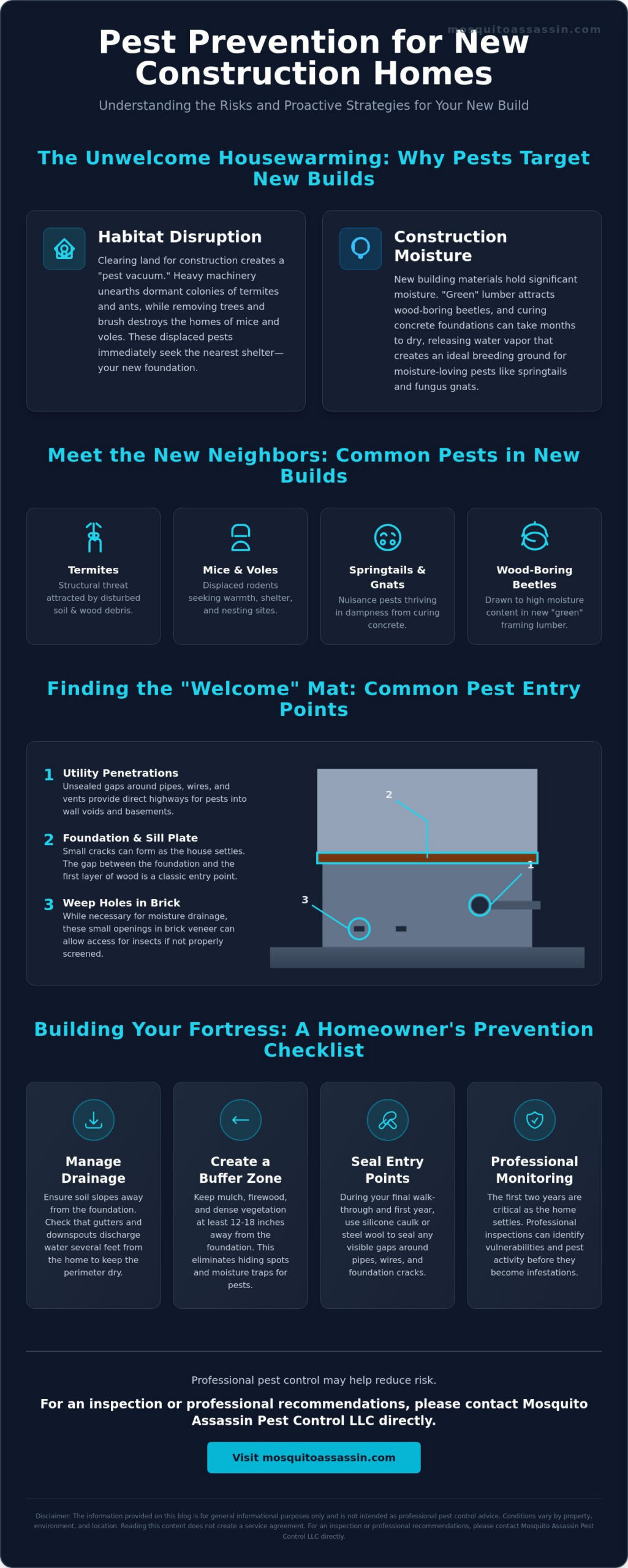
    Utility penetrations for plumbing, electricity, and HVAC systems are some of the most common entry points in new builds. Often, the holes cut for these lines are significantly larger than the pipes themselves. If these gaps aren’t properly sealed behind the wall or under the siding, they become permanent highways for insects and rodents. You should specifically check for gaps where the HVAC lines enter the exterior siding, as these are frequently overlooked during the final walk-through. A simple bead of silicone or specialized sealant can close these paths effectively.

    The foundation itself remains a dynamic part of the structure during the first year. As the house settles into the soil of Crawford or Erie County, small hairline cracks can develop in the masonry or concrete. While these are often non-structural, they are large enough for ants or spiders to navigate. It’s also vital to examine basement window wells. Ensure they are properly drained and clear of construction debris, as trapped moisture and organic matter provide a perfect staging ground for pests to move toward the foundation wall. Keeping these areas clean reduces the biological pressure on your home’s lower levels.

    The Building Envelope and Roofline

    The exterior finish of your home can also harbor hidden entries. For homes with brick veneers, weep holes are essential for moisture drainage, but they provide a direct path for insects if left unscreened. Installing specialized mesh covers allows the wall to breathe while keeping pests out. Additionally, garage door seals and thresholds often require adjustment in a settling home. If you notice light peeking through the bottom or sides of your garage door, the seal isn’t tight enough to stop a determined rodent. These seals often shift as the concrete slab cures and settles over several months.

    Higher up, the roofline presents its own set of risks. Roof eaves and soffit vents are prime targets for stinging insects, bats, and squirrels. Verify that all soffit vents are securely fastened to the structure to prevent wasps from nesting in the attic space. Inspect the seals around chimney flashing and roof peaks, as even a small gap can invite trouble. Addressing these high-altitude vulnerabilities is a key step in exclusion; otherwise, you might find yourself searching for rodent removal services sooner than expected. Taking the time to seal the building envelope completely protects your investment from the top down.

    Disclaimer: The information provided on this blog is for general informational purposes only and is not intended as professional pest control advice. Conditions vary by property, environment, and location. Reading this content does not create a service agreement. For an inspection or professional recommendations, please contact Mosquito Assassin Pest Control LLC directly.
    Preventing Pests in a New Construction Home: A Complete Guide

    Practical Prevention Strategies for New Homeowners

    Cleanliness alone does not stop invaders in a brand-new build. Many homeowners in Erie and Crawford Counties are surprised to find pests in a spotless kitchen shortly after moving in. This happens because preventing pests in a new construction home is primarily about managing environmental factors like moisture and shelter rather than food waste. Implementing a systematic approach to your property’s perimeter and interior humidity is the most effective way to protect your investment during its first year. By focusing on the structural environment, you address the biological reasons why pests are attracted to your home in the first place.

    Exterior Landscaping and Grading

    Maintaining a dry perimeter is the foundation of any exclusion strategy. Ensure that gutters are clear of construction debris and that downspouts direct water at least five to ten feet away from the home. If water saturates the soil near the foundation, it creates an inviting environment for subterranean termites. Proper grading is also essential; the soil should slope away from the foundation at a minimum grade of six inches over the first ten feet. This prevents water from pooling against the masonry. Additionally, the type of mulch you choose matters. While wood mulch is popular, it traps moisture and provides ideal cover for insects. Using gravel or stone borders in high-moisture areas creates a buffer zone that is less attractive to pests. Keep all shrubs and trees trimmed at least 12 inches away from the siding to eliminate natural bridges that ants or spiders use to bypass ground-level treatments.

    Interior Moisture and Humidity Control

    New homes go through a significant drying out phase as building materials like concrete and lumber cure. To assist this process in the climate of Ashtabula County, run dehumidifiers in basements and crawl spaces. Use a hygrometer to monitor these areas; keeping relative humidity levels below 50 percent is a standard goal for pest exclusion. High humidity attracts moisture-loving insects that have little interest in how clean your floors are. Consistently running exhaust fans in bathrooms and kitchens also helps reduce the overall moisture load. Regularly check under sinks and around water heaters for any signs of slow leaks that might go unnoticed in a new plumbing system.

    As the structure settles over the first 24 months, use high-quality caulk or expandable foam to seal any new interior or exterior gaps that appear. This is a dynamic process that requires periodic inspection as the house shifts. For those who want a professional eye to identify these shifting vulnerabilities, general pest control plans can provide the consistent monitoring necessary to catch entry points before they are exploited. Proactive maintenance ensures that your new home remains the secure environment you intended it to be.

    Disclaimer: The information provided on this blog is for general informational purposes only and is not intended as professional pest control advice. Conditions vary by property, environment, and location. Reading this content does not create a service agreement. For an inspection or professional recommendations, please contact Mosquito Assassin Pest Control LLC directly.

    Establishing a Long-Term Pest Management Plan

    The first two years of a home’s life are a period of significant transition. As the foundation settles and building materials reach their final equilibrium with the local climate in Northwest Pennsylvania and Northeast Ohio, new vulnerabilities often emerge. Successfully preventing pests in a new construction home is not a one-time event; it’s a continuous process of monitoring and adaptation. While the initial exclusion steps mentioned in previous sections provide a strong defense, a long-term strategy ensures that the natural shifting of your home doesn’t create new opportunities for local wildlife or wood-destroying insects.

    The Importance of Professional Monitoring

    A professional eye is trained to see subtle signs that most homeowners miss. Licensed professionals can identify the early tracks of subterranean termites or the specific foraging patterns of carpenter ants before they result in structural damage. This is particularly vital as your house settles, as even a hairline crack in a basement wall or a slight shift in a door frame can invite an infestation. Engaging in general pest control provides the benefit of ongoing maintenance and expert eyes on your property throughout the year. Professional pest control may help reduce risk for homeowners in Northwest Pennsylvania and Northeast Ohio by addressing these structural changes in real time.

    Year-round protection plans are designed to address the specific seasonal migrations of the Tri-State area. From the emergence of spring swarms to the late-autumn push of rodents seeking warmth, a consistent plan provides a permanent barrier that DIY methods often miss. These plans typically include regular inspections of the building envelope, foundation, and utility penetrations to ensure that previous exclusion work remains intact and effective. This methodical approach transforms your home from a target of opportunity into a secure fortress.

    Transitioning from Construction to Homeownership

    The ideal time to formalize your long-term plan is immediately after all landscaping is finalized. Fresh sod, new mulch, and newly planted shrubs significantly alter the moisture profile and pest pressure of your lot. You should schedule a thorough post-construction inspection once the heavy machinery is gone and the final grading is complete. This allows for a final check of all weep holes, soffit vents, and utility entries that may have been disturbed during the final stages of building. A customized plan can then be developed based on the specific environmental factors of your property lot, whether you are near the wooded areas of Crawford County or the humid lakefront in Ashtabula County.

    Taking this final step secures your investment and provides peace of mind as you settle into your new space. For an inspection or professional recommendations, please contact Mosquito Assassin Pest Control LLC directly. By establishing a professional partnership early, you ensure that your new home remains pest-free for years to come.

    Disclaimer: The information provided on this blog is for general informational purposes only and is not intended as professional pest control advice. Conditions vary by property, environment, and location. Reading this content does not create a service agreement. For an inspection or professional recommendations, please contact Mosquito Assassin Pest Control LLC directly.

    Protecting Your New Investment for the Long Term

    Protecting your property starts with recognizing that a new build is a dynamic structure. The combination of habitat disruption and curing building materials creates a unique environment that draws in local pests. Successfully preventing pests in a new construction home requires a methodical approach to sealing utility penetrations and managing perimeter moisture as the house settles into the landscape of Erie, Crawford, or Ashtabula County.

    If you don’t address these vulnerabilities early, minor gaps can quickly become permanent entry points. Utilizing local expertise and a detailed three-step process for rodent exclusion ensures your building envelope remains secure. For total peace of mind, Platinum year-round protection plans offer consistent monitoring during the critical first years of homeownership. Professional pest control may help reduce risk and keep your living space exactly as you intended it. Contact Mosquito Assassin Pest Control LLC for a professional evaluation to secure your new home today.

    Disclaimer: The information provided on this blog is for general informational purposes only and is not intended as professional pest control advice. Conditions vary by property, environment, and location. Reading this content does not create a service agreement. For an inspection or professional recommendations, please contact Mosquito Assassin Pest Control LLC directly.

    Frequently Asked Questions

    Is it normal to have bugs in a brand-new house?

    Yes, it is very common to see insects in a newly finished property. The construction process disrupts local habitats and uses materials like green lumber and curing concrete that are naturally high in moisture. These factors create an immediate draw for local species searching for new shelter after their original nesting sites were disturbed by heavy machinery.

    Should I get a termite inspection for a new construction home?

    You should definitely schedule a termite inspection for a new build. While many builders apply a pre-treatment to the soil, the house settling can create new cracks in the foundation that bypass these initial barriers. Additionally, many lenders for FHA and VA loans require official documentation of a termite inspection as a condition of the mortgage to protect the investment.

    How do pests get inside a newly built, airtight home?

    Pests enter through tiny gaps that are often invisible to the naked eye. Utility penetrations for HVAC and plumbing lines often have oversized openings behind the walls that aren’t fully sealed. Weep holes in brick veneers and gaps in the roof eaves also provide direct access points that allow insects to bypass the airtight seals of modern windows and doors.

    What are the tiny jumping bugs in my new basement?

    These are likely springtails, which are moisture-loving insects that thrive in damp environments. They are attracted to the high humidity levels found in new basements as concrete foundations release water vapor during the curing process. Successfully preventing pests in a new construction home involves reducing this basement humidity with dehumidifiers to make the area less hospitable to these jumping invaders.

    Does homebuilders insurance cover pest infestations?

    Most standard homebuilder warranties and insurance policies do not cover pest infestations. These policies typically focus on structural defects or appliance failures rather than biological issues like insects or rodents. It’s the homeowner’s responsibility to maintain a prevention plan to protect the property from damage caused by wood-destroying organisms or local wildlife once the keys are handed over.

    How long does it take for a new home to “dry out” and stop attracting moisture-loving pests?

    It generally takes 18 to 24 months for a new home to fully reach moisture equilibrium with its environment. During this period, concrete foundations and framing lumber are slowly releasing trapped water into the air. This extended dry out phase is why many moisture-loving pests persist through the first two years of homeownership before the environment naturally stabilizes.

    Can landscaping choices cause pest problems in a new build?

    Landscaping choices are a frequent cause of pest issues in new builds. Fresh sod can bring in clover mites, while thick layers of wood mulch against the foundation trap the moisture that termites require to thrive. Ensuring that soil and plants are kept away from the siding is a vital part of preventing pests in a new construction home as your yard matures.

    When is the best time to start a pest control plan for a new home?

    The best time to start a plan is immediately after you move in or once the final landscaping is installed. Establishing professional monitoring during the first year allows you to catch structural vulnerabilities as the house settles into the soil. Early intervention ensures that temporary construction-related issues don’t turn into long-term infestations that could damage your new space.

    Disclaimer: The information provided on this blog is for general informational purposes only and is not intended as professional pest control advice. Conditions vary by property, environment, and location. Reading this content does not create a service agreement. For an inspection or professional recommendations, please contact Mosquito Assassin Pest Control LLC directly.

  • Understanding Termite Treatment Cost in Erie PA: A Homeowner’s Guide

    Understanding Termite Treatment Cost in Erie PA: A Homeowner’s Guide

    Pennsylvania is officially classified within a moderate to heavy infestation zone, making subterranean termites a very real threat to properties throughout Erie and Crawford Counties. Finding signs of activity can be overwhelming, especially when you consider that structural repairs often cost thousands of dollars if the problem is left unchecked. It’s completely understandable to feel anxious about the potential termite treatment cost Erie PA property owners face when trying to secure their homes against these wood-destroying pests.

    This guide provides a clear roadmap to understanding the primary factors that move the needle on professional expenses in Northwest Pennsylvania. You’ll learn how to protect your property investment by identifying the variables that influence service complexity, from foundation types to the specific methods used for elimination. By the end of this article, you’ll have the knowledge needed to choose a professional service with confidence and implement strategies to prevent future infestations. The following sections explore how localized moisture levels, the extent of the colony, and modern baiting versus liquid soil treatments impact the overall scope of a professional project.

    Key Takeaways

    • Identify how the unique humidity levels of the Lake Erie region contribute to the activity of Eastern subterranean termites and increase the risk of structural damage.
    • Understand how structural variables, including foundation type (slab, crawl space, or basement) and linear footage, directly influence the termite treatment cost Erie PA property owners encounter.
    • Distinguish between standard professional assessments and official Wood Destroying Insect (WDI) reports to ensure your property meets real estate and safety requirements.
    • Learn essential moisture management and landscaping techniques to reduce wood-to-ground contact and make your property less attractive to foraging colonies.
    • Gain insight into why local expertise in Erie and Crawford Counties is necessary for developing a targeted management plan that accounts for specific regional climate patterns.

    Termite Activity and Structural Risks in the Erie Region

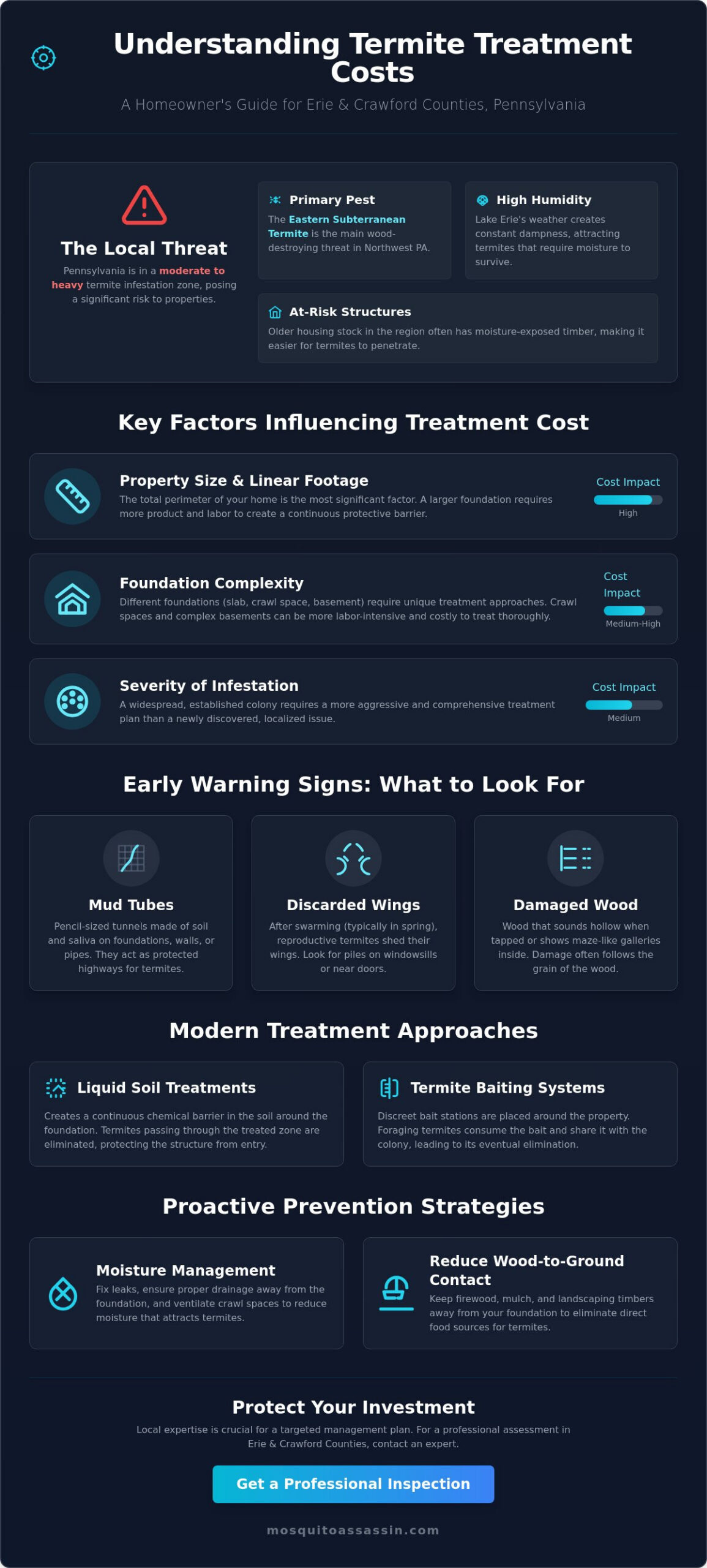
    The Eastern subterranean termite is the primary wood-destroying insect threatening properties throughout Northwest Pennsylvania. Unlike drywood termites found in warmer climates, these pests live in the soil and require constant moisture to survive. This makes the high humidity levels found near Lake Erie particularly problematic. The lake-effect weather patterns do more than just produce snow; they create a consistent cycle of dampness that can permeate the foundations of local homes. When moisture levels in structural wood rise, it becomes significantly more attractive to foraging termite colonies.

    Older housing stock in Erie and Crawford Counties presents additional risks. Many historic homes in neighborhoods throughout the region were built with timber that has faced decades of seasonal moisture exposure. This environmental wear and tear makes it easier for termites to penetrate the grain. Understanding these local environmental pressures is the first step in evaluating the eventual termite treatment cost Erie PA homeowners might encounter when protecting their investments.

    To better understand this concept, watch this helpful video:

    The Biology of Termites in Northwest Pennsylvania

    Subterranean termites are relentless foragers that move from the earth into a home’s structure through tiny cracks in the foundation. They consume cellulose, the organic compound found in wood, paper, and cardboard. In the Erie area, swarming season typically occurs in the spring, often following a warm rain. During this time, winged reproductive termites leave the colony to start new ones. Without a proper termite barrier, these insects can establish a presence long before a homeowner notices physical damage. They’re capable of traveling through specialized tunnels to reach food sources high above the ground level.

    Signs of Activity Homeowners Should Monitor

    Early detection is vital for minimizing structural repair expenses. Homeowners should look for specific indicators of an infestation during their regular property maintenance:

    • Mud Tubes: These pencil-sized tunnels are built from soil and saliva to protect termites from dehydration as they travel across concrete, brick, or stone foundations.
    • Discarded Wings: After a swarm, you may find small, iridescent wings piled on windowsills or near entry points. These are often the first visible signs of a nearby colony.
    • Wood Texture: Termite damage often follows the grain of the wood and leaves behind hollowed-out galleries. This differs from simple water rot, which usually makes wood feel soft, spongy, or crumbly without the presence of distinct tunnels or soil deposits.

    Because these pests often work from the inside out, the exterior of a beam might look perfectly fine while the interior is structurally compromised. Professional inspections are necessary to confirm whether these signs indicate an active colony or historical damage from a previous infestation.

    Variables That Determine Termite Remediation Expenses

    Every home presents a unique set of challenges for pest management professionals. The final termite treatment cost Erie PA homeowners receive is rarely a one size fits all figure. Instead, it’s a calculation based on the specific physical characteristics of the building and the environmental pressure of the surrounding soil. Technicians must evaluate how much product is needed and how much labor is required to install a reliable barrier. Several key variables dictate the scope of this work.

    Property Size and Foundation Complexity

    Total linear footage is the most significant factor in determining treatment needs. Most professional plans involve creating a continuous chemical or physical barrier around the entire perimeter of the structure. A larger home requires more specialized product and more hours of labor to ensure there are no gaps in protection. Foundation type also plays a massive role. In Erie and Crawford Counties, homes often feature a mix of full basements, crawl spaces, and concrete slabs. Treating an unfinished crawl space is a different process than treating a finished basement where technicians may need to drill through flooring or drywall to reach the foundation wall. Attached structures like decks, porches, and garages also add complexity. These areas often provide hidden entry points that require additional time and materials to secure properly.

    Severity of the Infestation

    The extent of the current termite activity influences the intensity of the response. While some property owners may inquire about localized spot treatments, these are often insufficient for long term protection. Subterranean termites are relentless. If one entry point is blocked, they will simply forage until they find another. Comprehensive perimeter protection is the standard for a reason. The Environmental Protection Agency offers resources on How to Identify and Control Them, which can help property owners understand why a thorough remediation plan is necessary. Larger, established colonies may require a higher volume of treatment materials or more frequent monitoring visits to ensure the population is fully suppressed. Scheduling a comprehensive termite inspection is the most effective way to determine which variables apply to your specific property.

    Accessibility and Technical Labor

    Accessibility is the final piece of the puzzle. Technicians must be able to reach the interface where the soil meets the foundation. If a home is surrounded by dense landscaping, heavy debris, or structural obstructions, the labor time increases. In some cases, specialized equipment is needed to inject treatments under concrete patios or through thick masonry. These labor intensive tasks are essential for creating a complete shield against wood destroying insects. Professionals familiar with the older housing stock in Northwest Pennsylvania understand these structural nuances and can provide a more accurate assessment of the work required to protect the building’s integrity.

    Disclaimer: The information provided on this blog is for general informational purposes only and is not intended as professional pest control advice. Conditions vary by property, environment, and location. Reading this content does not create a service agreement. For an inspection or professional recommendations, please contact Mosquito Assassin Pest Control LLC directly.

    Understanding Termite Treatment Cost in Erie PA: A Homeowner’s Guide

    Comparing Termite Inspections and Comprehensive Treatment Plans

    There is often significant confusion between the diagnostic phase of pest management and the actual remediation process. A professional inspection is a critical first step, but it is purely an investigative tool. It identifies the presence of wood-destroying organisms, assesses the extent of the damage, and determines the likely entry points. However, an inspection does not stop an active colony. Homeowners should understand that pest control prices vary significantly based on whether the service is a one-time assessment or a comprehensive elimination and protection strategy. The initial termite treatment cost Erie PA property owners encounter covers the specialized labor and materials required to create a defensive shield around the structure.

    Wood Destroying Insect (WDI) Inspections

    A Wood Destroying Insect (WDI) report is a specialized document often required during real estate transactions, home sales, or refinancing. While a standard inspection might be for a homeowner’s peace of mind, a WDI report is a formal legal document. During this process, a licensed professional meticulously examines accessible areas for evidence of Eastern subterranean termites, carpenter ants, and wood-boring beetles. It is important to remember that these reports only document the conditions found on the day of the visit. They do not provide treatment, and they do not serve as a guarantee against future activity. If the report identifies an active infestation, a separate remediation plan must be developed to address the structural threat.

    Comprehensive Protection and Monitoring

    Once an infestation is confirmed, property owners must choose between different methodologies for total elimination. Professional liquid soil barriers involve applying a specialized product into the earth around the foundation to create a continuous zone of protection. This prevents termites from entering the structure. Alternatively, professional baiting systems utilize stations placed strategically around the property. These stations monitor for activity and allow for the introduction of materials that the worker termites carry back to the colony.

    Ongoing monitoring is a vital component of long-term success. Because subterranean termites are common throughout the Erie and Crawford County regions, a property that has been cleared can still be targeted by neighboring colonies later. A proactive protection plan involves regular check-ups to ensure the barrier remains intact. This approach is often more cost-effective than reactive repairs. The cost of replacing structural floor joists or sill plates far exceeds the investment in a professional monitoring program. Licensed professionals familiar with the Pennsylvania climate can help determine which method is most appropriate for a specific property’s foundation and soil type.

    Disclaimer: The information provided on this blog is for general informational purposes only and is not intended as professional pest control advice. Conditions vary by property, environment, and location. Reading this content does not create a service agreement. For an inspection or professional recommendations, please contact Mosquito Assassin Pest Control LLC directly.

    Long-Term Prevention and Structural Protection Strategies

    Effective termite management is not a one-time event but an ongoing commitment to structural integrity. While the initial termite treatment cost Erie PA residents pay secures a property, maintaining that protection requires a combination of professional oversight and diligent property maintenance. By addressing environmental factors that attract subterranean colonies, homeowners can significantly reduce the pressure on their defensive barriers and extend the lifespan of their investment.

    Moisture Control and Landscaping

    Subterranean termites are highly sensitive to dehydration and are naturally drawn to areas with high soil moisture. In the wet climate of Northwest Pennsylvania, managing water runoff is the most critical preventative step. Property owners should ensure that soil is graded to slope away from the foundation and that downspouts direct water at least five to ten feet from the building. Leaking outdoor faucets or air conditioning condensate lines should be repaired immediately to prevent localized damp spots.

    • Manage Mulch: Keep organic mulch at least six inches away from the foundation. Mulch holds moisture and can serve as a “termite bridge,” allowing insects to bypass chemical barriers.
    • Ventilate Crawl Spaces: Poorly ventilated crawl spaces create a humid microclimate that is ideal for termites. Installing vapor barriers and ensuring proper airflow reduces this attraction.
    • Eliminate Wood-to-Ground Contact: Wooden siding, lattice work, or door frames should never touch the soil. Maintaining a gap of at least six inches allows for easier inspection and removes a direct path for foragers.

    The Financial Impact of Termite Damage

    Many property owners are surprised to learn that standard homeowners insurance policies rarely cover termite damage or remediation. This makes the cost of inaction particularly high. When compared to the investment in a professional protection plan, the expense of replacing load-bearing beams, sill plates, or floor joists is substantial. Structural wood replacement often requires specialized contractors and can reach into the thousands of dollars, depending on the severity of the compromise. In contrast, integrating termite monitoring with general pest control provides a proactive layer of security. Regular property assessments by a licensed professional allow for the early detection of foraging activity before it results in significant structural loss. Professional pest control may help reduce risk by identifying these vulnerabilities before colonies establish a foothold. For a detailed assessment of your property’s specific risks, consider scheduling a professional inspection to identify potential entry points.

    Disclaimer: The information provided on this blog is for general informational purposes only and is not intended as professional pest control advice. Conditions vary by property, environment, and location. Reading this content does not create a service agreement. For an inspection or professional recommendations, please contact Mosquito Assassin Pest Control LLC directly.

    Professional Termite Management in Erie and Crawford Counties

    Managing wood-destroying insects in Northwest Pennsylvania requires a deep understanding of the region’s specific environmental challenges. National providers often apply broad, standardized strategies, but local experts recognize how the unique lake-effect humidity and older architectural styles in Erie, Meadville, and Ashtabula influence infestation patterns. A technician who lives and works in Crawford or Erie County understands that a Victorian-era home in downtown Meadville has different structural vulnerabilities than a modern slab-on-grade property near the lakefront. This specialized knowledge ensures that the termite treatment cost Erie PA residents invest in is utilized effectively, targeting the most likely entry points and nesting sites with precision.

    Local expertise also leads to more accurate structural assessments. Because professionals in our region are familiar with common construction techniques used throughout the decades, they can quickly identify where foundation settling or previous water damage might have created an easy path for foragers. This insight allows for a more disciplined operational approach, focusing resources on the areas of highest risk rather than applying a generic solution that might miss hidden colonies. Licensed applicators play a vital role in this process, as they possess the technical training required to handle specialized materials safely and effectively while adhering to strict Pennsylvania and Ohio regulatory standards.

    Selecting a Local Professional

    When choosing a provider, property owners should verify that the company holds the necessary “Wood Destroying Pests” category licensing through the Pennsylvania Department of Agriculture. Licensed applicators are trained in the scientific application of materials, ensuring that treatments are both effective and compliant with official safety standards. A reputable provider will always provide a clear, written treatment plan before any work begins. This document should outline the specific areas targeted for remediation, the methods used, and a clear follow-up schedule for monitoring. Community-rooted providers often offer a higher level of accountability because they rely on their local reputation and shared community values. They treat their clients as neighbors, providing a reassuring level of service that national chains often struggle to match.

    Requesting a Professional Assessment

    A detailed professional walkthrough is the only way to identify hidden vulnerabilities that might be missed during a casual observation. To prepare for an evaluation, property owners should clear debris away from the foundation and ensure that crawl space entrances and basement walls are accessible for a thorough viewing. During the assessment, a professional will look for the subtle signs of activity and evaluate the soil composition around the foundation to determine the most effective barrier method. This methodical approach ensures that the resulting plan is tailored to the specific needs of the property. For those seeking more information about local service availability or specific regional expertise, visiting mosquitoassassin.com/location can help identify the nearest professional resources. Professional pest control may help reduce risk and provide long-term peace of mind for property owners.

    Disclaimer: The information provided on this blog is for general informational purposes only and is not intended as professional pest control advice. Conditions vary by property, environment, and location. Reading this content does not create a service agreement. For an inspection or professional recommendations, please contact Mosquito Assassin Pest Control LLC directly.

    Securing Your Property Against Structural Loss

    Protecting a home from subterranean termites requires a clear understanding of foundation complexity and moisture management. While environmental factors like lake-effect humidity increase local pressure, proactive barriers and regular monitoring provide a definitive solution. Determining the termite treatment cost Erie PA homeowners encounter depends on these specific structural variables. It’s also based on the depth of the protection plan chosen for the property.

    Working with a locally owned provider that is licensed in Pennsylvania and Ohio ensures that the assessment accounts for regional climate patterns. A systematic multi-step protection process identifies vulnerabilities before they lead to expensive structural repairs. Professional pest control may help reduce risk and preserve your property investment. To begin a thorough evaluation of your home, you can Request a professional inspection from Mosquito Assassin Pest Control LLC. Taking these practical steps today ensures your property remains a safe and secure environment for years to come.

    Disclaimer: The information provided on this blog is for general informational purposes only and is not intended as professional pest control advice. Conditions vary by property, environment, and location. Reading this content does not create a service agreement. For an inspection or professional recommendations, please contact Mosquito Assassin Pest Control LLC directly.

    Frequently Asked Questions

    How much does a typical termite inspection cost in Erie PA?

    Professional termite inspections in the region vary based on the depth of the evaluation and whether a formal Wood Destroying Insect (WDI) report is required for a real estate transaction. While basic assessments might sometimes be included with other pest plans, specialized inspections involving detailed structural probes and moisture readings typically involve a separate fee. This investment ensures that any activity is identified early, potentially saving thousands in structural repair expenses.

    Can I treat termites myself with hardware store products?

    Hardware store products are generally insufficient for eliminating established subterranean termite colonies. These pests live deep in the soil and utilize complex tunneling systems to reach structural wood, making surface treatments ineffective. Professional management requires specialized equipment and materials that create a continuous barrier, which DIY methods cannot achieve. Attempting to resolve the issue without professional tools often allows the colony to relocate and continue causing damage elsewhere.

    Is termite treatment safe for my family and pets?

    Modern termite treatments are designed for targeted application and are safe for households when administered by licensed professionals following strict regulatory guidelines. Technicians utilize methods that minimize exposure to family members and pets, such as placing bait stations in secure, tamper resistant housings or injecting liquid barriers directly into the soil. Following the specific re-entry instructions provided by your technician ensures the safety of all household members throughout the process.

    How long does a professional termite treatment last?

    The longevity of a treatment depends on the specific method used and the environmental conditions of the property. Liquid soil barriers typically remain effective for five to ten years, while professional baiting systems require ongoing monitoring and maintenance to remain active. Because Northwest Pennsylvania experiences significant seasonal moisture, regular professional check-ups are essential to ensure the protective shield remains intact and hasn’t been compromised by soil erosion or landscaping changes.

    What happens if I ignore signs of termites in my home?

    Ignoring signs of activity can lead to severe structural compromise that is often not covered by standard homeowners insurance. Termites consume cellulose 24 hours a day, meaning even a small colony can eventually hollow out load bearing beams and floor joists. Over time, this damage can lead to sagging floors and structural failure, resulting in a total repair bill that far exceeds the initial termite treatment cost Erie PA property owners pay for prevention.

    Are termites common in the Ashtabula and Crawford County areas?

    Termites are quite common throughout Ashtabula and Crawford Counties as these areas fall within a moderate to heavy infestation zone. The high humidity levels and presence of older housing stock create ideal conditions for Eastern subterranean termites to thrive. Properties in Meadville, Titusville, and Ashtabula face consistent pressure from soil dwelling colonies, making regular property assessments a vital part of standard home maintenance in the region.

    How often should I have my home inspected for termites in Pennsylvania?

    Annual inspections are recommended for properties in Pennsylvania due to the significant risk of subterranean termite activity. A yearly walkthrough by a licensed professional allows for the detection of mud tubes or swarming activity that a homeowner might miss. Regular assessments are especially important following any major landscaping work or structural renovations, as these activities can inadvertently disturb existing barriers or create new entry points for foraging insects.

  • Termite Inspection Costs in Erie, PA: A Complete 2026 Pricing Guide

    Termite Inspection Costs in Erie, PA: A Complete 2026 Pricing Guide

    The thought of termites is stressful enough without the added worry of hidden fees and surprise charges from a pest control company. When you’re trying to figure out the real termite inspection costs Erie PA homeowners face, the numbers can seem all over the map. You might even be wary of those “free” inspections that often feel more like a high-pressure sales pitch than a genuine assessment of your home’s health.

    At Mosquito Assassin Pest Control LLC, we believe in eliminating pests and uncertainty. That’s why we’ve created this complete 2026 pricing guide. Here, you’ll get a clear, honest breakdown of what you can expect to pay for a professional termite inspection right here in the Erie area. We’ll uncover the key factors that influence the final price, explain what a comprehensive inspection should always include, and empower you to safeguard your most valuable asset. Consider this your roadmap to making a confident, informed decision to protect your home and family.

    Key Takeaways

    • Learn the typical price range for termite inspection costs Erie PA, so you can confidently budget for protecting your home.
    • See how factors like property size and foundation type directly impact your final price, giving you a clearer understanding of your specific termite inspection costs Erie PA.
    • Decide confidently between free and paid options by understanding how each choice affects the thoroughness and overall value of your termite inspection costs Erie PA.
    • Discover Erie County’s unique termite threats and why a local expert’s knowledge is your best defense, ensuring the termite inspection costs Erie PA you pay for result in a truly comprehensive check. Understanding these local risks is crucial when evaluating termite inspection costs Erie PA.

    Average Termite Inspection Cost in Erie, PA: What to Expect

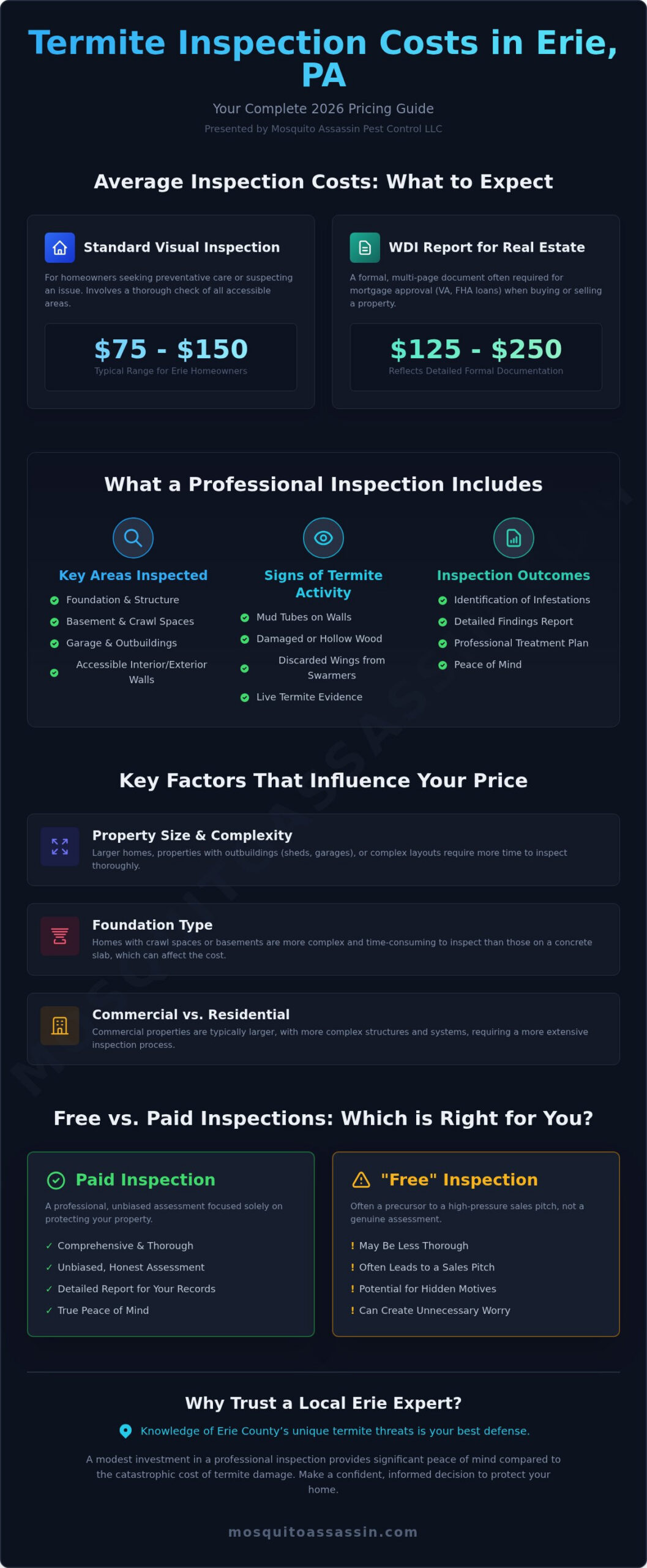
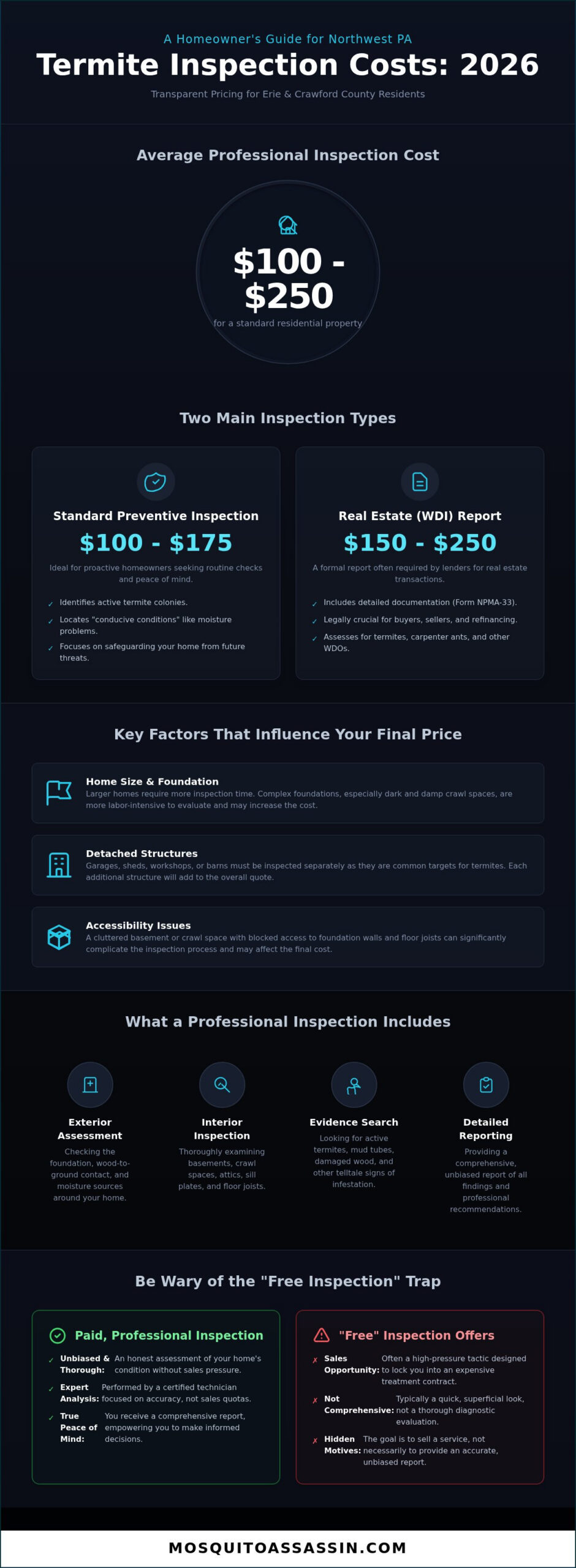
    When evaluating termite inspection costs in Erie, PA, homeowners can expect a paid inspection from a licensed professional to typically range between $75 and $200. This price point is for a standard visual inspection of a residential property and is a crucial step in safeguarding your home. While some companies may advertise a ‘free’ inspection, it’s important to understand the terms, which we will cover in a later section.

    This modest investment offers significant peace of mind, especially when compared to the catastrophic cost of termite damage repair, which can easily run into thousands of dollars. A professional inspection is your first line of defense against these silent destroyers.

    To see what goes into determining overall pest control costs, watch this informative overview:

    Standard Visual Inspection for Homeowners

    For a homeowner who suspects a problem or simply wants a routine check-up for preventative care, a standard visual inspection typically costs between $75 and $150 in the Erie area. This comprehensive check involves a certified technician examining accessible areas of your home-including the foundation, basement, crawl spaces, and garage-for any signs of termite activity. The goal is to identify active infestations and recommend a proven treatment plan if necessary. If you want to learn more about termites and their biology, understanding their behavior is key to effective detection.

    Official WDI Reports for Real Estate Transactions

    If you are buying or selling a home, you will likely need an official Wood-Destroying Insect (WDI) report. The cost for a WDI report in Erie is generally higher, ranging from $125 to $250. This formal, multi-page document is often a requirement for securing mortgages, especially for VA and FHA loans. The increased cost reflects the detailed documentation, liability, and formal reporting required by financial institutions to certify that a property is clear of termites, carpenter ants, and other wood-destroying organisms.

    Key Factors That Influence Your Termite Inspection Price

    When you request a quote for termite services, the price you receive isn’t a random number. Several critical factors determine the final estimate, ensuring it accurately reflects the work required to safeguard your property. Understanding these variables helps you recognize a fair and comprehensive quote. The overall termite inspection costs Erie PA homeowners face are directly tied to the unique characteristics of their property.

    Property Size and Complexity

    The most straightforward factor is the size of your home. A larger square footage naturally means more ground for our certified technicians to cover, from the foundation to the attic. The complexity of the structure also plays a key role. A simple rectangular home is quicker to inspect than one with multiple additions, complex rooflines, or detached structures. We take the following into account:

    • Total Square Footage: More area requires more time and attention.
    • Outbuildings: Detached garages, sheds, or workshops must also be thoroughly checked.
    • Structural Complexity: Homes with intricate layouts require a more detailed and methodical inspection process.

    Foundation Type: Slab vs. Crawl Space

    Your home’s foundation is a significant pricing factor because it dictates the accessibility for our inspectors. Homes built on a concrete slab are generally less complex to inspect. Conversely, properties with a crawl space or basement often require a higher fee. This is because our technicians must navigate tight, dark, and often difficult-to-access areas to check for signs of termite activity. A comprehensive inspection demands expertise in all termite identification and control methods, especially in these high-risk zones.

    Commercial vs. Residential Inspections

    The scope of a commercial termite inspection is fundamentally different from a residential one. Businesses, warehouses, and multi-unit properties are typically much larger and have more complex structural elements, from extensive plumbing and electrical systems to unique foundation types. Due to this increased scale and complexity, commercial inspections require a custom quote. Our team is fully equipped to handle both residential and commercial pest control services, providing a detailed assessment tailored to your business’s specific needs.

    What’s Included in a Professional Termite Inspection?

    A professional termite inspection from Mosquito Assassin Pest Control LLC is far more than a quick look around your property. When you evaluate termite inspection costs in Erie, PA, it’s crucial to understand that you are investing in a certified technician’s expertise, advanced training, and specialized tools. Our goal is not just to find active termite infestations but to uncover hidden signs of past activity and identify conditions around your home that could attract these destructive pests in the future.

    Our meticulous process is designed to give you a complete picture of your home’s health and safeguard your investment.

    Comprehensive Interior & Exterior Examination

    Our inspection is a systematic, top-to-bottom assessment of your property. Our licensed technicians are trained to spot the subtle signs of termite presence that an untrained eye would easily miss. This process includes:

    • Foundation and Perimeter Check: We meticulously examine your home’s foundation for the tell-tale mud tubes that termites use as highways.
    • Interior Inspection: Inside, we check baseboards, walls, flooring, and window frames for signs of wood damage, bubbling paint, or hollow-sounding wood.
    • Exterior Structures: We thoroughly inspect all wooden elements connected to your home, including decks, porches, fences, and sheds.

    Inspecting Basements, Attics, and Crawl Spaces

    Termites thrive in dark, damp, and undisturbed areas, making basements, attics, and crawl spaces common hotspots for infestation. Our technicians are trained to safely access and methodically check these high-risk zones. We look for evidence left by the destructive Eastern subterranean termites in Pennsylvania, such as damaged or weakened wood, discarded wings from swarmers, and other tell-tale signs of their presence.

    Detailed Report and Treatment Plan

    Following the inspection, you won’t be left with questions. We provide a comprehensive, easy-to-understand report detailing all our findings, complete with photographs if necessary. If an active infestation is discovered, we will present a customized, no-obligation treatment plan and a clear quote to eliminate the threat and protect your home. For complete home protection, you can explore all our pest control services and safeguard your property from every angle.

    Termite Inspection Costs in Erie, PA: A Complete 2026 Pricing Guide

    Free vs. Paid Inspections in Erie: Which is Right for You?

    Many Erie homeowners wonder, “Why pay for a termite inspection when some companies offer them for free?” It’s a valid question, and the answer depends entirely on your situation. Both free and paid inspections have an important place. Understanding the distinction ensures you get the right service for your specific needs, whether you’re safeguarding your current home or navigating a real estate transaction.

    Think of it this way: a free inspection is for a solution, while a paid inspection is for a report.

    When a ‘Free’ Inspection Makes Sense

    A ‘free’ inspection is best understood as a professional consultation. It’s designed for homeowners who already suspect an active termite problem and are seeking a diagnosis and a direct quote for treatment. This is a common practice that allows a certified technician to assess the scope of an infestation and propose a definitive eradication plan. This option is right for you if:

    • You have discovered clear evidence of termites, such as mud tubes on your foundation, discarded wings near windowsills, or wood that sounds hollow when tapped.
    • You are an existing homeowner who wants an expert opinion to confirm an infestation and understand your treatment options.
    • You are ready to take action and need a comprehensive quote from a reliable, local exterminator.

    At Mosquito Assassin, our team provides these professional assessments to confirm a termite presence and outline a customized, family-safe treatment plan to eliminate the threat.

    When You Absolutely Need a Paid Inspection

    A paid inspection is non-negotiable when a formal, unbiased document is required, most commonly during a real estate transaction. This isn’t a sales tool; it’s an official assessment of the property’s condition. Understanding the components that make up termite inspection costs Erie PA is essential for buyers and sellers, as this report is a critical legal document. You must get a paid inspection in these scenarios:

    • Buying or Selling a Home: A certified Wood-Destroying Insect (WDI) report is almost always required by mortgage lenders in Pennsylvania to approve financing.
    • Legal Protection: The WDI report provides a neutral, third-party evaluation, protecting both the buyer and seller with a transparent record of any termite activity or damage.
    • Unbiased Peace of Mind: Even if not required, some buyers or homeowners choose a paid inspection simply to get an objective opinion on their property’s status without any link to a treatment proposal.

    In short, choose a free inspection when you need a problem solved, and a paid inspection when you need a problem officially documented. If you’ve seen the signs and need a definitive plan of action, contact the experts at Mosquito Assassin for a comprehensive assessment and a reliable solution.

    Why Trust a Local Erie Expert for Your Termite Inspection?

    When you’re safeguarding your home from termites, the company you choose makes all the difference. While national chains offer a one-size-fits-all approach, a local Erie-based expert provides a level of specialized knowledge and accountability they simply can’t match. Termite behavior, colony pressure, and structural vulnerabilities are heavily influenced by our unique Lake Erie climate and soil conditions. Choosing a local professional means hiring a neighbor who understands these specific challenges inside and out.

    Knowledge of Local Termite Species and Pressure

    In Pennsylvania, the primary threat to your property is the Eastern Subterranean Termite. Our certified technicians don’t just know this; we live it. We understand how Erie’s clay-heavy soil and seasonal moisture levels create ideal conditions for these pests to thrive. This local expertise allows us to perform a more accurate and effective inspection, identifying subtle signs of activity that a non-local inspector might miss. This precision ensures your investment provides true, long-lasting protection, adding significant value to your termite inspection costs in Erie, PA.

    Accountability and Reputation in the Community

    As a locally owned and operated company, our reputation in Erie, Crawford, and Ashtabula counties is everything. We aren’t an anonymous corporation; we are your neighbors, and our success is built on the trust we earn with every single service call. We stand behind our work because our customers are part of our community. We invite you to read our reviews to see what your neighbors are saying and learn about our company and our unwavering commitment to protecting local homes and families.

    Ultimately, choosing a local expert from Mosquito Assassin means you’re getting more than just a service-you’re getting a dedicated partner in protecting your most valuable asset. We combine our deep understanding of regional termite threats with a powerful sense of community responsibility. When you’re ready for a comprehensive inspection backed by local accountability, contact the proven experts your neighbors trust.

    Safeguard Your Erie Home: The Final Word on Termite Inspections

    Understanding what goes into termite inspection costs Erie PA is the first step toward protecting your most valuable asset. Remember, a professional inspection is not just an expense-it’s a critical investment in your home’s structural integrity and value. While factors like your home’s size and condition will influence the final price, opting for a certified, local expert over a quick, free check-up provides unparalleled peace of mind and definitive results.

    Don’t wait for visible signs of damage to appear. At Mosquito Assassin, our team is committed to safeguarding our community. As a Locally Owned & Operated business in Erie County, our Certified & Licensed Pest Control Technicians provide the expert eye you need. We are so confident in our comprehensive service that we back it with our signature ‘If Pests Return, So Do We’ Guarantee.

    Take decisive action to protect your property. Your home is worth it.

    Protect Your Home’s Value. Schedule Your Erie Termite Inspection Today!

    Frequently Asked Questions About Termite Inspections

    How long does a typical termite inspection take in Erie?

    A comprehensive termite inspection in Erie typically takes between 60 and 90 minutes. The exact duration depends on your home’s size, foundation type (e.g., basement vs. crawl space), and the accessibility of key areas. Our certified technicians conduct a thorough visual assessment of the interior and exterior, including the attic, garage, and foundation line, to ensure no signs of termite activity are missed. This methodical process guarantees a complete evaluation of your property.

    Do I need to be home during the termite inspection?

    We strongly recommend that you are home during the inspection. This allows our technician to access all necessary areas, including basements, crawl spaces, and attics. More importantly, it gives you the opportunity to ask questions directly and see any areas of concern firsthand. Our expert will walk you through their findings in real-time, providing immediate clarity and peace of mind about the condition of your home and any potential threats.

    Is a termite inspection required to get a mortgage in Pennsylvania?

    While not a universal state law, most lenders in Pennsylvania require a Wood-Destroying Insect (WDI) report before approving a mortgage. This is especially true for government-backed loans like FHA, VA, and USDA. Lenders mandate this inspection to protect their investment from the significant structural damage termites can cause. It has become a standard and crucial step in the home-buying process to ensure the property is sound and pest-free.

    What happens if the inspection finds termites in my home?

    If our inspection uncovers termite activity, do not panic. Our technician will provide you with a comprehensive report detailing the location and extent of the infestation. We will then present a clear, customized treatment plan designed to eliminate the colony and safeguard your home from future threats. Identifying the problem is the most critical step toward a definitive, professional solution that protects your property for the long term.

    How often should I have my home inspected for termites?

    To properly safeguard your home, we recommend a professional termite inspection annually. The climate in our region makes properties susceptible to these destructive pests. An annual check-up is a proactive and affordable measure for early detection. It helps prevent widespread structural damage and expensive repairs that far exceed typical termite inspection costs in Erie, PA. Think of it as an essential yearly health check for your most valuable investment.

    Are termite inspections disruptive or messy?

    Not at all. A professional termite inspection is a non-invasive and clean process. Our certified technicians are trained to be meticulous and respectful of your property. The inspection is primarily visual, focusing on accessible areas like your foundation, basement, and wooden structures. We do not use disruptive equipment or leave any mess behind. Our goal is to provide a thorough assessment while leaving your home exactly as we found it.

  • Termite Inspection Cost in Northwest PA: A 2026 Pricing Guide

    Termite Inspection Cost in Northwest PA: A 2026 Pricing Guide

    When it comes to protecting your home in Erie or Meadville, the thought of termites is stressful enough. Trying to figure out a fair price for an inspection, without getting hit by hidden fees, only adds to the anxiety. You need clear, honest answers, especially when searching for the average termite inspection cost northwest pa. That’s why we at Mosquito Assassin Pest Control LLC have created this straightforward 2026 pricing guide. We’re pulling back the curtain to give you a transparent look at what you can expect to pay for a professional termite inspection right here in Erie, Crawford, and the surrounding counties.

    Forget the guesswork and the fear of an aggressive upsell. In this guide, we’ll break down the key factors that influence the final price, what a comprehensive inspection should always include, and how to choose a trustworthy local professional. Our goal is to arm you with the knowledge you need to safeguard your home and achieve true peace of mind.

    Key Takeaways

    • Expect to pay between $100 and $250 for a standard, professional termite inspection in Erie and Crawford counties.

    • Your final termite inspection cost northwest pa is determined by specific factors like your home’s size, foundation type, and overall accessibility.

    • A professional inspection is a comprehensive process; learn the key steps a certified technician must take to properly safeguard your home.

    • Understand the crucial difference between an inspection fee and potential treatment costs so you can be prepared for any outcome.

    Table of Contents

    Average Termite Inspection Costs in Northwest PA (Erie & Crawford Counties)

    Understanding the termite inspection cost in Northwest PA is the first step in safeguarding your most valuable asset. For a standard, professional residential termite inspection in Erie and Crawford counties, homeowners can expect to pay between $100 and $250. This price covers a comprehensive visual assessment of all accessible areas of your property, including the foundation, basement, crawl spaces, and attic. Our certified technicians meticulously search for signs of termite activity and conditions that could invite an infestation.

    Of course, the final cost can vary based on factors like the size of your home and the complexity of its structure, such as multiple crawl spaces or a difficult-to-access attic. Larger properties require more time and therefore may fall at the higher end of that range.

    To see what a professional inspection involves, take a look at this helpful overview:

    You may encounter offers for "free inspections," typically from large, national chains. Be cautious. These are often not comprehensive evaluations but rather sales opportunities designed to lock you into a treatment contract. A paid inspection from a trusted local expert like Mosquito Assassin Pest Control LLC ensures you receive an unbiased, thorough report on the true condition of your home without any sales pressure.

    Standard Preventive Inspection Cost

    If you’re a proactive homeowner wanting peace of mind or you’ve noticed suspicious signs of pests, a standard preventive inspection is your best course of action. Typically falling in the $100 to $175 range, this service focuses on identifying any active termite colonies and, just as importantly, locating "conducive conditions" – such as moisture problems or wood-to-ground contact – that attract these destructive insects. To Learn more about termites and the environmental factors they thrive in, this resource provides a detailed overview.

    Real Estate Transaction (WDI Report) Cost

    When buying, selling, or refinancing a home in Pennsylvania, a Wood-Destroying Insect (WDI) report is often required by lenders. This formal inspection may cost slightly more, from $150 to $250, due to the detailed documentation (Form NPMA-33) and increased liability involved. The WDI report is a crucial legal document that provides the buyer and lender with a professional assessment of any evidence of termites, carpenter ants, or other wood-destroying organisms, ensuring a transparent and secure transaction.

    Key Factors That Influence Your Final Inspection Price

    You may have heard a neighbor mention a price for their termite inspection and wondered why your quote is different. The truth is, a professional, comprehensive inspection is never a one-size-fits-all service. The final termite inspection cost northwest pa is tailored to the unique characteristics of your property. Several key variables determine the time and expertise required for a thorough assessment.

    Home Size and Foundation Type

    The most straightforward factor is the square footage of your home. A larger home simply takes more time for our certified technicians to inspect meticulously. Beyond size, the type of foundation is critical. Homes across our region, from Erie to Meadville, often feature full basements, slab-on-grade foundations, or challenging crawl spaces. A dark, damp crawl space requires more intensive labor and specialized equipment to access and evaluate, making it a prime target for pests like the common Eastern subterranean termites in Pennsylvania. A comprehensive inspection demands a close look at every accessible sill plate, floor joist, and foundation wall.

    Detached Structures

    Many properties, especially in the beautiful rural areas of Crawford and Erie counties, include additional structures like detached garages, sheds, workshops, or barns. These are common targets for termites and must be inspected with the same level of detail as the main house. Because each structure has its own foundation and potential vulnerabilities, inspections for these buildings are typically quoted separately from the primary residence, adding to the overall cost but ensuring your entire property is safeguarded.

    Accessibility Issues

    For our technicians to perform a complete and accurate inspection, they need clear access to critical areas. A cluttered basement with boxes stacked against the walls or an inaccessible crawl space hatch can significantly increase the inspection time and, consequently, the price. In some cases, completely blocked areas can prevent a full assessment, leaving your home vulnerable.

    To ensure an efficient and effective inspection, we recommend a few simple preparations:

    • Clear a pathway: Ensure there is a 2-3 foot clearance around the perimeter of your basement or foundation walls.

    • Unblock entry points: Make sure the entryway to your attic or crawl space is clear of stored items.

    • Move large items: Shift furniture or appliances away from interior walls that need to be checked for termite activity.

    Taking these steps helps our team work effectively, providing you with the most accurate assessment of your home’s condition and a fair termite inspection cost northwest pa.

    What’s Included in a Professional Termite Inspection? (The Mosquito Assassin Process)

    When you invest in protecting your home, you deserve to know exactly what you’re paying for. A quick, free glance-over is not a professional inspection. The termite inspection cost in Northwest PA reflects a meticulous, comprehensive process designed to uncover any threat, past or present. At Mosquito Assassin, our state-licensed technicians follow a proven, multi-point process to safeguard your property, ensuring no corner is left unchecked.

    Our commitment is to provide you with definitive answers and complete peace of mind. Here’s what our comprehensive assessment includes:

    Interior and Exterior Examination

    Our inspection begins by assessing your property from the outside in. We conduct a thorough visual and physical examination of your home’s perimeter, focusing on key areas where termites gain entry. This includes:

    • Foundation and Siding: Meticulously checking for the tell-tale mud tubes created by subterranean termites to travel from the soil into your home.

    • Interior Vulnerabilities: Inspecting baseboards, drywall, and window and door frames for subtle signs of damage like blistering paint, pinholes, or discarded swarmer wings.

    • Attached Structures: Examining wooden decks, porches, fences, and sheds for signs of rot or termite damage, as these can be entry points to the main structure.

    Focus on Critical Areas

    Termites thrive in dark, damp, and undisturbed environments. That’s why our technicians pay special attention to the areas of your home most susceptible to infestation. We go where other inspectors might not, including detailed examinations of your basement and crawl space. We carefully check floor joists, sill plates, and support beams for damage or moisture issues. We also inspect the attic for signs of drywood termites, which, while less common in our region, are a potential threat we never overlook.

    The Final Report and Consultation

    Transparency is a core part of our service. After the physical inspection is complete, we don’t just leave you with a bill. We provide a detailed, written report outlining all of our findings, complete with photographs of any areas of concern. Our technician will walk you through the report, explaining any evidence of termite activity and answering all your questions. This document provides you with the critical professional termite control information needed to make an informed decision. If an active infestation is found, we will recommend a customized, effective treatment plan designed to eliminate the threat and protect your home for the future. See what our comprehensive inspection covers.

    Termite Inspection Cost in Northwest PA: A 2026 Pricing Guide

    Beyond Inspection: Understanding Potential Termite Treatment Costs

    The most common question we hear after an inspection is, "What if you find termites?" It’s a valid concern, but a positive finding is not a catastrophe-it’s the first step toward a definitive solution. Think of your inspection as a diagnostic tool. The initial termite inspection cost northwest pa is an investment in uncovering the exact nature of the problem so we can design a targeted, effective eradication plan.

    A professional termite treatment is never a one-size-fits-all service. The cost to eliminate a colony depends entirely on the unique circumstances of your property. That’s why a comprehensive inspection is mandatory before any price is quoted. A company that gives you a flat rate over the phone isn’t giving you a real solution; they’re just guessing.

    Common Treatment Methods for NW PA

    In our region, the primary threat comes from subterranean termites, which live underground and build mud tubes to access your home’s structure. Our two most effective and proven methods for eliminating them are:

    • Liquid Barrier Treatments: Considered the gold standard, this method involves applying a continuous, undetectable liquid treatment into the soil around your home’s foundation. It creates an impenetrable protective zone that eliminates termites as they try to enter.

    • Baiting Systems: This strategic approach involves placing discreet bait stations in the soil at key points around your property. Termites forage, find the bait, and carry it back to the colony, which leads to its total collapse from the inside out.

    Factors Affecting Treatment Price

    Once we’ve confirmed an infestation, your customized quote will be based on several key factors. While the termite inspection cost northwest pa is relatively standard, the treatment is highly variable. The main drivers of price include:

    • Severity of the Infestation: A small, localized colony requires less product and labor to eliminate than a large, well-established infestation that has spread to multiple areas.

    • Linear Footage of Your Home: The size of your home’s foundation is the most significant factor, as it determines the amount of liquid product or the number of bait stations required to provide complete protection.

    • Treatment Method Chosen: The costs associated with a liquid barrier treatment versus a comprehensive baiting system differ based on materials and installation complexity.

    After our technician completes a thorough inspection, they will provide you with a detailed report and a clear, no-obligation quote for a customized treatment plan. We believe in transparent pricing and powerful results, ensuring your home is safeguarded for years to come.

    Why Choose a Local NW PA Expert Over National Chains?

    When you’re safeguarding your home from termites, the company you choose matters as much as the treatment itself. While national chains offer a one-size-fits-all approach, a local expert provides a level of service, knowledge, and accountability that a corporate giant simply can’t match. At Mosquito Assassin, we aren’t just a service provider; we’re your neighbors, dedicated to protecting our shared community.

    Local Knowledge and Faster Response

    Termite behavior isn’t the same everywhere. We have an intimate understanding of the specific pest pressures in Northwest PA, from the unique construction of historic homes in Erie to the soil conditions around Meadville. Our certified technicians live in the communities we serve, meaning we’re right around the corner when you need us. This translates to faster scheduling, quicker response times, and a customized treatment plan built on real-world, local experience-not a manual from a corporate office.

    Transparent Pricing and Accountability

    Tired of navigating automated phone menus and speaking with someone in a call center hundreds of miles away? When you call Mosquito Assassin, you speak directly with a local expert who can answer your questions immediately. We believe that understanding the termite inspection cost northwest pa should be straightforward. We provide clear, detailed quotes with no hidden fees or confusing up-sells. Our reputation in Crawford, Erie, and Ashtabula counties is our most valuable asset, and we protect it by treating every client with honesty and respect.

    Guaranteed Satisfaction from Your Neighbors

    We stand behind our work with an ironclad pest-free guarantee. Our mission is to eliminate your termite problem for good, providing you with lasting peace of mind. We’re so confident in our proven methods and professional technicians that we make a simple promise: if the pests come back, so do we. Don’t leave your home’s protection to a faceless corporation. Trust the team that knows your neighborhood.

    Ready for a clear, no-nonsense assessment of your home? Get a straightforward quote from your local termite experts.

    Safeguard Your NW PA Home: The Final Word on Termite Inspections

    Protecting your home from the silent destruction of termites is one of the most critical investments you can make. We’ve seen that while prices vary based on your home’s size and condition, a professional inspection is the definitive first step toward security. Understanding the typical termite inspection cost northwest pa empowers you to act, but choosing the right partner ensures the job is done right. A dedicated local expert brings specialized knowledge of the pest pressures unique to Erie and Crawford counties, offering a level of accountability that large chains can’t match.

    As your neighbors from Cranesville, PA, Mosquito Assassin is committed to safeguarding homes across our community. Our five-star rated service and robust Pest-Free Guarantee are our promise of complete protection and your total peace of mind.

    Don’t wait for damage to appear. Take the first step toward a secure, pest-free home today.

    Protect Your Home. Schedule Your NW PA Termite Inspection Today.

    Frequently Asked Questions About Termite Inspections

    Is a ‘free’ termite inspection from a big company really free?

    Be cautious with ‘free’ inspections, as they are often a sales tool, not a comprehensive assessment. The primary goal is to sell you a treatment contract, so the inspection may be less thorough. A paid inspection from a trusted local professional provides an unbiased, detailed report on your home’s condition, giving you true peace of mind without the high-pressure sales tactics. It’s an investment in accurate information about your property.

    Do I need a WDI report to sell my house in Pennsylvania?

    While not mandated by state law for every sale, a Wood-Destroying Insect (WDI) report is required by most mortgage lenders, especially for VA, FHA, and USDA loans. For sellers in Pennsylvania, providing a clear WDI report is a standard practice that protects you from future liability and gives buyers confidence. It’s a small but critical step in ensuring a smooth real estate transaction for all parties involved.

    How often should I have my home inspected for termites in Northwest PA?

    For homeowners in our region, we strongly recommend a professional termite inspection annually. The climate in Northwest PA can create ideal conditions for termites to thrive unseen. An annual check-up by a certified technician allows for early detection, preventing widespread damage and costly repairs. The annual termite inspection cost northwest pa homeowners pay is minimal compared to the thousands you could spend fixing structural damage from an undetected infestation.

    What are the most common signs of termites I can look for myself?

    You can look for several key signs of termites. Keep an eye out for mud tubes-pencil-sized tunnels of dirt-on your foundation walls, both inside and out. Other common signs include discarded wings on windowsills after a swarm, wood that sounds hollow when tapped, or paint that is bubbling or peeling, which can often resemble water damage. If you spot any of these signs, call a professional for a comprehensive inspection immediately.

    Can termite damage be repaired?

    Yes, termite damage can be repaired, but the active infestation must be professionally eliminated first. Once our technicians have eradicated the colony, repairs can begin. Minor, cosmetic damage might be fixed with wood hardeners or fillers. However, if termites have compromised structural elements like floor joists or support beams, you will need to hire a qualified contractor for more significant repairs to ensure your home’s safety and integrity.

    Is termite treatment safe for my family and pets?

    Absolutely. Your family’s safety is our top priority. We use modern, EPA-approved treatment methods and products that are specifically designed to be low-impact for people and pets. Our certified technicians are experts in applying these treatments precisely where they are needed to target termites at their source. This proven approach effectively eliminates the colony while safeguarding the living spaces of your home, providing both protection and peace of mind.