Yes, bed bugs can hitchhike home from a hotel in luggage or clothing, including clothes you haven’t worn. Reliable bed bug prevention for frequent travelers starts with inspecting the room and keeping bags away from beds and upholstered furniture. After the trip, put clothing through a hot dryer for 30 minutes.
It’s understandable to worry about bringing pests home, especially when travel means moving bags between hotel rooms, cars, and home. A few consistent habits can help reduce that risk without disrupting your trip. This guide to bed bug prevention for frequent travelers explains what to look for in a hotel room, how to inspect luggage, and why separating worn laundry can be useful.
Key Takeaways
- Look beyond the mattress when checking a hotel room, including the headboard, furniture, and nearby fabric surfaces.
- Before unpacking at home, examine suitcase seams, zippers, pockets, and folds where bed bugs could hide.
- Keep worn clothes contained in a sealed bag during travel so they stay separate from clean items.
- If you find signs of bed bugs, notify the hotel or host and consider professional bed bug treatment if you suspect pests came home.
Can you bring bed bugs home from a hotel?
Yes. Bed bugs can hide in luggage or clothing and travel from a hotel to your home. Inspect the room, seal worn clothes separately, and check your belongings before unpacking.
-
Learn How Bed Bugs Hitchhike
Keep your suitcase off the bed and upholstered furniture. Bed bugs can hide in clothing and bag folds, then travel home with your belongings. Put worn laundry in a sealed bag to separate it from clean clothes. A dedicated laundry bag is practical, but you don’t need a special luggage cover for this routine.
-
Check Hotel Rooms for Signs
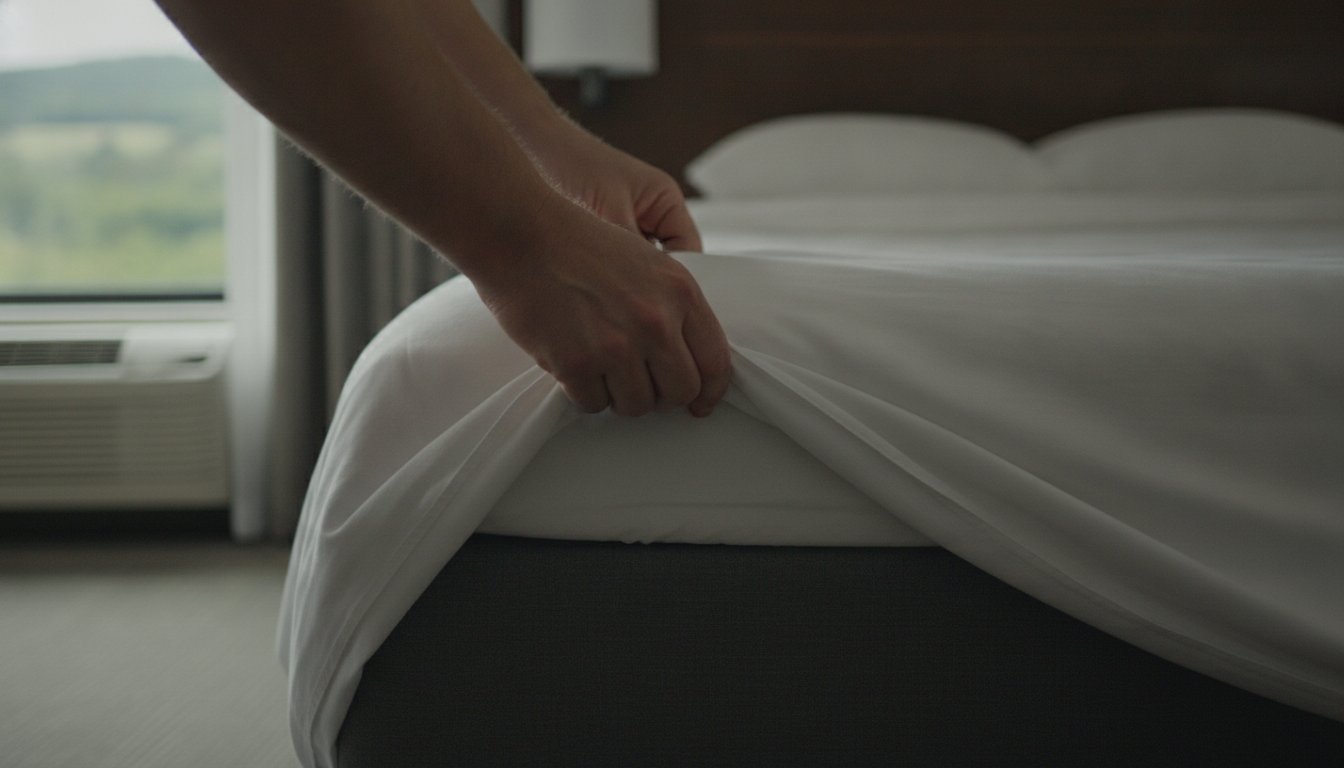
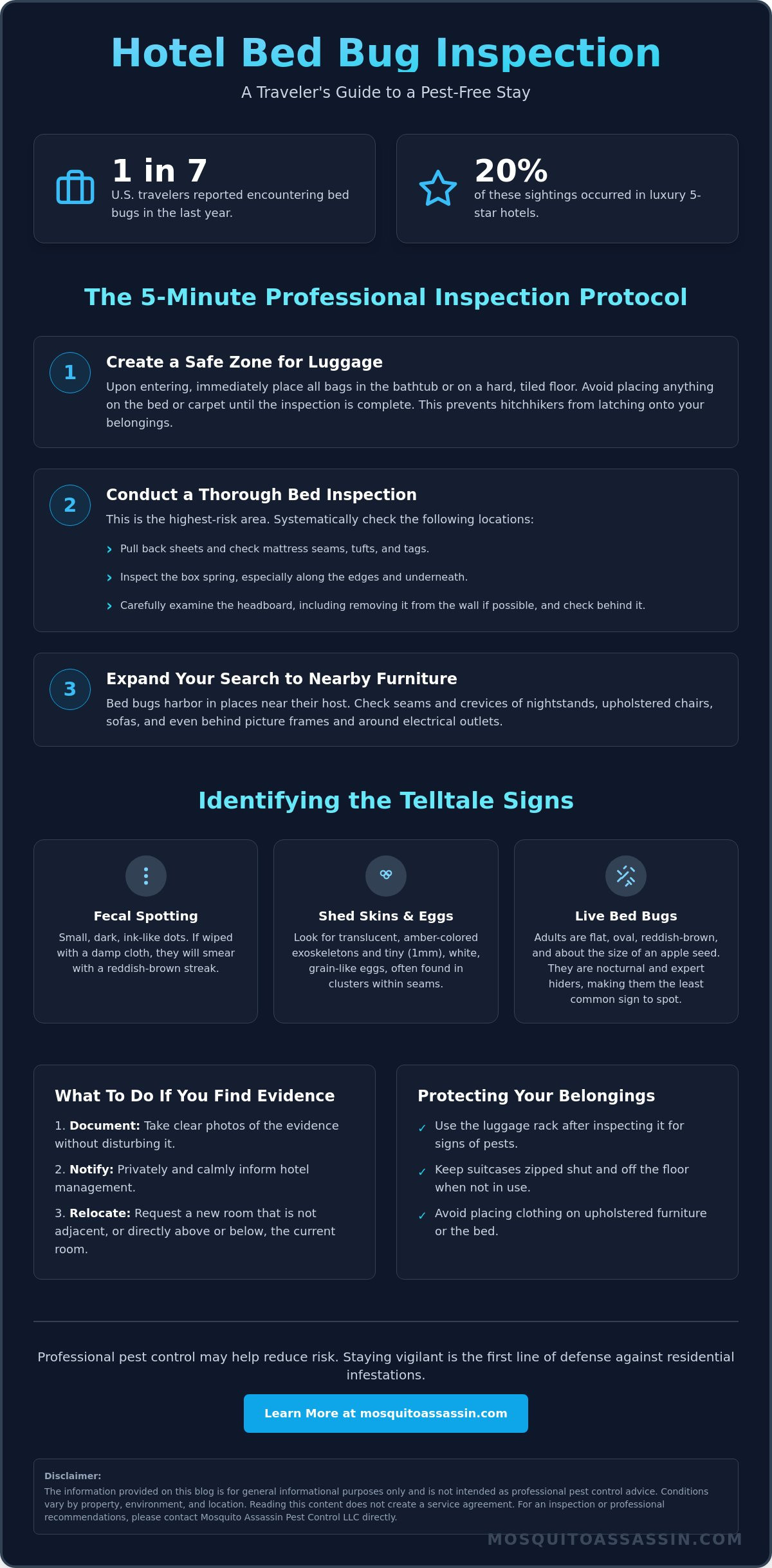
Before unpacking, inspect the mattress seams, box spring, bed skirt, and headboard. Check nearby furniture and curtains for live insects, shed skins, eggs, or dark spots. Bed bugs can hide beyond the bed, so scan the sleeping area before setting down your bags. If possible, keep luggage in the bathroom while you inspect.
-
Identify Bed Bugs and Bite Signs
Compare any insect or trace with several signs, rather than relying on a bite alone. According to the U.S. Environmental Protection Agency, a 1st stage nymph is 1.5 mm. Adults are about the size of an apple seed; eggs are small and pearl white. Bed bug bites can look like itchy mosquito or flea bites, so marks alone cannot confirm an infestation.
-
Respond to Bed Bugs in a Hotel
If you find possible signs, photograph them and promptly notify the hotel manager or host. Keep bags closed and away from the bed while arranging next steps. Whether hotel or travel insurance reimburses expenses depends on the policy terms, documented circumstances, and response. Don’t assume coverage is automatic.
After the trip, put clothing, including unworn items, in a hot dryer for 30 minutes. Avoid spraying luggage or using foggers at home; residues can expose people or pets, and foggers may not reach hiding insects.
Inspecting luggage during and after a trip
Bed bugs may hide in mattress and box-spring crevices, upholstered furniture, hollow bedposts, and spaces behind baseboards, pictures, or torn wallpaper. Check the room and your belongings before settling in, and inspect your bags again before unpacking at home.
- Inspect the luggage rack, including its joints and surface, before placing a bag on it. Keep the rack away from the wall, then set your suitcase on it rather than on the bed. If there’s no rack, use a hard tiled surface or, if possible, keep luggage in the bathroom while you inspect. Avoid upholstered chairs.
- Examine the mattress, box spring, and bed frame in good light. Look along seams, piping, corners, and crevices where fabric meets the frame. Check the headboard and hollow bedposts, then scan nearby furniture and upholstery. Bed bugs can also shelter behind baseboards, pictures, or loose wallpaper, so include these areas around the sleeping space.
- Before leaving, inspect your suitcase’s exterior and the area where it rested. Check folds, handles, and accessible compartments for insects, shed skins, eggs, or dark spots. Keep the bag closed while moving it through the room. If you spot possible evidence, don’t transfer items to the bed or soft furniture. Notify the hotel or rental host.
- At home, unpack outside the bedroom and examine luggage before bringing it indoors. Keep the suitcase on a hard surface that’s easy to inspect, and separate clothing from household fabrics. Check the bag’s seams, pockets, and folds carefully, then place clothing in the laundry area. A hot dryer cycle for 30 minutes after a trip is recommended for clothing, including unworn items.
When there’s no luggage rack, the American Lodging and Hotel Association recommends keeping luggage in the car until you’ve thoroughly inspected the room. A plastic trash bag is another alternative.

Checking suitcases, zippers, pockets, and seams
- Set your suitcase on a hard, well-lit surface. Open the empty bag fully, then inspect its outer piping, stitched panels, corners, handles, and wheel housings. Bed bugs can shelter in folds and seams, so trace each stitched edge slowly. Check both sides of straps and the fabric where handles attach. Look closely at narrow gaps around the suitcase shell.
- Move the zipper sliders along their full tracks, checking both sides as you go. Inspect the teeth, zipper tape, end stops, and fabric folds beneath the closure. Pause where the zipper curves around a corner, since overlapping material can conceal small insects. Use a flashlight to illuminate dark seams. Don’t force the zipper or pull apart stitching during inspection.
- Empty each pocket and compartment before examining it. Turn removable linings outward if the design allows, then check pocket corners, elastic edges, and interior seams. Inspect document sleeves, toiletry sections, and laundry compartments separately. Keep contents on a clear surface instead of returning them immediately. Check small pouches and packing organizers too, especially their seams and closures.
- After travel, inspect your suitcase before carrying it into a bedroom or placing it on a bed. Examine the same seams, pockets, and closures, then check the surface beneath the bag. If you notice an insect or suspicious trace, keep the suitcase away from household fabrics and don’t shake it. Photograph what you found and note the compartment or seam where it appeared.
Keeping dirty laundry sealed while traveling
- Pack a sealable laundry bag before leaving home, and store it separately from clean clothing. A sturdy plastic bag can work if its closure stays secure and the material remains intact. Research from the University of Minnesota has suggested that bed bugs are attracted to dirty clothes. Containment keeps worn garments apart from clean items and makes your return-home routine easier to manage. Make bed bug prevention for frequent travelers part of your packing routine by keeping this bag ready for each trip.
- After changing, put each worn item directly into the laundry bag instead of leaving it on a hotel chair, bed, or floor. Close the bag fully after each use. If fabric catches in a zipper or seal, reposition the clothing before closing it. Keep the closed bag in a separate suitcase compartment, away from clean garments. This also helps you identify which clothes need handling when you return.
- Keep the laundry bag away from beds, upholstered furniture, and curtains during your stay. Store it inside hard-sided luggage or on a hard surface, rather than beside the sleeping area. If the bag tears or its closure fails, transfer the clothes into an intact bag. Avoid shaking garments, which could scatter them onto nearby surfaces. A spare sealable bag can keep worn clothes separate if the first one is damaged.
- On the return trip, keep the laundry bag closed and separate from clean belongings. At home, take it to the laundry area before unpacking the rest of your suitcase. Move garments directly into the washer or dryer without putting them on a bed or couch. Follow each garment’s care label, then inspect the empty bag and suitcase. This arrival routine can help reduce the chance of bringing pests into your home.
Mosquito Assassin Pest Control LLC: General Pest Control Plans
Mosquito Assassin Pest Control LLC provides Bed Bug Treatment for households with suspected bed bug activity after travel. If you find an insect or other signs at home, professional inspection and treatment can help assess the situation and determine appropriate next steps. Note where you found the evidence, and avoid moving potentially affected items between rooms.
General Pest Control Plans address broader pest management needs, while Bed Bug Treatment is the relevant service for suspected bed bugs. A routine plan isn’t a substitute for addressing signs of a specific bed bug problem.
For information about Bed Bug Treatment or General Pest Control Plans, contact Mosquito Assassin Pest Control LLC or visit mosquitoassassin.com.
Make your next trip routine easier
Before your next stay, build a repeatable packing habit: keep a laundry bag ready, leave room to separate worn clothes, and choose a clear surface for checking your suitcase when you return. A simple routine makes bed bug prevention for frequent travelers easier to maintain across hotels and travel schedules.
If you notice signs of bed bugs at home after a trip, avoid moving potentially affected belongings between rooms. Professional recommendations can help you decide what to do next based on what you observed.
Contact Mosquito Assassin Pest Control LLC for information about bed bug concerns.
Disclaimer: This blog provides general information, not professional pest control advice. Conditions vary by property, environment, and location. Reading this content does not create a service agreement. For an inspection or professional recommendations, contact Mosquito Assassin Pest Control LLC.
Frequently Asked Questions
Can bed bugs survive on a plane?
Yes, bed bugs can survive on planes by hiding in seats, overhead bins, luggage, bags, or clothing. A passenger might not notice an insect tucked into a seat seam or bag fold during a flight. Keep personal belongings closed when they aren’t in use, and inspect your luggage after travel before bringing it into your bedroom.
Do bed bugs travel on people?
Bed bugs travel with people by hitchhiking on clothing or belongings, not by flying or jumping between travelers. For example, a coat draped over an infested chair could carry an insect elsewhere. Keep outerwear and bags off upholstered seating in shared spaces, and check them before packing them alongside clean items.
How Do Bed Bugs Spread?
Bed bugs spread when they move with infested belongings from one location to another. Luggage, clothing, and bags can carry them between hotels, homes, vehicles, and public transportation. They can also hide in furniture or upholstery. Avoid bringing discarded furniture indoors, and inspect items stored near sleeping areas before moving them.
How can travelers inspect a hotel room for bed bugs?
Use your phone’s flashlight to check the bed area before unpacking. Examine mattress piping, the bed skirt, headboard joints, and nearby upholstery for insects or traces. Check the luggage rack, including its underside and joints, before using it. If you need somewhere to put your suitcase while inspecting, use the bathroom when possible.
What should travelers do if they find bed bugs in a hotel room?
Promptly notify the hotel manager or rental host, and show them the suspected insect or evidence. Take clear photographs and note where you found it. Keep your luggage closed and separate from soft furnishings while discussing next steps. If you move rooms, inspect the new room before unpacking, rather than putting bags on the bed.
How can travelers keep luggage and clothing away from bed bugs?
Keep your suitcase on an inspected luggage rack or a hard surface away from the bed. Put worn clothes in a sealed bag and keep them separate from clean garments. At home, unpack in a laundry area rather than beside your bed. Check the bag’s exterior before storing it with other belongings.